

Dear readers and subscribers, this week to complete the translation of the poem “Commander ” by Alexander Pushkin, I made a presentation of the painting “Military Council in Fili” by Alexey Danilovich Kivshenko which will introduce you to the people present in the painting and their decisions. I hope you’ll enjoy this article.
To limit the size of the article, I have reduced the size of the pictures and included a link if you want to read the full article or the part about one of the people present. As always the article is freely accessible to everyone on the site (Read the full article)
The military council in Fili, depicted in L.N. Tolstoy’s novel “War and Peace,” holds great significance in the world of art and history. It served as the inspiration for a famous painting that has become a staple in textbooks, publications, and exhibitions dedicated to the Patriotic War of 1812. The painting, widely distributed throughout Russia in thousands of reproductions, catapulted Alexei Kivshenko to fame among historical artists, not only in Russia but also abroad. The lasting impact of this artwork reflects its recognition as a vital representation of an important historical event.
True to the author’s description, the characters are gathered around a table, with the granddaughter of the hut’s owner perched on the stove. Notable figures portrayed in the painting include M. I. Kutuzov, P. S. Kaisarov, P. P. Konovnitsyn, N. N. Raevsky, A. I. Osterman-Tolstoy, M. B. Barclay de Tolly, F. P. Uvarov, D. S. Dokhturov, A. P. Ermolov, K. Tolya, and L. L. Bennigsen. With his keen attention to detail and faithfulness to Tolstoy’s words, Kivshenko breathes life into this historical moment on canvas. The author repeated the painting for the gallery of P. M. Tretyakov in 1882.

The Council in Fili played a vital role in shaping the strategies and decision-making processes during the Patriotic War of 1812. It was convened on September 1 (13), 1812, by Commander-in-Chief M.I. Kutuzov in the village of Fili, located west of Moscow to decide whether to try fighting another battle near Moscow after the Battle of Borodino or to leave the city without a fight.
On the eve of the council, the Russian army formations strategically positioned themselves to the west of Moscow, preparing for a decisive battle against Napoleon’s troops. It was General Leontius Bennigsen who chose this particular position for the Russian army.
Despite suffering from a severe fever for several days, Barclay de Tolly, a highly respected military leader, personally inspected the battlefield on horseback. After thorough evaluation, he reached the conclusion that the chosen position would be disastrous for the Russian army formations.
Following in his footsteps, A.P. Ermolov and K.F. Tol also conducted their own assessments by driving through the location where the Russian troops were positioned. Their findings echoed Barclay de Tolly’s concerns, further supporting the notion that the chosen position was unfavorable for the Russian army.
With these reports in hand, Kutuzov, the overall commander, found himself confronted with a difficult decision. He had to weigh the options of either continuing the retreat and potentially surrendering Moscow or engaging in direct combat on the city streets. This critical moment demanded careful consideration of the overall strategic objectives and the best course of action to protect their homeland.
Who is in the painting and what is happening during the meeting?
- The granddaughter of the hut’s owner
- Paisiy Sergeevich Kaisarov, colonel, adjutant of Kutuzov
- Mikhail Illarionovich Kutuzov, Field Marshal General, Commander-in-Chief of the Russian Army
- Pyotr Petrovich Konovnitsyn, Lieutenant General, Commander of the 3rd Infantry Corps
- Nikolai Nikolaevich Raevsky, lieutenant general, commander of the 7th Infantry Corps
- Alexander Ivanovich Osterman-Tolstoy, lieutenant general, commander of the 4th Infantry Corps
- Leonty Leontievich Bennigsen, general of the cavalry, chief of the army headquarters
- Mikhail Bogdanovich Barclay de Tolly, commander of the 1st Western Army, Minister of War
- Fedor Petrovich Uvarov, adjutant general, commander of the reserve cavalry corps
- Karl Fedorovich Tol, Quartermaster General of the 1st Army
- Dmitry Sergeevich Dokhturov, infantry general, commander of the 6th Infantry Corps
- Alexey Petrovich Ermolov, general, chief of staff of the 1st Army
- What was the decision taken at the council?
The granddaughter of the hut’s owner

The granddaughter of the hut’s owner who was perched on the stove
Paisiy Sergeevich Kaisarov, colonel, adjutant of Kutuzov
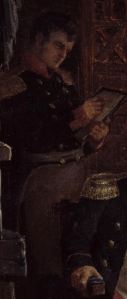
Read the text: Paisiy Sergeevich Kaisarov, colonel, adjutant of Kutuzov
Mikhail Illarionovich Kutuzov, Field Marshal General, Commander-in-Chief of the Russian Army

Read the text:Mikhail Illarionovich Kutuzov, Field Marshal General, Commander-in-Chief of the Russian Army
Pyotr Petrovich Konovnitsyn, Lieutenant General, Commander of the 3rd Infantry Corps

Read the text: Pyotr Petrovich Konovnitsyn, Lieutenant General, Commander of the 3rd Infantry Corps
Nikolai Nikolaevich Raevsky, lieutenant general, commander of the 7th Infantry Corps
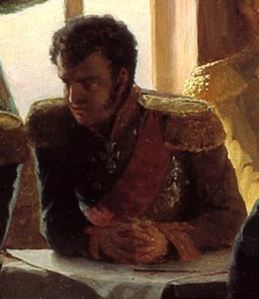
Read the text: Nikolai Nikolaevich Raevsky, lieutenant general, commander of the 7th Infantry Corps
Alexander Ivanovich Osterman-Tolstoy, lieutenant general, commander of the 4th Infantry Corps

Read the text: Alexander Ivanovich Osterman-Tolstoy, lieutenant general, commander of the 4th Infantry Corps
Leonty Leontievich Bennigsen, general of the cavalry, chief of the army headquarters
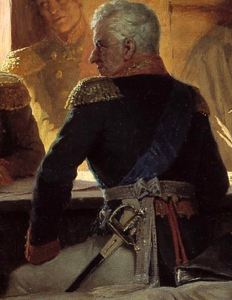
Read the text: Leonty Leontievich Bennigsen, general of the cavalry, chief of the army headquarters
Mikhail Bogdanovich Barclay de Tolly, commander of the 1st Western Army, Minister of War

Read the text: Mikhail Bogdanovich Barclay de Tolly, commander of the 1st Western Army, Minister of War
Fedor Petrovich Uvarov, adjutant general, commander of the reserve cavalry corps
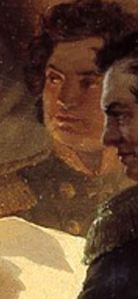
Read the text: Fedor Petrovich Uvarov, adjutant general, commander of the reserve cavalry corps
Karl Fedorovich Tol, Quartermaster General of the 1st Army
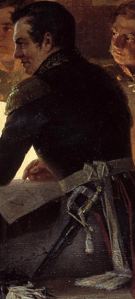
Read the text: Karl Fedorovich Tol, Quartermaster General of the 1st Army
Dmitry Sergeevich Dokhturov, infantry general, commander of the 6th Infantry Corps
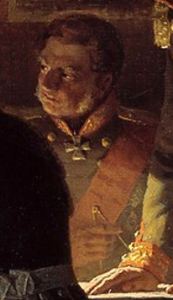
Read the text: Dmitry Sergeevich Dokhturov, infantry general, commander of the 6th Infantry Corps
Alexey Petrovich Ermolov, general, chief of staff of the 1st Army
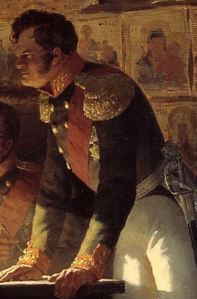
Read the text: Alexey Petrovich Ermolov, general, chief of staff of the 1st Army
What was the decision taken at the council?
During the council, it became evident that Kutuzov had already made the decision to retreat. However, recognizing the importance of the input from his generals, he patiently listened to their opinions. When it was his turn to speak, Kutuzov began his address with the resolute declaration: “Russia is not lost with the loss of Moscow.” Demonstrating his unwavering resolve, the commander-in-chief concluded his speech by issuing the decisive order: “I hereby command a retreat.” This defining moment showcased Kutuzov’s strategic acumen and leadership, as he prioritized the preservation of the Russian forces in the face of adversity.
I hope you enjoyed this painting and its explanation as much as I did
We put a lot of effort into the quality of the articles and translations, support us with a like and a subscription or sponsor us if you like them. We are also on Facebook and Twitter
- Poèmes et peinture, semaine du 29 mars 2026
- Poems and painting, Week of March 29, 2026
- Poèmes et peinture, semaine du 22 mars 2026
- Poems and painting, Week of March 22, 2026
- Poèmes et peinture, semaine du 15 mars 2026
- Poems and painting, Week of March 15, 2026
© 2023 Akirill.com – All Rights Reserved
 AKirill, Learn, apprenez, translation, traduction, livres bilingues, bilingual books
2 thoughts on “Discover the painting “Military Council in Fili” by Alexey Danilovich Kivshenko”