On this site we hope to help you learn, and to remove the difficulties caused by the difference of culture and language. Sur ce site nous espérons vous aider à apprendre, et à enlever la barrière causée par les différents languages et cultures.
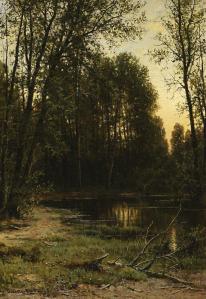
Dear readers and subscribers, I am thrilled to share with you that this week I have translated a stunning poem titled “Good Morning” by the renowned Russian writer Sergei Yesenin. I have also included the exquisite painting “River backwater in the forest” by Ivan Ivanovich Shishkin. I hope you enjoy this beautiful combination!
We put a lot of effort into the quality of the articles and translations, support us with a like and a subscription or sponsor us if you like them. We are also on Facebook and Twitter
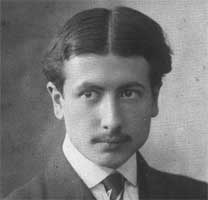
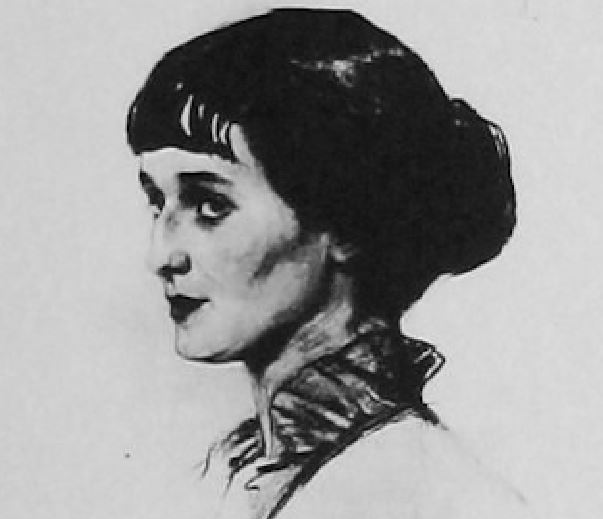
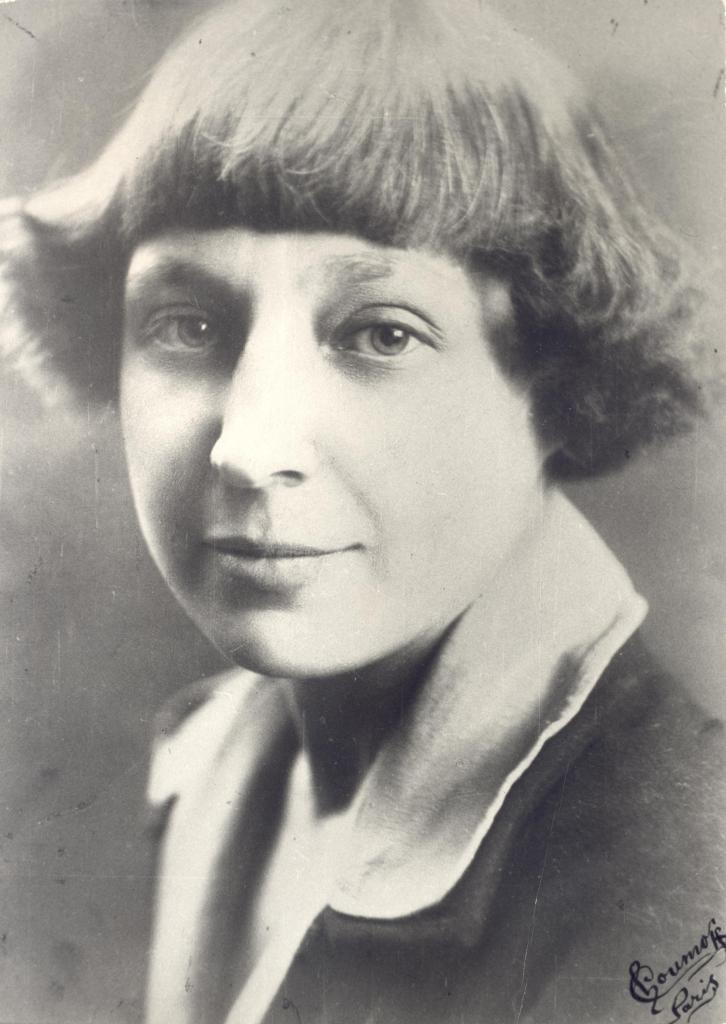
Chers lecteurs et abonnés, cette semaine, j’ai ajouté plus de poèmes à nos pages de poésie américaine, française et russe. J’ai inclus deux nouveaux poètes. Le premier est Stéphane Mallarmé, pseudonyme d’Étienne Mallarmé. Il était un célèbre poète et critique français, notoire en tant que figure de proue du mouvement symboliste français. Ses œuvres littéraires ont préfiguré et motivé plusieurs mouvements artistiques révolutionnaires du début du 20e siècle, dont le cubisme, le futurisme, le dadaïsme et le surréalisme. La seconde, Marina Ivanovna Tsvetaeva, était une poétesse russe de l’Âge d’Argent, écrivaine en prose et traductrice. Elle est apparue comme l’une des poétesses russes les plus originales du 20e siècle, distincte de tout mouvement littéraire spécifique, laissant pourtant une empreinte profonde sur la littérature du 20e siècle.
Chaque image est cliquable et vous emmène directement à la page de poésie correspondante. Comme d’habitude, j’ai ajouté la liste des nouveaux poèmes pour chaque auteur. Je suis sûr que vous trouverez quelque chose qui vous plaira.
Claude McKayHenry David ThoreauRalph Waldo EmersonStéphane MallarméAlain FournierPierre Jules Théophile Gautier DostoevskyAnna AkhmatovaMarina TsvetaevaOver eternal peace . 1894
Cette semaine, notre article était “Découvrez la peinture « Au-dessus de la paix éternelle » d’Isaac Levitan“. “Au-dessus de la paix éternelle” d’Isaac Levitan est une magnifique et probablement la plus célèbre peinture du célèbre artiste russe Isaac Levitan, datant de l’année 1894, qui représente un “renversement géant de l’espace aquatique du lac”, les étendues infinies ressemblant à une rivière étendue. Au-dessus du lac se trouve “une vaste étendue de ciel avec des nuages tourbillonnants qui entrent en collision les uns avec les autres”. Il ne s’agit pas d’un paysage lyrique ordinaire, pour lequel Levitan est renommé, mais plutôt d’une grande épopée, où le passé converge avec l’avenir, le ciel se dresse au-dessus de la terre, et le temps s’étire vers l’éternité. …
Over eternal peace . 1894
Nous mettons beaucoup d’efforts dans la qualité des articles et traductions, soutenez-nous avec un like et un abonnement ou sponsorisez-nous si vous les aimez.Nous sommes aussi surFacebook et Twitter
Dear readers and subscribers, this week as I added more poems to our American, French and Russian poetry pages, I included two new poets. The first individual is Stéphane Mallarmé, pen name of Étienne Mallarmé. He was a renowned French poet and critic, notable as a leading figure in the French symbolism movement. His literary works foreshadowed and motivated several groundbreaking artistic movements of the early 20th century, including Cubism, Futurism, Dadaism, and Surrealism. The second Marina Ivanovna Tsvetaeva was a Russian poetess of the Silver Age, prose writer, and translator. She emerged as one of the most original Russian poets of the 20th century, distinct from any specific literary movement, yet leaving a profound imprint on 20th-century literature.
Each image is hyperlinked to its respective poetry page, and as usual, I have included the roster of new poems for each author. I trust you will discover something to appreciate.
Claude McKayHenry David ThoreauRalph Waldo EmersonStéphane MallarméAlain FournierPierre Jules Théophile Gautier DostoevskyAnna AkhmatovaMarina TsvetaevaOver eternal peace . 1894
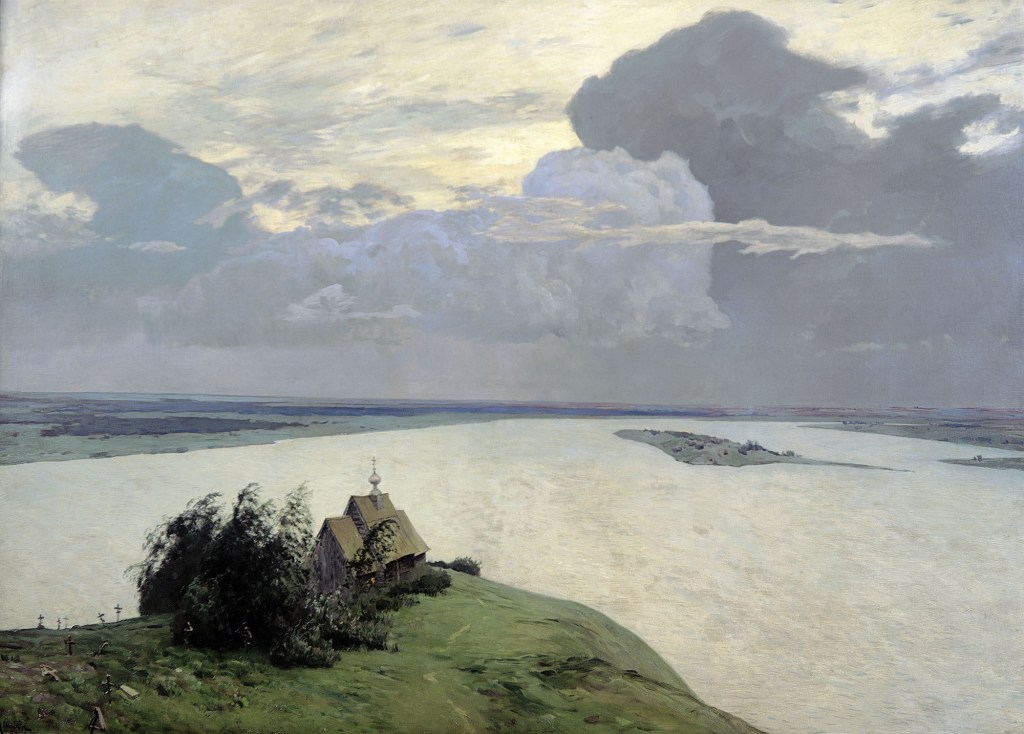
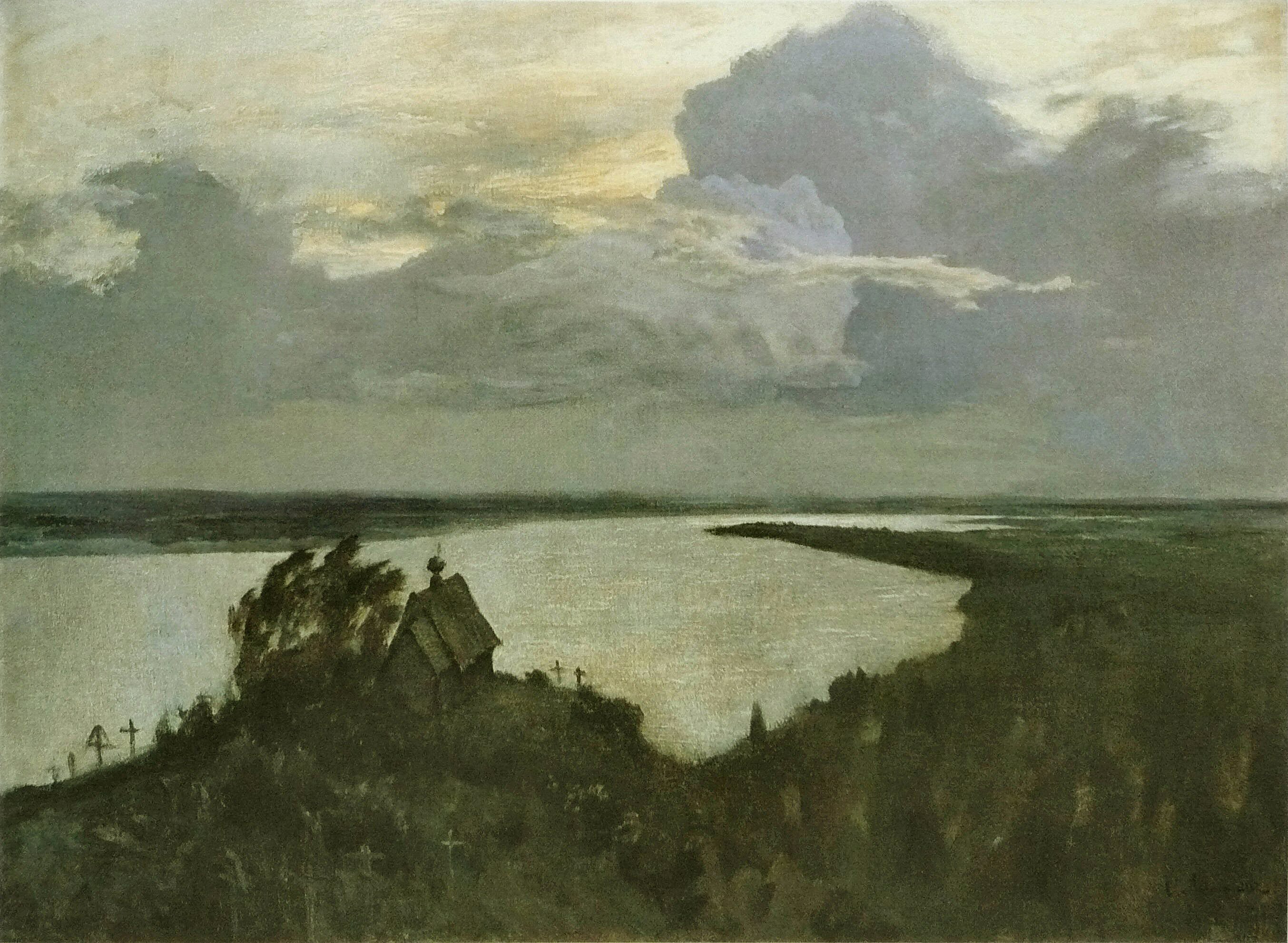
This week our article was “Discover the painting “Over Eternal Peace” by Isaac Levitan“. “Over Eternal Peace” by Isaac Levitan. “Over Eternal Peace” is a magnificent and probably the most famous painting by renowned Russian artist Isaac Levitan, originating from the year 1894 which depicts a “giant reversal of the lake’s water space”, the endless expanses of which resemble a wide-spread river. Above the lake is “a majestic expanse of sky with swirling clouds colliding with each other”. This is no ordinary lyrical landscape, for which Levitan is renowned, but rather a grand epic, where the past converges with the future, the sky looms over the earth, and time stretches towards eternity. …
Over eternal peace . 1894
We put a lot of effort into the quality of the articles and translations, support us with a like and a subscription or sponsor us if you like them. We are also on Facebook and Twitter
“Au-dessus de la Paix éternelle” (Над вечным покоем) aussi appelé Paix éternelle ou Au-dessus du repos éternel est un magnifique et probablement le tableau le plus célèbre de artiste russe Isaac Levitan. Celui-ci date de l’année 1894, et représente un “gigantesque renversement de l’espace aquatique du lac”, dont les étendues infinies ressemblent à une rivière étendue. Au-dessus du lac se trouve “une vaste étendue de ciel avec des nuages tourbillonnants se heurtant les uns aux autres”. Il ne s’agit pas d’un paysage lyrique ordinaire, pour lequel Levitan est renommé, mais plutôt d’un grand récit épique, où le passé converge avec l’avenir, le ciel domine la terre et le temps s’étire vers l’éternité.
Ce chef-d’œuvre est exposé au prestigieux musée d’État de la Galerie Trétiakov et affiche des dimensions de 150 × 206 cm. Dévoilé pour la première fois à la 22e exposition de l’Association des expositions d’art itinérantes à Saint-Pétersbourg, il a captivé l’attention des amateurs d’art et a été rapidement acquis par Pavel Trétiakov même avant le début officiel de l’exposition. Certains experts en art considèrent cette peinture, ainsi que ” Eaux profondes” et “Vladimirka” de 1892, comme faisant partie d’une trilogie captivante de Levitan. Les critiques ont loué l’œuvre comme un portrait de paysage véritablement captivant, la qualifiant comme l’une des œuvres les plus évocatrices et vibrantes de l’artiste.
Il y a différentes histoires intéressantes sur la peinture et l’église qui ont inspiré l’artiste. Les mémoires de Sofia Kuvshinnikova suggèrent que la peinture “Au-dessus de la Paix éternelle” était basée sur une église près du lac d’Udomlya, bien que l’église réelle fût différente de celle représentée.
Les chercheurs proposent que l’artiste ait utilisé une esquisse de l’église Pierre et Paul à Plyos comme référence. Cette église a brûlé en 1903 et a été remplacée par l’église de la Résurrection du village de Bilyukovo.
Une autre version suggère que l’inspiration est venue d’une vieille église en bois près du lac Ostrovno, comme décrit dans les mémoires de l’artiste Vitold Byalynitsky-Birulya. Certaines sources spéculent que l'”île ovale” représentée pourrait être l’île d’Arzhanik ou de Dvinovo sur le lac Udomlya.
Le livre “Artistes dans le territoire d’Oudomelsky” présente encore une autre version, suggérant que la peinture a été inspirée par le village d’Ostrovno et le domaine d’Ouchakov.
L’expert en art Alexey Fedorov-Davydov décrit la toile “Au-dessus de la Paix éternelle” comme le portrait d’un motif d’un lac appliqué à un autre lac similaire, le lac Udomlya servant de base à la composition.
Fedorov-Davydov met l’accent sur le niveau de synthèse de la vue réelle dans une image de paysage pictural comme la véritable mesure de la composition dans les peintures de Levitan.
La peinture “Au-dessus de la Paix éternelle” a fleuri pendant l’été 1893 alors qu’Isaac Levitan résidait dans la province de Tver. Aux côtés de l’artiste Sofia Kuvshinnikova, il trouva l’inspiration au domaine d’Ostrovno des Ushakovs près du lac Ostrovno, où ils reçurent un accueil chaleureux et des conditions idéales pour leurs entreprises créatives. Ils ont également savouré des moments au domaine de Garusovo près du lac d’Udomlya, qui est devenu plus tard le sujet du chef-d’œuvre de Levitan “On the Lake.”
On the lake. Oil on canvas, 109 × 163 cm , 1893
Levitan a esquissé et travaillé avec diligence sur la toile à Moscou, aboutissant à l’achèvement du tableau au début de 1894, le signant fièrement dans le coin inférieur gauche comme “Et Levitan 94.” (И Левитанъ 94 )
Croquis
La Galerie Tretiakov conserve fièrement deux croquis originaux du célèbre tableau “Au-dessus de la Paix éternelle”. Ces dessins captivants, réalisés en 1893 sous le titre “Avant l’orage”, ont été méticuleusement réalisés au crayon graphite sur une seule feuille de papier.
Initial sketches-variants of the painting- Over Eternal Peace, 1893
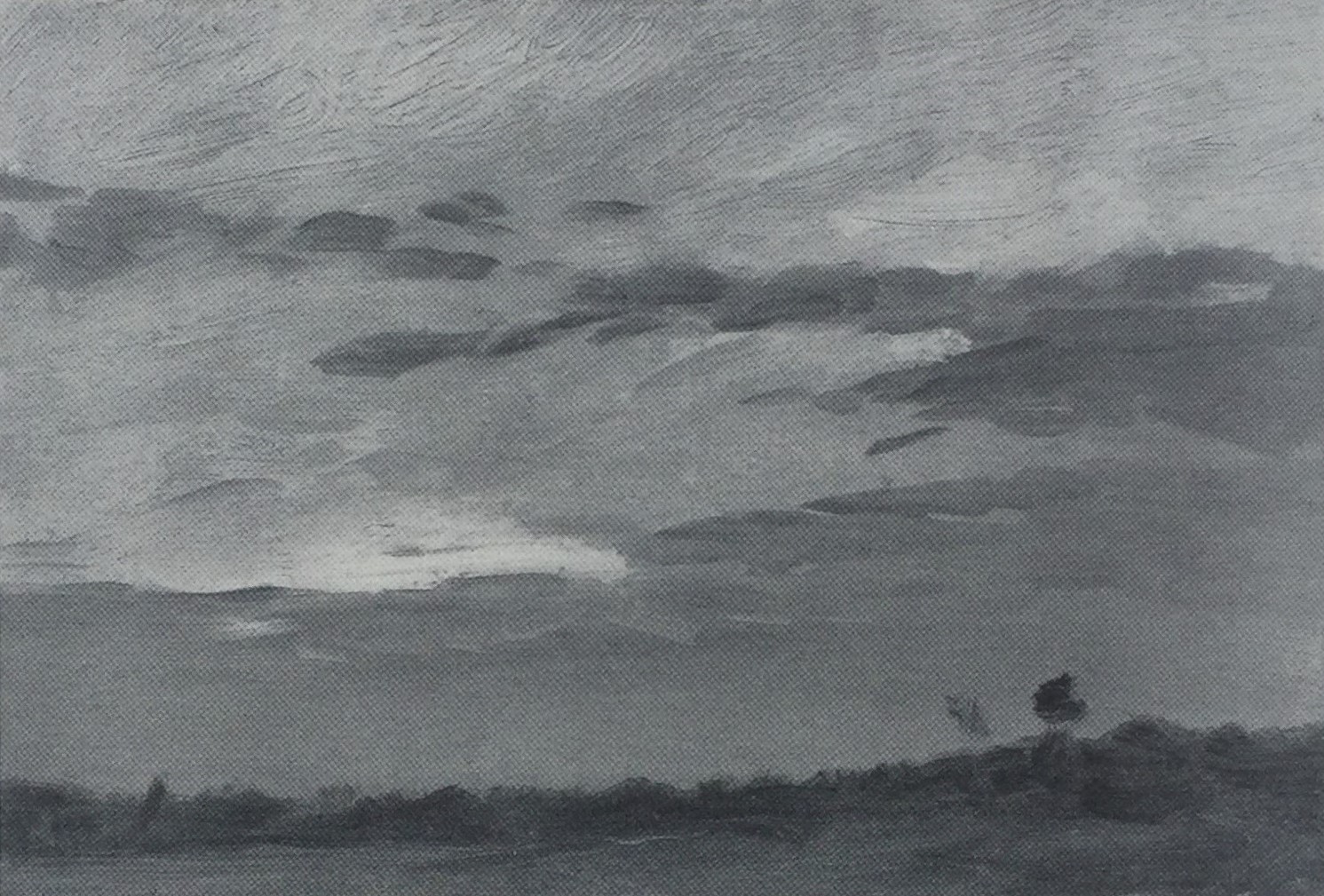
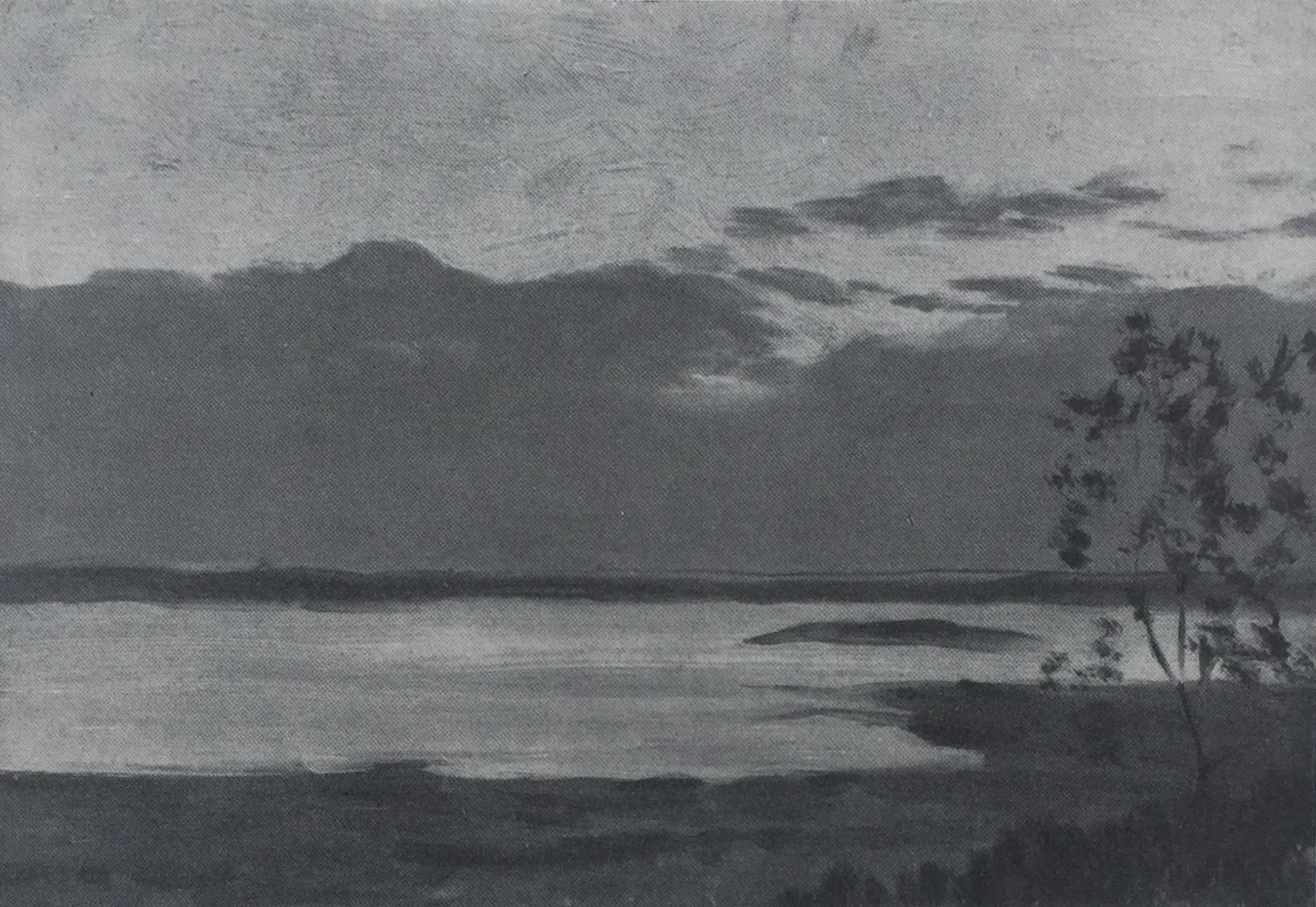
Levitan capture habilement l’anticipation dans la nature alors qu’un orage approche. Selon E. A. Byalynitskaya-Birulya, ces dessins dépeignent le paysage pittoresque du lac d’Ostrovno avec l’église de la Trinité nichée le long de la rive. Tout en travaillant sur la peinture, Levitan a également produit plusieurs esquisses picturales évocatrices, dont “Ciel nuageux”, “Ciel”, et “Lac”.
Cloudy skySky. Study by Isaac Levitan for the painting – Over Eternal PeaceLake. Sstudy by Isaac Levitan for the painting – Over Eternal Peace
À l’été 1893, Levitan a composé le poignante pastel “Les Oubliés”, représentant “un cimetière abandonné situé sur une pente avec des croix branlantes”, un motif ultérieurement incorporé dans la peinture. En 1898, cette remarquable esquisse a été exposée à Saint-Pétersbourg et acquise par Pavel Tretyakov. De plus, parmi les matériaux préparatoires utilisés par l’artiste se trouve l’enchantante esquisse “Église en bois à Plyos aux derniers rayons du soleil”, datant de 1888, dont Levitan s’est inspiré pour représenter l’église dans le tableau “Au-dessus de la paix éternelle”.
Over Eternal Peace – large sketch, 1893
Description
Fedorov-Davydov a remarqué la structure claire et l’asymétrie équilibrée dans l’image, apportant des informations précieuses sur les choix de l’artiste et l’harmonie visuelle générale de la pièce. L’interaction des principales parties et des divers détails, tels que le promontoire, l’île, l’eau et les nuages, met en valeur le travail minutieux et la compétence compositionnelle derrière l’œuvre, ce qui permet au spectateur d’apprécier encore plus sa complexité et sa beauté.
Le peintre a utilisé différentes techniques de peinture pour créer un sentiment d’espace et de puissance dans la composition. Lorsqu’il dépeignait des scènes lointaines, Levitan utilisait une simplification extrême des formes et des couleurs, ce qui était nouveau pour lui. Les techniques de peinture variaient tout au long de l’œuvre, mettant l’accent sur la lourdeur du ciel orageux et transmettant le mouvement des nuages. Différentes techniques ont également été utilisées pour dépeindre l’eau, la rive lointaine et la colline en premier plan. Malgré la variété des techniques, la peinture transmet toujours efficacement les impressions naturelles sur lesquelles elle est basée.
Le tableau “Au-dessus de la paix éternelle” dépeint richement une scène captivante qui captive l’imagination avec ses détails complexes et son imagerie évocatrice. Il plonge le spectateur dans un monde à la fois tranquille et troublant, l’attention méticuleuse de l’artiste donnant vie à chaque élément. La description du lac comme vivant une “inversion géante de l’espace aquatique” évoque un sentiment de stupeur, surtout lorsque l’immensité sans fin ressemble à une rivière étendue, invitant à la contemplation des forces de la nature en jeu.
L’artiste contemple le monde d’un point de vue élevé, observant un vaste panorama d’éléments naturels se déroulant devant son regard.
Over Eternal Peace – extract sky
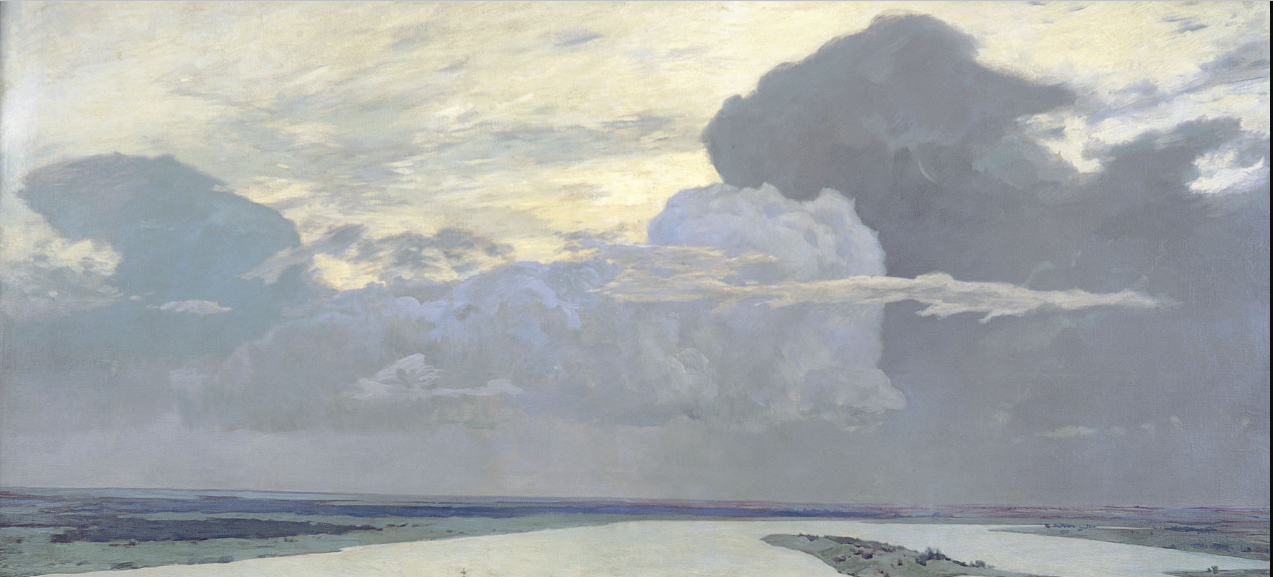
Au-dessus du lac, la représentation d’une vaste étendue de ciel avec des nuages tourbillonnants et se heurtant ajoute une couche captivante à la composition. L’image divisée du ciel, avec un royaume nuageux plus sombre en bas et une étendue plus légère et plus éthérée en haut, crée un contraste fascinant, enrichissant davantage le récit visuel. Les éléments entourant la falaise dégagent une puissance. On a l’impression que le cimetière disparaîtra à tout moment, que l’église se dispersera à travers le monde… La destruction semble imminente.
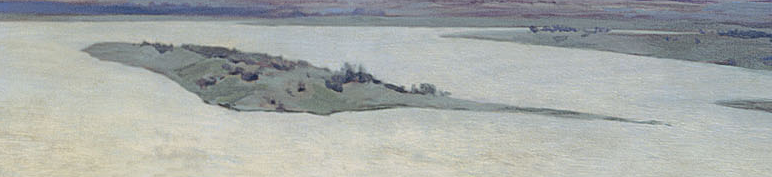
Over Eternal Peace – Extract Island
Au loin, une île déserte apparaît, semblant dériver loin de la falaise avec une vitesse remarquable. Il semble que l’île transporte avec elle les âmes des défunts, attirant les restes de l’esprit humain et les souvenirs de ceux qui sont partis. Cette vue sert de rappel émouvant de l’insignifiance, de la transience et du manque perçu de sens dans la vie humaine.
Over Eternal Peace – extract-church and- cemetery
Au fur et à mesure que le regard du spectateur se promène vers l’arrière-plan, un promontoire se révèle, sur la rive surélevée duquel se dresse une vieille église.
Une tempête se profile à l’horizon – évidente dans le ciel de plomb menaçant et les puissantes rafales de vent. Près du temple, les arbres s’inclinent sous la force du vent de l’ouragan. Les teintes fugitives du coucher de soleil embrasent le ciel, mais la lumière est voilée par des nuages d’une densité inhabituellement vivante. Il semble que l’ouragan va ravager la fragile église, renverser les croix du cimetière et niveIer les tombes au sol.
D’une manière impressionnante, le petit dôme de l’église résiste pleinement à la force des éléments. Il pointe directement vers le haut, et sa couleur, se mêlant aux tons métalliques du ciel, transmet un sentiment de solidité et de résilience.
L’artiste, même dans cette œuvre, l’a imprégnée de nuances optimistes. Seule une foi inébranlable peut aider une personne à trouver la paix et la confiance dans ses aspirations et le dessein de sa vie. Cependant, ce message optimiste est subtilement tissé dans la peinture. Seuls les spectateurs les plus perspicaces peuvent percevoir dans ce détail subtil la vraie essence de cette œuvre emblématique.
Over Eternal Peace – Extract cemetery
La présence d’un sombre cimetière rural à gauche de l’église ajoute une touche poignante, avec les tombes négligées et les alentours délabrés évoquant un sentiment de mélancolie et le passage du temps. L’attention particulière portée aux détails dans la représentation de ces éléments est évidente, l’artiste accordant une attention particulière à la composition du cimetière et de l’église sur la colline, les imprégnant d’un profond sentiment de signification et d’histoire.
Le commentaire perspicace du critique d’art Alexei Fedorov-Davydov rehausse davantage la profondeur de la peinture, alors qu’il décrit avec éloquence le promontoire fragile avec l’église et le cimetière comme s’il s’agissait de l’avant d’un navire s’aventurant vers une distance inconnue.
Over Eternal Peace – extract church
Le symbolisme de la lumière dans la vitre de l’église en tant que témoin de la vie humaine, de l’indestructibilité et de la soumission silencieuse est particulièrement frappant et ajoute encore une autre couche de sens à la composition.
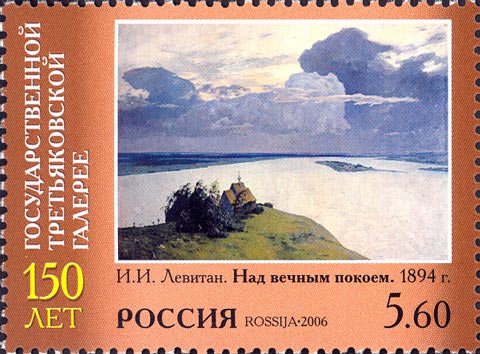
Over Eternal Peace on a 2006 Russian postage stamp
Nous mettons beaucoup d’efforts dans la qualité des articles et traductions, soutenez-nous avec un like et un abonnement ou sponsorisez-nous si vous les aimez.Nous sommes aussi surFacebook et Twitter
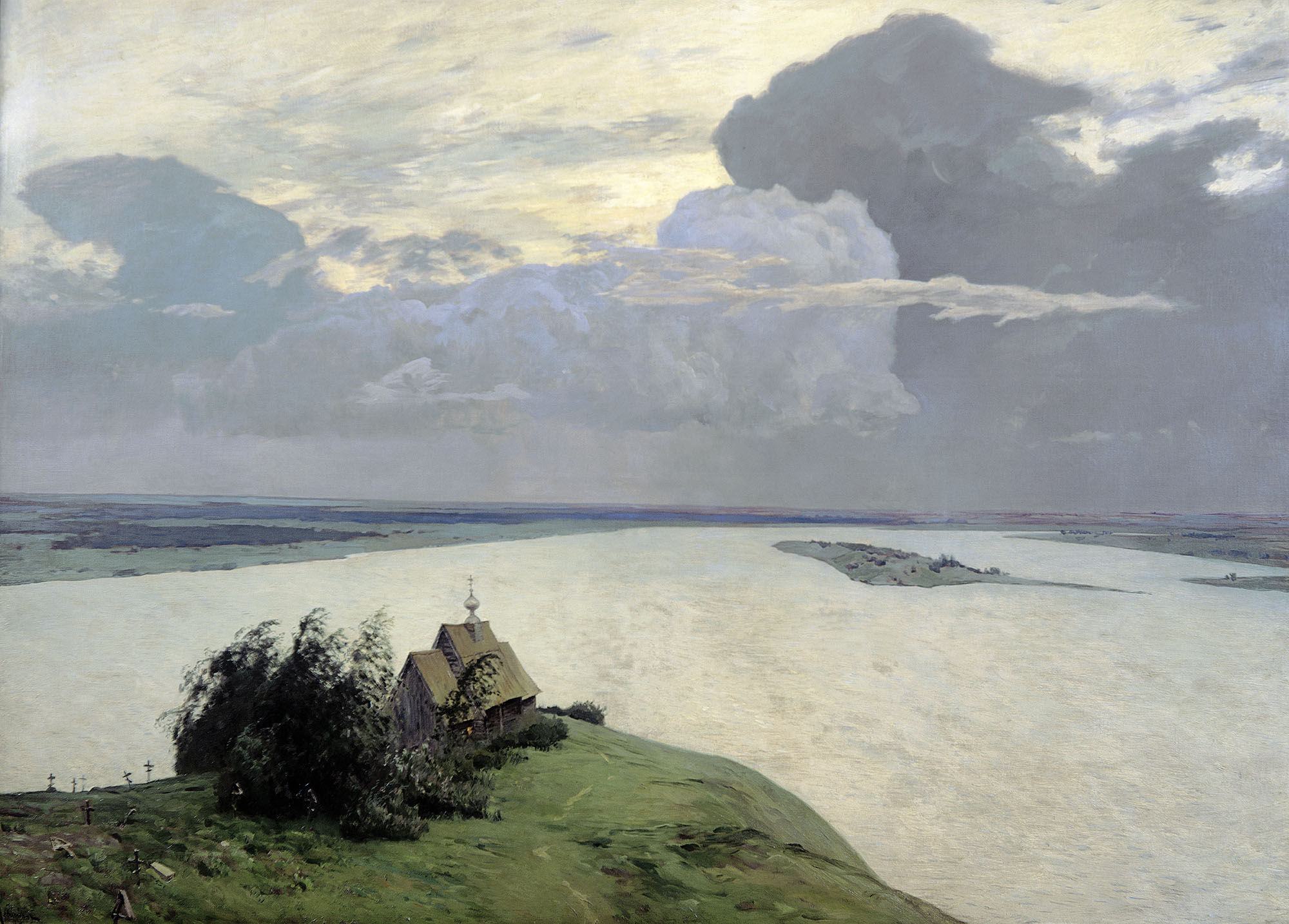
“Over Eternal Peace” (Над вечным покоем) is a magnificent and probably the most famous painting by renowned Russian artist Isaac Levitan, originating from the year 1894 which depicts a “giant reversal of the lake’s water space”, the endless expanses of which resemble a wide-spread river. Above the lake is “a majestic expanse of sky with swirling clouds colliding with each other”. This is no ordinary lyrical landscape, for which Levitan is renowned, but rather a grand epic, where the past converges with the future, the sky looms over the earth, and time stretches towards eternity.
This masterpiece is housed in the esteemed State Tretyakov Gallery and boasts dimensions of 150 × 206 cm. First unveiled at the 22nd exhibition of the Association of Traveling Art Exhibitions in St. Petersburg, it captured the attention of art connoisseurs and was swiftly acquired by Pavel Tretyakov even before the exhibition officially commenced. Some art experts view this painting, in conjunction with “By the Pool” and “Vladimirka” from 1892, as part of a compelling trilogy by Levitan. Critics have lauded the piece as a genuinely captivating landscape portrayal, praising it as one of the artist’s most evocative and vibrant works.
There are different interesting stories about the painting and the church that inspired the artist. Sofia Kuvshinnikova’s memoirs suggest that the painting “Over Eternal Peace” was based on a church near Lake Udomlya, although the actual church was different from the one depicted.
Researchers propose that the artist used a sketch of the Peter and Paul Church in Plyos as a reference. This church burned down in 1903 and was replaced by the Resurrection Church from the village of Bilyukovo.
Another version suggests that the inspiration came from an old wooden church near Lake Ostrovno, as described in the memoirs of the artist Vitold Byalynitsky-Birulya. Some sources speculate that the “oval island” depicted could be the island of Arzhanik or Dvinovo on Lake Udomlya.
The book “Artists in the Udomelsky Territory” presents yet another version, suggesting that the painting was inspired by the village of Ostrovno and the Ushakov estate.
Art critic Alexey Fedorov-Davydov describes the canvas “Over Eternal Peace” as a portrayal of a motif from one lake applied to another similar one, with Lake Udomlya serving as the foundation of the composition.
Fedorov-Davydov emphasizes the level of synthesis of the real view into a pictorial landscape image as the true measure of composition in Levitan’s paintings.
The painting “Over Eternal Peace” blossomed during the summer of 1893 when Isaac Levitan resided in the Tver province. Alongside the artist Sofia Kuvshinnikova, he found inspiration at the Ushakovs’ Ostrovno estate near Lake Ostrovno, where they received a warm welcome and ideal conditions for their creative endeavors. They also savored moments at the Garusovo estate near Lake Udomlya, which later became the subject of Levitan’s masterpiece “At the Lake.”
At the lake. Oil on canvas, 109 × 163 cm , 1893
Levitan sketched and diligently worked on the canvas in Moscow, culminating in the completion of the painting in early 1894, proudly signing it in the lower left corner as “And Levitan 94.” (И Левитанъ 94)
Sketches
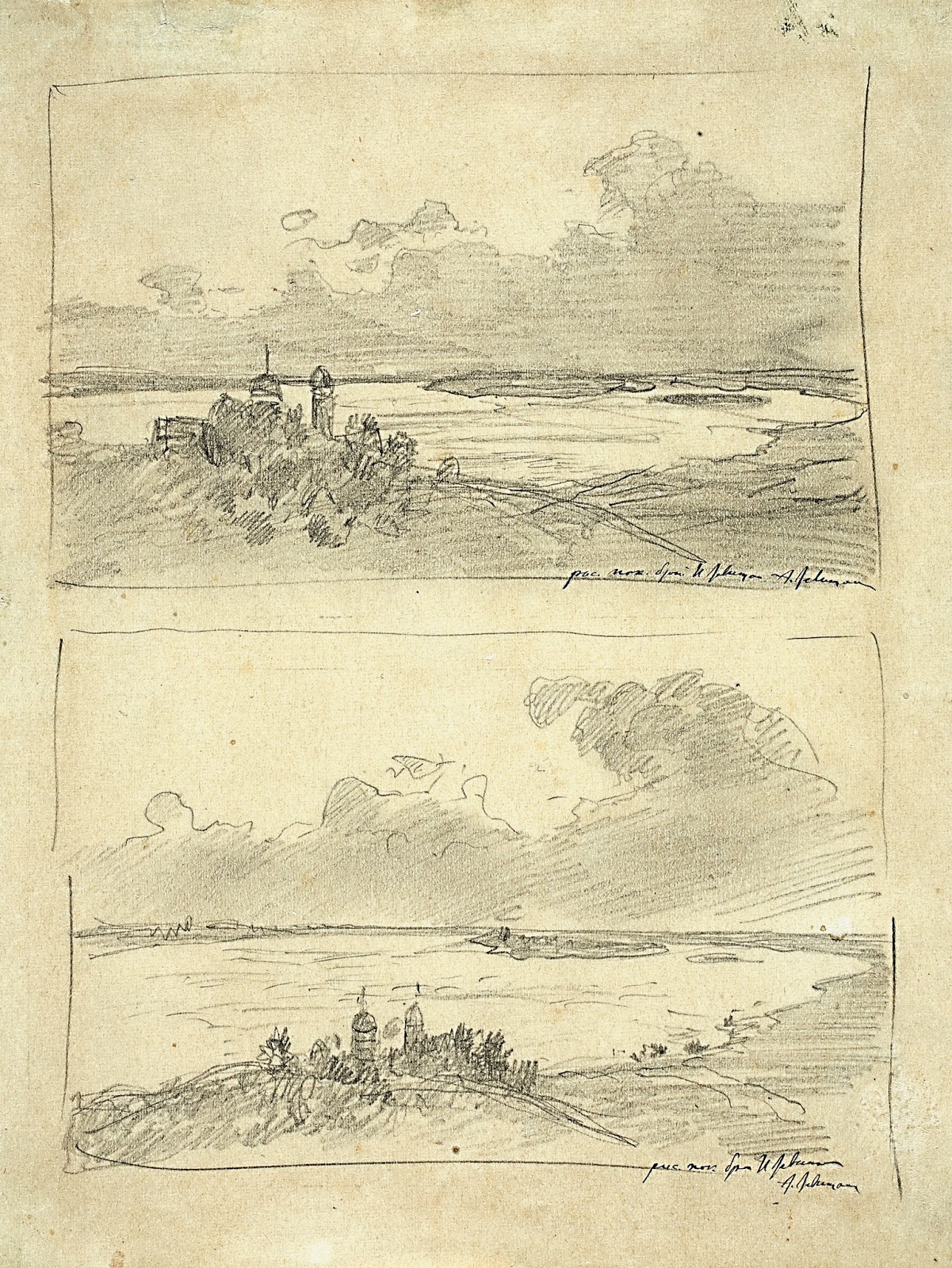
The State Tretyakov Gallery proudly holds two original graphic sketches for the renowned painting “Over Eternal Peace.” These captivating drawings, created in 1893 under the title “Before the Storm,” were meticulously crafted with graphite pencil on a single sheet of paper.
Initial sketches-variants of the painting- Over Eternal Peace, 1893
Levitan skillfully captures the anticipation in nature as a thunderstorm approaches. According to E. A. Byalynitskaya-Birulya, these drawings portray the picturesque landscape of Lake Ostrovno with the Trinity Church nestled along the shore. While working on the painting, Levitan also produced several evocative pictorial sketches, including “Cloudy Sky,” “Sky,” and “Lake.”
Cloudy skySky. Study by Isaac Levitan for the painting – Over Eternal PeaceLake. Sstudy by Isaac Levitan for the painting – Over Eternal Peace
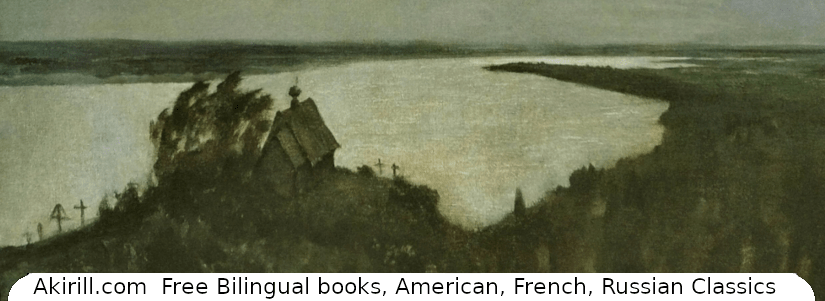
In the summer of 1893, Levitan composed the poignant pastel “Forgotten,” depicting “an abandoned cemetery located on a slope with rickety crosses,” a motif later incorporated into the painting. In 1898, this remarkable sketch was displayed in St. Petersburg and acquired by Pavel Tretyakov. Furthermore, among the preparatory materials utilized by the artist is the enchanting sketch “Wooden Church in Plyos at the last rays of the sun,” penned in 1888, which Levitan drew inspiration from to portray the church in the painting “Above Eternal Peace.”
Over Eternal Peace – large sketch, 1893
Description
Fedorov-Davydov noticed the clear structure and the balanced asymmetry in the picture, giving valuable insights into the artist’s choices and the overall visual harmony of the piece. The interaction of the main parts and various details, like the cape, island, water, and clouds, highlights the careful craftsmanship and compositional skill behind the artwork, making the viewer appreciate its complexity and beauty even more.
The artist used different painting techniques to create a sense of space and power in the composition. When depicting distant scenes, Levitan used extreme simplification of shapes and colors, which was new for him. The painting techniques varied throughout the artwork, emphasizing the heaviness of the stormy sky and conveying the movement of the clouds. Different techniques were also used to depict water, the distant bank, and the foreground hill. Despite the variety of techniques, the painting still effectively conveys the natural impressions it’s based on.
The painting “Over Eternal Peace” richly portrays a captivating scene that captures the imagination with its intricate details and evocative imagery. It immerses the viewer in a world that is at once tranquil and haunting, with the artist’s meticulous attention to detail bringing each element to life. The description of the lake as experiencing a “giant reversal of the water space” conjures a sense of awe, particularly as the endless expanse resembles a wide-spread river, inviting contemplation of the forces of nature at play.
The artist ponders the world from a lofty perspective, observing a grand panorama of natural elements unfolding before their gaze.
Over Eternal Peace – extract sky
Above the lake, the depiction of a vast expanse of sky with swirling, colliding clouds adds a captivating layer to the composition. The divided image of the sky, with a darker, cloudy realm at the bottom and a lighter, more ethereal expanse at the top, creates a compelling contrast, further enriching the visual narrative. The elements surrounding the cliff emanate power. It feels as though the graveyard will vanish in the next moment, the church will scatter across the world… Destruction appears imminent.
Over Eternal Peace – Extract Island
In the distance, a deserted island comes into view, seemingly drifting away from the cliff with remarkable speed. It appears as though the island carries with it the souls of the departed, drawing in the remnants of the human spirit and the memories of those who have passed on. This sight serves as a poignant reminder of the insignificance, transience, and perceived lack of meaning in human life.
Over Eternal Peace – extract-church and- cemetery
As the viewer’s gaze wanders to the background, a headland is revealed, on the elevated bank of which an old church stands.
A storm looms on the horizon – evident in the ominous, leaden sky and powerful gusts of wind. Near the temple, the trees lean under the force of the hurricane wind. The fading hues of the sunset are ablaze in the sky, yet the light is veiled by dense, unusually lifelike clouds. It appears as though the hurricane will lay waste to the fragile church, topple the crosses in the cemetery, and level the graves to the earth.
In an impressive manner, the small dome of the church withstands the full force of the elements. It points directly upward, and its color, blending with the metallic tones of the sky, conveys a sense of steadfastness and resilience.
The artist, even in this piece, infused it with optimistic undertones. Only unwavering faith can help an individual find peace and confidence in their aspirations and the purpose of their life. However, this hopeful message is subtly woven into the painting. Only the most discerning viewers can perceive in this subtle detail the true essence of this iconic work of art.
Over Eternal Peace – Extract cemetery
The presence of a somber rural cemetery to the left of the church adds a poignant touch, with the neglected graves and dilapidated surroundings evoking a sense of melancholy and the passage of time. The careful attention to detail in rendering these elements is evident, as the artist pays special attention to the composition of the cemetery and the church on the hill, infusing them with a profound sense of significance and history.
Art critic Alexei Fedorov-Davydov’s insightful commentary further enhances the depth of the painting, as he eloquently describes the fragile cape with the church and cemetery as if it were the bow of a ship venturing into an unknown distance.
Over Eternal Peace – extract church
The symbolism of the light in the church window as a witness to human life, indestructibility, and quiet submission is particularly striking and adds yet another layer of meaning to the composition.
Over Eternal Peace on a 2006 Russian postage stamp
We put a lot of effort into the quality of the articles and translations, support us with a like and a subscription or sponsor us if you like them. We are also on Facebook and Twitter
Nous mettons beaucoup d’efforts dans la qualité des articles et traductions, soutenez-nous avec un like et un abonnement ou sponsorisez-nous si vous les aimez.Nous sommes aussi surFacebook et Twitter
On this special day, we want to extend our heartfelt greetings to all the women. It is your strength, love, courage, and wisdom that makes our world a better place. Wishing you an exceptional and glorious Women’s Day, filled with joy, happiness, and lots of special surprises.
Happy Women’s Day to all of you! Thank you for being you.
In line with this spirit of celebration, I have translated a captivating poem titled “A blue fire swept away” by Sergei Yesenin from the 1920s. This poem delves into the theme of a passionate awakening, acknowledging past mistakes, and the profound commitment to dedicate oneself entirely to a beloved, never losing sight of their presence. It is a beautiful expression of love and devotion.
To complement the imagery of the blue fire sweeping away, I decided to include a painting called “The Tempest” by Ivan Aivazovsky. This stunning artwork depicts an awe-inspiring scene where the power of water takes center stage instead of fire. The tempestuous waves around a lone ship capture the essence of an untamed and powerful force of nature.
As always, you have the wonderful opportunity to explore the entire translation simply by clicking on one of the links. Remember, you can also discover all of our translations on the captivating Russian Literature page. Happy reading!
Painting “The Tempest” by Ivan Konstantinovich Aivazovsky
We put a lot of effort into the quality of the articles and translations, support us with a like and a subscription or sponsor us if you like them. We are also on Facebook and Twitter
En ce jour spécial, nous voulons adresser nos vœux les plus sincères à toutes les femmes. C’est grâce à votre force, à votre amour, à votre courage et à votre sagesse que notre monde est un meilleur endroit. Nous vous souhaitons une Journée de la Femme exceptionnelle et glorieuse, remplie de joie, de bonheur et de surprises spéciales.
Bonne Journée de la Femme à toutes ! Merci d’être vous.
Dans cet esprit de célébration, j’ai traduit un poème fascinant intitulé “Un feu bleu a balayé” de Sergei Yesenin des années 1920. Ce poème explore le thème d’un éveil passionné, reconnaissant les erreurs passées, et l’engagement profond à se consacrer entièrement à une bien-aimée, sans jamais perdre de vue sa présence. C’est une belle expression de l’amour et de la dévotion.
Pour compléter l’imagerie du feu bleu qui a tout balayé sur son passage, j’ai décidé d’inclure une peinture appelée “La Tempête” par Ivan Aivazovsky. Cette œuvre d’art stupéfiante représente une scène impressionnante où la puissance de l’eau est à l’honneur, au lieu du feu. Les vagues tumultueuses autour d’un navire solitaire capturent l’essence d’une force de la nature sauvage et puissante.
Comme toujours, vous avez la merveilleuse occasion d’explorer toute la traduction simplement en cliquant sur l’un des liens. N’oubliez pas, vous pouvez aussi découvrir toutes nos traductions sur la page fascinante de la Littérature Russe. Bonne lecture !
Peinture “La Tempête” par Ivan Konstantinovitch Aïvazovski
Nous mettons beaucoup d’efforts dans la qualité des articles et traductions, soutenez-nous avec un like et un abonnement ou sponsorisez-nous si vous les aimez.Nous sommes aussi surFacebook et Twitter
Chers lecteurs et abonnés, cette semaine, j’ai fait une très courte biographie du célèbre poète russe Ivan Bounine, ainsi qu’une traduction en français de son charmant poème “Au sujet de Pliouchtchikha” écrit en 1806 ou 1807. En complément, j’ai ajouté le magnifique tableau “Maison dans la province. Printemps” d’Alexeï Savrassov
Comme d’habitude, vous pouvez accéder librement à l’intégralité de la traduction en suivant l’un des liens, ainsi que retrouver l’ensemble de nos traductions sur la page Littérature russe .
J’espère que vous apprécierez ce poème et cette peinture autant que moi.
Ivan Alekseevich Bounine est né le 10 octobre (22 octobre selon le calendrier grégorien) 1870 à Voronej, province de Voronej, Empire russe, et est décédé le 8 novembre 1953 à Paris, Quatrième République française. Ivan Alekseevich était un prolifique écrivain, poète et traducteur russe. Il a acquis une renommée internationale en tant que premier écrivain russe à recevoir le prix Nobel de littérature en 1933.
Issu d’une famille noble et modeste, Bounine a commencé très tôt une vie indépendante. Tout au long de sa jeunesse, il a exercé diverses professions, notamment dans des journaux, des emplois de bureau et fait de nombreux voyages. Ses expériences et observations ont grandement influencé ses œuvres littéraires.
En reconnaissance de son talent littéraire, Bounine reçut le prix Pouchkine en 1903 pour son livre « Les feuilles qui tombent » et sa traduction de « La Chanson de Hiawatha ». Cette prestigieuse récompense lui fut décernée une nouvelle fois en 1909 pour la publication des troisième et quatrième volumes de ses Œuvres complètes.
Nous mettons beaucoup d’efforts dans la qualité des articles et traductions, soutenez-nous avec un like et un abonnement ou sponsorisez-nous si vous les aimez.Nous sommes aussi surFacebook et Twitter
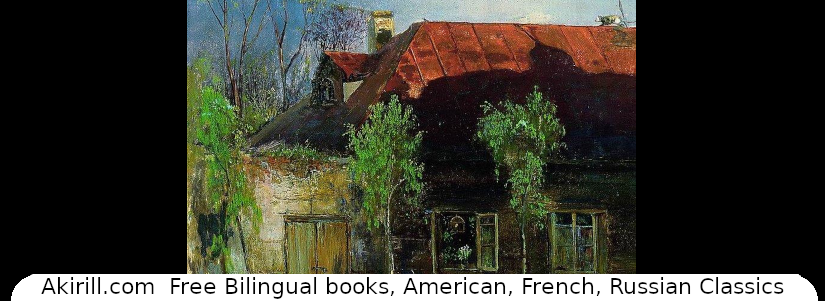
Dear readers and subscribers, this week I did a very short biography of the renowned Russian poet Ivan Bunin, as well as an English translation of his lovely poem “About Plyushchikha” written in 1806 or 1807. As a complement I added the wonderful painting “A house in the province. Spring” by Aleksey Savrasov
As usual you can freely access the whole translation by following one of the link, you can also find all of our translation on the Russian Literature page.
I hope you’ll enjoy this poem and paintings as much as I did
Ivan Alekseevich Bunin was born on October 10 (October 22 according to the Gregorian calendar), 1870, in Voronezh, Voronezh province, Russian Empire, and passed away on November 8, 1953, in Paris, Fourth French Republic. Ivan Alekseevich was a prolific and renowned Russian writer, poet, and translator. He gained international acclaim as the first Russian writer recipient of the 1933 Nobel Prize in Literature.
Coming from a modest noble family, Bunin started an independent life at an early age. Throughout his youth, he engaged in various occupations, including working in newspapers, office jobs, and extensive travels. His experiences and observations greatly influenced his literary works.
In recognition of his literary talent, Bunin was awarded the Pushkin Prize in 1903 for his book “Falling Leaves” and his translation of “The Song of Hiawatha.” This prestigious award was bestowed upon him once again in 1909 for the publication of the third and fourth volumes of his Collected Works.
We put a lot of effort into the quality of the articles and translations, support us with a like and a subscription or sponsor us if you like them. We are also on Facebook and Twitter














 AKirill, Learn, apprenez, translation, traduction, livres bilingues, bilingual books