Histoire du Théâtre Alexandrinski

Livres bilinguesRead in EnglishNous contacter
Littérature américaineLittérature françaiseLittérature russe

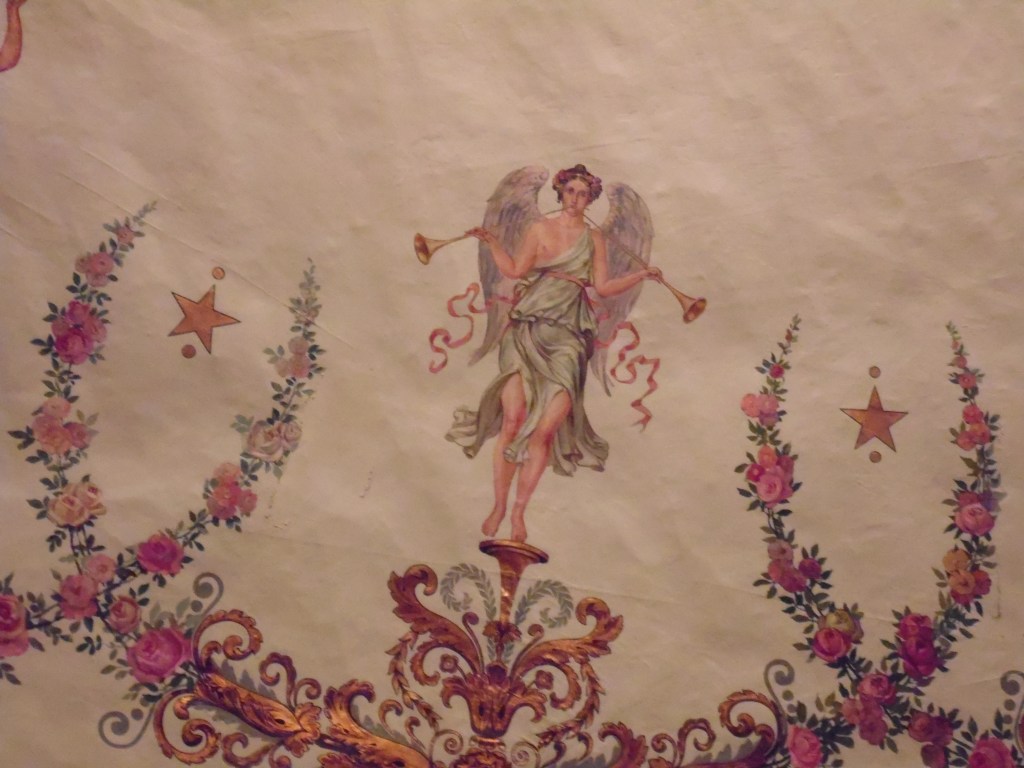
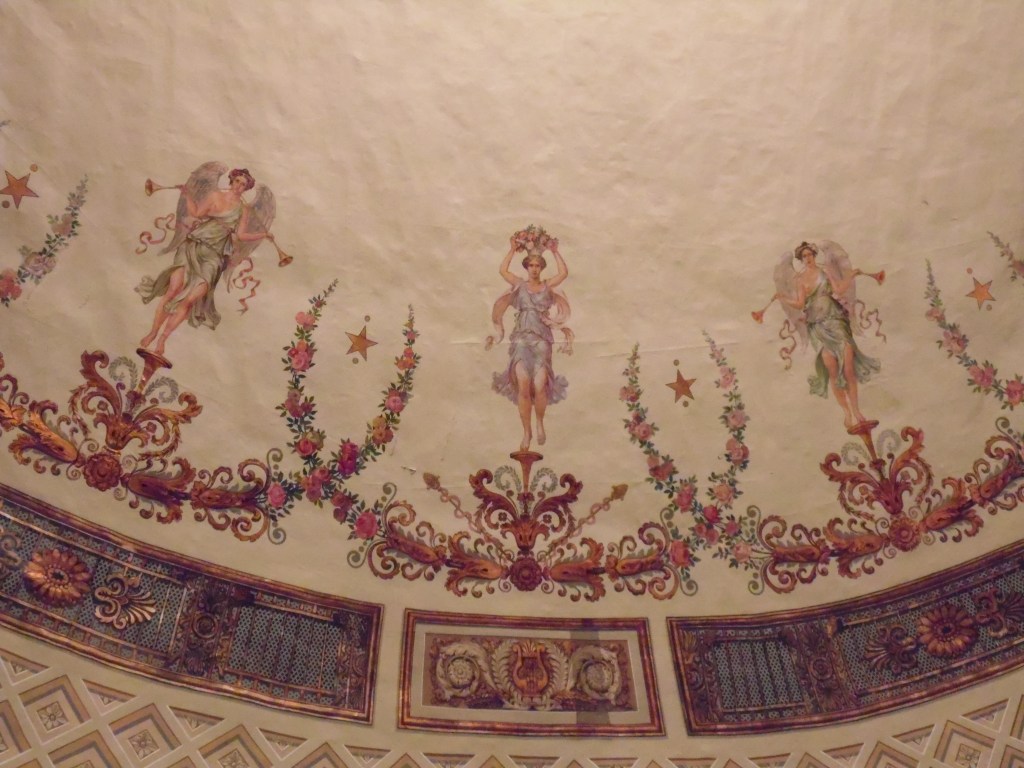
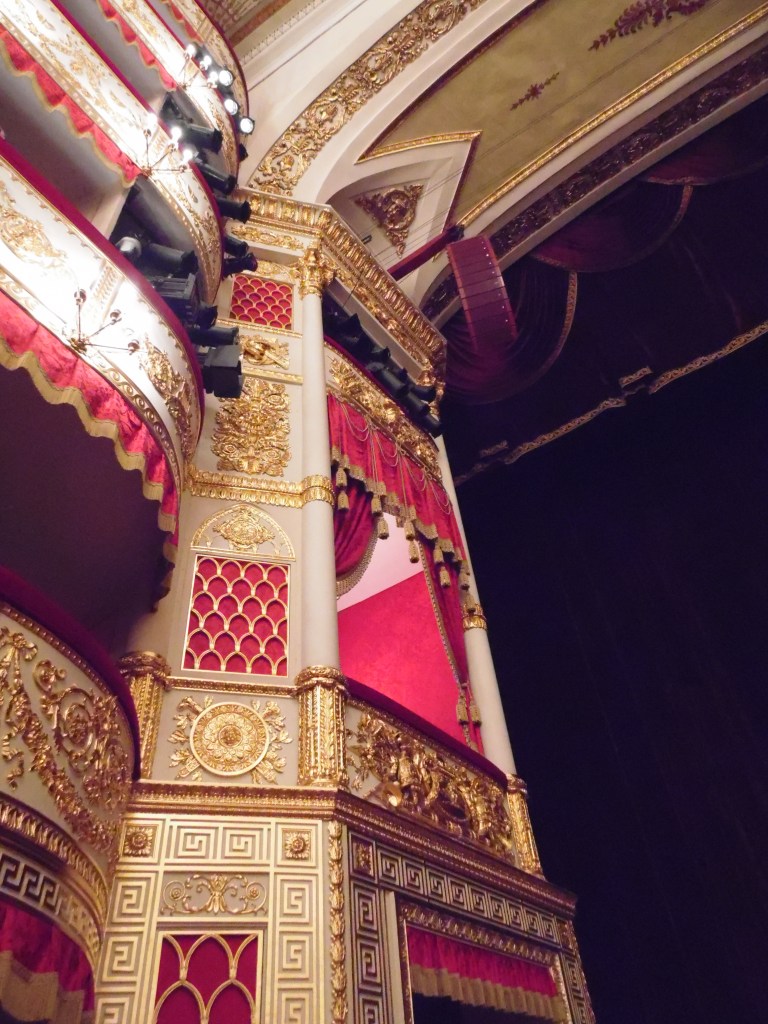
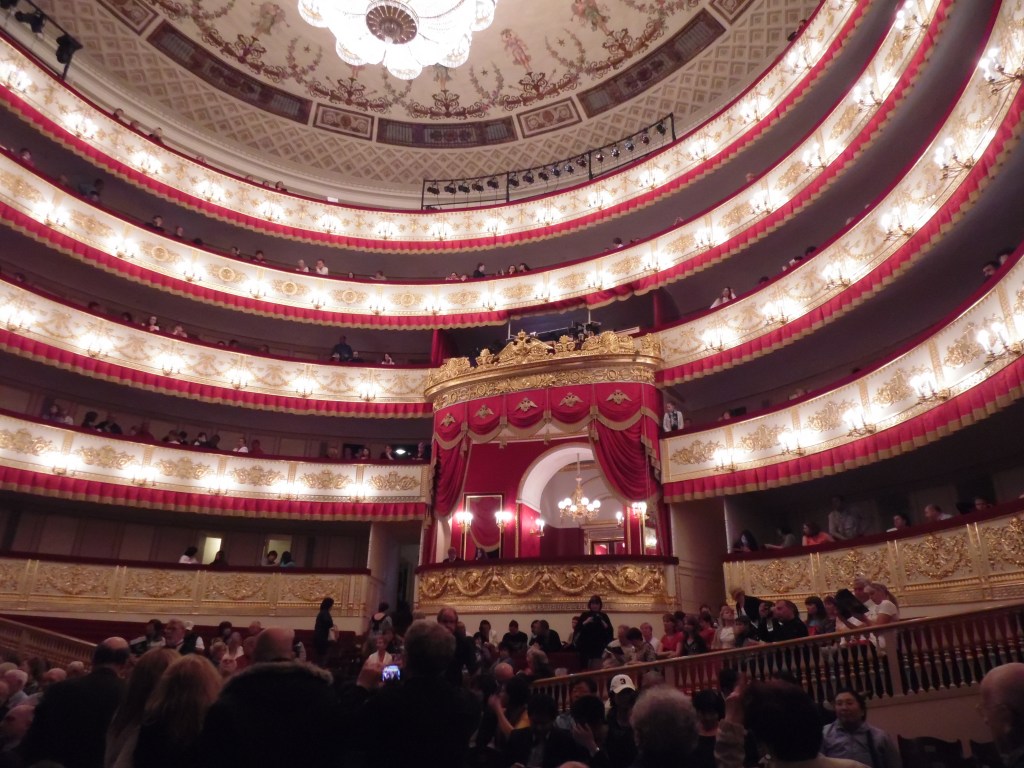
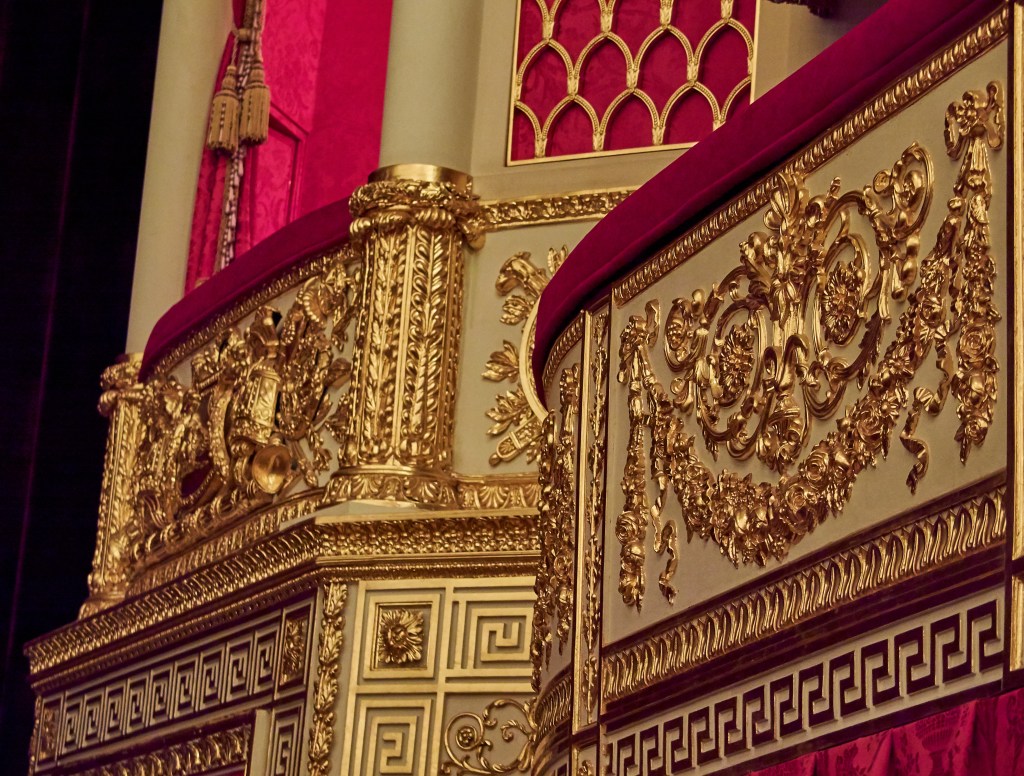
Le théâtre Alexandrinski est le plus ancien théâtre national russe et le deuxième théâtre le plus célèbre de Saint-Pétersbourg. C’est l’une des plus belles œuvres du grand architecte néoclassique Carlo Rossi et considérée comme l’un des joyaux architecturaux de Saint-Pétersbourg. Il est considéré à juste titre comme le berceau du théâtre russe et produit des représentations somptueuses et techniquement impeccables de classiques du théâtre russe et mondial.

Alexandrinsky Theater By Alex 'Florstein' Fedorov, CC BY-SA 4.0
Alexandrinsky Theater By Alex ‘Florstein’ Fedorov, CC BY-SA 4.0

Le théâtre a été créé sur ordre de la fille de Pierre, l’impératrice Elizabeth Petrovna, le 30 août 1756. Son décret, considéré comme la date de naissance du théâtre russe, se lit comme suit :
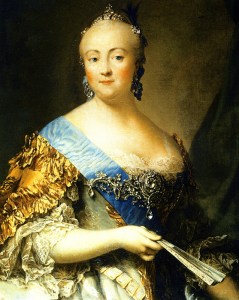
Empress Elizabeth Petrovna

« Nous avons désormais commandé l’établissement d’un théâtre tragique et comique russe, pour lequel nous donnons la maison de pierre Golovkinsky, qui se trouve sur l’île Vasilievsky près de la maison des cadets. Et là-dessus, nous ordonnons que des acteurs et des actrices soient recrutés: des acteurs étudiant le chant et ceux de Yaroslav dans le corps des cadets qui seront nécessaires pour cela, et en plus des acteurs d’autres personnes non en service; aussi, un bon nombre d’actrices. La direction de ce théâtre russe sera dirigée pour nous par le brigadier Alexander Sumarokov.

Par conséquent, le premier théâtre public d’État de Russie a commencé ses représentations régulières dans l’ancienne maison Golovkin sur l’île Vassilievski.

Comme le nombre de spectateurs augmentait rapidement, le bâtiment devint bientôt trop petit et la décision fut prise de remplacer le bâtiment par un théâtre en pierre plus grand.

En 1811, l’architecte français Thomas de Thomon présenta son projet mais l’invasion de la Russie par les forces de Napoléon empêcha la réalisation de ce projet.
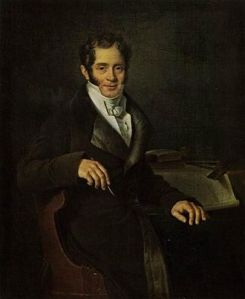
Carlo Rossi
Carlo Rossi

Carl Mauduit, un autre architecte d’origine française, fut le suivant à proposer ses conceptions, pour le nouveau théâtre ainsi que toute la zone entre Nevsky Prospekt et la rue Lomonosova, ainsi que la rue Sadovaya et le quai de la rivière Fontanka. Ses plans furent approuvés en 1816, mais il n’y parvint pas et Carlo Rossi prit la relève.

Le projet dura plus de vingt ans, et fut achevé en 1832.

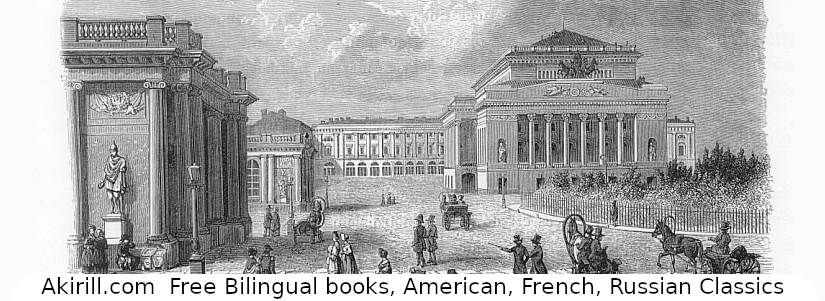
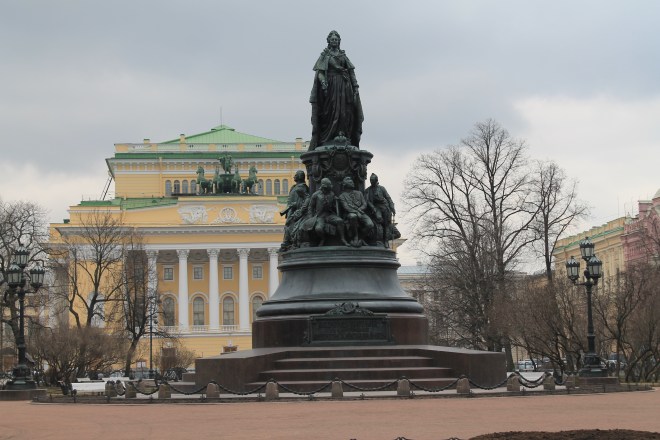
Il comprenait le théâtre nommé d’après l’épouse de l’empereur Nicolas Ier, Alexandra Feodorovna, la Bibliothèque nationale russe et la direction des théâtres impériaux, un jardin confortable a été aménagé devant le bâtiment, nommé plus tard Catherine d’après le monument à Catherine II qui est apparu au centre.

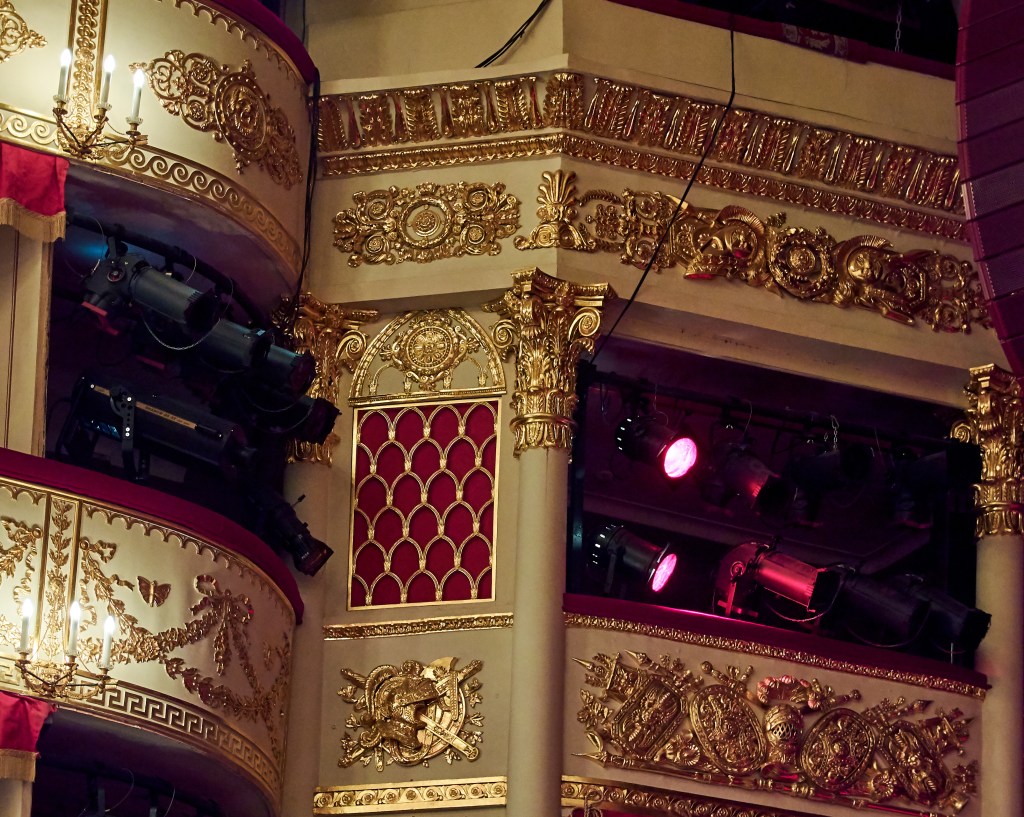
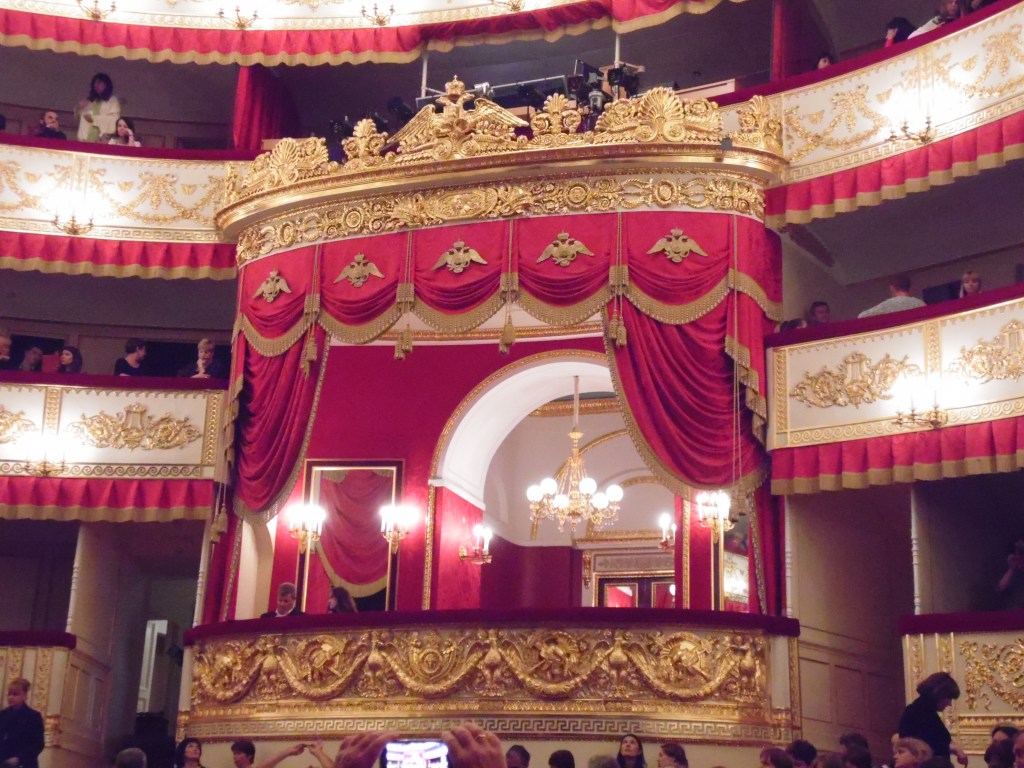
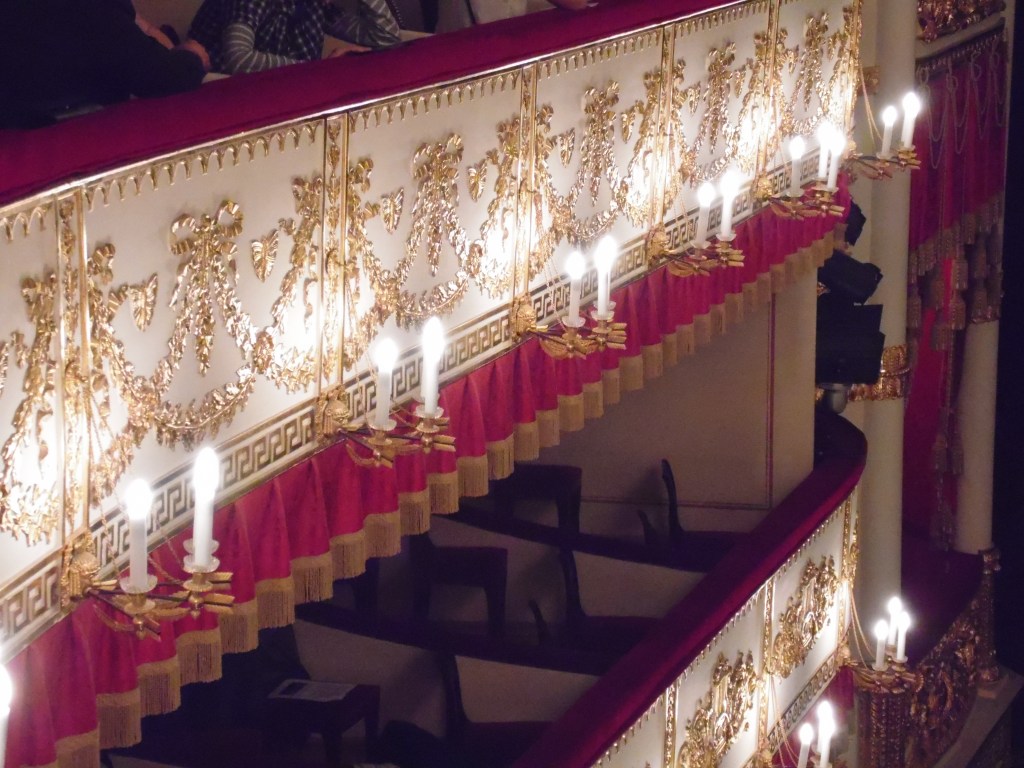
Le théâtre avec sa salle d’audience à cinq niveaux et son énorme scène était l’un des plus grands théâtres d’Europe lors de son ouverture, et a été loué pour sa superbe acoustique.
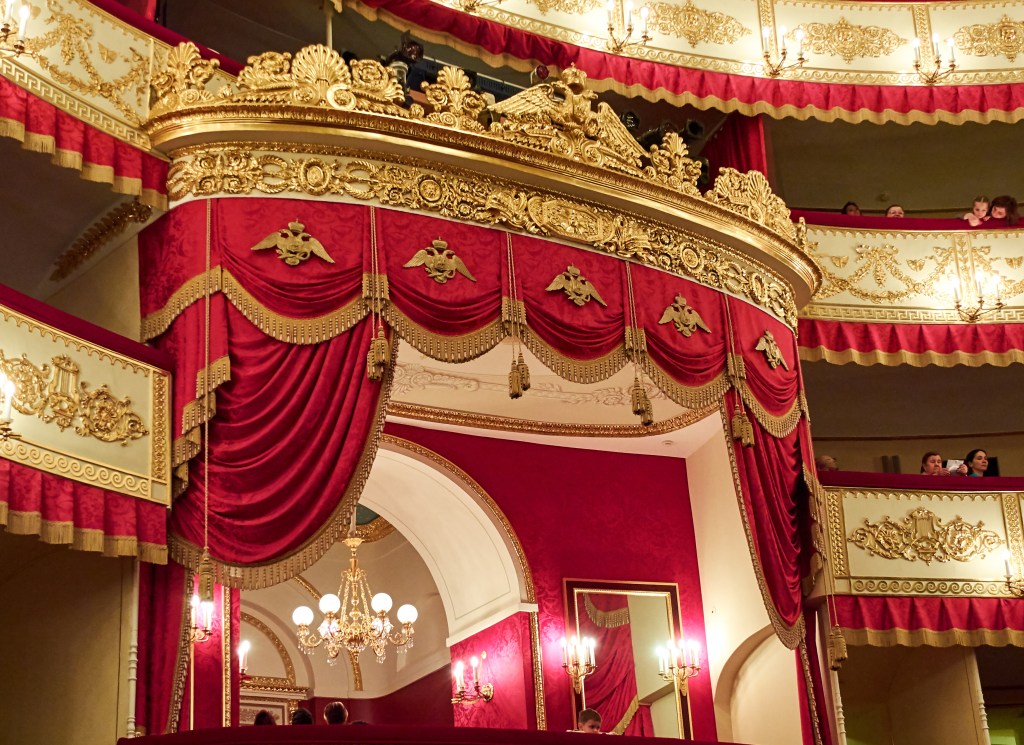
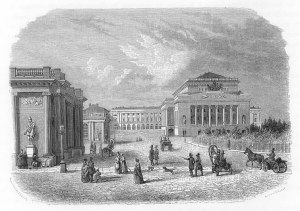
By Michael Shilyaev – Own work, CC BY-SA 4.0
The Alexandrinsky Theater

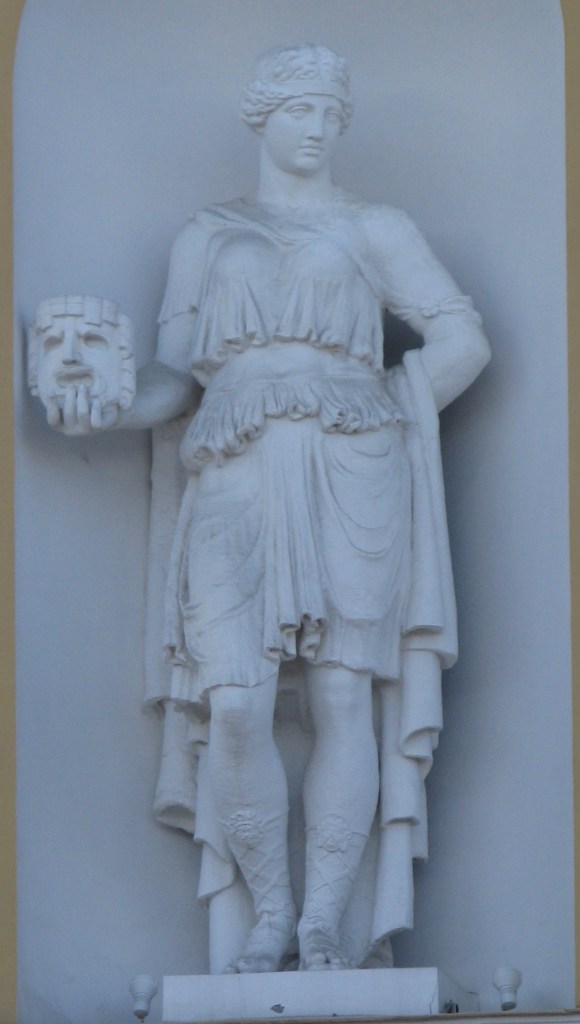
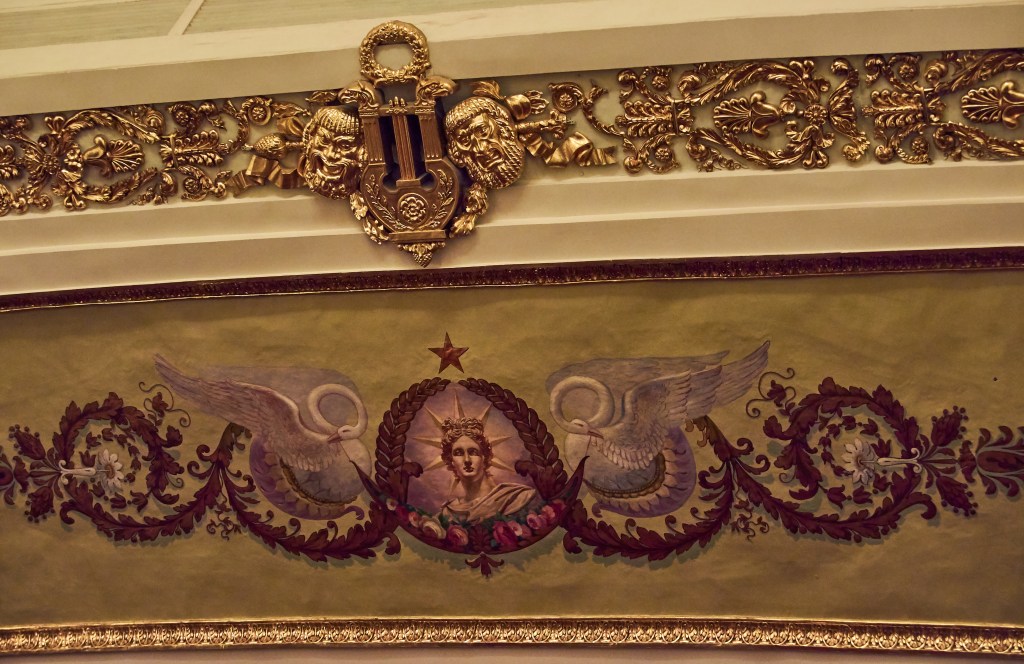
Le théâtre a été peint dans la palette de couleurs jaune et blanche et sa façade principale, du côté de la perspective Nevsky, a été décorée d’une profonde loggia à plusieurs colonnes. Sur le grenier de la façade principale se trouve le quadrige d’Apollon et dans les niches des façades d’extrémité, il y a des statues des muses de la tragédie et de la comédie créées par Vasily Demuth Malinovsky et Stepan Pimenov. Les façades latérales du bâtiment ont été réalisées sous la forme de portiques à huit colonnes, et une frise sculpturale avec des masques de théâtre antiques et des guirlandes de branches de laurier entourait le bâtiment.

Nicolas Ier a été très impressionné par le travail de Rossi et lui a accordé sa propre loge au théâtre à perpétuité.

En 1836, le bâtiment du théâtre Alexandrinski a été officiellement donné à la compagnie de théâtre russe de Saint-Pétersbourg. Cette même année, “La première de l’inspecteur général de Gogol” a été mise en scène avec Nikolai Gogol prenant une part active à la mise en scène de la performance.
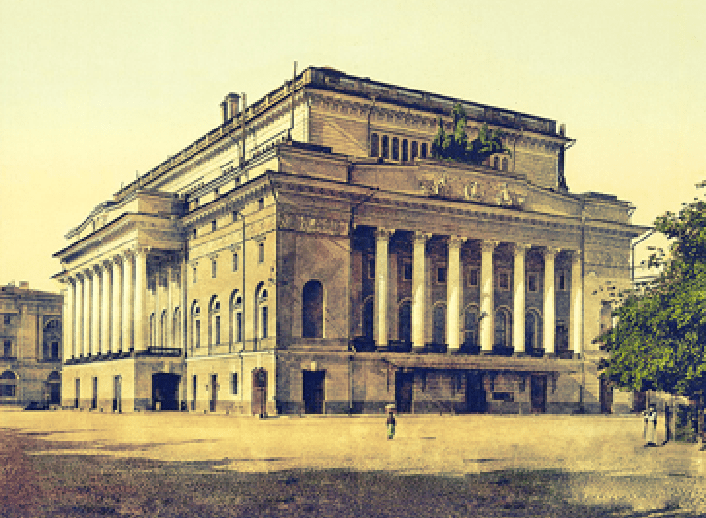
Pratiquement toutes les premières de pièces de théâtre classiques russes ont eu lieu au Théâtre Alexandrinski, je n’en écrirai donc que quelques-unes. « La mort d’Ivan le Terrible » d’AK Tolstoï (1867) ; “Boris Godounov” (1870 et 1934), et “Petites Tragédies” (1962) Par Alexandre Pouchkine ; “Un mois au village” (1879) et “Un nid de gentilshommes” (1940) d’I. Tourgueniev ; “Ivanov” (1889 et 1978) et “Mouette” (1896 et 2007) d’Anton Tchekhov ; « Puissance des Ténèbres » (1895) et « Le Cadavre Vivant » (1950, 2006) de Léon Tolstoï ; « Le Joueur » (1956) et « Le Double » (2005) de Fiodor Dostoïevski ; «Âmes Mortes» (1974) et «Le Marriage» (2008) de N. Gogol; « Messieur George » (1994) et « Mascarade » (2014) de M. Lermontov ; et plein d’autres …

Il y avait aussi des pièces étrangères comme la tragédie d’Euripide “Hippolyte” en 1902, “Don Juan” de Molière en 1910 et “Hamlet” de W. Shakespeare en 2010.

Tout au long de son histoire, le théâtre a accueilli de nombreux grands metteurs en scène comme Fyodor Grigoryevich Volokov (1756-1763), Ivan Afanasievich Dmitrevsky, Yury Yuriev (1922-1928), Nikolai Vasilievich Petrov (1928-1933), Boris Mikhailovich Sushkevich (1933- 1936), Sergei Ernestovich Radlov (1936-1938), Leonid Sergeevich Vivien (1938-1966), IO Gorbatchev (1975-1991) et Valery Fokin 2003

By Michael Shilyaev – Own work, CC BY-SA 4.0
Le théâtre a été intégré au département de gestion du théâtre d’État après février 1917 et a cessé de fonctionner à la fin d’octobre 1917, sabotant le régime bolchevique et boycottant le pouvoir.

En mars 1918, alors que s’opérait l’autonomisation des anciens théâtres impériaux, l’ancien théâtre Alexandrinski changea de nom et devint la compagnie dramatique d’État de Petrograd. Puis en 1919, le mot académique a été ajouté au statut du théâtre et le théâtre a été renommé : Théâtre dramatique académique d’État de Petrograd (ancien Alexandrinski). En 1920, après avoir rejoint l’association des théâtres académiques, le théâtre a de nouveau changé de nom, cette fois en Théâtre dramatique académique d’État (Gosdrama). En 1932, au moment du 100e anniversaire du bâtiment du théâtre Alexandrinski, qui a été largement célébré, le théâtre s’appelait le théâtre dramatique d’État de Leningrad. Le nom d’Alexandre Pouchkine a été ajouté au titre de Lenigrad Gosdrama Theatre en 1937, année du 100e anniversaire de sa mort.

By Michael Shilyaev – Own work, CC BY-SA 4.0

De 1941 à 1944, le théâtre a été évacué à cause de la guerre et la compagnie a continué à travailler au théâtre Krasny Fakel à Novossibirsk.

En 1981, il y a eu une grande célébration du 225e anniversaire du théâtre russe-Alexandrinski-Pouchkine, et en 1991, le nom “Alexandrinski” a été restauré et le nom officiel du théâtre est devenu le Théâtre dramatique académique d’État russe AS Pouchkine (Alexandrinski).

Les murs du théâtre Alexandrinski ont vu et se rappellent de nombreuses grandes figures de l’État russe, des politiciens, des chefs militaires, des dramaturges, des romanciers, des compositeurs et des poètes tels que A. Pouchkine, M. Lermontov, N. Gogol, I. Tourgueniev, F. Dostoïevski, L. Tolstoï, A. Tchekhov, P. Chaikovsky, AM Gorchakov, S. Witte, V. Stolypine, K. Mannerheim ainsi que le couple impérial de l’Empire Russe. et un certain nombre de personnes royales d’Europe.

Au cours de la saison 2005, 2006, le théâtre Alexandrinski a subi une reconstruction en profondeur.

Le 30 août 2006, jour de la célébration du 250e anniversaire du plus ancien théâtre dramatique de Russie, a eu lieu la cérémonie d’ouverture du théâtre Alexandrinski nouvellement reconstruit. Pour la première fois, le Festival international de théâtre Alexandrinski a eu lieu et une exposition historique “Le Musée du théâtre russe” a été ouverte
By Muesse – Own work, CC BY-SA 3.0

Le 180e anniversaire du bâtiment du théâtre Alexandrinski a été célébré en novembre 2012.

La nouvelle scène du théâtre Alexandrinski a été inaugurée le 15 mai 2013. Le complexe de la nouvelle scène a été conçu par un architecte de Saint-Pétersbourg Yury Zemtsov et construit à l’emplacement des anciens ateliers du théâtre entre la place Ostrovsky et le quai Fontanka. Il s’agit d’un complexe à plusieurs niveaux comprenant 4 auditoriums de tailles différentes et un hall d’accueil spacieux sur 2 niveaux doté d’équipements d’éclairage, de son, de vidéo et de médias ultramodernes. 

Le théâtre Alexandrinski a reçu le statut de trésor national en août 2014.

À l’été 2016, une autre installation a été ajoutée au théâtre appelé le toit, qui est un endroit parfait pour des réunions, des lectures de poésie, des concerts et des projections de films.

En avril 2016, le théâtre Alexandrinski a été inscrit sur la liste nationale du patrimoine populaire le plus précieux de la Fédération de Russie.


Le bâtiment unique, et la splendide façade qui est l’un des symboles de Saint-Pétersbourg, est inclus dans la liste des trésors architecturaux mondiaux protégés par l’UNESCO.

J’espère que cet article vous a plu

Si vous avez aimé cet article, abonnez-vous, mettez des likes, écrivez des commentaires !

Partager sur les réseaux sociaux

Découvrez nos derniers posts


© 2023 Akirill.com – All Rights Reserved
Découvrez le château de Preussisch Eylau

Livres bilinguesRead in EnglishNous contacter
Littérature américaineLittérature françaiseLittérature russe

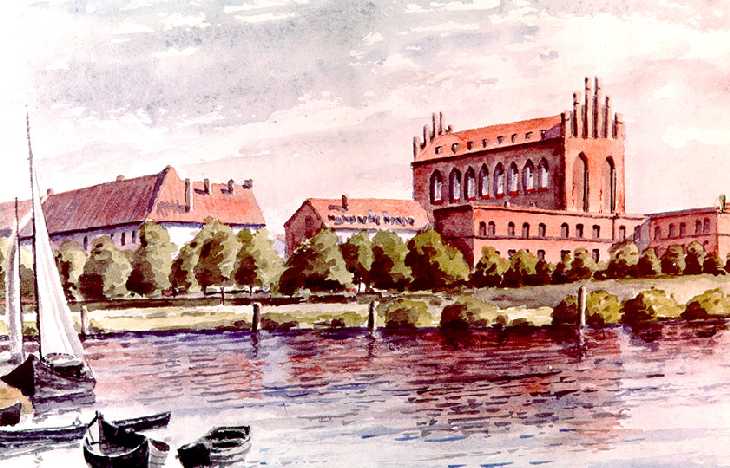
Le château de Preussisch Eylau est un château de l’Ordre Teutonique construit en 1325 et situé à Bagralionovsk, près de Kaliningrad. Il a reçu le statut de site du patrimoine culturel d’importance régionale par décret du gouvernement de Kaliningrad le 23 mars 2007. Le 11 octobre 2022, il a été vendu 7,6 millions de roubles à la société “GreenArtDevelopment” quatre ans après sa mise en vente. aux enchères

Авторство: ИМгорь. Собственная работа, CC BY-SA 3.0,

Dans les documents historiques, la première mention du château se produit en 1326, où il est appelé “Ile”, dans les archives de 1342  le nom mentionné est “Iladia”, en 1400 il s’appelle “Preissish-Ilov” (Preussisch-eylau). nom qui lui est resté.

Le grand maître de l’Ordre Teutonique Werner von Orseln ordonna la construction du château d’Ile en 1325. Le but principal de la forteresse était de protéger la capitale de la région Krulevets (Koenigsberg) du sud. Le commandant de Balga, maître Arnold von Eilenstein a supervisé la construction du château de Preussisch Eylau, qui à l’origine a été réalisé en pierres et en briques sur le site de la forteresse prussienne de Sutvrit. 

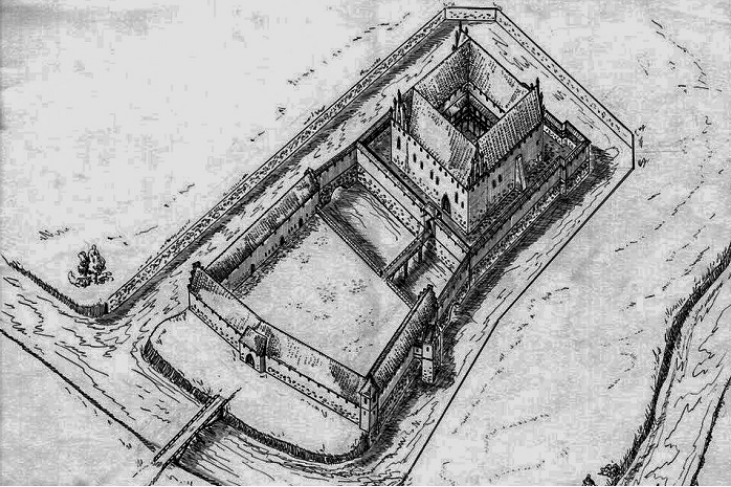
 Un barrage avec un moulin a été construit, le niveau de l’eau est monté et le château s’est retrouvé sur une île. En 1330, une fortification en pierre de forme carrée de 41 m x 43 m a été édifiée, entourée de douves, d’une porte herse, d’une tour et d’un pont-levis. Un grand forburg de 120 x 140 mètres, qui était entouré de ses propres douves et d’un mur de forteresse de 1,6 mètre d’épaisseur avec un passage défensif, a été attaché à la fortification du côté est. Il y avait des écuries, une brasserie, des locaux pour les soldats de l’ordre, des ateliers de fabrication d’armes, une boulangerie, et d’autres dépendances.  

The first settlements on the site of Tapiau are hundreds of years old.
By Sendker -, CC BY-SA 3.0,

L’entrée principale de la citadelle du château Preussisch-Eylau se trouvait dans l’aile est du forburg. La chapelle du château qui était un attribut obligatoire d’un château d’ordre typique se trouvait dans l’aile sud, et une tour sanitaire se trouvait dans la partie nord. 

Le premier étage était occupé par des dépendances, dont la cuisine, située sous le réfectoire, et des pièces de service. Au deuxième étage de l’aile ouest se trouvaient le logement et la résidence des frères de l’ordre, qui comprenait un réfectoire, une salle de réunion, les chambres des moines et les chambres occupées par le régisseur du château. Le troisième étage remplissait des fonctions défensives et était équipé d’un passage militaire et de meurtrières. Il y avait aussi une petite tour de guet ronde dans le coin nord-est. Pour avoir un accès facile à l’eau il y avait un puits dans la cour du château.

Jusqu’en 1347 le château de Preussisch Eylau fut la résidence de l’Ordre Pfleger, puis il abrita l’administration du Kammerat, appartenant à la commanderie de Balga. 

En 1400, après avoir été frappé par la foudre, toutes les parties en bois du château ont brûlé. Puis le château de Preussisch Eylau passa au Grand Maître de l’Ordre Teutonique Heinrich von Plauen pour le service militaire en 1429.

Reconstruction of the plan of the original Tapiau castle complex. 
/Photo: mif-mira.ru

Le château de Preussisch Eylau a été capturé et partiellement endommagé par la population rebelle en 1454 mais il a été repris la même année et les dégâts ont été réparés.

Il a encore été attaqué en mai 1455 par une armée alliée à la Pologne qui n’est pas parvenue à s’en emparer alors que la garnison protégeant le château n’était composée que de deux douzaines de chevaliers et de soixante miliciens. Un siège n’a pas non plus réussi puisque de l’aide a été envoyée au château et que l’armée alliée à la Pologne a été vaincue.

Il y eut une autre tentative infructueuse de prendre le château en octobre 1455.

Le château de Preussisch Eylau et les terres environnantes ont été transférés à Heinrich Reuss von Plauen pour une utilisation à vie en 1492.

Plus de 4000 mercenaires polonais attaquèrent à nouveau le château en 1519, mais la garnison du château dirigée par le chevalier Friedrich Truchses Weltburg et le commandant de Courlande Firike repoussa les attaques successives.

Le château devint la résidence du domaine départemental de Hauptmann Preussisch Eylau en 1525 après une réforme et l’abolition de l’Ordre Teutonique. Puis il reçut les droits de la ville en 1585, et en 1587 ses armoiries.

À la fin du XVIIIe siècle, le château avait perdu sa vocation et une partie de son bâtiment a été démontée et utilisée pour construire de nouvelles structures. 

Un incendie a endommagé le château de Preussisch Eylau en 1802 mais il ne fut pas restauré et le Forburg fut utilisé à des fins économiques. En 1814, il a été acheté par Heinrich Sigismund Valentini qui a construit une nouvelle maison à un kilomètre au nord-ouest du château après que le château ai commencé à s’effondrer dû à l’absence d’une partie du toit.

En 1831, un nouveau manoir Henrettenhof a été construit dans le style néoclassique. Il se trouve sur les fondations du fort de la forteresse Preussisch Eylau entre l’aile est, et la grange.

Help the site stay free, buy us a cup of coffeeAidez-nous à maintenir le site gratuit en nous offrant une tasse de café

L’ancien manoir situé sur le territoire du château de Preussisch Eylau a été donné au magistrat de la ville de Preussisch-Eylau en 1932, et cette même année un musée couvrant la période de l’histoire de la région de l’âge de pierre aux événements de la Première Guerre mondiale y a été ouvert. Malheureusement, dans la période d’après-guerre, le bâtiment a été complètement démantelé.

Pendant la Seconde Guerre mondiale, le château n’a pas été gravement endommagé, et les quartiers d’habitation ont été utilisés jusqu’au début des années 1960. 

Le château de Preussisch Eylau et le forburg ont été transférés à l’union des consommateurs du district en 1961 et ont été utilisés comme entrepôts. 

En 1964, les bâtiments du château et le forburg ont été examinés par des employés des ateliers centraux scientifiques et de restauration du ministère de la Culture de l’URSS. L’état du château était très mauvais, car il n’a jamais été réparé après la guerre. 

Un stand de tir a été construit à l’emplacement de l’aile ouest, qui a été démolie dans les années 1990. Dans le forburg survivant, le toit a commencé à s’effondrer à cause de chevrons pourris, des trous sont apparus en 1989 et en août 1990, la partie centrale a brûlé. 

Au début des années 1990, il a été décidé de transformer le forburg en hôtel avec bar, mais l’idée a été abandonné.

Le 5 juin 2016, un incendie s’est déclaré dans le château, détruisant une partie de la toiture.

Le 29 août 2018, les autorités régionales ont tenté de vendre le château lors d’une vente aux enchères, mais elles n’y sont pas parvenues.

Ils ont de nouveau tenté de vendre le bâtiment en 2020, mais n’ont pas trouvé d’acheteur. Enfin, le château a été vendu pour 7,6 millions de roubles lors de la vente aux enchères de la société GreenArt Development en 2022. «GreenArtDevelopment» est enregistré à Saint-Pétersbourg et est engagé dans la location et la gestion immobilière.

J’espère que cet article vous a plu

Si vous avez aimé cet article, abonnez-vous, mettez des likes, écrivez des commentaires !
Partager sur les réseaux sociaux
Découvrez nos derniers messages

Discover the Preussisch Eylau Castle

Bilingual booksLire en FrançaisContact us
American LiteratureFrench LiteratureRussian Literature

The Preussisch Eylau Castle is a castle of the Teutonic Order built in 1325 and located in Bagralionovsk, near Kaliningrad. It received the status of a cultural heritage site of regional significance by decree of the Government of the Kaliningrad on March 23, 2007. On October 11, 2022, it was sold 7.6 million rubles to the company “GreenArtDevelopment” four years after it was put up for auction

Авторство: ИМгорь. Собственная работа, CC BY-SA 3.0,

In historical documents, the first mention of the castle occurs in 1326, where it is called “Ile”, in the records of 1342 the name mentioned is “Iladia”, in 1400 the name changes once again and it becomes “Preissish-Ilov” (Preussisch-eylau), name which stuck.
The grand master of the Teutonic Order Werner von Orseln ordered the construction of Ile Castle in 1325. The main purpose of the fortress was to protect the capital of the region Krulevets (Koenigsberg) from the south. Balga Commander, master Arnold von Eilenstein supervised the construction of the Preussisch Eylau Castle, which was originally carried out from stones and brick on the site of the Prussian fortress of Sutvrit. 

 A dam with a mill was built, the water level rose and the castle ended up on an island. In 1330, a square-shaped stone fortification of 41 m x 43 m was built, surrounded by a moat, a portcullis gate, a tower and a drawbridge. A large forburg of ​​120 x 140 meters, which was surrounded by its own moat and a fortress wall, 1.6 meters thick with a defensive passage, was attached to the fortification on the eastern side. There were stables, a brewery, premises for the soldiers of the order, workshops for the manufacture of weapons, a bakery, and other outbuildings.  

The first settlements on the site of Tapiau are hundreds of years old.
By Sendker -, CC BY-SA 3.0,

The main entrance to the castle citadel Preussisch-Eylau  was in the eastern wing from the forburg. The castle chapel which was an obligatory attribute of a typical order castle was in the southern wing, and a sanitary tower could be found in the northern part. 

The first floor was occupied by outbuildings, including the kitchen, which was located under the refectory, and utility rooms. On the second floor of the western wing was the accommodation and residence of the brothers of the order, which included a refectory, a meeting room, the bedrooms of the monks and the chambers that were occupied by the manager of the castle. The third floor, performed defensive functions and was equipped with a military passage and loopholes. There was also a small round watchtower in the northeast corner. To have an easy access to water there was a well in the castle courtyard.

Until 1347 the Preussisch Eylau castle was the residence of the order pfleger, then it housed the administration of the kammerat, belonging to the Balga commandery. 

In 1400, after being struck by lightning all wooden parts of the castle burned down. The Preussisch Eylau castle passed to the Grand Master of the Teutonic Order Heinrich von Plauen for military service in 1429.

Reconstruction of the plan of the original Tapiau castle complex. 
/Photo: mif-mira.ru

The Preussisch Eylau castle was captured and partially damaged by the rebellious population in 1454 but it was returned that same year and the damages were repaired.

It came under attack in May 1455 by a Polish-allied army which was unable to capture it even though the garnison protecting the castle was only composed of two dozen knights and sixty militias. A siege didn’t pan out neither since help was sent to the castle and the Polish-allied army was defeated.

There was another unsuccessful attempt to take the castle in October 1455.

The Preussisch Eylau castle and surrounding lands were transferred to Heinrich Reuss von Plauen for life use in 1492.

More than 4000 Polish mercenaries again repeatedly attacked the castle in 1519, but the castle garrison which was led by the knight Friedrich Truchses Weltburg and the Courland commander Firike repelled the successive attacks.

The castle became the residence of the departmental estate of Hauptmann Preussisch Eylau in 1525 after a reformation and the abolition of the Teutonic Order. Then it received city rights on 1585, and in 1587 its coat of arms.

By the end of the 18th century, the castle had lost its purpose and part of its building were disassembled and used to built new structures.

A fire damaged the Preussisch Eylau castle in 1802 but it was not restored and the Forburg was used for economic purposes. In 1814, it was bough by Heinrich Sigismund Valentini who built a new house a kilometer northwest of the castle after the castle began to collapse because of lack of part of the roof.

In 1831 a new Henrettenhof manor was built in the neoclassical style. It is on the foundations of the Preussisch Eylau fortress fort between the eastern wing and the barn.

Help the site stay free, buy us a cup of coffeeAidez-nous à maintenir le site gratuit en nous offrant une tasse de café

The old manor building located on the territory of the Preussisch Eylau castle was given to the city magistrate of Preussish-Eylau in 1932, and this same year a museum covering the period of the regions history from the stone age to the events of the First World War was open there. Sadly, in the post war period the building was completely dismantled.

During the Second World War , the castle was not badly damaged, and the living quarters were used until the early 1960s. 

The Preussisch Eylau castle and forburg were transferred to the district consumer union in 1961, and were used as storage facilities. 

In 1964 the buildings of the castle and forburg were examined by employees of the central scientific and restoration workshops of the USSR Ministry of Culture. The condition of the castle was very poor, as it was never repaired after the war. 

A shooting gallery was built on the site of the western wing, which was demolished in the 1990s. In the surviving forburg, the roof began to collapse because of rotten rafters, holes appeared in 1989 and in August 1990 the middle section burned down. 

In the early 1990s, a decision was made to convert the forburg into a hotel with a bar, but it was abandoned.

On June 5, 2016, a fire broke out in the castle, destroying part of the roof.

On August 29, 2018, the regional authorities tried to sell the castle at an auction, but they didn’t succeed.

They again tried to sell the building in 2020, but could not find a buyer. Finally the castle was sold for 7.6 million rubles at the auction of the GreenArt Development company in 2022. “GreenArtDevelopment” is registered in St. Petersburg and is engaged in rental and property management.

I hope you enjoyed this article

If you liked this article, subscribe , put likes, write comments!
Share on social networks
Check out Our Latest Posts

Histoire des chambres de Kikin

Livres bilinguesRead in EnglishNous contacter
Littérature américaineLittérature françaiseLittérature russe

Les chambres de Kikin sont l’un des plus anciens bâtiments de Saint-Pétersbourg. Ce bâtiment est inclus dans le registre d’État unifié des objets du patrimoine culturel de la Russie. Le manoir qui a été reconstruit plusieurs fois se trouve dans la rue Stavropolskaya entre l’ancien Institut de recherche en ingénierie de radio de Leningrad et un immeuble résidentiel construit au début de notre siècle.

Авторство: Alex ‘Florstein’ Fedorov, CC BY-SA 4.0,

C’est la seule maison d’Alexander Kikin qui existe encore de nos jours. 

Alexander Vasilyevich Kikin était un noble éminent et l’un des associés de Pierre le Grand. Il a accompagné le tsar dans la campagne d’Azov, puis est parti étudier la construction navale en Hollande. Après avoir été nommé chef de l’Amirauté de Saint-Pétersbourg en 1708, il a reçu le grade de conseiller de Pierre pour l’Amirauté en 1712.

Alexandre est devenu l’une des personnes les plus riches de Russie et a commencé à se construire un manoir. Malheureusement, lorsqu’un conflit éclata entre Pierre Ier et le tsarévitch Alexei, Kikin aida Alexei à se cacher à l’étranger et scella son propre destin. En 1718, avant que son manoir ne soit terminé, il fut placé en garde à vue, puis condamné à être roulé et il est mort d’une mort douloureuse sur le billot.

Les chambres Kikin ont été confisquées et toutes les propriétés de Kikin sont allées au trésor. Le palais d’hiver se dresse maintenant sur le deuxième terrain de Kikin.

La construction des chambres a commencé en 1714 et s’est terminée en 1720. Il est présumé que A. Schluter était l’architecte du bâtiment. Sa construction s’est déroulée en deux étapes. Initialement, la partie centrale de la maison était à deux étages et deux ailes à un étage, destinées aux besoins domestiques, la jouxtaient des deux côtés.

Les fenêtres et les portes des chambres Kikin étaient encadrées de chambranles et le toit était recouvert de tuiles plates. Le bâtiment avait des risalits latérales, qui étaient des corniches situées au centre et sur les côtés des façades. Leur caractéristique était la présence de boucles décoratives complexes, les soi-disant volutes et omoplates. Ils remplissaient non seulement des fonctions décoratives, mais aussi constructives, car ils contribuaient au renforcement du mur. Les chambres de Kikin étaient décorées d’un porche, auquel de petits escaliers menaient des deux côtés. Des balustres blancs leur donnaient un aspect spécial et solennel. Le bâtiment était orné de frontons et couronné d’un haut toit avec une fracture. La disposition interne de la structure était très similaire à la disposition des pièces du Grand Palais de Peterhof. En 1720, un second étage est construit sur les ailes latérales.

Une fois la construction des chambres terminée, la célèbre Kunstkamera et la bibliothèque de Pierre Ier ont été placées à l’intérieur où elles sont restées jusqu’en 1727.

Après l’exécution du propriétaire en 1718, la population croyait que le fantôme de Kikin errait dans la maison et peu de gens voulaient voir la collection appartenant au tsar. Le tsar recourant à la ruse, promit à tous ceux qui visitaient la Kunstkamera un verre de vodka ou une tasse de café afin de mieux faire connaitre les sciences naturelles. Cela fonctionna et l’exposition a eu de plus en plus de visiteurs.

De plus, Natalya Alekseevna, la sœur du tsar, a installé l’un des premiers théâtres de la ville dans une partie du bâtiment.

Il y a une légende bien connue qui dit qu’une fois Pierre le Grand, marchant le long des rives de la Neva, vit une branche d’arbre, qui a miraculeusement poussé dans son tronc et a décidé de construire un nouveau bâtiment pour la Kunstkamera où il a transféré sa collection en 1727.

 Dans les années 1720, les Kikin Chambers ont été reconstruites par un architecte inconnu.

En 1733, un hôpital, un bureau et le quartier général des cavaliers militaires ont été ouverts dans les Chambres de Kikin. Lors de la construction de casernes pour le régiment des cavaliers militaires à côté des chambres, qui ont été adaptées pour l’infirmerie et le bureau du régiment, FB Rastrelli a érigé un clocher avec un dôme et une croix sur la partie médiane des chambres. La Grande Salle servait alors d’église régimentaire.

Au 19ème siècle, le bâtiment a été gravement endommagé. En 1829, les chambres de Kikin sont reconstruites selon le projet d’Alexander Staubert. Il fit preuve d’une extrême négligence dans sa démarche et détruisit tout le riche décor baroque qui ornait la façade de la maison. Les pilastres ont été enlevés, la superstructure-clocher de Rastrelli a été démolie. Les murs étaient recouverts de plâtre et il a ajouté 2 pièces au bâtiment du côté du remblai. En 1874, deux escaliers symétriques ont été ajoutés au bâtiment du côté Neva.

Help the site stay free, buy us a cup of coffeeAidez-nous à maintenir le site gratuit en nous offrant une tasse de café

Pendant le siège de Leningrad, les chambres de Kikin ont été gravement endommagées par des bombes et des obus, et le bâtiment a été incendié à plusieurs reprises. Cependant, c’est à cette époque que le plâtre appliqué lors de la dernière restauration est tombé, laissant apparaître la façade d’origine du début du XVIIIe siècle.

Cela a permis de commencer à recréer les façades dans les formes de l’architecture pétrinienne. 

Immédiatement après la guerre, la mise en œuvre d’un projet ambitieux de l’architecte I. Benois a commencé à redonner aux chambres Kikin leur aspect historique. Les pilastres ont été remis à leur place, les superstructures ultérieures du bâtiment ont été démolies et des frontons ont été attachés aux chambres des deux côtés. La restauration a été achevée en 1956.

En 1979, les autorités de Saint-Pétersbourg ont transféré les chambres Kikin à l’école de musique pour enfants n ° 12. Depuis 1995, l’école a été transformée en lycée musical de Saint-Pétersbourg, qui se trouve encore aujourd’hui dans ce bâtiment.

If you liked this article, subscribe , put likes, write comments!.
Share on social networks
Check out Our Latest Posts

History of Kikin chambers

Bilingual booksLire en FrançaisContact us
American LiteratureFrench LiteratureRussian Literature

Kikin chambers is one of the oldest building in Saint Petersburg. This building is included in the Unified State Register of Cultural Heritage Objects of Russia. The mansion which was rebuilt several times is on Stavropolskaya street between the former Leningrad Radio Engineering Research Institute and a residential building built at the beginning of our century.

Авторство: Alex ‘Florstein’ Fedorov, CC BY-SA 4.0,

It is the only house of Alexander Kikin that still exist nowadays.

Alexander Vasilyevich Kikin was a proeminent nobleman and one of the associates of Peter the Great. He accompanied the tsar in the Azov campaign, then went to study shipbuilding in Hollands. After having been appointed head of the Saint Petersburg Admiralty in 1708, he was awarded the rank of Peter’s adviser for the Admiralty in 1712.

Alexander became one of the richest person in Russia and began to build himself a mansion. Sadly when a conflict arose between Peter I and Tsarevich Alexei, Kikin helped Alexei hide abroad sealing his own fate. In 1718, before his mansion was finished, he was taken into custody, sentenced to be wheeled and died a painful death on the chopping block.

The chambers were confiscated and all the properties of Kikin went to the treasury. The Winter Palace stands on Kikin’s second land plot now.

The construction of the chambers began in 1714 and ended in 1720. It is presumed that A. Schluter was the architect of the building. Its construction was carried out in two stages. Initially, the central part of the house was two-story, and two one-story wings, which were intended for household needs, adjoined it on both sides.

The windows and doorways of the Kikin chambers were framed with platbands, and the roof was covered with flat tiles. The building had side risalits, which were ledges located in the center and on the sides of the facades. Their feature was the presence of intricate decorative curls, the so-called volutes and shoulder blades. They performed not only decorative functions, but also constructive, as they contributed to the strengthening of the wall. Kikin’s chambers were decorated with a front porch, to which small stairs led from both sides. White balusters gave them a special, solemn look. The building was decorated with pediments, and it was crowned with a high roof with a fracture. The internal layout of the structure was very similar to the arrangement of rooms in the Peterhof Grand Palace. In 1720 a second floor was built over the side wings.

After the construction of the chambers was completed, the famous Kunstkamera and the library of Peter I were placed inside where they stayed until 1727.

After the execution of the owner in 1718, there was a belief among the people that the ghost of Kikin was wandering in the house and few people wanted to see the collection belonging to the tsar. The tsar resorting to cunning, promised everyone who visited the the Kunstkamera a glass of vodka or a cup of coffee in order to popularize the natural sciences. It worked and the exposition had many visitors.

In addition, Natalya Alekseevna, the tsar sister set up one of the first city theater in part of the building.

There is a well-known legend which says that once Peter the Great, walking along the banks of the Neva, saw a branch of a tree, which miraculously grew into his trunk and decided to build a new building for the Kunstkamera where he transferred his collection in 1727.

 In the 1720s, the Kikin Chambers were rebuilt by an unknown architect.

In 1733, a hospital, an office and the headquarters of the Horse Guards were opened in the Kikin Chambers. During the construction of barracks for the regiment of the Horse Guards next to the chambers, which were adapted for the regimental infirmary and office,  F. B. Rastrelli erected a bell tower with a dome and a cross over the middle part of the chambers. The Great Hall was then used for the regimental church.

In the 19th century the building was seriously damaged. In 1829, Kikin’s chambers were reconstructed according to the project of Alexander Staubert. He was extremely negligent in his approach and destroyed all the rich baroque decor that adorned the facade of the house. The pilasters were removed, the superstructure-bell tower by Rastrelli was demolished. The walls were covered with plaster, and he added 2 rooms to the building from the side of the embankment. In 1874, two symmetrical staircases were added to the building from the Neva side.

Help the site stay free, buy us a cup of coffeeAidez-nous à maintenir le site gratuit en nous offrant une tasse de café

During the Siege of Leningrad, the Kikin chambers were badly damaged by bombs and shells, and the building was repeatedly on fire. However, it was at this time that the plaster applied during the last restoration fell off, revealing the original facade of the early 18th century.

This made it possible to start recreating the facades in the forms of Petrine architecture. 

Immediately after the war, the implementation of an ambitious project by the architect I. Benois began to restore the Kikin chambers to their historical appearance. The pilasters were returned to their places, later superstructures to the building were demolished, and pediments were attached to the chambers from two sides. The restoration was completed in 1956.

In 1979, the authorities of St. Petersburg transferred the Kikin Chambers to the Children’s Music School No. 12. Since 1995, the school has been transformed into the St. Petersburg Musical Lyceum, which is located in this building to this day.

If you liked this article, subscribe , put likes, write comments!.
Share on social networks
Check out Our Latest Posts

History of the Saint Basil’s Cathedral

Bilingual booksLire en FrançaisContact us
American LiteratureFrench LiteratureRussian Literature

Saint Basil’s Cathedral, an architectural treasure of Moscow

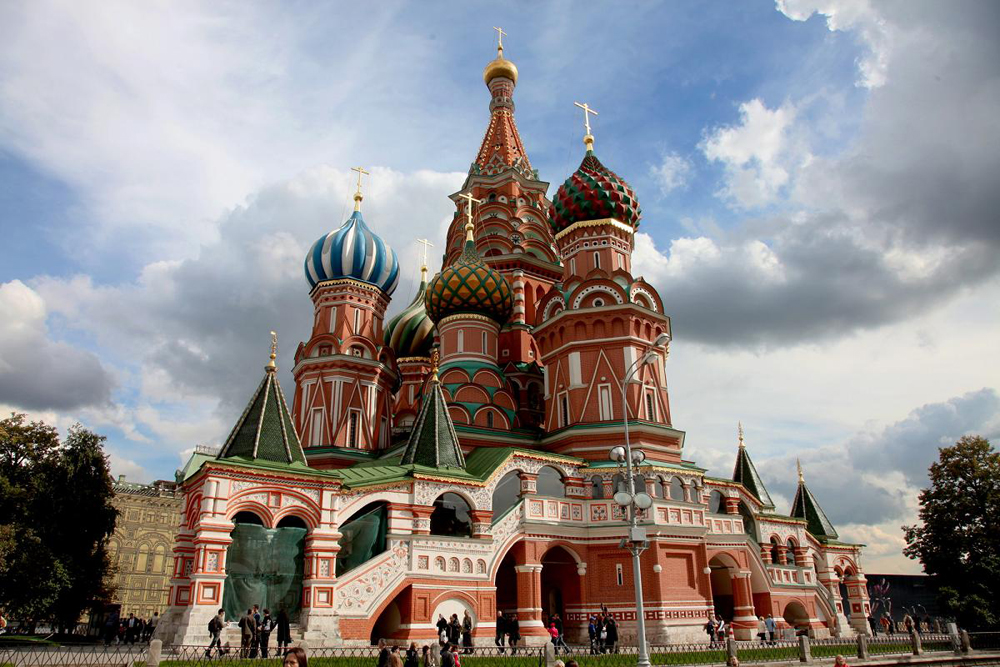
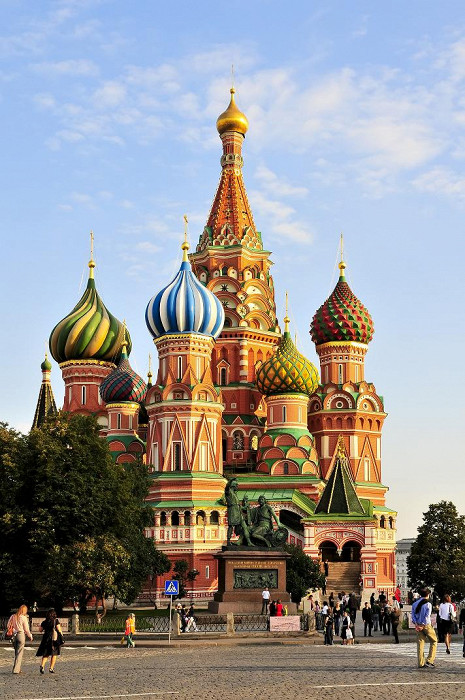
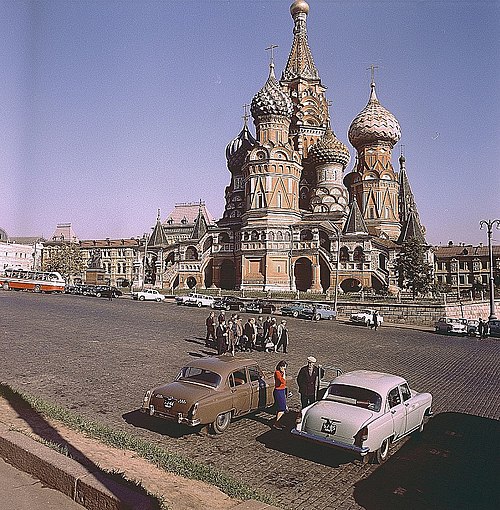
The extraordinarily beautiful and mysterious St. Basil’s Cathedral, or the Cathedral of the Intercession of the Virgin, on the Moat, flaunting on Red Square, is one of the most significant monuments of ancient Russian architecture of the 16th century. Neither before nor after it was built any such structure. It looks like a vault of eight churches, which surrounds the highest – the ninth. Such a temple still does not exist anywhere else in Russia. Even the bright pattern of the domes of the cathedral makes it look like a blooming Garden of Eden.

Saint Basil’s Cathedral

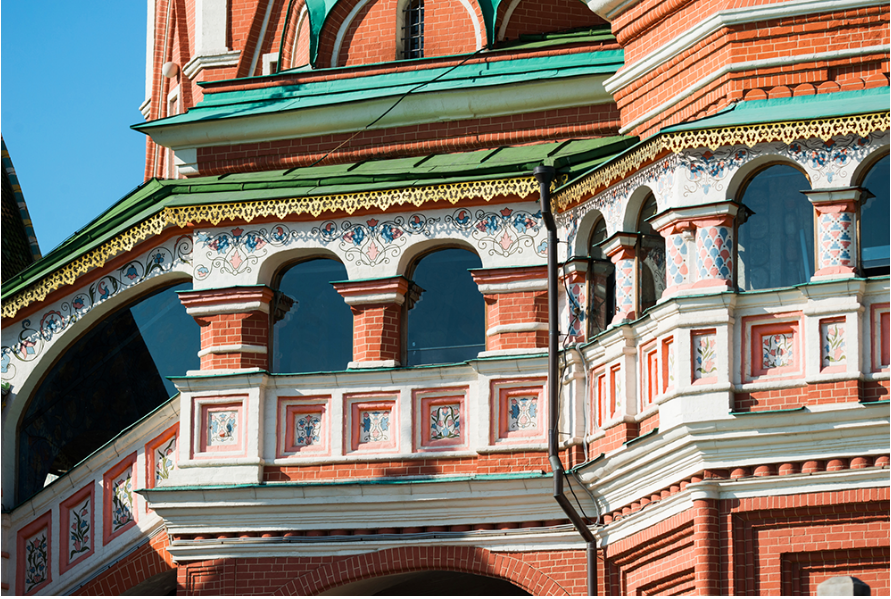
Each temple has its own entrance and lighting, however, the cathedral is a single building. The complexity and amazing combination of details of the  St. Basil’s Cathedral are unparalleled in Russian architecture and had a huge impact on the development of Russian national architecture.

The cathedral was erected in 1555–1561. at the behest of Tsar Ivan the Terrible in honor of the conquest of the Kazan kingdom.  It is believed that the architects who created it were deprived of sight. Even Stalin did not allow the building to be demolished, and during the war the temple was hidden from shelling. The cathedral is included in the Russian list of UNESCO World Heritage Sites and is a branch of the State Historical Museum.

The upper tier of the cathedral resembles a labyrinth, and the base is an eight-pointed star. 

The cathedral unites ten churches (chapels), some of which were consecrated in honor of the saints, whose days of memory fell on the decisive battles for Kazan. 

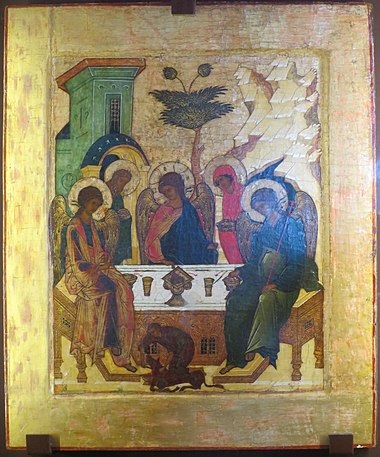
The central church was built in honor of the Intercession of the Virgin , around which separate churches are grouped in honor of: the Holy Trinity , the Entry of the Lord into Jerusalem , St. Nicholas of Velikoretsky , the Three Patriarchs: Alexander, John and Paul the New, Gregory of Armenia , Cyprian and Justina , Alexander Svirsky and Varlaam Khutynsky , placed on the same base-basement, and a chapel in honor of St. Basil the Blessed, after whose name the temple received a second, more well-known name.

The thickness of the walls of the foundation of St. Basil’s Cathedral reaches three meters. It is this thickness that allows it to securely hold as many as nine buildings. If you look at the foundation of the church, you can see that 8 small temples form an eight-pointed star – a symbol of the Virgin. There are larger churches in the ensemble of small churches. They are strictly oriented to the cardinal points and form symmetry. The main temple, with a huge dome and a tent, is the Protection of the Virgin, Her intercession.

During the campaigns of Ivan the Terrible to Kazan on today’s Red Square, “camping” wooden churches were erected in memory of the victories won.

On the day of the memory of Cyprian and Justina  ( October 2, 1552), the next campaign ended with a victory over the Kazan Khanate and the annexation of the city to the Muscovite state. It was, the day after the Intercession of the Most Holy Theotokos, and Ivan the Terrible ordered to unite all the “marching” wooden churches into one stone temple in the name of the Intercession of the Virgin – Intercession Cathedral, but it stood only less than a year before to be dismantled, and finally a stone cathedral was laid in its place.

Already, in the autumn of 1554 were the first reliable mention of the construction of the Church of the Intercession of the Mother of God. The construction of this temple began in 1555 and lasted 6 years. The temple was built of brick, and its foundations , plinth and a number of details are made of white stone. In the western part of the cathedral there is a flat brick ceiling. 

A legend about the architects Barma and Postnik which names became known only in 1895 told that they had been blinded by order of the the Tsar Ivan the Terrible so that they could no longer build such a temple, but Postnik could not be blinded, since for several years after the construction of the cathedral he participated in the creation of the Kazan Kremlin.

By  1559, in the fall, the temple main part was erected, and at the same period, all but the central church were consecrated.

Despite the apparent grandiosity from the outside of St. Basil’s Cathedral the inside is quite small, accommodating a very small number of people during the service. That is because according to the plan of its creators, it should not have been too spacious, since during major church holidays the entire Red Square was the church, the place of execution, on which the clergy ascended, became a lectern, and the Pokrovsky Cathedral turned into the altar of an open-air temple. After all, there is no temple in Heavenly Jerusalem, but “there is only His Throne” … and the Intercession Cathedral – turned into an altar of a church in the open. 

 Finally, on June 29, 1561 according to the old calendar, the central Intercession Church of the cathedral was once consecrated in the name of the Intercession of the Most Holy Theotokos. 

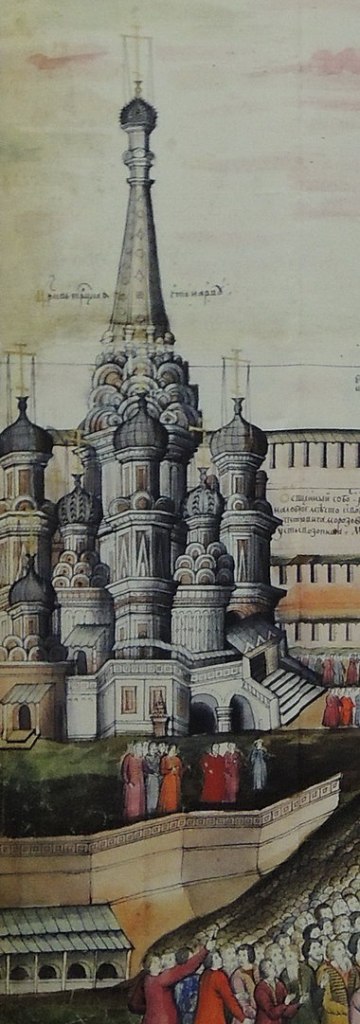
St. Basil’s Cathedral from the Book of the election of the Tsar and Grand Duke Mikhail Fedorovich, 1672 1673

The first changes to the Cathedral of the Intercession of the Virgin, on the Moat, took place almost immediately after construction and were associated with the name of the famous Moscow saint – St. Basil the Blessed. Before the appearance of a stone cathedral on this site, there was a wooden Trinity Church, where St. Basil often came to pray. In 1558, a lower church was added to the Pokrovsky Cathedral over the burial place of the Moscow miracle worker – St. Basil the Blessed. To build this temple, the builders dismantled part of the original cathedral.

Some historians believe that the cathedral was originally conceived as a likeness of the seven-tower Blachernae monastery with the Church of the Virgin , in which the miracle of the Intercession once took place . By its presence and location, it was supposed to assert a new state ideology: ” Moscow is the third Rome ” , and the eight chapel was there because of the dimension of the foundation” . Others believe that the very idea of ​​a multi-chapel cathedral belonged to Metropolitan Macarius , who planned to recreate in the center of Moscow the image of the holy city of Jerusalem.

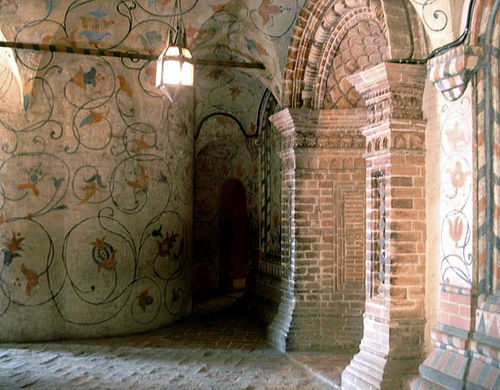
In the middle of the 16th century, the cathedral was painted in the fresco technique and imitated brickwork. There were no porches, and the St. Basil’s Church bell tower had a different look. It gave the cathedral a strict but elegant appearance which could be compare to a memorial with the eight separates churches symbolizing the days of the decisive battles for Kazan.

The original roof of the church burned downed at the end of the 16th century and the figured domes of the cathedral appeared instead of the original roof.

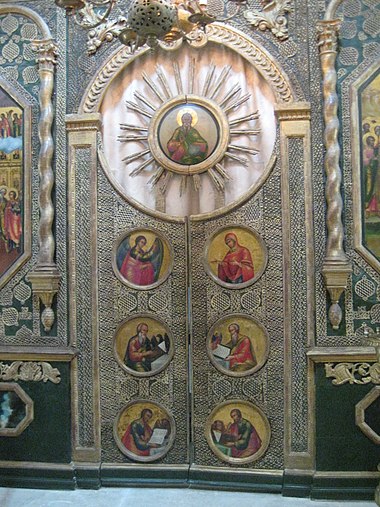
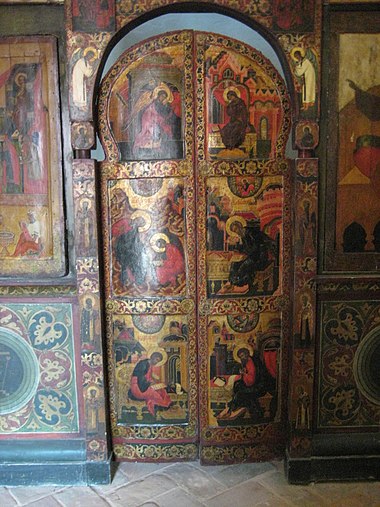
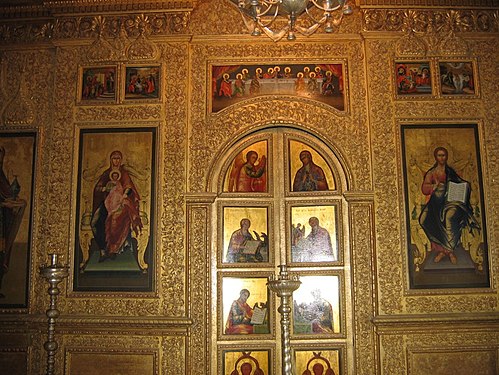
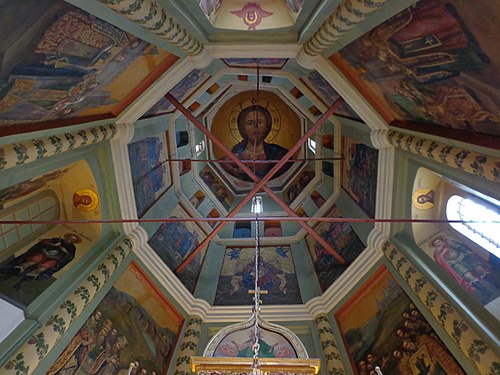
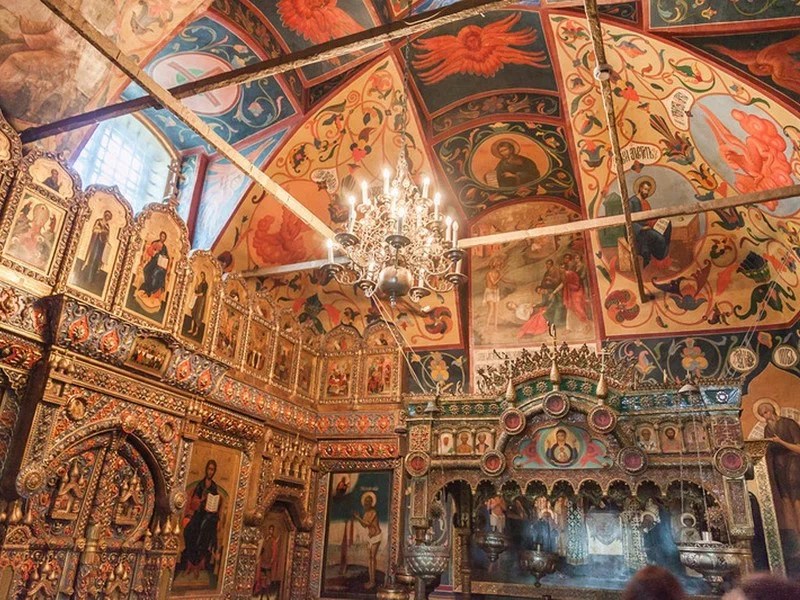
The Intercession Cathedral is richly decorated with wall paintings, has an impressive collection of ancient Russian icon painting and masterpieces of church applied art. 

Until the reconstruction of the Great Bell Tower in the Kremlin in 1660, the cathedral was the tallest building in Moscow.

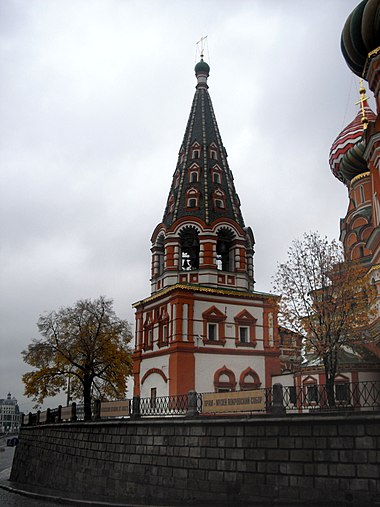
In the 1670 the wooden churches on Red Square were closed, then the cathedral was supplemented by a hipped bell tower, its heads were covered with iron, the porch  was covered with tiles , and a bright colorful ornamental painting appeared on the cathedral. Finally the chapel of Blessed John of Moscow was added in 1672

Bell tower

The cathedral was seriously renovated in 1680, with brick galleries replacing the wooden ones and the outer and inner galleries, platforms and parapets of the porches being painted with grass ornaments motifs.

In the 18 and 19 centuries Divine services were regularly performed in St. Basil’s Cathedral. As a rule, they were performed in an annex – a temple built in honor of St. Basil the Blessed, because the rest of the temples were cold. That is why the people got accustomed to the name – St. Basil’s Cathedral.

Divine services in the temple continued until the beginning of the 20th century. The last rector was Father John Vostorgov, now canonized among the saints in the host of new martyrs and confessors

In 1737, the temple almost completely burned out because of one of the strongest fires in Moscow. The restoration of the architecture and interiors of the cathedral was done under the leadership of the architect Ivan Michurin.

Painting by Giacomo Quarenghi “The Intercession Cathedral and the Spasskaya Tower of the Kremlin”, 1797

The cathedral was seriously repaired and rebuilt by decree of Catherine II from 1784 to 1786, and it was then that the walls of St. Basil’s Cathedral were painted with multi-colored paints and acquired their modern look. Before it was mainly painted in red and white colors.

After the Patriotic War of 1812, Alexander I decided to restore the temple and in 1817, the architect Osip Bove , while reconstructing Red Square with shopping malls, laid out the retaining wall of the temple with “wild” stone and installed a cast-iron fence. First along Moskvoretskaya Street, then in 1834, on the south side of the temple.

Red_Square_in_Moscow_(1801)_by_Fedor_Alekseev

 In 1880, a manor on Pyatnitskaya street was added to the temple . Until 1918, the last rector of the temple , Father John lived in it . 

In the 1890s, the temple was again seriously reconstructed. The floors were strengthened, and the Cathedral sacristy was decorated with colored stained-glass windows, designed by the architect Andrei Pavlinov. 

Postcard early 20th century

In 1918, the Intercession Cathedral became one of the first cultural objects taken under state protection as a monument of national and world significance. It is during this period that services were stopped in the upper churches and the museumification began. 

1965

Archpriest John Kuznetsov became the first caretaker of the museum. In the 1920s, the cathedral was in dear need of repair and restoration work was carried out, led by architects Nikolai Kurdyukov and Alexander Alexandrovich Zhelyabuzhsky.

Basil’s Cathedral and the monument to Minin and Pozharsky

After the decision of 1923 to establish a historical and architectural museum in the cathedral, this one was opened to visitors on May 21, 1923.

Beginning in 1923 and until 1949 research was carried out in the museum because of legends which attributed to the temple a network of underground passages. And in 1924, walled-up room with a deep hole in the floor under the chapel of John the Merciful was found by the restorer and architect Dmitry Sukhov and the speleologist-historian Ignatius Stelletsky.

The window-loopholes of the room were bricked up both from the side of the river and from the side of Red Square. Ignatius Stelletsky wrote that the embrasures had the same approaches as for the cannons in the towers of Kitay-gorod and any of the monasteries which led him to the idea that in the 16th century the lower part of St. Basil’s Cathedral was intended for combat.

The Pokrovsky Cathedral museum became a branch of the State Historical Museum in 1928 and in 1929 the divine services were banned in the cathedral, and the bells were removed and melted down.

During the Great Patriotic War, the museum did not stop its work, although it was closed to visitors. St. Basil’s Cathedral was carefully disguised to save it from bombing. There is a legend that after the war, Stalin was offered to remove the cathedral under the pretext that it was interfering with the parade. It is believed that Kaganovich showed Stalin a model of the square, and in his presence he removed the model of the temple, suggesting that it be demolished. Stalin abruptly interrupted him: “Lazar, put it in its place!” Since then, no one has raised questions about the inviolability of the cathedral.

The cathedral began to be restored, on September 7, 1947, and the museum reopened on the day of the celebration of the 800th anniversary of Moscow.

From 1954 to 1955 the “brick-like” painting of the 16th century was returned to the cathedral, and at the same time the white-stone details of the décor was restored.

On November 18, 1991, the Russian Orthodox Church was allowed to hold regular services in the Kremlin cathedrals and St. Basil’s Cathedral but the first divine service took place on the patronal feast of the Intercession of the Most Holy Theotokos on October 1,  1991

Beginning in 2001 and ending ten years later the interiors of ten churches were restored, the icon of the Intercession of the Most Holy Theotokos was restored, and the basements were restored to their original appearance.

If you liked this article, subscribe , put likes, write comments! Share on social networks and you can also Check out Our Latest Posts

Help the site stay free, buy us a cup of coffeeAidez-nous à maintenir le site gratuit en nous offrant une tasse de café