Bolshoi Theater history

Lire en Français

The Bolshoi theater is one of the most significant opera and ballet theaters in the world and the pride of Moscow. More than 800 works were staged in the theater.

The Bolshoi theater has two dates of birth: March 1776 and January 1825.

Did you know that in English the Bolshoi theater means the big theater?

On March 28, 1776 Catherine II signed a government privilege to Pyotr Vasilyevich Urusov for the maintenance of performances, masquerades, balls and other events for a period of 10 years. This date is considered to be the founding day of the Russian Bolshoi theater.
Автор: Andrey Filippov 安德烈 from Moscow, Russia – Bolshoi Theatre of Russia, CC BY 2.0,

The prince began the construction of the theater on Petrovka street and the theater was named Petrovsky. after the street. Sadly it burned down before opening and the prince handed over the business to his English partner, Mikhail Maddox. So the Petrovky theater was built under his leadership and the Petrovsky theater grand opening was on December 30, 1780.
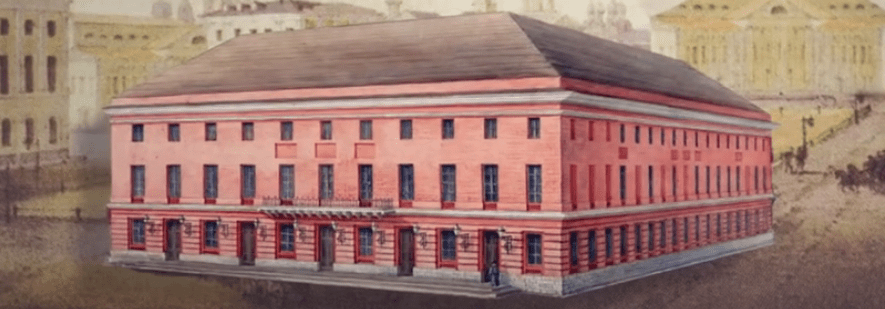
They gave a solemn prologue “Wanderers”, written by A, Ablesimov, and a large pantomimic ballet “Magic School”, staged by I. Paradise to the music of J. Startzer. After the repertoire was formed mainly from Russian and Italian comic operas with ballets and individual ballets.

“This huge building, built for popular pleasure and amusement … according to the best architects and the approval of the theater connoisseurs, was built and brought to a perfect end with so much strength and profitability that it surpasses almost all noble European theaters.”

This is how the Moskovskie newspaper responded to the opening of the Petrovsky Theater.

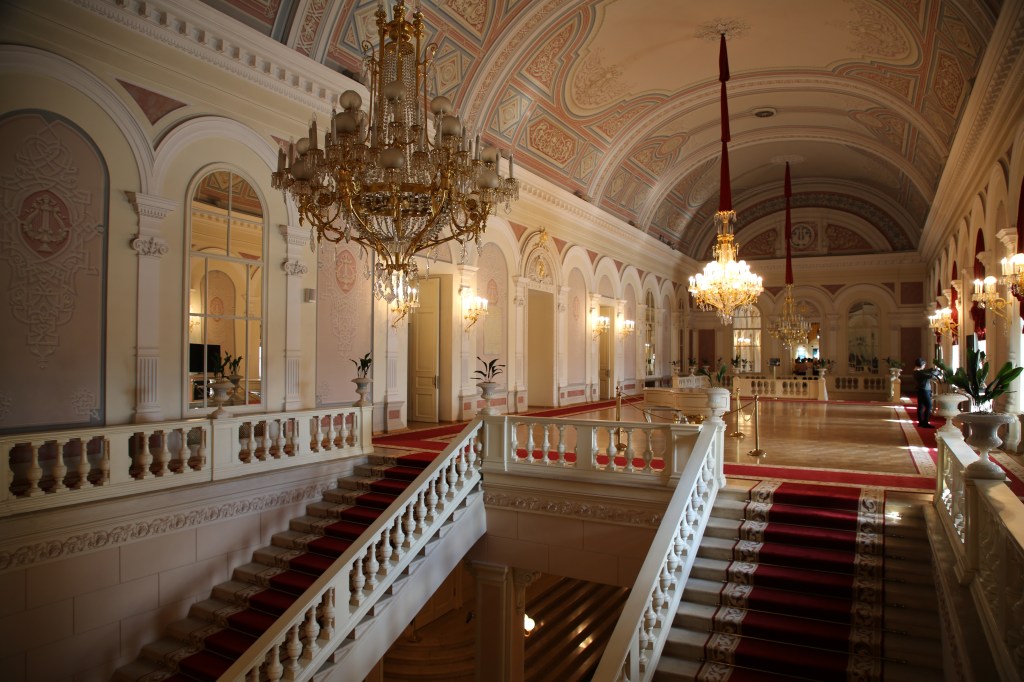
The building, designed by architect Christian Rozberg, was built in just 5 months. The theater had an auditorium with three tiers of boxes, a gallery, a stalls with twenty rows of benches and a spacious “parquet” between the stalls and the stage, where chairs were installed for “special” visitors, and other public could stand. It accommodated almost a thousand people.

In addition there were necessary office space, numerous foyers and halls, including the “masquerade room”.

In 1788, the Rotunda was added to the building and was the center of both cultural and social life from the very beginning of its existence.

In 1794, due to financial difficulties, Maddox was forced to transfer the theater to the treasury and the Petrovsky theater became the Imperial.

In 1802-1803, the theater was given to Prince Volkonsky who was the owner of one of the best Moscow theater troupes. But in 1804, the theater once again came under the jurisdiction of the Board of Trustees and Prince Volkonsky was appointed his director.

Once again after 25 years, on October 8, 1805 the Petrovsky theater burned downed. The troupes began to perform on private stage until the new Arbat Theater was built by K. I. Rossi on Arbat square in 1808.

Having existed only four years, the theater building burned down during the Moscow fire of 1812.

After that the theater was located on Znamenka in the house of Apraksin, which had been built in 1792 by the architect F. Camporesi. The theater room in Apraksin’s house was cramped and uncomfortable, instead of chairs there were benches covered with coarse cloth and several times there were fires in the theater.

A few years later, in 1818, the troupes was provided with a renovated theater on Mokhovaya, where they had once performed before the war of 1812.

In 1819 a competition was announced for the construction of a new theater. Andrei Mikhailov was recognized as the winner but his project was too expensive and was redesigned by Osip Bove. He preserved the basic of Mikhailov’s composition, but changed the proportion of the building, and made significant adjustments to its exterior and interior decoration.
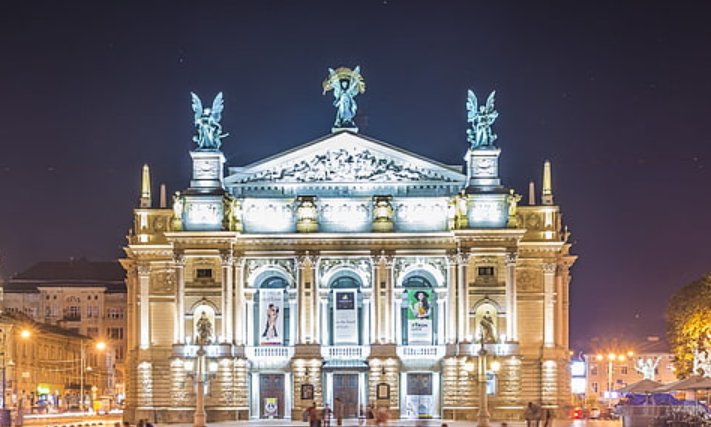
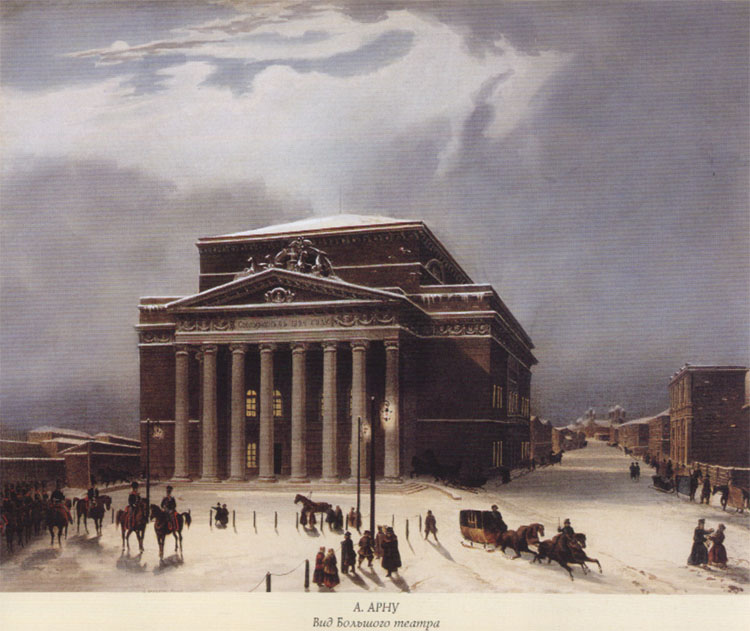
The theater was to become the composition center of the Empire city temple, glorifying the victory in the Patriotique War. The construction began in 1820 and the new “Bolshoi Petrovky Theater” opened on January 6, 1825 with the performance “The triumph of te Muses” which was a great success. The roles were played by the best Moscow actors: the tragedian P. S. Mochalov, N. V. Lavrov, F. Gyullen-Sor. The theater critic Sergei Timofeevich Aksakov memories of this discovery have been preserved:

The Bolshoi Petrovky Theater, which arose from old, charred ruins … amazed and delighted me … A magnificent huge building, exclusively dedicated to my favorite art, already with its appearance alone led me into joyful excitements”

In 1842, the theater came under the leadership of the Saint Petersburg Directorate of Imperial Theaters. Alexei Nikolaevich Verstovsky was appointed manager of the Moscow theater office until 1859 and an opera troupe arrived in Moscow from Saint Petersburg.

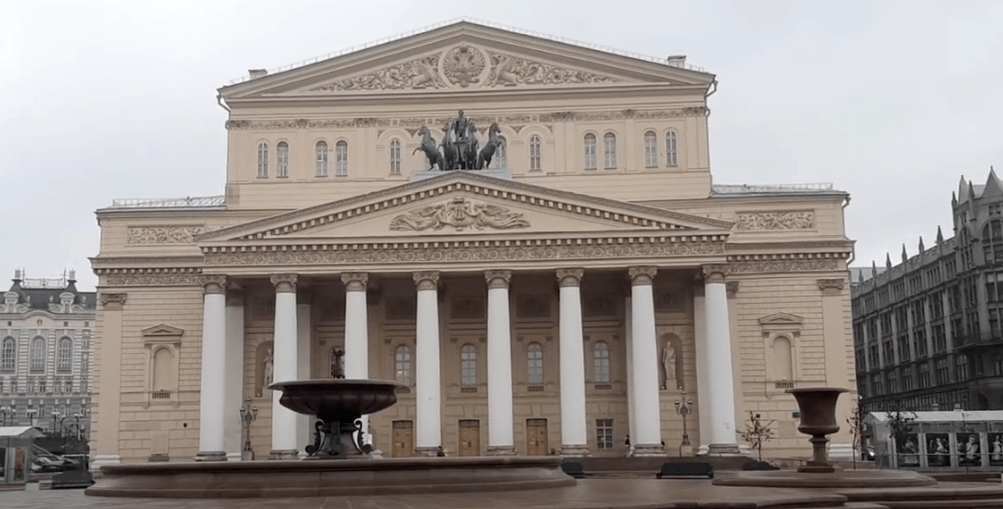
In 1943 a major reconstruction of the theater building was carried out according to the project of the architect Alexander Stepanovich Nikitin. The lonic capitals of the portico were replaced with capitals of the Érechthéion type, the line of side boxes were rebuilt as well as the couloirs and stage part, where the rear stage appeared.

On March 11, 1853 the theater once more burned down and only the outer walls of the building and the colonnade of the portico survived.

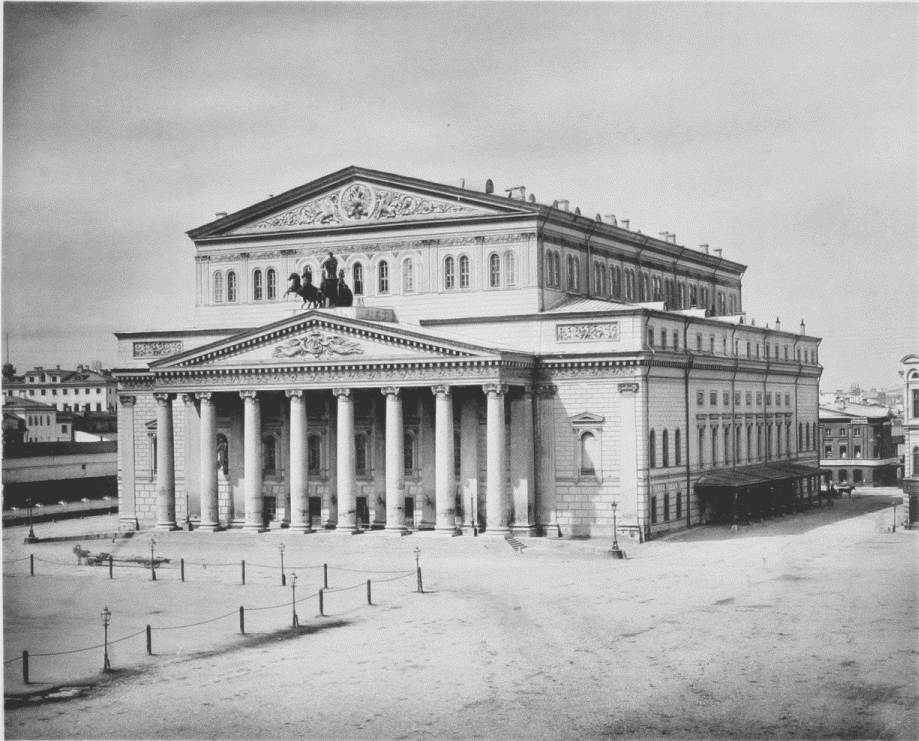
Albert Kavos was the new architect and the Theater was restored in three years. The volume of the building and the layout were preserved, but the height was slightly increased. Albert Kavos changed the proportions and completely redesigned the architectural decor, designing the facades in the spirit of early eclecticism. Instead of the alabaster sculpture of Apollo that died in the fire, a bronze quadriga by Pyotr Klodt was placed over the entrance of the portico, and a plaster double headed eagle which is the state emblem of the Russian Empire was placed on the pediment.
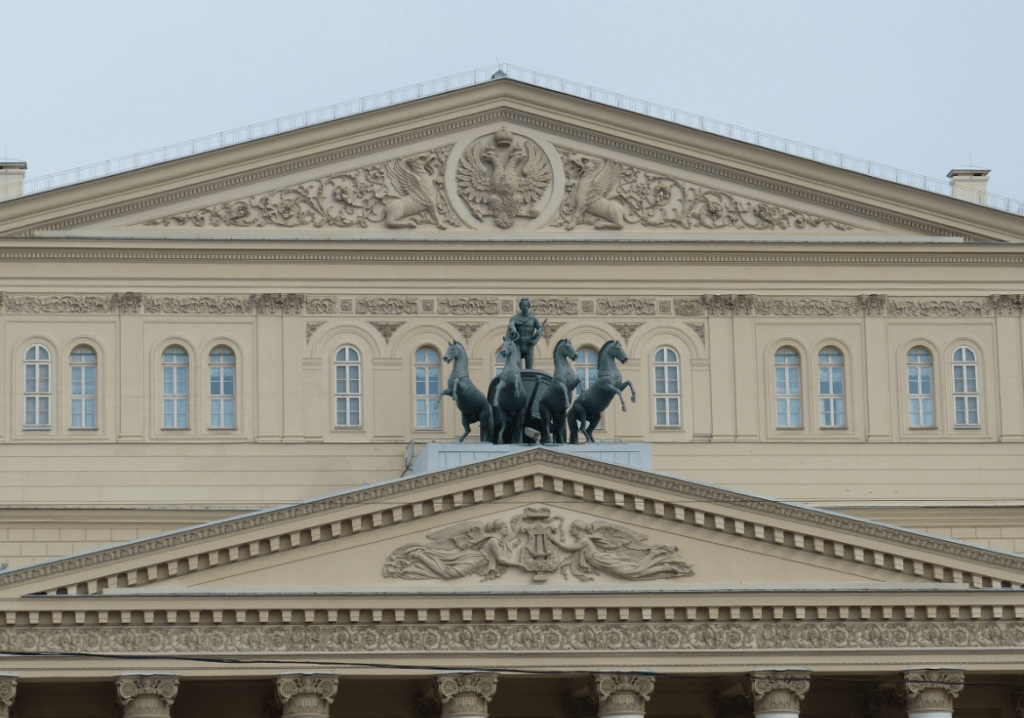
The theatrical architect paid the main attention to the auditorium and the stage part, and in the second half of the 19th century, the Bolshoi Theater was considered one of the best in the world in terms of its acoustic properties thanks to Albert Kavos who had designed the auditorium as a huge musical instrument.

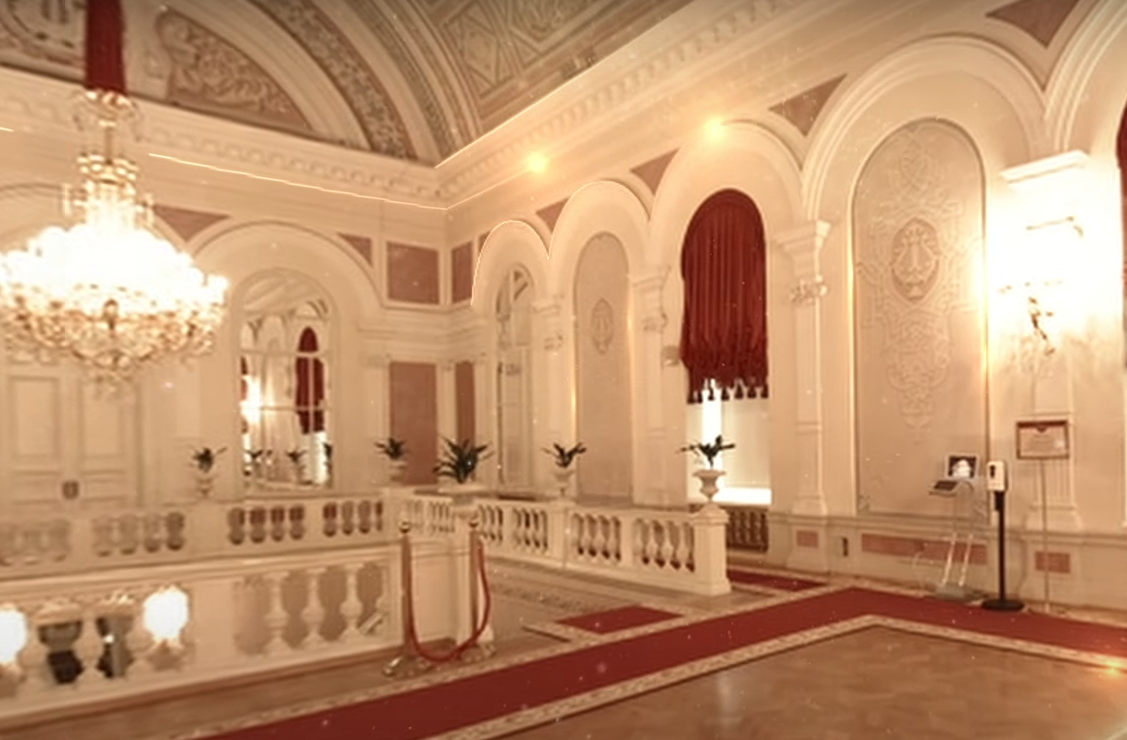
The space of the auditorium was significantly expended, which made it possible to make front lodges. The hall gained one more tier, and became six-tiered, accommodating almost 2300 spectators. On both sides, near the stage, there were letter boxes intended for the royal family, the ministry of the court and the theater directorate. The ceremonial Tsar’s box protruded a little into the hall and became its center, opposite the stage. The barrier of the Royal Lodge was supported by consoles in the form of bent atlantes. Even decades later everyone who entered this hall was amazed by the raspberry-gold splendor.

The chandelier of the auditorium was originally light by 300 oil lamps. The lamps were raised through a hole in the ceiling to be lit, and around this hole the Academician Alexei Titov painted “Apollo and the Muses” but instead of one of the canonical muses, the muse of the sacred hymns of Polyhymnia, Titov depicted the muse of painting invented by him, with a palette and a brush in her hands.
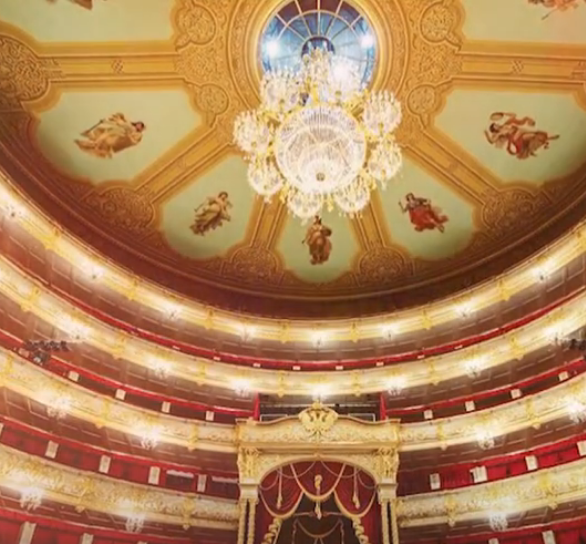
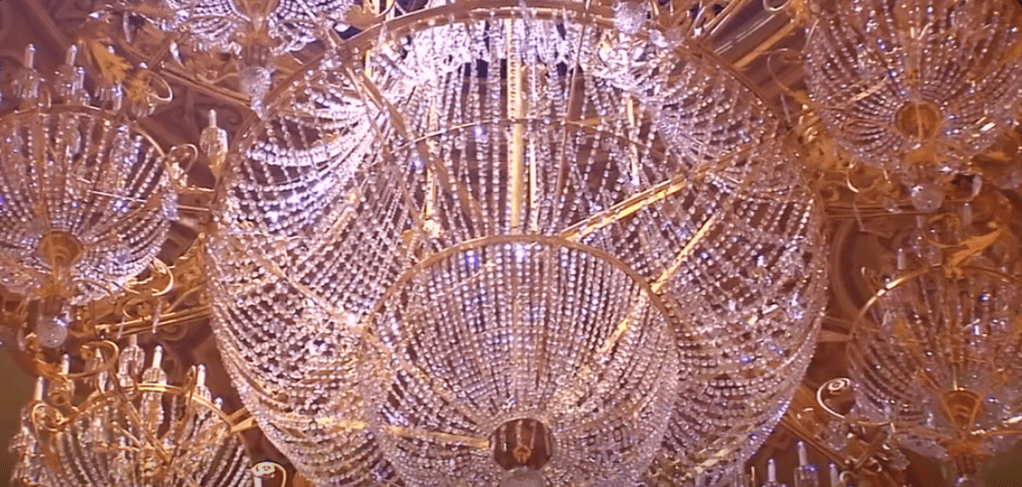
The speed of the reconstruction of the building was due to the fact that the construction had to be completed by the celebration on the occasion of the coronation of Emperor Alexander II. In August 20, 1856 the theater reopened with Belini’s opera;”Le Puritani” reflecting the tastes of the court nobility. The splendor of the auditorium, the high-society audience that filled it and was greeted by members of the imperial family was captured by the future Romanov court painter Mihai Zichy and a number of his watercolors were written for the coronation album which became one of the most impressive publications in Russia in weight and size.

One of the most significant events in the history of the Bolshoi Ballet in the 2nd half of the 19th century was the production of the ballet “Don Quixote” which premiered on December 14, 1869.

On February 20, 1877 the world premiere of Pyotr Ilyish Tchaikovsky’s ballet the “Swan Lake” took place. Almost 20 years later the canonical performance , known throughout the world, was staged by Petipa and Lev Ivanov.

Tchaikovsky made his debut at the Bolshoi theater as an author of not only ballet but also opera. And in January 18, 1869 the premiere of the opera “Voyevoda” took place.

On February 3, 1884, the world premiere of the opera “Mazeppa” took place, and on January 19, 1887 the first performance of the opera “Cherevichki” in which Tchaikovsky made his debut as a conductor with great success.

In the years 1886-1893 the back side of the building was rebuilt on the project of the architect Eduard Karlovich Gernet and as a result the columns of the portico preserved by Kavos ended up inside the warehouse.

In 1890 a survey reveled that the foundations of the theater rested on rotted wooden piles so they were rebuilt in 1894-1898 following the projects of the architects Ivan Ivanovich Rerberg, Konstantin Viktorovich Tersky and Karl Yakovlevich Mayevsky.

An unprecedented stage in the history of the development of the Bolshoi Theater is associated with Vladimir Telyakovsky. Under his leadership the theater reached a world level and significance. A new era began in the life of society, and therefore in arts. Romanticism and melodramatism were a thing of the past and musical theater took on new features.
Beginning in 1918, the Bolshoi Theater was called academic and for several years after the revolution disputes about its fate did not stop. Finally in 1922, the Presidium of all-Russian Central Executive Committee decided to consider the closure of the theater economically inexpedient.

In 1921, the catastrophic condition of the semicircular wall of the auditorium, which served as a support for the vaults of corridors and the entire auditorium was discovered. Work to strengthen the wall began under the leadership of i. I. Resberg. On February 18, 1921, the grand opening of the Beethoven Hall took place. For many years it functioned as a platform for chamber concerts of orchestra artists and soloists of the opera troupe. In 1922, Bolshoi artits began to perform on the stage of the so-called New Theater (former Nezlobin Theater)

By the mid-1920s, the Bolshoi no longer had to prove its right to exist, its status was strenghthened so much that in 1925 it was decided to celebrate its centenary on a grand scale. The opening of the building of the Bolshoi Petrovsky Theater, which took place in 1825 was taken as a starting point.

In 1928, it was decided to eliminate the rank hierarchy of visitors, and the architect P. A. Tolstykh replanned a number of stairs and other premises of the building.
Since April 15, 1941 the Bolshoi Theater has been reconstructed and on June 22, 1941 the premiere of Gounod’s opera Romeo and Juliet was held.

During the Great Patriotic War, from October 1941 to July 1943 the Bolshoi theater was evacuated to Kuibyshev (former and present Samara), where it staged performances of Eugene Onegin, Swan Lake, La Traviata, Aida, Carmen, The Queen of Spades…

During his stay in Kuibyshev, the Bolshoi Theater donated 198 liters of blood, washed a thousand sets of winter military uniforms, and sent seven brigades to the front, giving 1140 concerts. Bolshoi developed amateur factory activities, provided material assistance to the families of the front line soldiers, raised money for a tank column and for the construction of a squadron, subscribed to a military loan.

On October 22, 1941 a bomb hit the building of the Bolshoi Theater, the blast wave passed obliquely between the columns of the portico and broke through the front wall causing significative damage in the vestibule.

Despite the hardship of the war restauration work began in the theater in the winter of 1942, and even though the historic building was closed performances were played in Moscow.

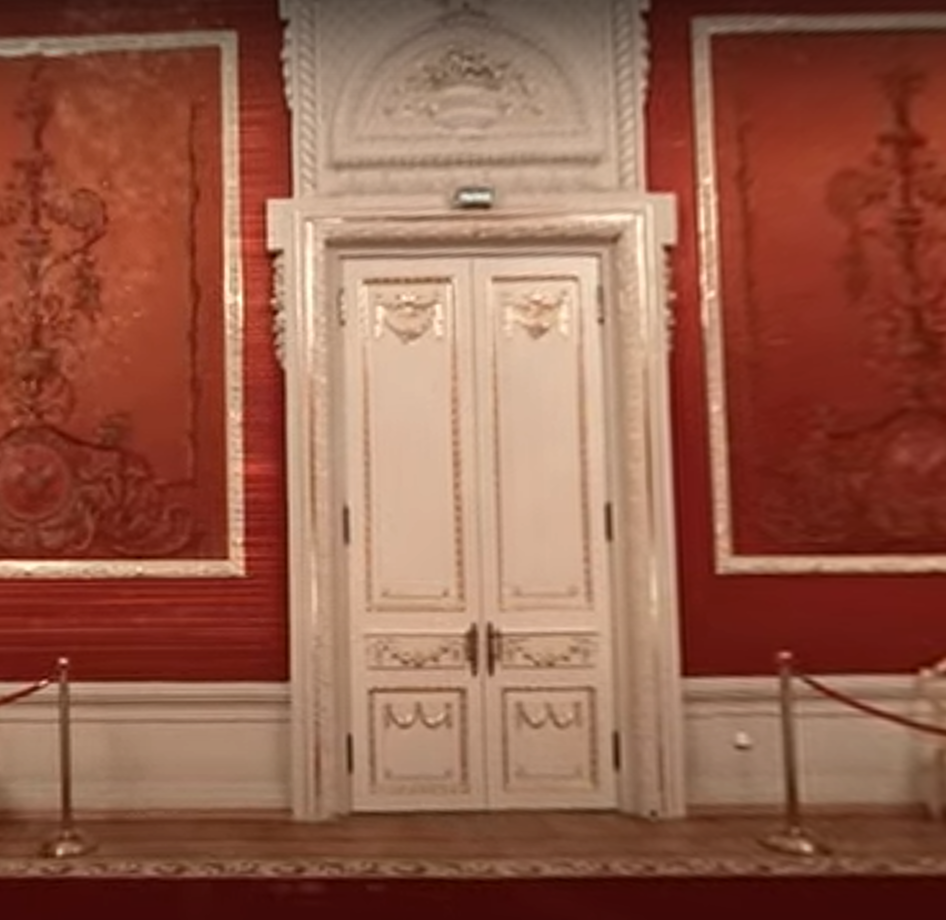
In 1944, Leonid Lavrovsky, as the new artistic director of the ballet troupe, and the leading prima ballerina Gallerina Ulanova, moved to the Bolshoi Theater emphasizing the status of the theater as the main musical theater of Russia.

In the late 1940s and early 1950s, the priority role in the formation of the operatic repertoire was given to Russian classical opera. The productions of the post-war years were notables for their epic scale and the scale of their stage decisions.

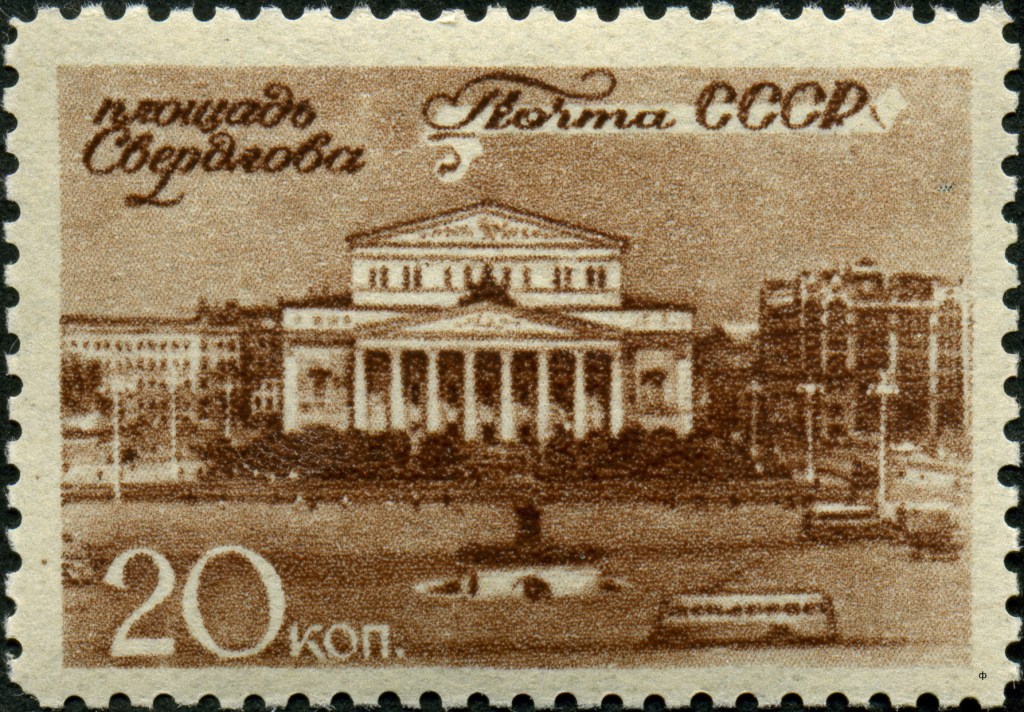
In 1955 a new luxurious brocade curtain designed by F. F. Fedorovsky appeared on the stage of the theater. It was the main decoration of the stage for 50 years.

In 1956, Assaf Messere, relying on the production of Alexander Gorsky, Petipa and Lev Ivanov, staged his own version of the ballet “Swan Lake”. It was this version that was shown on the legendary tour of the ballet troupe in London, which went down in history, after which it began to be called the Bolshoi Ballet all over the world.

In ballet, the era of Yuri Grigorovich, who directed the Balshoi Ballet Company from 1964 to 1995 was very successful. He created his own editions of almost all classical ballets in the repertoire, staged dances in several opera performances and composed 5 original ballets: The Nutcracker by Tchaikovsky in 1966, Spartacus by Khachaturian in 1968, Ivan the Terrible to the music of Prokofiev in 1975, Angara by Eshpay in 1976 and The Golden Age by Shostakovitch in 1982.
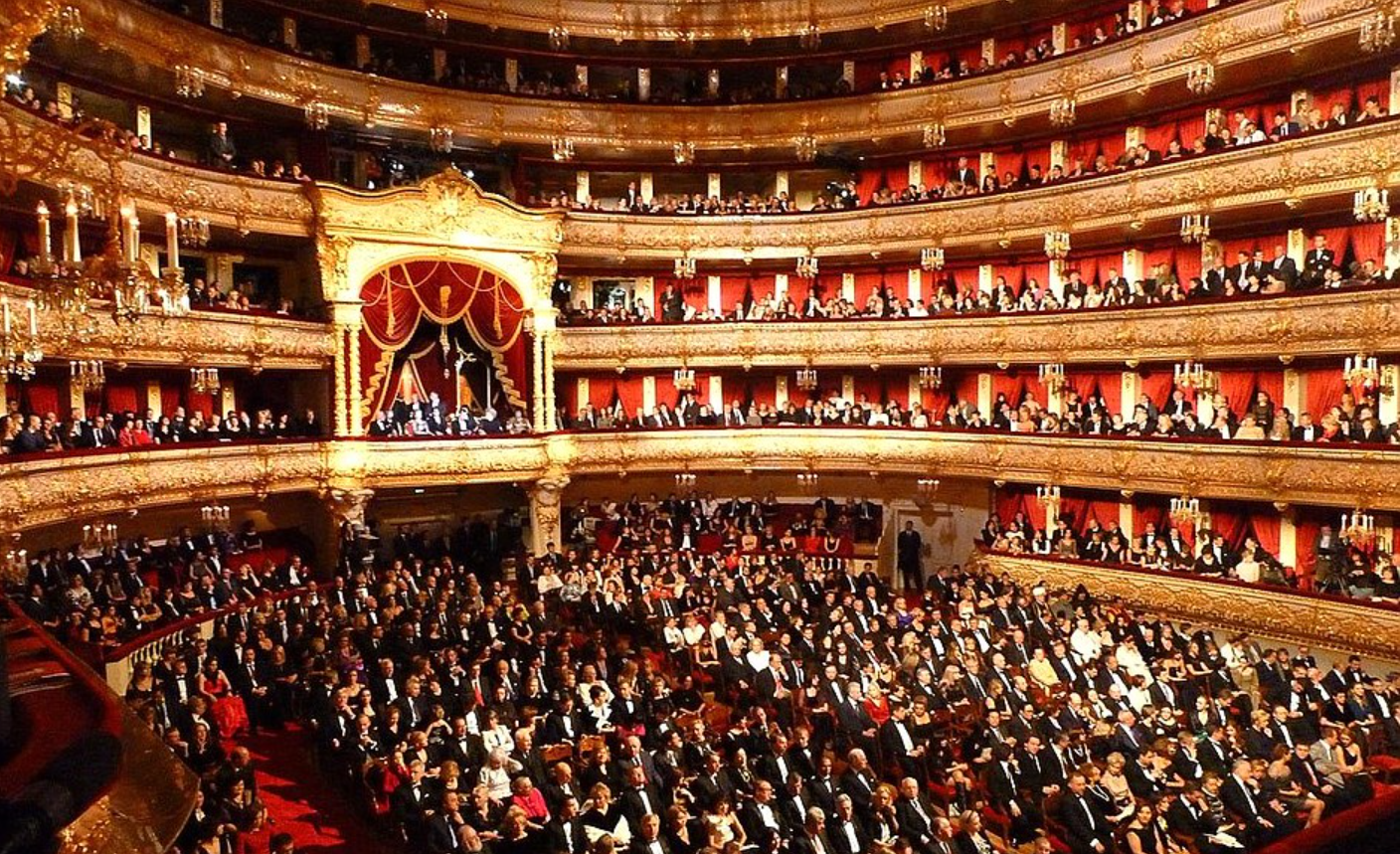
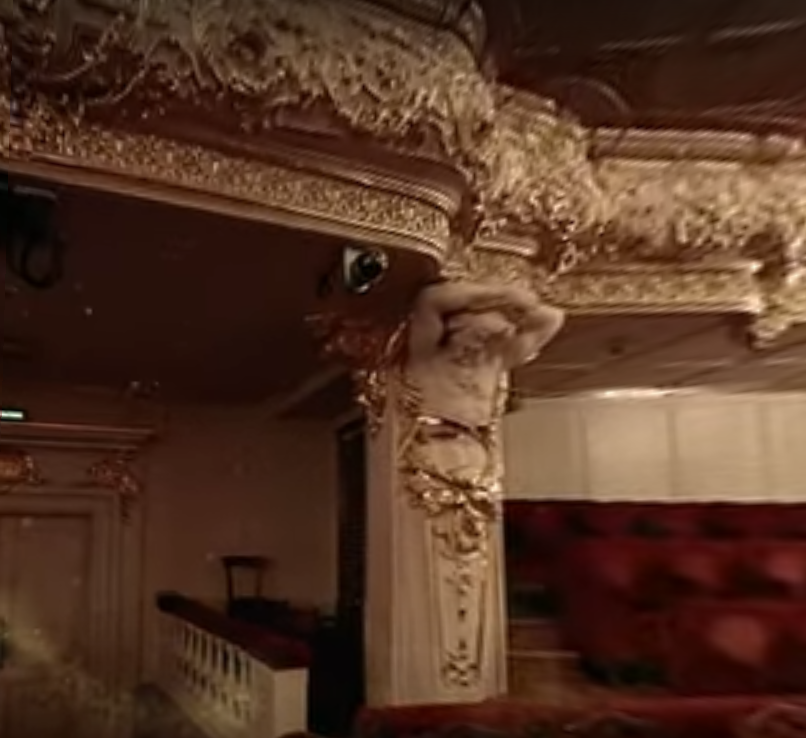
From 1995 to 2002 a new stage of the Bolshoi Theater was built on Bolshaya Dmitrovka street, house 4, building 2 including 879 seats. The new stage opened on November 29, 2002 with N. A. Rimsky-Korsakov’s opera “The snow Maiden”.

In 2001, Alexander Vedernikov was appointed as the new musical director of the theater, and the practice of showing rental performances was introduced. The involvement of the Bolshoi in the world theatrical process was facilitated by his participation in joint productions, which also became more and more common over the years.

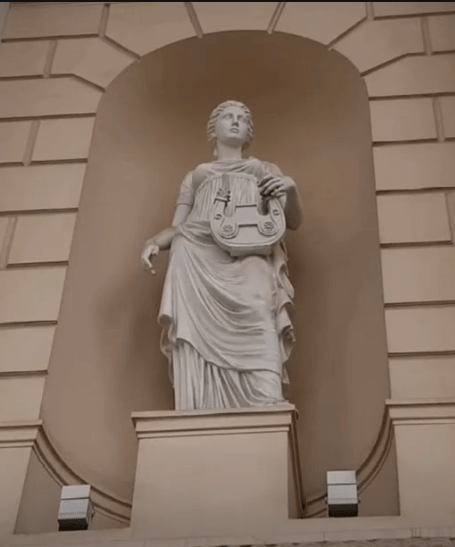
On July 1, 2005 the historical Stage of the Bolshoi Theater was closed for reconstruction and reopened on October 28, 2011 with a gala concert with the participation of opera and ballet dancers in the performance of “Ruslan and Lyudmila” staged by Dmitri Chernyakov.

Since 2013 Vladimir Urin has been the general director of the Bolshoi Theater, and his first year a new wind organ produced by the German organ building company Glatter-Götz, was installed at the Bolshoi theater.
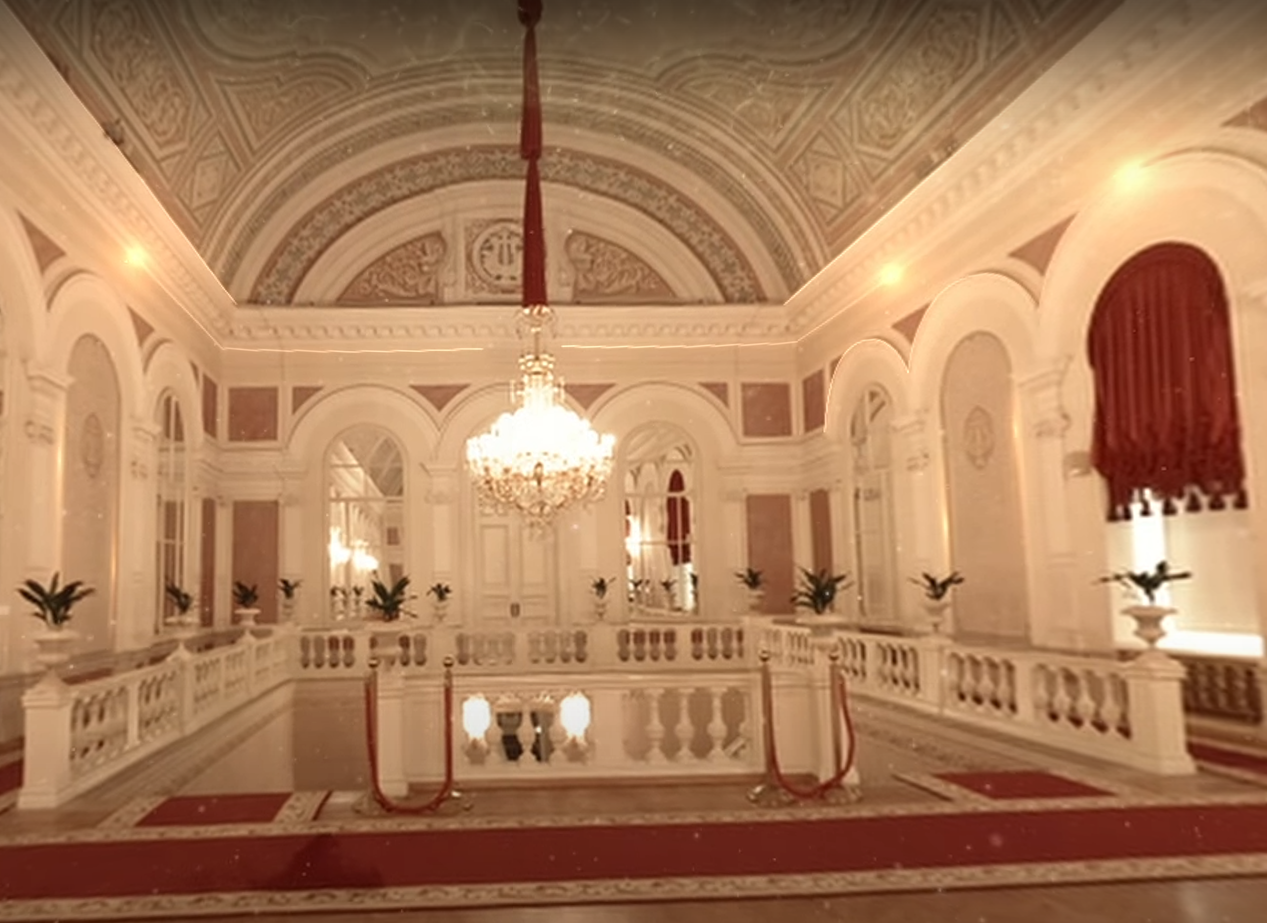
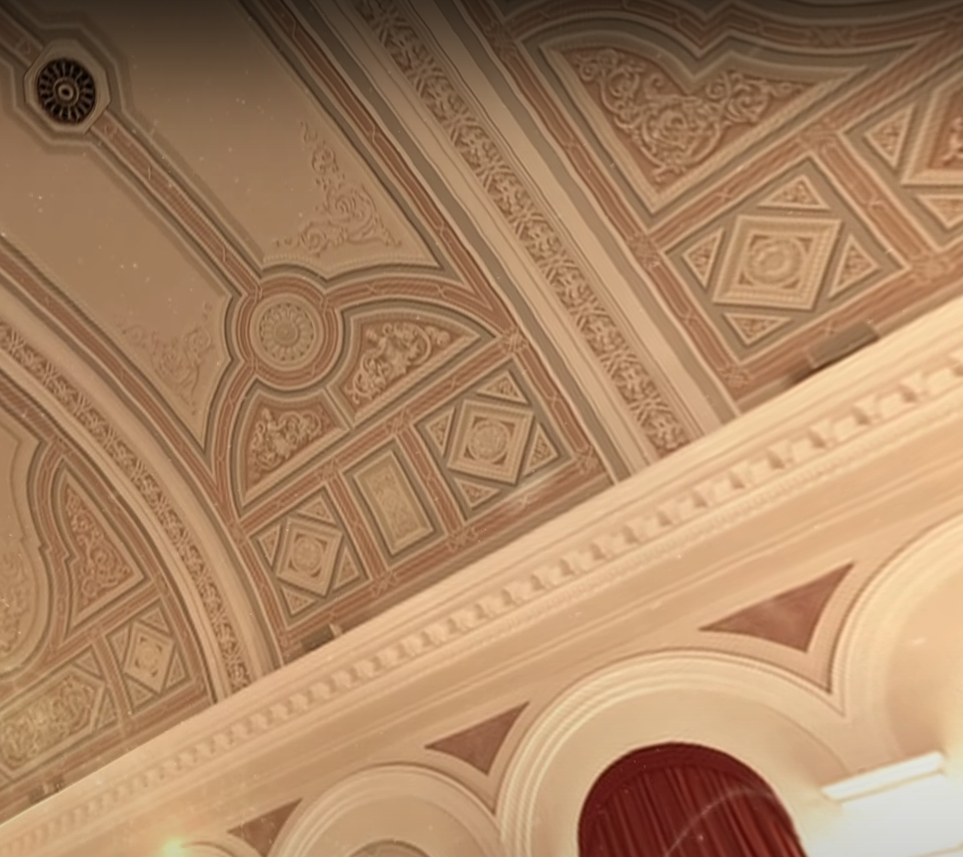
In 2014, Tugan Sokhiev was appointed to the post of chief conductor and musical director of the Bolshoi, who largely shared the previously introduced repertoire and personnel policy.

In July 2016, the Bolshoi Theater launched a series of street broadcasts of its performances which were carried out on a special all-weather screen mounted on the main facade of the theater and were timed to coincide with the 5th anniversary of the completion of the restoration.

In 2020, cooperation with Mr. Chernyakov continued with the production of the opera Sadko; The performance became one of the most striking in the recent history of the Bolshoi theater and was showned with great success in many countries.

In March 2020, amid the lockdown caused by the coronavirus pandemic, the Bolshoi theater began a series of online broadcasts on its official YouTube channel. On the first day, the ballet “Swan Lake” was watched by more than 1 million people.

Bolshoi theater website: https://2011.bolshoi.ru/

Si vous aimez, abonnez-vous au site, mettez des likes, écrivez des commentaires !
Assurez-vous de partager sur les réseaux sociaux.
Découvrez Nos Derniers Articles

Palais de Catherine à Tsarskoïe Selo

Read in English

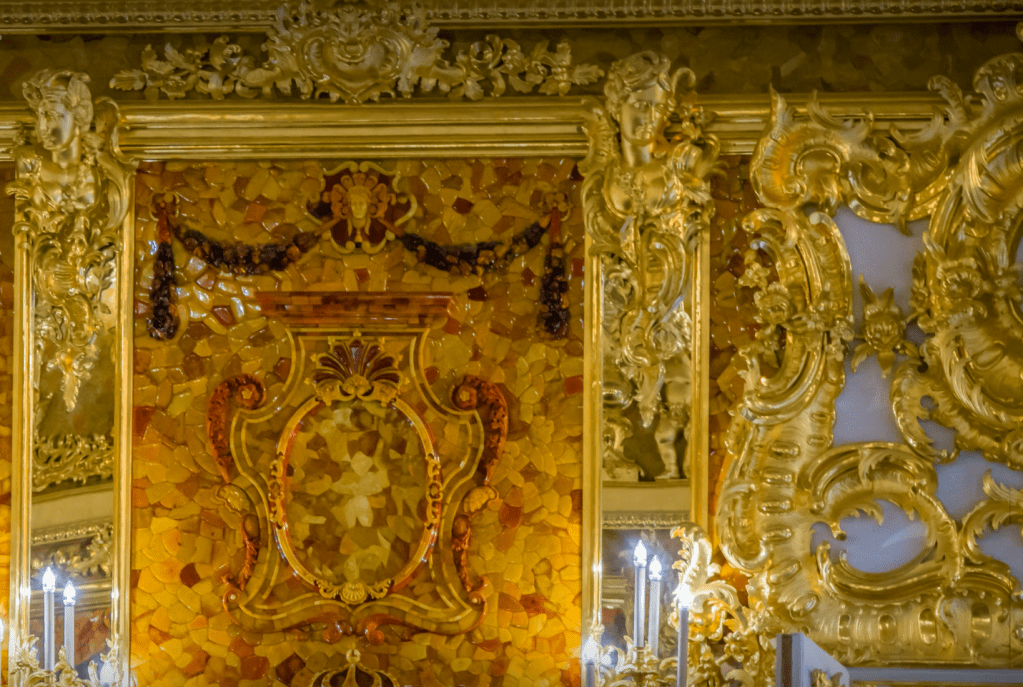
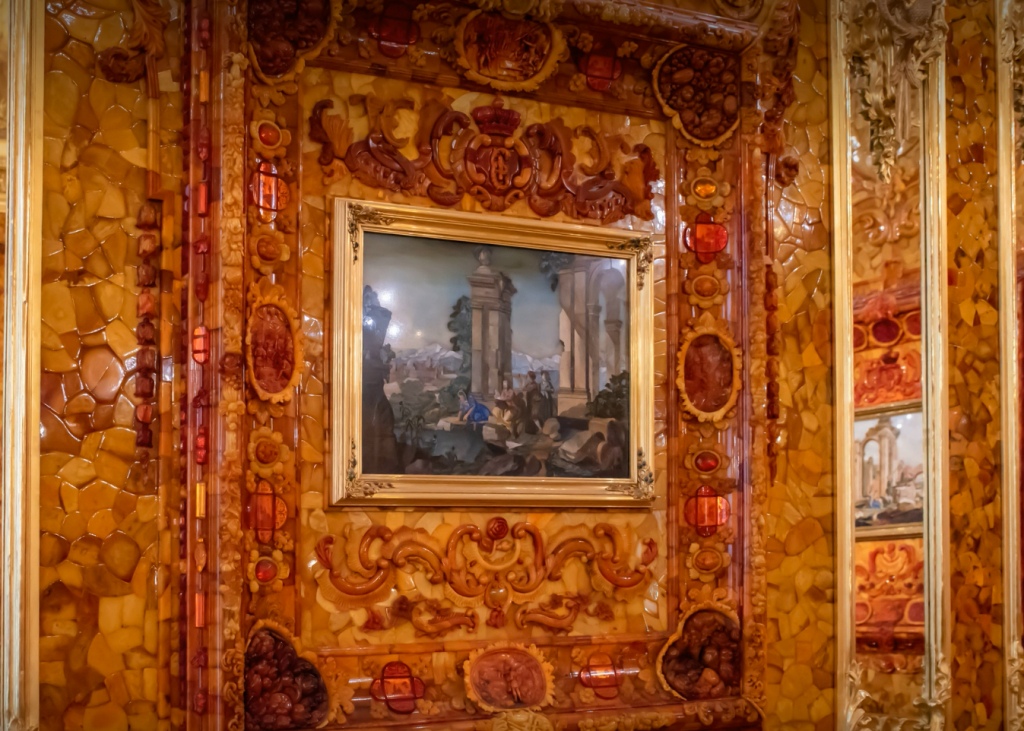
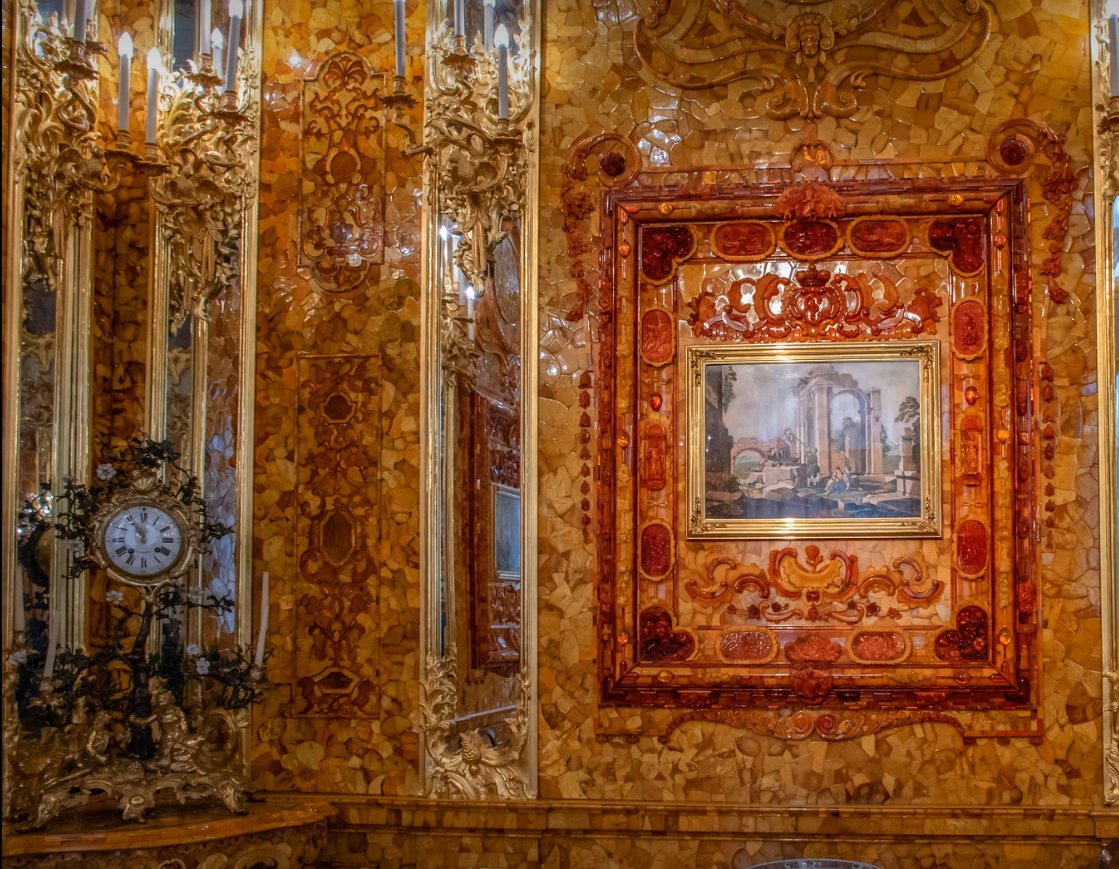
La chambre d’Ambre est un célèbre chef-d’oeuvre de l’art du XVIII, qui a disparu sans laisser de trace pendant la seconde guerre mondiale.

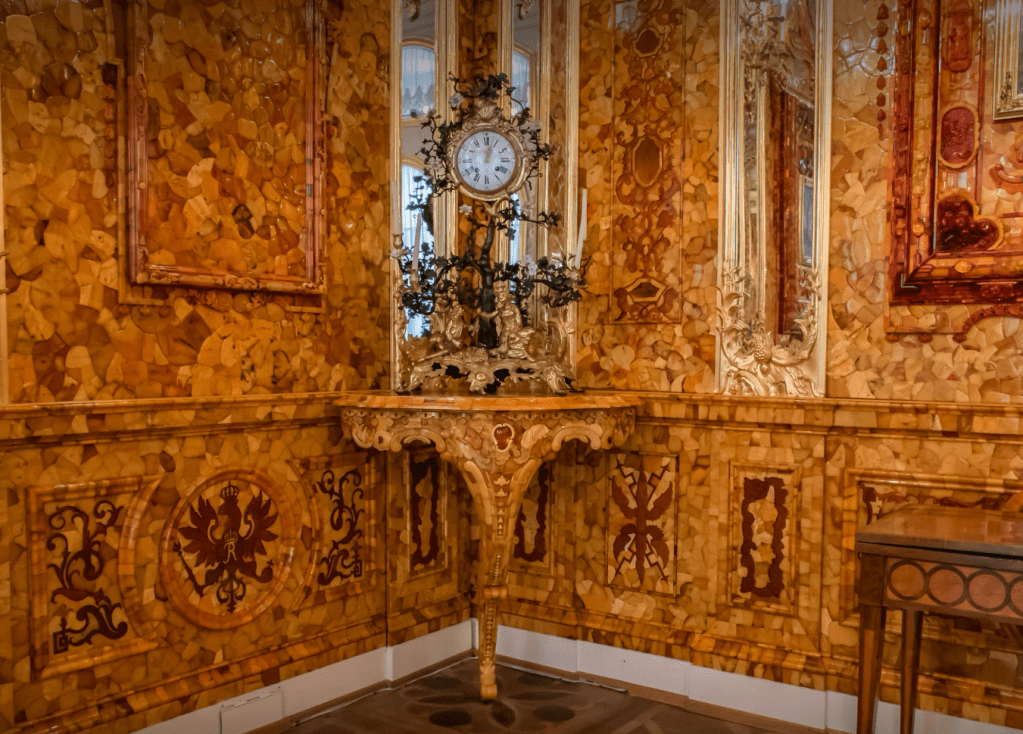
La chambre d’ambre a été créée par le maitre Andreas Schluter sur l’ordre du roi de Prusse Frederik Ier. Par la suite, le cabinet d’ambre qui était le nom original de cette oeuvre architecturale étonnante, a été présenté au tsar Russe Pierre Ier.

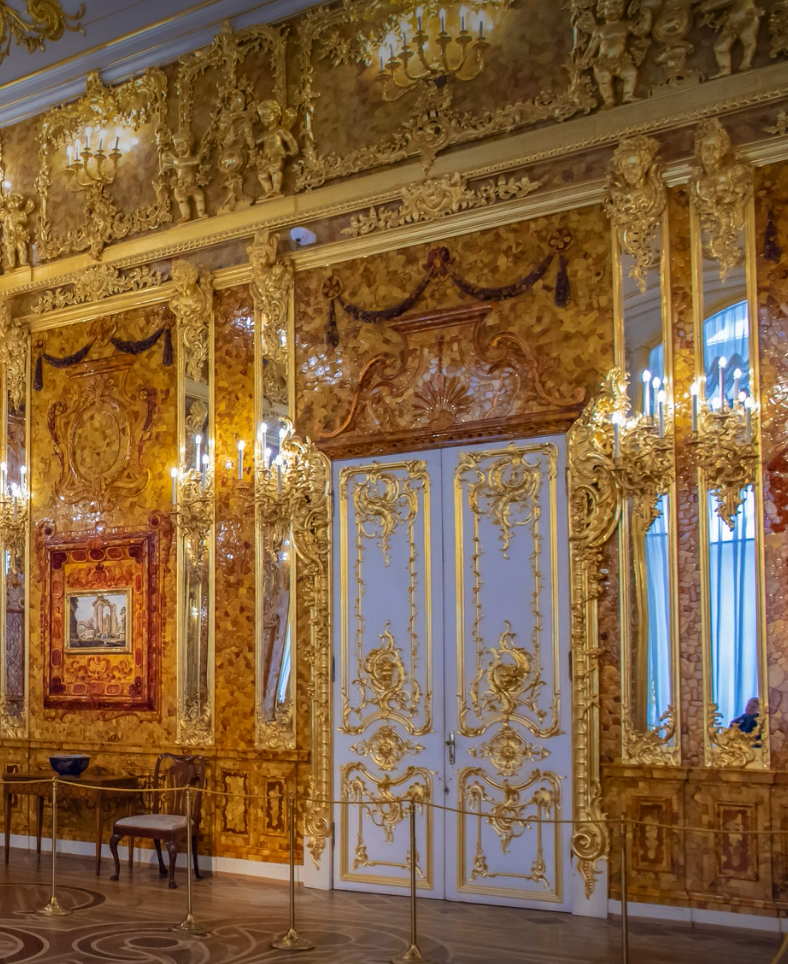
Le cabinet d’ambre a été installé au palais Menchikov en 1717. En 1743, Elizabeth Petrovna qui était montée sur le trône de Russie ordonna que le Cabinet d’ambre soit installé dans les Chambres d’hiver de la Maison de Sa Majesté Impériale. L’impératrice a aussi demandé à l’architecte en chef F. B. Rastrelli et le maître Alexander Martelli de “corriger” le cabinet. Il a été fini avec des sculptures en bois doré, des miroirs et des peintures en mosaïque de jaspe et d’agate.

Pendant près de 2 siècles, cette pièce est restée inchangée et admirée subissant seulement des rénovations périodiques pour minimiser les effets des changements de température, des courants d’air et du chauffage du poêle.

Pendant la Seconde Guerre Mondiale, il a été décidé de ne pas évacuer à la chambre d’ambre à cause de sa fragilité. Et les nazis, après avoir capturé le palais Catherine ont détruit la chambre d’ambre. Selon le rapport des officiers les panneaux muraux été mutilés avec des baïonnettes et des couteaux à hauteur humaine, le parquet qui avait été composé de bois rare, santal, palissandre, amarante, cerisier et citronnier ont été complètement détruit. La peinture du plafond était aussi mutilée. Cela a été fait par 6 militaires en 36 heures.

La salle d’ambre a ensuite été exposée au palais royal de Kroenigsberg, mais aprés avoir libéré Koenigsberg en 1945, les troupes soviétiques n’ont pas trouvé la Chambre d’Ambre.

Néanmoins, certains de ses fragments ont été transférés en Russie en 2000.

Depuis 1981, des travaux de reconstruction de la chambre d’ambre ont commencé, dirigé par A. A. Zhuravlev. A l’occasion du 300e anniversaire de Saint Pétersbourg, la chambre d’ambre a été entièrement restaurée.

Elle peut maintenant être vue par tout le monde dans le palais Catherine à Saint Pétersbourg

Regardez la chambre d’Ambre en video musicale. Ces ” vidéos sont superbes. N’oubliez pas de les aimer si vous les appréciez autant que moi.

Regarder la Première vidéo
Regarder la Deuxième vidéo
Regarder la Troisième vidéo

Si vous avez aimé cet article, n’oubliez pas de liker et de partager.

Abonnez-vous pour ne rien rater
Nos derniers posts

Un poème symbolisant la Victoire

Read in English

< < < Pouchkine Tempête (Ru/Fr) / Pushkin Tempest (Ru/Eng) / Пушкин Буря (Рус/Анг.) / (Рус/ Фра.)
Épouses (Ru/Fr) / Wives (Ru/Eng) / Жёны (Рус/Анг.) / (Рус/ Фра.) > > >


Bientôt va arriver l’anniversaire de la fin de la Seconde Guerre Mondiale.

Attends moi et je reviendrai est un poème de Konstantin Simonov écrit pendant l’été 1941 à sa bien aimée. Pour de nombreux soldats de l’Armée Rouge “Attends-moi et je reviendrai” est devenu un veritable hymne, un sermon solennel à un être cher

Je pense que vu ce qui se passe dans le monde maintenant il est important de se rappeler notre histoire pour éviter les horreurs d’une nouvelle guerre mondiale.

Les paroles sont sous la video

Je veux aussi remercier tous nos vétérans.


Traduction du poème “Attends-moi et je reviendrai.” de Constantin Simonov en français avec français et russe côte à côte

Жди меня, и я вернусь
Константина Симонова
Attends-moi et je reviendrai. de Constantin Simonov
Traduit par Akirill.com
May 04/2022
Жди меня, и я вернусь.Attends-moi, et je reviendrai.
Только очень жди,Juste attends longtemps,
Жди, когда наводят грусть
Желтые дожди,
Attends, quand les pluies jaunes te rendent triste
Жди, когда снега метут,Attends quand la neige tombe
Жди, когда жара,Attends, quand il fait chaud,
Жди, когда других не ждут,Attends, quand les autres n’attendent pas,
Позабыв вчера.Oubliant hier. 
Жди, когда из дальних местAttends, quand des endroits lointains
Писем не придет,Aucune lettre ne te parvient
Жди, когда уж надоест
Всем, кто вместе ждет.
Attends, jusqu’à ce que tous ceux qui attendent
ensemble soit fatigues d’attendre.
Жди меня, и я вернусь,Attends-moi, et je reviendrai,
Не желай добраNe souhaite pas de bien
Всем, кто знает наизусть,à tous ceux qui savent,
Что забыть пора.Qu’il est temps d’oublier.
Пусть поверят сын и матьLaisse le fils et la mère croire
В то, что нет меня,Que je ne suis plus,
Пусть друзья устанут ждать,Laisse les amis se lasser d’attendre,
Сядут у огня,S’asseoir près du feu
Выпьют горькое виноBoire du vin amer
На помин души…À la mémoire de mon âme…
Жди. И с ними заодноAttends. Et avec eux, en même temps
Выпить не спеши.Ne te précipite pas pour boire.
Жди меня, и я вернусь,Attends-moi, et je reviendrai,
Всем смертям назло.Malgré toutes les morts.
Кто не ждал меня, тот пустьCelui qui ne m’a pas attendu, laisse-le
Скажет: – Повезло.dire : – Chanceux.
Не понять, не ждавшим им,Ils ne comprennent pas, ceux qui ne les attendaient pas,,
Как среди огняComment au milieu du feu
Ожиданием своимPar ton attente
Ты спасла меня.Tu m’as sauvé.
Как я выжил, будем знать
Только мы с тобой,-
Comment j’ai survécu, seuls toi et moi le saurons
Просто ты умела ждать,Tu savais juste attendre,
Как никто другой.Comme personne d’autre.

< < < Pouchkine Tempête (Ru/Fr) / Pushkin Tempest (Ru/Eng) / Пушкин Буря (Рус/Анг.) / (Рус/ Фра.)
Épouses (Ru/Fr) / Wives (Ru/Eng) / Жёны (Рус/Анг.) / (Рус/ Фра.) > > >


Nous mettons beaucoup d’efforts dans la qualité des articles et traductions, soutenez-nous avec un like et un abonnement ou sponsorisez-nous si vous les aimez. Nous sommes aussi sur Facebook et Twitter


Découvrez nos Derniers Posts


© 2022 Akirill.com – All Rights Reserved

Hermitage Virtual Tour

Lire en français

The Hermitage Museum is one of the most famous museums in Saint Petersburg, Russia. It is dedicated to fine and decorative arts and is magnificent.

Sometimes unfortunately it is difficult for us to visit a museum which is in a different country but now we can do it thanks to their virtual visit. A big thank you to the Hermitage because it is worth the effort. It is really beautiful

Visit the Hermitage virtually

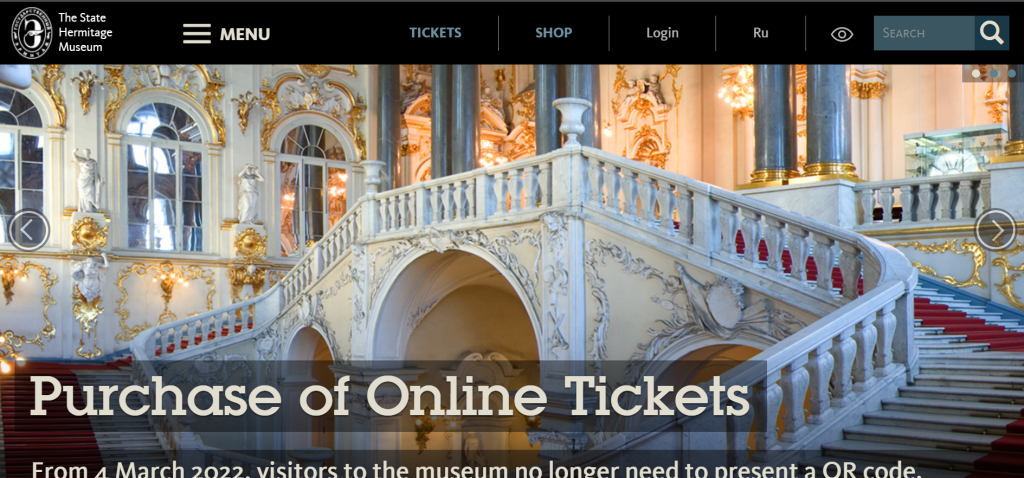
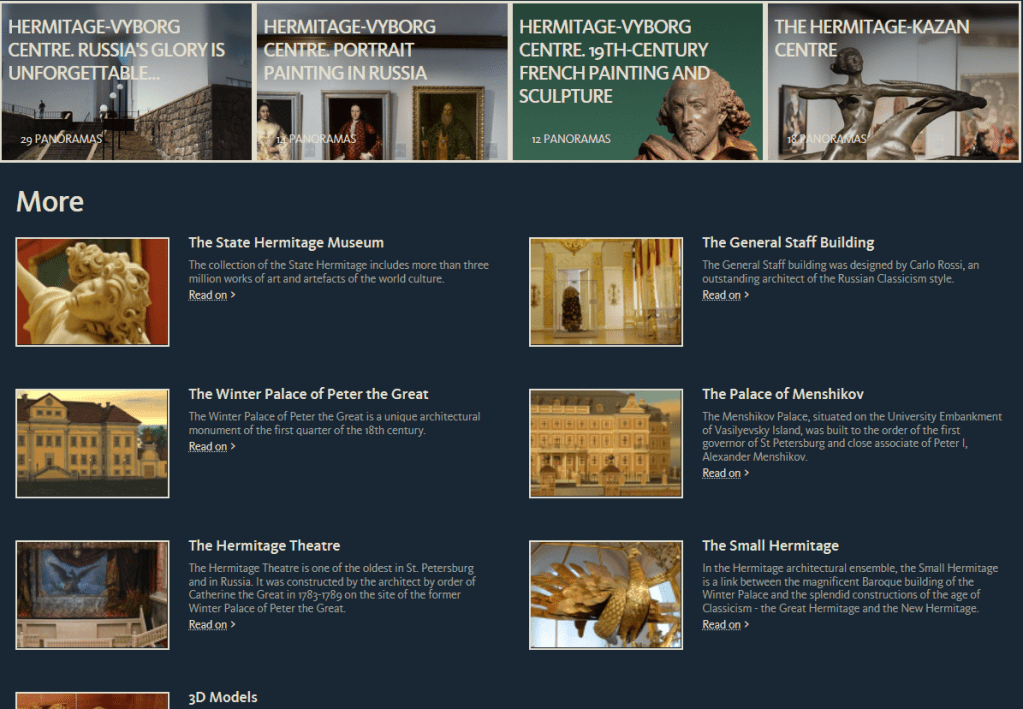
This is the first page you will see, in English or Russian. You can refer to this site to read it in English if you do not understand how to switch the languages but it is the last before search on the menu bar.

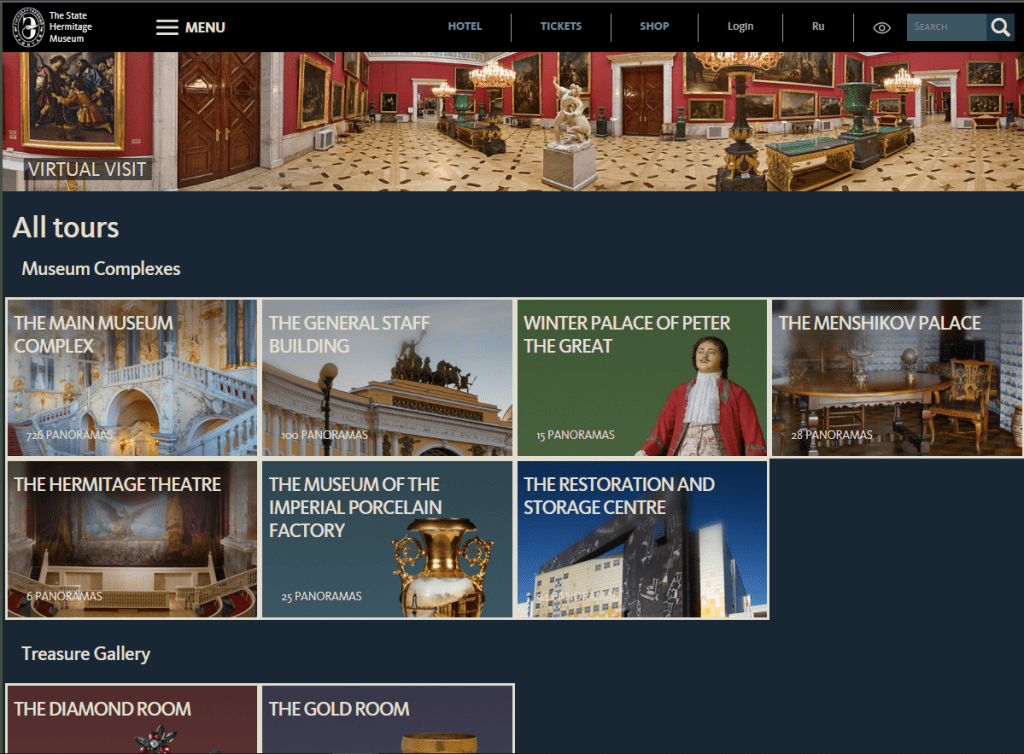
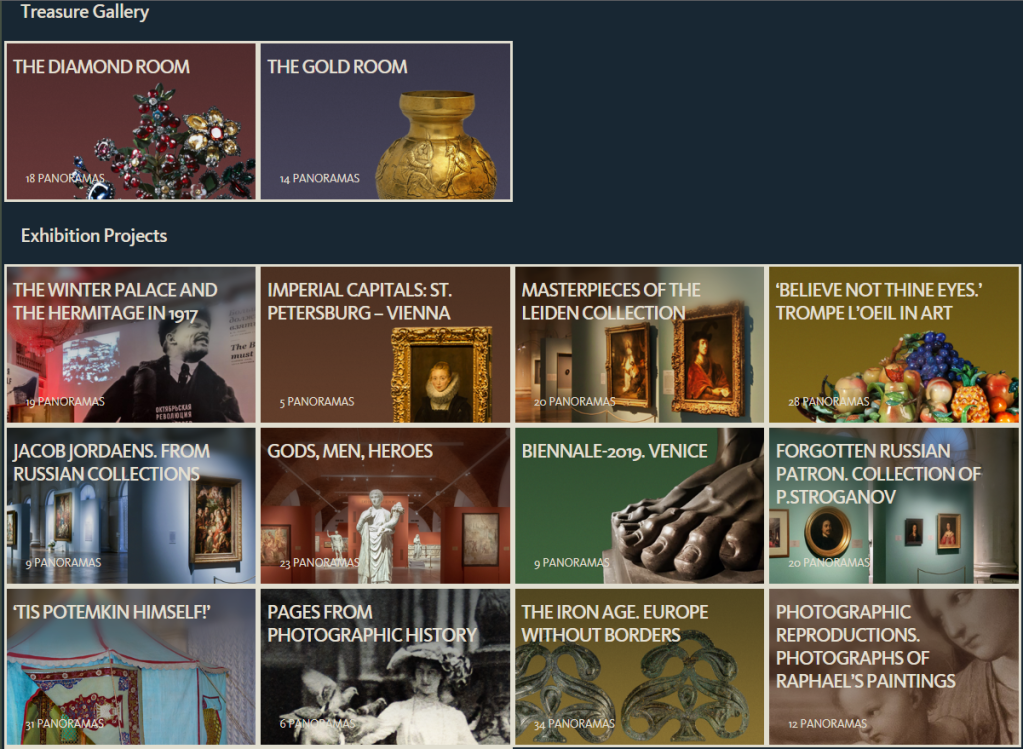
Next we see the tours available. To visit them, just click on the image (Not mine, on their site) To do this, click on one of the bars saying “Visit the Hermitage virtually”. It will take you to their site.

Visit the Hermitage virtually

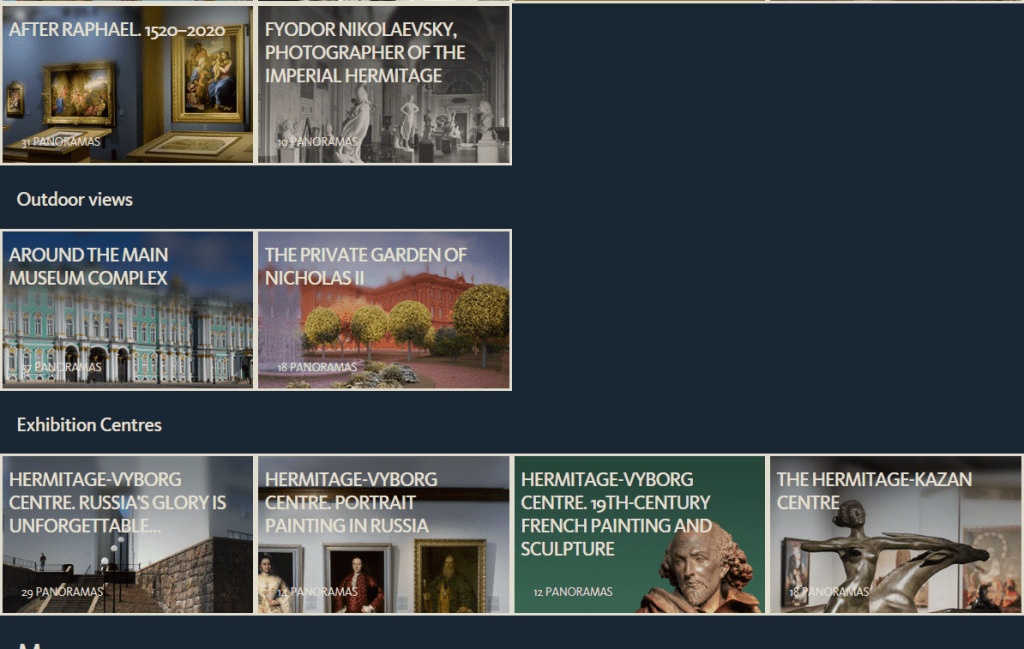
After you click on the first image you will see the next one. Just click on a number and start visiting. You can enlarge or shrink by moving the small wheel of your mouse.

Visit the Hermitage virtually

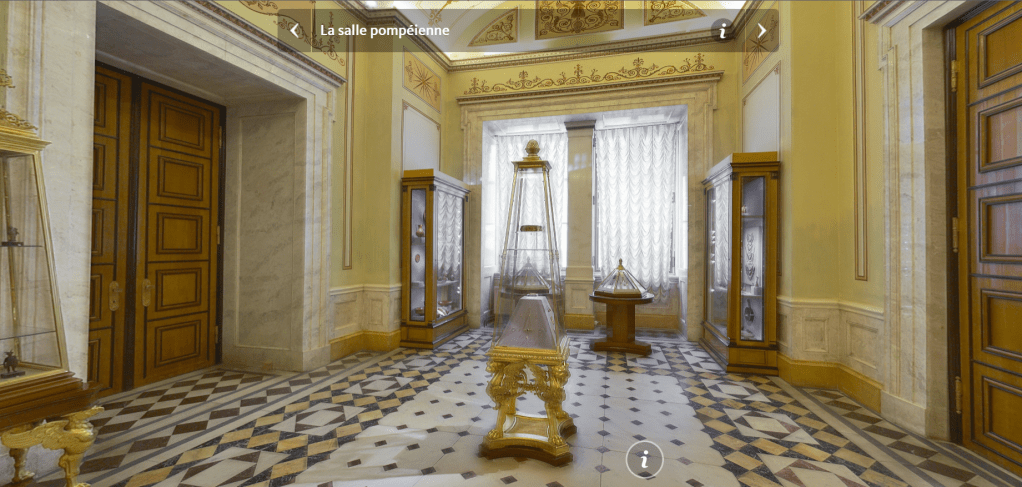
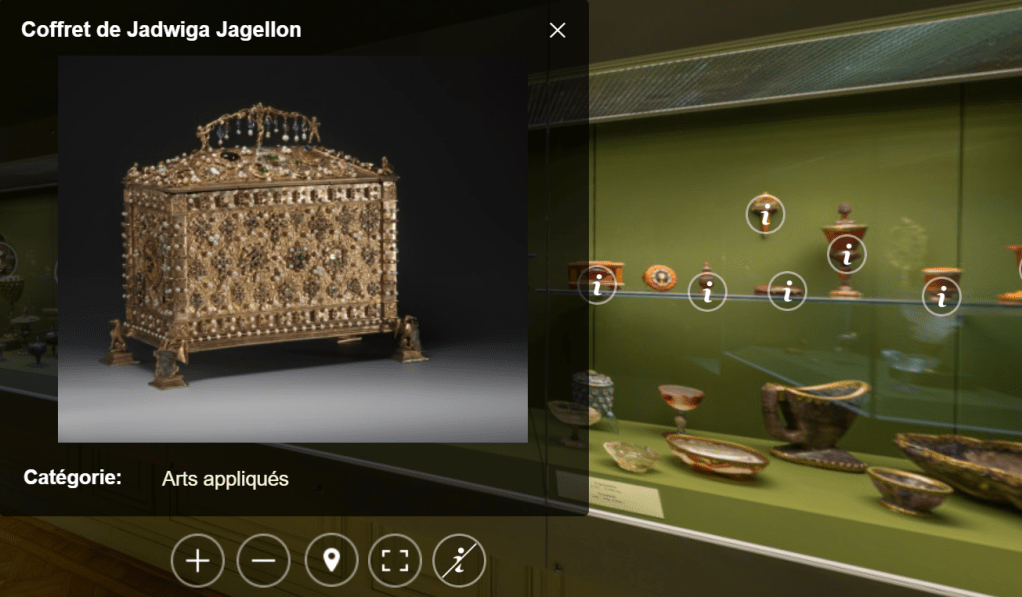
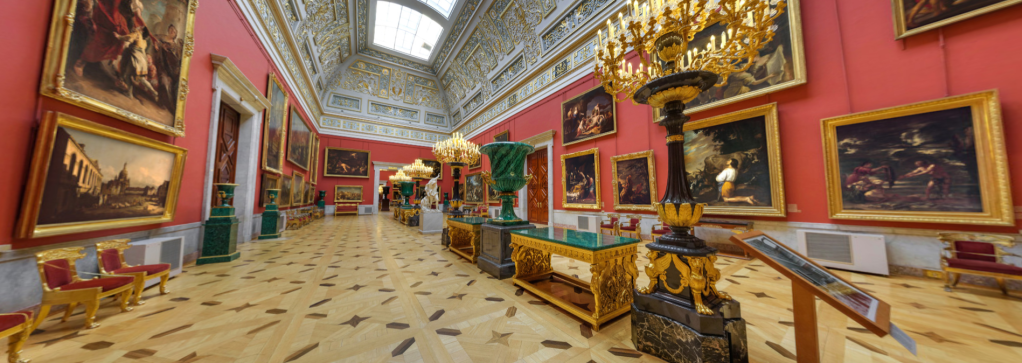
These are random images taken from my visit. As you will see sometimes you can get details of what you are watching. I took several screenshots from afar and for some images, I got closer and asked for information. Sorry it is written in French which it will definitively not be in your browser

Visit the Hermitage virtually

A closer view of the statue

Visit the Hermitage virtually

I pressed the “i” to find out what it was. (The Jadwiga Jagellon Box)

I hope you will enjoy this museum as much as I do and that this article will be useful to you.

If you liked this article, don’t forget to like and share.
Subscribe to not miss anything

L’histoire de L’Ermitage

Read in English

L’Ermitage d’Etat ou Ermitage Impérial avant 1918, est situé à Saint Pétersbourg. C’est l’un des musées le plus important, non seulement en Russie mais, dans le monde entier.

Sa collection comprends plus de 3 millions d’objects rassemblés, qui sont des oeuvres d’art et des monuments de la culture mondiale de l’âge de pierre à nos jours. La superficie totale de l’Ermitage est de plus de 230 000 mètres carrés, dont plus de 65 000 sont occupés par des espaces d’expositions.

State Hermitage Museum

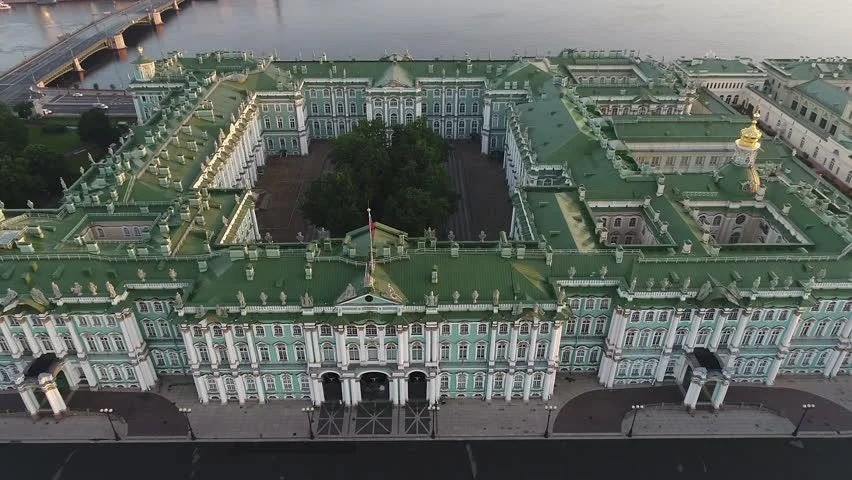
Le musée est situé dans 5 bâtiments principaux interconnectés et formant un seul complexe muséal.

Complexe du musée de l'Ermitage vu d'en haut
Complexe du musée de l’Ermitage vu d’en haut

L’Ermitage a été fondé le 7 décembre 1764 par l’impératrice russe Catherine II. Ce superbe musée a commencé son histoire avec l’achat d’une collection privée comprenant 317 peintures précieuses, qui a été initialement abritée dans une aile spéciale du palais qui s’appelait l’Ermitage. Maintenant, cette place est connue comme le Petit Ermitage. La collection contenait des peintures de Dick Van Baburen, Hendrik Van Balen, Rembrandt Van Rijn et bien d’autres célèbres artistes. A ce jour il reste au moins 96 de ces premières toiles exposées dans l’Ermitage. Cette collection s’est agrandie, incluant la collection de peinture du baron Pierre Crozat en 1772, celle du premier ministre Britannique Walpole en 1779 et, celle du comte Baudouin en 1781, mais elle contenait aussi les bibliothèques de Diderot et de Voltaires, des camées et autres trésors.

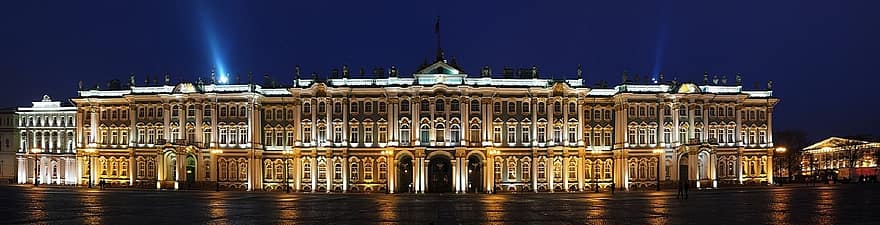
Hermitage Winter palace

Au fils du temps, la collection s’est agrandit et après un certain temps les locaux d’origine dans lesquelles les oeuvres d’art étaient stockées se sont avérés insuffisant, donc de 1771 à 1787 le grand Ermitage a été construit. Le nouveau bâtiment était destiné à abriter les collections d’arts du palais. De plus l’Ermitage possédait l’un des plus anciens théâtre de Saint Pétersbourg et de Russie qui a été construit en 1783.

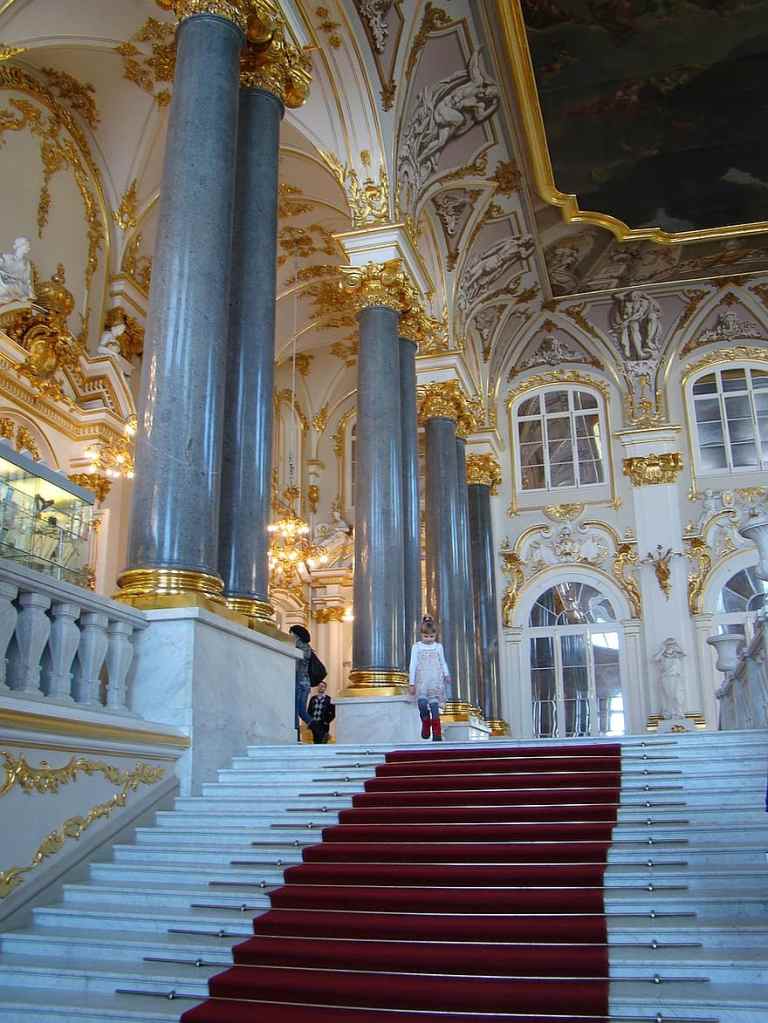
Throne de l'empereur
Throne de l’empereur

L’idée de transformer l’Ermitage en musée publique revient a Nicolas I qui a contribué de manière significative à la reconstitution de la galerie d’art du musée.

Mais ce ne sera que le 5 (17) février 1852 avec une collection considérablement élargie que l’Ermitage ouvrira au public. Pour cela un nouveau bâtiment nommé le Nouvel Ermitage a été construit.

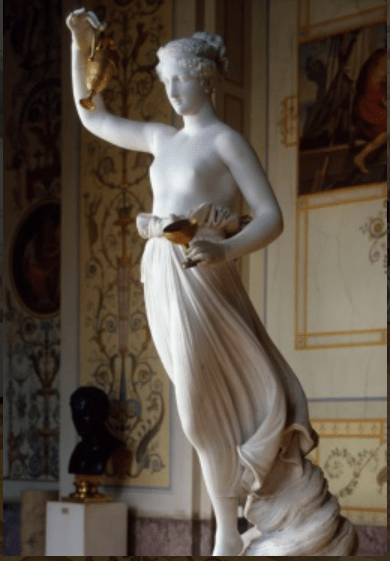
Hebe
Hebe

A cette époque l’Ermitage possédait déjà les plus riches collections de monuments des cultures antiques, orientales, égyptiennes, et médiévales de l’art de l’Europe occidentale et orientale. Le musée contenait aussi des monuments archéologiques et artistique de l’Asie et de la culture russe du VIII au XVIII siècles.

Maintenant le musée comprend 5 bâtiments reliés entre eux. Le Palais d’Hiver, qui était autrefois le principal palais imperial. Le Petit Ermitage (Pavillons Nord et Sud, et le Jardin Suspendu). Le Grand Ermitage aussi appelé l’Ancient Ermitage, le Théâtre de l’Ermitage construit sur le Palais d’Hiver de Pierre Ier, qui a partiellement été préservé et, le Nouvel Ermitage.

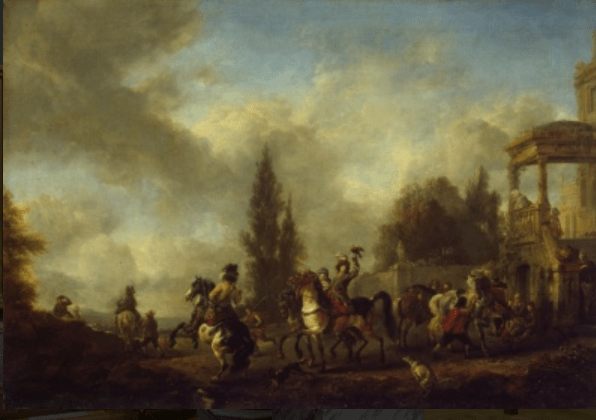
going out at the falconry

La Maison de Réserve du Palais d’Hiver qui est un manoir de la fin du XIXe siècle et, le garage de l’Ermitage construit en 1911 pour l’Empereur Nicolas II sont inclus dans le complexe des bâtiments de l’Ermitage en tant que dépendances.

tapestry interior museum Hermitage-Winter Palace

De plus, l’Ermitage dispose de plusieurs autres bâtiments dont le Palais Menchikov qui a été construit pour le premier gouverneur de la ville, Alexandre Menchikov. Celui-ci était le premier bâtiment en Pierre de Saint Pétersbourg. L’Ermitage utilise aussi l’aile du bâtiment de l’Etat-major générale construit en 1820, qui est un complexe d’exposition muséale, le musée de la fabrique impériale de porcelaine et, le bâtiment de la bourse sur l’ile Vassilievski. Ce dernier abrite le musée de la garde et de l’héraldique russes.

large Italian skylight hall

Une autre partie importante est le centre de restauration et de stockage de l’Ermitage d’Etat dont une partie nous offre de très intéressantes visites guidées.

Portrait of a young woman

Et finalement, depuis le printemps 2020, à cause des quarantaines provoquées par le coronavirus, nous pouvons effectuer des visites virtuelles de ce superbe musée. Nous verrons cela dans notre prochain article.

Si vous avez aimé cet article, n’oublier pas d’aimer et de partager.
Abonnez-vous pour ne rien manquer

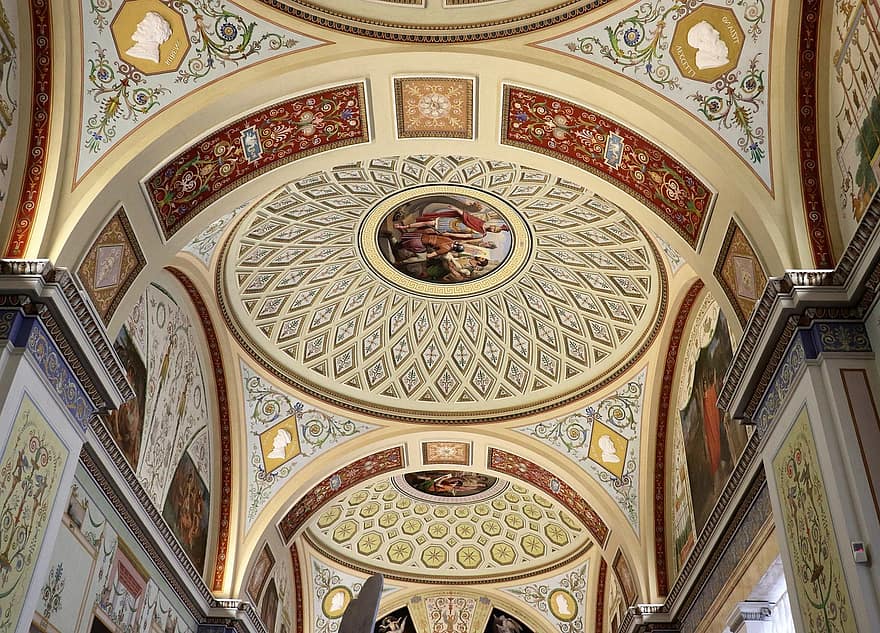
Plafonds de l'Ermitage
Plafonds de l’Ermitage

L’Ermitage moderne est situé Place Embankment, 32-38 (Main Museum Complex). Il est ouvert tous les jours sauf le lundi de 10h30 a 18h00, ainsi que les mercredis et vendredis de 10h30 a 21h00

Avez-vous lu nos derniers posts?

Que savez-vous du livre des Aventures de Tom Sawyer?

Les aventures de Tom sawyer ont été écrite par Mark Twain et publiées en 1876. Le livre nous raconte l’histoire d’un jeune garçon qui grandit sur les rives du Mississippi, dans la ville de saint Petersbourg dans les années 1840.

Marc Twain en 1907
Marc Twain en 1907

Celui-là a été le livre le plus vendu de Mark Twain durant sa vie.

Le livre des aventures de Tom Sawyer est considéré une masterpiece de littérature américaine . En effet, ce livre contient des éléments d’humour , de satire et de critique sociale. Ce sont ces caractéristiques qui ont fait de Mark Twain l’un des auteurs les plus important de la littérature américaine.

Couverture du livre "Les aventures de Tom Sawyer"
Couverture du livre “Les aventures de Tom Sawyer”

Les aventures de Tom sawyer a été l’un des premier livre a être écrit avec une machine à écrire.

Une des premières machine à écrire

Les aventures de Tom Sawyer est une histoire basée sur la ville d’Hannibal, Missouri, où Marc Twain a vécu enfant et contient des évènements vécu par l’auteur.

Ce livre est l’un de quatres livres écrit au sujet de Tom Sawyer. Les aventures de Tom sawyer, 1876; Les Aventures de Huckleberry Finn, 1884; Tom Sawyer à l’etranger, 1894; Tom Sawyer, détective, 1896

Vous pouvez le lire en Français ou en anglais sur ce site. C’est le premier livre de notre collection grandissante de livres bilingues.

Lire les aventures de Tom Sawyer

What do you know about the book “The Adventures of Tom Sawyer” ?

The Adventures of Tom Sawyer was written by Mark Twain and published in 1876. The book tells us the story of a young boy growing up on the banks of the Mississippi, in the city of Saint Petersburg in the 1840s.

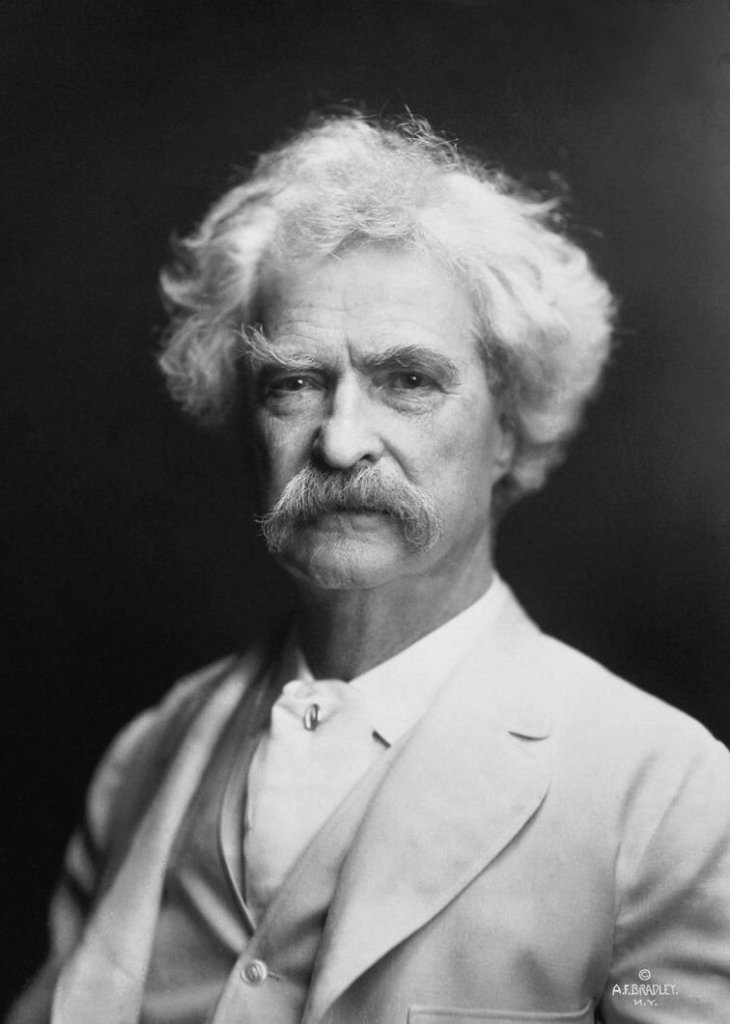
Marc Twain in 1907
Marc Twain in 1907

This was Mark Twain’s best-selling book during his lifetime.

The book of the Adventures of Tom Sawyer is considered a masterpiece of American literature. Indeed, this book contains elements of humor, satire and social criticism. These are the characteristics that made Mark Twain one of the most important authors of American literature.

1876 illustration by True Williams 
The adventures of Tom Sawyer
1876 illustration by True Williams
The adventures of Tom Sawyer

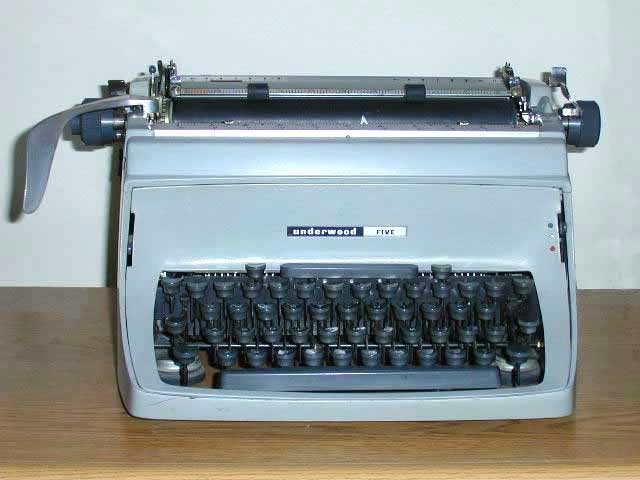
The Adventures of Tom Sawyer was one of the first books to be written with a typewriter.

One of the first typewriter

The Adventures of Tom Sawyer is a story based on the town of Hannibal, Missouri, where Marc Twain lived as a child and contains events experienced by the author.

This book is one of four books written about Tom Sawyer. The Adventures of Tom Sawyer, 1876; The Adventures of Huckleberry Finn, 1884; Tom Sawyer Abroad, 1894; Tom Sawyer, detective, 1896

You can read it in English or in French on this site. It is the first of our growing collection of bilingual books.

Read The Adventures of Tom Sawyer

Qui était Dmitry Mikhaïlovitch Karbyshev?

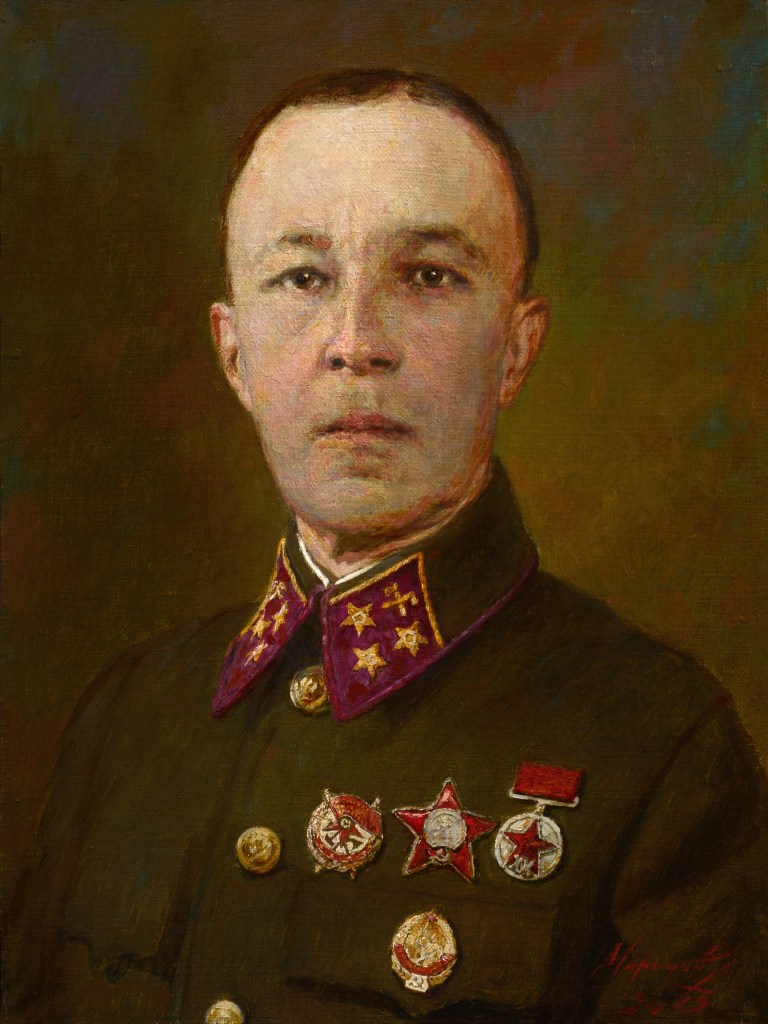
Dmitry Mikhaïlovitch Karbyshev était un officier de l’armée impériale russe, général de l’armée rouge, professeur à l’academie d’état-major soviétique et héro de l’Union soviétique. Né à Omsk le 26 octobre (14 octobre) 1880 , il a reçu de nombreuses médailles tsaristes puis soviétiques.

Dmitry Mikhalovich Karbyshev
Auteur – artiste Andrey Mironov, photo du site personnel de l’artiste 
artmiro.ru

Dmitry Mikhaïlovitch Karbyshev a publié plus de 100 articles de recherche sur le génie militaire et l’histoire militaire, dont la lecture étaient obligatoire par les commandants de l’armée rouge.

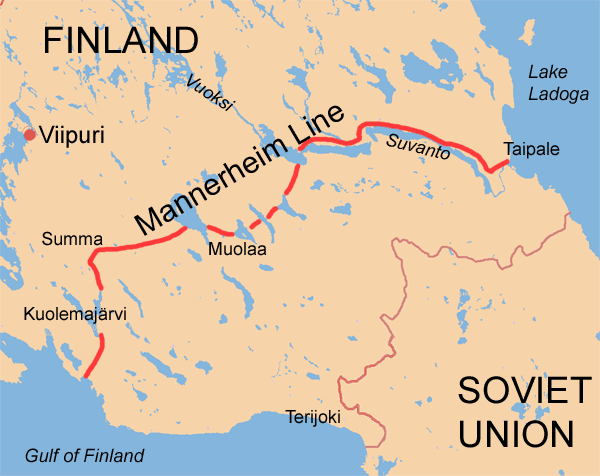
Entre autre, il s’est rendu sur la ligne de front pour conseiller les troupes sur le soutien technique a la brèche de Mannerheim pendant la guerre 1939-1940 contre la Finlande.

Map of the Mannerheim Line, the Finnish main defense line across the Karelian Isthmus
By User Jniemenmaa on en.wikipedia – Originally from en.wikipedia; CC BY-SA 3.0

En aout 1941 il a été capturé par les nazis pendant son inspection de la région fortifiée de Grodno; dans l’ouest de la Biélorussie. C’etait une très belle capture puisqu’il parlait l’allemand couramment et savait tout sur les fortifications soviétiques.

Les allemands lui ont offert un traitement royal en échange de sa coopération, pensant que puisque sa première femme était Allemande il sauterait sur l’occasion. Cela n’a pas fonctionné. Ni les promesses ni l’intimidation, les menaces et la torture ne l’ont fait changé d’avis.

Après deux ans de tentatives, les nazis ont abandonnés et Dmitry Mikhaïlovitch Karbyshev a été envoyé dans le camp de concentration de Flossenbürg. Par la suite il sera détenu dans de nombreux autres camps incluant: Hammelburg, Majdanek, Auschwitz, Sachsenhausen et Mauthausen. A chaque fois, il était l’un des leaders les plus actifs du mouvement de résistance.

Le major de l’armée canadienne Seddon de St. Clair, un autre prisonnier de guerre qui a été témoin de la mort de Karbyshev a décrit se qui s’est passé.

Après que les allemands les ai conduits dans la salle de douche et aspergé d’eau glacée, il a dit que tout le monde était devenu bleu et que beaucoup sont tombé par terre et sont morts. Dmitry Mikhaïlovitch Karbyshev a survécu mais les allemands les ont fait sortir dans la cour en sous-vêtements et les ont arrosé avec des jets d’eau froide.

Dmitry Mikhaïlovitch Karbyshev se tenait debout face à ses bourreaux et criait des encouragements, mais il n’a pas survécu.

Après la fin de la guerre, le 16 aout 1946, il recevra a titre posthume la médaille du héro de l’Union Soviétique.

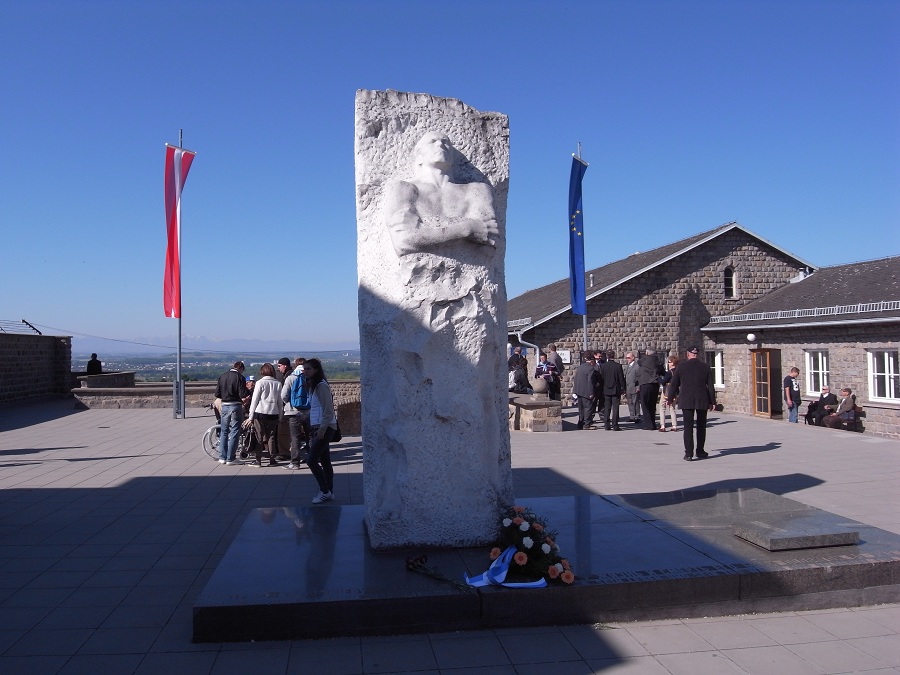
Un monument a été construit par le sculpteur Vladimir Tsigal en son honneur au camp de concentration de Mauthausen

By Hildebrand – Own work, CC BY-SA 3.0

Who was Dmitry Mikhailovich Karbyshev?

Dmitry Mikhailovich Karbyshev was an officer of the Imperial Russian Army, general of the Red Army, professor at the Soviet General Staff Academy and Hero of the Soviet Union. Born in Omsk on October 26 (October 14), 1880, he received numerous Tsarist and then Soviet medals.

Dmitry Mikhalovich Karbyshev
Auteur – artiste Andrey Mironov, photo du site personnel de l’artiste 
artmiro.ru

Dmitry Mikhailovich Karbyshev published more than 100 research articles on military engineering and military history, which were required reading by Red Army commanders.

Among other things, he went to the front line to advise the troops on technical support at the Mannerheim breach during the 1939-1940 war against Finland.

Map of the Mannerheim Line, the Finnish main defense line across the Karelian Isthmus
By User Jniemenmaa on en.wikipedia – Originally from en.wikipedia; CC BY-SA 3.0

In August 1941 he was captured by the Nazis while inspecting the fortified area of ​​Grodno; in western Belarus. It was a very nice capture since he spoke German fluently and knew everything about the Soviet fortifications.

The Germans offered him royal treatment in exchange for his cooperation, thinking that since his first wife was German he would jump at the chance. It did not work. Neither promises nor intimidation, threats and torture changed his mind.

After two years of attempts, the Nazis gave up and Dmitry Mikhailovich Karbyshev was sent to the Flossenbürg concentration camp. After that he was detained in many other camps including: Hammelburg, Majdanek, Auschwitz, Sachsenhausen and Mauthausen. Each time, he was one of the most active leaders of the resistance movement.

Canadian Army Major Seddon of St. Clair, another POW who witnessed Karbyshev’s death described what happened.

After the Germans led them into the shower room and doused them with ice water, he said everyone turned blue and many fell to the ground and died. Dmitry Mikhailovich Karbyshev survived but the Germans took them out into the yard in their underwear and sprayed them with cold water.

Dmitry Mikhailovich Karbyshev stood facing his executioners and shouted encouragement, but he did not survive.

After the end of the war, on August 16, 1946, he was posthumously awarded the Hero of the Soviet Union medal.

A monument was built by sculptor Vladimir Tsigal in his honor at the Mauthausen concentration camp

By Hildebrand – Own work, CC BY-SA 3.0

Histoire de la création de la colombe comme symbole de la paix

Depuis l’antiquité la colombe représente le symbole de paix.

Symbole d'amour fidèle: Jeune fille a la colombe par Chaplin
Symbole d’amour fidèle: Jeune fille a la colombe par Chaplin

La colombe est aussi mentionnée dans la bible. Dans l’ancien testament. Noé relâcha une colombe trois fois.

La première fois elle revint n’ayant pas trouvée la terre. La deuxième fois elle revint portant une branche d’olive et Noé su ainsi que l’eau avait baissé sur la terre. La troisième fois, elle ne revint pas car on pouvait de nouveau vivre sur la terre.

A partir de ce moment la colombe est devenue un signe de réconciliation entre Dieu et l’homme

A la fin de la seconde guerre mondiale le symbole de la colombe a reçu une reconnaissance universelle. L’emblème a été créé par Pablo Picasso pour le Congres Mondiale de la paix, organisé en 1949 à Paris et à Prague.

Portrait_de_Picasso,_1908-public domain

Plus tard Picasso a créé de nombreuses variantes de la colombe de la paix. L’emblème de la colombe s’est développée et s’est transformée en un emblème laconique.

Puis-ce que le parti communiste avait organisé le congrès, la colombe est devenu non seulement le symbole de la paix mais aussi du mouvement communiste.

La colombe de la paix n’a pas été acceptée par le publique immédiatement à cause de leur méfiance du mouvement communiste.

La colombe de Picasso a été honorée par le Philadelphia Museum avec une médaille commémorative. Peu de temps après cette image a commencé a être reconnue et utilisée dans le monde entier