

Русская литература – Русская поэзия – Все Стихи Александра Пушкина – Устаревшие русские слова и их значение
Littérature Russe – Poésie Russe – Poèmes d’Alexandre Pouchkine – Mots russes obsolètes et leur signification
Russian Literature – Russian Poetry – Poems by Alexander Pushkin – Obsolete Russian Words and their meaning
< < < La Crête Volatile des Nuages s’éclaircit (Ru/Fr) / The Flying Ridge of Clouds is Thinning (Ru/Eng) / Редеет облаков летучая гряда (Рус/Анг.) / (Рус/ Фра.)
Les chênaies, où dans le silence de la liberté (Ru/Fr) / Oak groves, where in the silence of freedom (Ru/Eng) / Дубравы, где в тиши свободы (Рус/Анг.) / (Рус/ Фра.) > > >
- Translation of the poem “Commander” by Alexander Pushkin in English with English and Russian side by side
- Short analysis of the poem “Commander” by Alexander Pushkin
Translation of the poem “Commander” by Alexander Pushkin in English with English and Russian side by side
| Полководец | Commander |
| Translation by Akirill.com Nov 27, 2023 | |
| У русского царя в чертогах есть палата: | The Russian Tsar has a chamber in his palace: |
| Она не золотом, не бархатом богата; | It is not rich in gold or velvet; |
| Не в ней алмаз венца хранится за стеклом; | It is not where the crown diamond is kept behind glass; |
| Но сверху донизу, во всю длину, кругом, | But from top to bottom, all the way around, |
| Своею кистию свободной и широкой | with his free and wide brush, |
| Ее разрисовал художник быстроокой. | the artist painted it with a quick eye. |
| Тут нет ни сельских нимф, ни девственных мадонн, | Here, there are neither rural nymphs, nor virgin madonnas, |
| Ни фавнов с чашами, ни полногрудых жен, | Neither fauns with cups, nor full-breasted wives, |
| Ни плясок, ни охот, — а все плащи, да шпаги, | Neither dancing, nor hunts – but all are cloaks, swords, |
| Да лица, полные воинственной отваги. | and faces full of warlike courage. |
| Толпою тесною художник поместил | In a crowd, the artist placed |
| Сюда начальников народных наших сил, | here the leaders of our national forces, |
| Покрытых славою чудесного похода | covered with the glory of a wonderful campaign |
| И вечной памятью двенадцатого года. | and the eternal memory of the twelfth year. |
| Нередко медленно меж ими я брожу | Often I wander slowly among them, |
| И на знакомые их образы гляжу, | and I look at their familiar images, |
| И, мнится, слышу их воинственные клики. | and, I imagine, I hear their warlike cries. |
| Из них уж многих нет; другие, коих лики | There aren’t many of them; others, whose faces |
| Еще так молоды на ярком полотне, | are still so young on the bright canvas, |
| Уже состарились и никнут в тишине | have already grown old and are withering in silence |
| Главою лавровой… | with the head of the laurel… |
| Но в сей толпе суровой | But in this stern crowd |
| Один меня влечет всех больше. С думой новой | One attracts me most of all. With a new thought |
| Всегда остановлюсь пред ним — и не свожу | I will always stop before him – and I will not take |
| С него моих очей. Чем долее гляжу, | my eyes off him. The longer I look, |
| Тем более томим я грустию тяжелой. | the more I am tormented by heavy sadness. |
| Он писан во весь рост. Чело, как череп голый, | He is painted in its entirety. The forehead, like a naked skull, |
| Высоко лоснится, и, мнится, залегла | shines high, and, I imagine, that was laying down |
| Там грусть великая. Кругом — густая мгла; | great sadness there. There is thick darkness all around; |
| За ним — военный стан. Спокойный и угрюмый, | Behind him is a military camp. Calm and gloomy, |
| Он, кажется, глядит с презрительною думой. | He seems to look with a contemptuous thought. |
| Свою ли точно мысль художник обнажил, | Did the artist really reveal his own thoughts |
| Когда он таковым его изобразил, | when he portrayed him as such, |
| Или невольное то было вдохновенье, — | or was it involuntary inspiration – |
| Но Доу дал ему такое выраженье. | But Dawe gave him such an expression. |
| О вождь несчастливый! Суров был жребий твой: | O unfortunate leader! Your lot was harsh: |
| Все в жертву ты принес земле тебе чужой. | You sacrificed everything to a foreign land. |
| Непроницаемый для взгляда черни дикой, | Impenetrable to the gaze of the wild mob, |
| В молчанье шел один ты с мыслию великой, | You walked alone in silence with a great thought, |
| И, в имени твоем звук чуждый невзлюбя, | And, in your name, the sound of the dislike of foreigners |
| Своими криками преследуя тебя, | Pursuing you with their cries, |
| Народ, таинственно спасаемый тобою, | The people, mysteriously saved by you, |
| Ругался над твоей священной сединою. | swore on your holy gray hair. |
| И тот, чей острый ум тебя и постигал, | And the one whose sharp mind comprehended you, |
| В угоду им тебя лукаво порицал… | to please them, slyly reproached you… |
| И долго, укреплен могущим убежденьем, | And for a long time, strengthened by a powerful conviction, |
| Ты был неколебим пред общим заблужденьем; | You were unshakable in the face of common error; |
| И на полупути был должен наконец | And halfway there you had to finally |
| Безмолвно уступить и лавровый венец, | Silently yield the laurel crown, |
| И власть, и замысел, обдуманный глубоко, — | And the power, and the plan, thought out deeply, |
| И в полковых рядах сокрыться одиноко. | And hide alone in the regimental ranks. |
| Там, устарелый вождь! как ратник молодой, | There, obsolete leader! like a young warrior, |
| Свинца веселый свист заслышавший впервой, | hearing the cheerful whistle of lead for the first time, |
| Бросался ты в огонь, ища желанной смерти, — | you threw yourself into the fire, seeking the desired death – |
| Вотще! — | in vain! — |
| . . . . . . . . . . . . . . . . . . . . . | . . . . . . . . . . . . . . . . . . . . . |
| . . . . . . . . . . . . . . . . . . . . . | . . . . . . . . . . . . . . . . . . . . . |
| О люди! жалкий род, достойный слез и смеха! | O people! a pitiful race worthy of tears and laughter! |
| Жрецы минутного, поклонники успеха! | Priests of the moment, fans of success! |
| Как часто мимо вас проходит человек, | How often does a person pass by you, |
| Над кем ругается слепой и буйный век, | Over whom the blind and violent age curses, |
| Но чей высокий лик в грядущем поколенье | But whose high face in the coming generation |
| Поэта приведет в восторг и в умиленье! | of the Poet will lead to delight and tenderness! |
Short analysis of the poem “Commander” by Alexander Pushkin
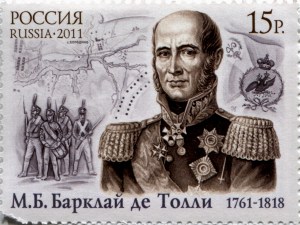
The poem “Commander” by A.S. Pushkin pays tribute to M.B. Barclay de Tolly, a historical figure whose contributions to Russia during the Patriotic War of 1812 are still debated among specialists. Despite his notable services, Barclay de Tolly faced distrust from his contemporaries. The skepticism stemmed from his Western surname, which cast doubt on his loyalty. However, the poem “Commander” serves as an ode, highlighting the valor and dedication of a person who was underappreciated by those around him. Pushkin’s work brings attention to the virtues and merits of Barclay de Tolly, shedding light on his importance in Russian history.
The poem “Commander” by A. Pushkin was written in 1835 and later published in 1836. It was inspired by a portrait painted by the English artist George Dawe who is renowned for painting a remarkable collection of 329 portraits. These portraits captured the essence of Russian generals who played pivotal roles during Napoleon’s invasion of Russia. The painter created the portrait mentioned in the poem based on an engraving after the death of the hero, imbuing it with a romantic aura. The commander had previously been removed from his command and had fallen out of favor. However, he returned to service in 1813 and received awards for his achievements.
“Commander” is a remarkable combination of lyrical and epic elements, incorporating historical material and offering profound reflections on the fate of an extraordinary individual.
< < < La Crête Volatile des Nuages s’éclaircit (Ru/Fr) / The Flying Ridge of Clouds is Thinning (Ru/Eng) / Редеет облаков летучая гряда (Рус/Анг.) / (Рус/ Фра.)
Les chênaies, où dans le silence de la liberté (Ru/Fr) / Oak groves, where in the silence of freedom (Ru/Eng) / Дубравы, где в тиши свободы (Рус/Анг.) / (Рус/ Фра.) > > >
Русская литература – Русская поэзия – Все Стихи Александра Пушкина – Устаревшие русские слова и их значение
Littérature Russe – Poésie Russe – Poèmes d’Alexandre Pouchkine – Mots russes obsolètes et leur signification
Russian Literature – Russian Poetry – Poems by Alexander Pushkin – Obsolete Russian Words and their meaning
We put a lot of effort into the quality of the articles and translations, support us with a like and a subscription or sponsor us if you like them. We are also on Facebook and Twitter
- Poèmes et peinture, semaine du 29 mars 2026
- Poems and painting, Week of March 29, 2026
- Poèmes et peinture, semaine du 22 mars 2026
- Poems and painting, Week of March 22, 2026
- Poèmes et peinture, semaine du 15 mars 2026
- Poems and painting, Week of March 15, 2026

© 2023 Akirill.com – All Rights Reserved
 AKirill, Learn, apprenez, translation, traduction, livres bilingues, bilingual books