
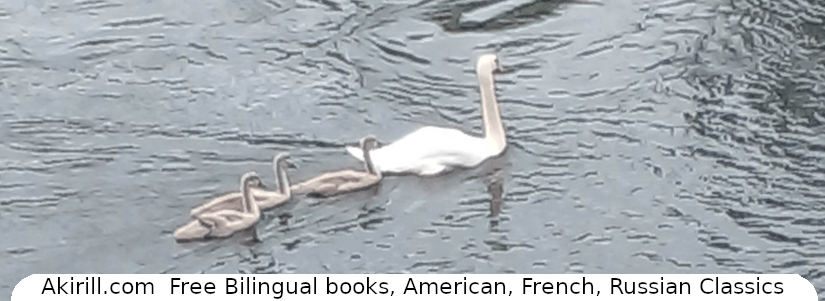
Русская литература – Русская поэзия – Все Стихи Сергея Есенина – Устаревшие русские слова и их значение
Littérature Russe – Poésie Russe – Poèmes par Sergueï Essénine – Mots russes obsolètes et leur signification
Russian Literature – Russian Poetry – Poems by Sergei Yesenin – Obsolete Russian Words and their meaning
< < < La vie est une tromperie à la mélancolie enchanteresse (Ru/Fr) /Life is a deception with enchanting melancholy (Ru/Eng) / Жизнь обман с чарующей тоскою (Рус/Анг.) / (Рус/ Фра.)
Lettre à ma mère (Ru/Fr) / Letter to my mother (Ru/Eng) / Письмо Матери (Рус/Анг.) / (Рус/ Фра.) > > >
- Note
- Translation of the poem “Swan” by Sergei Yesenin in English with English and Russian side by side
- Short analysis of the poem “Swan” by Sergei Yesenin


Note:
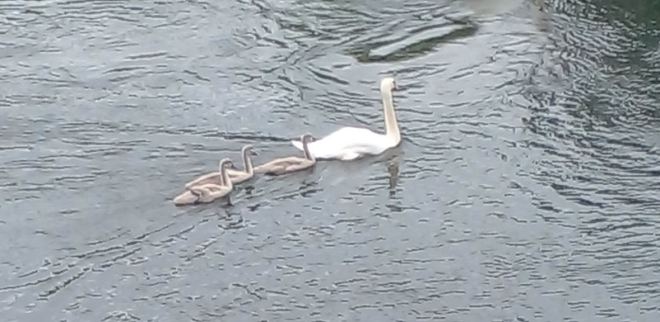
You might want to pay attention to the difference between лебедь and лебедушка. Both words means swan but the second word (лебедушка) denotes a tenderness and affection of the swan, there is no difference in the translation so you will have to check the Russian side to know which one is intended. These three words (лебедь, лебедушка, лебежатушка) are in bold characters to be found more easily
лебедь: swan
лебедушка: diminutive-affectionate to winch ; female swan
лебежатушка: diminutive-affectionate to signet ; baby swan
Beware two lines of the poem were inverted for a better comprehension. Their traductions is under the Russian part.
Translation of the poem “Swan” by Sergei Yesenin in English with English and Russian side by side
| Лебедушка Сергея Есенина | Swan by Sergei Yesenin |
| . | |
| Translated by Akirill.com 11/12/2023 | |
| . | |
| Из-за леса, леса темного, | From behind the forest, the dark forest, |
| Подымалась красна зорюшка, | A red dawn rose, |
| Рассыпала ясной радугой | Scattered by a clear rainbow |
| Огоньки-лучи багровые. | Crimson light rays. |
| . | |
| Загорались ярким пламенем Lit up with a bright flame , | The old, mighty pines |
| Сосны старые, могучие, The old, mighty pines | Lit up with a bright flame , |
| Наряжали сетки хвойные | And decorated coniferous nets |
| В покрывала златотканые. | With gold-woven bedspreads. |
| . | |
| А кругом роса жемчужная | And all around the pearly dew |
| Отливала блестки алые, | Cast scarlet sparkles, |
| И над озером серебряным | And over the silver lake |
| Камыши, склонясь, шепталися. | The reeds leaned over and whispered. |
| . | |
| В это утро вместе с солнышком | This morning, together with the sun, |
| Уж из тех ли темных зарослей | From one of those dark thickets, |
| Выплывала, словно зоренька, | Floated out like a dawn, |
| Белоснежная лебедушка. | A snow-white swan. |
| . | |
| Позади ватагой стройною | Behind, in a slender gang, |
| Подвигались лебежатушки. | The little swans followed one another. |
| И дробилась гладь зеркальная | And the mirror surface was crushed |
| На колечки изумрудные. | Into emerald rings. |
| . | |
| И от той ли тихой заводи, | And from that quiet backwater, |
| Посередь того ли озера, | Or in the middle of that lake, |
| Пролегла струя далекая | A distant stream flowed like |
| Лентой темной и широкою. | A dark and wide ribbon. |
| . | |
| Уплывала лебедь белая | A white swan swam away |
| По ту сторону раздольную, | On the wide other side, |
| Где к затону молчаливому | Where on the silent backwater |
| Прилегла трава шелковая. | Silken grass lay down. |
| . | |
| У побережья зеленого, | Along the green coast, |
| Наклонив головки нежные, | Bowing their gentle heads, |
| Перешептывались лилии | The lilies whispered |
| С ручейками тихозвонными. | To the quiet streams. |
| . | |
| Как и стала звать лебедушка | As the swan began to call |
| Своих малых лебежатушек | Her little swans |
| Погулять на луг пестреющий, | To take a walk in the colorful meadow, |
| Пощипать траву душистую. | and pluck the fragrant grass. |
| . | |
| Выходили лебежатушки | The little swans came out |
| Теребить траву-муравушку, | To play with the ant-grass, |
| И росинки серебристые, | And silvery dewdrops, |
| Словно жемчуг, осыпалися. | Like pearls, fell off. |
| . | |
| А кругом цветы лазоревы | And all around, azure flowers |
| Распускали волны пряные | Bloomed in spicy waves |
| И, как гости чужедальние, | And, like foreign guests, |
| Улыбались дню веселому. | Smiled at the merry day. |
| . | |
| И гуляли детки малые | And the little children walked |
| По раздолью по широкому, | Along the wide expanse, |
| А лебедка белоснежная, | And the snow-white swan, |
| Не спуская глаз, дозорила. | Without taking her eyes off them, kept watch. |
| . | |
| Пролетал ли коршун рощею, | Whether a kite flew through a grove, |
| Иль змея ползла равниною, | Or a snake crawled across a plain, |
| Гоготала лебедь белая, | The white swan cackled, |
| Созывая малых детушек. | Calling her little children. |
| . | |
| Хоронились лебежатушки | The little swans were hidden |
| Под крыло ли материнское, | Under their mother’s wings, |
| И когда гроза скрывалася, | And when the storm disappeared, |
| Снова бегали-резвилися. | They ran and frolicked again. |
| . | |
| Но не чуяла лебедушка, | But the swan did not sense, |
| Не видала оком доблестным, | Nor did her valiant eye see, |
| Что от солнца золотистого | That from the golden sun |
| Надвигалась туча черная — | A black cloud was approaching – |
| . | |
| Молодой орел под облаком | A young eagle under a cloud |
| Расправлял крыло могучее | Spread its mighty wing |
| И бросал глазами молнии | And threw lightning with his eyes |
| На равнину бесконечную. | Onto the endless plain. |
| . | |
| Видел он у леса темного, | He saw by the dark forest, |
| На пригорке у расщелины, | On a hillock near a crevice, |
| Как змея на солнце выползла | How a snake crawled out into the sun |
| И свилась в колечко, грелася. | And curled itself into a ring, warming itself. |
| . | |
| И хотел орел со злобою | And the eagle wanted with malice |
| Как стрела на землю кинуться, | Rush to the ground like an arrow, |
| Но змея его заметила | But the snake noticed him |
| И под кочку притаилася. | and hid under a hummock. |
| . | |
| Взмахом крыл своих под облаком | With a flap of his wings under the cloud, |
| Он расправил когти острые | He spread out his sharp claws |
| И, добычу поджидаючи, | And, waiting for prey, |
| Замер в воздухе распластанный. | Froze in the air, spread out. |
| . | |
| Но глаза его орлиные | But his eagle eyes |
| Разглядели степь далекую, | Saw the distant steppe, |
| И у озера широкого | And by the wide lake |
| Он увидел лебедь белую. | He saw a white swan. |
| . | |
| Грозный взмах крыла могучего | The menacing flap of the mighty wing |
| Отогнал седое облако, | Drove away the gray cloud, |
| И орел, как точка черная, | And the eagle, like a black dot, |
| Стал к земле спускаться кольцами. | Began to descend to the ground in rings. |
| . | |
| В это время лебедь белая | At this time, the white swan |
| Оглянула гладь зеркальную | Examined the mirror surface |
| И на небе отражавшемся | And reflected in the sky |
| Увидала крылья длинные. | Saw long wings. |
| . | |
| Встрепенулася лебедушка, | The swan started up, |
| Закричала лебежатушкам, | Screamed to the little swans, and |
| Собралися детки малые | The little children gathered |
| И под крылья схоронилися. | And hid under her wings. |
| . | |
| А орел, взмахнувши крыльями, | And the eagle, flapping its wings, |
| Как стрела на землю кинулся, | Rushed to the ground like an arrow, |
| И впилися когти острые | And its sharp claws dug |
| Прямо в шею лебединую. | Straight into the swan’s neck. |
| . | |
| Распустила крылья белые | Spread white wings |
| Белоснежная лебедушка | The snow-white swan |
| И ногами помертвелыми | With her dead legs |
| Оттолкнула малых детушек. | Pushed away the little kids. |
| . | |
| Побежали детки к озеру, | The children ran to the lake, |
| Понеслись в густые заросли, | Rushed into the dense thickets, |
| А из глаз родимой матери | And from the eyes of their mother |
| Покатились слезы горькие. | Bitter tears rolled down. |
| . | |
| А орел когтями острыми | And the eagle, with sharp claws |
| Раздирал ей тело нежное, | Tore her tender body apart, |
| И летели перья белые, | And white feathers flew, |
| Словно брызги, во все стороны. | Like splashes, in all directions. |
| . | |
| Колыхалось тихо озеро, | The lake swayed quietly, |
| Камыши, склонясь, шепталися, | The reeds, bending down, whispered, |
| А под кочками зелеными | And under the green hummocks |
| Хоронились лебежатушки. | The little swans were hidden. |
Short analysis of the poem “Swan” by Sergei Yesenin
“The Swan” written by S. A. Yesenin between 1913—1915 is considered by critics as one of his best works, capable of conveying his life philosophy and deep understanding of the world. This poem reveals the theme of the unconditional love of mothers who are ready to take any step to protect their children, but also touches on such issues as the transience of life, the cruelty of the world, and the cyclical change of generations.
It is written for children in the form of an epic which is an extended narrative poem in elevated or dignified language, celebrating the feats of a legendary or traditional hero and which main task is to remind us of the ideal, of what we should strive for.
The lyrical heroine of the work “Swan”, is a swan, a mother who protects her children. The swan is a metaphor for life, which lasts only a short time and is interrupted by death, and symbolizes wisdom, beauty, tenderness, lightness, spiritual purity, mercy, and immortality. In addition, the author uses the symbolism of color, especially white, which denotes purity and heaven. But the river also plays an important role in the poem as it reflects all the changes that occur in a person’s life.
The poem is divided into 5 compositional parts reflecting the development of the conflict of the work.
The first 3 quatrains are a prologue describing nature, a beautiful dawn landscape, old mighty pines, a pearly dew…
The 8 subsequent stanzas of the poem, introduces us to the mother swan and her babies, it tells us about their lives, their individual traits…
The next 7 quatrains talks about the existing conflict and contradictions. Here, the poet writes about the threats that disturb the mother and how she reacts in case of danger, and he also introduces an anti-hero in the form of a young eagle, which is the personification of evil.
Then with the following 7 stanzas comes the climax which is the highest point of tension, when fears manifest themselves in action, when something that was not wanted happens. This tragic part describes the eagle’s attack on the swan and the selflessness of the mother who protected her children with her last breath…
The last part, the denouement describes the outcome of the conflict, in this case the death of the mother which made it possible for her children to survive. and uncertainty about the future of the orphans.
We put a lot of effort into the quality of the articles and translations, support us with a like and a subscription or sponsor us if you like them. We are also on Facebook and Twitter
< < < La vie est une tromperie à la mélancolie enchanteresse (Ru/Fr) /Life is a deception with enchanting melancholy (Ru/Eng) / Жизнь обман с чарующей тоскою (Рус/Анг.) / (Рус/ Фра.)
Lettre à ma mère (Ru/Fr) / Letter to my mother (Ru/Eng) / Письмо Матери (Рус/Анг.) / (Рус/ Фра.) > > >
Русская литература – Русская поэзия – Все Стихи Сергея Есенина – Устаревшие русские слова и их значение
Littérature Russe – Poésie Russe – Poèmes par Sergueï Essénine – Mots russes obsolètes et leur signification
Russian Literature – Russian Poetry – Poems by Sergei Yesenin – Obsolete Russian Words and their meaning
- Poèmes et peinture, semaine du 29 mars 2026
- Poems and painting, Week of March 29, 2026
- Poèmes et peinture, semaine du 22 mars 2026
- Poems and painting, Week of March 22, 2026
- Poèmes et peinture, semaine du 15 mars 2026
- Poems and painting, Week of March 15, 2026

© 2023 Akirill.com – All Rights Reserved
 AKirill, Learn, apprenez, translation, traduction, livres bilingues, bilingual books