

| Livres bilingues | Read in English | Nous contacter |
| Littérature américaine | Littérature française | Littérature russe |
Chers lecteurs et abonnés, pour compléter la traduction du poème « Le commandant » d’Alexandre Pouchkine, cette semaine j’ai fait une présentation du tableau « Conseil militaire à Fili » d’Alexeï Danilovitch Kivshenko qui vous présentera les personnes présentes dans le tableau et leurs décisions . J’espère que vous apprécierez cet article.
Pour que l’article ne soit pas trop long, j’ai diminué la tailles des images et inclus un lien si vous voulez lire l’article complet ou la partie concernant l’une des personnes présente . Comme toujours l’article est accessible à tous sur le site (Lire l’article complet)
Le conseil militaire de Fili, représenté dans le roman “La Guerre et Paix” de Léon Tolstoï, revêt une grande importance dans le monde de l’art et de l’histoire. Il a servi d’inspiration pour un tableau célèbre qui est devenu un incontournable des manuels scolaires, des publications et des expositions consacrées à la guerre patriotique de 1812. Le tableau, largement diffusé dans toute la Russie sous la forme de milliers de reproductions, a catapulté Alexeï Danilovitch au rang des artistes historiques, non seulement en Russie mais aussi à l’étranger. L’impact durable de cette œuvre reflète sa reconnaissance en tant que représentation vitale d’un événement historique important.
Fidèle à la description de l’auteur, les personnages sont réunis autour d’une table, avec la petite-fille du propriétaire de la cabane perchée sur le poêle. Les personnages notables représentés dans le tableau incluent MI Kutuzov, PS Kaisarov, PP Konovnitsyn, NN Raevsky, AI Osterman-Tolstoy, MB Barclay de Tolly, FP Uvarov, DS Dokhturov, AP Ermolov, K. Tolya et LL Bennigsen. Avec son souci du détail et sa fidélité aux paroles de Tolstoï, Kivshenko donne vie à ce moment historique sur toile. L’auteur a répété le tableau pour la galerie de PM Tretiakov en 1882.

Le Conseil de Fili a joué un rôle essentiel dans l’élaboration des stratégies et des processus décisionnels pendant la guerre patriotique de 1812. Il a été convoqué le 1er (13) septembre 1812 par le commandant en chef MI Kutuzov dans le village de Fili, situé à l’ouest de Moscou pour décider s’il fallait tenter de mener une autre bataille près de Moscou après la bataille de Borodino ou quitter la ville sans combattre.
A la veille du concile, les formations de l’armée russe se positionnent stratégiquement à l’ouest de Moscou, se préparant à une bataille décisive contre les troupes de Napoléon. C’est le général Léontius Bennigsen qui choisit cette position particulière pour l’armée russe.
Malgré une forte fièvre pendant plusieurs jours, Barclay de Tolly, un chef militaire très respecté, a personnellement inspecté le champ de bataille à cheval. Après une évaluation approfondie, il est parvenu à la conclusion que la position choisie serait désastreuse pour les formations de l’armée russe.
Suivant ses traces, AP Ermolov et KF Tol ont également mené leurs propres évaluations en passant par l’endroit où étaient positionnées les troupes russes. Leurs conclusions font écho aux préoccupations de Barclay de Tolly, confirmant l’idée selon laquelle la position choisie était défavorable à l’armée russe.
Avec ces rapports en main, Koutouzov, le commandant en chef, se trouva confronté à une décision difficile. Il a dû peser les options suivantes : soit poursuivre la retraite et potentiellement rendre Moscou, soit s’engager dans un combat direct dans les rues de la ville. Ce moment critique exigeait un examen attentif des objectifs stratégiques globaux et de la meilleure ligne d’action pour protéger leur patrie.
Qui est dans le tableau et que se passe-t-il pendant la rencontre ?
- La petite-fille du propriétaire de la cabane
- Paisiy Sergeevich Kaisarov, colonel, adjudant de Kutuzov
- Mikhaïl Illarionovitch Koutouzov, maréchal général, commandant en chef de l’armée russe
- Piotr Petrovich Konovnitsyn, lieutenant-général, commandant du 3e corps d’infanterie
- Nikolai Nikolaevich Raevsky, lieutenant général, commandant du 7e corps d’infanterie
- Alexandre Ivanovitch Osterman-Tolstoï, lieutenant général, commandant du 4e corps d’infanterie
- Léonty Leontievich Bennigsen, général de cavalerie, chef d’état-major de l’armée
- Mikhaïl Bogdanovitch Barclay de Tolly, commandant de la 1re armée occidentale, ministre de la Guerre
- Fedor Petrovitch Uvarov, adjudant général, commandant du corps de cavalerie de réserve
- Karl Fedorovich Tol, quartier-maître général de la 1re armée
- Dmitry Sergeevich Dokhturov, général d’infanterie, commandant du 6e corps d’infanterie
- Alexey Petrovich Ermolov, général, chef d’état-major de la 1ère armée
- Quelle a été la décision prise au conseil ?
La petite-fille du propriétaire de la cabane

La petite-fille du propriétaire de la cabane est perchée sur le poêle
Paisiy Sergeevich Kaisarov, colonel, adjudant de Kutuzov
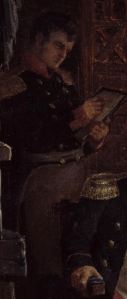
Lire le text: Paisiy Sergeevich Kaisarov, colonel, adjudant de Kutuzov
Mikhaïl Illarionovitch Koutouzov, maréchal général, commandant en chef de l’armée russe

Lire le text: Mikhaïl Illarionovitch Koutouzov, maréchal général, commandant en chef de l’armée russe
Piotr Petrovich Konovnitsyn, lieutenant-général, commandant du 3e corps d’infanterie

Lire le text: Piotr Petrovich Konovnitsyn, lieutenant-général, commandant du 3e corps d’infanterie
Nikolai Nikolaevich Raevsky, lieutenant général, commandant du 7e corps d’infanterie
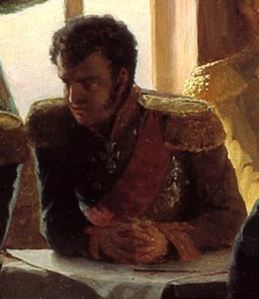
Lire le text: Nikolai Nikolaevich Raevsky, lieutenant général, commandant du 7e corps d’infanterie
Alexandre Ivanovitch Osterman-Tolstoï, lieutenant général, commandant du 4e corps d’infanterie

Lire le text: Alexandre Ivanovitch Osterman-Tolstoï, lieutenant général, commandant du 4e corps d’infanterie
Léonty Leontievich Bennigsen, général de cavalerie, chef d’état-major de l’armée
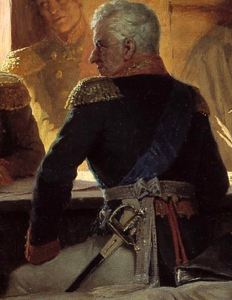
Lire le text: Léonty Leontievich Bennigsen, général de cavalerie, chef d’état-major de l’armée
Mikhaïl Bogdanovitch Barclay de Tolly, commandant de la 1re armée occidentale, ministre de la Guerre

Lire le text: Mikhaïl Bogdanovitch Barclay de Tolly, commandant de la 1re armée occidentale, ministre de la Guerre
Fedor Petrovitch Uvarov, adjudant général, commandant du corps de cavalerie de réserve

Lire le text: Fedor Petrovitch Uvarov, adjudant général, commandant du corps de cavalerie de réserve
Karl Fedorovich Tol, quartier-maître général de la 1re armée
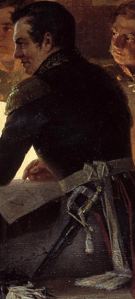
Lire le text: Karl Fedorovich Tol, quartier-maître général de la 1re armée
Dmitry Sergeevich Dokhturov, général d’infanterie, commandant du 6e corps d’infanterie
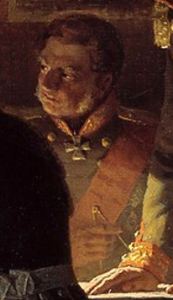
Lire le text: Dmitry Sergeevich Dokhturov, général d’infanterie, commandant du 6e corps d’infanterie
Alexey Petrovich Ermolov, général, chef d’état-major de la 1ère armée
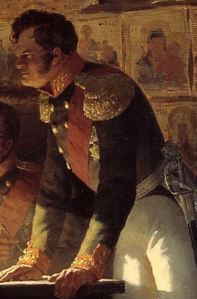
Lire le text: Alexey Petrovich Ermolov, général, chef d’état-major de la 1ère armée
Quelle a été la décision prise au conseil ?
Au cours du concile, il est devenu évident que Koutouzov avait déjà pris la décision de se retirer. Cependant, reconnaissant l’importance de la contribution de ses généraux, il écouta patiemment leurs opinions. Quand ce fut son tour de parler, Koutouzov commença son discours par cette déclaration résolue : « La Russie n’est pas perdue avec la perte de Moscou ». Faisant preuve d’une détermination sans faille, le commandant en chef conclut son discours en donnant l’ordre décisif : « J’ordonne par la présente la retraite ». Ce moment décisif a mis en valeur le sens stratégique et le leadership de Koutouzov, qui a donné la priorité à la préservation des forces russes face à l’adversité.
J’espère que vous avez apprécié ce tableau et son explication autant que moi
Nous mettons beaucoup d’efforts dans la qualité des articles et traductions, soutenez-nous avec un like et un abonnement ou sponsorisez-nous si vous les aimez. Nous sommes aussi sur Facebook et Twitter
- Poèmes et peinture, semaine du 8 mars 2026
- Poems and painting, Week of March 8, 2026
- Poèmes et peinture, semaine du 1er mars 2026
- Poems and painting, Week of March 1st, 2026
- Poèmes et peinture, semaine du 22 février 2026
- Poems and painting, Week of February 22, 2026
© 2023 Akirill.com – All Rights Reserved
 AKirill, Learn, apprenez, translation, traduction, livres bilingues, bilingual books