

The Bolshoi theater is one of the most significant opera and ballet theaters in the world and the pride of Moscow. More than 800 works were staged in the theater.
The Bolshoi theater has two dates of birth: March 1776 and January 1825.
Did you know that in English the Bolshoi theater means the big theater?

On March 28, 1776 Catherine II signed a government privilege to Pyotr Vasilyevich Urusov for the maintenance of performances, masquerades, balls and other events for a period of 10 years. This date is considered to be the founding day of the Russian Bolshoi theater.
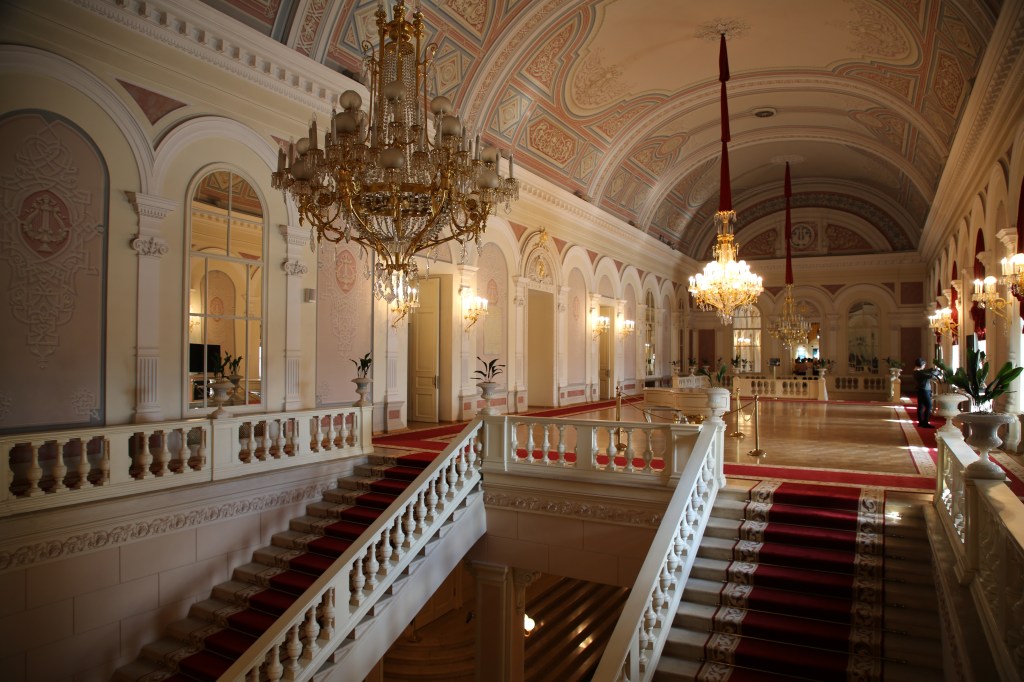
The prince began the construction of the theater on Petrovka street and the theater was named Petrovsky. after the street. Sadly it burned down before opening and the prince handed over the business to his English partner, Mikhail Maddox. So the Petrovky theater was built under his leadership and the Petrovsky theater grand opening was on December 30, 1780.
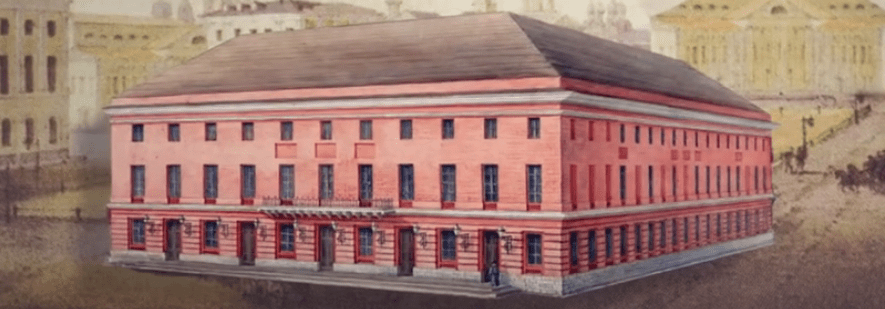
They gave a solemn prologue “Wanderers”, written by A, Ablesimov, and a large pantomimic ballet “Magic School”, staged by I. Paradise to the music of J. Startzer. After the repertoire was formed mainly from Russian and Italian comic operas with ballets and individual ballets.
“This huge building, built for popular pleasure and amusement … according to the best architects and the approval of the theater connoisseurs, was built and brought to a perfect end with so much strength and profitability that it surpasses almost all noble European theaters.”
This is how the Moskovskie newspaper responded to the opening of the Petrovsky Theater.
The building, designed by architect Christian Rozberg, was built in just 5 months. The theater had an auditorium with three tiers of boxes, a gallery, a stalls with twenty rows of benches and a spacious “parquet” between the stalls and the stage, where chairs were installed for “special” visitors, and other public could stand. It accommodated almost a thousand people.
In addition there were necessary office space, numerous foyers and halls, including the “masquerade room”.
In 1788, the Rotunda was added to the building and was the center of both cultural and social life from the very beginning of its existence.
In 1794, due to financial difficulties, Maddox was forced to transfer the theater to the treasury and the Petrovsky theater became the Imperial.
In 1802-1803, the theater was given to Prince Volkonsky who was the owner of one of the best Moscow theater troupes. But in 1804, the theater once again came under the jurisdiction of the Board of Trustees and Prince Volkonsky was appointed his director.
Once again after 25 years, on October 8, 1805 the Petrovsky theater burned downed. The troupes began to perform on private stage until the new Arbat Theater was built by K. I. Rossi on Arbat square in 1808.
Having existed only four years, the theater building burned down during the Moscow fire of 1812.
After that the theater was located on Znamenka in the house of Apraksin, which had been built in 1792 by the architect F. Camporesi. The theater room in Apraksin’s house was cramped and uncomfortable, instead of chairs there were benches covered with coarse cloth and several times there were fires in the theater.
A few years later, in 1818, the troupes was provided with a renovated theater on Mokhovaya, where they had once performed before the war of 1812.
In 1819 a competition was announced for the construction of a new theater. Andrei Mikhailov was recognized as the winner but his project was too expensive and was redesigned by Osip Bove. He preserved the basic of Mikhailov’s composition, but changed the proportion of the building, and made significant adjustments to its exterior and interior decoration.
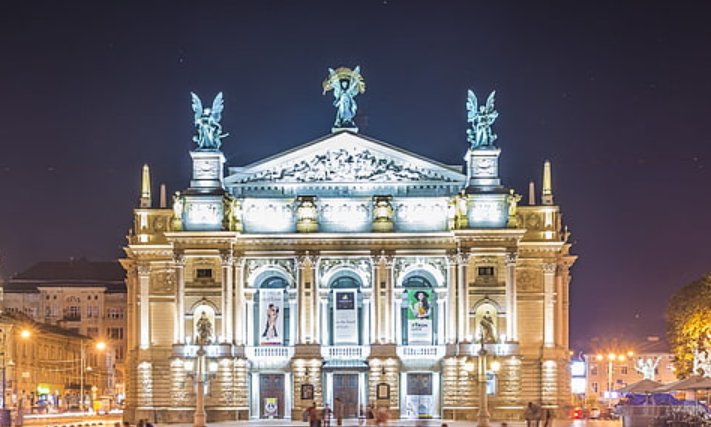
The theater was to become the composition center of the Empire city temple, glorifying the victory in the Patriotique War. The construction began in 1820 and the new “Bolshoi Petrovky Theater” opened on January 6, 1825 with the performance “The triumph of te Muses” which was a great success. The roles were played by the best Moscow actors: the tragedian P. S. Mochalov, N. V. Lavrov, F. Gyullen-Sor. The theater critic Sergei Timofeevich Aksakov memories of this discovery have been preserved:
The Bolshoi Petrovky Theater, which arose from old, charred ruins … amazed and delighted me … A magnificent huge building, exclusively dedicated to my favorite art, already with its appearance alone led me into joyful excitements”
In 1842, the theater came under the leadership of the Saint Petersburg Directorate of Imperial Theaters. Alexei Nikolaevich Verstovsky was appointed manager of the Moscow theater office until 1859 and an opera troupe arrived in Moscow from Saint Petersburg.

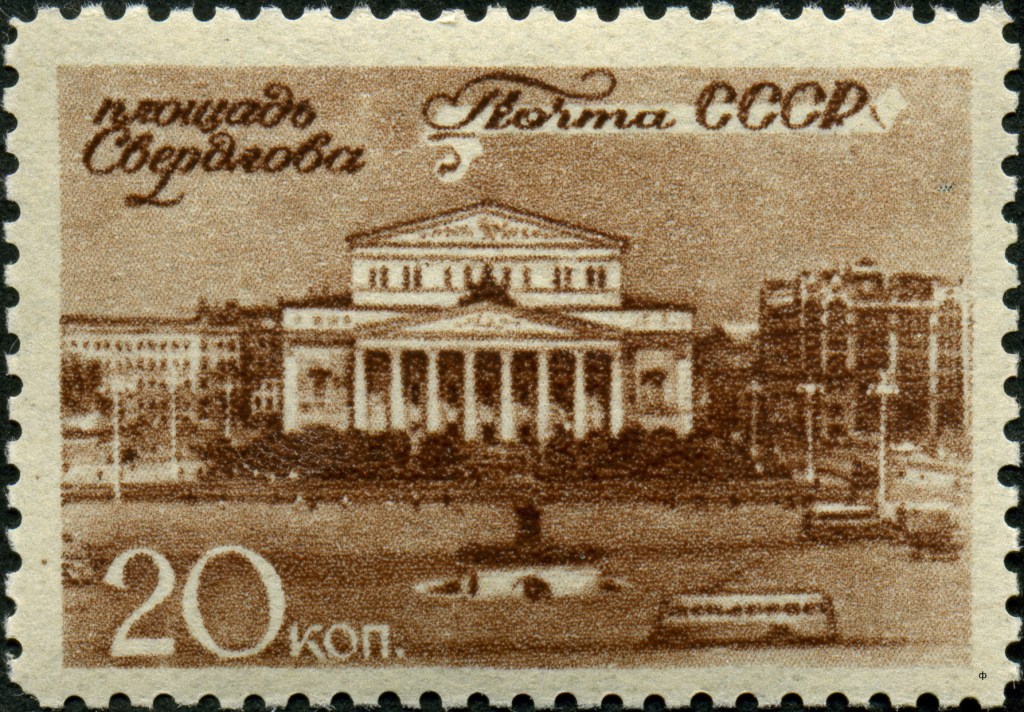
In 1943 a major reconstruction of the theater building was carried out according to the project of the architect Alexander Stepanovich Nikitin. The lonic capitals of the portico were replaced with capitals of the Érechthéion type, the line of side boxes were rebuilt as well as the couloirs and stage part, where the rear stage appeared.
On March 11, 1853 the theater once more burned down and only the outer walls of the building and the colonnade of the portico survived.

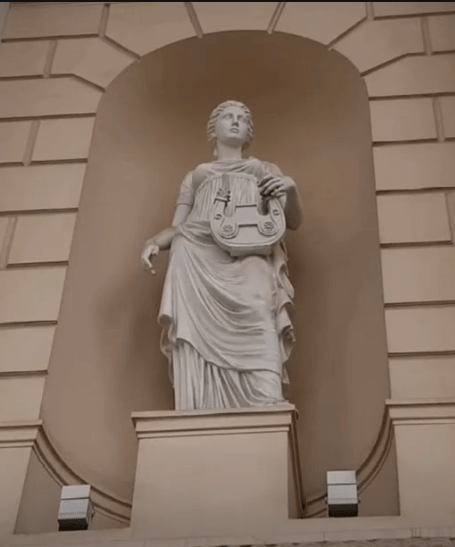
Albert Kavos was the new architect and the Theater was restored in three years. The volume of the building and the layout were preserved, but the height was slightly increased. Albert Kavos changed the proportions and completely redesigned the architectural decor, designing the facades in the spirit of early eclecticism. Instead of the alabaster sculpture of Apollo that died in the fire, a bronze quadriga by Pyotr Klodt was placed over the entrance of the portico, and a plaster double headed eagle which is the state emblem of the Russian Empire was placed on the pediment.
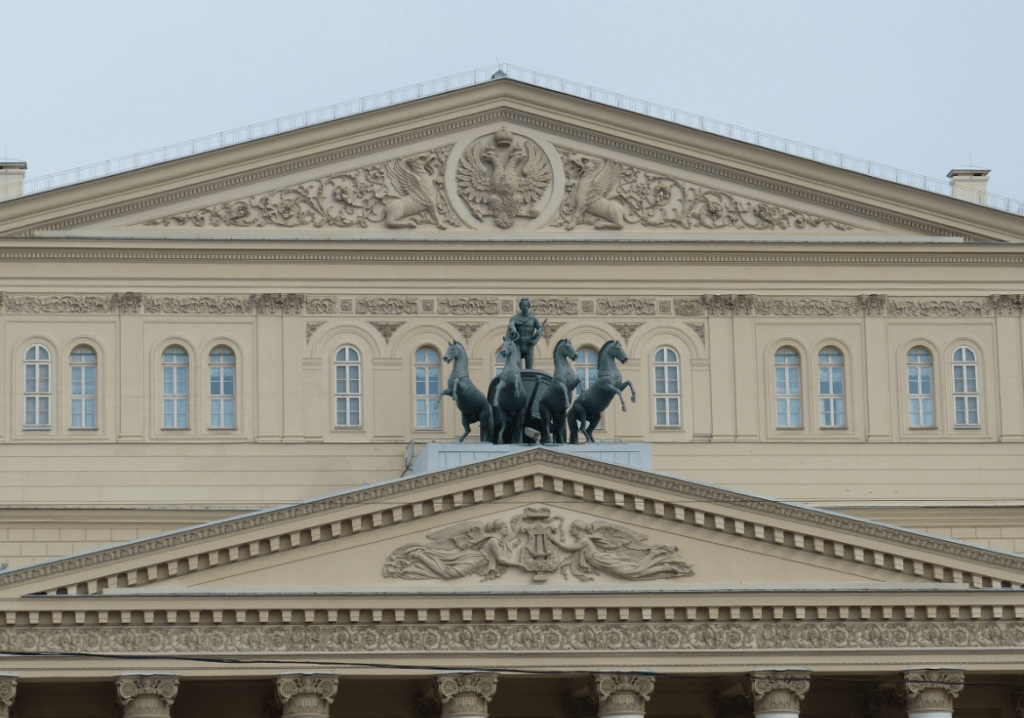
The theatrical architect paid the main attention to the auditorium and the stage part, and in the second half of the 19th century, the Bolshoi Theater was considered one of the best in the world in terms of its acoustic properties thanks to Albert Kavos who had designed the auditorium as a huge musical instrument.
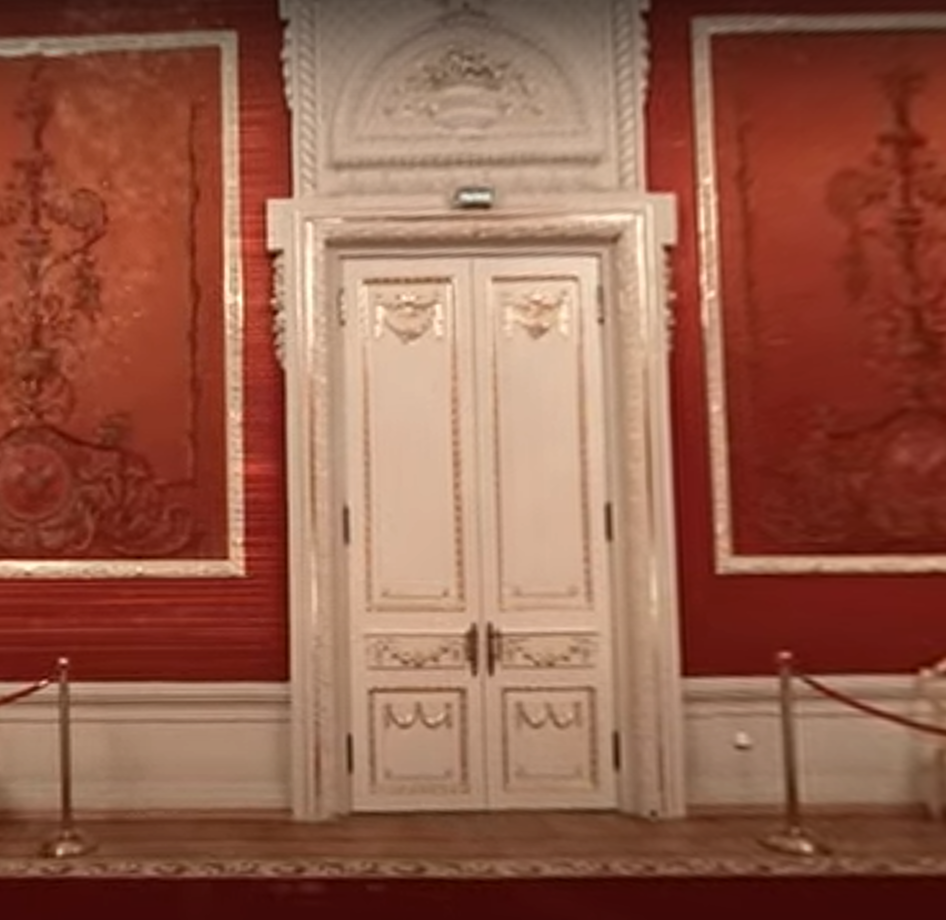
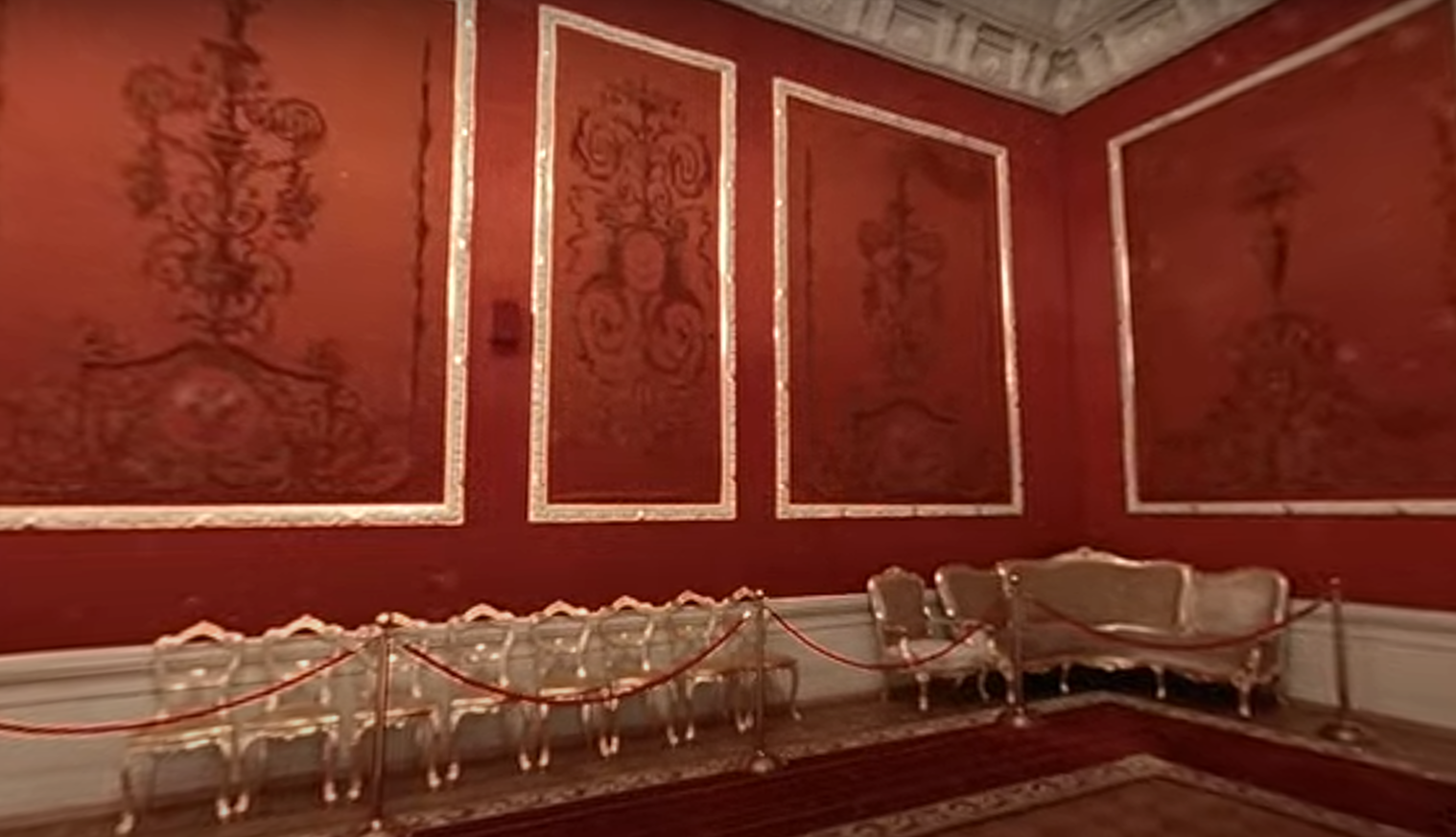
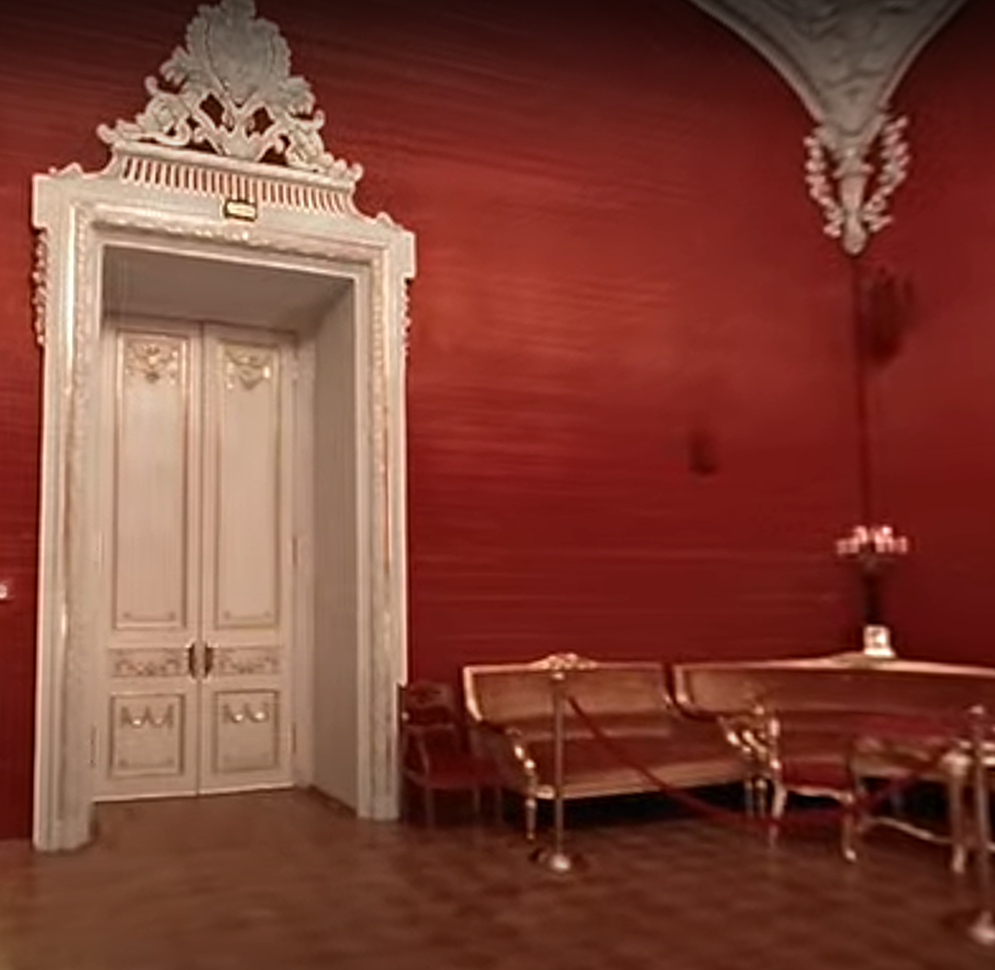
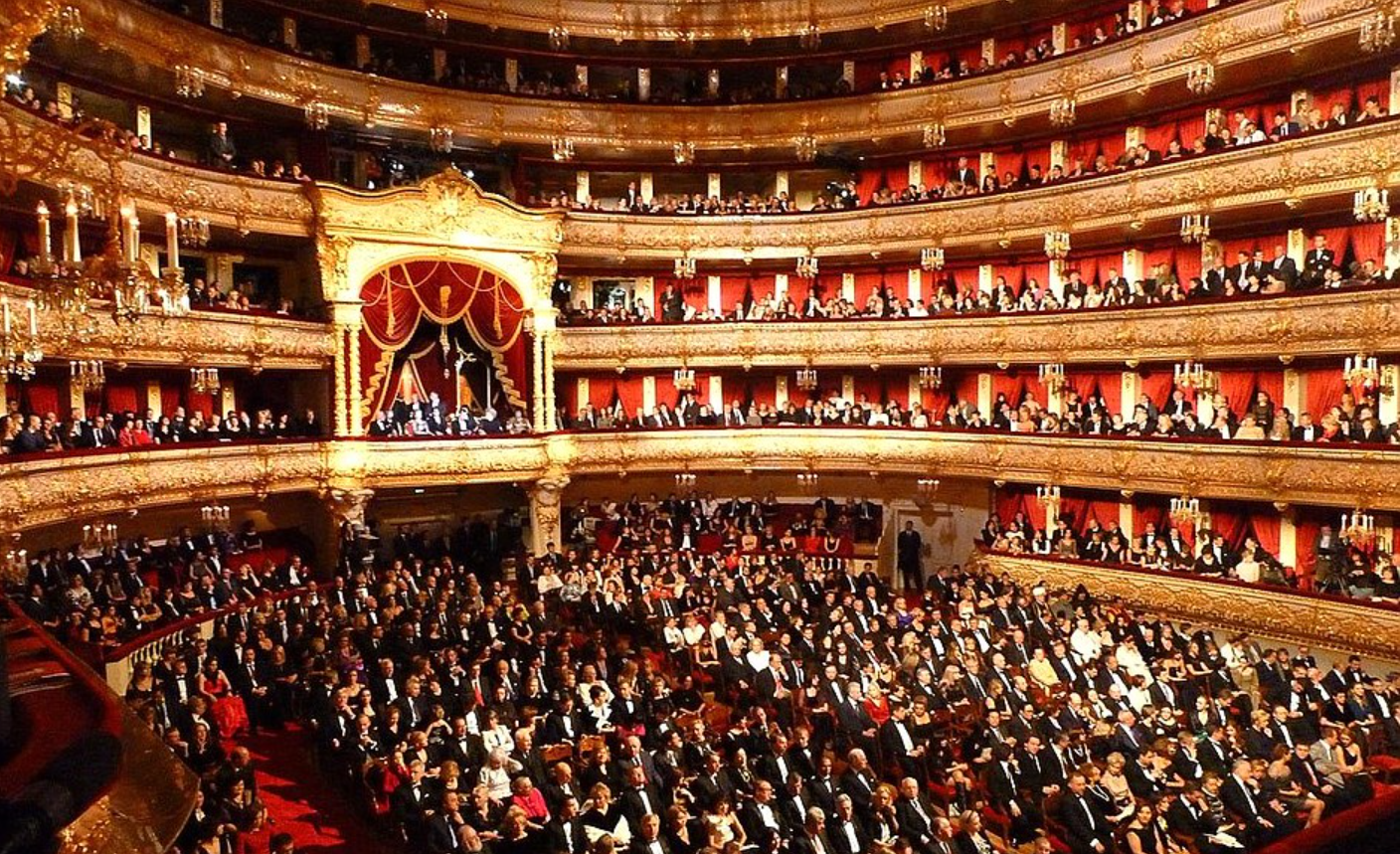
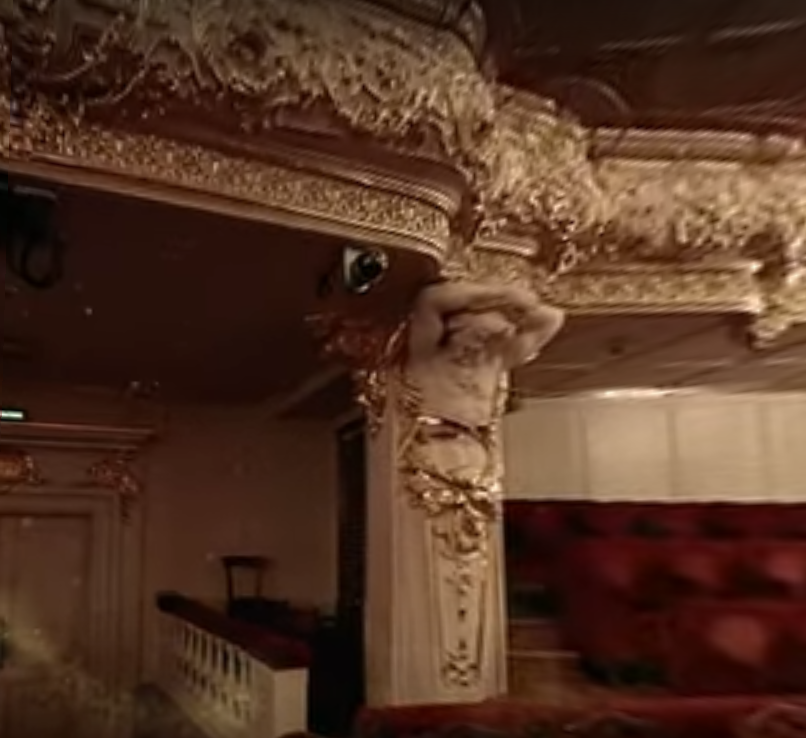
The space of the auditorium was significantly expended, which made it possible to make front lodges. The hall gained one more tier, and became six-tiered, accommodating almost 2300 spectators. On both sides, near the stage, there were letter boxes intended for the royal family, the ministry of the court and the theater directorate. The ceremonial Tsar’s box protruded a little into the hall and became its center, opposite the stage. The barrier of the Royal Lodge was supported by consoles in the form of bent atlantes. Even decades later everyone who entered this hall was amazed by the raspberry-gold splendor.
The chandelier of the auditorium was originally light by 300 oil lamps. The lamps were raised through a hole in the ceiling to be lit, and around this hole the Academician Alexei Titov painted “Apollo and the Muses” but instead of one of the canonical muses, the muse of the sacred hymns of Polyhymnia, Titov depicted the muse of painting invented by him, with a palette and a brush in her hands.
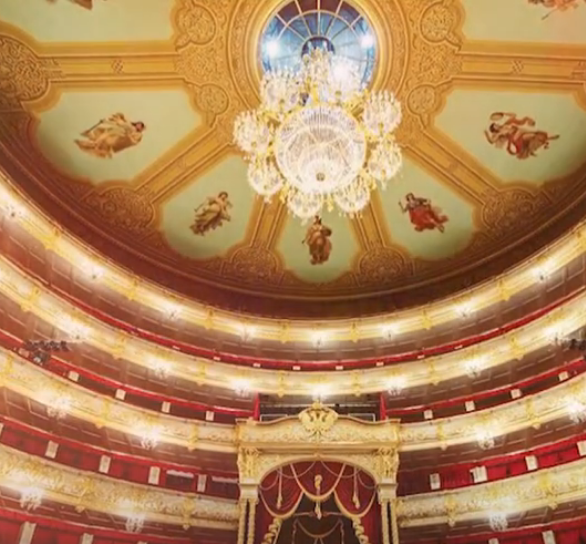
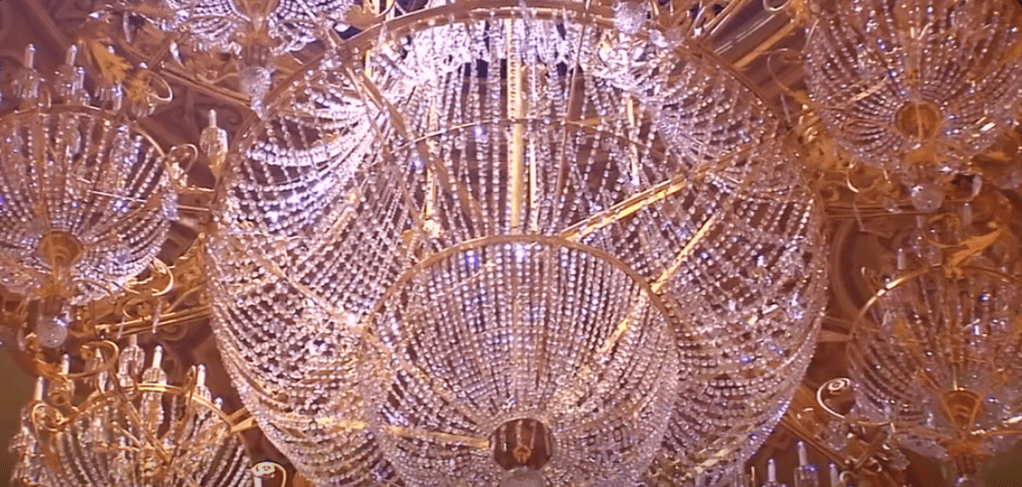
The speed of the reconstruction of the building was due to the fact that the construction had to be completed by the celebration on the occasion of the coronation of Emperor Alexander II. In August 20, 1856 the theater reopened with Belini’s opera;”Le Puritani” reflecting the tastes of the court nobility. The splendor of the auditorium, the high-society audience that filled it and was greeted by members of the imperial family was captured by the future Romanov court painter Mihai Zichy and a number of his watercolors were written for the coronation album which became one of the most impressive publications in Russia in weight and size.
One of the most significant events in the history of the Bolshoi Ballet in the 2nd half of the 19th century was the production of the ballet “Don Quixote” which premiered on December 14, 1869.
On February 20, 1877 the world premiere of Pyotr Ilyish Tchaikovsky’s ballet the “Swan Lake” took place. Almost 20 years later the canonical performance , known throughout the world, was staged by Petipa and Lev Ivanov.
Tchaikovsky made his debut at the Bolshoi theater as an author of not only ballet but also opera. And in January 18, 1869 the premiere of the opera “Voyevoda” took place.

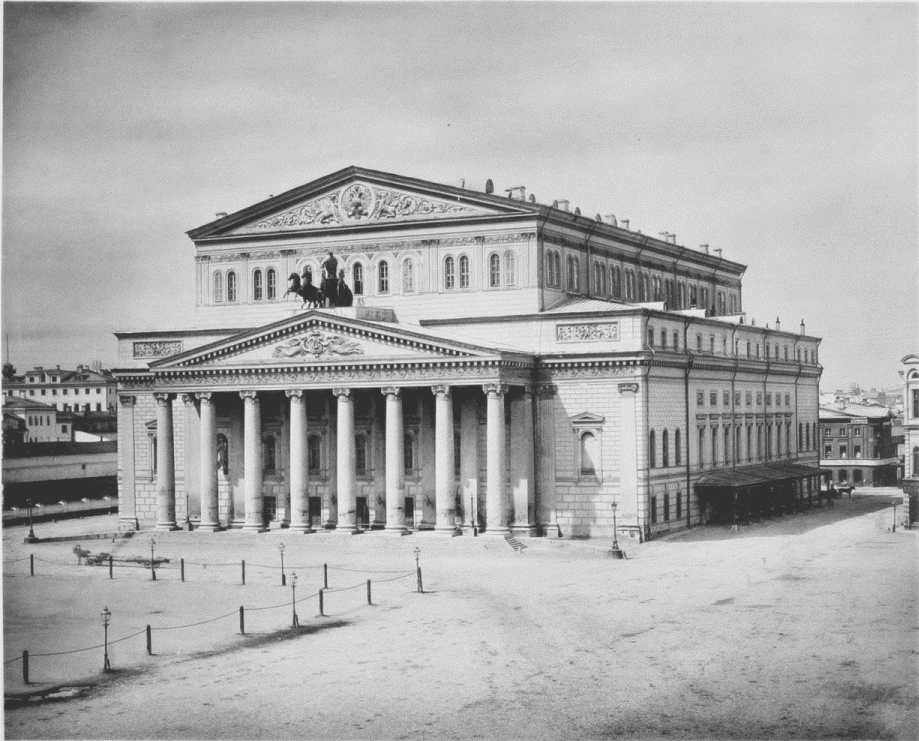
On February 3, 1884, the world premiere of the opera “Mazeppa” took place, and on January 19, 1887 the first performance of the opera “Cherevichki” in which Tchaikovsky made his debut as a conductor with great success.
In the years 1886-1893 the back side of the building was rebuilt on the project of the architect Eduard Karlovich Gernet and as a result the columns of the portico preserved by Kavos ended up inside the warehouse.
In 1890 a survey reveled that the foundations of the theater rested on rotted wooden piles so they were rebuilt in 1894-1898 following the projects of the architects Ivan Ivanovich Rerberg, Konstantin Viktorovich Tersky and Karl Yakovlevich Mayevsky.
An unprecedented stage in the history of the development of the Bolshoi Theater is associated with Vladimir Telyakovsky. Under his leadership the theater reached a world level and significance. A new era began in the life of society, and therefore in arts. Romanticism and melodramatism were a thing of the past and musical theater took on new features.
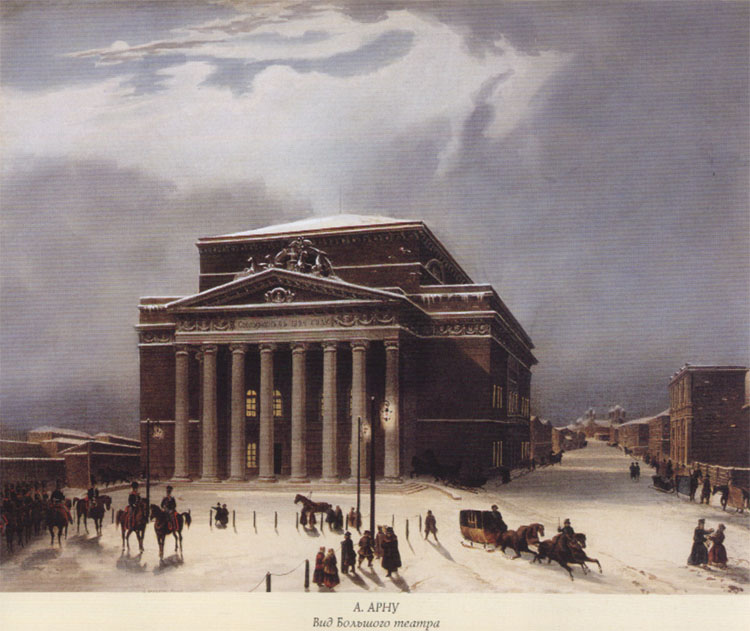
Beginning in 1918, the Bolshoi Theater was called academic and for several years after the revolution disputes about its fate did not stop. Finally in 1922, the Presidium of all-Russian Central Executive Committee decided to consider the closure of the theater economically inexpedient.
In 1921, the catastrophic condition of the semicircular wall of the auditorium, which served as a support for the vaults of corridors and the entire auditorium was discovered. Work to strengthen the wall began under the leadership of i. I. Resberg. On February 18, 1921, the grand opening of the Beethoven Hall took place. For many years it functioned as a platform for chamber concerts of orchestra artists and soloists of the opera troupe. In 1922, Bolshoi artits began to perform on the stage of the so-called New Theater (former Nezlobin Theater)
By the mid-1920s, the Bolshoi no longer had to prove its right to exist, its status was strenghthened so much that in 1925 it was decided to celebrate its centenary on a grand scale. The opening of the building of the Bolshoi Petrovsky Theater, which took place in 1825 was taken as a starting point.
In 1928, it was decided to eliminate the rank hierarchy of visitors, and the architect P. A. Tolstykh replanned a number of stairs and other premises of the building.
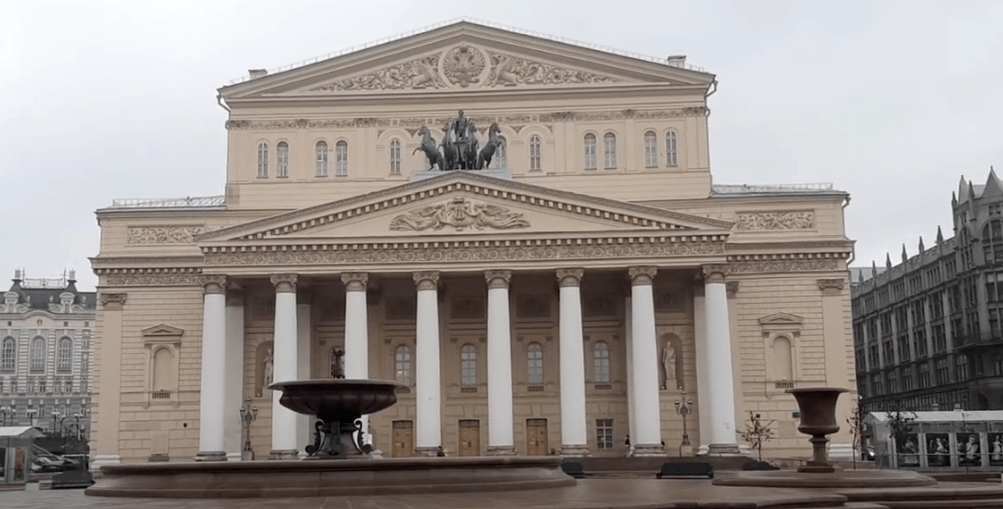
Since April 15, 1941 the Bolshoi Theater has been reconstructed and on June 22, 1941 the premiere of Gounod’s opera Romeo and Juliet was held.
During the Great Patriotic War, from October 1941 to July 1943 the Bolshoi theater was evacuated to Kuibyshev (former and present Samara), where it staged performances of Eugene Onegin, Swan Lake, La Traviata, Aida, Carmen, The Queen of Spades…
During his stay in Kuibyshev, the Bolshoi Theater donated 198 liters of blood, washed a thousand sets of winter military uniforms, and sent seven brigades to the front, giving 1140 concerts. Bolshoi developed amateur factory activities, provided material assistance to the families of the front line soldiers, raised money for a tank column and for the construction of a squadron, subscribed to a military loan.
On October 22, 1941 a bomb hit the building of the Bolshoi Theater, the blast wave passed obliquely between the columns of the portico and broke through the front wall causing significative damage in the vestibule.
Despite the hardship of the war restauration work began in the theater in the winter of 1942, and even though the historic building was closed performances were played in Moscow.



In 1944, Leonid Lavrovsky, as the new artistic director of the ballet troupe, and the leading prima ballerina Gallerina Ulanova, moved to the Bolshoi Theater emphasizing the status of the theater as the main musical theater of Russia.
In the late 1940s and early 1950s, the priority role in the formation of the operatic repertoire was given to Russian classical opera. The productions of the post-war years were notables for their epic scale and the scale of their stage decisions.

In 1955 a new luxurious brocade curtain designed by F. F. Fedorovsky appeared on the stage of the theater. It was the main decoration of the stage for 50 years.
In 1956, Assaf Messere, relying on the production of Alexander Gorsky, Petipa and Lev Ivanov, staged his own version of the ballet “Swan Lake”. It was this version that was shown on the legendary tour of the ballet troupe in London, which went down in history, after which it began to be called the Bolshoi Ballet all over the world.
In ballet, the era of Yuri Grigorovich, who directed the Balshoi Ballet Company from 1964 to 1995 was very successful. He created his own editions of almost all classical ballets in the repertoire, staged dances in several opera performances and composed 5 original ballets: The Nutcracker by Tchaikovsky in 1966, Spartacus by Khachaturian in 1968, Ivan the Terrible to the music of Prokofiev in 1975, Angara by Eshpay in 1976 and The Golden Age by Shostakovitch in 1982.


From 1995 to 2002 a new stage of the Bolshoi Theater was built on Bolshaya Dmitrovka street, house 4, building 2 including 879 seats. The new stage opened on November 29, 2002 with N. A. Rimsky-Korsakov’s opera “The snow Maiden”.
In 2001, Alexander Vedernikov was appointed as the new musical director of the theater, and the practice of showing rental performances was introduced. The involvement of the Bolshoi in the world theatrical process was facilitated by his participation in joint productions, which also became more and more common over the years.

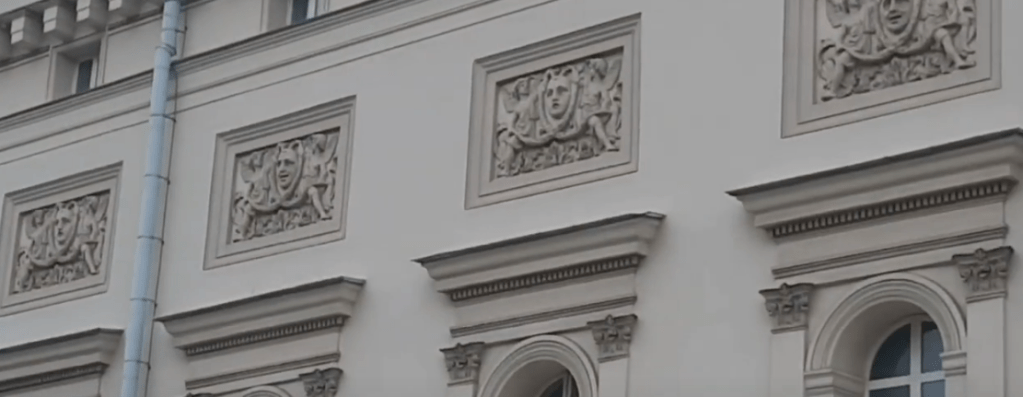
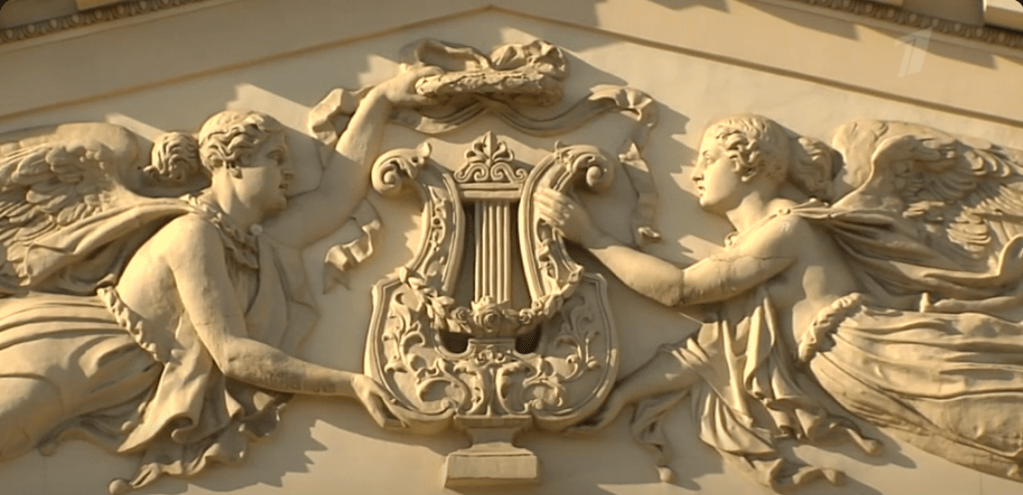
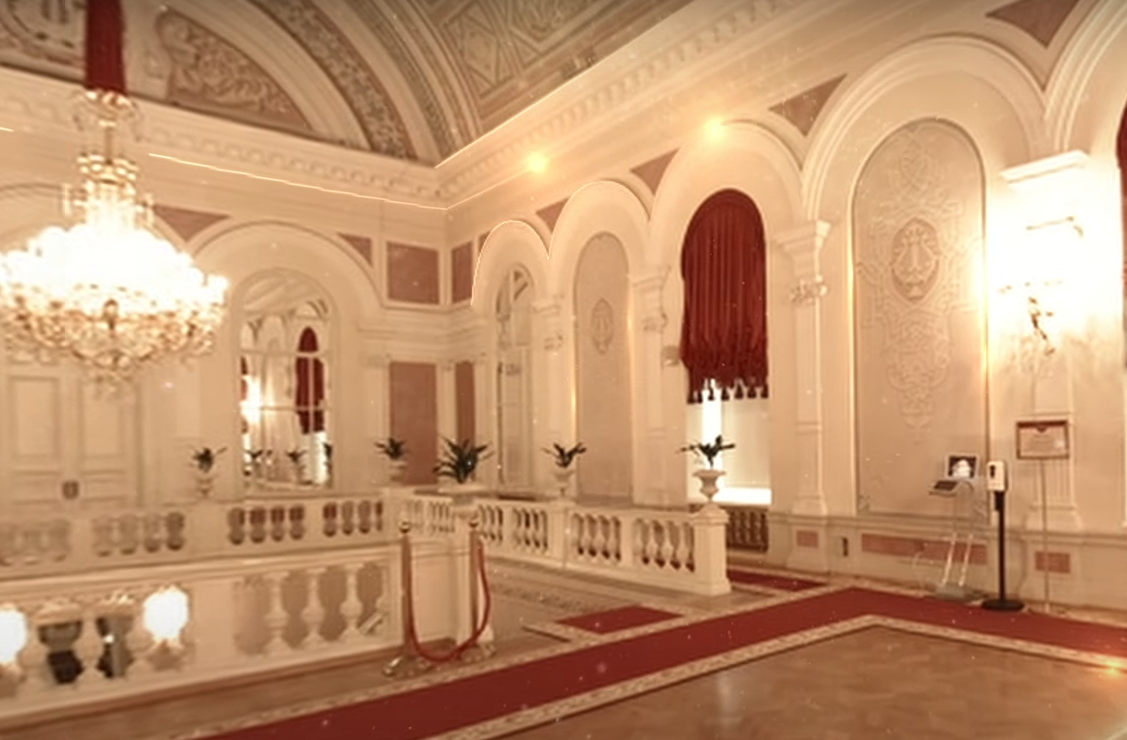
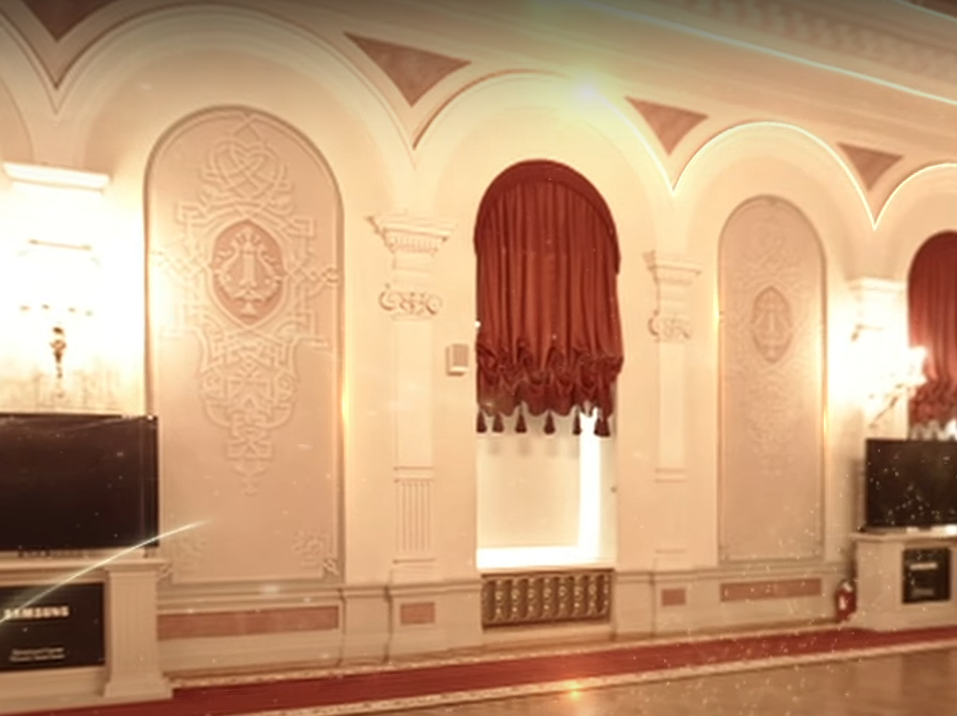
On July 1, 2005 the historical Stage of the Bolshoi Theater was closed for reconstruction and reopened on October 28, 2011 with a gala concert with the participation of opera and ballet dancers in the performance of “Ruslan and Lyudmila” staged by Dmitri Chernyakov.
Since 2013 Vladimir Urin has been the general director of the Bolshoi Theater, and his first year a new wind organ produced by the German organ building company Glatter-Götz, was installed at the Bolshoi theater.
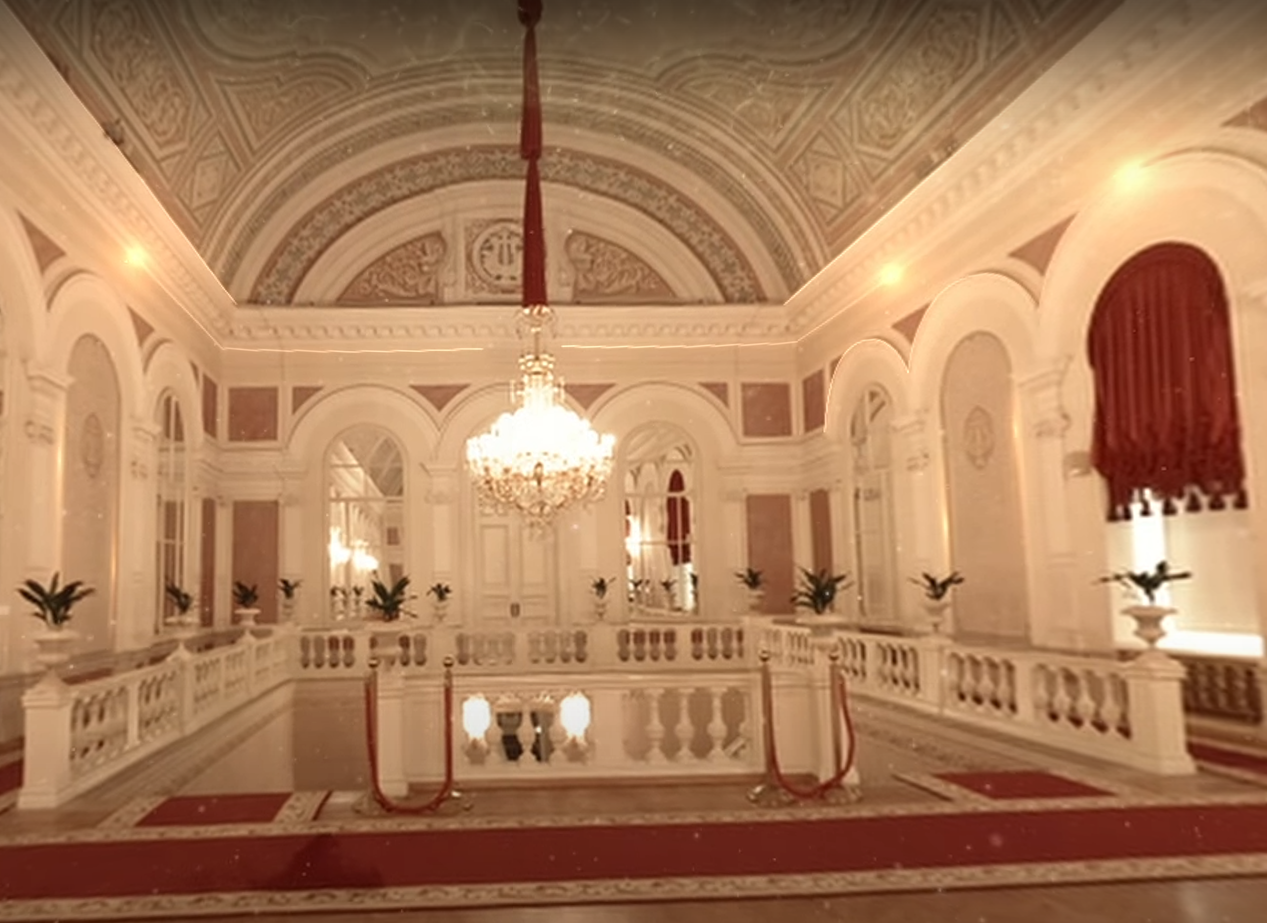
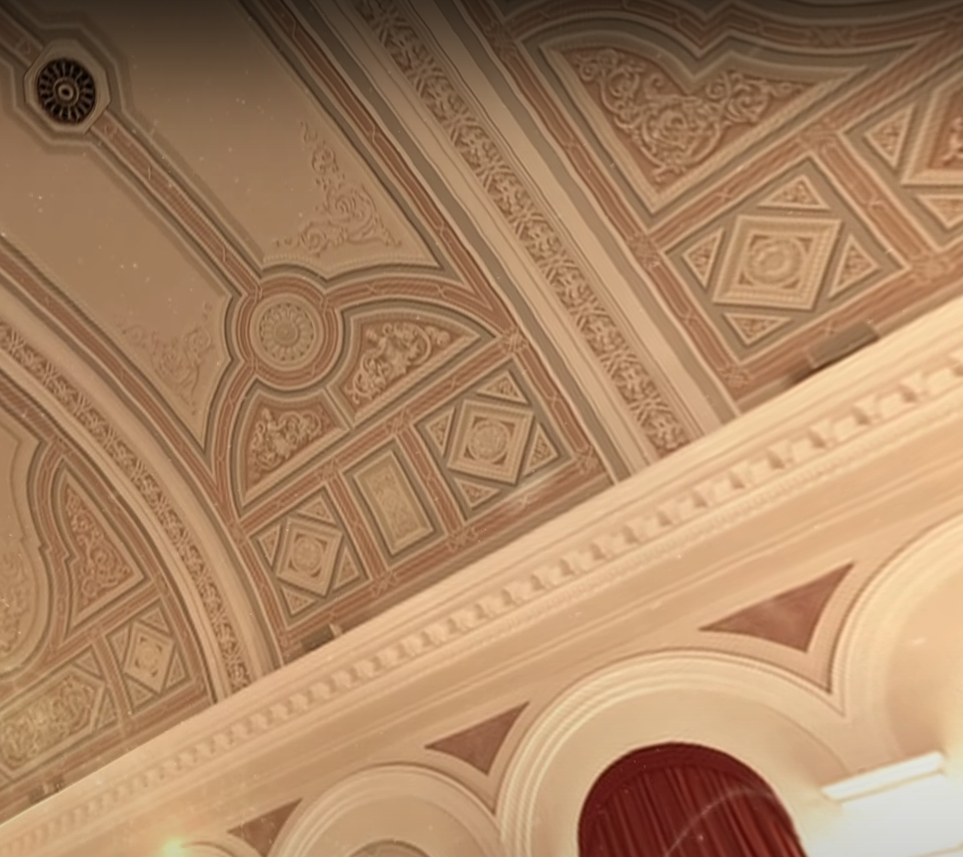

In 2014, Tugan Sokhiev was appointed to the post of chief conductor and musical director of the Bolshoi, who largely shared the previously introduced repertoire and personnel policy.
In July 2016, the Bolshoi Theater launched a series of street broadcasts of its performances which were carried out on a special all-weather screen mounted on the main facade of the theater and were timed to coincide with the 5th anniversary of the completion of the restoration.
In 2020, cooperation with Mr. Chernyakov continued with the production of the opera Sadko; The performance became one of the most striking in the recent history of the Bolshoi theater and was showned with great success in many countries.
In March 2020, amid the lockdown caused by the coronavirus pandemic, the Bolshoi theater began a series of online broadcasts on its official YouTube channel. On the first day, the ballet “Swan Lake” was watched by more than 1 million people.
Bolshoi theater website: https://2011.bolshoi.ru/
| Si vous aimez, abonnez-vous au site, mettez des likes, écrivez des commentaires ! |
| Assurez-vous de partager sur les réseaux sociaux. |
| Découvrez Nos Derniers Articles |
 AKirill, Learn, apprenez, translation, traduction, livres bilingues, bilingual books