
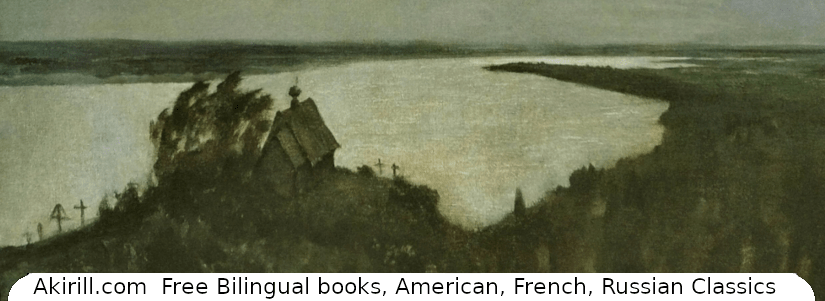
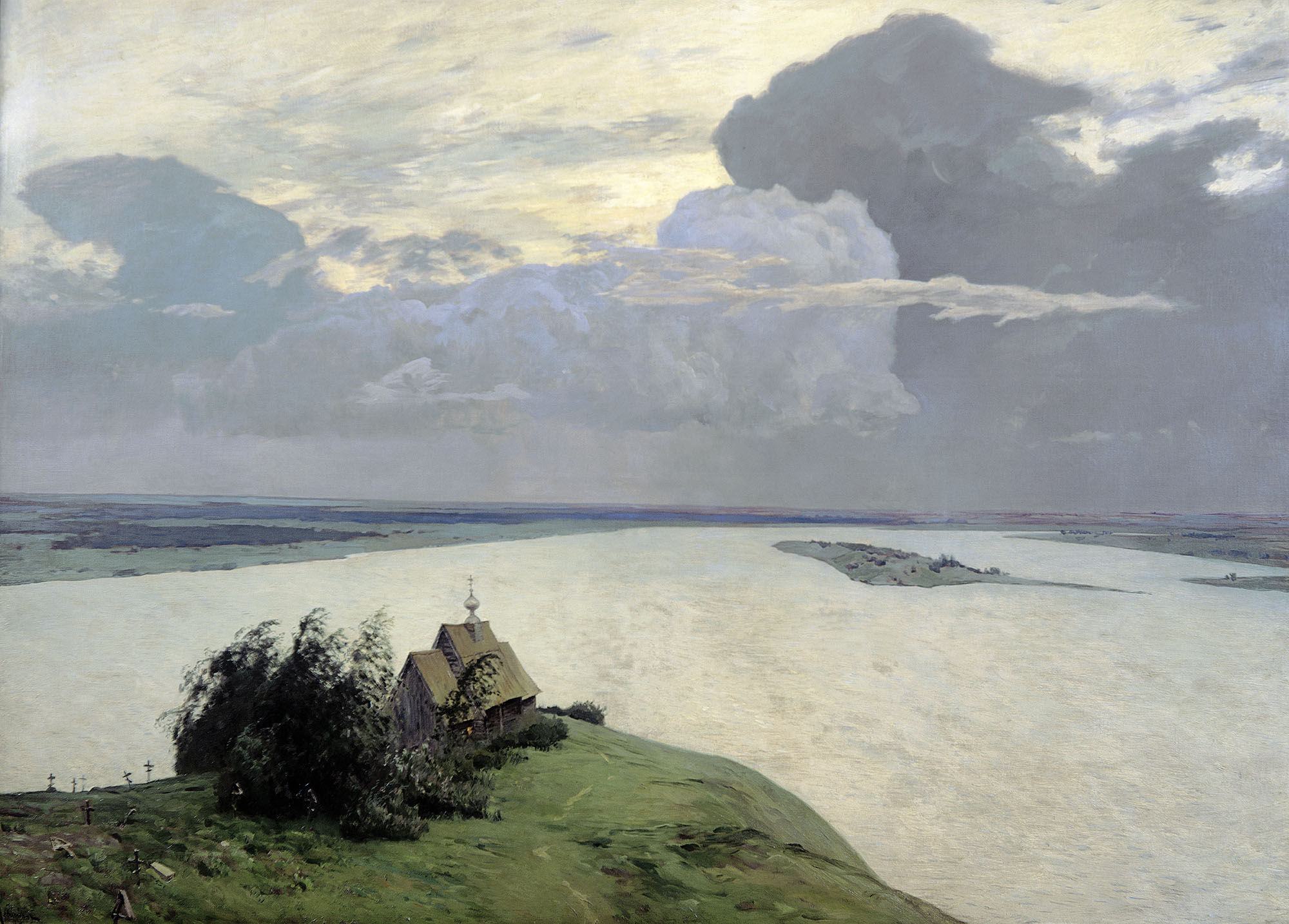
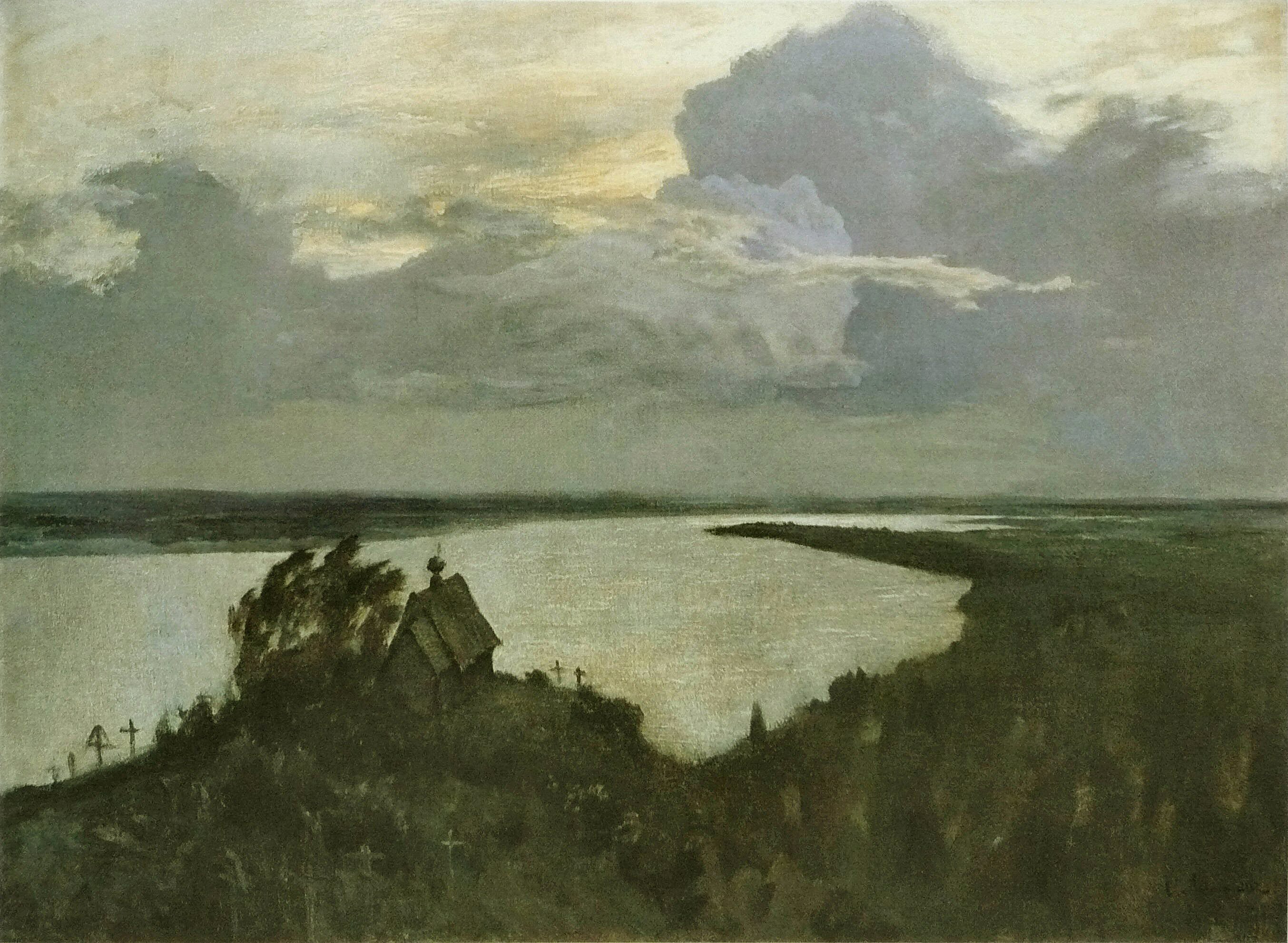
“Over Eternal Peace” (Над вечным покоем) is a magnificent and probably the most famous painting by renowned Russian artist Isaac Levitan, originating from the year 1894 which depicts a “giant reversal of the lake’s water space”, the endless expanses of which resemble a wide-spread river. Above the lake is “a majestic expanse of sky with swirling clouds colliding with each other”. This is no ordinary lyrical landscape, for which Levitan is renowned, but rather a grand epic, where the past converges with the future, the sky looms over the earth, and time stretches towards eternity.
This masterpiece is housed in the esteemed State Tretyakov Gallery and boasts dimensions of 150 × 206 cm. First unveiled at the 22nd exhibition of the Association of Traveling Art Exhibitions in St. Petersburg, it captured the attention of art connoisseurs and was swiftly acquired by Pavel Tretyakov even before the exhibition officially commenced. Some art experts view this painting, in conjunction with “By the Pool” and “Vladimirka” from 1892, as part of a compelling trilogy by Levitan. Critics have lauded the piece as a genuinely captivating landscape portrayal, praising it as one of the artist’s most evocative and vibrant works.
History of the painting
There are different interesting stories about the painting and the church that inspired the artist. Sofia Kuvshinnikova’s memoirs suggest that the painting “Over Eternal Peace” was based on a church near Lake Udomlya, although the actual church was different from the one depicted.
Researchers propose that the artist used a sketch of the Peter and Paul Church in Plyos as a reference. This church burned down in 1903 and was replaced by the Resurrection Church from the village of Bilyukovo.
Another version suggests that the inspiration came from an old wooden church near Lake Ostrovno, as described in the memoirs of the artist Vitold Byalynitsky-Birulya. Some sources speculate that the “oval island” depicted could be the island of Arzhanik or Dvinovo on Lake Udomlya.
The book “Artists in the Udomelsky Territory” presents yet another version, suggesting that the painting was inspired by the village of Ostrovno and the Ushakov estate.
Art critic Alexey Fedorov-Davydov describes the canvas “Over Eternal Peace” as a portrayal of a motif from one lake applied to another similar one, with Lake Udomlya serving as the foundation of the composition.
Fedorov-Davydov emphasizes the level of synthesis of the real view into a pictorial landscape image as the true measure of composition in Levitan’s paintings.
The painting “Over Eternal Peace” blossomed during the summer of 1893 when Isaac Levitan resided in the Tver province. Alongside the artist Sofia Kuvshinnikova, he found inspiration at the Ushakovs’ Ostrovno estate near Lake Ostrovno, where they received a warm welcome and ideal conditions for their creative endeavors. They also savored moments at the Garusovo estate near Lake Udomlya, which later became the subject of Levitan’s masterpiece “At the Lake.”

Levitan sketched and diligently worked on the canvas in Moscow, culminating in the completion of the painting in early 1894, proudly signing it in the lower left corner as “And Levitan 94.” (И Левитанъ 94)
Sketches
The State Tretyakov Gallery proudly holds two original graphic sketches for the renowned painting “Over Eternal Peace.” These captivating drawings, created in 1893 under the title “Before the Storm,” were meticulously crafted with graphite pencil on a single sheet of paper.
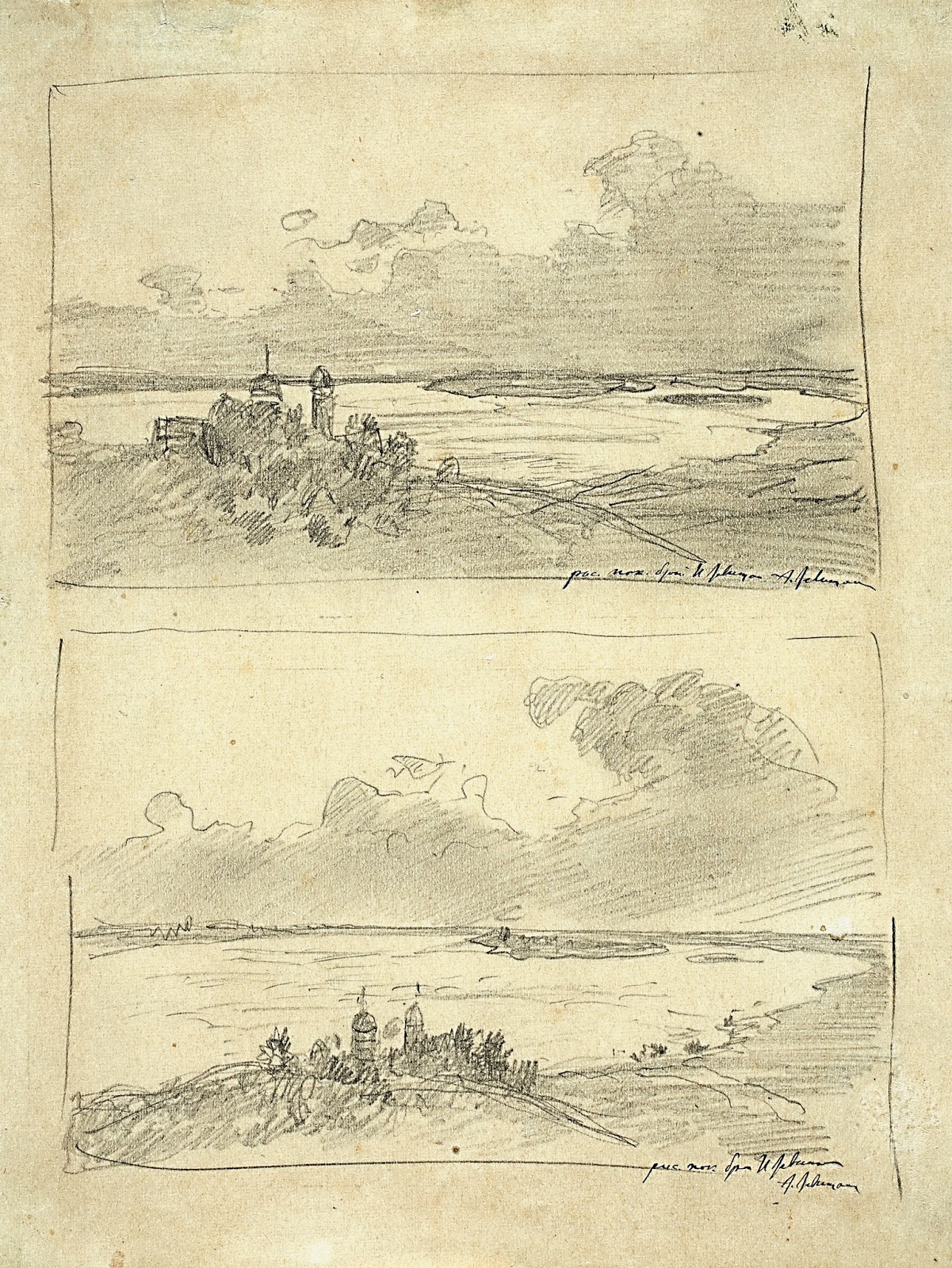
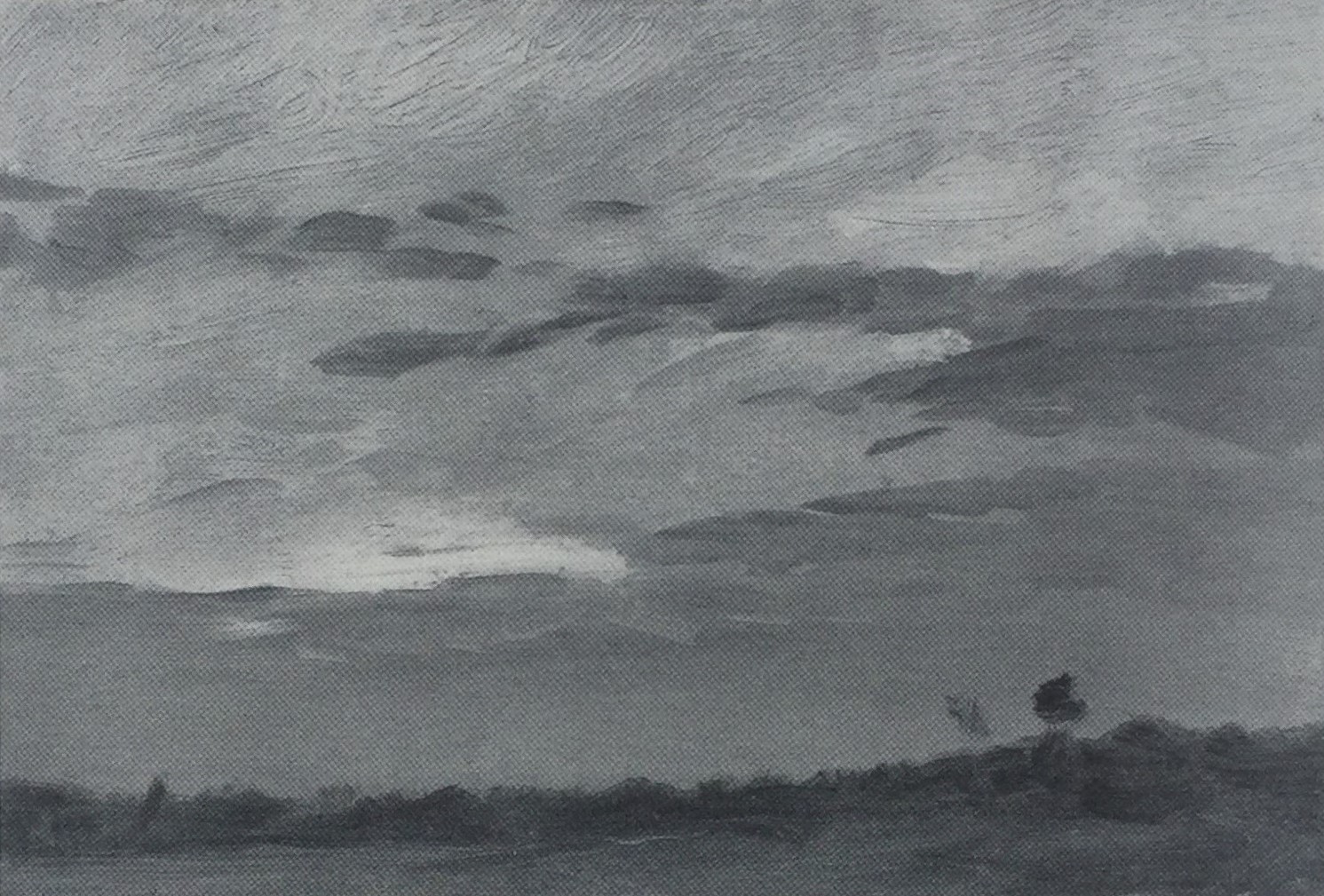
Levitan skillfully captures the anticipation in nature as a thunderstorm approaches. According to E. A. Byalynitskaya-Birulya, these drawings portray the picturesque landscape of Lake Ostrovno with the Trinity Church nestled along the shore. While working on the painting, Levitan also produced several evocative pictorial sketches, including “Cloudy Sky,” “Sky,” and “Lake.”

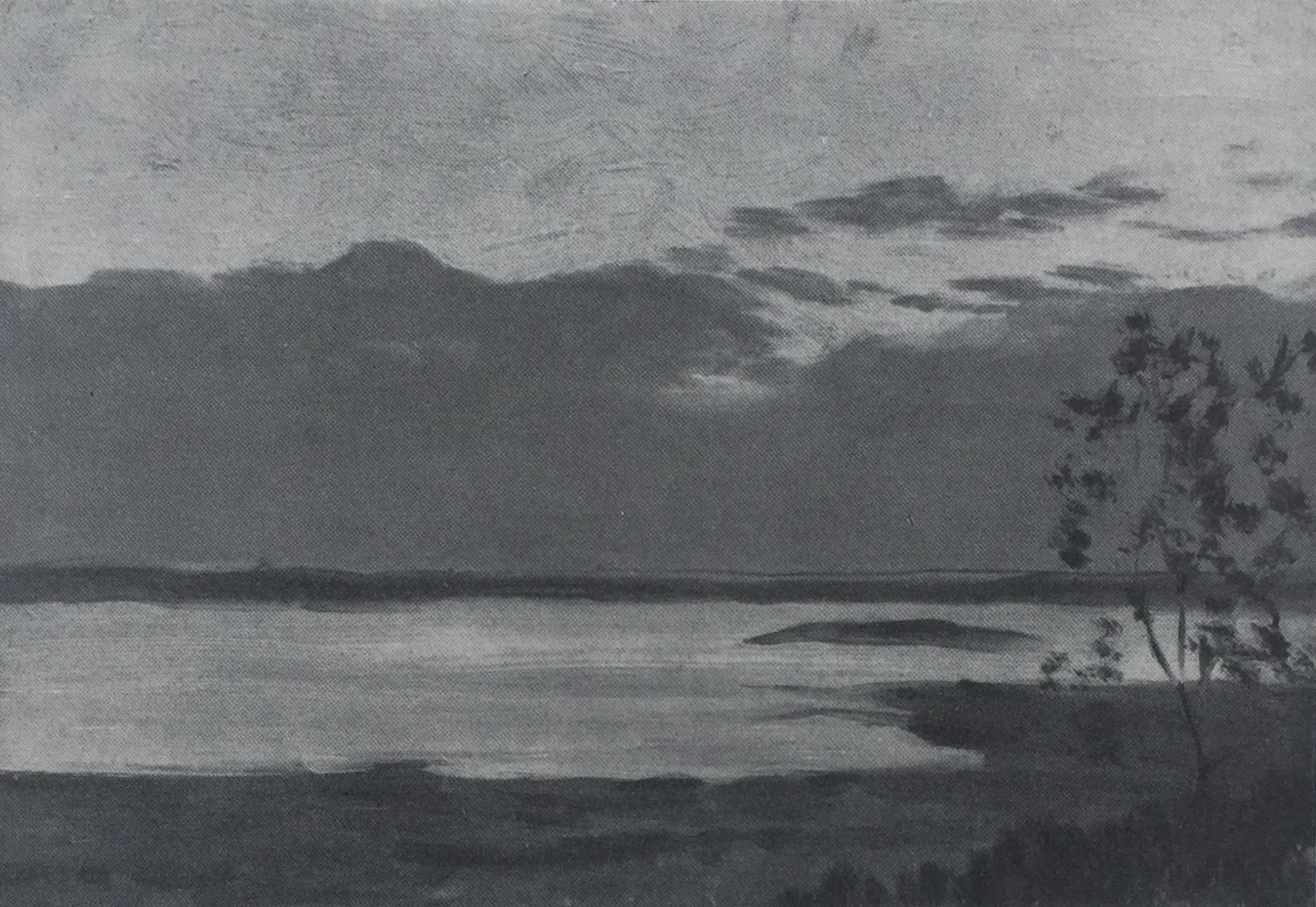
In the summer of 1893, Levitan composed the poignant pastel “Forgotten,” depicting “an abandoned cemetery located on a slope with rickety crosses,” a motif later incorporated into the painting. In 1898, this remarkable sketch was displayed in St. Petersburg and acquired by Pavel Tretyakov. Furthermore, among the preparatory materials utilized by the artist is the enchanting sketch “Wooden Church in Plyos at the last rays of the sun,” penned in 1888, which Levitan drew inspiration from to portray the church in the painting “Above Eternal Peace.”
Description
Fedorov-Davydov noticed the clear structure and the balanced asymmetry in the picture, giving valuable insights into the artist’s choices and the overall visual harmony of the piece. The interaction of the main parts and various details, like the cape, island, water, and clouds, highlights the careful craftsmanship and compositional skill behind the artwork, making the viewer appreciate its complexity and beauty even more.
The artist used different painting techniques to create a sense of space and power in the composition. When depicting distant scenes, Levitan used extreme simplification of shapes and colors, which was new for him. The painting techniques varied throughout the artwork, emphasizing the heaviness of the stormy sky and conveying the movement of the clouds. Different techniques were also used to depict water, the distant bank, and the foreground hill. Despite the variety of techniques, the painting still effectively conveys the natural impressions it’s based on.
The painting “Over Eternal Peace” richly portrays a captivating scene that captures the imagination with its intricate details and evocative imagery. It immerses the viewer in a world that is at once tranquil and haunting, with the artist’s meticulous attention to detail bringing each element to life. The description of the lake as experiencing a “giant reversal of the water space” conjures a sense of awe, particularly as the endless expanse resembles a wide-spread river, inviting contemplation of the forces of nature at play.
The artist ponders the world from a lofty perspective, observing a grand panorama of natural elements unfolding before their gaze.
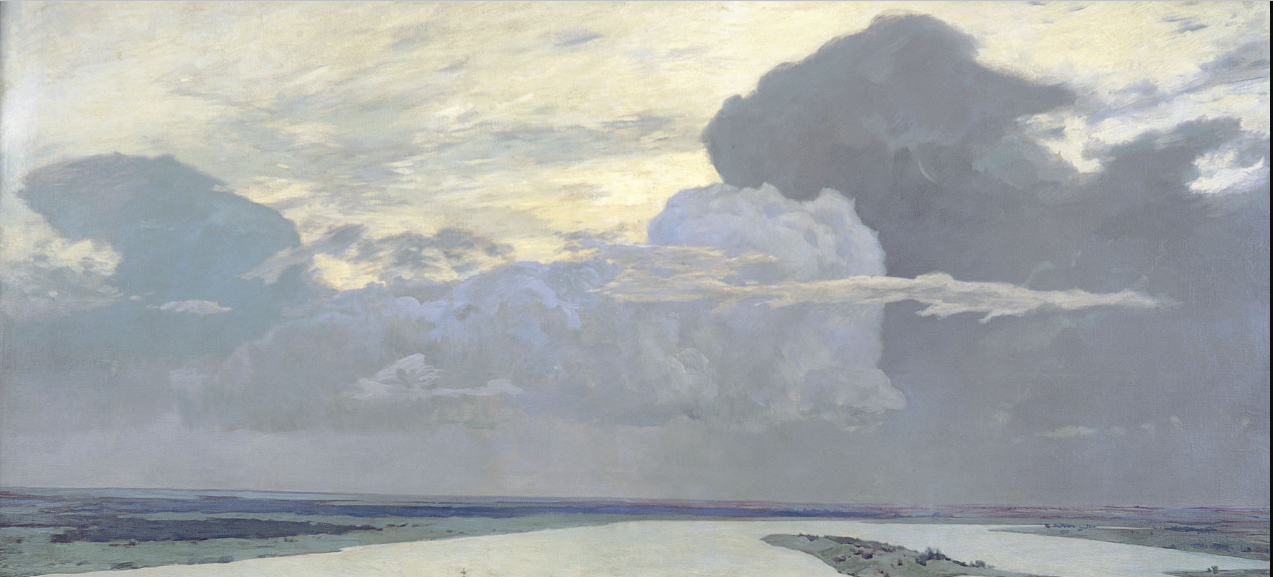
Above the lake, the depiction of a vast expanse of sky with swirling, colliding clouds adds a captivating layer to the composition. The divided image of the sky, with a darker, cloudy realm at the bottom and a lighter, more ethereal expanse at the top, creates a compelling contrast, further enriching the visual narrative. The elements surrounding the cliff emanate power. It feels as though the graveyard will vanish in the next moment, the church will scatter across the world… Destruction appears imminent.

In the distance, a deserted island comes into view, seemingly drifting away from the cliff with remarkable speed. It appears as though the island carries with it the souls of the departed, drawing in the remnants of the human spirit and the memories of those who have passed on. This sight serves as a poignant reminder of the insignificance, transience, and perceived lack of meaning in human life.

As the viewer’s gaze wanders to the background, a headland is revealed, on the elevated bank of which an old church stands.
A storm looms on the horizon – evident in the ominous, leaden sky and powerful gusts of wind. Near the temple, the trees lean under the force of the hurricane wind. The fading hues of the sunset are ablaze in the sky, yet the light is veiled by dense, unusually lifelike clouds. It appears as though the hurricane will lay waste to the fragile church, topple the crosses in the cemetery, and level the graves to the earth.
In an impressive manner, the small dome of the church withstands the full force of the elements. It points directly upward, and its color, blending with the metallic tones of the sky, conveys a sense of steadfastness and resilience.
The artist, even in this piece, infused it with optimistic undertones. Only unwavering faith can help an individual find peace and confidence in their aspirations and the purpose of their life. However, this hopeful message is subtly woven into the painting. Only the most discerning viewers can perceive in this subtle detail the true essence of this iconic work of art.

The presence of a somber rural cemetery to the left of the church adds a poignant touch, with the neglected graves and dilapidated surroundings evoking a sense of melancholy and the passage of time. The careful attention to detail in rendering these elements is evident, as the artist pays special attention to the composition of the cemetery and the church on the hill, infusing them with a profound sense of significance and history.
Art critic Alexei Fedorov-Davydov’s insightful commentary further enhances the depth of the painting, as he eloquently describes the fragile cape with the church and cemetery as if it were the bow of a ship venturing into an unknown distance.

The symbolism of the light in the church window as a witness to human life, indestructibility, and quiet submission is particularly striking and adds yet another layer of meaning to the composition.
We put a lot of effort into the quality of the articles and translations, support us with a like and a subscription or sponsor us if you like them. We are also on Facebook and Twitter
Check out our Last Posts
Découvrez nos Derniers Posts
- Poèmes et peinture, semaine du 29 mars 2026
- Poems and painting, Week of March 29, 2026
- Poèmes et peinture, semaine du 22 mars 2026
- Poems and painting, Week of March 22, 2026
- Poèmes et peinture, semaine du 15 mars 2026
- Poems and painting, Week of March 15, 2026
© 2024 Akirill.com – All Rights Reserved
 AKirill, Learn, apprenez, translation, traduction, livres bilingues, bilingual books
3 thoughts on “Discover the painting “Over Eternal Peace” by Isaac Levitan”