

| Livres bilingues | Read in English | Nous contacter |
| Littérature américaine | Littérature française | Littérature russe |
Il existe deux éditions de l’histoire de Gogol “Tarass Boulba” incluses dans le cycle “Mirgorod”. La première en 1835, et la seconde en 1842. la deuxième version a été publiée sans corrections de copyright même si Gogol était contre sa publication sans s’entendre sur certains points.
« Taras Boulba » fait désormais partie de nos livres bilingues russe/anglais
Les événements du livre “Taras Boulba” se déroulent autour du 16ème siècle. Il décrit la vie des cosaques de Zaporizhzhya et leur campagne contre la Pologne, et en même temps une histoire sur le glorieux cosaque Taras Boulba et ses deux fils.
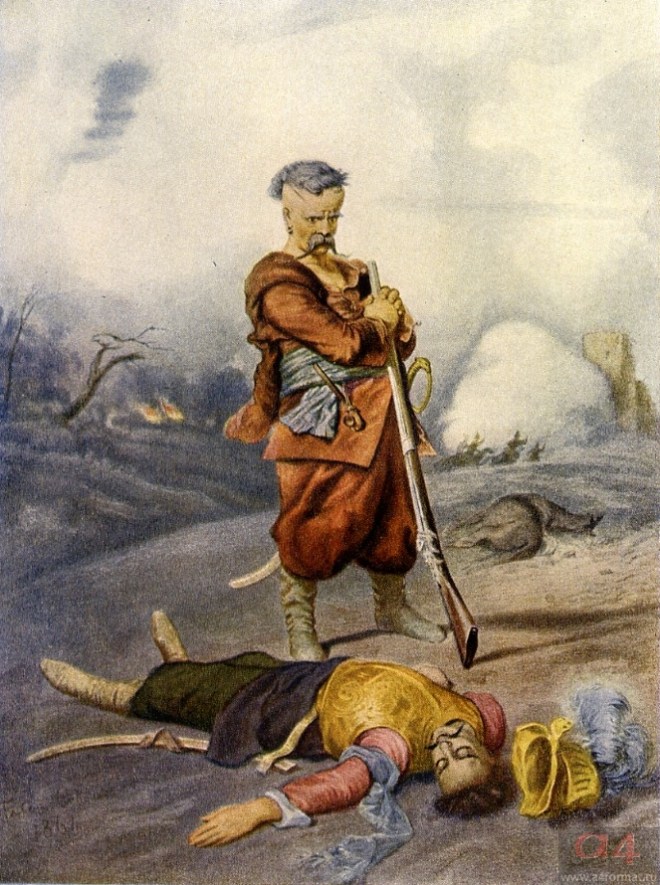
“Taras Boulba” a été publié pour la première fois en 1835 dans la collection Mirgorod. Mais le travail sur cette histoire s’est poursuivi par intermittence pendant neuf ans: de 1833 à 1842. En 1842, dans le deuxième volume des «Œuvres» de Gogol, l’histoire «Taras Boulba» a été publiée dans une nouvelle édition radicalement modifiée.
Le premier livre a été précédé d’une étude approfondie des sources historiques qui a aidé l’artiste à comprendre l’esprit de la vie populaire, les personnages, la psychologie des gens…
Même si Gogol a été blâmé à plusieurs reprises pour la nature non historique de l’histoire, la présence d’un certain nombre d’anachronismes en elle. Certains critiques ont estimé que cela pouvait s’expliquer par le fait que l’écrivain ne disposait pas d’informations suffisamment fiables car tout en étudiant l’histoire de sa terre natale avec une grande attention, il a puisé des informations dans des chroniques plutôt maigres, des traditions folkloriques, des légendes, ainsi que franchement sources mythologiques.
Les Polonais ont été indignés que dans « Taras Boulba », la nation polonaise soit présentée comme agressive, sanguinaire et cruelle et ce livre n’a été publiée en polonais qu’au début du 21e siècle. En 2001, l’histoire de Gogol, traduite par Jerzy Shot, a été publiée ainsi qu’une autre version en 2002 par une autre maison d’édition, mais les deux traductions contiennent de nombreuses erreurs et inexactitudes.
L’histoire a également été critiquée pour antisémitisme par certains politiciens, penseurs religieux, critiques littéraires. Le critique littéraire Arkady Gornfeld a noté que les Juifs sont dépeints par Gogol comme de petits voleurs, des traîtres et des extorqueurs impitoyables, dépourvus de tout trait humain. Selon lui, les images de Gogol “sont capturées par la phobie antisémite ordinaire de l’époque”. Mais en même temps, d’autres pensent que le talent de l’adaptabilité juive est décrit de manière vivante et appropriée dans le poème de Gogol et que l’écrivain russe a bien capturé une partie de la culture historique juive.
La philologue Elena Ivanitskaya a critiqué “Taras Boulba” pour “la violence, et l’incitation à la guerre, mais le professeur Vladimir Voropaev soutient que la position de Gogol ne coïncide pas avec la position du personnage au nom duquel l’histoire est racontée, et estime que l’admiration pour les atrocités des cosaques étaient étrangers à Gogol. Il cite le fragment suivant :
« ils n’ont pas pu se sauver aux autels mêmes : Taras les a brûlés avec les autels. Non seulement des mains blanches comme neige s’élevaient de la flamme ardente vers les cieux, accompagnées de cris misérables, d’où la terre la plus humide bougerait et l’herbe de la steppe tomberait de la pitié de la vallée. Mais les cruels cosaques n’ont fait attention à rien et, soulevant leurs bébés des rues avec des lances, les ont jetés dans les flammes.
disant qu’il est peu probable qu’il y ait au moins un lecteur qui verrait l’approbation dans les mots de ces auteurs »
Il y a eu de nombreuses adaptations à l’écran et des adaptations musicales de “Taras Bulba”. La première adaptation à l’écran était un film muet Russe d’ Alexandre Drankov en 1909 et le premier opéra joué était de V. Küner et a ouvert en 1880 au Théâtre Mariinsky . Depuis lors, beaucoup ont été créé dans le monde entier.
| Help the site stay free, buy us a cup of coffee |  | Aidez-nous à maintenir le site gratuit en nous offrant une tasse de café |
Aperçu
Le colonel cosaque Taras Boulba a l’intention d’initier ses fils Ostap et Andriy à la vraie vie militaire. Il les emmène en campagne contre la Pologne. Pendant ce temps, les Cosaques apprennent que les Tatars se sont déplacés vers le Sich. L’armée de Taras est divisée en deux : certains Cosaques restent pour combattre les Polonais, tandis que d’autres se précipitent pour défendre le Sich. Andriy se bat du côté des Polonais. Lorsque Taras Boulba apprend qu’un de ses fils se bat pour les Polonais, il le tue. L’armée de Boulba est forcée de battre en retraite et Ostap est capturé. Taras essaie d’aider son fils, mais ne réussi pas et est obligé d’assister à son exécution avant de se retrouver entre les mains des Polonais. Il est condamné à une mort douloureuse sur le bûcher. Mais même sur son lit de mort, toutes les pensées de Boulba sont tournées vers la Patrie.
| Lire : Taras Bulba bilingue russe/anglais | ||
| Lire Tarass Boulba Français | Lire : Taras Bulba anglais | Lire: Тарас Бульба Russe |
Début du livre
CHAPITRE I
– Voyons, tourne-toi. Dieu, que tu es drôle ! Qu’est-ce que cette robe de prêtre ? Est-ce que vous êtes tous ainsi fagotés à votre académie ?
Voilà par quelles paroles le vieux Boulba accueillait ses deux fils qui venaient de terminer leurs études au séminaire de Kiew1, et qui rentraient en ce moment au foyer paternel.
Ses fils venaient de descendre de cheval. C’étaient deux robustes jeunes hommes, qui avaient encore le regard en dessous, comme il convient à des séminaristes récemment sortis des bancs de l’école. Leurs visages, pleins de force et de santé, commençaient à se couvrir d’un premier duvet que n’avait jamais fauché le rasoir. L’accueil de leur père les avait fort troublés ; ils restaient immobiles, les yeux fixés à terre.
– Attendez, attendez ; laissez que je vous examine bien à mon aise. Dieu ! que vous avez de longues robes ! dit-il en les tournant et retournant en tous sens. Diables de robes ! je crois qu’on n’en a pas encore vu de pareilles dans le monde. Allons, que l’un de vous essaye un peu de courir : je verrai s’il ne se laissera pas tomber le nez par terre, en s’embarrassant dans les plis.
– Père, ne te moque pas de nous, dit enfin l’aîné.
– Voyez un peu le beau sire ! et pourquoi donc ne me moquerais-je pas de vous ?
– Mais, parce que… quoique tu sois mon père, j’en jure Dieu, si tu continues de rire, je te rosserai.
– Quoi ! fils de chien, ton père ! dit Tarass Boulba en reculant de quelques pas avec étonnement.
– Oui, même mon père ; quand je suis offensé, je ne regarde à rien, ni à qui que ce soit.
– De quelle manière veux-tu donc te battre avec moi, est-ce à coups de poing ?
– La manière m’est fort égale.
– Va pour les coups de poing, répondit Tarass Boulba en retroussant ses manches. Je vais voir quel homme tu fais à coups de poing.
Et voilà que père et fils, au lieu de s’embrasser après une longue absence, commencent à se lancer de vigoureux horions dans les côtes, le dos, la poitrine, tantôt reculant, tantôt attaquant.
– Voyez un peu, bonnes gens : le vieux est devenu fou ; il a tout à fait perdu l’esprit, disait la pauvre mère, pâle et maigre, arrêtée sur le perron, sans avoir encore eu le temps d’embrasser ses fils bien-aimés. Les enfants sont revenus à la maison, plus d’un an s’est passé depuis qu’on ne les a vus ; et lui, voilà qu’il invente, Dieu sait quelle sottise… se rosser à coups de poing !
– Mais il se bat fort bien, disait Boulba s’arrêtant. Oui, par Dieu ! très bien, ajouta-t-il en rajustant ses habits ; si bien que j’eusse mieux fait de ne pas l’essayer. Ça fera un bon Cosaque. Bonjour, fils ; embrassons-nous.
Et le père et le fils s’embrassèrent.
– Bien, fils. Rosse tout le monde comme tu m’as rossé ; ne fais quartier à personne. Ce qui n’empêche pas que tu ne sois drôlement fagoté. Qu’est-ce que cette corde qui pend ? Et toi, nigaud, que fais-tu là, les bras ballants ? dit-il en s’adressant au cadet. Pourquoi, fils de chien, ne me rosses-tu pas aussi ?
– Voyez un peu ce qu’il invente, disait la mère en embrassant le plus jeune de ses fils. On a donc de ces inventions-là, qu’un enfant rosse son propre père ! Et c’est bien le moment d’y songer ! Un pauvre enfant qui a fait une si longue route, qui s’est si fatigué (le pauvre enfant avait plus de vingt ans et une taille de six pieds), il aurait besoin de se reposer et de manger un morceau ; et lui, voilà qu’il le force à se battre.
– Eh ! eh ! mais tu es un freluquet à ce qu’il me semble, disait Boulba. Fils, n’écoute pas ta mère ; c’est une femme, elle ne sait rien. Qu’avez-vous besoin, vous autres, d’être dorlotés ? Vos dorloteries, à vous, c’est une belle plaine, c’est un bon cheval ; voilà vos dorloteries. Et voyez-vous ce sabre ? voilà votre mère. Tout le fatras qu’on vous met en tête, ce sont des bêtises. Et les académies, et tous vos livres, et les ABC, et les philosophies, et tout cela, je crache dessus.
Ici Boulba ajouta un mot qui ne peut passer à l’imprimerie.
– Ce qui vaut mieux, reprit-il, c’est que, la semaine prochaine, je vous enverrai au zaporojié. C’est là que se trouve la science ; c’est là qu’est votre école, et que vous attraperez de l’esprit.
– Quoi ! ils ne resteront qu’une semaine ici ? disait d’une voix plaintive et les larmes aux yeux la vieille bonne mère. Les pauvres petits n’auront pas le temps de se divertir et de faire connaissance avec la maison paternelle. Et moi, je n’aurai pas le temps de les regarder à m’en rassasier.
– Cesse de hurler, vieille ; un Cosaque n’est pas fait pour s’avachir avec les femmes. N’est-ce pas ? tu les aurais cachés tous les deux sous ta jupe, pour les couver comme une poule ses œufs. Allons, marche. Mets-nous vite sur la table tout ce que tu as à manger. Il ne nous faut pas de gâteaux au miel, ni toutes sortes de petites fricassées. Donne-nous un mouton entier ou toute une chèvre ; apporte-nous de l’hydromel de quarante ans ; et donne-nous de l’eau-de-vie, beaucoup d’eau-de-vie ; pas de cette eau-de-vie avec toutes sortes d’ingrédients, des raisins secs et autres vilenies ; mais de l’eau-de-vie toute pure, qui pétille et mousse comme une enragée.
Boulba conduisit ses fils dans sa chambre, d’où sortirent à leur rencontre deux belles servantes, toutes chargées de monistes2. Était-ce parce qu’elles s’effrayaient de l’arrivée de leurs jeunes seigneurs, qui ne faisaient grâce à personne ? était-ce pour ne pas déroger aux pudiques habitudes des femmes ? À leur vue, elles se sauvèrent en poussant de grands cris, et longtemps encore après, elles se cachèrent le visage avec leurs manches. La chambre était meublée dans le goût de ce temps, dont le souvenir n’est conservé que par les douma3 et les chansons populaires, que récitaient autrefois, dans l’Ukraine, les vieillards à longue barbe, en s’accompagnant de la bandoura4, au milieu d’une foule qui faisait cercle autour d’eux ; dans le goût de ce temps rude et guerrier, qui vit les premières luttes soutenues par l’Ukraine contre l’union5. Tout y respirait la propreté. Le plancher et les murs étaient revêtus d’une couche de terre glaise luisante et peinte. Des sabres, des fouets (nagaïkas), des filets d’oiseleur et de pêcheur, des arquebuses, une corne curieusement travaillée servant de poire à poudre, une bride chamarrée de lames d’or, des entraves parsemées de petits clous d’argent, étaient suspendus autour de la chambre. Les fenêtres, fort petites, portaient des vitres rondes et ternes, comme on n’en voit plus aujourd’hui que dans les vieilles églises ; on ne pouvait regarder au dehors qu’en soulevant un petit châssis mobile. Les baies de ces fenêtres et des portes étaient peintes en rouge. Dans les coins, sur des dressoirs, se trouvaient des cruches d’argile, des bouteilles en verre de couleur sombre, des coupes d’argent ciselé, d’autres petites coupes dorées, de différentes mains-d’œuvre, vénitiennes, florentines, turques, circassiennes, arrivées par diverses voies aux mains de Boulba, ce qui était assez commun dans ces temps d’entreprises guerrières. Des bancs de bois, revêtus d’écorce brune de bouleau, faisaient le tour entier de la chambre. Une immense table était dressée sous les saintes images, dans un des angles antérieurs. Un haut et large poêle, divisé en une foule de compartiments, et couvert de briques vernissées, bariolées, remplissait l’angle opposé. Tout cela était très connu de nos deux jeunes gens, qui venaient chaque année passer les vacances à la maison ; je dis venaient, et venaient à pied, car ils n’avaient pas encore de chevaux, la coutume ne permettant point aux écoliers d’aller à cheval. Ils étaient encore à l’âge où les longues touffes du sommet de leur crâne pouvaient être tirées impunément par tout Cosaque armé. Ce n’est qu’à leur sortie du séminaire que Boulba leur avait envoyé deux jeunes étalons pour faire le voyage.
À l’occasion du retour de ses fils, Boulba fit rassembler tous les centeniers de son polk6 qui n’étaient pas absents ; et quand deux d’entre eux se furent rendus à son invitation, avec le ïésaoul7 Dmitri Tovkatch, son vieux camarade, il leur présenta ses fils en disant :
– Voyez un peu quels gaillards ! je les enverrai bientôt à la setch.
Les visiteurs félicitèrent et Boulba et les deux jeunes gens, en leur assurant qu’ils feraient fort bien, et qu’il n’y avait pas de meilleure école pour la jeunesse que le zaporojié.
– Allons, seigneurs et frères, dit Tarass, asseyez-vous chacun où il lui plaira. Et vous, mes fils, avant tout, buvons un verre d’eau-de-vie. Que Dieu nous bénisse ! À votre santé, mes fils ! À la tienne, Ostap (Eustache) ! À la tienne, Andry (André) ! Dieu veuille que vous ayez toujours de bonnes chances à la guerre, que vous battiez les païens et les Tatars ! et si les Polonais commencent quelque chose contre notre sainte religion, les Polonais aussi ! Voyons, donne ton verre. L’eau-de-vie est-elle bonne ? Comment se nomme l’eau-de-vie en latin ? Quels sots étaient ces Latins ! ils ne savaient même pas qu’il y eût de l’eau-de-vie au monde. Comment donc s’appelait celui qui a écrit des vers latins ? Je ne suis pas trop savant ; j’ai oublié son nom. Ne s’appelait-il pas Horace ?
– Voyez-vous le sournois, se dit tout bas le fils aîné, Ostap ; c’est qu’il sait tout, le vieux chien, et il fait mine de ne rien savoir.
– Je crois bien que l’archimandrite ne vous a pas même donné à flairer de l’eau-de-vie, continuait Boulba. Convenez, mes fils, qu’on vous a vertement étrillés, avec des balais de bouleau, le dos, les reins, et tout ce qui constitue un Cosaque. Ou bien peut-être, parce que vous étiez devenus grands garçons et sages, vous rossait-on à coups de fouet, non les samedis seulement, mais encore les mercredis et les jeudis.
– Il n’y a rien à se rappeler de ce qui s’est fait, père, répondit Ostap ; ce qui est passé est passé.
– Qu’on essaye maintenant ! dit Andry ; que quelqu’un s’avise de me toucher du bout du doigt ! que quelque Tatar s’imagine de me tomber sous la main ! il saura ce que c’est qu’un sabre cosaque.
– Bien, mon fils, bien ! par Dieu, c’est bien parlé. Puisque c’est comme ça, par Dieu, je vais avec vous. Que diable ai-je à attendre ici ? Que je devienne un planteur de blé noir, un homme de ménage, un gardeur de brebis et de cochons ? que je me dorlote avec ma femme ? Non, que le diable l’emporte ! je suis un Cosaque, je ne veux pas. Qu’est-ce que cela me fait qu’il n’y ait pas de guerre ! j’irai prendre du bon temps avec vous. Oui, par Dieu, j’y vais.
Et le vieux Boulba, s’échauffant peu à peu, finit par se fâcher tout rouge, se leva de table, et frappa du pied en prenant une attitude impérieuse.
– Nous partons demain. Pourquoi remettre ? Qui diable attendons-nous ici ? À quoi bon cette maison ? à quoi bon ces pots ? à quoi bon tout cela ?
En parlant ainsi, il se mit à briser les plats et les bouteilles. La pauvre femme, dès longtemps habituée à de pareilles actions, regardait tristement faire son mari, assise sur un banc. Elle n’osait rien dire ; mais en apprenant une résolution aussi pénible à son cœur, elle ne put retenir ses larmes. Elle jeta un regard furtif sur ses enfants qu’elle allait si brusquement perdre, et rien n’aurait pu peindre la souffrance qui agitait convulsivement ses yeux humides et ses lèvres serrées.
Boulba était furieusement obstiné. C’était un de ces caractères qui ne pouvaient se développer qu’au XVIe siècle, dans un coin sauvage de l’Europe, quand toute la Russie méridionale, abandonnée de ses princes, fut ravagée par les incursions irrésistibles des Mongols ; quand, après avoir perdu son toit et tout abri, l’homme se réfugia dans le courage du désespoir ; quand sur les ruines fumantes de sa demeure, en présence d’ennemis voisins et implacables, il osa se rebâtir une maison, connaissant le danger, mais s’habituant à le regarder en face ; quand enfin le génie pacifique des Slaves s’enflamma d’une ardeur guerrière et donna naissance à cet élan désordonné de la nature russe qui fut la société cosaque (kasatchestvo). Alors tous les abords des rivières, tous les gués, tous les défilés dans les marais, se couvrirent de Cosaques que personne n’eût pu compter, et leurs hardis envoyés purent répondre au sultan qui désirait connaître leur nombre : « Qui le sait ? Chez nous, dans la steppe, à chaque bout de champ, un Cosaque. » Ce fut une explosion de la force russe que firent jaillir de la poitrine du peuple les coups répétés du malheur. Au lieu des anciens oudély8, au lieu des petites villes peuplées de vassaux chasseurs, que se disputaient et se vendaient les petits princes, apparurent des bourgades fortifiées, des kourény9 liés entre eux par le sentiment du danger commun et la haine des envahisseurs païens. L’histoire nous apprend comment les luttes perpétuelles des Cosaques sauvèrent l’Europe occidentale de l’invasion des sauvages hordes asiatiques qui menaçaient de l’inonder. Les rois de Pologne qui devinrent, au lieu des princes dépossédés, les maîtres de ces vastes étendues de terre, maîtres, il est vrai, éloignés et faibles, comprirent l’importance des Cosaques et le profit qu’ils pouvaient tirer de leurs dispositions guerrières. Ils s’efforcèrent de les développer encore. Les hetmans, élus par les Cosaques eux-mêmes et dans leur sein, transformèrent les kourény en polk10 réguliers. Ce n’était pas une armée rassemblée et permanente ; mais, dans le cas de guerre ou de mouvement général, en huit jours au plus, tous étaient réunis. Chacun se rendait à l’appel, à cheval et en armes, ne recevant pour toute solde du roi qu’un ducat par tête. En quinze jours, il se rassemblait une telle armée, qu’à coup sûr nul recrutement n’eût pu en former une semblable. La guerre finie, chaque soldat regagnait ses champs, sur les bords du Dniepr, s’occupait de pêche, de chasse ou de petit commerce, brassait de la bière, et jouissait de la liberté. Il n’y avait pas de métier qu’un Cosaque ne sût faire : distiller de l’eau-de-vie, charpenter un chariot, fabriquer de la poudre, faire le serrurier et le maréchal ferrant, et, par-dessus tout, boire et bambocher comme un Russe seul en est capable, tout cela ne lui allait pas à l’épaule. Outre les Cosaques inscrits, obligés de se présenter en temps de guerre ou d’entreprise, il était très facile de rassembler des troupes de volontaires. Les ïésaouls n’avaient qu’à se rendre sur les marchés et les places de bourgades, et à crier, montés sur une téléga (chariot) : « Eh ! eh ! vous autres buveurs, cessez de brasser de la bière et de vous étaler tout de votre long sur les poêles ; cessez de nourrir les mouches de la graisse de vos corps ; allez à la conquête de l’honneur et de la gloire chevaleresque. Et vous autres, gens de charrue, planteurs de blé noir, gardeurs de moutons, amateurs de jupes, cessez de vous traîner à la queue de vos bœufs, de salir dans la terre vos cafetans jaunes, de courtiser vos femmes et de laisser dépérir votre vertu de chevalier11. Il est temps d’aller à la quête de la gloire cosaque. » Et ces paroles étaient semblables à des étincelles qui tomberaient sur du bois sec. Le laboureur abandonnait sa charrue ; le brasseur de bière mettait en pièces ses tonneaux et ses jattes ; l’artisan envoyait au diable son métier et le petit marchand son commerce ; tous brisaient les meubles de leur maison et sautaient à cheval. En un mot, le caractère russe revêtit alors une nouvelle forme, large et puissante.
Tarass Boulba était un des vieux polkovnik12. Créé pour les difficultés et les périls de la guerre, il se distinguait par la droiture d’un caractère rude et entier. L’influence des mœurs polonaises commençait à pénétrer parmi la noblesse petite-russienne. Beaucoup de seigneurs s’adonnaient au luxe, avaient de nombreux domestique, des faucons, des meutes de chasse, et donnaient des repas. Tout cela n’était pas selon le cœur de Tarass ; il aimait la vie simple des Cosaques, et il se querella fréquemment avec ceux de ses camarades qui suivaient l’exemple de Varsovie, les appelant esclaves des gentilshommes (pan) polonais. Toujours inquiet, mobile, entreprenant, il se regardait comme un des défenseurs naturels de l’Église russe ; il entrait, sans permission, dans tous les villages où l’on se plaignait de l’oppression des intendants-fermiers et d’une augmentation de taxe sur les feux. Là, au milieu de ses Cosaques, il jugeait les plaintes. Il s’était fait une règle d’avoir, dans trois cas, recours à son sabre : quand les intendants ne montraient pas de déférence envers les anciens et ne leur ôtaient pas le bonnet, quand on se moquait de la religion ou des vieilles coutumes, et quand il était en présence des ennemis, c’est-à-dire des Turcs ou païens, contre lesquels il se croyait toujours en droit de tirer le fer pour la plus grande gloire de la chrétienté. Maintenant il se réjouissait d’avance du plaisir de mener lui-même ses deux fils à la setch, de dire avec orgueil : « Voyez quels gaillards je vous amène ; de les présenter à tous ses vieux compagnons d’armes, et d’être témoin de leurs premiers exploits dans l’art de guerroyer et dans celui de boire, qui comptait aussi parmi les vertus d’un chevalier. Tarass avait d’abord eu l’intention de les envoyer seuls ; mais à la vue de leur bonne mine, de leur haute taille, de leur mâle beauté, sa vieille ardeur guerrière s’était ranimée, et il se décida, avec toute l’énergie d’une volonté opiniâtre, à partir avec eux dès le lendemain. Il fit ses préparatifs, donna des ordres, choisit des chevaux et des harnais pour ses deux jeunes fils, désigna les domestiques qui devaient les accompagner, et délégua son commandement au ïésaoul Tovkatch, en lui enjoignant de se mettre en marche à la tête de tout le polk, dès que l’ordre lui en parviendrait de la setch. Quoiqu’il ne fût pas entièrement dégrisé, et que la vapeur du vin se promenât encore dans sa cervelle, cependant il n’oublia rien, pas même l’ordre de faire boire les chevaux et de leur donner une ration du meilleur froment.
– Eh bien ! mes enfants, leur dit-il en rentrant fatigué à la maison, il est temps de dormir, et demain nous ferons ce qu’il plaira à Dieu. Mais qu’on ne nous fasse pas de lits ; nous dormirons dans la cour.
La nuit venait à peine d’obscurcir le ciel ; mais Boulba avait l’habitude de se coucher de bonne heure. Il se jeta sur un tapis étendu à terre, et se couvrit d’une pelisse de peaux de mouton (touloup), car l’air était frais, et Boulba aimait la chaleur quand il dormait dans la maison. Il se mit bientôt à ronfler ; tous ceux qui s’étaient couchés dans les coins de la cour suivirent son exemple, et, avant tous les autres, le gardien, qui avait le mieux célébré, verre en main, l’arrivée des jeunes seigneurs. Seule, la pauvre mère ne dormait pas. Elle était venue s’accroupir au chevet de ses fils bien-aimés, qui reposaient l’un près de l’autre. Elle peignait leur jeune chevelure, les baignait de ses larmes, les regardait de tous ses yeux, de toutes les forces de son être, sans pouvoir se rassasier de les contempler. Elle les avait nourris de son lait, élevés avec une tendresse inquiète, et voilà qu’elle ne doit les voir qu’un instant.
« Mes fils, mes fils chéris ! que deviendrez-vous ? qu’est-ce qui vous attend ? » disait-elle ; et des larmes s’arrêtaient dans les rides de son visage, autrefois beau.
En effet, elle était bien digne de pitié, comme toute femme de ce temps-là. Elle n’avait vécu d’amour que peu d’instants, pendant la première fièvre de la jeunesse et de la passion ; et son rude amant l’avait abandonnée pour son sabre, pour ses camarades, pour une vie aventureuse et déréglée. Elle ne voyait son mari que deux ou trois jours par an ; et, même quand il était là, quand ils vivaient ensemble, quelle était sa vie ? Elle avait à supporter des injures, et jusqu’à des coups, ne recevant que des caresses rares et dédaigneuses. La femme était une créature étrange et déplacée dans ce ramas d’aventuriers farouches. Sa jeunesse passa rapidement, sans plaisirs ; ses belles joues fraîches, ses blanches épaules se fanèrent dans la solitude, et se couvrirent de rides prématurées. Tout ce qu’il y a d’amour, de tendresse, de passion dans la femme, se concentra chez elle en amour maternel. Ce soir-là, elle restait penchée avec angoisse sur le lit de ses enfants, comme la tchaïka13 des steppes plane sur son nid. On lui prend ses fils, ses chers fils ; on les lui prend pour qu’elle ne les revoie peut-être jamais : peut-être qu’à la première bataille, des Tatars leur couperont la tête, et jamais elle ne saura ce que sont devenus leurs corps abandonnés en pâture aux oiseaux voraces. En sanglotant sourdement, elle regardait leurs yeux que tenait fermés l’irrésistible sommeil.
« Peut-être, pensait-elle, Boulba remettra-t-il son départ à deux jours ? Peut-être ne s’est-il décidé à partir sitôt que parce qu’il a beaucoup bu aujourd’hui ? »
Depuis longtemps la lune éclairait du haut du ciel la cour et tous ses dormeurs, ainsi qu’une masse de saules touffus et les hautes bruyères qui croissaient contre la clôture en palissades. La pauvre femme restait assise au chevet de ses enfants, les couvant des yeux et sans penser au sommeil. Déjà les chevaux, sentant venir l’aube, s’étaient couchés sur l’herbe et cessaient de brouter. Les hautes feuilles des saules commençaient à frémir, à chuchoter, et leur babillement descendait de branche en branche. Le hennissement aigu d’un poulain retentit tout à coup dans la steppe. De larges lueurs rouges apparurent au ciel. Boulba s’éveilla soudain et se leva brusquement. Il se rappelait tout ce qu’il avait ordonné la veille.
– Assez dormi, garçons ; il est temps, il est temps ! faites boire les chevaux. Mais où est la vieille (c’est ainsi qu’il appelait habituellement sa femme) ? Vite, vieille ! donne-nous à manger, car nous avons une longue route devant nous.
Privée de son dernier espoir, la pauvre vieille se traîna tristement vers la maison. Pendant que, les larmes aux yeux, elle préparait le déjeuner, Boulba distribuait ses derniers ordres, allait et venait dans les écuries, et choisissait pour ses enfants ses plus riches habits. Les étudiants changèrent en un moment d’apparence. Des bottes rouges, à petits talons d’argent, remplacèrent leurs mauvaises chaussures de collège. Ils ceignirent sur leurs reins, avec un cordon doré, des pantalons larges comme la mer Noire, et formés d’un million de petits plis. À ce cordon pendaient de longues lanières de cuir, qui portaient avec des houppes tous les ustensiles du fumeur. Un casaquin de drap rouge comme le feu leur fut serré au corps par une ceinture brodée, dans laquelle on glissa des pistolets turcs damasquinés. Un grand sabre leur battait les jambes. Leurs visages, encore peu hélés, semblaient alors plus beaux et plus blancs. De petites moustaches noires relevaient le teint brillant et fleuri de la jeunesse. Ils étaient bien beaux sous leurs bonnets d’astrakan noir terminés par des calottes dorées. Quand la pauvre mère les aperçut, elle ne put proférer une parole, et des larmes craintives s’arrêtèrent dans ses yeux flétris.
– Allons, mes fils, tout est prêt, plus de retard, dit enfin Boulba. Maintenant, d’après la coutume chrétienne, il faut nous asseoir avant de partir.
Tout le monde s’assit en silence dans la même chambre, sans excepter les domestiques, qui se tenaient respectueusement près de la porte.
– À présent, mère, dit Boulba, donne ta bénédiction à tes enfants ; prie Dieu qu’ils se battent toujours bien, qu’ils soutiennent leur honneur de chevaliers, qu’ils défendent la religion du Christ ; sinon, qu’ils périssent, et qu’il ne reste rien d’eux sur la terre. Enfants, approchez de votre mère ; la prière d’une mère préserve de tout danger sur la terre et sur l’eau.
La pauvre femme les embrassa, prit deux petites images en métal, les leur pendit au cou en sanglotant.
– Que la Vierge… vous protège… N’oubliez pas, mes fils, votre mère. Envoyez au moins de vos nouvelles, et pensez…
Elle ne put continuer.
– Allons, enfants,dit Boulba.
Des chevaux sellés attendaient devant le perron. Boulba s’élança sur son Diable14, qui fit un furieux écart en sentant tout à coup sur son dos un poids de vingt pouds15, car Boulba était très gros et très lourd. Quand la mère vit que ses fils étaient aussi montés à cheval, elle se précipita vers le plus jeune, qui avait l’expression du visage plus tendre ; elle saisit son étrier, elle s’accrocha à la selle, et, dans un morne et silencieux désespoir, elle l’étreignit entre ses bras. Deux vigoureux Cosaques la soulevèrent respectueusement, et l’emportèrent dans la maison. Mais au moment où les cavaliers franchirent la porte, elle s’élança sur leurs traces avec la légèreté d’une biche, étonnante à son âge, arrêta d’une main forte l’un des chevaux, et embrassa son fils avec une ardeur insensée, délirante. On l’emporta de nouveau. Les jeunes Cosaques commencèrent à chevaucher tristement aux côtés de leur père, en retenant leurs larmes, car ils craignaient Boulba, qui ressentait aussi, sans la montrer, une émotion dont il ne pouvait se défendre. La journée était grise ; l’herbe verdoyante étincelait au loin, et les oiseaux gazouillaient sur des tons discords. Après avoir fait un peu de chemin, les jeunes gens jetèrent un regard en arrière ; déjà leur maisonnette semblait avoir plongé sous terre ; on ne voyait plus à l’horizon que les deux cheminées encadrées par les sommets des arbres sur lesquels, dans leur jeunesse, ils avaient grimpé comme des écureuils. Une vaste prairie s’étendait devant leurs regards, une prairie qui rappelait toute leur vie passée, depuis l’âge où ils se roulaient dans l’herbe humide de rosée, jusqu’à l’âge où ils y attendaient une jeune Cosaque aux noirs sourcils, qui la franchissait d’un pied rapide et craintif. Bientôt on ne vit plus que la perche surmontée d’une roue de chariot qui s’élevait au-dessus du puits ; bientôt la steppe commença à s’exhausser en montagne, couvrant tout ce qu’ils laissaient derrière eux.
Adieu, toit paternel ! adieu, souvenirs d’enfance ! adieu, tout !
| Lire : Taras Bulba bilingue russe/anglais | ||
| Lire Tarass Boulba Français | Lire : Taras Bulba anglais | Lire : Тарас Бульба Russe |
J’espère que cet article vous a plu
| Si cet article vous a plu, abonnez-vous, mettez des likes, écrivez des commentaires ! |
| Partager sur les réseaux sociaux |
| Découvrez nos derniers messages |






 AKirill, Learn, apprenez, translation, traduction, livres bilingues, bilingual books