

Que savez-vous de « Casse-Noisette » ?

Livres bilinguesRead in EnglishNous contacter
Littérature américaineLittérature françaiseLittérature russe

Certaines personnes disent que Noël n’est pas complet sans regarder “Casse-Noisette” qui est devenu le ballet le plus populaire de notre époque. C’est un symbole de la magie du Nouvel An, un ballet festif du grand compositeur russe PI Tchaïkovski.

“Casse-Noisette”, qui se distingue de la tradition du genre ballet, est un ballet innovant en deux actes de PI Tchaïkovski sur un livret de Marius Petipa. Il est basé sur le conte de fées de Noël « Casse-Noisette et le Roi des souris » écrit par ETA Hoffmann ainsi que sur son adaptation réalisée par Dumas, et a été chorégraphié par Lev Ivanov.

Pyotr Ilyich Tchaikovsky 1888.

Piotr Tchaïkovski a été invité à composer un opéra composé d’un acte et d’un ballet en 1890. Il a commencé à travailler sur le ballet avec Marius Petipa, le consultant constamment même à propos de la musique. Le travail va vite mais, au printemps 1891, Tchaïkovski est contraint de s’arrêter car il doit se rendre aux États-Unis pour l’ouverture du célèbre Carnegie Hall. Essayant de respecter la date limite du ballet, Tchaïkovski a réussi à composer même en route vers le bateau mais il n’a pas réussi et a été contraint de demander à Vsevolozhsky de reporter la première, lui envoyant une lettre de Paris.

Marius_Ivanovich_Petipa_1898

Dès le retour de Tchaïkovski, l’œuvre se poursuivit et fut complètement achevée en février 1892. Une suite très réussie de la musique du ballet orchestrée par Tchaïkovski lui-même fut jouée en mars 1992 dans l’un des concerts symphoniques de la Société musicale russe. À la demande du public, cinq des six numéros ont été répétés.
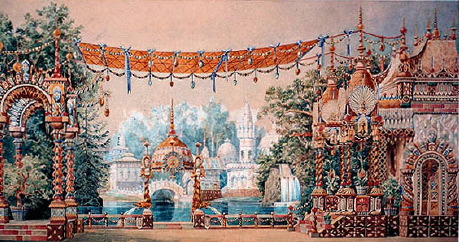
Konstantin Ivanov's original sketch for the set of The Nutcracker (1892).
Konstantin Ivanov’s original sketch for the set of The Nutcracker (1892).

À ce moment-là, Petipa était gravement malade, mais il a laissé des instructions détaillées pour la production de “Casse-Noisette” à Lev Ivanov, qui était le deuxième chorégraphe du Théâtre Marinsky.

Les répétitions du ballet ont commencé fin septembre 1892, puis le 6 (18) décembre la première a eu lieu au Théâtre Marinsky où le ballet a joué pendant plus de 30 ans.

En 1923, la performance a été restaurée par le chorégraphe F. Lopukhov. Puis, en 1929, il crée une nouvelle version chorégraphique de la pièce, et au début de la Seconde Guerre mondiale l’héroïne du ballet qui s’appelait Clara change de nom et s’appelle désormais Masha, mais son frère Fritz qui est un personnage négatif garde son nom.

Aperçu de l’intrigue de “Casse-Noisette”

Title page of the edition of The Nutcracker's Story (1845)
Title page of the edition of The Nutcracker’s Story (1845)

Les invités se rassemblent dans la maison Zilbergauz alors que la veille de Noël est arrivée. Les enfants admirent le magnifique sapin de Noël, mais attendent avec impatience les cadeaux tant attendus.

Finalement, l’horloge sonne minuit et un mystérieux invité, Drosselmeyer, apparait, apportant des cadeaux incroyables qui consistent en des poupées mécaniques qu’il a lui-même fabriqué. Sa capacité à donner vie aux jouets amuse non seulement les enfants, mais les effraie également. Ensuite, Drosselmeyer enlève son masque, et les enfants reconnaissent leur parrain préféré. 

Le père ayant peur que les enfants cassent les poupées, ordonne de les enfermer dans un placard de son bureau ce qui bouleverse Clara. Pour calmer la jeune fille, son parrain lui donne le Casse-Noisette. 
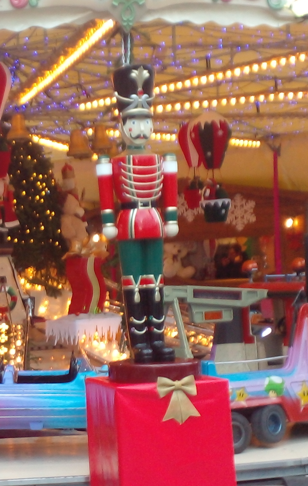
nutcracker
nutcracker

Mais son frère, Fritz casse accidentellement la poupée, et Clara ayant pitié de Casse-Noisette, l’allongea sur le lit de sa poupée préférée.

Fritz et ses amis mettent des masques de souris et commencent à taquiner Clara. Ensuite, il est temps pour les enfants d’aller se coucher, et chacun rentre chez lui après la danse traditionnelle du Grossvater, par les invités. 

La pièce dans laquelle se trouve l’arbre est remplie de clair de lune à la tombée de la nuit.

Avant d’aller se coucher, Clara revient et embrasse Casse-Noisette. Et puis Drosselmeyer apparaît, mais maintenant il n’est plus parrain. Au lieu de cela, il est un gentil sorcier qui agite la main pour que tout dans la pièce commence à changer : les murs s’écartent, l’arbre commence à pousser et les décorations de Noël prennent vie et deviennent des soldats. 

Soudain, des souris apparaissent sous la direction du roi des souris et, le brave Casse-Noisette mène les soldats au combat. Casse-Noisette et le Roi des souris se rencontrent dans un combat à mort. 

Clara voit que l’armée de souris est plus nombreuse que l’armée de soldats, et en désespoir de cause, elle enlève sa chaussure et la jette de toutes ses forces sur le roi des souris. Il est blessé et s’enfuit avec son armée. 

L’armée de soldats a gagné, et porte triomphalement Clara sur ses épaules jusqu’au Casse-Noisette. 

Soudain, le visage de ce dernier commence à changer. Il cesse d’être Casse-Noisette et se transforme en un beau Prince. Il demande à Clara de le suivre et le couple disparaît dans les aiguilles luxuriantes du sapin de Noël et se retrouve dans une forêt hivernale de conte de fées. Les flocons de neige dansent, après leur danse tout s’apaise et la neige scintille dans la fabuleuse lumière de la lune.

Clara et le prince admirent la beauté du ciel étoilé et se souviennent comment ils ont été attaqués par les souris et comment le prince les a vaincus. Tout le monde danse, s’amuse et célèbre la victoire sur l’armée des souris. Des poupées espagnoles, arabes, chinoises et russes remercient Clara de leur avoir sauvé la vie. 

Dans une ville magique, un couple heureux attend. La Fée Dragée elle-même est prête à les accepter. Le couple navigue dans une barque faite de coquillages dorés. Des personnages de contes de fées dansent pour le couple heureux. 

Drosselmeyer apparaît et change à nouveau tout autour. Tout le monde se prépare pour le mariage de Clara et du Prince. 

Ensuite, Clara se réveille avec le Casse-Noisette toujours entre les mains. Elle est dans une pièce familière. Hélas, ce n’était qu’un rêve…


Lisez « Casse-Noisette » en français ou regardez le ballet « Casse-Noisette »

J’espère que cet article vous a plu

Si vous avez aimé cet article, abonnez-vous, mettez des likes, écrivez des commentaires !
Partager sur les réseaux sociaux
Découvrez nos derniers posts

What do you know about “The Nutcracker”?

Bilingual booksLire en FrançaisContact us
American LiteratureFrench LiteratureRussian Literature

Some people say, that Christmas isn’t complete without watching “The Nutcracker” which has become the most popular ballet of our times. It is a symbol of New Year’s magic, a festive ballet of the great Russian composer P.I. Tchaikovsky.

“The Nutcracker” which stands apart from the tradition of the ballet genre is an innovative two-act ballet by P. I. Tchaikovsky to a libretto by Marius Petipa.  It is based on the Christmas fairy tale ” The Nutcracker and the Mouse King ” written by E. T. A. Hoffmann as well as and its adaptation made by Dumas, and was choreographed by  Lev Ivanov .

Pyotr Ilyich Tchaikovsky 1888.

Pyotr Tchaikovsky was asked to compose an opera consisting of one act and a ballet in 1890. He began working on the ballet with Marius Petipa, constantly consulting with him even about music. The job went fast but, in the spring of 1891, Tchaikovsky was forced to pause as he had to go to the United States for the opening of the famous Carnegie Hall. Trying to meet the deadline for the ballet, Tchaikovsky managed to compose even on the road on a streamer but he was unsuccessful and was forced to ask Vsevolozhsky to reschedule the premiere, sending him a letter from Paris.

Marius_Ivanovich_Petipa_1898

As soon as Tchaikovsky returned the work continued and was completely finished by February 1892. A very successful suite from the music from the ballet orchestrated by Tchaikovsky himself was played in march 1992 in one of the symphony concerts of the Russian Musical Society. At the request of the public five out of the six numbers were repeated.

Konstantin Ivanov's original sketch for the set of The Nutcracker (1892).
Konstantin Ivanov’s original sketch for the set of The Nutcracker (1892).

By that time Petipa was seriously ill but he left detailed instruction for the production of “The Nutcracker” to Lev Ivanov who was the second choreographer of the Marinsky Theater.

The ballet rehearsals began at the end of September 1892, then on december 6 (18) the premiere was performed at the Marinsky Theater where the ballet played for more than 30 years.

In 1923, the performance was restored by the choreographer F. Lopukhov. Then, in 1929, he created a new choreographic version of the play, and when World War II began the heroine of the ballet whom had been called Clara was called Masha, but her brother Fritz who is a negative character kept his name.

Overview of the plot of “The Nutcracker”

Title page of the edition of The Nutcracker's Story (1845)
Title page of the edition of The Nutcracker’s Story (1845)

The guests gather in the Zilbergauz house as Christmas Eve has arrived. Children admire the magnificent Christmas tree, but wait impatiently for long-awaited gifts.

Finally the clock struck midnight and a mysterious guest, Drosselmeyer, appeared, bringing incredible gifts which consist of mechanical dolls that he made them himself. His ability to bring toys to life not only amuses children, but also scares them. Then, Drosselmeyer takes off his mask, and the children recognize their favorite godfather. 

The father being afraid that the children will break the dolls, orders them to be locked in a closet in his office which upset Clara. To calm the girl, her godfather gives her the Nutcracker. 

nutcracker
nutcracker

But her brother, Fritz accidentally breaks the doll, and Clara pitying the Nutcracker, laid him on the bed of her favorite doll.

Fritz and his friends put on mouse masks and start teasing Clara. Then, it is time for the children to go to bed, and everyone goes home after the dance of the traditional Grossvater by the guests. 

The room in which the tree is located is filled with moonlight as night falls.

Before going to bed, Clara returns and hugs the Nutcracker. And then Drosselmeyer appears, but now he is no longer a godfather. Instead he is a kind wizard who waves his hand making everything in the room beginning to change: the walls move apart, the tree begins to grow, and the Christmas decorations come to life and become soldiers. 

Suddenly mice appear under the leadership of the Mouse King and the brave Nutcracker leads the soldiers into battle. The Nutcracker and the Mouse King meet in a fight to the death. 

Clara sees that the army of mice outnumbers the army of soldiers, and in desperation, she takes off her shoe and throws it with all her might at the Mouse King. He is wounded and runs away with his army. 

The army of soldiers won, and triumphantly carry Clara on their shoulders to the Nutcracker. 

Suddenly, the latter’s face begins to change. He ceases to be the Nutcracker and turns into a handsome Prince. He asks Clara to follow him and the couple disappears into the lush needles of the Christmas tree and find themselves in a fairytale winter forest. Snowflakes dance, after their dance everything subsides, and the snow glistens in the fabulous light of the moon.

Clara and the Prince admire the beauty of the starry sky, and remember how they were attacked by mice, and how the Prince defeated them. Everyone is dancing, having fun and celebrating the victory over the mouse army. Spanish, Arabic, Chinese and Russian dolls thank Clara for saving their lives. 

In a magical city, a happy couple is waiting. The Fairy Dragee herself is ready to accept them. The couple sails in a boat made of gilded shells. Fairy-tale characters dance for a happy couple. 

Drosselmeyer appears and again changes everything around. Everyone is preparing for the wedding of Clara and the Prince. 

Then, Clara wakes up with the Nutcracker still in her hands. She is in a familiar room. Alas, it was just a dream…


Read “The Nutcracker” in French or watch “The Nutcracker” Ballet

I hope you enjoyed this article

If you liked this article, subscribe , put likes, write comments!
Share on social networks
Check out Our Latest Posts

Swan Lake is a superb ballet.

Swan Lake is an exceptional ballet, to the music of the brilliant Russian composer Piotr Ilyich Tchaikovsky, which has captured the hearts of classical music fans for over a century. It is a pearl of Russian classics that has attracted many world-famous dancers. This choreographic masterpiece created more than 130 years ago is still considered an unparalleled achievement of Russian culture.

Swan Lake is a philosophical poem about the eternal struggle between good and deceit and evil. This struggle mainly takes place within a person. In this representation, we see the struggle of Prince Siegfried.

The Story of Swan Lake

In an ancient park Princess Odette is sad. Suddenly a stranger appears. It is Rothbart, who is an evil wizard and proposes marriage to the princess. Odette refuses him and he transforms her into a white swan.

Prince Siegfried celebrates his majority with his friends. His mother appears and everyone tries to hide the traces of the party but fails, because the jester inadvertently knocks over the cups. The princess is not happy but is presented with a bouquet of roses, and she softens and leaves. The game continues and in the evening Siegfried is left alone. He doesn’t want to go home yet. We see a flock of swans flying high in the sky.

Then the swans swim on a large lake. They are nervous. They are bewitched girls who will not be able to take their human form until after midnight. Siegfried appears on the shore with a crossbow in his hand. He is ready to shoot an arrow at a white swan when it transforms into a girl of indescribable beauty and grace. It’s Odette, the swan queen. Siegfried will look for her among the other swans to declare his love for her. At dawn they are forced to separate because the evil wizard Rothbart watches the girls closely, allowing no one to escape his sorcery. Finally the girls turn into swans with the first rays of the sun.

In the castle of the Sovereign Princess, a magnificent ball takes place where, according to his mother’s wishes, Siegfried must choose a woman from among the beauties invited. Siegfried is indifferent to them because his heart belongs to the Queen of the Swans. But suddenly a mysterious knight appears with his daughter Odile. Siegfried is convinced that Odette and Odile are the same person and declares his love for her.

At this moment a white swan appears at the window of the castle. It’s Odette. Seeing her Siegfried understands his mistake. Frightened by the consequences of his mistake, he rushes to the lake to ask forgiveness from his beloved.

Unfortunately, his regrets are in vain because the Swan Queen no longer has any power over her destiny. She is destined to die. Desperate for his love, Prince Siegfried enters into combat with Rothbart. He mortally wounds him, but he himself also dies. Rothbart’s spell is broken. The swan girls are freed from the terrible spell.

In 1937, at the Bolshoi Theater in Moscow, Asaf Messerep also updated the Swan Lake ballet and changed the ending to a happy ending where Prince Siegfried survives the fight.

The story of the creation of Swan Lake

In 1875, Tchaikovsky received an order from the management of the Imperial Theaters, and was offered to work with the script by V. Begichev and V. Geltser, which was mainly based on various fairy tales and legends, in which there are girls turned into swans. This commission was unusual because “serious” composers of ballet music did not write.

For this Tchaikovsky studied the dances, their sequences as well as various ballets, to clearly understand the composition and the structure. It was only after doing this, that he began to compose. At the end of the summer of 1875, the first two acts were written, and at the beginning of the winter the last two. The following spring Tchaikovsky orchestrated what he had composed and finished work on the score.

In the fall, work was underway at the theater for the staging of the ballet directed by V. Reisinger who unfortunately turned out to be a poor director with few, if any, successes.

The premiere of Swan Lake took place in February 1877 and was a failure.

Nearly 20 years later, the management of the Imperial Theaters once again took an interest in Tchaikovsky’s work, to stage it in the new season of 1893 and 1894. For this, the famous Petipa developed a new scenario for the piece and started working on it with Tchaikovsky. The sudden death of the composer interrupted this work but Petipa continued this work a year later. The plot and performance of Swan Lake grew incredibly rich and had a terrible success at its new premiere in 1895 in St. Petersburg

Swan Lake is performed all over the world today and most productions retain Ivanov and Petipa’s choreography in one form or another. However there are original performances by John Neumeier, Matthew Born, Mats Ek, using only Tchaikovsky’s score.

Sources:

П.И. Чайковский балет “Лебединое озеро”

ЛЕБЕДИНОЕ ОЗЕРО

Экранизация балета «Лебединое озеро»

Сюжет балета “Лебединое озеро”. P. И. Чайковский, “Лебединое озеро”: краткое содержание и отзывы

Чайковский. Балет “Лебединое озеро”

ЛЕБЕДИНОЕ ОЗЕРО Петр Чайковский

P. И.Чайковский Лебединое озеро

If you liked this article, don’t forget to like and share.

Subscribe to not miss anything