On this site we hope to help you learn, and to remove the difficulties caused by the difference of culture and language. Sur ce site nous espérons vous aider à apprendre, et à enlever la barrière causée par les différents languages et cultures.
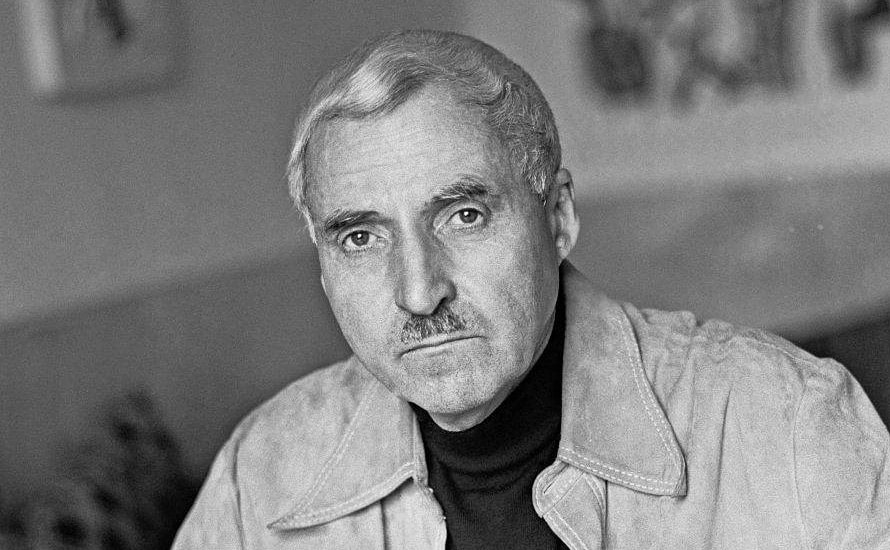
Konstantin Mikhailovich Simonov (Константин Михайлович Симонов) was born on November 15 (28), 1915 in Petrograd. Simonov is a famous writer, poet and journalist. His works written during the war years reflected not only reality but also a kind of prayer. An example would be the poem, “Wait for Me” composed in the summer of 1941 and dedicated to Valentina Serova which still to this day gives hope to soldiers on the battlefield.
Konstantin Mikhailovich Simonov
His mother, Princess Alexandra Obolenskaya, devoted her life to raising her son. His father, Major General Mikhail Simonov did not return from the front during the First World War.
Simonov’s real first name was Cyril (Кирилл) but due to pronunciation problems, it was changed to Konstantin.
In 1919 his mother moved to Ryazan and married Alexander Ivanishev who was a military teacher. He played a very important role in the life of Konstantin Simonov.
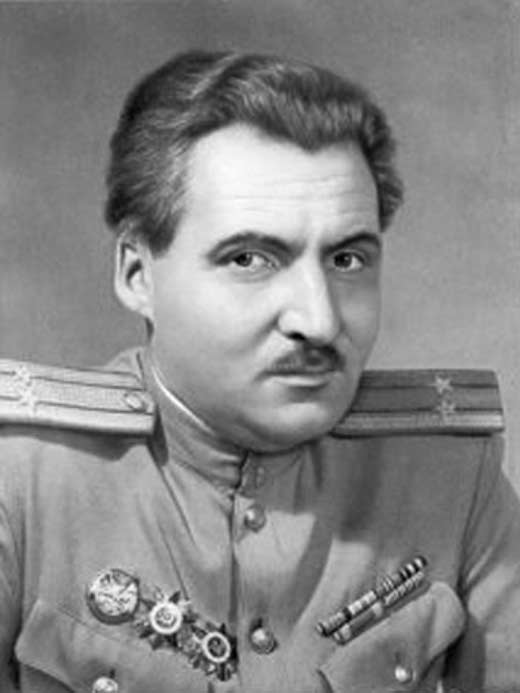
Konstantin Mikhailovich Simonov
Konstantin’s childhood was spent in military camps. After completing his 7th year of school, he entered the FZU factory school, then worked as a metal turner, first in Saratov, then in Moscow where the family moved in 1931.
He continued to work for a year after entering the literary institute named after AM Gorky in 1935, and then went to school full-time. In 1936 his first poems were published in the magazines “Young Guard” and “October”
In 1938 he graduated from the literary institute and was admitted to the Union of Writers of the USSR. His work “Pavel Cherny was also published that year.
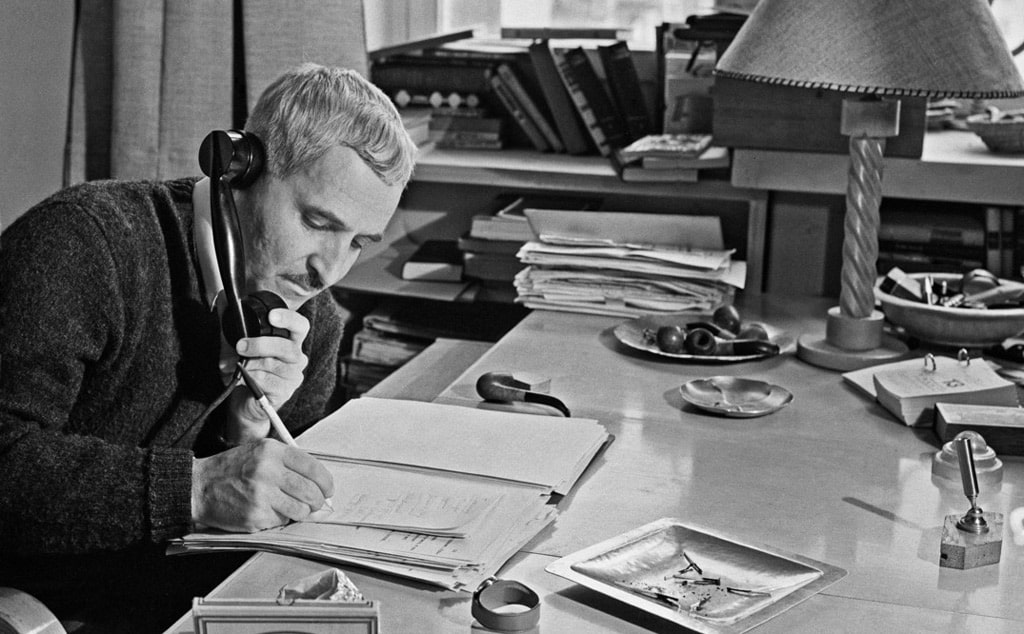
Konstantin Mikhailovich Simonov
Throughout World War II, Simonov worked as a war correspondent. He participated in the main battles of the Soviet army, visited all the fronts, and witnessed the capture of Berlin. In 1942 he was given the rank of senior battalion commissar, and in 1943 the rank of lieutenant colonel, then colonel after the end of the war. Konstantin spoke about the heroism of Russian soldiers and the difficulties of life on the front line. During the war years he wrote “Russian people”, “Wait for me”, “So it will be”, as well as the story “Days and nights” and two collections of poems “With you and without you” and “War”
Konstantin Mikhailovich Simonov
After the war Simonov became the author of many novels, short stories, plays and poems, but he was also the editor of the magazine Novy Mir, then Literaturnaya Gazeta.
Many iconic films were made based on Konstantin Simonov’s books, such as “A Guy from Our Town” in 1942, “The Immortal Garrison” in 1956, “The Living and the Dead” in 1964, “Retribution” in 1967, and many more.
Author: IrinaYa – File: Simonov K M left monument Saratov.jpg, CC BY-SA 4.0,
He was married four times and had one son and two daughters from his different marriages.
Simonov died on August 28, 1979 at the age of 63 from lung cancer. His body was cremated. His ashes were scattered on the Buinichsky fields where a terrible battle had taken place. About this he wrote:
I wasn’t a soldier, I was just a correspondent, but I have a piece of land that I won’t forget for a century – a field near Mogilev, where for the first time in July 1941 I saw how ours was knocked out and burned, in one day 39 German tanks…
A monument was erected for him at Saratov Vocational School No. 2 in 1980, as well as several memorial plaques in Ryazan, Saratov and Moscow. In addition, several cities have named streets in his honor.
Support the blog – leave a comment, put your finger up, and for whom it’s not difficult – repost the entry to any of your social networks, this will support the blog, thank you.
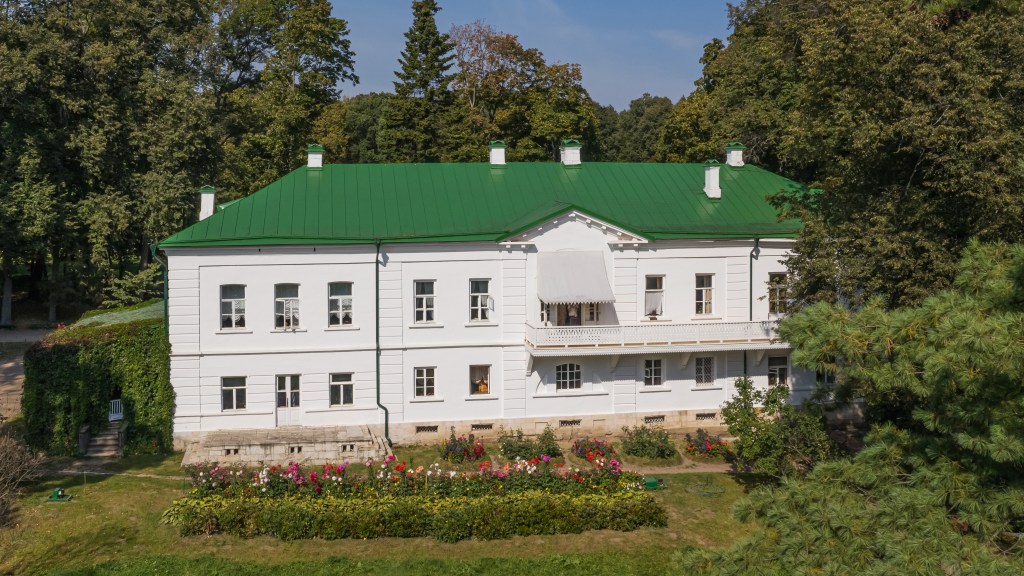
Count Leo Nikolayevich Tolstoy was born on August 28 (September 9), 1828 at his mother’s family estate, Yasnaya Polyana, in the Tula province of the Russian Empire. He comes from the noble family of Tolstoy, known since 1351.
Leo Nikolayevich is one of the greatest novelists in the world. He is called a master of psychology, and the creator of the epic novel genre. The writer had a strong influence on the evolution of European humanism, and on the development of realist traditions in world literature.
Tolstoy was excommunicated from the church because of his authoritarian views which caused the emergence of a new religious and moral current called Tolstoïsme.
The writer has received numerous Nobel Prizes for Literature and his works have been staged all over the world.
Leo Tolstoy was the fourth of 5 children. His mother died in 1830, six months after the birth of her daughter then, Leo Nikolayevich was not yet 2 years old. The education of the orphans was continued by a distant relative, T. A. Ergolskaya. His father Nikolai Ilich died in 1837 when Leo was 9 years old, and his aunt, Countess Alexandra Osten-Saken was appointed as the children’s guardian. After her death in 1840, another of his aunts, Pelegeya Yushkova who lived in Kazan took care of Leo Tolstoy, as well as his brothers and his sister Maria.
Tolstoy used to say that the Lushkovs’ house was considered one of the most cheerful in Kazan. Later he described those years in the autobiographical story “Childhood”
The writer received his primary education at home. He studied with a French tutor who became the prototype of Saint-Jérome in his book “Childhood”. After, he continued his studies with a German tutor portrayed as Karl Ivanovitch in the same book. Then, in 1844, he entered Kazan University, but only stayed for a year due to poor academic performance. Leo Tolstoy did not like studying, he considered exams a formality, and university professors incompetent. Leo Nikolayevich transferred to the Faculty of Law, where he passed the second year satisfactorily, although he preferred secular entertainment.
However, he became interested in French philosophical literature and without finishing that year, he left university. Then he embarked on self-learning.
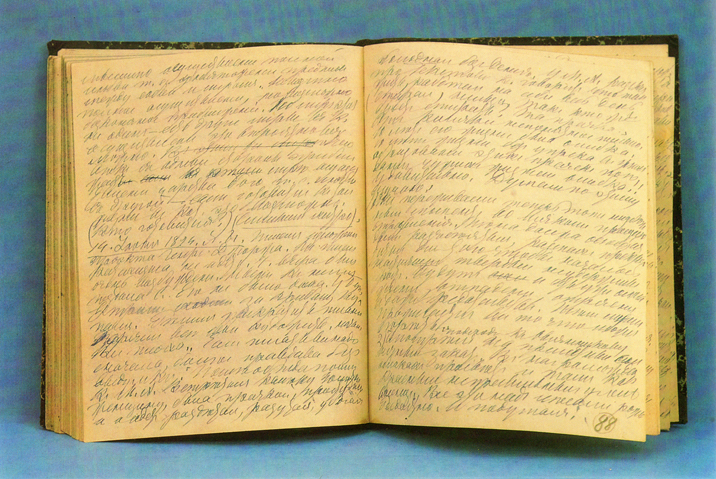
In 1847, following a short illness, he inherited and became responsible for the property of Yasnaya Polyana. He wanted to establish relations in a new way with the peasants and even opened a school for them. He partially described his activities in “The Landowner’s Morning”. It was also that same year that he began keeping a diary. In it, for example, we can read:
One of Leo Tolstoy Journal
“March 21, 1855. Having done nothing. I received a letter from Masha, in which she describes to me her acquaintance with Turgenev. A sweet and glorious letter that lifted me up in my own opinion and moved me to action. »
He continued this diary throughout his life and used it to write his novels.
At the end of 1848, he moved to Moscow, then a year later to Saint Petersburg. In each city, he prepared to enter an university but did not go all the way, preferring to play cards, listen to music, or even play the piano. He was passionately interested in music. Bach, Handel, and Chopin were his favorites and he himself played the piano very well. He was so passionate about music that he wrote the “Kreutzer Sonata”
Leo Tolstoy and his brother
During the winter of 1850, he began to write “Childhood” and then “Yesterday Story”. In 1851, his older brother Nikolai, who was serving in the Caucasus, visited Leo who was back on his estate. He invited Leo to join the military service in the Caucasus. Leo Tolstoy did not accept immediately, but after financial difficulties due to his habit of playing cards he signed up.
He lived about 5 months in Pyatigorsk, in a simple hut while waiting for papers forgotten in Moscow. These were necessary for his admission into the army. During this time, he spent a significant part of his time hunting in the company of the Cossack Epishka, who in his book “The Cossacks” became the prototype of one of the heroes named Eroshka.
In 1851, after passing an examination in Tiflis, Tolstoy entered as a cadet in the 4th battery of the 20th artillery brigade. His battalion was stationed in the Cossack village of Starogladovskaya where he lived for 3 years. The Caucasian nature and the patriarchal life of the Casaque village was reflected in his novels ”Cossacks”, “Hadji Murad” as well as in “Raid” and “Cutting the Forest”
In July 1852 he sent the first part of his future autobiographical trilogy, “Childhood”, to the editors of the most popular magazine “Sovremennik” together with a letter which read:
… I look forward to your verdict. It will either encourage me to continue my favorite activities, or make me burn everything I started.
Nekrasov, Sovremennik’s publisher having immediately judged the literary value of Tolstoy’s book, wrote him a kind letter and published his novel in September of that same year. The novel “Childhood” was an extraordinary success.
At the same time, there were periodically battles with the mountaineers in the Caucasus, and Leo Tolstoy was rewarded and, received the Cross of St. George for courage shown in battle. He gave this medal to an ordinary soldier justifying his act by saying that this reward would give a simple person many advantages that he already had because of his origin.
Leo Tolstoy in Kazan
At the end of 1853 he was transferred to the Danube army because of the outbreak of the Crimean War. He participated in the Battle of Oltenitsa and the Siege of Silistria. In 1854 his second novel “Teenager” was published.
From November 1854 to the end of August 1855, Leo Tolstoy was in Sevastopol. The writer despite all the difficulties of life and the horrors of the siege, at that time wrote the story “Cutting the Forest”, which reflected Caucasian impressions, as well as the first of three stories of Sevastopol.
He sent the short story, “Sevastopol in the month of December,” to his publisher, who published it quickly. Although Tolstoy was exceptionally candid in describing the battle scenes in the early history of Sevastopol, the story was deeply patriotic and glorified the bravery of Russian soldiers. This news was read by all of Russia with interest, making an astonishing impression of the horrors that befell the defenders of Sevastopol. This was noticed by Emperor Nicholas I, who ordered to take care of this gifted officer.
In his second story “Sevastopol in May” nothing remained of the pride of the Russian army. The shock and horror he experienced at the front influenced Tolstoy’s work, and this time he wrote about the meaninglessness of death and the inhumanity of war. The writer has also experimented with a relatively new technique and part of the story is presented as a narration from a soldier’s point of view.
For the defense of Sevastopol, Tolstoy received the Odre de Sainte-Anne 4th degree for courage, and four medals. On March 26, 1856, he was promoted to the rank of lieutenant.
Tolstoy was very well received in the salons of high society when he returned to Saint Petersburg. He became Turgenev’s close friend, and established friendly relations with such famous writers as Nekrasov, Goncharov, Panaev, and many more. It was a very prolific time, and he wrote “Snowstorm”, “Two Hussars”, “Sevastopol in August” and “Youth”. In addition, the writing of future “Cossacks” continued.
This joyous and eventful life left him with a bitter taste, and at the beginning of 1857, without any regret, he left Saint Petersburg and set off on a journey.
At the age of 29, Tolstoy undertook his first trip abroad. He first visited France. It took him 11 non-stop days to reach Paris. From the very first evening the writer was at a masked ball at the Grand Opera. Tolstoy moved into the famous Le Meurice hotel. He visited the Louvre and walked through the magnificent Luxembourg Gardens, but was horrified by the cult of Napoleon I. After a month and a half, he wrote to Turgenev,
“a lot of filth has grown in my soul…and the guillotine, and idleness, and vulgarity.”
Leo Nikolayevich left the capital of France in a hurry and went to Geneva where he stayed in a guesthouse on the shores of Lake Geneva for two months. He continued his journey in northern Italy and then went to Switzerland, to the city of Lucerne. Wherever he went, Tolstoy got acquainted with famous works of art, met artists, observed how people lived in European cities. His travels did not inspire Tolstoy. He was disappointed by the stark contrast between wealth and poverty, which he could see through the beautiful outer veil of European culture. Tolstoy describes his disappointment in his book “Lucerne”.
After returning to Yasnaya Polyana in 1857, Leo Nikolayevich continued to work on his book “Cossack”, and wrote “Three Deaths”, “The Joy of the Family”, then “Housekeeping”. In his diary, Tolstoy defined his purpose for himself thus:
“The main thing is literary works, then family obligations, then agriculture… And living for yourself is enough for one good deed a day.”
Two years later he founded a school for peasant children in Yasnaya Polyana. For this, he returned to Europe where he became interested in public education and institutions aimed at raising the level of education of the working population. With the help of conversations with specialists, he studied the problems of public education in Germany and France. On his return, he abolished all the rules of discipline and, in 1862, he began to publish the educational journal Yasnaya Polyana, then “ABC” and “New ABC” thereafter.
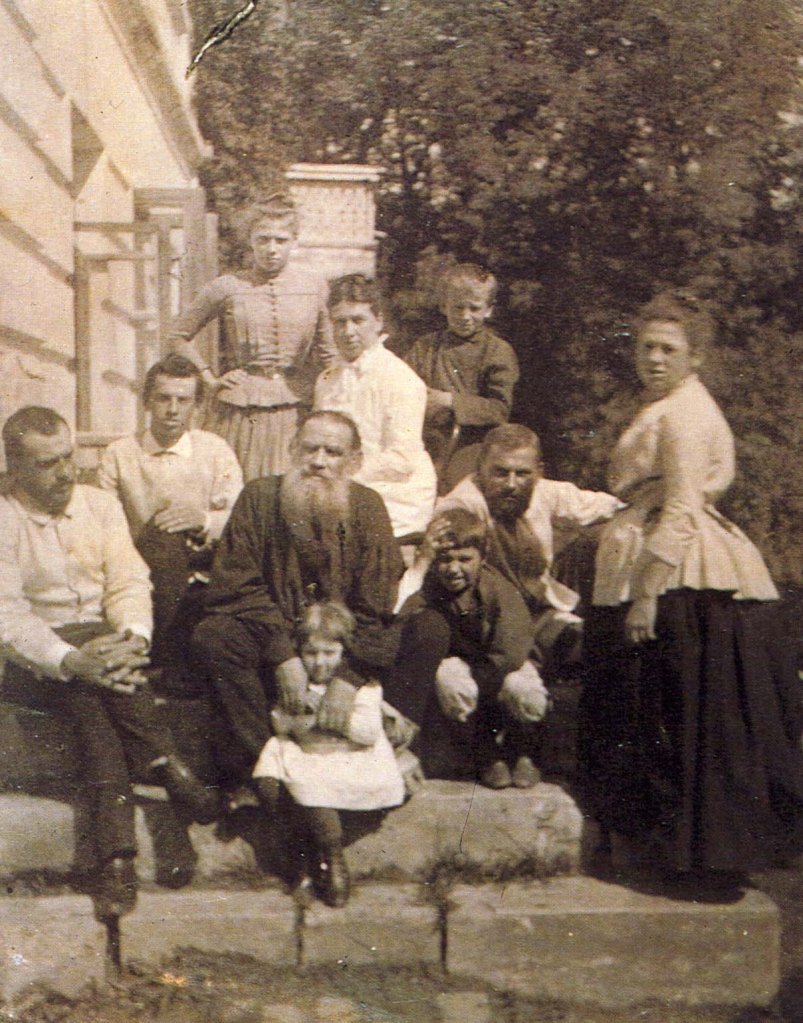
On September 23, 1862, at the age of 34 Leo Nikolayevich married Sofia Andreevna Bers who was 18 years old. Sofia was the second daughter of the doctor in the Moscow Palace Office whom he had first seen when she was still a child. They had 13 children together. His family loved music, which was often played at parties. Sometimes Leo and his wife played the piano with four hands. They had a very large library with nearly 23,000 books in different languages. In the evening everyone gathered in the great hall and Tolstoy read aloud Pushkin, Homer, but also Jules Vernes whose family was very fond of “Around the World in 80 Days”. They also played chess. Tolstoy enjoyed horse riding, which he did almost every day before dinner. The writer lived with Sofia until her death, although their marriage was not considered easy. Sofia found an issue from 1862 where her husband wrote:
“ I write from the village, I write and I hear the voice of my wife upstairs, who speaks with her brother and whom I love more than anything in the world. I lived to be 34 and I didn’t know it was possible to love and be so happy .
Leo Tolstoy and his family
During this period of spiritual balance, Tolstoi began to work on “War and Peace”, based on events in Russian history. He completed this superb book in 1869, gaining astonishing fame. The writer was increasingly called the greatest Russian writer.
In the early 1870s, Tolstoy worried about social inequality, peasant poverty, and the intransigent Tsarist regime and disagreed with himself. He began to fall ill and, on the advice of his doctor, went to be cured with the treatment of kumis in the province of Samara. He liked the place so much, that he took his family there for a vacation and wrote “Anna Karenina” there.
In the 1880s, Tolstoy began to work on philosophical treatises in which, among other things, he rethought his life and his attitude towards religion. He wrote “Confession”, “What is my faith?” and “The Kingdom of God is within you…” Criticizing the dogmas of the Orthodox Church, he created his own version of the Gospel, removing from the scriptures what he disagreed with, like all stories of miracles and, he left only the words of Christ.
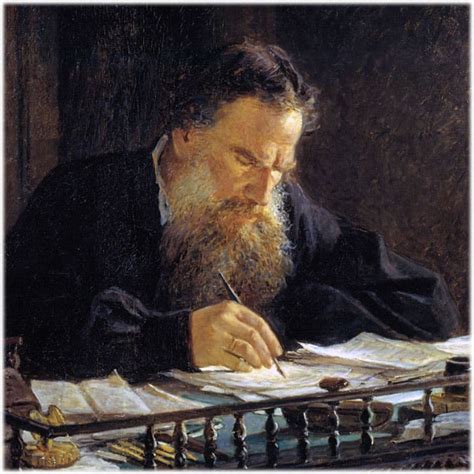
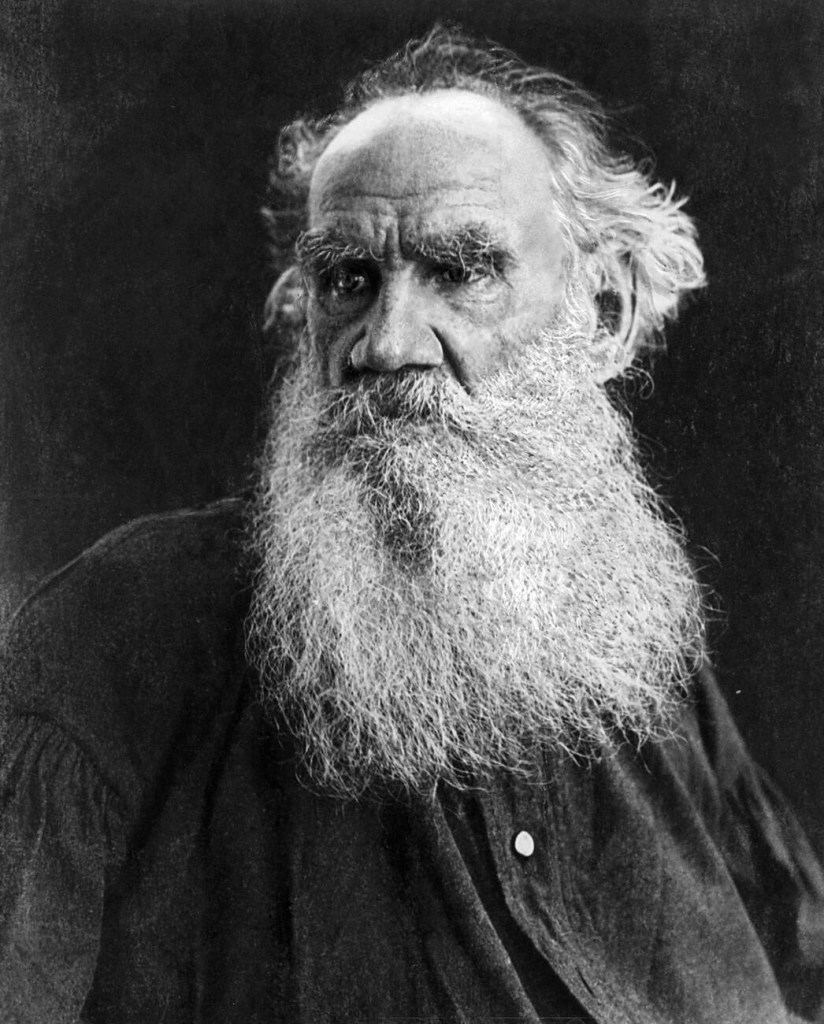
Leo Tolstoy
Under the influence of Tolstoy, the religious and ethical movement of Tolstoism was born. During this period he wrote “The Death of Ivan Ilyich”, a story about a righteous “Father Sergius”, a play about despair, “The Living Corpse”, and a story about tragic death, “Hadji Murad”.
In the 1880s, Leo Tolstoy also gave up meat and fish. His lunch usually consisted of soup, vegetables or dairy dishes. For dessert, fruit or pastries were served.
In 1901, the Holy Synod issued a decree excommunicating Count Leo Tolstoy after he wrote the novel “Resurrection,” in which he spoke scornfully of the very institution of the church. This decision only increased Tolstoy’s popularity and drew public attention to the writer’s ideals and beliefs.
During this period, Tolstoy’s family relations deteriorated because of his friendship with Vladimir Chertkov whom his wife called the devil.
At the end of 1910 he attempted to bring his life into line with his beliefs, and in early November secretly left his estate. On the way, he fell seriously ill and was forced to stay with the Astapovo station guard. This is where the writer spent the last days of his life. Leo Nikolayevich Tolstoy died on November 7 (20), 1910. He was buried in Yasnaya Polyana.
If you want to read his beautiful books, visit our page: Russian Literature. News books will be added every now and then.
Fyodor Mikhailovich Dostoyevsky (Фёдор Михайлович Достоевский) was born on October 30 (November 11), 1821 in Moscow. His early works contributed to the emergence of the genre of psychological prose. In his novels, the author aims to portray and study the “inner world of a person” and “the most subtle movements of his soul”.
His most important books are “Idiot”, “Crime and Punishment”, “Demons”, “The Brothers Karamazov” and “Teenager”. These novels have become classics of world literature and are among the most famous and widely read works of literature.
Dostoevsky’s works have had an impact on world literature, and his most significant ones have been repeatedly filmed and staged in theatres.
Fyodor Mikhailovich Dostoyevsky was the second son of seven children. He was raised with love in a pious family. Alena Frolovna, their nanny had a clear and cheerful character. Fyodor remembers that she told them beautiful stories. She is mentioned in his novel “The Demons”. His parents, during family evenings, read aloud, among other Joukovi, Karamzin, Pouchkine, and the history of the Russian state, of which Dostoyevsky already knew all the main episodes by the age of 10. The History of the Russian State is a multi-volume work by N. M. Karamzin describing the history of Russia from antiquity through the reign of Ivan the Terrible and the Times of Troubles. His parents started to teach him when he was 4 years old.
According to the writer, childhood was the best period of his life.
In June 1828 the Dostoyevskys became a noble family, and in 1832 Dostoyevsky became familiar with rural Russia for the first time. We find the impressions of this trip in his novels: “Poor People”, “Demons”, as well as in “the Diary of a Writer”
In 1834, together with his brother Mikhail, he entered one of the best private educational institutions in Moscow. He certainly started thinking about literature as a profession thanks to his Russian language teacher Nikolai Ivanovich Bilevich, who studied at the same time as Gogol, attended literary meetings, composed poetry and translated Schiller
His mother died on February 27, 1837 after a long illness. Likewise, Pushkin, whose works he had read since childhood, died that same year.
Then he entered the main engineering school, although he dreamed of poetry and imagined himself already composing a novel. During his studies, he devoted all his free time to reading the works of Homer, Corneilles, and many other writers. Dostoyevsky was better educated than many Russian writers of his time.
In June 1839, Dostoyevsky’s father died. There are two versions of his death. According to the official version, the writer’s father died in the field of apoplexy. Another version is based on rumors: MA Dostoyevsky was killed by his own serfs. Both versions are described in detail by Dostoyevsky’s biographer LI Saraskina. Some say that Dostoyevsky’s tetanic fits began after his father’s death.
After graduating, Dostoyevsky worked only one year as an engineer-lieutenant before resigning to devote himself to literature.
His literary activity began successfully in 1845 with his first novel “The Poor”, he was cordially accepted into Belinski’s circle and became famous. He left it a year later following a skirmish over his misunderstood new novel “Double”. Later, Dostoyevsky became a member of the literary and philosophical circle of the Beketov brothers. Thanks to his great fame he had many acquaintances who became prototypes of the heroes of his future works.
The writings of Dostoyevsky’s early period belonged to various genres.
Humorous story: “A novel in nine letters” in 1845
A physiological essay: “Petersburg’s Chronicle ” in 1847.
Short stories: “Mr.. Prokharchin” in 1846, “Crawlers” in 1847, “Honest Thief” in 1848
A Christmas Tale: “Christmas Tree and Wedding” in 1848.
Tragic stories: “Someone Else’s Wife and Husband”, and “Jealous Husband” in 1848.
Several novels: “Mistress” in 1847, “Weak heart” in 1848, “White nights” in 1848, an epistolary novel “Poor People” in 1846.
Many creative endeavors and ideas of the young writer found their wider embodiment in his later works.
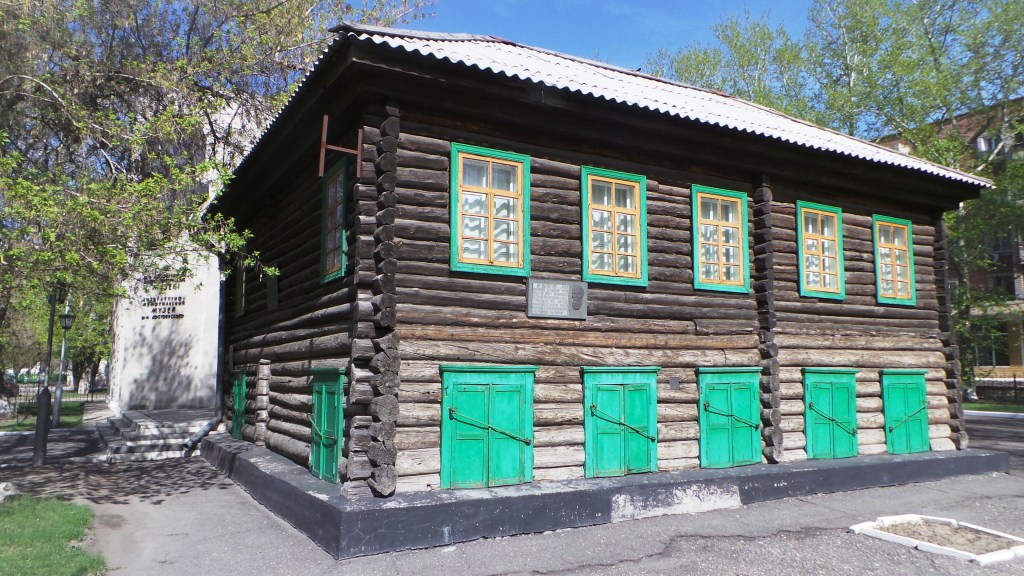
In the fall of 1848 Dostoyevsky became a member of the Petrashevsky’s circle. It is a secret society which brings together the partisans of French utopian socialism, including Fourier and Saint-Simon. Their goal was to create an illegal printer to facilitate a coup in Russia. This did not succeed, and in 1849 Fyodor was arrested and sentenced to death after spending 8 months in prison in the Peter and Paul Fortress. On the day of his execution, he learned that his sentence has been changed to 8 years in prison. At the end of the same month, Emperor Nicholas I reduced his sentence from 8 years to 4 years. Dostoyevsky was exiled to forced labor in Siberia, deprived of his noble rank and his fortune. At the end of his sentence, he was promoted to private.
Dostoyevsky found it very difficult to endure the suffering and loneliness during his years of hard labor, and it left an indelible impression on him.
On February 18, 1855, Emperor Nicholas I died. Dostoyevsky wrote a loyal poem dedicated to his widow, Empress Alexandra Feodorovna, and thus became a non-commissioned officer.
In 1856, the new Emperor Alexander II granted a pardon to all Petrashevites, and in 1857 Dostoyevsky was pardoned. By receiving this complete amnesty he was able to publish his works again.
On February 6, 1857 Dostoyevsky married Maria Dmitrievna Isaïeva.
About his experience of forced labor Dostoyevsky wrote “Notes from the House of the Dead” where he spoke about the life of convicts. This book was a shock for the public of Saint Petersburg, and restored literary recognition to Dostoyevsky.
In 1859 “Uncle’s Dream” and “The Village of Stepanchikovo and its Inhabitants” were published in magazines.
Together with his older brother Dostoyevsky started publishing his own literary and political magazine called Vremya in 1861. After 1862 the publication closed, and instead the Dostoyevsky brothers started publishing another magazine called Epoch.
These journals strengthened the positions of the brothers in the literary world and it was on their pages that the works of Dostoyevsky were published.
Dostoevsky undertook his first trip abroad in 1862 visiting Germany, France, England, Switzerland, Italy and Austria. During this period he became interested in the game of roulette and will write ‘The Gambler’.
In 1864 Dostoyevsky’s wife and older brother died. It was during this period that the destruction of socialist illusions of youth occurs and a critical perception of bourgeois-liberal values by the writer is formed.
In 1865, six months after his brother’s death, Epoch ceased publication. Assuming responsibility for Epoch’s debts and experiencing financial difficulties, Dostoyevsky was forced to accept the disadvantageous terms of the contract for the publication of collected works with the publisher FT Stellovsky and began work on the novel “Crime and Punishment”. However, because of his contract, he risks losing his copyright and royalties on his publications for 9 years if he did not provide a novel before November 1, 1866 (One month). His friend AP Milyukov came to his rescue and found him the best stenographer Anna Grigitievna to enable him to write his novel quickly. “The Gambler” was written in 26 days, from October 4 to 29 in Saint Petersburg.
Anna Grigorievna Snitkina became his wife on February 15, 1867 in the Trinity Cathedral.
After the publication of his novel “Crime and Punishment” Dostoyevsky and his wife went to live abroad to prevent creditors from taking this money from them. The novel “Idiot” was written in Geneva, Vevey and Milan and finished in Florence. “ Idiot” is one of the works that Dostoyevsky. had the most difficulty writing.
From 1872 to 1878 the writer lived in the city of Staraya Russa, Novgorod province. This period is very productive for him and he will write “Demons” in 1872, the beginning of the “Journal d’un auteur” in 1873, “Teenager” in 1875 and “Soft” in 1876.
He will write his last novel, “The Brothers Karamazov” in Saint Petersburg,
He died on January 28 (February 7), 1881, two days after a visit from his sister Vera Mikhailovna, who had come to see him to ask him to give up his share of the Ryazan estate, which he had inherited from his aunt. There was a stormy scene that may have been the cause of the exacerbation of his emphysema.
He was buried in the Tikhvin Cemetery of the Alexander Nevsky Lavra in Saint Petersburg.
If you want to read some of his beautiful books visit our Russian Literature page and find some of his books. More will be added later.
Fiodor Mikhaïlovitch Dostoïevski (Фёдор Михайлович Достоевский) est né le 30 octobre (11 novembre) 1821 à Moscou, en Russie. C’est l’un des écrivains le plus lu au monde. Il a écrit des romans psychologiques, dans lequel l’auteur vise à dépeindre et à étudier le “monde intérieur d’une personne” et “les mouvements les plus subtils de son âme”.
Ses livres les plus importants sont “L’Idiot”, “Crime et Châtiment”, “Démons”, “Les Frères Karamazov” et “Adolescent “. Ces romans sont devenus des classiques de la littérature mondiale et comptent parmi les œuvres littéraires les plus célèbres et les plus lus.
Ses oeuvres ont eu un impact sur la littérature mondiale. Les plus connues ont été filmées et mises en scènes à plusieurs reprises au théâtre.
Image: Автор: Василий Григорьевич Перов
Fiodor Mikhaïlovitch Dostoïevski était le deuxième fils de sept enfants. Il a été élevé avec amour dans une famille pieuse. Alena Frolovna, leur nounou avait un caractère clair et enjoué, Fiodor se rappelle qu’elle leur racontait de belles histoires. Elle est mentionnée dans son roman “les Démons”. Ses parents, lors des soirées familiales, lisaient à haute voix, entre autre Joukovi, Karamzine, Pouchkine, et l’histoire de l’état Russe, dont Dostoïevski savait déjà tous les principaux épisodes à l’age de 10 ans. L’Histoire de l’État russe est un ouvrage en plusieurs volumes de N. M. Karamzin décrivant l’histoire de la Russie depuis l’Antiquité jusqu’au règne d’ Ivan le Terrible et aux temps des troubles . Ses parents ont commencé à le faire étudier à l’age de 4 ans. Il a été particulièrement marqué par son premier livre sérieux “104 histoires sacrées de l’Ancient et du nouveau Testament” et un demi siècle plus tard réussira à retrouver une publication de son enfance qu’il gardera précieusement.
Selon l’écrivain, l’enfance a été la meilleure période de sa vie.
En juin 1828 les Dostoïevski deviennent une famille noble, et en 1832 Dostoïevski se familiarise pour la première fois avec la Russie rurale. On retrouve les impressions de ce voyages dans ses romans: “Les Pauvres gens”, “Démons”, ainsi que dans “le journal d’un écrivain”
En 1834, avec son frère Mikhail, il est entré dans l’un des meilleurs établissement d’enseignement privé de Moscou. Il a certainement commencé à penser à la littérature en tant que profession grâce à son professeur de langue russe Nikolai Ivanovich Bilevich. Celui-ci a étudié en même temps que Gogol, assiste à des réunions littéraires, compose de la poésie et traduit Schiller
Sa mère est morte le 27 fevier 1837 à la suite d’une longue maladie. De même, Pouchkine dont il a lu les oeuvres depuis l’enfance est mort cette même année.
Ensuite, il est entré a l’école principale d’ingénieur, bien qu’il rêva de poésie et s’imaginait déjà composant un roman. Pendant ses études, il consacra tout son temps libres à la lecture des oeuvres d’Homère, Corneilles, et de nombreux autres écrivains. Dostoïevski était plus instruit que de nombreux écrivains russes de son temps.
En juin 1839, le père de Dostoïevski mourut. Il existe deux versions de sa mort. Selon la version officielle, le père de l’écrivain est mort sur le terrain d’une apoplexie. Une autre version est basée sur des rumeurs : M. A. Dostoïevski a été tué par ses propres serfs. Les deux versions sont décrites en détail par le biographe de Dostoïevski L. I. Saraskina. Certains disent que les crises de tétanie de Dostoïevski ont commencé après la mort de son père.
Après avoir obtenu son diplôme Dostoïevski ne travailla qu’un an en temps qu’ingénieur-lieutenant avant de démissionner pour se consacrer a la littérature.
Son activité littéraire commence avec success en 1845 avec son premier roman “Les Pauvres”, il est cordialement accepté dans le cercle de Belinski et devient célèbre. Il le quitta un an plus tard à la suite d’une escarmouche causée par son nouveau roman “Double” qui a était mal compris. Plus tard, Dostoïevski devient membre du cercle littéraire et philosophique des frères Beketov. Grace à sa grande renommée il a de nombreuses connaissances qui deviennent des prototypes des héros de ses futures oeuvres.
Les écrits de la première période de Dostoïevski appartenaient a divers genres.
Histoire humoristique: “Un roman en neuf lettres” en 1845
Un essai physiologique: “Chronique de Pétersbourg” en 1847.
Des nouvelles: “M.. Prokharchin” en 1846, “Polzunkov” en 1847, “Voleur Honnête” en 1848
Un conte de Noël: “L’arbre de Noël and Le Marriage” en 1848.
Des histoires tragiques: “La femme et le mari de quelqu’un d’autre”, et “Mari jaloux” en 1848.
Plusieurs romans: “La maitresse” en 1847, “Coeur faible” en 1848, “Nuits blanches” en 1848, un roman épistolaire “Les pauvres” en 1846.
De nombreuses entreprises et idées créative du jeune écrivain ont trouvé leur incarnation plus large dans ses travaux ultérieurs.
A l’automne 1848 Dostoïevski devient l’un des membres du cercle Pétrashevski. C’est une société secrète qui réunit les partisans du socialisme utopique Français dont Fourier et Saint-Simon. Leur but était de créer une imprimante illégale pour faciliter un coup d’état en Russie. Cela ne réussit pas et, en 1849, Fiodor est arrêté et condamné à mort après avoir passe 8 mois en prison dans la forteresse de Pierre et Paul. Le jour de son exécution, il apprend que sa peine a été changée à 8 ans de prison. A la fin du même mois, l’empereur Nicolas Ier a atténue sa peine de 8 ans à 4 ans. Dostoïevski est exilé aux travaux forcés en Sibérie, privé de son rang de noble et de sa fortune. A la fin de sa peine, il est promu simple soldat.
Dostoïevski a eu beaucoup de mal à supporté la souffrance et la solitude pendant ses années de travaux forcés, et cela lui a laissé une impression indélébile,
Le 18 février 1855, l’empereur Nicolas Ier mourut. Dostoïevski écrivit un poème loyal dédié a sa veuve, l’impératrice Alexandra Féodorovna, et devint ainsi sous-officier.
En 1856, le nouvel empereur Alexandre II accorda le pardon a tous les pétrachevites, et en 1857 Dostoïevski fut gracié. En recevant cette amnistie complète il pu à nouveau publier ses oeuvres.
Le 6 février 1857 Dostoïevski épousa Maria Dmitrievna Isaïeva.
Sur son expérience des travaux forcés Dostoïevski a écrit “Notes (Souvenirs) de la maison des morts” où il a parlé de la vie des condamnés. Ce livre sera un choc pour le public de Saint Pétersbourg, et rendra la reconnaissance littéraire à Dostoïevski.
En 1859 “Le rêve de l’oncle” et “Le village de Stepantchikovo et ses habitants” sont publiés dans des revues.
En collaboration avec son frère aîné Dostoïevski a commencé à publier son propre magasine littéraire et politique appelé Vremia en 1861. Après 1862 la publication a fermé, et à la place les frères Dostoïevski ont commencé à publier un autre magasine appelé Epoch.
Ces revues ont renforcé les positions des frères dans le milieu littéraire et c’est sur leur pages que les oeuvres de Dostoïevski ont été publiées.
Dostoïevski entreprend son premier voyage a l’étranger en 1862 visitant l’Allemagne, la France, l’Angleterre, la Suisse, l’Italie et l’Autriche. Pendant cette période il s’est intéressé au jeux de la roulette et a écrira “Le Joueur’.
En 1864, la femme et le frère ainé de Dostoïevski décèdent. C’est pendant cette période que la destruction des illusions socialistes de la jeunesse se produit et une perception critique des valeurs bourgeoises-libérales par l’écrivain se forme.
En 1865. six mois après la mort de son frère, la publication d’Epoch cessa. Assumant la responsabilité des dettes d’Epoch et, connaissant des difficultés financières, Dostoïevski est contraint d’accepter les termes désavantageux du contrat de publication d’oeuvres collectées avec l’editeur F. T. Stellovsky et, a commencé à travailler sur le roman “Crime et Châtiment”. Cependant, à cause de son contrat, il risque de perdre ses droits d’auteur et les redevances sur ses publication pendant 9 ans si il ne fournit pas un roman avant le 1er novembre 1866 (Un mois). Son ami A. P. Milyukov vient à son secours et lui trouve la meilleure sténographe Anna Grigitievna afin de lui permettre d’écrire son roman rapidement. “Le Joueur” sera écrit en 26 jours, du 4 au 29 octobre a Saint Pétersbourg.
Anna Grigorievna Snitkina deviendra sa femme le 15 février 1867 dans la cathédrale de la Trinité.
Après la publication de son roman “Crime et châtiments” Dostoïevski et sa femme sont partis vivre a l’étranger pour éviter que les créanciers ne leur prennent cet argent. Le roman “L’Idiot” a été écrit a Genève, Vevey et Milan et terminé à Florence. “L’Idiot” est l’une des oeuvres que Dostoïevski. a eu le plus de difficulté a écrire.
De 1872 à 1878 l’écrivain a vécu dans la ville de Staraya Russa, province de Novgorod. Cette période est très productive pour lui et il écrira “Démons” en 1872 , le début du “Journal d’un écrivain” en 1873, “Adolescent” en 1875 et “Doux en 1876,
Il écrira son dernier roman, “Les Frères Karamazov” a Saint Pétersbourg,
Il est décèdé le 28 janvier (7 févier) 1881, deux jours à la suite d’une visite de sa sœur Vera Mikhailovna, qui était venu le voir pour lui demander de renoncer à sa part du domain de Ryazan, qu’il avait hérité de sa tante. Il y a eu une scène orageuse qui a pu être a l’origine de l’exacerbation de son emphysème.
Il a été enterré au cimetière Tikhvine de la laure Alexandre Nevski a Saint Pétersbourg.
Si vous voulez lire ses merveilleux lire, visitez notre page “Russian Literature”. De nouveaux livres seront ajoutés de temps en temps.

















 AKirill, Learn, apprenez, translation, traduction, livres bilingues, bilingual books