

Fables Française – Les Fables de La Fontaine
<<< Précédent / Table des matières / Suivant >>>
The Falcon And The Capon
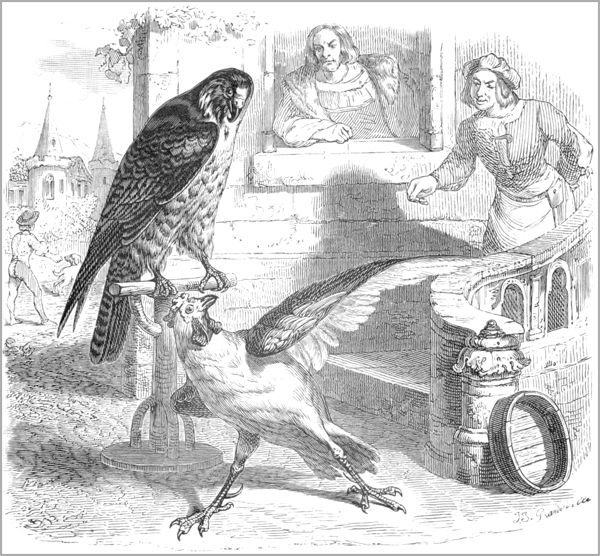
Attention : il ne s’agit pas d’une traduction mot à mot, mais des deux versions présentées côte à côte : Les Fables de La Fontaine et Fables of La Fontaine
Le Faucon et le Chapon
Une traîtresse voix bien souvent nous appelle;
Ne vous pressez donc nullement:
Ce n’était pas un sot, non, non, et croyez-m’en,
Que le chien de Jean de Nivelle.
Un citoyen du Mans, chapon de son métier,
Était sommé de comparaître
Par-devant les lares du maître,
Au pied d’un tribunal que nous nommons foyer.
Tous les gens lui criaient, pour déguiser la chose:
Petit, petit, petit! mais, loin de s’y fier,
Le Normand et demi laissait les gens crier.
Serviteur, disait-il; votre appât est grossier.
On ne m’y tient pas, et pour cause.
Cependant un faucon sur sa perche voyait
Notre Manceau qui s’enfuyait.
Les chapons ont en nous fort peu de confiance,
Soit instinct, soit expérience.
Celui-ci, qui ne fut qu’avec peine attrapé,
Devait, le lendemain, être d’un grand soupé,
Fort à l’aise en un plat, honneur dont la volaille
Se serait passée aisément.
L’oiseau chasseur lui dit: Ton peu d’entendement
Me rend tout étonné. Vous n’êtes que racaille,
Gens grossiers, sans esprit, à qui l’on n’apprend rien.
Pour moi, je sais chasser et revenir au maître.
Le vois-tu pas à la fenêtre?
Il t’attend: es-tu sourd? Je n’entends que trop bien,
Repartit le chapon; mais que me veut-il dire?
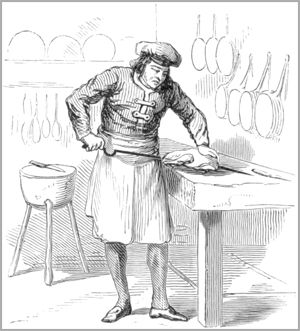
Et ce beau cuisinier armé d’un grand couteau?
Reviendrais-tu pour cet appeau?
Laisse-moi fuir; cesse de rire
De l’indocilité qui me fait envoler
Lorsque d’un ton si doux on s’en vient m’appeler.
Si tu voyais mettre à la broche
Tous les jours autant de faucons
Que j’y vois mettre de chapons,
Tu ne me ferois pas un semblable reproche.
The Falcon And The Capon
You often hear a sweet seductive call:
If wise, you haste towards it not at all;–
And, if you heed my apologue,
You act like John de Nivelle’s dog.
A capon, citizen of Mans,
Was summon’d from a throng
To answer to the village squire,
Before tribunal call’d the fire.
The matter to disguise
The kitchen sheriff wise
Cried, ‘Biddy–Biddy–Biddy!–‘
But not a moment did he–
This Norman and a half–
The smooth official trust.
‘Your bait,’ said he, ‘is dust,
And I’m too old for chaff.’
Meantime, a falcon, on his perch,
Observed the flight and search.
In man, by instinct or experience,
The capons have so little confidence,
That this was not without much trouble caught,
Though for a splendid supper sought.
To lie, the morrow night,
In brilliant candle-light,
Supinely on a dish
‘Midst viands, fowl, and fish,
With all the ease that heart could wish–
This honour, from his master kind,
The fowl would gladly have declined.
Outcried the bird of chase,
As in the weeds he eyed the skulker’s face,
‘Why, what a stupid, blockhead race!–
Such witless, brainless fools
Might well defy the schools.
For me, I understand
To chase at word
The swiftest bird,
Aloft, o’er sea or land;
At slightest beck,
Returning quick
To perch upon my master’s hand.
There, at his window he appears–
He waits thee–hasten–hast no ears?’
‘Ah! that I have,’ the fowl replied;
‘But what from master might betide?
Or cook, with cleaver at his side?
Return you may for such a call,
But let me fly their fatal hall;
And spare your mirth at my expense:
Whate’er I lack, ’tis not the sense
To know that all this sweet-toned breath
Is spent to lure me to my death.
If you had seen upon the spit
As many of the falcons roast
As I have of the capon host,
You would, not thus reproach my wit.’
| If you liked this site, subscribe , put likes, write comments! Share on social networks |
© 2026 Akirill.com – All Rights Reserved

