Découvrez le tableau “L’inconnue” d’Ivan Nikolaïevitch Kramskoï

Livres bilinguesRead in EnglishNous contacter
Littérature américaineLittérature françaiseLittérature russe

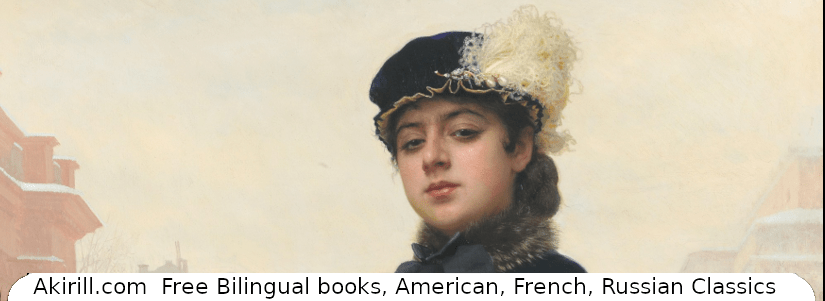
Ivan Nikolaïevitch Kramskoï (Иван Николаевич Крамской), artiste russe de renom connu pour son travail exceptionnel au cours de la seconde moitié du XIXe siècle, est crédité de la création de nombreux portraits et toiles historiques remarquables. L’une de ses peintures remarquables, intitulée «L’Inconnue» ( Неизвестная ), a été réalisée en 1883 et se trouve dans la prestigieuse collection de la Galerie nationale Tretiakov. Cette pièce mesurant 75,5 × 99 cm est largement considérée comme l’une des œuvres les plus significatives et les plus renommées d’Ivan Kramskoï. En donnant à la toile un tel nom, l’artiste l’a enveloppée d’un air de mystère et de fascination. Idéologiquement et artistiquement, le contenu de l’image « L’Inconnue » a permis à l’artiste de produire une œuvre à cheval entre un portrait et une peinture thématique. Il convient de noter que ce portrait est souvent appelé à tort «  L’étrangère  » en raison du poème du même nom d’Alexandre Blok. 


Cette œuvre d’art extraordinaire, communément appelée « L’inconnue » ou « L’Étrangere », a fait sa première apparition à Saint-Pétersbourg en 1883 lors de la 11e exposition des Peredvizhniki, organisée à l’Académie impériale des sciences. Son introduction a eu un impact profond sur tous ceux qui ont regardé le tableau.

Cette pièce représente une femme qui défie les normes sociétales. Kramskoï illustre l’émergence d’un sens distinct de soi chez une femme de son temps. Elle regarde les autres avec confiance et directement, affichant une forte estime de soi, même si sa dignité reste méconnue des autres.


Qui est représenté sur la toile ?


Sketch from the private collection of Dusan Friedrich
Croquis de la collection privée de Dusan Friedrich

Il existe plusieurs théories concernant l’identité du sujet représenté dans le tableau « L’inconnue » d’Ivan Kramskoï, chacune soutenue par des interprétations diverses. Malgré l’absence d’explications définitives fournies par l’artiste lui-même, de nombreux historiens de l’art ont avancé diverses possibilités. Certains affirment que le tableau aurait pu être inspiré par le personnage d’« Anna Karénine » de Léon Tolstoï, tandis que d’autres proposent un lien avec le roman « L’Idiot » de Fiodor Dostoïevski.


De plus, la ressemblance du personnage représenté avec la nièce de Kramskoï ainsi qu’avec sa fille a conduit à d’autres spéculations. Cependant, l’idée selon laquelle Kramskoï représente sa propre fille d’une manière aussi controversée soulève des questions sur les intentions d’un père aimant.

Il existe une légende non confirmée suggérant que le prototype du sujet féminin du tableau était Matryona Savvishna, une paysanne de Koursk qui aurait épousé un noble nommé Bestuzhev (dont le prénom n’est pas précisé, ce qui ajoute au caractère légendaire du conte). Kramskoï l’aurait rencontrée à Saint-Pétersbourg et aurait été séduit par sa beauté. Néanmoins, dans la collection privée de Dušan Friedrich à Prague, il existe un croquis représentant la même femme, probablement de manière plus authentique.
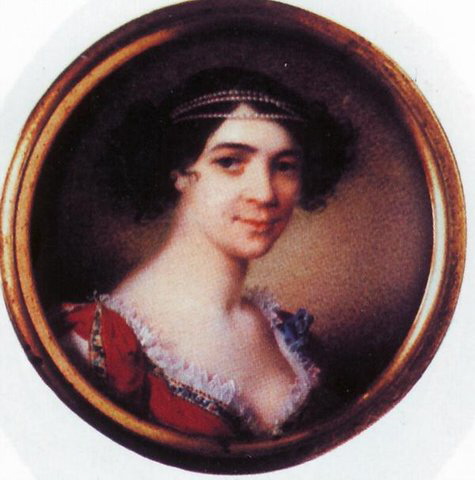

Varvara Turkestanova

Il pourrait également s’agir de la demoiselle d’honneur de l’impératrice, une princesse géorgienne connue pour sa beauté et son intelligence, ainsi que pour son destin tragique. Son allure a captivé l’empereur Alexandre Ier et le prince Golitsyne, conduisant à des relations amoureuses avec les deux hommes. Après avoir donné naissance à une fille dont la paternité restait incertaine, Varvara Turkestanishvili ou Turkestanova s’est suicidée.

Cette histoire poignante a profondément ému Kramskoï, qui, après avoir rencontré un camée à l’effigie de Varvara, s’est senti obligé de l’immortaliser dans sa peinture.

Certains chercheurs affirment que son sujet était une jeune femme géorgienne. D’autres affirment que l’œuvre représente une femme Lezgin de Kusara.


Princesse Ekaterina Mikhaïlovna Dolgoroukova
Princesse Ekaterina Mikhaïlovna Dolgoroukova

De plus, la mention de la princesse Ekaterina Mikhaïlovna Dolgoroukova comme prototype potentiel de la femme énigmatique du tableau ajoute une autre couche de complexité. Malgré la suggestion selon laquelle Kramskoï avait l’intention de peindre son portrait, le manque de ressemblance dans les photographies existantes de la princesse remet en question cette théorie. En conséquence, l’incertitude entoure la véritable identité de la femme dans « L’inconnue », obligeant les amateurs d’art à continuer de réfléchir sur ce mystère captivant.

Composition


Kramskoï -  L'inconnue
Kramskoï – L’inconnue

Le tableau représente une jeune femme voyageant dans une calèche découverte le long de la perspective Nevski, derrière elle se trouve le palais Anitchkov et quelque part se trouve le pont Anitchkov. À sa droite se trouve le théâtre Alexandrinsky. De plus, on peut observer l’air glacial et un léger brouillard légèrement rosé, qui « adoucit » délicatement les contours des bâtiments en arrière-plan. L’artiste a habilement capturé une journée d’hiver à Saint-Pétersbourg.

Cela a provoqué une indignation généralisée car, selon les normes sociales de l’époque, il était jugé inapproprié pour une jeune femme issue d’une société respectable de voyager seule dans une calèche dans les rues. La jeune femme, pleine de charme et d’assurance, non seulement s’assoit fièrement seule dans le carrosse, mais s’y assoit confortablement, se comportant comme si elle recevait des visiteurs dans son propre salon. Son attitude semble arrogante, comme si elle affirmait sa supériorité. Un tel comportement n’était pas toléré pour les femmes de la classe supérieure, ce qui a conduit à une opposition au tableau, notamment de la part de Pavel Tretiakov.


L'inconnue - Extract Woman
L’inconnue – Extract Woman

La jeune femme assise dégage une beauté remarquable, avec des traits délicats, légèrement plus foncés, agrémentés d’un doux rougissement. Son apparence est étonnamment peu conventionnelle pour la Russie, ressemblant davantage à celle d’une femme orientale. Elle possède des traits fins et élégants, accentués par des lèvres pulpeuses et expressives, des sourcils foncés et de grands yeux noirs encadrés de cils luxueux, rappelant un personnage des contes des Mille et Une Nuits.


L'inconnue - extract woman
L’inconnue Woman- extract woman

Elle est habillée à la dernière mode des années 1880. Sa tenue vestimentaire, comprenant un manteau Skobelev orné de fourrure de zibeline et de rubans de satin bleu, ainsi que des gants et un manchon en fourrure confectionnés en cuir fin, annoncent tous ostensiblement sa richesse considérable. Ceci est encore souligné par le remarquable bracelet en or qui orne son poignet, un bijou qui vaut à lui seul une petite fortune. En résumé, la jeune femme incarne la quintessence de la mode, du style et de la beauté.

Il n’est pas surprenant que les spectateurs aient tendance à la percevoir non pas comme une femme de la haute société, mais plutôt comme la maîtresse d’un homme riche, ou simplement comme une courtisane. En effet, les aristocrates héréditaires authentiques de cette époque présentaient une apparence sensiblement différente. Dans les cercles aristocratiques de cette époque, il était d’usage d’adhérer aux valeurs traditionnelles. Les vraies femmes nobles ne pouvaient justifier des dépenses substantielles pour des vêtements somptueux, encore moins pour des bijoux. Par conséquent, un style qui distinguait les véritables membres de la classe supérieure est devenu prédominant. Ce qui était considéré comme « élégant » pour eux était la modestie, la discrétion et la retenue. Ils ont délibérément voulu rester un peu à la traîne des dernières tendances, même s’ils avaient les moyens de les acquérir. Quant aux bijoux extravagants, l’étiquette imposait qu’ils soient réduits au minimum. Afficher l’opulence était secrètement considéré comme mal élevé.


En 2013, ils ont installé cette superbe sculpture 3D d’un tableau d’Alexandre Taratynov dans la cour des écuries de Tsarskoïe Selo dans le cadre du projet « Peinture en 3D ». C’est génial n’est-ce pas ?


Nous mettons beaucoup d’efforts dans la qualité des articles et traductions, soutenez-nous avec un like et un abonnement ou sponsorisez-nous si vous les aimez. Nous sommes aussi sur Facebook et Twitter

Découvrez nos Derniers Posts


© 2024 Akirill.com – All Rights Reserved
Discover the painting “Portrait of an Unknown Woman” by Ivan Nikolaevich Kramskoi

Bilingual booksLire en FrançaisContact us
American LiteratureFrench LiteratureRussian Literature

The renowned Russian artist known for his exceptional work during the latter half of the 19th century, Ivan Kramskoi (Иван Николаевич Крамской), is credited with creating numerous remarkable portraits and historical canvases. One of his notable paintings, titled “Portrait of an Unknown Woman,” (Неизвестная) was crafted in 1883 and is housed in the esteemed collection of the State Tretyakov Gallery. This piece measuring 75.5×99 cm is widely regarded as one of Ivan Kramskoi’s most significant and renowned works. By bestowing the canvas with such a name, the artist enveloped it in an air of mystery and fascination. Ideologically and artistically, the content of the “Portrait of an Unknown Woman” image allowed the artist to produce a piece that straddled the line between a portrait and a thematic painting. It should be noted that this portrait is often mistakenly called ” Stranger ” in Russian due to the poem of the same name by Alexander Blok . In English this portrait is also called the Unknown Woman, An Unknown Lady or Stranger


The extraordinary artwork, commonly referred to as “Portrait of an Unknown Woman” or “Stranger,” made its first appearance in St. Petersburg in 1883 at the 11th exhibition of the Peredvizhniki, hosted at the Imperial Academy of Sciences. Its introduction had a profound impact on all who gazed upon the painting.

This piece depicts a woman who defies societal norms. Kramskoi illustrates the emergence of a distinct sense of self in a woman of his time. She confidently and directly gazes at others, displaying a strong sense of self-worth, even if her dignity remains unacknowledged by others.


Who is shown in the canvas?


Sketch from the private collection of Dusan Friedrich

There exist several theories concerning the identity of the subject depicted in Ivan Kramskoi’s painting “Portrait of an Unknown Woman”, each supported by diverse interpretations. Despite the absence of definitive explanations provided by the artist himself, numerous art historians have put forward various possibilities. Some argue that the painting could have been inspired by the character from Leo Tolstoy’s “Anna Karenina”, while others propose a connection to Fyodor Dostoevsky’s novel “The Idiot”.


Additionally, the resemblance of the depicted figure to Kramskoi’s niece as well as his daughter has led to further speculations. However, the notion of Kramskoi portraying his own daughter in such a controversial manner raises questions about a loving father’s intentions.

There exists an unconfirmed legend suggesting that the prototype for the female subject in the painting was Matryona Savvishna, a peasant girl from Kursk who allegedly married a nobleman named Bestuzhev (whose first name is unspecified, adding to the legendary nature of the tale). Kramskoi reportedly encountered her in St. Petersburg and was enamored by her beauty. Nonetheless, in the private collection of Dušan Friedrich in Prague, there is a sketch portraying the same woman, presumably in a more authentic manner.


Varvara Turkestanova

It could also have been the maid of honor to the Empress, a Georgian princess, who was known for her beauty and intellect, as well as her tragic fate. Her allure captivated Emperor Alexander I and Prince Golitsyn, leading to romantic entanglements with both men. After giving birth to a daughter whose paternity remained uncertain, Varvara Turkestanishvili or Turkestanova took her own life.

This poignant tale deeply moved Kramskoi, who, upon encountering a cameo bearing Varvara’s likeness, felt compelled to immortalize her in his painting.

Some scholars assert that his subject was a young Georgian woman, there are alternative claims suggesting that the artwork portrays a Lezgin woman from Kusara.


Princess Catherine Dolgorukova

Furthermore, the mention of Princess Catherine Dolgorukova as a potential prototype for the enigmatic woman in the painting adds another layer of complexity. Despite the suggestion that Kramskoi intended to paint her portrait, the lack of resemblance in existing photographs of the princess challenges this theory. As a result, uncertainty shrouds the true identity of the woman in “Portrait of an Unknown Woman”, compelling art enthusiasts to continue pondering over this captivating mystery.

Composition


Kramskoy Portrait of a Woman
Kramskoi Portrait of a Woman

The painting depicts a young woman journeying in an open carriage along Nevsky Prospect, , behind her is the Anichkov Palace, and somewhere there is the Anichkov Bridge. Positioned to her right, is the Alexandrinsky Theater. Moreover, one can observe the frosty air and a gentle, slightly pinkish fog, which delicately “softens” the outlines of the buildings in the background. The artist adeptly captured a winter day in St. Petersburg.

This caused widespread outrage as, according to the social norms of the time, it was deemed inappropriate for a young woman from respectable society to travel alone in a carriage along the streets. The young woman, exuding charm and confidence, not only sits proudly in the carriage alone but also reclines comfortably, carrying herself as if she were receiving visitors in her own salon. Her demeanor appears arrogant, as if she is asserting her superiority. Such behavior was not condoned for ladies of the upper class, leading to opposition against the painting, including from Pavel Tretyakov.


Portrait of an Unknown Woman - Extract Woman
Portrait of an Unknown Woman – Extract Woman

The young woman seated exudes remarkable beauty, with delicate, slightly darker features graced by a gentle blush. Her appearance is strikingly unconventional for Russia, resembling more closely that of an oriental woman. She possesses slender and elegant features, accentuated by luscious, expressive lips, dark eyebrows, and large black eyes framed by luxurious lashes, reminiscent of a character from the Arabian Nights tales.


Portrait of an Unknown Woman - extract woman
Portrait of an Unknown Woman- extract woman

She is dressed in the latest fashions from the 1880s. Her attire, including a Skobelev coat adorned with sable fur and blue satin ribbons, as well as gloves and a fur muff crafted from fine leather, all conspicuously announce her considerable wealth. This is further underscored by the prominent gold bracelet adorning her wrist, a piece of jewelry alone worth a small fortune. In summary, the young woman embodies the epitome of fashion, style, and beauty.

It is hardly surprising that onlookers were inclined to perceive her not as a woman of high society, but rather as the mistress of a wealthy man, or simply as a courtesan. Indeed, authentic hereditary aristocrats of that time presented a noticeably different appearance. In the aristocratic circles of that era, it was customary to adhere to traditional values. True noblewomen could not justify substantial expenditures on lavish attire, let alone on jewelry. Hence, a style that set apart genuine members of the upper class became prevalent. What was considered “stylish” for them was modesty, discretion, and restraint. They deliberately aimed to lag somewhat behind the latest trends, even if they had the means to acquire them. As for extravagant jewelry, etiquette dictated that it should be kept to a minimum. Flaunting opulence was covertly deemed ill-mannered.


In 2013, they set up this cool 3D sculpture of a painting by Alexander Taratynov in the courtyard of the Tsarskoye Selo Duty Stables as part of the “Painting in 3D” project. How awesome is that?


We put a lot of effort into the quality of the articles and translations, support us with a like and a subscription or sponsor us if you like them. We are also on Facebook and Twitter

Check out our Last Posts


© 2024 Akirill.com – All Rights Reserved
Lisez le poème “L’Étrangère” d’Alexandre Blok en français avec français et russe côte à côte

Livres bilinguesRead in EnglishNous contacter
Littérature américaineLittérature françaiseLittérature russe

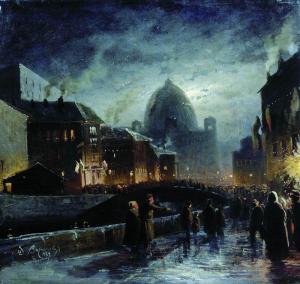
Chers lecteurs et abonnés, cette semaine j’ai fait une brève analyse et traduit le poème « L’Étrangère » d’Alexander Blok écrit en 1906 et qui reflète ses sentiments et réflexions pendant une période difficile. Comme toujours j’ai ajouté une peinture intitulée « Illumination à Saint-Pétersbourg » de Fiodor Vassiliev ainsi que l’explication de quelques mots.

Depuis que j’écris en anglais, français et russe j’ai également créé une page où vous pouvez retrouver le nom de tous les écrivains et peintres russes qui sont sur le site dans les 3 langues côte à côte. J’ajouterai les écrivains et artistes français et américains un peu plus tard.

Alors prenez un bon café et savourez, l’intégralité du poème est comme toujours en accès libre avec un lien vers la page en bas de notre petit extrait.


Brève analyse du poème “L’Étrangère” d’Alexandre Blok

Alexander Blok a écrit le poème « L’étrangère » après que sa femme l’ai quitté, le laissant écrasé par le désespoir et passant des journées entières à boire de façon excessive dans des établissements sales et bon marché. Le poème reflète les sentiments et les réflexions de l’auteur lors de moments difficiles pour lui-même et sa tentative de trouver une issue à sa mauvaise situation.

Dans ce poème, l’auteur décrit l’atmosphère sombre d’un restaurant sale où rien ne change et où la monotonie et l’absurdité vous rendent fou. Mais nous espérons la délivrance de notre héros lyrique sous la forme d’un mystérieux étranger. Cette femme qui passe entre les rangs des ivrognes vient d’un monde pur et lumineux et en la regardant et en sentant son parfum, le poète comprend l’horreur de sa situation et dans ses rêves, il s’envole et commence une nouvelle vie.

La fin du poème est ambiguë et peut être interprétée de deux manières différentes. Il se peut qu’il n’était pas comme les ivrognes qui l’entouraient et qu’il se soit rendu compte qu’il possédait encore un « trésor spirituel » dont il avait le droit de disposer, ou qu’il aurait pu simplement s’agir d’un délire d’ivrogne suivi d’une grave gueule de bois.

Peinture “Illumination de Saint-Pétersbourg” par Fiodor Vassiliev


Explication de quelques mots

дик: court masculin singulier de  ди́кий (sauvage)

Уклю́чина
Dame de nage

Traduction du poème “L’Étrangère” d’Alexandre Blok en français avec français et russe côte à côte

Незнакомка – Александр БлокL’étrangère – Alexander Blok
Traduit par Akirill.com
09/17/2023
По вечерам над ресторанамиLe soir au dessus des restaurants
Горячий воздух дик и глух,L’air chaud est sauvage et sourd,
И правит окриками пьянымиEt règne sur les cris des ivrognes
Весенний и тлетворный дух.L’esprit printanier et pernicieux.
Вдали над пылью переулочной,Bien au-dessus de la poussière de l’allée,
Над скукой загородных дач,Au-dessus de l’ennui des maisons de campagne,
Чуть золотится крендель булочной,Le bretzel de la boulangerie est légèrement doré,
И раздается детский плач.Et le cri d’un enfant se fait entendre.d.
Читать далее …Continuer la lecture …

Nous mettons beaucoup d’efforts dans la qualité des articles et traductions, soutenez-nous avec un like et un abonnement ou sponsorisez-nous si vous les aimez. Nous sommes aussi sur Facebook et Twitter


Découvrez nos Derniers Posts


© 2023 Akirill.com – All Rights Reserved

Read the poem “Stranger” by Alexander Blok in English with English and Russian side by side

Bilingual booksLire en FrançaisContact us
American LiteratureFrench LiteratureRussian Literature

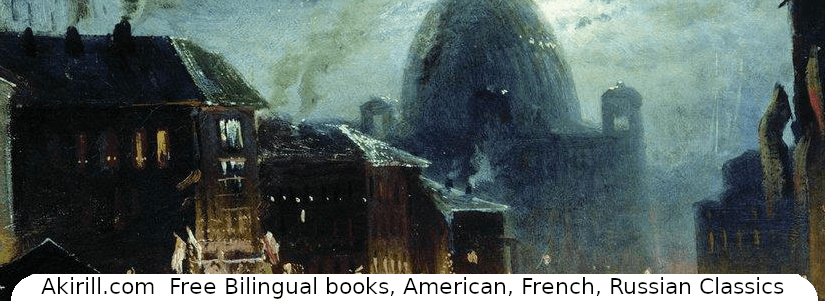
Dears Readers and subscribers, this week I made a short analysis and translated the poem “Stranger” by Alexander Blok written in 1906 and which reflects the author’s feelings and reflections during hard time. As always I added a painting called “Illumination in St. Petersburg” by Fyodor Vasilyev as well as the explanation of a few words.

Since I have been writing in English, French and Russian I also created a page where you can find the name of all Russian writers and painters who are on the site in the 3 languages next to each other. I will add the French and Americain writers and artist a bit later.

So have a nice cup of coffee and enjoy, the entire poem as always is freely accessible with a link to the page at the bottom of our little extract.


Short analysis of the poem “Stranger” by Alexander Blok

Alexander Blok wrote the poem “Stranger” after his wife left him causing him to be crushed by despair and spending whole days of binge drinking in dirty and cheap establishments. It reflects the author’s feelings and reflections during hard time for himself and an attempt to find a way out of his bad situation.

In this poem the author describes the gloomy atmosphere of a dirty restaurant. where nothing changes and the monotony and meaninglessness drives you crazy. But hope for deliverance to our lyrical hero in the form of a mysterious stranger. This woman passing between the drunken rows comes from a pure and bright world and looking at her and smelling her perfume, the poet understands the horror of his situation and in his dreams, he flies away and begins a new life.

The ending of the poem is ambiguous and can be interpreted in two different manners. It can be that he was not like the drunks around him and realized that he still had a “spiritual treasure” that he had the right to dispose of, or it could have simply be a drunken delirium followed by a severe hangover

Painting “Illumination in St. Petersburg” by Fyodor Vasilyev

Illumination in St. Petersburg by Fyodor Vasilyev

Explanation of a few words

дик: short masculine singular of ди́кий (wild)

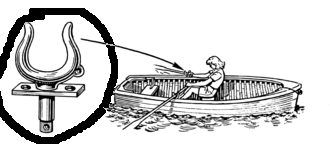
Уклю́чина
Oarlock


Translation of the poem “Stranger” by Alexander Blok in English with English and Russian side by side

Незнакомка – Александр БлокStranger – Alexander Blok
Translated by Akirill.com
09/17/2023
По вечерам над ресторанамиIn the evenings above the restaurants
Горячий воздух дик и глух,The hot air is wild and deaf,
И правит окриками пьянымиAnd rules on the drunken shouts
Весенний и тлетворный дух.The spirit of spring and perniciousness.
Вдали над пылью переулочной,Far above the dust of the alley,
Над скукой загородных дач,Above the boredom of country houses,
Чуть золотится крендель булочной,The bakery’s pretzel is slightly golden,
И раздается детский плач.And a child’s cry is heard.
Читать далее …Continue reading …

We put a lot of effort into the quality of the articles and translations, support us with a like and a subscription or sponsor us if you like them. We are also on Facebook and Twitter


Check out our Last Posts


© 2023 Akirill.com – All Rights Reserved