

“The Man Who Laughs” is a political, philosophical, historical and poetic novel by Victor Hugo published in 1869.

When Victor Hugo was asked why he wrote “The Man Who Laughs”, he replied that as a philosopher, he wanted to affirm the soul and conscience, as a historian, he wanted to reveal little known monarchical facts and inform about democracy, and as a poet, he wanted to make a drama.

“The Laughing Man” has been represented many times at the theater, but also in several films, including the last, with Gérard Depardieu in the role of Ursus, in 2012. In addition, this novel has also been transformed into a French comic book twice, the last volume called “En Ruine” was released in 2011.
We also know that the tragicomic face of the Joker in the “Batman” comic book was inspired by Conrad Veidt seen in the first made film of “The Man Who Laughs” in 1928.
“The Man Who Laughs” tells the story of a mutilated little boy named Gwynplaine, who, while wandering in the woods, lost and abandoned, found a baby. He saved this little girl and was adopted by Ursus, a man who owned a bear skin and who himself had a wolf called Homo.
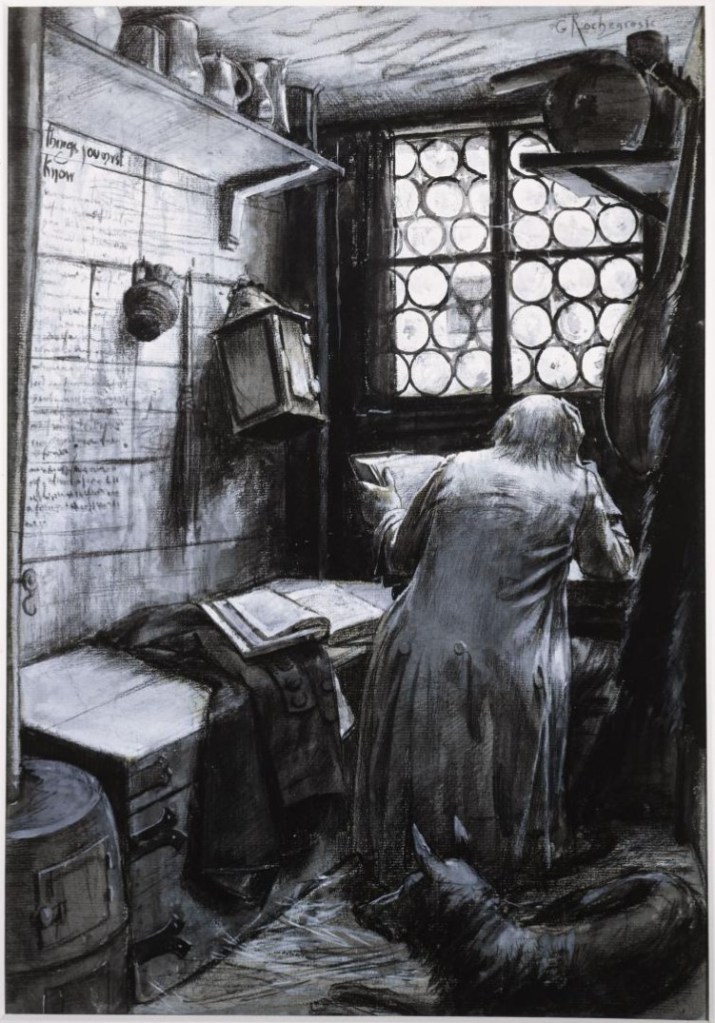
Fifteen years later, in 1705, Usus staged a play with his two children Gwynplaine and DEA. DEA is now a beautiful young girl of 16 and although blind, she formed a chaste couple with Gwynplaine.
It is at this time that the identity of Gwynplaine will be revealed. He is in fact Fermain Clancharlie, the real heir to the domain of the prairie, which was conceded to his half-brother David Dirry-Moir. He will regain possession of his domain for a very short period of time, not being able to bear living without an AED.
Meanwhile Ursus, who thinks Gwynplaine is dead, is driven out of London. Gwynplaine will only find him with a lot of luck, and with the help of their wolf Homo when Ursus and DEA were already on a boat ready to leave the country.

“The Laughing Man” has many allegories and metaphors. At the center of the novel is the description of the play that makes the success of the troupe. According to some, the piece represents the fight of man for democracy, for others it is a fight against chaos that will be won by light.
You can read it on our site in the Bilingual Book category.





 AKirill, Learn, apprenez, translation, traduction, livres bilingues, bilingual books