

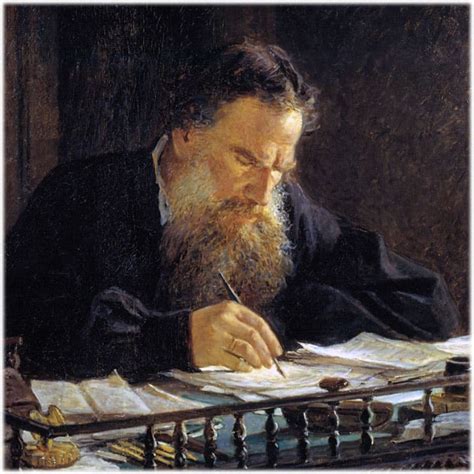
Count Leo Nikolayevich Tolstoy was born on August 28 (September 9), 1828 at his mother’s family estate, Yasnaya Polyana, in the Tula province of the Russian Empire. He comes from the noble family of Tolstoy, known since 1351.
Leo Nikolayevich is one of the greatest novelists in the world. He is called a master of psychology, and the creator of the epic novel genre. The writer had a strong influence on the evolution of European humanism, and on the development of realist traditions in world literature.
Tolstoy was excommunicated from the church because of his authoritarian views which caused the emergence of a new religious and moral current called Tolstoïsme.
The writer has received numerous Nobel Prizes for Literature and his works have been staged all over the world.
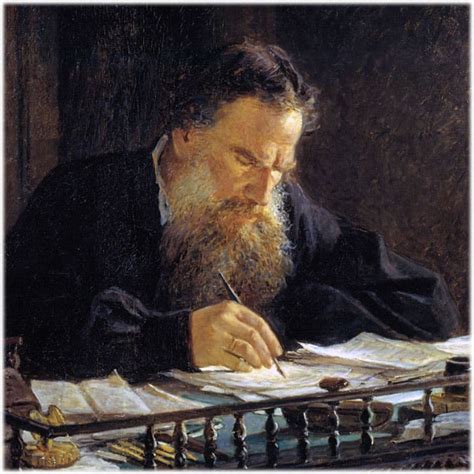
Leo Tolstoy was the fourth of 5 children. His mother died in 1830, six months after the birth of her daughter then, Leo Nikolayevich was not yet 2 years old. The education of the orphans was continued by a distant relative, T. A. Ergolskaya. His father Nikolai Ilich died in 1837 when Leo was 9 years old, and his aunt, Countess Alexandra Osten-Saken was appointed as the children’s guardian. After her death in 1840, another of his aunts, Pelegeya Yushkova who lived in Kazan took care of Leo Tolstoy, as well as his brothers and his sister Maria.
Tolstoy used to say that the Lushkovs’ house was considered one of the most cheerful in Kazan. Later he described those years in the autobiographical story “Childhood”
The writer received his primary education at home. He studied with a French tutor who became the prototype of Saint-Jérome in his book “Childhood”. After, he continued his studies with a German tutor portrayed as Karl Ivanovitch in the same book. Then, in 1844, he entered Kazan University, but only stayed for a year due to poor academic performance. Leo Tolstoy did not like studying, he considered exams a formality, and university professors incompetent. Leo Nikolayevich transferred to the Faculty of Law, where he passed the second year satisfactorily, although he preferred secular entertainment.
However, he became interested in French philosophical literature and without finishing that year, he left university. Then he embarked on self-learning.
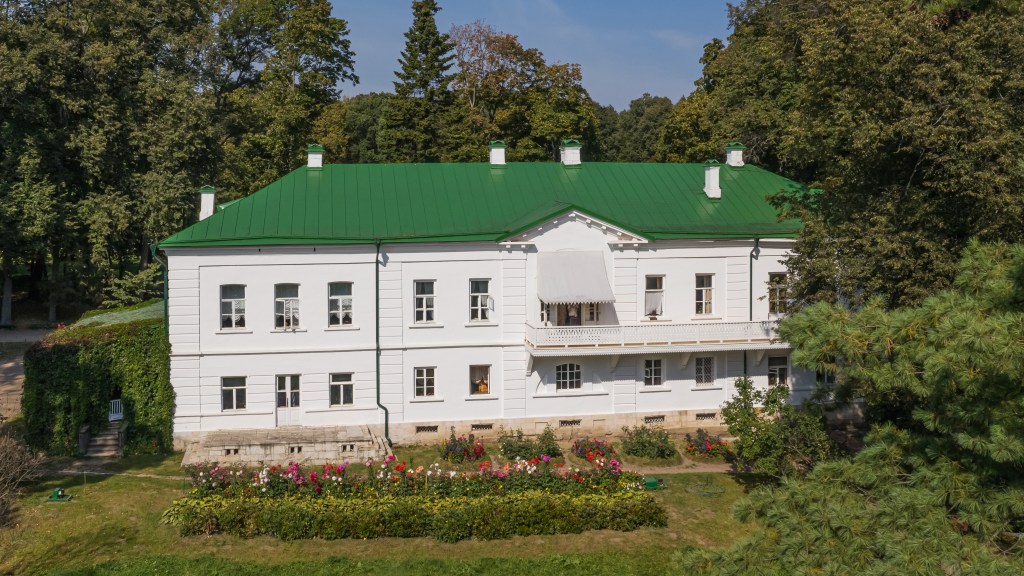
In 1847, following a short illness, he inherited and became responsible for the property of Yasnaya Polyana. He wanted to establish relations in a new way with the peasants and even opened a school for them. He partially described his activities in “The Landowner’s Morning”. It was also that same year that he began keeping a diary. In it, for example, we can read:
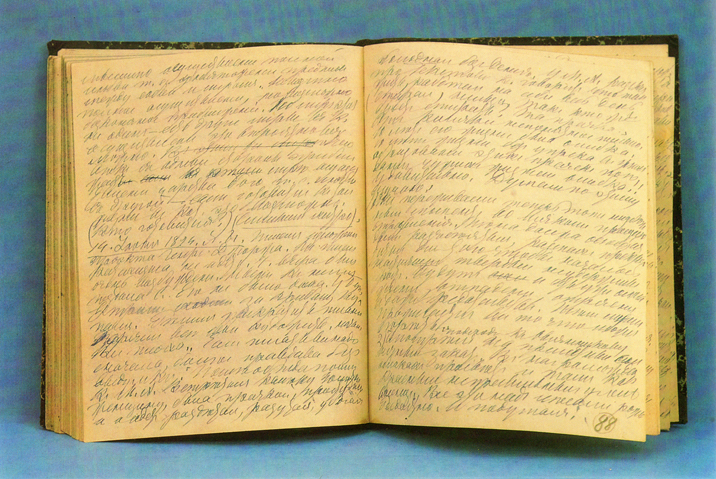
“March 21, 1855. Having done nothing. I received a letter from Masha, in which she describes to me her acquaintance with Turgenev. A sweet and glorious letter that lifted me up in my own opinion and moved me to action. »
He continued this diary throughout his life and used it to write his novels.
At the end of 1848, he moved to Moscow, then a year later to Saint Petersburg. In each city, he prepared to enter an university but did not go all the way, preferring to play cards, listen to music, or even play the piano. He was passionately interested in music. Bach, Handel, and Chopin were his favorites and he himself played the piano very well. He was so passionate about music that he wrote the “Kreutzer Sonata”

During the winter of 1850, he began to write “Childhood” and then “Yesterday Story”. In 1851, his older brother Nikolai, who was serving in the Caucasus, visited Leo who was back on his estate. He invited Leo to join the military service in the Caucasus. Leo Tolstoy did not accept immediately, but after financial difficulties due to his habit of playing cards he signed up.
He lived about 5 months in Pyatigorsk, in a simple hut while waiting for papers forgotten in Moscow. These were necessary for his admission into the army. During this time, he spent a significant part of his time hunting in the company of the Cossack Epishka, who in his book “The Cossacks” became the prototype of one of the heroes named Eroshka.
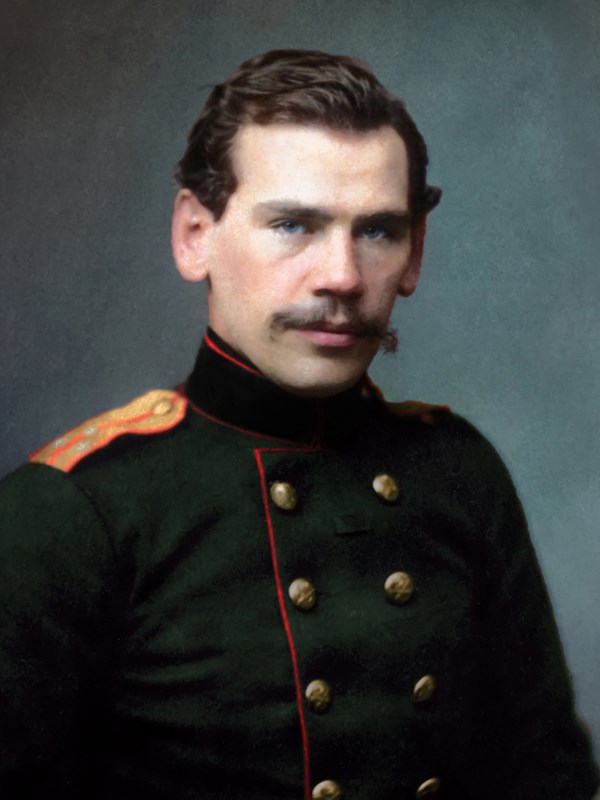
In 1851, after passing an examination in Tiflis, Tolstoy entered as a cadet in the 4th battery of the 20th artillery brigade. His battalion was stationed in the Cossack village of Starogladovskaya where he lived for 3 years. The Caucasian nature and the patriarchal life of the Casaque village was reflected in his novels ”Cossacks”, “Hadji Murad” as well as in “Raid” and “Cutting the Forest”
In July 1852 he sent the first part of his future autobiographical trilogy, “Childhood”, to the editors of the most popular magazine “Sovremennik” together with a letter which read:
… I look forward to your verdict. It will either encourage me to continue my favorite activities, or make me burn everything I started.
Nekrasov, Sovremennik’s publisher having immediately judged the literary value of Tolstoy’s book, wrote him a kind letter and published his novel in September of that same year. The novel “Childhood” was an extraordinary success.
At the same time, there were periodically battles with the mountaineers in the Caucasus, and Leo Tolstoy was rewarded and, received the Cross of St. George for courage shown in battle. He gave this medal to an ordinary soldier justifying his act by saying that this reward would give a simple person many advantages that he already had because of his origin.

At the end of 1853 he was transferred to the Danube army because of the outbreak of the Crimean War. He participated in the Battle of Oltenitsa and the Siege of Silistria. In 1854 his second novel “Teenager” was published.
From November 1854 to the end of August 1855, Leo Tolstoy was in Sevastopol. The writer despite all the difficulties of life and the horrors of the siege, at that time wrote the story “Cutting the Forest”, which reflected Caucasian impressions, as well as the first of three stories of Sevastopol.
He sent the short story, “Sevastopol in the month of December,” to his publisher, who published it quickly. Although Tolstoy was exceptionally candid in describing the battle scenes in the early history of Sevastopol, the story was deeply patriotic and glorified the bravery of Russian soldiers. This news was read by all of Russia with interest, making an astonishing impression of the horrors that befell the defenders of Sevastopol. This was noticed by Emperor Nicholas I, who ordered to take care of this gifted officer.
In his second story “Sevastopol in May” nothing remained of the pride of the Russian army. The shock and horror he experienced at the front influenced Tolstoy’s work, and this time he wrote about the meaninglessness of death and the inhumanity of war. The writer has also experimented with a relatively new technique and part of the story is presented as a narration from a soldier’s point of view.
For the defense of Sevastopol, Tolstoy received the Odre de Sainte-Anne 4th degree for courage, and four medals. On March 26, 1856, he was promoted to the rank of lieutenant.

Tolstoy was very well received in the salons of high society when he returned to Saint Petersburg. He became Turgenev’s close friend, and established friendly relations with such famous writers as Nekrasov, Goncharov, Panaev, and many more. It was a very prolific time, and he wrote “Snowstorm”, “Two Hussars”, “Sevastopol in August” and “Youth”. In addition, the writing of future “Cossacks” continued.
This joyous and eventful life left him with a bitter taste, and at the beginning of 1857, without any regret, he left Saint Petersburg and set off on a journey.
At the age of 29, Tolstoy undertook his first trip abroad. He first visited France. It took him 11 non-stop days to reach Paris. From the very first evening the writer was at a masked ball at the Grand Opera. Tolstoy moved into the famous Le Meurice hotel. He visited the Louvre and walked through the magnificent Luxembourg Gardens, but was horrified by the cult of Napoleon I. After a month and a half, he wrote to Turgenev,
“a lot of filth has grown in my soul…and the guillotine, and idleness, and vulgarity.”
Leo Nikolayevich left the capital of France in a hurry and went to Geneva where he stayed in a guesthouse on the shores of Lake Geneva for two months. He continued his journey in northern Italy and then went to Switzerland, to the city of Lucerne. Wherever he went, Tolstoy got acquainted with famous works of art, met artists, observed how people lived in European cities. His travels did not inspire Tolstoy. He was disappointed by the stark contrast between wealth and poverty, which he could see through the beautiful outer veil of European culture. Tolstoy describes his disappointment in his book “Lucerne”.
After returning to Yasnaya Polyana in 1857, Leo Nikolayevich continued to work on his book “Cossack”, and wrote “Three Deaths”, “The Joy of the Family”, then “Housekeeping”. In his diary, Tolstoy defined his purpose for himself thus:
“The main thing is literary works, then family obligations, then agriculture… And living for yourself is enough for one good deed a day.”
Two years later he founded a school for peasant children in Yasnaya Polyana. For this, he returned to Europe where he became interested in public education and institutions aimed at raising the level of education of the working population. With the help of conversations with specialists, he studied the problems of public education in Germany and France. On his return, he abolished all the rules of discipline and, in 1862, he began to publish the educational journal Yasnaya Polyana, then “ABC” and “New ABC” thereafter.
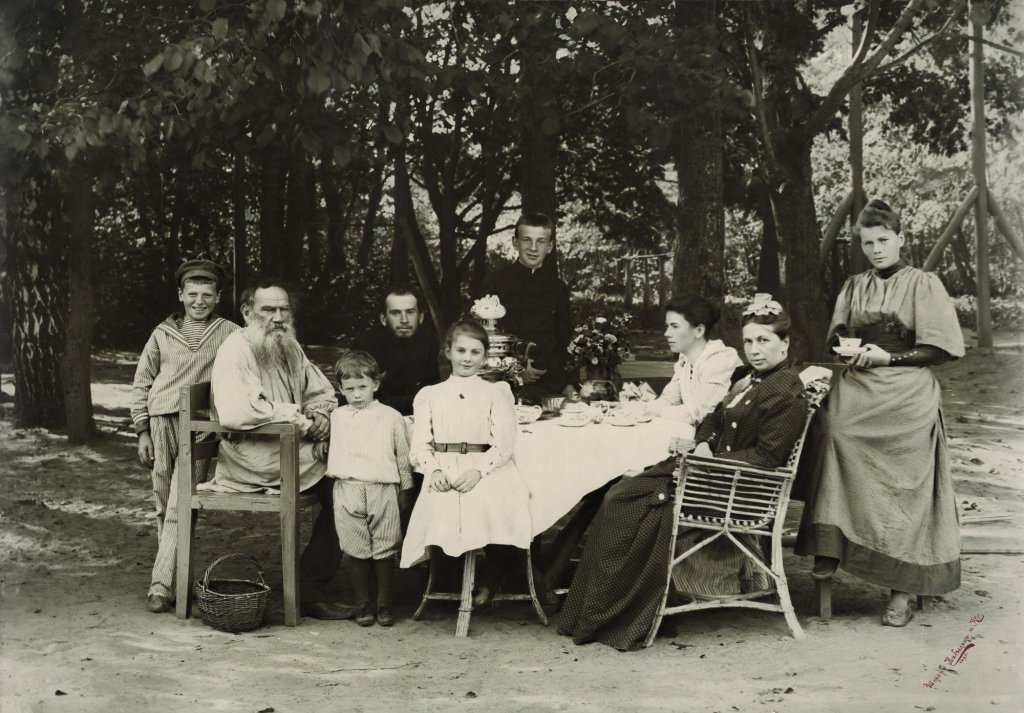
On September 23, 1862, at the age of 34 Leo Nikolayevich married Sofia Andreevna Bers who was 18 years old. Sofia was the second daughter of the doctor in the Moscow Palace Office whom he had first seen when she was still a child. They had 13 children together. His family loved music, which was often played at parties. Sometimes Leo and his wife played the piano with four hands. They had a very large library with nearly 23,000 books in different languages. In the evening everyone gathered in the great hall and Tolstoy read aloud Pushkin, Homer, but also Jules Vernes whose family was very fond of “Around the World in 80 Days”. They also played chess. Tolstoy enjoyed horse riding, which he did almost every day before dinner. The writer lived with Sofia until her death, although their marriage was not considered easy. Sofia found an issue from 1862 where her husband wrote:

“ I write from the village, I write and I hear the voice of my wife upstairs, who speaks with her brother and whom I love more than anything in the world. I lived to be 34 and I didn’t know it was possible to love and be so happy .
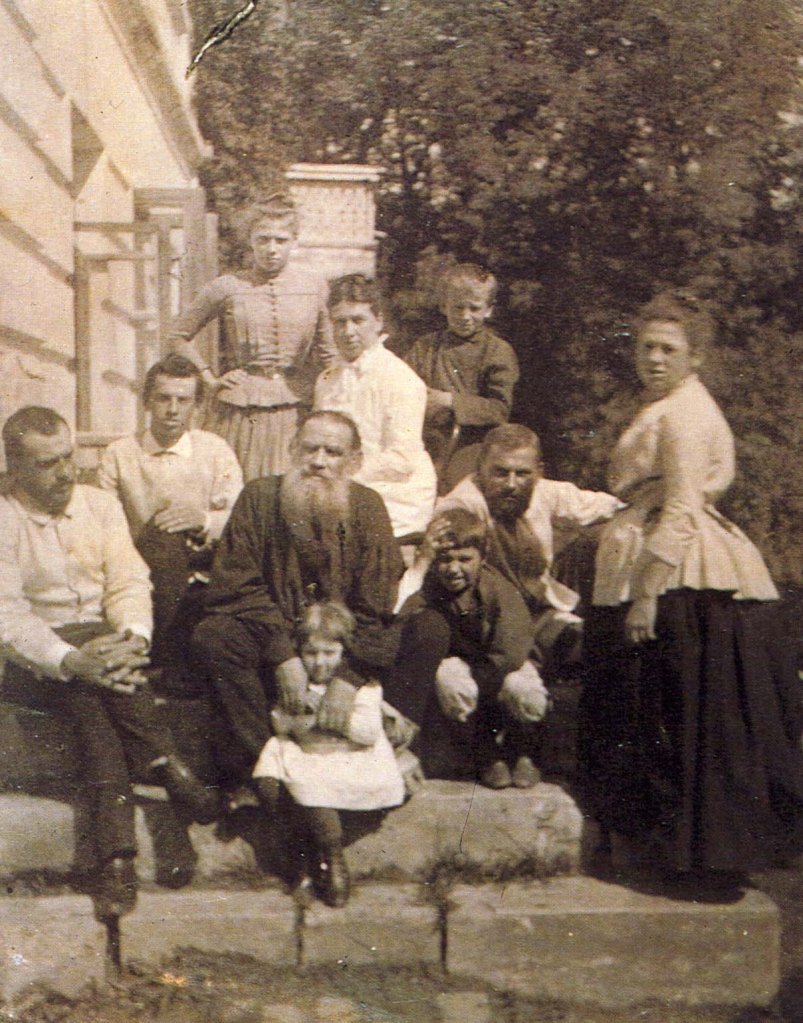
During this period of spiritual balance, Tolstoi began to work on “War and Peace”, based on events in Russian history. He completed this superb book in 1869, gaining astonishing fame. The writer was increasingly called the greatest Russian writer.
In the early 1870s, Tolstoy worried about social inequality, peasant poverty, and the intransigent Tsarist regime and disagreed with himself. He began to fall ill and, on the advice of his doctor, went to be cured with the treatment of kumis in the province of Samara. He liked the place so much, that he took his family there for a vacation and wrote “Anna Karenina” there.
In the 1880s, Tolstoy began to work on philosophical treatises in which, among other things, he rethought his life and his attitude towards religion. He wrote “Confession”, “What is my faith?” and “The Kingdom of God is within you…” Criticizing the dogmas of the Orthodox Church, he created his own version of the Gospel, removing from the scriptures what he disagreed with, like all stories of miracles and, he left only the words of Christ.
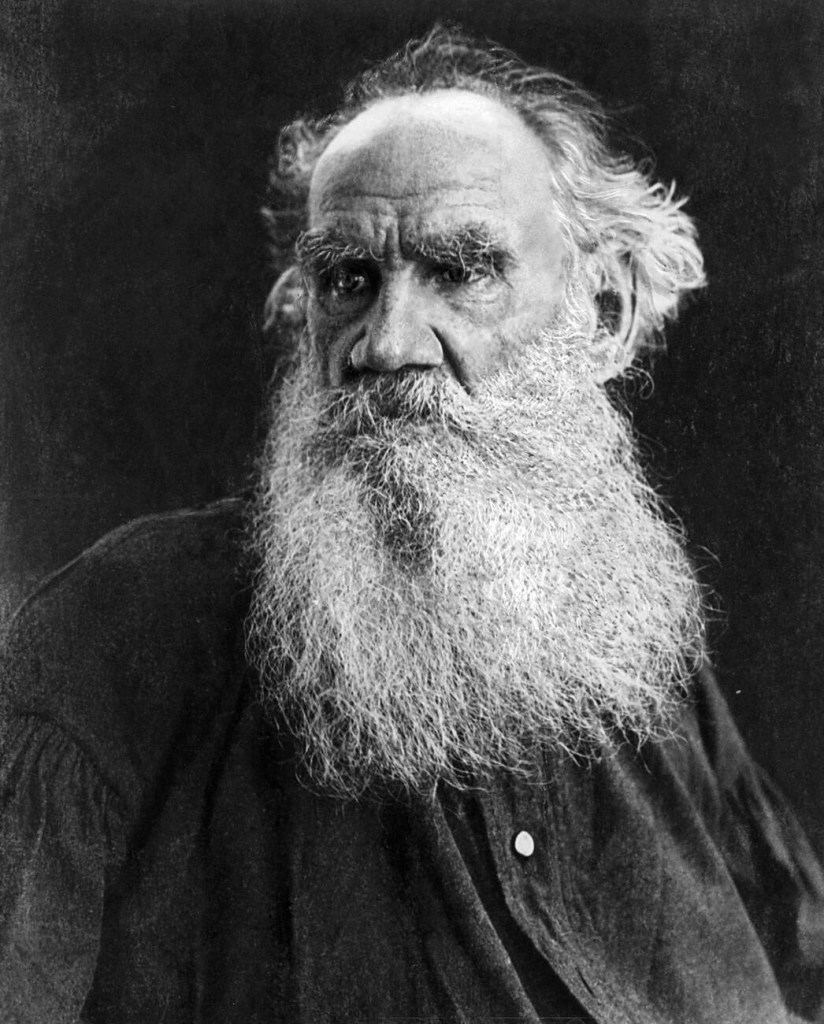
Under the influence of Tolstoy, the religious and ethical movement of Tolstoism was born. During this period he wrote “The Death of Ivan Ilyich”, a story about a righteous “Father Sergius”, a play about despair, “The Living Corpse”, and a story about tragic death, “Hadji Murad”.
In the 1880s, Leo Tolstoy also gave up meat and fish. His lunch usually consisted of soup, vegetables or dairy dishes. For dessert, fruit or pastries were served.
In 1901, the Holy Synod issued a decree excommunicating Count Leo Tolstoy after he wrote the novel “Resurrection,” in which he spoke scornfully of the very institution of the church. This decision only increased Tolstoy’s popularity and drew public attention to the writer’s ideals and beliefs.
During this period, Tolstoy’s family relations deteriorated because of his friendship with Vladimir Chertkov whom his wife called the devil.
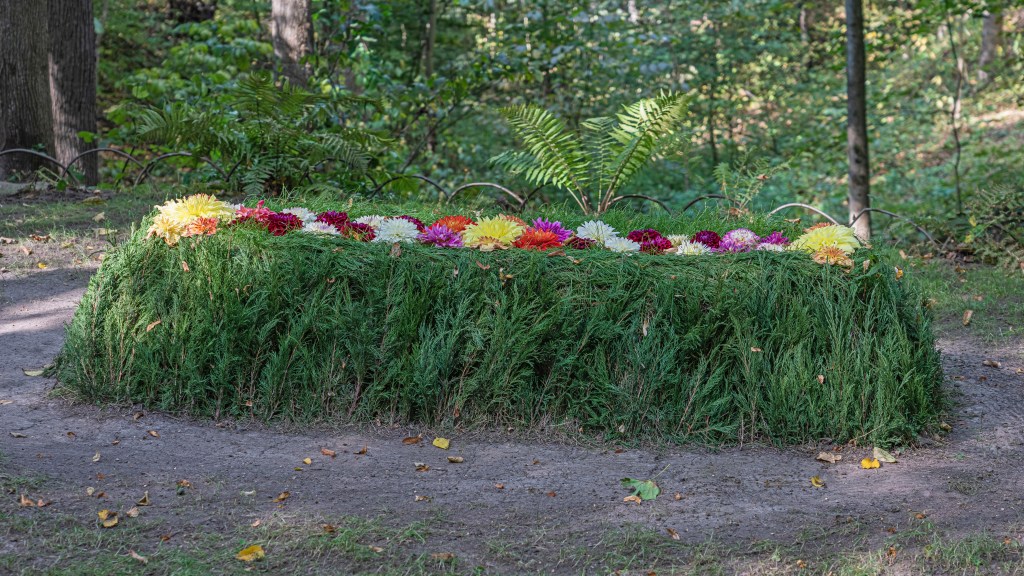
At the end of 1910 he attempted to bring his life into line with his beliefs, and in early November secretly left his estate. On the way, he fell seriously ill and was forced to stay with the Astapovo station guard. This is where the writer spent the last days of his life. Leo Nikolayevich Tolstoy died on November 7 (20), 1910. He was buried in Yasnaya Polyana.
If you want to read his beautiful books, visit our page: Russian Literature. News books will be added every now and then.
If you liked this article, don’t forget to like and share.
Subscribe to not miss anything
Sources:
Лев Николаевич Толстой – биография, новости, личная жизнь
Лев Толстой: “русские горки” великого старца




 AKirill, Learn, apprenez, translation, traduction, livres bilingues, bilingual books