On this site we hope to help you learn, and to remove the difficulties caused by the difference of culture and language. Sur ce site nous espérons vous aider à apprendre, et à enlever la barrière causée par les différents languages et cultures.
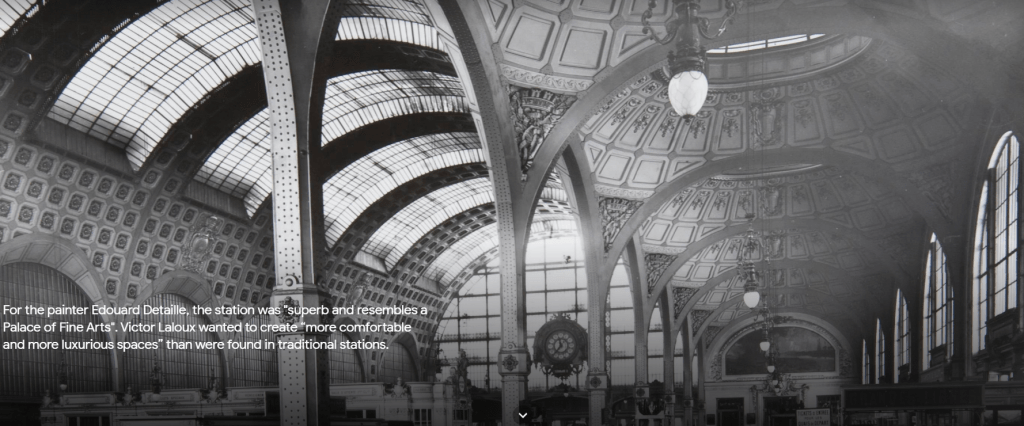
Another beautiful museum to visit virtually is the Musée d’Orsey. Did you know that the museum was in an old gare station? Also you can enjoy one of the world’s largest collections of European paintings and sculptures of the late nineteenth and early twentieth centuries which are exposed in this museum.
The peculiarity of the Musée d’Orsey is that the exhibits are arranged in chronological order instead of according to personalities which give us the feeling of visiting the past and seeing history as it is being written.
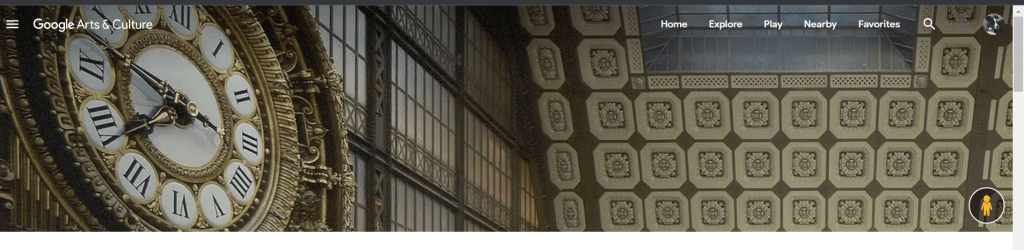
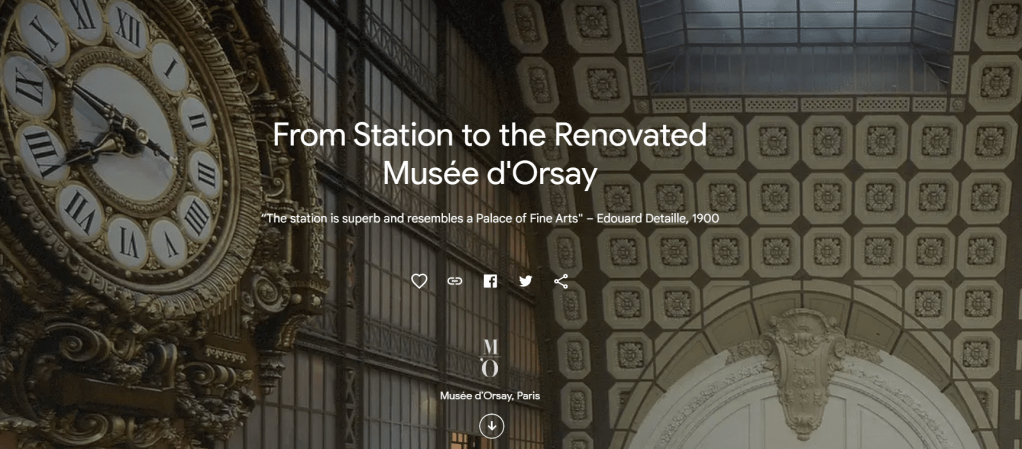
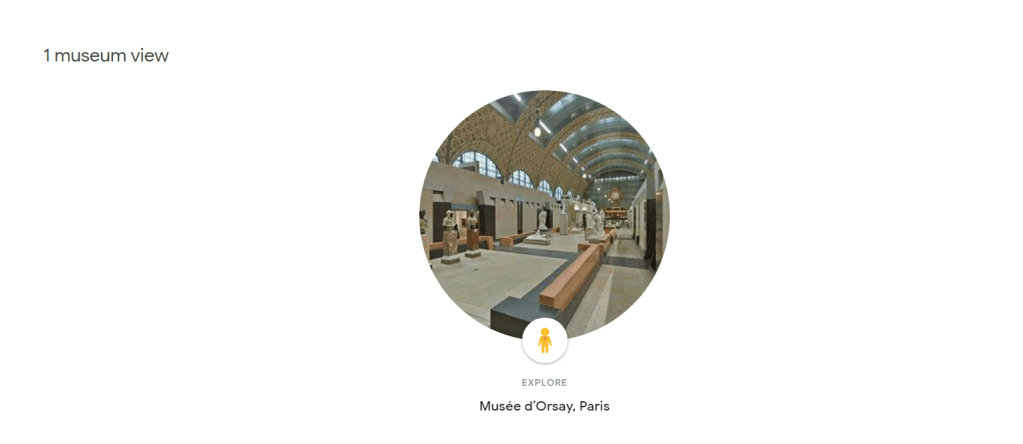
This is the first thing we see on the page and by clicking on the yellow icon on the bottom right of the picture we can directly visit the museum.
But there are other interesting part on the page. The following is the history of the Musée d’Orsey which I really liked
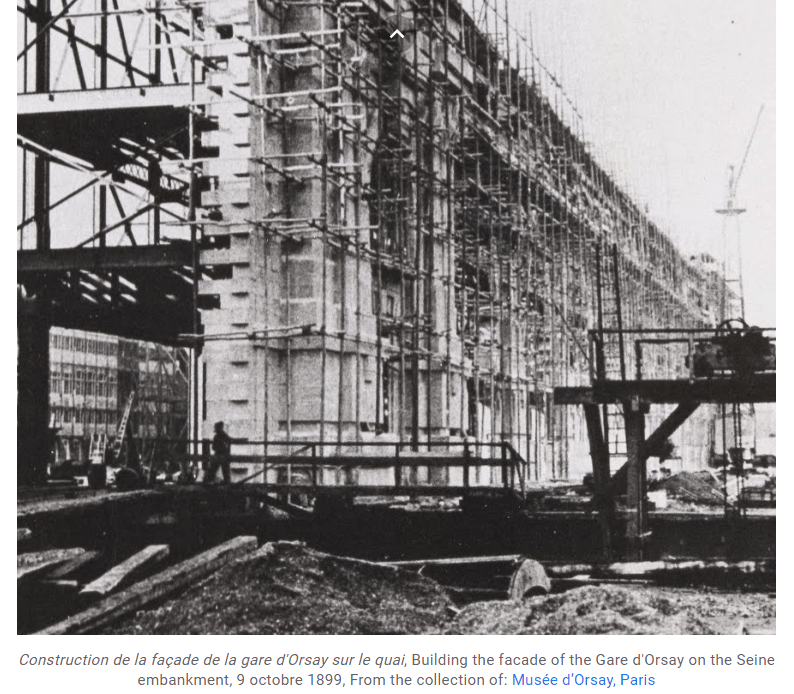
These are a few pictures from my visit of the history of the museum
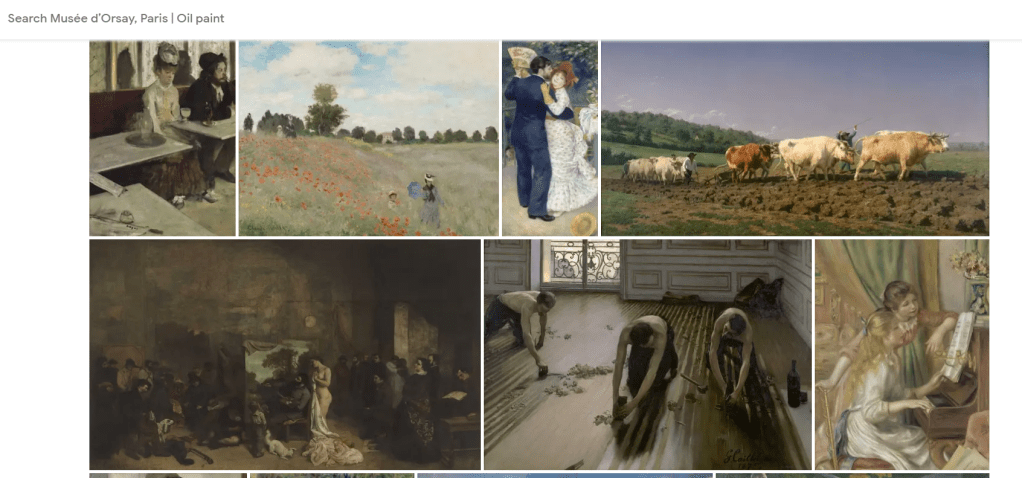
Then you can visit the paintings by categories
And here are a few pictures of the paintings I visited. If you pass the mouse on a painting the name of the painting and artist shows up. You can also click on the painting which will put it on a whole page with its details.
To go back to the virtual Musée d’Orsey I would advise to click on the go back arrow from your browser, I couldn’t find another way back to the museum.
The last part is the virtual visit of the museum as offer when you first open the site
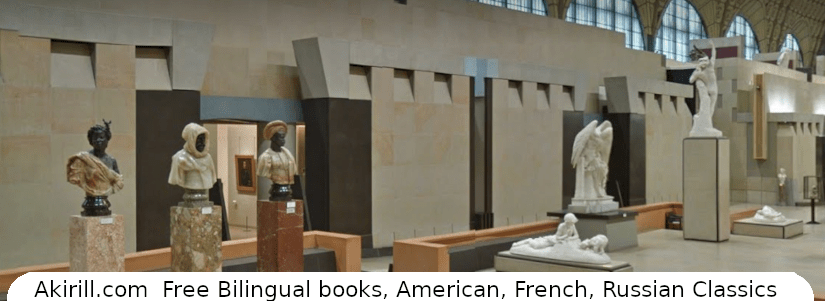
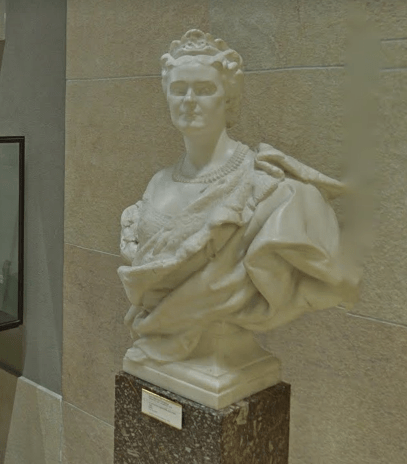
It is also a beautiful visit, and here a few pictures I took of it
“Mille Neuf Cent Quatre-Vingt-Quatre” est le roman dystopique le plus célèbre au monde. Il a été écrit par George Orwell en 1948 et publié un an plus tard. Il s’agit d’un roman de science-fiction et d’un récit édifiant centré sur les conséquences du totalitarisme, de la surveillance de masse et de la réglementation répressive des personnes et des comportements au sein de la société. “1984” est souvent analysée comme un avertissement sur le danger de laisser la Grande-Bretagne devenir un pays totalitaire. Il s’agit d’un roman qui a été soit interdit, soit légalement contesté comme subversif ou idéologiquement corrompu tout au long de son histoire de publication. C’est aussi le seul manuscrit original d’Orwell qui a survécu et qui est maintenant conservé à la bibliothèque John Hay de l’Université Brown (Providence, Rhode Island, États-Unis).
1984
A l’origine Orwell a bien accueilli la perspective d’une révolution socialiste au Royaume-Uni, mais à un moment donné entre 1941 et 1948, il a perdu ses illusions et est arrivé à la conclusion que son socialisme anglais souhaité serait perverti en une dictature totalitaire oppressive.
Certains pensent que le titre 1984 a été choisi comme une inversion de l’année de sa fin : 1948 et que la date était censée donner un caractère immédiat et urgent à la menace d’un régime totalitaire.
Un thème clé du roman d’Orwell est le nationalisme, qui est séparé en 3 catégories. Le nationalisme positif se déduit de l’amour perpétuel des Océaniens pour Big Brother (Grand frère). Le nationalisme négatif est défini par la haine obsessionnelle de certains, et le nationalisme transféré, qui redirige les émotions d’une unité de pouvoir à une autre.
Un autre thème important est la censure et la surveillance qui incluent la relation entre le langage et la pensée. À notre époque de fausses nouvelles et de médias corrompus, cela n’a fait que s’accentuer : si vous mentez à une population et la confondez suffisamment, vous pouvez la contrôler.
De nombreux détails entourant la censure, par exemple : la réécriture de l’histoire, la suppression de la littérature dissidente, le contrôle du langage que les gens utilisent pour s’exprimer et même pour penser, provenaient de la Russie stalinienne et de l’Allemagne nazie. Mais bon nombre des caractéristiques les plus célèbres de “Mille Neuf Cent Quatre-Vingt-Quatre” ont été suggérées à Orwell lorsqu’il travaillait à la BBC à Londres dans la première moitié des années 1940 : il est bien connu que le ministère de la Vérité était basé sur la BBC bureaucratique avec son département de propagande, tandis que la tristement célèbre salle 101 était censée porter le nom d’une salle de ce numéro dans le bâtiment de la BBC, dans laquelle Orwell devait endurer des réunions fastidieuses.
D’autres thèmes importants sont la pauvreté et l’inégalité, alors que la plupart des gens vivent dans l’extrême pauvreté ; la faim, la soif, la maladie et la saleté sont la norme. Même réparer une fenêtre cassée peut prendre des années et les télécrans ne peuvent pas être éteints. En même temps, la classe supérieure réside dans des appartements propres et confortables avec des garde-manger bien approvisionnés et un télécran qui peut être éteint.
“Mille Neuf Cent Quatre-Vingt-Quatre” a été adapté à la radio, à la télévision, au théâtre, à l’opéra et au ballet. Déjà en 1949, la radio NBC aux États-Unis publiait une adaptation radiophonique d’une heure. CBS a produit la première adaptation télévisée en 1953, suivie par la BBC en 1954.
Très petit résumé
L’Océanie étant l’un des trois super-états qui gouvernent le monde est en guerre perpétuelle avec l’Eurasie ou avec l’Estasie selon les périodes. En 1984, nous sommes en Océanie qui est gouvernée par un gouvernement qui contrôle tout. Il a créé un langage de propagande conçu pour limiter la libre pensée et promouvoir la doctrine du gouvernement. Winston Smith, notre héros vit à Londres et son travail consiste à réécrire l’histoire au ministère de la Vérité. Cependant, il aspire à la vérité et se rebelle secrètement. Après avoir été approché par quelqu’un qui semble être un membre secret de la confrérie, il tombe dans un piège et est envoyé au Ministère de l’Amour pour une rééducation violente.
It was a bright cold day in April, and the clocks were striking thirteen. Winston Smith, his chin nuzzled into his breast in an effort to escape the vile wind, slipped quickly through the glass doors of Victory Mansions, though not quickly enough to prevent a swirl of gritty dust from entering along with him.
The hallway smelt of boiled cabbage and old rag mats. At one end of it a coloured poster, too large for indoor display, had been tacked to the wall. It depicted simply an enormous face, more than a metre wide: the face of a man of about forty-five, with a heavy black moustache and ruggedly handsome features. Winston made for the stairs. It was no use trying the lift. Even at the best of times it was seldom working, and at present the electric current was cut off during daylight hours. It was part of the economy drive in preparation for Hate Week. The flat was seven flights up, and Winston, who was thirty-nine and had a varicose ulcer above his right ankle, went slowly, resting several times on the way. On each landing, opposite the lift-shaft, the poster with the enormous face gazed from the wall. It was one of those pictures which are so contrived that the eyes follow you about when you move. BIG BROTHER IS WATCHING YOU, the caption beneath it ran.
Inside the flat a fruity voice was reading out a list of figures which had something to do with the production of pig-iron. The voice came from an oblong metal plaque like a dulled mirror which formed part of the surface of the right-hand wall. Winston turned a switch and the voice sank somewhat, though the words were still distinguishable. The instrument (the telescreen, it was called) could be dimmed, but there was no way of shutting it off completely. He moved over to the window: a smallish, frail figure, the meagreness of his body merely emphasized by the blue overalls which were the uniform of the party. His hair was very fair, his face naturally sanguine, his skin roughened by coarse soap and blunt razor blades and the cold of the winter that had just ended.
Outside, even through the shut window-pane, the world looked cold. Down in the street little eddies of wind were whirling dust and torn paper into spirals, and though the sun was shining and the sky a harsh blue, there seemed to be no colour in anything, except the posters that were plastered everywhere. The blackmoustachio’d face gazed down from every commanding corner. There was one on the house-front immediately opposite. BIG BROTHER IS WATCHING YOU, the caption said, while the dark eyes looked deep into Winston’s own. Down at streetlevel another poster, torn at one corner, flapped fitfully in the wind, alternately covering and uncovering the single word INGSOC. In the far distance a helicopter skimmed down between the roofs, hovered for an instant like a bluebottle, and darted away again with a curving flight. It was the police patrol, snooping into people’s windows. The patrols did not matter, however. Only the Thought Police mattered.
Behind Winston’s back the voice from the telescreen was still babbling away about pig-iron and the overfulfilment of the Ninth Three-Year Plan. The telescreen received and transmitted simultaneously. Any sound that Winston made, above the level of a very low whisper, would be picked up by it, moreover, so long as he remained within the field of vision which the metal plaque commanded, he could be seen as well as heard. There was of course no way of knowing whether you were being watched at any given moment. How often, or on what system, the Thought Police plugged in on any individual wire was guesswork. It was even conceivable that they watched everybody all the time. But at any rate they could plug in your wire whenever they wanted to. You had to live — did live, from habit that became instinct — in the assumption that every sound you made was overheard, and, except in darkness, every movement scrutinized.
Winston kept his back turned to the telescreen. It was safer, though, as he well knew, even a back can be revealing. A kilometre away the Ministry of Truth, his place of work, towered vast and white above the grimy landscape. This, he thought with a sort of vague distaste — this was London, chief city of Airstrip One, itself the third most populous of the provinces of Oceania. He tried to squeeze out some childhood memory that should tell him whether London had always been quite like this. Were there always these vistas of rotting nineteenth-century houses, their sides shored up with baulks of timber, their windows patched with cardboard and their roofs with corrugated iron, their crazy garden walls sagging in all directions? And the bombed sites where the plaster dust swirled in the air and the willow-herb straggled over the heaps of rubble; and the places where the bombs had cleared a larger patch and there had sprung up sordid colonies of wooden dwellings like chicken-houses? But it was no use, he could not remember: nothing remained of his childhood except a series of bright-lit tableaux occurring against no background and mostly unintelligible.
The Ministry of Truth — Minitrue, in Newspeak — was startlingly different from any other object in sight. It was an enormous pyramidal structure of glittering white concrete, soaring up, terrace after terrace, 300 metres into the air. From where Winston stood it was just possible to read, picked out on its white face in elegant lettering, the three slogans of the Party:
WAR IS PEACE
FREEDOM IS SLAVERY
IGNORANCE IS STRENGTH
The Ministry of Truth contained, it was said, three thousand rooms above ground level, and corresponding ramifications below. Scattered about London there were just three other buildings of similar appearance and size. So completely did they dwarf the surrounding architecture that from the roof of Victory Mansions you could see all four of them simultaneously. They were the homes of the four Ministries between which the entire apparatus of government was divided. The Ministry of Truth, which concerned itself with news, entertainment, education, and the fine arts. The Ministry of Peace, which concerned itself with war. The Ministry of Love, which maintained law and order. And the Ministry of Plenty, which was responsible for economic affairs. Their names, in Newspeak: Minitrue, Minipax, Miniluv, and Miniplenty.
The Ministry of Love was the really frightening one. There were no windows in it at all. Winston had never been inside the Ministry of Love, nor within half a kilometre of it. It was a place impossible to enter except on official business, and then only by penetrating through a maze of barbed-wire entanglements, steel doors, and hidden machine-gun nests. Even the streets leading up to its outer barriers were roamed by gorilla-faced guards in black uniforms, armed with jointed truncheons.
Winston turned round abruptly. He had set his features into the expression of quiet optimism which it was advisable to wear when facing the telescreen. He crossed the room into the tiny kitchen. By leaving the Ministry at this time of day he had sacrificed his lunch in the canteen, and he was aware that there was no food in the kitchen except a hunk of dark-coloured bread which had got to be saved for tomorrow’s breakfast. He took down from the shelf a bottle of colourless liquid with a plain white label marked VICTORY GIN. It gave off a sickly, oily smell, as of Chinese ricespirit. Winston poured out nearly a teacupful, nerved himself for a shock, and gulped it down like a dose of medicine.
Instantly his face turned scarlet and the water ran out of his eyes. The stuff was like nitric acid, and moreover, in swallowing it one had the sensation of being hit on the back of the head with a rubber club. The next moment, however, the burning in his belly died down and the world began to look more cheerful. He took a cigarette from a crumpled packet marked VICTORY CIGARETTES and incautiously held it upright, whereupon the tobacco fell out on to the floor. With the next he was more successful. He went back to the living-room and sat down at a small table that stood to the left of the telescreen. From the table drawer he took out a penholder, a bottle of ink, and a thick, quarto-sized blank book with a red back and a marbled cover.
For some reason the telescreen in the living-room was in an unusual position. Instead of being placed, as was normal, in the end wall, where it could command the whole room, it was in the longer wall, opposite the window. To one side of it there was a shallow alcove in which Winston was now sitting, and which, when the flats were built, had probably been intended to hold bookshelves. By sitting in the alcove, and keeping well back, Winston was able to remain outside the range of the telescreen, so far as sight went. He could be heard, of course, but so long as he stayed in his present position he could not be seen. It was partly the unusual geography of the room that had suggested to him the thing that he was now about to do.
But it had also been suggested by the book that he had just taken out of the drawer. It was a peculiarly beautiful book. Its smooth creamy paper, a little yellowed by age, was of a kind that had not been manufactured for at least forty years past. He could guess, however, that the book was much older than that. He had seen it lying in the window of a frowsy little junk-shop in a slummy quarter of the town (just what quarter he did not now remember) and had been stricken immediately by an overwhelming desire to possess it. Party members were supposed not to go into ordinary shops (‘dealing on the free market’, it was called), but the rule was not strictly kept, because there were various things, such as shoelaces and razor blades, which it was impossible to get hold of in any other way. He had given a quick glance up and down the street and then had slipped inside and bought the book for two dollars fifty. At the time he was not conscious of wanting it for any particular purpose. He had carried it guiltily home in his briefcase. Even with nothing written in it, it was a compromising possession.
The thing that he was about to do was to open a diary. This was not illegal (nothing was illegal, since there were no longer any laws), but if detected it was reasonably certain that it would be punished by death, or at least by twenty-five years in a forced-labour camp. Winston fitted a nib into the penholder and sucked it to get the grease off. The pen was an archaic instrument, seldom used even for signatures, and he had procured one, furtively and with some difficulty, simply because of a feeling that the beautiful creamy paper deserved to be written on with a real nib instead of being scratched with an ink-pencil. Actually he was not used to writing by hand. Apart from very short notes, it was usual to dictate everything into the speakwrite which was of course impossible for his present purpose. He dipped the pen into the ink and then faltered for just a second. A tremor had gone through his bowels. To mark the paper was the decisive act. In small clumsy letters he wrote:
April 4th, 1984.
He sat back. A sense of complete helplessness had descended upon him. To begin with, he did not know with any certainty that this was 1984. It must be round about that date, since he was fairly sure that his age was thirty-nine, and he believed that he had been born in 1944 or 1945; but it was never possible nowadays to pin down any date within a year or two.
“Nineteen Eighty four” is the most famous dystopian novel in the world. It was written by George Orwell in 1948 and published a year later. It is a science fiction novel, and cautionary tale that centers on the consequences of totalitarianism, mass surveillance and repressive regimentation of people and behaviors within society. “Nineteen eighty four” is often analyzed as a warning about the danger of allowing Britain to become a totalitarianism country. This is a novel that had been either banned or legally challenged as subversive or ideologically corrupting throughout its publication history. It is also the only original manuscript of Orwell that survived and is now held at the John Hay Library at Brown University (Providence, Rhode Island, USA).
1984
Orwell originally welcome the prospect of a socialist revolution in the UK, but at some time between 1941 and 1948 he became disillusioned and came to the conclusion that his desired English Socialism would be perverted into an oppressive totalitarian dictatorship.
Some believe that the tittle 1984 was chosen as an inversion of the year it was finished: 1948 and that the date was meant to give an immediate and urgency to the menace of totalitarian rule.
One key theme of Orwell’s novel is Nationalism, which is separated in 3 categories. The positive nationalism can be deducted by Oceanians’ perpetual love for Big Brother. The negative nationalism defined by the obsessive hatred of some people, and the transferred nationalism which redirected emotions from one power unit to another.
Another important theme is Censorship and surveillance which include the relationship between language and thought. In our era of fake news and corrupt media, this has only become even more pronounced: if you lie to a population and confuse them enough, you can control them.
Many of the details surrounding censorship, as example: the rewriting of history, the suppression of dissident literature, the control of the language people use to express themselves and even to think in were derived from Stalinist Russia and Nazi Germany. But, many of the most famous features of Nineteen Eighty-Four were suggested to Orwell by his time working at the BBC in London in the first half of the 1940s: it is well-known that the Ministry of Truth was based on the bureaucratic BBC with its propaganda department, while the infamous Room 101 was supposedly named after a room of that number in the BBC building, in which Orwell had to endure tedious meetings.
Other important themes are poverty and inequality, while most people live in extreme poverty; hunger, thirst, disease and filth are the norm. Even fixing a broken window can take years and telescreens cannot be turn off. At the same time the Upper class reside in clean and comfortable flats with pantries well-stocked and telescreen that can be turn off.
Nineteen eighty four has been adapted to radio, television, theater, opera and ballet. Already in 1949 the NBC radio in the US published a one-hour radio-adaptation. CBS produced the first television adaptation in 1953, followed by the BBC in 1954.
Very small summary
Oceania being one of the three super-states that rules the world is in perpetual war with Eurasia or with Eastasia depending of the period. In the year 1984, we are in Oceania which is governed by an all-controlling government, which created a propagandistic language designed to limit free thought and promote the government’s doctrine. Winston Smith, our hero lives in London and his job is to rewrite history in the Ministry of Truth. However he is longing for the truth and secretly rebels. After being approached by someone who appears to be a secret member of the brotherhood, he falls into a trap and is sent to the Ministry of Love for a violent reeducation.
It was a bright cold day in April, and the clocks were striking thirteen. Winston Smith, his chin nuzzled into his breast in an effort to escape the vile wind, slipped quickly through the glass doors of Victory Mansions, though not quickly enough to prevent a swirl of gritty dust from entering along with him.
The hallway smelt of boiled cabbage and old rag mats. At one end of it a coloured poster, too large for indoor display, had been tacked to the wall. It depicted simply an enormous face, more than a metre wide: the face of a man of about forty-five, with a heavy black moustache and ruggedly handsome features. Winston made for the stairs. It was no use trying the lift. Even at the best of times it was seldom working, and at present the electric current was cut off during daylight hours. It was part of the economy drive in preparation for Hate Week. The flat was seven flights up, and Winston, who was thirty-nine and had a varicose ulcer above his right ankle, went slowly, resting several times on the way. On each landing, opposite the lift-shaft, the poster with the enormous face gazed from the wall. It was one of those pictures which are so contrived that the eyes follow you about when you move. BIG BROTHER IS WATCHING YOU, the caption beneath it ran.
Inside the flat a fruity voice was reading out a list of figures which had something to do with the production of pig-iron. The voice came from an oblong metal plaque like a dulled mirror which formed part of the surface of the right-hand wall. Winston turned a switch and the voice sank somewhat, though the words were still distinguishable. The instrument (the telescreen, it was called) could be dimmed, but there was no way of shutting it off completely. He moved over to the window: a smallish, frail figure, the meagreness of his body merely emphasized by the blue overalls which were the uniform of the party. His hair was very fair, his face naturally sanguine, his skin roughened by coarse soap and blunt razor blades and the cold of the winter that had just ended.
Outside, even through the shut window-pane, the world looked cold. Down in the street little eddies of wind were whirling dust and torn paper into spirals, and though the sun was shining and the sky a harsh blue, there seemed to be no colour in anything, except the posters that were plastered everywhere. The blackmoustachio’d face gazed down from every commanding corner. There was one on the house-front immediately opposite. BIG BROTHER IS WATCHING YOU, the caption said, while the dark eyes looked deep into Winston’s own. Down at streetlevel another poster, torn at one corner, flapped fitfully in the wind, alternately covering and uncovering the single word INGSOC. In the far distance a helicopter skimmed down between the roofs, hovered for an instant like a bluebottle, and darted away again with a curving flight. It was the police patrol, snooping into people’s windows. The patrols did not matter, however. Only the Thought Police mattered.
Behind Winston’s back the voice from the telescreen was still babbling away about pig-iron and the overfulfilment of the Ninth Three-Year Plan. The telescreen received and transmitted simultaneously. Any sound that Winston made, above the level of a very low whisper, would be picked up by it, moreover, so long as he remained within the field of vision which the metal plaque commanded, he could be seen as well as heard. There was of course no way of knowing whether you were being watched at any given moment. How often, or on what system, the Thought Police plugged in on any individual wire was guesswork. It was even conceivable that they watched everybody all the time. But at any rate they could plug in your wire whenever they wanted to. You had to live — did live, from habit that became instinct — in the assumption that every sound you made was overheard, and, except in darkness, every movement scrutinized.
Winston kept his back turned to the telescreen. It was safer, though, as he well knew, even a back can be revealing. A kilometre away the Ministry of Truth, his place of work, towered vast and white above the grimy landscape. This, he thought with a sort of vague distaste — this was London, chief city of Airstrip One, itself the third most populous of the provinces of Oceania. He tried to squeeze out some childhood memory that should tell him whether London had always been quite like this. Were there always these vistas of rotting nineteenth-century houses, their sides shored up with baulks of timber, their windows patched with cardboard and their roofs with corrugated iron, their crazy garden walls sagging in all directions? And the bombed sites where the plaster dust swirled in the air and the willow-herb straggled over the heaps of rubble; and the places where the bombs had cleared a larger patch and there had sprung up sordid colonies of wooden dwellings like chicken-houses? But it was no use, he could not remember: nothing remained of his childhood except a series of bright-lit tableaux occurring against no background and mostly unintelligible.
The Ministry of Truth — Minitrue, in Newspeak — was startlingly different from any other object in sight. It was an enormous pyramidal structure of glittering white concrete, soaring up, terrace after terrace, 300 metres into the air. From where Winston stood it was just possible to read, picked out on its white face in elegant lettering, the three slogans of the Party:
WAR IS PEACE
FREEDOM IS SLAVERY
IGNORANCE IS STRENGTH
The Ministry of Truth contained, it was said, three thousand rooms above ground level, and corresponding ramifications below. Scattered about London there were just three other buildings of similar appearance and size. So completely did they dwarf the surrounding architecture that from the roof of Victory Mansions you could see all four of them simultaneously. They were the homes of the four Ministries between which the entire apparatus of government was divided. The Ministry of Truth, which concerned itself with news, entertainment, education, and the fine arts. The Ministry of Peace, which concerned itself with war. The Ministry of Love, which maintained law and order. And the Ministry of Plenty, which was responsible for economic affairs. Their names, in Newspeak: Minitrue, Minipax, Miniluv, and Miniplenty.
The Ministry of Love was the really frightening one. There were no windows in it at all. Winston had never been inside the Ministry of Love, nor within half a kilometre of it. It was a place impossible to enter except on official business, and then only by penetrating through a maze of barbed-wire entanglements, steel doors, and hidden machine-gun nests. Even the streets leading up to its outer barriers were roamed by gorilla-faced guards in black uniforms, armed with jointed truncheons.
Winston turned round abruptly. He had set his features into the expression of quiet optimism which it was advisable to wear when facing the telescreen. He crossed the room into the tiny kitchen. By leaving the Ministry at this time of day he had sacrificed his lunch in the canteen, and he was aware that there was no food in the kitchen except a hunk of dark-coloured bread which had got to be saved for tomorrow’s breakfast. He took down from the shelf a bottle of colourless liquid with a plain white label marked VICTORY GIN. It gave off a sickly, oily smell, as of Chinese ricespirit. Winston poured out nearly a teacupful, nerved himself for a shock, and gulped it down like a dose of medicine.
Instantly his face turned scarlet and the water ran out of his eyes. The stuff was like nitric acid, and moreover, in swallowing it one had the sensation of being hit on the back of the head with a rubber club. The next moment, however, the burning in his belly died down and the world began to look more cheerful. He took a cigarette from a crumpled packet marked VICTORY CIGARETTES and incautiously held it upright, whereupon the tobacco fell out on to the floor. With the next he was more successful. He went back to the living-room and sat down at a small table that stood to the left of the telescreen. From the table drawer he took out a penholder, a bottle of ink, and a thick, quarto-sized blank book with a red back and a marbled cover.
For some reason the telescreen in the living-room was in an unusual position. Instead of being placed, as was normal, in the end wall, where it could command the whole room, it was in the longer wall, opposite the window. To one side of it there was a shallow alcove in which Winston was now sitting, and which, when the flats were built, had probably been intended to hold bookshelves. By sitting in the alcove, and keeping well back, Winston was able to remain outside the range of the telescreen, so far as sight went. He could be heard, of course, but so long as he stayed in his present position he could not be seen. It was partly the unusual geography of the room that had suggested to him the thing that he was now about to do.
But it had also been suggested by the book that he had just taken out of the drawer. It was a peculiarly beautiful book. Its smooth creamy paper, a little yellowed by age, was of a kind that had not been manufactured for at least forty years past. He could guess, however, that the book was much older than that. He had seen it lying in the window of a frowsy little junk-shop in a slummy quarter of the town (just what quarter he did not now remember) and had been stricken immediately by an overwhelming desire to possess it. Party members were supposed not to go into ordinary shops (‘dealing on the free market’, it was called), but the rule was not strictly kept, because there were various things, such as shoelaces and razor blades, which it was impossible to get hold of in any other way. He had given a quick glance up and down the street and then had slipped inside and bought the book for two dollars fifty. At the time he was not conscious of wanting it for any particular purpose. He had carried it guiltily home in his briefcase. Even with nothing written in it, it was a compromising possession.
The thing that he was about to do was to open a diary. This was not illegal (nothing was illegal, since there were no longer any laws), but if detected it was reasonably certain that it would be punished by death, or at least by twenty-five years in a forced-labour camp. Winston fitted a nib into the penholder and sucked it to get the grease off. The pen was an archaic instrument, seldom used even for signatures, and he had procured one, furtively and with some difficulty, simply because of a feeling that the beautiful creamy paper deserved to be written on with a real nib instead of being scratched with an ink-pencil. Actually he was not used to writing by hand. Apart from very short notes, it was usual to dictate everything into the speakwrite which was of course impossible for his present purpose. He dipped the pen into the ink and then faltered for just a second. A tremor had gone through his bowels. To mark the paper was the decisive act. In small clumsy letters he wrote:
April 4th, 1984.
He sat back. A sense of complete helplessness had descended upon him. To begin with, he did not know with any certainty that this was 1984. It must be round about that date, since he was fairly sure that his age was thirty-nine, and he believed that he had been born in 1944 or 1945; but it was never possible nowadays to pin down any date within a year or two.
J’ai oublié de travailler sur nos livres bilingues mais j’ai travaillé sur nos cours d’anglais et de russe, et comme souvent j’ai trouvé un peu de temps pour les articles
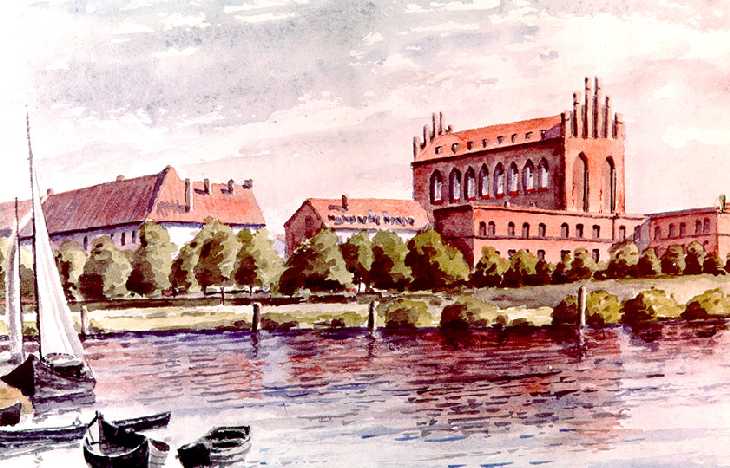
Le château de Preussisch Eylau est un château de l’Ordre Teutonique construit en 1325 et situé à Bagralionovsk, près de Kaliningrad. Il a reçu le statut de site du patrimoine culturel d’importance régionale par décret du gouvernement de Kaliningrad le 23 mars 2007. Le 11 octobre 2022, il a été vendu 7,6 millions de roubles à la société “GreenArtDevelopment” quatre ans après sa mise en vente. aux enchères
Dans les documents historiques, la première mention du château se produit en 1326, où il est appelé “Ile”, dans les archives de 1342 le nom mentionné est “Iladia”, en 1400 il s’appelle “Preissish-Ilov” (Preussisch-eylau). nom qui lui est resté.
Le grand maître de l’Ordre Teutonique Werner von Orseln ordonna la construction du château d’Ile en 1325. Le but principal de la forteresse était de protéger la capitale de la région Krulevets (Koenigsberg) du sud. Le commandant de Balga, maître Arnold von Eilenstein a supervisé la construction du château de Preussisch Eylau, qui à l’origine a été réalisé en pierres et en briques sur le site de la forteresse prussienne de Sutvrit.
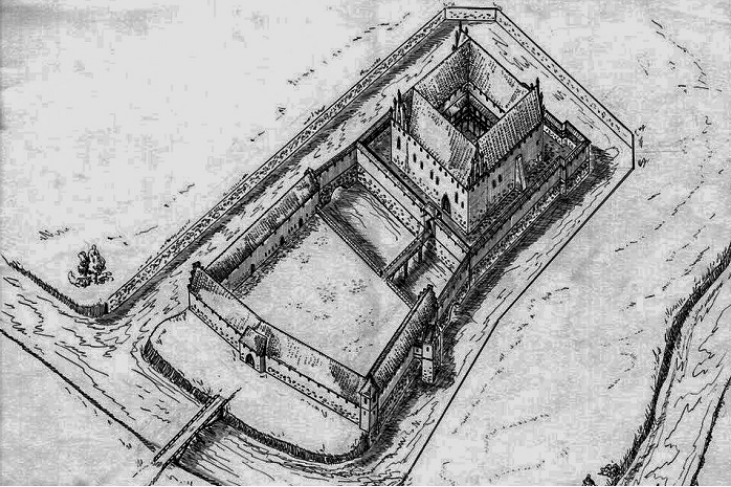
Un barrage avec un moulin a été construit, le niveau de l’eau est monté et le château s’est retrouvé sur une île. En 1330, une fortification en pierre de forme carrée de 41 m x 43 m a été édifiée, entourée de douves, d’une porte herse, d’une tour et d’un pont-levis. Un grand forburg de 120 x 140 mètres, qui était entouré de ses propres douves et d’un mur de forteresse de 1,6 mètre d’épaisseur avec un passage défensif, a été attaché à la fortification du côté est. Il y avait des écuries, une brasserie, des locaux pour les soldats de l’ordre, des ateliers de fabrication d’armes, une boulangerie, et d’autres dépendances.
The first settlements on the site of Tapiau are hundreds of years old. By Sendker -, CC BY-SA 3.0,
L’entrée principale de la citadelle du château Preussisch-Eylau se trouvait dans l’aile est du forburg. La chapelle du château qui était un attribut obligatoire d’un château d’ordre typique se trouvait dans l’aile sud, et une tour sanitaire se trouvait dans la partie nord.
Le premier étage était occupé par des dépendances, dont la cuisine, située sous le réfectoire, et des pièces de service. Au deuxième étage de l’aile ouest se trouvaient le logement et la résidence des frères de l’ordre, qui comprenait un réfectoire, une salle de réunion, les chambres des moines et les chambres occupées par le régisseur du château. Le troisième étage remplissait des fonctions défensives et était équipé d’un passage militaire et de meurtrières. Il y avait aussi une petite tour de guet ronde dans le coin nord-est. Pour avoir un accès facile à l’eau il y avait un puits dans la cour du château.
Jusqu’en 1347 le château de Preussisch Eylau fut la résidence de l’Ordre Pfleger, puis il abrita l’administration du Kammerat, appartenant à la commanderie de Balga.
En 1400, après avoir été frappé par la foudre, toutes les parties en bois du château ont brûlé. Puis le château de Preussisch Eylau passa au Grand Maître de l’Ordre Teutonique Heinrich von Plauen pour le service militaire en 1429.
Reconstruction of the plan of the original Tapiau castle complex. /Photo: mif-mira.ru
Le château de Preussisch Eylau a été capturé et partiellement endommagé par la population rebelle en 1454 mais il a été repris la même année et les dégâts ont été réparés.
Il a encore été attaqué en mai 1455 par une armée alliée à la Pologne qui n’est pas parvenue à s’en emparer alors que la garnison protégeant le château n’était composée que de deux douzaines de chevaliers et de soixante miliciens. Un siège n’a pas non plus réussi puisque de l’aide a été envoyée au château et que l’armée alliée à la Pologne a été vaincue.
Il y eut une autre tentative infructueuse de prendre le château en octobre 1455.
Le château de Preussisch Eylau et les terres environnantes ont été transférés à Heinrich Reuss von Plauen pour une utilisation à vie en 1492.
Plus de 4000 mercenaires polonais attaquèrent à nouveau le château en 1519, mais la garnison du château dirigée par le chevalier Friedrich Truchses Weltburg et le commandant de Courlande Firike repoussa les attaques successives.
Le château devint la résidence du domaine départemental de Hauptmann Preussisch Eylau en 1525 après une réforme et l’abolition de l’Ordre Teutonique. Puis il reçut les droits de la ville en 1585, et en 1587 ses armoiries.
À la fin du XVIIIe siècle, le château avait perdu sa vocation et une partie de son bâtiment a été démontée et utilisée pour construire de nouvelles structures.
Un incendie a endommagé le château de Preussisch Eylau en 1802 mais il ne fut pas restauré et le Forburg fut utilisé à des fins économiques. En 1814, il a été acheté par Heinrich Sigismund Valentini qui a construit une nouvelle maison à un kilomètre au nord-ouest du château après que le château ai commencé à s’effondrer dû à l’absence d’une partie du toit.
En 1831, un nouveau manoir Henrettenhof a été construit dans le style néoclassique. Il se trouve sur les fondations du fort de la forteresse Preussisch Eylau entre l’aile est, et la grange.
L’ancien manoir situé sur le territoire du château de Preussisch Eylau a été donné au magistrat de la ville de Preussisch-Eylau en 1932, et cette même année un musée couvrant la période de l’histoire de la région de l’âge de pierre aux événements de la Première Guerre mondiale y a été ouvert. Malheureusement, dans la période d’après-guerre, le bâtiment a été complètement démantelé.
Pendant la Seconde Guerre mondiale, le château n’a pas été gravement endommagé, et les quartiers d’habitation ont été utilisés jusqu’au début des années 1960.
Le château de Preussisch Eylau et le forburg ont été transférés à l’union des consommateurs du district en 1961 et ont été utilisés comme entrepôts.
En 1964, les bâtiments du château et le forburg ont été examinés par des employés des ateliers centraux scientifiques et de restauration du ministère de la Culture de l’URSS. L’état du château était très mauvais, car il n’a jamais été réparé après la guerre.
Un stand de tir a été construit à l’emplacement de l’aile ouest, qui a été démolie dans les années 1990. Dans le forburg survivant, le toit a commencé à s’effondrer à cause de chevrons pourris, des trous sont apparus en 1989 et en août 1990, la partie centrale a brûlé.
Au début des années 1990, il a été décidé de transformer le forburg en hôtel avec bar, mais l’idée a été abandonné.
Le 5 juin 2016, un incendie s’est déclaré dans le château, détruisant une partie de la toiture.
Le 29 août 2018, les autorités régionales ont tenté de vendre le château lors d’une vente aux enchères, mais elles n’y sont pas parvenues.
Ils ont de nouveau tenté de vendre le bâtiment en 2020, mais n’ont pas trouvé d’acheteur. Enfin, le château a été vendu pour 7,6 millions de roubles lors de la vente aux enchères de la société GreenArt Development en 2022. «GreenArtDevelopment» est enregistré à Saint-Pétersbourg et est engagé dans la location et la gestion immobilière.
J’espère que cet article vous a plu
Si vous avez aimé cet article, abonnez-vous, mettez des likes, écrivez des commentaires !
The Preussisch Eylau Castle is a castle of the Teutonic Order built in 1325 and located in Bagralionovsk, near Kaliningrad. It received the status of a cultural heritage site of regional significance by decree of the Government of the Kaliningrad on March 23, 2007. On October 11, 2022, it was sold 7.6 million rubles to the company “GreenArtDevelopment” four years after it was put up for auction
In historical documents, the first mention of the castle occurs in 1326, where it is called “Ile”, in the records of 1342 the name mentioned is “Iladia”, in 1400 the name changes once again and it becomes “Preissish-Ilov” (Preussisch-eylau), name which stuck.
The grand master of the Teutonic Order Werner von Orseln ordered the construction of Ile Castle in 1325. The main purpose of the fortress was to protect the capital of the region Krulevets (Koenigsberg) from the south. Balga Commander, master Arnold von Eilenstein supervised the construction of the Preussisch Eylau Castle, which was originally carried out from stones and brick on the site of the Prussian fortress of Sutvrit.
A dam with a mill was built, the water level rose and the castle ended up on an island. In 1330, a square-shaped stone fortification of 41 m x 43 m was built, surrounded by a moat, a portcullis gate, a tower and a drawbridge. A large forburg of 120 x 140 meters, which was surrounded by its own moat and a fortress wall, 1.6 meters thick with a defensive passage, was attached to the fortification on the eastern side. There were stables, a brewery, premises for the soldiers of the order, workshops for the manufacture of weapons, a bakery, and other outbuildings.
The first settlements on the site of Tapiau are hundreds of years old. By Sendker -, CC BY-SA 3.0,
The main entrance to the castle citadel Preussisch-Eylau was in the eastern wing from the forburg. The castle chapel which was an obligatory attribute of a typical order castle was in the southern wing, and a sanitary tower could be found in the northern part.
The first floor was occupied by outbuildings, including the kitchen, which was located under the refectory, and utility rooms. On the second floor of the western wing was the accommodation and residence of the brothers of the order, which included a refectory, a meeting room, the bedrooms of the monks and the chambers that were occupied by the manager of the castle. The third floor, performed defensive functions and was equipped with a military passage and loopholes. There was also a small round watchtower in the northeast corner. To have an easy access to water there was a well in the castle courtyard.
Until 1347 the Preussisch Eylau castle was the residence of the order pfleger, then it housed the administration of the kammerat, belonging to the Balga commandery.
In 1400, after being struck by lightning all wooden parts of the castle burned down. The Preussisch Eylau castle passed to the Grand Master of the Teutonic Order Heinrich von Plauen for military service in 1429.
Reconstruction of the plan of the original Tapiau castle complex. /Photo: mif-mira.ru
The Preussisch Eylau castle was captured and partially damaged by the rebellious population in 1454 but it was returned that same year and the damages were repaired.
It came under attack in May 1455 by a Polish-allied army which was unable to capture it even though the garnison protecting the castle was only composed of two dozen knights and sixty militias. A siege didn’t pan out neither since help was sent to the castle and the Polish-allied army was defeated.
There was another unsuccessful attempt to take the castle in October 1455.
The Preussisch Eylau castle and surrounding lands were transferred to Heinrich Reuss von Plauen for life use in 1492.
More than 4000 Polish mercenaries again repeatedly attacked the castle in 1519, but the castle garrison which was led by the knight Friedrich Truchses Weltburg and the Courland commander Firike repelled the successive attacks.
The castle became the residence of the departmental estate of Hauptmann Preussisch Eylau in 1525 after a reformation and the abolition of the Teutonic Order. Then it received city rights on 1585, and in 1587 its coat of arms.
By the end of the 18th century, the castle had lost its purpose and part of its building were disassembled and used to built new structures.
A fire damaged the Preussisch Eylau castle in 1802 but it was not restored and the Forburg was used for economic purposes. In 1814, it was bough by Heinrich Sigismund Valentini who built a new house a kilometer northwest of the castle after the castle began to collapse because of lack of part of the roof.
In 1831 a new Henrettenhof manor was built in the neoclassical style. It is on the foundations of the Preussisch Eylau fortress fort between the eastern wing and the barn.
The old manor building located on the territory of the Preussisch Eylau castle was given to the city magistrate of Preussish-Eylau in 1932, and this same year a museum covering the period of the regions history from the stone age to the events of the First World War was open there. Sadly, in the post war period the building was completely dismantled.
During the Second World War , the castle was not badly damaged, and the living quarters were used until the early 1960s.
The Preussisch Eylau castle and forburg were transferred to the district consumer union in 1961, and were used as storage facilities.
In 1964 the buildings of the castle and forburg were examined by employees of the central scientific and restoration workshops of the USSR Ministry of Culture. The condition of the castle was very poor, as it was never repaired after the war.
A shooting gallery was built on the site of the western wing, which was demolished in the 1990s. In the surviving forburg, the roof began to collapse because of rotten rafters, holes appeared in 1989 and in August 1990 the middle section burned down.
In the early 1990s, a decision was made to convert the forburg into a hotel with a bar, but it was abandoned.
On June 5, 2016, a fire broke out in the castle, destroying part of the roof.
On August 29, 2018, the regional authorities tried to sell the castle at an auction, but they didn’t succeed.
They again tried to sell the building in 2020, but could not find a buyer. Finally the castle was sold for 7.6 million rubles at the auction of the GreenArt Development company in 2022. “GreenArtDevelopment” is registered in St. Petersburg and is engaged in rental and property management.
I hope you enjoyed this article
If you liked this article, subscribe , put likes, write comments!
L’Avare aussi appelé L’École du mensonge est une comédie en prose et en cinq actes écrite par Molière. Elle a été performée pour la première fois le 9 septembre 1968 au théâtre du Palais Royal à Paris. Cette pièce est maintenant disponible dans notre section livres bilingues français/anglais pour votre plus grand plaisir.
Molière
A l’époque, la compagnie de Molière était sous la protection de Louis XV. On sait que de nombreuses parties de dialogues et certains incidents sont empruntés à la comédie Aulularia de Plaute de laquelle elle s’inspire vaguement ainsi qu’aux farces italiennes contemporaines.
En fait le personnage d’Harpagon est tiré de la pièce latine Aulularia dans laquelle l’avare Euclio ne cesse de changer la cachette de son pot d’or de peur de se le faire voler, mais il a aussi créé l’histoire d’amour entre Elise et Valère d’après la même pièce . Le père comme usurier était basé sur une pièce de François le Metel de Boisrobert de 1655 intitulée “La Belle Plaideuse”. Quant au père et au fils amoureux de la même femme, l’idée est venue de la pièce de Jean Donneau de Visé de 1665 intitulée “La mère Coquette”
L’avare dont le nom est Harpagon est obsédé par la richesse qu’il a amassée et toujours prêt à économiser sur les dépenses. Le nom Harpagon est intéressant car c’est un nom adapté du grec qui signifie un crochet ou un grappin. Harpagon est un vieux veuf avec un fils et une fille qui essaie de se marier avec une jeune femme. La jeune femme est à son tour amoureuse de son fils. En même temps, Harpagon essaie d’organiser un mariage entre sa fille et un homme riche de son choix, mais sa fille est amoureuse de Valère qui est leur intendant. Puis l’or d’Harpagon est volé. La satire et la farce se fondent dans une intrigue rapide et en font une lecture intéressante et amusante.
Il y a eu de nombreuses adaptations de la pièce du fait que l’humour de Molière ne se traduit pas très bien et nécessite une libre adaptation pour réussir dans d’autres pays. Déjà en 1670 une traduction allemande appelée Der Geizige parut à Francfort, puis en 1672 Thomas Shadwell adapta la pièce en l’appelant “The Miser” et en y ajoutant 8 nouveaux personnages. Une version encore plus populaire basée à la fois sur Plaute et Molière a été créée par Henry Fielding en 1732. La pièce a également été adaptée aux opéras italiens en 1775, 1776 et 1814. Vasily Pashkevich a basé son opéra comique du XVIIIe siècle sur cette pièce en Russie, et la première adaptation arabe a été réalisée par le Libanais Marun Al Naqqash en 1817.
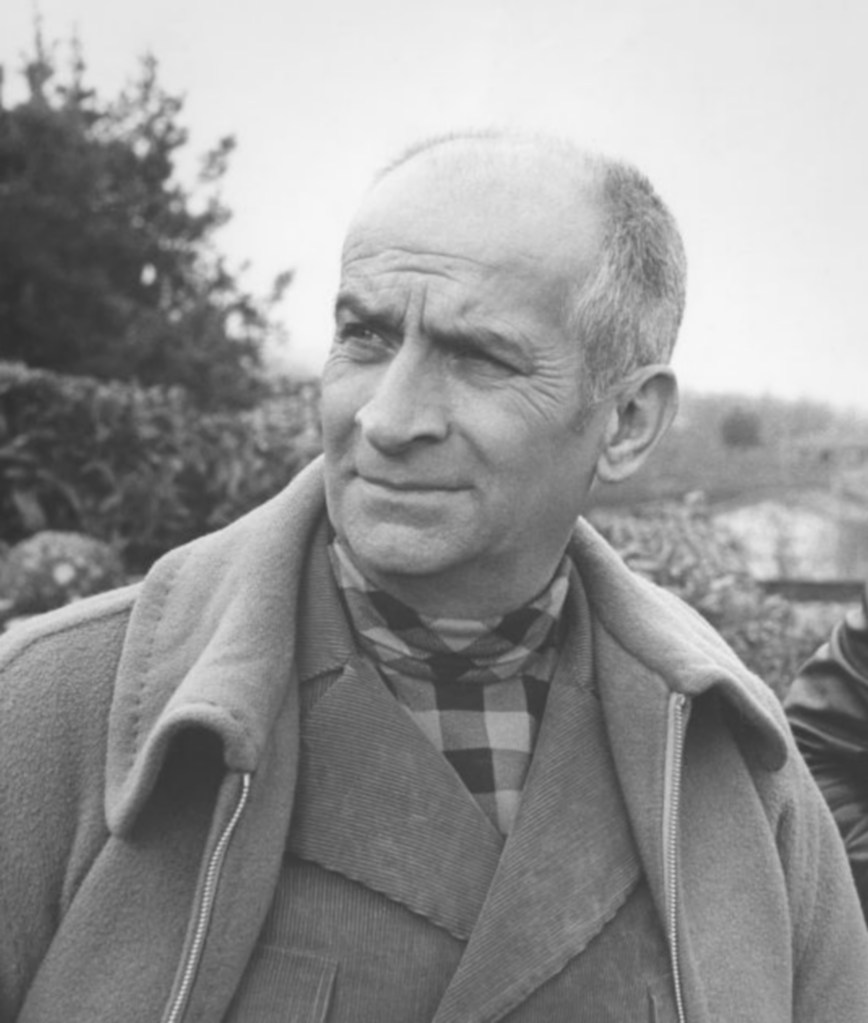
Il y avait aussi de nombreuses adaptations audio et cinématographiques. À titre d’exemple, le centre Lincoln a produit un enregistrement audio de cette pièce en 1969, et un film produit et mettant en vedette Louis de Funès a été produit en 1980.
Valère – Hé quoi ! charmante Élise, vous devenez mélancolique, après les obligeantes assurances que vous avez eu la bonté de me donner de votre foi ? Je vous vois soupirer, hélas ! au milieu de ma joie ! Est-ce du regret, dites-moi, de m’avoir fait heureux ? et vous repentez-vous de cet engagement où mes feux ont pu vous contraindre ?
Élise – Non, Valère, je ne puis pas me repentir de tout ce que je fais pour vous. Je m’y sens entraîner par une trop douce puissance, et je n’ai pas même la force de souhaiter que les choses ne fussent pas. Mais, a vous dire vrai, le succès me donne de l’inquiétude ; et je crains fort de vous aimer un peu plus que je ne devrais.
Valère – Eh ! que pouvez-vous craindre, Élise, dans les bontés que vous avez pour moi ?
Élise – Hélas ! cent choses à la fois : l’emportement d’un père, les reproches d’une famille, les censures du monde ; mais plus que tout, Valère, le changement de votre coeur, et cette froideur criminelle dont ceux de votre sexe payent le plus souvent les témoignages trop ardents d’un innocent amour.
Valère – Ah ! ne me faites pas ce tort, de juger de moi par les autres ! Soupçonnez-moi de tout, Élise, plutôt que de manquer à ce que je vous dois. Je vous aime trop pour cela ; et mon amour pour vous durera autant que ma vie.
Élise – Ah ! Valère, chacun tient les mêmes discours ! Tous les hommes sont semblables par les paroles ; et ce n’est que les actions qui les découvrent différents.
Valère – Puisque les seules actions font connaître ce que nous sommes, attendez donc, au moins, à juger de mon coeur par elles, et ne me cherchez point des crimes dans les injustes craintes d’une fâcheuse prévoyance. Ne m’assassinez point, je vous prie, par les sensibles coups d’un soupçon outrageux ; et donnez-moi le temps de vous convaincre, par mille et mille preuves, de l’honnêteté de mes feux.
Élise – Hélas ! qu’avec facilité on se laisse persuader par les personnes que l’on aime ! Oui, Valère, je tiens votre coeur incapable de m’abuser. Je crois que vous m’aimez d’un véritable amour, et que vous me serez fidèle : je n’en veux point du tout douter, et je retranche mon chagrin aux appréhensions du blâme qu’on pourra me donner.
Valère – Mais pourquoi cette inquiétude ?
Élise – Je n’aurais rien à craindre si tout le monde vous voyait des yeux dont je vous vois ; et je trouve en votre personne de quoi avoir raison aux choses que je fais pour vous. Mon coeur, pour sa défense, a tout votre mérite, appuyé du secours d’une reconnaissance où le ciel m’engage envers vous. Je me représente à toute heure ce péril étonnant qui commença de nous offrir aux regards l’un de l’autre ; cette générosité surprenante qui vous fit risquer votre vie, pour dérober la mienne à la fureur des ondes ; ces soins pleins de tendresse que vous me fîtes éclater après m’avoir tirée de l’eau, et les hommages assidus de cet ardent amour que ni le temps ni les difficultés n’ont rebuté, et qui, vous faisant négliger et parents et patrie, arrête vos pas en ces lieux, y tient en ma faveur votre fortune déguisée, et vous a réduit, pour me voir, à vous revêtir de l’emploi de domestique de mon père. Tout cela fait chez moi, sans doute, un merveilleux effet ; et c’en est assez, à mes yeux, pour me justifier l’engagement où j’ai pu consentir ; mais ce n’est pas assez peut-être pour le justifier aux autres, et je ne suis pas sûre qu’on entre dans mes sentiments.
Valère – De tout ce que vous avez dit, ce n’est que par mon seul amour que je prétends auprès de vous mériter quelque chose ; et quant aux scrupules que vous avez, votre père lui-même ne prend que trop de soin de vous justifier à tout le monde, et l’excès de son avarice, et la manière austère dont il vit avec ses enfants, pourraient autoriser des choses plus étranges. Pardonnez-moi, charmante Élise, si j’en parle ainsi devant vous. Vous savez que, sur ce chapitre, on n’en peut pas dire de bien. Mais enfin, si je puis, comme je l’espère, retrouver mes parents, nous n’aurons pas beaucoup de peine à nous les rendre favorables. J’en attends des nouvelles avec impatience, et j’en irai chercher moi-même, si elles tardent à venir.
Élise – Ah! Valère, ne bougez d’ici, je vous prie, et songez seulement à vous bien mettre dans l’esprit de mon père.
Valère – Vous voyez comme je m’y prends, et les adroites complaisances qu’il m’a fallu mettre en usage pour m’introduire à son service ; sous quel masque de sympathie et de rapports de sentiments je me déguise pour lui plaire, et quel personnage je joue tous les jours avec lui, afin d’acquérir sa tendresse. J’y fais des progrès admirables ; et j’éprouve que, pour gagner les hommes, il n’est point de meilleure voie que de se parer à leurs yeux de leurs inclinations, que de donner dans leurs maximes, encenser leurs défauts, et applaudir à ce qu’ils font. On n’a que faire d’avoir peur de trop charger la complaisance ; et la manière dont on les joue a beau être visible, les plus fins toujours sont de grandes dupes du côté de la flatterie, et il n’y a rien de si impertinent et de si ridicule qu’on ne fasse avaler, lorsqu’on l’assaisonne en louanges. La sincérité souffre un peu au métier que je fais ; mais, quand on a besoin des hommes, il faut bien s’ajuster à eux, et puisqu’on ne saurait les gagner que par là, ce n’est pas la faute de ceux qui flattent, mais de ceux qui veulent être flattés.
Élise – Mais que ne tâchez-vous aussi de gagner l’appui de mon frère, en cas que la servante s’avisât de révéler notre secret ?
Valère – On ne peut pas ménager l’un et l’autre ; et l’esprit du père et celui du fils sont des choses si opposées, qu’il est difficile d’accommoder ces deux confidences ensemble. Mais vous, de votre part, agissez auprès de votre frère, et servez-vous de l’amitié qui est entre vous deux pour le jeter dans nos intérêts. Il vient. Je me retire. Prenez ce temps pour lui parler, et ne lui découvrez de notre affaire que ce que vous jugerez à propos.
Élise – Je ne sais si j’aurai la force de lui faire cette confidence.
The Miser also called The School for lies is a five-act comedy in prose written by Molière which was first performed on September 9, 1968 in the theater of the Palais Royal in Paris. This play is now available in our French/English bilingual book section for your pleasure.
Molière
At the time, the Molière’s company was under the protection of Louis XV. We know that many scraps of dialogue and incidents are borrowed from the comedy Aulularia by Plautus on which it is loosely based as well as from contemporary Italian farces.
Actually the character of Harpagon is drawn from the latin play Aulularia in which the miser Euclio keeps changing the hiding place of his pot of gold out of fear of having it stolen but he also created the love affair between Elise and Valère based on the same play. The father as usurer was based on a play of Francois le Metel de Boisrobert of 1655 called “La Belle Plaideuse” . As for the father and son in love with the same woman, the idea came from the play of Jean Donneau de Visé of 1665 called “La mère Coquette”
The miser whose name is Harpagon is obsessed with the wealth he has amassed and always ready to save on expenses. The name Harpagon is interesting as it is a name adapted from the Greek which means a hook or grappling iron. Harpagon is an old widower with a son and daughter trying to arrange a marriage for himself with a young woman. The young woman in turn is in love with his son. At the same time Harpagon tries to arrange a wedding between his daughter to a wealthy man of his choosing, but his daughter is in love with Valere who is their steward. Then Harpagon’s gold is stolen. Satire and farce blend in a fast plot and make an interesting in amusing reading.
They were many adaptation of the play due to the fact that Moliere humor doesn’t translate very well and require free adaptation to succeed in other countries. Already in 1670 a German translation called Der Geizige appeared in Frankfurt, then in 1672 Thomas Shadwell adapted the play calling it “The Miser” and adding 8 new characters. An even more popular version which was based on both Plautus and Moliere was created by Henry Fielding in 1732. The play was also adapted to Italian Operas in 1775, 1776 and 1814. Vasily Pashkevich based his 18th century comic opera on this play in Russia and the first Arabic adaptation was done by the Lebanese Marun Al Naqqash in 1817.
There were also many audio and film adaptations. As example, the Lincoln center produced an audio recording of this play in 1969, and a movie produced and starring Louis de Funès was produced in 1980.
Val. What, dear Élise! you grow sad after having given me such dear tokens of your love; and I see you sigh in the midst of my joy! Can you regret having made me happy? and do you repent of the engagement which my love has forced from you?
Eli. No, Valère, I do not regret what I do for you; I feel carried on by too delightful a power, and I do not even wish that things should be otherwise than they are. Yet, to tell you the truth, I am very anxious about the consequences; and I greatly fear that I love you more than I should.
Val. What can you possibly fear from the affection you have shown me?
Eli. Everything; the anger of my father, the reproaches of my family, the censure of the world, and, above all, Valère, a change in your heart! I fear that cruel coldness with which your sex so often repays the too warm proofs of an innocent love.
Val. Alas! do not wrong me thus; do not judge of me by others. Think me capable of everything, Élise, except of falling short of what I owe to you. I love you too much for that; and my love will be as lasting as my life!
Eli. Ah! Valère, all men say the same thing; all men are alike in their words; their actions only show the difference that exists between them.
Val. Then why not wait for actions, if by them alone you can judge of the truthfulness of my heart? Do not suffer your anxious fears to mislead you, and to wrong me. Do not let an unjust suspicion destroy the happiness which is to me dearer than life; but give me time to show you by a thousand proofs the sincerity of my affection.
Eli. Alas! how easily do we allow ourselves to be persuaded by those we love. I believe you, Valère; I feel sure that your heart is utterly incapable of deceiving me, that your love is sincere, and that you will ever remain faithful to me. I will no longer doubt that happiness is near. If I grieve, it will only be over the difficulties of our position, and the possible censures of the world.
Val. But why even this fear?
Eli. Oh, Valère! if everybody knew you as I do, I should not have much to fear. I find in you enough to justify all I do for you; my heart knows all your merit, and feels, moreover, bound to you by deep gratitude. How can I forget that horrible moment when we met for the first time? Your generous courage in risking your own life to save mine from the fury of the waves; your tender care afterwards; your constant attentions and your ardent love, which neither time nor difficulties can lessen! For me you neglect your parents and your country; you give up your own position in life to be a servant of my father! How can I resist the influence that all this has over me? Is it not enough to justify in my eyes my engagement to you? Yet, who knows if it will be enough to justify it in the eyes of others? and how can I feel sure that my motives will be understood?
Val. You try in vain to find merit in what I have done; it is by my love alone that I trust to deserve you. As for the scruples you feel, your father himself justifies you but too much before the world; and his avarice and the distant way in which he lives with his children might authorise stranger things still. Forgive me, my dear Élise, for speaking thus of your father before you; but you know that, unfortunately, on this subject no good can be said of him. However, if I can find my parents, as I fully hope I shall, they will soon be favourable to us. I am expecting news of them with great impatience; but if none comes I will go in search of them myself.
Eli. Oh no! Valère, do not leave me, I entreat you. Try rather to ingratiate yourself in my father’s favour.
Val. You know how much I wish it, and you can see how I set about it. You know the skilful manoeuvres I have had to use in order to introduce myself into his service; under what a mask of sympathy and conformity of tastes I disguise my own feelings to please him; and what a part I play to acquire his affection. I succeed wonderfully well, and I feel that to obtain favour with men, there are no better means than to pretend to be of their way of thinking, to fall in with their maxims, to praise their defects, and to applaud all their doings. One need not fear to overdo it, for however gross the flattery, the most cunning are easily duped; there is nothing so impertinent or ridiculous which they will not believe, provided it be well seasoned with praise. Honesty suffers, I acknowledge; but when we have need of men, we may be allowed without blame to adapt ourselves to their mode of thought; and if we have no other hope of success but through such stratagem, it is not after all the fault of those who flatter, but the fault of those who wish to be flattered.
Eli. Why do you not try also to gain my brother’s goodwill, in case the servant should betray our secret?
Val. I am afraid I cannot humour them both. The temper of the father is so different from that of the son that it would be difficult to be the confidant of both at the same time. Rather try your brother yourself; make use of the love that exists between you to enlist him in our cause. I leave you, for I see him coming. Speak to him, sound him, and see how far we can trust him.
Eli. I greatly fear I shall never have the courage to speak to him of my secret.

















 AKirill, Learn, apprenez, translation, traduction, livres bilingues, bilingual books