On this site we hope to help you learn, and to remove the difficulties caused by the difference of culture and language. Sur ce site nous espérons vous aider à apprendre, et à enlever la barrière causée par les différents languages et cultures.
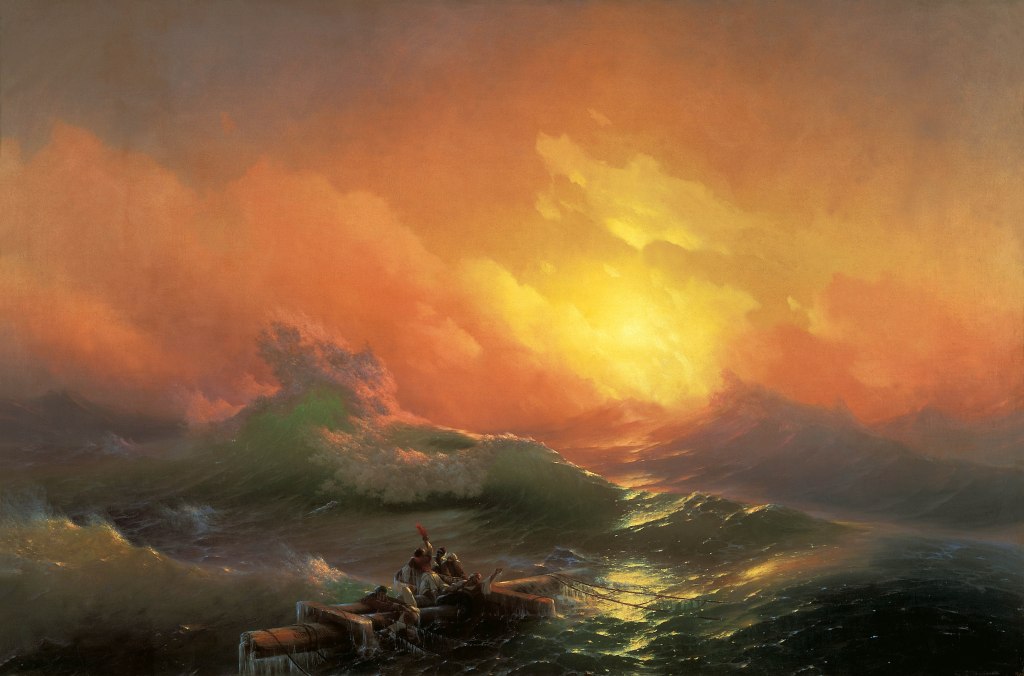
The canvas of “The 9th Wave” by Ivan Aivazovsky is recognized all over the world as an unsurpassed masterpiece and is one of the most famous work of this great Russian artist, who especially liked to paint on the marine theme. This painting is both an ode to the invincible and unpredictable water element and, the indestructible human spirit.
The canvas ‘The 9th Wave’ will not leave anyone indifferent, the 9th wave is a symbol of doom, the desire of survive is a symbol of hope. They create in the picture more than just a confrontation, they ask a question that the viewer has to answer.
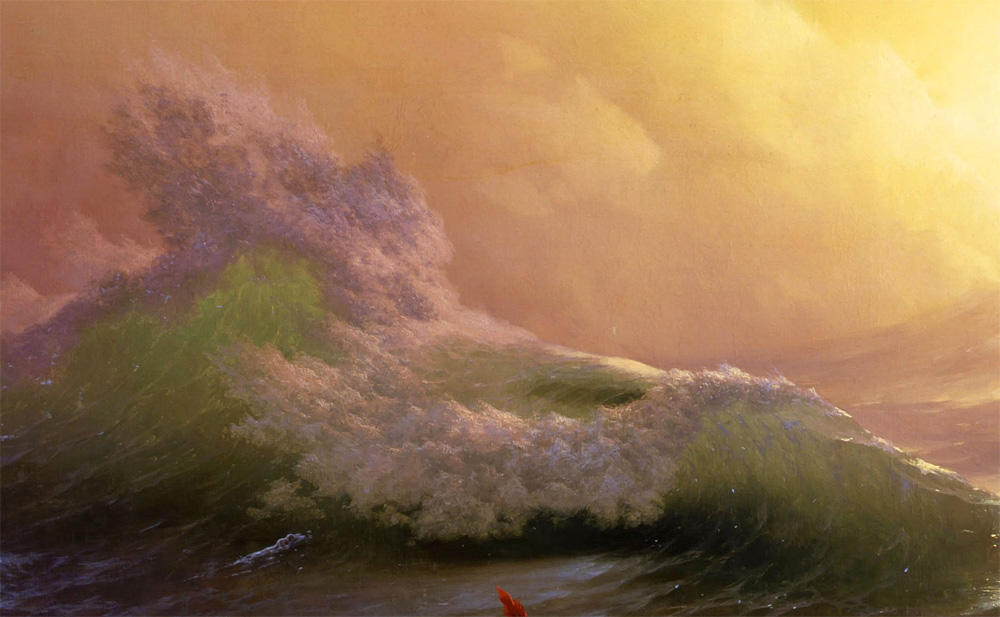
The 9th wave is a symbol of fatal danger, the highest rise of a formidable, irresistible force. The symbol of the 9th wave comes from the old folk belief that during a sea storm the 9th wave is the strongest and most dangerous, often fatal. The term is often used in a figurative and metaphorical sense.
The artist painted “The 9th Wave” in 1850 in Feodosia and this canvas is perhaps the most outstanding work of art of the marine painter and of all Russian painting. It was painted in oil on canvas and measure 221 X 332cm. It was painted in only 11 days and was immediately bought by Nicholas I for the Hermitage. In 1897, the canvas was transferred to the collection of the State Russian Museum in St Petersburg where it is still today.
In the canvas the night storm has passed and now people are clinging the mast in their last strength in the struggle for their lives. They are exhausted and waiting to see what the new day will bring them. The painting does not depict the storm but its consequences.
It is believed that “The 9th Wave” was created according of the artist’s own recollections after surviving a shipwreck in the Bay of Biscay in 1844.
The main characteristic of the canvas is its duality. “The 9th Wave” canvas can be interpreted with a share of optimism in which men survived the shipwreck or it can be perceived as the triumph of the elements over man.
When we look at the canvas, we see the first rays of the sun breaking through which brings hope of survival to the sailors who have been wrecked.
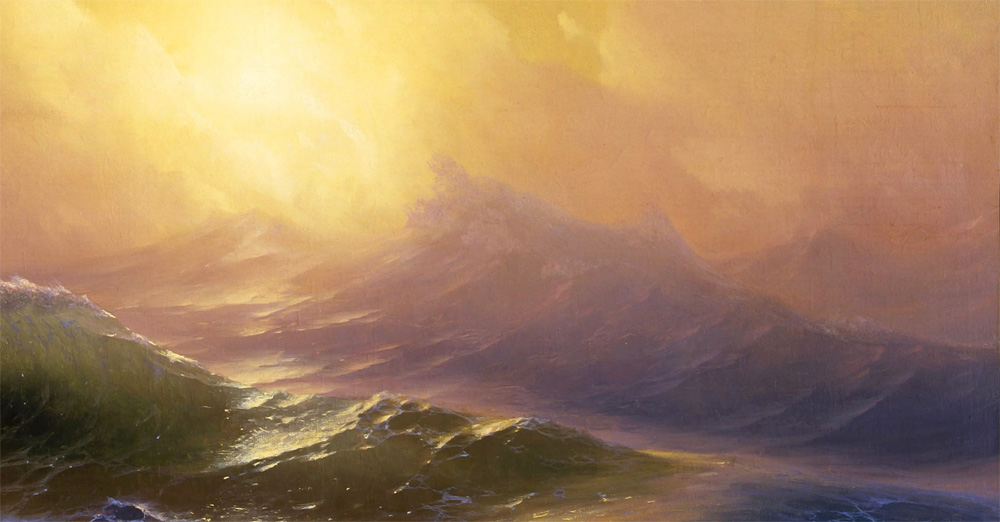
The glare of the sun’s rays on the restless sea is so mysterious that it gives the canvas volume and realism. The coloring of the canvas is amazing and it is sometimes impossible to determine where the sea begins and the sky ends.
The image of the sea speaks of the last night storm which destroyed the ship, and the dark abyss of the waves brings fear. But the sea is not calm yet, we can see larges waves inflated by the wind. It seems that the waves oscillate, there the 9th wave, the huge last wave of the outgoing storm is coming and the survivors are waiting for it with fear.
The fragment of the mast is huge showing us the size of the sunken ship. It looks like a cross, which can be interpreted as a symbol of salvation or a symbol of crucifixion. On it are only a small handful of people showing us the size of the catastrophe and when we take into account the fact that the average crew of a ship at that time was more than a hundred people, the whole horror of the night storm is felt.
The red handkerchief which is waved by one of the surviving sailors may symbolize an antithesis to the white flag and people’s unwillingness to surrender or it can symbolize new blood
The picture on an emotional level shows the superiority of the elements over the fragile life of a person.
This canvas has now become legend itself and has been at many exhibitions held in different countries of the world I hope you enjoyed it.
You can also read our article about the painting “The Black Sea” by Ivan Aivazovsky
La peinture de “La 9ème Vague” d’Ivan Aïvazovski est reconnue dans le monde entier comme un chef-d’œuvre inégalé et est l’une des œuvres les plus célèbres de ce grand artiste russe, qui aimait particulièrement peindre le thème marin. Ce tableau est à la fois une ode à l’invincible et imprévisible élément de l’eau et, à l’indestructible esprit humain .
Le tableau ‘La 9ème Vague’ ne laissera personne indifférent, la 9ème vague est un symbole de malheur, le désir de survivre est un symbole d’espoir. Ils créent dans l’image plus qu’une simple confrontation, ils posent une question à laquelle le spectateur doit répondre.
La 9ème vague est un symbole de danger mortel, la plus haute montée d’une force redoutable et irrésistible. Le symbolisme de la 9ème vague vient de la vieille croyance populaire selon laquelle, lors d’une tempête en mer, la 9ème vague est la plus forte et la plus dangereuse, souvent mortelle. Le terme est souvent utilisé dans un sens figuratif et métaphorique.
L’artiste a peint “La 9ème Vague” en 1850 à Feodosia et cette toile est peut-être l’œuvre d’art la plus remarquable du peintre de marine et de toute la peinture russe. Elle a été peinte à l’huile sur toile et mesure 221 X 332cm. La toile a été peinte en seulement 11 jours et a été immédiatement acheté par Nicolas Ier pour l’Ermitage. En 1897, ‘la 9ème Vague” a été transférée à la collection du Musée d’État Russe de Saint-Pétersbourg où elle se trouve encore aujourd’hui.
Sur la toile, la tempête nocturne est passée et maintenant les gens s’accrochent au mât avec leurs dernières forces dans la lutte pour leur vie. Ils sont épuisés et attendent de voir ce que le nouveau jour leur apportera. La toile ne représente pas la tempête mais ses conséquences.
On pense que la “9ème Vague” a été créée selon les propres souvenirs de l’artiste après avoir survécu à un naufrage dans le golfe de Gascogne en 1844.
La principale caractéristique de la peinture est sa dualité. La peinture de “La 9ème Vague” peut être interprétée avec une part d’optimisme dans laquelle les hommes ont survécu au naufrage ou elle peut être perçue comme le triomphe des éléments sur l’homme.
Quand on regarde le tableau, on voit percer les premiers rayons du soleil qui apportent l’espoir de survie aux marins naufragés.
L’éclat des rayons du soleil sur la mer agitée est si mystérieux qu’il donne au tableau volume et réalisme. La coloration de la toile est étonnante et il est parfois impossible de déterminer où commence la mer et où finit le ciel.
L’image de la mer parle de la dernière tempête nocturne qui a détruit le navire, et l’abîme sombre des vagues fait peur. Mais la mer n’est pas encore calme, on voit de grosses vagues gonflées par le vent. Il semble que les vagues oscillent, là, la 9ème vague, l’énorme dernière vague de la tempête sortante arrive et les survivants l’attendent avec peur.
Le fragment du mât est énorme nous montrant la taille du navire coulé. Il ressemble à une croix, qui peut être interprétée comme un symbole de salut ou un symbole de crucifixion. Il n’y a qu’une petite poignée de personnes ce qui nous montrent l’ampleur de la catastrophe et quand on tient compte du fait que l’équipage moyen d’un navire à cette époque était de plus d’une centaine de personnes, toute l’horreur de la tempête nocturne se fait sentir .
Le mouchoir rouge qui est agité par l’un des marins survivants peut symboliser une antithèse au drapeau blanc et la réticence des gens à se rendre ou il peut symboliser du sang neuf.
L’image sur le plan émotionnel montre la supériorité des éléments sur la vie fragile d’une personne.
Cette toile est maintenant devenue une légende elle-même et a fait l’objet de nombreuses expositions organisées dans différents pays du monde. J’espère qu’elle vous a plu.
Vous pouvez également lire notre article sur le tableau “La Mer Noire” d’Ivan Aïvazovski
Le théâtre Bolchoï est l’un des théâtres d’opéra et de ballet les plus importants au monde et la fierté de Moscou. Plus de 800 œuvres ont été mises en scène dans le théâtre.
Le théâtre Bolchoï a deux dates de naissance : mars 1776 et janvier 1825.
Saviez-vous qu’en francais le théâtre Bolchoï veut dire le grand théâtre?
Le 28 mars 1776, Catherine II a signé un privilège gouvernemental à Pyotr Vasilyevich Urusov pour le maintien de spectacles, mascarades, bals et autres événements pendant une période de 10 ans. Cette date est considérée comme le jour de la fondation du théâtre Bolchoï russe.
Le prince a commencé la construction du théâtre de la rue Petrovka et le théâtre a été nommé Petrovsky. après la rue Malheureusement, il a brûlé avant d’ouvrir et le prince a remis l’entreprise à son partenaire anglais, Mikhail Maddox. Ainsi, le théâtre Petrovky a été construit sous sa direction et l’inauguration du théâtre Petrovsky a eu lieu le 30 décembre 1780.
Ils ont donné un prologue solennel «Wanderers», écrit par A, Ablesimov, et un grand ballet pantomimique «Magic School», mis en scène par I. Paradise sur la musique de J. Startzer. Après le répertoire s’est formé principalement à partir d’opéras comiques russes et italiens avec des ballets et des ballets individuels
“Cet immense bâtiment, construit pour le plaisir et l’amusement populaire… selon les meilleurs architectes et l’approbation des connaisseurs de théâtre, a été construit et mené à bien avec tant de force et de rentabilité qu’il surpasse presque tous les nobles théâtres européens.”
C’est ainsi que le journal Moskovskie a répondu à l’ouverture du théâtre Petrovsky
Le bâtiment, conçu par l’architecte Christian Rozberg, a été construit en seulement 5 mois. Le théâtre disposait d’un auditorium à trois niveaux de loges, d’une galerie, d’un parterre avec vingt rangées de bancs et d’un spacieux « parquet » entre les parterres et la scène, où des chaises étaient installées pour les visiteurs « spéciaux », et les autres publics pouvaient se tenir debout. Il a accueilli près d’un millier de personnes.
En outre, il y avait des espaces de bureau nécessaires, de nombreux foyers et salles, y compris la “salle de la mascarade”.
En 1788, la Rotonde a été ajoutée au bâtiment et a été le centre de la vie culturelle et sociale dès le début de son existence.
En 1794, en raison de difficultés financières, Maddox a été contraint de transférer le théâtre au trésor public et le théâtre Petrovsky devient l’Impérial.
En 1802-1803, le théâtre a été donné au prince Volkonsky qui était le propriétaire de l’une des meilleures troupes de théâtre de Moscou. Mais en 1804, le théâtre revint sous la juridiction du conseil d’administration et le prince Volkonsky fut nommé son directeur.
Une fois de plus après 25 ans, le 8 octobre 1805, le théâtre Petrovsky a brûlé. Les troupes ont commencé à se produire sur scène privée jusqu’à ce que le nouveau théâtre Arbat soit construit par K. I. Rossi sur la place Arbat en 1808.
N’ayant existé que quatre ans, le bâtiment du théâtre a brûlé lors de l’incendie de Moscou en 1812.
Après cela, le théâtre était situé sur Znamenka dans la maison d’Apraksin, qui avait été construite en 1792 par l’architecte F. Camporesi. La salle de théâtre de la maison d’Apraksin était exiguë et inconfortable, au lieu de chaises, il y avait des bancs recouverts de rêche matériel et il y a eu plusieurs incendies dans le théâtre.
Quelques années plus tard, en 1818, les troupes ont été dotées d’un théâtre rénové sur Mokhovaya, où elles s’étaient autrefois produites avant la guerre de 1812.
En 1819, un concours est annoncé pour la construction d’un nouveau théâtre. Andrei Mikhailov a été reconnu vainqueur mais son projet était trop cher et a été repensé par Osip Bove. Il a conservé la base de la composition de Mikhailov, mais a changé la proportion du bâtiment et a fait des ajustements importants à sa décoration extérieure et intérieure.
Le théâtre allait devenir le centre de composition du temple de la ville de l’Empire, glorifiant la victoire de la guerre patriotique. La construction a commencé en 1820 et le nouveau “Théâtre Bolchoï Petrovky” a ouvert le 6 janvier 1825 avec la représentation “Le triomphe des Muses” qui a été un grand succès. Les rôles ont été interprétés par les meilleurs acteurs moscovites : le tragédien PS Mochalov, NV Lavrov, F. Gyullen-Sor. Le critique de théâtre Sergei Timofeevich Aksakov a conservé des souvenirs de cette découverte:
Le théâtre Bolchoï Petrovky, qui a surgi de vieilles ruines carbonisées… m’a étonné et ravi… Un magnifique bâtiment immense, exclusivement dédié à mon art préféré, déjà avec son apparence seule m’a conduit à de joyeuses excitations »
En 1842, le théâtre passe sous la direction de la Direction des théâtres impériaux de Saint-Pétersbourg. Alexei Nikolaevich Verstovsky a été nommé directeur du bureau du théâtre de Moscou jusqu’en 1859 et une troupe d’opéra est arrivée à Moscou en provenance de Saint-Pétersbourg.
En 1943, une reconstruction majeure du bâtiment du théâtre a été réalisée selon le projet de l’architecte Alexander Stepanovich Nikitin. Les chapiteaux loniques du portique ont été remplacés par des chapiteaux de type Érechthéion, la ligne de loges latérales a été reconstruite ainsi que les couloirs et la partie scène, où apparaissait l’arrière-scène.
Le 11 mars 1853, le théâtre a de nouveau brûlé et seuls les murs extérieurs du bâtiment et la colonnade du portique ont survécu.
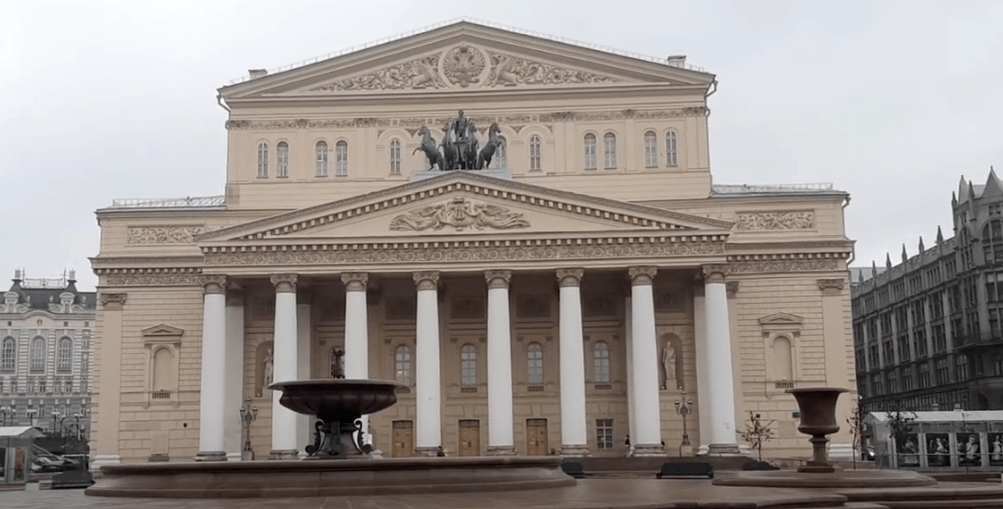
Albert Kavos était le nouvel architecte et le Théâtre a été restauré en trois ans. Le volume du bâtiment et l’agencement ont été conservés, mais la hauteur a été légèrement augmentée. Albert Kavos a modifié les proportions et a redessiné entièrement le décor architectural, dessinant les façades dans l’esprit de l’éclectisme des premiers temps. Au lieu de la sculpture en albâtre d’Apollon qui est mort dans l’incendie, un quadrige en bronze de Pyotr Klodt a été placé au-dessus de l’entrée du portique, et un aigle à deux têtes en plâtre qui est l’emblème d’État de l’Empire russe a été placé sur le fronton.
L’architecte théâtral accorda une attention particulière à l’auditorium et à la partie scénique, et dans la seconde moitié du XIXe siècle, le théâtre Bolchoï était considéré comme l’un des meilleurs au monde en termes de propriétés acoustiques grâce à Albert Kavos qui avait conçu l’auditorium comme un immense instrument de musique.
L’espace de l’auditorium a été considérablement agrandi, ce qui a permis de faire des pavillons avant. La salle a gagné un niveau supplémentaire et est devenue six niveaux pouvant accueillir près de 2300 spectateurs. De part et d’autre, près de la scène, se trouvaient des boîtes aux lettres destinées à la famille royale, au ministère de la cour et à la direction du théâtre. La loge d’apparat du tsar faisait un peu saillie dans la salle et en devenait le centre, en face de la scène. La barrière de la loge royale était soutenue par des consoles en forme d’atlantes coudées. Même des décennies plus tard, tous ceux qui entraient dans cette salle étaient émerveillés par la splendeur framboise-or.
Le lustre de l’auditorium était à l’origine éclairé par 300 lampes à huile. Les lampes ont été soulevées à travers un trou dans le plafond pour être allumées, et autour de ce trou l’académicien Alexei Titov a peint “Apollon et les Muses” mais au lieu d’une des muses caconiques, la muse des hymnes sacrés de Polyhymnia, Titov a représenté le muse de la peinture inventée par lui, avec une palette et un pinceau dans ses mains.
La rapidité de la reconstruction du bâtiment était due au fait que la construction devait être achevée par la célébration à l’occasion du couronnement de l’empereur Alexandre II. Le 20 août 1856, le théâtre a rouvert avec l’opéra de Belini; “Le Puritani” reflétant les goûts de la noblesse de la cour. La splendeur de l’auditorium, le public mondain qui l’emplit et qui fut accueilli par les membres de la famille impériale fut capté par le futur peintre de la cour Romanov Mihai Zichy et, nombre de ses aquarelles furent écrites pour l’album du couronnement qui devint l’une des publications les plus impressionnantes de Russie en poids et en taille.
L’un des événements les plus importants de l’histoire du Ballet du Bolchoï dans la seconde moitié du XIXe siècle a été la production du ballet “Don Quichotte”, dont la première a eu lieu le 14 décembre 1869.
Le 20 février 1877 eut lieu la première mondiale du ballet de Piotr Ilyish Tchaïkovski, le « Lac des cygnes ». Près de 20 ans plus tard, la performance canonique, connue dans le monde entier, a été mise en scène par Petipa et Lev Ivanov.
Tchaïkovski a fait ses débuts au théâtre Bolchoï en tant qu’auteur non seulement de ballet mais aussi d’opéra. Et le 18 janvier 1869, la première de l’opéra “Voyevoda” a eu lieu.
Le 3 février 1884 eut lieu la première mondiale de l’opéra “Mazeppa” et le 19 janvier 1887 la première représentation de l’opéra “Cherevichki” dans lequel Tchaïkovski fit ses débuts en tant que chef d’orchestre avec un grand succès.
Dans les années 1886-1893, l’arrière du bâtiment a été reconstruit sur le projet de l’architecte Eduard Karlovich Gernet et, par conséquent, les colonnes du portique conservées par Kavos se sont retrouvées à l’intérieur de l’entrepôt.
En 1890, une enquête a révélé que les fondations du théâtre reposaient sur des pilotis en bois pourris, elles ont donc été reconstruites en 1894-1898 suite aux projets des architectes Ivan Ivanovich Rerberg, Konstantin Viktorovich Tersky et Karl Yakovlevich Mayevsky.
Une étape sans précédent dans l’histoire du développement du théâtre Bolchoï est associée à Vladimir Telyakovsky. Sous sa direction, le théâtre a atteint un niveau et une importance mondiale. Une nouvelle ère s’ouvrait dans la vie de la société, et donc dans les arts. Le romantisme et le mélodrame appartenaient au passé et le théâtre musical prenait de nouvelles caractéristiques.
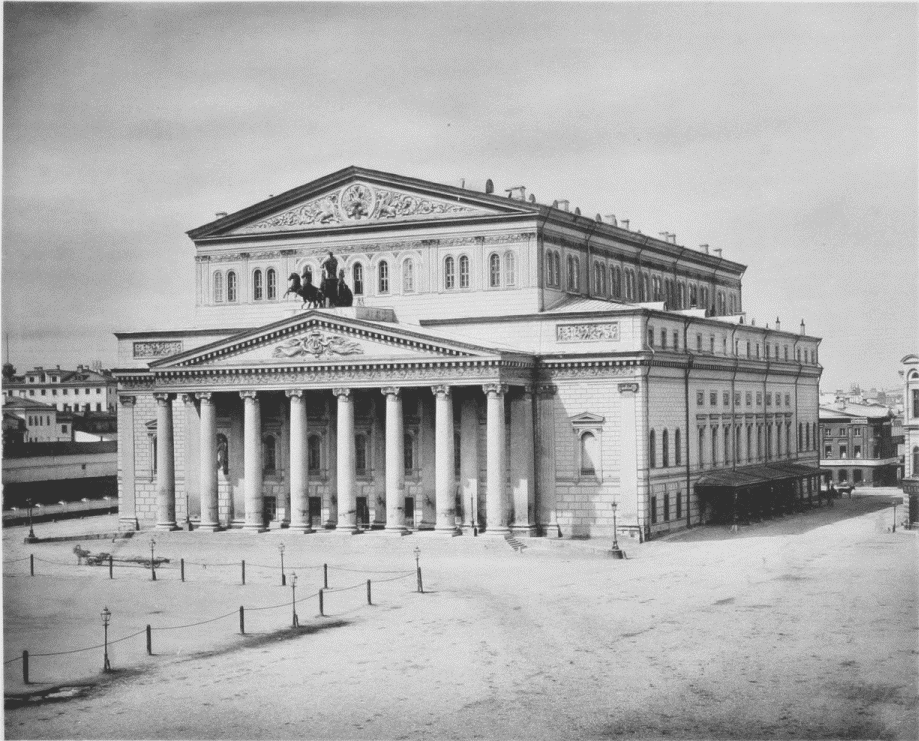
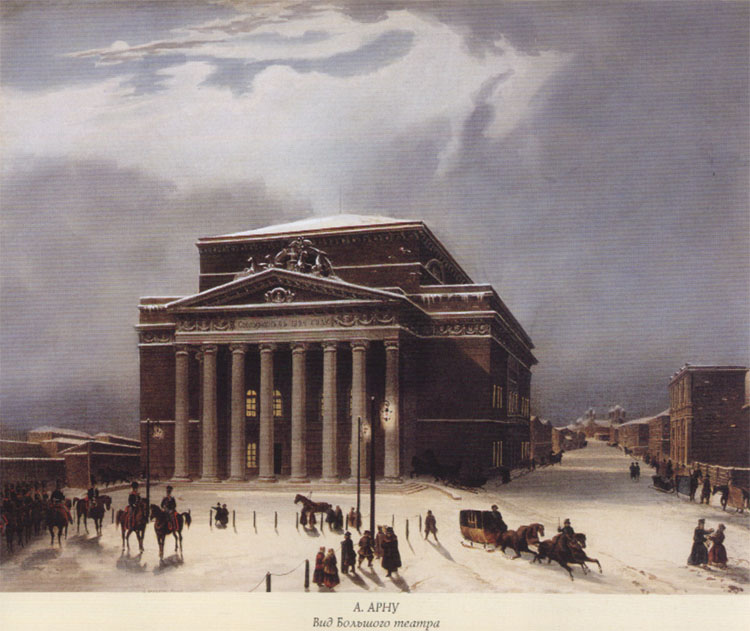
le théâtre Bolchoï au 19th century
À partir de 1918, le théâtre Bolchoï a été qualifié d’académique et pendant plusieurs années après la révolution, les disputes sur son sort n’ont pas cessé. Enfin, en 1922, le Présidium du Comité exécutif central panrusse décida de considérer la fermeture du théâtre comme économiquement inopportune.
En 1921, l’état catastrophique du mur semi-circulaire de l’auditorium, qui servait de support aux voûtes des couloirs et à l’ensemble de l’auditorium, est découvert. Les travaux de renforcement du mur ont commencé sous la direction de I. I. Resberg. Le 18 février 1921, l’inauguration du Beethoven Hall a eu lieu. Pendant de nombreuses années, il a servi de plate-forme pour les concerts de chambre des artistes de l’orchestre et des solistes de la troupe d’opéra. En 1922, les artistes du Bolchoï ont commencé à se produire sur la scène du soi-disant Nouveau Théâtre (ancien Théâtre Nezlobin)
Au milieu des années 1920, le Bolchoï n’avait plus à prouver son droit à l’existence, son statut etait tellement renforcé qu’en 1925, il a été décidé de fêter son centenaire en grand. L’ouverture du bâtiment du théâtre Bolchoï Petrovsky, qui a eu lieu en 1825, a été prise comme point de départ.
En 1928, il a été décidé d’éliminer la hiérarchie des rangs des visiteurs et l’architecte PA Tolstykh a replanifié un certain nombre d’escaliers et d’autres locaux du bâtiment.
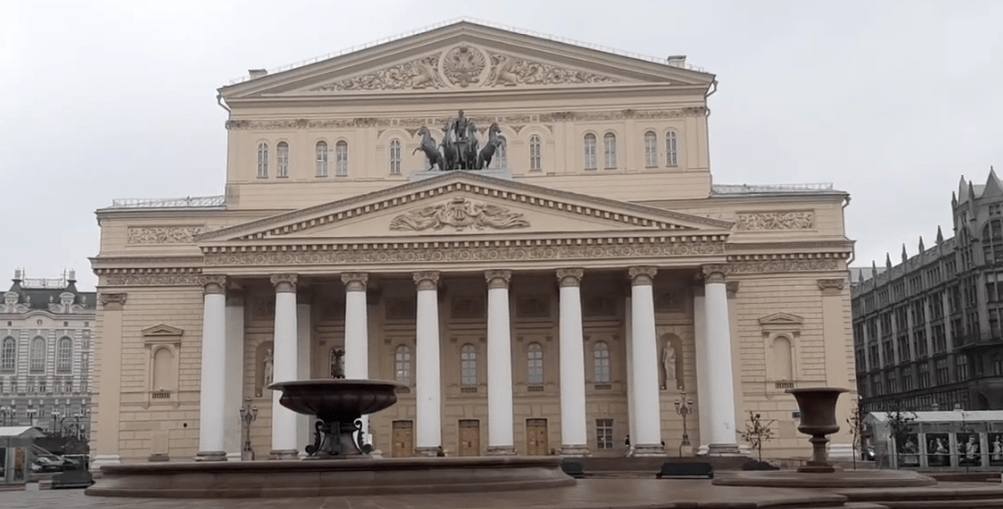
le théâtre Bolchoï
Depuis le 15 avril 1941, le théâtre Bolchoï, a été reconstruit et le 22 juin 1941 a eu lieu la première de l’opéra Roméo et Juliette de Gounod.
Pendant la Grande Guerre patriotique, d’octobre 1941 à juillet 1943, le théâtre Bolchoï a été évacué à Kuibyshev (ancienne et actuelle Samara), où il donne des représentations d’Eugène Onéguine, du Lac des Cygnes, de La Traviata, d’Aida, de Carmen, de la Dame de Pique…
Pendant son séjour à Kuibyshev, le théâtre Bolchoï a fait don de 198 litres de sang, lavé mille ensembles d’uniformes militaires d’hiver et envoyé sept brigades au front, donnant 1140 concerts. Le Bolchoï a développé des activités d’usine amateur, fournit une aide matérielle aux familles des soldats de première ligne, collecté des fonds pour une colonne de chars et pour la construction d’un escadron, souscrit à un prêt militaire.
Le 22 octobre 1941, une bombe a frappé le bâtiment du théâtre Bolchoï, l’onde de choc est passé obliquement entre les colonnes du portique et percé le mur de façade causant des dégâts importants dans le vestibule.
Malgré les difficultés de la guerre, les travaux de restauration ont commencé dans le théâtre pendant l’hiver 1942, et même si le bâtiment historique était fermé, des représentations ont été jouées à Moscou.
En 1944, Leonid Lavrovsky, en tant que directeur artistique de la troupe de ballet, et la première danseuse étoile Gallerina Ulanova, ont déménagé au Théâtre Bolchoï, soulignant le statut du théâtre en tant que principal théâtre musical de Russie.
À la fin des années 1940 et au début des années 1950, le rôle prioritaire dans la formation du répertoire lyrique a été donné à l’opéra classique russe. Les productions des années d’après-guerre se distinguent par leur ampleur épique et l’ampleur de leurs décisions scéniques.
En 1955, un nouveau rideau de brocart luxueux conçu par FF Fedorovsky est apparu sur la scène du théâtre. C’était la décoration principale de la scène pendant 50 ans.
En 1956, Assaf Messere, s’appuyant sur la production d’Alexander Gorsky, Petipa et Lev Ivanov, met en scène sa propre version du ballet “Swan Lake”. C’est cette version qui a été présentée lors de la tournée légendaire de la troupe de ballet à Londres, qui est entrée dans l’histoire, après quoi elle a commencé à s’appeler le Ballet du Bolchoï dans le monde entier.
En ballet, l’ère de Youri Grigorovich, qui a dirigé la Balshoi Ballet Company de 1964 à 1995 a été très réussie. Il a créé ses propres éditions de presque tous les ballets classiques du répertoire, mis en scène des danses dans plusieurs représentations d’opéra et composé 5 ballets originaux : Casse-Noisette de Tchaïkovski en 1966, Spartacus de Khatchatourian en 1968, Ivan le Terrible sur la musique de Prokofiev en 1975, Angara d’Eshpay en 1976 et The Golden Age de Chostakovitch en 1982.
De 1995 à 2002, une nouvelle scène du théâtre Bolchoï a été construite rue Bolshaya Dmitrovka, maison 4, bâtiment 2 comprenant 879 places. La nouvelle scène s’est ouverte le 29 novembre 2002 avec l’opéra de NA Rimsky-Korsakov “The snow Maiden”.
En 2001, Alexander Vedernikov a été nommé nouveau directeur musical du théâtre et la pratique de la location de spectacles a été introduite. L’implication du Bolchoï dans le processus théâtral mondial a été facilitée par sa participation à des productions communes, qui sont également devenues de plus en plus courantes au fil des ans.
Le 1er juillet 2005, la scène historique du théâtre Bolchoï a été fermée pour reconstruction et a rouvert le 28 octobre 2011 avec un concert de gala avec la participation de danseurs d’opéra et de ballet dans la représentation de “Ruslan et Lyudmila” mise en scène par Dmitri Chernyakov.
Depuis 2013, Vladimir Urin est le directeur général du Théâtre Bolchoï, et sa première année, un orgue à vent a été produit par la société allemande de facture d’orgues Glatter-Götz, a été installé au théâtre Bolchoï.
En 2014, Tugan Sokhiev a été nommé au poste de chef d’orchestre et directeur musical du Bolchoï, qui partageait largement le répertoire et la politique du personnel précédemment introduits.
En juillet 2016, le Théâtre Bolchoï a lancé une série de retransmissions de rue de ses représentations. Elles ont été réalisées sur un écran spécial tous temps monté sur la façade principale du théâtre et, ont été programmées pour coïncider avec le 5e anniversaire de l’achèvement de la restauration.
En 2020, la coopération avec M. Chernyakov s’est poursuivie avec la production de l’opéra Sadko ; Le spectacle est devenu l’un des plus marquants de l’histoire récente du théâtre Bolchoï et a été présenté avec un grand succès dans de nombreux pays.
En mars 2020, au milieu du verrouillage causé par la pandémie de coronavirus, le théâtre Bolchoï a lancé une série d’émissions en ligne sur sa chaîne YouTube officielle. Le premier jour, le ballet “Le Lac des cygnes” a été regardé par plus d’un million de personnes.
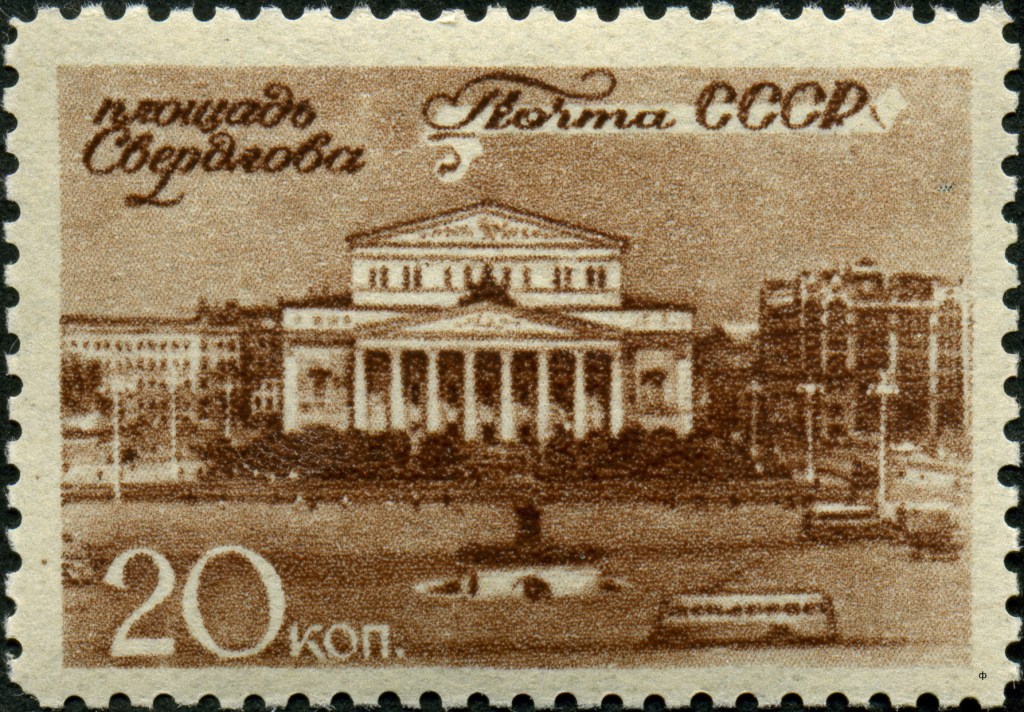
The Bolshoi theater is one of the most significant opera and ballet theaters in the world and the pride of Moscow. More than 800 works were staged in the theater.
The Bolshoi theater has two dates of birth: March 1776 and January 1825.
Did you know that in English the Bolshoi theater means the big theater?
On March 28, 1776 Catherine II signed a government privilege to Pyotr Vasilyevich Urusov for the maintenance of performances, masquerades, balls and other events for a period of 10 years. This date is considered to be the founding day of the Russian Bolshoi theater.
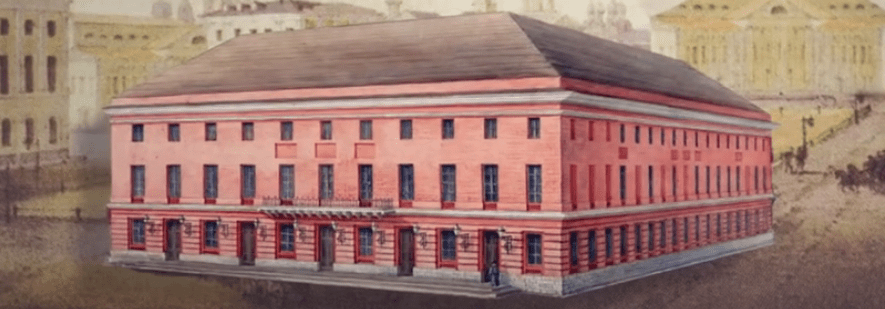
The prince began the construction of the theater on Petrovka street and the theater was named Petrovsky. after the street. Sadly it burned down before opening and the prince handed over the business to his English partner, Mikhail Maddox. So the Petrovky theater was built under his leadership and the Petrovsky theater grand opening was on December 30, 1780.
They gave a solemn prologue “Wanderers”, written by A, Ablesimov, and a large pantomimic ballet “Magic School”, staged by I. Paradise to the music of J. Startzer. After the repertoire was formed mainly from Russian and Italian comic operas with ballets and individual ballets.
“This huge building, built for popular pleasure and amusement … according to the best architects and the approval of the theater connoisseurs, was built and brought to a perfect end with so much strength and profitability that it surpasses almost all noble European theaters.”
This is how the Moskovskie newspaper responded to the opening of the Petrovsky Theater.
The building, designed by architect Christian Rozberg, was built in just 5 months. The theater had an auditorium with three tiers of boxes, a gallery, a stalls with twenty rows of benches and a spacious “parquet” between the stalls and the stage, where chairs were installed for “special” visitors, and other public could stand. It accommodated almost a thousand people.
In addition there were necessary office space, numerous foyers and halls, including the “masquerade room”.
In 1788, the Rotunda was added to the building and was the center of both cultural and social life from the very beginning of its existence.
In 1794, due to financial difficulties, Maddox was forced to transfer the theater to the treasury and the Petrovsky theater became the Imperial.
In 1802-1803, the theater was given to Prince Volkonsky who was the owner of one of the best Moscow theater troupes. But in 1804, the theater once again came under the jurisdiction of the Board of Trustees and Prince Volkonsky was appointed his director.
Once again after 25 years, on October 8, 1805 the Petrovsky theater burned downed. The troupes began to perform on private stage until the new Arbat Theater was built by K. I. Rossi on Arbat square in 1808.
Having existed only four years, the theater building burned down during the Moscow fire of 1812.
After that the theater was located on Znamenka in the house of Apraksin, which had been built in 1792 by the architect F. Camporesi. The theater room in Apraksin’s house was cramped and uncomfortable, instead of chairs there were benches covered with coarse cloth and several times there were fires in the theater.
A few years later, in 1818, the troupes was provided with a renovated theater on Mokhovaya, where they had once performed before the war of 1812.
In 1819 a competition was announced for the construction of a new theater. Andrei Mikhailov was recognized as the winner but his project was too expensive and was redesigned by Osip Bove. He preserved the basic of Mikhailov’s composition, but changed the proportion of the building, and made significant adjustments to its exterior and interior decoration.
The theater was to become the composition center of the Empire city temple, glorifying the victory in the Patriotique War. The construction began in 1820 and the new “Bolshoi Petrovky Theater” opened on January 6, 1825 with the performance “The triumph of te Muses” which was a great success. The roles were played by the best Moscow actors: the tragedian P. S. Mochalov, N. V. Lavrov, F. Gyullen-Sor. The theater critic Sergei Timofeevich Aksakov memories of this discovery have been preserved:
The Bolshoi Petrovky Theater, which arose from old, charred ruins … amazed and delighted me … A magnificent huge building, exclusively dedicated to my favorite art, already with its appearance alone led me into joyful excitements”
In 1842, the theater came under the leadership of the Saint Petersburg Directorate of Imperial Theaters. Alexei Nikolaevich Verstovsky was appointed manager of the Moscow theater office until 1859 and an opera troupe arrived in Moscow from Saint Petersburg.
In 1943 a major reconstruction of the theater building was carried out according to the project of the architect Alexander Stepanovich Nikitin. The lonic capitals of the portico were replaced with capitals of the Érechthéion type, the line of side boxes were rebuilt as well as the couloirs and stage part, where the rear stage appeared.
On March 11, 1853 the theater once more burned down and only the outer walls of the building and the colonnade of the portico survived.
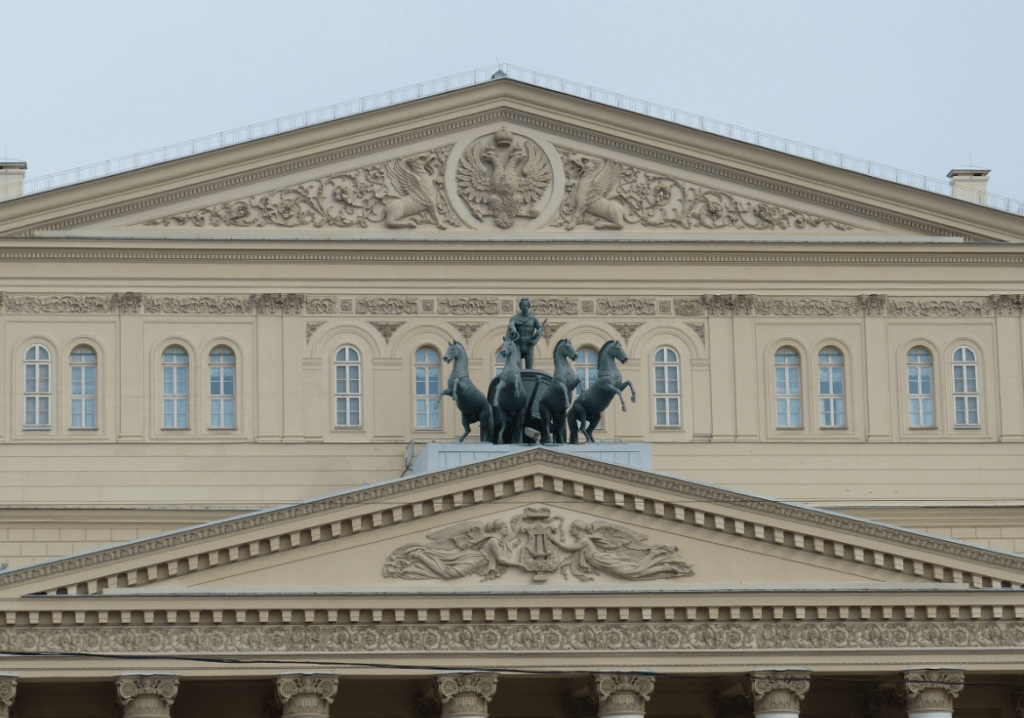
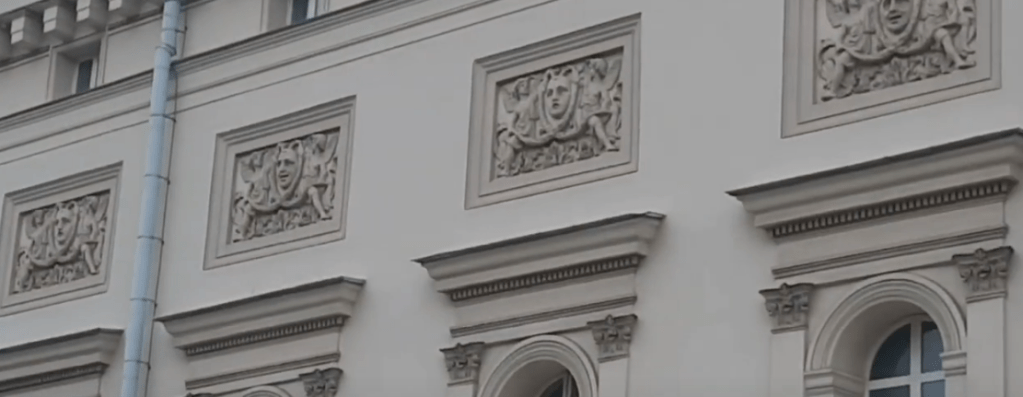
Albert Kavos was the new architect and the Theater was restored in three years. The volume of the building and the layout were preserved, but the height was slightly increased. Albert Kavos changed the proportions and completely redesigned the architectural decor, designing the facades in the spirit of early eclecticism. Instead of the alabaster sculpture of Apollo that died in the fire, a bronze quadriga by Pyotr Klodt was placed over the entrance of the portico, and a plaster double headed eagle which is the state emblem of the Russian Empire was placed on the pediment.
The theatrical architect paid the main attention to the auditorium and the stage part, and in the second half of the 19th century, the Bolshoi Theater was considered one of the best in the world in terms of its acoustic properties thanks to Albert Kavos who had designed the auditorium as a huge musical instrument.
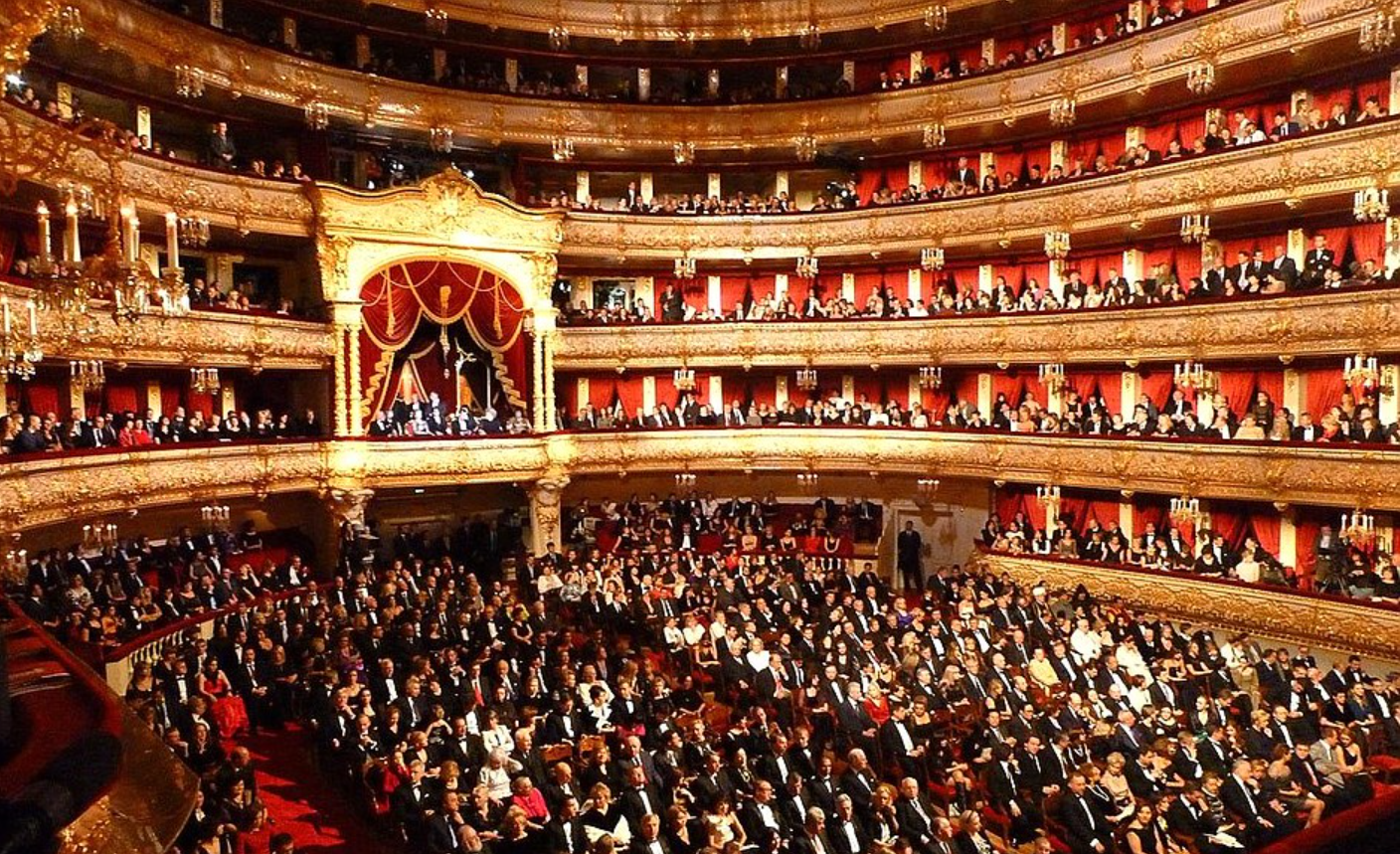
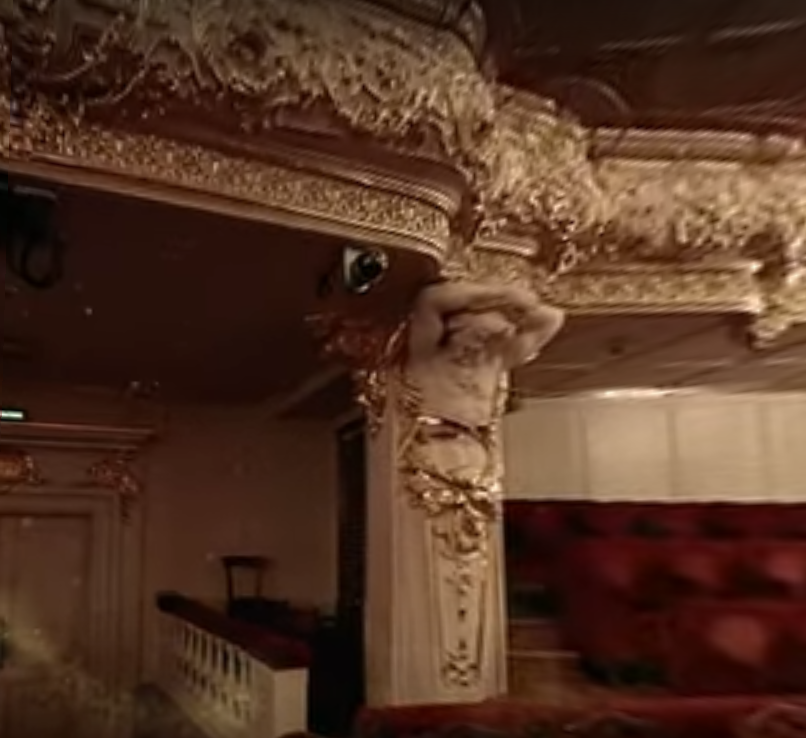
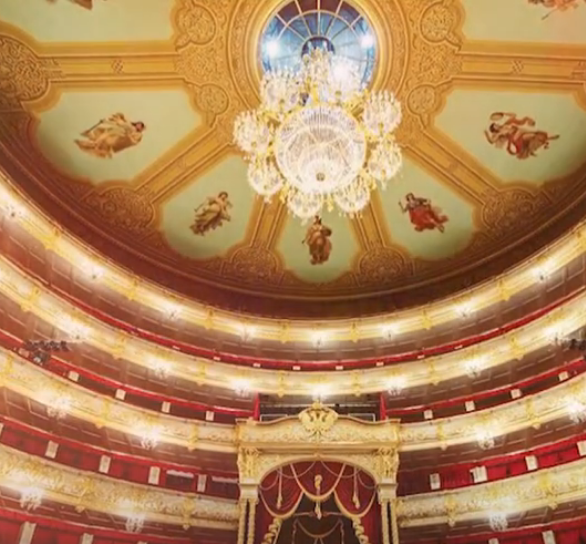
The space of the auditorium was significantly expended, which made it possible to make front lodges. The hall gained one more tier, and became six-tiered, accommodating almost 2300 spectators. On both sides, near the stage, there were letter boxes intended for the royal family, the ministry of the court and the theater directorate. The ceremonial Tsar’s box protruded a little into the hall and became its center, opposite the stage. The barrier of the Royal Lodge was supported by consoles in the form of bent atlantes. Even decades later everyone who entered this hall was amazed by the raspberry-gold splendor.
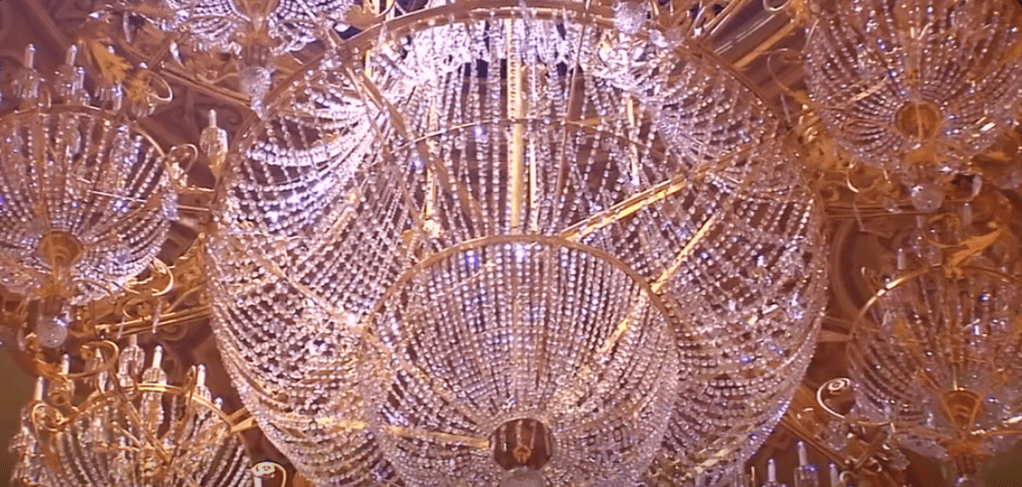
The chandelier of the auditorium was originally light by 300 oil lamps. The lamps were raised through a hole in the ceiling to be lit, and around this hole the Academician Alexei Titov painted “Apollo and the Muses” but instead of one of the canonical muses, the muse of the sacred hymns of Polyhymnia, Titov depicted the muse of painting invented by him, with a palette and a brush in her hands.
The speed of the reconstruction of the building was due to the fact that the construction had to be completed by the celebration on the occasion of the coronation of Emperor Alexander II. In August 20, 1856 the theater reopened with Belini’s opera;”Le Puritani” reflecting the tastes of the court nobility. The splendor of the auditorium, the high-society audience that filled it and was greeted by members of the imperial family was captured by the future Romanov court painter Mihai Zichy and a number of his watercolors were written for the coronation album which became one of the most impressive publications in Russia in weight and size.
One of the most significant events in the history of the Bolshoi Ballet in the 2nd half of the 19th century was the production of the ballet “Don Quixote” which premiered on December 14, 1869.
On February 20, 1877 the world premiere of Pyotr Ilyish Tchaikovsky’s ballet the “Swan Lake” took place. Almost 20 years later the canonical performance , known throughout the world, was staged by Petipa and Lev Ivanov.
Tchaikovsky made his debut at the Bolshoi theater as an author of not only ballet but also opera. And in January 18, 1869 the premiere of the opera “Voyevoda” took place.
On February 3, 1884, the world premiere of the opera “Mazeppa” took place, and on January 19, 1887 the first performance of the opera “Cherevichki” in which Tchaikovsky made his debut as a conductor with great success.
In the years 1886-1893 the back side of the building was rebuilt on the project of the architect Eduard Karlovich Gernet and as a result the columns of the portico preserved by Kavos ended up inside the warehouse.
In 1890 a survey reveled that the foundations of the theater rested on rotted wooden piles so they were rebuilt in 1894-1898 following the projects of the architects Ivan Ivanovich Rerberg, Konstantin Viktorovich Tersky and Karl Yakovlevich Mayevsky.
An unprecedented stage in the history of the development of the Bolshoi Theater is associated with Vladimir Telyakovsky. Under his leadership the theater reached a world level and significance. A new era began in the life of society, and therefore in arts. Romanticism and melodramatism were a thing of the past and musical theater took on new features.
Beginning in 1918, the Bolshoi Theater was called academic and for several years after the revolution disputes about its fate did not stop. Finally in 1922, the Presidium of all-Russian Central Executive Committee decided to consider the closure of the theater economically inexpedient.
In 1921, the catastrophic condition of the semicircular wall of the auditorium, which served as a support for the vaults of corridors and the entire auditorium was discovered. Work to strengthen the wall began under the leadership of i. I. Resberg. On February 18, 1921, the grand opening of the Beethoven Hall took place. For many years it functioned as a platform for chamber concerts of orchestra artists and soloists of the opera troupe. In 1922, Bolshoi artits began to perform on the stage of the so-called New Theater (former Nezlobin Theater)
By the mid-1920s, the Bolshoi no longer had to prove its right to exist, its status was strenghthened so much that in 1925 it was decided to celebrate its centenary on a grand scale. The opening of the building of the Bolshoi Petrovsky Theater, which took place in 1825 was taken as a starting point.
In 1928, it was decided to eliminate the rank hierarchy of visitors, and the architect P. A. Tolstykh replanned a number of stairs and other premises of the building.
Since April 15, 1941 the Bolshoi Theater has been reconstructed and on June 22, 1941 the premiere of Gounod’s opera Romeo and Juliet was held.
During the Great Patriotic War, from October 1941 to July 1943 the Bolshoi theater was evacuated to Kuibyshev (former and present Samara), where it staged performances of Eugene Onegin, Swan Lake, La Traviata, Aida, Carmen, The Queen of Spades…
During his stay in Kuibyshev, the Bolshoi Theater donated 198 liters of blood, washed a thousand sets of winter military uniforms, and sent seven brigades to the front, giving 1140 concerts. Bolshoi developed amateur factory activities, provided material assistance to the families of the front line soldiers, raised money for a tank column and for the construction of a squadron, subscribed to a military loan.
On October 22, 1941 a bomb hit the building of the Bolshoi Theater, the blast wave passed obliquely between the columns of the portico and broke through the front wall causing significative damage in the vestibule.
Despite the hardship of the war restauration work began in the theater in the winter of 1942, and even though the historic building was closed performances were played in Moscow.
In 1944, Leonid Lavrovsky, as the new artistic director of the ballet troupe, and the leading prima ballerina Gallerina Ulanova, moved to the Bolshoi Theater emphasizing the status of the theater as the main musical theater of Russia.
In the late 1940s and early 1950s, the priority role in the formation of the operatic repertoire was given to Russian classical opera. The productions of the post-war years were notables for their epic scale and the scale of their stage decisions.
In 1955 a new luxurious brocade curtain designed by F. F. Fedorovsky appeared on the stage of the theater. It was the main decoration of the stage for 50 years.
In 1956, Assaf Messere, relying on the production of Alexander Gorsky, Petipa and Lev Ivanov, staged his own version of the ballet “Swan Lake”. It was this version that was shown on the legendary tour of the ballet troupe in London, which went down in history, after which it began to be called the Bolshoi Ballet all over the world.
In ballet, the era of Yuri Grigorovich, who directed the Balshoi Ballet Company from 1964 to 1995 was very successful. He created his own editions of almost all classical ballets in the repertoire, staged dances in several opera performances and composed 5 original ballets: The Nutcracker by Tchaikovsky in 1966, Spartacus by Khachaturian in 1968, Ivan the Terrible to the music of Prokofiev in 1975, Angara by Eshpay in 1976 and The Golden Age by Shostakovitch in 1982.
From 1995 to 2002 a new stage of the Bolshoi Theater was built on Bolshaya Dmitrovka street, house 4, building 2 including 879 seats. The new stage opened on November 29, 2002 with N. A. Rimsky-Korsakov’s opera “The snow Maiden”.
In 2001, Alexander Vedernikov was appointed as the new musical director of the theater, and the practice of showing rental performances was introduced. The involvement of the Bolshoi in the world theatrical process was facilitated by his participation in joint productions, which also became more and more common over the years.
On July 1, 2005 the historical Stage of the Bolshoi Theater was closed for reconstruction and reopened on October 28, 2011 with a gala concert with the participation of opera and ballet dancers in the performance of “Ruslan and Lyudmila” staged by Dmitri Chernyakov.
Since 2013 Vladimir Urin has been the general director of the Bolshoi Theater, and his first year a new wind organ produced by the German organ building company Glatter-Götz, was installed at the Bolshoi theater.
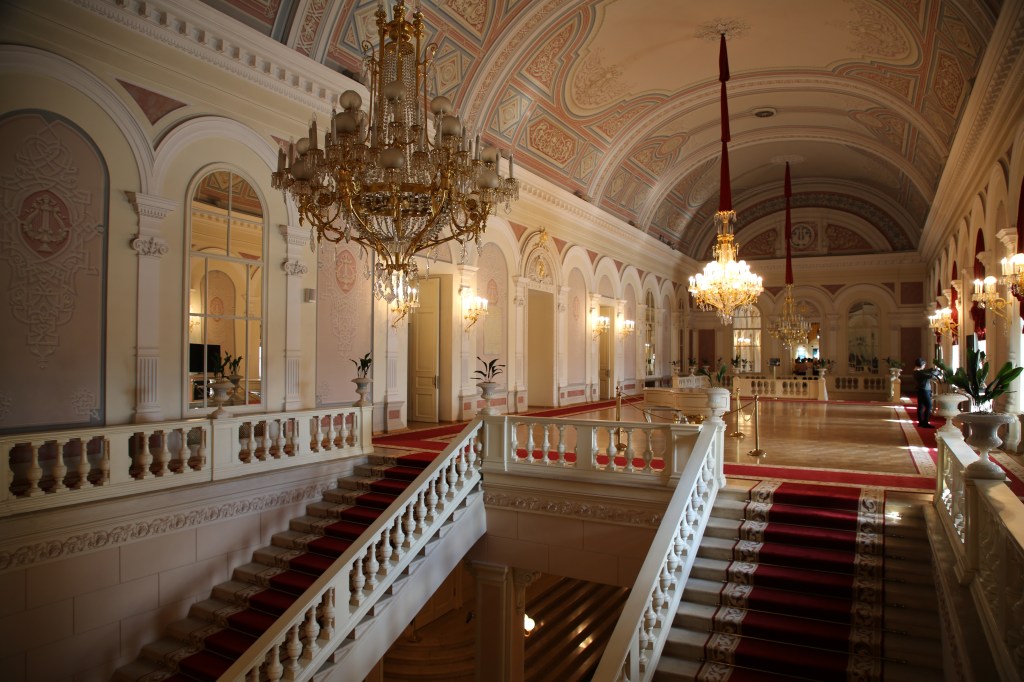
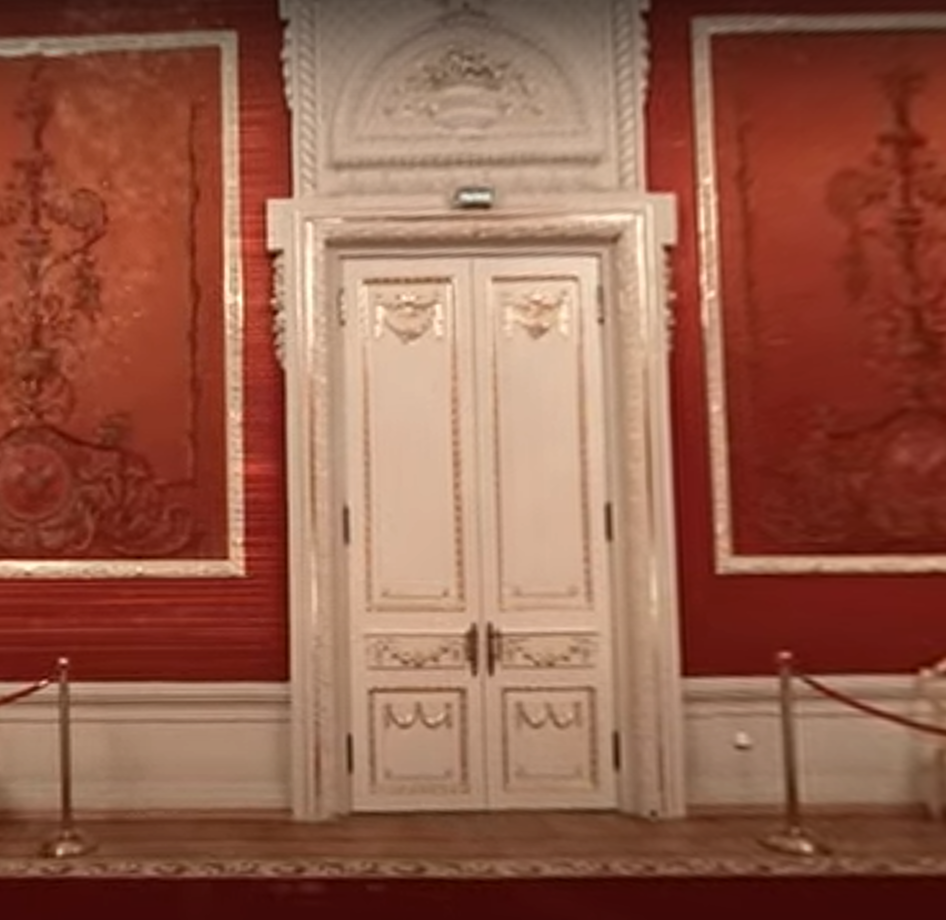
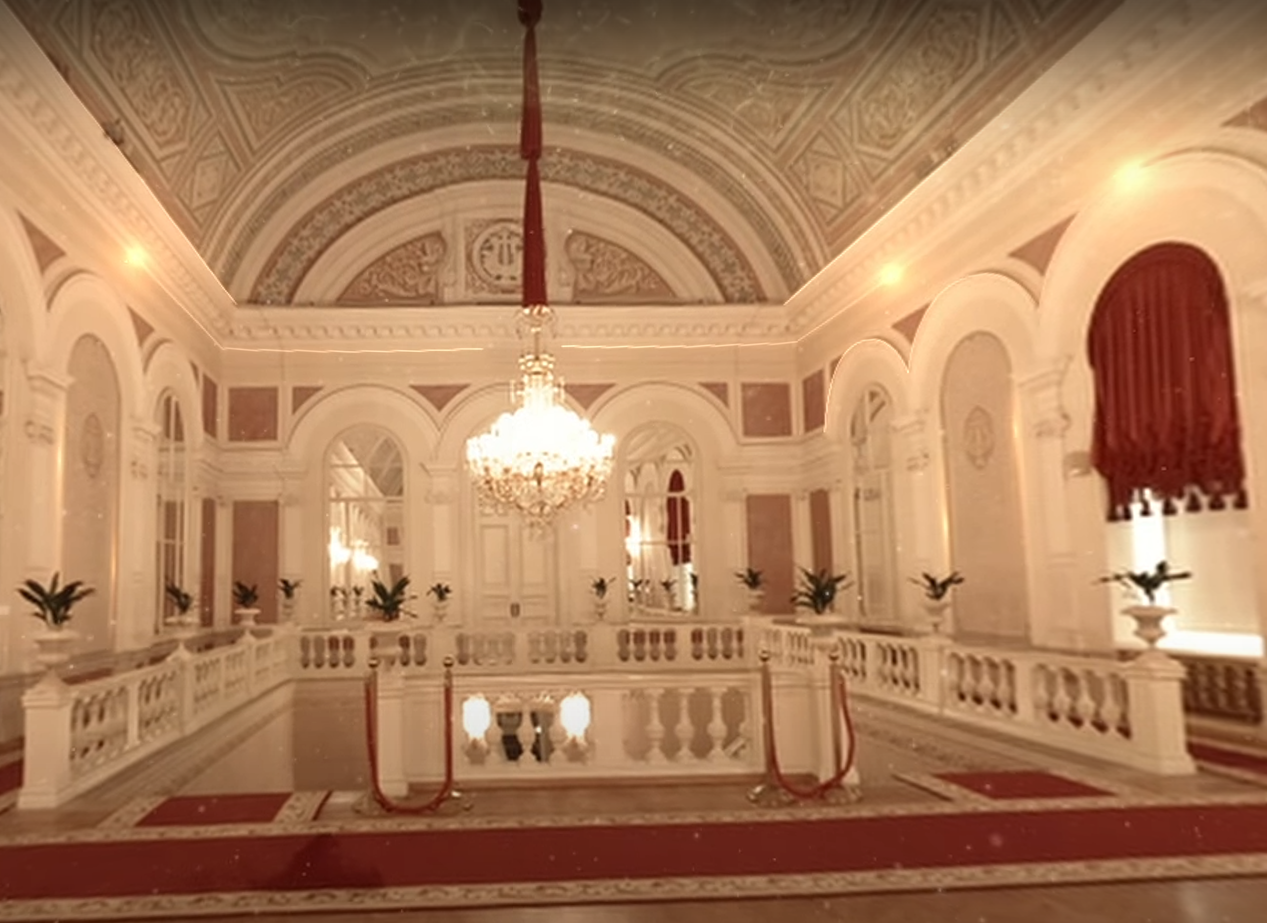
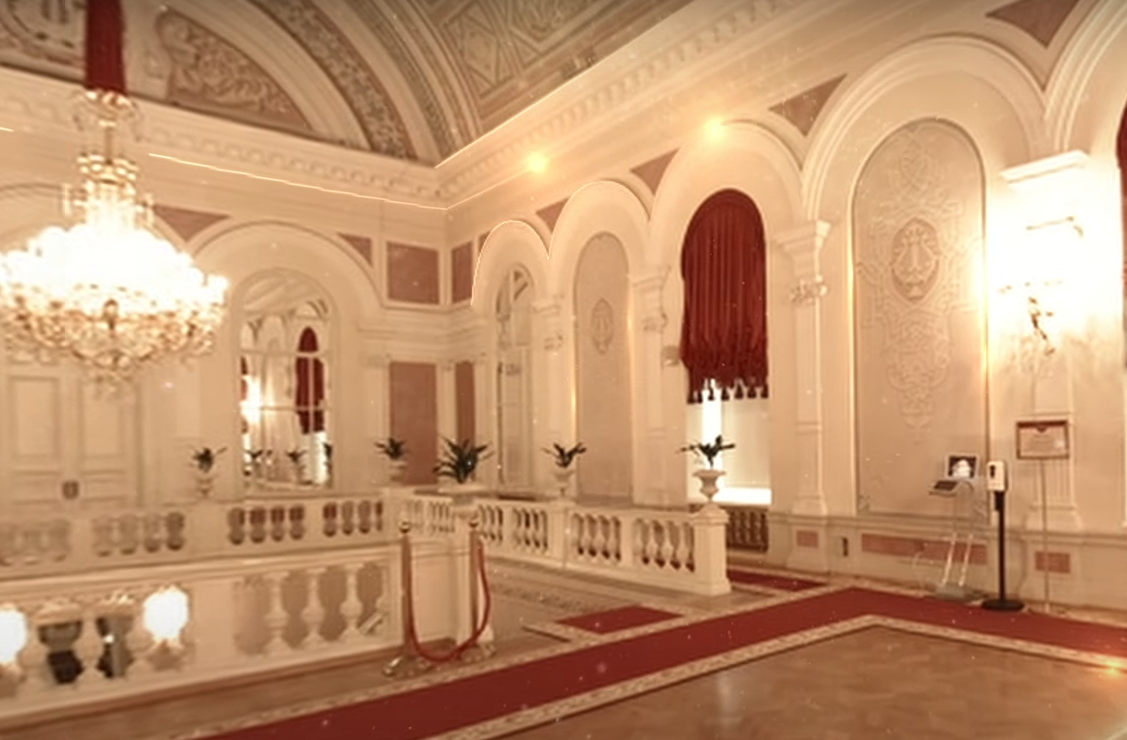
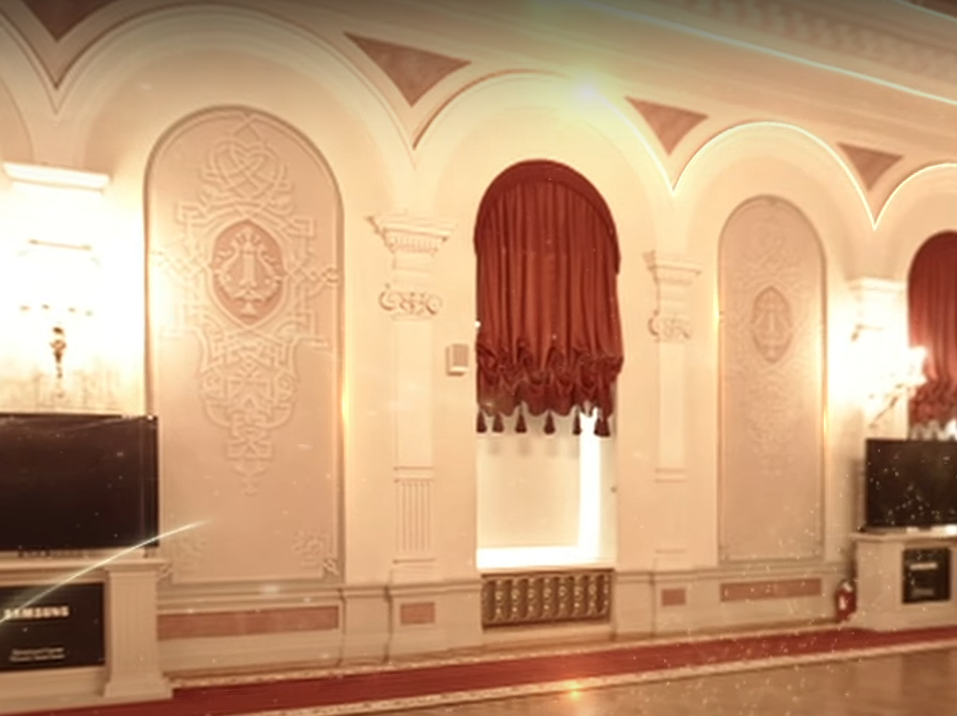
Main foyer of the Bolshoi theater 2020Main foyer of the Bolshoi theater 2020Main foyer of the Bolshoi theater 2020 Main foyer of the Bolshoi theater 2020Main foyer of the Bolshoi theater 2020
In 2014, Tugan Sokhiev was appointed to the post of chief conductor and musical director of the Bolshoi, who largely shared the previously introduced repertoire and personnel policy.
In July 2016, the Bolshoi Theater launched a series of street broadcasts of its performances which were carried out on a special all-weather screen mounted on the main facade of the theater and were timed to coincide with the 5th anniversary of the completion of the restoration.
In 2020, cooperation with Mr. Chernyakov continued with the production of the opera Sadko; The performance became one of the most striking in the recent history of the Bolshoi theater and was showned with great success in many countries.
In March 2020, amid the lockdown caused by the coronavirus pandemic, the Bolshoi theater began a series of online broadcasts on its official YouTube channel. On the first day, the ballet “Swan Lake” was watched by more than 1 million people.
“Winter morning” by Alexander Pushkin is a poem that I really like, maybe because it’s the first one I learned in Russian
The poem “Winter Morning” by Alexander Pushkin was written in one of the most fruitful creative periods; during his exile in Mikhailovskoye
The poem “Winter Morning”, contains several important themes. The main and most obvious is the theme of love. With each verse, one feels the poet’s tenderness addressed to his beloved, his respectful attitude towards her.
Another theme is reflections on the birth of a new day that erases all previous sorrows and makes the world more beautiful and fun.
And, finally, the general idea of the whole work is the unity of man and nature in the general philosophical sense.
“Winter morning” text translated into English is under the Video
Зимнее утро
Winter Morning
Мороз и солнце ; день чудесный! Ещё ты дремлешь, друг прелестный — Пора, красавица, проснись : Открой сомкнуты негой взоры Навстречу северной Авроры, Звездою севера явись!
Frost and sun, the day is wondrous! Still you slumber, lovely friend. ‘Tis time, O beauty, to awaken; Open your eyes from blissful sleep, Your gaze to meet the northern aurora. Ah, you arise like the North Star!
Вечор, ты помнишь, вьюга злилась, На мутном небе мгла носилась; Луна, как бледное пятно, Сквозь тучи мрачные ж`ёлтела, И ты печальная сидела — А нынче… погляди в окно:
Last night, remember, the storm scolded, And darkness floated in the muddy sky, The moon was like a pale spot Through the dark clouds, gleaming yellow. There you sat in melancholy, But now … through the window, cast a look
Под голубыми небесами Великолепными коврами, Блестя на солнце, снег лежит; Прозрачный лес один чернеет, И ель сквозь иней зеленеет, И речка подо льдом блестит.
Beneath the bluish heavens Like a gorgeous carpet, In the sun, the snow is glittering; The forest is dusky and lonely, And the spruce gleams green through the frost. And under the ice, the river sparkles
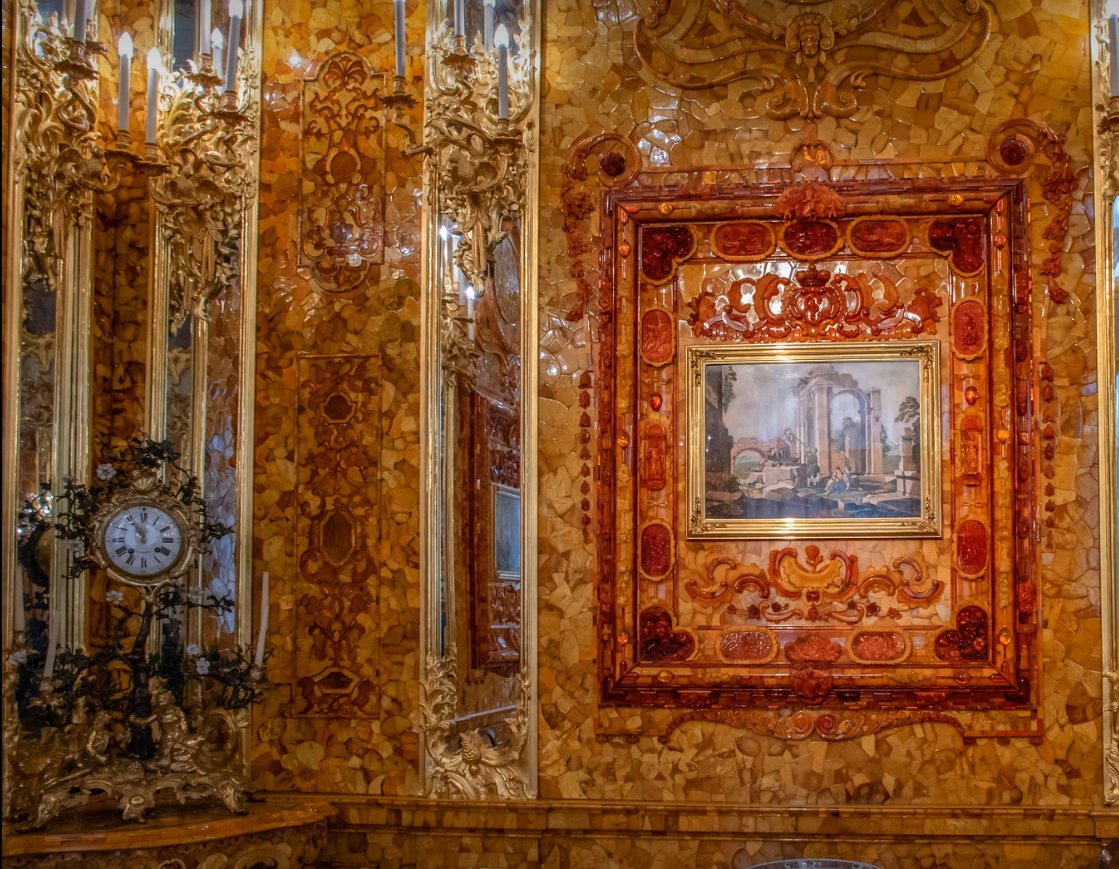
Вся комната янтарным блеском Озарена. Весёлым треском Трещит затопленная печь. Приятно думать у лежанки. Но знаешь : не велеть ли в санки Кобылку бурую запречь?
The whole room shines with amber light … With a merry crackles, The woods bursts and pops in the stove. The sofa is so inviting, But perhaps, why shouldn’t we order A brown mare for our sleigh?
Скользя по утреннему снегу, Друг милый, предадимся бегу Нетерпеливого коня И навестим поля пустые, Леса, недавно столь густые, И берег, милый для меня.
Gliding over the morning snow, My friend, let’s surrender our trust To the running, impatient steed. We’ll visit the empty fields, The woods, that used to be so thick, And the shore, so dear to me,
Un poème que j’aime beaucoup, peut être parce que c’est le premier que j’ai appris en Russe
Le poème “Matin d’hiver” d’Alexandre Pouchkine a été écrit dans l’une des périodes de création les plus fructueuses; pendant son exil à Mikhailovskoye.
Le poème “Matin d’hiver”, contient plusieurs thèmes importants. Le principal et le plus évident est le thème de l’amour. A chaque vers, on sent la tendresse du poète adressée à sa bien-aimée, son attitude respectueuse envers elle.
Un autre thème est les réflexions sur la naissance d’un nouveau jour qui efface tous les chagrins précédents et rend le monde plus beau et plus amusant.
Et, enfin, l’idée générale de l’ensemble de l’ouvrage est l’unité de l’homme et de la nature au sens philosophique général.
Le poème “Matin d’Hiver” d’Alexandre Pouchkine est sous la vidéo accompagné de sa traduction
ЗИМНЕЕ УТРО
MATIN D’HIVER
Мороз и солнце ; день чудесный! Ещё ты дремлешь, друг прелестный — Пора, красавица, проснись : Открой сомкнуты негой взоры Навстречу северной Авроры, Звездою севера явись!
Givre et soleil : la journée est merveilleuse ! Tu dors toujours, belle amie. Il est temps, ô beauté, de se réveiller ; Ouvre tes yeux fermés par la béatitude Et, face à l’Aurore polaire Ah, tu te lèves comme l’étoile polaire !
Вечор, ты помнишь, вьюга злилась, На мутном небе мгла носилась; Луна, как бледное пятно, Сквозь тучи мрачные ж`ёлтела, И ты печальная сидела — А нынче… погляди в окно:
La nuit dernière, souvenez-vous, la tempête a grondé, Et l’obscurité flottait dans le ciel boueux, La lune était comme une tache pâle À travers les nuages sombres, d’un jaune brillant. Là tu étais assis dans la mélancolie, Mais maintenant… par la fenêtre, jette un œil
Под голубыми небесами Великолепными коврами, Блестя на солнце, снег лежит; Прозрачный лес один чернеет, И ель сквозь иней зеленеет, И речка подо льдом блестит.
Sous les cieux bleutés Comme un magnifique tapis, Au soleil, la neige scintille ; La forêt est sombre et solitaire, Et l’épicéa brille de vert à travers le givre. Et sous la glace, la rivière scintille
Вся комната янтарным блеском Озарена. Весёлым треском Трещит затопленная печь. Приятно думать у лежанки. Но знаешь : не велеть ли в санки Кобылку бурую запречь?
Toute la pièce brille d’une lumière ambrée… Avec un joyeux crépitement, Le bois éclate et éclate dans le poêle. Le canapé est si invitant, Mais peut-être, pourquoi ne devrions-nous pas atteller La jument baie au grand traîneau ?
Скользя по утреннему снегу, Друг милый, предадимся бегу Нетерпеливого коня И навестим поля пустые, Леса, недавно столь густые, И берег, милый для меня.
Sur cette neige matinale, Fions-nous au fougueux cheval Dans sa course nous emportant Vers les champs vides et déserts Vers les bois si touffus naguère, Et vers le rivage, qui m’est si cher.
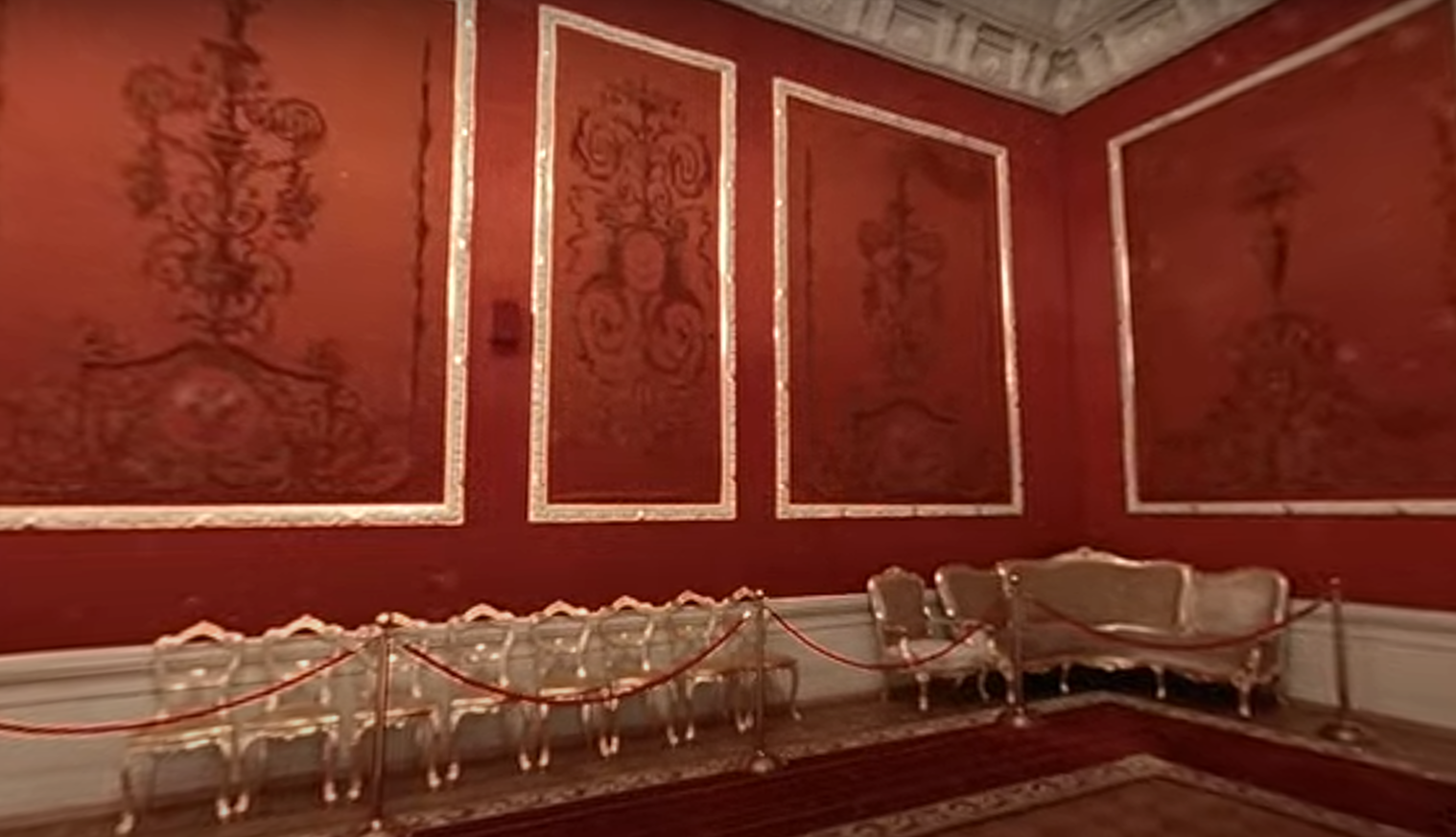
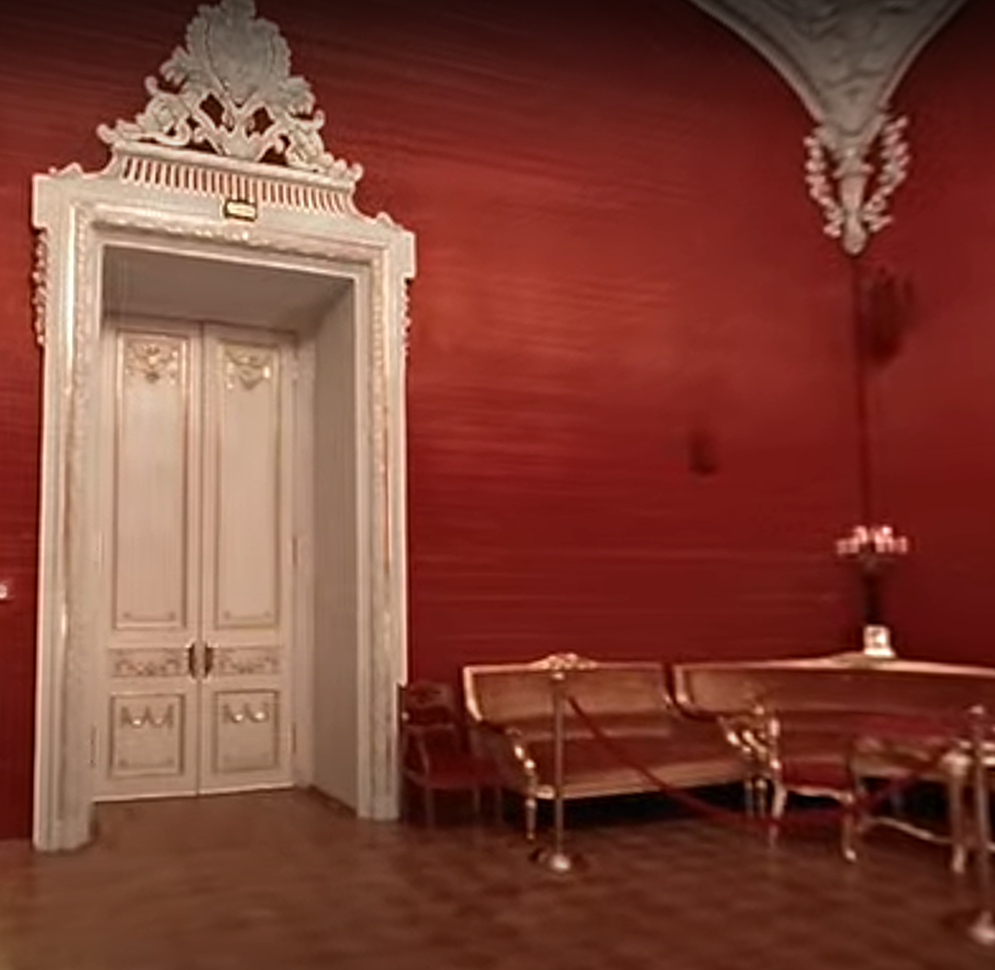
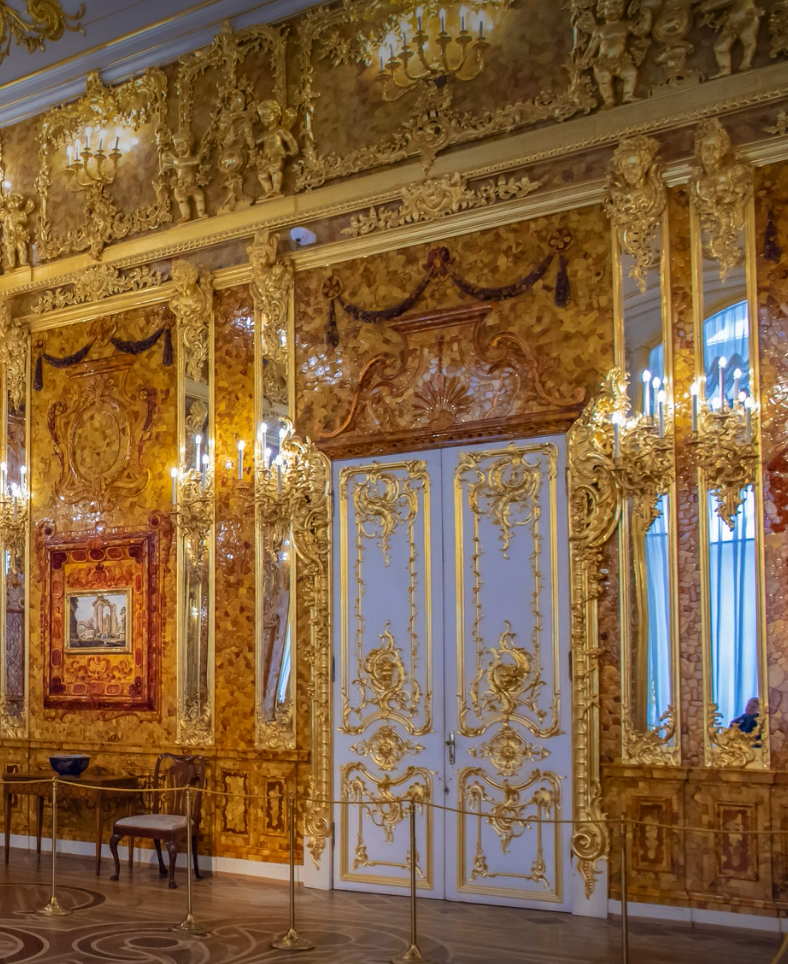
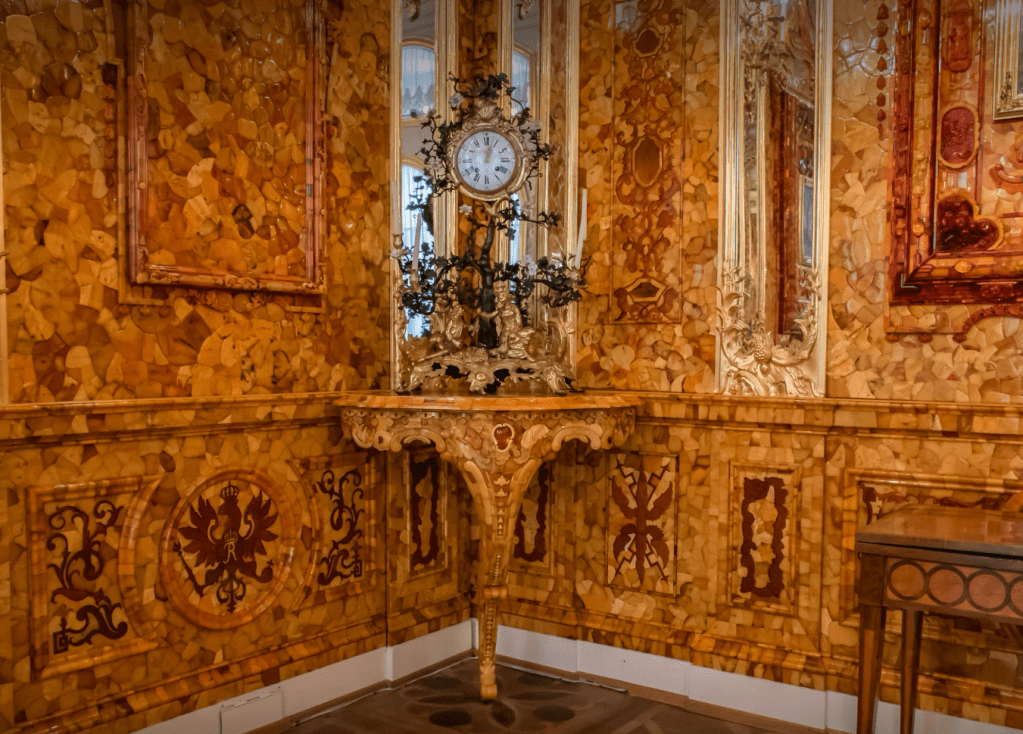
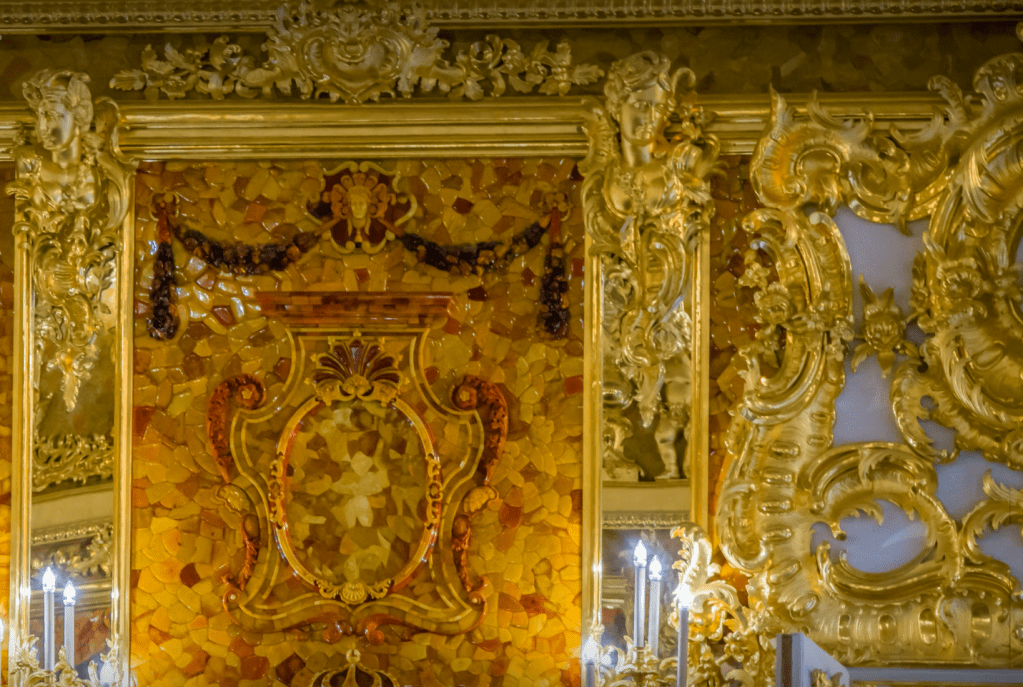
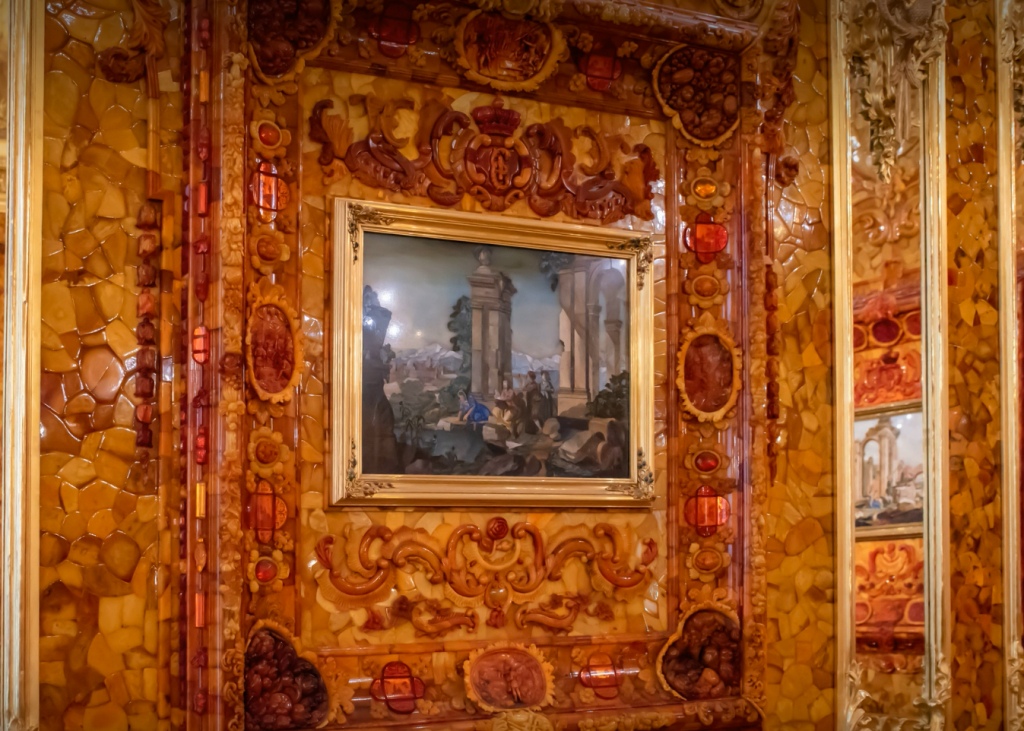
The Amber Room is a famous masterpiece of 18th century art, which disappeared without a trace during World War II
The amber room was created by master Andreas Schluter on the order of King Frederik I of Prussia. Subsequently, the amber cabinet which was the original name of this astonishing architectural work, was presented to the Russian Tsar Peter I.
The Amber Cabinet was installed in the Menshikov Palace in 1717. In 1743 Elizabeth Petrovna who had ascended the throne of Russia ordered the Amber Cabinet to be installed in the Winter Chambers of Her Imperial Majesty’s Household. The Empress also asked the chief architect FB Rastrelli and the master Alexander Martelli to “correct” the cabinet. It was finished with gilded wood carvings, mirrors and mosaic paintings of jasper and agate.
For nearly 2 centuries this room has remained unchanged and admired undergoing only periodic renovations to minimize the effects of temperature changes, drafts and stove heating.
During World War II, it was decided not to evacuate to the Amber Room because of its fragility. And the Nazis, having captured the Catherine Palace, destroyed the Amber Room. According to the officers’ report, the wall panels were mutilated with bayonets and knives at human height, the parquet which had been composed of rare wood, sandalwood, rosewood, amaranth, cherry and lemon trees were completely destroyed. The paint on the ceiling was also mangled. This was done by 6 soldiers in 36 hours.
The Amber Room was later displayed at the royal palace in Kroenigsberg, but after liberating Koenigsberg in 1945, Soviet troops did not find the Amber Room.
Nevertheless, some of its fragments were transferred to Russia in 2000.
Since 1981, work on the reconstruction of the Amber Room began, led by AA Zhuravlev. On the occasion of the 300th anniversary of Saint Petersburg, the Amber Room has been completely restored.
She can now be seen by everyone in the Catherine Palace in Saint Petersburg
Watch Amber’s room in music video. These “videos are awesome. Don’t forget to like them if you like them as much as I do.
La chambre d’Ambre est un célèbre chef-d’oeuvre de l’art du XVIII, qui a disparu sans laisser de trace pendant la seconde guerre mondiale.
La chambre d’ambre a été créée par le maitre Andreas Schluter sur l’ordre du roi de Prusse Frederik Ier. Par la suite, le cabinet d’ambre qui était le nom original de cette oeuvre architecturale étonnante, a été présenté au tsar Russe Pierre Ier.
Le cabinet d’ambre a été installé au palais Menchikov en 1717. En 1743, Elizabeth Petrovna qui était montée sur le trône de Russie ordonna que le Cabinet d’ambre soit installé dans les Chambres d’hiver de la Maison de Sa Majesté Impériale. L’impératrice a aussi demandé à l’architecte en chef F. B. Rastrelli et le maître Alexander Martelli de “corriger” le cabinet. Il a été fini avec des sculptures en bois doré, des miroirs et des peintures en mosaïque de jaspe et d’agate.
Pendant près de 2 siècles, cette pièce est restée inchangée et admirée subissant seulement des rénovations périodiques pour minimiser les effets des changements de température, des courants d’air et du chauffage du poêle.
Pendant la Seconde Guerre Mondiale, il a été décidé de ne pas évacuer à la chambre d’ambre à cause de sa fragilité. Et les nazis, après avoir capturé le palais Catherine ont détruit la chambre d’ambre. Selon le rapport des officiers les panneaux muraux été mutilés avec des baïonnettes et des couteaux à hauteur humaine, le parquet qui avait été composé de bois rare, santal, palissandre, amarante, cerisier et citronnier ont été complètement détruit. La peinture du plafond était aussi mutilée. Cela a été fait par 6 militaires en 36 heures.
La salle d’ambre a ensuite été exposée au palais royal de Kroenigsberg, mais aprés avoir libéré Koenigsberg en 1945, les troupes soviétiques n’ont pas trouvé la Chambre d’Ambre.
Néanmoins, certains de ses fragments ont été transférés en Russie en 2000.
Depuis 1981, des travaux de reconstruction de la chambre d’ambre ont commencé, dirigé par A. A. Zhuravlev. A l’occasion du 300e anniversaire de Saint Pétersbourg, la chambre d’ambre a été entièrement restaurée.
Elle peut maintenant être vue par tout le monde dans le palais Catherine à Saint Pétersbourg
Regardez la chambre d’Ambre en video musicale. Ces ” vidéos sont superbes. N’oubliez pas de les aimer si vous les appréciez autant que moi.
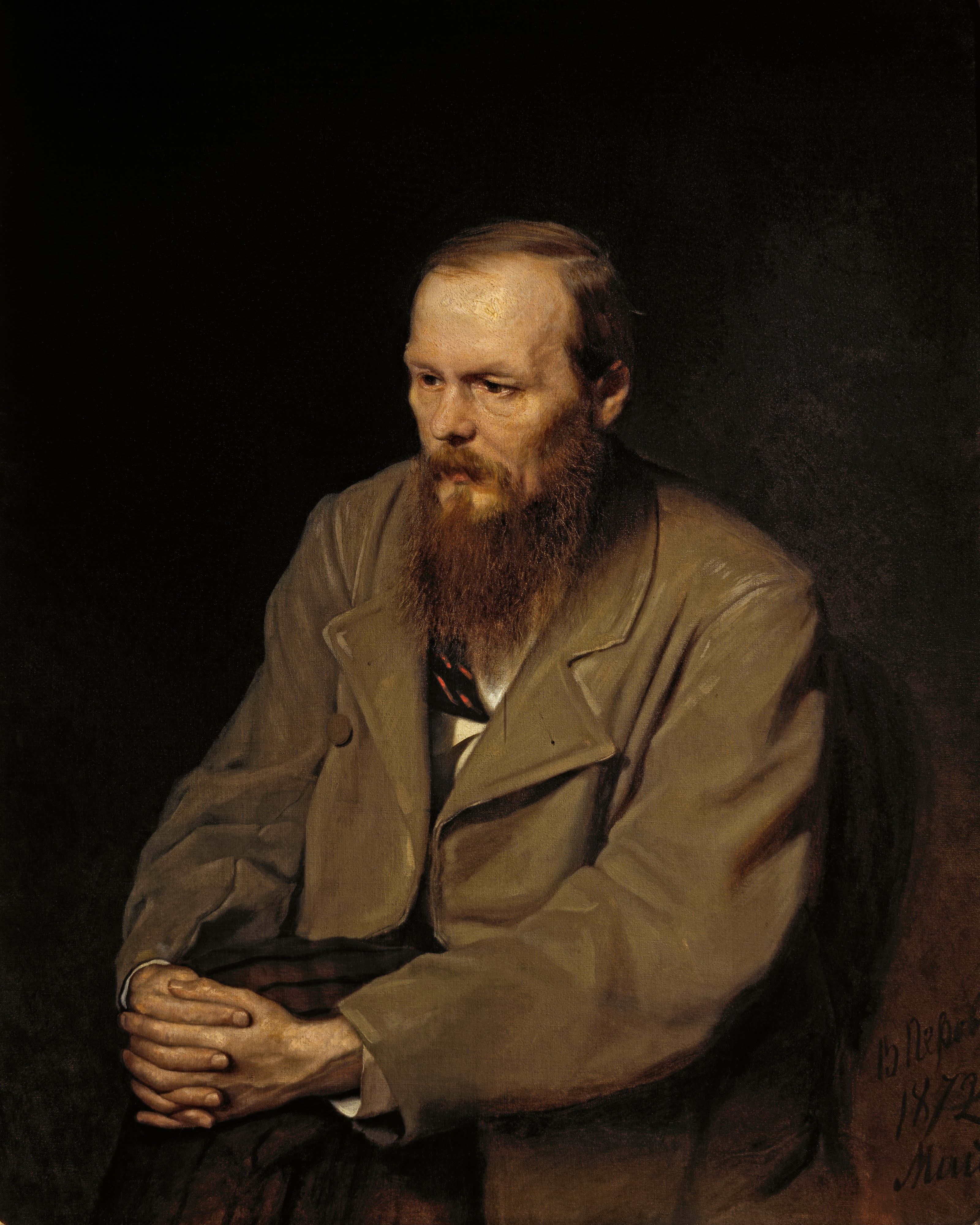
Crime and Punishment is an excellent book by Fyodor Dostoevsky in which he raises many questions about human morality, conscience and the right to kill.
A friend once told me that to understand the Russian mind, you have to read Dostoevsky and I have to admit he was right.
The central theme of Crime and Punishment is human conscience, through which people can analyze their actions and draw the right conclusions that help them repent and improve.
The events take place in the 60s of the 19th century, in Saint Petersburg. Our hero, Rodion is a young man, a former student, with a philosophical mind. He is sensitive to the suffering of his entourage and he is ready at any time to come to the aid of another in a completely disinterested way.
Raskolnikov is obsessed with the crazy idea that he has every right to rid the world of a mean and useless old pawnbroker. He doesn’t just want to avenge all the humiliated poor, he wants to rise above those who suffer injustice all their lives.
Raskolnikov plots a cruel murder, but his conscience is silent. And then something happens that will finally snap Raskolnikov out of his insane state of spiritual deafness. Elizabeth appears. It is she who becomes a symbol of the consciousness of the protagonist. Having killed the old woman’s harmless sister, Raskolnikov can no longer justify himself.
At the same time the novel speaks of the sacrifice that women make in the name of the well-being of their families. For example, his sister Dounia is going to marry a man who appreciates her position as a beggar rather than having feelings for her. Sonia, who is the daughter of a drunkard met in a bar, prostitutes herself to feed her family although very religious.
Remorse of conscience is always terrible, it cannot be drowned, it drives you mad or helps you to get up, to become better.
What will happen to Rodion, his sister and Sonia is for you to discover?
In addition, you can combine business with pleasure because “Crime and Punishment” is now part of our collection of bilingual English/French books, which will make it easier for you to learn French if that’s what you want.
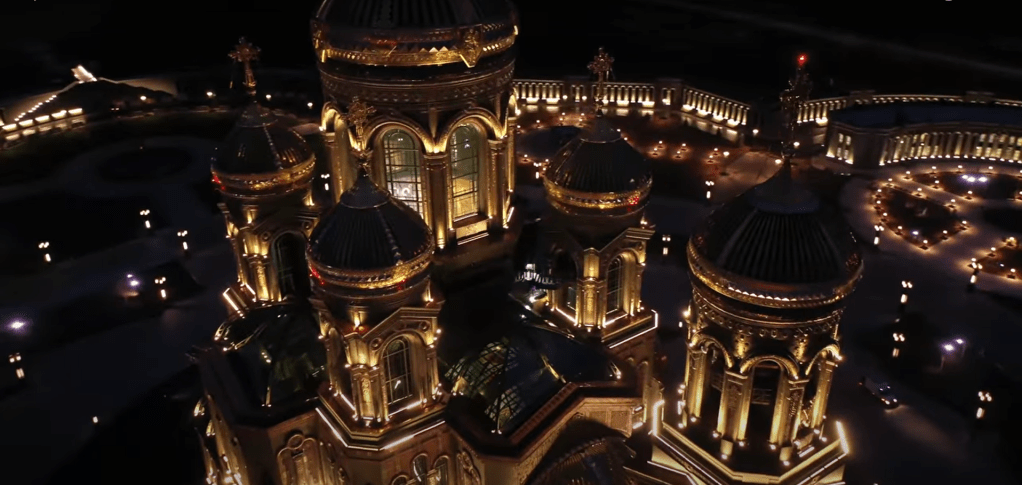
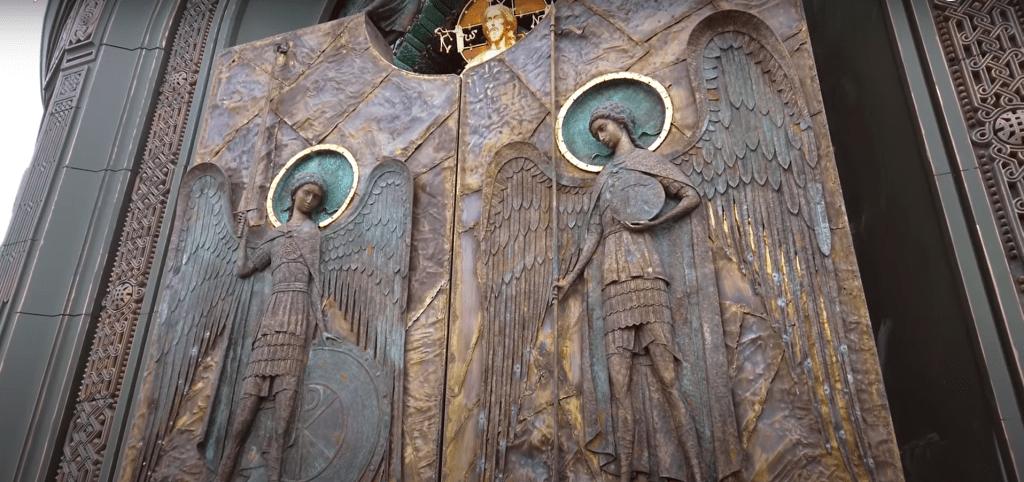
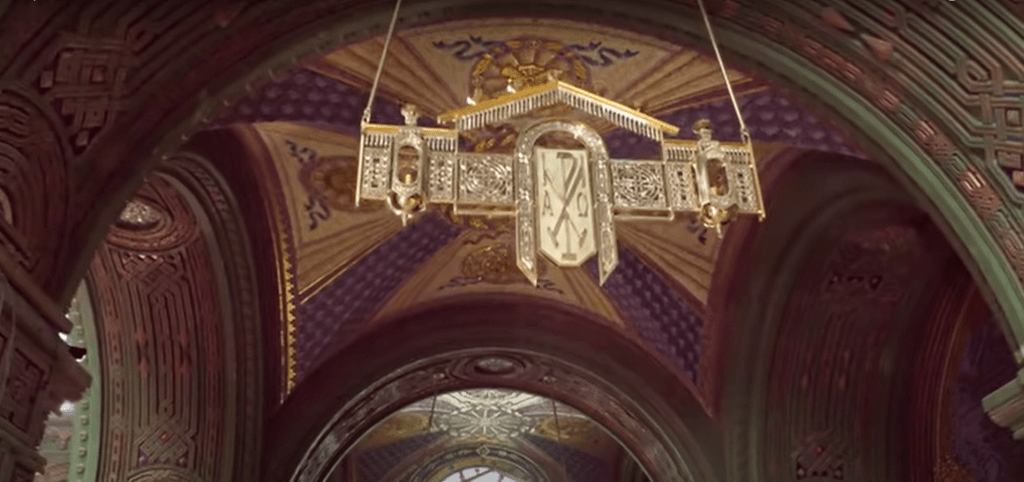
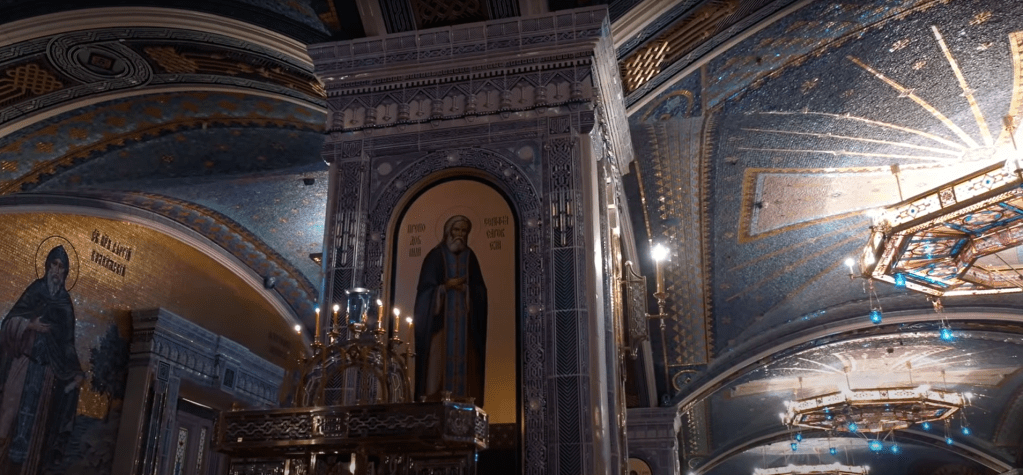
La Cathédrale Patriarcale au nom de la Résurrection du Christ est une magnifique Cathédrale, construite en un temps record et contenant un site muséale de la seconde guerre mondiale.
Aussi appelé le temple principal des forces armées de le Fédération de Russie, il est dédié au 75e anniversaire de la Grande Victoire Patriotique (Seconde Guerre Mondiale) et a été inauguré le 14 juin 2020. Il a été Construit en un temps records de seulement un an et demi. (Video de la construction en bas de la page)
C’est l’une des plus hautes église orthodoxe du monde mesurant 95 mètres de hauteur. Toutes ses dimensions sont symboliques. Le diamètre du tambour du dôme principal est de 19.45 mètres, le diamètre du dôme est de 22,43 (l’acte de capitulation sans condition de l’Allemagne a été signe à 22h43 le 8 mai 1945)
La hauteur du beffroi est de 75 mètres (2020 marque le 75 anniversaire de la fin de la guerre). La hauteur du petit dôme 14.18 correspond au nombre de jours et nuits des combats de la Grande Guerre Patriotique.
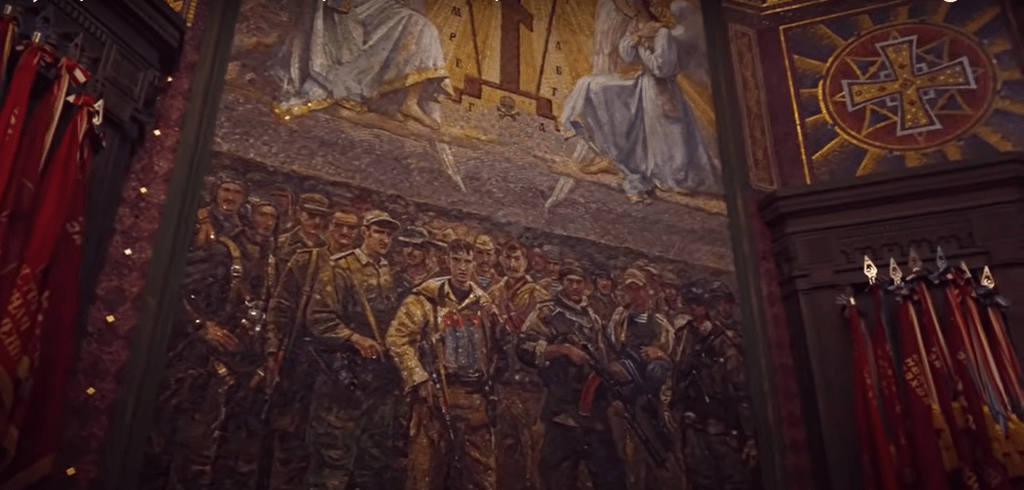
Le nombre de détenteurs à part entière de l’Ordre de la Gloire est représenté par la zone de mosaïque intérieure de 2644 mètres carrés. La hauteur de la mandore est de 11694mm, qui est aussi le nombre de participants à la Grande Guerre Patriotique qui ont reçu le titre de héros de l’Union Soviétique.
Sur le territoire du complexe, se trouve Un complexe muséal, “Route de la Mémoire”, qui a été créé avec une longueur de 1418 marches, en mémoire des 1418 jours et nuits de la Grande Guerre Patriotique. La galerie est encadrée de millions de photographies d’ancien combattants.
En plein air, se trouve le musée du “Champs de la Victoire” qui est une image collective de la bataille près de Moscou de 1941. Son emplacement est la zone où les Allemands ont fait leur dernière tentative pour pénétrer dans la capitale.
Des armes et des équipements militaire de la Grande Guerre Patriotique sont installés dans plusieurs zone thématiques du complexe qui ont été créé d’après les documents d’archives et photos.
Ci dessous est la video du temple avec visite d’une partie du musée: Celle de la construction est en dessous.
Ci-dessous, la construction de l’eglise.
Si vous avez aimé cet article, n’oublier pas d’aimer et de partager.



























 AKirill, Learn, apprenez, translation, traduction, livres bilingues, bilingual books