

Dear readers and subscribers, I am thrilled to express my heartfelt gratitude to all our veterans on this Victory Day! Let us celebrate and honor the brave heroes who fought valiantly in the Second World War, defending our freedom and values with unwavering courage. Their sacrifices remind us of the great cost of liberty and the importance of remembrance.
In the spirit of remembrance and appreciation, I am excited to present to you 5 inspiring Russian films about WWII with English subtitles, which offer profound insights into the struggles and triumphs of that era, along with my translation of the beautiful poem “Do you remember, Alyosha, the roads of Smolensk?” by Konstantin Simonov. Written in 1941, this work beautifully captures the retreat of Soviet troops near Smolensk during that summer.
Together, let us ensure that the legacy of these courageous individuals lives on in our hearts and minds.
Then, I finally found the time to update the page All our posts….
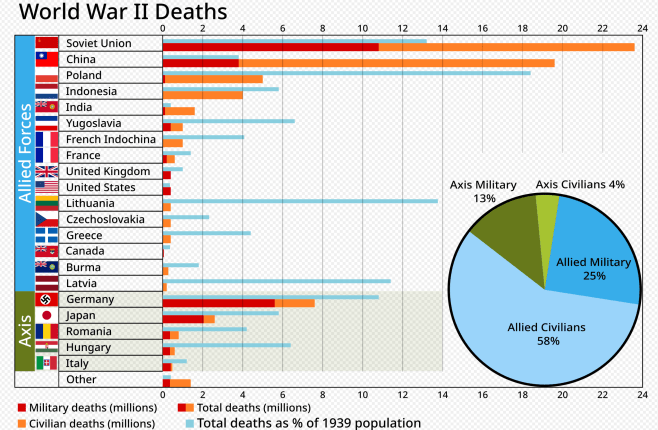
First movie: “The Fire Bulge“
Second movie: “Breakthrough“
Third movie: “Direction of the Main Blow“
Fourth movie: “The Battle of Berlin“
Fifth movie: “The Last Assault“
Translation of the poem “Do you remember, Alyosha, the roads of Smolensk?” by Konstantin Simonov
The first “The Fire Bulge” tells about the heroic battle at the Kursk Bulge in the 1943 summer.
The Battle of Kursk represented a pivotal confrontation on the Eastern Front during World War II, taking place between the military forces of Nazi Germany and the Soviet Union near Kursk, in southwestern Russia, throughout the summer of 1943. This engagement resulted in a decisive victory for the Soviet forces. Significantly, the Battle of Kursk is acknowledged as the largest tank battle in recorded military history.
The second film “Breakthrough” is about the battle for the Dnieper River and the Soviet offensive operation in 1944.
The Battle of the Dnieper represented a critical military campaign that transpired in 1943 on the Eastern Front during World War II. As one of the largest operations of the conflict, it involved nearly four million troops at its zenith and spanned a front of 1,400 kilometers. Over a period of four months, five fronts of the Red Army systematically reclaimed the eastern bank of the Dnieper from German forces by executing a succession of assault river crossings to establish multiple lodgments on the western bank.
The Leningrad–Novgorod strategic offensive represented a pivotal campaign during World War II. Initiated by the Red Army on 14 January 1944, it targeted the German Army Group North, employing the forces of the Soviet Volkhov and Leningrad fronts alongside elements of the 2nd Baltic Front, with the objective of conclusively alleviating the siege of Leningrad. Within approximately two weeks, the Red Army succeeded in regaining control of the Moscow–Leningrad railway, and on 26 January 1944, Joseph Stalin announced the lifting of the siege of Leningrad, declaring that German forces had been expelled from the Leningrad Oblast. The end of the 900-day blockade was commemorated in Leningrad that day with a solemn 324-gun salute. The strategic offensive concluded a month later on 1 March.
The third film, “Direction of the Main Blow” is about Operation Bagration, which resulted in the complete liberation of Belarus from Nazi troops.
Operation Bagration was the codename for the 1944 Soviet strategic offensive in Byelorussia, which began on 22 June and concluded on 19 August 1944. This military campaign unfolded in Soviet Byelorussia on the Eastern Front during World War II, occurring shortly after the start of Operation Overlord in the west. Significantly, this operation forced Nazi Germany to confront challenges on two major fronts for the first time since the outbreak of the war.
The fourth film is The Battle of Berlin. 1945, the last months of the war. These are the days when the fate of enslaved Europe is decided.
The Battle of Berlin, officially designated as the Berlin Strategic Offensive Operation by the Soviet Union and widely recognized as the Fall of Berlin, represented one of the concluding significant offensives in the European theatre of World War II. Subsequent to the Vistula–Oder Offensive, which transpired from January to February 1945, the Red Army established a temporary pause at a line located 60 kilometers east of Berlin.
The fifth film, The Last Assault, is about the storming of the Reichstag, about the battle for every room, for every floor…
Translation of the poem “Do you remember, Alyosha, the roads of Smolensk?” by Konstantin Simonov in English with English and Russian side by side
| Константин Симонов — Ты помнишь, Алеша, дороги Смоленщины | Do you remember, Alyosha, the roads of Smolensk? |
| Translated by Akirill.com | |
| Ты помнишь, Алеша, дороги Смоленщины, | Do you remember, Alyosha, the roads of Smolensk, |
| Как шли бесконечные, злые дожди, | How endless, angry rains fell, |
| Как кринки несли нам усталые женщины, | How tired women brought us jugs, |
| Прижав, как детей, от дождя их к груди, | Pressing them to their chests like children from the rain, |

| Как слёзы они вытирали украдкою, | How they secretly wiped away their tears, |
| Как вслед нам шептали: -Господь вас спаси!- | How they whispered after us: – God save you! – |
| И снова себя называли солдатками, | And again they called themselves soldiers’ wives, |
| Как встарь повелось на великой Руси. | As was the custom in great Russia in the old days. |
| Слезами измеренный чаще, чем верстами, | Measured more often by tears than by miles, |
| Шел тракт, на пригорках скрываясь из глаз: | The road went, disappearing from sight on the hills: |
| Деревни, деревни, деревни с погостами, | Villages, villages, villages with graveyards, |
| Как будто на них вся Россия сошлась, | As if all of Russia had gathered there, |
| Читать далее … | Continue reading … |
We put a lot of effort into the quality of the articles and translations, support us with a like and a subscription or sponsor us if you like them. We are also on Facebook and Twitter
- Poèmes et peinture, semaine du 22 mars 2026
- Poems and painting, Week of March 22, 2026
- Poèmes et peinture, semaine du 15 mars 2026
- Poems and painting, Week of March 15, 2026
- Poèmes et peinture, semaine du 8 mars 2026
- Poems and painting, Week of March 8, 2026
© 2025 Akirill.com – All Rights Reserved





 AKirill, Learn, apprenez, translation, traduction, livres bilingues, bilingual books