On this site we hope to help you learn, and to remove the difficulties caused by the difference of culture and language. Sur ce site nous espérons vous aider à apprendre, et à enlever la barrière causée par les différents languages et cultures.
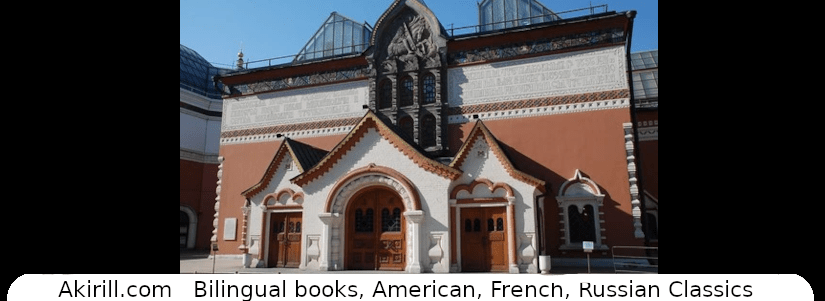
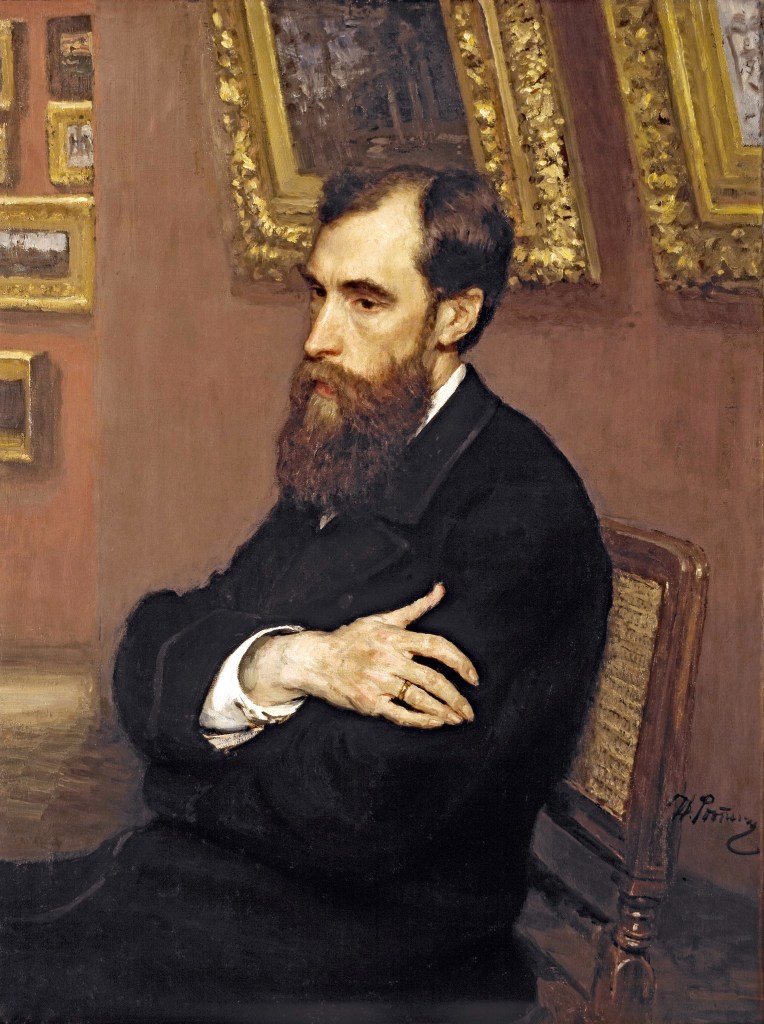
The State Tretyakov Gallery is a Moscow art museum which was founded in 1856 by Pavel Tretyakov. It was opened to the public in 1867 and transferred to Moscow in 1892. As of 2018, the exposition consisted of more than 180 000 items, including paintings, sculptures and items made out of precious metals created from the 11th to the 20th century.
After having created the Kostroma Linen Manufactory, which was quite a successful business, Pavel Mikhailovitch Tretyakov and his brother Sergei became interested in collecting paintings.
State Tretyakov Gallery
So, the gallery was founded in 1856, with the acquisition of “The Temptation” by Nikolai Schilder and “Skirmish with Finnish Smugglers” by Vasily Khudyakov, by Pavel Tretyuakov. He said:
For me, who truly and ardently love painting, there can be no better desire than to start a public, accessible repository of fine arts, bringing benefit to many, all pleasure. I would like to leave you the national gallery, that is, consisting of paintings by Russian artists
His brother Sergei was more interested in canvases of Western European masters widening the exhibitions.
In 1867 the Moscow City Gallery of Pavel and Sergei Tretyakov which at the time contained 1276 paintings, 471 drawings, 10 sculpture by Russian artists and 84 paintings by foreign masters was opened to the public.
In 1859, after that the brothers purchased more than 140 works from the Turkestan series of paintings and sketches by Vasily Vereshchagin they ran out of places for the exposition. A two-story building adjacent to southern wall of the mansion and turned toward the Church of St Nicholas in Tolmachi was build. Its construction was headed by the architect Alexander Kaminsky . In 1874 the collection was moved there and the gallery opened to the public.
By the end of the 1880s, the gallery building was repeatedly completed due to the growing collection which already occupied 14 rooms and constantly surpassed its exposition possibilities.
In 1882, the exposition area was expanded again at the expense of the garden surrounding the house. Three new halls appeared downstairs and upstairs which were located at an angle to the old building of the Gallery, parallel to Maly Tolmachecsky Lane.
It was followed in 1885 by the apparition of three halls on the top floor and five in the bottom.
In 1892 the fourth extension was completed and two large and one small halls were added on the upper floor, and three small ones below. and, after the death of his brother Sergei, Pavel donated the gallery, which at the time contained more than 2000 works of painting, sculpture and graphics, to Moscow.
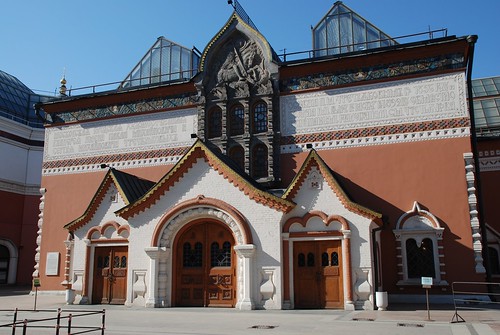
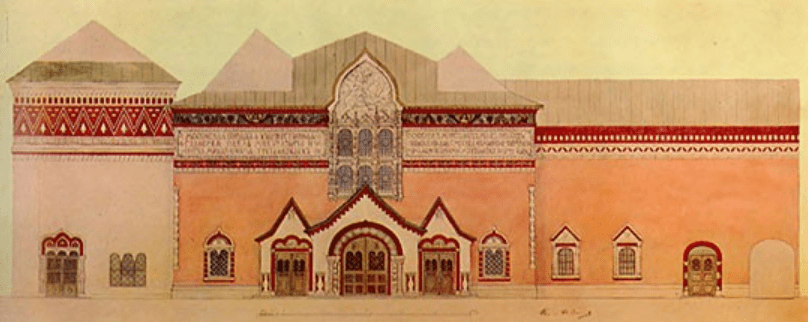
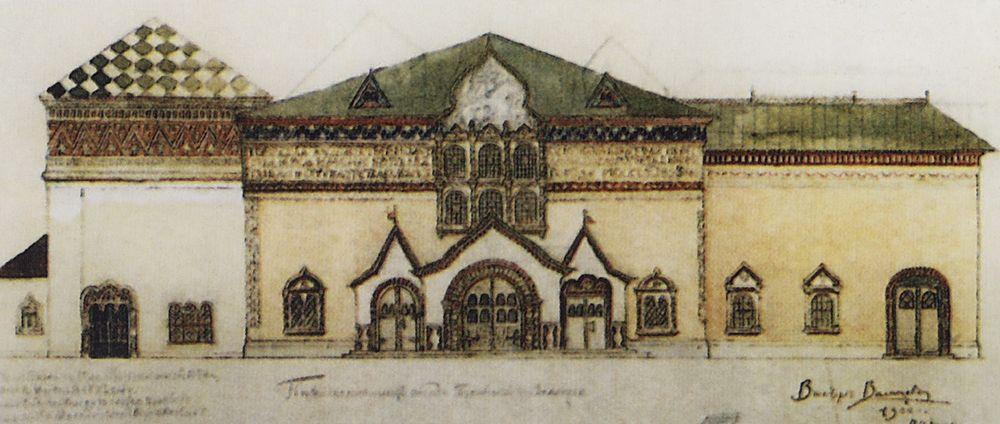
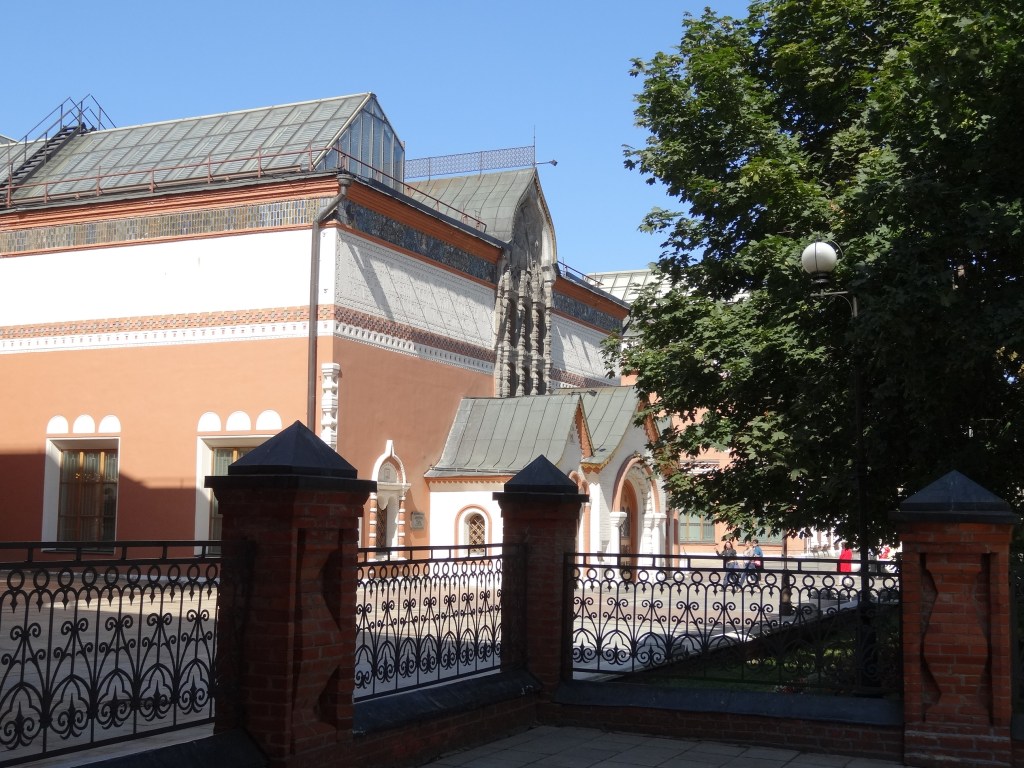
In may 1900, at a meeting of the Council of the gallery which included the artists V. M. Vasnetov, V. D. Polenov and a number of Moscow architects it was decided that the facade of the gallery should be built in the “Russian Style”. The work was entrusted to V. M. Vasnetsov and the construction of the new façade which became the emblem of the Tretyakov Gallery began in 1902 and ended in 1904.
On April 1913 Emmanuilovitch Grabar who was a prominent artist, architect and art historian was elected as a trustee of the Tretyakov Gallery. His reforms turned the Tretyakov Gallery into a Europeean-style museum with exposition built on a chronological basis and in december 1913, on the fifteenth anniversary of the death of the founder of the gallery, the reformed museum was opened to the public.
On June 1918 the Tretyakov Gallery was declared a State property of the Russian Federative Soviet Republic and became known as the State Tretyakov Gallery. Between 1918 and 1922, the gallery collection increased by almost 50% thanks to the numerous contributions from the State Museum Fund. But the drawback was that many exhibition halls were given over to storage for paintings.
A. V. Shchusev became the director of the gallery in 1926 and did a lot to expand the existing premises and build a new one. So in 1927, the Gallery received the former house of Sokolikov situated on Maly Tolomachevsky Lane. In 1928 after its restructuring, it was turned into a service building which housed the administration of the Gallery as well as a scientific department, a library, a department of manuscripts, and graphics funds. It was attached to the Gallery later with a special extension .
In 1928, the heating and ventilation was rebuilt and in 1929 the Gallery was finally electrified. Effectively before that time, the Gallery had been opened to visitors only during the daytime.
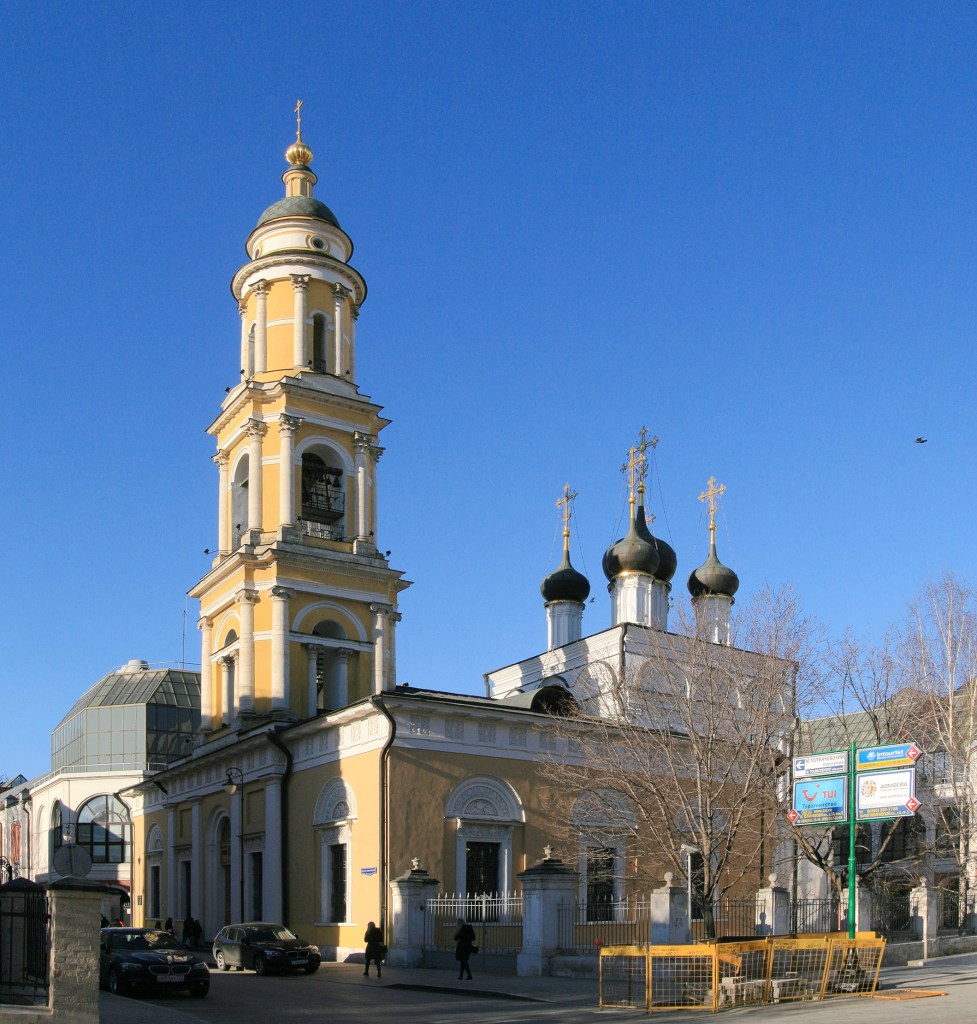
In 1929 the building of the Church of St Nicholas in Tolmachi closed and it was transferred to the Gallery in 1932. It became a storehouse for paintings until it was connected to the exposition halls by a newly built two story of which the top floor had been specially designed to display A. A. Ivanov’s painting “The Appearance of Christ to the People”. And a new passage between the halls was created to ensure the continuity of the view which resulted in an increased area of exposition and a new concept for the placement of works.
A. A. Ivanov’s painting “The Appearance of Christ to the People”
In 1936, according to the project of the architect A.V. Shchusev, a new two story building appeared on the north side of the main building. It included 4 spacious halls on each floor which were used for exhibitions and have been included in the main exhibition route since 1940.
On the night of August 11-12, 1941 two high-explosive bombs fell on the building as a result of a German air raid. The bombs destroyed the glass covering in several places of the roof and the interfloor ceiling of the upper hall N 6 and the lower one N 49 collapsed. The floors in the basement wardrobe were smashed, the main entrance was damaged and the heating and ventilation system failed.
A second bombing in the night of 12-13, 1941 destroyed a two story residential building next to the Gallery.
The restauration of the Gallery began in 1942 and by 1944 out of 52 halls, 40 had been renovated.
In May 1956, the 100th anniversary of the Gallery was celebrated and in 1955-1957, the A.A. Ivanov Hall was completed.
By the mid 1980 the need to expand again was felt because of the increased number of visitors.
In 1985 a depository was out in operation after 2 years of construction. And in 1986 the reconstruction of the main building of the Tretyakov Gallery began based on he idea of preserving the historical appearance of the building.
In 1989, on the south side of the main building a new building housing a conference hall, an information and computing center, a children’s studio and exhibition halls was built. Since most of the engineering systems and services were concentrated there it was called the Corps of Engineers.
The reconstruction lasted from 1985 to 1995 and included the museum ensemble of the church of St. Nicholas in Tomachi which is an architectural monument of the 17th century.
Le théâtre Bolchoï est l’un des théâtres d’opéra et de ballet les plus importants au monde et la fierté de Moscou. Plus de 800 œuvres ont été mises en scène dans le théâtre.
Le théâtre Bolchoï a deux dates de naissance : mars 1776 et janvier 1825.
Saviez-vous qu’en francais le théâtre Bolchoï veut dire le grand théâtre?
Le 28 mars 1776, Catherine II a signé un privilège gouvernemental à Pyotr Vasilyevich Urusov pour le maintien de spectacles, mascarades, bals et autres événements pendant une période de 10 ans. Cette date est considérée comme le jour de la fondation du théâtre Bolchoï russe.
Le prince a commencé la construction du théâtre de la rue Petrovka et le théâtre a été nommé Petrovsky. après la rue Malheureusement, il a brûlé avant d’ouvrir et le prince a remis l’entreprise à son partenaire anglais, Mikhail Maddox. Ainsi, le théâtre Petrovky a été construit sous sa direction et l’inauguration du théâtre Petrovsky a eu lieu le 30 décembre 1780.
Ils ont donné un prologue solennel «Wanderers», écrit par A, Ablesimov, et un grand ballet pantomimique «Magic School», mis en scène par I. Paradise sur la musique de J. Startzer. Après le répertoire s’est formé principalement à partir d’opéras comiques russes et italiens avec des ballets et des ballets individuels
“Cet immense bâtiment, construit pour le plaisir et l’amusement populaire… selon les meilleurs architectes et l’approbation des connaisseurs de théâtre, a été construit et mené à bien avec tant de force et de rentabilité qu’il surpasse presque tous les nobles théâtres européens.”
C’est ainsi que le journal Moskovskie a répondu à l’ouverture du théâtre Petrovsky
Le bâtiment, conçu par l’architecte Christian Rozberg, a été construit en seulement 5 mois. Le théâtre disposait d’un auditorium à trois niveaux de loges, d’une galerie, d’un parterre avec vingt rangées de bancs et d’un spacieux « parquet » entre les parterres et la scène, où des chaises étaient installées pour les visiteurs « spéciaux », et les autres publics pouvaient se tenir debout. Il a accueilli près d’un millier de personnes.
En outre, il y avait des espaces de bureau nécessaires, de nombreux foyers et salles, y compris la “salle de la mascarade”.
En 1788, la Rotonde a été ajoutée au bâtiment et a été le centre de la vie culturelle et sociale dès le début de son existence.
En 1794, en raison de difficultés financières, Maddox a été contraint de transférer le théâtre au trésor public et le théâtre Petrovsky devient l’Impérial.
En 1802-1803, le théâtre a été donné au prince Volkonsky qui était le propriétaire de l’une des meilleures troupes de théâtre de Moscou. Mais en 1804, le théâtre revint sous la juridiction du conseil d’administration et le prince Volkonsky fut nommé son directeur.
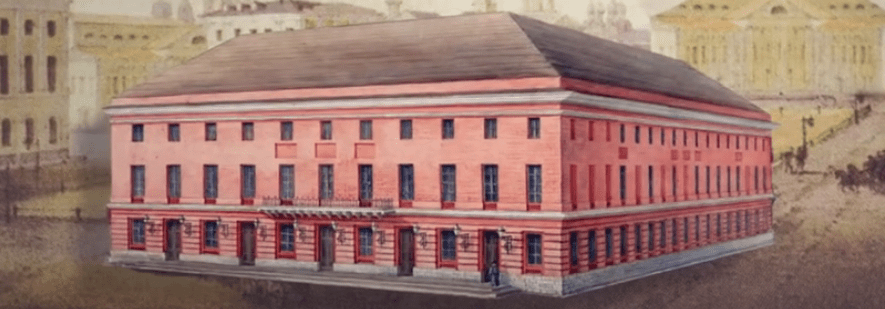
Une fois de plus après 25 ans, le 8 octobre 1805, le théâtre Petrovsky a brûlé. Les troupes ont commencé à se produire sur scène privée jusqu’à ce que le nouveau théâtre Arbat soit construit par K. I. Rossi sur la place Arbat en 1808.
N’ayant existé que quatre ans, le bâtiment du théâtre a brûlé lors de l’incendie de Moscou en 1812.
Après cela, le théâtre était situé sur Znamenka dans la maison d’Apraksin, qui avait été construite en 1792 par l’architecte F. Camporesi. La salle de théâtre de la maison d’Apraksin était exiguë et inconfortable, au lieu de chaises, il y avait des bancs recouverts de rêche matériel et il y a eu plusieurs incendies dans le théâtre.
Quelques années plus tard, en 1818, les troupes ont été dotées d’un théâtre rénové sur Mokhovaya, où elles s’étaient autrefois produites avant la guerre de 1812.
En 1819, un concours est annoncé pour la construction d’un nouveau théâtre. Andrei Mikhailov a été reconnu vainqueur mais son projet était trop cher et a été repensé par Osip Bove. Il a conservé la base de la composition de Mikhailov, mais a changé la proportion du bâtiment et a fait des ajustements importants à sa décoration extérieure et intérieure.
Le théâtre allait devenir le centre de composition du temple de la ville de l’Empire, glorifiant la victoire de la guerre patriotique. La construction a commencé en 1820 et le nouveau “Théâtre Bolchoï Petrovky” a ouvert le 6 janvier 1825 avec la représentation “Le triomphe des Muses” qui a été un grand succès. Les rôles ont été interprétés par les meilleurs acteurs moscovites : le tragédien PS Mochalov, NV Lavrov, F. Gyullen-Sor. Le critique de théâtre Sergei Timofeevich Aksakov a conservé des souvenirs de cette découverte:
Le théâtre Bolchoï Petrovky, qui a surgi de vieilles ruines carbonisées… m’a étonné et ravi… Un magnifique bâtiment immense, exclusivement dédié à mon art préféré, déjà avec son apparence seule m’a conduit à de joyeuses excitations »
En 1842, le théâtre passe sous la direction de la Direction des théâtres impériaux de Saint-Pétersbourg. Alexei Nikolaevich Verstovsky a été nommé directeur du bureau du théâtre de Moscou jusqu’en 1859 et une troupe d’opéra est arrivée à Moscou en provenance de Saint-Pétersbourg.
En 1943, une reconstruction majeure du bâtiment du théâtre a été réalisée selon le projet de l’architecte Alexander Stepanovich Nikitin. Les chapiteaux loniques du portique ont été remplacés par des chapiteaux de type Érechthéion, la ligne de loges latérales a été reconstruite ainsi que les couloirs et la partie scène, où apparaissait l’arrière-scène.
Le 11 mars 1853, le théâtre a de nouveau brûlé et seuls les murs extérieurs du bâtiment et la colonnade du portique ont survécu.
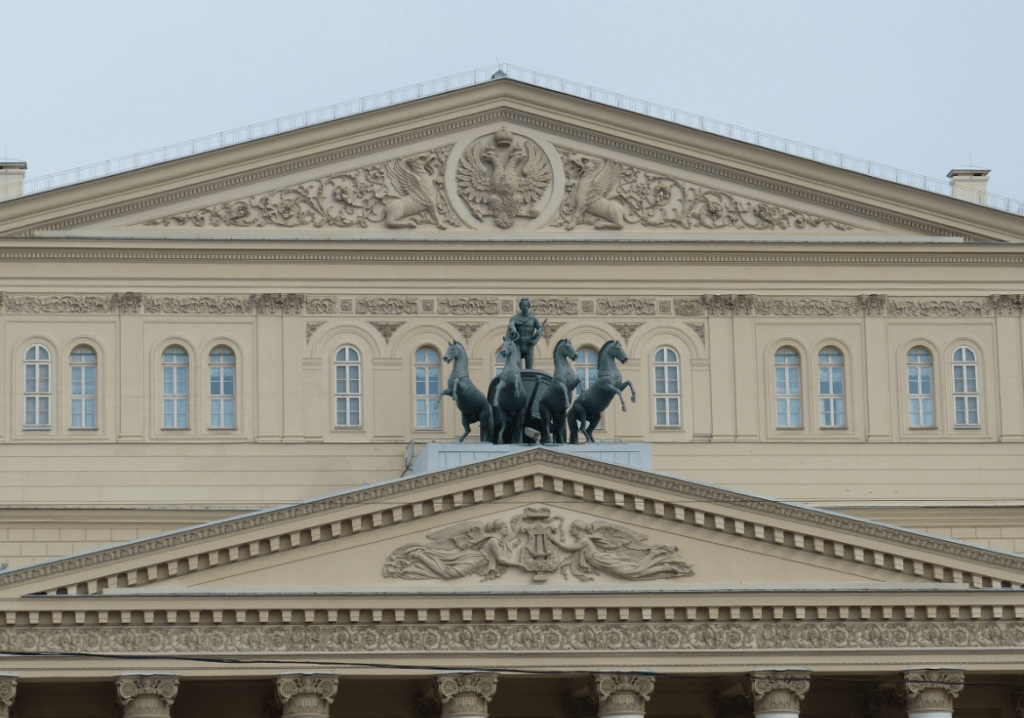
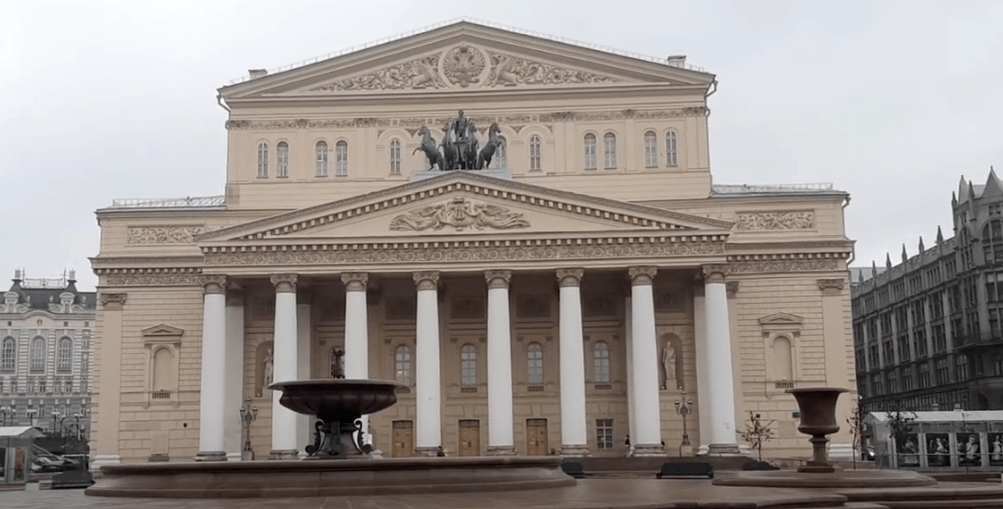
Albert Kavos était le nouvel architecte et le Théâtre a été restauré en trois ans. Le volume du bâtiment et l’agencement ont été conservés, mais la hauteur a été légèrement augmentée. Albert Kavos a modifié les proportions et a redessiné entièrement le décor architectural, dessinant les façades dans l’esprit de l’éclectisme des premiers temps. Au lieu de la sculpture en albâtre d’Apollon qui est mort dans l’incendie, un quadrige en bronze de Pyotr Klodt a été placé au-dessus de l’entrée du portique, et un aigle à deux têtes en plâtre qui est l’emblème d’État de l’Empire russe a été placé sur le fronton.
L’architecte théâtral accorda une attention particulière à l’auditorium et à la partie scénique, et dans la seconde moitié du XIXe siècle, le théâtre Bolchoï était considéré comme l’un des meilleurs au monde en termes de propriétés acoustiques grâce à Albert Kavos qui avait conçu l’auditorium comme un immense instrument de musique.
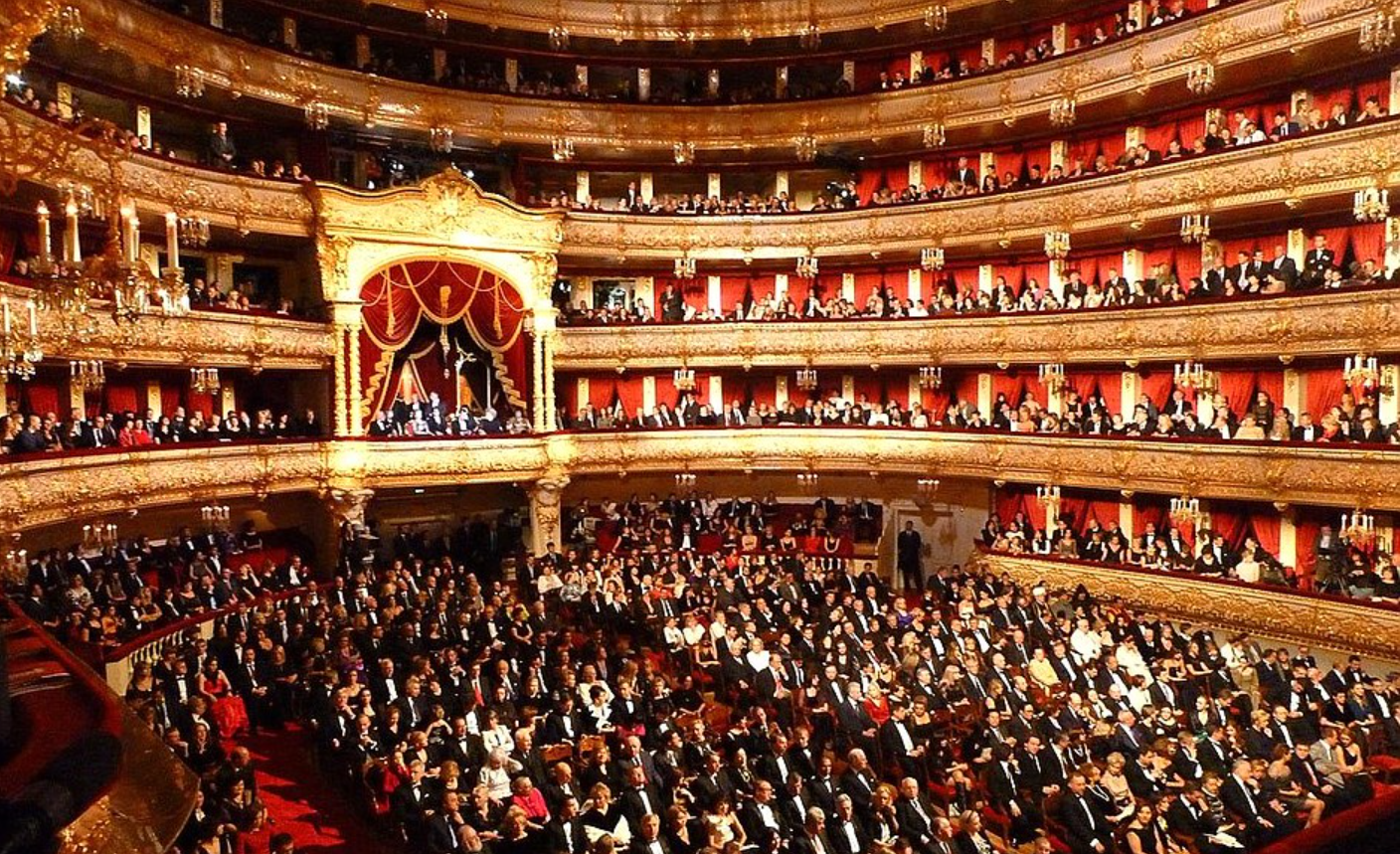
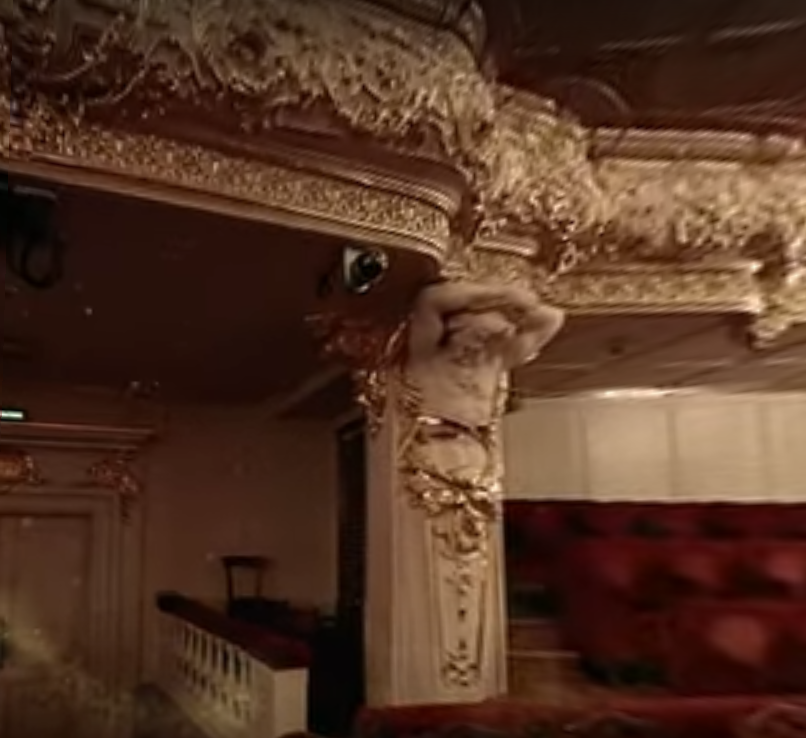
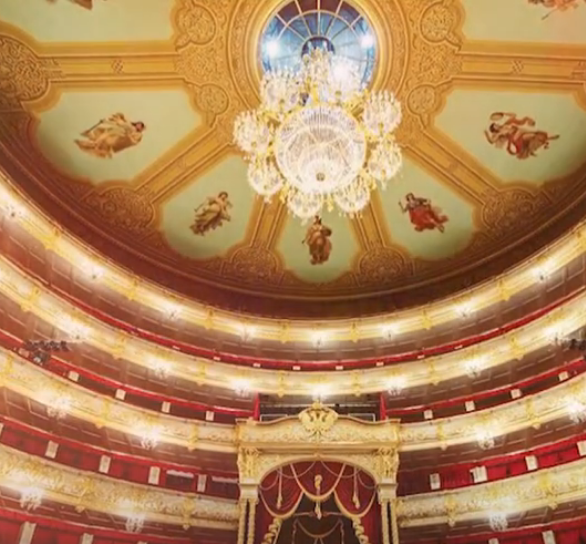
L’espace de l’auditorium a été considérablement agrandi, ce qui a permis de faire des pavillons avant. La salle a gagné un niveau supplémentaire et est devenue six niveaux pouvant accueillir près de 2300 spectateurs. De part et d’autre, près de la scène, se trouvaient des boîtes aux lettres destinées à la famille royale, au ministère de la cour et à la direction du théâtre. La loge d’apparat du tsar faisait un peu saillie dans la salle et en devenait le centre, en face de la scène. La barrière de la loge royale était soutenue par des consoles en forme d’atlantes coudées. Même des décennies plus tard, tous ceux qui entraient dans cette salle étaient émerveillés par la splendeur framboise-or.
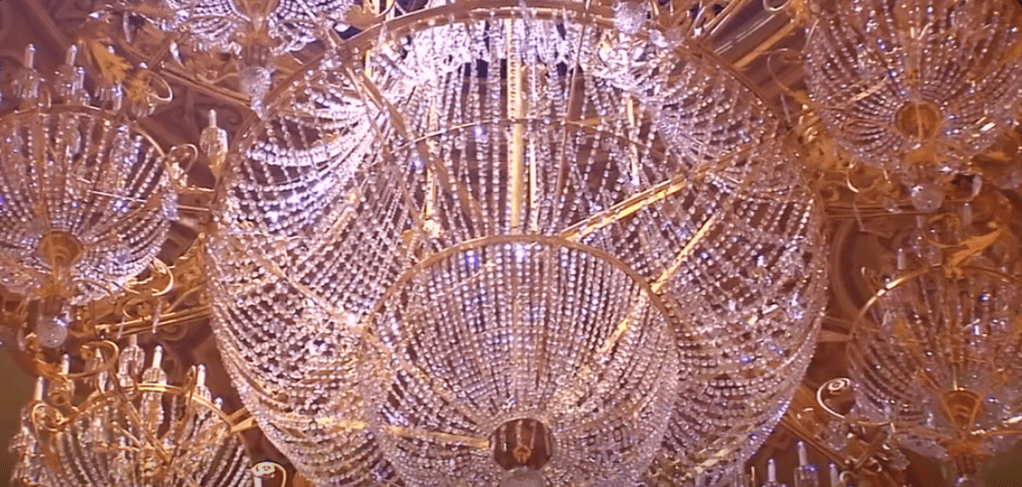
Le lustre de l’auditorium était à l’origine éclairé par 300 lampes à huile. Les lampes ont été soulevées à travers un trou dans le plafond pour être allumées, et autour de ce trou l’académicien Alexei Titov a peint “Apollon et les Muses” mais au lieu d’une des muses caconiques, la muse des hymnes sacrés de Polyhymnia, Titov a représenté le muse de la peinture inventée par lui, avec une palette et un pinceau dans ses mains.
La rapidité de la reconstruction du bâtiment était due au fait que la construction devait être achevée par la célébration à l’occasion du couronnement de l’empereur Alexandre II. Le 20 août 1856, le théâtre a rouvert avec l’opéra de Belini; “Le Puritani” reflétant les goûts de la noblesse de la cour. La splendeur de l’auditorium, le public mondain qui l’emplit et qui fut accueilli par les membres de la famille impériale fut capté par le futur peintre de la cour Romanov Mihai Zichy et, nombre de ses aquarelles furent écrites pour l’album du couronnement qui devint l’une des publications les plus impressionnantes de Russie en poids et en taille.
L’un des événements les plus importants de l’histoire du Ballet du Bolchoï dans la seconde moitié du XIXe siècle a été la production du ballet “Don Quichotte”, dont la première a eu lieu le 14 décembre 1869.
Le 20 février 1877 eut lieu la première mondiale du ballet de Piotr Ilyish Tchaïkovski, le « Lac des cygnes ». Près de 20 ans plus tard, la performance canonique, connue dans le monde entier, a été mise en scène par Petipa et Lev Ivanov.
Tchaïkovski a fait ses débuts au théâtre Bolchoï en tant qu’auteur non seulement de ballet mais aussi d’opéra. Et le 18 janvier 1869, la première de l’opéra “Voyevoda” a eu lieu.
Le 3 février 1884 eut lieu la première mondiale de l’opéra “Mazeppa” et le 19 janvier 1887 la première représentation de l’opéra “Cherevichki” dans lequel Tchaïkovski fit ses débuts en tant que chef d’orchestre avec un grand succès.
Dans les années 1886-1893, l’arrière du bâtiment a été reconstruit sur le projet de l’architecte Eduard Karlovich Gernet et, par conséquent, les colonnes du portique conservées par Kavos se sont retrouvées à l’intérieur de l’entrepôt.
En 1890, une enquête a révélé que les fondations du théâtre reposaient sur des pilotis en bois pourris, elles ont donc été reconstruites en 1894-1898 suite aux projets des architectes Ivan Ivanovich Rerberg, Konstantin Viktorovich Tersky et Karl Yakovlevich Mayevsky.
Une étape sans précédent dans l’histoire du développement du théâtre Bolchoï est associée à Vladimir Telyakovsky. Sous sa direction, le théâtre a atteint un niveau et une importance mondiale. Une nouvelle ère s’ouvrait dans la vie de la société, et donc dans les arts. Le romantisme et le mélodrame appartenaient au passé et le théâtre musical prenait de nouvelles caractéristiques.
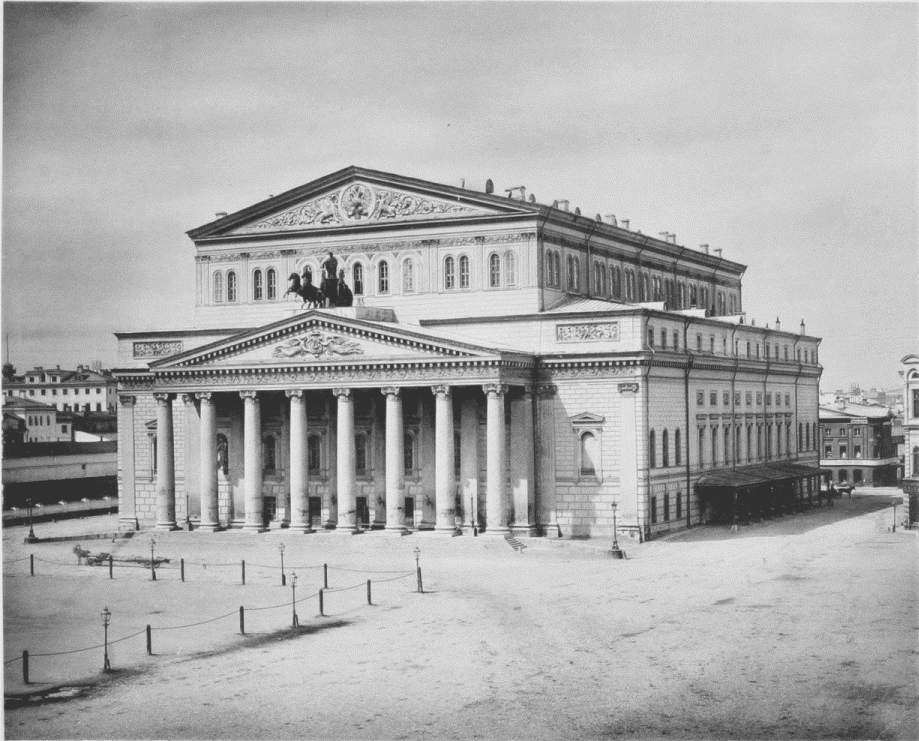
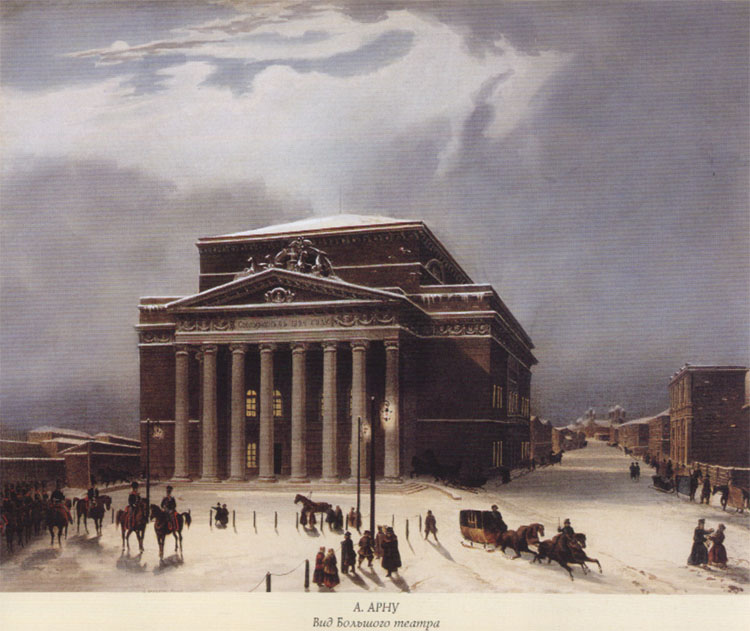
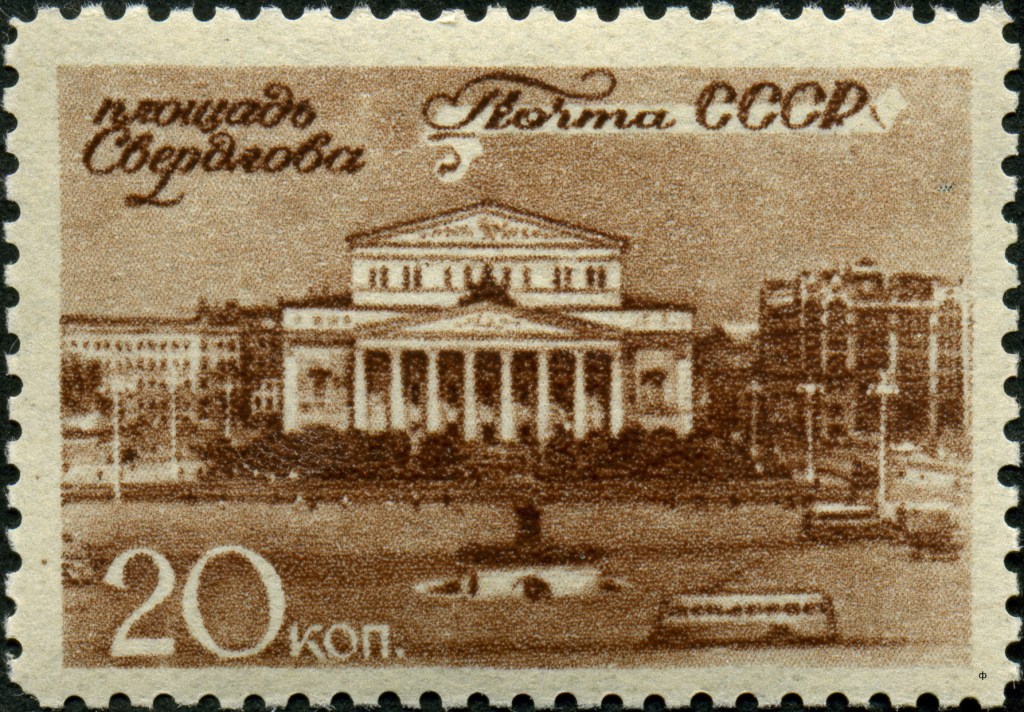
le théâtre Bolchoï au 19th century
À partir de 1918, le théâtre Bolchoï a été qualifié d’académique et pendant plusieurs années après la révolution, les disputes sur son sort n’ont pas cessé. Enfin, en 1922, le Présidium du Comité exécutif central panrusse décida de considérer la fermeture du théâtre comme économiquement inopportune.
En 1921, l’état catastrophique du mur semi-circulaire de l’auditorium, qui servait de support aux voûtes des couloirs et à l’ensemble de l’auditorium, est découvert. Les travaux de renforcement du mur ont commencé sous la direction de I. I. Resberg. Le 18 février 1921, l’inauguration du Beethoven Hall a eu lieu. Pendant de nombreuses années, il a servi de plate-forme pour les concerts de chambre des artistes de l’orchestre et des solistes de la troupe d’opéra. En 1922, les artistes du Bolchoï ont commencé à se produire sur la scène du soi-disant Nouveau Théâtre (ancien Théâtre Nezlobin)
Au milieu des années 1920, le Bolchoï n’avait plus à prouver son droit à l’existence, son statut etait tellement renforcé qu’en 1925, il a été décidé de fêter son centenaire en grand. L’ouverture du bâtiment du théâtre Bolchoï Petrovsky, qui a eu lieu en 1825, a été prise comme point de départ.
En 1928, il a été décidé d’éliminer la hiérarchie des rangs des visiteurs et l’architecte PA Tolstykh a replanifié un certain nombre d’escaliers et d’autres locaux du bâtiment.
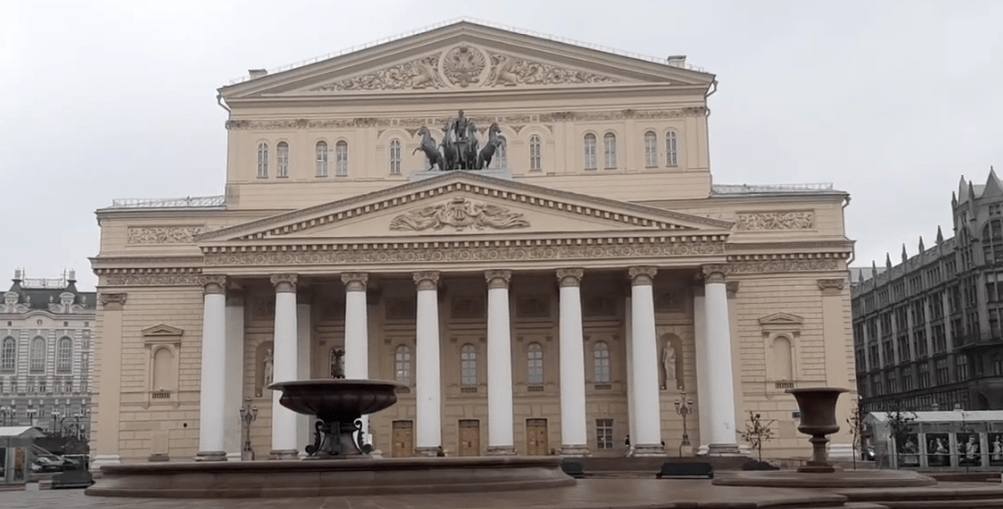
le théâtre Bolchoï
Depuis le 15 avril 1941, le théâtre Bolchoï, a été reconstruit et le 22 juin 1941 a eu lieu la première de l’opéra Roméo et Juliette de Gounod.
Pendant la Grande Guerre patriotique, d’octobre 1941 à juillet 1943, le théâtre Bolchoï a été évacué à Kuibyshev (ancienne et actuelle Samara), où il donne des représentations d’Eugène Onéguine, du Lac des Cygnes, de La Traviata, d’Aida, de Carmen, de la Dame de Pique…
Pendant son séjour à Kuibyshev, le théâtre Bolchoï a fait don de 198 litres de sang, lavé mille ensembles d’uniformes militaires d’hiver et envoyé sept brigades au front, donnant 1140 concerts. Le Bolchoï a développé des activités d’usine amateur, fournit une aide matérielle aux familles des soldats de première ligne, collecté des fonds pour une colonne de chars et pour la construction d’un escadron, souscrit à un prêt militaire.
Le 22 octobre 1941, une bombe a frappé le bâtiment du théâtre Bolchoï, l’onde de choc est passé obliquement entre les colonnes du portique et percé le mur de façade causant des dégâts importants dans le vestibule.
Malgré les difficultés de la guerre, les travaux de restauration ont commencé dans le théâtre pendant l’hiver 1942, et même si le bâtiment historique était fermé, des représentations ont été jouées à Moscou.
En 1944, Leonid Lavrovsky, en tant que directeur artistique de la troupe de ballet, et la première danseuse étoile Gallerina Ulanova, ont déménagé au Théâtre Bolchoï, soulignant le statut du théâtre en tant que principal théâtre musical de Russie.
À la fin des années 1940 et au début des années 1950, le rôle prioritaire dans la formation du répertoire lyrique a été donné à l’opéra classique russe. Les productions des années d’après-guerre se distinguent par leur ampleur épique et l’ampleur de leurs décisions scéniques.
En 1955, un nouveau rideau de brocart luxueux conçu par FF Fedorovsky est apparu sur la scène du théâtre. C’était la décoration principale de la scène pendant 50 ans.
En 1956, Assaf Messere, s’appuyant sur la production d’Alexander Gorsky, Petipa et Lev Ivanov, met en scène sa propre version du ballet “Swan Lake”. C’est cette version qui a été présentée lors de la tournée légendaire de la troupe de ballet à Londres, qui est entrée dans l’histoire, après quoi elle a commencé à s’appeler le Ballet du Bolchoï dans le monde entier.
En ballet, l’ère de Youri Grigorovich, qui a dirigé la Balshoi Ballet Company de 1964 à 1995 a été très réussie. Il a créé ses propres éditions de presque tous les ballets classiques du répertoire, mis en scène des danses dans plusieurs représentations d’opéra et composé 5 ballets originaux : Casse-Noisette de Tchaïkovski en 1966, Spartacus de Khatchatourian en 1968, Ivan le Terrible sur la musique de Prokofiev en 1975, Angara d’Eshpay en 1976 et The Golden Age de Chostakovitch en 1982.
De 1995 à 2002, une nouvelle scène du théâtre Bolchoï a été construite rue Bolshaya Dmitrovka, maison 4, bâtiment 2 comprenant 879 places. La nouvelle scène s’est ouverte le 29 novembre 2002 avec l’opéra de NA Rimsky-Korsakov “The snow Maiden”.
En 2001, Alexander Vedernikov a été nommé nouveau directeur musical du théâtre et la pratique de la location de spectacles a été introduite. L’implication du Bolchoï dans le processus théâtral mondial a été facilitée par sa participation à des productions communes, qui sont également devenues de plus en plus courantes au fil des ans.
Le 1er juillet 2005, la scène historique du théâtre Bolchoï a été fermée pour reconstruction et a rouvert le 28 octobre 2011 avec un concert de gala avec la participation de danseurs d’opéra et de ballet dans la représentation de “Ruslan et Lyudmila” mise en scène par Dmitri Chernyakov.
Depuis 2013, Vladimir Urin est le directeur général du Théâtre Bolchoï, et sa première année, un orgue à vent a été produit par la société allemande de facture d’orgues Glatter-Götz, a été installé au théâtre Bolchoï.
En 2014, Tugan Sokhiev a été nommé au poste de chef d’orchestre et directeur musical du Bolchoï, qui partageait largement le répertoire et la politique du personnel précédemment introduits.
En juillet 2016, le Théâtre Bolchoï a lancé une série de retransmissions de rue de ses représentations. Elles ont été réalisées sur un écran spécial tous temps monté sur la façade principale du théâtre et, ont été programmées pour coïncider avec le 5e anniversaire de l’achèvement de la restauration.
En 2020, la coopération avec M. Chernyakov s’est poursuivie avec la production de l’opéra Sadko ; Le spectacle est devenu l’un des plus marquants de l’histoire récente du théâtre Bolchoï et a été présenté avec un grand succès dans de nombreux pays.
En mars 2020, au milieu du verrouillage causé par la pandémie de coronavirus, le théâtre Bolchoï a lancé une série d’émissions en ligne sur sa chaîne YouTube officielle. Le premier jour, le ballet “Le Lac des cygnes” a été regardé par plus d’un million de personnes.
The Bolshoi theater is one of the most significant opera and ballet theaters in the world and the pride of Moscow. More than 800 works were staged in the theater.
The Bolshoi theater has two dates of birth: March 1776 and January 1825.
Did you know that in English the Bolshoi theater means the big theater?
On March 28, 1776 Catherine II signed a government privilege to Pyotr Vasilyevich Urusov for the maintenance of performances, masquerades, balls and other events for a period of 10 years. This date is considered to be the founding day of the Russian Bolshoi theater.
The prince began the construction of the theater on Petrovka street and the theater was named Petrovsky. after the street. Sadly it burned down before opening and the prince handed over the business to his English partner, Mikhail Maddox. So the Petrovky theater was built under his leadership and the Petrovsky theater grand opening was on December 30, 1780.
They gave a solemn prologue “Wanderers”, written by A, Ablesimov, and a large pantomimic ballet “Magic School”, staged by I. Paradise to the music of J. Startzer. After the repertoire was formed mainly from Russian and Italian comic operas with ballets and individual ballets.
“This huge building, built for popular pleasure and amusement … according to the best architects and the approval of the theater connoisseurs, was built and brought to a perfect end with so much strength and profitability that it surpasses almost all noble European theaters.”
This is how the Moskovskie newspaper responded to the opening of the Petrovsky Theater.
The building, designed by architect Christian Rozberg, was built in just 5 months. The theater had an auditorium with three tiers of boxes, a gallery, a stalls with twenty rows of benches and a spacious “parquet” between the stalls and the stage, where chairs were installed for “special” visitors, and other public could stand. It accommodated almost a thousand people.
In addition there were necessary office space, numerous foyers and halls, including the “masquerade room”.
In 1788, the Rotunda was added to the building and was the center of both cultural and social life from the very beginning of its existence.
In 1794, due to financial difficulties, Maddox was forced to transfer the theater to the treasury and the Petrovsky theater became the Imperial.
In 1802-1803, the theater was given to Prince Volkonsky who was the owner of one of the best Moscow theater troupes. But in 1804, the theater once again came under the jurisdiction of the Board of Trustees and Prince Volkonsky was appointed his director.
Once again after 25 years, on October 8, 1805 the Petrovsky theater burned downed. The troupes began to perform on private stage until the new Arbat Theater was built by K. I. Rossi on Arbat square in 1808.
Having existed only four years, the theater building burned down during the Moscow fire of 1812.
After that the theater was located on Znamenka in the house of Apraksin, which had been built in 1792 by the architect F. Camporesi. The theater room in Apraksin’s house was cramped and uncomfortable, instead of chairs there were benches covered with coarse cloth and several times there were fires in the theater.
A few years later, in 1818, the troupes was provided with a renovated theater on Mokhovaya, where they had once performed before the war of 1812.
In 1819 a competition was announced for the construction of a new theater. Andrei Mikhailov was recognized as the winner but his project was too expensive and was redesigned by Osip Bove. He preserved the basic of Mikhailov’s composition, but changed the proportion of the building, and made significant adjustments to its exterior and interior decoration.
The theater was to become the composition center of the Empire city temple, glorifying the victory in the Patriotique War. The construction began in 1820 and the new “Bolshoi Petrovky Theater” opened on January 6, 1825 with the performance “The triumph of te Muses” which was a great success. The roles were played by the best Moscow actors: the tragedian P. S. Mochalov, N. V. Lavrov, F. Gyullen-Sor. The theater critic Sergei Timofeevich Aksakov memories of this discovery have been preserved:
The Bolshoi Petrovky Theater, which arose from old, charred ruins … amazed and delighted me … A magnificent huge building, exclusively dedicated to my favorite art, already with its appearance alone led me into joyful excitements”
In 1842, the theater came under the leadership of the Saint Petersburg Directorate of Imperial Theaters. Alexei Nikolaevich Verstovsky was appointed manager of the Moscow theater office until 1859 and an opera troupe arrived in Moscow from Saint Petersburg.
In 1943 a major reconstruction of the theater building was carried out according to the project of the architect Alexander Stepanovich Nikitin. The lonic capitals of the portico were replaced with capitals of the Érechthéion type, the line of side boxes were rebuilt as well as the couloirs and stage part, where the rear stage appeared.
On March 11, 1853 the theater once more burned down and only the outer walls of the building and the colonnade of the portico survived.
Albert Kavos was the new architect and the Theater was restored in three years. The volume of the building and the layout were preserved, but the height was slightly increased. Albert Kavos changed the proportions and completely redesigned the architectural decor, designing the facades in the spirit of early eclecticism. Instead of the alabaster sculpture of Apollo that died in the fire, a bronze quadriga by Pyotr Klodt was placed over the entrance of the portico, and a plaster double headed eagle which is the state emblem of the Russian Empire was placed on the pediment.
The theatrical architect paid the main attention to the auditorium and the stage part, and in the second half of the 19th century, the Bolshoi Theater was considered one of the best in the world in terms of its acoustic properties thanks to Albert Kavos who had designed the auditorium as a huge musical instrument.
The space of the auditorium was significantly expended, which made it possible to make front lodges. The hall gained one more tier, and became six-tiered, accommodating almost 2300 spectators. On both sides, near the stage, there were letter boxes intended for the royal family, the ministry of the court and the theater directorate. The ceremonial Tsar’s box protruded a little into the hall and became its center, opposite the stage. The barrier of the Royal Lodge was supported by consoles in the form of bent atlantes. Even decades later everyone who entered this hall was amazed by the raspberry-gold splendor.
The chandelier of the auditorium was originally light by 300 oil lamps. The lamps were raised through a hole in the ceiling to be lit, and around this hole the Academician Alexei Titov painted “Apollo and the Muses” but instead of one of the canonical muses, the muse of the sacred hymns of Polyhymnia, Titov depicted the muse of painting invented by him, with a palette and a brush in her hands.
The speed of the reconstruction of the building was due to the fact that the construction had to be completed by the celebration on the occasion of the coronation of Emperor Alexander II. In August 20, 1856 the theater reopened with Belini’s opera;”Le Puritani” reflecting the tastes of the court nobility. The splendor of the auditorium, the high-society audience that filled it and was greeted by members of the imperial family was captured by the future Romanov court painter Mihai Zichy and a number of his watercolors were written for the coronation album which became one of the most impressive publications in Russia in weight and size.
One of the most significant events in the history of the Bolshoi Ballet in the 2nd half of the 19th century was the production of the ballet “Don Quixote” which premiered on December 14, 1869.
On February 20, 1877 the world premiere of Pyotr Ilyish Tchaikovsky’s ballet the “Swan Lake” took place. Almost 20 years later the canonical performance , known throughout the world, was staged by Petipa and Lev Ivanov.
Tchaikovsky made his debut at the Bolshoi theater as an author of not only ballet but also opera. And in January 18, 1869 the premiere of the opera “Voyevoda” took place.
On February 3, 1884, the world premiere of the opera “Mazeppa” took place, and on January 19, 1887 the first performance of the opera “Cherevichki” in which Tchaikovsky made his debut as a conductor with great success.
In the years 1886-1893 the back side of the building was rebuilt on the project of the architect Eduard Karlovich Gernet and as a result the columns of the portico preserved by Kavos ended up inside the warehouse.
In 1890 a survey reveled that the foundations of the theater rested on rotted wooden piles so they were rebuilt in 1894-1898 following the projects of the architects Ivan Ivanovich Rerberg, Konstantin Viktorovich Tersky and Karl Yakovlevich Mayevsky.
An unprecedented stage in the history of the development of the Bolshoi Theater is associated with Vladimir Telyakovsky. Under his leadership the theater reached a world level and significance. A new era began in the life of society, and therefore in arts. Romanticism and melodramatism were a thing of the past and musical theater took on new features.
Beginning in 1918, the Bolshoi Theater was called academic and for several years after the revolution disputes about its fate did not stop. Finally in 1922, the Presidium of all-Russian Central Executive Committee decided to consider the closure of the theater economically inexpedient.
In 1921, the catastrophic condition of the semicircular wall of the auditorium, which served as a support for the vaults of corridors and the entire auditorium was discovered. Work to strengthen the wall began under the leadership of i. I. Resberg. On February 18, 1921, the grand opening of the Beethoven Hall took place. For many years it functioned as a platform for chamber concerts of orchestra artists and soloists of the opera troupe. In 1922, Bolshoi artits began to perform on the stage of the so-called New Theater (former Nezlobin Theater)
By the mid-1920s, the Bolshoi no longer had to prove its right to exist, its status was strenghthened so much that in 1925 it was decided to celebrate its centenary on a grand scale. The opening of the building of the Bolshoi Petrovsky Theater, which took place in 1825 was taken as a starting point.
In 1928, it was decided to eliminate the rank hierarchy of visitors, and the architect P. A. Tolstykh replanned a number of stairs and other premises of the building.
Since April 15, 1941 the Bolshoi Theater has been reconstructed and on June 22, 1941 the premiere of Gounod’s opera Romeo and Juliet was held.
During the Great Patriotic War, from October 1941 to July 1943 the Bolshoi theater was evacuated to Kuibyshev (former and present Samara), where it staged performances of Eugene Onegin, Swan Lake, La Traviata, Aida, Carmen, The Queen of Spades…
During his stay in Kuibyshev, the Bolshoi Theater donated 198 liters of blood, washed a thousand sets of winter military uniforms, and sent seven brigades to the front, giving 1140 concerts. Bolshoi developed amateur factory activities, provided material assistance to the families of the front line soldiers, raised money for a tank column and for the construction of a squadron, subscribed to a military loan.
On October 22, 1941 a bomb hit the building of the Bolshoi Theater, the blast wave passed obliquely between the columns of the portico and broke through the front wall causing significative damage in the vestibule.
Despite the hardship of the war restauration work began in the theater in the winter of 1942, and even though the historic building was closed performances were played in Moscow.
In 1944, Leonid Lavrovsky, as the new artistic director of the ballet troupe, and the leading prima ballerina Gallerina Ulanova, moved to the Bolshoi Theater emphasizing the status of the theater as the main musical theater of Russia.
In the late 1940s and early 1950s, the priority role in the formation of the operatic repertoire was given to Russian classical opera. The productions of the post-war years were notables for their epic scale and the scale of their stage decisions.
In 1955 a new luxurious brocade curtain designed by F. F. Fedorovsky appeared on the stage of the theater. It was the main decoration of the stage for 50 years.
In 1956, Assaf Messere, relying on the production of Alexander Gorsky, Petipa and Lev Ivanov, staged his own version of the ballet “Swan Lake”. It was this version that was shown on the legendary tour of the ballet troupe in London, which went down in history, after which it began to be called the Bolshoi Ballet all over the world.
In ballet, the era of Yuri Grigorovich, who directed the Balshoi Ballet Company from 1964 to 1995 was very successful. He created his own editions of almost all classical ballets in the repertoire, staged dances in several opera performances and composed 5 original ballets: The Nutcracker by Tchaikovsky in 1966, Spartacus by Khachaturian in 1968, Ivan the Terrible to the music of Prokofiev in 1975, Angara by Eshpay in 1976 and The Golden Age by Shostakovitch in 1982.
From 1995 to 2002 a new stage of the Bolshoi Theater was built on Bolshaya Dmitrovka street, house 4, building 2 including 879 seats. The new stage opened on November 29, 2002 with N. A. Rimsky-Korsakov’s opera “The snow Maiden”.
In 2001, Alexander Vedernikov was appointed as the new musical director of the theater, and the practice of showing rental performances was introduced. The involvement of the Bolshoi in the world theatrical process was facilitated by his participation in joint productions, which also became more and more common over the years.
On July 1, 2005 the historical Stage of the Bolshoi Theater was closed for reconstruction and reopened on October 28, 2011 with a gala concert with the participation of opera and ballet dancers in the performance of “Ruslan and Lyudmila” staged by Dmitri Chernyakov.
Since 2013 Vladimir Urin has been the general director of the Bolshoi Theater, and his first year a new wind organ produced by the German organ building company Glatter-Götz, was installed at the Bolshoi theater.
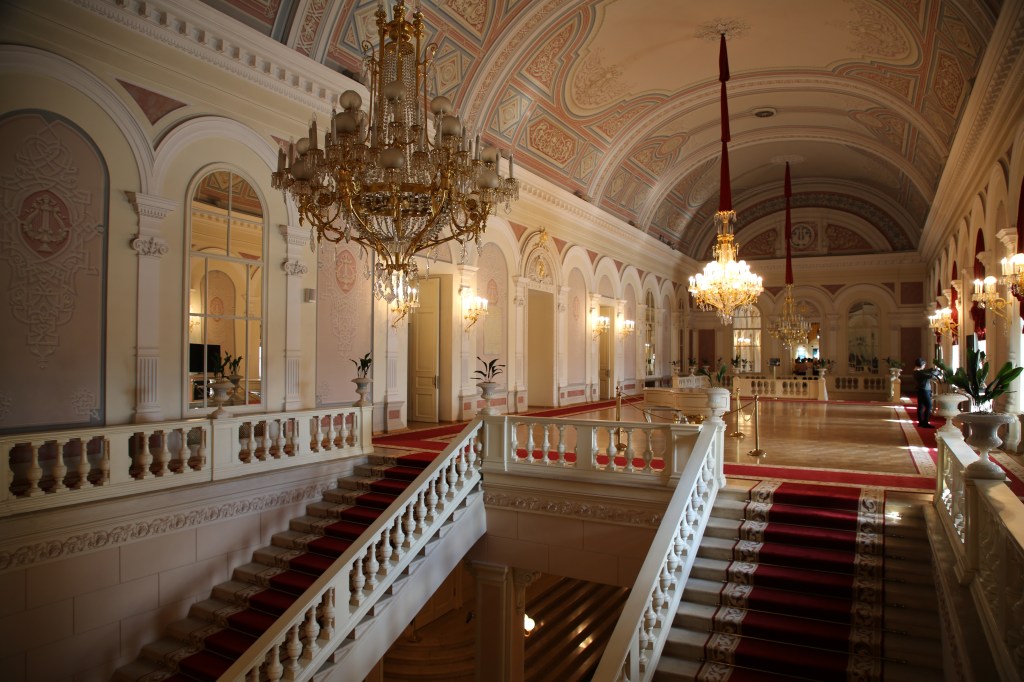
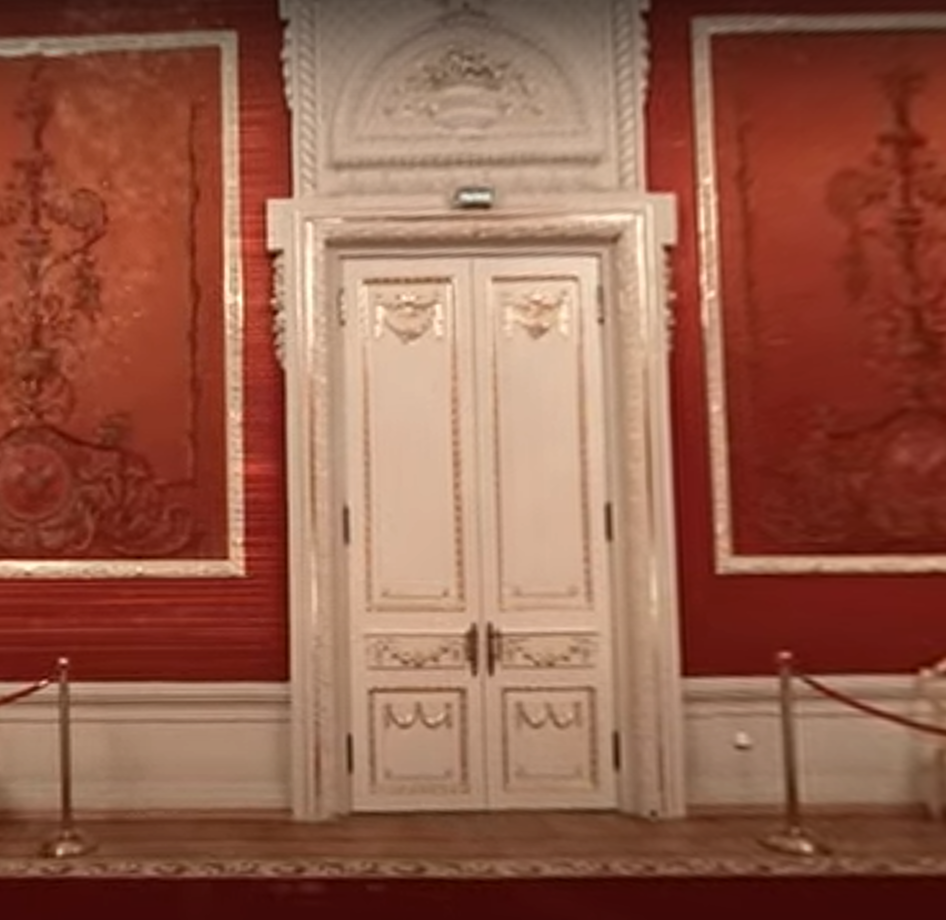
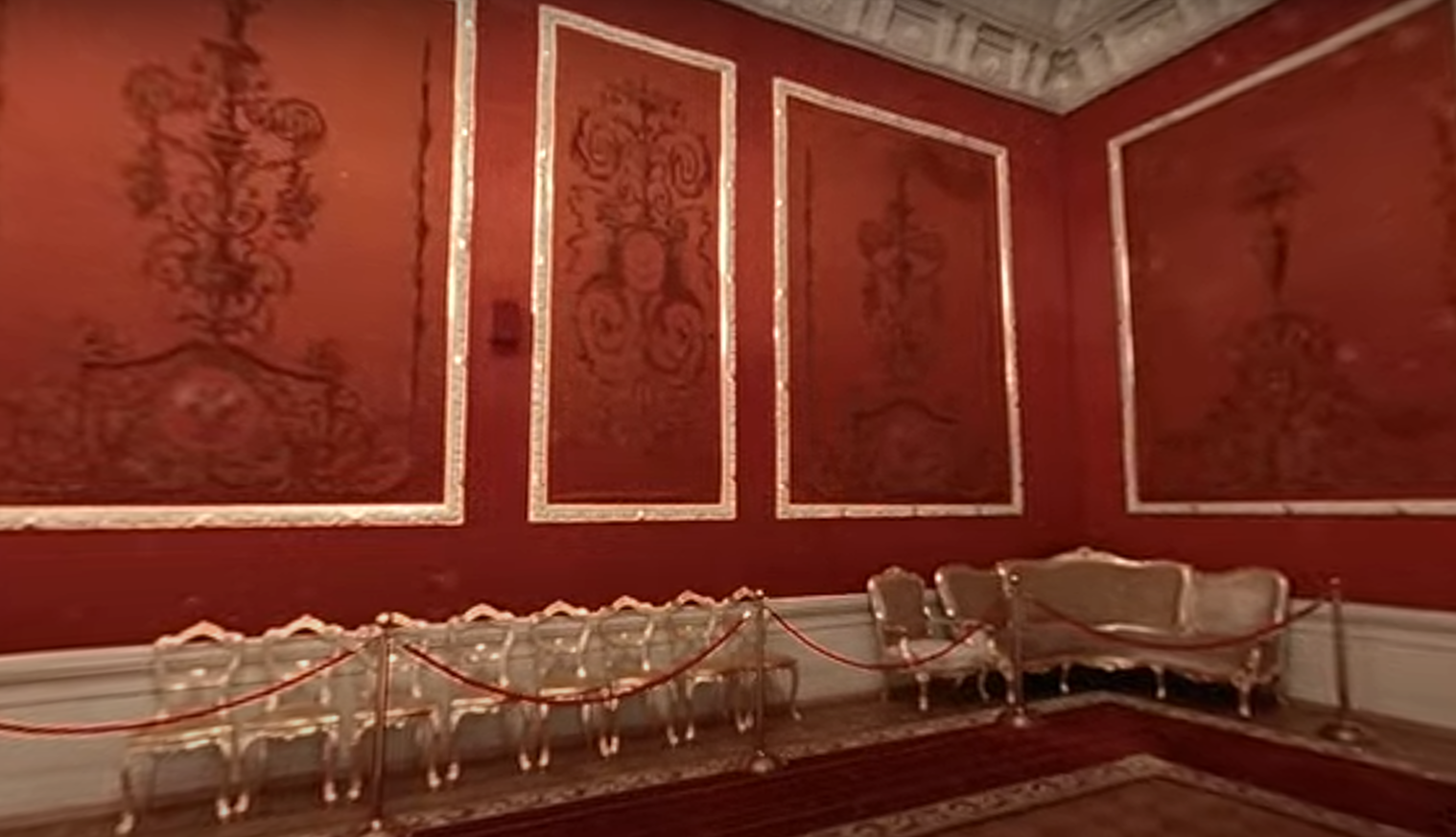
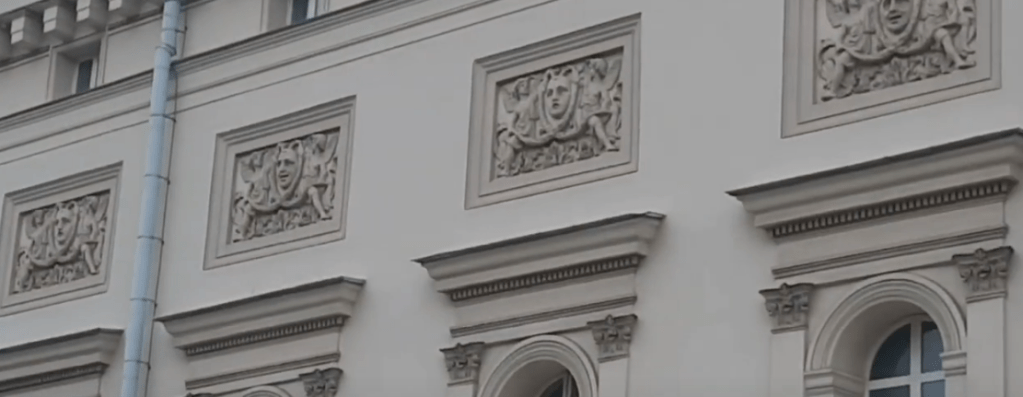
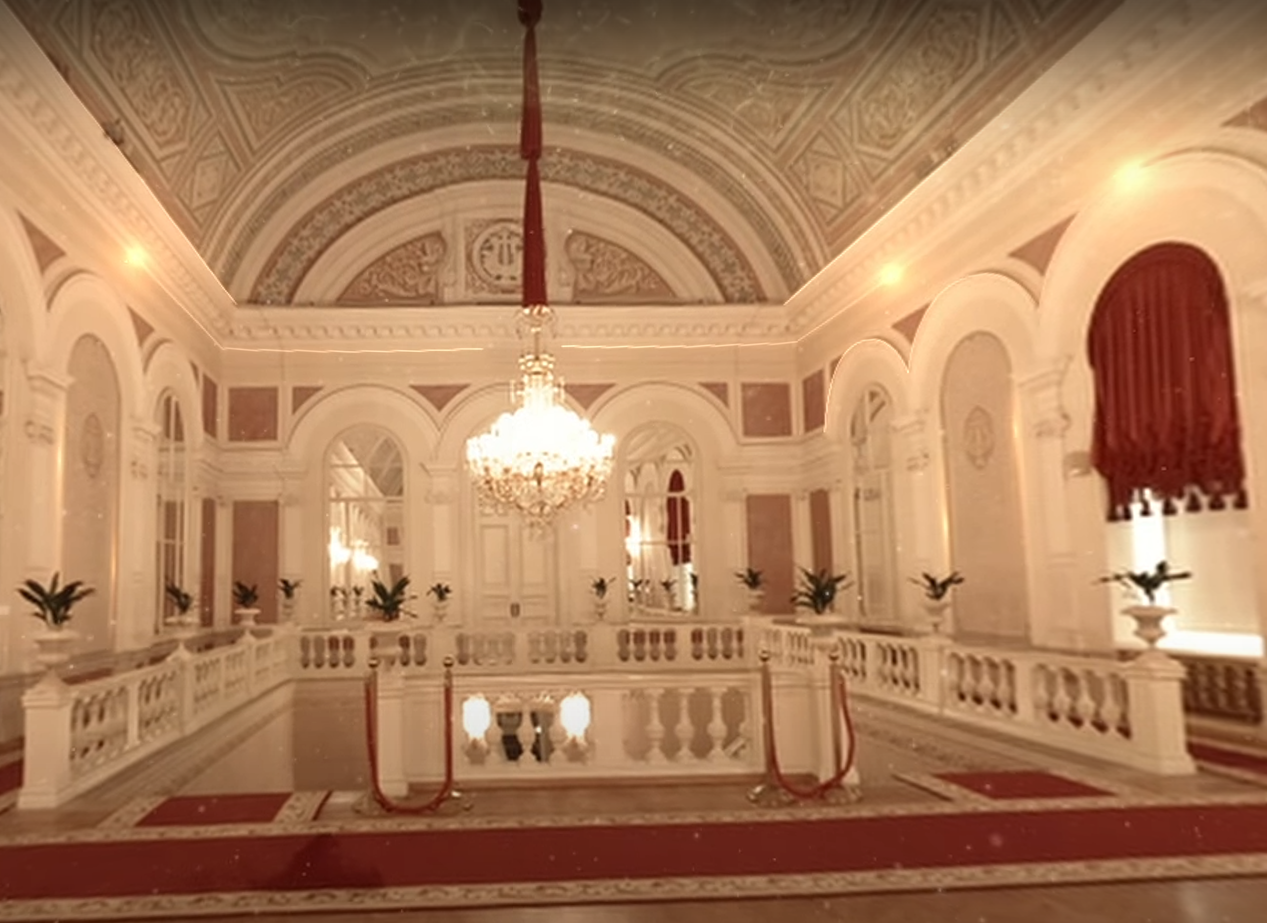
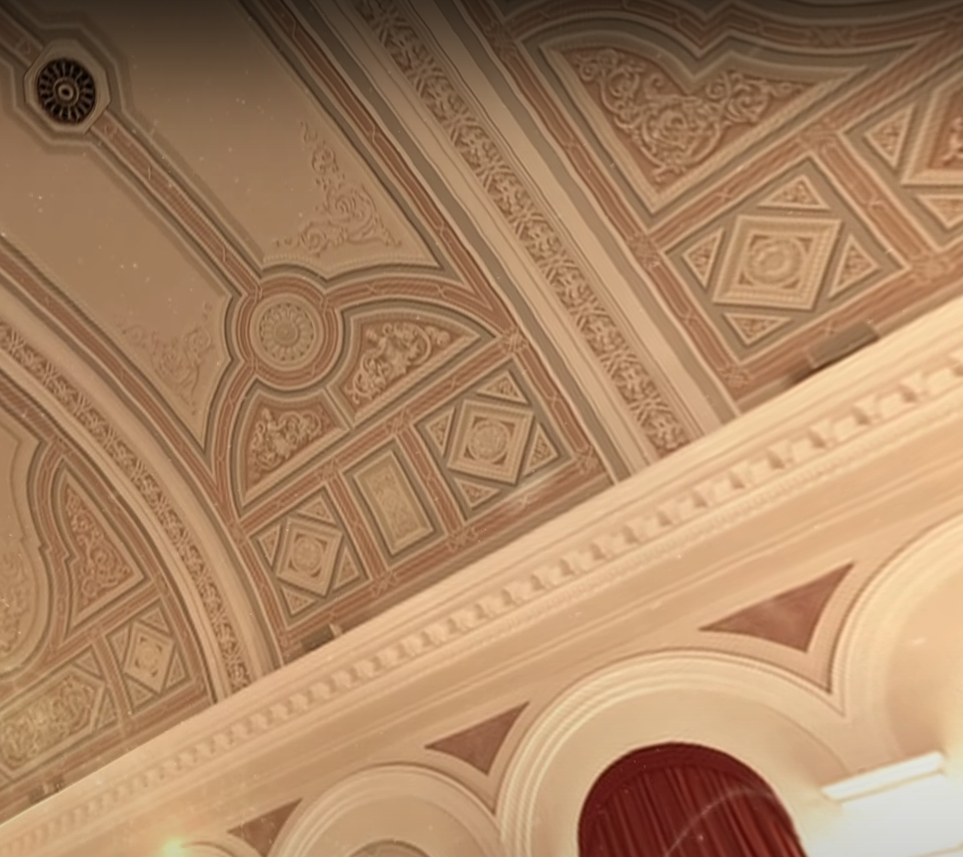
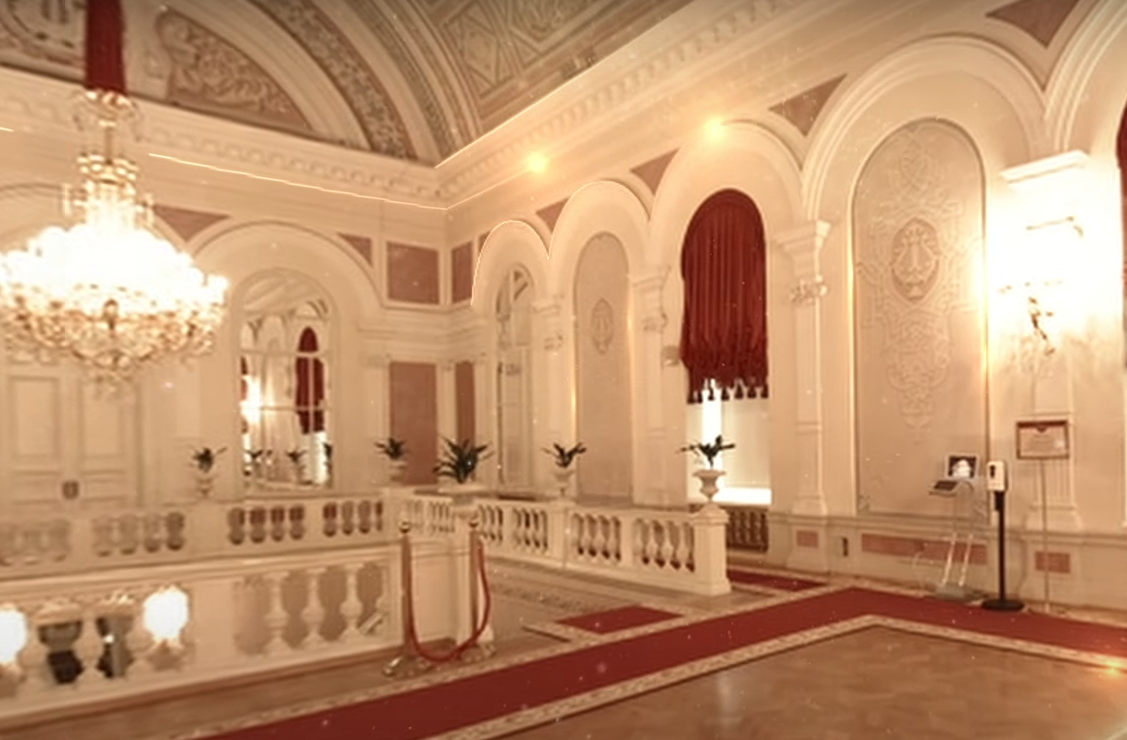
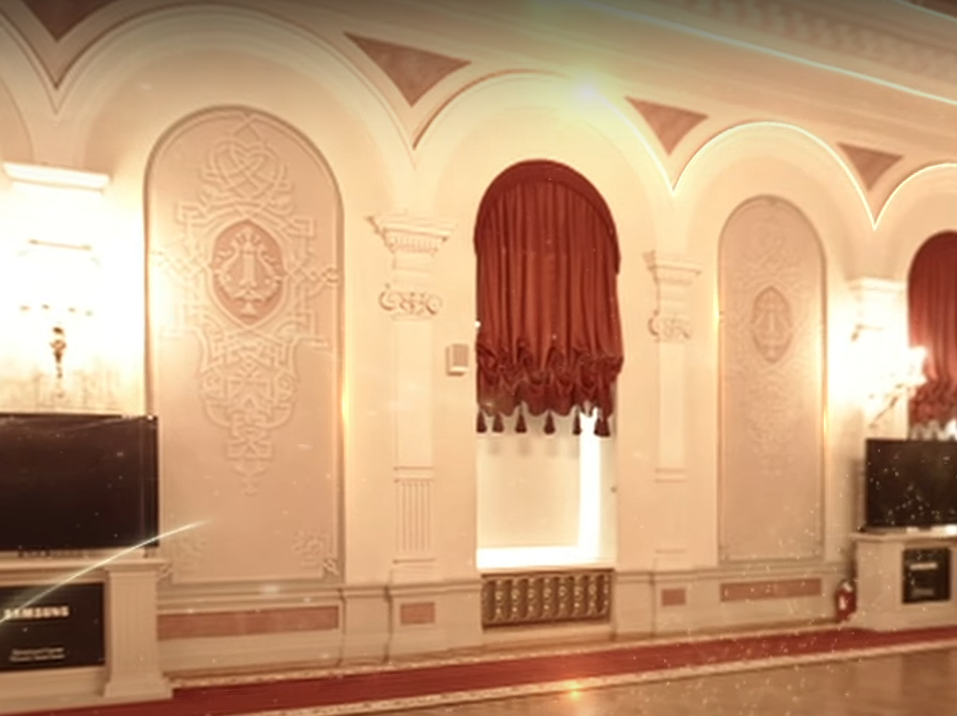
Main foyer of the Bolshoi theater 2020Main foyer of the Bolshoi theater 2020Main foyer of the Bolshoi theater 2020 Main foyer of the Bolshoi theater 2020Main foyer of the Bolshoi theater 2020
In 2014, Tugan Sokhiev was appointed to the post of chief conductor and musical director of the Bolshoi, who largely shared the previously introduced repertoire and personnel policy.
In July 2016, the Bolshoi Theater launched a series of street broadcasts of its performances which were carried out on a special all-weather screen mounted on the main facade of the theater and were timed to coincide with the 5th anniversary of the completion of the restoration.
In 2020, cooperation with Mr. Chernyakov continued with the production of the opera Sadko; The performance became one of the most striking in the recent history of the Bolshoi theater and was showned with great success in many countries.
In March 2020, amid the lockdown caused by the coronavirus pandemic, the Bolshoi theater began a series of online broadcasts on its official YouTube channel. On the first day, the ballet “Swan Lake” was watched by more than 1 million people.
Le musée de l’Ermitage est l’un des musées les plus célèbres de Saint Pétersbourg, Russie. Il est dédié aux beaux arts et aux arts décoratifs et, est magnifique.
Parfois malheureusement c’est difficile pour nous de visiter un musée qui est dans un pays différent mais maintenant, nous pouvons le faire grace à leur visite virtuelle. Un grand merci à l’Ermitage car cela en vaut la chandelle. C’est vraiment magnifique
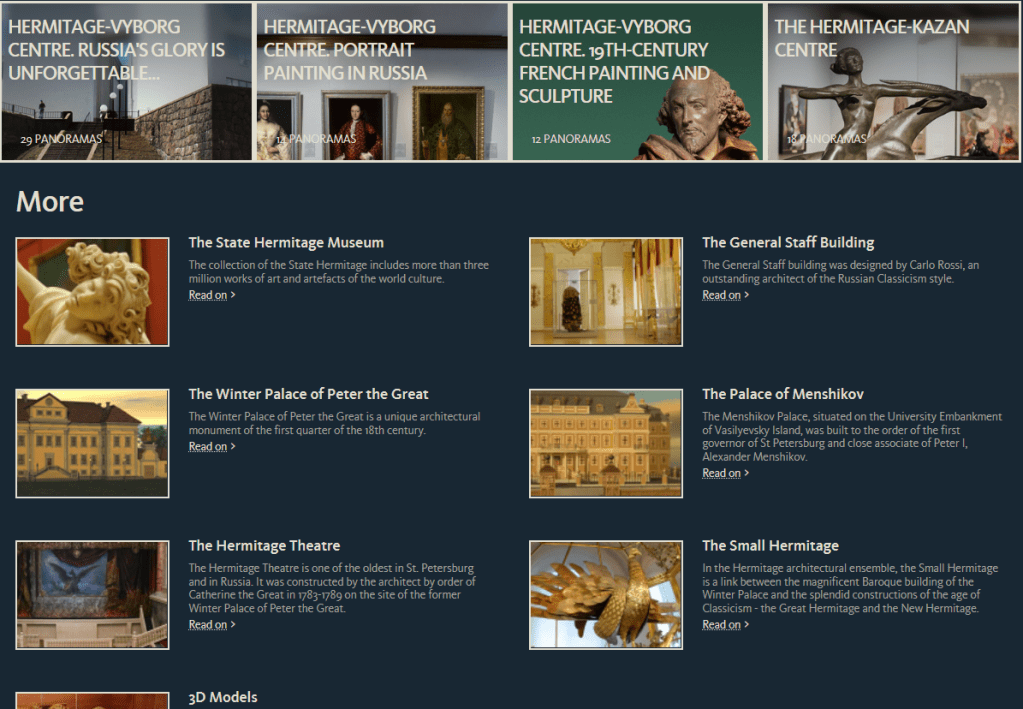
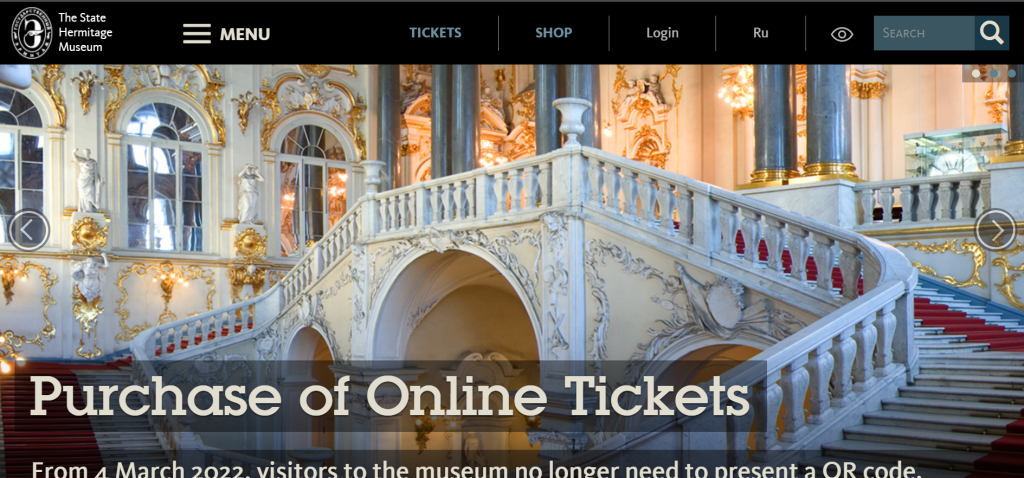
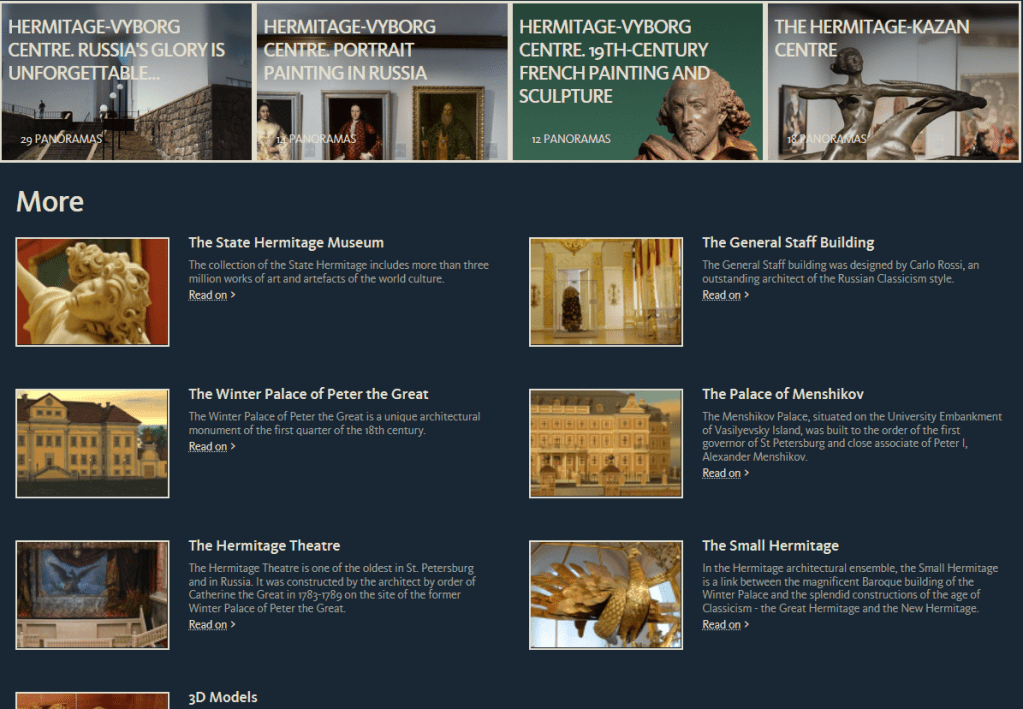
Cela est la première page que vous verrez, et non pas en Français mais en anglais ou en russe. Vous pouvez vous reporter sur ce site pour le lire en Français si vous ne comprenez pas.
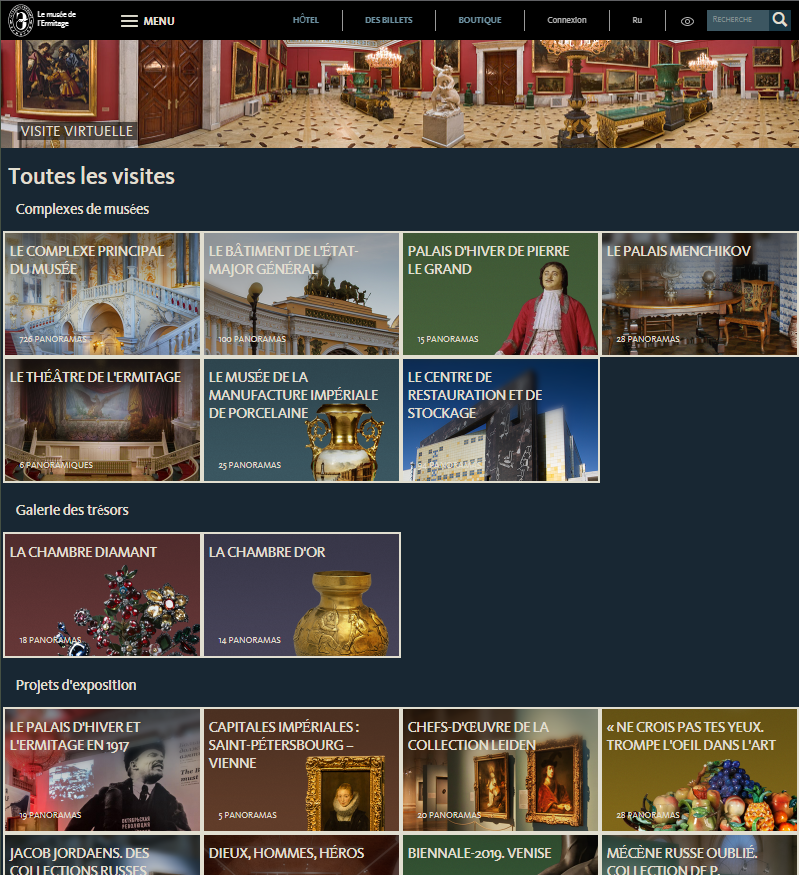
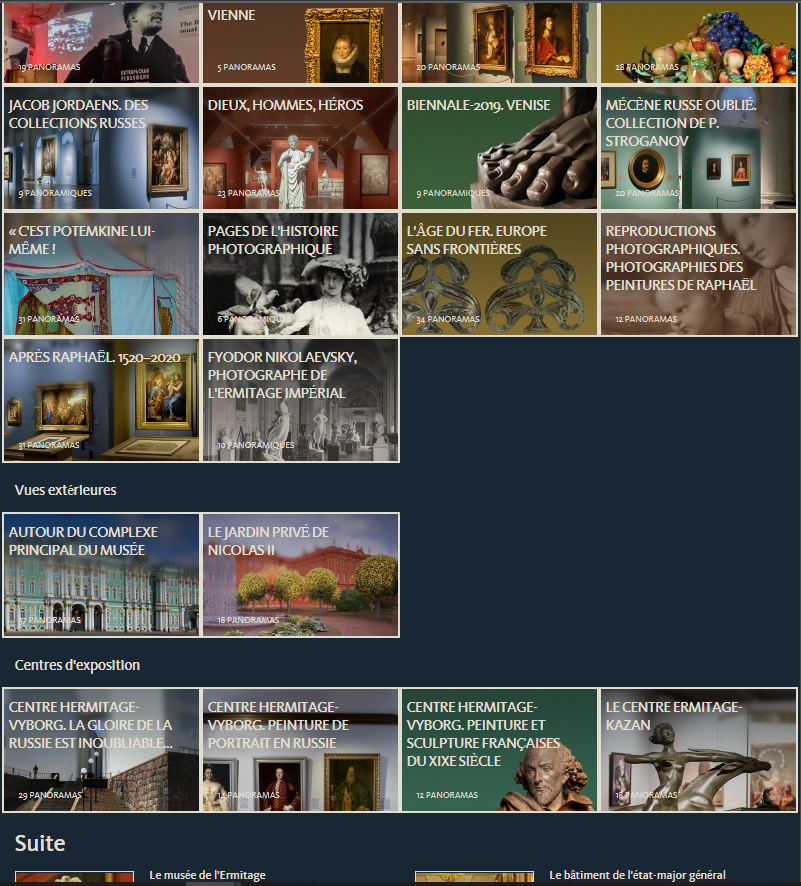
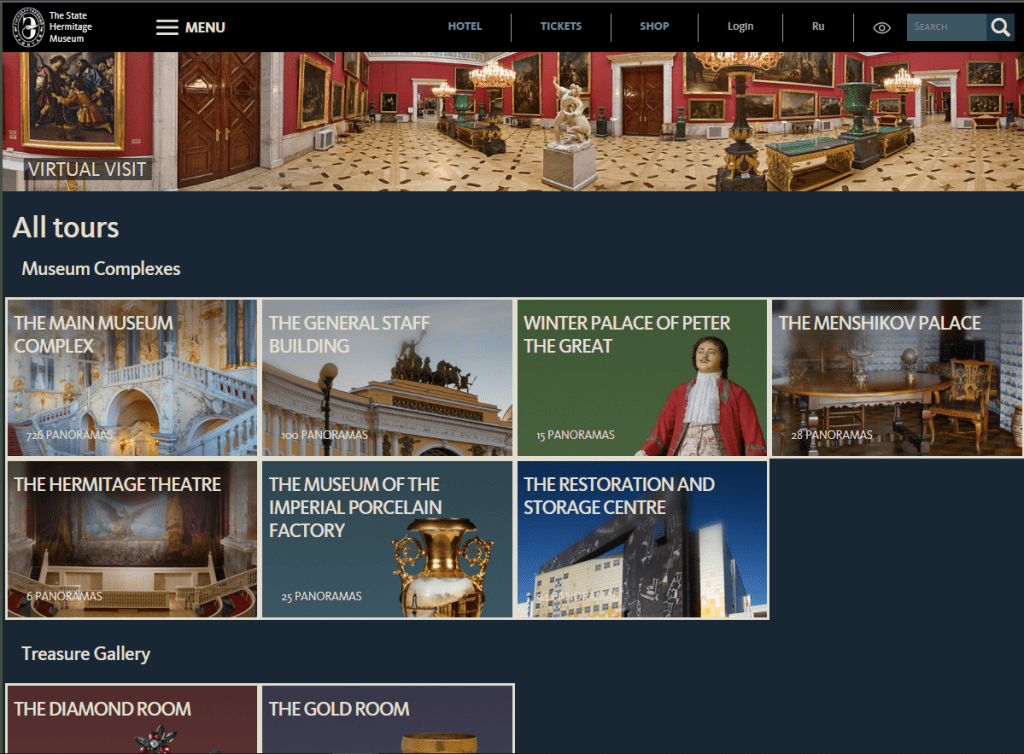
Ensuite nous voyons les visites disponibles. Pour les visiter, il suffit de cliquer sur l’image (Pas la mienne, sur leur site ) Pour cela cliquer sur une des barre disant “Visitez l’Ermitage virtuellement”. Elle vous amènerons sur leur site.
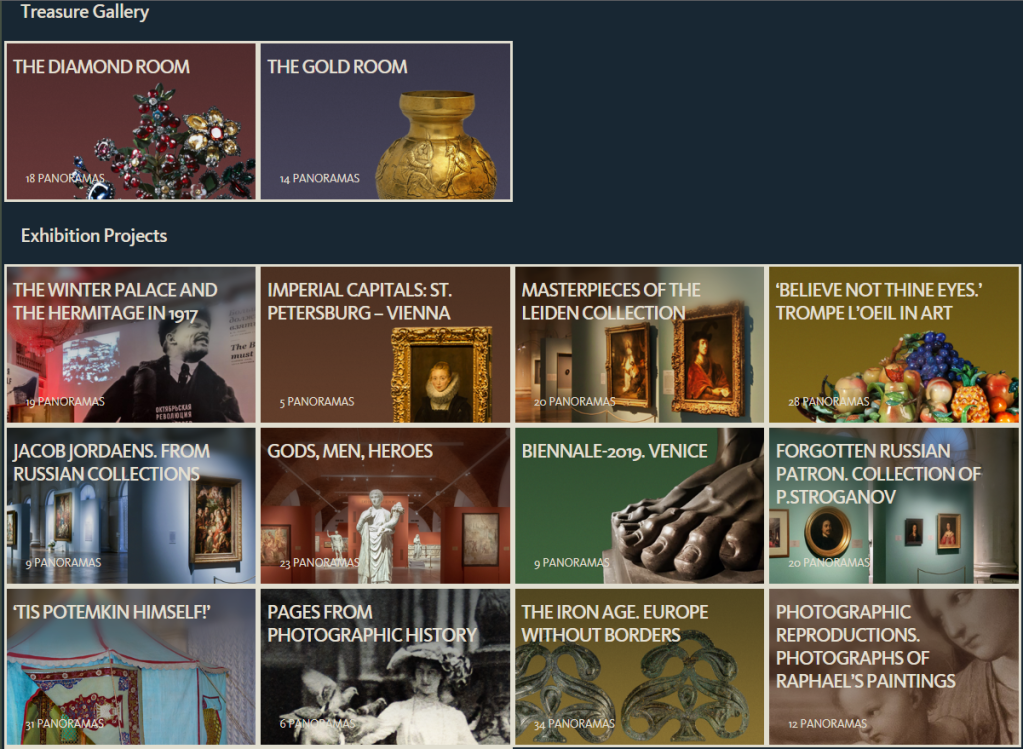
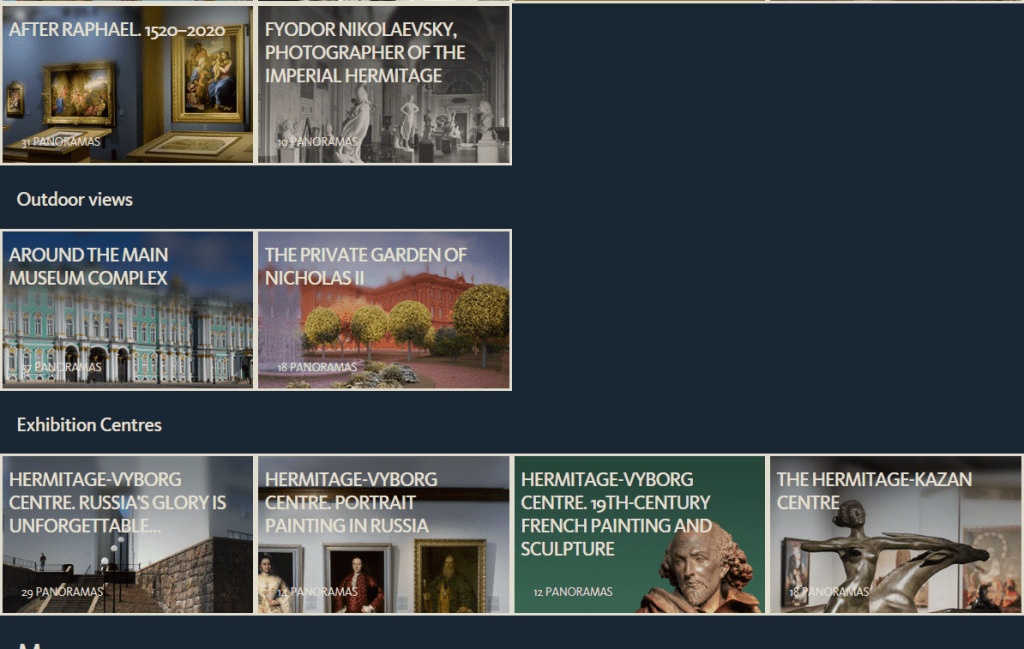
Après que vous ayez cliqué sur la première image vous verrez la suivante. Juste cliquez sur un numéro et commencez a visiter. Vous pouvez agrandir ou rétrécir en bougeant la petite roulette de votre souris.
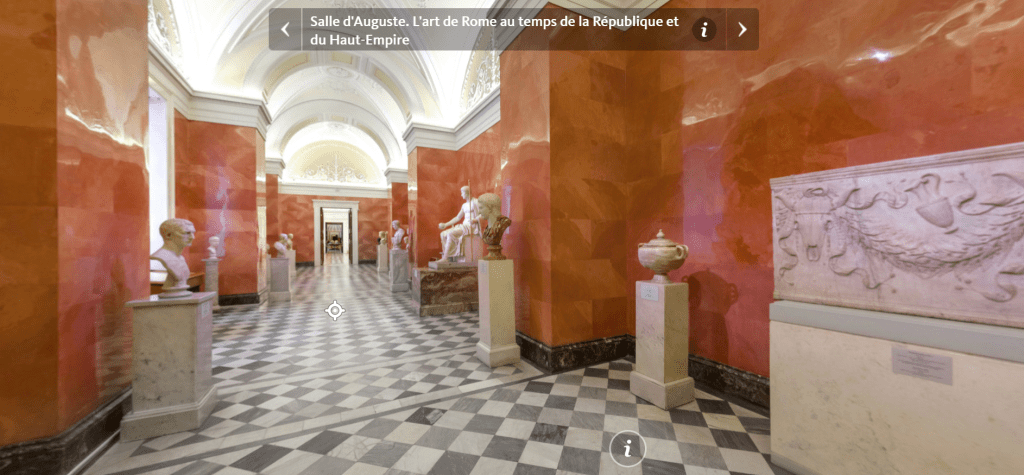
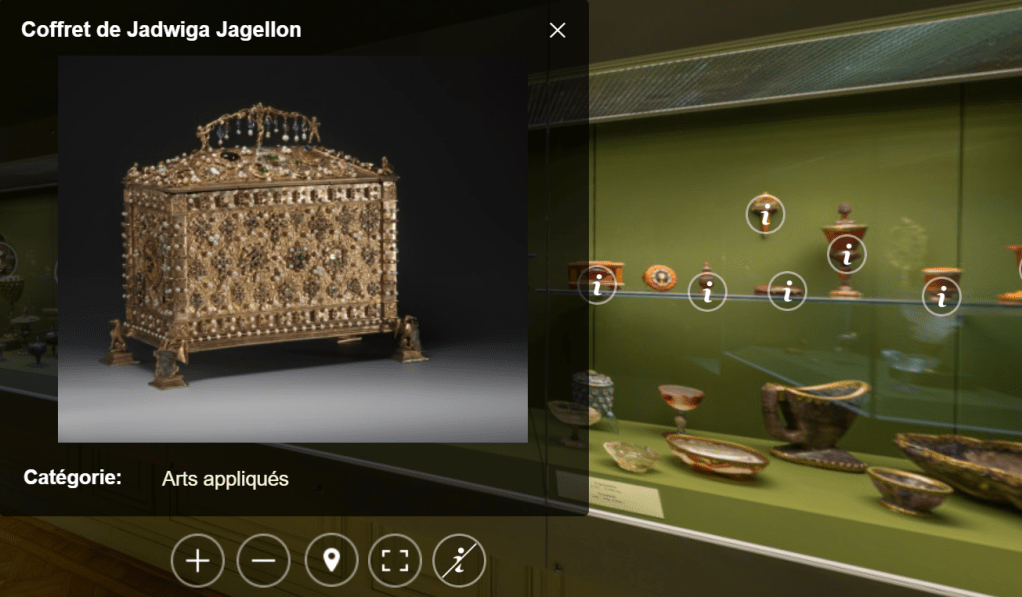
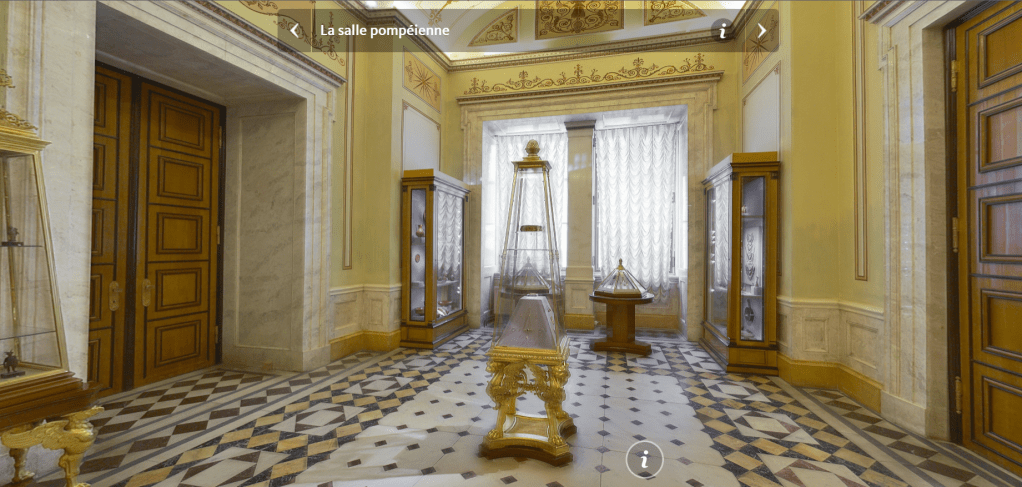
Ce sont des images prise au hasard de ma visite. Comme vous le verrez parfois vous pouvez obtenir des détails sur ce que vous regardez. J’ai pris plusieurs photo d’écran de loin et pour certaines images, je me suis rapprochée et ai demandé des informations.
The Hermitage Museum is one of the most famous museums in Saint Petersburg, Russia. It is dedicated to fine and decorative arts and is magnificent.
Sometimes unfortunately it is difficult for us to visit a museum which is in a different country but now we can do it thanks to their virtual visit. A big thank you to the Hermitage because it is worth the effort. It is really beautiful
This is the first page you will see, in English or Russian. You can refer to this site to read it in English if you do not understand how to switch the languages but it is the last before search on the menu bar.
Next we see the tours available. To visit them, just click on the image (Not mine, on their site) To do this, click on one of the bars saying “Visit the Hermitage virtually”. It will take you to their site.
After you click on the first image you will see the next one. Just click on a number and start visiting. You can enlarge or shrink by moving the small wheel of your mouse.
These are random images taken from my visit. As you will see sometimes you can get details of what you are watching. I took several screenshots from afar and for some images, I got closer and asked for information. Sorry it is written in French which it will definitively not be in your browser
The State Hermitage or Imperial Hermitage before 1918, is located in Saint Petersburg. It is one of the most important museums not only in Russia but in the whole world.
Its collection includes more than 3 million objects collected, which are works of art and monuments of world culture from the Stone Age to the present day. The total area of the Hermitage is more than 230,000 square meters, of which more than 65,000 are occupied by exhibition spaces.
State Hermitage Museum
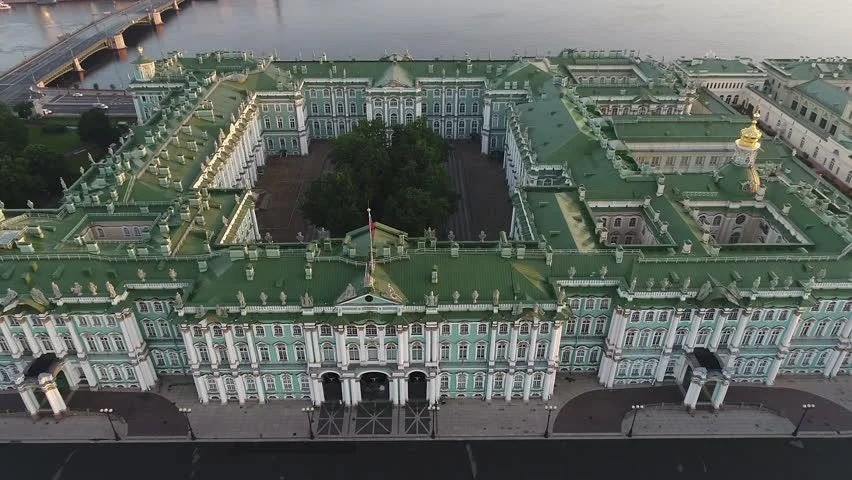
The museum is located in 5 main buildings interconnected and forming a single museum complex.
Hermitage museum complex seen from above
The Hermitage was founded on December 7, 1764 by Russian Empress Catherine II. This superb museum began its history with the purchase of a private collection comprising 317 precious paintings, which was initially housed in a special wing of the palace which was called the Hermitage. Now this square is known as the Small Hermitage. The collection contained paintings by Dick Van Baburen, Hendrik Van Balen, Rembrandt Van Rijn and many other famous artists. To date, there are at least 96 of these early paintings exhibited in the Hermitage. This collection grew to include the painting collection of Baron Pierre Crozat in 1772, that of British Prime Minister Walpole in 1779 and that of Count Baudouin in 1781, but it also contained the libraries of Diderot and Voltaires, cameos and other treasures.
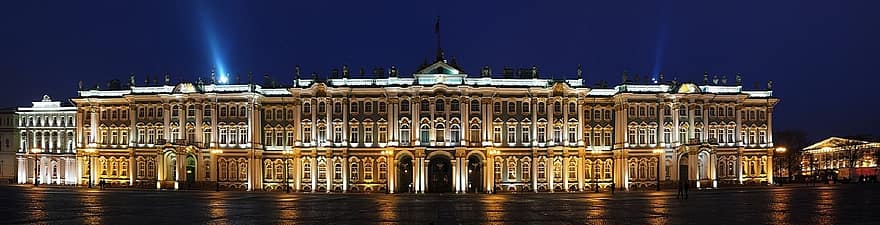
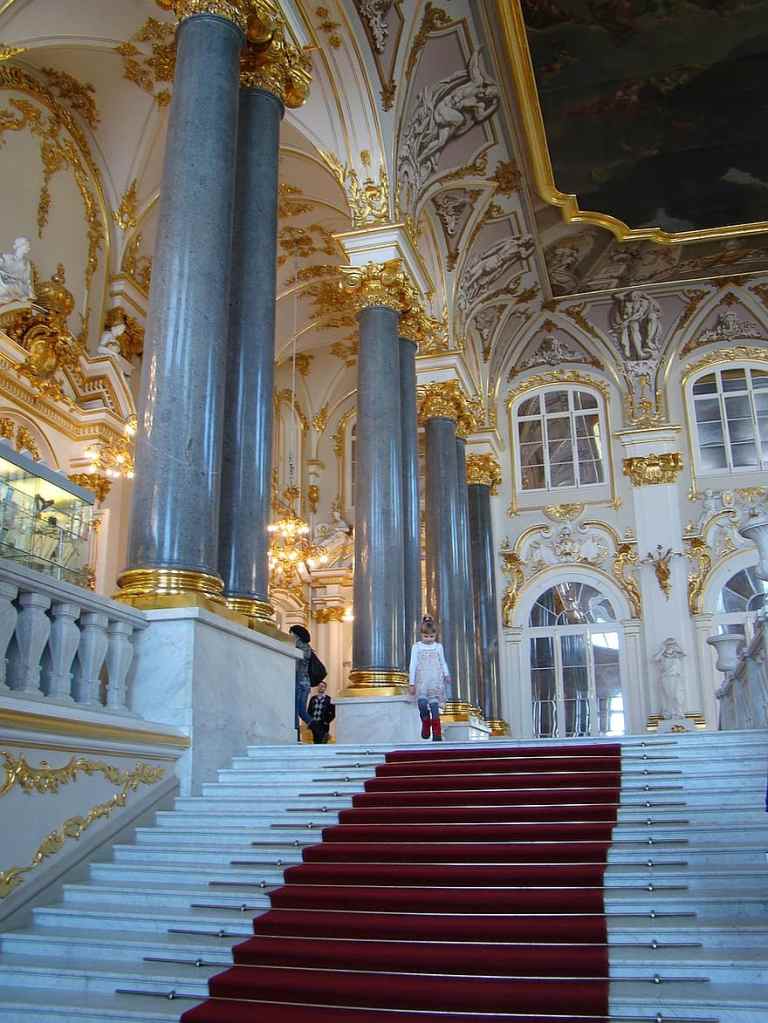
Hermitage Winter palace
Over time the collection grew and after some time the original premises in which the works of art were stored proved to be insufficient, so from 1771 to 1787 the large Hermitage was built. The new building was intended to house the palace’s art collections. In addition, the Hermitage had one of the oldest theaters in Saint Petersburg and Russia, which was built in 1783.
Emperor’s Throne
The idea of transforming the Hermitage into a public museum came from Nicolas I who contributed significantly to the reconstitution of the museum’s art gallery.
But it will not be until February 5 (17), 1852 with a considerably expanded collection that the Hermitage will open to the public. For this a new building called the New Hermitage was built.
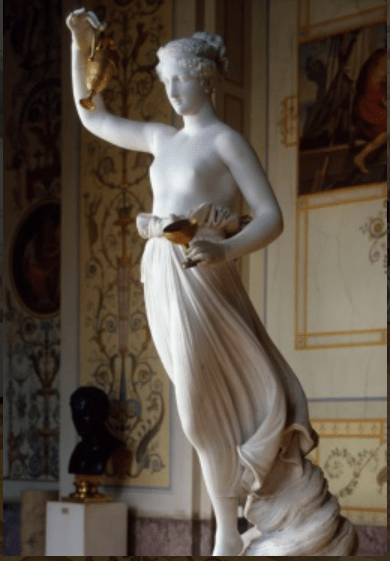
Hebe
At that time the Hermitage already possessed the richest collections of monuments of ancient, oriental, Egyptian, and medieval cultures of Western and Eastern European art. The museum also contained archaeological and artistic monuments of Asia and Russian culture from the 8th to the 18th centuries.
Now the museum consists of 5 interconnected buildings. The Winter Palace , which was once the main imperial palace. The Small Hermitage (North and South Pavilions, and the Hanging Garden). The Great Hermitage also called the Old Hermitage, the Hermitage Theater built on Peter I’s Winter Palace, which has been partially preserved, and the New Hermitage .
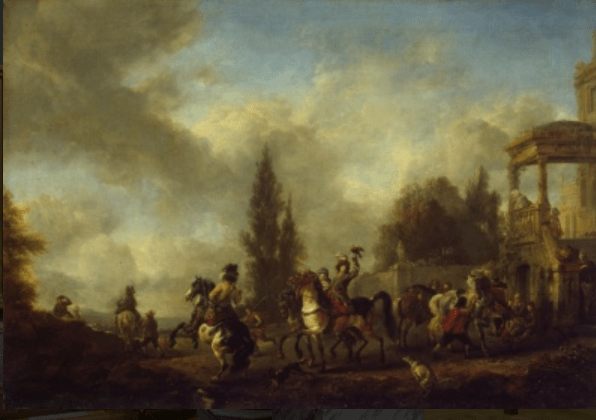
Going out at the falconry
The Winter Palace Reserve House which is a late 19th century mansion and the Hermitage garage built in 1911 for Emperor Nicholas II are included in the complex of Hermitage buildings as Dependencies.
tapestry interior museum Hermitage-Winter Palace
Additionally, the Hermitage has several other buildings including the Menshikov Palace which was built for the city’s first governor, Alexander Menshikov. This was the first stone building in Saint Petersburg. The Hermitage also uses the wing of the General Staff Building built in 1820, which is a museum exhibition complex, the Imperial Porcelain Factory Museum and the Stock Exchange Building on Vasilyevsky Island . The latter houses the Museum of the Russian Guard and Heraldry.
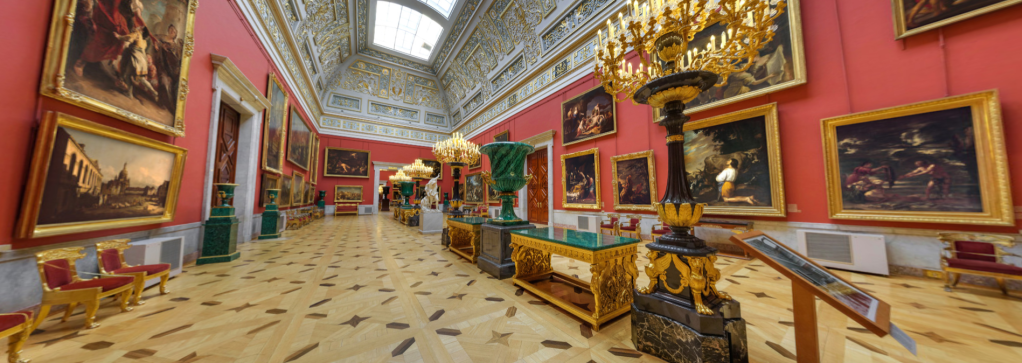
large Italian skylight hall
Another important part is the restoration and storage center of the State Hermitage, part of which offers us very interesting guided tours.
And finally, since spring 2020, because of the quarantines caused by the coronavirus, we can take virtual tours of this superb museum. We will see that in our next article.
If you liked this article, don’t forget to like and share.
Subscribe to not miss anything
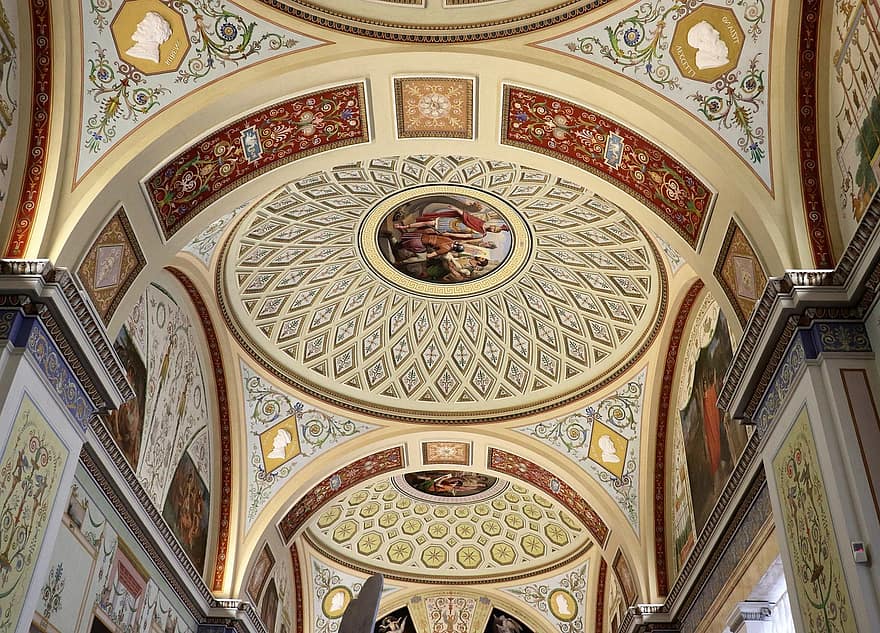
Hermitage ceilings
The modern Hermitage is located at Place Embankment, 32-38 (Main Museum Complex). It is open every day except Monday from 10:30 a.m. to 6 p.m., as well as Wednesdays and Fridays from 10:30 a.m. to 9 p.m.
The stars and the skies have always fascinated people. Galileo Galilei was the first to observe the cosmos through a telescope, but it took more than four centuries before we could travel through space.
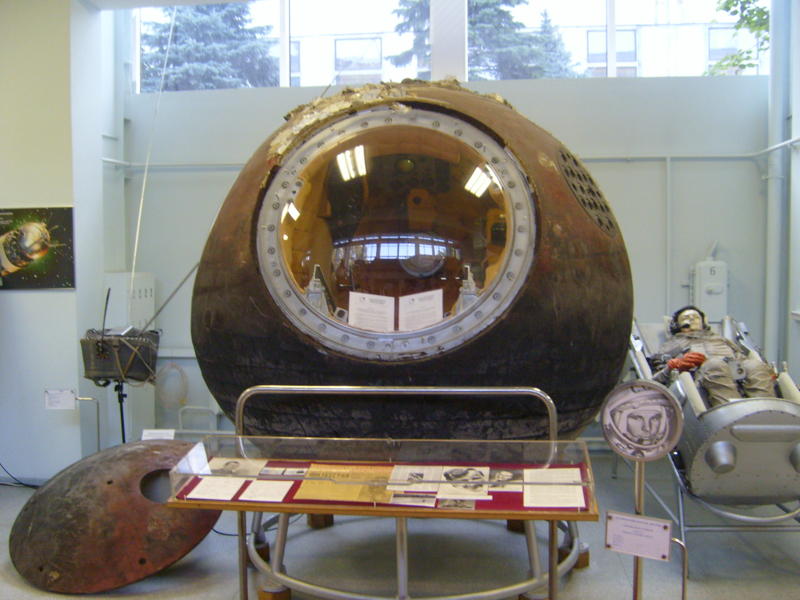
Yuri Alekseevich Gagarin became the first person in world history to fly into space on April 12, 1961. His carrier rocket “Vostok” together with his ship “Vostok” were launched from the Baikonur Cosmodrome. The first cosmonaut stayed in space for 108 minutes some 327 kilometers above the earth, circled the planet and successfully landed in the Saratov region, near the city of Engels.
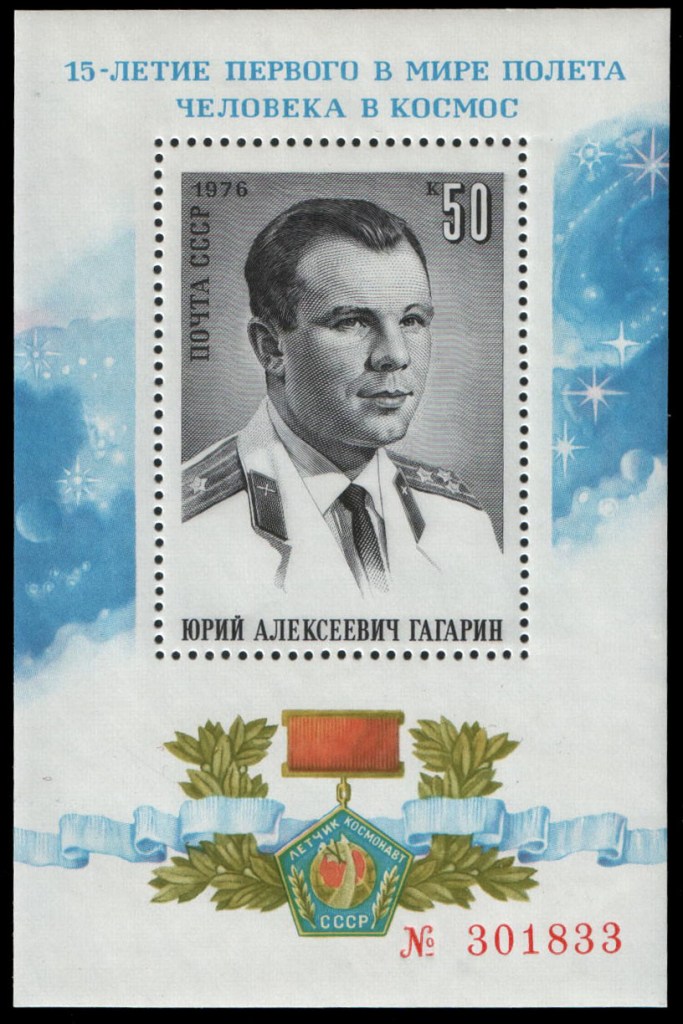
Yuri Gagarin is a hero of the Soviet Union, holder of the highest honors of several states and honorary citizen of many Russian and foreign cities.
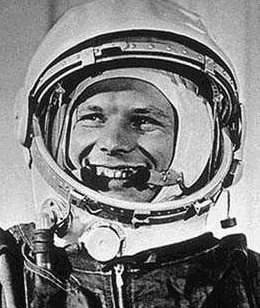
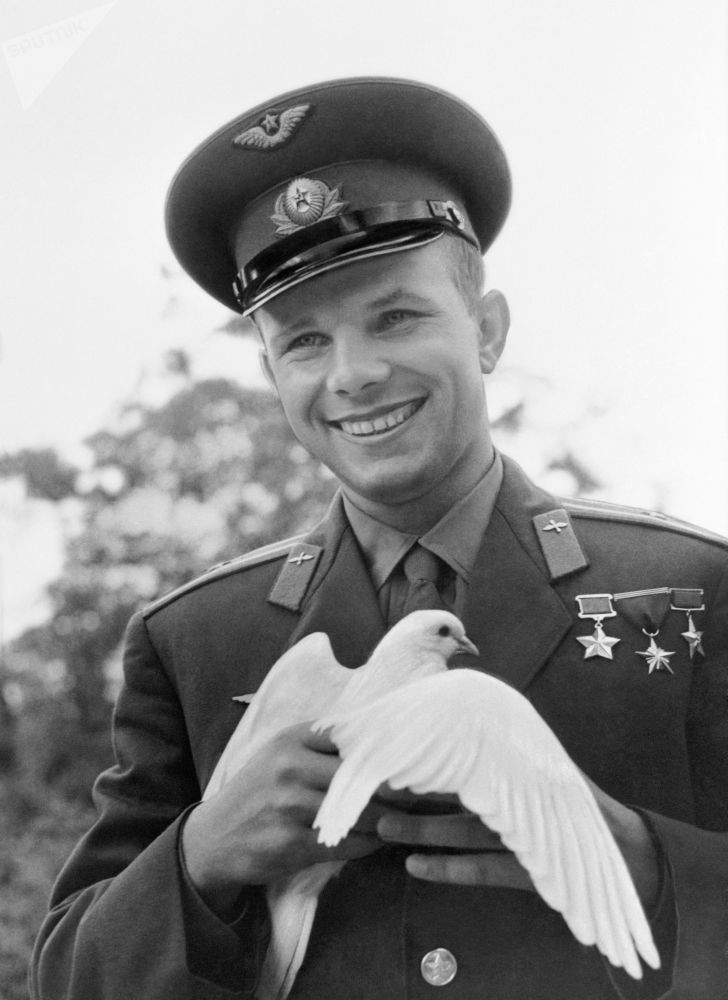
Yuri Gagarin
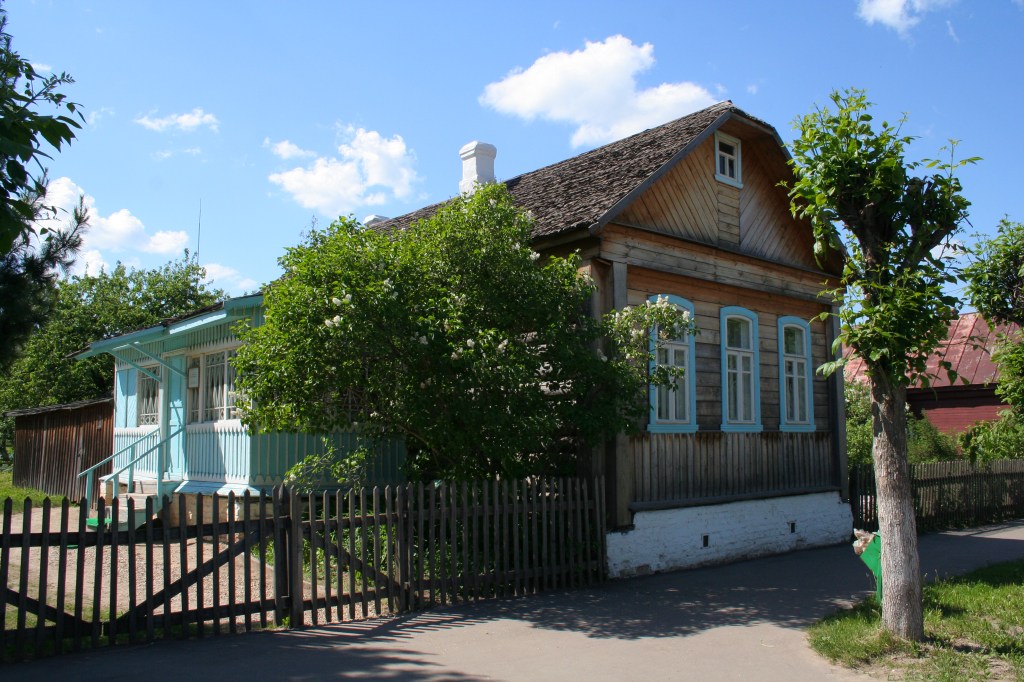
Yuri Alekseevich Gagarin was born on March 9, 1934, in the small village of Klushino, in the Western region of the USSR (now the Smolensk region), in a family of wealthy peasants. The future cosmonaut was the third of 4 children. He had 2 brothers and a sister.
His childhood was calm and joyful. He had the love and attention of his parents and was introduced to carpentry by his father. Unfortunately the Great Patriotic War (World War II) put an end to this. His village was occupied by the German army on October 12, 1941 and he had to live in his garden sheltered by a canoe without going to school until the Red Army liberated him on April 9, 1943. He saw his father beaten and forced to work for the Germans, and his older brother Valentin and older sister Zoya taken away by the German army during their retreat. He always remembered mothers chased away with gun butts to prevent them from protecting their children, although he refused to talk about this period of his life.
In 1943 after their village was liberated by the Red Army, the Gagarins moved to Gzhatsk (now Gagarin’s city), where Yuri continued his education at a local school. Youri was a very curious boy who studied all subjects, as well as music, art and photography.
In May 1949, after graduating from sixth grade Yuri, who was 15 years old, went to continue his studies in Moscow, at Lyubersty No. 10 vocational school. At the same time, he also played the trumpet in a brass band, took part in amateur shows and went to evening school for working-class youth. He received his diploma of the seventh year of the evening school in May 1951, and that of moulder-founder with honors in June 1951.
It was in 1951 that he moved to Saratov, where he continued his education at a technical school and it was there that he fell in love with the idea of flying. In 1955 he graduated with honors and made his first solo flight on the Yak-18 aircraft.
Yuri Gagarin
On October 27, 1955, Gagarin was drafted into the Soviet army and was sent to the first military aviation school for pilots in the city of Chkalov (now Orenburg). Yuri Gagarin had the best scores in all disciplines but he could not control the moment of landing. He was almost kicked out of school, but at the last moment they realized that his short stature was the problem and gave him a chair with a thick lining, which solved everything. On October 25, 1957, Yuri graduated from college, and a few days later he married Valentina Ivanovna Goryacheva, and then began serving in the Murmansk region in 1957.
At that time competition for space between the United States and the Soviet Union was in full swing. And already on January 5, 1959 the Council of Ministers took the decision to recruit 20 cosmonauts. On December 9, 1958, Gagarin wrote a report asking to be included in the group of cosmonaut candidates, and a week later he underwent a medical examination and was found fit for space flight. It was a very happy time for him as his first daughter Lena was born that same year. Youri was a very good family man and in March 1961, a month before his heroic flight, he had a second daughter, Galya.
Of the 20 candidates, only 6 were selected. Yuri Gagarin, German Titov, Grigory Nelyubov, Andriyan Nikolaev, Pavel Popovich and, Valery Bykovsky all had the chance to prepare for the first space flight during the period from December 1960 to January 1961 in the city of Zhukovsky.
Gagarin began his training on March 25, 1960. Despite serious competition, Yuri managed to defeat all his rivals. He felt no jealousy, was always honest with everyone, and had a positive attitude. Moreover in an anonymous poll of candidates, and despite the fact that they were his competitors almost all named him the best candidate for space flight.
Eventually the decision was made and Gagarin was chosen as the most suitable person for the first spaceflight. There were many reasons for this, but the most important were his combination of skills, character traits, and psychological stability. Moreover, he had a pronounced Slavic appearance and an impeccable biography. And finally, he was also a very good example of the fact that in the Soviet Union, even an ordinary person could become an astronaut.
A big problem caused by the competition between the United States and the Soviet Union to send the first man into space was the safety of the man who would be sent. Yuri’s flight in the Vostok spacecraft was dangerous because due to the rush, the designers did not have time to install either the soft landing system or the emergency rescue system.
On April 12, 1961 at 09:07 Moscow time, finally, the long-awaited launch was carried out from the Baikonur cosmodrome. Gagarin’s call sign was “Kedr” and that of the leader of the launch team was “shooter”.
At the very beginning of the rocket’s ramp-up, Gagarin said “let’s go!” (поехали) Problems with the equipment began quickly, and Gagarin climbed 100 kilometers higher than originally planned. Fortunately, this was without serious consequences because there was no problem with the braking system. Otherwise, the astronaut would have spent more than a month in space when he only had 10 days of water and food.
In orbit, Gagarin reported on his feelings, the state of the ship, and his observations. He enjoyed the view of earth from space, and recorded the following words on the onboard tape recorder:
“I observe the clouds above the Earth, small cumulus clouds and shadows from them. Beautiful beauty! … Attention. I see the horizon of the earth. Such a beautiful halo. First, a rainbow from the very surface of the Earth and down. Such a rainbow passes. Beautiful!”
He also did simple experiments, like eating, drinking, and taking notes with a pencil. Upon putting this one down, he discovered that the pencil instantly began to float. In addition he also recorded all his feelings and observations which allows us to share this historic moment for humanity.
Another interesting fact should be mentioned here. Before the first manned flight into space, it was not known how a person would react. Therefore, for safety, special protection has been provided, so that the first cosmonaut does not try to control the flight of the special shuttle or damage the equipment if he is seized with a fit of madness. To activate the manual control, he had to open a sealed envelope and solve a mathematical problem whose solution produced a code to unlock the control panel.
At the end of the flight, another problem arose and the braking system did not work properly. Because of this, the craft tumbled randomly at a rate of one rotation per second for one minute. Then the ship finished its descent and Gagarin according to the flight plan ejected at an altitude of 7 kilometers. He landed near the villages of Smelovka and Podgornoye in the Saratov region after a heroic 106-minute flight. His biggest dream was realized, not only was he in space but he was the first man to do so.
Surprisingly, the fly was completely secret and even the media only learned about it the day after. On the other hand, as soon as the information became available Gagarin immediately became a world star.
The next day he was awarded the title of Hero of the Soviet Union and a month later he was sent abroad on a peace mission, where he was to visit more than 20 countries. Gagarin was a tactful and charming man, and his personal charisma did much to enhance the positive image of the USSR. In the following years, Yuri Gagarin mainly engaged in social activities and made a lot of effort to popularize aeronautics which was his passion. He was also preparing to become a member of the lunar space crew unfortunately he died before that happened
Yuri Gagarin soon fell ill with the star disease. He began to devote more and more time to work at the Cosmonaut Training Center becoming the Commander of the Cosmonaut Corps on May 23, 1961. In the fall of 1961, he entered NE Zhukovsky to obtain higher education. In 1964 he became deputy director of the cosmonaut training center and was appointed commander of the Soviet cosmonaut corps. In the summer of 1966 he himself returned to flight training and began to prepare for a new space flight under the Soyuz program. He is named Komarov’s understudy, who made the first flight on the new ship. A tragic accident happened during the first flight and, following a malfunction of the solar battery, the fly is interrupted earlier than expected which results in the death of Komarov.
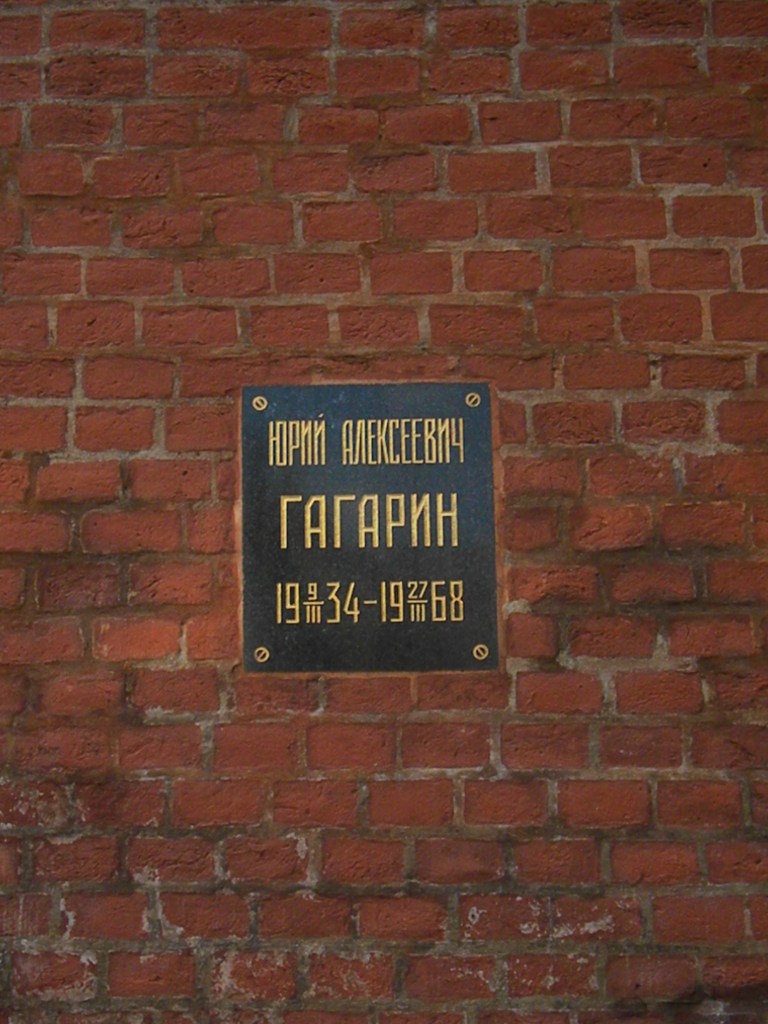
Gagarin and his instructor Vladimir Seregin died on March 27, 1968 while on a training flight. Gagarin was only 34 years old. Subsequently, the bodies of the pilots were cremated and the urns containing their ashes were buried in the Kremlin wall.
Many assumptions about the reason for its crash have been heard. It was only in 2013, after some secret information was declassified, that it became known that a supersonic-flying military fighter suddenly appeared next to the pilots’ plane, which led to the flow of air of the MIG-15UTI in a spiral, from which the pilots did not have enough time to eject.
Yuri Gagarin’s biography and his contribution to the development of space science forever went down in history as an example to follow, and his charming smile became the symbol of an entire space age, and remains to this day.
In connection with his death, for the first time in the history of the USSR, national mourning was declared for a person who was not the head of state.
The city of Gzhatsk and the Gzhatsky district were renamed the city of Gagarin and the Gagarinsky district, the streets and avenues of many cities of Russia were named after the cosmonaut, and monuments were erected in different cities of Russia and the world
Every year on April 12 the space community around the world commemorates Gagarin’s achievement.
Thanks for reading us. If you liked this article don’t forget to like and share it on your social media
Les étoiles et les cieux ont toujours fasciné les hommes. Galileo Galilei a été le premier à observé le cosmos à travers un télescope, mais il a fallu plus de quatre siècles avant que nous puissions voyager dans l’espace.
Youri Alekseevitch Gagarine est devenu la première personne de l’histoire du monde à voler dans l’espace le 12 avril 1961. Sa fusée porteuse le “Vostok” avec son navire le “Vostok”, ont été lancé depuis le cosmodrome de Baïkonour. Le premier cosmonaute est resté dans l’espace 108 minutes à quelques 327 kilomètres au-dessus de la terre, a fait le tour de la planète et, a atterri avec succès dans la région de Saratov, près de la ville d’Engels.
Youri Gagarine est un héro de l’Union Soviétique, titulaire des plus hautes distinctions de plusieurs Etats et citoyen d’honneur de nombreuses villes russes et étrangères.
Youri Gagarine, le premier homme dans l’espace
Youri Alekseevitch Gagarine est né le 9 mars 1934, dans le petit village de Klushino, dans la région occidentale de l’URSS (aujourd’hui la région de Smolensk), dans une famille de paysans riches. Le future cosmonaute était le troisième de 4 enfants. Il avait 2 frères et une sœur.
Son enfance a été calme et joyeuse. Il avait l’amour et l’attention de ses parents et a été initié à la menuiserie par son père. Malheureusement la Grande Guerre Patriotique (deuxième guerre mondiale) a mis fin à cela. Son village a été occupé par l’armée Allemande le 12 octobre 1941 et il a du vivre dans son jardin abrité par une pirogue sans aller à l’école jusqu’à ce que l’Armée Rouge le libère le 9 avril 1943. Il a vu son père se faire battre et être forcé à travailler pour les allemands , et son frère aîné Valentin ainsi que sa sœur aînée Zoya ont été emmenés par l’armée Allemande pendant leur retraite. Il s’est toujours rappelé des mères chassées avec des crosses de fusil pour les empêcher de protéger leur enfants, bien qu’il ait refusé de parler de cette période de sa vie.
En 1943 après la libération de leur village par l’Armée rouge, les Gagarine ont déménagé à Gzhatsk (maintenant ville de Gagarine), où Youri a poursuivi ses études dans une école locale. Youri était un garçon très curieux qui étudia tous les sujets, ainsi que la musique, l’art et la photographie.
En mai 1949, après avoir obtenu son diplôme de sixième année Youri qui a 15 ans a été poursuivre ses études à Moscou, dans l’école professionnelle Lyubersty n 10. En même temps, il jouait aussi de la trompette dans une fanfare, participait à des spectacles amateurs et allait à l’école du soir de la jeunesse ouvrière. Il reçu son diplôme de la septième année de l’école du soir en mai 1951, et celui de mouleur-fondeur avec honneurs en juin 1951.
C’est en 1951 qu’il a déménagé à Saratov, où il poursuivit ses études dans une école technique et c’est là qu’il tomba amoureux de l’idée de voler. En 1955, il reçut son diplôme avec mention et effectua son premier vol solo sur l’avion Yak-18.
Youri Gagarine, le premier homme dans l’espace
Le 27 octobre 1955, Gagarine est enrôlé dans l’armée soviétique et est envoyé à la première école d’aviation militaire pour pilotes dans la ville de Chkalov (maintenant Orenbourg). Youri Gagarine avait les meilleures scores dans toutes les disciplines mais il ne pouvait pas maitriser le moment de l’atterrissage. Il a failli être renvoyer de l’école mais, au dernier moment on s’est aperçu que sa petite taille était le problème et, lui a donné une chaise avec une doublure épaisse, ce qui a tout résolu. Le 25 octobre 1957, Youri est diplômé de l’université et quelques jours plus tard il épousa Valentina Ivanovna Goryacheva puis, commença à servir dans la région de Mourmansk en 1957.
A cette époque la concurrence pour l’espace entre les Etats Unis et l’Union Soviétique battait son plein. Et déjà le 5 janvier 1959 Conseil des ministres pris la décision de recruter 20 cosmonautes. Le 9 décembre 1958, Gagarine rédigea un rapport demandant a être inclus dans le groupe de candidats cosmonautes, et une semaine plus tard, il subit un examen médical et fut reconnu apte au vol spatial. C’était une très joyeuse période pour lui puisque sa première fille Lena est née cette même année. Youri était un très bon père de famille et en mars 1961, un mois avant son vol héroïque il a eu une deuxième fille, Galya.
Sur les 20 candidats, seulement 6 ont été sélectionnés. Youri Gagarine, German Titov, Grigory Nelyubov, Andriyan Nikolaev, Pavel Popovich et, Valery Bykovsky ont tous eu la chance de se préparer pour le premier vol spatial pendant la période de décembre 1960 à janvier 1961 dans la ville de Joukovski.
Gagarine a commencé son entrainement le 25 mars 1960. Malgré une concurrence sérieuse, Youri a réussi à vaincre tous ses rivaux. Il ne ressentait aucune jalousie, était toujours honnête avec tout le monde, et avait une attitude positive. Du reste dans un sondage anonyme des candidats, et malgré le fait qu’ils étaient ses concurrents presque tous l’ont nommé le meilleur candidat au vol spatial.
Youri Gagarine, le premier homme dans l’espace
Finalement, la décision a été prise et Gagarine a été désigne la personne la plus apte au premier vol dans l’espace. Il y avait de nombreuse raison à cela, mais les plus importantes étaient sa combinaison de compétences, de traits de characters et de stabilité psychologique. De plus il avait une apparence Slave prononcée et une biographie impeccable. Et enfin, il était aussi un très bon example du fait qu’en Union Soviétique, même une personne ordinaire pouvait devenir astronaute.
Un grand problème causé par la concurrence entre les Etats Unis et l’Union Soviétique pour envoyer le premier homme dans l’espace, était la sécurité de l’homme qui serait envoyé. Le vol de Youri dans le vaisseau spatial Vostok était dangereux car en raison de la précipitation, les concepteurs n’ont eu le temps d’installer ni le système d’attérissage en douceur ni celui de sauvetage d’urgence.
Le 12 avril 1961 a 09h07 heure de Moscou, finalement , le lancement tant attendu a été effectué depuis le cosmodrome de Baïkonour. L’indicatif d’appel de Gagarine était “Kedr” et celui du chef de l’equipe de lancement “tireur”.
Au tout début de la montée en puissance de la fusée, Gagarine a dit “allons-y!” (поехали) Les problèmes avec l’équipement ont commencé rapidement et, Gagarine a grimpé 100 kilomètres plus haut qu’initialement prévu . Heureusement, cela a été sans conséquence grave car il n’y a pas eu de problème avec le système de freinage. Sans cela l’astronaute serait resté plus d’un mois dans l’espace alors qu’il n’avait que 10 jours d’eau et de nourriture.
En orbite, Gagarine a rendu compte de ses sensations, de l’état du vaisseau, et de ses observations. Il a apprécié la vue de la terre de l’espace, et a enregistré les mots suivants sur le magnétophone de bord:
“J’observe les nuages au-dessus de la Terre, de petits cumulus et des ombres a partir d’eux. Belle, beauté! … Attention. Je vois l’horizon de la terre. Une si belle auréole. Tout d’abord, un arc-en-ciel de la surface même de la Terre et vers le bas. Un tel arc-en-ciel passe. Très beau!”
Il a aussi fait de simples expériences, comme manger, boire, et prendre des notes avec un crayon. En posant celui-ci, il a découvert que le crayon commençait instantanément à flotter. En plus il a aussi enregistré tous ses sentiments et ses observations ce qui nous permet de partager ce moment historique pour l’humanité.
Un autre fait intéressant doit être mentionné ici. Avant le premier vol habité dans l’espace, on ne savait pas comment une personne allait réagir. Donc par sécurité une protection spéciale a été prévue, pour que le premier cosmonaute n’essait pas de contrôler le vol de la navette spéciale ou d’endommager l’équipement s’il était pris d’une crise de folie. Pour activer le control manuel, il devait ouvrir une enveloppe scellée et résoudre un problème mathématique dont la solution produisait un code de déverrouillage du panneau de commande.
A la fin du vol, un autre problème est survenu et le system de freinage n’a pas fonctionné correctement. A cause de cela, le vaisseau a culbuté au hasard à une vitesse d’une rotation par seconde pendant une minute. Puis le vaisseau a finit sa descente et Gagarine conformément au plan de vol s’est éjecté à une altitude de 7 kilomètres. Il a atterri près des villages de Smelovka et de Podgornoye dans la région de Saratov après un vol héroïque de 106 minutes. Son plus grand rêve c’était réalisé, non seulement il a été dans l’espace mais il a été le premier homme à le faire.
Etonnamment, le vol a été complètement secret et même les médias ne l’ont appris que le jour d’après. Par contre, dés que l’information est devenue disponible Gagarine est immédiatement devenu une star mondiale.
Youri Gagarine, le premier homme dans l’espace
Le lendemain il a reçu le titre de héros de l’Union Soviétique et un mois plus tard, il a été envoyé à l’étranger pour une mission de paix, où il devait visiter plus de 20 pays. Gagarine était un homme plein de tact et de charme et son charisma personnel a beaucoup contribué à renforcer l’image positive de l’URSS. Au cours des années suivantes, Youri Gagarine s’est principalement engagé dans des activités sociales et a fait beaucoup d’effort pour populariser l’aéronautique qui était sa passion. Il se préparait aussi à devenir un membre de l’équipage de l’espace lunaire malheureusement, il est mort avant que cela arrive
Youri Gagarine est rapidement tombé malade de la maladies des étoiles. Il a commencé à consacrer de plus en plus de temps à travailler au centre de formation des cosmonautes devenant le commandant du corps des cosmonautes le 23 mai 1961. A l’automne 1961, il est entré au N. E. Joukovski pour obtenir une éducation supérieure. En 1964, il est devenu directeur adjoint du centre d’entrainement des cosmonautes et a été nommé commandant du corps des cosmonautes soviétiques, L’été 1966, il est lui même retourné à l’entrainement au vol et a commencé à se préparer pour un nouveau vol spatial dans le cadre du programme Soyouz. Il est nommé doublure de Komarov, qui a effectué le premier vol sur le nouveau navire. Un tragique accident est arrivé pendant le premier vol et, suite à un dysfonctionnement de la batterie solaire, le vol est interrompu plus tôt que prévu et se solde par la mort de Komarov.
Gagarine ainsi que son instructeur Vladimir Seregin sont mort le 27 mars 1968 alors qu’ils effectuaient un vol d’entrainement. Gagarine n’avait que 34 ans. Par la suite, les corps des pilotes ont été incinérés et les urnes contenant leurs cendres ont été enterrées dans le mur du Kremlin.
De nombreuses hypothèse sur la raison de son crash ont été entendu. Ce n’est qu’en 2013, après que certaines informations secrètes ai été déclassifiées que l’on appris qu’un chasseur militaire volant à vitesse supersonique est soudainement apparu à côté de l’avion des pilotes, ce qui a conduit le flux d’air du MIG-15UTI dans une spirale, de laquelle les pilotes n’ont pas eu assez de temps pour s’ejecter.
La biographie de Youri Gagarine et sa contribution au développement de la science spatiale sont à jamais entré dans l’hitoire comme un exemple à suivre et, son charmant sourire est devenu le symbole de toute une ère spatial, et le reste a ce jour.
Dans le cadre de sa mort, pour la première fois dans l’histoire de l’URSS un deuil national a été déclaré pour une personne qui n’etait pas chef de l’etat.
La ville de Gzhatsk et le district de Gzhatsky ont été renommés la ville de Gagarine et le district de Gagarinsky, les rues et les avenues de nombreuses ville de Russie ont été nommées d’après le cosmonaute et des monuments ont été érigés dans différentes villes de Russie et du monde
Chaque année le 12 Avril la communauté spatiale du monde entier commémore l’exploit de Gagarine
Si vous avez aimé cet article n’oubliez pas d’aimer et de le partager












































 AKirill, Learn, apprenez, translation, traduction, livres bilingues, bilingual books