On this site we hope to help you learn, and to remove the difficulties caused by the difference of culture and language. Sur ce site nous espérons vous aider à apprendre, et à enlever la barrière causée par les différents languages et cultures.
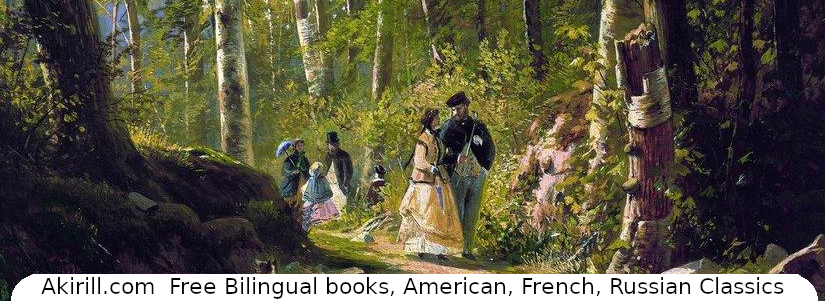
Dear readers and subscribers, this week I translated and put side by side the poem “I must have been the most stubborn of all” by Konstantin Simonov. As always you can access the whole poem without any subscription by following the links. Our painting this week is “A Walk in the Forest” by I. I. Shishkin and the details and bigger size image can also be seen following the link. I hope you will enjoy as much as I did.
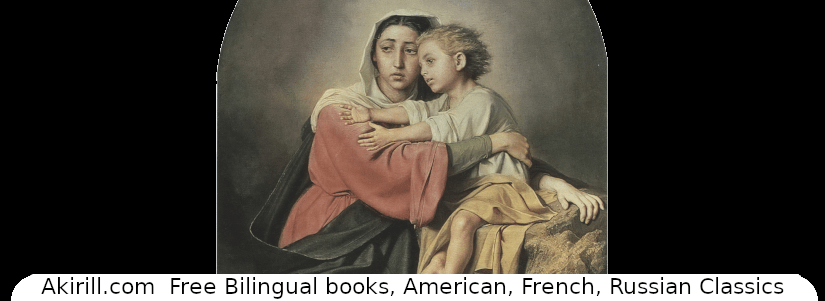
Chers lecteurs et abonnés, cette semaine, j’ai traduit et mis côte à côte un beau poème intitulé “Prière” de Mikhaïl Lermontov. Comme d’habitude j’ai ajouté un tableau qui est « Le Christ et la Mère de Dieu à la mer de la vie. » de Vasily Perov. J’espère que vous apprécierez les deux autant que moi.
Dear readers and subscribers, this week, I translated and put side by side a beautiful poem called “Prayer” by Mikhail Lermontov. As usual I added a painting which is “Christ and the Mother of God at the sea of life. ” by Vasily Perov. I hope you will enjoy both as much as I did.
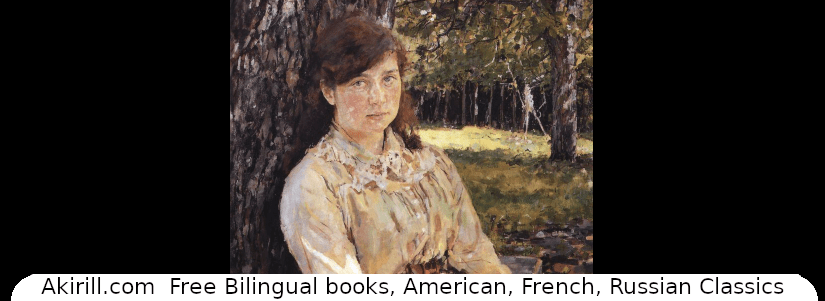
Painting “Girl in the Sunlight” (Portrait of M. Simonovich) by Valentin Serov
“Girl in the Sunlight” (Portrait of M. Simonovich) by Valentin Serov – 1888 – Style: Impressionism – Genre: Portrait / Девушка, освещенная солнцем (Портрет М.Я.Симонович)
Poem “Wish for fame” by Alexander Pushkin English and Russian side by side
Желание славы
Wish for fame
Translated by Akirill.com
Когда, любовию и негой упоенный,
When, intoxicated with love and bliss,
Безмолвно пред тобой коленопреклоненный,
Silently kneeling in front of you,
Я на тебя глядел и думал: ты моя, —
I looked at you and thought: you are mine, –
Ты знаешь, милая, желал ли славы я;
Do you know, dear, if I wanted fame;
Ты знаешь: удален от ветреного света,
You know: removed from the windy light,
Скучая суетным прозванием поэта,
Missing the vain nickname of the poet,
Устав от долгих бурь, я вовсе не внимал
Tired of long storms, I did not pay attention at all
Как пуст, и вял, и ничтожен почти всякий прожитой день! Как мало следов оставляет он за собою! Как бессмысленно глупо пробежали эти часы за часами!
How empty, and insipid, and insignificant is almost every day which we have lived through! How few traces it leaves behind it! In what a thoughtlessly-stupid manner have those hours flown past, one after another!
И между тем человеку хочется существовать; он дорожит жизнью, он надеется на нее, на себя, на будущее… О, каких благ он ждет от будущего!
And, nevertheless, man desires to exist; he prizes life, he hopes in it, in himself, in the future…. Oh, what blessings he expects from the future!
Как пуст, и вял, и ничтожен почти всякий прожитой день! Как мало следов оставляет он за собою! Как бессмысленно глупо пробежали эти часы за часами!
Oh ! comme chaque jour qui passe est vide, morne et fastidieux ! Comme il laisse peu de traces ! Et que la course des heures est stupide !
И между тем человеку хочется существовать; он дорожит жизнью, он надеется на нее, на себя, на будущее… О, каких благ он ждет от будущего!
Pourtant, l’homme est avide de vivre ; il y tient ; il a foi en lui-même, dans son existence, dans son avenir… Ô, combien d’espoirs il fonde sur demain !
I want to wish you all a Happy Fourth of July, and a nice celebration with friends and family. The poem I propose is “An Ode for theFourth of July, 1876” by James Russell Lowell. The photos are memories… and a few view of Strasbourg. Charisma is a Dickerson 41 on which I lived many years. Hope you enjoy
Comet on top of Charisma
An Ode for theFourth of July, 1876
I
1.
Entranced I saw a vision in the cloud That loitered dreaming in yon sunset sky, Full of fair shapes, half creatures of the eye, Half chance-evoked by the wind’s fantasy In golden mist, an ever-shifting crowd: There, ‘mid unreal forms that came and went In air-spun robes, of evanescent dye, A woman’s semblance shone preeminent; Not armed like Pallas, not like Hera proud, But, as on household diligence intent, Beside her visionary wheel she bent Like Aretë or Bertha, nor than they Less queenly in her port; about her knee Glad children clustered confident in play: Placid her pose, the calm of energy; And over her broad brow in many a round (That loosened would have gilt her garment’s hem), Succinct, as toil prescribes, the hair was wound In lustrous coils, a natural diadem. The cloud changed shape, obsequious to the whim Of some transmuting influence felt in me, And, looking now, a wolf I seemed to see Limned in that vapor, gaunt and hunger-bold, Threatening her charge; resolve in every limb, Erect she flamed in mail of sun-wove gold, Penthesilea’s self for battle dight; One arm uplifted braced a flickering spear, And one her adamantine shield made light; Her face, helm-shadowed, grew a thing to fear, And her fierce eyes, by danger challenged, took Her trident-sceptred mother’s dauntless look. ‘I know thee now, O goddess-born!’ I cried, And turned with loftier brow and firmer stride; For in that spectral cloud-work I had seen Her image, bodied forth by love and pride, The fearless, the benign, the mother-eyed, The fairer world’s toil-consecrated queen.
A visitor on the boom of Charisma at Crown Marina
2.
What shape by exile dreamed elates the mind Like hers whose hand, a fortress of the poor, No blood in vengeance spilt, though lawful, stains? Who never turned a suppliant from her door? Whose conquests are the gains of all mankind? To-day her thanks shall fly on every wind, Unstinted, unrebuked, from shore to shore, One love, one hope, and not a doubt behind! Cannon to cannon shall repeat her praise, Banner to banner flap it forth in flame; Her children shall rise up to bless her name, And wish her harmless length of days, The mighty mother of a mighty brood, Blessed in all tongues and dear to every blood, The beautiful, the strong, and, best of all, the good.
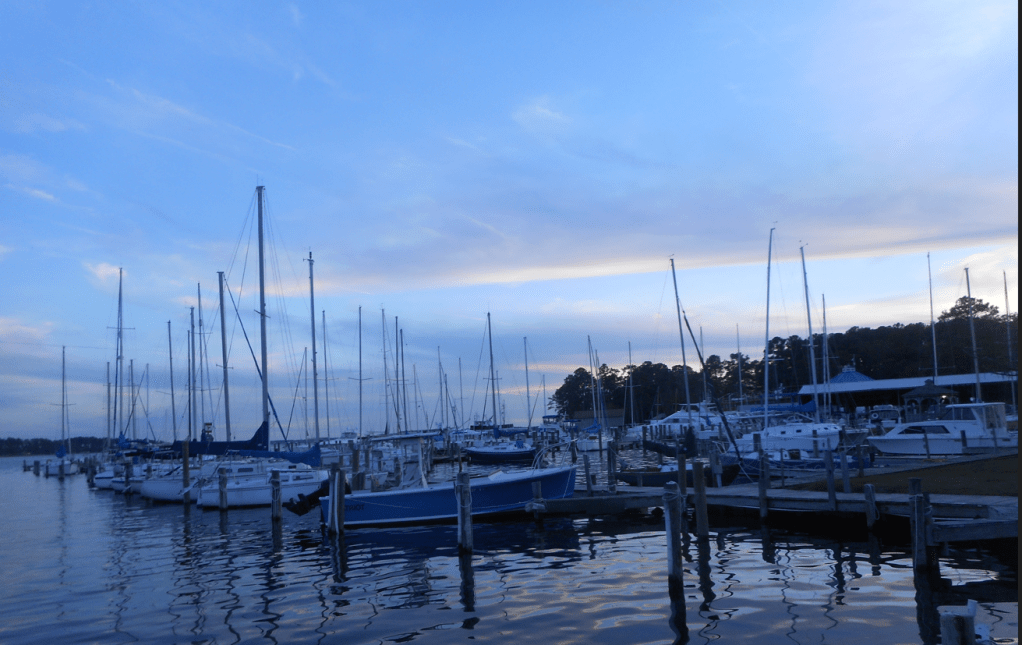
An evening at Ruark Marina
3.
Seven years long was the bow Of battle bent, and the heightening Storm-heaps convulsed with the throe Of their uncontainable lightning; Seven years long heard the sea Crash of navies and wave-borne thunder; Then drifted the cloud-rack a-lee, And new stars were seen, a world’s wonder; Each by her sisters made bright, All binding all to their stations, Cluster of manifold light Startling the old constellations: Men looked up and grew pale: Was it a comet or star, Omen of blessing or bale. Hung o’er the ocean afar?
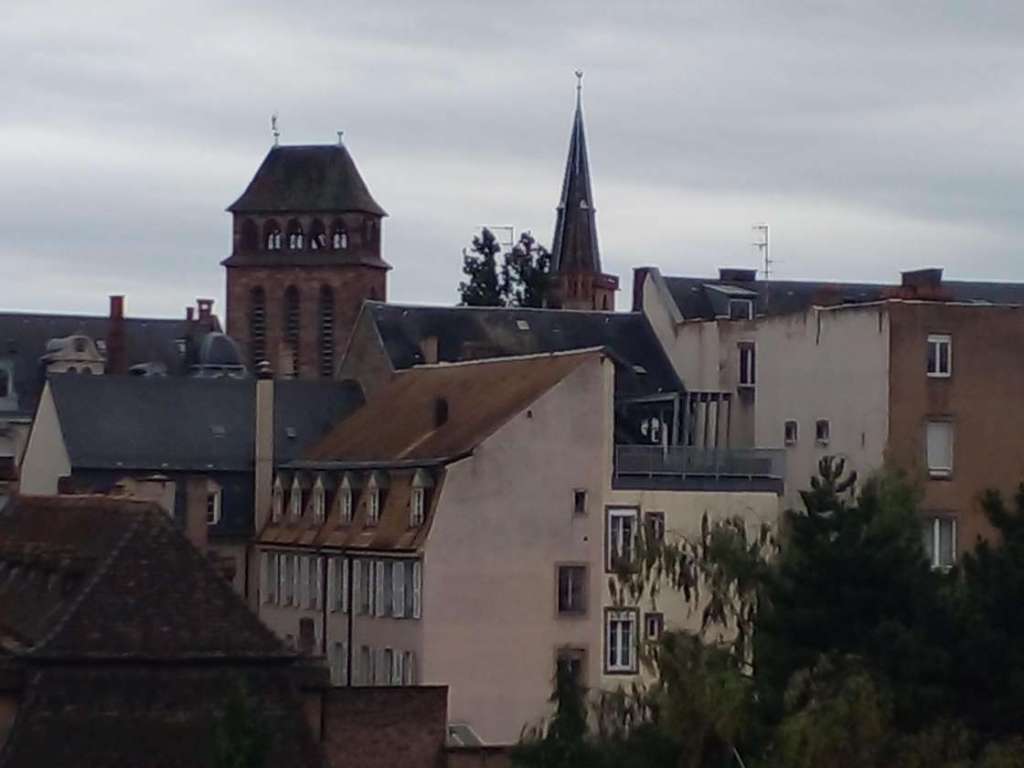
Strasbourg
4.
Stormy the day of her birth: Was she not born of the strong. She, the last ripeness of earth, Beautiful, prophesied long? Stormy the days of her prime: Hers are the pulses that beat Higher for perils sublime, Making them fawn at her feet. Was she not born of the strong? Was she not born of the wise? Daring and counsel belong Of right to her confident eyes: Human and motherly they, Careless of station or race: Hearken! her children to-day Shout for the joy of her face.
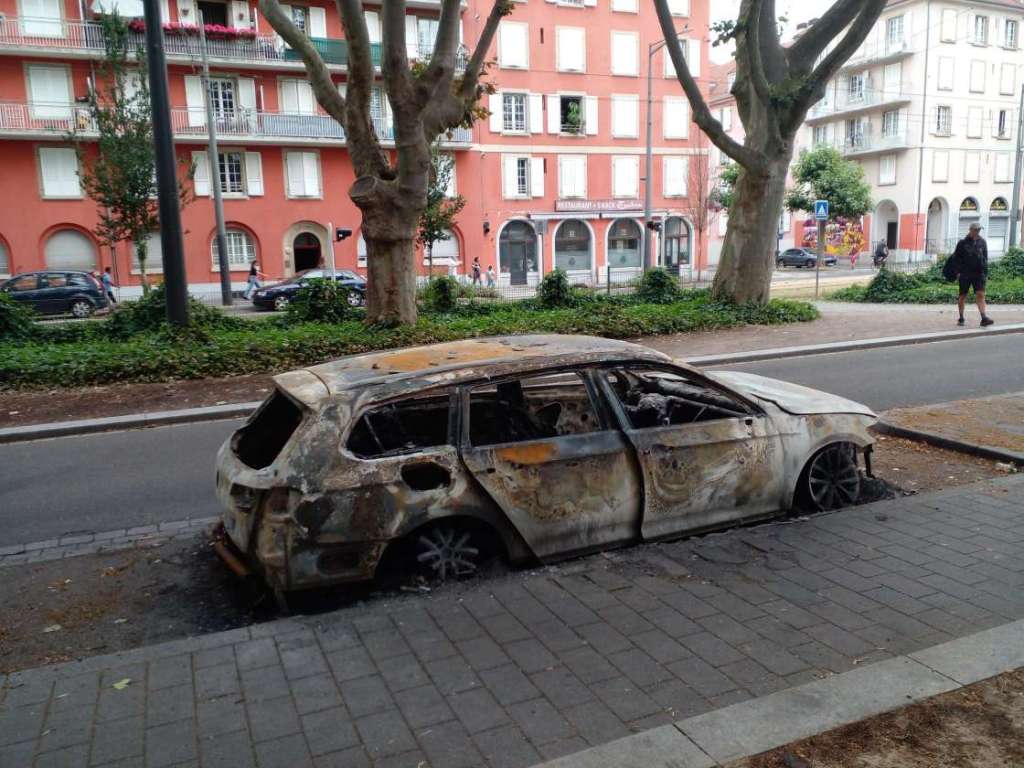
On July 3, 2023 in Strasbourg, next to the German border
II
1.
No praises of the past are hers, No fanes by hallowing time caressed, No broken arch that ministers To Time’s sad instinct in the breast; She has not gathered from the years Grandeur of tragedies and tears, Nor from long leisure the unrest That finds repose in forms of classic grace: These may delight the coming race Who haply shall not count it to our crime That we who fain would sing are here before our time. She also hath her monuments; Not such as stand decrepitly resigned To ruin-mark the path of dead events That left no seed of better days behind, The tourist’s pensioners that show their scars And maunder of forgotten wars; She builds not on the ground, but in the mind, Her open-hearted palaces For larger-thoughted men with heaven and earth at ease: Her march the plump mow marks, the sleepless wheel, The golden sheaf, the self-swayed commonweal; The happy homesteads hid in orchard trees Whose sacrificial smokes through peaceful air Rise lost in heaven, the household’s silent prayer; What architect hath bettered these? With softened eye the westward traveller sees A thousand miles of neighbors side by side, Holding by toil-won titles fresh from God The lands no serf or seigneur ever trod, With manhood latent in the very sod, Where the long billow of the wheatfield’s tide Flows to the sky across the prairie wide, A sweeter vision than the castled Rhine, Kindly with thoughts of Ruth and Bible-days benign.
Brève analyse du poème “Tempête” d’Alexandre Pouchkine
Le poème “Tempête” a été créé à Mikhailovskoye, mais sur la base du style romantique de l’œuvre, il est possible que l’auteur en ait fait l’esquisse pendant son exil dans le sud. … Continuer la lecture
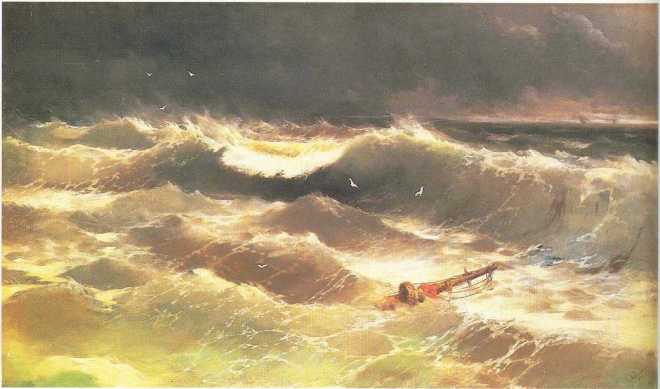
Peinture “Tempête” d’Ivan Aïvazovski
Tempête d’Ivan Aïvazovski – 1886 – Style : Romantisme, Genre : Marina, Média : Huile sur toile. Dimensions : 84 X 142 cm / Буря Ивана Айвазовского – 1886
Ivan Aivazovsky (Иван Айвазовский), l’auteur de plus de 6000 toiles, est un peintre de marine et de bataille russe de renommée mondiale ainsi qu’un collectionneur et … Continuer la lecture
Poème “Tempête” d’Alexandre Pouchkine français et russe côte à côte
Short analysis of the poem “Tempest” by Alexander Pushkin
The poem “Tempest” was created in Mikhailovskoye, but based on the romantic style of the work, it is possible that the author made the sketches for it during his southern exile. … Continue reading







 AKirill, Learn, apprenez, translation, traduction, livres bilingues, bilingual books