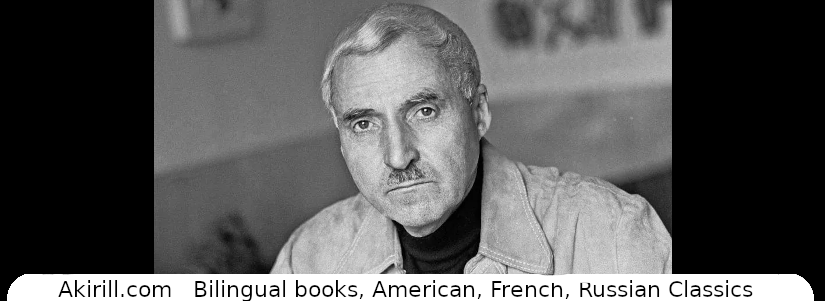
Have you read The Man Who Laughs?

“The Man Who Laughs” is a political, philosophical, historical and poetic novel by Victor Hugo published in 1869.

Victor Hugo

When Victor Hugo was asked why he wrote “The Man Who Laughs”, he replied that as a philosopher, he wanted to affirm the soul and conscience, as a historian, he wanted to reveal little known monarchical facts and inform about democracy, and as a poet, he wanted to make a drama.

“The Laughing Man” has been represented many times at the theater, but also in several films, including the last, with Gérard Depardieu in the role of Ursus, in 2012. In addition, this novel has also been transformed into a French comic book twice, the last volume called “En Ruine” was released in 2011.

We also know that the tragicomic face of the Joker in the “Batman” comic book was inspired by Conrad Veidt seen in the first made film of “The Man Who Laughs” in 1928.

“The Man Who Laughs” tells the story of a mutilated little boy named Gwynplaine, who, while wandering in the woods, lost and abandoned, found a baby. He saved this little girl and was adopted by Ursus, a man who owned a bear skin and who himself had a wolf called Homo.

Fifteen years later, in 1705, Usus staged a play with his two children Gwynplaine and DEA. DEA is now a beautiful young girl of 16 and although blind, she formed a chaste couple with Gwynplaine.

It is at this time that the identity of Gwynplaine will be revealed. He is in fact Fermain Clancharlie, the real heir to the domain of the prairie, which was conceded to his half-brother David Dirry-Moir. He will regain possession of his domain for a very short period of time, not being able to bear living without an AED.

Meanwhile Ursus, who thinks Gwynplaine is dead, is driven out of London. Gwynplaine will only find him with a lot of luck, and with the help of their wolf Homo when Ursus and DEA were already on a boat ready to leave the country.

“The Laughing Man” has many allegories and metaphors. At the center of the novel is the description of the play that makes the success of the troupe. According to some, the piece represents the fight of man for democracy, for others it is a fight against chaos that will be won by light.

You can read it on our site in the Bilingual Book category.

Read The Man Who Laughs

If you liked this article, don’t forget to like and share.

Subscribe to not miss anything

Avez vous lu l’homme qui rit?

“L’homme qui rit” est un roman politique, philosophique, historique et poétique de Victor Hugo publié en 1869.

Victor Hugo

Quand on a demandé à Victor Hugo pourquoi il avait écrit “L’homme qui rit”, celui-ci a répondu, que philosophe, il a voulu affirmer l’âme et la conscience, qu’historien, il a voulu révéler des faits monarchiques peu connus et renseigner la démocratie, et que poète, il a voulu faire un drame.

“L’homme qui rit” a été représenté de nombreuses fois au théâtre, mais aussi dans plusieurs films, dont le dernier avec Gérard Depardieu dans le role d’Ursus en 2012. De plus, ce roman a aussi été transformé en bande dessinée française deux fois, le dernier tome appelé “En Ruine” est sorti en 2011.

On sait aussi que le faciès tragi-comique du Joker dans la bande dessinée “Batman” a été inspire par Conrad Veidt vu dans le premier film réalisé de “L’homme qui rit” en 1928.

“L’homme qui rit” raconte l’histoire d’un petit garçon mutilé appelé Gwynplaine, qui, pendant qu’il errait dans les bois, perdu et abandonné, trouva un bébé. Il sauva cette petite fille et fut adopté par Ursus, un homme à qui appartenait une peau d’ours et qui lui même possédait un loup appelé Homo.

Quinze ans plus tard, en 1705, Usus a monté une pièce de théâtre avec ses deux enfants Gwynplaine et DEA. DEA est maintenant une belle jeune fille de 16 ans et bien qu’aveugle, elle forme un couple encore chaste avec Gwynplaine.

C’est à cette époque que l’identité de Gwynplaine sera révélée. Il est en fait Fermain Clancharlie, le véritable héritier du domain de la prairie, qui a été concédé à son demi-frère David Dirry-Moir. Il reprendra possession de son domain pour une très courte période ne supportant pas de vivre sans DEA.

Pendant ce temps Ursus qui pense que Gwynplaine est mort, est chassé de Londres. Gwynplaine ne le retrouvera qu’avec beaucoup de chance et avec l’aide de leur loup Homo alors qu’Ursus et DEA étaient déjà sur un bateau prés à quitter le pays.

“L’homme qui rit” comporte de nombreuses allegories et métaphores. Au centre du roman se trouve la description de la pièce qui fait le succès de la troupe. La pièce selon certains représente le combat de l’homme pour la démocratie, pour d’autre c’est une lutte contre le chaos qui sera gagnée par la lumière.

Vous pouvez le lire sur notre site dans la catégorie Livre bilingue.

Lire L’homme qui rit

Si vous avez aimer cet article, n’oublier pas d’aimer et de partager.

Abonnez-vous pour ne rien manquer

Progrès du site

Aujourd’hui, nous avons ajouté quelques nouveau livres dans notre section classique sur la page de nos Russian courses.

https://akirill.com/russian-literature/

Si vous avez aimer cet article, n’oublier pas d’aimer et de partager.

Abonnez-vous pour ne rien manquer

Swan Lake is a superb ballet.

Swan Lake is an exceptional ballet, to the music of the brilliant Russian composer Piotr Ilyich Tchaikovsky, which has captured the hearts of classical music fans for over a century. It is a pearl of Russian classics that has attracted many world-famous dancers. This choreographic masterpiece created more than 130 years ago is still considered an unparalleled achievement of Russian culture.

Swan Lake is a philosophical poem about the eternal struggle between good and deceit and evil. This struggle mainly takes place within a person. In this representation, we see the struggle of Prince Siegfried.

The Story of Swan Lake

In an ancient park Princess Odette is sad. Suddenly a stranger appears. It is Rothbart, who is an evil wizard and proposes marriage to the princess. Odette refuses him and he transforms her into a white swan.

Prince Siegfried celebrates his majority with his friends. His mother appears and everyone tries to hide the traces of the party but fails, because the jester inadvertently knocks over the cups. The princess is not happy but is presented with a bouquet of roses, and she softens and leaves. The game continues and in the evening Siegfried is left alone. He doesn’t want to go home yet. We see a flock of swans flying high in the sky.

Then the swans swim on a large lake. They are nervous. They are bewitched girls who will not be able to take their human form until after midnight. Siegfried appears on the shore with a crossbow in his hand. He is ready to shoot an arrow at a white swan when it transforms into a girl of indescribable beauty and grace. It’s Odette, the swan queen. Siegfried will look for her among the other swans to declare his love for her. At dawn they are forced to separate because the evil wizard Rothbart watches the girls closely, allowing no one to escape his sorcery. Finally the girls turn into swans with the first rays of the sun.

In the castle of the Sovereign Princess, a magnificent ball takes place where, according to his mother’s wishes, Siegfried must choose a woman from among the beauties invited. Siegfried is indifferent to them because his heart belongs to the Queen of the Swans. But suddenly a mysterious knight appears with his daughter Odile. Siegfried is convinced that Odette and Odile are the same person and declares his love for her.

At this moment a white swan appears at the window of the castle. It’s Odette. Seeing her Siegfried understands his mistake. Frightened by the consequences of his mistake, he rushes to the lake to ask forgiveness from his beloved.

Unfortunately, his regrets are in vain because the Swan Queen no longer has any power over her destiny. She is destined to die. Desperate for his love, Prince Siegfried enters into combat with Rothbart. He mortally wounds him, but he himself also dies. Rothbart’s spell is broken. The swan girls are freed from the terrible spell.

In 1937, at the Bolshoi Theater in Moscow, Asaf Messerep also updated the Swan Lake ballet and changed the ending to a happy ending where Prince Siegfried survives the fight.

The story of the creation of Swan Lake

In 1875, Tchaikovsky received an order from the management of the Imperial Theaters, and was offered to work with the script by V. Begichev and V. Geltser, which was mainly based on various fairy tales and legends, in which there are girls turned into swans. This commission was unusual because “serious” composers of ballet music did not write.

For this Tchaikovsky studied the dances, their sequences as well as various ballets, to clearly understand the composition and the structure. It was only after doing this, that he began to compose. At the end of the summer of 1875, the first two acts were written, and at the beginning of the winter the last two. The following spring Tchaikovsky orchestrated what he had composed and finished work on the score.

In the fall, work was underway at the theater for the staging of the ballet directed by V. Reisinger who unfortunately turned out to be a poor director with few, if any, successes.

The premiere of Swan Lake took place in February 1877 and was a failure.

Nearly 20 years later, the management of the Imperial Theaters once again took an interest in Tchaikovsky’s work, to stage it in the new season of 1893 and 1894. For this, the famous Petipa developed a new scenario for the piece and started working on it with Tchaikovsky. The sudden death of the composer interrupted this work but Petipa continued this work a year later. The plot and performance of Swan Lake grew incredibly rich and had a terrible success at its new premiere in 1895 in St. Petersburg

Swan Lake is performed all over the world today and most productions retain Ivanov and Petipa’s choreography in one form or another. However there are original performances by John Neumeier, Matthew Born, Mats Ek, using only Tchaikovsky’s score.

Sources:

П.И. Чайковский балет “Лебединое озеро”

ЛЕБЕДИНОЕ ОЗЕРО

Экранизация балета «Лебединое озеро»

Сюжет балета “Лебединое озеро”. P. И. Чайковский, “Лебединое озеро”: краткое содержание и отзывы

Чайковский. Балет “Лебединое озеро”

ЛЕБЕДИНОЕ ОЗЕРО Петр Чайковский

P. И.Чайковский Лебединое озеро

If you liked this article, don’t forget to like and share.

Subscribe to not miss anything

Le lac des cygne est un superbe ballet.

Le Lac des cygnes est un ballet exceptionnel, sur la musique du brilliant compositeur russe Piotr Ilitch Tchaïkovski, qui a capture le cœur des fans de musique classique depuis plus d’un siècle. C’est une perle des classiques russes qui a attiré de nombreux danseurs de renommée mondiale. Ce chef-d’oeuvre chorégraphique créé il y a plus de 130 ans est toujours considéré comme une réalisation inégalée de la culture russe.

Le lac des cygnes est un poème philosophique sur la lutte éternelle entre le bien et la tromperie et le mal. Cette lutte se déroule principalement au sein d’une personne. Dans cette représentation, on voit la lutte du Prince Siegfried.

L’histoire du lac des cygnes

Dans un parc antique la princesse Odette est triste. Soudain un étranger apparait. C’est Rothbart, qui est un génie maléfique et propose le marriage à la princesse. Odette le refuse et il l’a transforme en un cygne blanc.

Le prince Siegfried fête sa majorité avec ses amis. Sa mère apparait et tout le monde tente de cacher les traces de la fête mais échoue, car le bouffon par inadvertence renverse les gobelets. La princesse n’est pas contente mais on lui présente un bouquet de roses, et elle s’adoucit et s’en va. La partie continue et le soir Siegfried est laissé seul. Il ne veut pas encore rentrer chez lui. On voit une volée de cygnes voler haut dans le ciel.

Puis les cygnes nagent sur un grand lac. Ils sont nerveux. Ce sont des filles ensorcelées qui ne pourront prendre leur forme humaine qu’après minuit. Siegfried apparait sur le rivage avec une arbalète à la main. Il est près à tirer une flèche sur un cygne blanc quand celui-ci se transforme en une fille d’une beauté et d’une grace indescriptible. C’est Odette, la reine des cygnes. Siegfried la cherchera parmi les autres cygnes pour lui déclarer son amour. A la venue de l’aube ils sont obligés de se séparer car le sorcier maléfique Rothbart surveille les filles de près ne permettant à personne de s’échapper de sa sorcellerie. Finalement les filles se transforment en cygnes avec les premiers rayons du soleil.

Dans le chateau de la Princesse Souveraine, se déroule un magnifique bal où selon la volonté de sa mère, Siegfried doit choisir une femme parmi les beautés invitées. Siegfried leur est indiffèrent car son cœur appartient à la reine des cygnes. Mais soudain un mystérieux chevalier apparait avec sa fille Odile. Siegfried est convaincu qu’Odette et Odile sont la même personne et lui déclare son amour.

A ce moment un cygne blanc apparait à la fenêtre du chateau. C’est Odette. En la voyant Siegfried comprends son erreur. Effrayé par les conséquences de son erreur, il se précipite vers le lac pour demander pardon à sa bien aimée.

Malheureusement, ses regrets sont vains car la reine des cygnes n’a plus aucun pouvoir sur son destin. Ell est destinée à mourir. Prêt à tout pour son amour, le prince Siegfried entre en combat avec Rothbart. Il le blesse mortellement, mais lui même meurt aussi. Le charme de Rothbart est rompu. Les filles cygnes sont libérées du terrible sortilège.

En 1937, au Théâtre Bolchoï de Moscou, Asaf Messerep a également mis à jour le ballet du lac des cygnes et a changé la fin par une fin heureuse où le Prince Siegfried survie le combat.

L’histoire de la création du lac des cygnes

En 1875, Tchaïkovski a reçu une commande de la direction des Théâtres Impériaux, et s’est vu proposer de travailler avec le scénario d V. Begichev et V. Geltser, qui était principalement basé sur divers contes de fées et légendes, dans lesquels il y a des filles transformées en cygne. Cette commande était inhabituelle car les compositeurs “sérieux” de musique de ballet n’écrivaient pas.

Pour cela Tchaïkovski a étudier, les danses, leur séquences ainsi que divers ballets, pour comprendre clairement la composition et la structure. Ce n’est qu’après cela qu’il commença à composer. A la fin de l’été de 1875, les deux premiers actes sont écrits, et au début de l’hiver les deux derniers. Au printemps suivant Tchaïkovski orchestre ce qu’il a composé et termine le travail sur la partition.

A l’automne, des travaux étaient en cours au théâtre pour la mise en scène du ballet dirige par V. Reisinger qui malheureusement s’est avéré être un mauvais réalisateur dont peu, ou aucune réalisation n’ont eu de succès.

La première du Lac des cygnes a eu lieu en février 1877 et a été un échec.

Prés de 20 ans plus tard, la direction des Théâtres Impériaux s’intéressent à nouveau à l’oeuvre de Tchaïkovski pour la mettre en scène dans la nouvelle saison de 1893 et 1894. Pour cela, le célèbre Petipa a développé un nouveau scénario pour la pièce et a commencé à travailler dessus avec Tchaïkovski. La mort soudaine du compositeur interrompt ce travail mais Petipa continuera ce travail un an plus tard. L’intrigue et la performance du lac des cygnes s’est incroyablement enrichie et a eu un terrible succès à sa nouvelle première en 1895 a Saint Pétersbourg

Le lac des cygnes est joue partout dans le monde aujourd’hui et la plupart des productions conservent la chorégraphie d’Ivanov et de Petipa sous une forme ou une autre. Cependant il existe des performances original de John Neumeier, Matthew Born, Mats Ek, utilisant uniquement la partition de Tchaïkovski.

Sources:

П.И. Чайковский балет «Лебединое озеро»

ЛЕБЕДИНОЕ ОЗЕРО

Экранизация балета «Лебединое озеро»

Сюжет балета “Лебединое озеро”. П. И. Чайковский, “Лебединое озеро”: краткое содержание и отзывы

Чайковский. Балет «Лебединое озеро»

ЛЕБЕДИНОЕ ОЗЕРО Петр Чайковский

П. И.Чайковский Лебединое озеро

Si vous avez aimer cet article, n’oublier pas d’aimer et de partager.

Abonnez-vous pour ne rien manquer

Who is Leo Nikolayevich Tolstoy?

Count Leo Nikolayevich Tolstoy was born on August 28 (September 9), 1828 at his mother’s family estate, Yasnaya Polyana, in the Tula province of the Russian Empire. He comes from the noble family of Tolstoy, known since 1351.

Leo Nikolayevich is one of the greatest novelists in the world. He is called a master of psychology, and the creator of the epic novel genre. The writer had a strong influence on the evolution of European humanism, and on the development of realist traditions in world literature.

Tolstoy was excommunicated from the church because of his authoritarian views which caused the emergence of a new religious and moral current called Tolstoïsme.

The writer has received numerous Nobel Prizes for Literature and his works have been staged all over the world.

Leo Tolstoy was the fourth of 5 children. His mother died in 1830, six months after the birth of her daughter then, Leo Nikolayevich was not yet 2 years old. The education of the orphans was continued by a distant relative, T. A. Ergolskaya. His father Nikolai Ilich died in 1837 when Leo was 9 years old, and his aunt, Countess Alexandra Osten-Saken was appointed as the children’s guardian. After her death in 1840, another of his aunts, Pelegeya Yushkova who lived in Kazan took care of Leo Tolstoy, as well as his brothers and his sister Maria.

Tolstoy used to say that the Lushkovs’ house was considered one of the most cheerful in Kazan. Later he described those years in the autobiographical story “Childhood”

The writer received his primary education at home. He studied with a French tutor who became the prototype of Saint-Jérome in his book “Childhood”. After, he continued his studies with a German tutor portrayed as Karl Ivanovitch in the same book. Then, in 1844, he entered Kazan University, but only stayed for a year due to poor academic performance. Leo Tolstoy did not like studying, he considered exams a formality, and university professors incompetent. Leo Nikolayevich transferred to the Faculty of Law, where he passed the second year satisfactorily, although he preferred secular entertainment.

However, he became interested in French philosophical literature and without finishing that year, he left university. Then he embarked on self-learning.

In 1847, following a short illness, he inherited and became responsible for the property of Yasnaya Polyana. He wanted to establish relations in a new way with the peasants and even opened a school for them. He partially described his activities in “The Landowner’s Morning”. It was also that same year that he began keeping a diary. In it, for example, we can read:

One of Leo Tolstoy Journal

“March 21, 1855. Having done nothing. I received a letter from Masha, in which she describes to me her acquaintance with Turgenev. A sweet and glorious letter that lifted me up in my own opinion and moved me to action. »

He continued this diary throughout his life and used it to write his novels.

At the end of 1848, he moved to Moscow, then a year later to Saint Petersburg. In each city, he prepared to enter an university but did not go all the way, preferring to play cards, listen to music, or even play the piano. He was passionately interested in music. Bach, Handel, and Chopin were his favorites and he himself played the piano very well. He was so passionate about music that he wrote the “Kreutzer Sonata”

Leo Tolstoy and his brother

During the winter of 1850, he began to write “Childhood” and then “Yesterday Story”. In 1851, his older brother Nikolai, who was serving in the Caucasus, visited Leo who was back on his estate. He invited Leo to join the military service in the Caucasus. Leo Tolstoy did not accept immediately, but after financial difficulties due to his habit of playing cards he signed up.

He lived about 5 months in Pyatigorsk, in a simple hut while waiting for papers forgotten in Moscow. These were necessary for his admission into the army. During this time, he spent a significant part of his time hunting in the company of the Cossack Epishka, who in his book “The Cossacks” became the prototype of one of the heroes named Eroshka.

In 1851, after passing an examination in Tiflis, Tolstoy entered as a cadet in the 4th battery of the 20th artillery brigade. His battalion was stationed in the Cossack village of Starogladovskaya where he lived for 3 years. The Caucasian nature and the patriarchal life of the Casaque village was reflected in his novels ”Cossacks”, “Hadji Murad” as well as in “Raid” and “Cutting the Forest”
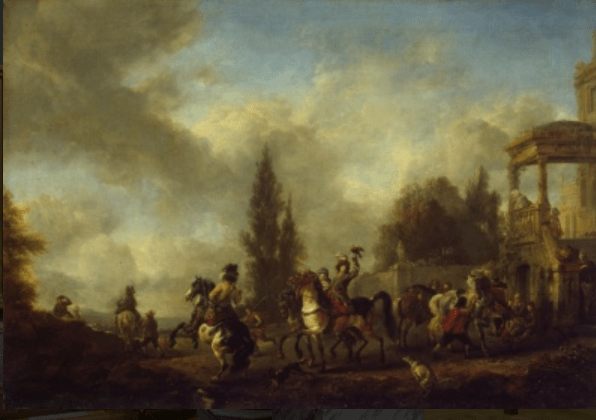
In July 1852 he sent the first part of his future autobiographical trilogy, “Childhood”, to the editors of the most popular magazine “Sovremennik” together with a letter which read:

… I look forward to your verdict. It will either encourage me to continue my favorite activities, or make me burn everything I started.

Nekrasov, Sovremennik’s publisher having immediately judged the literary value of Tolstoy’s book, wrote him a kind letter and published his novel in September of that same year. The novel “Childhood” was an extraordinary success.

At the same time, there were periodically battles with the mountaineers in the Caucasus, and Leo Tolstoy was rewarded and, received the Cross of St. George for courage shown in battle. He gave this medal to an ordinary soldier justifying his act by saying that this reward would give a simple person many advantages that he already had because of his origin.

Leo Tolstoy in Kazan

At the end of 1853 he was transferred to the Danube army because of the outbreak of the Crimean War. He participated in the Battle of Oltenitsa and the Siege of Silistria. In 1854 his second novel “Teenager” was published.

From November 1854 to the end of August 1855, Leo Tolstoy was in Sevastopol. The writer despite all the difficulties of life and the horrors of the siege, at that time wrote the story “Cutting the Forest”, which reflected Caucasian impressions, as well as the first of three stories of Sevastopol.

He sent the short story, “Sevastopol in the month of December,” to his publisher, who published it quickly. Although Tolstoy was exceptionally candid in describing the battle scenes in the early history of Sevastopol, the story was deeply patriotic and glorified the bravery of Russian soldiers. This news was read by all of Russia with interest, making an astonishing impression of the horrors that befell the defenders of Sevastopol. This was noticed by Emperor Nicholas I, who ordered to take care of this gifted officer.

In his second story “Sevastopol in May” nothing remained of the pride of the Russian army. The shock and horror he experienced at the front influenced Tolstoy’s work, and this time he wrote about the meaninglessness of death and the inhumanity of war. The writer has also experimented with a relatively new technique and part of the story is presented as a narration from a soldier’s point of view.

For the defense of Sevastopol, Tolstoy received the Odre de Sainte-Anne 4th degree for courage, and four medals. On March 26, 1856, he was promoted to the rank of lieutenant.

Tolstoy was very well received in the salons of high society when he returned to Saint Petersburg. He became Turgenev’s close friend, and established friendly relations with such famous writers as Nekrasov, Goncharov, Panaev, and many more. It was a very prolific time, and he wrote “Snowstorm”, “Two Hussars”, “Sevastopol in August” and “Youth”. In addition, the writing of future “Cossacks” continued.

This joyous and eventful life left him with a bitter taste, and at the beginning of 1857, without any regret, he left Saint Petersburg and set off on a journey.

At the age of 29, Tolstoy undertook his first trip abroad. He first visited France. It took him 11 non-stop days to reach Paris. From the very first evening the writer was at a masked ball at the Grand Opera. Tolstoy moved into the famous Le Meurice hotel. He visited the Louvre and walked through the magnificent Luxembourg Gardens, but was horrified by the cult of Napoleon I. After a month and a half, he wrote to Turgenev,

“a lot of filth has grown in my soul…and the guillotine, and idleness, and vulgarity.”

Leo Nikolayevich left the capital of France in a hurry and went to Geneva where he stayed in a guesthouse on the shores of Lake Geneva for two months. He continued his journey in northern Italy and then went to Switzerland, to the city of Lucerne. Wherever he went, Tolstoy got acquainted with famous works of art, met artists, observed how people lived in European cities. His travels did not inspire Tolstoy. He was disappointed by the stark contrast between wealth and poverty, which he could see through the beautiful outer veil of European culture. Tolstoy describes his disappointment in his book “Lucerne”.

After returning to Yasnaya Polyana in 1857, Leo Nikolayevich continued to work on his book “Cossack”, and wrote “Three Deaths”, “The Joy of the Family”, then “Housekeeping”. In his diary, Tolstoy defined his purpose for himself thus:

“The main thing is literary works, then family obligations, then agriculture… And living for yourself is enough for one good deed a day.”

Two years later he founded a school for peasant children in Yasnaya Polyana. For this, he returned to Europe where he became interested in public education and institutions aimed at raising the level of education of the working population. With the help of conversations with specialists, he studied the problems of public education in Germany and France. On his return, he abolished all the rules of discipline and, in 1862, he began to publish the educational journal Yasnaya Polyana, then “ABC” and “New ABC” thereafter.

On September 23, 1862, at the age of 34 Leo Nikolayevich married Sofia Andreevna Bers who was 18 years old. Sofia was the second daughter of the doctor in the Moscow Palace Office whom he had first seen when she was still a child. They had 13 children together. His family loved music, which was often played at parties. Sometimes Leo and his wife played the piano with four hands. They had a very large library with nearly 23,000 books in different languages. In the evening everyone gathered in the great hall and Tolstoy read aloud Pushkin, Homer, but also Jules Vernes whose family was very fond of “Around the World in 80 Days”. They also played chess. Tolstoy enjoyed horse riding, which he did almost every day before dinner. The writer lived with Sofia until her death, although their marriage was not considered easy. Sofia found an issue from 1862 where her husband wrote:

“ I write from the village, I write and I hear the voice of my wife upstairs, who speaks with her brother and whom I love more than anything in the world. I lived to be 34 and I didn’t know it was possible to love and be so happy .

Leo Tolstoy and his family

During this period of spiritual balance, Tolstoi began to work on “War and Peace”, based on events in Russian history. He completed this superb book in 1869, gaining astonishing fame. The writer was increasingly called the greatest Russian writer.

In the early 1870s, Tolstoy worried about social inequality, peasant poverty, and the intransigent Tsarist regime and disagreed with himself. He began to fall ill and, on the advice of his doctor, went to be cured with the treatment of kumis in the province of Samara. He liked the place so much, that he took his family there for a vacation and wrote “Anna Karenina” there.

In the 1880s, Tolstoy began to work on philosophical treatises in which, among other things, he rethought his life and his attitude towards religion. He wrote “Confession”, “What is my faith?” and “The Kingdom of God is within you…” Criticizing the dogmas of the Orthodox Church, he created his own version of the Gospel, removing from the scriptures what he disagreed with, like all stories of miracles and, he left only the words of Christ.
Leo Tolstoy
Leo Tolstoy

Under the influence of Tolstoy, the religious and ethical movement of Tolstoism was born. During this period he wrote “The Death of Ivan Ilyich”, a story about a righteous “Father Sergius”, a play about despair, “The Living Corpse”, and a story about tragic death, “Hadji Murad”.

In the 1880s, Leo Tolstoy also gave up meat and fish. His lunch usually consisted of soup, vegetables or dairy dishes. For dessert, fruit or pastries were served.

In 1901, the Holy Synod issued a decree excommunicating Count Leo Tolstoy after he wrote the novel “Resurrection,” in which he spoke scornfully of the very institution of the church. This decision only increased Tolstoy’s popularity and drew public attention to the writer’s ideals and beliefs.

During this period, Tolstoy’s family relations deteriorated because of his friendship with Vladimir Chertkov whom his wife called the devil.

At the end of 1910 he attempted to bring his life into line with his beliefs, and in early November secretly left his estate. On the way, he fell seriously ill and was forced to stay with the Astapovo station guard. This is where the writer spent the last days of his life. Leo Nikolayevich Tolstoy died on November 7 (20), 1910. He was buried in Yasnaya Polyana.
If you want to read his beautiful books, visit our page: Russian Literature. News books will be added every now and then.

Read Tolstoy books

If you liked this article, don’t forget to like and share.

Subscribe to not miss anything

Sources:

Толстой, Лев Николаевич

Лев Николаевич Толстой – биография, новости, личная жизнь

ПЕРСОНА Лев Толстой

Лев Толстой: “русские горки” великого старца

Лев Толстой

Самая подробная краткая биография Льва Толстого

«Человек человечества» Лев Толстой

Qui est Léon Nikolaïevitch Tolstoï ?

Le comte Léon Nikolaïevitch Tolstoï est né le 28 août (9 septembre) 1828 dans le domaine familial de sa mère, Yasnaya Polyana, dans la province de Toula de l’Empire russe. Il est issu de la famille noble de Tolstoï, connue depuis 1351.

Léon Nikolaïevitch est l’un des plus grands romanciers du monde. Il est appelé un maître du psychologisme, et le créateur du genre du roman épique. L’écrivain a eu une forte influence sur l’évolution de l’humanisme européen, et sur le développement des traditions réalistes dans la littérature mondiale.

Tolstoï a été excommunié de l’église à cause de ses opinions autoritaires qui ont provoqué l’émergence d’un nouveau courant religieux et moral appelé le tolstoïsme.

L’écrivain a reçu de nombreux prix Nobel de littérature et ses oeuvres ont été mises en scène dans le monde entier.

Léon Tolstoï
Léon Tolstoï

Léon Tolstoï était le quatrième de 5 enfants. Sa mère mourut en 1830, six mois après la naissance de sa fille alors que Léon Nikolaïevitch n’avait pas encore 2 ans. L’éducation des orphelins a été continuée par un parent éloigné, T. A. Ergolskaya. Son père Nikolai Ilich est décédé en 1837 quand Léon avait 9 ans, et sa tante, la comtesse Alexandra Osten-Saken fut nommée la tutrice des enfants. Après sa mort en 1840, une autre de ses tantes, Pelegeya Yushkova qui vivait a Kazan s’occupa de Léon Tolstoï, ainsi que de ses frères et sa sœur Maria .

Tolstoï disait que la maison des Louchkov était considérée comme l’une des plus gaies de Kazan. Plus tard il a décrit ces années dans le récit autobiographique “Enfance”

L’écrivain a reçu son éducation primaire à la maison. Il a étudié avec un tuteur français qui est devenu le prototype de Saint-Jérome dans son livre “Enfance”. Puis, il a continué ses études avec un tuteur allemand dépeint sous le nom de Karl Ivanovitch dans le même livre. Ensuite, en 1844, il est entré à l’université de Kazan , mais n’est resté qu’un an à cause de faibles résultats scolaires. Léon Tolstoï n’aimait pas étudier, il considérait les examens comme une formalité, et les professeurs d’université incompétents. Léon Nikolaïevitch a été transféré à la Faculté de droits, où il est passé en deuxième année de manière satisfaisante, bien qu’il préféra les divertissements profanes.

Cependant, il s’est interessé à la litérature philosophique française et sans terminer cette année là, il a quitté l’université. Ensuite, il s’est lancé dans l’auto apprentissage.

En 1847, à la suite d’une courte maladie, il a hérité et, est devenu responsable de la propriété de Yasnaya Polyana. Il voulu établir des relations d’une nouvelle manière avec les paysans et ouvrit même une école pour ceux-ci. Il a partiellement décrit ses activités dans “Le matin du propriétaire terrien”. C’est aussi cette même année qu’il a commencé à tenir un journal. Dans celui-ci, nous pouvons par exemple lire:

Un journal de
Léon Nikolaïevitch Tolstoï

« 21 mars 1855. N’avoir rien fait. J’ai reçu une lettre de Macha, dans laquelle elle me décrit sa connaissance de Tourgueniev. Une lettre douce et glorieuse qui m’a exalté dans ma propre opinion et m’a poussé à l’action . »

Il continua ce journal tout au long de sa vie et s’en servit pour écrire ses romans.

A la fin de 1848, il est parti à Moscou, puis un an plus tard à Saint Pétersbourg. Dans chaque ville, il s’est préparé a entrer dans une université mais n’a pas été jusqu’au bout préférant jouer aux cartes , écouter de la musique, où bien même, jouer du piano. Il s’intéressait passionnément à la musique. Bach, Haendel, et Chopin étaient ses favoris et lui même jouait très bien du piano. Il était tellement passionné par la musique qu’il a écrit la “Sonate à Kreutzer”

Léon Nikolaïevitch Tolstoï et son frère

Durant l’hiver 1850, il a commencé à écrire “Enfance” puis “L’Histoire d’hier”. En 1851, son frère aîné Nikolaï, qui servait dans le Caucase a visité Léon qui était de retour dans son domaine. Celui-ci invita Léon à se joindre au service militaire dans le Caucase. Léon Tolstoï n’accepta pas aussitôt, mais après des difficultés financières dues a son habitude de jouer aux cartes il s’engagea.

Il vécut environ 5 mois à Piatigorsk, dans une simple hutte en attendant des papiers oubliés à Moscou. Ceux-ci étaient nécessaire à son admission dans l’armée. Pendant ce temps, il a passé une partie importante de son temps à chasser en compagnie du cosaque Epishka, qui dans son livre “Les Cosaques” est devenu le prototype de l’un des héros du nom d’Eroshka.

En 1851, après avoir passé un examen à Tiflis, Tolstoï entra comme cadet dans la 4eme batterie de la 20eme brigade d’artillerie. Son bataillon était stationné dans le village cosaque de Starogladovskaya où il a vécut 3 ans. La nature du Caucase et la vie patriarcale du village casaque se sont reflétées dans ses romans ”Cosaques” , “Hadji Murad” ainsi que dans “Raid” et “Déforestation”

En juillet 1852 il envoya la première partie de sa future trilogie autobiographique, “Enfance”, aux rédacteurs du magazine le plus populaire “Sovremennik” accompagné d’une lettre qui disait:

J’attends avec impatience votre verdict. Il va soit m’encourager à continuer mes activités favorites, soit me faire bruler tout ce que j’ai commencé.

Nekrasov, l’éditeur de Sovremennik ayant immédiatement jugé la valeur littéraire du livre de Tolstoï, lui écrit une lettre aimable et, publia son roman en Septembre de cette même année. Le roman “Enfance” fut un extraordinaire succès.

En même temps, il y avait périodiquement des batailles avec les montagnards dans le Caucase, et Léon Tolstoï a été récompensé et, a reçu la croix de Saint Georges pour le courage montré en bataille. Il donna cette médaille à un soldat ordinaire justifiant son acte en disant que cette récompense donnerait à une simple personne, de nombreux avantages qu’il avait déjà en raison de son origine.

Léon Tolstoï à Kazan

A la fin de l’année 1853 il est transféré à l’armée du Danube à cause du déclenchement de la guerre de Crimée. Il a participé à la bataille d’Oltenitsa et au siège de Silistria. En 1854, son deuxième roman “Adolescence” a été publié.

De novembre 1854 à la fin août 1855, Léon Tolstoï était à Sébastopol. L’écrivain malgré toutes les difficultés de la vie et les horreurs du siège, écrivit à cette époque l’histoire “Déforestation”, qui reflétait les impressions caucasiennes, ainsi que la première des trois histoires de Sébastopol.

Il envoya la nouvelle, “Sébastopol au mois de décembre”, à son éditeur qui la publia rapidement. Bien que Tolstoï ai été exceptionnellement franc dans la description des scènes de batailles dans la première histoire de Sébastopol, la nouvelle était profondément patriotique et glorifiait la bravoure des soldats russes. Celle nouvelle a été lue par toute la Russie avec intérêt, faisant une impression étonnante des horreurs qui ont frappé les défenseurs de Sébastopol. Celle-ci a été remarquée par l’empereur Nicolas Ier, qui a ordonné de prendre soin de cet officier doué.

Dans sa seconde histoire « Sébastopol en mai », il ne restait plus rien de la fierté de l’armée russe. Le choc et l’horreur qu’il a vécu au front ont influencé le travail de Tolstoï , et cette fois, il écrivit sur le non-sens de la mort et l’inhumanitée de la guerre. L’écrivain a aussi expérimenté une technique relativement nouvelle et une partie de l’histoire est présentée comme une narration du point de vue d’un soldat.

Pour la défense de Sébastopol, Tolstoï a reçu l’Odre de Sainte-Anne 4eme degré pour le courage, et quatre médailles. Le 26 mars 1856, il a été promu au grade de lieutenant.

Cercle d’écrivains

Tolstoï a été très bien accueilli dans les salons de la haute société quand il retourna à Saint Pétersbourg. Il est devenu l’ami proche de Tourgueniev, et a établi des relations amicales avec des écrivains célèbres tels que Nekrasov, Goncharov, Panaev, et bien d’autres encore. C’est une époque très prolifique, et il a écrit “Tempête de Neige”, “Deux Hussards”, “Sébastopol en août” et “Jeunesse”. De plus, l’écriture des futures “Cosaques” se poursuit.

Cette vie joyeuse et mouvementée lui laisse un goût amer, et début 1857, sans aucun regret, il quitta Saint Pétersbourg et partit en voyage.

A l’âge de 29 ans, Tolstoï entreprit son premier voyage à l’étranger. Il a d’abord visité la France. Il lui fallu 11 jours non stop pour atteindre Paris. Dés la première soirée l’écrivain a été à un bal masqué au Grand Opéra. Tolstoï s’est installé dans le célèbre hotel Le Meurice. Il a visité le Louvre et s’est promené dans les magnifiques jardins du Luxembourg, par contre il a été horrifié par le culte de Napoléon Ier. Après un mois et demi, il écrit a Tourgueniev,

“beaucoup de saleté s’est développée dans mon âme… et la guillotine, et l’oisiveté, et la vulgarité.”

Léon Nikolaïevitch quitta précipitamment la capitale de la France et se rendit à Genève où il séjourna dans une maison d’hôtes au bord du lac Léman pendant deux mois. Il continua son voyage dans le nord de l’Italie puis s’est rendu en Suisse, dans la ville de Lucerne. Partout où il est allé, Tolstoï s’est familiarisé avec des oeuvres d’art célèbres, a rencontré des artistes, a observé comment les gens vivaient dans les villes européennes. Ses voyages n’ont pas inspiré Tolstoï. Il a été déçu par le contraste profond entre la richesse et la pauvreté, qu’il a pu voir à travers le magnifique voile extérieur de la culture européenne. Tolstoï décrit sa déception dans son livre “Lucerne”.

Après son retour à Yasnaya Polyana en 1857, Léon Nikolaïevitch continua de travailler sur son livre “Cosaque”, et écrivit “Trois morts”, “La joie de la Famille”, puis “Le ménage”. Dans son journal, Tolstoï définissait ainsi son but pour lui-même:

“L’essentiel, ce sont les oeuvres littéraires, puis les obligations familiales, puis l’agriculture… Et vivre pour soi suffit pour une bonne action par jour.”

Deux ans plus tard, il fonda une école pour les enfants des paysans à Yasnaya Polyana. Pour cela, il était retourné en Europe où il s’était intéressé à l’enseignement public et aux institutions visant a élever le niveau d’instruction de la population ouvrière. A l’aide de conversations avec des spécialistes, il a étudié les problèmes de l’éducation publique en Allemagne et en France. A son retour, il aboli toutes les règles de discipline et, en 1862, il commença à publier la revue pédagogique Yasnaya Polyana, puis “ABC” et “Nouvel ABC” par la suite.

Le 23 septembre 1862, à l’âge de 34 ans Léon Nikolaïevitch épousa Sofia Andreevna Bers qui avait 18 ans. Sofia était la deuxième fille du médecin du bureau du palais de Moscou qu’il avait vu pour la première fois alors qu’elle n’était encore qu’une enfant. Ils ont eu 13 enfants ensemble. Sa famille aimait la musique, qui était souvent jouée lors de fêtes. Parfois Léon et sa femme jouaient du piano à quatre mains. Ils possédaient une très grande bibliothèque avec prés de 23 000 livres dans différentes langues. Le soir tout le monde se réunissait dans la grande salle et Tolstoï lisait à haute voix Pouchkine, Homère , mais aussi Jules Vernes dont la famille aimait beaucoup « Le tour du monde en 80 Jours ». Ils jouaient aussi aux échecs. Tolstoï aimait monter à cheval, ce qu’il faisait presque tous les jours avant le dîner. L’écrivain a vécu avec Sofia jusqu’à sa mort bien que leur marriage n’est pas été qualifié de facile. Sofia trouva une issue de 1862 où son mari écrivit:

Leo Tolstoy and his family

J’écris du village, j’écris et j’entends la voix de ma femme à l’étage, qui parle avec son frère et que j’aime plus que tout au monde. J’ai vécu jusqu’à 34 ans et je ne savais pas que c’était était possible d’aimer et d’être si heureux”.

Léon Nikolaïevitch Tolstoï et sa famille

Au cours de cette période d’équilibre spirituel, Tolstoi a commencé à travailler sur “Guerre et Paix”, se basant sur les évènements de l’histoire russe. Il acheva ce superbe livre en 1869, gagnant une étonnante renommée. L’écrivain était de plus en plus appelé le plus grand écrivain russe.

Au début des années 1870, Tolstoï s’inquiétait des inégalités sociales, de la pauvreté des paysans et du régime tsariste intransigeant et était en désaccord avec lui-même. Il commença à tomber malade et, sur les conseils de son médecin est allé se faire soigné avec le traitement de koumis dans la province de Samara. Il a tellement aimé l’endroit, qu’il a emmené sa famille là-bas pour des vacances et y a écrit “Anna Karénine”.

Dans les années 1880, Tolstoï commença à travailler sur des traités philosophiques dans lesquels entre autres, il repense sa vie et son attitude envers la religion. Il écrivit “Confession”, “Quelle est ma foi?” et “Le royaume de Dieu est en vous…” Critiquant les dogmes de l’église orthodoxe, il a créé sa propre version de l’Evangile, supprimant de l’écriture sacrée ce, avec quoi il n’est pas d’accord, comme toutes les histoires de miracles et, il n’a laissé que les paroles du Christ.

Léon Nikolaïevitch Tolstoï

Sous l’influence de Tolstoï, le mouvement religieux et éthique du tolstoïsme est né. A cette période il a écrit “La mort d’Ivan Ilyich”, une histoire sur un juste “Père Serge”, une pièce sur le désespoir, “Le cadavre vivant”, et une histoire sur la mort tragique, “Hadji Murad”.

Dans les années 1880, Léon Tolstoï à aussi renoncé à la viande et au poisson. Son déjeuner se composait généralement de soupe, de légumes ou de plats laitiers. Au dessert, des fruits ou des viennoiseries étaient servis.

En 1901, le Saint-Synode a publié un décret excommuniant le comte Léon Tolstoï après que celui-ci ai écrit le roman “Résurrection”, dans lequel il a parlé avec mépris de l’institution même de l’église. Cette décision n’a fait qu’augmenter la popularité de Tolstoï et a attiré l’attention du public sur les idéaux et les croyances de l’écrivain.

Pendant cette période, les relations familiales de Tolstoï se sont dégradées à cause de son amitié avec Vladimir Chertkov que sa femme appelait le diable.

A la fin de 1910, il a tenté de mettre sa vie en conformité avec ses convictions, et début novembre, a secrètement quitté son domain. En chemin, il est tombé gravement malade et a été contraint de rester chez le gardien de la gare d’Astapovo. C’est là que l’écrivain a passé les derniers jours de sa vie. Léon Nikolaïevitch Tolstoï est mort le 7 (20) novembre 1910. Il a été enterré à Yasnaya Polyana.

Si vous voulez lire ses merveilleux livres, visitez notre page: Russian literature. De nouveaux livres seront ajoutés de temps en temps.

Lire les livres de Léon Nikolaïevitch Tolstoï

Si vous avez aimer cet article, n’oublier pas d’aimer et de partager.

Abonnez-vous pour ne rien manquer

Sources:

Толстой, Лев Николаевич

Лев Николаевич Толстой – биография, новости, личная жизнь

ПЕРСОНА Лев Толстой

Лев Толстой: “русские горки” великого старца

Лев Толстой

Самая подробная краткая биография Льва Толстого

«Человек человечества» Лев Толстой