

Russian Literature – Children Books – Russian Poetry – Russian Art – Aleksey Danilovich Kivshenko
Littérature Russe – Livres pour enfants – Poésie Russe – Русское искусство – Алексей Кившенко
Русская литература – Детские книги – Русская поэзия – Arts Russes – Alexeï Danilovitch Kivchenko
< < < Orest Kiprensky – Mother with child / Mère avec bébé / Орест Кипренский – Мать с ребенком
Konstantin Alekseyevich Korovin – A Muse / Une Muse > > >
The military council in Fili, depicted in L.N. Tolstoy’s novel “War and Peace,” holds great significance in the world of art and history. It served as the inspiration for a famous painting that has become a staple in textbooks, publications, and exhibitions dedicated to the Patriotic War of 1812. The painting, widely distributed throughout Russia in thousands of reproductions, catapulted Alexei Kivshenko to fame among historical artists, not only in Russia but also abroad. The lasting impact of this artwork reflects its recognition as a vital representation of an important historical event.
True to the author’s description, the characters are gathered around a table, with the granddaughter of the hut’s owner perched on the stove. Notable figures portrayed in the painting include M. I. Kutuzov, P. S. Kaisarov, P. P. Konovnitsyn, N. N. Raevsky, A. I. Osterman-Tolstoy, M. B. Barclay de Tolly, F. P. Uvarov, D. S. Dokhturov, A. P. Ermolov, K. Tolya, and L. L. Bennigsen. With his keen attention to detail and faithfulness to Tolstoy’s words, Kivshenko breathes life into this historical moment on canvas. The author repeated the painting for the gallery of P. M. Tretyakov in 1882.

| Алексей Кившенко – Военный совет в Филях | Military Council in Fili (in 1812) by Aleksey Danilovich Kivshenko | Conseil militaire à Fili (en 1812) par Alexeï Danilovitch Kivchenko |
| Дата: 1880 Стиль: Реализм Жанр: Медиа: Холст, масло Размеры: 92 x 164 см Локация: Государственный Русский музей Читать стихи “Полководец” Александра Пушкина | Date: 1880 Style: Realism Genre: Media: Oil on canvas Dimensions: 92 x 164 cm Location: State Russian Museum Read the poem “Commander ” by Alexander Pushkin | Date: 1880 Style: Réalisme Genre: Médias: Huile sur toile Dimensions: 92 x 164 cm Lieu: Musée d’État Russe Lire le poeme “Le commandant ” par Alexandre Pouchkine |
The Council in Fili played a vital role in shaping the strategies and decision-making processes during the Patriotic War of 1812. It was convened on September 1 (13), 1812, by Commander-in-Chief M.I. Kutuzov in the village of Fili, located west of Moscow to decide whether to try fighting another battle near Moscow after the Battle of Borodino or to leave the city without a fight.
On the eve of the council, the Russian army formations strategically positioned themselves to the west of Moscow, preparing for a decisive battle against Napoleon’s troops. It was General Leontius Bennigsen who chose this particular position for the Russian army.
Despite suffering from a severe fever for several days, Barclay de Tolly, a highly respected military leader, personally inspected the battlefield on horseback. After thorough evaluation, he reached the conclusion that the chosen position would be disastrous for the Russian army formations.
Following in his footsteps, A.P. Ermolov and K.F. Tol also conducted their own assessments by driving through the location where the Russian troops were positioned. Their findings echoed Barclay de Tolly’s concerns, further supporting the notion that the chosen position was unfavorable for the Russian army.
With these reports in hand, Kutuzov, the overall commander, found himself confronted with a difficult decision. He had to weigh the options of either continuing the retreat and potentially surrendering Moscow or engaging in direct combat on the city streets. This critical moment demanded careful consideration of the overall strategic objectives and the best course of action to protect their homeland.
Who is in the painting and what is happening during the meeting?
- The granddaughter of the hut’s owner
- Paisiy Sergeevich Kaisarov, colonel, adjutant of Kutuzov
- Mikhail Illarionovich Kutuzov, Field Marshal General, Commander-in-Chief of the Russian Army
- Pyotr Petrovich Konovnitsyn, Lieutenant General, Commander of the 3rd Infantry Corps
- Nikolai Nikolaevich Raevsky, lieutenant general, commander of the 7th Infantry Corps
- Alexander Ivanovich Osterman-Tolstoy, lieutenant general, commander of the 4th Infantry Corps
- Leonty Leontievich Bennigsen, general of the cavalry, chief of the army headquarters
- Mikhail Bogdanovich Barclay de Tolly, commander of the 1st Western Army, Minister of War
- Fedor Petrovich Uvarov, adjutant general, commander of the reserve cavalry corps
- Karl Fedorovich Tol, Quartermaster General of the 1st Army
- Dmitry Sergeevich Dokhturov, infantry general, commander of the 6th Infantry Corps
- Alexey Petrovich Ermolov, general, chief of staff of the 1st Army
- What was the decision taken at the council?
The granddaughter of the hut’s owner

The granddaughter of the hut’s owner who was perched on the stove
Paisiy Sergeevich Kaisarov, colonel, adjutant of Kutuzov

The presence of Kutuzov’s faithful assistant, who had been with him since the Russian-Turkish War of 1806–1812, is significant. While considered a passive member of the council, the adjutant’s role was primarily to keep a protocol. Interestingly, in practice, no one took notes during the council meetings. As a result, the specifics of the discussions were only revealed through dry official reports and memoirs from the participants. Whether Kaisarov, the assistant, was actually present at the council remains unknown.
Mikhail Illarionovich Kutuzov, Field Marshal General, Commander-in-Chief of the Russian Army

On the morning of September 1st, General Kutuzov embarked on a crucial task: to assess the advantage of the position of the Russian army after the recent battle, then he had a discussion with LL Bennigsen and AP Ermolov.
At five o’clock, Kutuzov summoned the generals to his main quarters in the village of Fili. They gathered to discuss the state of affairs and determine the next course of action. Despite the majority of those present advocating for a battle in the unfavorable position, Kutuzov made the courageous decision to retreat from Moscow. As he echoed the sentiments of Barclay de Tolly, he believed that “Russia is not lost with the loss of Moscow,” emphasizing the importance of preserving the army to continue the war and seeking suitable reserves. This bold decision carried significant responsibility, as surrendering the historical capital to the enemy could result in the commander-in-chief’s resignation. The reaction to this decision at court was uncertain.
Following the council, Kutuzov summoned Quartermaster General D.S. Lansky and entrusted him with the crucial task of ensuring the food supply along the Ryazan road. It was during the night that Kutuzov’s adjutant overheard him crying, a testament to the weighty burden he carried. The order to retreat, given to an army prepared for battle, caused confusion and murmurs among the troops. The retreat through the city took place under the cover of darkness, catching the Moscow authorities led by Count F.V. Rostopchin by surprise.
After marching for two days, the Russian army changed direction, diverting from the Ryazan road to Podolsk, and following the old Kaluga road before transitioning onto the new Kaluga road. The continued retreat of some Cossacks towards Ryazan disoriented the French scouts, leaving Napoleon unaware of the Russian troops’ whereabouts for a staggering nine days.
Pyotr Petrovich Konovnitsyn, Lieutenant General, Commander of the 3rd Infantry Corps
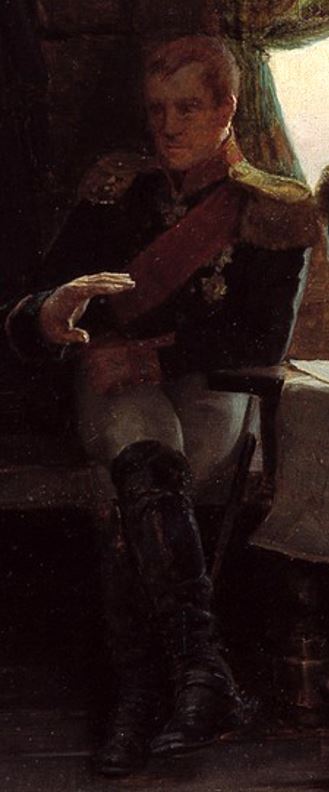
In a remarkable turn of events, the general emerged unscathed from the Battle of Borodino and took the place of the fallen commander, N.A. Tuchkov, leading the 3rd Corps. During a council meeting, he voiced his support for initiating a fresh battle. Ermolov, reflecting on the general’s stance, remarked that while Lieutenant General Konovnitsyn possessed the qualities of a bold and fearless officer, his capacity to comprehensively assess intricate and far-reaching matters had yet to be proven.
Nikolai Nikolaevich Raevsky, lieutenant general, commander of the 7th Infantry Corps

At Tolstoy’s, the council eagerly awaited Bennigsen’s arrival, but it was Lieutenant General Raevsky who arrived last. Despite being late, Raevsky was tasked with summarizing the Minister of War’s reasoning and each council member’s opinion, as recorded by Ermolov. His delay was justified by his speedy journey from the distant rearguard. This is why General M.A. Miloradovich, who remained with the rearguard, was absent from the council. After Ermolov’s explanations, Raevsky emphasized the importance of taking an offensive approach rather than waiting for the enemy to attack. However, his primary conclusion was that it would be prudent to retreat from Moscow in order to safeguard the army.
Alexander Ivanovich Osterman-Tolstoy, lieutenant general, commander of the 4th Infantry Corps

At the council, Count Osterman-Tolstoy made a significant statement: “Moscow does not constitute Russia, our goal is not just to protect the capital, but the whole Fatherland.” This statement emphasized the importance of safeguarding not only Moscow but the entire country. The general, advocating for the preservation of the army, engaged in a heated debate with Bennigsen. During the argument, the general questioned Bennigsen about his ability to ensure a successful outcome in case of an offensive. This exchange highlights the critical discussions that took place at the council.
Leonty Leontievich Bennigsen, general of the cavalry, chief of the army headquarters
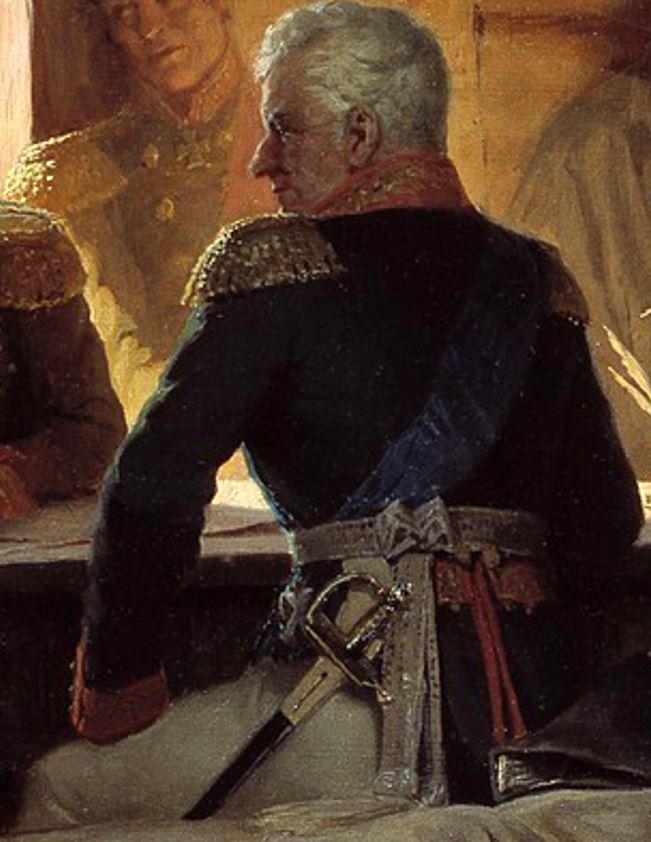
In the scene from Leo Tolstoy’s “War and Peace,” the characters find themselves anxiously waiting for Bennigsen. Despite the anticipation, Bennigsen delays the meeting by indulging in a sumptuous lunch under the pretense of inspecting the position. The group waits patiently for him, enduring a four to six-hour delay. In the meantime, they just engaged in hushed conversations about unrelated matters.
At the real council, Bennigsen, who opened the meeting, presented a difficult choice: whether to fight in a disadvantaged position or surrender the ancient capital to the enemy. However, Kutuzov pointed out that the main priority was not the preservation of Moscow, but rather the survival of the army. He emphasized that victory could only be achieved if the army remained in a strong combat-ready state.
At the council, Generals Bennigsen and Barclay de Tolly found themselves locked in a fervent debate over the course of action to take. Bennigsen vehemently opposed the idea of retreating, emphasizing that such a decision would render the immense bloodshed at the Battle of Borodino utterly meaningless. He argued that surrendering the sacred city of Moscow would not only demoralize the soldiers but also result in substantial material losses from the destruction of noble estates. To support his position, Bennigsen assured the council that the army had received reinforcements and was fully prepared to engage the enemy in battle.
Contrary to Bennigsen’s stance, General Barclay de Tolly held a different perspective. He contended that the strategic considerations for the battle should have been carefully evaluated beforehand, as the current positioning of the Russian forces was highly unfavorable. Despite the encroaching darkness, Bennigsen proposed regrouping and launching a swift surprise attack on the Grand Army. In response, Barclay advocated for a tactical retreat to the Vladimirsky road, and from there, further retreat to Nizhny Novgorod. The rationale behind this strategic maneuver was to secure a defensive stance in the event that Napoleon decided to redirect his forces towards St. Petersburg, affording the Russian army sufficient time to reposition and block the enemy’s advance.
The heated argument between Bennigsen and Barclay reflected the profound differences in their strategic thinking and risk assessment. Ultimately, their clash of perspectives would play a significant role in shaping the fate of the Russian army in the tumultuous days that were to follow.
Mikhail Bogdanovich Barclay de Tolly, commander of the 1st Western Army, Minister of War

It was a difficult day for Barclay de Tolly. Despite feeling poorly, he fulfilled Kutuzov’s request and inspected the positions in the morning. In the evening, he engaged in a heated argument with Bennigsen, criticizing the position near Moscow and proposing a retreat. Barclay emphasized that preserving Moscow would not save Russia from a cruel and ruinous war. Instead, he believed that by saving the army, the hopes of the Fatherland could be preserved, and the war could continue with convenience. He suggested that the troops being prepared would have time to join in different places outside Moscow. Methodically, Barclay demonstrated the disastrous nature of direct confrontation with the enemy and conveyed his belief that the capture of Moscow would inevitably lead to Napoleon’s downfall. Despite facing criticism both before and after the Battle of Borodino, Barclay remained steadfast in his strategy of retreat and reinforcement, recognizing that the French army would gradually weaken and diminish over time.
Fedor Petrovich Uvarov, adjutant general, commander of the reserve cavalry corps
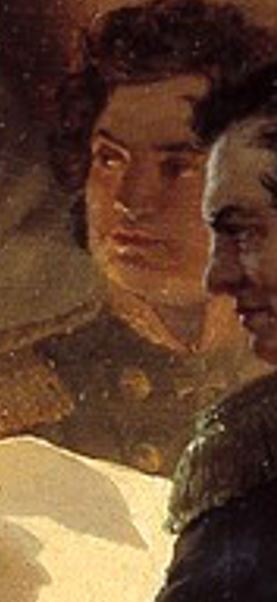
Count Uvarov, the most inconspicuous participant in the meeting, faced disapproval from the command following the Battle of Borodino. His cavalry raid, intended to strike behind enemy lines, proved to be futile, leading to discontentment. According to Mikhailovsky Danilevsky, Uvarov aligned himself with Bennigsen. However, Ermolov contradicts this account, stating that Uvarov swiftly agreed to retreat with just a single word.
Karl Fedorovich Tol, Quartermaster General of the 1st Army

In Tolstoy’s novel, “Tol” is mentioned briefly and receives little attention. Even Ermolov, doesn’t write about him. However, it is Tol who plays a crucial role by unconditionally supporting Barclay at the council. He proposes the strategic move of withdrawing to the New Kaluga Road, and then to the Old. This maneuver is later adopted by Kutuzov, ultimately determining the fate of the French army.
Dmitry Sergeevich Dokhturov, infantry general, commander of the 6th Infantry Corps
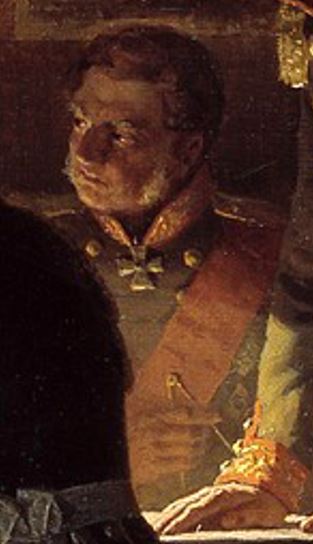
General Dokhturov was known for his staunch support of offensive actions in warfare. He believed in taking the initiative and launching attacks to gain the upper hand against the enemy. While he supported Bennigsen, another prominent military figure, Dokhturov also recognized the validity of Barclay’s arguments regarding the potential for significant losses. In light of this, he acknowledged that a retreat might be necessary in order to regroup and reassess the situation strategically. This flexible approach demonstrates Dokhturov’s ability to balance his commitment to offensive actions with a pragmatic understanding of the risks involved in warfare.
Alexey Petrovich Ermolov, general, chief of staff of the 1st Army
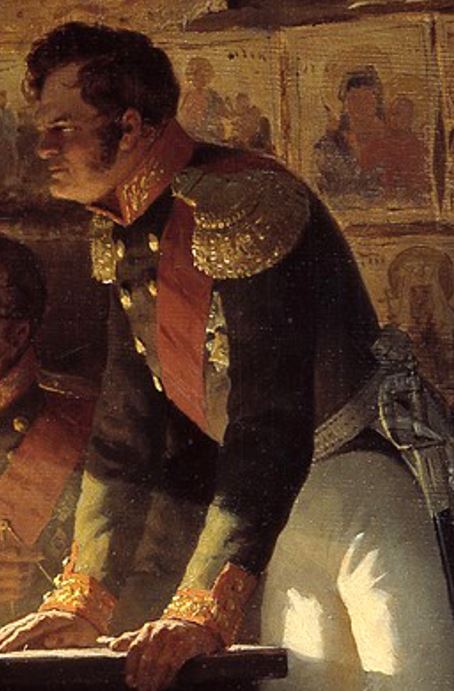
In Leo Tolstoy’s works, Dmitry Ermolov, much like Tol himself, is merely mentioned in passing. However, in Kivshenko’s painting, Ermolov takes center stage as the central figure. Known for his ardor and bravery, Ermolov’s heroic deeds in battles such as Austerlitz and Preussisch-Eylau were forever etched in the memories of those who witnessed them. During a council meeting, Ermolov firmly expressed his belief that Moscow should not be abandoned, emphasizing the necessity of launching an attack instead. Reflecting on that moment, Ermolov recalled how he was reprimanded by the commander-in-chief, Prince Kutuzov, who conveyed his displeasure by reminding him that the responsibility did not rest solely on his shoulders.
What was the decision taken at the council?
During the council, it became evident that Kutuzov had already made the decision to retreat. However, recognizing the importance of the input from his generals, he patiently listened to their opinions. When it was his turn to speak, Kutuzov began his address with the resolute declaration: “Russia is not lost with the loss of Moscow.” Demonstrating his unwavering resolve, the commander-in-chief concluded his speech by issuing the decisive order: “I hereby command a retreat.” This defining moment showcased Kutuzov’s strategic acumen and leadership, as he prioritized the preservation of the Russian forces in the face of adversity.
< < < Orest Kiprensky – Mother with child / Mère avec bébé / Орест Кипренский – Мать с ребенком
Konstantin Alekseyevich Korovin – A Muse / Une Muse > > >
Russian Literature – Children Books – Russian Poetry – Russian Art – Aleksey Danilovich Kivshenko
Littérature Russe – Livres pour enfants – Poésie Russe – Русское искусство – Алексей Кившенко
Русская литература – Детские книги – Русская поэзия – Arts Russes – Alexeï Danilovitch Kivchenko
Copyright holders – Public Domain Book
| If you liked this site, subscribe , put likes, write comments! Share on social networks Check out Our Latest Posts Visit us on Facebook or Twitter |
© 2023 Akirill.com – All Rights Reserved
 AKirill, Learn, apprenez, translation, traduction, livres bilingues, bilingual books