
Lisez la traduction française du poème “Au sujet de Pliouchtchikha” d’Ivan Bounine avec le français et le russe côte à côte et une courte biographie de l’auteur.

Livres bilinguesRead in EnglishNous contacter
Littérature américaineLittérature françaiseLittérature russe

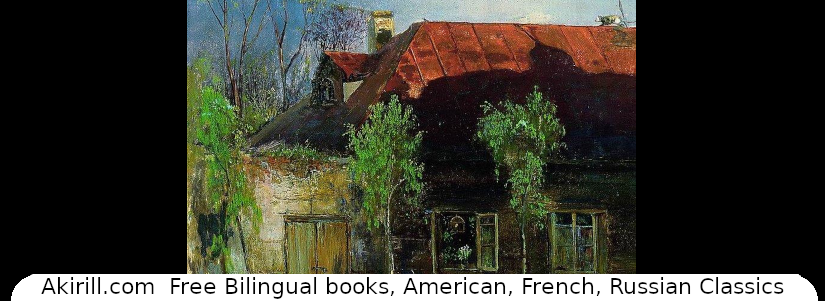
Chers lecteurs et abonnés, cette semaine, j’ai fait une très courte biographie du célèbre poète russe Ivan Bounine, ainsi qu’une traduction en français de son charmant poème “Au sujet de Pliouchtchikha” écrit en 1806 ou 1807. En complément, j’ai ajouté le magnifique tableau “Maison dans la province. Printemps” d’Alexeï Savrassov

Comme d’habitude, vous pouvez accéder librement à l’intégralité de la traduction en suivant l’un des liens, ainsi que retrouver l’ensemble de nos traductions sur la page Littérature russe .

J’espère que vous apprécierez ce poème et cette peinture autant que moi.


Au sujet d’Ivan Bounine

Ivan Alekseevich Bounine est né le 10 octobre (22 octobre selon le calendrier grégorien) 1870 à Voronej, province de Voronej, Empire russe, et est décédé le 8 novembre 1953 à Paris, Quatrième République française. Ivan Alekseevich était un prolifique écrivain, poète et traducteur russe. Il a acquis une renommée internationale en tant que premier écrivain russe à recevoir le prix Nobel de littérature en 1933.

Issu d’une famille noble et modeste, Bounine a commencé très tôt une vie indépendante. Tout au long de sa jeunesse, il a exercé diverses professions, notamment dans des journaux, des emplois de bureau et fait de nombreux voyages. Ses expériences et observations ont grandement influencé ses œuvres littéraires.

En reconnaissance de son talent littéraire, Bounine reçut le prix Pouchkine en 1903 pour son livre « Les feuilles qui tombent » et sa traduction de « La Chanson de Hiawatha ». Cette prestigieuse récompense lui fut décernée une nouvelle fois en 1909 pour la publication des troisième et quatrième volumes de ses Œuvres complètes.

Continuer la lecture

Peinture “Maison dans la province. Printemps” par Alexeï Kondratievitch Savrassov


Traduction du poème “Au sujet de Pliouchtchikha” d’Ivan Bounine en français avec français et russe côte à côte


Иван Алексеевич Бунин — На ПлющихеAu sujet de Pliouchtchikha
Traduit par Akirill.com
Dec 3, 2023
Пол навощен, блестит паркетом.Le sol est ciré et le parquet brille.
Столовая озаренаLa salle à manger est éclairée
Полуденным горячим светом.par la chaude lumière de midi.
Спит кот на солнце у окна:Un chat dort au soleil près de la fenêtre :
Мурлыкает и томно щуритIl ronronne et plisse langoureusement
Янтарь зрачков, как леопард,ses pupilles comme un léopard,
А бабушка — в качалке, куритEt grand-mère dans un fauteuil à bascule, fume
И думает: «Итак, уж март!Et pense : « Alors, c’est déjà mars !
Читать далееContinue la lecture

< < < Ange du Soir (Ru/Fr) / Evening Angel (Ru/Eng) / Вечерний ангел (Рус/Анг.) / (Рус/ Фра.)
Il n’y a pas de soleil, mais les étangs sont lumineux… (Ru/Fr) / There is no sun, but the ponds are bright… (Ru/Eng) / Нет солнца, но свeтлы пруды… (Рус/Анг.) / (Рус/ Фра.) > > >


Nous mettons beaucoup d’efforts dans la qualité des articles et traductions, soutenez-nous avec un like et un abonnement ou sponsorisez-nous si vous les aimez. Nous sommes aussi sur Facebook et Twitter

Découvrez nos Derniers Posts


© 2024 Akirill.com – All Rights Reserved
Read the English translation of the poem “About Plyushchikha” by Ivan Bunin with English and Russian side by side and short biography

Bilingual booksLire en FrançaisContact us
American LiteratureFrench LiteratureRussian Literature

Dear readers and subscribers, this week I did a very short biography of the renowned Russian poet Ivan Bunin, as well as an English translation of his lovely poem “About Plyushchikha” written in 1806 or 1807. As a complement I added the wonderful painting “A house in the province. Spring” by Aleksey Savrasov

As usual you can freely access the whole translation by following one of the link, you can also find all of our translation on the Russian Literature page.

I hope you’ll enjoy this poem and paintings as much as I did


About Ivan Bunin

Ivan Alekseevich Bunin was born on October 10 (October 22 according to the Gregorian calendar), 1870, in Voronezh, Voronezh province, Russian Empire, and passed away on November 8, 1953, in Paris, Fourth French Republic. Ivan Alekseevich was a prolific and renowned Russian writer, poet, and translator. He gained international acclaim as the first Russian writer recipient of the 1933 Nobel Prize in Literature.

Coming from a modest noble family, Bunin started an independent life at an early age. Throughout his youth, he engaged in various occupations, including working in newspapers, office jobs, and extensive travels. His experiences and observations greatly influenced his literary works.

In recognition of his literary talent, Bunin was awarded the Pushkin Prize in 1903 for his book “Falling Leaves” and his translation of “The Song of Hiawatha.” This prestigious award was bestowed upon him once again in 1909 for the publication of the third and fourth volumes of his Collected Works.

Continue reading

Painting “A house in the province. Spring” by Aleksey Savrasov

A house in the province. Spring by Aleksey Savrasov - 1878
A house in the province. Spring by Aleksey Savrasov – 1878

Translation of the poem “About Plyushchikha” by Ivan Bunin in English with English and Russian side by side


Иван Алексеевич Бунин — На ПлющихеAbout Plyushchikha
Translated by Akirill.com
Dec 3, 2023
Пол навощен, блестит паркетом.The floor is waxed and the parquet shines .
Столовая озаренаThe dining room is illuminated
Полуденным горячим светом.by the hot midday light.
Спит кот на солнце у окна:A cat sleeps in the sun by the window:
Мурлыкает и томно щуритHe purrs and languidly squints
Янтарь зрачков, как леопард,his pupils like a leopard,
А бабушка — в качалке, куритAnd grandma in a rocking chair, smokes
И думает: «Итак, уж март!And thinks: “So, it’s already March!
Читать далее ….Continue to read

< < < Ange du Soir (Ru/Fr) / Evening Angel (Ru/Eng) / Вечерний ангел (Рус/Анг.) / (Рус/ Фра.)
Il n’y a pas de soleil, mais les étangs sont lumineux… (Ru/Fr) / There is no sun, but the ponds are bright… (Ru/Eng) / Нет солнца, но свeтлы пруды… (Рус/Анг.) / (Рус/ Фра.) > > >


We put a lot of effort into the quality of the articles and translations, support us with a like and a subscription or sponsor us if you like them. We are also on Facebook and Twitter

Check out our Last Posts


© 2024 Akirill.com – All Rights Reserved

Lire le poème “Pour tout, Seigneur, je te remercie” d’Ivan Bounine en français avec français et russe côte à côte

Livres bilinguesRead in EnglishNous contacter
Littérature américaineLittérature françaiseLittérature russe

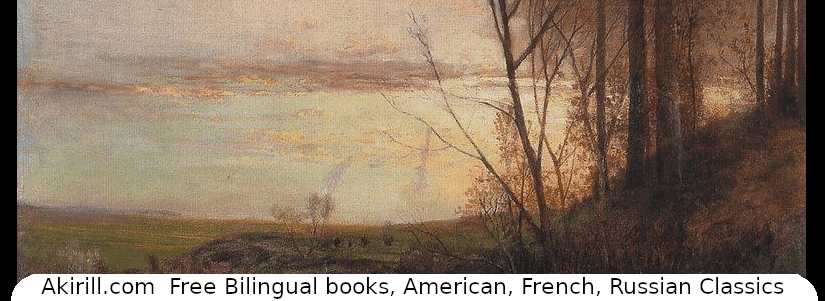
Chers lecteurs et abonnés, avec le début d’année, nous avons tous de quoi être reconnaissants, de belles vacances, de la famille, une nouvelle année prometteuse… Alors cette semaine, j’ai décidé de traduire en français et de faire une courte analyse du poème “Pour tout, Seigneur, je te remercie” du célèbre écrivain russe Ivan Bunin. De plus, j’ai inclus le tableau “Soirée” d’Alexeï Savrassov.

Comme d’habitude, vous pouvez accéder librement à l’intégralité de la traduction en suivant l’un des liens, ainsi que retrouver l’ensemble de nos traductions sur la page Littérature russe .

J’espère que vous apprécierez ce poème et cette peinture autant que moi.


Brève analyse du poème “Pour tout, Seigneur, je te remercie” d’Ivan Bounine

Le poème « Pour tout, Seigneur, je te remercie !.. » du célèbre écrivain russe Ivan Andreïevitch Bounine a été initialement publié dans le septième numéro de la revue « Le Monde de Dieu » en 1901, intitulé « Au coucher du soleil ». On pense largement que ce poème a été influencé par les paroles religieuses de Lermontov. Plus précisément, il ressemble à l’œuvre de Lermontov « Quand le champ jaunissant s’agite… » de 1837. Les parallèles thématiques et stylistiques entre ces poèmes montrent l’impact et l’inspiration que les paroles religieuses de Lermontov ont eu sur l’œuvre de Bounine.

Ivan Bounine, en tant que poète, a trouvé l’harmonie spirituelle et l’unité avec la nature plutôt qu’avec les autres. Sa carrière littéraire a été marquée par une attitude négative notable envers divers écrivains, dont Yesenin, Babel, Ehrenburg et Pilnyak. De Surcroît, il a exprimé son scepticisme à l’égard de certains phénomènes littéraires tels que les clichés et les fins lyriques des histoires.

Continuer la lecture …

Peinture “Soirée” par Alexeï Kondratievitch Savrassov

Evening by Alexei Kondratyevich Savrasov
Soirée” par Alexeï Kondratievitch Savrassov

Traduction du poème “Pour tout, Seigneur, je te remercie” d’Ivan Bounine en français avec français et russe côte à côte


Иван Бунин — За всё тебя, Господь, благодарюPour tout, Seigneur, je te remercie
Traduit par Akirill.com
Nov 30/2023
За всё тебя, Господь, благодарю!Pour tout, Seigneur, je te remercie
Ты, после дня тревоги и печали,Toi, après une journée d’anxiété et de tristesse,
Даруешь мне вечернюю зарю,Me donne l’aube du soir,
Простор полей и кротость синей дали.L’étendue des champs et la douceur du lointain bleu.
Читать далее …Continuer la lecture …

< < < Ange du Soir (Ru/Fr) / Evening Angel (Ru/Eng) / Вечерний ангел (Рус/Анг.) / (Рус/ Фра.)
Mikhail Lermontov – Prière (Dans un moment difficile de la vie) (Ru/Fr) / Prayer (In a difficult moment of life) (Ru/Eng) / Михаил Лермонтов – Молитва (В минуту жизни трудную) (Рус/Анг.) / (Рус/ Фра.) > > >


Nous mettons beaucoup d’efforts dans la qualité des articles et traductions, soutenez-nous avec un like et un abonnement ou sponsorisez-nous si vous les aimez. Nous sommes aussi sur Facebook et Twitter

Découvrez nos Derniers Posts


© 2023 Akirill.com – All Rights Reserved

Read the poem “For everything, Lord, I thank you” by Ivan Bunin in English with English and Russian side by side

Bilingual booksLire en FrançaisContact us
American LiteratureFrench LiteratureRussian Literature

Dear readers and subscribers, with the beginning of the year, we all have things to be thankful for, nice holidays, family, a new promising year… So this week I decided to translated in English and make a short analysis of the poem “For everything, Lord, I thank you” by the renowned Russian writer, Ivan Bunin. Further, I included the painting “Evening” by Alexei Kondratyevich Savrasov.

As usual you can freely access the whole translation by following one of the link, you can also find all of our translation on the Russian Literature page.

I hope you’ll enjoy this poem and paintings as much as I did


Short analysis of the poem “For everything, Lord, I thank you” by Ivan Bunin

The poem “For everything, Lord, I thank you!..” by the renowned Russian writer, Ivan Andreevich Bunin was initially published in the seventh issue of the magazine “World of God” in 1901, titled “At Sunset.” This poem is widely believed to have been influenced by the religious lyrics of Lermontov. Specifically, it bears resemblance to Lermontov’s work “When the yellowing field is agitated…” from 1837. The thematic and stylistic parallels between these poems showcase the impact and inspiration Lermontov’s religious lyrics had on Bunin’s work.

Ivan Bunin, as a poet, found spiritual harmony and unity with nature rather than with other people. His literary career was marked by a notable negative attitude towards various writers, including Yesenin, Babel, Ehrenburg, and Pilnyak. Moreover, he expressed skepticism towards certain literary phenomena such as clichés and lyrical endings to stories.

Continue reading …

Painting “Evening” by Alexei Kondratyevich Savrasov

Evening by Alexei Kondratyevich Savrasov
Evening” by Alexei Kondratyevich Savrasov

Translation of the poem “For everything, Lord, I thank you” by Ivan Bunin in English with English and Russian side by side


Иван Бунин — За всё тебя, Господь, благодарюFor everything, Lord, I thank you
Translated by Akirill.com
Nov 30/2023
За всё тебя, Господь, благодарю!For everything, Lord, I thank you
Ты, после дня тревоги и печали,You, after a day of anxiety and sadness,
Даруешь мне вечернюю зарю,Give me the evening dawn,
Простор полей и кротость синей дали.The expanse of fields and the gentleness of the blue distance.
Читать далее …Continue reading …

< < < Ange du Soir (Ru/Fr) / Evening Angel (Ru/Eng) / Вечерний ангел (Рус/Анг.) / (Рус/ Фра.)
Mikhail Lermontov – Prière (Dans un moment difficile de la vie) (Ru/Fr) / Prayer (In a difficult moment of life) (Ru/Eng) / Михаил Лермонтов – Молитва (В минуту жизни трудную) (Рус/Анг.) / (Рус/ Фра.) > > >


We put a lot of effort into the quality of the articles and translations, support us with a like and a subscription or sponsor us if you like them. We are also on Facebook and Twitter

Check out our Last Posts


© 2023 Akirill.com – All Rights Reserved

Lisez le poème “Confession” d’Alexandre Pouchkine Anglais et russe côte à côte

Livres bilinguesRead in EnglishNous contacter
Littérature américaineLittérature françaiseLittérature russe

< < < Cerisier (Ru/Fr) / Cherry Tree (Ru/Eng) / Вишня (Рус/Анг.) / (Рус/ Фра.)
Heureux celui qui est choisi volontairement (Ru/Fr) / Happy is the one, who is chosen willfully (Ru/Eng) / Счастлив, кто избран своенравно (Рус/Анг.) / (Рус/ Фра.) > > >


Chers lecteurs et abonnés, cette semaine, j’ai traduit et fait une brève analyse du merveilleux poème d’amour “Confession” d’Alexandre Pouchkine. Comme d’habitude j’ai ajouté un beau tableau “Automne” d’Alexei Kondratyevich Savrasov. J’espère que vous les apprécierez autant que moi.

Brève analyse du poème “Confession” d’Alexandre Pouchkine

Alexandre Pouchkine a écrit le poème “Confession” en 1826 pour Alexandra, la fille adoptive de P. Osipova, mais il ne lui a jamais donné le poème et il n’a pas été publié de son vivant.

Pouchkine tombait souvent amoureux et parfois, il devait souffrir d’un amour non partagé, ce qu’il décrit dans ce poème. Dans “Confession” , le poète comprend le désespoir de son amour, décrivant ses sentiments comme une “stupidité malheureuse”

Continuez la lecture …

Peinture “Automne” par Alexeï Kondratievitch Savrassov


Traduction du poème “Confession” d’Alexandre Pouchkine en français avec français et russe côte à côte


Александр Пушкин — ПризнаниеConfession par Alexandre Pouchkine
Traduit par Akirill. com
Я вас люблю, — хоть я бешусь,Je vous aime, même si je suis en colère,
Хоть это труд и стыд напрасный,Bien que ce soit du travail et de la honte en vain,
И в этой глупости несчастнойEt cette malheureuse bêtise
У ваших ног я признаюсь!A vos pieds je l’avoue !
Мне не к лицу и не по летам…Cela ne me convient pas et cela ne convient pas à mon âge…
Пора, пора мне быть умней!Alors, il est temps pour moi d’être plus intelligent !
Но узнаю по всем приметамMais je reconnais par tous les signes
Болезнь любви в душе моей:La maladie de l’amour dans mon âme :
Читать далее …Continuez la lecture …


Nous mettons beaucoup d’efforts dans la qualité des articles et traductions, soutenez-nous avec un like et un abonnement ou sponsorisez-nous si vous les aimez. Nous sommes aussi sur Facebook et Twitter

Découvrez nos Derniers Posts


© 2023 Akirill.com – All Rights Reserved

Read the Poem “Confession” by Alexander Pushkin English and Russian side by side

Bilingual booksLire en FrançaisContact us
American LiteratureFrench LiteratureRussian Literature

< < < Cerisier (Ru/Fr) / Cherry Tree (Ru/Eng) / Вишня (Рус/Анг.) / (Рус/ Фра.)
Heureux celui qui est choisi volontairement (Ru/Fr) / Happy is the one, who is chosen willfully (Ru/Eng) / Счастлив, кто избран своенравно (Рус/Анг.) / (Рус/ Фра.) > > >


Dear readers and subscribers, this week I translated and did a short analysis of the wonderful love poem “Confession” by Alexander Pushkin. As usual I added a beautiful painting “Autumn” by Alexei Kondratyevich Savrasov. I hope you’ll enjoy them as much as I did.

Short analysis of the poem “Confession” by Alexander Pushkin

Alexander Pushkin wrote the poem “Confession” in 1826 for Alexandra, the adopted daughter of P. Osipova but he never gave her the poem and it was not published during his lifetime.

Pushkin often fell in love and sometimes, he had to suffer from unrequited love which is what he describes in this poem. In “Confession”, the poet undestands the hopelessness of his love, describing his feelings as “unhappy stupidity”

Continue reading …

Painting “Autumn” by Alexei Kondratyevich Savrasov


Translation of the poem “Confession” by Alexander Pushkin in English with English and Russian side by side


Александр Пушкин — ПризнаниеConfession by Alexander Pushkin
Translated by Akirill.com
Я вас люблю, — хоть я бешусь,I love you, even though I am mad,
Хоть это труд и стыд напрасный,Even though this is labor and shame in vain,
И в этой глупости несчастнойAnd this unfortunate stupidity
У ваших ног я признаюсь!at your feet I confess!
Мне не к лицу и не по летам…It doesn’t suit me and it doesn’t suit my years…
Пора, пора мне быть умней!Still, it’s time for me to be smarter!
Но узнаю по всем приметамBut I recognize by all the signs
Болезнь любви в душе моей:The disease of love in my soul: :
Читать далее ..
Continue reading ..


We put a lot of effort into the quality of the articles and translations, support us with a like and a subscription or sponsor us if you like them. We are also on Facebook and Twitter

Check out our Last Posts


© 2023 Akirill.com – All Rights Reserved