
Découvrez le tableau “L’inconnue” d’Ivan Nikolaïevitch Kramskoï

Livres bilinguesRead in EnglishNous contacter
Littérature américaineLittérature françaiseLittérature russe

Ivan Nikolaïevitch Kramskoï (Иван Николаевич Крамской), artiste russe de renom connu pour son travail exceptionnel au cours de la seconde moitié du XIXe siècle, est crédité de la création de nombreux portraits et toiles historiques remarquables. L’une de ses peintures remarquables, intitulée «L’Inconnue» ( Неизвестная ), a été réalisée en 1883 et se trouve dans la prestigieuse collection de la Galerie nationale Tretiakov. Cette pièce mesurant 75,5 × 99 cm est largement considérée comme l’une des œuvres les plus significatives et les plus renommées d’Ivan Kramskoï. En donnant à la toile un tel nom, l’artiste l’a enveloppée d’un air de mystère et de fascination. Idéologiquement et artistiquement, le contenu de l’image « L’Inconnue » a permis à l’artiste de produire une œuvre à cheval entre un portrait et une peinture thématique. Il convient de noter que ce portrait est souvent appelé à tort «  L’étrangère  » en raison du poème du même nom d’Alexandre Blok. 


Cette œuvre d’art extraordinaire, communément appelée « L’inconnue » ou « L’Étrangere », a fait sa première apparition à Saint-Pétersbourg en 1883 lors de la 11e exposition des Peredvizhniki, organisée à l’Académie impériale des sciences. Son introduction a eu un impact profond sur tous ceux qui ont regardé le tableau.

Cette pièce représente une femme qui défie les normes sociétales. Kramskoï illustre l’émergence d’un sens distinct de soi chez une femme de son temps. Elle regarde les autres avec confiance et directement, affichant une forte estime de soi, même si sa dignité reste méconnue des autres.


Qui est représenté sur la toile ?


Sketch from the private collection of Dusan Friedrich
Croquis de la collection privée de Dusan Friedrich

Il existe plusieurs théories concernant l’identité du sujet représenté dans le tableau « L’inconnue » d’Ivan Kramskoï, chacune soutenue par des interprétations diverses. Malgré l’absence d’explications définitives fournies par l’artiste lui-même, de nombreux historiens de l’art ont avancé diverses possibilités. Certains affirment que le tableau aurait pu être inspiré par le personnage d’« Anna Karénine » de Léon Tolstoï, tandis que d’autres proposent un lien avec le roman « L’Idiot » de Fiodor Dostoïevski.


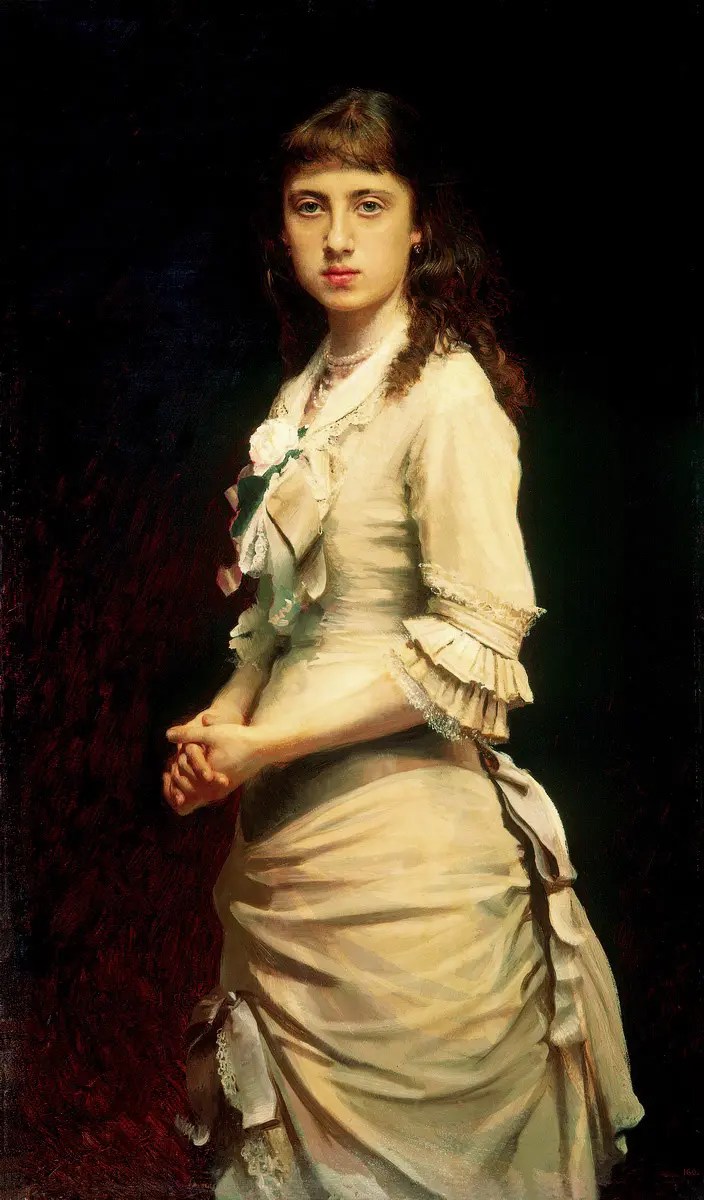
De plus, la ressemblance du personnage représenté avec la nièce de Kramskoï ainsi qu’avec sa fille a conduit à d’autres spéculations. Cependant, l’idée selon laquelle Kramskoï représente sa propre fille d’une manière aussi controversée soulève des questions sur les intentions d’un père aimant.

Il existe une légende non confirmée suggérant que le prototype du sujet féminin du tableau était Matryona Savvishna, une paysanne de Koursk qui aurait épousé un noble nommé Bestuzhev (dont le prénom n’est pas précisé, ce qui ajoute au caractère légendaire du conte). Kramskoï l’aurait rencontrée à Saint-Pétersbourg et aurait été séduit par sa beauté. Néanmoins, dans la collection privée de Dušan Friedrich à Prague, il existe un croquis représentant la même femme, probablement de manière plus authentique.
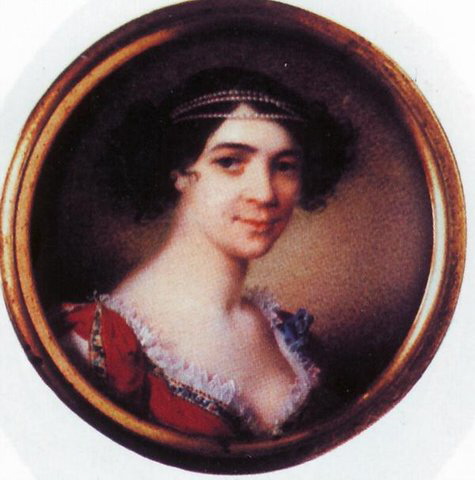

Varvara Turkestanova

Il pourrait également s’agir de la demoiselle d’honneur de l’impératrice, une princesse géorgienne connue pour sa beauté et son intelligence, ainsi que pour son destin tragique. Son allure a captivé l’empereur Alexandre Ier et le prince Golitsyne, conduisant à des relations amoureuses avec les deux hommes. Après avoir donné naissance à une fille dont la paternité restait incertaine, Varvara Turkestanishvili ou Turkestanova s’est suicidée.

Cette histoire poignante a profondément ému Kramskoï, qui, après avoir rencontré un camée à l’effigie de Varvara, s’est senti obligé de l’immortaliser dans sa peinture.

Certains chercheurs affirment que son sujet était une jeune femme géorgienne. D’autres affirment que l’œuvre représente une femme Lezgin de Kusara.


Princesse Ekaterina Mikhaïlovna Dolgoroukova
Princesse Ekaterina Mikhaïlovna Dolgoroukova

De plus, la mention de la princesse Ekaterina Mikhaïlovna Dolgoroukova comme prototype potentiel de la femme énigmatique du tableau ajoute une autre couche de complexité. Malgré la suggestion selon laquelle Kramskoï avait l’intention de peindre son portrait, le manque de ressemblance dans les photographies existantes de la princesse remet en question cette théorie. En conséquence, l’incertitude entoure la véritable identité de la femme dans « L’inconnue », obligeant les amateurs d’art à continuer de réfléchir sur ce mystère captivant.

Composition


Kramskoï -  L'inconnue
Kramskoï – L’inconnue

Le tableau représente une jeune femme voyageant dans une calèche découverte le long de la perspective Nevski, derrière elle se trouve le palais Anitchkov et quelque part se trouve le pont Anitchkov. À sa droite se trouve le théâtre Alexandrinsky. De plus, on peut observer l’air glacial et un léger brouillard légèrement rosé, qui « adoucit » délicatement les contours des bâtiments en arrière-plan. L’artiste a habilement capturé une journée d’hiver à Saint-Pétersbourg.

Cela a provoqué une indignation généralisée car, selon les normes sociales de l’époque, il était jugé inapproprié pour une jeune femme issue d’une société respectable de voyager seule dans une calèche dans les rues. La jeune femme, pleine de charme et d’assurance, non seulement s’assoit fièrement seule dans le carrosse, mais s’y assoit confortablement, se comportant comme si elle recevait des visiteurs dans son propre salon. Son attitude semble arrogante, comme si elle affirmait sa supériorité. Un tel comportement n’était pas toléré pour les femmes de la classe supérieure, ce qui a conduit à une opposition au tableau, notamment de la part de Pavel Tretiakov.


L'inconnue - Extract Woman
L’inconnue – Extract Woman

La jeune femme assise dégage une beauté remarquable, avec des traits délicats, légèrement plus foncés, agrémentés d’un doux rougissement. Son apparence est étonnamment peu conventionnelle pour la Russie, ressemblant davantage à celle d’une femme orientale. Elle possède des traits fins et élégants, accentués par des lèvres pulpeuses et expressives, des sourcils foncés et de grands yeux noirs encadrés de cils luxueux, rappelant un personnage des contes des Mille et Une Nuits.


L'inconnue - extract woman
L’inconnue Woman- extract woman

Elle est habillée à la dernière mode des années 1880. Sa tenue vestimentaire, comprenant un manteau Skobelev orné de fourrure de zibeline et de rubans de satin bleu, ainsi que des gants et un manchon en fourrure confectionnés en cuir fin, annoncent tous ostensiblement sa richesse considérable. Ceci est encore souligné par le remarquable bracelet en or qui orne son poignet, un bijou qui vaut à lui seul une petite fortune. En résumé, la jeune femme incarne la quintessence de la mode, du style et de la beauté.

Il n’est pas surprenant que les spectateurs aient tendance à la percevoir non pas comme une femme de la haute société, mais plutôt comme la maîtresse d’un homme riche, ou simplement comme une courtisane. En effet, les aristocrates héréditaires authentiques de cette époque présentaient une apparence sensiblement différente. Dans les cercles aristocratiques de cette époque, il était d’usage d’adhérer aux valeurs traditionnelles. Les vraies femmes nobles ne pouvaient justifier des dépenses substantielles pour des vêtements somptueux, encore moins pour des bijoux. Par conséquent, un style qui distinguait les véritables membres de la classe supérieure est devenu prédominant. Ce qui était considéré comme « élégant » pour eux était la modestie, la discrétion et la retenue. Ils ont délibérément voulu rester un peu à la traîne des dernières tendances, même s’ils avaient les moyens de les acquérir. Quant aux bijoux extravagants, l’étiquette imposait qu’ils soient réduits au minimum. Afficher l’opulence était secrètement considéré comme mal élevé.


En 2013, ils ont installé cette superbe sculpture 3D d’un tableau d’Alexandre Taratynov dans la cour des écuries de Tsarskoïe Selo dans le cadre du projet « Peinture en 3D ». C’est génial n’est-ce pas ?


Nous mettons beaucoup d’efforts dans la qualité des articles et traductions, soutenez-nous avec un like et un abonnement ou sponsorisez-nous si vous les aimez. Nous sommes aussi sur Facebook et Twitter

Découvrez nos Derniers Posts


© 2024 Akirill.com – All Rights Reserved

Discover the painting “Portrait of an Unknown Woman” by Ivan Nikolaevich Kramskoi

Bilingual booksLire en FrançaisContact us
American LiteratureFrench LiteratureRussian Literature

The renowned Russian artist known for his exceptional work during the latter half of the 19th century, Ivan Kramskoi (Иван Николаевич Крамской), is credited with creating numerous remarkable portraits and historical canvases. One of his notable paintings, titled “Portrait of an Unknown Woman,” (Неизвестная) was crafted in 1883 and is housed in the esteemed collection of the State Tretyakov Gallery. This piece measuring 75.5×99 cm is widely regarded as one of Ivan Kramskoi’s most significant and renowned works. By bestowing the canvas with such a name, the artist enveloped it in an air of mystery and fascination. Ideologically and artistically, the content of the “Portrait of an Unknown Woman” image allowed the artist to produce a piece that straddled the line between a portrait and a thematic painting. It should be noted that this portrait is often mistakenly called ” Stranger ” in Russian due to the poem of the same name by Alexander Blok . In English this portrait is also called the Unknown Woman, An Unknown Lady or Stranger


The extraordinary artwork, commonly referred to as “Portrait of an Unknown Woman” or “Stranger,” made its first appearance in St. Petersburg in 1883 at the 11th exhibition of the Peredvizhniki, hosted at the Imperial Academy of Sciences. Its introduction had a profound impact on all who gazed upon the painting.

This piece depicts a woman who defies societal norms. Kramskoi illustrates the emergence of a distinct sense of self in a woman of his time. She confidently and directly gazes at others, displaying a strong sense of self-worth, even if her dignity remains unacknowledged by others.


Who is shown in the canvas?


Sketch from the private collection of Dusan Friedrich

There exist several theories concerning the identity of the subject depicted in Ivan Kramskoi’s painting “Portrait of an Unknown Woman”, each supported by diverse interpretations. Despite the absence of definitive explanations provided by the artist himself, numerous art historians have put forward various possibilities. Some argue that the painting could have been inspired by the character from Leo Tolstoy’s “Anna Karenina”, while others propose a connection to Fyodor Dostoevsky’s novel “The Idiot”.


Additionally, the resemblance of the depicted figure to Kramskoi’s niece as well as his daughter has led to further speculations. However, the notion of Kramskoi portraying his own daughter in such a controversial manner raises questions about a loving father’s intentions.

There exists an unconfirmed legend suggesting that the prototype for the female subject in the painting was Matryona Savvishna, a peasant girl from Kursk who allegedly married a nobleman named Bestuzhev (whose first name is unspecified, adding to the legendary nature of the tale). Kramskoi reportedly encountered her in St. Petersburg and was enamored by her beauty. Nonetheless, in the private collection of Dušan Friedrich in Prague, there is a sketch portraying the same woman, presumably in a more authentic manner.


Varvara Turkestanova

It could also have been the maid of honor to the Empress, a Georgian princess, who was known for her beauty and intellect, as well as her tragic fate. Her allure captivated Emperor Alexander I and Prince Golitsyn, leading to romantic entanglements with both men. After giving birth to a daughter whose paternity remained uncertain, Varvara Turkestanishvili or Turkestanova took her own life.

This poignant tale deeply moved Kramskoi, who, upon encountering a cameo bearing Varvara’s likeness, felt compelled to immortalize her in his painting.

Some scholars assert that his subject was a young Georgian woman, there are alternative claims suggesting that the artwork portrays a Lezgin woman from Kusara.


Princess Catherine Dolgorukova

Furthermore, the mention of Princess Catherine Dolgorukova as a potential prototype for the enigmatic woman in the painting adds another layer of complexity. Despite the suggestion that Kramskoi intended to paint her portrait, the lack of resemblance in existing photographs of the princess challenges this theory. As a result, uncertainty shrouds the true identity of the woman in “Portrait of an Unknown Woman”, compelling art enthusiasts to continue pondering over this captivating mystery.

Composition


Kramskoy Portrait of a Woman
Kramskoi Portrait of a Woman

The painting depicts a young woman journeying in an open carriage along Nevsky Prospect, , behind her is the Anichkov Palace, and somewhere there is the Anichkov Bridge. Positioned to her right, is the Alexandrinsky Theater. Moreover, one can observe the frosty air and a gentle, slightly pinkish fog, which delicately “softens” the outlines of the buildings in the background. The artist adeptly captured a winter day in St. Petersburg.

This caused widespread outrage as, according to the social norms of the time, it was deemed inappropriate for a young woman from respectable society to travel alone in a carriage along the streets. The young woman, exuding charm and confidence, not only sits proudly in the carriage alone but also reclines comfortably, carrying herself as if she were receiving visitors in her own salon. Her demeanor appears arrogant, as if she is asserting her superiority. Such behavior was not condoned for ladies of the upper class, leading to opposition against the painting, including from Pavel Tretyakov.


Portrait of an Unknown Woman - Extract Woman
Portrait of an Unknown Woman – Extract Woman

The young woman seated exudes remarkable beauty, with delicate, slightly darker features graced by a gentle blush. Her appearance is strikingly unconventional for Russia, resembling more closely that of an oriental woman. She possesses slender and elegant features, accentuated by luscious, expressive lips, dark eyebrows, and large black eyes framed by luxurious lashes, reminiscent of a character from the Arabian Nights tales.


Portrait of an Unknown Woman - extract woman
Portrait of an Unknown Woman- extract woman

She is dressed in the latest fashions from the 1880s. Her attire, including a Skobelev coat adorned with sable fur and blue satin ribbons, as well as gloves and a fur muff crafted from fine leather, all conspicuously announce her considerable wealth. This is further underscored by the prominent gold bracelet adorning her wrist, a piece of jewelry alone worth a small fortune. In summary, the young woman embodies the epitome of fashion, style, and beauty.

It is hardly surprising that onlookers were inclined to perceive her not as a woman of high society, but rather as the mistress of a wealthy man, or simply as a courtesan. Indeed, authentic hereditary aristocrats of that time presented a noticeably different appearance. In the aristocratic circles of that era, it was customary to adhere to traditional values. True noblewomen could not justify substantial expenditures on lavish attire, let alone on jewelry. Hence, a style that set apart genuine members of the upper class became prevalent. What was considered “stylish” for them was modesty, discretion, and restraint. They deliberately aimed to lag somewhat behind the latest trends, even if they had the means to acquire them. As for extravagant jewelry, etiquette dictated that it should be kept to a minimum. Flaunting opulence was covertly deemed ill-mannered.


In 2013, they set up this cool 3D sculpture of a painting by Alexander Taratynov in the courtyard of the Tsarskoye Selo Duty Stables as part of the “Painting in 3D” project. How awesome is that?


We put a lot of effort into the quality of the articles and translations, support us with a like and a subscription or sponsor us if you like them. We are also on Facebook and Twitter

Check out our Last Posts


© 2024 Akirill.com – All Rights Reserved

Progrès du Site semaine du 5 mars 2024

Livres bilinguesRead in EnglishNous contacter

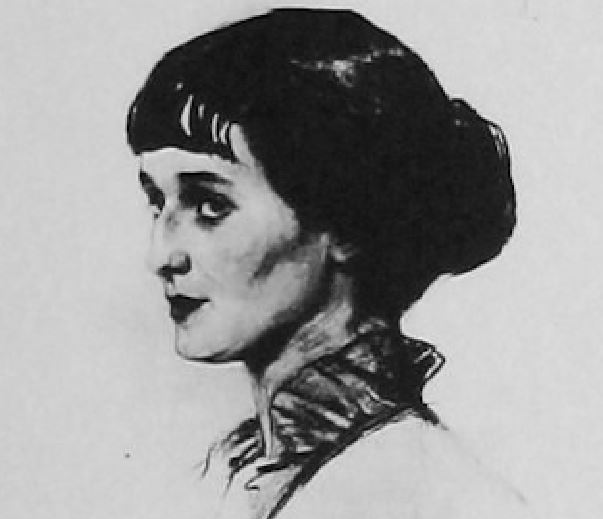
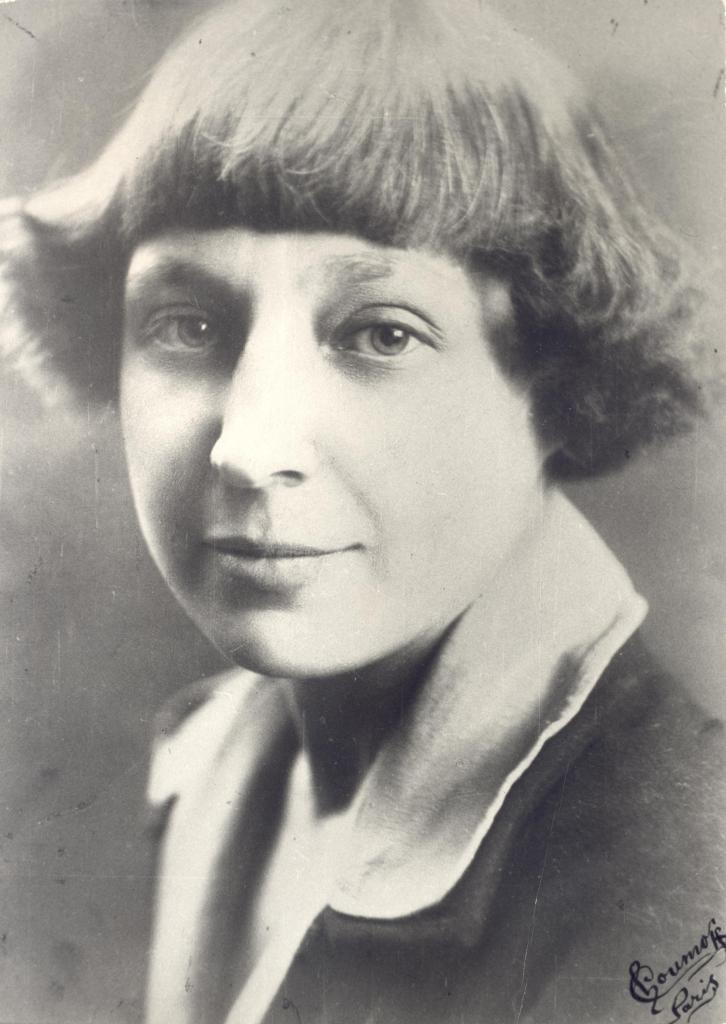
Chers lecteurs et abonnés, cette semaine, j’ai ajouté plus de poèmes à nos pages de poésie américaine, française et russe. J’ai inclus deux nouveaux poètes. Le premier est Stéphane Mallarmé, pseudonyme d’Étienne Mallarmé. Il était un célèbre poète et critique français, notoire en tant que figure de proue du mouvement symboliste français. Ses œuvres littéraires ont préfiguré et motivé plusieurs mouvements artistiques révolutionnaires du début du 20e siècle, dont le cubisme, le futurisme, le dadaïsme et le surréalisme. La seconde, Marina Ivanovna Tsvetaeva, était une poétesse russe de l’Âge d’Argent, écrivaine en prose et traductrice. Elle est apparue comme l’une des poétesses russes les plus originales du 20e siècle, distincte de tout mouvement littéraire spécifique, laissant pourtant une empreinte profonde sur la littérature du 20e siècle.

Chaque image est cliquable et vous emmène directement à la page de poésie correspondante. Comme d’habitude, j’ai ajouté la liste des nouveaux poèmes pour chaque auteur. Je suis sûr que vous trouverez quelque chose qui vous plaira.


Commençons par nos poètes américains:

Poems by Claude McKay: The Easter Flower, To One Coming North, America, Alfonso, Dressing To Wait At Table, The Tropics In New York

Poems by Henry David Thoreau: The Aurora Of Guido, Sympathy, Friendship, True Kindness, To The Maiden In The East

Poems by Ralph Waldo Emerson: Uriel, The World-Soul, The Sphinx, Alphonso of Castile, Mithridates


Nous allons poursuivre avec nos poètes français :

Poèmes de Stéphane Mallarmé: Mignonne, Mon cher papa, Rêve antique, Si tu veux nous nous aimerons, Soupir

 Poèmes d’Alain-Fournier: Premières Brumes De Septembre, Et Maintenant Que C’est La Pluie…, Dans Le Chemin Qui S’enfonce…, Sur la nacelle, Tristesses d’été

Poèmes de Pierre Jules Théophile Gautier: Le Marais, Sonnet I, Serment, Les Souhaits, Le Luxembourg


Et comme d’habitude, nous finirons avec nos poètes russes :

Стихи Марины Ивановны Цветаевой: Мирок, Жертвам школьных сумерек,  В зале, Лесное царство,  Встреча

Стихи Федора Достоевского: Не разбойничай, Федул…, 1879, Эпиграмма на баварского полковника, Описывать всё сплошь одних попов, Крах конторы Баймакова, Дорого стоят детишки

 Стихи Анны Ахматовой: Когда человек умирает, Когда я называю по привычке, Кого когда-то называли люди, Кое-как удалось разлучиться, Колыбельная


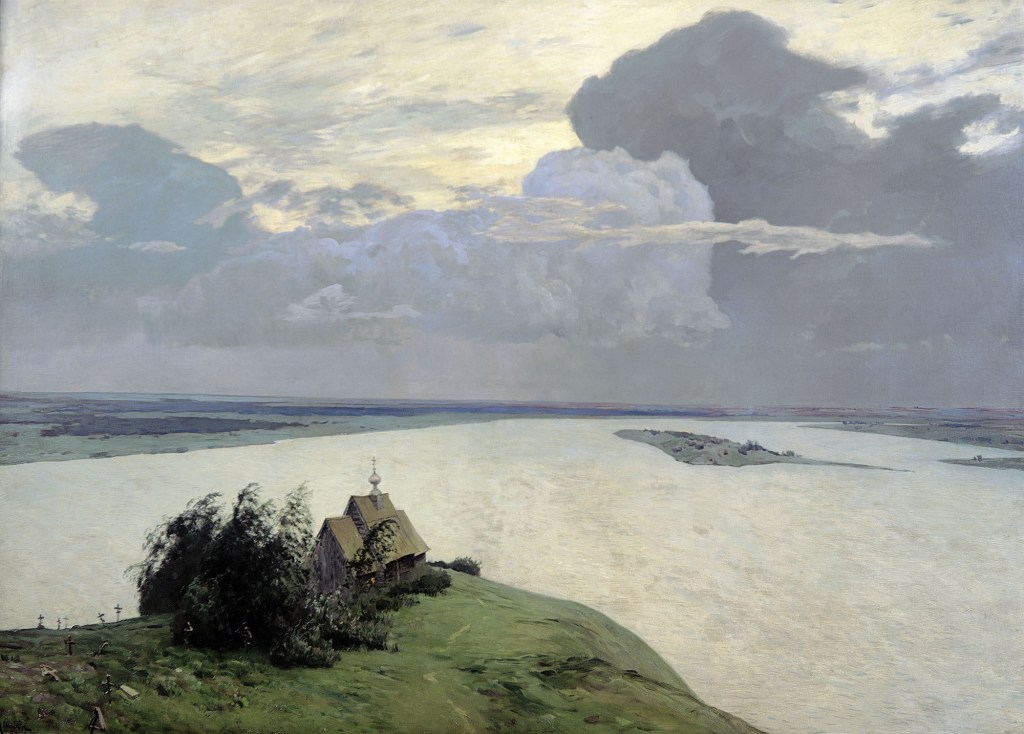
Cette semaine, notre article était “Découvrez la peinture « Au-dessus de la paix éternelle » d’Isaac Levitan“. “Au-dessus de la paix éternelle” d’Isaac Levitan est une magnifique et probablement la plus célèbre peinture du célèbre artiste russe Isaac Levitan, datant de l’année 1894, qui représente un “renversement géant de l’espace aquatique du lac”, les étendues infinies ressemblant à une rivière étendue. Au-dessus du lac se trouve “une vaste étendue de ciel avec des nuages tourbillonnants qui entrent en collision les uns avec les autres”. Il ne s’agit pas d’un paysage lyrique ordinaire, pour lequel Levitan est renommé, mais plutôt d’une grande épopée, où le passé converge avec l’avenir, le ciel se dresse au-dessus de la terre, et le temps s’étire vers l’éternité. …

Over eternal peace . 1894

Nous mettons beaucoup d’efforts dans la qualité des articles et traductions, soutenez-nous avec un like et un abonnement ou sponsorisez-nous si vous les aimez. Nous sommes aussi sur Facebook et Twitter


© 2024 Akirill.com – All Rights Reserved

Site Progress Week of March 5, 2024

Progrès du Site semaine du 5 mars 2024

Bilingual BooksLire en FrançaisContact us

Dear readers and subscribers, this week as I added more poems to our American, French and Russian poetry pages, I included two new poets. The first individual is Stéphane Mallarmé, pen name of Étienne Mallarmé. He was a renowned French poet and critic, notable as a leading figure in the French symbolism movement. His literary works foreshadowed and motivated several groundbreaking artistic movements of the early 20th century, including Cubism, Futurism, Dadaism, and Surrealism. The second Marina Ivanovna Tsvetaeva was a Russian poetess of the Silver Age, prose writer, and translator. She emerged as one of the most original Russian poets of the 20th century, distinct from any specific literary movement, yet leaving a profound imprint on 20th-century literature.

Each image is hyperlinked to its respective poetry page, and as usual, I have included the roster of new poems for each author. I trust you will discover something to appreciate.

Let’s begin by our American poets

Poems by Claude McKay: The Easter Flower, To One Coming North, America, Alfonso, Dressing To Wait At Table, The Tropics In New York

Poems by Henry David Thoreau: The Aurora Of Guido, Sympathy, Friendship, True Kindness, To The Maiden In The East

Poems by Ralph Waldo Emerson: Uriel, The World-Soul, The Sphinx, Alphonso of Castile, Mithridates


We will continue with our French poets

Poèmes de Stéphane Mallarmé: Mignonne, Mon cher papa, Rêve antique, Si tu veux nous nous aimerons, Soupir

 Poèmes d’Alain-Fournier: Premières Brumes De Septembre, Et Maintenant Que C’est La Pluie…, Dans Le Chemin Qui S’enfonce…, Sur la nacelle, Tristesses d’été

Poèmes de Pierre Jules Théophile Gautier: Le Marais, Sonnet I, Serment, Les Souhaits, Le Luxembourg


And as usual, we’ll finish with our Russian poets

Стихи Марины Ивановны Цветаевой: Мирок, Жертвам школьных сумерек,  В зале, Лесное царство,  Встреча

Стихи Федора Достоевского: Не разбойничай, Федул…, 1879, Эпиграмма на баварского полковника, Описывать всё сплошь одних попов, Крах конторы Баймакова, Дорого стоят детишки

 Стихи Анны Ахматовой: Когда человек умирает, Когда я называю по привычке, Кого когда-то называли люди, Кое-как удалось разлучиться, Колыбельная


This week our article was “Discover the painting “Over Eternal Peace” by Isaac Levitan“. “Over Eternal Peace” by Isaac Levitan. “Over Eternal Peace” is a magnificent and probably the most famous painting by renowned Russian artist Isaac Levitan, originating from the year 1894 which depicts a “giant reversal of the lake’s water space”, the endless expanses of which resemble a wide-spread river. Above the lake is “a majestic expanse of sky with swirling clouds colliding with each other”. This is no ordinary lyrical landscape, for which Levitan is renowned, but rather a grand epic, where the past converges with the future, the sky looms over the earth, and time stretches towards eternity. …

Over eternal peace . 1894

We put a lot of effort into the quality of the articles and translations, support us with a like and a subscription or sponsor us if you like them. We are also on Facebook and Twitter


© 2024 Akirill.com – All Rights Reserved

Découvrez le tableau “Au-dessus de la Paix éternelle” d’Isaac Levitan

Livres bilinguesRead in EnglishNous contacter
Littérature américaineLittérature françaiseLittérature russe

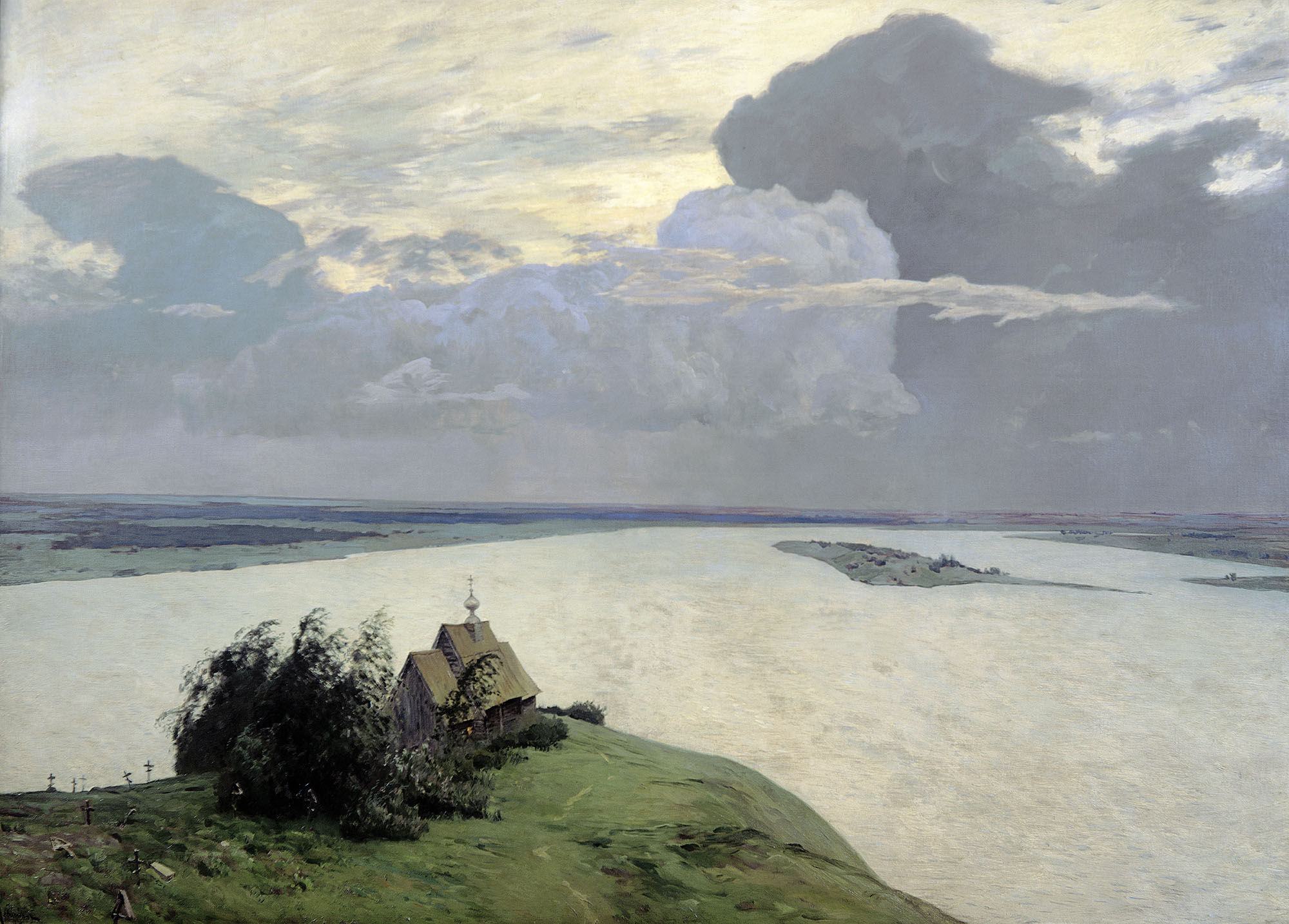
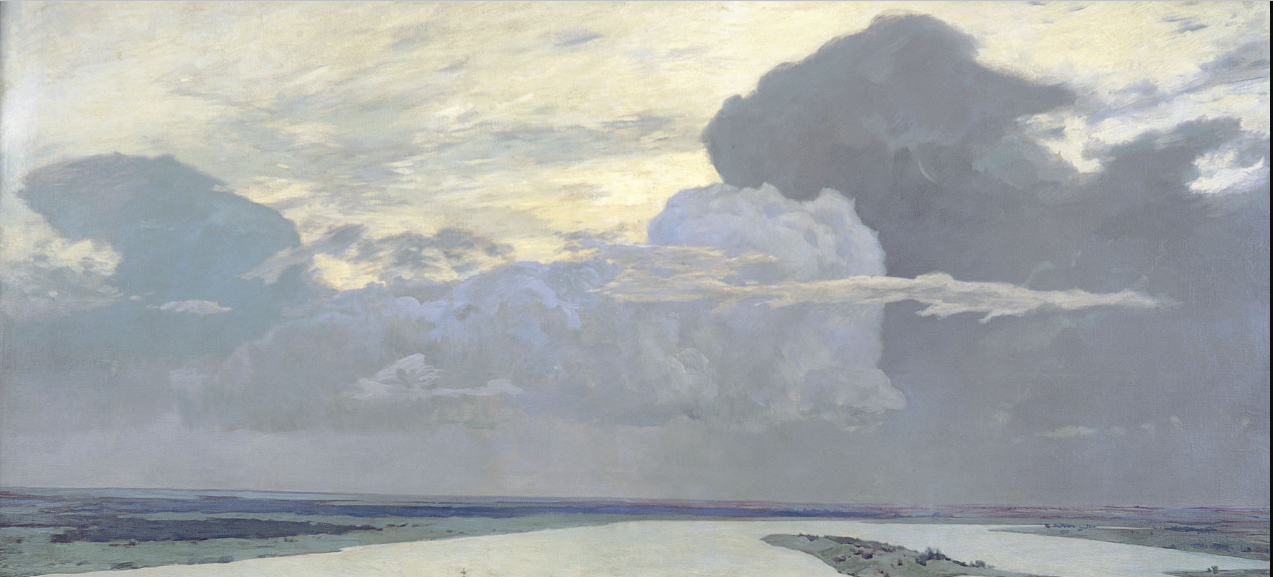
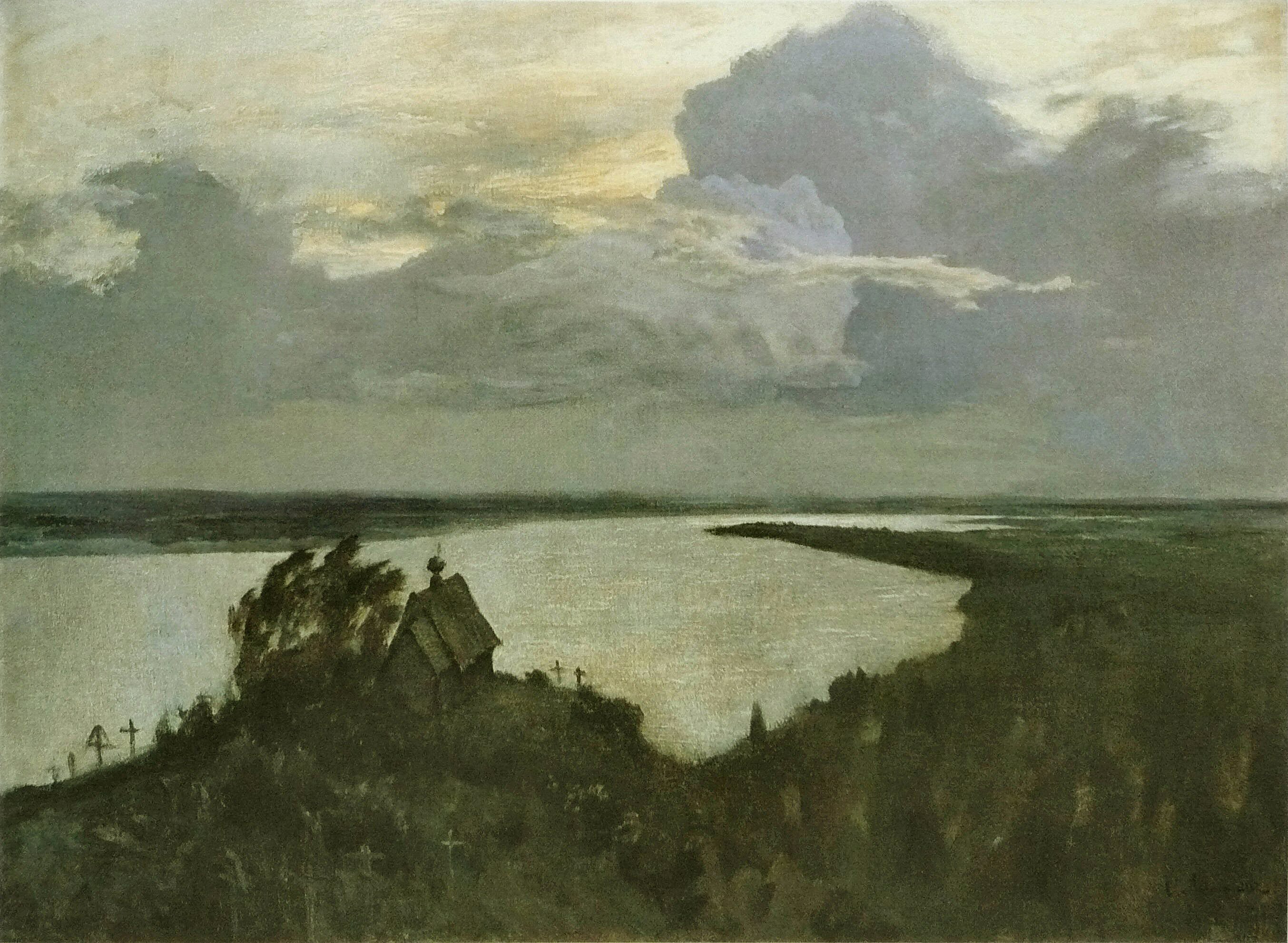
“Au-dessus de la Paix éternelle” (Над вечным покоем) aussi appelé Paix éternelle ou Au-dessus du repos éternel est un magnifique et probablement le tableau le plus célèbre de artiste russe Isaac Levitan. Celui-ci date de l’année 1894, et représente un “gigantesque renversement de l’espace aquatique du lac”, dont les étendues infinies ressemblent à une rivière étendue. Au-dessus du lac se trouve “une vaste étendue de ciel avec des nuages tourbillonnants se heurtant les uns aux autres”. Il ne s’agit pas d’un paysage lyrique ordinaire, pour lequel Levitan est renommé, mais plutôt d’un grand récit épique, où le passé converge avec l’avenir, le ciel domine la terre et le temps s’étire vers l’éternité.

Ce chef-d’œuvre est exposé au prestigieux musée d’État de la Galerie Trétiakov et affiche des dimensions de 150 × 206 cm. Dévoilé pour la première fois à la 22e exposition de l’Association des expositions d’art itinérantes à Saint-Pétersbourg, il a captivé l’attention des amateurs d’art et a été rapidement acquis par Pavel Trétiakov même avant le début officiel de l’exposition. Certains experts en art considèrent cette peinture, ainsi que ” Eaux profondes” et “Vladimirka” de 1892, comme faisant partie d’une trilogie captivante de Levitan. Les critiques ont loué l’œuvre comme un portrait de paysage véritablement captivant, la qualifiant comme l’une des œuvres les plus évocatrices et vibrantes de l’artiste.

Over eternal peace . 1894

Histoire de la peinture

Il y a différentes histoires intéressantes sur la peinture et l’église qui ont inspiré l’artiste. Les mémoires de Sofia Kuvshinnikova suggèrent que la peinture “Au-dessus de la Paix éternelle” était basée sur une église près du lac d’Udomlya, bien que l’église réelle fût différente de celle représentée.

Les chercheurs proposent que l’artiste ait utilisé une esquisse de l’église Pierre et Paul à Plyos comme référence. Cette église a brûlé en 1903 et a été remplacée par l’église de la Résurrection du village de Bilyukovo.

Une autre version suggère que l’inspiration est venue d’une vieille église en bois près du lac Ostrovno, comme décrit dans les mémoires de l’artiste Vitold Byalynitsky-Birulya. Certaines sources spéculent que l'”île ovale” représentée pourrait être l’île d’Arzhanik ou de Dvinovo sur le lac Udomlya.

Le livre “Artistes dans le territoire d’Oudomelsky” présente encore une autre version, suggérant que la peinture a été inspirée par le village d’Ostrovno et le domaine d’Ouchakov.

L’expert en art Alexey Fedorov-Davydov décrit la toile “Au-dessus de la Paix éternelle” comme le portrait d’un motif d’un lac appliqué à un autre lac similaire, le lac Udomlya servant de base à la composition.

Fedorov-Davydov met l’accent sur le niveau de synthèse de la vue réelle dans une image de paysage pictural comme la véritable mesure de la composition dans les peintures de Levitan.

La peinture “Au-dessus de la Paix éternelle” a fleuri pendant l’été 1893 alors qu’Isaac Levitan résidait dans la province de Tver. Aux côtés de l’artiste Sofia Kuvshinnikova, il trouva l’inspiration au domaine d’Ostrovno des Ushakovs près du lac Ostrovno, où ils reçurent un accueil chaleureux et des conditions idéales pour leurs entreprises créatives. Ils ont également savouré des moments au domaine de Garusovo près du lac d’Udomlya, qui est devenu plus tard le sujet du chef-d’œuvre de Levitan “On the Lake.”


On the lake. Oil on canvas, 109 × 163 cm , 1893

Levitan a esquissé et travaillé avec diligence sur la toile à Moscou, aboutissant à l’achèvement du tableau au début de 1894, le signant fièrement dans le coin inférieur gauche comme “Et Levitan 94.” (И Левитанъ 94 )

Croquis

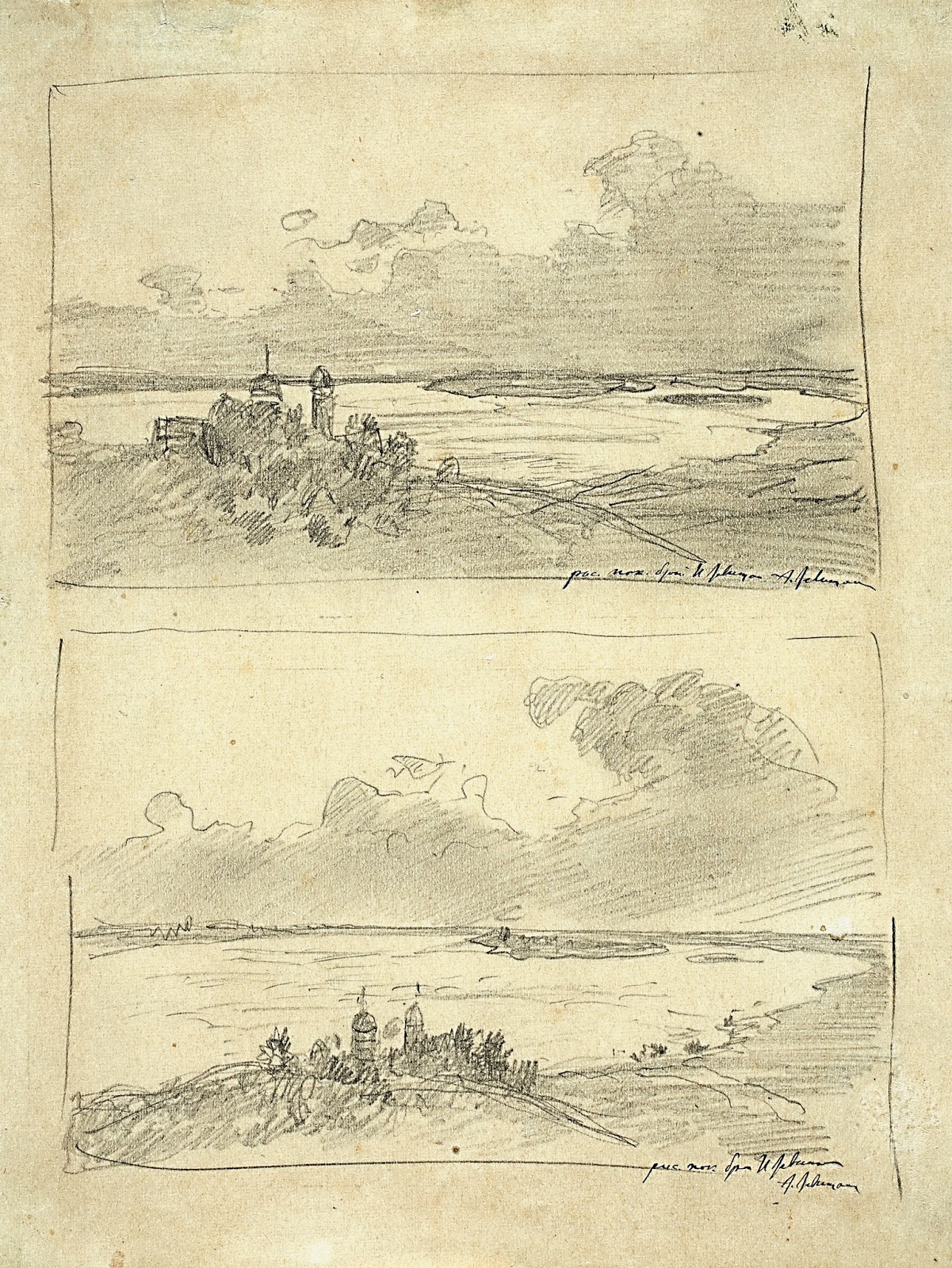
La Galerie Tretiakov conserve fièrement deux croquis originaux du célèbre tableau “Au-dessus de la Paix éternelle”. Ces dessins captivants, réalisés en 1893 sous le titre “Avant l’orage”, ont été méticuleusement réalisés au crayon graphite sur une seule feuille de papier.

Initial sketches-variants of the painting-  Over Eternal Peace, 1893
Initial sketches-variants of the painting- Over Eternal Peace, 1893

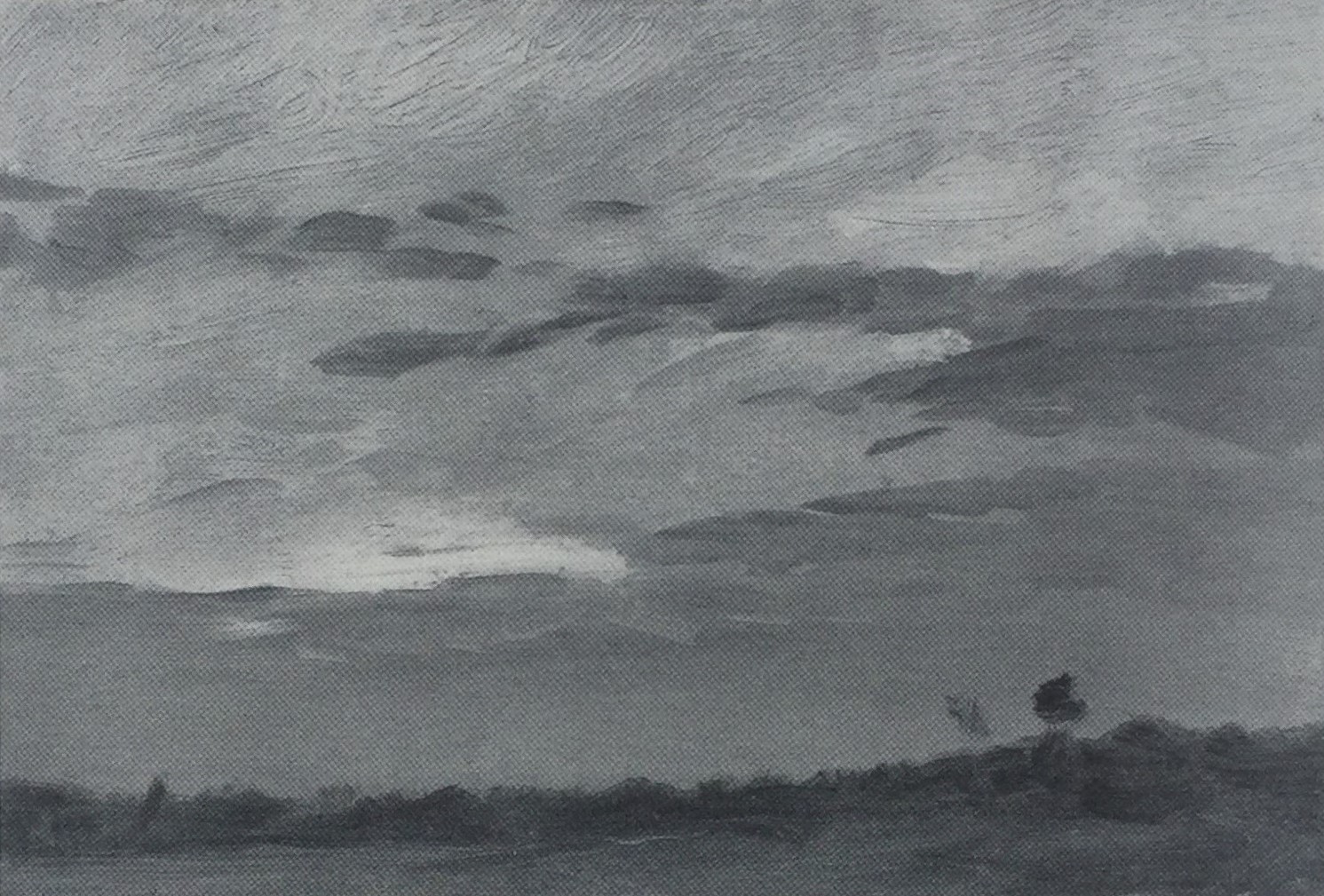
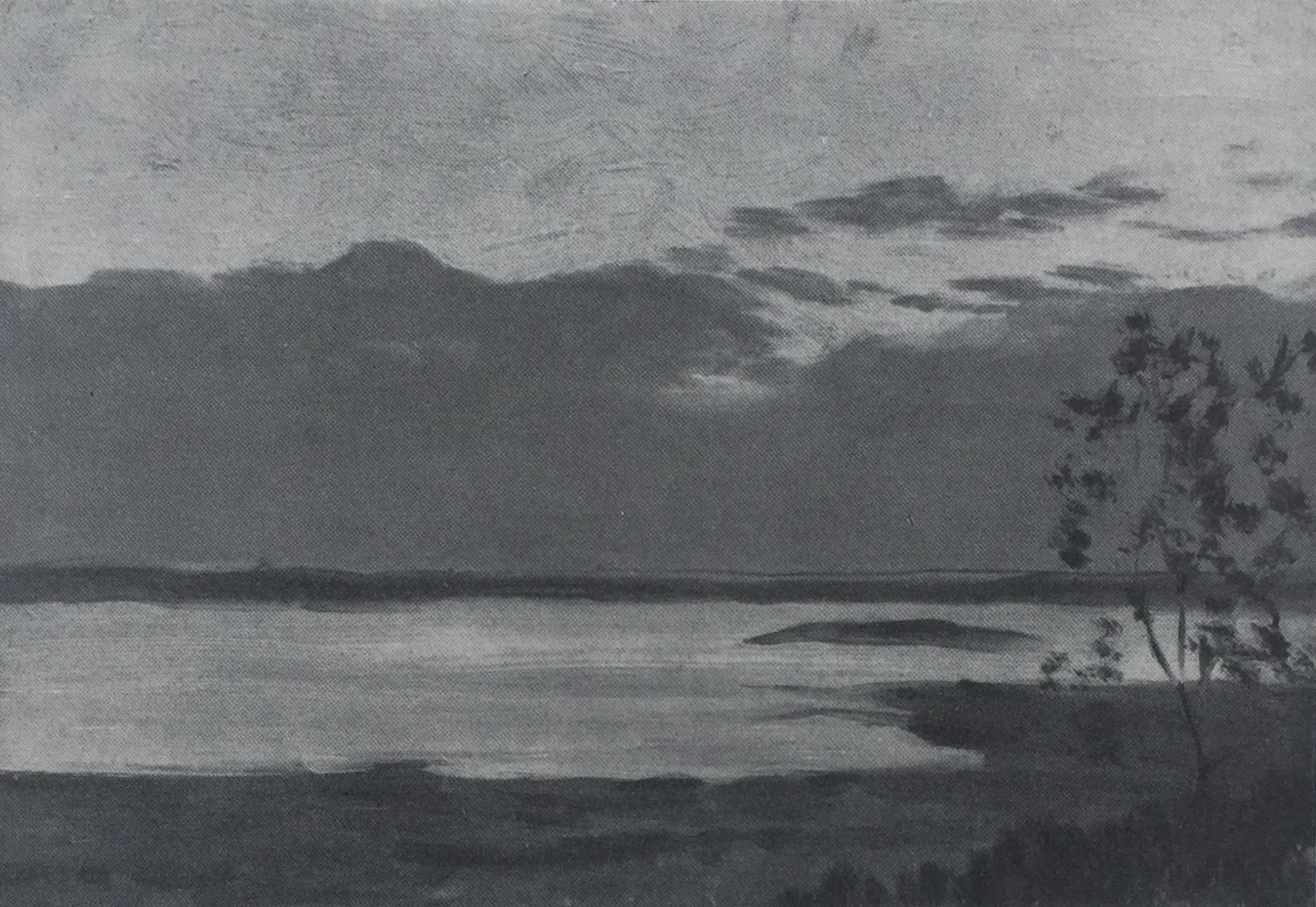
Levitan capture habilement l’anticipation dans la nature alors qu’un orage approche. Selon E. A. Byalynitskaya-Birulya, ces dessins dépeignent le paysage pittoresque du lac d’Ostrovno avec l’église de la Trinité nichée le long de la rive. Tout en travaillant sur la peinture, Levitan a également produit plusieurs esquisses picturales évocatrices, dont “Ciel nuageux”, “Ciel”, et “Lac”.


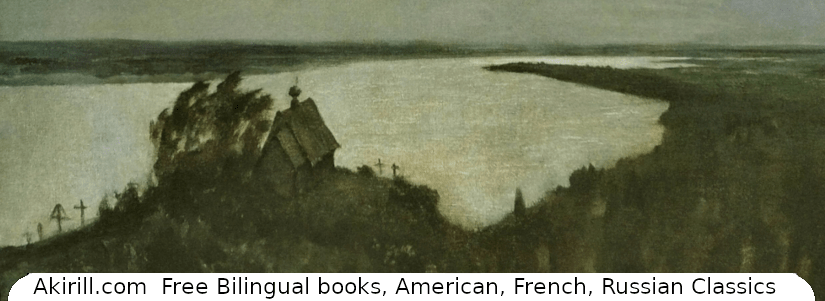
À l’été 1893, Levitan a composé le poignante pastel “Les Oubliés”, représentant “un cimetière abandonné situé sur une pente avec des croix branlantes”, un motif ultérieurement incorporé dans la peinture. En 1898, cette remarquable esquisse a été exposée à Saint-Pétersbourg et acquise par Pavel Tretyakov. De plus, parmi les matériaux préparatoires utilisés par l’artiste se trouve l’enchantante esquisse “Église en bois à Plyos aux derniers rayons du soleil”, datant de 1888, dont Levitan s’est inspiré pour représenter l’église dans le tableau “Au-dessus de la paix éternelle”.

Over Eternal Peace - large sketch, 1893
Over Eternal Peace – large sketch, 1893

Description

Fedorov-Davydov a remarqué la structure claire et l’asymétrie équilibrée dans l’image, apportant des informations précieuses sur les choix de l’artiste et l’harmonie visuelle générale de la pièce. L’interaction des principales parties et des divers détails, tels que le promontoire, l’île, l’eau et les nuages, met en valeur le travail minutieux et la compétence compositionnelle derrière l’œuvre, ce qui permet au spectateur d’apprécier encore plus sa complexité et sa beauté.

Le peintre a utilisé différentes techniques de peinture pour créer un sentiment d’espace et de puissance dans la composition. Lorsqu’il dépeignait des scènes lointaines, Levitan utilisait une simplification extrême des formes et des couleurs, ce qui était nouveau pour lui. Les techniques de peinture variaient tout au long de l’œuvre, mettant l’accent sur la lourdeur du ciel orageux et transmettant le mouvement des nuages. Différentes techniques ont également été utilisées pour dépeindre l’eau, la rive lointaine et la colline en premier plan. Malgré la variété des techniques, la peinture transmet toujours efficacement les impressions naturelles sur lesquelles elle est basée.

Le tableau “Au-dessus de la paix éternelle” dépeint richement une scène captivante qui captive l’imagination avec ses détails complexes et son imagerie évocatrice. Il plonge le spectateur dans un monde à la fois tranquille et troublant, l’attention méticuleuse de l’artiste donnant vie à chaque élément. La description du lac comme vivant une “inversion géante de l’espace aquatique” évoque un sentiment de stupeur, surtout lorsque l’immensité sans fin ressemble à une rivière étendue, invitant à la contemplation des forces de la nature en jeu.

L’artiste contemple le monde d’un point de vue élevé, observant un vaste panorama d’éléments naturels se déroulant devant son regard.

Over Eternal Peace - extract sky
Over Eternal Peace – extract sky

Au-dessus du lac, la représentation d’une vaste étendue de ciel avec des nuages tourbillonnants et se heurtant ajoute une couche captivante à la composition. L’image divisée du ciel, avec un royaume nuageux plus sombre en bas et une étendue plus légère et plus éthérée en haut, crée un contraste fascinant, enrichissant davantage le récit visuel. Les éléments entourant la falaise dégagent une puissance. On a l’impression que le cimetière disparaîtra à tout moment, que l’église se dispersera à travers le monde… La destruction semble imminente.

Over Eternal Peace - Extract Island
Over Eternal Peace – Extract Island

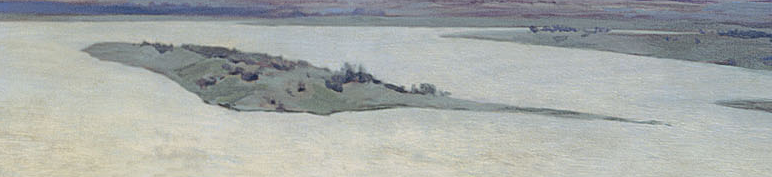
Au loin, une île déserte apparaît, semblant dériver loin de la falaise avec une vitesse remarquable. Il semble que l’île transporte avec elle les âmes des défunts, attirant les restes de l’esprit humain et les souvenirs de ceux qui sont partis. Cette vue sert de rappel émouvant de l’insignifiance, de la transience et du manque perçu de sens dans la vie humaine.

Over Eternal Peace - extract-church and- cemetery
Over Eternal Peace – extract-church and- cemetery

Au fur et à mesure que le regard du spectateur se promène vers l’arrière-plan, un promontoire se révèle, sur la rive surélevée duquel se dresse une vieille église.

Une tempête se profile à l’horizon – évidente dans le ciel de plomb menaçant et les puissantes rafales de vent. Près du temple, les arbres s’inclinent sous la force du vent de l’ouragan. Les teintes fugitives du coucher de soleil embrasent le ciel, mais la lumière est voilée par des nuages d’une densité inhabituellement vivante. Il semble que l’ouragan va ravager la fragile église, renverser les croix du cimetière et niveIer les tombes au sol.

D’une manière impressionnante, le petit dôme de l’église résiste pleinement à la force des éléments. Il pointe directement vers le haut, et sa couleur, se mêlant aux tons métalliques du ciel, transmet un sentiment de solidité et de résilience.

L’artiste, même dans cette œuvre, l’a imprégnée de nuances optimistes. Seule une foi inébranlable peut aider une personne à trouver la paix et la confiance dans ses aspirations et le dessein de sa vie. Cependant, ce message optimiste est subtilement tissé dans la peinture. Seuls les spectateurs les plus perspicaces peuvent percevoir dans ce détail subtil la vraie essence de cette œuvre emblématique.

Over Eternal Peace - Extract cemetery
Over Eternal Peace – Extract cemetery

La présence d’un sombre cimetière rural à gauche de l’église ajoute une touche poignante, avec les tombes négligées et les alentours délabrés évoquant un sentiment de mélancolie et le passage du temps. L’attention particulière portée aux détails dans la représentation de ces éléments est évidente, l’artiste accordant une attention particulière à la composition du cimetière et de l’église sur la colline, les imprégnant d’un profond sentiment de signification et d’histoire.

Le commentaire perspicace du critique d’art Alexei Fedorov-Davydov rehausse davantage la profondeur de la peinture, alors qu’il décrit avec éloquence le promontoire fragile avec l’église et le cimetière comme s’il s’agissait de l’avant d’un navire s’aventurant vers une distance inconnue.

Over Eternal Peace - extract church
Over Eternal Peace – extract church

Le symbolisme de la lumière dans la vitre de l’église en tant que témoin de la vie humaine, de l’indestructibilité et de la soumission silencieuse est particulièrement frappant et ajoute encore une autre couche de sens à la composition.


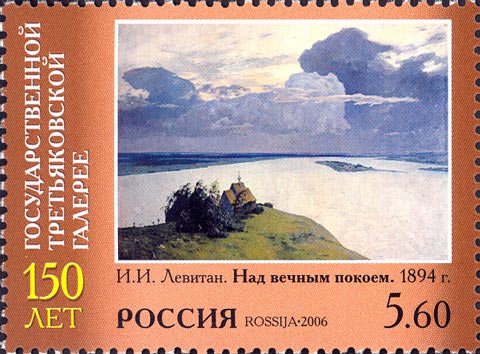
Over Above Eternal Peace on a 2006 Russian postage stamp
Over Eternal Peace on a 2006 Russian postage stamp

Nous mettons beaucoup d’efforts dans la qualité des articles et traductions, soutenez-nous avec un like et un abonnement ou sponsorisez-nous si vous les aimez. Nous sommes aussi sur Facebook et Twitter

Check out our Last Posts
Découvrez nos Derniers Posts


© 2024 Akirill.com – All Rights Reserved

Discover the painting “Over Eternal Peace” by Isaac Levitan

Bilingual booksLire en FrançaisContact us
American LiteratureFrench LiteratureRussian Literature

Over Eternal Peace” (Над вечным покоем) is a magnificent and probably the most famous painting by renowned Russian artist Isaac Levitan, originating from the year 1894 which depicts a “giant reversal of the lake’s water space”, the endless expanses of which resemble a wide-spread river. Above the lake is “a majestic expanse of sky with swirling clouds colliding with each other”. This is no ordinary lyrical landscape, for which Levitan is renowned, but rather a grand epic, where the past converges with the future, the sky looms over the earth, and time stretches towards eternity.

This masterpiece is housed in the esteemed State Tretyakov Gallery and boasts dimensions of 150 × 206 cm. First unveiled at the 22nd exhibition of the Association of Traveling Art Exhibitions in St. Petersburg, it captured the attention of art connoisseurs and was swiftly acquired by Pavel Tretyakov even before the exhibition officially commenced. Some art experts view this painting, in conjunction with “By the Pool” and “Vladimirka” from 1892, as part of a compelling trilogy by Levitan. Critics have lauded the piece as a genuinely captivating landscape portrayal, praising it as one of the artist’s most evocative and vibrant works.

Over eternal peace . 1894

History of the painting

There are different interesting stories about the painting and the church that inspired the artist. Sofia Kuvshinnikova’s memoirs suggest that the painting “Over Eternal Peace” was based on a church near Lake Udomlya, although the actual church was different from the one depicted.

Researchers propose that the artist used a sketch of the Peter and Paul Church in Plyos as a reference. This church burned down in 1903 and was replaced by the Resurrection Church from the village of Bilyukovo.

Another version suggests that the inspiration came from an old wooden church near Lake Ostrovno, as described in the memoirs of the artist Vitold Byalynitsky-Birulya. Some sources speculate that the “oval island” depicted could be the island of Arzhanik or Dvinovo on Lake Udomlya.

The book “Artists in the Udomelsky Territory” presents yet another version, suggesting that the painting was inspired by the village of Ostrovno and the Ushakov estate.

Art critic Alexey Fedorov-Davydov describes the canvas “Over Eternal Peace” as a portrayal of a motif from one lake applied to another similar one, with Lake Udomlya serving as the foundation of the composition.

Fedorov-Davydov emphasizes the level of synthesis of the real view into a pictorial landscape image as the true measure of composition in Levitan’s paintings.

The painting “Over Eternal Peace” blossomed during the summer of 1893 when Isaac Levitan resided in the Tver province. Alongside the artist Sofia Kuvshinnikova, he found inspiration at the Ushakovs’ Ostrovno estate near Lake Ostrovno, where they received a warm welcome and ideal conditions for their creative endeavors. They also savored moments at the Garusovo estate near Lake Udomlya, which later became the subject of Levitan’s masterpiece “At the Lake.”


On the lake. Oil on canvas, 109 × 163  cm , 1893
At the lake. Oil on canvas, 109 × 163 cm , 1893

Levitan sketched and diligently worked on the canvas in Moscow, culminating in the completion of the painting in early 1894, proudly signing it in the lower left corner as “And Levitan 94.” (И Левитанъ 94)

Sketches

The State Tretyakov Gallery proudly holds two original graphic sketches for the renowned painting “Over Eternal Peace.” These captivating drawings, created in 1893 under the title “Before the Storm,” were meticulously crafted with graphite pencil on a single sheet of paper.

Initial sketches-variants of the painting-  Over Eternal Peace, 1893
Initial sketches-variants of the painting- Over Eternal Peace, 1893

Levitan skillfully captures the anticipation in nature as a thunderstorm approaches. According to E. A. Byalynitskaya-Birulya, these drawings portray the picturesque landscape of Lake Ostrovno with the Trinity Church nestled along the shore. While working on the painting, Levitan also produced several evocative pictorial sketches, including “Cloudy Sky,” “Sky,” and “Lake.”


In the summer of 1893, Levitan composed the poignant pastel “Forgotten,” depicting “an abandoned cemetery located on a slope with rickety crosses,” a motif later incorporated into the painting. In 1898, this remarkable sketch was displayed in St. Petersburg and acquired by Pavel Tretyakov. Furthermore, among the preparatory materials utilized by the artist is the enchanting sketch “Wooden Church in Plyos at the last rays of the sun,” penned in 1888, which Levitan drew inspiration from to portray the church in the painting “Above Eternal Peace.”

Over Eternal Peace - large sketch, 1893
Over Eternal Peace – large sketch, 1893

Description

Fedorov-Davydov noticed the clear structure and the balanced asymmetry in the picture, giving valuable insights into the artist’s choices and the overall visual harmony of the piece. The interaction of the main parts and various details, like the cape, island, water, and clouds, highlights the careful craftsmanship and compositional skill behind the artwork, making the viewer appreciate its complexity and beauty even more.

The artist used different painting techniques to create a sense of space and power in the composition. When depicting distant scenes, Levitan used extreme simplification of shapes and colors, which was new for him. The painting techniques varied throughout the artwork, emphasizing the heaviness of the stormy sky and conveying the movement of the clouds. Different techniques were also used to depict water, the distant bank, and the foreground hill. Despite the variety of techniques, the painting still effectively conveys the natural impressions it’s based on.

The painting “Over Eternal Peace” richly portrays a captivating scene that captures the imagination with its intricate details and evocative imagery. It immerses the viewer in a world that is at once tranquil and haunting, with the artist’s meticulous attention to detail bringing each element to life. The description of the lake as experiencing a “giant reversal of the water space” conjures a sense of awe, particularly as the endless expanse resembles a wide-spread river, inviting contemplation of the forces of nature at play.

The artist ponders the world from a lofty perspective, observing a grand panorama of natural elements unfolding before their gaze.

Over  Eternal Peace - extract sky
Over Eternal Peace – extract sky

Above the lake, the depiction of a vast expanse of sky with swirling, colliding clouds adds a captivating layer to the composition. The divided image of the sky, with a darker, cloudy realm at the bottom and a lighter, more ethereal expanse at the top, creates a compelling contrast, further enriching the visual narrative. The elements surrounding the cliff emanate power. It feels as though the graveyard will vanish in the next moment, the church will scatter across the world… Destruction appears imminent.

Over  Eternal Peace - Extract Island
Over Eternal Peace – Extract Island

In the distance, a deserted island comes into view, seemingly drifting away from the cliff with remarkable speed. It appears as though the island carries with it the souls of the departed, drawing in the remnants of the human spirit and the memories of those who have passed on. This sight serves as a poignant reminder of the insignificance, transience, and perceived lack of meaning in human life.

Over  Eternal Peace - extract-church and- cemetery
Over Eternal Peace – extract-church and- cemetery

As the viewer’s gaze wanders to the background, a headland is revealed, on the elevated bank of which an old church stands.

A storm looms on the horizon – evident in the ominous, leaden sky and powerful gusts of wind. Near the temple, the trees lean under the force of the hurricane wind. The fading hues of the sunset are ablaze in the sky, yet the light is veiled by dense, unusually lifelike clouds. It appears as though the hurricane will lay waste to the fragile church, topple the crosses in the cemetery, and level the graves to the earth.

In an impressive manner, the small dome of the church withstands the full force of the elements. It points directly upward, and its color, blending with the metallic tones of the sky, conveys a sense of steadfastness and resilience.

The artist, even in this piece, infused it with optimistic undertones. Only unwavering faith can help an individual find peace and confidence in their aspirations and the purpose of their life. However, this hopeful message is subtly woven into the painting. Only the most discerning viewers can perceive in this subtle detail the true essence of this iconic work of art.

Over Eternal Peace - Extract cemetery
Over Eternal Peace – Extract cemetery

The presence of a somber rural cemetery to the left of the church adds a poignant touch, with the neglected graves and dilapidated surroundings evoking a sense of melancholy and the passage of time. The careful attention to detail in rendering these elements is evident, as the artist pays special attention to the composition of the cemetery and the church on the hill, infusing them with a profound sense of significance and history.

Art critic Alexei Fedorov-Davydov’s insightful commentary further enhances the depth of the painting, as he eloquently describes the fragile cape with the church and cemetery as if it were the bow of a ship venturing into an unknown distance.

Over Eternal Peace - extract church
Over Eternal Peace – extract church

The symbolism of the light in the church window as a witness to human life, indestructibility, and quiet submission is particularly striking and adds yet another layer of meaning to the composition.


Over Above Eternal Peace on a 2006 Russian postage stamp
Over Eternal Peace on a 2006 Russian postage stamp

We put a lot of effort into the quality of the articles and translations, support us with a like and a subscription or sponsor us if you like them. We are also on Facebook and Twitter

Check out our Last Posts
Découvrez nos Derniers Posts


© 2024 Akirill.com – All Rights Reserved
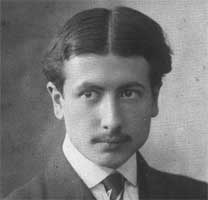
Découvrez le tableau « Conseil militaire à Fili » d’Alexeï Danilovitch Kivshenko

Livres bilinguesRead in EnglishNous contacter
Littérature américaineLittérature françaiseLittérature russe

Chers lecteurs et abonnés, pour compléter la traduction du poème « Le commandant » d’Alexandre Pouchkine, cette semaine j’ai fait une présentation du tableau « Conseil militaire à Fili » d’Alexeï Danilovitch Kivshenko qui vous présentera les personnes présentes dans le tableau et leurs décisions . J’espère que vous apprécierez cet article.

Pour que l’article ne soit pas trop long, j’ai diminué la tailles des images et inclus un lien si vous voulez lire l’article complet ou la partie concernant l’une des personnes présente . Comme toujours l’article est accessible à tous sur le site (Lire l’article complet)


Le conseil militaire de Fili, représenté dans le roman “La Guerre et Paix” de Léon Tolstoï, revêt une grande importance dans le monde de l’art et de l’histoire. Il a servi d’inspiration pour un tableau célèbre qui est devenu un incontournable des manuels scolaires, des publications et des expositions consacrées à la guerre patriotique de 1812. Le tableau, largement diffusé dans toute la Russie sous la forme de milliers de reproductions, a catapulté Alexeï Danilovitch au rang des artistes historiques, non seulement en Russie mais aussi à l’étranger. L’impact durable de cette œuvre reflète sa reconnaissance en tant que représentation vitale d’un événement historique important.

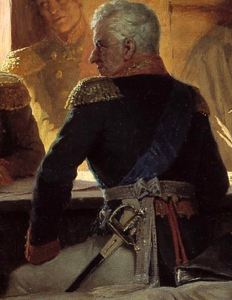
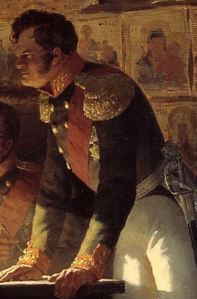
Fidèle à la description de l’auteur, les personnages sont réunis autour d’une table, avec la petite-fille du propriétaire de la cabane perchée sur le poêle. Les personnages notables représentés dans le tableau incluent MI Kutuzov, PS Kaisarov, PP Konovnitsyn, NN Raevsky, AI Osterman-Tolstoy, MB Barclay de Tolly, FP Uvarov, DS Dokhturov, AP Ermolov, K. Tolya et LL Bennigsen. Avec son souci du détail et sa fidélité aux paroles de Tolstoï, Kivshenko donne vie à ce moment historique sur toile. L’auteur a répété le tableau pour la galerie de PM Tretiakov en 1882. 

Military Council in Fili. Painting (Barclay de Tolly sits under an icon) by Alexey Kivshenko

Le Conseil de Fili a joué un rôle essentiel dans l’élaboration des stratégies et des processus décisionnels pendant la guerre patriotique de 1812. Il a été convoqué le 1er (13) septembre 1812 par le commandant en chef MI Kutuzov dans le village de Fili, situé à l’ouest de Moscou pour décider s’il fallait tenter de mener une autre bataille près de Moscou après la bataille de Borodino ou quitter la ville sans combattre.

A la veille du concile, les formations de l’armée russe se positionnent stratégiquement à l’ouest de Moscou, se préparant à une bataille décisive contre les troupes de Napoléon. C’est le général Léontius Bennigsen qui choisit cette position particulière pour l’armée russe.

Malgré une forte fièvre pendant plusieurs jours, Barclay de Tolly, un chef militaire très respecté, a personnellement inspecté le champ de bataille à cheval. Après une évaluation approfondie, il est parvenu à la conclusion que la position choisie serait désastreuse pour les formations de l’armée russe.

Suivant ses traces, AP Ermolov et KF Tol ont également mené leurs propres évaluations en passant par l’endroit où étaient positionnées les troupes russes. Leurs conclusions font écho aux préoccupations de Barclay de Tolly, confirmant l’idée selon laquelle la position choisie était défavorable à l’armée russe.

Avec ces rapports en main, Koutouzov, le commandant en chef, se trouva confronté à une décision difficile. Il a dû peser les options suivantes : soit poursuivre la retraite et potentiellement rendre Moscou, soit s’engager dans un combat direct dans les rues de la ville. Ce moment critique exigeait un examen attentif des objectifs stratégiques globaux et de la meilleure ligne d’action pour protéger leur patrie.

Qui est dans le tableau et que se passe-t-il pendant la rencontre ?

La petite-fille du propriétaire de la cabane


La petite-fille du propriétaire de la cabane est perchée sur le poêle


Paisiy Sergeevich Kaisarov, colonel, adjudant de Kutuzov


Lire le text: Paisiy Sergeevich Kaisarov, colonel, adjudant de Kutuzov


Mikhaïl Illarionovitch Koutouzov, maréchal général, commandant en chef de l’armée russe


Lire le text: Mikhaïl Illarionovitch Koutouzov, maréchal général, commandant en chef de l’armée russe


Piotr Petrovich Konovnitsyn, lieutenant-général, commandant du 3e corps d’infanterie


Lire le text: Piotr Petrovich Konovnitsyn, lieutenant-général, commandant du 3e corps d’infanterie


Nikolai Nikolaevich Raevsky, lieutenant général, commandant du 7e corps d’infanterie


Lire le text: Nikolai Nikolaevich Raevsky, lieutenant général, commandant du 7e corps d’infanterie


Alexandre Ivanovitch Osterman-Tolstoï, lieutenant général, commandant du 4e corps d’infanterie


Lire le text: Alexandre Ivanovitch Osterman-Tolstoï, lieutenant général, commandant du 4e corps d’infanterie


Léonty Leontievich Bennigsen, général de cavalerie, chef d’état-major de l’armée


Lire le text: Léonty Leontievich Bennigsen, général de cavalerie, chef d’état-major de l’armée


Mikhaïl Bogdanovitch Barclay de Tolly, commandant de la 1re armée occidentale, ministre de la Guerre


Lire le text: Mikhaïl Bogdanovitch Barclay de Tolly, commandant de la 1re armée occidentale, ministre de la Guerre


Fedor Petrovitch Uvarov, adjudant général, commandant du corps de cavalerie de réserve


Lire le text: Fedor Petrovitch Uvarov, adjudant général, commandant du corps de cavalerie de réserve


Karl Fedorovich Tol, quartier-maître général de la 1re armée


Lire le text: Karl Fedorovich Tol, quartier-maître général de la 1re armée


Dmitry Sergeevich Dokhturov, général d’infanterie, commandant du 6e corps d’infanterie


Lire le text: Dmitry Sergeevich Dokhturov, général d’infanterie, commandant du 6e corps d’infanterie


Alexey Petrovich Ermolov, général, chef d’état-major de la 1ère armée


Lire le text: Alexey Petrovich Ermolov, général, chef d’état-major de la 1ère armée


Quelle a été la décision prise au conseil ?

Au cours du concile, il est devenu évident que Koutouzov avait déjà pris la décision de se retirer. Cependant, reconnaissant l’importance de la contribution de ses généraux, il écouta patiemment leurs opinions. Quand ce fut son tour de parler, Koutouzov commença son discours par cette déclaration résolue : « La Russie n’est pas perdue avec la perte de Moscou ». Faisant preuve d’une détermination sans faille, le commandant en chef conclut son discours en donnant l’ordre décisif : « J’ordonne par la présente la retraite ». Ce moment décisif a mis en valeur le sens stratégique et le leadership de Koutouzov, qui a donné la priorité à la préservation des forces russes face à l’adversité.


J’espère que vous avez apprécié ce tableau et son explication autant que moi


Nous mettons beaucoup d’efforts dans la qualité des articles et traductions, soutenez-nous avec un like et un abonnement ou sponsorisez-nous si vous les aimez. Nous sommes aussi sur Facebook et Twitter

Découvrez nos Derniers Posts


© 2023 Akirill.com – All Rights Reserved

Discover the painting “Military Council in Fili” by Alexey Danilovich Kivshenko

Bilingual booksLire en FrançaisContact us
American LiteratureFrench LiteratureRussian Literature

Dear readers and subscribers, this week to complete the translation of the poem “Commander ” by Alexander Pushkin, I made a presentation of the painting “Military Council in Fili” by Alexey Danilovich Kivshenko which will introduce you to the people present in the painting and their decisions. I hope you’ll enjoy this article.

To limit the size of the article, I have reduced the size of the pictures and included a link if you want to read the full article or the part about one of the people present. As always the article is freely accessible to everyone on the site (Read the full article)


The military council in Fili, depicted in L.N. Tolstoy’s novel “War and Peace,” holds great significance in the world of art and history. It served as the inspiration for a famous painting that has become a staple in textbooks, publications, and exhibitions dedicated to the Patriotic War of 1812. The painting, widely distributed throughout Russia in thousands of reproductions, catapulted Alexei Kivshenko to fame among historical artists, not only in Russia but also abroad. The lasting impact of this artwork reflects its recognition as a vital representation of an important historical event.
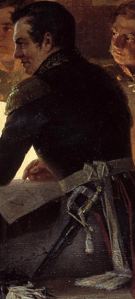
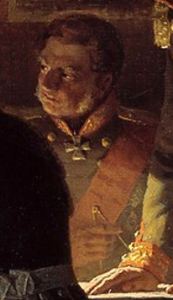
True to the author’s description, the characters are gathered around a table, with the granddaughter of the hut’s owner perched on the stove. Notable figures portrayed in the painting include M. I. Kutuzov, P. S. Kaisarov, P. P. Konovnitsyn, N. N. Raevsky, A. I. Osterman-Tolstoy, M. B. Barclay de Tolly, F. P. Uvarov, D. S. Dokhturov, A. P. Ermolov, K. Tolya, and L. L. Bennigsen. With his keen attention to detail and faithfulness to Tolstoy’s words, Kivshenko breathes life into this historical moment on canvas. The author repeated the painting for the gallery of P. M. Tretyakov in 1882. 

Military Council in Fili. Painting (Barclay de Tolly sits under an icon) by Alexey Kivshenko

The Council in Fili played a vital role in shaping the strategies and decision-making processes during the Patriotic War of 1812. It was convened on September 1 (13), 1812, by Commander-in-Chief M.I. Kutuzov in the village of Fili, located west of Moscow to decide whether to try fighting another battle near Moscow after the Battle of Borodino or to leave the city without a fight.

On the eve of the council, the Russian army formations strategically positioned themselves to the west of Moscow, preparing for a decisive battle against Napoleon’s troops. It was General Leontius Bennigsen who chose this particular position for the Russian army.

Despite suffering from a severe fever for several days, Barclay de Tolly, a highly respected military leader, personally inspected the battlefield on horseback. After thorough evaluation, he reached the conclusion that the chosen position would be disastrous for the Russian army formations.

Following in his footsteps, A.P. Ermolov and K.F. Tol also conducted their own assessments by driving through the location where the Russian troops were positioned. Their findings echoed Barclay de Tolly’s concerns, further supporting the notion that the chosen position was unfavorable for the Russian army.

With these reports in hand, Kutuzov, the overall commander, found himself confronted with a difficult decision. He had to weigh the options of either continuing the retreat and potentially surrendering Moscow or engaging in direct combat on the city streets. This critical moment demanded careful consideration of the overall strategic objectives and the best course of action to protect their homeland.

Who is in the painting and what is happening during the meeting?

The granddaughter of the hut’s owner


The granddaughter of the hut’s owner who was perched on the stove


Paisiy Sergeevich Kaisarov, colonel, adjutant of Kutuzov


Read the text: Paisiy Sergeevich Kaisarov, colonel, adjutant of Kutuzov


Mikhail Illarionovich Kutuzov, Field Marshal General, Commander-in-Chief of the Russian Army


Read the text:Mikhail Illarionovich Kutuzov, Field Marshal General, Commander-in-Chief of the Russian Army


Pyotr Petrovich Konovnitsyn, Lieutenant General, Commander of the 3rd Infantry Corps


Read the text: Pyotr Petrovich Konovnitsyn, Lieutenant General, Commander of the 3rd Infantry Corps


Nikolai Nikolaevich Raevsky, lieutenant general, commander of the 7th Infantry Corps


Read the text: Nikolai Nikolaevich Raevsky, lieutenant general, commander of the 7th Infantry Corps


Alexander Ivanovich Osterman-Tolstoy, lieutenant general, commander of the 4th Infantry Corps


Read the text: Alexander Ivanovich Osterman-Tolstoy, lieutenant general, commander of the 4th Infantry Corps


Leonty Leontievich Bennigsen, general of the cavalry, chief of the army headquarters


Read the text: Leonty Leontievich Bennigsen, general of the cavalry, chief of the army headquarters


Mikhail Bogdanovich Barclay de Tolly, commander of the 1st Western Army, Minister of War


Read the text: Mikhail Bogdanovich Barclay de Tolly, commander of the 1st Western Army, Minister of War


Fedor Petrovich Uvarov, adjutant general, commander of the reserve cavalry corps


Read the text: Fedor Petrovich Uvarov, adjutant general, commander of the reserve cavalry corps


Karl Fedorovich Tol, Quartermaster General of the 1st Army


Read the text: Karl Fedorovich Tol, Quartermaster General of the 1st Army


Dmitry Sergeevich Dokhturov, infantry general, commander of the 6th Infantry Corps


Read the text: Dmitry Sergeevich Dokhturov, infantry general, commander of the 6th Infantry Corps


Alexey Petrovich Ermolov, general, chief of staff of the 1st Army


Read the text: Alexey Petrovich Ermolov, general, chief of staff of the 1st Army


What was the decision taken at the council?

During the council, it became evident that Kutuzov had already made the decision to retreat. However, recognizing the importance of the input from his generals, he patiently listened to their opinions. When it was his turn to speak, Kutuzov began his address with the resolute declaration: “Russia is not lost with the loss of Moscow.” Demonstrating his unwavering resolve, the commander-in-chief concluded his speech by issuing the decisive order: “I hereby command a retreat.” This defining moment showcased Kutuzov’s strategic acumen and leadership, as he prioritized the preservation of the Russian forces in the face of adversity.


I hope you enjoyed this painting and its explanation as much as I did


We put a lot of effort into the quality of the articles and translations, support us with a like and a subscription or sponsor us if you like them. We are also on Facebook and Twitter

Check out our Last Posts


© 2023 Akirill.com – All Rights Reserved