On this site we hope to help you learn, and to remove the difficulties caused by the difference of culture and language. Sur ce site nous espérons vous aider à apprendre, et à enlever la barrière causée par les différents languages et cultures.
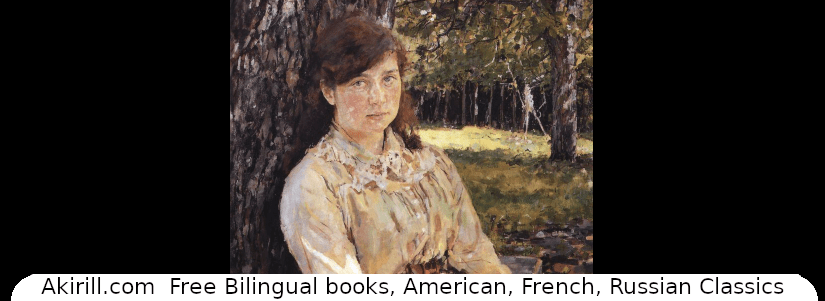
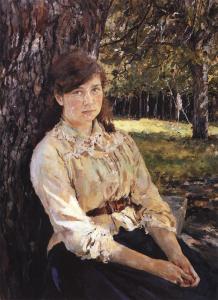
Painting “Girl in the Sunlight” (Portrait of M. Simonovich) by Valentin Serov
“Girl in the Sunlight” (Portrait of M. Simonovich) by Valentin Serov – 1888 – Style: Impressionism – Genre: Portrait / Девушка, освещенная солнцем (Портрет М.Я.Симонович)
Poem “Wish for fame” by Alexander Pushkin English and Russian side by side
Желание славы
Wish for fame
Translated by Akirill.com
Когда, любовию и негой упоенный,
When, intoxicated with love and bliss,
Безмолвно пред тобой коленопреклоненный,
Silently kneeling in front of you,
Я на тебя глядел и думал: ты моя, —
I looked at you and thought: you are mine, –
Ты знаешь, милая, желал ли славы я;
Do you know, dear, if I wanted fame;
Ты знаешь: удален от ветреного света,
You know: removed from the windy light,
Скучая суетным прозванием поэта,
Missing the vain nickname of the poet,
Устав от долгих бурь, я вовсе не внимал
Tired of long storms, I did not pay attention at all
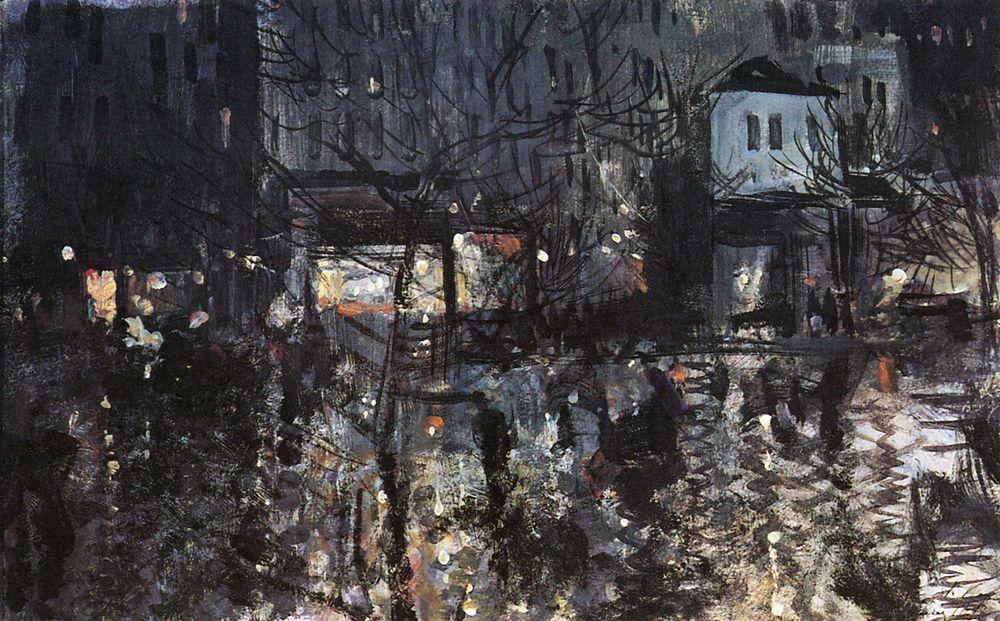
Cette semaine, j’ai décidé de poster les tableaux de Paris de Konstantin Korovine, car j’ai trouvé intéressant de voir ma ville natale à travers l’œil d’un peintre russe. Les détails de chaque tableau sont affichés sous la galerie avec le numéro de l’image correspondant. Si vous préférez regarder le tableau en taille réelle, il vous suffit de cliquer sur l’image. Les détails sont en français, anglais et russe.
En quelques mots, qui était Konstantin Korovine ?
Konstantin Korovin 1891 portrait by Valentin Serov
Konstantin Korovine a été le premier peintre russe impressionniste, décorateur de théâtre et écrivain.
Konstantin Alekseevich Korovine est né le 23 novembre (5 décembre) 1861 à Moscou, dans l’Empire Russe. Alors qu’il étudiait à l’Académie des Beaux-Arts de Saint-Pétersbourg, il a été initié à l’art impressionniste par Vasily Polenov. Son premier travail “Portrait d’une Chorus Girl” a été qualifié de premier signe de l’impressionnisme Russe.
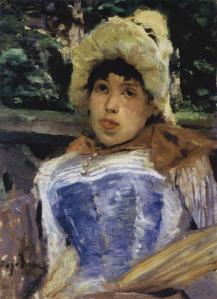
Portrait d’une choriste par Konstantin Korovine-1883 – Portrait, huile sur toile – Galerie nationale Tretiakov
Après avoir rencontré Savva Mamontiv en 1884, il est devenu décorateur de théâtre et a conçu, à titre d’exemple, la représentation à domicile de “La Jeune Fille des Neiges” d’après la pièce d’Alexander Ostrovsky.
En 1892, Konstantin est partit pour la France, où il a étudié l’art moderne français pendant environ un an, puis il est partit en voyage dans le nord de la Russie. Il était fasciné par la région polaire mais Paris avait aussi une place particulière dans sa vie, et l’artiste a créé de nombreux paysages de Paris, la capitale française. Konstantin Alekseevitch Korovine a eu un grand succès en France où il est devenu “Chevalier de la Légion d’honneur” et a reçu plusieurs médailles d’or et d’argent pour ses œuvres.
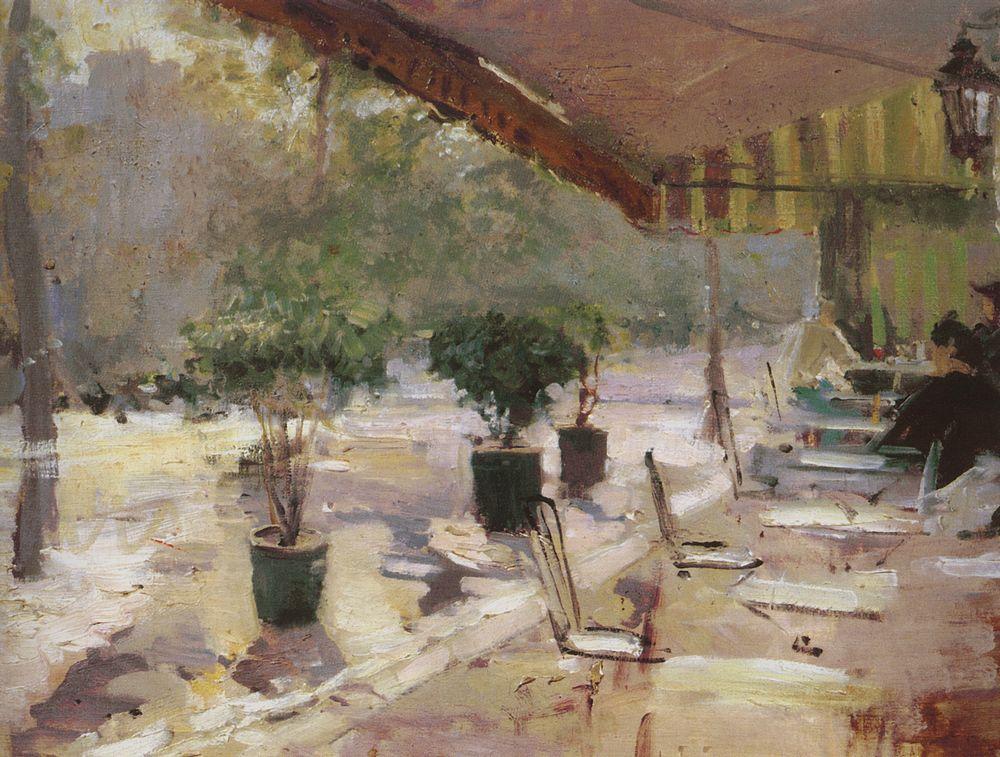
1 Paris cafe by Konstantin Korovin – c.18902 Paris cafe by Konstantin Korovin – c.18903 Paris cafe fragment by Konstantin Korovin -18954 After the rain. Paris by Konstantin Korovin -18975 Paris after Rain by Konstantin Korovin – 19006 Street at Night, Paris by Konstantin Korovin – 1902
This week I decided to post the paintings of Paris by Konstantin Korovin, as I found interesting to see my native city from the eye of a Russian painter. The details of each painting are posted under the gallery with the picture corresponding number. If you prefer to watch the painting in full size, just click on the picture. The details are in English, French and Russian.
In a few words, who was Konstantin Korovin?
Konstantin Korovin 1891 portrait by Valentin Serov
Konstantin Korovin was the first impressionist Russian painter, a a theatrical decorator, as well as a writer.
Konstantin Alekseevich Korovin was born on November 23 ( December 5), 1861, in Moscow, Russian Empire. When he was studying in the Academy of Art in St Petersburg, he was introduced to the art of the Impressionist by Vasily Polenov. His first work “Portrait of a Chorus Girl” was called the first sign of Russian impressionism.
Portrait of a Chorus Girl by Konstantin Korovin-1883 – Portrait, oil on canvas – State Tretyakov Gallery
After meeting Savva Mamontiv in 1884, he became a theatrical decorator and designed as an example, the home performance of “The Snow Maiden” based on the play by Alexander Ostrovsky.
In 1892, Konstantin left for France, where he studied modern French art for about a year, then he went for a trip to the North of Russia. He was fascinated by the polar region but Paris had also a special place in his life, and the artist created many landscapes of Paris, the French capital. Konstantin Alekseevich Korovin had great success in France where, he became “A Chevalier of the Legion of Honor” and received several gold and silver medals for his works.
1 Paris cafe by Konstantin Korovin – c.18902 Paris cafe by Konstantin Korovin – c.18903 Paris cafe fragment by Konstantin Korovin -18954 After the rain. Paris by Konstantin Korovin -18975 Paris after Rain by Konstantin Korovin – 19006 Street at Night, Paris by Konstantin Korovin – 1902
Как пуст, и вял, и ничтожен почти всякий прожитой день! Как мало следов оставляет он за собою! Как бессмысленно глупо пробежали эти часы за часами!
How empty, and insipid, and insignificant is almost every day which we have lived through! How few traces it leaves behind it! In what a thoughtlessly-stupid manner have those hours flown past, one after another!
И между тем человеку хочется существовать; он дорожит жизнью, он надеется на нее, на себя, на будущее… О, каких благ он ждет от будущего!
And, nevertheless, man desires to exist; he prizes life, he hopes in it, in himself, in the future…. Oh, what blessings he expects from the future!
Как пуст, и вял, и ничтожен почти всякий прожитой день! Как мало следов оставляет он за собою! Как бессмысленно глупо пробежали эти часы за часами!
Oh ! comme chaque jour qui passe est vide, morne et fastidieux ! Comme il laisse peu de traces ! Et que la course des heures est stupide !
И между тем человеку хочется существовать; он дорожит жизнью, он надеется на нее, на себя, на будущее… О, каких благ он ждет от будущего!
Pourtant, l’homme est avide de vivre ; il y tient ; il a foi en lui-même, dans son existence, dans son avenir… Ô, combien d’espoirs il fonde sur demain !
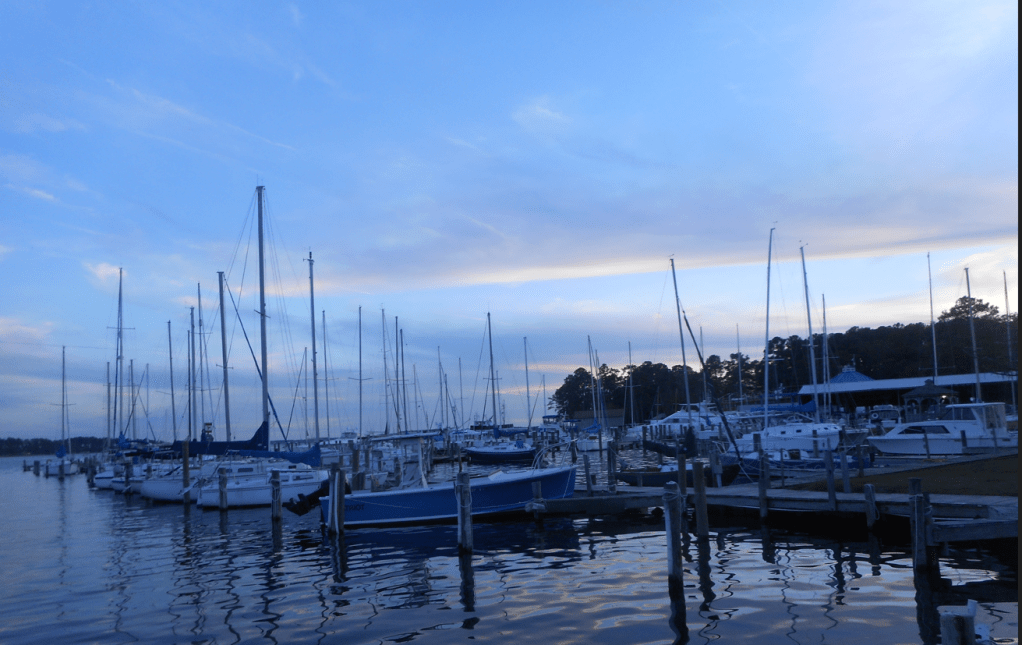
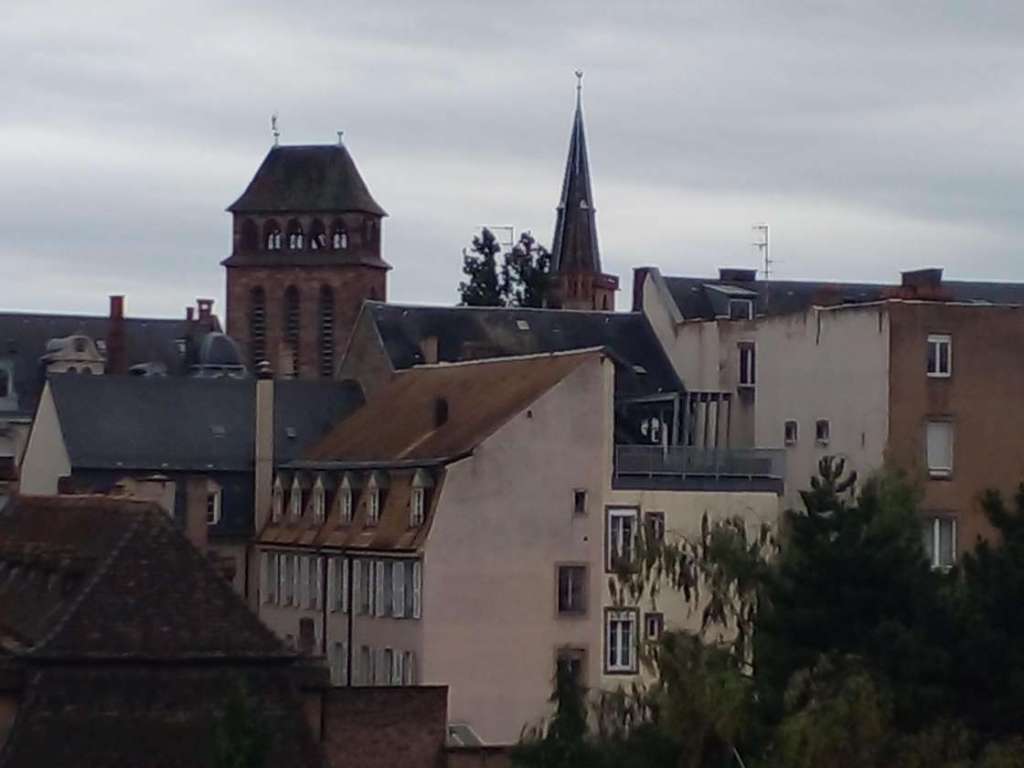
I want to wish you all a Happy Fourth of July, and a nice celebration with friends and family. The poem I propose is “An Ode for theFourth of July, 1876” by James Russell Lowell. The photos are memories… and a few view of Strasbourg. Charisma is a Dickerson 41 on which I lived many years. Hope you enjoy
Comet on top of Charisma
An Ode for theFourth of July, 1876
I
1.
Entranced I saw a vision in the cloud That loitered dreaming in yon sunset sky, Full of fair shapes, half creatures of the eye, Half chance-evoked by the wind’s fantasy In golden mist, an ever-shifting crowd: There, ‘mid unreal forms that came and went In air-spun robes, of evanescent dye, A woman’s semblance shone preeminent; Not armed like Pallas, not like Hera proud, But, as on household diligence intent, Beside her visionary wheel she bent Like Aretë or Bertha, nor than they Less queenly in her port; about her knee Glad children clustered confident in play: Placid her pose, the calm of energy; And over her broad brow in many a round (That loosened would have gilt her garment’s hem), Succinct, as toil prescribes, the hair was wound In lustrous coils, a natural diadem. The cloud changed shape, obsequious to the whim Of some transmuting influence felt in me, And, looking now, a wolf I seemed to see Limned in that vapor, gaunt and hunger-bold, Threatening her charge; resolve in every limb, Erect she flamed in mail of sun-wove gold, Penthesilea’s self for battle dight; One arm uplifted braced a flickering spear, And one her adamantine shield made light; Her face, helm-shadowed, grew a thing to fear, And her fierce eyes, by danger challenged, took Her trident-sceptred mother’s dauntless look. ‘I know thee now, O goddess-born!’ I cried, And turned with loftier brow and firmer stride; For in that spectral cloud-work I had seen Her image, bodied forth by love and pride, The fearless, the benign, the mother-eyed, The fairer world’s toil-consecrated queen.
A visitor on the boom of Charisma at Crown Marina
2.
What shape by exile dreamed elates the mind Like hers whose hand, a fortress of the poor, No blood in vengeance spilt, though lawful, stains? Who never turned a suppliant from her door? Whose conquests are the gains of all mankind? To-day her thanks shall fly on every wind, Unstinted, unrebuked, from shore to shore, One love, one hope, and not a doubt behind! Cannon to cannon shall repeat her praise, Banner to banner flap it forth in flame; Her children shall rise up to bless her name, And wish her harmless length of days, The mighty mother of a mighty brood, Blessed in all tongues and dear to every blood, The beautiful, the strong, and, best of all, the good.
An evening at Ruark Marina
3.
Seven years long was the bow Of battle bent, and the heightening Storm-heaps convulsed with the throe Of their uncontainable lightning; Seven years long heard the sea Crash of navies and wave-borne thunder; Then drifted the cloud-rack a-lee, And new stars were seen, a world’s wonder; Each by her sisters made bright, All binding all to their stations, Cluster of manifold light Startling the old constellations: Men looked up and grew pale: Was it a comet or star, Omen of blessing or bale. Hung o’er the ocean afar?
Strasbourg
4.
Stormy the day of her birth: Was she not born of the strong. She, the last ripeness of earth, Beautiful, prophesied long? Stormy the days of her prime: Hers are the pulses that beat Higher for perils sublime, Making them fawn at her feet. Was she not born of the strong? Was she not born of the wise? Daring and counsel belong Of right to her confident eyes: Human and motherly they, Careless of station or race: Hearken! her children to-day Shout for the joy of her face.
On July 3, 2023 in Strasbourg, next to the German border
II
1.
No praises of the past are hers, No fanes by hallowing time caressed, No broken arch that ministers To Time’s sad instinct in the breast; She has not gathered from the years Grandeur of tragedies and tears, Nor from long leisure the unrest That finds repose in forms of classic grace: These may delight the coming race Who haply shall not count it to our crime That we who fain would sing are here before our time. She also hath her monuments; Not such as stand decrepitly resigned To ruin-mark the path of dead events That left no seed of better days behind, The tourist’s pensioners that show their scars And maunder of forgotten wars; She builds not on the ground, but in the mind, Her open-hearted palaces For larger-thoughted men with heaven and earth at ease: Her march the plump mow marks, the sleepless wheel, The golden sheaf, the self-swayed commonweal; The happy homesteads hid in orchard trees Whose sacrificial smokes through peaceful air Rise lost in heaven, the household’s silent prayer; What architect hath bettered these? With softened eye the westward traveller sees A thousand miles of neighbors side by side, Holding by toil-won titles fresh from God The lands no serf or seigneur ever trod, With manhood latent in the very sod, Where the long billow of the wheatfield’s tide Flows to the sky across the prairie wide, A sweeter vision than the castled Rhine, Kindly with thoughts of Ruth and Bible-days benign.
Brève analyse du poème “Tempête” d’Alexandre Pouchkine
Le poème “Tempête” a été créé à Mikhailovskoye, mais sur la base du style romantique de l’œuvre, il est possible que l’auteur en ait fait l’esquisse pendant son exil dans le sud. … Continuer la lecture
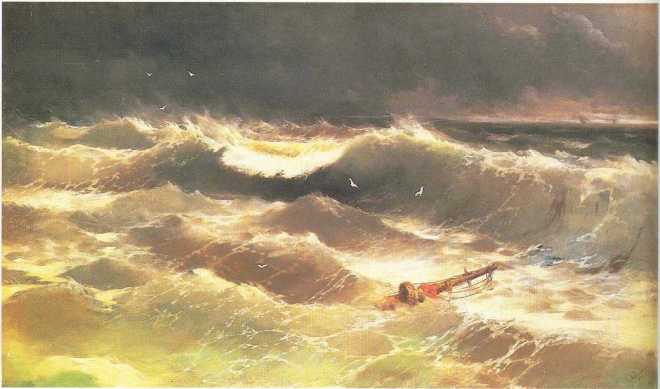
Peinture “Tempête” d’Ivan Aïvazovski
Tempête d’Ivan Aïvazovski – 1886 – Style : Romantisme, Genre : Marina, Média : Huile sur toile. Dimensions : 84 X 142 cm / Буря Ивана Айвазовского – 1886
Ivan Aivazovsky (Иван Айвазовский), l’auteur de plus de 6000 toiles, est un peintre de marine et de bataille russe de renommée mondiale ainsi qu’un collectionneur et … Continuer la lecture
Poème “Tempête” d’Alexandre Pouchkine français et russe côte à côte
Short analysis of the poem “Tempest” by Alexander Pushkin
The poem “Tempest” was created in Mikhailovskoye, but based on the romantic style of the work, it is possible that the author made the sketches for it during his southern exile. … Continue reading
“Cerisier” d’Alexandre Pouchkine est une histoire sentimentale sur deux amants écrite quand Pouchkine avait environ 16 ans vers 1815.
Le poème “Cerisier” commence par une charmante description du paysage. Son intrigue est très simple : « Les jeunes bergères se précipitent vers les bergers. Apparaît alors le personnage principal, une séduisante bergère à la tenue cachant tous ses charmes. Mais l’héroïne, tentée par des cerises mûres, grimpe à un arbre. La branche se casse et elle tombe avec une poignée de cerises. Dans sa chute, sa robe s’est relevée. Un jeune berger est venu l’aider mais a « pressé sa poitrine passionnée » et il semble qu’ils aient perdu la tête « Tout le sang a bouilli Dans deux cœurs de feu L’amour s’est envolé » mais Pouchkine a ajouté que la couronne matrimoniale attendait les amants.
Вишня — Александр Пушкин
Cerisier – Alexandre Pouchkine
Traduit par Akirill.com
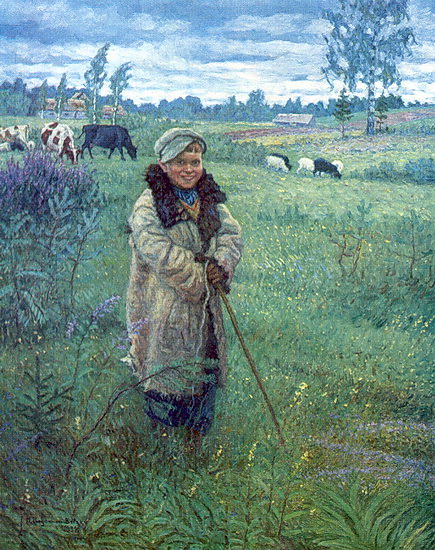
Berger Proschka de Nikolai Bogdanov Belsky
Berger Proschka de Nikolai Bogdanov Belsky / Пастушок Прошка – Николай Богданов Бельский
Nicholai Petrovitch Bogdanov-Belksky qui a soulevé des sujets sociaux aigus dans ses travaux, était un artiste itinérant russe né dans l’Empire russe le 8 (20) décembre 1868. Nicholai a peint principalement des peintures de genre, en particulier le thème paysan, des portraits et des études impressionnistes de paysage. Il tomba gravement malade en 1944 et mourut le 19 février 1945 à Berlin, en Allemagne.
Румяной зарею
Aube vermeille
Покрылся восток,
Recouvre l’est
В селе за рекою
Dans un village de l’autre côté de la rivière
Потух огонек.
Les lumières se sont éteintes.
Росой окропились
Saupoudré de rosée
Цветы на полях,
Les fleurs dans les champs
Стада пробудились
Les troupeaux se sont réveillés
На мягких лугах.
Dans les douces prairies.
Туманы седые
Les brumes grises
Плывут к облакам,
Flottent vers les nuages
Пастушки младые
Les jeunes bergères
Спешат к пастухам.
Se précipitent vers les bergers.
С журчаньем стремится Источник меж гор,
La source coule avec un murmure Entre les montagnes
Вдали золотится
Doré au loin
Во тьме синий бор.
Dans la forêt bleue foncée.
Пастушка младая
La jeune bergère
На рынок спешит
Se précipite au marché
И вдаль, припевая,
Et au loin, en chantant,
Прилежно глядит.
Regarde avec diligence.
Румянец играет
La rougeur joue
На полных щеках,
Sur ses joues potelées
Невинность блистает
L’innocence brille
На робких глазах.
Dans ses yeux timides.
Искусной рукою
Une main habile
Коса убрана,
A fait sa tresse
И ножка собою
Et la jambe elle-même
Прельщать создана.
Créée la séduction .
Корсетом прикрыта
Le Corset couvre
Вся прелесть грудей,
Toute la beauté des seins
Под фартуком скрыта
Caché sous un tablier
Приманка людей.
Appâtant les gens.
Пастушка приходит
La bergère vient
В вишенник густой
Dans un jardin rempli de cerisiers
И много находит
Elle trouve beaucoup
Плодов пред собой.
De fruits devant elle.
Хоть вид их прекрасен
Même s’ils ont fière allure
Красотку манит,
La beauté invite,
Но путь к ним опасен —
Mais le chemin vers eux est dangereux –
Бедняжку страшит.
La pauvre petite a peur.
Подумав, решилась
Après avoir réfléchi, elle a décidé
Сих вишен поесть,
De manger ces cerises
За ветвь ухватилась
Elle a attrapé une branche
На дерево взлезть.
Est montée dans l’arbre.
Уже достигает
atteignant déjà
Награды своей
Ses récompenses
И робко ступает
Et fait des pas timides
Ногой меж ветвей.
Entre les branches.
Бери плод рукою —
Prends le fruit avec ta main –
И вишня твоя,
Et la cerise sera à toi
Но, ах! что с тобою,
Mais, ah ! Qu’est-ce qui ne va pas
Пастушка моя?
Ma bergère ?
Вдали усмотрела, —
Elle a vu au loin –
Спешит пастушок;
Le berger qui se hâte ;
Нога ослабела,
Sa jambe s’est affaiblie,
Скользит башмачок.
Sa chaussure a glissé.
И ветвь затрещала —
Et la branche a craqué –
Беда, смерть грозит!
Danger, mort la menace !
Пастушка упала,
La bergère est tombée
Но, ах, какой вид!
Mais, oh, quelle vue !
Сучок преломленный
La branche réfractée
За платье задел;
a touché la robe ;
Пастух удивленный
Le berger surpris
Всю прелесть узрел.
A vu toute la beauté.
Среди двух прелестных
Entre deux adorables
Белей снегу ног,
Pieds plus blancs que la neige,
На сгибах чудесных
Sur les plis du merveilleux
Пастух то зреть мог,
Le berger pouvait voir
Что скрыто до время
Ce qui est caché jusqu’au moment
У всех милых дам,
Qu’ont toutes les belles dames
За что из эдема
Pour quoi hors d’Eden
Был выгнан Адам.
Adam a été expulsé.
Пастушку несчастну
La malheureuse bergère
С сучка тихо снял
Il l’a tranquillement retiré de la branche
И грудь свою страстну
Et sa poitrine est passionnément
К красотке прижал.
Pressée à la beauté.
Вся кровь закипела
Tout le sang a bouilli
В двух пылких сердцах,
Dans deux cœurs de feu
Любовь прилетела
L’amour s’est envolé
На быстрых крылах.
Sur des ailes rapides.
Утеха страданий
La joie de souffrir
Двух юных сердец,
De deux jeunes cœurs
В любви ожиданий
Dans l’attente de l’amour
Супругам венец.
Couronne les époux.
Прельщенный красою,
Séduit par la beauté
Младой пастушок
Un jeune berger
Горячей рукою
D’une main chaude
Коснулся до ног.
Touché jusqu’aux pieds.
И вмиг зарезвился
Et instantanément gela
Амур в их ногах;
Cupidon à leurs pieds ;
Пастух очутился
Le berger s’est retrouvé
На полных грудях.
Sur son ample poitrine.
И вишню румяну
Et la cerise vermeille
В соку раздавил,
Broyée en jus
И соком багряным
Et jus pourpre
Траву окропил.
A saupoudré l’herbe.
J’espère que vous avez apprécié ce poème et cette peinture autant que moi.