On this site we hope to help you learn, and to remove the difficulties caused by the difference of culture and language. Sur ce site nous espérons vous aider à apprendre, et à enlever la barrière causée par les différents languages et cultures.
Уважаемые читатели и подписчики, Желаем вам всем счастливого Нового года 2024, наполненного радостью, любовью и успехом! Пока мы встречаем этот новый год, давайте отметим его, вспомнив прекрасные слова стихотворения Александра Блока “Новогодняя ночь”.
Я ЖЕЛАЮ ВАМ ВСЕМ СЧАСТЛИВОГО НОВОГО 2024 ГОДА
Пока мы прощаемся с уходящим годом и приветствуем новый, я хочу отправить вам самые теплые пожелания на радостный и процветающий 2024 год. Пусть этот год принесет вам счастье, яркие впечатления и силу, чтобы преодолеть любые трудности.
В этом мире, который часто кажется разделенным, я надеюсь, что год 2024 сделает нас ближе друг к другу. Пусть это будет годом единства, понимания и сострадания друг к другу. Давайте отмечать наше многообразие, уважать наши различия и стремиться построить будущее, наполненное эмпатией и добротой.
Спасибо за вашу поддержку, и я с нетерпением жду возможности поделиться еще большим количеством ценного контента с вами. Желаю вам замечательного года, полного любви и благословений. С наступающим Новым годом!
Я надеюсь, что вам понравится этот стихотворение так же, как и мне.
Перевод стихотворения Александра Блока ” Ночь на Новый год” на французский язык с французского и русского языков бок о бок
Nous mettons beaucoup d’efforts dans la qualité des articles et traductions, soutenez-nous avec un like et un abonnement ou sponsorisez-nous si vous les aimez.Nous sommes aussi surFacebook et Twitter
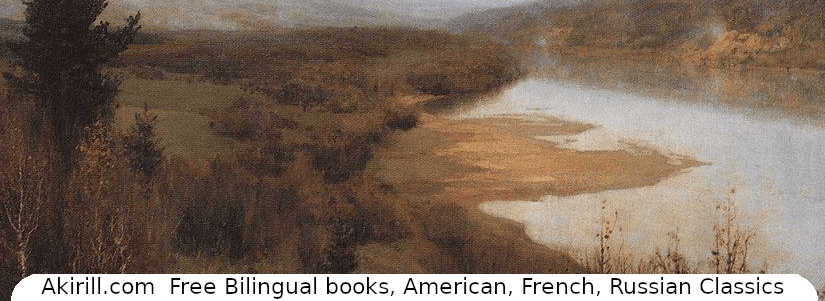
Chers lecteurs et abonnés, cette semaine, j’ai traduit et fait une courte analyse d’un beau poème pour enfants “Le petit lièvre” écrit en 1906 par Alexander Blok et, de plus, j’ai inclus la peinture “Ça refroidit. Automne sur l’Oka près de Tarusa” par Vassili Dmitrievitch Polenov
Toutes nos traductions et analyses de poèmes sont disponibles gratuitement sur la page Poésie Russe.
J’espère que vous apprécierez ce poème et cette peinture autant que moi.
Brève analyse du poème “Le petit lièvre” d’Alexandre Blok
Le poème tourne autour du personnage adorable et attachant d’un”petit lièvre”. À travers la perspective du narrateur, l’accent est principalement mis sur les émotions et les pensées de ce charmant protagoniste.
Pendant l’été chaud qui s’était écoulé, le petit lièvre menait une vie heureuse. À travers un seul détail, l’auteur transmet l’ancien réconfort du petit lièvre – la vue du petit lièvre “amusé par les fleurs blanches.”Cependant, à l’arrivée de l’automne, les conditions d’existence du petit lièvre ont changé. La caractéristique prédominante de l’esquisse de paysage est maintenant l’humidité, qui donne le ton pour le moment présent. Cet effet ” humide “est obtenu en utilisant un vocabulaire avec des significations correspondantes telles que” humide”,” pleuré”,” pluvieux”,” humide”,” plus sec “et même” marcher sur l’eau”.L’auteur souligne les sensations tactiles désagréables qui découlent du contact avec une surface humide. De plus, le thème de l’automne est en outre associé aux motifs du froid et de la rareté de la nourriture.
Nous mettons beaucoup d’efforts dans la qualité des articles et traductions, soutenez-nous avec un like et un abonnement ou sponsorisez-nous si vous les aimez.Nous sommes aussi surFacebook et Twitter
Dears readers and subscribers, this week I translated and did a short analysis of a beautiful children poem “The little hare” written in 1906 by Alexander Blok and ,further I included the painting “It’s getting colder. Autumn on the Oka near Tarusa” by Vasily Dmitrievich Polenov
All our poems translation and analysis are freely available on the page Russian Poetry.
I hope you’ll enjoy this poem and painting as much as I did.
Short analysis of the poem “The little hare” by Alexander Blok
The poem revolves around the adorable and endearing character of a “little hare”. Through the perspective of the narrator, the focus is primarily on delving into the emotions and thoughts of this charming protagonist.
In the warm summer that had passed, the little hare enjoyed a contented life. Through a single detail, the author conveys the little hare’s former comfort – the sight of the little hare being “amused by white flowers.” However, as autumn arrived, the conditions of the little hare’s existence changed. The predominant feature of the landscape sketch now is dampness, which sets the tone for the present moment. This “wet” effect is achieved by utilizing vocabulary with corresponding meanings such as “damp,” “cried,” “rainy,” “wet,” “drier,” and even “to walk on water.” The author emphasizes the unpleasant tactile sensations that arise from coming into contact with a wet surface. Additionally, the theme of autumn is further associated with the motifs of cold weather and scarcity of food.
We put a lot of effort into the quality of the articles and translations, support us with a like and a subscription or sponsor us if you like them. We are also on Facebook and Twitter
Chers lecteurs et abonnés, cette semaine nous parlerons de 3 formidables films russes qui peuvent constituer un bel ajout à votre collection de Noël. Mon préféré, une comédie, est “La Nuit de carnaval“. Ensuite, nous avons l’incontournable “L’Ironie du sort” et “Moscou ne croit pas aux larmes” . Tous ces films sont sous-titrés pour une compréhension plus facile. Voici quelques mots sur les films et leurs intrigues.
Je espère que vous les apprécierez autant que moi.
A propos de La Nuit de Carnaval (Карнава́льная ночь)
Un film que j’adore mais que je n’ai pu trouver qu’avec des sous-titres anglais est “La Nuit de Carnaval”. Il s’agit d’une comédie musicale soviétique bien-aimée qui est sortie en 1956. Réalisé par Eldar Ryazanov, ce film marque son premier long métrage indépendant sur grand écran. Il met également en valeur le talent incroyable de Lyudmila Gurchenko, qui joue ici son deuxième rôle après ses débuts dans “La route de la vérité”.
“La Nuit de Carnaval” a connu un immense succès et est devenu le film soviétique le plus rentable de 1956, avec un total remarquable de 48,64 millions de billets vendus. Ce chef-d’œuvre humoristique et musical continue d’enchanter le public avec son charme intemporel.
Synopsis de “La Nuit de Carnaval”
Les travailleurs de la Maison de la Culture étaient occupés à préparer le bal costumé annuel du Nouvel An. Ils étaient ravis de mettre en place un programme de divertissement qui apporterait beaucoup de plaisir et de joie. La programmation comprenait des performances solo incroyables, des chorégraphies captivantes, des numéros de cirque sensationnels et les mélodies envoûtantes d’un orchestre de jazz. Un magicien devait également réaliser des tours époustouflants, et des clowns ajouteraient rires et bonheur à l’événement.
Cependant, lorsque le directeur par intérim, Serafim Ivanovich Ogurtsov, examina le programme, il ne l’aima pas. Il voulait rendre l’événement plus sérieux et bureaucratique. Il proposa d’avoir des discours d’un orateur et d’un conférencier, qui se trouvaient être un astronome. Ogurtsov voulait également limiter la musique à des morceaux classiques et faire jouer des musiciens plus âgés de l’ensemble de chant et de danse.
Les travailleurs ne voulaient pas changer leur programme original. Ils ne pouvaient pas imaginer remplacer la célébration joyeuse par une célébration ennuyeuse. Ils utilisèrent donc des astuces malines pour distraire et déstabiliser Ogurtsov, et ils s’unirent pour faire échouer ses plans.
Malgré les défis, les travailleurs parvinrent à réaliser leur programme tel qu’ils l’avaient prévu. Chaque performance était une défiance contre les idées d’Ogurtsov. Ils célébrèrent l’arrivée de la nouvelle année en 1957 avec joie et unité, exactement comme ils l’avaient prévu dès le départ.
A propos de L’Ironie du sort (Иро́ния судьбы́, и́ли С лёгким па́ром!)
“L’Ironie du sort” est un téléfilm en deux parties réalisé par Eldar Ryazanov. Il a été créé en 1975 et a été diffusé pour la première fois en Union soviétique le 1er janvier 1976, dans le cadre du “Premier programme central de télévision”. Le film a connu un immense succès et le nombre de spectateurs pour la première diffusion est estimé à environ 100 millions. En raison de sa grande popularité, il a été rediffusé le 7 février.
Le film a continué de fasciner les spectateurs et, selon Fyodor Razzakov, en 1978, il avait été regardé à la télévision par environ 250 millions de personnes. De plus, une version raccourcie du film a été diffusée dans les salles de cinéma, attirant environ 7 millions de spectateurs.
Le succès de “L’Ironie du sort” n’est pas passé inaperçu. En 1977, il a reçu le prestigieux Prix d’État de l’URSS, consolidant ainsi son importance dans le cinéma soviétique.
Une tradition remarquable associée à ce film est sa diffusion annuelle à la télévision le 31 décembre. Cette tradition perdure au fil des années et en fait une partie appréciée des célébrations du Nouvel An pour de nombreuses personnes.
Synopsis de “L’Ironie du sort“
Épisode 1
À Moscou, Pavel se rend chez son ami d’enfance Zhenya pour l’inviter à la traditionnelle soirée du Nouvel An au bain public. Zhenya, un chirurgien, vit avec sa mère et prévoit de demander sa fiancée, Galya, en mariage. Cependant, il révèle accidentellement sa précédente demande en mariage à une autre femme et donne les clés de son appartement à Moscou à Galya pour prouver son engagement.
Bien que Pavel échoue à lui parler, Zhenya se rend quand même au bain public et retrouve deux autres amis, Sasha et Misha. Ils découvrent alors la future union de Zhenya et célèbrent en buvant beaucoup, puis se dirigent vers l’aéroport pour faire leurs adieux à Pavel, qui s’envole pour Leningrad afin de rendre visite à sa femme.
Ivres, ils embarquent involontairement Zhenya dans l’avion, pensant que sa future épouse l’attend à Leningrad. Zhenya se réveille à Leningrad, persuadé d’être à Moscou, et entre inconsciemment dans le mauvais appartement. La propriétaire, Nadya, essaie de le réveiller, mais Zhenya croit être chez lui.
Le fiancé de Nadya, Ippolit, arrive et devient jaloux. Zhenya s’en va mais réalise ensuite qu’il n’a pas les fonds nécessaires pour un billet de retour à Moscou, alors il retourne voir Nadya pour lui demander un prêt. Il appelle Galya et tente d’expliquer sa situation, mais elle raccroche en entendant le mot Leningrad.
Zhenya et Nadya passent le réveillon ensemble, tandis qu’Ippolit conduit à travers les rues glacées de Leningrad, entrelaçant ainsi leurs destins au cours de cette nuit mouvementée.
Épisode 2
Zhenya et Nadya commencent à s’apprécier l’un l’autre. Ippolit s’excuse auprès de Nadya pour sa jalousie. Ensuite, Ippolit surprend Zhenya chez sa fiancée encore une fois, et ils se battent. Nadya met les deux hommes à la porte. Zhenya trouve habilement un moyen de revenir et Nadya l’invite à rester.
Zhenya devient de plus en plus confiant. Il jette la photo d’Ippolit par la fenêtre et dit qu’il ne veut pas se précipiter pour rentrer chez lui. Nadya l’accompagne à la gare et lui achète un billet pour retourner à Moscou, mais Zhenya jette le billet par la fenêtre et déchire la photo.
Plus tard, un Ippolit ivre vient à l’appartement. Nadya réalise qu’elle ne peut pas avoir d’avenir avec Zhenya considérant leur épreuve du réveillon du Nouvel An comme rien de plus qu’une illusion. Zhenya retourne à Moscou et dit à sa mère qu’il ne veut pas se remettre avec sa bien-aimée.
Zhenya s’endort dans son propre appartement. Nadya vient le visiter à Moscou, lui apportant sa mallette oubliée. Elle s’assoit à côté de lui pendant qu’il dort. Quand Zhenya se réveille, il voit Nadya et ils réalisent leur forte connexion. Ils décident de rester ensemble pour le reste de leur vie.
Regarder le film “L’Ironie du sort” (Sous-titres français et anglais)
A propos de “Moscou ne croit pas aux larmes” Москва́ слеза́м не ве́рит
Moscou ne croit pas aux larmes est un célèbre film soviétique mélodramatique réalisé par Vladimir Menshov. Il a été diffusé en URSS à la fin de 1979, avec la première ayant lieu au cinéma Zvezdny à Moscou. Le film a connu un immense succès, attirant environ 90 millions de spectateurs pendant sa diffusion.
La reconnaissance internationale pour ce chef-d’œuvre est venue en 1981 lorsqu’il a remporté l’Oscar du meilleur film en langue étrangère. En plus de cette accolade prestigieuse, “Moscou ne croit pas aux larmes” a également reçu le Prix d’État de l’URSS. La grande première mondiale du film a eu lieu le 11 février 1980, captivant le public avec son histoire captivante et son exécution brillante.
Synopsis de “Moscou ne croit pas aux larmes”
Dans cette histoire captivante qui se déroule à Moscou en 1958, nous suivons les destins entrelacés de trois amis originaires de provinces. Katerina, une femme travailleuse, travaille dans une usine de construction de machines. Antonina, timide et simple, trouve le bonheur dans son mariage et travaille en tant que peintre. Lyudmila rêve d’épouser un Moscovite de haut rang et travaille dans une boulangerie. Katerina tombe amoureuse d’un beau cameraman, Rodion, mais il la quitte lorsqu’il découvre ses origines et son travail.
Vingt ans plus tard, Antonina est heureusement mariée avec trois fils, Lyudmila travaille dans une blanchisserie après avoir divorcé de Sergei, et Katerina a réussi professionnellement mais aspire à une famille complète.
Katerina rencontre Gosha, un mécanicien, et tombe amoureuse de lui, mais doit relever le défi de lui révéler son statut social. Rodion réapparaît dans la vie de Katerina et crée un fossé entre elle et Gosha, qui disparaît. Cependant, le mari d’Antonina, Nikolai, se charge de chercher Gosha et finit par le retrouver, puis le convainc de revenir vers Katerina. Ils se réconcilient et partagent un dîner sincère ensemble, exprimant leur désir mutuel.
Cette histoire dépeint avec beauté les complexités de l’amour, des ambitions personnelles et des différences sociales sur fond de Moscou des années 1950.
Nous mettons beaucoup d’efforts dans la qualité des articles et traductions, soutenez-nous avec un like et un abonnement ou sponsorisez-nous si vous les aimez.Nous sommes aussi surFacebook et Twitter
Dear readers and subscribers, I am thrilled to present three remarkable Russian movies that will be a splendid addition to your holiday collection. The first is the delightful comedy ” Carnival Night,” directed by Eldar Ryazanov, offering an evening filled with laughter, joy, and romance. Next on the list is the iconic “The Irony of Fate, or Enjoy Your Bath!” also directed by Ryazanov, which has become a beloved part of Russian New Year’s traditions. Lastly, we have the Academy Award-winning masterpiece “Moscow does not believe in tears,” directed by Vladimir Menshov, exploring the lives of three women in 1950s Moscow. All of them have subtitles for an easier understanding. Following are a few words about the movies and their plots.
A movie I love but could find only with English subtitles is Carnival Night. This is is a beloved Soviet comedy musical film that was released in 1956. Directed by Eldar Ryazanov, this movie marked his first independent feature film on the big screen. It also showcased the incredible talent of Lyudmila Gurchenko, who played her second role in this film after her debut in “The Road of Truth.”
“Carnival Night” gained immense popularity and became the top-grossing Soviet film in 1956, with a remarkable total of 48.64 million tickets sold. This humorous and musical masterpiece continues to enchant audiences with its timeless charm.
The plot of “Carnival Night”
The workers at the House of Culture were busy preparing for the annual New Year’s costume ball. They were excited to put together an entertainment program that would bring lots of fun and joy. The lineup included amazing solo performances, captivating dance routines, thrilling circus acts, and the enchanting melodies of a jazz orchestra. A magician was also going to perform mind-bending tricks, and clowns would add laughter and happiness to the event.
However, when the acting director, Serafim Ivanovich Ogurtsov, reviewed the program, he didn’t like it. He wanted to make the event more serious and bureaucratic. He suggested having speeches from a speaker and a lecturer, who happened to be an astronomer. Ogurtsov also wanted to limit the music to classical pieces and have elderly musicians from the song and dance ensemble perform.
The workers didn’t want to change their original program. They couldn’t imagine replacing the joyful celebration with a boring one. So, they used clever tricks to distract and confuse Ogurtsov, and they joined together to stop his plans.
Despite the challenges, the workers managed to perform their program as planned. Each performance was a defiance against Ogurtsov’s ideas. They celebrated the arrival of the New Year in 1957 with joy and unity, just like they had planned in the first place.
“Irony of Fate or Enjoy Your Bath!” is a two-part television film directed by Eldar Ryazanov. It was created in 1975 and was first shown in the Soviet Union on January 1, 1976, under the “First Central Television Program”. The film gained immense popularity and the audience of the first show is estimated to be around 100 million viewers. Due to popular demand, it was repeated on February 7.
The film continued to captivate audiences and, according to Fyodor Razzakov, by 1978, it had been watched on TV by approximately 250 million people. Additionally, a shortened version of the film was screened in cinemas, where it attracted an audience of about 7 million viewers.
The success of “Irony of Fate or Enjoy Your Bath!” did not go unrecognized. In 1977, it was awarded the prestigious USSR State Prize, further solidifying its significance in Soviet cinema.
One remarkable tradition associated with the film is its annual television broadcast on December 31. This tradition has prevailed throughout the years, making it a beloved part of New Year’s celebrations for many.
The plot of “Irony of Fate“
Episode 1
In Moscow, Pavel goes to invite his childhood friend Zhenya to the traditional New Year’s Eve gathering at the bathhouse. Zhenya, a surgeon, lives with his mother and plans to propose to his fiancée, Galya. However, he accidentally reveals his past proposal to another woman and gives Galya the keys to his Moscow apartment to prove his commitment.
Though Pavel fails to talk to him, Zhenya still goes to the bathhouse and meets two other friends, Sasha and Misha. They find out, then celebrate Zhenya’s upcoming marriage drinking heavily, then head to the airport to bid farewell to Pavel, who is flying to Leningrad to visit his wife.
While drunk, they accidentally put Zhenya on the plane, thinking his bride is waiting for him in Leningrad. Zhenya wakes up in Leningrad, thinking he is in Moscow, and unknowingly enters the wrong apartment. The owner, Nadya, tries to wake him, but Zhenya believes it is his own apartment.
Nadya’s fiancé, Ippolit, arrives and becomes jealous. Zhenya leaves but when realizing he lacks the funds for a return ticket to Moscow returns to ask Nadya for a loan. He calls Galya and attempts to explain his situation, but she hangs up upon hearing Leningrad mentioned.
Zhenya and Nadya celebrate the New Year together while Ippolit drives through the icy streets of Leningrad, intertwining their fates on this eventful night.
Episode 2
Zhenya and Nadya start to like each other. Ippolit apologizes to Nadya for being jealous. Then, Ippolit catches Zhenya at his fiancée’s place again, and they fight. Nadya kicks both men out. Zhenya cleverly finds a way to return and Nadya invites him to stay.
Zhenya becomes more confident. He throws Ippolit’s picture out the window and says he doesn’t want to rush back home. Nadya takes him to the train station and buys him a ticket back to Moscow, but Zhenya throws the ticket out the window and tears up the picture.
Later, a drunk Ippolit comes to the apartment. Nadya realizes she can’t have a future with Zhenya considering their New Year’s Eve ordeal as nothing more than a delusion. Zhenya goes back to Moscow and tells his mother that he doesn’t want to get back with his beloved.
Zhenya falls asleep in his own apartment. Nadya comes to visit him in Moscow, bringing his forgotten briefcase. She sits next to him while he sleeps. When Zhenya wakes up, he sees Nadya and they realize their strong connection. They decide to stay together forever.
“Moscow Does Not Believe in Tears” is a renowned Soviet melodramatic film directed by Vladimir Menshov. It was released in the USSR at the end of 1979, with the premiere taking place at the Moscow Zvezdny cinema. The film garnered immense popularity, attracting approximately 90 million viewers during its run.
The international recognition for this masterpiece came in 1981 when it won the Academy Award for “Best Foreign Language Film.” Alongside this prestigious accolade, “Moscow Doesn’t Believe in Tears” also received the USSR State Prize. The grand world premiere of the film took place on February 11, 1980, captivating audiences with its compelling storyline and brilliant execution.
The plot of “Moscow Does Not Believe in Tears”
In this captivating story set in Moscow in 1958, we follow the intertwined destinies of three friends from the provinces. Katerina, a hardworking woman, works at a machine-building plant. Antonina, shy and simple, finds happiness in her marriage and works as a painter. Lyudmila dreams of marrying a high-status Muscovite and works at a bakery. Katerina falls in love with a handsome cameraman, Rodion, but he leaves her when he learns about her background and job.
Twenty years later, Antonina is happily married with three sons, Lyudmila works at a dry cleaners after divorcing Sergei, and Katerina is successful professionally but longs for a complete family.
Katerina meets Gosha, a mechanic, and falls in love with him, but faces the challenge of revealing her social status to him. Rodion reenters Katerina’s life and creates a rift between her and Gosha, who disappears. However, Antonina’s husband, Nikolai, takes it upon himself to find Gosha and eventually found him then convinces him to return to Katerina. They reconcile and share a heartfelt dinner together, expressing their longing for each other.
This story beautifully depicts the complexities of love, personal ambitions, and social differences against the backdrop of 1950s Moscow.
We put a lot of effort into the quality of the articles and translations, support us with a like and a subscription or sponsor us if you like them. We are also on Facebook and Twitter
Chers lecteurs et abonnés, pour compléter la traduction du poème « Le commandant » d’Alexandre Pouchkine, cette semaine j’ai fait une présentation du tableau « Conseil militaire à Fili » d’Alexeï Danilovitch Kivshenko qui vous présentera les personnes présentes dans le tableau et leurs décisions . J’espère que vous apprécierez cet article.
Pour que l’article ne soit pas trop long, j’ai diminué la tailles des images et inclus un lien si vous voulez lire l’article complet ou la partie concernant l’une des personnes présente . Comme toujours l’article est accessible à tous sur le site (Lire l’article complet)
Le conseil militaire de Fili, représenté dans le roman “La Guerre et Paix” de Léon Tolstoï, revêt une grande importance dans le monde de l’art et de l’histoire. Il a servi d’inspiration pour un tableau célèbre qui est devenu un incontournable des manuels scolaires, des publications et des expositions consacrées à la guerre patriotique de 1812. Le tableau, largement diffusé dans toute la Russie sous la forme de milliers de reproductions, a catapulté Alexeï Danilovitch au rang des artistes historiques, non seulement en Russie mais aussi à l’étranger. L’impact durable de cette œuvre reflète sa reconnaissance en tant que représentation vitale d’un événement historique important.
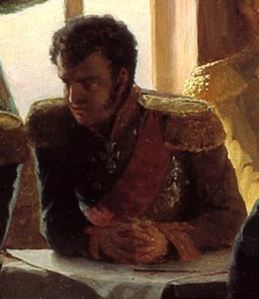
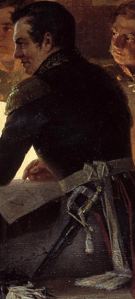
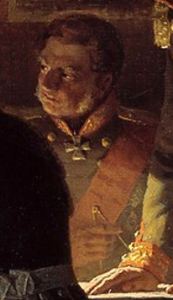
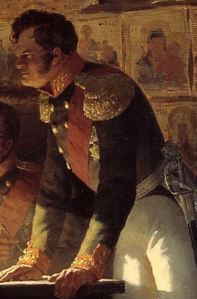
Fidèle à la description de l’auteur, les personnages sont réunis autour d’une table, avec la petite-fille du propriétaire de la cabane perchée sur le poêle. Les personnages notables représentés dans le tableau incluent MI Kutuzov, PS Kaisarov, PP Konovnitsyn, NN Raevsky, AI Osterman-Tolstoy, MB Barclay de Tolly, FP Uvarov, DS Dokhturov, AP Ermolov, K. Tolya et LL Bennigsen. Avec son souci du détail et sa fidélité aux paroles de Tolstoï, Kivshenko donne vie à ce moment historique sur toile. L’auteur a répété le tableau pour la galerie de PM Tretiakov en 1882.
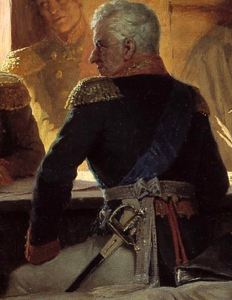
Military Council in Fili. Painting (Barclay de Tolly sits under an icon) by Alexey Kivshenko
Le Conseil de Fili a joué un rôle essentiel dans l’élaboration des stratégies et des processus décisionnels pendant la guerre patriotique de 1812. Il a été convoqué le 1er (13) septembre 1812 par le commandant en chef MI Kutuzov dans le village de Fili, situé à l’ouest de Moscou pour décider s’il fallait tenter de mener une autre bataille près de Moscou après la bataille de Borodino ou quitter la ville sans combattre.
A la veille du concile, les formations de l’armée russe se positionnent stratégiquement à l’ouest de Moscou, se préparant à une bataille décisive contre les troupes de Napoléon. C’est le général Léontius Bennigsen qui choisit cette position particulière pour l’armée russe.
Malgré une forte fièvre pendant plusieurs jours, Barclay de Tolly, un chef militaire très respecté, a personnellement inspecté le champ de bataille à cheval. Après une évaluation approfondie, il est parvenu à la conclusion que la position choisie serait désastreuse pour les formations de l’armée russe.
Suivant ses traces, AP Ermolov et KF Tol ont également mené leurs propres évaluations en passant par l’endroit où étaient positionnées les troupes russes. Leurs conclusions font écho aux préoccupations de Barclay de Tolly, confirmant l’idée selon laquelle la position choisie était défavorable à l’armée russe.
Avec ces rapports en main, Koutouzov, le commandant en chef, se trouva confronté à une décision difficile. Il a dû peser les options suivantes : soit poursuivre la retraite et potentiellement rendre Moscou, soit s’engager dans un combat direct dans les rues de la ville. Ce moment critique exigeait un examen attentif des objectifs stratégiques globaux et de la meilleure ligne d’action pour protéger leur patrie.
Qui est dans le tableau et que se passe-t-il pendant la rencontre ?
Au cours du concile, il est devenu évident que Koutouzov avait déjà pris la décision de se retirer. Cependant, reconnaissant l’importance de la contribution de ses généraux, il écouta patiemment leurs opinions. Quand ce fut son tour de parler, Koutouzov commença son discours par cette déclaration résolue : « La Russie n’est pas perdue avec la perte de Moscou ». Faisant preuve d’une détermination sans faille, le commandant en chef conclut son discours en donnant l’ordre décisif : « J’ordonne par la présente la retraite ». Ce moment décisif a mis en valeur le sens stratégique et le leadership de Koutouzov, qui a donné la priorité à la préservation des forces russes face à l’adversité.
J’espère que vous avez apprécié ce tableau et son explication autant que moi
Nous mettons beaucoup d’efforts dans la qualité des articles et traductions, soutenez-nous avec un like et un abonnement ou sponsorisez-nous si vous les aimez.Nous sommes aussi surFacebook et Twitter
Dear readers and subscribers, this week to complete the translation of the poem “Commander ” by Alexander Pushkin, I made a presentation of the painting “Military Council in Fili” by Alexey Danilovich Kivshenko which will introduce you to the people present in the painting and their decisions. I hope you’ll enjoy this article.
To limit the size of the article, I have reduced the size of the pictures and included a link if you want to read the full article or the part about one of the people present. As always the article is freely accessible to everyone on the site (Read the full article)
The military council in Fili, depicted in L.N. Tolstoy’s novel “War and Peace,” holds great significance in the world of art and history. It served as the inspiration for a famous painting that has become a staple in textbooks, publications, and exhibitions dedicated to the Patriotic War of 1812. The painting, widely distributed throughout Russia in thousands of reproductions, catapulted Alexei Kivshenko to fame among historical artists, not only in Russia but also abroad. The lasting impact of this artwork reflects its recognition as a vital representation of an important historical event.
True to the author’s description, the characters are gathered around a table, with the granddaughter of the hut’s owner perched on the stove. Notable figures portrayed in the painting include M. I. Kutuzov, P. S. Kaisarov, P. P. Konovnitsyn, N. N. Raevsky, A. I. Osterman-Tolstoy, M. B. Barclay de Tolly, F. P. Uvarov, D. S. Dokhturov, A. P. Ermolov, K. Tolya, and L. L. Bennigsen. With his keen attention to detail and faithfulness to Tolstoy’s words, Kivshenko breathes life into this historical moment on canvas. The author repeated the painting for the gallery of P. M. Tretyakov in 1882.
Military Council in Fili. Painting (Barclay de Tolly sits under an icon) by Alexey Kivshenko
The Council in Fili played a vital role in shaping the strategies and decision-making processes during the Patriotic War of 1812. It was convened on September 1 (13), 1812, by Commander-in-Chief M.I. Kutuzov in the village of Fili, located west of Moscow to decide whether to try fighting another battle near Moscow after the Battle of Borodino or to leave the city without a fight.
On the eve of the council, the Russian army formations strategically positioned themselves to the west of Moscow, preparing for a decisive battle against Napoleon’s troops. It was General Leontius Bennigsen who chose this particular position for the Russian army.
Despite suffering from a severe fever for several days, Barclay de Tolly, a highly respected military leader, personally inspected the battlefield on horseback. After thorough evaluation, he reached the conclusion that the chosen position would be disastrous for the Russian army formations.
Following in his footsteps, A.P. Ermolov and K.F. Tol also conducted their own assessments by driving through the location where the Russian troops were positioned. Their findings echoed Barclay de Tolly’s concerns, further supporting the notion that the chosen position was unfavorable for the Russian army.
With these reports in hand, Kutuzov, the overall commander, found himself confronted with a difficult decision. He had to weigh the options of either continuing the retreat and potentially surrendering Moscow or engaging in direct combat on the city streets. This critical moment demanded careful consideration of the overall strategic objectives and the best course of action to protect their homeland.
Who is in the painting and what is happening during the meeting?
During the council, it became evident that Kutuzov had already made the decision to retreat. However, recognizing the importance of the input from his generals, he patiently listened to their opinions. When it was his turn to speak, Kutuzov began his address with the resolute declaration: “Russia is not lost with the loss of Moscow.” Demonstrating his unwavering resolve, the commander-in-chief concluded his speech by issuing the decisive order: “I hereby command a retreat.” This defining moment showcased Kutuzov’s strategic acumen and leadership, as he prioritized the preservation of the Russian forces in the face of adversity.
I hope you enjoyed this painting and its explanation as much as I did
We put a lot of effort into the quality of the articles and translations, support us with a like and a subscription or sponsor us if you like them. We are also on Facebook and Twitter
Comme d’habitude, vous pouvez accéder librement à l’intégralité de la traduction en suivant l’un des liens, vous pouvez également retrouver toutes nos traductions sur la page Littérature Russe.
J’espère que vous apprécierez ce poème et ces peintures autant que moi
Brève analyse du poème “Le commandant” d’Alexandre Pouchkine
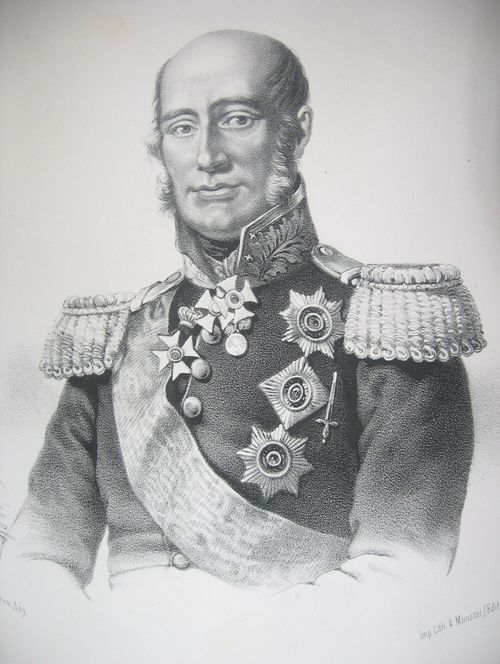
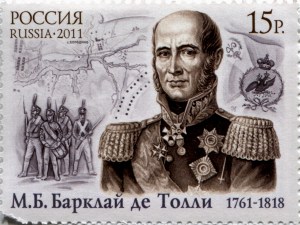
Le poème « Le Commandant » de Pouchkine rend hommage à MB Barclay de Tolly, un personnage historique dont les contributions à la Russie pendant la guerre patriotique de 1812 font encore débat parmi les spécialistes. Malgré ses services remarquables, Barclay de Tolly se heurte à la méfiance de ses contemporains. Le scepticisme provenait de son nom de famille occidental, qui mettait en doute sa loyauté. Cependant, le poème « Commandant » sert d’ode, soulignant la valeur et le dévouement d’une personne sous-estimée par son entourage. L’œuvre de Pouchkine attire l’attention sur les vertus et les mérites de Barclay de Tolly, mettant en lumière son importance dans l’histoire de la Russie.
Nous mettons beaucoup d’efforts dans la qualité des articles et traductions, soutenez-nous avec un like et un abonnement ou sponsorisez-nous si vous les aimez.Nous sommes aussi surFacebook et Twitter
As usual you can freely access the whole translation by following one of the link, you can also find all of our translation on the Russian Literature page.
I hope you’ll enjoy this poem and paintings as much as I did
Short analysis of the poem “Commander” by Alexander Pushkin
The poem “Commander” by A.S. Pushkin pays tribute to M.B. Barclay de Tolly, a historical figure whose contributions to Russia during the Patriotic War of 1812 are still debated among specialists. Despite his notable services, Barclay de Tolly faced distrust from his contemporaries. The skepticism stemmed from his Western surname, which cast doubt on his loyalty. However, the poem “Commander” serves as an ode, highlighting the valor and dedication of a person who was underappreciated by those around him. Pushkin’s work brings attention to the virtues and merits of Barclay de Tolly, shedding light on his importance in Russian history.
We put a lot of effort into the quality of the articles and translations, support us with a like and a subscription or sponsor us if you like them. We are also on Facebook and Twitter
Chers lecteurs et abonnés, cette semaine j’ai traduit le magnifique poème « Fils et mère » écrit par Alexander Blok en octobre 1906. Ce poème sur un jeune fils quittant la maison de ses parents pour aller protéger sa patrie, nous montre le lien entre le fils et la mère. Pour compléter le poème, j’ai ajouté quelques mots sur Alexandre Blok et le tableau « Femme avec un garçon dans la forêt » d’Ivan Ivanovitch Chichkine.
J’espère que vous apprécierez ce poème et cette peinture autant que moi.
Visitez la page Poésie russe pour retrouver tous les poèmes que nous avons traduits. N’oubliez pas que la traduction complète du poème est accessible gratuitement à tous en suivant l’un des liens vers le poème.
Traduction du poème “Fils et mère” d’Alexandre Blok en français avec français et russe côte à côte
Quelques mots au sujet d’Alexandre Blok
Alexandre Alexandrovitch Blok était une figure éminente de la littérature russe au cours de l’âge d’argent. Né le 16 (28) novembre 1880 à Saint-Pétersbourg, qui faisait alors partie de l’Empire russe, Blok a apporté d’importantes contributions en tant que poète, écrivain, publiciste, dramaturge, traducteur et critique littéraire. Il a joué un rôle central dans le développement du symbolisme russe, un mouvement qui cherchait à exprimer des idées abstraites et spirituelles à travers un langage et des images poétiques.
Les œuvres de Blok sont considérées comme des classiques de la littérature russe du XXe siècle et il est largement considéré comme l’un des plus grands représentants du symbolisme russe. Sa poésie explorait souvent les thèmes de l’amour, de la spiritualité et du climat social et politique tumultueux de son époque. Le style d’écriture de Blok se caractérise par son lyrisme, son symbolisme riche et son exploration introspective de la condition humaine.
Tragiquement, la vie de Blok fut écourtée et il décéda le 7 août 1921 à Petrograd, qui devint plus tard connue sous le nom de Leningrad et s’appelle maintenant Saint-Pétersbourg (RSFSR). Malgré sa mort prématurée, les contributions d’Alexandre Blok à la littérature russe continuent d’influencer et d’inspirer des générations de lecteurs et d’écrivains.
Peinture “Femme avec un garçon dans la forêt” par Ivan Ivanovitch Chichkine
Nous mettons beaucoup d’efforts dans la qualité des articles et traductions, soutenez-nous avec un like et un abonnement ou sponsorisez-nous si vous les aimez.Nous sommes aussi surFacebook et Twitter


















 AKirill, Learn, apprenez, translation, traduction, livres bilingues, bilingual books