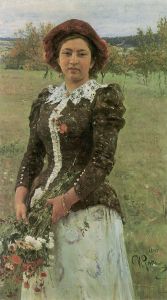
Discover the painting “Military Council in Fili” by Alexey Danilovich Kivshenko

Bilingual booksLire en FrançaisContact us
American LiteratureFrench LiteratureRussian Literature

Dear readers and subscribers, this week to complete the translation of the poem “Commander ” by Alexander Pushkin, I made a presentation of the painting “Military Council in Fili” by Alexey Danilovich Kivshenko which will introduce you to the people present in the painting and their decisions. I hope you’ll enjoy this article.

To limit the size of the article, I have reduced the size of the pictures and included a link if you want to read the full article or the part about one of the people present. As always the article is freely accessible to everyone on the site (Read the full article)


The military council in Fili, depicted in L.N. Tolstoy’s novel “War and Peace,” holds great significance in the world of art and history. It served as the inspiration for a famous painting that has become a staple in textbooks, publications, and exhibitions dedicated to the Patriotic War of 1812. The painting, widely distributed throughout Russia in thousands of reproductions, catapulted Alexei Kivshenko to fame among historical artists, not only in Russia but also abroad. The lasting impact of this artwork reflects its recognition as a vital representation of an important historical event.

True to the author’s description, the characters are gathered around a table, with the granddaughter of the hut’s owner perched on the stove. Notable figures portrayed in the painting include M. I. Kutuzov, P. S. Kaisarov, P. P. Konovnitsyn, N. N. Raevsky, A. I. Osterman-Tolstoy, M. B. Barclay de Tolly, F. P. Uvarov, D. S. Dokhturov, A. P. Ermolov, K. Tolya, and L. L. Bennigsen. With his keen attention to detail and faithfulness to Tolstoy’s words, Kivshenko breathes life into this historical moment on canvas. The author repeated the painting for the gallery of P. M. Tretyakov in 1882. 

Military Council in Fili. Painting (Barclay de Tolly sits under an icon) by Alexey Kivshenko

The Council in Fili played a vital role in shaping the strategies and decision-making processes during the Patriotic War of 1812. It was convened on September 1 (13), 1812, by Commander-in-Chief M.I. Kutuzov in the village of Fili, located west of Moscow to decide whether to try fighting another battle near Moscow after the Battle of Borodino or to leave the city without a fight.

On the eve of the council, the Russian army formations strategically positioned themselves to the west of Moscow, preparing for a decisive battle against Napoleon’s troops. It was General Leontius Bennigsen who chose this particular position for the Russian army.

Despite suffering from a severe fever for several days, Barclay de Tolly, a highly respected military leader, personally inspected the battlefield on horseback. After thorough evaluation, he reached the conclusion that the chosen position would be disastrous for the Russian army formations.

Following in his footsteps, A.P. Ermolov and K.F. Tol also conducted their own assessments by driving through the location where the Russian troops were positioned. Their findings echoed Barclay de Tolly’s concerns, further supporting the notion that the chosen position was unfavorable for the Russian army.

With these reports in hand, Kutuzov, the overall commander, found himself confronted with a difficult decision. He had to weigh the options of either continuing the retreat and potentially surrendering Moscow or engaging in direct combat on the city streets. This critical moment demanded careful consideration of the overall strategic objectives and the best course of action to protect their homeland.

Who is in the painting and what is happening during the meeting?

The granddaughter of the hut’s owner


The granddaughter of the hut’s owner who was perched on the stove


Paisiy Sergeevich Kaisarov, colonel, adjutant of Kutuzov


Read the text: Paisiy Sergeevich Kaisarov, colonel, adjutant of Kutuzov


Mikhail Illarionovich Kutuzov, Field Marshal General, Commander-in-Chief of the Russian Army


Read the text:Mikhail Illarionovich Kutuzov, Field Marshal General, Commander-in-Chief of the Russian Army


Pyotr Petrovich Konovnitsyn, Lieutenant General, Commander of the 3rd Infantry Corps


Read the text: Pyotr Petrovich Konovnitsyn, Lieutenant General, Commander of the 3rd Infantry Corps


Nikolai Nikolaevich Raevsky, lieutenant general, commander of the 7th Infantry Corps


Read the text: Nikolai Nikolaevich Raevsky, lieutenant general, commander of the 7th Infantry Corps


Alexander Ivanovich Osterman-Tolstoy, lieutenant general, commander of the 4th Infantry Corps


Read the text: Alexander Ivanovich Osterman-Tolstoy, lieutenant general, commander of the 4th Infantry Corps


Leonty Leontievich Bennigsen, general of the cavalry, chief of the army headquarters


Read the text: Leonty Leontievich Bennigsen, general of the cavalry, chief of the army headquarters


Mikhail Bogdanovich Barclay de Tolly, commander of the 1st Western Army, Minister of War


Read the text: Mikhail Bogdanovich Barclay de Tolly, commander of the 1st Western Army, Minister of War


Fedor Petrovich Uvarov, adjutant general, commander of the reserve cavalry corps


Read the text: Fedor Petrovich Uvarov, adjutant general, commander of the reserve cavalry corps


Karl Fedorovich Tol, Quartermaster General of the 1st Army


Read the text: Karl Fedorovich Tol, Quartermaster General of the 1st Army


Dmitry Sergeevich Dokhturov, infantry general, commander of the 6th Infantry Corps


Read the text: Dmitry Sergeevich Dokhturov, infantry general, commander of the 6th Infantry Corps


Alexey Petrovich Ermolov, general, chief of staff of the 1st Army


Read the text: Alexey Petrovich Ermolov, general, chief of staff of the 1st Army


What was the decision taken at the council?

During the council, it became evident that Kutuzov had already made the decision to retreat. However, recognizing the importance of the input from his generals, he patiently listened to their opinions. When it was his turn to speak, Kutuzov began his address with the resolute declaration: “Russia is not lost with the loss of Moscow.” Demonstrating his unwavering resolve, the commander-in-chief concluded his speech by issuing the decisive order: “I hereby command a retreat.” This defining moment showcased Kutuzov’s strategic acumen and leadership, as he prioritized the preservation of the Russian forces in the face of adversity.


I hope you enjoyed this painting and its explanation as much as I did


We put a lot of effort into the quality of the articles and translations, support us with a like and a subscription or sponsor us if you like them. We are also on Facebook and Twitter

Check out our Last Posts


© 2023 Akirill.com – All Rights Reserved

Progrès du Site semaine du 28 novembre, 2023

Livres bilinguesRead in EnglishNous contacter

Chers lecteurs et abonnés, je suis ravi de partager avec vous le travail que j’ai réalisé cette semaine, axé sur la poésie américaine , française et russe . J’ai ajouté avec plaisir un recueil de poèmes dans ces trois langues, dans l’espoir de vous apporter à tous une expérience diversifiée et enrichissante.

J’espère que ces ajouts à notre collection vous offriront des moments d’inspiration, de réflexion et de plaisir. La poésie a le pouvoir unique de toucher nos âmes et de nous connecter à travers les cultures et les langues. Je vous encourage à explorer ces poèmes et à vous immerger dans la beauté des mots.

Merci pour votre soutien continu et j’ai hâte de vous proposer du contenu plus attrayant à l’avenir.

La semaine dernière, nous nous sommes lancés dans un voyage poétique à travers les œuvres de Henry Wadsworth Longfellow, le célèbre poète américain. Plus précisément, nous avons plongé dans les vers enchanteurs de « Les Chants de Hiawatha ». Cette semaine, nous poursuivrons notre exploration de cette collection captivante, en nous plongeant davantage dans sa beauté intemporelle et sa riche narration. Continuons notre voyage à travers le monde fascinant créé par Longfellow. Restez à l’écoute pour des vers plus captivants et un enchantement lyrique !

Voici maintenant quelques poèmes choisis au hasard dans le recueil « L’Art d’être grand-père » de Victor Hugo (1877) :

N’hésitez pas à explorer davantage les poèmes exquis du recueil « L’Art d’être grand-père » de Victor Hugo. Bonne lecture !

Nous terminerons avec notre poète russe Anna Akhmatova ( Анна Ахматова ) dont l’héritage est monumental, ainsi que son impact sur la littérature russe qui est profond. Sa capacité à articuler l’expérience humaine à travers ses mots a solidifié son statut d’icône littéraire. Grâce à la puissance de sa poésie, la voix d’Akhmatova continue de résonner et d’inspirer les générations à venir.

Pour en savoir plus sur Anna Akhmatova et ses contributions poétiques à la littérature russe, vous pouvez visiter ce lien .


Cette semaine, notre article était une traduction et une brève analyse du poème « Commandant » d’Alexandre Pouchkine en français avec français et russe côte à côte avec le tableau « Conseil militaire à Fili » d’Alekseï Danilovitch Kivshenko  et  MB Barclay de Tolly. Dessin de Piotr Fiodorovitch Borel


Nous mettons beaucoup d’efforts dans la qualité des articles et traductions, soutenez-nous avec un like et un abonnement ou sponsorisez-nous si vous les aimez. Nous sommes aussi sur Facebook et Twitter


© 2023 Akirill.com – All Rights Reserved
Site Progress Week of November 28, 2023

Bilingual BooksLire en Français Contact us

Dear readers and subscribers, I am excited to share with you the work I have done this week, focusing on American, French and Russian poetry. I have happily added a collection of poems in these three languages, hoping to bring a diverse and enriching experience to all of you.

I hope that these additions to our collection will provide you with moments of inspiration, reflection, and enjoyment. Poetry has a unique power to touch our souls and connect us across cultures and languages. I encourage you to explore these poems and immerse yourself in the beauty of words.

Thank you for your continued support, and I look forward to bringing you more engaging content in the future.

Last week, we embarked on a poetic journey through the works of Henry Wadsworth Longfellow, the celebrated American poet. Specifically, we delved into the enchanting verses from “The Songs of Hiawatha.” This week, we shall carry on with our exploration of this captivating collection, immersing ourselves further in its timeless beauty and rich storytelling. Let us continue our voyage through the mesmerizing world crafted by Longfellow. Stay tuned for more captivating verses and lyrical enchantment!

Here are a few randomly chosen poems from Victor Hugo’s collection “L’Art d’être grand-père” (1877):

Feel free to explore more of the exquisite poems in the collection “L’Art d’être grand-père” by Victor Hugo. Enjoy your reading!

We’ll finish with our Russian poet Anna Akhmatova (Анна Ахматова) whose legacy is monumental, and as well as her impact on Russian literature which is profound. Her ability to articulate the human experience through her words has solidified her status as a literary icon. Through the power of her poetry, Akhmatova’s voice continues to resonate and inspire generations to come.

To learn more about Anna Akhmatova and her poetic contributions to Russian literature, you can visit this link.


This week our article was a translation and short analysis of the poem “Commander” by Alexander Pushkin in English with English and Russian side by side with the painting “Military Council in Fili” by Aleksey Danilovich Kivshenko and M.B. Barclay de Tolly. Drawing by Pyotr Fyodorovich Borel


We put a lot of effort into the quality of the articles and translations, support us with a like and a subscription or sponsor us if you like them. We are also on Facebook and Twitter


© 2023 Akirill.com – All Rights Reserved

Lire le poème “Le commandant” d’Alexandre Pouchkine en français avec français et russe côte à côte

Livres bilinguesRead in EnglishNous contacter
Littérature américaineLittérature françaiseLittérature russe

Chers lecteurs et abonnés, cette semaine, j’ai traduit le poème “Le Commandant” d’Alexandre Pouchkine qui a été écrit en 1835 et attire l’attention sur les vertus et les mérites de Barclay de Tolly, mettant en lumière son importance dans l’histoire russe. Pour compléter le poème, j’ai ajouté M.B. Barclay de Tolly. Dessin par Pierre Fiodorovitch Borel et la peinture “Conseil militaire à Fili” par Alexeï Danilovitch Kivchenko qui sera présenté dans notre prochain post.

Comme d’habitude, vous pouvez accéder librement à l’intégralité de la traduction en suivant l’un des liens, vous pouvez également retrouver toutes nos traductions sur la page Littérature Russe.

J’espère que vous apprécierez ce poème et ces peintures autant que moi


Brève analyse du poème “Le commandant” d’Alexandre Pouchkine

Le poème « Le Commandant » de Pouchkine rend hommage à MB Barclay de Tolly, un personnage historique dont les contributions à la Russie pendant la guerre patriotique de 1812 font encore débat parmi les spécialistes. Malgré ses services remarquables, Barclay de Tolly se heurte à la méfiance de ses contemporains. Le scepticisme provenait de son nom de famille occidental, qui mettait en doute sa loyauté. Cependant, le poème « Commandant » sert d’ode, soulignant la valeur et le dévouement d’une personne sous-estimée par son entourage. L’œuvre de Pouchkine attire l’attention sur les vertus et les mérites de Barclay de Tolly, mettant en lumière son importance dans l’histoire de la Russie.

Continuer la lecture …

Peinture “Conseil militaire à Fili” par Alexeï Danilovitch Kivchenko et M. B. Barclay de Tolly. Dessin de Borel P. F.


Traduction du poème “Le commandant” d’Alexandre Pouchkine en français avec français et russe côte à côte


Полководец
Le commandant
Traduit par Akirill.com
Nov 27, 2023
У русского царя в чертогах есть палата:Le tsar russe a une chambre dans son palais :
Она не золотом, не бархатом богата;Qui n’est ni riche en or ni en velours ;
Не в ней алмаз венца хранится за стеклом;Ce n’est pas là que le diamant de la couronne est conservé derrière une vitre ;
Но сверху донизу, во всю длину, кругом,Mais de haut en bas, tout autour,
Своею кистию свободной и широкойavec son pinceau libre et large,
Ее разрисовал художник быстроокой.l’artiste l’a peinte d’un œil vif.
Тут нет ни сельских нимф, ни девственных мадонн,Il n’y a pas ici de nymphes rurales ni de vierges madones,
Ни фавнов с чашами, ни полногрудых жен,Pas de faunes avec des tasses, ni de femmes aux gros seins,
Ни плясок, ни охот, — а все плащи, да шпаги,Pas de danse, ni de chasse, mais seulement des manteaux et des épées,
Да лица, полные воинственной отваги.et des visages pleins de courage guerrier.
Толпою тесною художник поместилDans une foule, l’artiste a placé
Сюда начальников народных наших сил,ici les dirigeants de nos forces nationales,
Покрытых славою чудесного походаcouvert de la gloire d’une merveilleuse campagne
И вечной памятью двенадцатого года.et du souvenir éternel de la douzième année.
Читать далее …Continuer la lecture …

< < < La Crête Volatile des Nuages s’éclaircit (Ru/Fr) / The Flying Ridge of Clouds is Thinning (Ru/Eng) / Редеет облаков летучая гряда (Рус/Анг.) / (Рус/ Фра.)
Ma Muse (Ru/Fr) / My Muse (Ru/Eng) / Муза (Рус/Анг.) / (Рус/ Фра.) > > >


Nous mettons beaucoup d’efforts dans la qualité des articles et traductions, soutenez-nous avec un like et un abonnement ou sponsorisez-nous si vous les aimez. Nous sommes aussi sur Facebook et Twitter

Découvrez nos Derniers Posts


© 2023 Akirill.com – All Rights Reserved
Read the poem “Commander” by Alexander Pushkin in English with English and Russian side by side

Bilingual booksLire en FrançaisContact us
American LiteratureFrench LiteratureRussian Literature

Dears readers and subscribers, this week I translated the poem “Commander” by Alexander Pushkin which was written in 1835 and brings attention to the virtues and merits of Barclay de Tolly, shedding light on his importance in Russian history. To complement the poem I added M.B. Barclay de Tolly. Drawing by Pyotr Fyodorovich Borel and the painting “Military Council in Fili” by Aleksey Danilovich Kivshenko which will be presented in our next post.

As usual you can freely access the whole translation by following one of the link, you can also find all of our translation on the Russian Literature page.

I hope you’ll enjoy this poem and paintings as much as I did


Short analysis of the poem “Commander” by Alexander Pushkin

The poem “Commander” by A.S. Pushkin pays tribute to M.B. Barclay de Tolly, a historical figure whose contributions to Russia during the Patriotic War of 1812 are still debated among specialists. Despite his notable services, Barclay de Tolly faced distrust from his contemporaries. The skepticism stemmed from his Western surname, which cast doubt on his loyalty. However, the poem “Commander” serves as an ode, highlighting the valor and dedication of a person who was underappreciated by those around him. Pushkin’s work brings attention to the virtues and merits of Barclay de Tolly, shedding light on his importance in Russian history.

Continue reading …

Painting “Military Council in Fili” by Aleksey Danilovich Kivshenko and M.B. Barclay de Tolly. Drawing by Pyotr Fyodorovich Borel


Translation of the poem “Commander” by Alexander Pushkin in English with English and Russian side by side


ПолководецCommander
Translation by Akirill.com
Nov 27, 2023
У русского царя в чертогах есть палата:The Russian Tsar has a chamber in his palace:
Она не золотом, не бархатом богата;It is not rich in gold or velvet;
Не в ней алмаз венца хранится за стеклом;It is not where the crown diamond is kept behind glass;
Но сверху донизу, во всю длину, кругом,But from top to bottom, all the way around,
Своею кистию свободной и широкойwith his free and wide brush,
Ее разрисовал художник быстроокой.the artist painted it with a quick eye.
Тут нет ни сельских нимф, ни девственных мадонн,Here, there are neither rural nymphs, nor virgin madonnas,
Ни фавнов с чашами, ни полногрудых жен,Neither fauns with cups, nor full-breasted wives,
Ни плясок, ни охот, — а все плащи, да шпаги,Neither dancing, nor hunts – but all are cloaks, swords,
Да лица, полные воинственной отваги.and faces full of warlike courage.
Толпою тесною художник поместилIn a crowd, the artist placed
Сюда начальников народных наших сил,here the leaders of our national forces,
Покрытых славою чудесного походаcovered with the glory of a wonderful campaign
И вечной памятью двенадцатого года.and the eternal memory of the twelfth year.
Читать далее …Continue to read …

< < < La Crête Volatile des Nuages s’éclaircit (Ru/Fr) / The Flying Ridge of Clouds is Thinning (Ru/Eng) / Редеет облаков летучая гряда (Рус/Анг.) / (Рус/ Фра.)
Ma Muse (Ru/Fr) / My Muse (Ru/Eng) / Муза (Рус/Анг.) / (Рус/ Фра.) > > >


We put a lot of effort into the quality of the articles and translations, support us with a like and a subscription or sponsor us if you like them. We are also on Facebook and Twitter

Check out our Last Posts


© 2023 Akirill.com – All Rights Reserved
Progrès du Site semaine du 21 novembre, 2023

Livres bilinguesRead in English Nous contacter

Chers lecteurs et abonnés, cette semaine j’ai inclus des photos des écrivains et peintres à la page « Découvrez leurs noms en anglais, français et russe » puis j’ai continué à travailler sur la poésie américaine , française et russe et j’ai ajouté des poèmes dans les 3 langues.

J’espère que vous trouverez quelque chose à apprécier.

Commençons par Henry Wadsworth Longfellow, notre poète américain,

Nous continuerons avec notre poète français, Victor Hugo a qui j’ai ajouté le recueil “L’Année terrible (1872)”.Voici quelques poèmes choisis au hasard :

Et pour finir notre poète russe Anna Akhmatova (Анна Ахматова)


Cette semaine, notre article était une traduction du poème “Fils et mère” d’Alexandre Blok en français avec français et russe côte à côte accompagne de brèves notes biographiques sur l’auteur et la belle peinture d’Ivan Chichkine “Femme avec un garçon dans la forêt

A woman with a boy in the forest- by Ivan Shishkin -1868
A woman with a boy in the forest – by Ivan Shishkin -1868

Nous mettons beaucoup d’efforts dans la qualité des articles et traductions, soutenez-nous avec un like et un abonnement ou sponsorisez-nous si vous les aimez. Nous sommes aussi sur Facebook et Twitter


© 2023 Akirill.com – All Rights Reserved
Site Progress Week of November 21, 2023

Bilingual BooksLire en Français Contact us

Dear readers and subscribers, this week I included pictures of the writers and painters of the page “Find out their names in English, French and Russian” then I continued to work on American, French and Russian poetry and added poems in the 3 languages.

I hope you’ll find something to enjoy.

Let’s begin by Henry Wadsworth Longfello, our American poet,

We will continue with our French poet, Victor Hugo where I added the collection “Odes et Ballades 1918-1928″. Following are a few of the poems randomly chosen:

We’ll finish with our Russian poet Anna Akhmatova (Анна Ахматова)


This week our article was a translation of the poem “Son and mother” by Alexander Blok in English with English and Russian side by side by side with A few words about Alexander Blok and the painting “A woman with a boy in the forest” by Ivan Shishkin

A woman with a boy in the forest- by Ivan Shishkin -1868
A woman with a boy in the forest – by Ivan Shishkin -1868

We put a lot of effort into the quality of the articles and translations, support us with a like and a subscription or sponsor us if you like them. We are also on Facebook and Twitter


© 2023 Akirill.com – All Rights Reserved

Lisez le poème “Fils et mère” d’Alexandre Blok en français avec français et russe côte à côte

Livres bilinguesRead in EnglishNous contacter
Littérature américaineLittérature françaiseLittérature russe

Chers lecteurs et abonnés, cette semaine j’ai traduit le magnifique poème « Fils et mère » écrit par Alexander Blok en octobre 1906. Ce poème sur un jeune fils quittant la maison de ses parents pour aller protéger sa patrie, nous montre le lien entre le fils et la mère. Pour compléter le poème, j’ai ajouté quelques mots sur Alexandre Blok et le tableau « Femme avec un garçon dans la forêt » d’Ivan Ivanovitch Chichkine.

J’espère que vous apprécierez ce poème et cette peinture autant que moi.

Visitez la page Poésie russe pour retrouver tous les poèmes que nous avons traduits. N’oubliez pas que la traduction complète du poème est accessible gratuitement à tous en suivant l’un des liens vers le poème.

Quelques mots au sujet d’Alexandre Blok

Alexandre Alexandrovitch Blok était une figure éminente de la littérature russe au cours de l’âge d’argent. Né le 16 (28) novembre 1880 à Saint-Pétersbourg, qui faisait alors partie de l’Empire russe, Blok a apporté d’importantes contributions en tant que poète, écrivain, publiciste, dramaturge, traducteur et critique littéraire. Il a joué un rôle central dans le développement du symbolisme russe, un mouvement qui cherchait à exprimer des idées abstraites et spirituelles à travers un langage et des images poétiques.

Les œuvres de Blok sont considérées comme des classiques de la littérature russe du XXe siècle et il est largement considéré comme l’un des plus grands représentants du symbolisme russe. Sa poésie explorait souvent les thèmes de l’amour, de la spiritualité et du climat social et politique tumultueux de son époque. Le style d’écriture de Blok se caractérise par son lyrisme, son symbolisme riche et son exploration introspective de la condition humaine.

Tragiquement, la vie de Blok fut écourtée et il décéda le 7 août 1921 à Petrograd, qui devint plus tard connue sous le nom de Leningrad et s’appelle maintenant Saint-Pétersbourg (RSFSR). Malgré sa mort prématurée, les contributions d’Alexandre Blok à la littérature russe continuent d’influencer et d’inspirer des générations de lecteurs et d’écrivains.


Peinture “Femme avec un garçon dans la forêt” par Ivan Ivanovitch Chichkine

A woman with a boy in the forest- by Ivan Shishkin -1868
Femme avec un garçon dans la forêt” par Ivan Ivanovitch Chichkine – 1868

Traduction du poème “Fils et mère” d’Alexandre Blok en français avec français et russe côte à côte


Сын и матьFils et mère
Переведено как Akirill.com
25 ноября 2023 г.
Traduit par Akirill.com
Nov 25, 2023
Моей материMa mère
Сын осеняется крестом.Le fils fait le signe de la croix.
Сын покидает отчий дом.Le fils quitte la maison de son père.
В песнях матери оставленнойDans les chansons de la mère abandonnée
Золотая радость есть:Il y a une joie dorée :
Только б он пришел прославленный,Si seulement il revenait glorifié,
Только б радость перенесть!Si seulement je pouvais supporter cette joie !
Вот, в доспехе ослепительном,Ici, dans une armure éblouissante,
Слышно, ходит сын во мгле,On entend le fils marcher dans l’obscurité,
Дух свой предал небожителям,Il a livré son esprit aux habitants du ciel,
Сердце — матери-земле.Son Cœur à la Terre Mère.
.
Читать далее …Continuer la lecture …

< < < Au sujet des prouesses, des exploits, de la gloire (Ru/Fr) / About prowess, exploits, glory (Ru/Eng) / О доблестях, о подвигах, о славе (Рус/Анг.) / (Рус/ Фра.)
L’étrangère (Ru/Fr) /Stranger (Ru/Eng) / Незнакомка (Рус/Анг.) / (Рус/ Фра.) > > >


Nous mettons beaucoup d’efforts dans la qualité des articles et traductions, soutenez-nous avec un like et un abonnement ou sponsorisez-nous si vous les aimez. Nous sommes aussi sur Facebook et Twitter

Découvrez nos Derniers Posts


© 2023 Akirill.com – All Rights Reserved
Read the the poem “Son and mother” by Alexander Blok in English with English and Russian side by side

Bilingual booksLire en FrançaisContact us
American LiteratureFrench LiteratureRussian Literature

Dears readers and subscribers, this week I translated the beautiful poem “Son and Mother” written by Alexander Blok in October 1906. This poem about a young son leaving his parents home to go protect his homeland, shows us the bond between son and mother. To complete the poem I added a few words about Alexander Blok and the painting “A woman with a boy in the forest” by Ivan Shishkin

I hope you’ll enjoy that poem and painting as much as I did.

Visit the page Russian Poetry to find all the poem we have translated. Do not forget the whole translation of the poem is freely available to all by following any of the links to the poem.


A few words about Alexander Blok

Alexander Aleksandrovich Blok was a prominent figure in Russian literature during the Silver Age. Born on November 16, (28) 1880, in St. Petersburg, which was then part of the Russian Empire, Blok made significant contributions as a poet, writer, publicist, playwright, translator, and literary critic. He played a pivotal role in the development of Russian symbolism, a movement that sought to express abstract and spiritual ideas through poetic language and imagery.

Blok’s works are considered classics of Russian literature in the 20th century, and he is widely regarded as one of the greatest representatives of Russian symbolism. His poetry often explored themes of love, spirituality, and the tumultuous social and political climate of his time. Blok’s writing style was characterized by its lyricism, rich symbolism, and introspective exploration of the human condition.

Tragically, Blok’s life was cut short, and he passed away on August 7, 1921, in Petrograd, which later became known as Leningrad and is now called St. Petersburg (RSFSR). Despite his premature death, Alexander Blok’s contributions to Russian literature continue to influence and inspire generations of readers and writers.


Painting “A woman with a boy in the forest” by Ivan Shishkin

A woman with a boy in the forest- by Ivan Shishkin -1868
A woman with a boy in the forest” by Ivan Shishkin -1868

Translation of the poem “Son and mother” by Alexander Blok in English with English and Russian side by side


Сын и матьSon and mother
Переведено как Akirill.com
25 ноября 2023 г.
Translated by Akirill.com
Nov 25, 2023
Моей материMy mother
Сын осеняется крестом.The son makes the sign of the cross.
Сын покидает отчий дом.The son leaves his father’s house.
В песнях матери оставленнойIn the songs of the abandoned mother
Золотая радость есть:There is golden joy:
Только б он пришел прославленный,If only he would come back glorified,
Только б радость перенесть!Only it would be a joy to endure!
Вот, в доспехе ослепительном,Here, in dazzling armor,
Слышно, ходит сын во мгле,You can hear the son walking in the darkness,
Дух свой предал небожителям,He delivered his spirit to the inhabitants of heaven,
Сердце — матери-земле.His Heart to mother earth.
Читать далее …Continue reading …

< < < Au sujet des prouesses, des exploits, de la gloire (Ru/Fr) / About prowess, exploits, glory (Ru/Eng) / О доблестях, о подвигах, о славе (Рус/Анг.) / (Рус/ Фра.)
L’étrangère (Ru/Fr) /Stranger (Ru/Eng) / Незнакомка (Рус/Анг.) / (Рус/ Фра.) > > >


We put a lot of effort into the quality of the articles and translations, support us with a like and a subscription or sponsor us if you like them. We are also on Facebook and Twitter

Check out our Last Posts


© 2023 Akirill.com – All Rights Reserved

Progrès du Site semaine du 14 novembre, 2023

Livres bilinguesRead in EnglishNous contacter

Chers lecteurs et abonnés, cette semaine j’ai travaillé comme d’habitude sur la poésie américaine , française et russe et ajouté au recueil Les Chansons des rues et des bois  (1865) de Victor Hugo ainsi que des poèmes d’Henry Wadsworth Longfellow, d’Anna Akhmatova et d’Alexander. Pouchkine.

J’ai également mis à jour la page (Alexandre Pouchkine – Contes et histoires de fées russes) Александр Пушкин – Русские сказки и Рассказы et ajouté 3 pages : poèmes pour enfants (Стихи для детей), poèmes sur l’amitié (Стихи о дружбе), et poèmes sur l’amour (Стихи о любви) d’Alexandre Pouchkine (Александра Пушкина) ainsi que 2 pages: poèmes sur l’amour (Стихи о любви), et poèmes pour enfants (Стихи для детей) de Sergueï Essénine (Сергея Есенина). Toutes les pages ajoutées sont en russe.

J’espère que vous avez passé un bon Thanksgiving et que vous trouverez quelque chose à apprécier.

Commençons par Henry Wadsworth Longfellow, notre poète américain,

Nous continuerons avec notre poète français, Victor Hugo où j’ai ajouté le recueil Les Chansons des rues et des bois  (1865). Voici quelques poèmes choisis au hasard :

Passons maintenant à nos poètes russes, le premier Alexandre Pouchkine

Et nous terminerons avec notre second poète russe Anna Akhmatova ( Anna Akhmatova )


Cette semaine, nos articles étaient:

Joyeux Thanksgiving avec le poème « Le Jour de Thanksgiving » par Emilie Dickinson traduit en français

et une traduction et une brève analyse du poème « La vie est une tromperie avec une mélancolie enchanteresse » de Sergueï Essénine en français avec français et russe côte à côte accompagné du tableau. « Matin d’automne » de Grigoriy Grigorievich Myasoyedov et de quelques mots sur le peintre

Autumn morning by Grigory Grigorievich Myasoyedov

Nous mettons beaucoup d’efforts dans la qualité des articles et traductions, soutenez-nous avec un like et un abonnement ou sponsorisez-nous si vous les aimez. Nous sommes aussi sur Facebook et Twitter


© 2023 Akirill.com – All Rights Reserved