On this site we hope to help you learn, and to remove the difficulties caused by the difference of culture and language. Sur ce site nous espérons vous aider à apprendre, et à enlever la barrière causée par les différents languages et cultures.
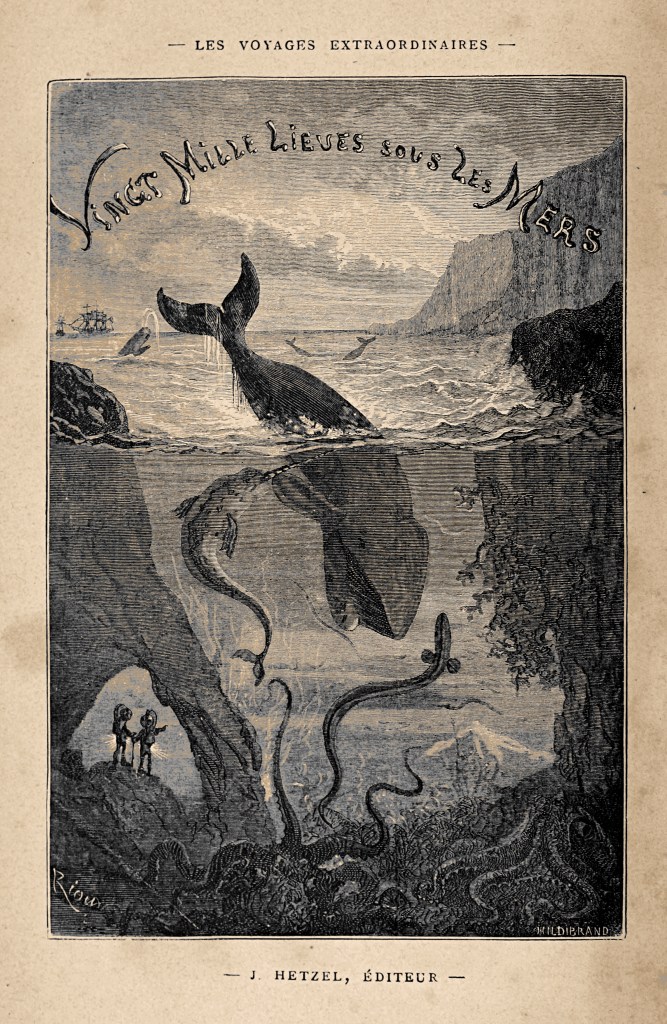
“Twenty thousand Leagues Under the Sea” is an adventure novel by Jules Verne which was published in 1869-1870 and recounts the journey of three shipwrecked people saved by Captain Nemo. It was the fifth most translated book in the world and has been subject to many adaptations. It is now part of our bilingual book library.
The idea of writing “Twenty thousand Leagues Under the Sea” dated from 1865 and the novel was written in his villa “La Solitude” in Crotoy in the department of the Somme in France.
“Twenty Thousand Leagues Under the Sea” begins with the appearance of a monstrous beast in several seas around the globe. After having caused several shipwrecks, the hunting of the beast begins. A scientist named Pierre Aronnax and his faithful servant joined the hunt on the flagship of the American Navy after being asked by the French secretary of the navy to represent France. On board they meet Ned Land who is a harpooner from Quebec.
After sailing for months they finally find the monster, but the ship is damaged and during the battle between the monster and the ship Pierre Aronnax and Ned Land are thrown overboard. Seeing this Conseil who is Pierre Aronnax servant jumps in the water to rescue his master.
They end up on top of the monster which is none other than a reinforced sheet metal submarine.
They are rescued from the sea but prisoner of the submarine and begin exploring many seas with Captain Nemo who decided to undertake a world tour of the depths.
The first allusion to the novel by Jules Verne is in August 1866 and the definitive title found in the spring of 1868. At first Jules Verne hesitated between “Journey Under Water”, “Twenty thousand Leagues Under Water”, “Twenty five Thousand Leagues Under the Oceans”, “One thousand Leagues Under the Oceans”, but he finally settled with ‘Twenty Thousand Leagues Under the Seas”. To write his book, Jules Verne relied on the scientific knowledge of his time to describe the marine environment, but also worked to anticipate by imagining the possibility of descending to depth still unexplored.
In his novel he also anticipated from the technology of the time by describing a submarine more advanced than those of his time. Effectively the first submarine using a mixed propulsion of stream engine and electricity appeared thirty years after the publication of his novel
They were many adaptations of his novel, in cinema, theater, music, comic books, animation and even attractions and video games.
You can read this book on our site if you want to:
« Vingt mille lieues sous les mers » est un roman d’aventures de Jules Verne publié en 1869-1870 et qui raconte le voyage de trois naufragés sauvés par le capitaine Nemo. C’était le cinquième livre le plus traduit au monde et a fait l’objet de nombreuses adaptations. Ce livre fait maintenant partie de notre bibliothèque de livres bilingues.
L’idée d’écrire « Vingt mille lieues sous les mers » date de 1865 et le roman a été écrit dans sa villa « La Solitude » au Crotoy dans le département de la Somme en France.
“Vingt Mille Lieues Sous Les Mers” commence par l’apparition d’une bête monstrueuse dans plusieurs mers du monde. Après avoir causé plusieurs naufrages, la chasse à la bête commence. Un scientifique du nom de Pierre Aronnax et son fidèle serviteur rejoignent la chasse sur le vaisseau amiral de la marine américaine, après avoir été sollicités par le secrétaire français de la marine, pour représenter la France. À bord, ils rencontrent Ned Land qui est un harponneur de Québec.
Après avoir navigué pendant des mois, ils trouvent enfin le monstre, mais le navire est endommagé et lors de la bataille entre le monstre et le navire, Pierre Aronnax et Ned Land sont jetés par-dessus bord. Voyant cela, Conseil qui est le serviteur de Pierre Aronnax, saute à l’eau pour secourir son maître.
Ils se retrouvent au sommet du monstre qui n’est autre qu’un sous-marin en tôle renforcée.
Ils sont sauvés de la mer mais prisonniers du sous-marin et commencent à explorer de nombreuses mers avec le capitaine Nemo qui décide d’entreprendre un tour du monde des profondeurs.
La première allusion au roman de Jules Verne se situe en août 1866 et le titre définitif est trouvé au printemps 1868. Jules Verne hésite d’abord entre « Voyage Sous l’Eau », « Vingt Mille Lieues Sous l’Eau », « Vingt Cinq Mille Lieues Sous l’Eau », « Vingt Cinq Mille Lieues Sous Les Océans », « Mille Lieues Sous Les Océans », mais il s’est finalement installé avec « Vingt Mille Lieues Sous Les Mers ». Pour écrire son livre, Jules Verne s’est appuyé sur les connaissances scientifiques de son temps pour décrire le milieu marin, mais a également travaillé à anticiper en imaginant la possibilité de descendre à des profondeurs encore inexplorées.
Dans son roman, il a également anticipé sur la technologie de l’époque en décrivant un sous-marin plus avancé que ceux de son temps. En effet le premier sous-marin utilisant une propulsion mixte de moteur fluvial et d’électricité est apparu trente ans après la publication de son roman.
Il y a eu de nombreuses adaptations de son roman, au cinéma, au théâtre, en musique, en bande dessinée, en animation et même en attractions et jeux vidéo.
Vous pouvez lire ce livre sur notre site si vous souhaitez :
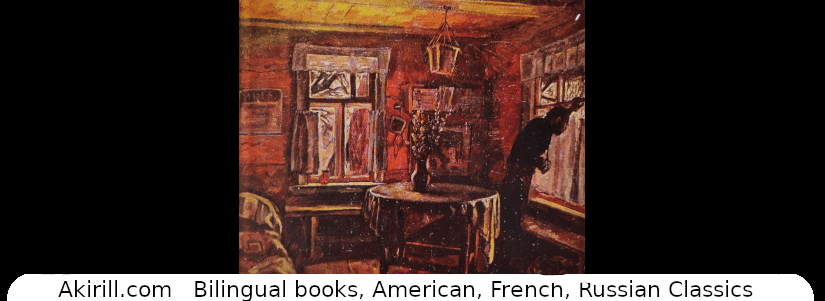
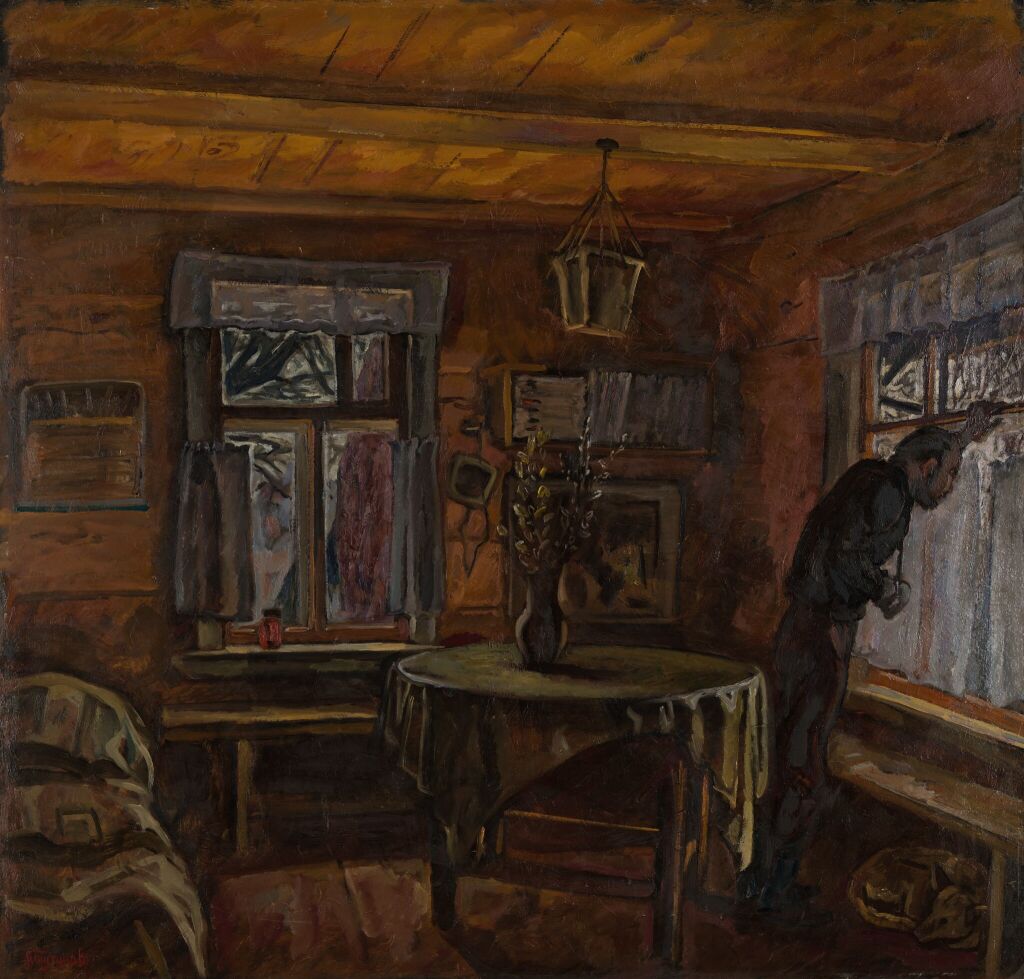
The painting of “Popkov in Priluki” was painted by Andrey Tutunov, after the tragic death of his friend the artist Popkov in 1974.
ПОПКОВ В ПРИЛУКАХ – 1974 “From the collection of the Tretyakov Gallery”.
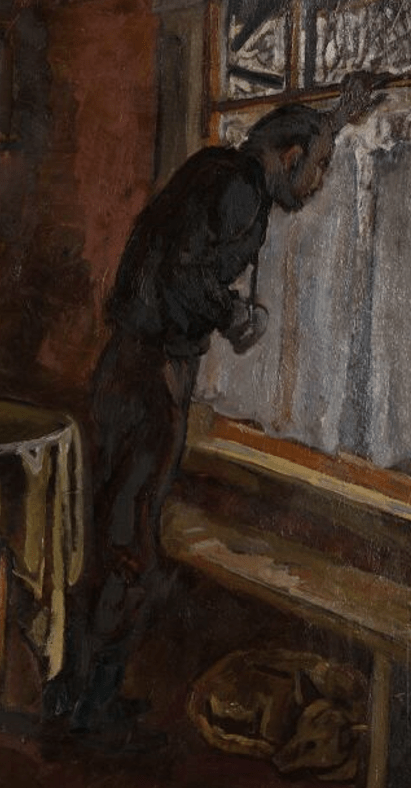
The interior of the house is filled with peace and comfort of a village house which is represented by the warm honey color of the old boards reflecting the color of the objects in the room and only slightly contrasting with the cold light coming out of the windows. This painting is a reproduction of his own house with old wild boards on the walls, ceiling and floor. The windows have lace curtains, there is a table covered with a tablecloth with a bouquet of willow and wooden benches standing along the walls. The sleeping dog under the bench close to his owner is depicted with the same warm wood colors as the inside of the house.
But even the special harmony of close color cannot dispel the feeling of anxiety and doom coming from the lonely figure of Viktor Popkov standing by the window.
His regard is tense as if looking out for some kind of danger, his arm is hanging in a sling, his shoulder rounded and he is very thin which gives the image a poignant premonition of impending disaster
Le tableau de “Popkov à Priluki” a été peint par Andrey Tutunov, après la mort tragique de son ami l’artiste Popkov en 1974.
ПОПКОВ В ПРИЛУКАХ – 1974 « De la collection de la Galerie Tretiakov ».
L’intérieur de la maison est rempli de paix et du confort d’une maison de village, qui est représenté par la couleur miel chaude des vieilles planches reflétant la couleur des objets de la pièce et, ne contrastant que légèrement avec la lumière froide sortant des fenêtres. Ce tableau est une reproduction de sa propre maison avec de vieilles planches sauvages sur les murs, le plafond et le sol. Les fenêtres ont des rideaux de dentelle, il y a une table recouverte d’une nappe avec un bouquet de saules et des bancs en bois placés le long des murs. Le chien endormi sous le banc près de son propriétaire est représenté avec les mêmes couleurs de bois chaudes que l’intérieur de la maison.
Mais même l’harmonie particulière des couleurs proches ne peut dissiper le sentiment d’anxiété et de malheur émanant de la silhouette solitaire de Viktor Popkov debout près de la fenêtre.
Son regard est tendu comme s’il guettait une sorte de danger, son bras est suspendu en écharpe, ses épaules sont arrondies et il est très maigre ce qui donne à l’image une poignante prémonition d’une catastrophe imminente
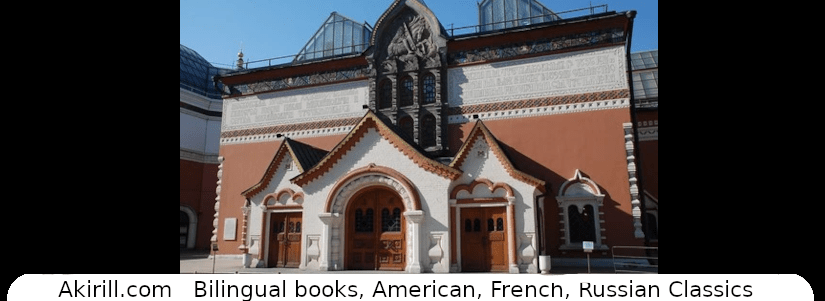
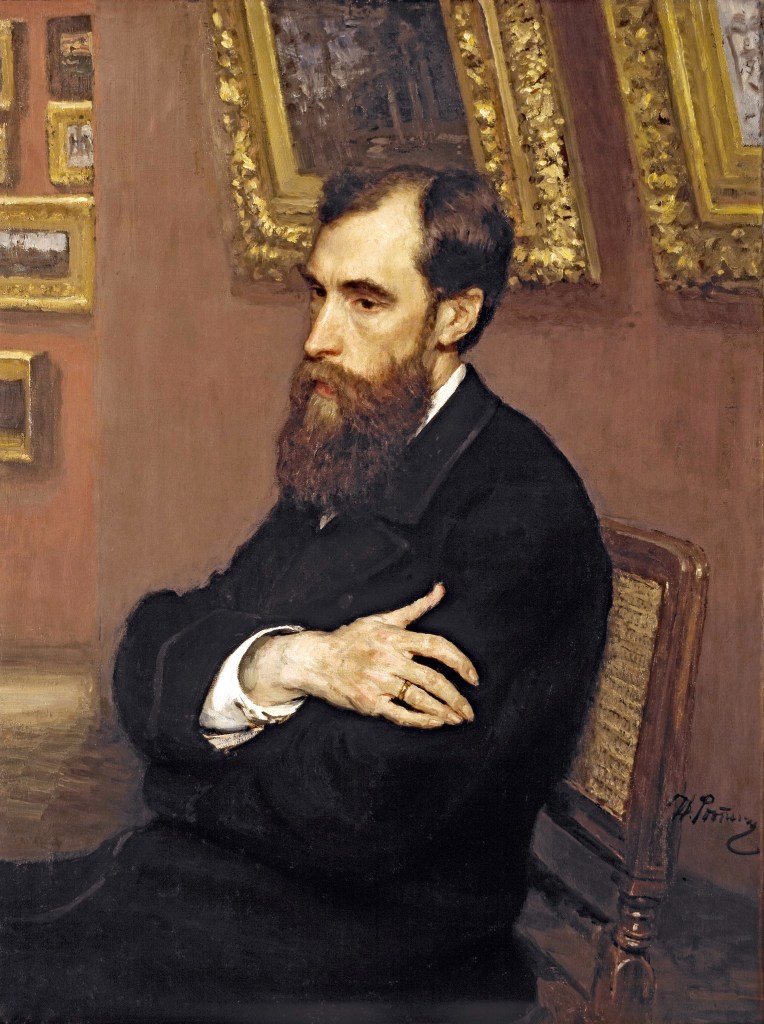
La Galerie nationale Tretiakov est un musée d’art de Moscou fondé en 1856 par Pavel Tretiakov. Il a été ouvert au public en 1867 et transféré à Moscou en 1892. En 2018, l’exposition comprenait plus de 180 000 objets, dont des peintures, des sculptures et des objets en métaux précieux créés du XIe au XXe siècle.
Après avoir créé la manufacture de lin de Kostroma, qui était une entreprise assez prospère, Pavel Mikhailovitch Tretyakov et son frère Sergei se sont intéressés à la collection de peintures.
Galerie Nationale Tretiakov
Ainsi, la galerie a été fondée en 1856, avec l’acquisition de “La Tentation” de Nikolai Schilder et “Escarmouche avec des contrebandiers finlandais” de Vasily Khudyakov, de Pavel Tretyuakov. Il a dit:
Pour moi, qui aime vraiment et ardemment la peinture, il n’y a pas de meilleur désir que de créer un dépôt public et accessible des beaux-arts, faisant profiter au plus grand nombre, tout le plaisir. Je voudrais vous lqisser la galerie nationale, c’est-à-dire composée de peintures d’artistes russes
Son frère Sergei s’intéressait davantage aux toiles de maîtres d’Europe occidentale élargissant les expositions.
En 1867, la galerie municipale de Moscou de Pavel et Sergueï Tretiakov, qui contenait à l’époque 1276 peintures, 471 dessins, 10 sculptures d’artistes russes et 84 peintures de maîtres étrangers, a été ouverte au public.
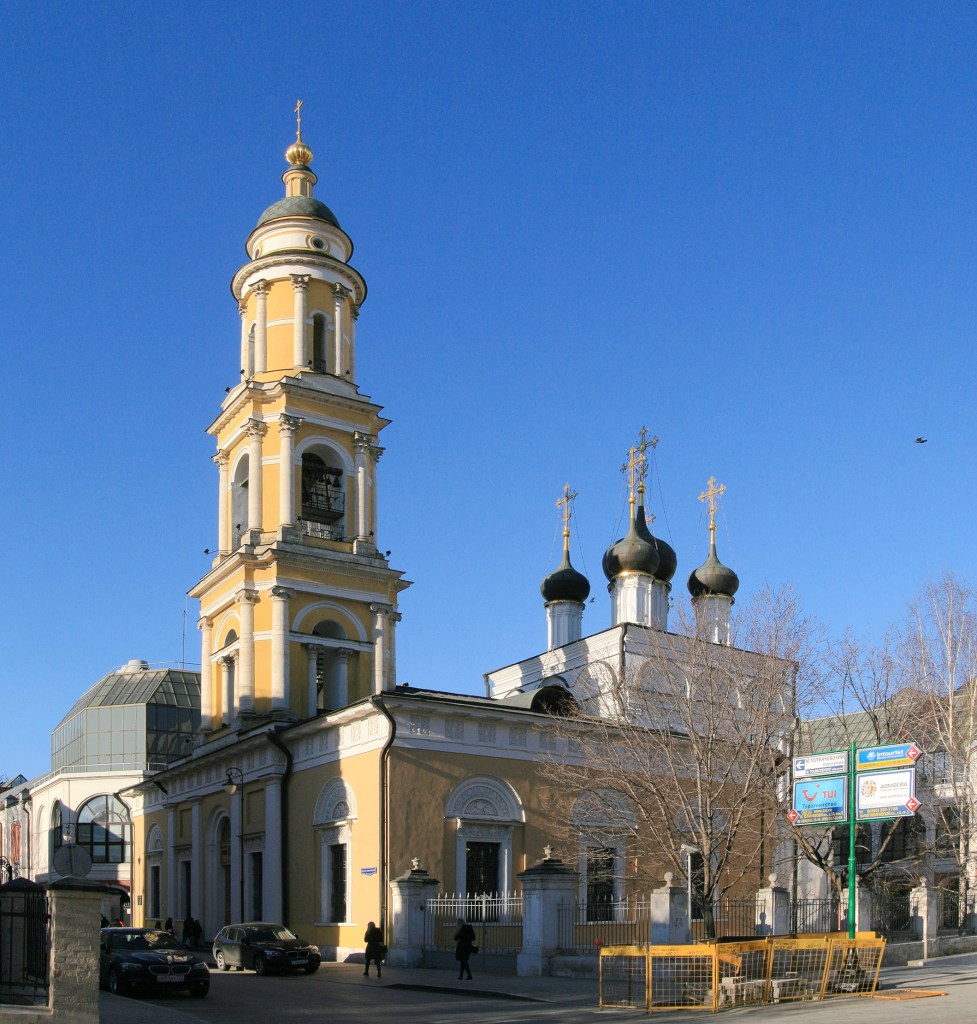
En 1859, après que les frères aient acheté plus de 140 œuvres de la série de peintures et de croquis du Turkestan de Vasily Vereshchagin, ils ont manqué de places pour l’exposition. Un bâtiment de deux étages adjacent au mur sud du manoir et tourné vers l’église Saint-Nicolas de Tolmachi a été construit. Sa construction a été dirigée par l’architecte Alexander Kaminsky. En 1874, la collection y fut déplacée et la galerie ouverte au public.
À la fin des années 1880, le bâtiment de la galerie a été complété à plusieurs reprises en raison de la collection croissante qui occupait déjà 14 salles et dépassait constamment ses possibilités d’exposition.
Et en 1882, la zone d’exposition est à nouveau agrandie aux dépens du jardin entourant la maison. Trois nouvelles salles sont apparues en bas et à l’étage qui étaient situées à un angle par rapport à l’ancien bâtiment de la Galerie, parallèlement à Maly Tolmachecsky Lane.
Elle fut suivie en 1885 par l’apparition de trois salles au dernier étage et de cinq au bas.
En 1892, la quatrième extension a été achevée et deux grandes et une petites salles ont été ajoutées à l’étage supérieur, et trois petites en dessous. et, après la mort de son frère Sergei, Pavel a fait don à Moscou de la galerie, qui contenait à l’époque plus de 2000 œuvres de peinture, de sculpture et de graphisme.
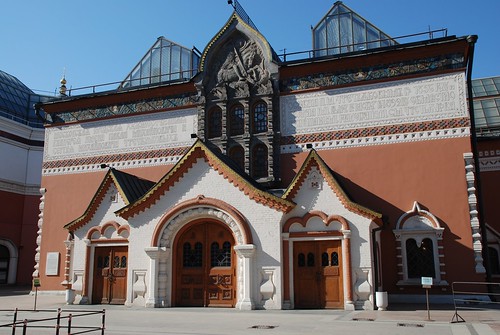
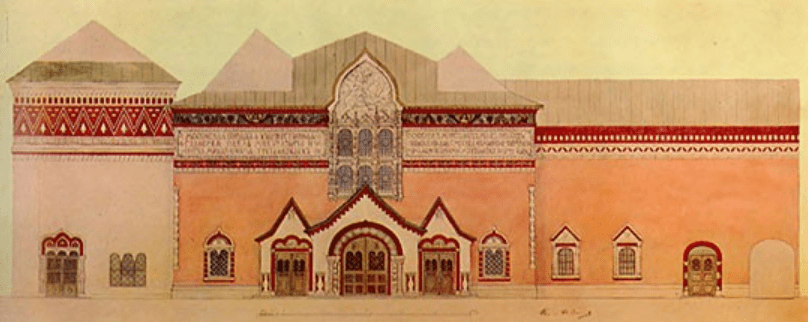
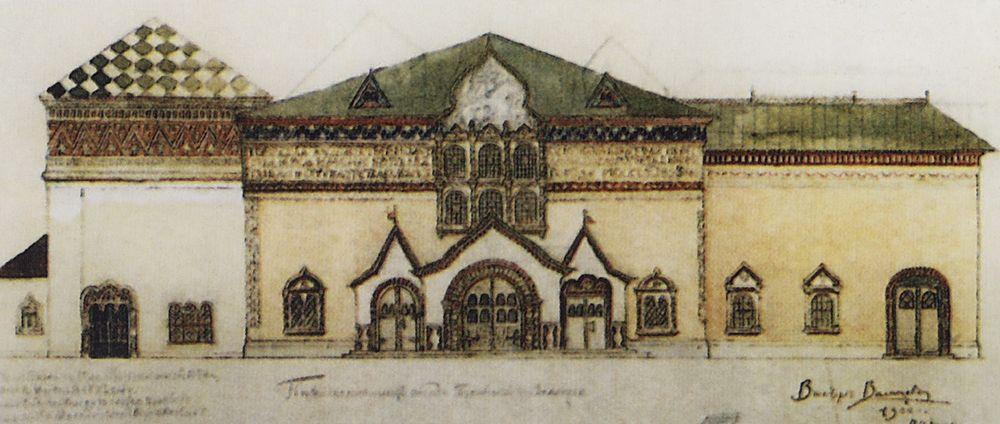
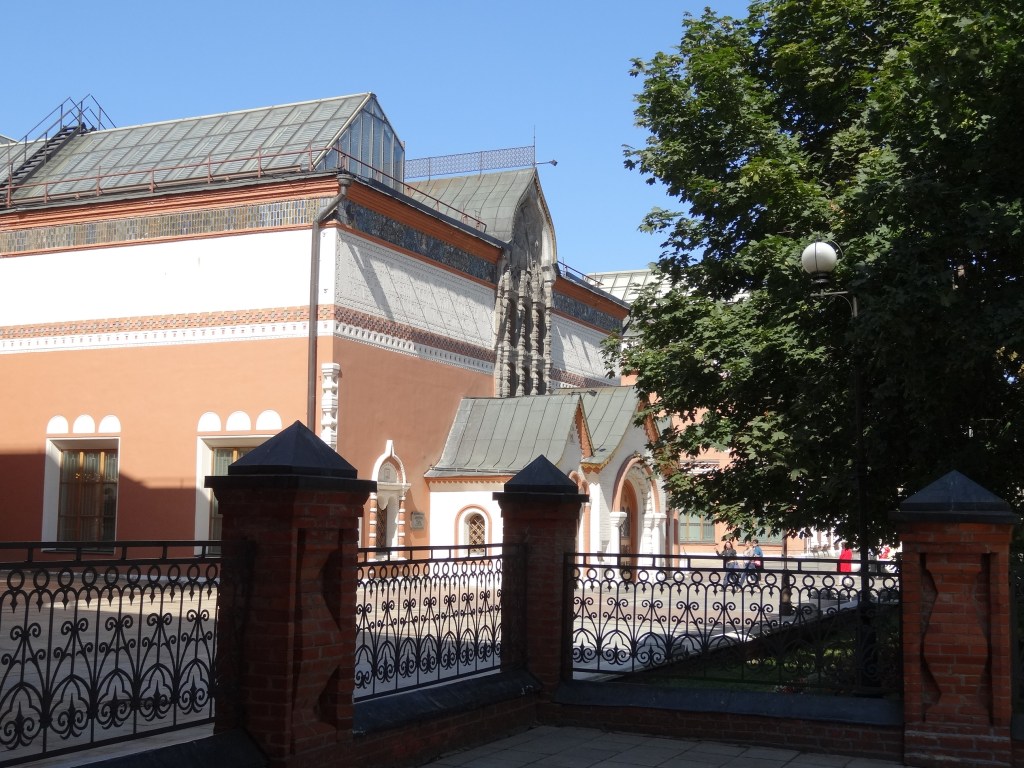
En mai 1900, lors d’une réunion du Conseil de la galerie qui comprenait les artistes VM Vasnetov, VD Polenov et un certain nombre d’architectes moscovites, il fut décidé que la façade de la galerie devait être construite dans le «style russe». Les travaux sont confiés à VM Vasnetsov et la construction de la nouvelle façade qui devient l’emblème de la galerie Tretiakov débute en 1902 et s’achève en 1904.
En avril 1913, Emmanuilovitch Grabar, artiste, architecte et historien de l’art de premier plan, a été élu administrateur de la galerie Tretiakov. Ses réformes ont transformé la galerie Tretiakov en un musée de style européen avec une exposition construite sur une base chronologique et en décembre 1913, à l’occasion du quinzième anniversaire de la mort du fondateur de la galerie, le musée réformé a été ouvert au public.
Auteur : photographe phototype anonyme P. P. Pavlova – Album de bâtiments appartenant à l’administration publique de la ville de Moscou.
En juin 1918, la galerie Tretiakov a été déclarée propriété de l’État de la République fédérative soviétique de Russie et est devenue connue sous le nom de galerie nationale Tretiakov. Entre 1918 et 1922, la collection de la galerie a augmenté de près de 50% grâce aux nombreuses contributions du State Museum Fund. Mais l’inconvénient était que de nombreuses salles d’exposition étaient consacrées au stockage des peintures.
A.V. Shchusev est devenu le directeur de la galerie en 1926 et, a beaucoup fait pour agrandir les locaux existants et en construire un nouveau. Ainsi, en 1927, la Galerie a reçu l’ancienne maison de Sokolikov située sur Maly Tolomachevsky Lane. En 1928 après sa restructuration, il est transformé en bâtiment de service qui abrite l’administration de la Galerie ainsi qu’un département scientifique, une bibliothèque, un département des manuscrits et un fonds graphique. Il a été rattaché à la Galerie plus tard avec une extension spéciale.
En 1928, le chauffage et la ventilation sont reconstruits et en 1929 la galerie est enfin électrifiée. En effet avant cette date, la Galerie n’était ouverte aux visiteurs que le jour.
En 1929, le bâtiment de l’église Saint-Nicolas de Tolmachi ferma et il fut transféré à la galerie en 1932. Il devint un entrepôt de peintures jusqu’à ce qu’il soit relié aux salles d’exposition par un nouveau bâtiment de deux étages dont le dernier étage avait été spécialement conçu pour exposer le tableau de AA Ivanov “L’apparition du Christ au peuple”. Et un nouveau passage entre les salles a été créé pour assurer la continuité de la vue, ce qui a entraîné une augmentation de la surface d’exposition et un nouveau concept de placement des œuvres.
AA Ivanov “L’apparition du Christ au peuple”
En 1936, selon le projet de l’architecte A.V. Shchusev, un nouveau bâtiment à deux étages est apparu sur le côté nord du bâtiment principal. Il comprenait 4 salles spacieuses à chaque étage qui étaient utilisées pour des expositions et qui ont été incluses dans le parcours principal de l’exposition depuis 1940.
Dans la nuit du 11 au 12 août 1941, deux bombes explosives sont tombées sur le bâtiment à la suite d’un raid aérien allemand. Les bombes ont détruit le revêtement en verre à plusieurs endroits du toit et le plafond entre les étages du hall supérieur N 6 et du hall inférieur N 49 s’est effondré. Les planchers du garde-robe du sous-sol ont été brisés, l’entrée principale a été endommagée et le système de chauffage et de ventilation est tombé en panne.
Un deuxième bombardement dans la nuit du 12 au 13 1941 a détruit un immeuble résidentiel de deux étages à côté de la Galerie.
La restauration de la galerie a commencé en 1942 et en 1944 sur 52 salles, 40 avaient été rénovées.
En mai 1956, le 100e anniversaire de la galerie a été célébré et en 1955-1957, la salle A.A. Ivanov a été achevée.
Vers le milieu des années 1980, le besoin de se développer à nouveau se fait sentir en raison de l’augmentation du nombre de visiteurs.
En 1985, un dépôt a été mis en service après 2 ans de construction. Et en 1986, la reconstruction du bâtiment principal de la galerie Tretiakov a commencé sur la base de l’idée de préserver l’aspect historique du bâtiment.
En 1989, sur le côté sud du bâtiment principal, un nouveau bâtiment abritant une salle de conférence, un centre d’information et de calcul, un studio pour enfants et des salles d’exposition a été construit. Comme la plupart des systèmes et services d’ingénierie y étaient concentrés, on l’appelait le Corps of Engineers.
La reconstruction a duré de 1985 à 1995 et comprenait l’ensemble muséal de l’église Saint-Nicolas de Tomachi qui est un monument architectural du XVIIe siècle.
The State Tretyakov Gallery is a Moscow art museum which was founded in 1856 by Pavel Tretyakov. It was opened to the public in 1867 and transferred to Moscow in 1892. As of 2018, the exposition consisted of more than 180 000 items, including paintings, sculptures and items made out of precious metals created from the 11th to the 20th century.
After having created the Kostroma Linen Manufactory, which was quite a successful business, Pavel Mikhailovitch Tretyakov and his brother Sergei became interested in collecting paintings.
State Tretyakov Gallery
So, the gallery was founded in 1856, with the acquisition of “The Temptation” by Nikolai Schilder and “Skirmish with Finnish Smugglers” by Vasily Khudyakov, by Pavel Tretyuakov. He said:
For me, who truly and ardently love painting, there can be no better desire than to start a public, accessible repository of fine arts, bringing benefit to many, all pleasure. I would like to leave you the national gallery, that is, consisting of paintings by Russian artists
His brother Sergei was more interested in canvases of Western European masters widening the exhibitions.
In 1867 the Moscow City Gallery of Pavel and Sergei Tretyakov which at the time contained 1276 paintings, 471 drawings, 10 sculpture by Russian artists and 84 paintings by foreign masters was opened to the public.
In 1859, after that the brothers purchased more than 140 works from the Turkestan series of paintings and sketches by Vasily Vereshchagin they ran out of places for the exposition. A two-story building adjacent to southern wall of the mansion and turned toward the Church of St Nicholas in Tolmachi was build. Its construction was headed by the architect Alexander Kaminsky . In 1874 the collection was moved there and the gallery opened to the public.
By the end of the 1880s, the gallery building was repeatedly completed due to the growing collection which already occupied 14 rooms and constantly surpassed its exposition possibilities.
In 1882, the exposition area was expanded again at the expense of the garden surrounding the house. Three new halls appeared downstairs and upstairs which were located at an angle to the old building of the Gallery, parallel to Maly Tolmachecsky Lane.
It was followed in 1885 by the apparition of three halls on the top floor and five in the bottom.
In 1892 the fourth extension was completed and two large and one small halls were added on the upper floor, and three small ones below. and, after the death of his brother Sergei, Pavel donated the gallery, which at the time contained more than 2000 works of painting, sculpture and graphics, to Moscow.
In may 1900, at a meeting of the Council of the gallery which included the artists V. M. Vasnetov, V. D. Polenov and a number of Moscow architects it was decided that the facade of the gallery should be built in the “Russian Style”. The work was entrusted to V. M. Vasnetsov and the construction of the new façade which became the emblem of the Tretyakov Gallery began in 1902 and ended in 1904.
On April 1913 Emmanuilovitch Grabar who was a prominent artist, architect and art historian was elected as a trustee of the Tretyakov Gallery. His reforms turned the Tretyakov Gallery into a Europeean-style museum with exposition built on a chronological basis and in december 1913, on the fifteenth anniversary of the death of the founder of the gallery, the reformed museum was opened to the public.
On June 1918 the Tretyakov Gallery was declared a State property of the Russian Federative Soviet Republic and became known as the State Tretyakov Gallery. Between 1918 and 1922, the gallery collection increased by almost 50% thanks to the numerous contributions from the State Museum Fund. But the drawback was that many exhibition halls were given over to storage for paintings.
A. V. Shchusev became the director of the gallery in 1926 and did a lot to expand the existing premises and build a new one. So in 1927, the Gallery received the former house of Sokolikov situated on Maly Tolomachevsky Lane. In 1928 after its restructuring, it was turned into a service building which housed the administration of the Gallery as well as a scientific department, a library, a department of manuscripts, and graphics funds. It was attached to the Gallery later with a special extension .
In 1928, the heating and ventilation was rebuilt and in 1929 the Gallery was finally electrified. Effectively before that time, the Gallery had been opened to visitors only during the daytime.
In 1929 the building of the Church of St Nicholas in Tolmachi closed and it was transferred to the Gallery in 1932. It became a storehouse for paintings until it was connected to the exposition halls by a newly built two story of which the top floor had been specially designed to display A. A. Ivanov’s painting “The Appearance of Christ to the People”. And a new passage between the halls was created to ensure the continuity of the view which resulted in an increased area of exposition and a new concept for the placement of works.
A. A. Ivanov’s painting “The Appearance of Christ to the People”
In 1936, according to the project of the architect A.V. Shchusev, a new two story building appeared on the north side of the main building. It included 4 spacious halls on each floor which were used for exhibitions and have been included in the main exhibition route since 1940.
On the night of August 11-12, 1941 two high-explosive bombs fell on the building as a result of a German air raid. The bombs destroyed the glass covering in several places of the roof and the interfloor ceiling of the upper hall N 6 and the lower one N 49 collapsed. The floors in the basement wardrobe were smashed, the main entrance was damaged and the heating and ventilation system failed.
A second bombing in the night of 12-13, 1941 destroyed a two story residential building next to the Gallery.
The restauration of the Gallery began in 1942 and by 1944 out of 52 halls, 40 had been renovated.
In May 1956, the 100th anniversary of the Gallery was celebrated and in 1955-1957, the A.A. Ivanov Hall was completed.
By the mid 1980 the need to expand again was felt because of the increased number of visitors.
In 1985 a depository was out in operation after 2 years of construction. And in 1986 the reconstruction of the main building of the Tretyakov Gallery began based on he idea of preserving the historical appearance of the building.
In 1989, on the south side of the main building a new building housing a conference hall, an information and computing center, a children’s studio and exhibition halls was built. Since most of the engineering systems and services were concentrated there it was called the Corps of Engineers.
The reconstruction lasted from 1985 to 1995 and included the museum ensemble of the church of St. Nicholas in Tomachi which is an architectural monument of the 17th century.
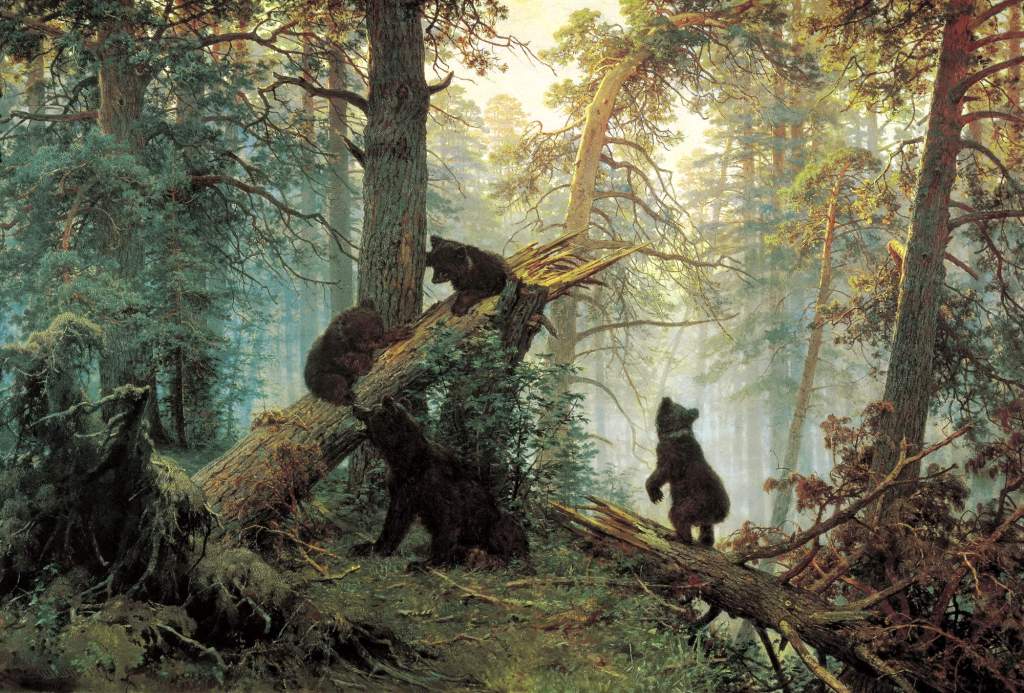
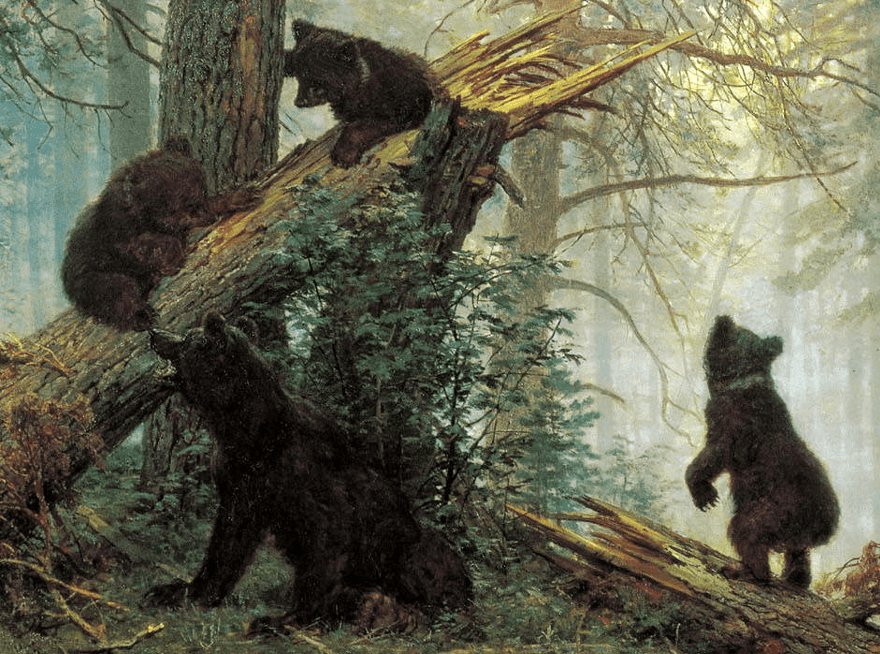
“Morning in a Pine Forest” is a legendary painting by Ivan Ivanovitch Shishkin. It was painted in 1889 on the island of Gorodomlya and is an oil painting on canvas of 139 X 213 cm which now resides in the Tretyakov Gallery in Moscow. This work looks so believable that it seems like a photo taken somewhere in the forest.
It is presumed that the painting was suggested to Shishkin by Savitsky, who later acted as a co-author and depicted the figures of cubs according to Shishkin’s sketches.
Originally, it was titled “Bear Family in the Forest” and signed by both Shiskin and Savitsky who painted the bears but they had an argument and Shishkin personally erased Savitsky’s name from the painting using turpentine.
In the foreground of the picture is a mother bear and her three cubs. These dangerous, and formidable strong animals personify Russia itself and harmoniously fit into the landscape.
In the background of the picture we see golden hues which are the first rays of the sun, indicating the beginning of the morning. The bottom of the picture is still dark, fog creeps on the ground. The warm golden-yellow hues contrast brightly with the darkness of a gloomy forest, creating the image of a mysterious forest that descended from the pages of Russian fairy tales.
Shishkin painted the smallest details of the forest; branches, leaves, pine needles, roots … Everything is extremely realistic, and the forest looks like a very powerful force, but the picture still gives an impression of magie due to the effect of the fog which gives an atmosphere of mystery.
From the painting “Morning in a Pine Forest” comes an amazing calmness and serenity.
Reproductions of “Morning in a Pine Forest” was widely replicated in the URSS making it a well known picture often under the name of “Three Bears”.
We hope you enjoyed this painting as much as we did.
If you liked this article, subscribe , put likes, write comments!.
“Matin Dans Une Forêt De Pins” est un tableau légendaire d’Ivan Ivanovitch Shishkin. Il a été peint en 1889 sur l’île de Gorodomlya et, est une peinture à l’huile sur toile de 139 X 213 cm qui réside maintenant dans la galerie Tretyakov à Moscou. Ce travail a l’air si crédible qu’il ressemble à une photo prise quelque part dans la forêt.
On suppose que la peinture a été suggérée à Shishkin par Savitsky, qui a ensuite agi en tant que co-auteur et a représenté les figures des oursons selon les croquis de Shishkin.
À l’origine, il était intitulé “Famille d’Ours dans la Forêt” et signé par Shiskin et Savitsky qui a peint les ours, mais ils se sont disputés et Shishkin a personnellement effacé le nom de Savitsky du tableau à l’aide de térébenthine.
Au premier plan de l’image se trouve une maman ourse et ses trois oursons. Ces animaux forts dangereux et redoutables personnifient la Russie elle-même et s’intègrent harmonieusement dans le paysage.
En arrière-plan de l’image, on voit des teintes dorées qui sont les premiers rayons du soleil, indiquant le début du matin. Le bas de l’image est encore sombre, le brouillard rampe sur le sol. Les teintes chaudes jaune doré contrastent vivement avec l’obscurité d’une forêt sombre, créant l’image d’une forêt mystérieuse issue des pages de contes de fées russes.
Shishkin a peint les moindres détails de la forêt; branches, feuilles, aiguilles de pin, racines… Tout est extrêmement réaliste, et la forêt ressemble à une force très puissante, mais la photo donne tout de même une impression de magie due à l’effet du brouillard qui donne une atmosphère de mystère.
De la peinture “Matin Dans Une Forêt De Pins” vient un calme et une sérénité étonnants.
Les reproductions de “Matin Dans Une Forêt De Pins” ont été largement reproduites dans l’URSS, ce qui en fait une image bien connue souvent sous le nom de “Trois Ours”.
Nous espérons que vous avez apprécié ce tableau autant que nous.
Si vous avez aimé cet article, abonnez-vous, mettez des likes, écrivez des commentaires !.
“I remember a wonderful moment” is one of the most famous lyrical works of Alexander Pushkin who devoted many of his poems to women.
He wrote this poem in 1825, during his exile in Mikhailovsky after his second meeting with A. P. Kern. Their first meeting dated from 1819 and she had captured his imagination.
In just a few stanzas, Alexander Pushkin unfolds before our eyes a long history of his relationship with A. Kern, and his admiration of the woman.
Alexander Pushkin
Я помню чудное мгновенье (Керн) Александр Пушкин
I Remember a Wonderful Moment (Kern) by Alexander Pushkin
We put a lot of effort into the quality of the articles and translations, support us with a like and a subscription or sponsor us if you like them. We are also on Facebook and Twitter
«Je me souviens d’un moment merveilleux» est l’une des œuvres lyriques les plus célèbres d’Alexandre Pouchkine qui a consacré nombre de ses poèmes aux femmes.
Il a écrit ce poème en 1825, lors de son exil à Mikhailovsky après sa deuxième rencontre avec A.P. Kern. Leur première rencontre datait de 1819 et elle avait captivé son imagination.
En quelques strophes seulement, Alexandre Pouchkine fait defilé sous nos yeux la longue histoire de sa relation avec A. Kern, et de son admiration pour la femme.
Alexandre Pouchkine
Я помню чудное мгновенье (Керн) – Александр Пушкин
Je me Souviens d’un Moment Merveilleux (Kern) – Alexandre Pouchkine
К Керн
Kern
Traduit par Akirill.com 05/31/2022
Я помню чудное мгновенье;
Je me souviens d’un moment merveilleux;
Передо мной явилась ты,
Tu es apparu devant moi,
Как мимолётное виденье,
Comme une vision fugace,
Как гений чистой красоты
Comme un génie de pure beauté
В Томленьях грусти безнадёжной,
Dans la langueur d’une tristesse sans espoir,
В тревогах шумной суеты,
Dans les angoisses d’une agitation bruyante,
Звучал мне долго голос нежный
Une douce voix m’a longtemps résonné
И снились милые черты.
Et de doux traits je rêvai.
Шли годы. Бурь порыв мятежный
Les années ont passé. Tempêtes d’élans rebels
Рассеял прежние мечты,
Éparpillèrent d’anciens rêves,
И я забыл твой голос нежный,
Et j’oubliai ta douce voix,
Твои небесные черты.
Tes traits célestes.
В глуши, во мраке заточенья
Dans le désert, dans les ténèbres de l’enfermement
Тянулись тихо дни мои
Mes jours s’éternisaient tranquillement
Без божества, без вдохновенья,
Sans divinité, sans inspiration,
Без слёз, без жизни, без любви.
Sans larmes, sans vie, sans amour.
Душе настало пробужденье:
L’âme s’est éveillée :
И вот опять явилась ты,
Et ici encore tu es apparue,
Как мимолётное виденье,
Comme une vision fugitive,
Как гений чистой красоты.
Comme un génie de pure beauté.
И сердце бьется в упоенье,
Et le cœur bat dans le ravissement,
И для него воскресли вновь
Et pour lui ressuscité de nouveau
И божество, и вдохновенье,
Et la divinité, et l’inspiration,
И жизнь, и слёзы, и любовь.
Et la vie, et les larmes, et l’amour.
Nous mettons beaucoup d’efforts dans la qualité des articles et traductions, soutenez-nous avec un like et un abonnement ou sponsorisez-nous si vous les aimez.Nous sommes aussi surFacebook et Twitter









 AKirill, Learn, apprenez, translation, traduction, livres bilingues, bilingual books