Site Progress Week of September 20, 2023

Bilingual BooksLire en Français Contact us

Dear readers and subscribers, this week I continued to add poems to all our poets and translated the poem “Stranger” by Alexander Blok. Since it is beginning to cool down, I might begin to work on all the bilingual books and translation which were stopped during the summer, or …

I’m sure you’ve all noticed that the posts written in French are always published one day after the English ones, but if the article is a poem translation, you can already find it in French on the main poetry page (English, French, or Russian poetry)

Following are a few of the poems added, don’t forget to visit the author page to find out the others.

I hope you’ll find something to enjoy

Beginning with English, here are a few randomly selected poems by Henry Wadsworth Longfello (Генри Уодсворт Лонгфелло)

And some randomly selected poems by Victor Hugo (Виктор Гюго) first in English, then in French

We’ll continue by a few randomly selected poems by Paul Verlaine (Поль Верлен)

And finally, our Russian poems. First a few randomly selected poems by Anna Akhmatova (Анна Ахматова)

Then a few randomly selected poems by Alexander Blok (Александр Блок)

And a few randomly selected poems by Ivan Bunin (Иван Алексеевич Бунин)

Then a few randomly selected poems by Nikolay Nekrasov (Николай А. Некрасов)

And finally a few randomly selected poems by Fyodor Tyutchev (Фёдор Иванович Тютчев)


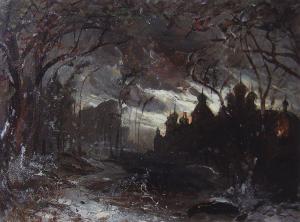
This week our article was a translation of the poem “Stranger” by Alexander Blok with the painting “Illumination in St. Petersburg” by Fyodor Vasilyev

Illumination in St. Petersburg by Fyodor Vasilyev

We put a lot of effort into the quality of the articles and translations, support us with a like and a subscription or sponsor us if you like them. We are also on Facebook and Twitter


© 2023 Akirill.com – All Rights Reserved

Lisez le poème “L’Étrangère” d’Alexandre Blok en français avec français et russe côte à côte

Livres bilinguesRead in EnglishNous contacter
Littérature américaineLittérature françaiseLittérature russe

Chers lecteurs et abonnés, cette semaine j’ai fait une brève analyse et traduit le poème « L’Étrangère » d’Alexander Blok écrit en 1906 et qui reflète ses sentiments et réflexions pendant une période difficile. Comme toujours j’ai ajouté une peinture intitulée « Illumination à Saint-Pétersbourg » de Fiodor Vassiliev ainsi que l’explication de quelques mots.

Depuis que j’écris en anglais, français et russe j’ai également créé une page où vous pouvez retrouver le nom de tous les écrivains et peintres russes qui sont sur le site dans les 3 langues côte à côte. J’ajouterai les écrivains et artistes français et américains un peu plus tard.

Alors prenez un bon café et savourez, l’intégralité du poème est comme toujours en accès libre avec un lien vers la page en bas de notre petit extrait.


Brève analyse du poème “L’Étrangère” d’Alexandre Blok

Alexander Blok a écrit le poème « L’étrangère » après que sa femme l’ai quitté, le laissant écrasé par le désespoir et passant des journées entières à boire de façon excessive dans des établissements sales et bon marché. Le poème reflète les sentiments et les réflexions de l’auteur lors de moments difficiles pour lui-même et sa tentative de trouver une issue à sa mauvaise situation.

Dans ce poème, l’auteur décrit l’atmosphère sombre d’un restaurant sale où rien ne change et où la monotonie et l’absurdité vous rendent fou. Mais nous espérons la délivrance de notre héros lyrique sous la forme d’un mystérieux étranger. Cette femme qui passe entre les rangs des ivrognes vient d’un monde pur et lumineux et en la regardant et en sentant son parfum, le poète comprend l’horreur de sa situation et dans ses rêves, il s’envole et commence une nouvelle vie.

La fin du poème est ambiguë et peut être interprétée de deux manières différentes. Il se peut qu’il n’était pas comme les ivrognes qui l’entouraient et qu’il se soit rendu compte qu’il possédait encore un « trésor spirituel » dont il avait le droit de disposer, ou qu’il aurait pu simplement s’agir d’un délire d’ivrogne suivi d’une grave gueule de bois.

Peinture “Illumination de Saint-Pétersbourg” par Fiodor Vassiliev


Explication de quelques mots

дик: court masculin singulier de  ди́кий (sauvage)

Уклю́чина
Dame de nage

Traduction du poème “L’Étrangère” d’Alexandre Blok en français avec français et russe côte à côte

Незнакомка – Александр БлокL’étrangère – Alexander Blok
Traduit par Akirill.com
09/17/2023
По вечерам над ресторанамиLe soir au dessus des restaurants
Горячий воздух дик и глух,L’air chaud est sauvage et sourd,
И правит окриками пьянымиEt règne sur les cris des ivrognes
Весенний и тлетворный дух.L’esprit printanier et pernicieux.
Вдали над пылью переулочной,Bien au-dessus de la poussière de l’allée,
Над скукой загородных дач,Au-dessus de l’ennui des maisons de campagne,
Чуть золотится крендель булочной,Le bretzel de la boulangerie est légèrement doré,
И раздается детский плач.Et le cri d’un enfant se fait entendre.d.
Читать далее …Continuer la lecture …

Nous mettons beaucoup d’efforts dans la qualité des articles et traductions, soutenez-nous avec un like et un abonnement ou sponsorisez-nous si vous les aimez. Nous sommes aussi sur Facebook et Twitter


Découvrez nos Derniers Posts


© 2023 Akirill.com – All Rights Reserved

Read the poem “Stranger” by Alexander Blok in English with English and Russian side by side

Bilingual booksLire en FrançaisContact us
American LiteratureFrench LiteratureRussian Literature

Dears Readers and subscribers, this week I made a short analysis and translated the poem “Stranger” by Alexander Blok written in 1906 and which reflects the author’s feelings and reflections during hard time. As always I added a painting called “Illumination in St. Petersburg” by Fyodor Vasilyev as well as the explanation of a few words.

Since I have been writing in English, French and Russian I also created a page where you can find the name of all Russian writers and painters who are on the site in the 3 languages next to each other. I will add the French and Americain writers and artist a bit later.

So have a nice cup of coffee and enjoy, the entire poem as always is freely accessible with a link to the page at the bottom of our little extract.


Short analysis of the poem “Stranger” by Alexander Blok

Alexander Blok wrote the poem “Stranger” after his wife left him causing him to be crushed by despair and spending whole days of binge drinking in dirty and cheap establishments. It reflects the author’s feelings and reflections during hard time for himself and an attempt to find a way out of his bad situation.

In this poem the author describes the gloomy atmosphere of a dirty restaurant. where nothing changes and the monotony and meaninglessness drives you crazy. But hope for deliverance to our lyrical hero in the form of a mysterious stranger. This woman passing between the drunken rows comes from a pure and bright world and looking at her and smelling her perfume, the poet understands the horror of his situation and in his dreams, he flies away and begins a new life.

The ending of the poem is ambiguous and can be interpreted in two different manners. It can be that he was not like the drunks around him and realized that he still had a “spiritual treasure” that he had the right to dispose of, or it could have simply be a drunken delirium followed by a severe hangover

Painting “Illumination in St. Petersburg” by Fyodor Vasilyev

Illumination in St. Petersburg by Fyodor Vasilyev

Explanation of a few words

дик: short masculine singular of ди́кий (wild)

Уклю́чина
Oarlock


Translation of the poem “Stranger” by Alexander Blok in English with English and Russian side by side

Незнакомка – Александр БлокStranger – Alexander Blok
Translated by Akirill.com
09/17/2023
По вечерам над ресторанамиIn the evenings above the restaurants
Горячий воздух дик и глух,The hot air is wild and deaf,
И правит окриками пьянымиAnd rules on the drunken shouts
Весенний и тлетворный дух.The spirit of spring and perniciousness.
Вдали над пылью переулочной,Far above the dust of the alley,
Над скукой загородных дач,Above the boredom of country houses,
Чуть золотится крендель булочной,The bakery’s pretzel is slightly golden,
И раздается детский плач.And a child’s cry is heard.
Читать далее …Continue reading …

We put a lot of effort into the quality of the articles and translations, support us with a like and a subscription or sponsor us if you like them. We are also on Facebook and Twitter


Check out our Last Posts


© 2023 Akirill.com – All Rights Reserved

Progrès du Site semaine du 13 septembre, 2023

Livres bilinguesRead in English Nous contacter

Chers lecteurs et abonnés, cette semaine j’ai continué à ajouter des poèmes à la plupart de nos poètes. J’ai même fini d’ajouter tous les poèmes que j’avais en russe à Sergei Yesenin (Сергей Александрович Есенин).

En anglais, nous avons des poèmes d’Henry Wadsworth Longfello (Генри Уодсворт Лонгфелло) et de Victor Hugo (Виктор Гюго). En français, poèmes de Paul Verlaine (Поль Верлен). Enfin, en russe, des poèmes d’Anna Akhmatova (Анна Ахматова) et d’Ivan Bunin (Иван Алексеевич Бунин) ainsi que tous les poèmes que j’avais de Sergei Yesenin (Сергей Александрович Есенин)

J’espère que vous trouverez quelque chose à apprécier

En commençant par l’anglais, voici quelques poèmes sélectionnés au hasard par Henry Wadsworth Longfello (Генри Уодсворт Лонгфелло)

Et quelques poèmes choisis au hasard de Victor Hugo (Виктор Гюго)

Puisque Victor Hugo est un poète français, nous continuerons par quelques poèmes choisis au hasard de Paul Verlaine (Поль Верлен)

Nous terminerons avec nos poèmes russes. D’abord quelques poèmes sélectionnés au hasard d’Anna Akhmatova (Анна Ахматова)

Puis quelques poèmes choisis au hasard d’Ivan Bounine (Иван Алексеевич Бунин)

Et enfin quelques poèmes choisis au hasard par Sergueï Essénine (Сергей Александрович Есенин)

American Poetry – Poésie Américaine – Американская поэзияPoésie Française – French Poetry – Французская поэзияРусская поэзия – Russian Poetry – Poésie Russe

Cette semaine, notre article était une traduction du beau poème d’amour, «Matin d’automne» d’Alexandre Pouchkine avec les peintures “Ruisseau forestier. Automne” et “Paysage d’automne. Parc à Pavlovsk” par I. I. Chichkine


Nous mettons beaucoup d’efforts dans la qualité des articles et traductions, soutenez-nous avec un like et un abonnement ou sponsorisez-nous si vous les aimez. Nous sommes aussi sur Facebook et Twitter


© 2023 Akirill.com – All Rights Reserved

Site Progress Week of September 13, 2023

Bilingual BooksLire en Français Contact us

Dear readers and subscribers, this week I continued to add poems to most of our poets. I even finished adding all poems I had in Russian to Sergei Yesenin (Сергей Александрович Есенин).

In English we have poems from Henry Wadsworth Longfello (Генри Уодсворт Лонгфелло) and from Victor Hugo (Виктор Гюго). In french, poems from Paul Verlaine (Поль Верлен). Finally, in Russian, poems from Anna Akhmatova (Анна Ахматова) and Ivan Bunin (Иван Алексеевич Бунин) as well as all poems I had of Sergei Yesenin (Сергей Александрович Есенин)

I hope you’ll find something to enjoy

Beginning with English, here are a few randomly selected poems by Henry Wadsworth Longfello (Генри Уодсворт Лонгфелло)

And some randomly selected poems by Victor Hugo (Виктор Гюго)

Since Victor Hugo is a French poet, we’ll continue by a few randomly selected poems by Paul Verlaine (Поль Верлен)

We’ll finish with our Russian poems. First a few randomly selected poems by Anna Akhmatova (Анна Ахматова)

Then a few randomly selected poems by Ivan Bunin (Иван Алексеевич Бунин)

And finally a few randomly selected poems by Sergei Yesenin (Сергей Александрович Есенин)

American Poetry – Poésie Américaine – Американская поэзияPoésie Française – French Poetry – Французская поэзияРусская поэзия – Russian Poetry – Poésie Russe

This week our article was a translation of the poem beautiful love poem, “Autumn morning” by Alexander Pushkin with the paintings “Forest Creek. Autumn” and “Autumn landscape.Park in Pavlovsk by I. I. Shishkin


We put a lot of effort into the quality of the articles and translations, support us with a like and a subscription or sponsor us if you like them. We are also on Facebook and Twitter


© 2023 Akirill.com – All Rights Reserved

Poème «Matin d’automne» d’Alexandre Pouchkine traduit en français avec français et russe côte à côte.

Livres bilinguesRead in EnglishNous contacter
Littérature américaineLittérature françaiseLittérature russe

Chers lecteurs et abonnés, cette semaine j’ai traduit et écrit une courte analyse du célèbre et très joli poème d’amour « Matin d’automne » écrit par Alexandre Pouchkine quand il avait 17 ans incluant l’explication des mots obsolètes ainsi que deux beaux tableaux de I. I. Chichkine qui sont “Ruisseau forestier. Automne” et “Paysage d’automne. Parc à Pavlovsk” . J’espère que vous apprécierez le poème et les peintures autant que moi.

< < < Automne  (Ru/Fr) / Autumn (Ru/Eng) / Осень (Рус/Анг.) / (Рус/ Фра.)

“Cerisier” (Ru/Fr) / “Cherry Tree” (Ru/Eng) / Вишня (Рус/Анг.) / (Рус/ Фра.) > > >


Brève analyse du poème « Matin d’automne » d’Alexandre Pouchkine

Le poème « Matin d’automne », écrit par Alexandre Pouchkine à l’âge de dix-sept ans et décrivant son premier amour sérieux, n’a été publié qu’après sa mort. Dans ce poème, Pouchkine relie tout ce qui lui est cher (champs, collines, forêt de chênes) à sa bien-aimée, se rappelant à quel point il était heureux là-bas. Et « свирель » représente à la fois la poésie et l’idylle. La nature se refroidit et meurt mais son amour reste vivant et il croit qu’il reverra la jeune fille au nouveau printemps.

Peintures “Ruisseau forestier. Automne” and “Paysage d’automne. Parc à Pavlovsk” by I. I. Chichkine

Explication des mots russes obsolètes

драго́й dans ce cas est un mot obsolète qui signifie chère (celle qui est précieuse, bien-aimée, proche du cœur). Un autre sens que l’on retrouve dans la poésie ancienne est : cher (synonyme : coûteux, précieux, précieux)

Свирель est un ancien mot russe *svirati   qui signifie jouer de la flûte – En slave de l’Église : svirati   signifie sifflet – sifflement

Poème « Matin d’automne » d’Alexandre Pouchkine en français et russe côte à côte.

Осеннее утро –
Александр Пушкин
Matin d’automne
d’Alexandre Pouchkine
traduit par Akirill.com
Поднялся шум; свирелью полевойUn bruit s’éleva; avec le sifflement musical des champs 
Оглашено моё уединенье,Ma solitude a été annoncée,
И с образом любовницы драгойEt avec l’image de ma chère  bien-aimée
Последнее слетело сновиденье.Le dernier rêve s’est envolé,
С небес уже скатилась ночи тень.L’ombre de la nuit est déjà descendue du ciel.
Взошла заря, блистает бледный день —L’aube s’est levée, le jour pâle brille –
А вкруг меня глухое запустенье…Et tout autour de moi est une désolation sourde…
Читать далее …Continuer la lecture …

Pushkin Alexander by Sokolov

< < < Automne  (Ru/Fr) / Autumn (Ru/Eng) / Осень (Рус/Анг.) / (Рус/ Фра.)

“Cerisier” (Ru/Fr) / “Cherry Tree” (Ru/Eng) / Вишня (Рус/Анг.) / (Рус/ Фра.) > > >

Nous mettons beaucoup d’efforts dans la qualité des articles, soutenez-nous avec un like et un abonnement si vous les aimez.

Partager sur les réseaux sociaux

Découvrez nos derniers posts

Visitez nous sur Facebook ou Twitter


© 2023 Akirill.com – All Rights Reserved

Poem “Autumn morning” by Alexander Pushkin in English with English and Russian side by side

Bilingual booksLire en FrançaisContact us
American LiteratureFrench LiteratureRussian Literature

Dear readers and subscribers, this week I translated and wrote a short analysis of the famous and beautiful love poem “Autumn morning” written by Alexander Pushkin when he was 17 years old including the explanation of the obsolete words as well as two beautiful paintings by I. I. Shishkin which are “Forest Creek. Autumn” and “Autumn landscape.Park in Pavlovsk. I hope you will enjoy the poem and paintings as much as I did.

< < < Automne  (Ru/Fr) / Autumn (Ru/Eng) / Осень (Рус/Анг.) / (Рус/ Фра.)

“Cerisier” (Ru/Fr) / “Cherry Tree” (Ru/Eng) / Вишня (Рус/Анг.) / (Рус/ Фра.) > > >


Short analysis of the poem “Autumn morning” by Alexander Pushkin

The poem “Autumn morning” which was written by Alexander Pushkin when he was seventeen years old and describes his first serious love, was first published only after his death. In this poem, Pushkin connects everything dear to him (fields, hills, oak forest) with his sweetheart, remembering how happy he was there. And “свирель” represents both poetry and idyll. The nature gets cold and dies but his love stay alive and he believes that he will see the girl in the new spring.

Paintings “Forest Creek. Autumn” and “Autumn landscape.Park in Pavlovsk by I. I. Shishkin

Explanation of outdated Russian words

драго́й in that case is an outdated word which means dear (one that is treasured, beloved, close to the heart). Another meaning which can be found in old poetry is: expensive (synonyme: costly, valuable, precious)

Свирель is an ancient Russian word *svirati  which means play the flute  – In Church Slavonic: svirati  mean sifflet – whistle

Poem “Autumn morning” by Alexander Pushkin English and Russian side by side

Осеннее утро –
Александр Пушкин
Autumn morning by Alexander Pushkin
translated by Akirill.com
Поднялся шум; свирелью полевойA noise arose; with a field musical whistling
Оглашено моё уединенье,My solitude has been announced,
И с образом любовницы драгойAnd with the image of my dear lover
Последнее слетело сновиденье.The last dream flew off.
С небес уже скатилась ночи тень.The shadow of night has already rolled down from the sky.
Взошла заря, блистает бледный день —The dawn has risen, the pale day is shining –
А вкруг меня глухое запустенье…And all around me is a deaf desolation …
Читать далее …Continue reading …

Pushkin Alexander by Sokolov

< < < Automne  (Ru/Fr) / Autumn (Ru/Eng) / Осень (Рус/Анг.) / (Рус/ Фра.)

“Cerisier” (Ru/Fr) / “Cherry Tree” (Ru/Eng) / Вишня (Рус/Анг.) / (Рус/ Фра.) > > >

We put a lot of effort into the quality of articles, support us with a like and a subscription if you like it.
Share on social networks
Check out Our Latest Posts

Visit us on Facebook or Twitter


© 2023 Akirill.com – All Rights Reserved

Progrès du Site semaine du 6 septembre, 2023

Livres bilinguesRead in English Nous contacter

Chers lecteurs et abonnés, cette semaine j’ai décidé de réorganiser complètement la page Poésie russe et en même temps j’ai créé de nombreuses nouvelles pages et ajouté beaucoup de poèmes russes (Oui en russe et mais aussi en français).

J’ai également continué les poèmes de Victor Hugo et ajouté les poèmes des recueils suivants : Les Voix intérieures et Les Rayons et les Ombres en français.

Et enfin j’ai pris le temps de traduire deux courts poèmes d’Alexandre Pouchkine qui sont 19 octobre 1827 et 27 Mai 1819

J’espère que vous trouverez quelque chose à apprécier

Voici quelques poèmes sélectionnés au hasard de Victor Hugo ( Виктор Гюго )

Voici nos nouvelles pages avec quelques poèmes sélectionnés au hasard. Les pages françaises et anglaises contiennent des poèmes écrits en français par Fiodor Tiouttchev et nos poèmes bilingues.

Николай А. Некрасов – Nikolay Nekrasov – Nikolaï Nekrassov

Poems by Nikolay Nekrasov (None yet)

Александр Блок – Alexander Blok – Alexandre Blok

Иван Алексеевич Бунин – Ivan Bunin – Ivan Bounine

Фёдор Иванович Тютчев – Fyodor Tyutchev – Fiodor Tiouttchev

Voici quelques poèmes de Fiodor Tioutchev écrits en français par l’auteur.

Сергей Александрович Есенин – Sergei Yesenin – Sergueï Essénine

American Poetry – Poésie Américaine – Американская поэзияPoésie Française – French Poetry – Французская поэзияРусская поэзия – Russian Poetry – Poésie Russe

Cette semaine, notre article était une traduction mise côte à côte du poème Poème : « Je suis un berger » de Sergueï Essénine avec le tableau « Troupeau sous les arbres » d’Ivan I. Chichkine

Herd under the trees by Ivan Shishkin
« Troupeau sous les arbres » d’Ivan I. Chichkine

Si vous avez aimé cet article, n’oubliez pas de liker et de partager.
Abonnez-vous pour ne rien rater
Visitez nos derniers articles

Retrouvez-nous sur  Facebook  ou  Twitter


© 2023 Akirill.com – All Rights Reserved

Site Progress Week of September 6, 2023

Bilingual BooksLire en Français Contact us

Dear readers and subscribers, this week I decided to completely reorganize the Russian Poetry page and at the same time I created many new pages and added a lot of Russian poems (Yes in Russian and French).

I also continued the poems of Victor Hugo and added the poems of the following collections : Les Voix intérieures and Les Rayons et les Ombres in French.

And last I took the time to translate two short poems from Alexander Pushkin which are October 19, 1827 and May 27, 1819 .

I hope you’ll find something to enjoy

Here are a few randomly selected poems by Victor Hugo (Виктор Гюго)

Following are our new pages with a few random poems selected. The french and English pages contain poems written in French by Fyodor Tyutchev and our bilingual poems.

Николай А. Некрасов – Nikolay Nekrasov – Nikolaï Nekrassov

Poems by Nikolay Nekrasov (None yet)

Александр Блок – Alexander Blok – Alexandre Blok

Иван Алексеевич Бунин – Ivan Bunin – Ivan Bounine

Фёдор Иванович Тютчев – Fyodor Tyutchev – Fiodor Tiouttchev

Here are a few poems from Fyodor Tyutchev written in french by the author.

Сергей Александрович Есенин – Sergei Yesenin – Sergueï Essénine

American Poetry – Poésie Américaine – Американская поэзияPoésie Française – French Poetry – Французская поэзияРусская поэзия – Russian Poetry – Poésie Russe

This week our article was a translation put side by side of the poem “I am a shepherd” by Sergei Yesenin  with the painting “Herd under the trees” by Ivan Shishkin

Herd under the trees by Ivan Shishkin
Herd under the trees” by Ivan Shishkin

If you liked this article, don’t forget to like and share.
Subscribe to not miss anything
Visit our latest posts

Find us on Facebook or Twitter


© 2023 Akirill.com – All Rights Reserved

Poème « Je suis un berger » de Sergei Yesenin en français avec français et russe côte à côte

Livres bilinguesRead in EnglishNous contacter
Littérature américaineLittérature françaiseLittérature russe

< < < Fedor Tyutchev Russia cannot be understood with the mind (Ru/Eng) / La Russie ne peut pas être comprise avec l’esprit (Ru/Fr) / Умом Россию не понять (Рус/Анг.) / (Рус/ Фра.)
Letter to my mother (Ru/Eng) / Lettre à ma mère (Ru/Fr) / Письмо Матери (Рус/Анг.) / (Рус/ Фра.) > > >

Cette semaine, j’ai traduit le poème « Je suis un berger » de Sergueï Yesenin, qui contient plusieurs vieux mots russes souvent mal traduits et pour lesquels j’ai donné une explication ci-dessous. J’ai également ajouté le tableau « Troupeau sous les arbres » d’Ivan I. Chichkine qui semblait avoir été réalisé pour le poème. J’espère que vous les apprécierez autant que moi.

Dans le poème « Je suis un berger », écrit en 1914, le poète explique qu’il est un berger qui échangerait volontiers les chambres en pierre de Moscou où il vivait à l’époque contre les champs. Sergey Yesenin décrit la beauté de sa nature natale au coucher du soleil et relie l’âme et la nature russe en un seul fil.

AttentionМежи signifie sur le bord. Il est différent du mot Между qui signifie entre
Скаты et signifie les pentes. Le poète ne parle pas de raies pastenagues, ce qui est le sens même du mot.
Сутемь signifie crépuscule

Peinture « Troupeau sous les arbres » d’Ivan I. Chichkine

Traduction du poème « Je suis un berger » de Sergei Yesenin en français avec français et russe côte à côte

Я пастух – Сергей ЕсенинJe suis un berger – Sergueï Yesenin
Traduit par Akirill.com
Я пастух, мои палаты —Je suis berger, mes chambres sont
Межи зыбистых полей,A la lisière des champs vallonnés,
По горам зеленым — скатыSur les pentes des montagnes verdoyantes
С гарком гулких дупелей.Avec le rugissement retentissant des bécassines.
Вяжут кружево над лесомElles tricotent de la dentelle au-dessus de la forêt
В желтой пене облака.Dans l’écume jaune des nuages.
В тихой дреме под навесомDans un sommeil tranquille sous la canopée,
Слышу шепот сосняка.j’entends le murmure de la forêt de pins.
Читать далее …Continuer la lecture …

Sergei Yesenin

< < < Fedor Tyutchev Russia cannot be understood with the mind (Ru/Eng) / La Russie ne peut pas être comprise avec l’esprit (Ru/Fr) / Умом Россию не понять (Рус/Анг.) / (Рус/ Фра.)
Letter to my mother (Ru/Eng) / Lettre à ma mère (Ru/Fr) / Письмо Матери (Рус/Анг.) / (Рус/ Фра.) > > >


Si vous avez aimé cet article, abonnez-vous, mettez des likes, écrivez des commentaires !

Partager sur les réseaux sociaux

Découvrez nos derniers posts

Visitez nous sur Facebook ou Twitter


© 2023 Akirill.com – All Rights Reserved