Lisez la biographie de Vasily Grigorievich Perov et regardez toutes ses peintures

Livres bilinguesRead in EnglishContact us
Nous contacter
Littérature américaineLittérature françaiseLittérature russe

Vasily Perov était un grand artiste russe du XIXe siècle, dont les œuvres ont ouvert de nouveaux horizons à l’art russe. Ses peintures sont profondes et complexes, et démontrent toute la vérité sur la dure vie du peuple. Vasily était aussi un grand professeur qui a élevé plus d’une douzaine de très grands peintres. Regardez toutes ses peintures dans un diaporama et appréciez sa biographie.

  • paintings of Vasily Grigorevich Perov
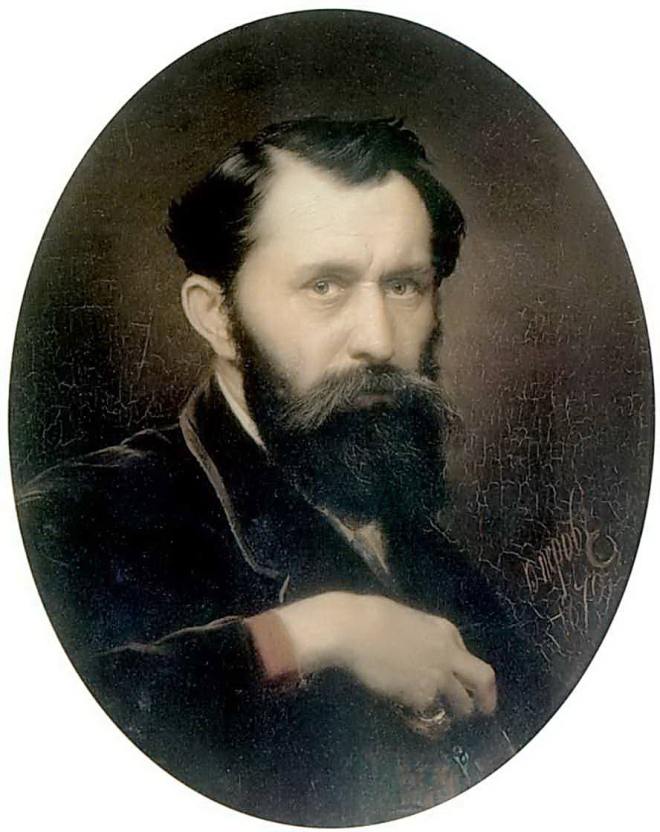
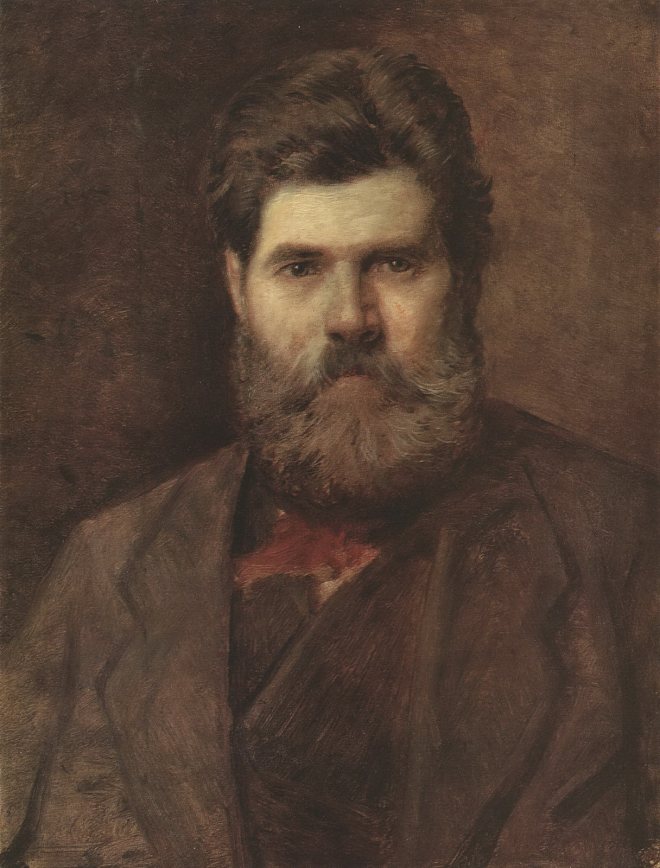
  • Self-portrait. 1851
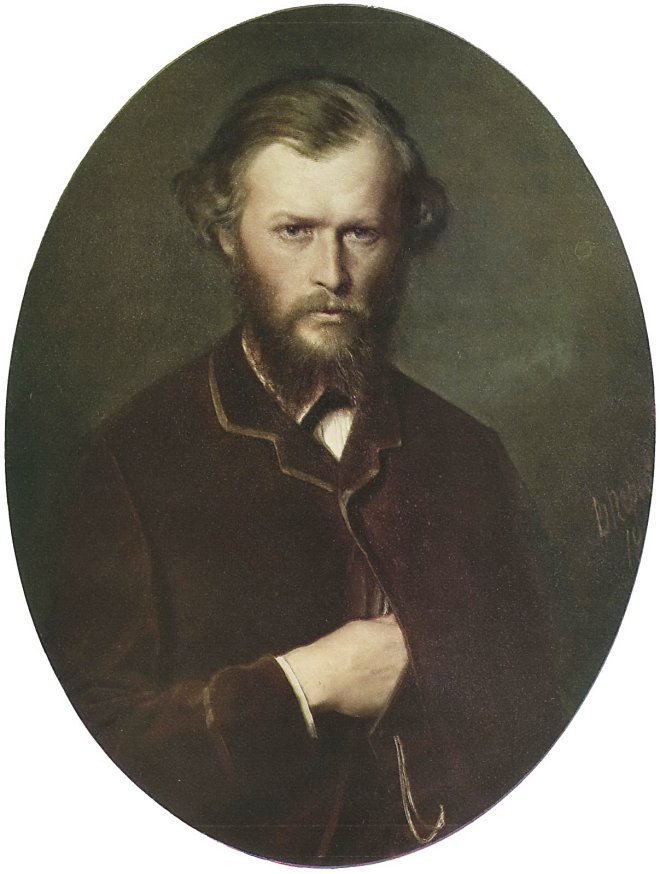
  • Portrait of N. G. Kridener, the artist's brother. 1856
  • The arrival of the police officer for the investigation. 1857
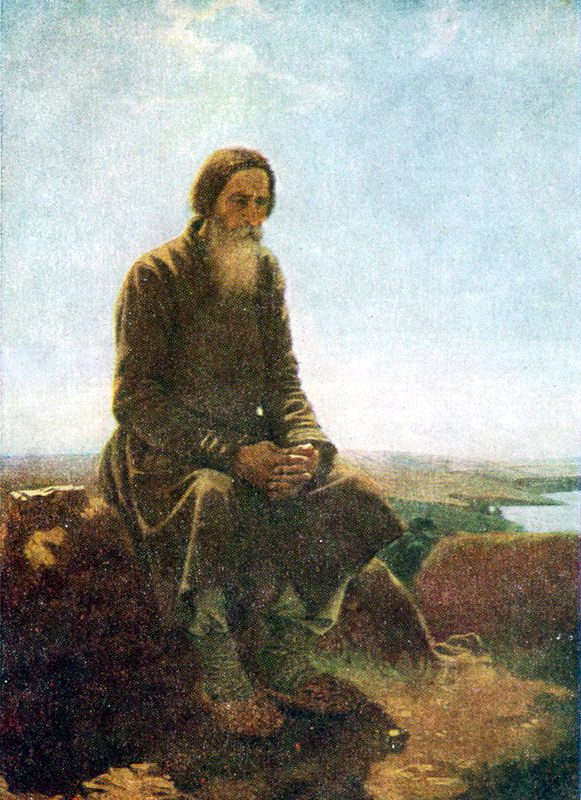
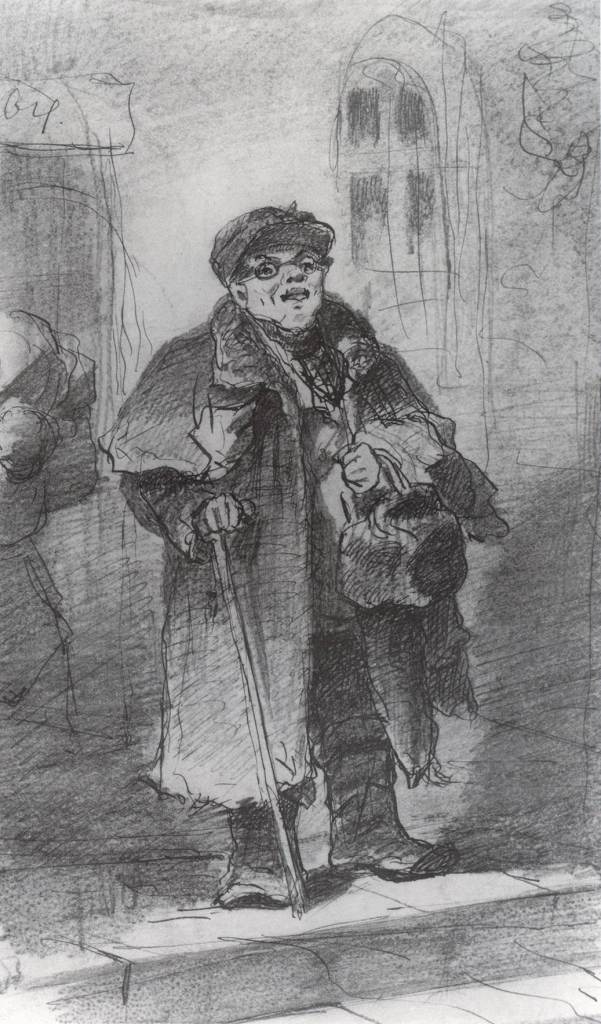
  • Wanderer. 1859
  • Scene at the grave. 1859
  • First rank. 1860
  • Portrait of an unknown. 1860s
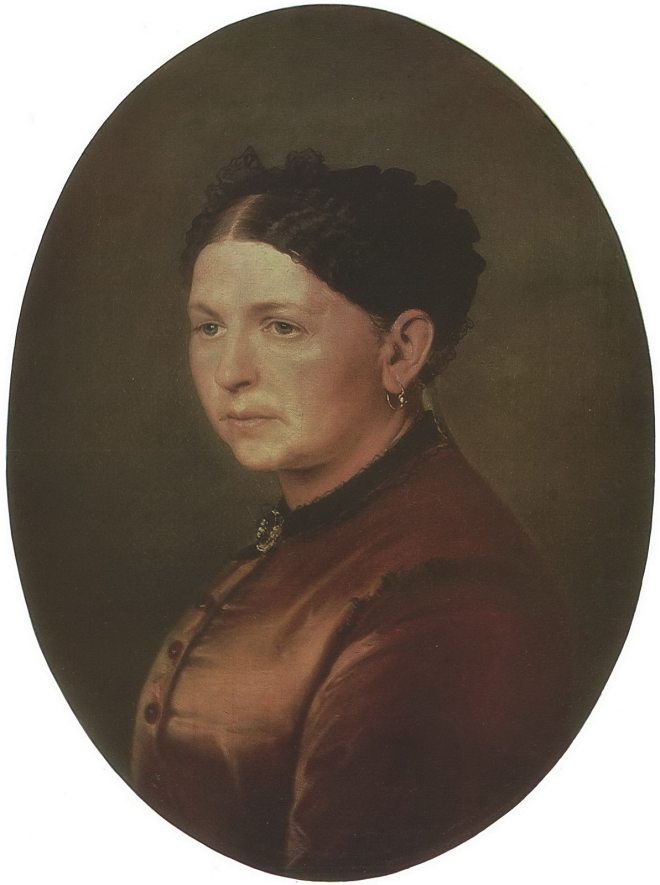
  • Portrait of E. E. Perova. OK. 1860
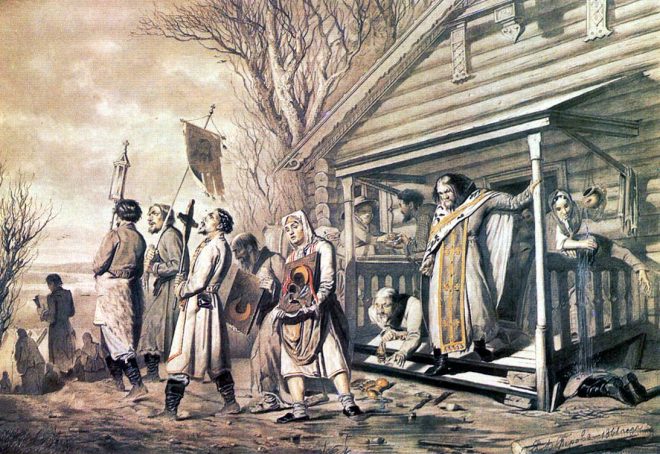
  • Village procession at Easter - 1861
  • Burglary on Easter night. 1861
  • Sermon in the village -1861
  • Village procession at Easter. 1862
  • Amateur - 1862
  • Portrait of I. M. Pryanishnikov. Around 1862
  • Courtship of an official to the daughter of a tailor - 1862
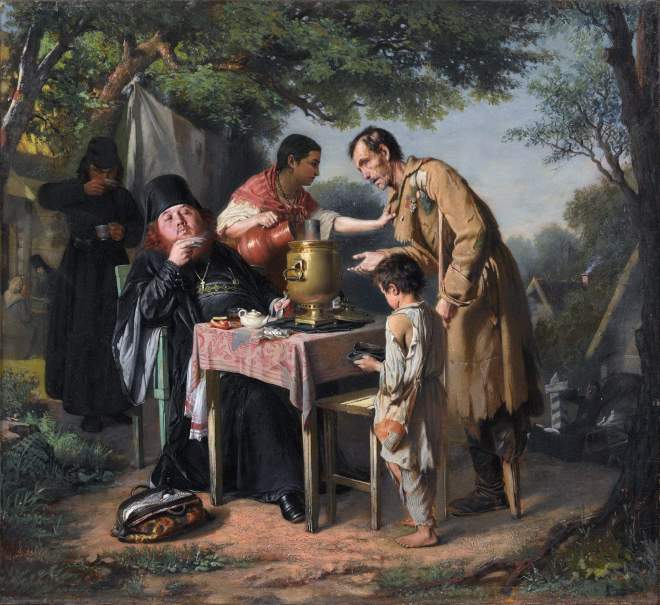
  • Tea drinking in Mytishchi, near Moscow - 1862
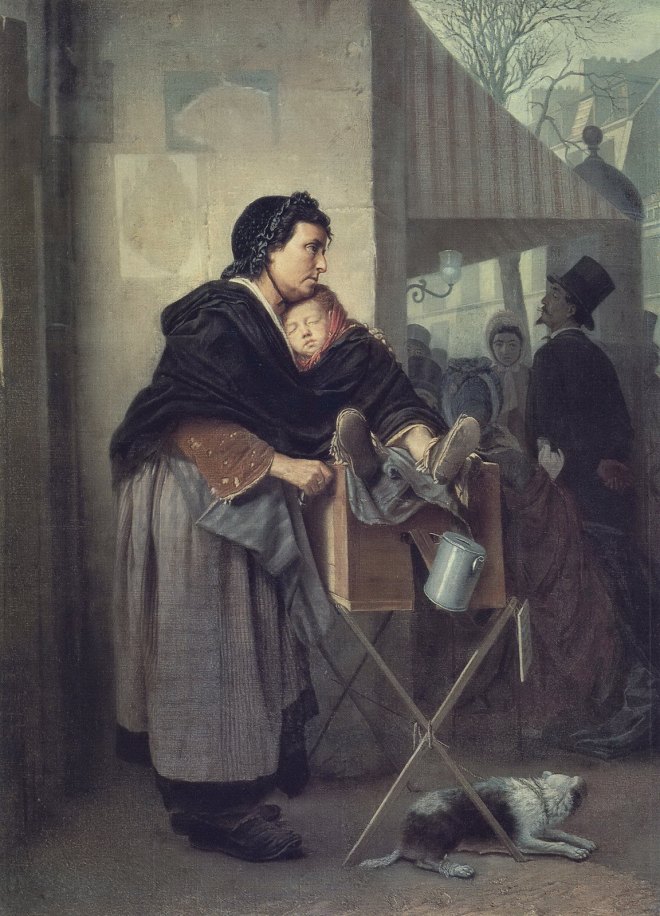
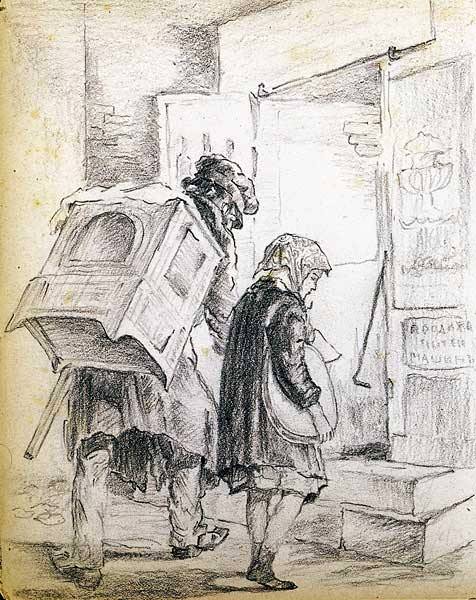
  • Organ grinder - 1863
  • Funeral in a poor quarter of Paris. 1863
  • Street musicians in Paris. 1863
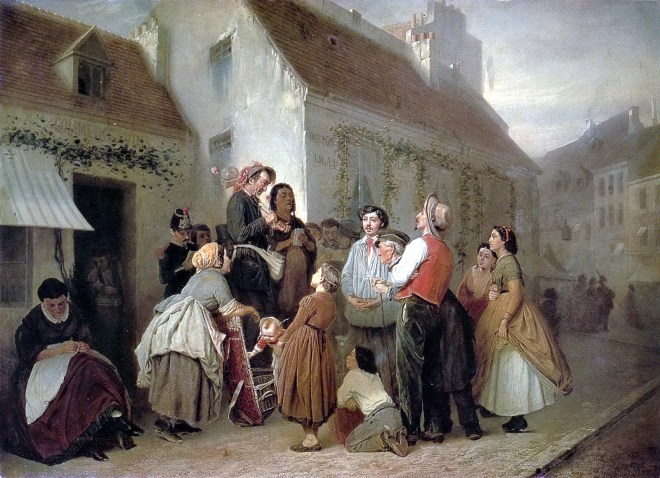
  • Parisian festivities. 1863
  • A holiday in the vicinity of Paris. Sketch. 1864
  • Holiday in the vicinity of Paris (On Montmartre). (Unfinished) 1863-64
  • Seller of songbooks. (Unfinished) 1863-64
  • Parisian festivities. The interior of the booth during the presentation 1863-1864
  • Parisian organ grinder. 1864
  • Blind musician. 1864
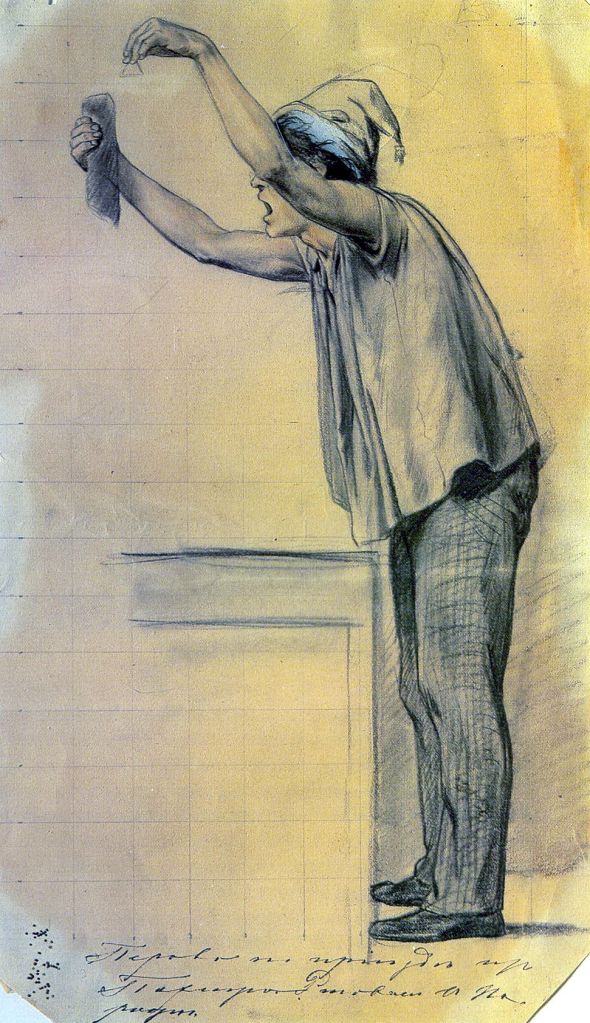
  • A boy with raised hands, addressing the public - 1864
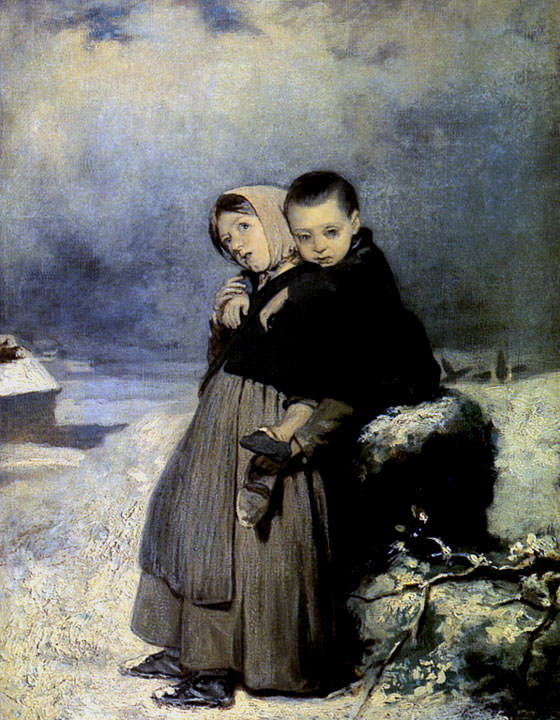
  • Orphans in the cemetery. 1864
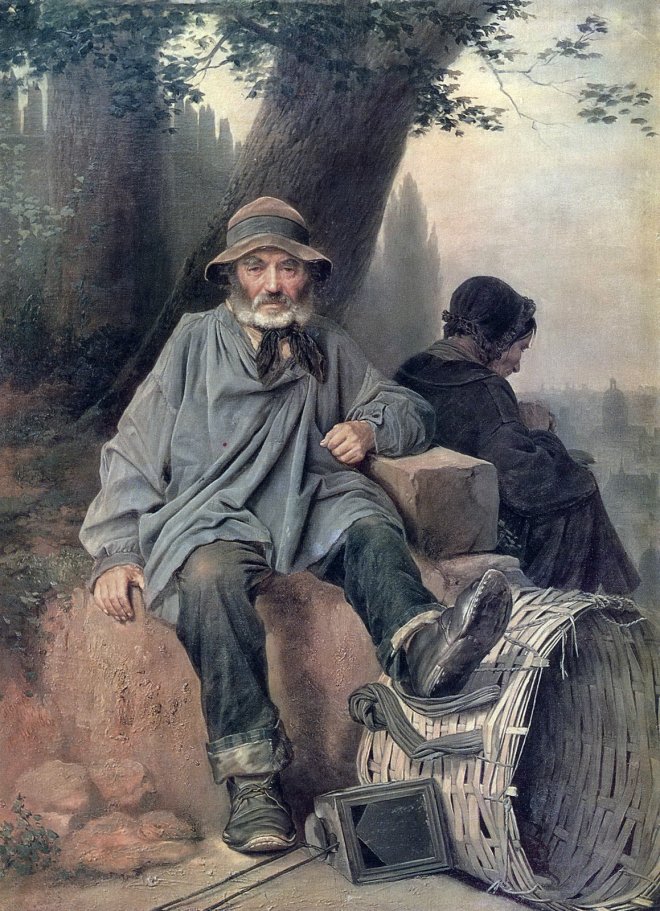
  • Parisian rag-pickers. 1864
  • Savoyard. 1864
  • Songbook seller. 1864
  • Holiday near Paris. 1864.
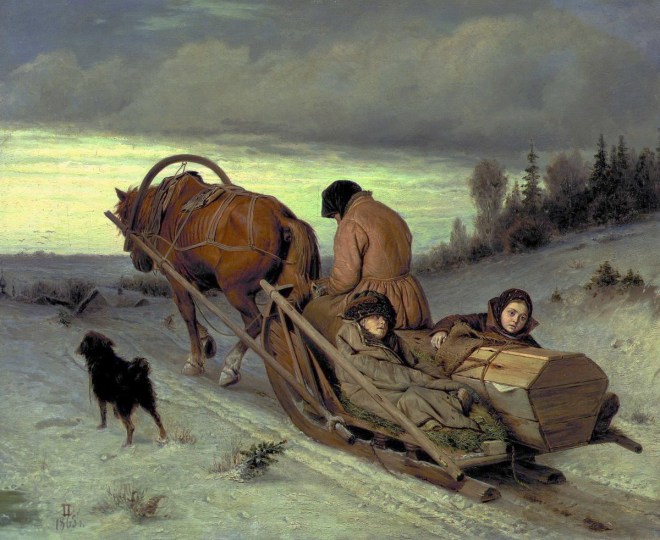
  • last-journey-1865
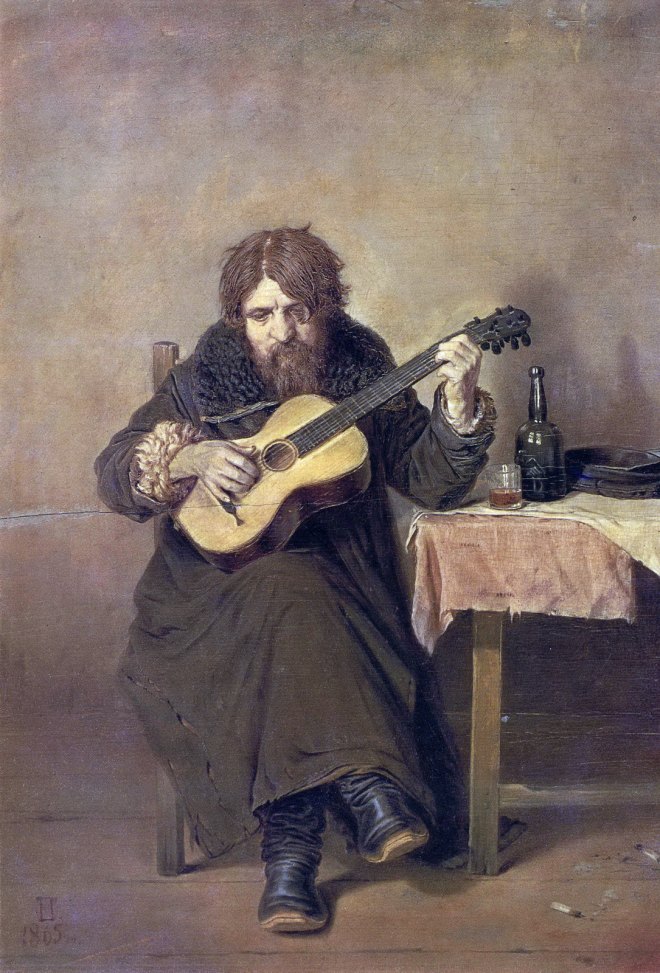
  • Guitarist-bobyl. 1865
  • Boy - artisan. 1865
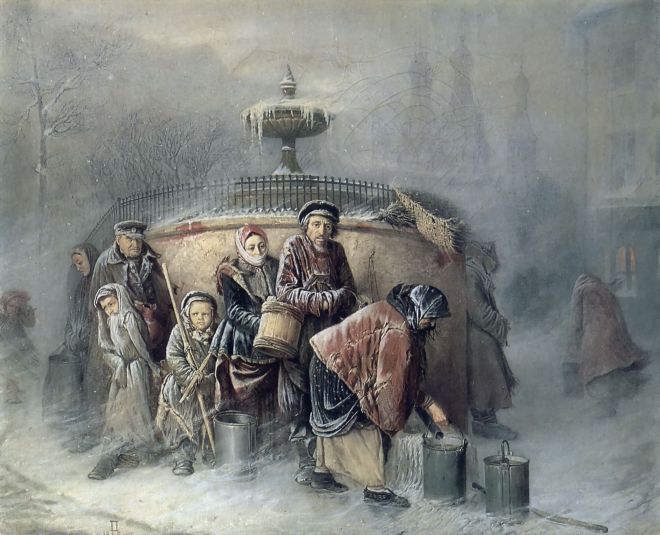
  • Next at the pool. 1865
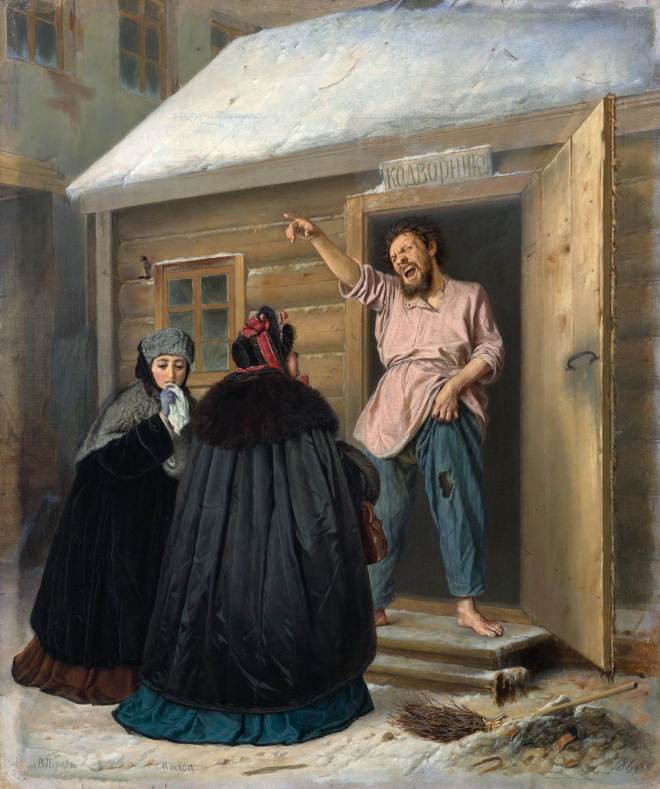
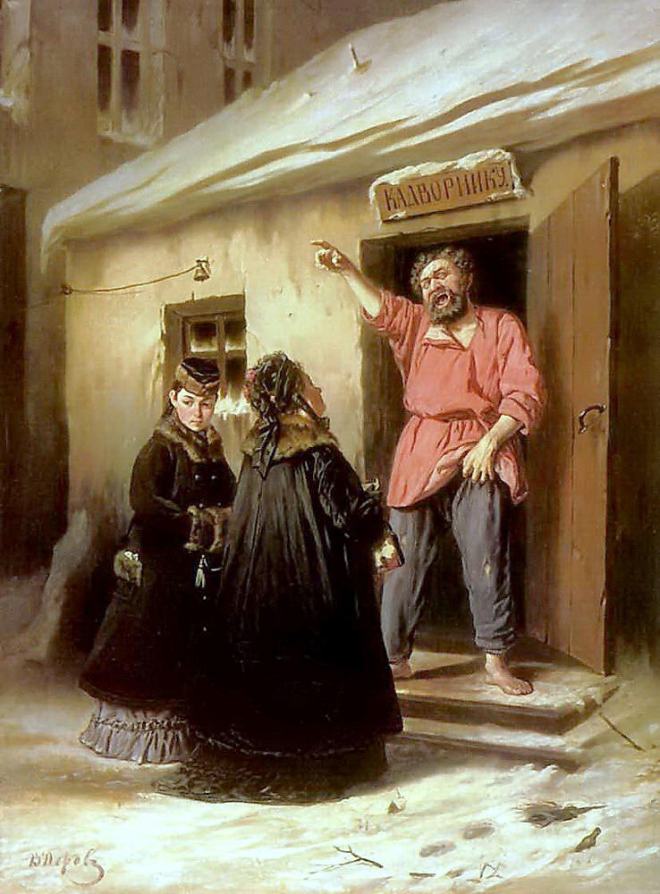
  • Janitor giving an apartment to a mistress - 1865
  • Meal. 1865
  • Meal 1865 -1976
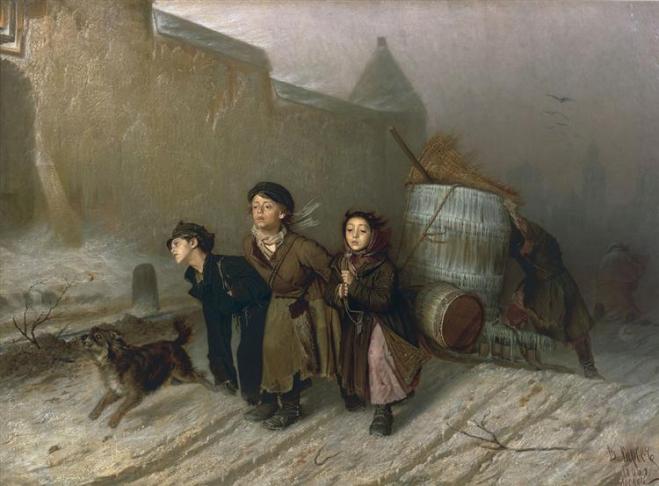
  • troika-apprentice-workmen-carrying-water-1866
  • A boy preparing for a fight - 1866
  • Clean Monday. 1866
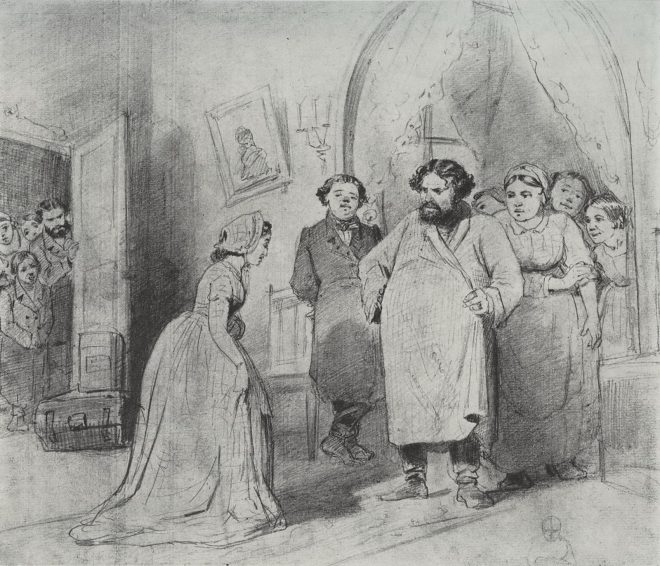
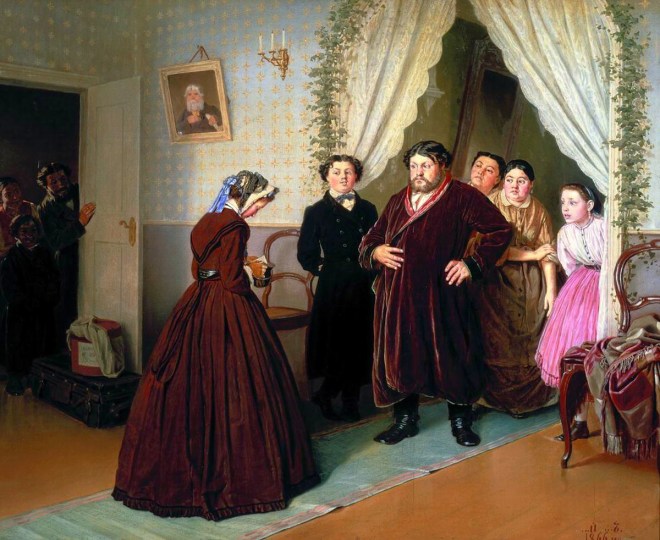
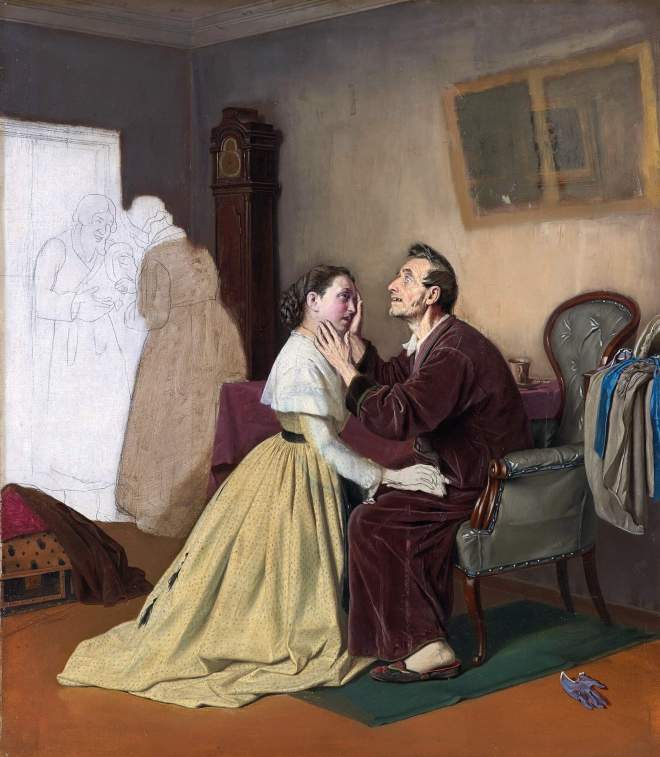
  • The arrival of a governess in a merchant's house. 1866
  • Arrival of a governess to a merchant's house
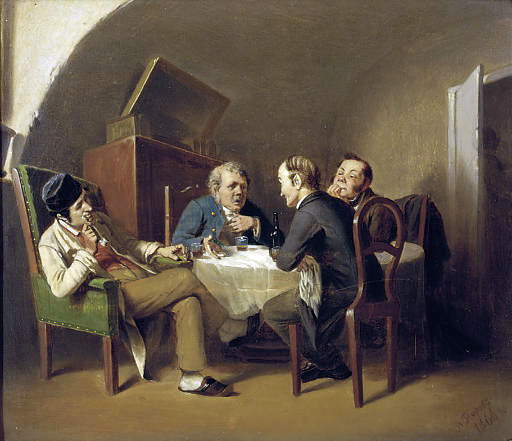
  • Conversation at the round table. 1866
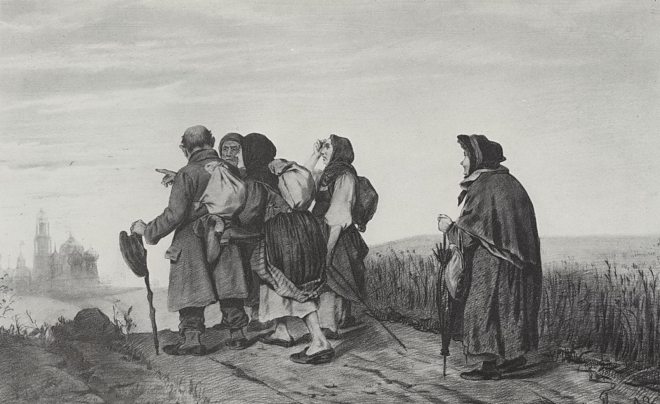
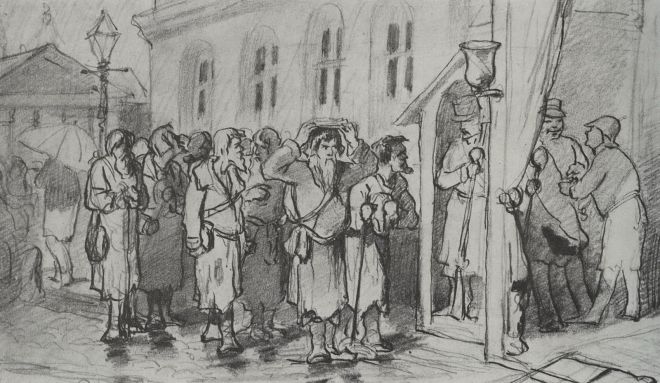
  • On a pilgrimage. 1867
  • In the loan office. 1867
  • Christ and the Mother of God at the sea of ​​life. 1867
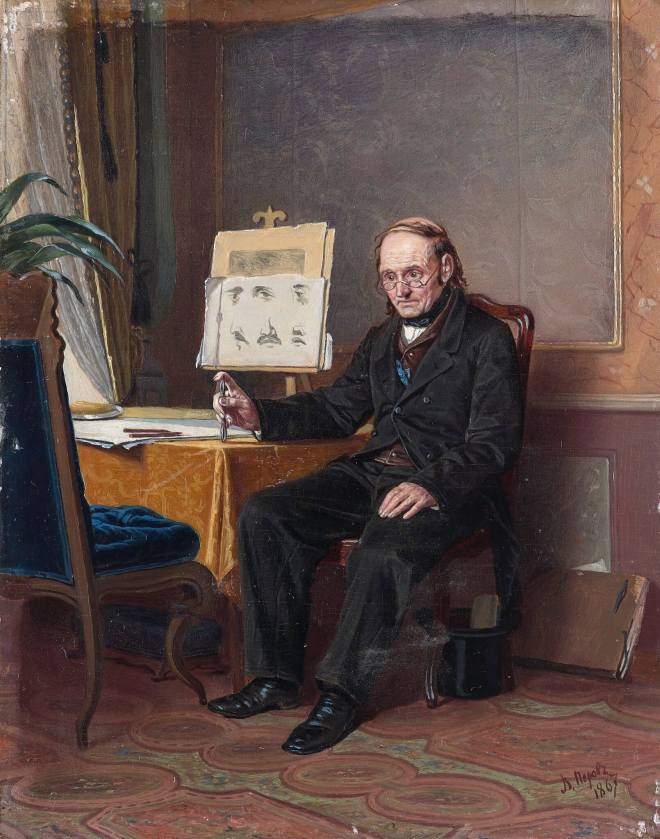
  • Drawing teacher - 1867
  • Drowned Woman - 1867
  • On the railroad. 1868
  • Fomushka-owl. 1868
  • Janitor - self-taught. 1868
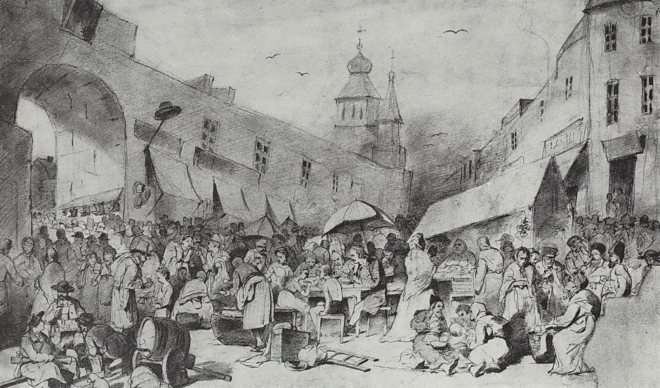
  • Market in Moscow. 1868
  • Portrait of N. F. Rezanov. 1868
  • Portrait of F. I. Rezanova. 1868
  • Portrait of F. F. Rezanov. 1868
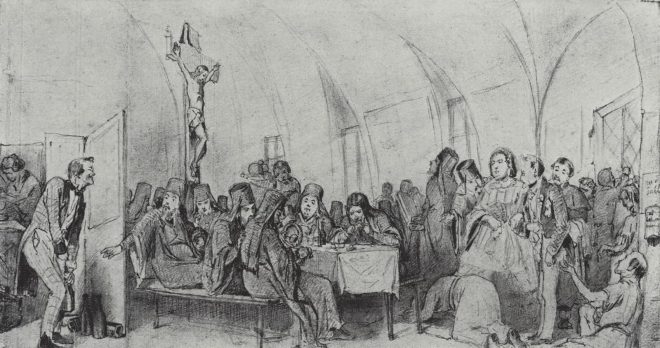
  • The division of the inheritance in the monastery (Death of a monk). Pencil drawing. 1868
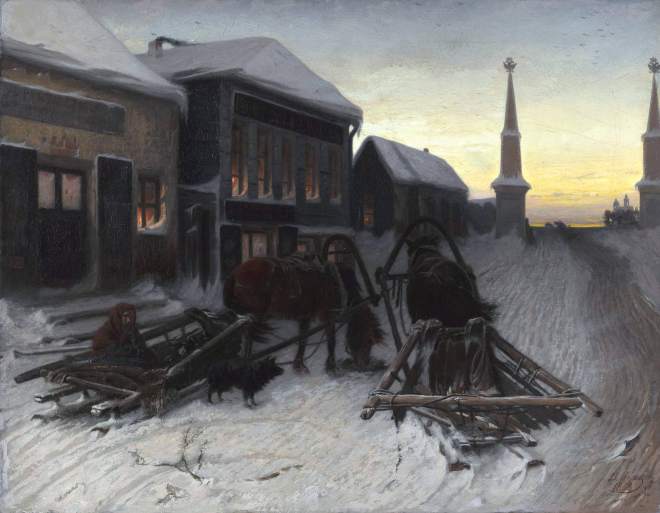
  • The last tavern at the outpost. 1868
  • Old Man - 1868
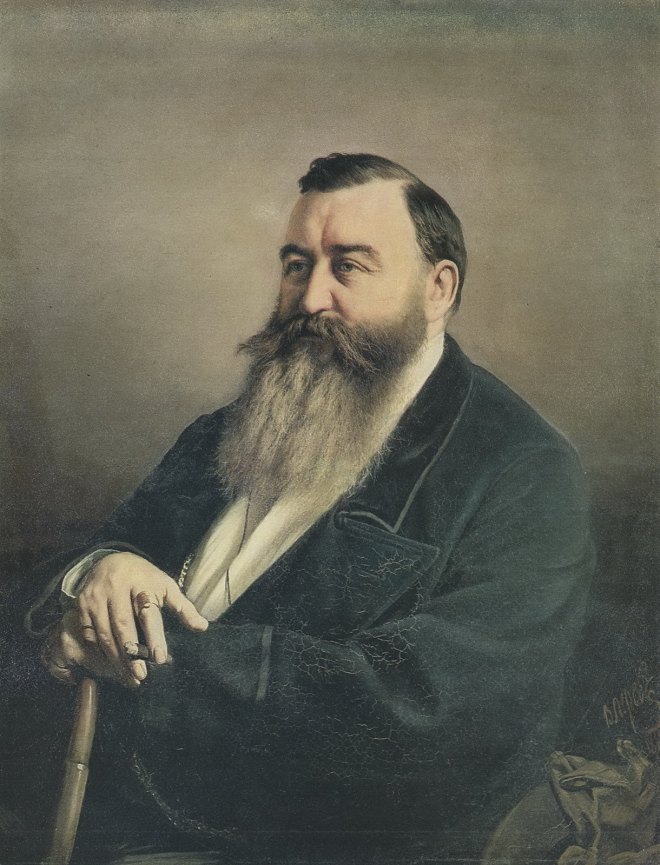
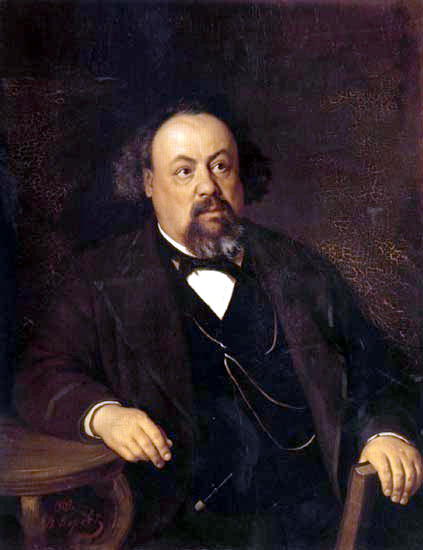
  • Portrait of the writer A. F. Pisemsky. 1869
  • Portrait of V.V. Bezsonova (1826-1887) - 1869
  • Portrait of N. P. Lanin. 1869
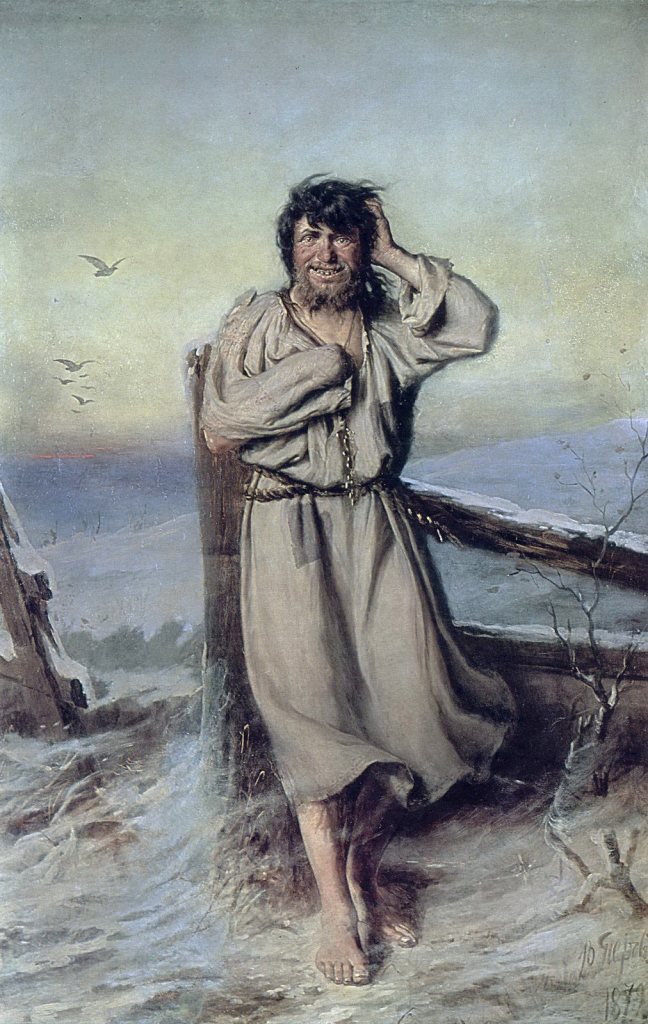
  • Wanderer. 1869
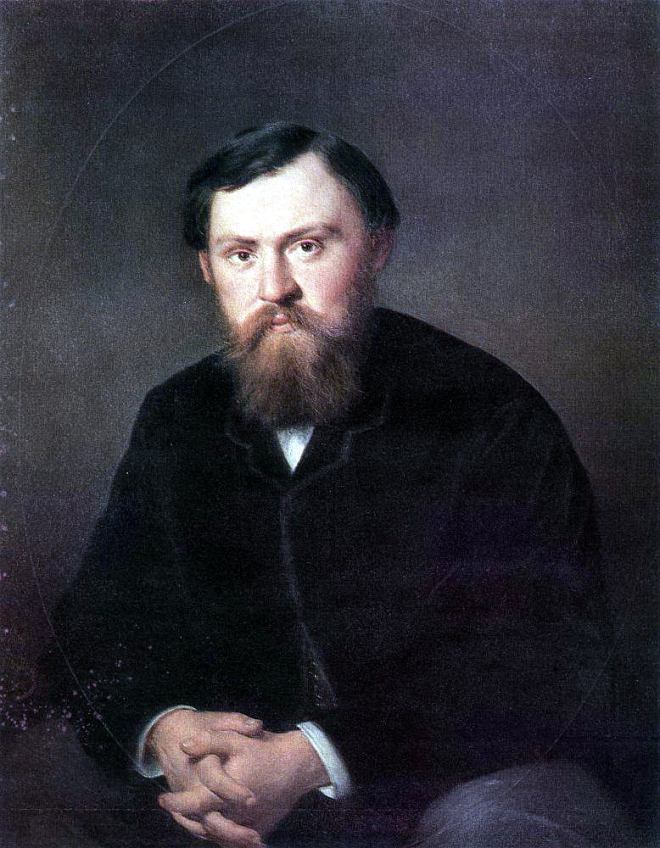
  • Portrait of A. A. Borisovsky. 1869
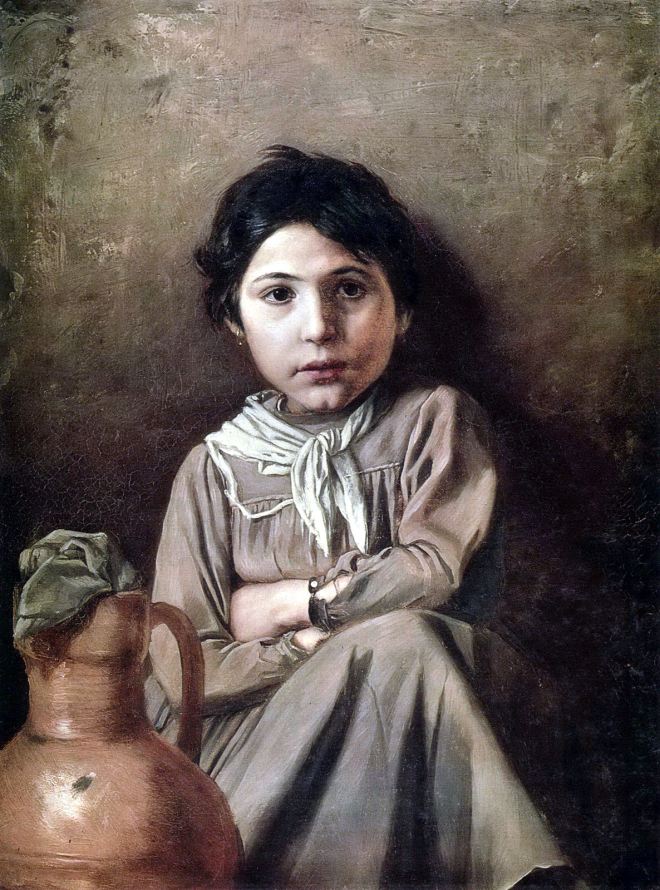
  • Girl with a jug. 1869
  • bird-catcher by Perov - 1870
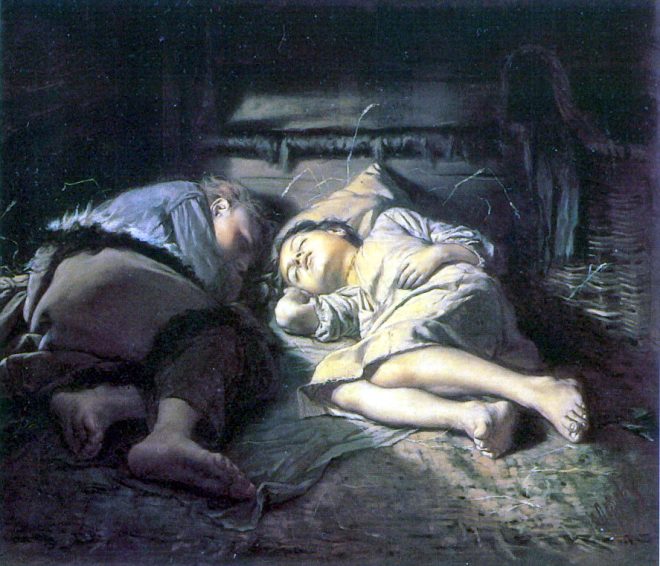
  • Sleeping children. 1870
  • Portrait of Nikolai Grigorievich Rubinstein. 1870
  • To the Trinity-Sergius - 1870
  • Portrait of Anton Grigorievich Rubinstein. 1870
  • On the eve of the bachelorette party. Seeing the bride from the bath - 1870
  • Portrait of Avdotya Kuznetsova. 1870
  • Wanderer - 1870
  • Self-portrait. 1870
  • Arrival of a college girl to a blind father 1870
  • Portrait of an unknown. 1870
  • Grandfather and granddaughters. 1871
  • fisherman-1871
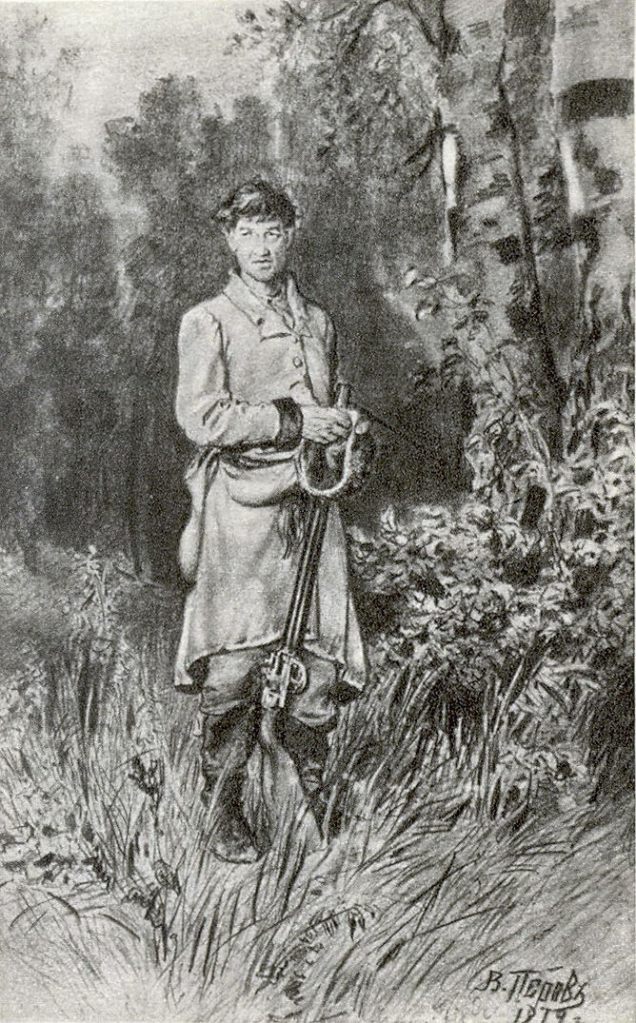
  • hunters-at-rest-1871
  • Portrait of A.N. Ostrovsky (1823-1886) -1871
  • Conversation of students with a monk. 1871
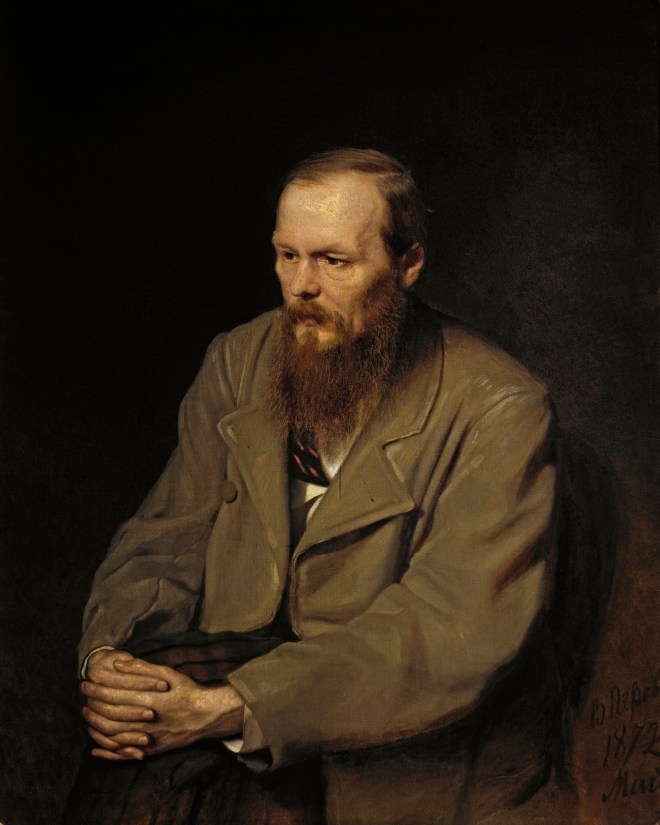
  • Portrait Dostoevsky 1872
  • Portrait of A.N. Maikov (1821-1897) - 1872
  • Portrait of V.I. Dahl (1801-1872) - 1872
  • Portrait of I.S. Kamynin (1808-1874) - 1872
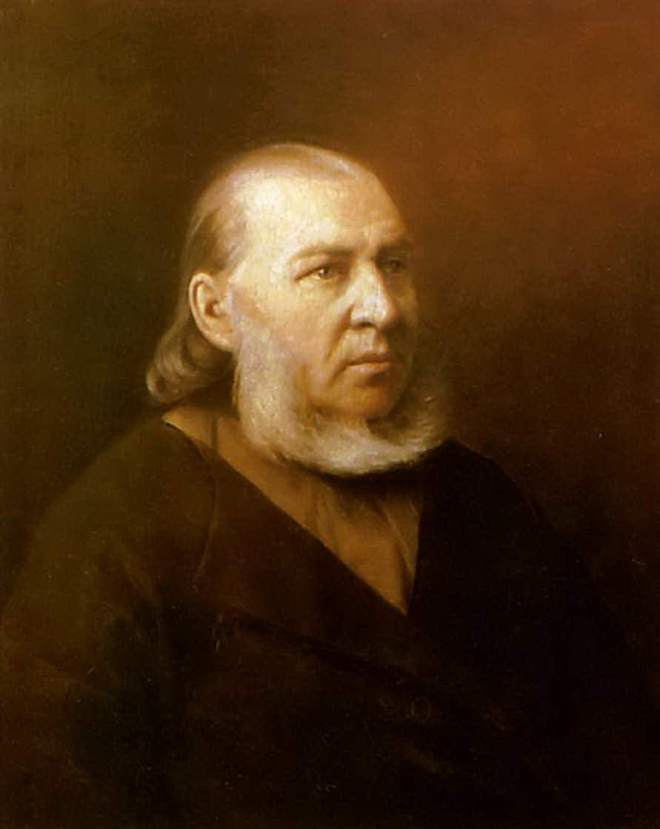
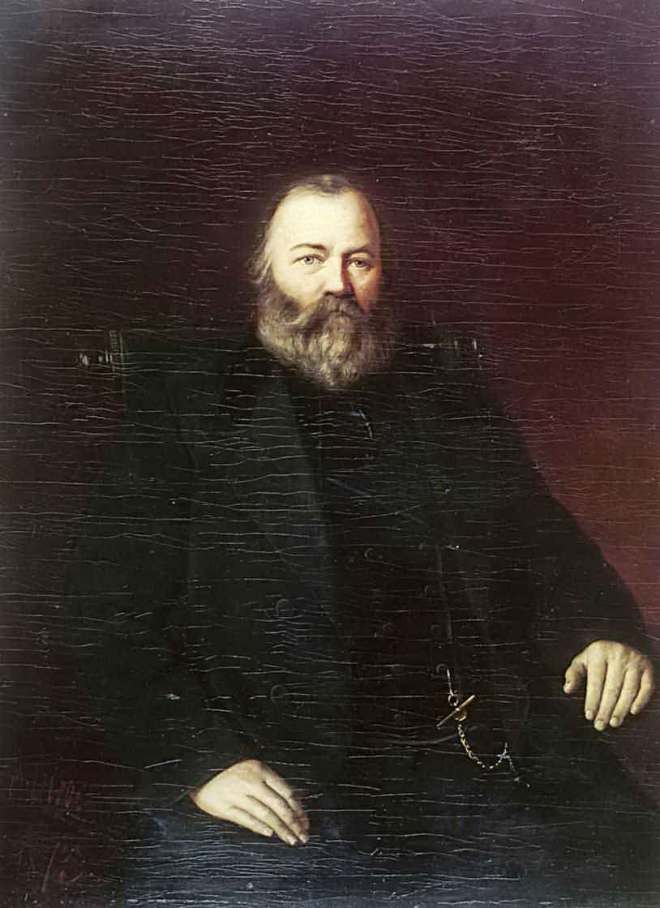
  • Portrait of the writer Sergei Timofeevich Aksakov. 1872
  • Portrait of the historian Mikhail Petrovich Pogodin (1800-1875) - 1872
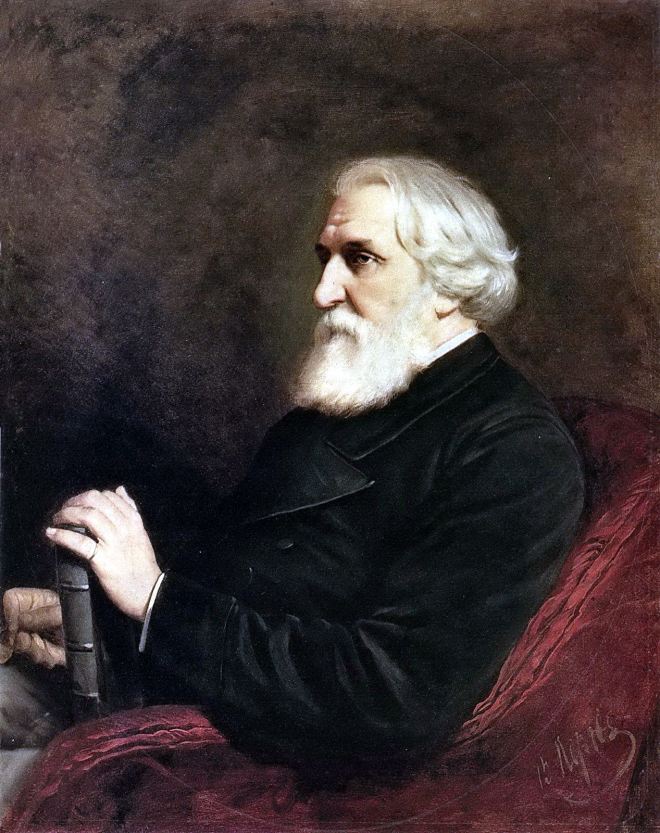
  • Portrait of the writer Ivan Sergeevich Turgenev. 1872
  • Portrait of the composer P. S. Campioni. 1872
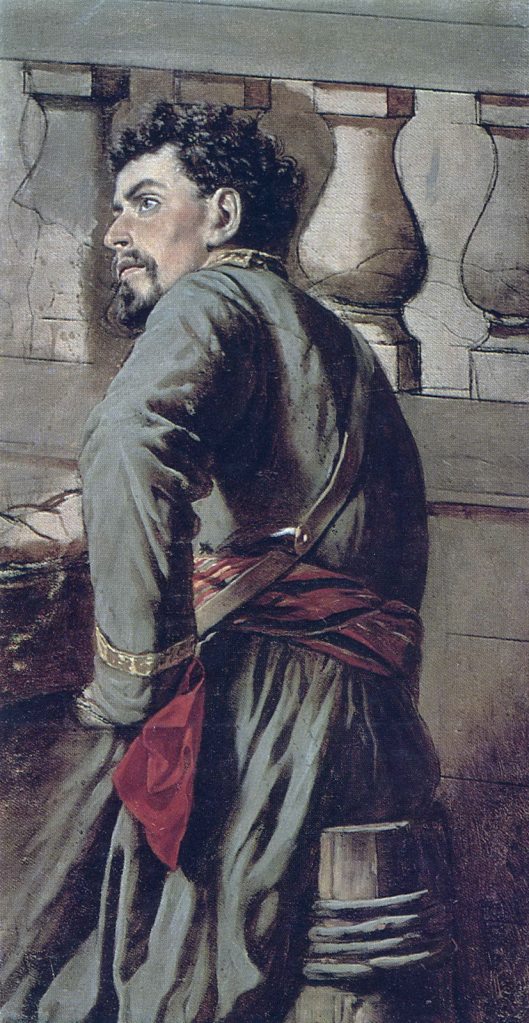
  • Cossack. 1873
  • Traveler. 1873
  • Holy fool, surrounded by wanderers. 1872
  • Head of a Kirghiz - a convict. 1873
  • Fedot and Arina. 1873
  • Evening on Great Saturday. 1873
  • Portrait of the merchant S. T. Kuznetsov. 1873
  • Gogol wird von den Gestalten seiner Werke zu Grabe getragen. 1873
  • Inveterate. 1873
  • Sad father. 1873-74
  • Scouts near Sevastopol. 1874
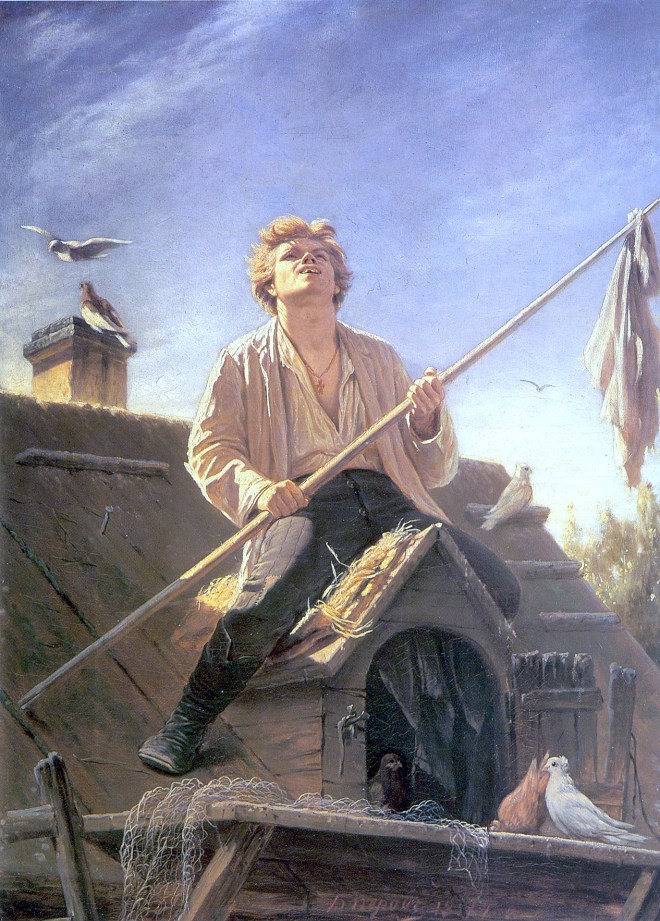
  • pigeon-fancier-1874
  • Reception of a wanderer. 1874
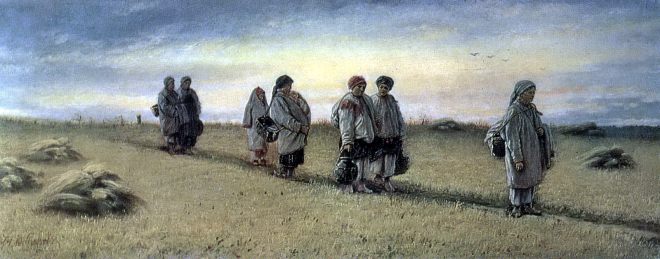
  • The return of the reapers from the field in the Ryazan province. 1874
  • Joyful father. 1874
  • The old man. Fragm. variant k. Old people - parents at the grave of their son. 1874
  • Old parents at the grave of their son - 1874
  • Botanist. 1874
  • Gossip Girl. 1875
  • Pugachev's Court. 1875
  • Portrait of Anna Ivanovna Sergeeva, nee. Sheina. 1875
  • Peasant in the field. 1876
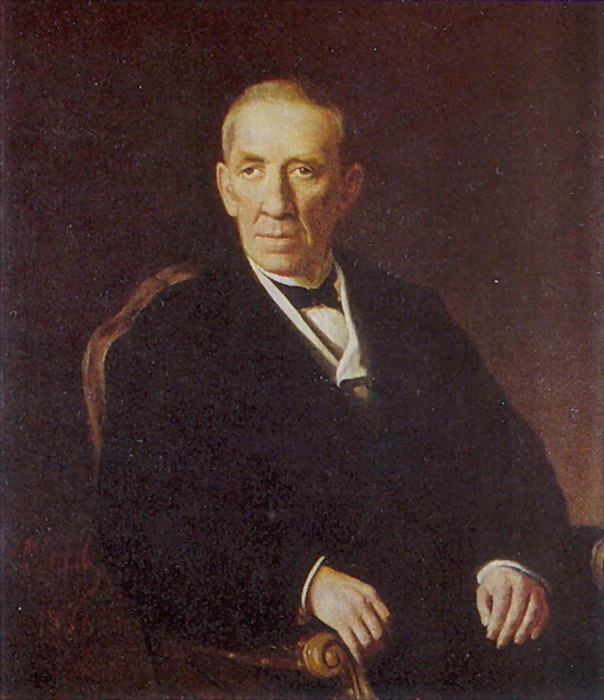
  • Portrait of Pyotr Ivanovich Nikolaev, Chairman of the Vladimir Zemstvo Council. 1876
  • Portrait of N. A. Kasatkin. 1876
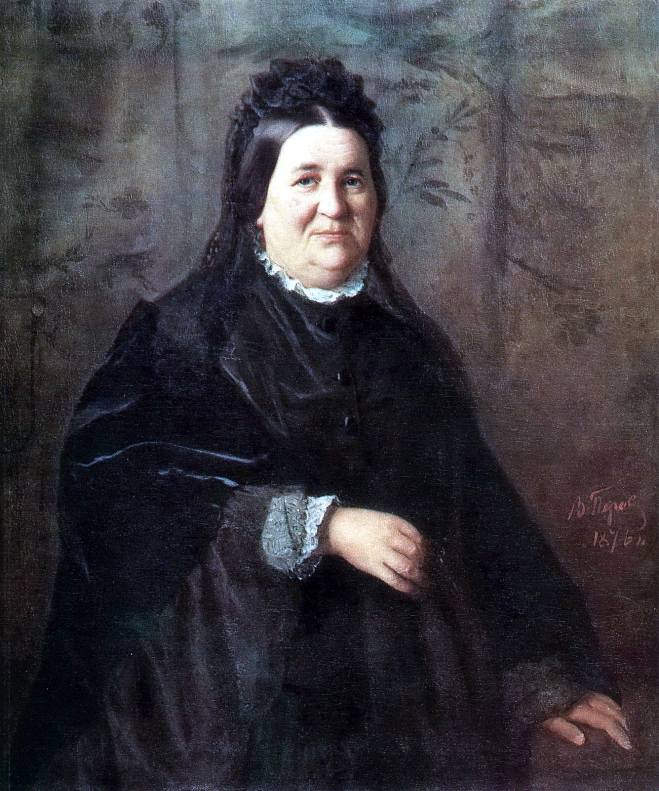
  • Portrait of A. I. Kridener, born. Ivanova, the artist's mother. 1876
  • fishing 1878
  • Blind. 1878
  • A janitor who gives an apartment to a mistress. 1878
  • Mother with a sick child. 1878
  • Portrait of A.K. Savrasov (1830-1897) - 1878
  • Christ in the Garden of Gethsemane. 1878
  • Executed Pugachevites. Rice. pencil and pen. 1878
  • Pugachev's Court - 1879
  • Fishermen. (Priest, deacon and seminarian). 1879
  • Wanderer in the field. 1879
  • From the station. 1879
  • Blessed. 1879
  • On the traction. Pencil drawing. 1879
  • The return of the peasants from the funeral in winter. Beginning 1880s
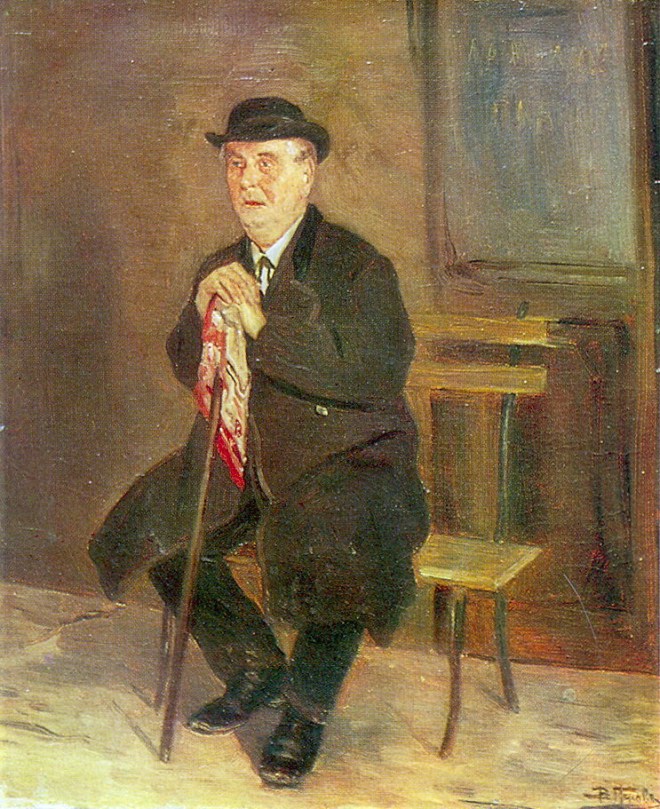
  • The old man on the bench. 1880s
  • Walkers - petitioners. 1880
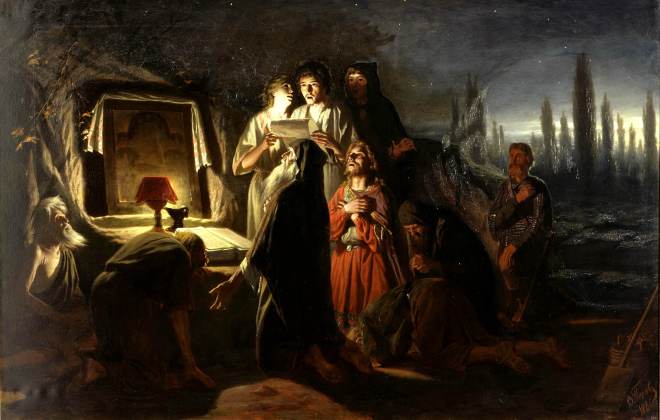
  • The first Christians in Kiev. 1880
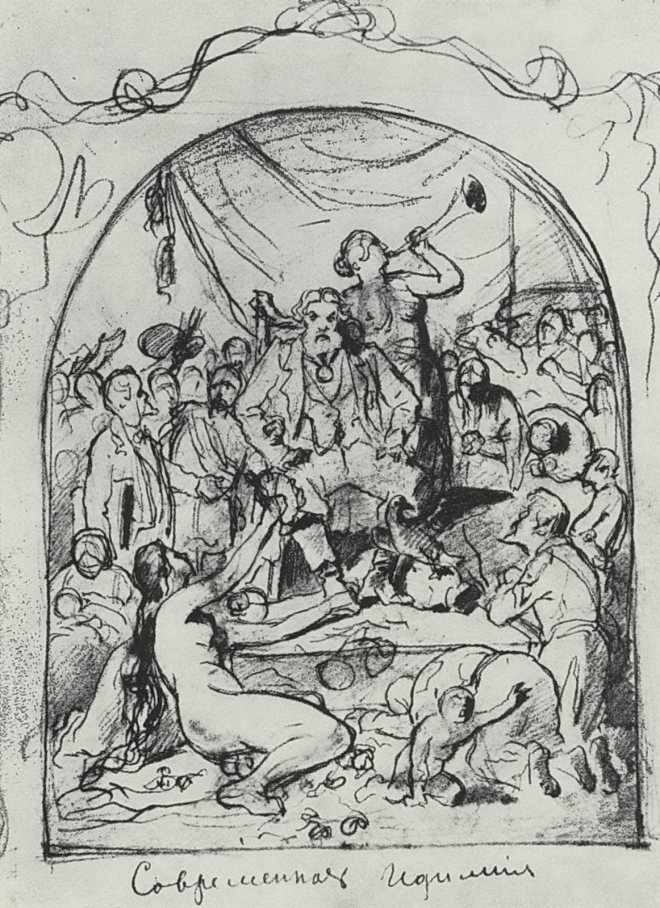
  • Modern idyll. 1880
  • Lament of Yaroslavna. 1881
  • Dispute about faith. 1881
  • The old man on the bench 1881
  • The last tavern at the outpost
  • Before the tonsure
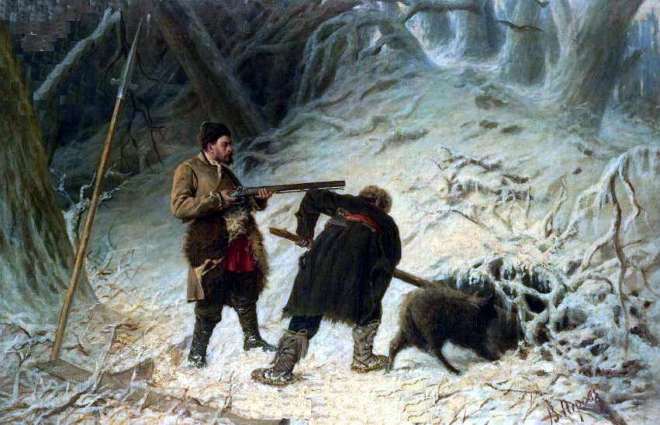
  • Boar hunting
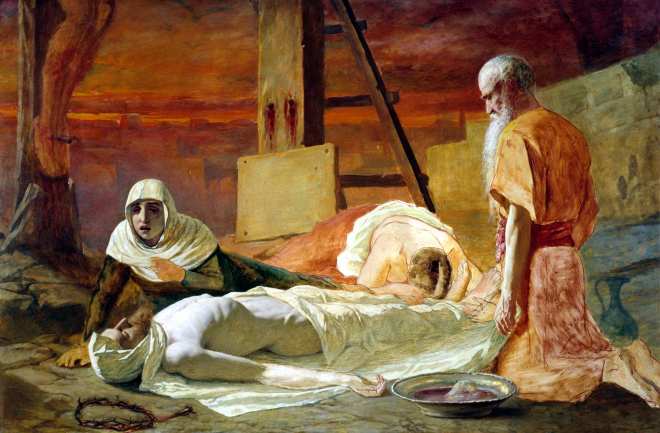
  • Descent from the Cross. Canvas
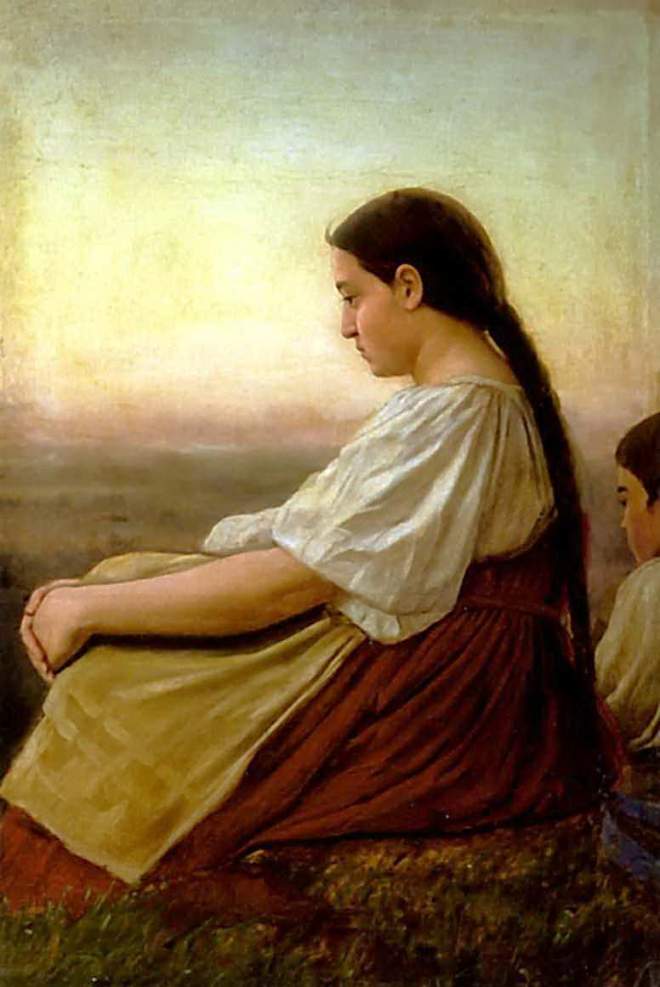
  • Girl
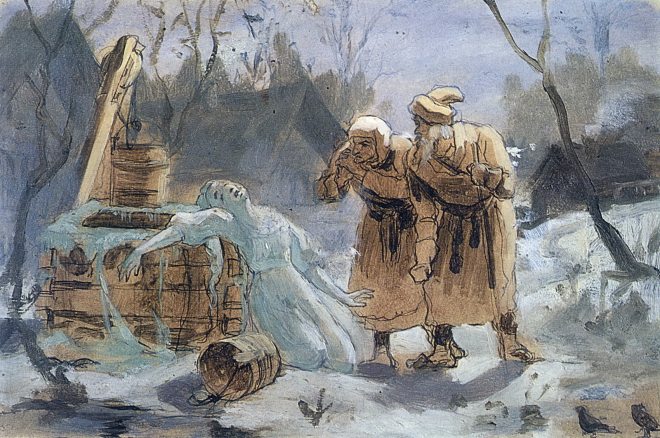
  • Melting Snow Maiden
  • Organ grinders
  • Portrait of an old woman
  • Portrait of the sculptor V. S. Brovsky.
  • Pugachev's Court
  • The arrival of a rural teacher
  • Pilgrim

Liste des Peintures de Vasily Perov en français dans l’ordre du diaporama

Vasily Grigoryevich Perov est né entre le 21 et le 23 décembre 1833 (2 ou 4 janvier 1834) et est le fils illégitime du baron Georgy (Grigory) Karlovich Kridener et d’AI Ivanova. 

Même si ses parents se sont mariés peu de temps après sa naissance, Vasily n’avait pas droit au nom et au titre de son père. Et son surnom “Perov”, qui est son nom de famille, lui a été donné par son professeur de literacy pour sa diligence et son écriture habile.

Dans son enfance, Vasily était malade de la variole, ce qui lui a causé une mauvaise vue pour le reste de sa vie. 

Il s’est intéressé à la peinture après avoir observé le travail d’un artiste et est allé étudier à l’école d’art Arzamas d’AV Stupin. Mais parce qu’il était si bon qu’il a été autorisé à peindre avec des peintures à l’huile avant les autres élèves, puis malheureusement à cause d’une dispute avec un autre élève, il n’a pas terminé l’école.

Il est rentré chez lui et a commencé à créer la composition « Crucifixion » écrite tout au long du Carême et achevée la Semaine Sainte puis placée dans une église située près du village de Nikolskoye. 

Il a également peint un certain nombre de portraits et de tableaux de genre : « Un mendiant qui mendie », « Troïka du village », « Festival folklorique dans la Semik ».

En 1853, Vasily Perov est entré à l’école de peinture, de sculpture et d’architecture de Moscou et a obtenu son diplôme universitaire sous la direction de SK Zaryanko.

Perov a présenté le “Portrait de Nikolai Grigoryevich Kridener, le frère de l’artiste” à l’Académie impériale des arts et a reçu une petite médaille d’argent en 1856.

Portrait of Nikolai Grigorievich Rubinstein. 1870

Ce travail était encore étroitement lié aux traditions de l’art du début du XIXe siècle, mais déjà dans les travaux suivant, Perov agissait comme un innovateur. 

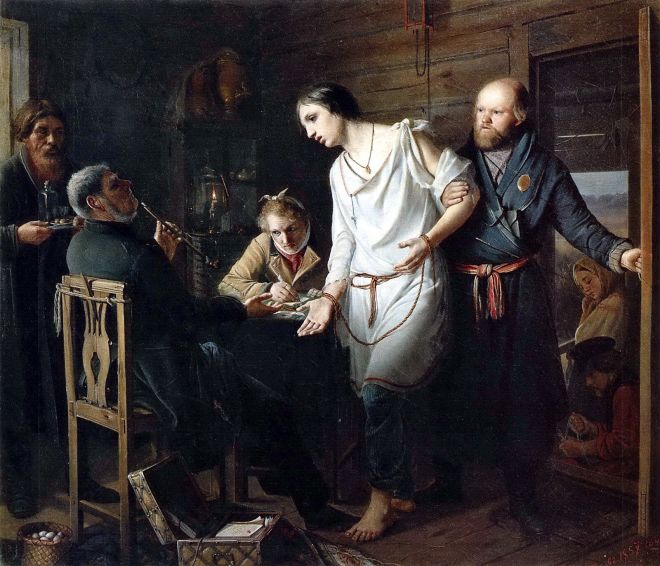
En 1857, le tableau “Arrivée d’un policier pour enquête” rapporte à l’artiste une grande médaille d’argent et attire l’attention du public et des critiques.

The arrival of the police officer for the investigation. 1857

En 1860, Perov reçut à nouveau une petite médaille d’or pour le tableau «Premier rang. fils de sacristain, promu greffier collégial », qui érigea l’artiste en héritier du genre satirique des années 1840. 

Maintenant, il pouvait participer au concours pour une grande médaille d’or, et peint “Sermon dans le village” et “Procession religieuse rurale à Pâques”. Il reçu une grande médaille d’or en 1867 et le droit de voyager à l’étranger comme pensionnaire pour le premier tableau.

Sermon in the village -1861

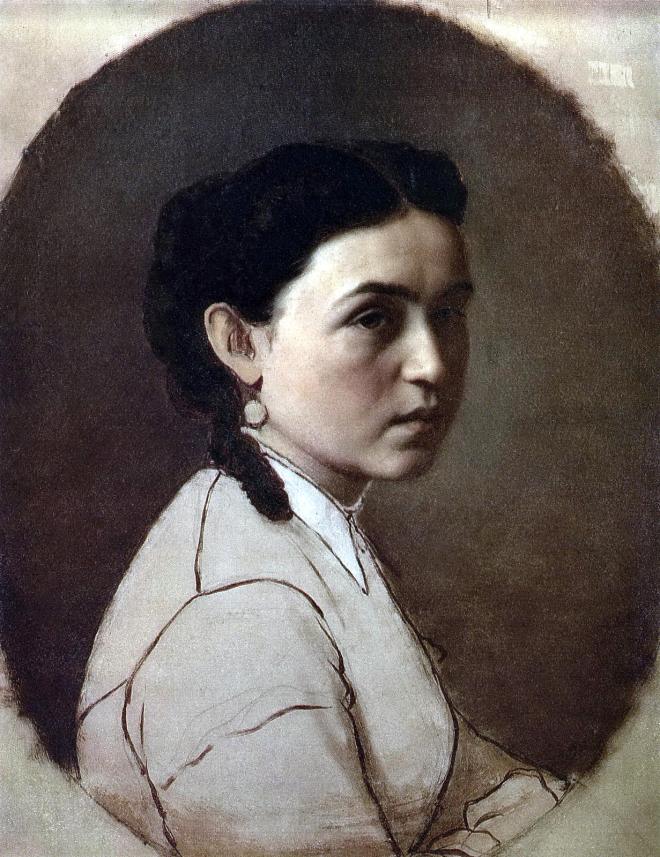
En 1862, Perov épousa Elena Edmondovna Sheins et ils partirent à l’étranger alors qu’il était lui-même pensionnaire à l’Académie des Arts.

En 1863-1864, Perov a vécu et travaillé à Paris, mais il voulait rentrer chez lui et après avoir reçu l’autorisation de l’Académie pour un retour anticipé qui comprenait la poursuite de l’internat en Russie, il est retourné à Moscou.

Vasily Perov s’est installé dans la maison de l’oncle de sa femme, F.F. Rezanov à Moscou et n’a jamais quitté la ville.

Alors qu’il était encore à l’étranger, Perov a conçu un grand tableau avec une intrigue de la vie monastique, avec ces peintures, une nouvelle étape dans le travail de l’artiste a commencé: d’une direction satirique, il est passé à des histoires plus dramatiques – sur «l’humiliation et l’offense.

En 1869, Vasily Perov et Myasoedov ​​créent l’Association des expositions d’art itinérantes (TPKhV). Vasily, qui a été membre du conseil d’administration pendant 7 ans, a organisé un groupe de Wanderers à Moscou. 

En 1870, il a obtenu le titre de professeur de l’Académie des Arts grâce aux tableaux “Vagabond” et “Attrape-Oiseaux”, et reçoit le premier prix de l’OPH pour le tableau “L’Homme-Oiseau”.

bird-catcher by Perov - 1870
bird-catcher by Perov – 1870

Dans les années 1970, les histoires de la vie quotidienne occupent une place particulière dans l’œuvre de Perov. Puis en 1871, Vasily est nommé professeur à l’École de peinture et d’art de Moscou.

En 1871-1872, Perov, commandé par le Premier ministre Tretiakov, a exécuté un certain nombre de portraits d’écrivains et de scientifiques russes. Perov a atteint une telle «vérité» dans certains portraits, ce qui dans l’art russe n’a été atteint que par IE Repin et VA Serov .

Perov a épousé Elizaveta Egorovna Druganova en 1872.

En 1873, ses tableaux “Pêcheur” et “Chasseurs au repos” sont présentés à l’Exposition universelle de Vienne.

fisherman-1871
fisherman-1871

En 1877, Perov a quitté les membres du TPHV et a participé à l’exposition de l’Exposition universelle de Paris un an plus tard.

Au cours des dernières années de sa vie, VG Perov a collaboré avec la revue ” Priroda i Okhota ” de LP Sabaneev et un certain nombre de ses histoires ont été publiées dans le Art Journal qui a été publié en 1881-1887.

Sa santé se détériora à cause du typhus et d’une pneumonie en 1881 et Vasily Perov mourut de consomption, à l’âge de 49 ans, dans un petit hôpital de Golitsyn près de Moscou.

Perov a été enterré au cimetière du monastère, du monastère de Danilov où une pierre tombale lugubre en forme de croix sur le Golgotha ​​​​a été érigée sur sa tombe.

Plus tard, ses cendres ont été réenterrées au cimetière du monastère du monastère de Donskoy, et sur la nouvelle tombe de l’artiste, un monument a été érigé par le sculpteur Alexei Evgenievich Yeletsky.


J’espère que cet article vous a plu

Lisez l’article: Découvrez le tableau “Troïka” de Vasily Perov

Si vous avez aimé cet article, abonnez-vous, mettez des likes, écrivez des commentaires !

Partager sur les réseaux sociaux

Découvrez nos derniers posts

Read the biography of Vasily Grigorievich Perov and watch all his paintings

Bilingual booksLire en FrançaisContact us
American LiteratureFrench LiteratureRussian Literature

Vasily Perov was a great Russian artist of the 19th century, whose work opened up new horizons for Russian art . His paintings are deep and complex, and demonstrate the whole truth of the hard life of the people. Vasily was also a great teacher who brought up more than a dozen really great painters. Watch all his paintings in a slide show and enjoy his biography.

  • paintings of Vasily Grigorevich Perov
  • Self-portrait. 1851
  • Portrait of N. G. Kridener, the artist's brother. 1856
  • The arrival of the police officer for the investigation. 1857
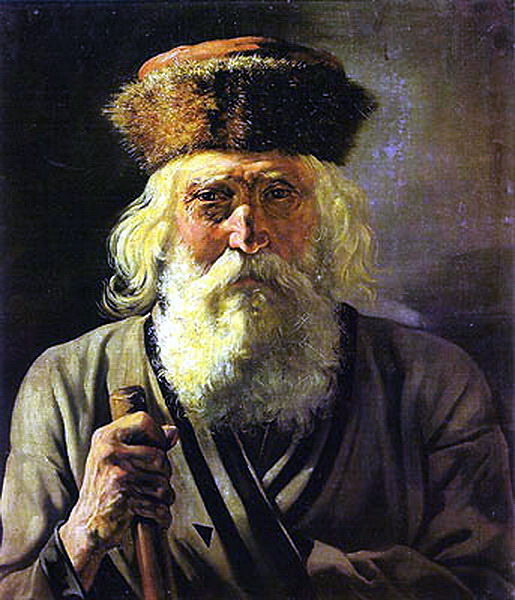
  • Wanderer. 1859
  • Scene at the grave. 1859
  • First rank. 1860
  • Portrait of an unknown. 1860s
  • Portrait of E. E. Perova. OK. 1860
  • Village procession at Easter - 1861
  • Burglary on Easter night. 1861
  • Sermon in the village -1861
  • Village procession at Easter. 1862
  • Amateur - 1862
  • Portrait of I. M. Pryanishnikov. Around 1862
  • Courtship of an official to the daughter of a tailor - 1862
  • Tea drinking in Mytishchi, near Moscow - 1862
  • Organ grinder - 1863
  • Funeral in a poor quarter of Paris. 1863
  • Street musicians in Paris. 1863
  • Parisian festivities. 1863
  • A holiday in the vicinity of Paris. Sketch. 1864
  • Holiday in the vicinity of Paris (On Montmartre). (Unfinished) 1863-64
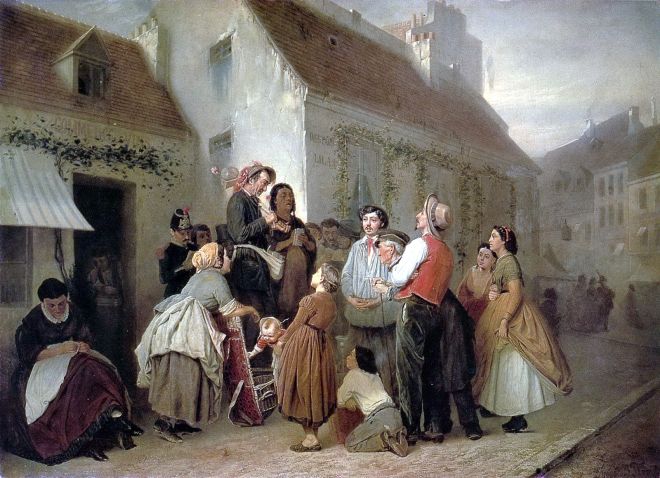
  • Seller of songbooks. (Unfinished) 1863-64
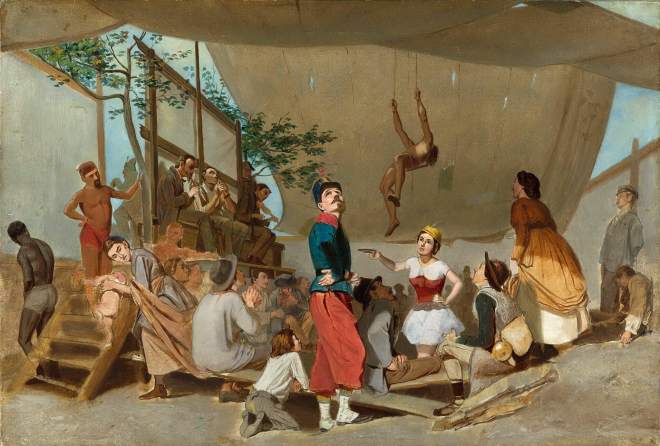
  • Parisian festivities. The interior of the booth during the presentation 1863-1864
  • Parisian organ grinder. 1864
  • Blind musician. 1864
  • A boy with raised hands, addressing the public - 1864
  • Orphans in the cemetery. 1864
  • Parisian rag-pickers. 1864
  • Savoyard. 1864
  • Songbook seller. 1864
  • Holiday near Paris. 1864.
  • last-journey-1865
  • Guitarist-bobyl. 1865
  • Boy - artisan. 1865
  • Next at the pool. 1865
  • Janitor giving an apartment to a mistress - 1865
  • Meal. 1865
  • Meal 1865 -1976
  • troika-apprentice-workmen-carrying-water-1866
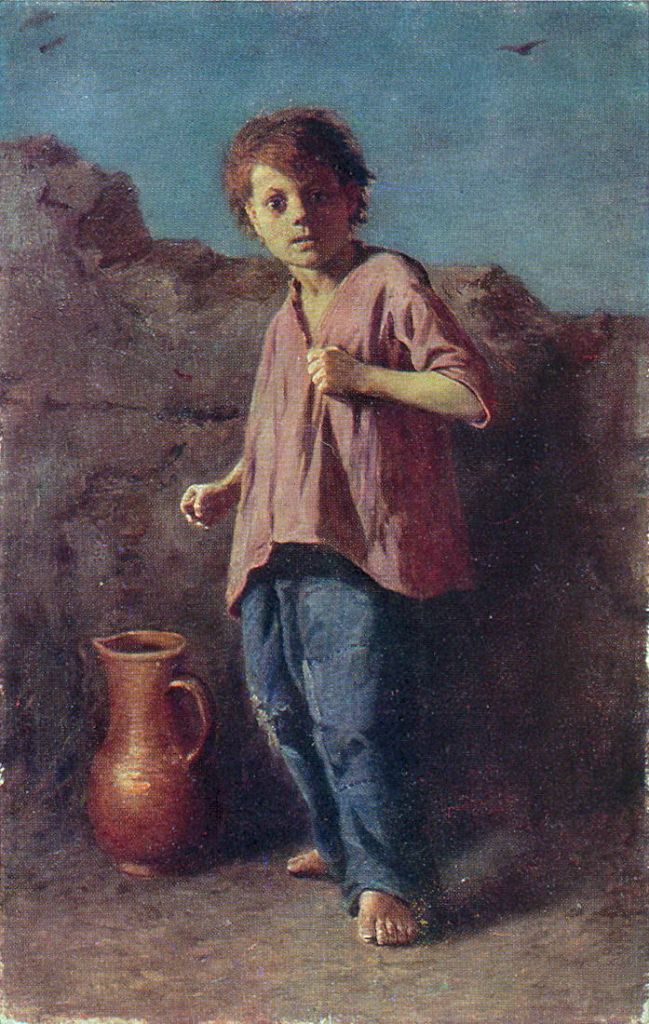
  • A boy preparing for a fight - 1866
  • Clean Monday. 1866
  • The arrival of a governess in a merchant's house. 1866
  • Arrival of a governess to a merchant's house
  • Conversation at the round table. 1866
  • On a pilgrimage. 1867
  • In the loan office. 1867
  • Christ and the Mother of God at the sea of ​​life. 1867
  • Drawing teacher - 1867
  • Drowned Woman - 1867
  • On the railroad. 1868
  • Fomushka-owl. 1868
  • Janitor - self-taught. 1868
  • Market in Moscow. 1868
  • Portrait of N. F. Rezanov. 1868
  • Portrait of F. I. Rezanova. 1868
  • Portrait of F. F. Rezanov. 1868
  • The division of the inheritance in the monastery (Death of a monk). Pencil drawing. 1868
  • The last tavern at the outpost. 1868
  • Old Man - 1868
  • Portrait of the writer A. F. Pisemsky. 1869
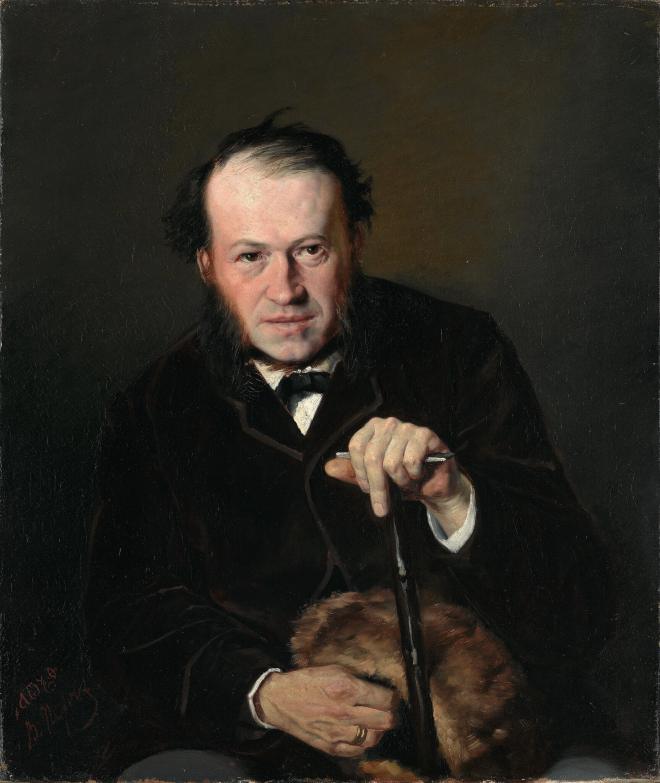
  • Portrait of V.V. Bezsonova (1826-1887) - 1869
  • Portrait of N. P. Lanin. 1869
  • Wanderer. 1869
  • Portrait of A. A. Borisovsky. 1869
  • Girl with a jug. 1869
  • bird-catcher by Perov - 1870
  • Sleeping children. 1870
  • Portrait of Nikolai Grigorievich Rubinstein. 1870
  • To the Trinity-Sergius - 1870
  • Portrait of Anton Grigorievich Rubinstein. 1870
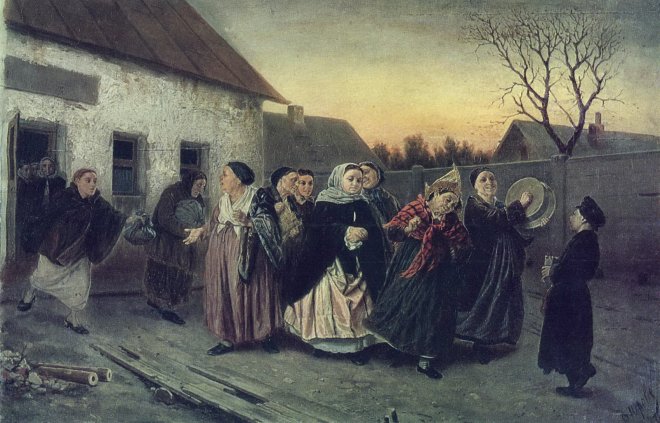
  • On the eve of the bachelorette party. Seeing the bride from the bath - 1870
  • Portrait of Avdotya Kuznetsova. 1870
  • Wanderer - 1870
  • Self-portrait. 1870
  • Arrival of a college girl to a blind father 1870
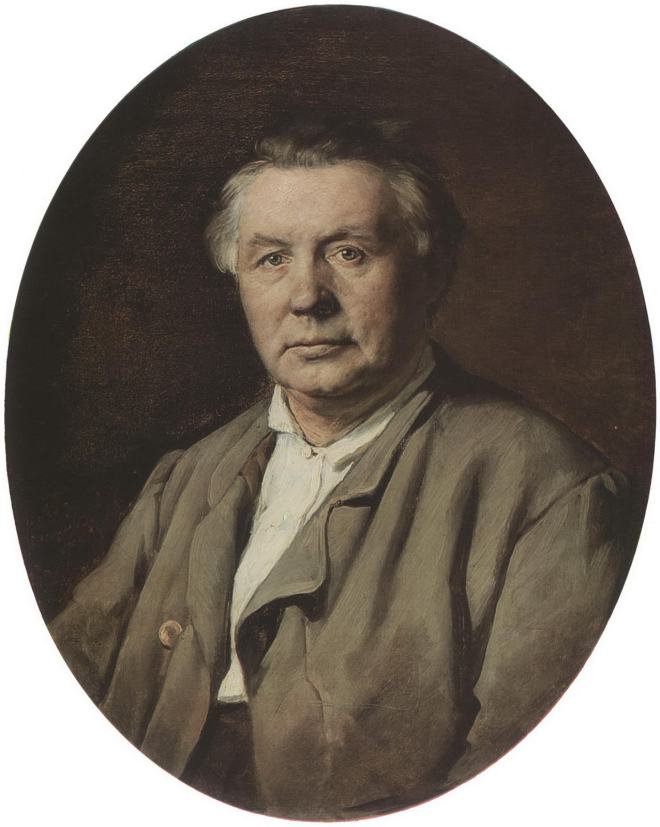
  • Portrait of an unknown. 1870
  • Grandfather and granddaughters. 1871
  • fisherman-1871
  • hunters-at-rest-1871
  • Portrait of A.N. Ostrovsky (1823-1886) -1871
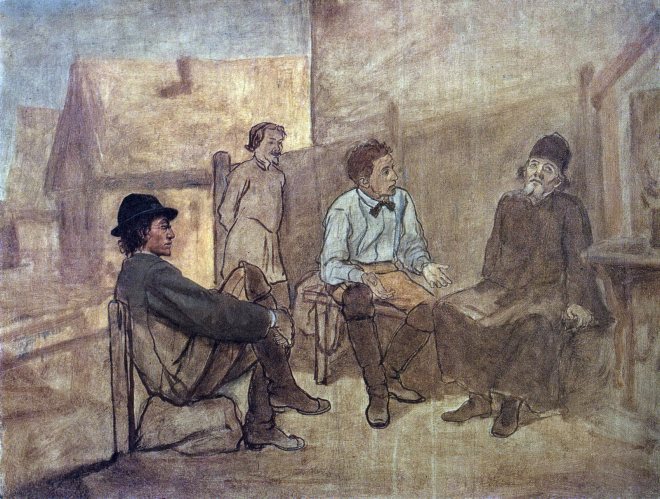
  • Conversation of students with a monk. 1871
  • Portrait Dostoevsky 1872
  • Portrait of A.N. Maikov (1821-1897) - 1872
  • Portrait of V.I. Dahl (1801-1872) - 1872
  • Portrait of I.S. Kamynin (1808-1874) - 1872
  • Portrait of the writer Sergei Timofeevich Aksakov. 1872
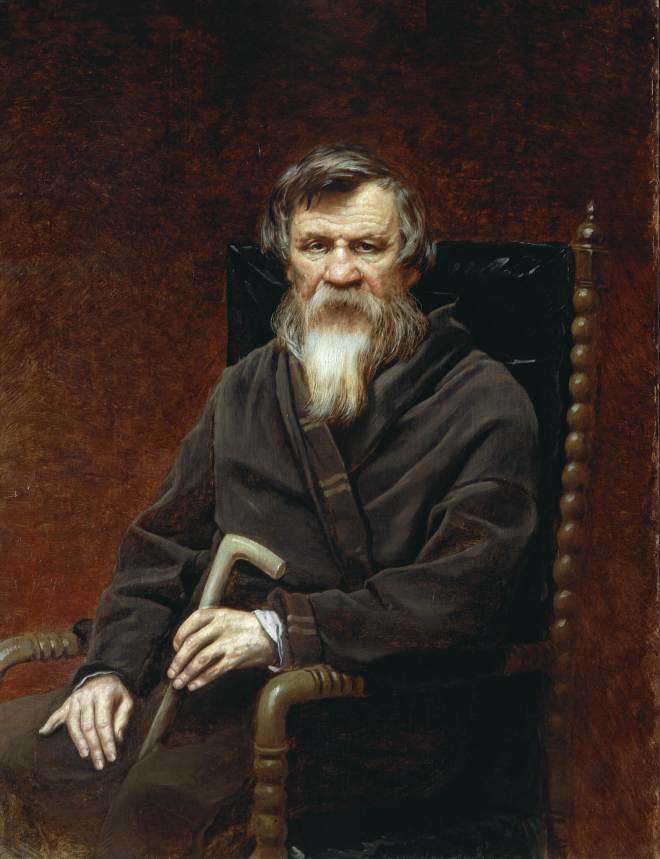
  • Portrait of the historian Mikhail Petrovich Pogodin (1800-1875) - 1872
  • Portrait of the writer Ivan Sergeevich Turgenev. 1872
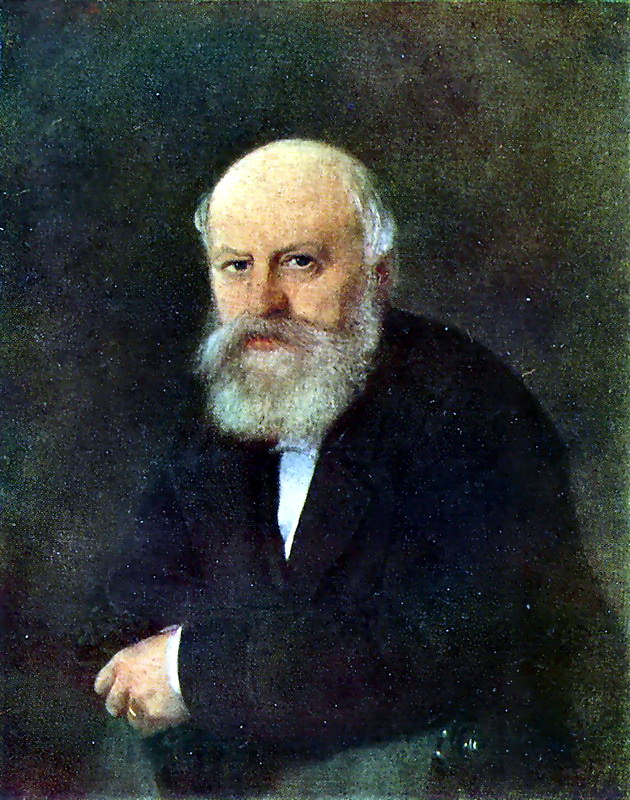
  • Portrait of the composer P. S. Campioni. 1872
  • Cossack. 1873
  • Traveler. 1873
  • Holy fool, surrounded by wanderers. 1872
  • Head of a Kirghiz - a convict. 1873
  • Fedot and Arina. 1873
  • Evening on Great Saturday. 1873
  • Portrait of the merchant S. T. Kuznetsov. 1873
  • Gogol wird von den Gestalten seiner Werke zu Grabe getragen. 1873
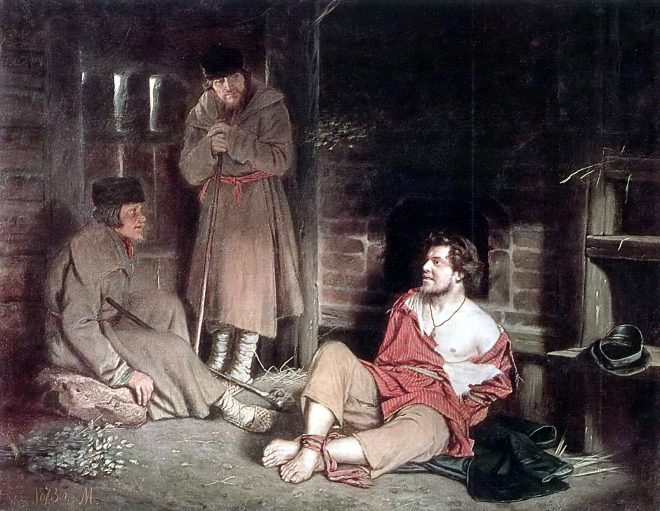
  • Inveterate. 1873
  • Sad father. 1873-74
  • Scouts near Sevastopol. 1874
  • pigeon-fancier-1874
  • Reception of a wanderer. 1874
  • The return of the reapers from the field in the Ryazan province. 1874
  • Joyful father. 1874
  • The old man. Fragm. variant k. Old people - parents at the grave of their son. 1874
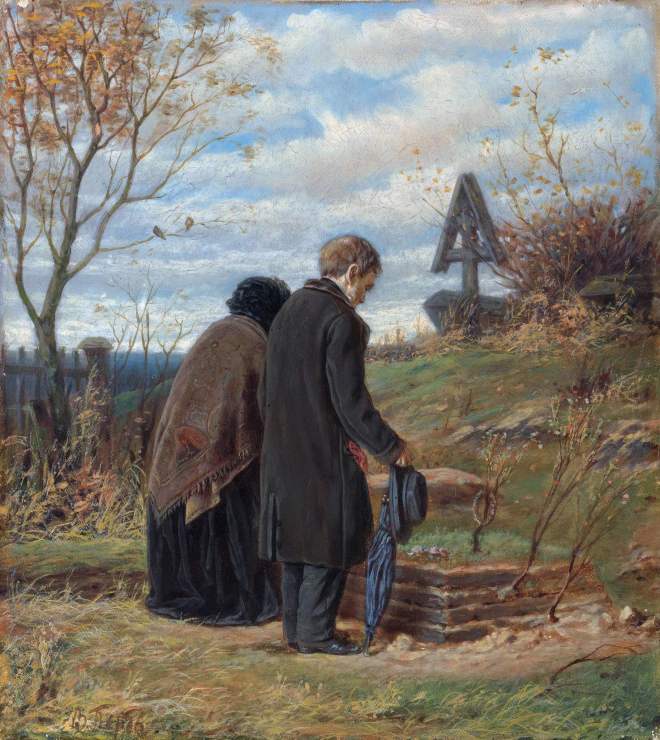
  • Old parents at the grave of their son - 1874
  • Botanist. 1874
  • Gossip Girl. 1875
  • Pugachev's Court. 1875
  • Portrait of Anna Ivanovna Sergeeva, nee. Sheina. 1875
  • Peasant in the field. 1876
  • Portrait of Pyotr Ivanovich Nikolaev, Chairman of the Vladimir Zemstvo Council. 1876
  • Portrait of N. A. Kasatkin. 1876
  • Portrait of A. I. Kridener, born. Ivanova, the artist's mother. 1876
  • fishing 1878
  • Blind. 1878
  • A janitor who gives an apartment to a mistress. 1878
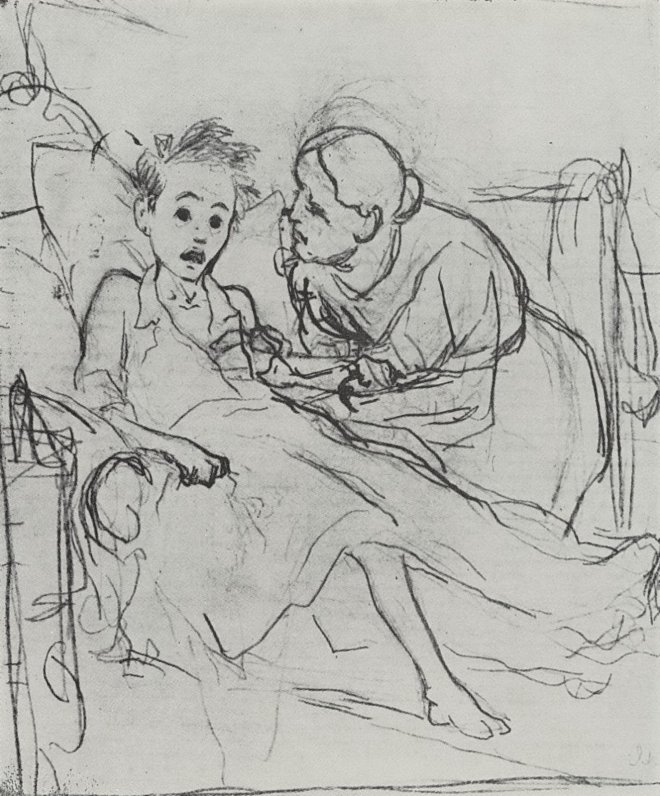
  • Mother with a sick child. 1878
  • Portrait of A.K. Savrasov (1830-1897) - 1878
  • Christ in the Garden of Gethsemane. 1878
  • Executed Pugachevites. Rice. pencil and pen. 1878
  • Pugachev's Court - 1879
  • Fishermen. (Priest, deacon and seminarian). 1879
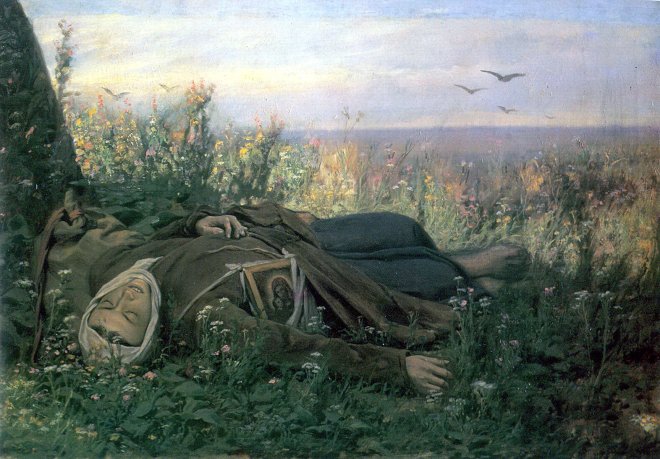
  • Wanderer in the field. 1879
  • From the station. 1879
  • Blessed. 1879
  • On the traction. Pencil drawing. 1879
  • The return of the peasants from the funeral in winter. Beginning 1880s
  • The old man on the bench. 1880s
  • Walkers - petitioners. 1880
  • The first Christians in Kiev. 1880
  • Modern idyll. 1880
  • Lament of Yaroslavna. 1881
  • Dispute about faith. 1881
  • The old man on the bench 1881
  • The last tavern at the outpost
  • Before the tonsure
  • Boar hunting
  • Descent from the Cross. Canvas
  • Girl
  • Melting Snow Maiden
  • Organ grinders
  • Portrait of an old woman
  • Portrait of the sculptor V. S. Brovsky.
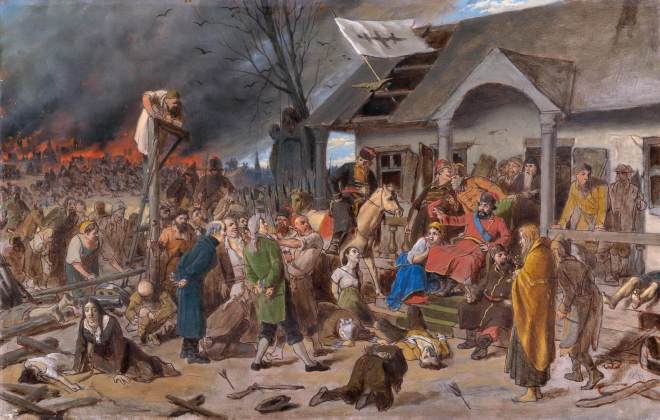
  • Pugachev's Court
  • The arrival of a rural teacher
  • Pilgrim

List of Perov’s painting in the same order as the slide show

Vasily Grigoryevich Perov was born between December 21 and 23, 1833 (January 2 or 4, 1834) and is the illegitimate son of Baron Georgy (Grigory) Karlovich Kridener , and A. I. Ivanova. 

Even though his parents got married shortly after his birth, Vasily did not have the right to his father’s surname and title. And his nickname “Perov” which is his surname, was given to him by his literacy teacher for diligence and skillful writing.

In his childhood Vasily was ill with smallpox, which caused him to have poor eyesight for the rest of his life. 

He became interested in painting after watching the work of an artist and went to study at the Arzamas art school of A. V. Stupin.
But because he was so good he was allow to paint with oil paints before the other students, then sadly because of a dispute with another student, he didn’t finish school.

He went back home and began creating the composition ” Crucifixion ” written throughout Lent and completed on Holy Week then placed in a church located near the village of Nikolskoye. 

He also painted a number of portraits and genre paintings: “A Beggar Begging”, ” Village Troika “, “Folk Festival in the Semik”.

In 1853, Vasily Perov entered the Moscow School of Painting, Sculpture and Architecture and graduated from college under the guidance of S.K. Zaryanko .

Perov presented the “Portrait of Nikolai Grigoryevich Kridener, the artist’s brother” to the Imperial Academy of Arts, and was awarded a small silver medal in 1856.

Portrait of Nikolai Grigorievich Rubinstein. 1870

This work was still closely connected with the traditions of art of the early 19th century, but already in subsequent works Perov acted as an innovator. 

In 1857, the painting “Arrival of a police officer for investigation” brought the artist a large silver medal, and attracted the attention of the public and critics.

The arrival of the police officer for the investigation. 1857

In 1860, Perov was again awarded a small gold medal for the painting “First rank. The son of a sexton, promoted to collegiate registrars”, which established the artist as the heir to the satirical genre of the 1840s. 

Now he could participate in the competition for a large gold medal, and painted “Sermon in the village” and “Rural religious procession at Easter”. He received a large gold medal in 1867 and the right to travel abroad as a boarder for the first painting.

Sermon in the village -1861

In 1862, Perov married Elena Edmondovna Sheins and they went abroad while he was himself a boarder at the Academy of Arts.

In 1863-1864 Perov lived and worked in Paris, but he wanted to go back home and having received permission from the Academy for an early return which included the continuation of boarding in Russia, he returned to Moscow.

Vasily Perov settled in the house of his wife’s uncle, F.F. Rezanov in Moscow and never left the city.

While still abroad, Perov conceived a large painting with a plot from monastic life, with these paintings, a new stage in the artist’s work began: from a satirical direction, he moved on to more dramatic stories – about “humiliated and offended.

In 1869, Vasily Perov and Myasoedov ​​created the Association of Traveling Art Exhibitions (TPKhV). Vasily who was a board member for 7 years organized a Moscow group of Wanderers. 

In 1870 he was awarded the title of professor by the Academy of Arts thanks to the paintings “Wanderer” and “Birdcatcher”, and received the first prize of the OPH for the painting “The Birdman”.

bird-catcher by Perov - 1870
bird-catcher by Perov – 1870

In the 1970s, everyday life stories occupied a special place in Perov’s work.  Then in 1871, Vasily was appointed teacher of the Moscow School of Painting and Art.

In 1871-1872 Perov, commissioned by P. M. Tretyakov, executed a number of portraits of Russian writers and scientists. Perov achieved such “truthfulness” in some portraits, which in Russian art was noted only by I. E. Repin and V. A. Serov .

Perov married Elizaveta Egorovna Druganova in 1872.

In 1873, his paintings “Fisherman” and “Hunters at rest” were presented at the World Exhibition in Vienna.

fisherman-1871
fisherman-1871

In 1877, Perov left the members of the TPHV and participated in the exposition of the World Exhibition in Paris a year later.

In the last years of his life, V. G. Perov collaborated with the journal ” Priroda i Okhota ” by L. P. Sabaneev  and a number of his stories were published in the Art Journal  which was published in 1881-1887.

His health was undermined by typhus and pneumonia in 1881 and Vasily Perov died of consumption , at the age of 49, in a small Golitsyn hospital near Moscow.

Perov was buried at the monastery cemetery in the Danilov Monastery where a mournful tombstone in the form of a cross on Golgotha ​​was erected on his grave.

Later his ashes were reburied at the monastery cemetery in the Donskoy Monastery, and on the new grave of the artist, a monument was erected by the sculptor Alexei Evgenievich Yeletsky.

I hope you enjoyed this article

Read : Discover the painting “Troika” by Vasily Perov

If you liked this article, subscribe , put likes, write comments!
Share on social networks
Check out Our Latest Posts


© 2023 Akirill.com – All Rights Reserved

Lisez “Courage” d’Anna Akhmatova avec le texte original et traduit

Livres bilinguesRead in EnglishNous contacter
Littérature américaineLittérature françaiseLittérature russe

J’ai appris a vivre simplement, sagement (Ru/Fr) / I have learned to live simply, wisely (Ru/Eng) / Я научилась просто мудро жить (Рус/Анг.) / (Рус/ Фра.) > > >


Ce poème écrit pendant la Grande Guerre patriotique par A. Akhmatova parle autant d’aujourd’hui que de cette période. “Courage” parle de la nécessité de préserver la culture et la langue russe et, je pense que ses paroles sont importantes pour nous tous, ainsi que pour nos différentes cultures et langues.

Analyse du poème “Courage” d’Akhmatova

A. Akhmatova a eu une vie très difficile et a été directement témoin de nombreux tournants dans l’histoire russe. Elle n’a pas accepté la révolution mais a refusé de quitter son pays. Son travail n’a pas été reconnu par le gouvernement soviétique et a fait l’objet de vives critiques. 

Lors de l’évacuation, en raison de la Grande Guerre patriotique, Akhmatova a commencé à travailler à la création du cycle patriotique «Vents de Guerre», qui comprend le poème «Courage» en 1941.

Dans ce poème, elle souligne que la privation physique et la souffrance ne sont rien comparées à la perte du patrimoine culturel que les nazis ont cherché à détruire en comprenant leur importance. 

Elle pensait que les écrivains et les poètes devaient préserver la « Parole Russe » et « Les Grands Mots Russe » et les transmettre aux générations futures, peu importe ce qu’ils devaient endurer.

Elle était convaincue que la riche culture russe devrait aider le peuple à survivre. Cela avait été prouvé maintes et maintes fois dans le passé et se répéterait certainement à l’avenir, comme c’est le cas maintenant. 

Pour elle, la grandeur d’un pays n’était pas déterminée par le niveau de son développement économique ou politique, mais par la présence d’une puissance spirituelle particulière. Cette force, renforcée par le courage du peuple, est le fondement puissant du peuple, qui ne peut être écrasé.

Анна Ахматова — Мужество: СтихAnna Akhmatova – Courage : versets
Мы знаем, что ныне лежит на весах
И что совершается ныне.
Час мужества пробил на наших часах,
И мужество нас не покинет.
Nous savons ce qui est maintenant sur la balance
et ce qui se passe maintenant.
L’heure du courage a sonné à nos montres,
Et le courage ne nous quittera pas.
Не страшно под пулями мертвыми лечь,
Не горько остаться без крова,
И мы сохраним тебя, русская речь,
Великое русское слово.
Ce n’est pas effrayant de se coucher mort sous les balles,
Ce n’est pas amer de rester sans abri,
Et nous te sauverons, langue russe,
Grand mot russe.
Свободным и чистым тебя пронесем,

И внукам дадим, и от плена спасем


Навеки.
Nous vous transporterons libres et purs,

Et nous vous donnerons à nos petits-enfants, et vous sauverons de la captivité


Pour toujours.

J’espère que ce poème vous a plu


J’ai appris a vivre simplement, sagement (Ru/Fr) / I have learned to live simply, wisely (Ru/Eng) / Я научилась просто мудро жить (Рус/Анг.) / (Рус/ Фра.) > > >

If you liked this article, subscribe , put likes, write comments!

Si vous avez aimé cet article, abonnez-vous, mettez des likes, écrivez des commentaires !
Share on social networks
Partager sur les réseaux sociaux
Check out Our Latest Posts
Découvrez nos derniers messages

Read “Courage” by Anna Akhmatova with original text and translated

Bilingual booksLire en FrançaisContact us
American LiteratureFrench LiteratureRussian Literature

J’ai appris a vivre simplement, sagement (Ru/Fr) / I have learned to live simply, wisely (Ru/Eng) / Я научилась просто мудро жить (Рус/Анг.) / (Рус/ Фра.) > > >


This poem written during the Great Patriotic War by A. Akhmatova speaks of today as much as it did of this period. “Courage is about the need to preserve Russian culture and language and I believe that her words are important to all of us, as well as our different cultures and languages.

Analysis of the poem “Courage” by Akhmatova

A. Akhmatova had very difficult life and directly witnessed many turning points in the Russian history. She did not accept the revolution but refuse to leave her country. Her work was not recognize by the Soviet government and was subjected to fierce criticism. 

During the evacuation, due to the Great Patriotic War Akhmatova began to work on the creation of the patriotic cycle “Winds of War”, which includes the poem “Courage” in 1941.

In this poem, she emphasizes that physical deprivation and suffering are nothing compared to the loss of cultural heritage which the Nazis sought to destroy understanding their importance. 

She thought that the writers and poets had to preserve the “Russian speech” and “The Great Russian Word” and pass it on to future generations, no matter what they had to endure.

She was sure that the rich Russian culture should help the people survive which had been proven time and time again in the past and would certainly be repeated in the future, as it is now. 

For her, the greatness of a country is determined not by the level of its economic or political development, but by the presence of a special spiritual power. This strength, reinforced by the courage of people, is the powerful foundation of the people, which cannot be crushed.

Анна Ахматова — Мужество: СтихAnna Akhmatova – Courage: Verse
Мы знаем, что ныне лежит на весах
И что совершается ныне.
Час мужества пробил на наших часах,
И мужество нас не покинет.
We know what is now on the scales
And what is happening now.
The hour of courage has struck on our watches,
And courage will not leave us.
Не страшно под пулями мертвыми лечь,
Не горько остаться без крова,
И мы сохраним тебя, русская речь,
Великое русское слово.
It’s not scary to lie dead under the bullets,
It’s not bitter to without shelter,
And we will save you, Russian speech,
Great Russian word.
Свободным и чистым тебя пронесем,

И внукам дадим, и от плена спасем


Навеки.
We will carry you free and clean,

And we will give you to our grandchildren, and save you from captivity

Forever.

I hope you enjoyed this poem


J’ai appris a vivre simplement, sagement (Ru/Fr) / I have learned to live simply, wisely (Ru/Eng) / Я научилась просто мудро жить (Рус/Анг.) / (Рус/ Фра.) > > >

If you liked this article, subscribe , put likes, write comments!
Share on social networks
Check out Our Latest Posts


© 2023 Akirill.com – All Rights Reserved

Happy New Year with a poem from Helen Hunt Jackson

Bilingual booksLire en FrançaisContact us
American LiteratureFrench LiteratureRussian Literature

I wish you all a Happy New Year 2023.

May god bless you all with, health, love, success and your wildest dreams!

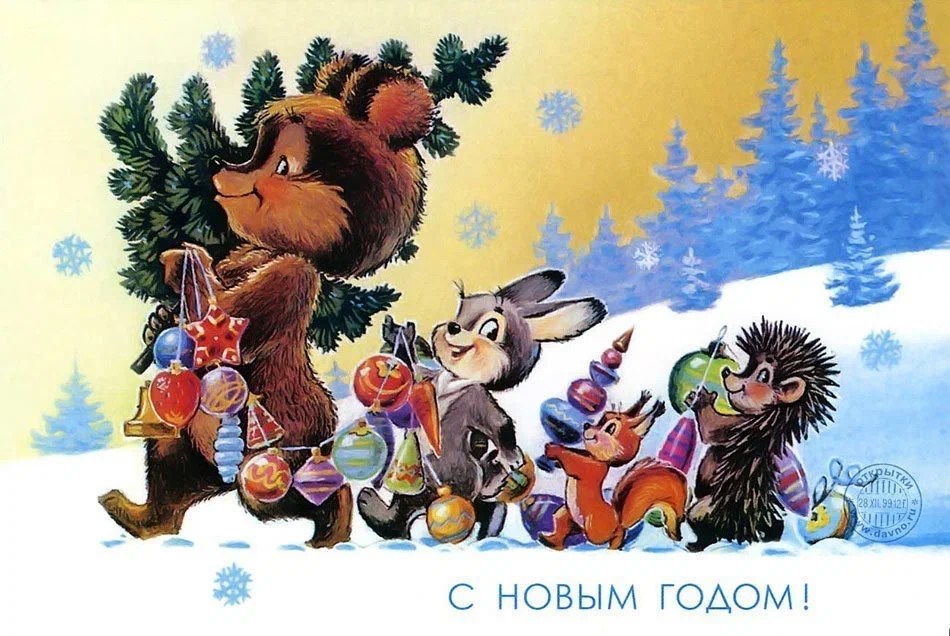
Here are a few postcard pictures and the poem “New Year’s Morning” by Helen Hunt Jackson translated in French.

С Новым Годом! means Happy New Year in Russian

New Year’s Morning
by Helen Hunt Jackson
Le matin du Nouvel An
par Helen Hunt Jackson
Only a night from old to new!Seulement une nuit de l’ancien au nouveau!
Only a night, and so much wrought!Une seule nuit, et tellement de travail !
The Old Year’s heart all weary grew,Le cœur de la vieille année tout fatigué a grandi,
But said: “The New Year rest has brought.”Mais a dit: “Le repos la Nouvelle année a apporté.”
The Old Year’s hopes its heart laid down,Les espoirs de la vieille année son cœur a déposé,
As in a grave; but, trusting, said:Comme dans une tombe; 
mais, confiante, dit :
“The blossoms of the New Year’s crown“Les fleurs de la couronne du Nouvel An
Bloom from the ashes of the dead.”Fleurissez des cendres des morts.
The Old Year’s heart was full of greed;Le cœur de l’ancienne Année était plein de cupidité ;
With selfishness it longed and ached,Avec égoïsme, il aspirait et faisait mal,
And cried: “I have not half I need.Et s’écriait : « Je n’ai pas la moitié de ce dont j’ai besoin.
My thirst is bitter and unslaked.Ma soif est amère et inassouvie.
But to the New Year’s generous handMais à la main généreuse du Nouvel An
All gifts in plenty shall return;Tous les cadeaux en abondance reviendront ;
True love it shall understand;Le véritable amour, il comprendra;
By all my failures it shall learn.Par tous mes échecs, il apprendra.
I have been reckless; it shall bej’ai été imprudent; 
ce sera
Quiet and calm and pure of life.Tranquille et calme et plein de vie
I was a slave; it shall go free,j’étais esclave; 
il sera libre
And find sweet peace where I leave strife.”Et trouve une douce paix là où je laisse les conflits.
Only a night from old to new!Seulement une nuit de l’ancien au nouveau!
Never a night such changes brought.Jamais une nuit de tels changements n’ont apportés.
The Old Year had its work to do;La Vieille Année avait son travail à faire ;
No New Year miracles are wrought.Aucun miracle du Nouvel An n’est accompli.
Always a night from old to new!Toujours une nuit de l’ancien au nouveau!
Night and the healing balm of sleep!La nuit et le baume réparateur du sommeil !
Each morn is New Year’s morn come true,Chaque matin est le matin du Nouvel An devenu réalité,
Morn of a festival to keep.Matin d’un festival à garder.
All nights are sacred nights to makeToutes les nuits sont des nuits sacrées à faire
Confession and resolve and prayer;Confession et résolution et prière;
All days are sacred days to wakeTous les jours sont des jours sacrés pour se réveiller
New gladness in the sunny air.Nouvelle joie dans l’air ensoleillé.
Only a night from old to new;Seulement une nuit de l’ancien au nouveau;
Only a sleep from night to morn.Seulement un sommeil du soir au matin.
The new is but the old come true;Le nouveau n’est que l’ancien devenu réalité;
Each sunrise sees a new year born.Chaque lever de soleil voit naître une nouvelle année.

And again Happy New Year!

If you liked this article, subscribe , put likes, write comments!
Share on social networks
Check out Our Latest Posts

Bonne Année avec un poème d’Helen Hunt Jackson

Livres bilinguesRead in EnglishNous contacter
Littérature américaineLittérature françaiseLittérature russe

Je vous souhaite à tous une Bonne Année 2023.

Que Dieu vous bénisse tous et vous donne, la santé, plein d’amour, le succès dans tout ce que vous faites et que vos rêves les plus fous se réalisent!

Voici quelques photos de cartes postales et le poème « Le matin du Nouvel An » d’Helen Hunt Jackson traduit en français.

С Новым Годом! signifie bonne année en russe

New Year’s Morning
by Helen Hunt Jackson
Le matin du Nouvel An
par Helen Hunt Jackson
Only a night from old to new!Seulement une nuit de l’ancien au nouveau!
Only a night, and so much wrought!Une seule nuit, et tellement de travail !
The Old Year’s heart all weary grew,Le cœur de la vieille année tout fatigué a grandi,
But said: “The New Year rest has brought.”Mais a dit: “Le repos la Nouvelle année a apporté.”
The Old Year’s hopes its heart laid down,Les espoirs de la vieille année son cœur a déposé,
As in a grave; but, trusting, said:Comme dans une tombe; 
mais, confiante, dit :
“The blossoms of the New Year’s crown“Les fleurs de la couronne du Nouvel An
Bloom from the ashes of the dead.”Fleurissez des cendres des morts.
The Old Year’s heart was full of greed;Le cœur de l’ancienne Année était plein de cupidité ;
With selfishness it longed and ached,Avec égoïsme, il aspirait et faisait mal,
And cried: “I have not half I need.Et s’écriait : « Je n’ai pas la moitié de ce dont j’ai besoin.
My thirst is bitter and unslaked.Ma soif est amère et inassouvie.
But to the New Year’s generous handMais à la main généreuse du Nouvel An
All gifts in plenty shall return;Tous les cadeaux en abondance reviendront ;
True love it shall understand;Le véritable amour, il comprendra;
By all my failures it shall learn.Par tous mes échecs, il apprendra.
I have been reckless; it shall bej’ai été imprudent; 
ce sera
Quiet and calm and pure of life.Tranquille et calme et plein de vie
I was a slave; it shall go free,j’étais esclave; 
il sera libre
And find sweet peace where I leave strife.”Et trouve une douce paix là où je laisse les conflits.
Only a night from old to new!Seulement une nuit de l’ancien au nouveau!
Never a night such changes brought.Jamais une nuit de tels changements n’ont apportés.
The Old Year had its work to do;La Vieille Année avait son travail à faire ;
No New Year miracles are wrought.Aucun miracle du Nouvel An n’est accompli.
Always a night from old to new!Toujours une nuit de l’ancien au nouveau!
Night and the healing balm of sleep!La nuit et le baume réparateur du sommeil !
Each morn is New Year’s morn come true,Chaque matin est le matin du Nouvel An devenu réalité,
Morn of a festival to keep.Matin d’un festival à garder.
All nights are sacred nights to makeToutes les nuits sont des nuits sacrées à faire
Confession and resolve and prayer;Confession et résolution et prière;
All days are sacred days to wakeTous les jours sont des jours sacrés pour se réveiller
New gladness in the sunny air.Nouvelle joie dans l’air ensoleillé.
Only a night from old to new;Seulement une nuit de l’ancien au nouveau;
Only a sleep from night to morn.Seulement un sommeil du soir au matin.
The new is but the old come true;Le nouveau n’est que l’ancien devenu réalité;
Each sunrise sees a new year born.Chaque lever de soleil voit naître une nouvelle année.

Et encore une fois, Bonne Année !

Si vous avez aimé cet article, abonnez-vous, mettez des likes, écrivez des commentaires !

Partager sur les réseaux sociaux

Découvrez nos derniers posts

Joyeux Noël avec un peu de poésie et des photos

Livres bilinguesRead in EnglishNous contacter
Littérature américaineLittérature françaiseLittérature russe

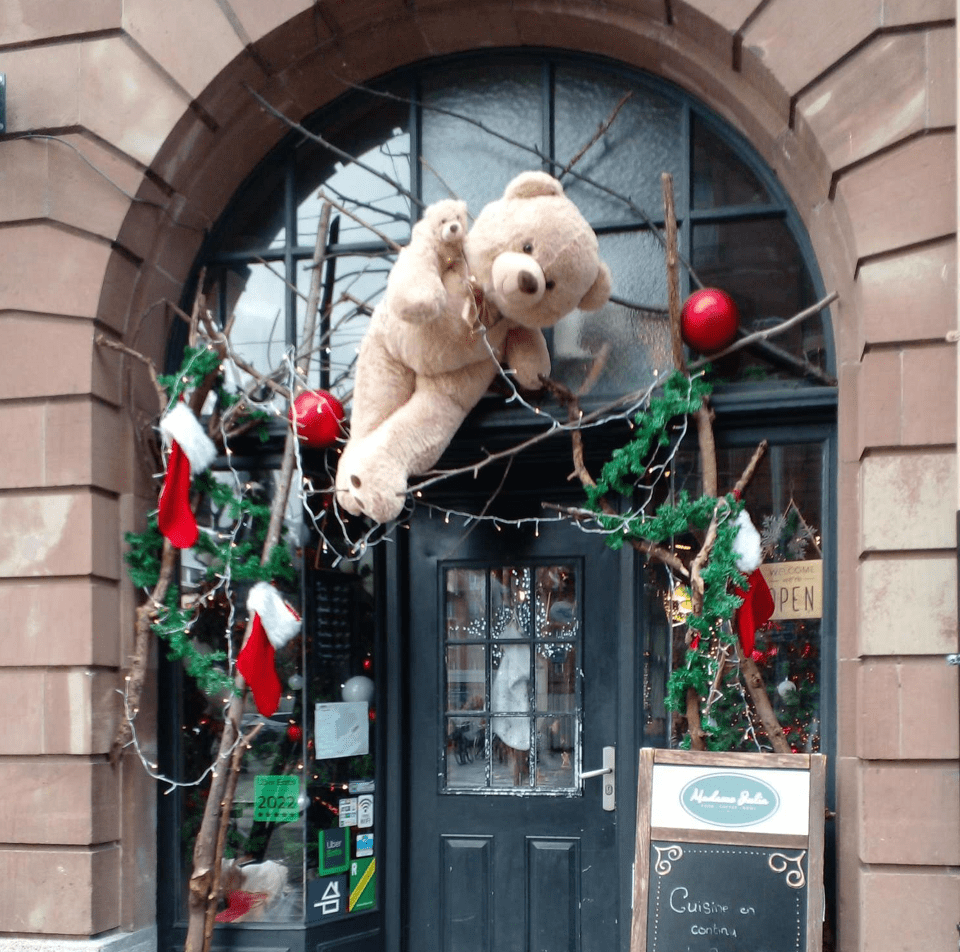
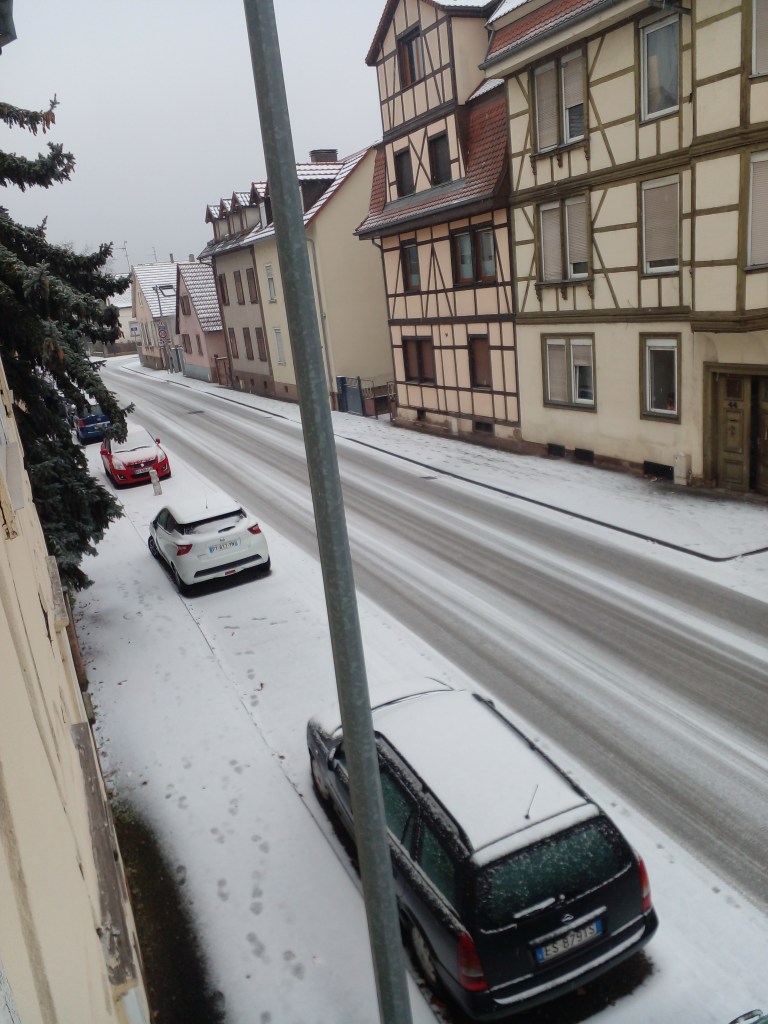
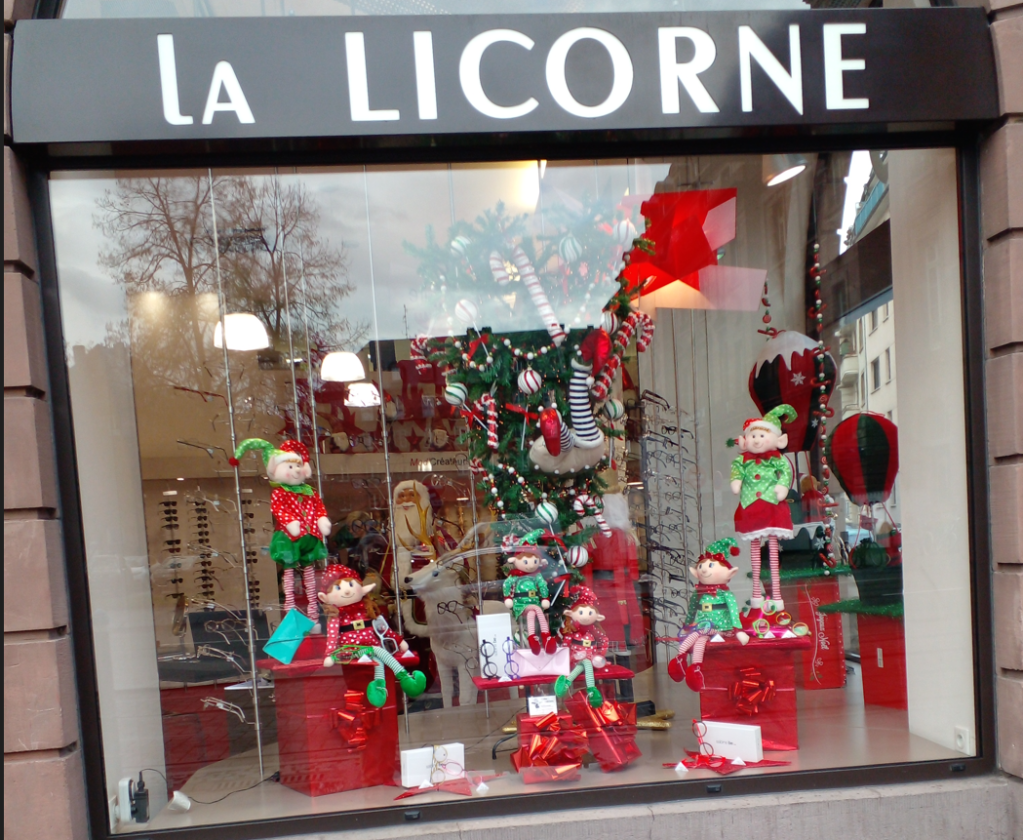
Je vous souhaite un merveilleux Noël, l’amour de la famille et la compagnie de bons amis…

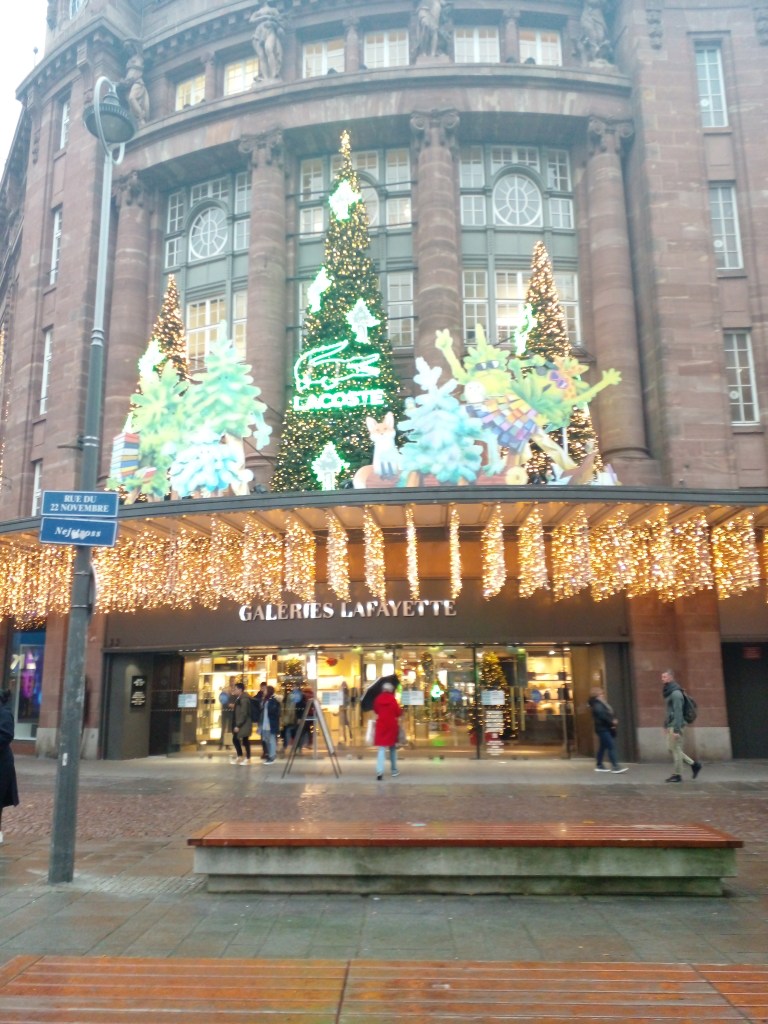
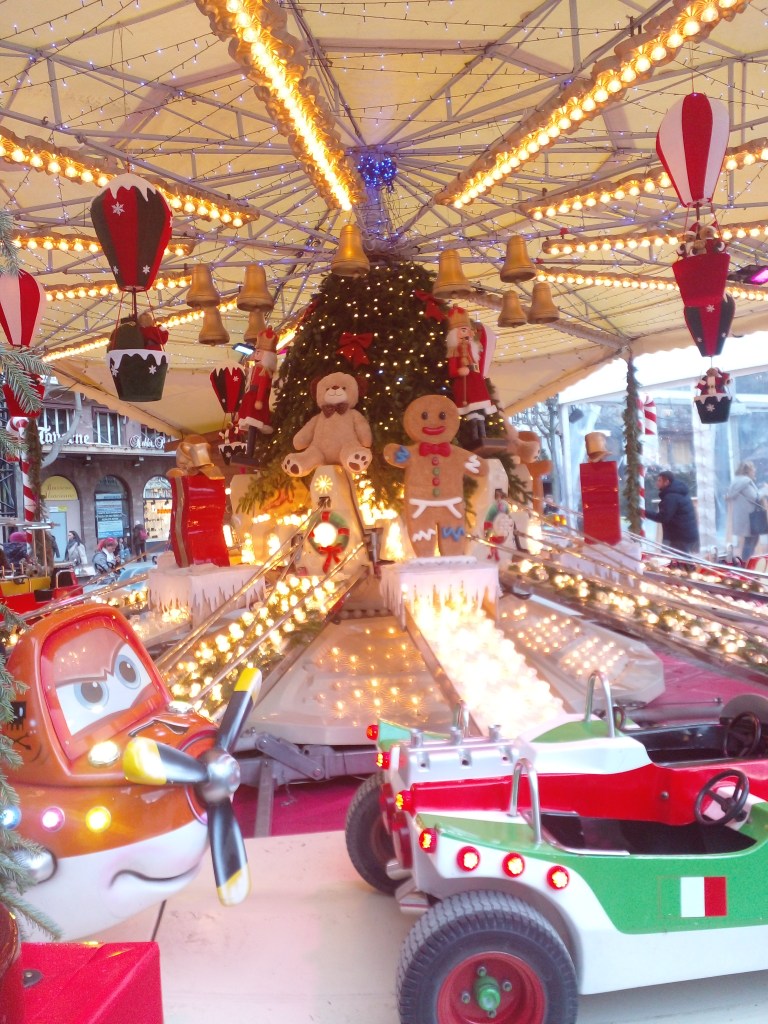
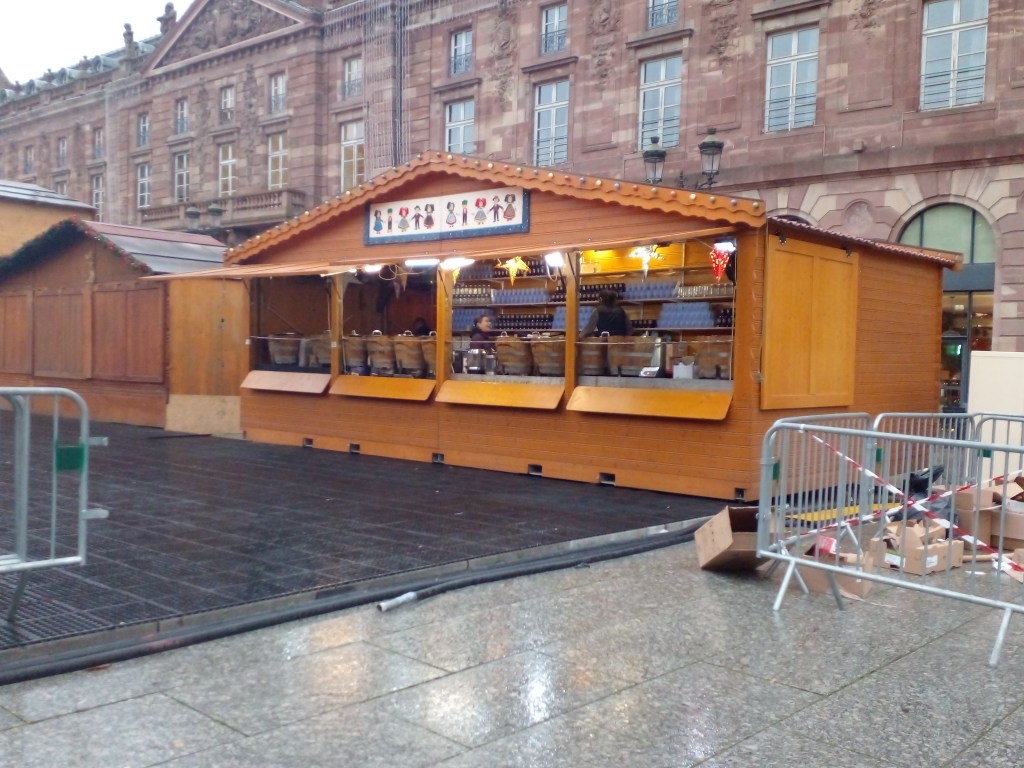
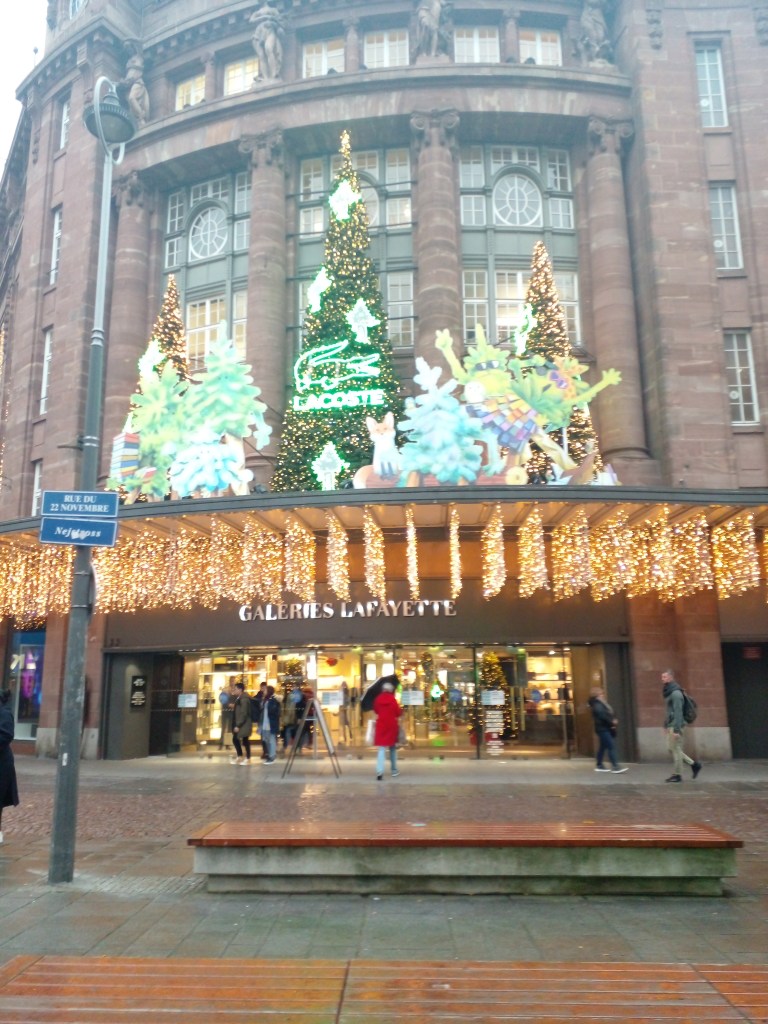
Ce sont des photos de Strasbourg de ces derniers jours, et un poème à savourer

The Bells
Edgar Allan Poe 
Les cloches
Edgar Allan Poe
I.
        Hear the sledges with the bells—
                 Silver bells!
What a world of merriment their melody foretells!
        How they tinkle, tinkle, tinkle,
      
I.
Écoutez les traîneaux avec les cloches—                  Cloches d’argent!
Quel monde de gaieté leur mélodie prédit!
        Comment elles tintent, tintent, tintent,
  In the icy air of night!
        While the stars that oversprinkle
        All the heavens, seem to twinkle
           With a crystalline delight;
         Keeping time, time, time,
         In a sort of Runic rhyme,
  Dans l’air glacé de la nuit !
        Tandis que les étoiles qui arrosent
        Tous les cieux semblent scintiller
           Avec un délice cristallin;
         Garder le temps, temps, temps,
         Dans une sorte de rime runique,
To the tintinabulation that so musically wells
       From the bells, bells, bells, bells,
               Bells, bells, bells—
  From the jingling and the tinkling of the bells.
A la tintinnabulation qui si bien musicalement
       Des cloches, cloches, cloches, cloches,
               Cloches, cloches, cloches—
  Du tintement et tintement des cloches.
II.
        Hear the mellow wedding bells,
                 Golden bells!
What a world of happiness their harmony foretells!
        Through the balmy air of night
        How they ring out their delight!
           From the molten-golden notes,
               And all in tune,
           What a liquid ditty floats
II.
        Écoutez les douces cloches du mariage,
                 Cloches d’or !
Quel monde de bonheur annonce leur harmonie !
        A travers l’air doux de la nuit
        Comme elles sonnent leur joie !
           Des notes dorées fondues,
               Et tout en accord,
           Quelle chansonnette liquide flotte
To the turtle-dove that listens, while she gloats
               On the moon!
         Oh, from out the sounding cells,
What a gush of euphony voluminously wells!
A la tourterelle qui écoute, tandis qu’elle jubile
               Sur la Lune!
         Oh, depuis les cellules sonores,
Quel jaillissement d’euphonie jaillit à pleins poumons !
 How it swells!
               How it dwells
           On the Future! how it tells
           Of the rapture that impels
         To the swinging and the ringing
           Of the bells, bells, bells,
         Of the bells, bells, bells, bells,
               Bells, bells, bells—
 Qu’est-ce que cela gonfle !
               Comment cela habite
           Sur le futur! 
comment cela raconte
           Du ravissement qui pousse
         Au balancement et au tintement
           Des cloches, cloches, cloches,
         Des cloches, cloches, cloches, cloches,
               Cloches, cloches, cloches—
To the rhyming and the chiming of the bells! Aux rimes et au carillon des cloches !

III.
         Hear the loud alarum bells—
                 Brazen bells!
What tale of terror, now, their turbulency tells!
       In the startled ear of night
       How they scream out their affright!
         Too much horrified to speak,
         They can only shriek, shriek,
                  Out of tune,
III.
         Écoutez les cloches d’alarme bruyantes—
                 Cloches d’airain !
Quelle histoire de terreur, maintenant, leur turbulence raconte!
       Dans l’oreille effrayée de la nuit
       Comme elles crient leur effroi !
         Trop horrifié pour parler,
         Elles ne peuvent que crier, crier,
                  Désaccordé,
In a clamorous appealing to the mercy of the fire,
In a mad expostulation with the deaf and frantic fire,
            
Dans un appel retentissant à la miséricorde du feu,
Dans une polémique folle avec le feu sourd et frénétique,
Leaping higher, higher, higher,
            With a desperate desire,
         And a resolute endeavor
         Now—now to sit or never,
       By the side of the pale-faced moon.
            Oh, the bells, bells, bells!
            What a tale their terror tells
                  Of Despair!
  Sautant plus haut, plus haut, plus haut,
            D’un désir désespéré,
         Et un effort résolu
         Maintenant—s’asseoir maintenant ou jamais,
       A côté de la lune au visage pâle.
            Oh, les cloches, les cloches, les cloches !
            Quelle histoire leur terreur raconte
                  du désespoir !
How they clang, and clash, and roar!
       What a horror they outpour
On the bosom of the palpitating air!
      
    Comme elles s’entrechoquent, s’entrechoquent et rugissent !
       Quelle horreur elles déversent
Au sein de l’air palpitant !
 Yet the ear it fully knows,
            By the twanging,
            And the clanging,
         How the danger ebbs and flows;
       Yet the ear distinctly tells,
            In the jangling,
            And the wrangling.
    
 Pourtant l’oreille sait parfaitement,
            Par le tintement,
            Et le tintement,
         Comment le danger va et vient ;
       Pourtant l’oreille dit distinctement,
            Dans le cliquetis,
            Et les disputes.
   How the danger sinks and swells,
By the sinking or the swelling in the anger of the bells—
             Of the bells—
     Of the bells, bells, bells, bells,
            Bells, bells, bells—
 In the clamor and the clangor of the bells!
Comment le danger coule et enfle,
Par le naufrage ou le gonflement dans la colère des cloches—
             Des cloches—
     Des cloches, cloches, cloches, cloches,
            Cloches, cloches, cloches—
 Dans la clameur et le tintement des cloches !
IV.
          Hear the tolling of the bells—
                 Iron bells!

What a world of solemn thought their monody compels!
        In the silence of the night,
        How we shiver with affright
  At the melancholy menace of their tone!
        For every sound that floats
        From the rust within their throats
                 Is a groan.
        And the people—ah, the people—
       They that dwell up in the steeple,
                 All alone,
        And who tolling, tolling, tolling,
          In that muffled monotone,
IV.
          Entendez le tintement des cloches—
                 cloches de fer !
Quel monde de pensée solennelle oblige leur monodie !
        Dans le silence de la nuit,
        Comment nous frissonnons d’effroi
  A la menace mélancolique de leur ton !
        Pour chaque son qui flotte
        De la rouille dans leur gorges
                 Est un gémissement.
        Et les gens—ah, les gens—
       Ceux qui habitent dans le clocher,
                 Tout seul,
        Et qui sonne, sonne, sonne,
          Dans ce monotone feutré,
  Feel a glory in so rolling
          On the human heart a stone—
     They are neither man nor woman—
     They are neither brute nor human—
              They are Ghouls:
        And their king it is who tolls;
        And he rolls, rolls, rolls,
                    Rolls
             
      Sentez-vous une gloire dans un tel roulement
          Sur le cœur humain une pierre—
     Ils ne sont ni homme ni femme—
     Ils ne sont ni brutaux ni humains—
              Ce sont des goules :
        Et c’est leur roi qui sonne ;
        Et il roule, roule, roule,
                    Roule
A pæan from the bells!
          And his merry bosom swells
             With the pæan of the bells!
          And he dances, and he yells;
          Keeping time, time, time,
          In a sort of Runic rhyme,
             To the pæan of the bells—
               Of the bells:
 
    Un pæan des cloches !
          Et son joyeux sein se gonfle
             Avec le pæan des cloches !
          Et il danse, et il crie ;
          Garder le temps, temps, temps,
          Dans une sorte de rime runique,
             Au pæan des cloches—
               Des cloches :
         Keeping time, time, time,
          In a sort of Runic rhyme,
            To the throbbing of the bells—
          Of the bells, bells, bells—
            To the sobbing of the bells;
          Keeping time, time, time,
            As he knells, knells, knells,
          Garder le temps, temps, temps,
          Dans une sorte de rime runique,
            Au son des cloches—
          Des cloches, cloches, cloches—
            Aux sanglots des cloches ;
          Garder le temps, temps, temps,
            Comme il sonne, sonne, sonne,
          In a happy Runic rhyme,
            To the rolling of the bells—
          Of the bells, bells, bells—
            To the tolling of the bells,
      Of the bells, bells, bells, bells—
              Bells, bells, bells—
  To the moaning and the groaning of the bells.
          Dans une joyeuse rime runique,
            Au roulement des cloches—
          Des cloches, cloches, cloches—
            Au son des cloches,
      Des cloches, cloches, cloches, cloches—
              Cloches, cloches, cloches—
  Au gémissement et au gémissement des cloches.

Joyeux noël

Si vous avez aimé cet article, abonnez-vous, mettez des likes, écrivez des commentaires !
Partager sur les réseaux sociaux
Découvrez nos derniers posts

Merry Christmas with a bit of poetry and pictures

Bilingual booksLire en FrançaisContact us
American LiteratureFrench LiteratureRussian Literature

I wish you all a marvelous Christmas with the love of family, and the company of good friends…

These are pictures from Strasbourg from the last few days, and a poem to enjoy

The Bells
Edgar Allan Poe 
Les cloches
Edgar Allan Poe
I.
        Hear the sledges with the bells—
                 Silver bells!
What a world of merriment their melody foretells!
        How they tinkle, tinkle, tinkle,
      
I.
Écoutez les traîneaux avec les cloches—                  Cloches d’argent!
Quel monde de gaieté leur mélodie prédit!
        Comment elles tintent, tintent, tintent,
  In the icy air of night!
        While the stars that oversprinkle
        All the heavens, seem to twinkle
           With a crystalline delight;
         Keeping time, time, time,
         In a sort of Runic rhyme,
  Dans l’air glacé de la nuit !
        Tandis que les étoiles qui arrosent
        Tous les cieux semblent scintiller
           Avec un délice cristallin;
         Garder le temps, temps, temps,
         Dans une sorte de rime runique,
To the tintinabulation that so musically wells
       From the bells, bells, bells, bells,
               Bells, bells, bells—
  From the jingling and the tinkling of the bells.
A la tintinnabulation qui si bien musicalement
       Des cloches, cloches, cloches, cloches,
               Cloches, cloches, cloches—
  Du tintement et tintement des cloches.
II.
        Hear the mellow wedding bells,
                 Golden bells!
What a world of happiness their harmony foretells!
        Through the balmy air of night
        How they ring out their delight!
           From the molten-golden notes,
               And all in tune,
           What a liquid ditty floats
II.
        Écoutez les douces cloches du mariage,
                 Cloches d’or !
Quel monde de bonheur annonce leur harmonie !
        A travers l’air doux de la nuit
        Comme elles sonnent leur joie !
           Des notes dorées fondues,
               Et tout en accord,
           Quelle chansonnette liquide flotte
To the turtle-dove that listens, while she gloats
               On the moon!
         Oh, from out the sounding cells,
What a gush of euphony voluminously wells!
A la tourterelle qui écoute, tandis qu’elle jubile
               Sur la Lune!
         Oh, depuis les cellules sonores,
Quel jaillissement d’euphonie jaillit à pleins poumons !
 How it swells!
               How it dwells
           On the Future! how it tells
           Of the rapture that impels
         To the swinging and the ringing
           Of the bells, bells, bells,
         Of the bells, bells, bells, bells,
               Bells, bells, bells—
 Qu’est-ce que cela gonfle !
               Comment cela habite
           Sur le futur! 
comment cela raconte
           Du ravissement qui pousse
         Au balancement et au tintement
           Des cloches, cloches, cloches,
         Des cloches, cloches, cloches, cloches,
               Cloches, cloches, cloches—
To the rhyming and the chiming of the bells! Aux rimes et au carillon des cloches !

III.
         Hear the loud alarum bells—
                 Brazen bells!
What tale of terror, now, their turbulency tells!
       In the startled ear of night
       How they scream out their affright!
         Too much horrified to speak,
         They can only shriek, shriek,
                  Out of tune,
III.
         Écoutez les cloches d’alarme bruyantes—
                 Cloches d’airain !
Quelle histoire de terreur, maintenant, leur turbulence raconte!
       Dans l’oreille effrayée de la nuit
       Comme elles crient leur effroi !
         Trop horrifié pour parler,
         Elles ne peuvent que crier, crier,
                  Désaccordé,
In a clamorous appealing to the mercy of the fire,
In a mad expostulation with the deaf and frantic fire,
            
Dans un appel retentissant à la miséricorde du feu,
Dans une polémique folle avec le feu sourd et frénétique,
Leaping higher, higher, higher,
            With a desperate desire,
         And a resolute endeavor
         Now—now to sit or never,
       By the side of the pale-faced moon.
            Oh, the bells, bells, bells!
            What a tale their terror tells
                  Of Despair!
  Sautant plus haut, plus haut, plus haut,
            D’un désir désespéré,
         Et un effort résolu
         Maintenant—s’asseoir maintenant ou jamais,
       A côté de la lune au visage pâle.
            Oh, les cloches, les cloches, les cloches !
            Quelle histoire leur terreur raconte
                  du désespoir !
How they clang, and clash, and roar!
       What a horror they outpour
On the bosom of the palpitating air!
      
    Comme elles s’entrechoquent, s’entrechoquent et rugissent !
       Quelle horreur elles déversent
Au sein de l’air palpitant !
 Yet the ear it fully knows,
            By the twanging,
            And the clanging,
         How the danger ebbs and flows;
       Yet the ear distinctly tells,
            In the jangling,
            And the wrangling.
    
 Pourtant l’oreille sait parfaitement,
            Par le tintement,
            Et le tintement,
         Comment le danger va et vient ;
       Pourtant l’oreille dit distinctement,
            Dans le cliquetis,
            Et les disputes.
   How the danger sinks and swells,
By the sinking or the swelling in the anger of the bells—
             Of the bells—
     Of the bells, bells, bells, bells,
            Bells, bells, bells—
 In the clamor and the clangor of the bells!
Comment le danger coule et enfle,
Par le naufrage ou le gonflement dans la colère des cloches—
             Des cloches—
     Des cloches, cloches, cloches, cloches,
            Cloches, cloches, cloches—
 Dans la clameur et le tintement des cloches !
IV.
          Hear the tolling of the bells—
                 Iron bells!

What a world of solemn thought their monody compels!
        In the silence of the night,
        How we shiver with affright
  At the melancholy menace of their tone!
        For every sound that floats
        From the rust within their throats
                 Is a groan.
        And the people—ah, the people—
       They that dwell up in the steeple,
                 All alone,
        And who tolling, tolling, tolling,
          In that muffled monotone,
IV.
          Entendez le tintement des cloches—
                 cloches de fer !
Quel monde de pensée solennelle oblige leur monodie !
        Dans le silence de la nuit,
        Comment nous frissonnons d’effroi
  A la menace mélancolique de leur ton !
        Pour chaque son qui flotte
        De la rouille dans leur gorges
                 Est un gémissement.
        Et les gens—ah, les gens—
       Ceux qui habitent dans le clocher,
                 Tout seul,
        Et qui sonne, sonne, sonne,
          Dans ce monotone feutré,
  Feel a glory in so rolling
          On the human heart a stone—
     They are neither man nor woman—
     They are neither brute nor human—
              They are Ghouls:
        And their king it is who tolls;
        And he rolls, rolls, rolls,
                    Rolls
             
      Sentez-vous une gloire dans un tel roulement
          Sur le cœur humain une pierre—
     Ils ne sont ni homme ni femme—
     Ils ne sont ni brutaux ni humains—
              Ce sont des goules :
        Et c’est leur roi qui sonne ;
        Et il roule, roule, roule,
                    Roule
A pæan from the bells!
          And his merry bosom swells
             With the pæan of the bells!
          And he dances, and he yells;
          Keeping time, time, time,
          In a sort of Runic rhyme,
             To the pæan of the bells—
               Of the bells:
 
    Un pæan des cloches !
          Et son joyeux sein se gonfle
             Avec le pæan des cloches !
          Et il danse, et il crie ;
          Garder le temps, temps, temps,
          Dans une sorte de rime runique,
             Au pæan des cloches—
               Des cloches :
         Keeping time, time, time,
          In a sort of Runic rhyme,
            To the throbbing of the bells—
          Of the bells, bells, bells—
            To the sobbing of the bells;
          Keeping time, time, time,
            As he knells, knells, knells,
          Garder le temps, temps, temps,
          Dans une sorte de rime runique,
            Au son des cloches—
          Des cloches, cloches, cloches—
            Aux sanglots des cloches ;
          Garder le temps, temps, temps,
            Comme il sonne, sonne, sonne,
          In a happy Runic rhyme,
            To the rolling of the bells—
          Of the bells, bells, bells—
            To the tolling of the bells,
      Of the bells, bells, bells, bells—
              Bells, bells, bells—
  To the moaning and the groaning of the bells.
          Dans une joyeuse rime runique,
            Au roulement des cloches—
          Des cloches, cloches, cloches—
            Au son des cloches,
      Des cloches, cloches, cloches, cloches—
              Cloches, cloches, cloches—
  Au gémissement et au gémissement des cloches.

Merry Christmas

If you liked this article, subscribe , put likes, write comments!
Share on social networks
Check out Our Latest Posts

Que savez-vous de « Casse-Noisette » ?

Livres bilinguesRead in EnglishNous contacter
Littérature américaineLittérature françaiseLittérature russe

Certaines personnes disent que Noël n’est pas complet sans regarder “Casse-Noisette” qui est devenu le ballet le plus populaire de notre époque. C’est un symbole de la magie du Nouvel An, un ballet festif du grand compositeur russe PI Tchaïkovski.

“Casse-Noisette”, qui se distingue de la tradition du genre ballet, est un ballet innovant en deux actes de PI Tchaïkovski sur un livret de Marius Petipa. Il est basé sur le conte de fées de Noël « Casse-Noisette et le Roi des souris » écrit par ETA Hoffmann ainsi que sur son adaptation réalisée par Dumas, et a été chorégraphié par Lev Ivanov.

Pyotr Ilyich Tchaikovsky 1888.

Piotr Tchaïkovski a été invité à composer un opéra composé d’un acte et d’un ballet en 1890. Il a commencé à travailler sur le ballet avec Marius Petipa, le consultant constamment même à propos de la musique. Le travail va vite mais, au printemps 1891, Tchaïkovski est contraint de s’arrêter car il doit se rendre aux États-Unis pour l’ouverture du célèbre Carnegie Hall. Essayant de respecter la date limite du ballet, Tchaïkovski a réussi à composer même en route vers le bateau mais il n’a pas réussi et a été contraint de demander à Vsevolozhsky de reporter la première, lui envoyant une lettre de Paris.

Marius_Ivanovich_Petipa_1898

Dès le retour de Tchaïkovski, l’œuvre se poursuivit et fut complètement achevée en février 1892. Une suite très réussie de la musique du ballet orchestrée par Tchaïkovski lui-même fut jouée en mars 1992 dans l’un des concerts symphoniques de la Société musicale russe. À la demande du public, cinq des six numéros ont été répétés.

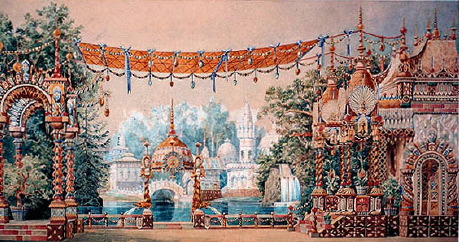
Konstantin Ivanov's original sketch for the set of The Nutcracker (1892).
Konstantin Ivanov’s original sketch for the set of The Nutcracker (1892).

À ce moment-là, Petipa était gravement malade, mais il a laissé des instructions détaillées pour la production de “Casse-Noisette” à Lev Ivanov, qui était le deuxième chorégraphe du Théâtre Marinsky.

Les répétitions du ballet ont commencé fin septembre 1892, puis le 6 (18) décembre la première a eu lieu au Théâtre Marinsky où le ballet a joué pendant plus de 30 ans.

En 1923, la performance a été restaurée par le chorégraphe F. Lopukhov. Puis, en 1929, il crée une nouvelle version chorégraphique de la pièce, et au début de la Seconde Guerre mondiale l’héroïne du ballet qui s’appelait Clara change de nom et s’appelle désormais Masha, mais son frère Fritz qui est un personnage négatif garde son nom.

Aperçu de l’intrigue de “Casse-Noisette”

Title page of the edition of The Nutcracker's Story (1845)
Title page of the edition of The Nutcracker’s Story (1845)

Les invités se rassemblent dans la maison Zilbergauz alors que la veille de Noël est arrivée. Les enfants admirent le magnifique sapin de Noël, mais attendent avec impatience les cadeaux tant attendus.

Finalement, l’horloge sonne minuit et un mystérieux invité, Drosselmeyer, apparait, apportant des cadeaux incroyables qui consistent en des poupées mécaniques qu’il a lui-même fabriqué. Sa capacité à donner vie aux jouets amuse non seulement les enfants, mais les effraie également. Ensuite, Drosselmeyer enlève son masque, et les enfants reconnaissent leur parrain préféré. 

Le père ayant peur que les enfants cassent les poupées, ordonne de les enfermer dans un placard de son bureau ce qui bouleverse Clara. Pour calmer la jeune fille, son parrain lui donne le Casse-Noisette. 

nutcracker
nutcracker

Mais son frère, Fritz casse accidentellement la poupée, et Clara ayant pitié de Casse-Noisette, l’allongea sur le lit de sa poupée préférée.

Fritz et ses amis mettent des masques de souris et commencent à taquiner Clara. Ensuite, il est temps pour les enfants d’aller se coucher, et chacun rentre chez lui après la danse traditionnelle du Grossvater, par les invités. 

La pièce dans laquelle se trouve l’arbre est remplie de clair de lune à la tombée de la nuit.

Avant d’aller se coucher, Clara revient et embrasse Casse-Noisette. Et puis Drosselmeyer apparaît, mais maintenant il n’est plus parrain. Au lieu de cela, il est un gentil sorcier qui agite la main pour que tout dans la pièce commence à changer : les murs s’écartent, l’arbre commence à pousser et les décorations de Noël prennent vie et deviennent des soldats. 

Soudain, des souris apparaissent sous la direction du roi des souris et, le brave Casse-Noisette mène les soldats au combat. Casse-Noisette et le Roi des souris se rencontrent dans un combat à mort. 

Clara voit que l’armée de souris est plus nombreuse que l’armée de soldats, et en désespoir de cause, elle enlève sa chaussure et la jette de toutes ses forces sur le roi des souris. Il est blessé et s’enfuit avec son armée. 

L’armée de soldats a gagné, et porte triomphalement Clara sur ses épaules jusqu’au Casse-Noisette. 

Soudain, le visage de ce dernier commence à changer. Il cesse d’être Casse-Noisette et se transforme en un beau Prince. Il demande à Clara de le suivre et le couple disparaît dans les aiguilles luxuriantes du sapin de Noël et se retrouve dans une forêt hivernale de conte de fées. Les flocons de neige dansent, après leur danse tout s’apaise et la neige scintille dans la fabuleuse lumière de la lune.

Clara et le prince admirent la beauté du ciel étoilé et se souviennent comment ils ont été attaqués par les souris et comment le prince les a vaincus. Tout le monde danse, s’amuse et célèbre la victoire sur l’armée des souris. Des poupées espagnoles, arabes, chinoises et russes remercient Clara de leur avoir sauvé la vie. 

Dans une ville magique, un couple heureux attend. La Fée Dragée elle-même est prête à les accepter. Le couple navigue dans une barque faite de coquillages dorés. Des personnages de contes de fées dansent pour le couple heureux. 

Drosselmeyer apparaît et change à nouveau tout autour. Tout le monde se prépare pour le mariage de Clara et du Prince. 

Ensuite, Clara se réveille avec le Casse-Noisette toujours entre les mains. Elle est dans une pièce familière. Hélas, ce n’était qu’un rêve…


Lisez « Casse-Noisette » en français ou regardez le ballet « Casse-Noisette »

J’espère que cet article vous a plu

Si vous avez aimé cet article, abonnez-vous, mettez des likes, écrivez des commentaires !
Partager sur les réseaux sociaux
Découvrez nos derniers posts

What do you know about “The Nutcracker”?

Bilingual booksLire en FrançaisContact us
American LiteratureFrench LiteratureRussian Literature

Some people say, that Christmas isn’t complete without watching “The Nutcracker” which has become the most popular ballet of our times. It is a symbol of New Year’s magic, a festive ballet of the great Russian composer P.I. Tchaikovsky.

“The Nutcracker” which stands apart from the tradition of the ballet genre is an innovative two-act ballet by P. I. Tchaikovsky to a libretto by Marius Petipa.  It is based on the Christmas fairy tale ” The Nutcracker and the Mouse King ” written by E. T. A. Hoffmann as well as and its adaptation made by Dumas, and was choreographed by  Lev Ivanov .

Pyotr Ilyich Tchaikovsky 1888.

Pyotr Tchaikovsky was asked to compose an opera consisting of one act and a ballet in 1890. He began working on the ballet with Marius Petipa, constantly consulting with him even about music. The job went fast but, in the spring of 1891, Tchaikovsky was forced to pause as he had to go to the United States for the opening of the famous Carnegie Hall. Trying to meet the deadline for the ballet, Tchaikovsky managed to compose even on the road on a streamer but he was unsuccessful and was forced to ask Vsevolozhsky to reschedule the premiere, sending him a letter from Paris.

Marius_Ivanovich_Petipa_1898

As soon as Tchaikovsky returned the work continued and was completely finished by February 1892. A very successful suite from the music from the ballet orchestrated by Tchaikovsky himself was played in march 1992 in one of the symphony concerts of the Russian Musical Society. At the request of the public five out of the six numbers were repeated.

Konstantin Ivanov's original sketch for the set of The Nutcracker (1892).
Konstantin Ivanov’s original sketch for the set of The Nutcracker (1892).

By that time Petipa was seriously ill but he left detailed instruction for the production of “The Nutcracker” to Lev Ivanov who was the second choreographer of the Marinsky Theater.

The ballet rehearsals began at the end of September 1892, then on december 6 (18) the premiere was performed at the Marinsky Theater where the ballet played for more than 30 years.

In 1923, the performance was restored by the choreographer F. Lopukhov. Then, in 1929, he created a new choreographic version of the play, and when World War II began the heroine of the ballet whom had been called Clara was called Masha, but her brother Fritz who is a negative character kept his name.

Overview of the plot of “The Nutcracker”

Title page of the edition of The Nutcracker's Story (1845)
Title page of the edition of The Nutcracker’s Story (1845)

The guests gather in the Zilbergauz house as Christmas Eve has arrived. Children admire the magnificent Christmas tree, but wait impatiently for long-awaited gifts.

Finally the clock struck midnight and a mysterious guest, Drosselmeyer, appeared, bringing incredible gifts which consist of mechanical dolls that he made them himself. His ability to bring toys to life not only amuses children, but also scares them. Then, Drosselmeyer takes off his mask, and the children recognize their favorite godfather. 

The father being afraid that the children will break the dolls, orders them to be locked in a closet in his office which upset Clara. To calm the girl, her godfather gives her the Nutcracker. 

nutcracker
nutcracker

But her brother, Fritz accidentally breaks the doll, and Clara pitying the Nutcracker, laid him on the bed of her favorite doll.

Fritz and his friends put on mouse masks and start teasing Clara. Then, it is time for the children to go to bed, and everyone goes home after the dance of the traditional Grossvater by the guests. 

The room in which the tree is located is filled with moonlight as night falls.

Before going to bed, Clara returns and hugs the Nutcracker. And then Drosselmeyer appears, but now he is no longer a godfather. Instead he is a kind wizard who waves his hand making everything in the room beginning to change: the walls move apart, the tree begins to grow, and the Christmas decorations come to life and become soldiers. 

Suddenly mice appear under the leadership of the Mouse King and the brave Nutcracker leads the soldiers into battle. The Nutcracker and the Mouse King meet in a fight to the death. 

Clara sees that the army of mice outnumbers the army of soldiers, and in desperation, she takes off her shoe and throws it with all her might at the Mouse King. He is wounded and runs away with his army. 

The army of soldiers won, and triumphantly carry Clara on their shoulders to the Nutcracker. 

Suddenly, the latter’s face begins to change. He ceases to be the Nutcracker and turns into a handsome Prince. He asks Clara to follow him and the couple disappears into the lush needles of the Christmas tree and find themselves in a fairytale winter forest. Snowflakes dance, after their dance everything subsides, and the snow glistens in the fabulous light of the moon.

Clara and the Prince admire the beauty of the starry sky, and remember how they were attacked by mice, and how the Prince defeated them. Everyone is dancing, having fun and celebrating the victory over the mouse army. Spanish, Arabic, Chinese and Russian dolls thank Clara for saving their lives. 

In a magical city, a happy couple is waiting. The Fairy Dragee herself is ready to accept them. The couple sails in a boat made of gilded shells. Fairy-tale characters dance for a happy couple. 

Drosselmeyer appears and again changes everything around. Everyone is preparing for the wedding of Clara and the Prince. 

Then, Clara wakes up with the Nutcracker still in her hands. She is in a familiar room. Alas, it was just a dream…


Read “The Nutcracker” in French or watch “The Nutcracker” Ballet

I hope you enjoyed this article

If you liked this article, subscribe , put likes, write comments!
Share on social networks
Check out Our Latest Posts