On this site we hope to help you learn, and to remove the difficulties caused by the difference of culture and language. Sur ce site nous espérons vous aider à apprendre, et à enlever la barrière causée par les différents languages et cultures.
“Cerisier” d’Alexandre Pouchkine est une histoire sentimentale sur deux amants écrite quand Pouchkine avait environ 16 ans vers 1815.
Le poème “Cerisier” commence par une charmante description du paysage. Son intrigue est très simple : « Les jeunes bergères se précipitent vers les bergers. Apparaît alors le personnage principal, une séduisante bergère à la tenue cachant tous ses charmes. Mais l’héroïne, tentée par des cerises mûres, grimpe à un arbre. La branche se casse et elle tombe avec une poignée de cerises. Dans sa chute, sa robe s’est relevée. Un jeune berger est venu l’aider mais a « pressé sa poitrine passionnée » et il semble qu’ils aient perdu la tête « Tout le sang a bouilli Dans deux cœurs de feu L’amour s’est envolé » mais Pouchkine a ajouté que la couronne matrimoniale attendait les amants.
Вишня — Александр Пушкин
Cerisier – Alexandre Pouchkine
Traduit par Akirill.com
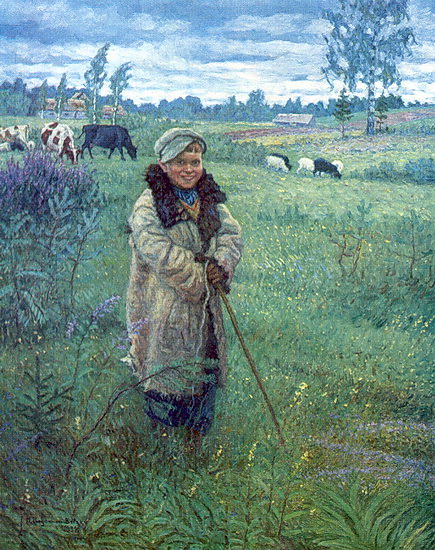
Berger Proschka de Nikolai Bogdanov Belsky
Berger Proschka de Nikolai Bogdanov Belsky / Пастушок Прошка – Николай Богданов Бельский
Nicholai Petrovitch Bogdanov-Belksky qui a soulevé des sujets sociaux aigus dans ses travaux, était un artiste itinérant russe né dans l’Empire russe le 8 (20) décembre 1868. Nicholai a peint principalement des peintures de genre, en particulier le thème paysan, des portraits et des études impressionnistes de paysage. Il tomba gravement malade en 1944 et mourut le 19 février 1945 à Berlin, en Allemagne.
Румяной зарею
Aube vermeille
Покрылся восток,
Recouvre l’est
В селе за рекою
Dans un village de l’autre côté de la rivière
Потух огонек.
Les lumières se sont éteintes.
Росой окропились
Saupoudré de rosée
Цветы на полях,
Les fleurs dans les champs
Стада пробудились
Les troupeaux se sont réveillés
На мягких лугах.
Dans les douces prairies.
Туманы седые
Les brumes grises
Плывут к облакам,
Flottent vers les nuages
Пастушки младые
Les jeunes bergères
Спешат к пастухам.
Se précipitent vers les bergers.
С журчаньем стремится Источник меж гор,
La source coule avec un murmure Entre les montagnes
Вдали золотится
Doré au loin
Во тьме синий бор.
Dans la forêt bleue foncée.
Пастушка младая
La jeune bergère
На рынок спешит
Se précipite au marché
И вдаль, припевая,
Et au loin, en chantant,
Прилежно глядит.
Regarde avec diligence.
Румянец играет
La rougeur joue
На полных щеках,
Sur ses joues potelées
Невинность блистает
L’innocence brille
На робких глазах.
Dans ses yeux timides.
Искусной рукою
Une main habile
Коса убрана,
A fait sa tresse
И ножка собою
Et la jambe elle-même
Прельщать создана.
Créée la séduction .
Корсетом прикрыта
Le Corset couvre
Вся прелесть грудей,
Toute la beauté des seins
Под фартуком скрыта
Caché sous un tablier
Приманка людей.
Appâtant les gens.
Пастушка приходит
La bergère vient
В вишенник густой
Dans un jardin rempli de cerisiers
И много находит
Elle trouve beaucoup
Плодов пред собой.
De fruits devant elle.
Хоть вид их прекрасен
Même s’ils ont fière allure
Красотку манит,
La beauté invite,
Но путь к ним опасен —
Mais le chemin vers eux est dangereux –
Бедняжку страшит.
La pauvre petite a peur.
Подумав, решилась
Après avoir réfléchi, elle a décidé
Сих вишен поесть,
De manger ces cerises
За ветвь ухватилась
Elle a attrapé une branche
На дерево взлезть.
Est montée dans l’arbre.
Уже достигает
atteignant déjà
Награды своей
Ses récompenses
И робко ступает
Et fait des pas timides
Ногой меж ветвей.
Entre les branches.
Бери плод рукою —
Prends le fruit avec ta main –
И вишня твоя,
Et la cerise sera à toi
Но, ах! что с тобою,
Mais, ah ! Qu’est-ce qui ne va pas
Пастушка моя?
Ma bergère ?
Вдали усмотрела, —
Elle a vu au loin –
Спешит пастушок;
Le berger qui se hâte ;
Нога ослабела,
Sa jambe s’est affaiblie,
Скользит башмачок.
Sa chaussure a glissé.
И ветвь затрещала —
Et la branche a craqué –
Беда, смерть грозит!
Danger, mort la menace !
Пастушка упала,
La bergère est tombée
Но, ах, какой вид!
Mais, oh, quelle vue !
Сучок преломленный
La branche réfractée
За платье задел;
a touché la robe ;
Пастух удивленный
Le berger surpris
Всю прелесть узрел.
A vu toute la beauté.
Среди двух прелестных
Entre deux adorables
Белей снегу ног,
Pieds plus blancs que la neige,
На сгибах чудесных
Sur les plis du merveilleux
Пастух то зреть мог,
Le berger pouvait voir
Что скрыто до время
Ce qui est caché jusqu’au moment
У всех милых дам,
Qu’ont toutes les belles dames
За что из эдема
Pour quoi hors d’Eden
Был выгнан Адам.
Adam a été expulsé.
Пастушку несчастну
La malheureuse bergère
С сучка тихо снял
Il l’a tranquillement retiré de la branche
И грудь свою страстну
Et sa poitrine est passionnément
К красотке прижал.
Pressée à la beauté.
Вся кровь закипела
Tout le sang a bouilli
В двух пылких сердцах,
Dans deux cœurs de feu
Любовь прилетела
L’amour s’est envolé
На быстрых крылах.
Sur des ailes rapides.
Утеха страданий
La joie de souffrir
Двух юных сердец,
De deux jeunes cœurs
В любви ожиданий
Dans l’attente de l’amour
Супругам венец.
Couronne les époux.
Прельщенный красою,
Séduit par la beauté
Младой пастушок
Un jeune berger
Горячей рукою
D’une main chaude
Коснулся до ног.
Touché jusqu’aux pieds.
И вмиг зарезвился
Et instantanément gela
Амур в их ногах;
Cupidon à leurs pieds ;
Пастух очутился
Le berger s’est retrouvé
На полных грудях.
Sur son ample poitrine.
И вишню румяну
Et la cerise vermeille
В соку раздавил,
Broyée en jus
И соком багряным
Et jus pourpre
Траву окропил.
A saupoudré l’herbe.
J’espère que vous avez apprécié ce poème et cette peinture autant que moi.
“Cherry Tree” by Alexander Pushkin is a sentimental story about two lovers written when Pushkin was about 16 years old around 1815.
The poem “Cherry Tree” begins with a charming description of the landscape. Its plot is very simple: “Young shepherdesses rush to the shepherds.” Then the main character appears, a seductive shepherdess with an outfit hiding all her charms. But the heroin, tempted by ripe cherries, climbs a tree. The branch breaks and she fall with a handful of cherries. In her fall her dress pulled up. A young shepherd came to help her but also “pressed her passionate breast” and it seems that they lost their heads “All the blood boiled In two fiery hearts Love has flown” but Pushkin added that the matrimonial crown awaited the lovers.
Вишня — Александр Пушкин
Cherry tree – Alexander Pushkin
Translated by Akirill.com
Shepherd Proschka by Nikolai Bogdanov Belsky
Shepherd Proschka by Nikolai Bogdanov Belsky / Пастушок Прошка – Николай Богданов Бельский
Nicholai Petrovitch Bogdanov-Belksky who raised acute social topics in his woks, was a Russian itinerant artist born in The Russian Empire on december 8 (20) 1868. Nicholai painted mostly genre painting, especially the peasant theme, portraits and impressionist studies of landscape. He became seriously ill in 1944 and died on February 19, 1945 in Berlin, Germany.
Румяной зарею
Ruddy dawn
Покрылся восток,
Covered the east
В селе за рекою
In a village across the river
Потух огонек.
The light went out.
Росой окропились
Sprinkled with dew
Цветы на полях,
Flowers in the fields
Стада пробудились
The herds have awakened
На мягких лугах.
In soft meadows.
Туманы седые
The gray mists
Плывут к облакам,
Float towards the clouds
Пастушки младые
Young shepherdesses
Спешат к пастухам.
Rush to the shepherds.
С журчаньем стремится Источник меж гор,
The Source runs with a murmur between the mountains
Вдали золотится
Golden in the distance
Во тьме синий бор.
In the dark blue forest.
Пастушка младая
The young shepherdess
На рынок спешит
Rushes to the market
И вдаль, припевая,
And far away, singing,
Прилежно глядит.
Looks diligently.
Румянец играет
Blush plays
На полных щеках,
On her plump cheeks
Невинность блистает
Innocence shines
На робких глазах.
In her timid eyes.
Искусной рукою
A skillful hand
Коса убрана,
has made the braid
И ножка собою
And the leg itself
Прельщать создана.
created seduction .
Корсетом прикрыта
Corset covered
Вся прелесть грудей,
All the beauty of breasts
Под фартуком скрыта
Hidden under an apron
Приманка людей.
Baiting people.
Пастушка приходит
The shepherdess comes
В вишенник густой
In a thick cherry garden
И много находит
She finds a lot
Плодов пред собой.
of fruits in front of her.
Хоть вид их прекрасен
Even though they look great
Красотку манит,
Beauty beckons,
Но путь к ним опасен —
But the path to them is dangerous –
Бедняжку страшит.
The poor thing is scared.
Подумав, решилась
After thinking, she decided
Сих вишен поесть,
To eat these cherries
За ветвь ухватилась
She grabbed a branch
На дерево взлезть.
Climbed up the tree.
Уже достигает
Already reaching
Награды своей
Her awards
И робко ступает
And timidly steps
Ногой меж ветвей.
Between branches.
Бери плод рукою —
Take the fruit with your hand –
И вишня твоя,
And the cherry will be yours
Но, ах! что с тобою,
But, ah! what’s wrong with you
Пастушка моя?
My shepherdess?
Вдали усмотрела, —
She saw in the distance –
Спешит пастушок;
The shepherd who hurries;
Нога ослабела,
Her leg weakened,
Скользит башмачок.
Her shoe slipped.
И ветвь затрещала —
And the branch cracked –
Беда, смерть грозит!
Trouble, death threatens!
Пастушка упала,
The shepherdess fell
Но, ах, какой вид!
But, oh my, what a view!
Сучок преломленный
The branch refracted
За платье задел;
touched the dress;
Пастух удивленный
The surprised Shepherd
Всю прелесть узрел.
Saw all the beauty.
Среди двух прелестных
Among two lovely
Белей снегу ног,
Feet whiter than snow,
На сгибах чудесных
On the folds of wonderful
Пастух то зреть мог,
The shepherd could see
Что скрыто до время
What is hidden until the time
У всех милых дам,
All the lovely ladies have
За что из эдема
For which, out of eden
Был выгнан Адам.
Adam was expelled.
Пастушку несчастну
Unfortunate shepherdess
С сучка тихо снял
He quietly removed her from the branch
И грудь свою страстну
And his chest is passionately
К красотке прижал.
Pressed to the beauty.
Вся кровь закипела
All the blood boiled
В двух пылких сердцах,
In two fiery hearts
Любовь прилетела
Love has flown
На быстрых крылах.
On fast wings.
Утеха страданий
The joy of suffering
Двух юных сердец,
Of two young hearts
В любви ожиданий
Waiting for love
Супругам венец.
Spouses crown.
Прельщенный красою,
Seduced by beauty
Младой пастушок
A young shepherd
Горячей рукою
With a hot hand
Коснулся до ног.
Touched up to the feet.
И вмиг зарезвился
And instantly froze
Амур в их ногах;
Cupid at their feet;
Пастух очутился
The shepherd found himself
На полных грудях.
On her full breasts.
И вишню румяну
And cherry blush
В соку раздавил,
Crushed into juice
И соком багряным
And crimson juice
Траву окропил.
Sprinkled the grass.
I hope you enjoyed this poem and painting as much as I did.
Il semble que j’ai des problèmes avec mon fournisseur, et comme je n’ai pas trouvé mon post, j’ai en fait publié un brouillon restorer en pensant que le post lui-même s’était retrouvé à la poubelle. Je les recontacterai dans la matinée et m’excuse pour l’envoi du brouillon. Maintenant, le lien pour lire en anglais semble fonctionner à nouveau mais je ne le vois toujours pas dans les posts publiés. J’espère que je n’aurai pas besoin de le reposter…
It appears I am having some trouble with my provider, and since I was unable to find my post, I actually published a restored draft thinking the post itself ended up in the trash. I’ll contact them in the morning again and apologize for the draft mailing. Now the link to read in English seems to be back working but I still do not see it in the published post. Hopefully I won”t need to repost it…
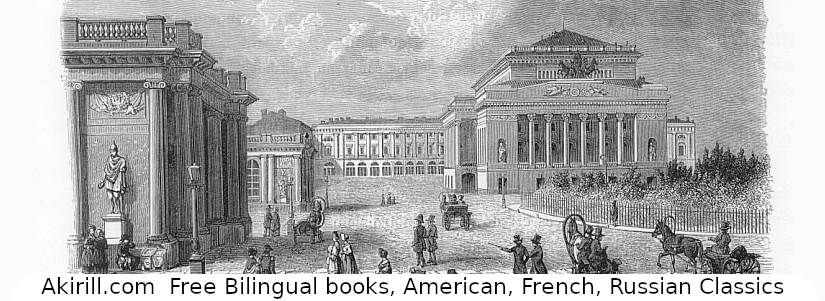
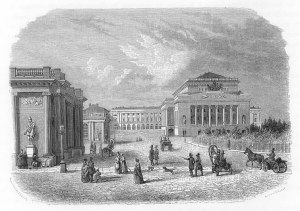
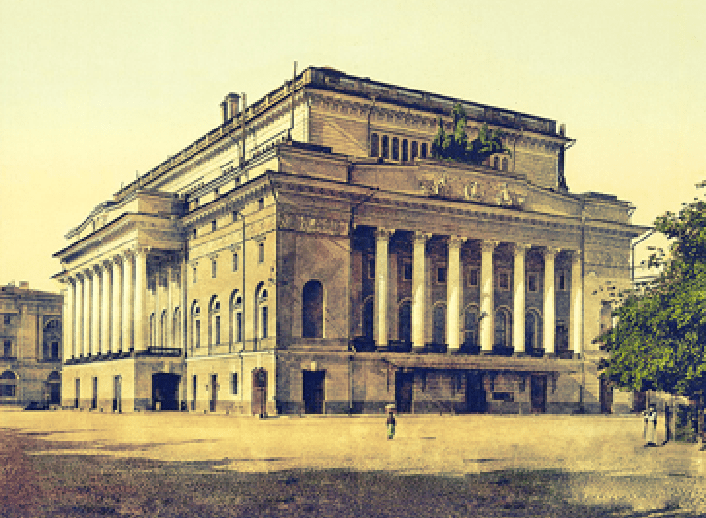
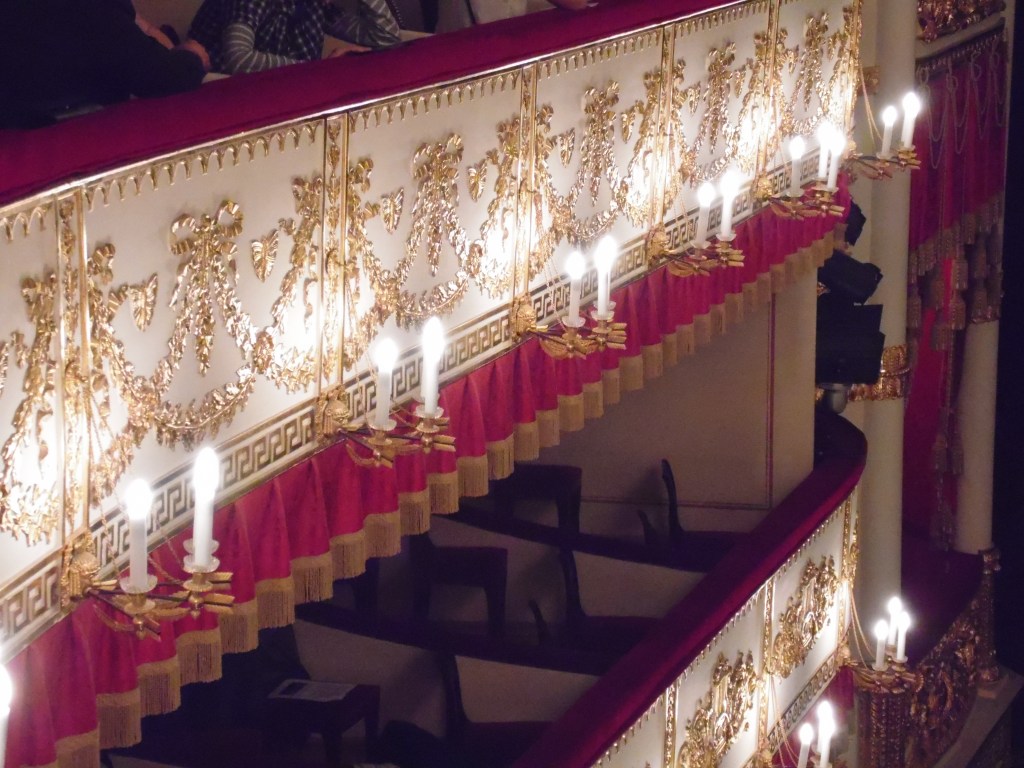
Le théâtre Alexandrinski est le plus ancien théâtre national russe et le deuxième théâtre le plus célèbre de Saint-Pétersbourg. C’est l’une des plus belles œuvres du grand architecte néoclassique Carlo Rossi et considérée comme l’un des joyaux architecturaux de Saint-Pétersbourg. Il est considéré à juste titre comme le berceau du théâtre russe et produit des représentations somptueuses et techniquement impeccables de classiques du théâtre russe et mondial.
Alexandrinsky Theater By Alex ‘Florstein’ Fedorov, CC BY-SA 4.0
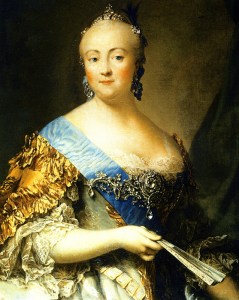
Le théâtre a été créé sur ordre de la fille de Pierre, l’impératrice Elizabeth Petrovna, le 30 août 1756. Son décret, considéré comme la date de naissance du théâtre russe, se lit comme suit :
Empress Elizabeth Petrovna
« Nous avons désormais commandé l’établissement d’un théâtre tragique et comique russe, pour lequel nous donnons la maison de pierre Golovkinsky, qui se trouve sur l’île Vasilievsky près de la maison des cadets. Et là-dessus, nous ordonnons que des acteurs et des actrices soient recrutés: des acteurs étudiant le chant et ceux de Yaroslav dans le corps des cadets qui seront nécessaires pour cela, et en plus des acteurs d’autres personnes non en service; aussi, un bon nombre d’actrices. La direction de ce théâtre russe sera dirigée pour nous par le brigadier Alexander Sumarokov.
Par conséquent, le premier théâtre public d’État de Russie a commencé ses représentations régulières dans l’ancienne maison Golovkin sur l’île Vassilievski.
Comme le nombre de spectateurs augmentait rapidement, le bâtiment devint bientôt trop petit et la décision fut prise de remplacer le bâtiment par un théâtre en pierre plus grand.
En 1811, l’architecte français Thomas de Thomon présenta son projet mais l’invasion de la Russie par les forces de Napoléon empêcha la réalisation de ce projet.
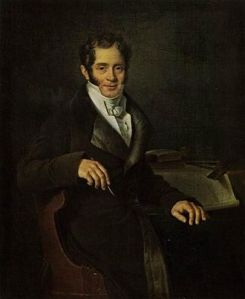
Carlo Rossi
Carl Mauduit, un autre architecte d’origine française, fut le suivant à proposer ses conceptions, pour le nouveau théâtre ainsi que toute la zone entre Nevsky Prospekt et la rue Lomonosova, ainsi que la rue Sadovaya et le quai de la rivière Fontanka. Ses plans furent approuvés en 1816, mais il n’y parvint pas et Carlo Rossi prit la relève.
Le projet dura plus de vingt ans, et fut achevé en 1832.
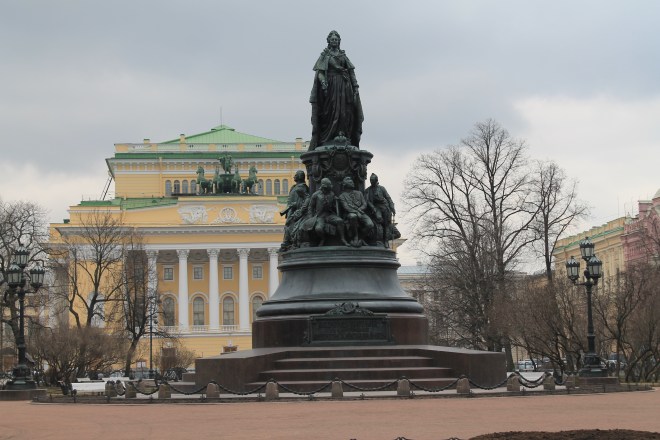
Il comprenait le théâtre nommé d’après l’épouse de l’empereur Nicolas Ier, Alexandra Feodorovna, la Bibliothèque nationale russe et la direction des théâtres impériaux, un jardin confortable a été aménagé devant le bâtiment, nommé plus tard Catherine d’après le monument à Catherine II qui est apparu au centre.
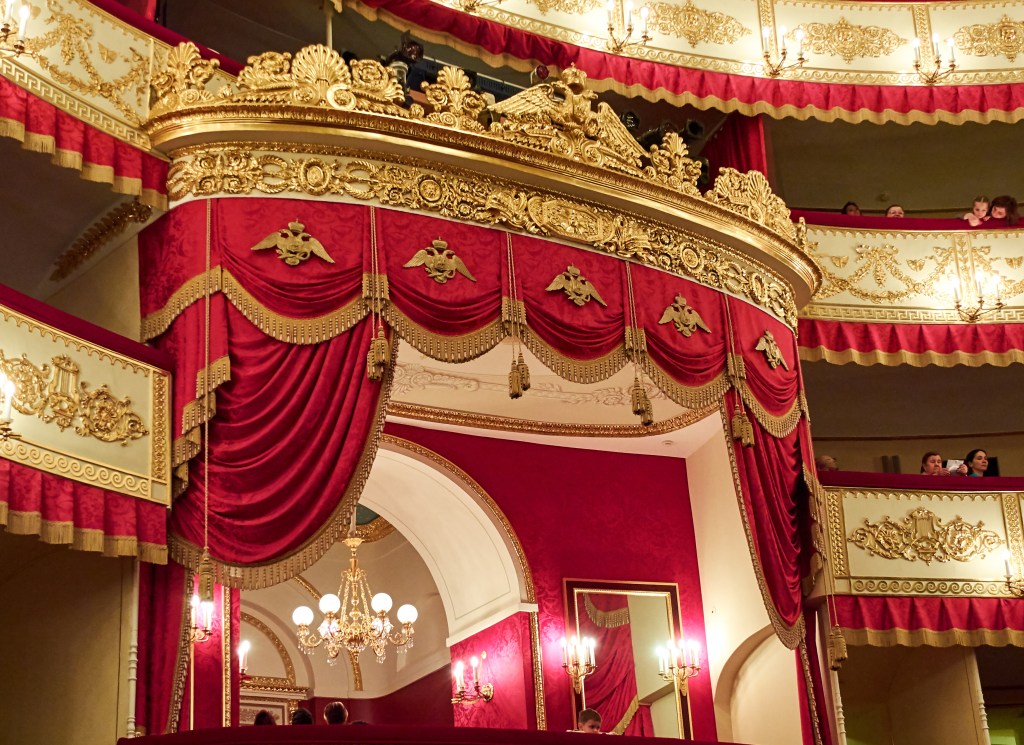
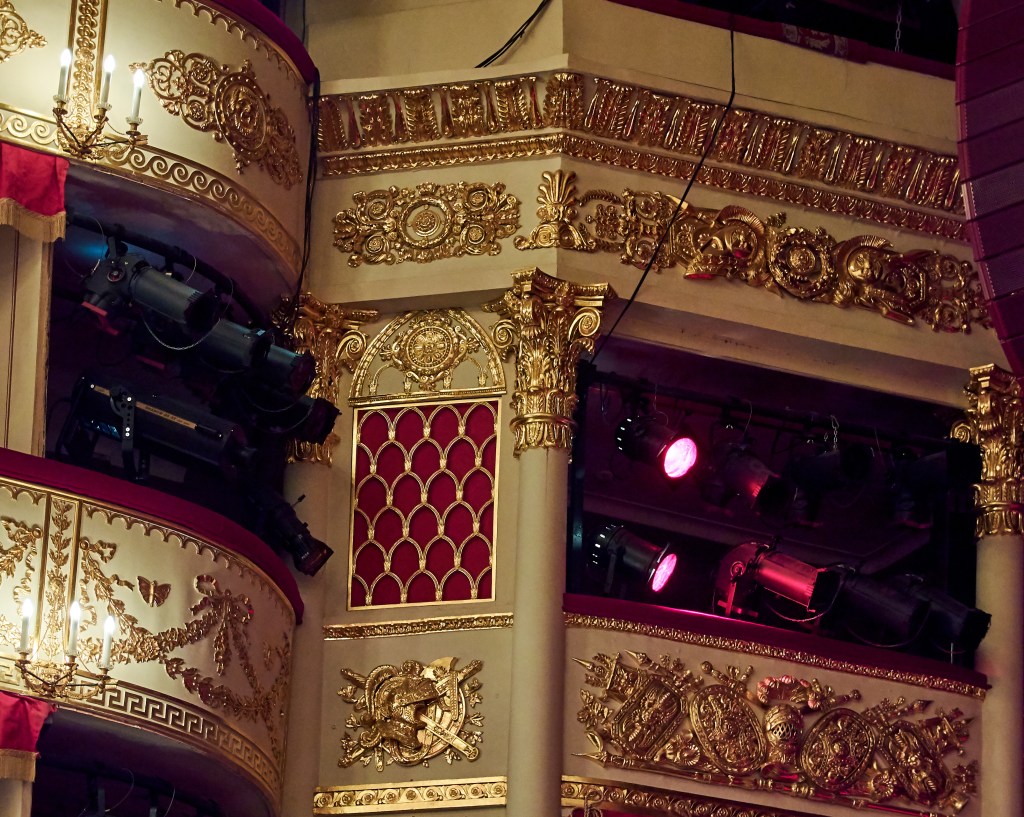
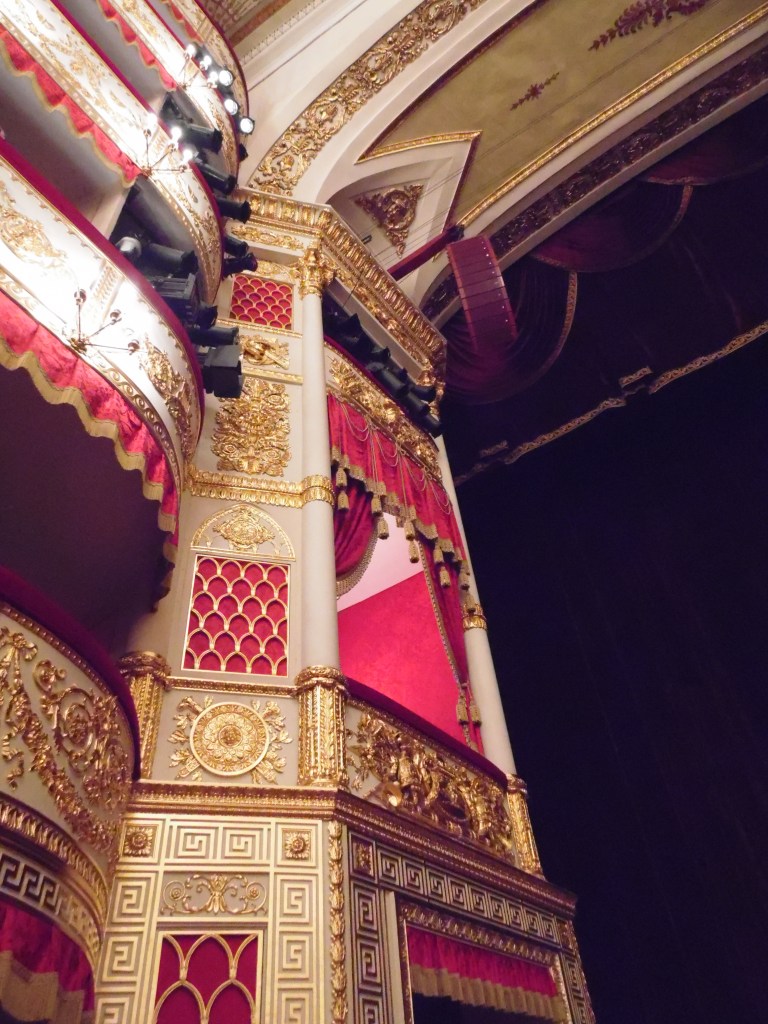
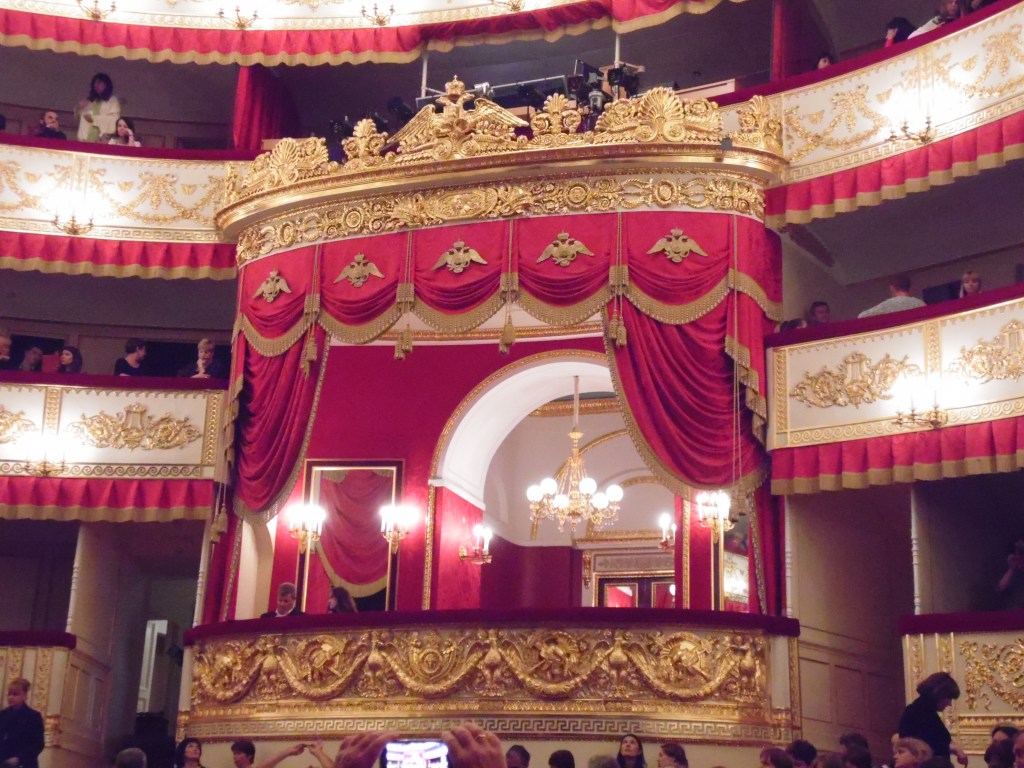
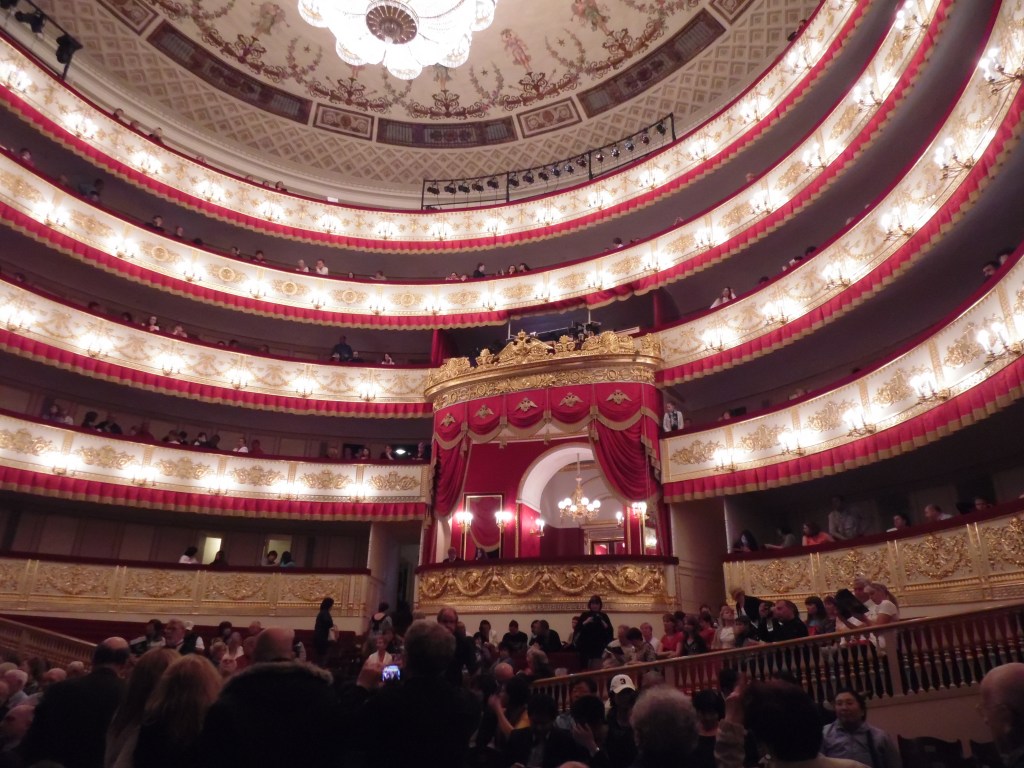
Le théâtre avec sa salle d’audience à cinq niveaux et son énorme scène était l’un des plus grands théâtres d’Europe lors de son ouverture, et a été loué pour sa superbe acoustique.
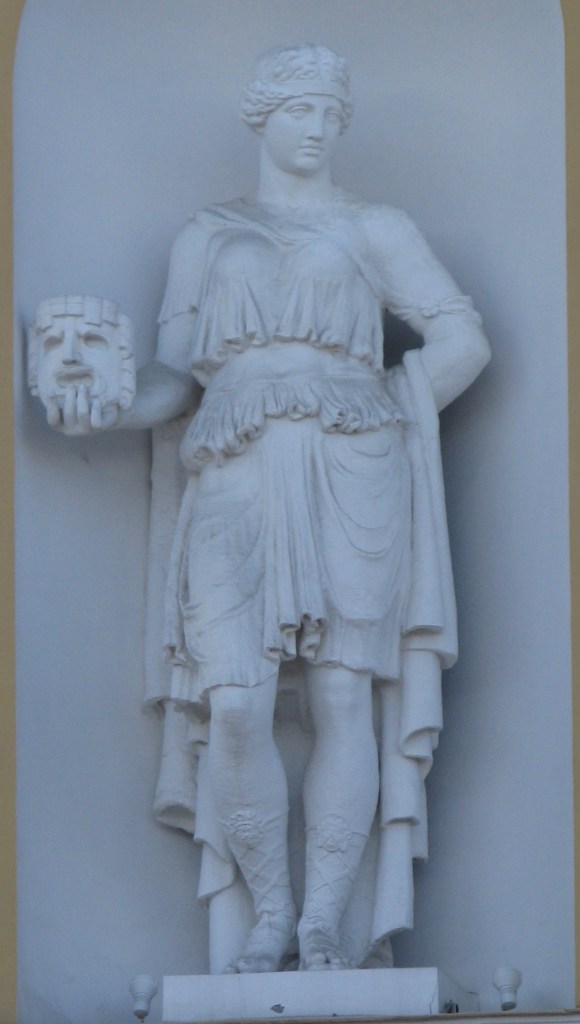
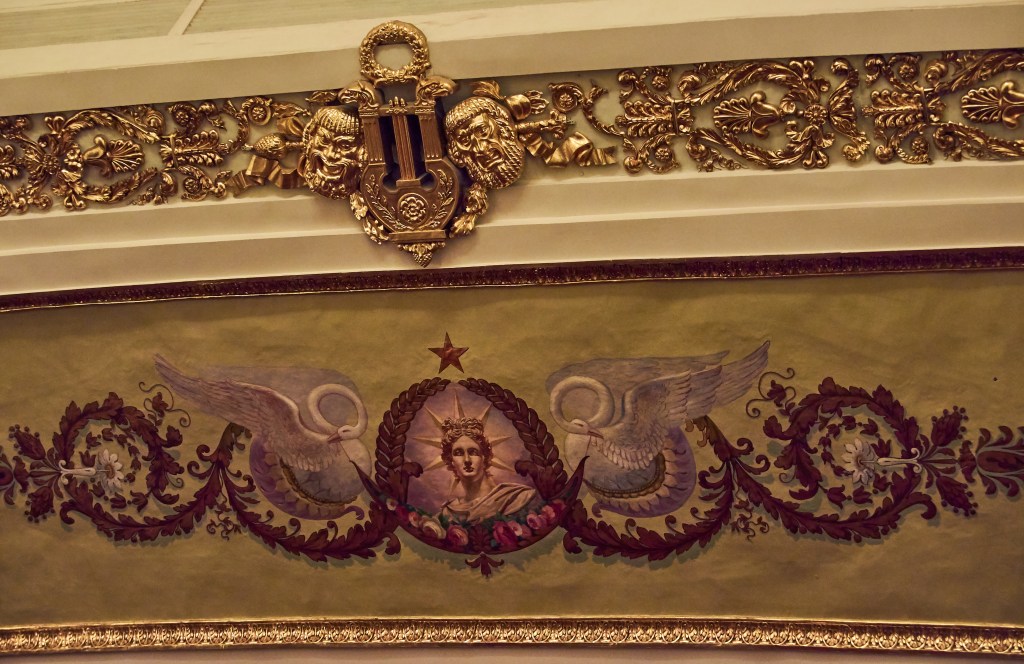
Le théâtre a été peint dans la palette de couleurs jaune et blanche et sa façade principale, du côté de la perspective Nevsky, a été décorée d’une profonde loggia à plusieurs colonnes. Sur le grenier de la façade principale se trouve le quadrige d’Apollon et dans les niches des façades d’extrémité, il y a des statues des muses de la tragédie et de la comédie créées par Vasily Demuth Malinovsky et Stepan Pimenov. Les façades latérales du bâtiment ont été réalisées sous la forme de portiques à huit colonnes, et une frise sculpturale avec des masques de théâtre antiques et des guirlandes de branches de laurier entourait le bâtiment.
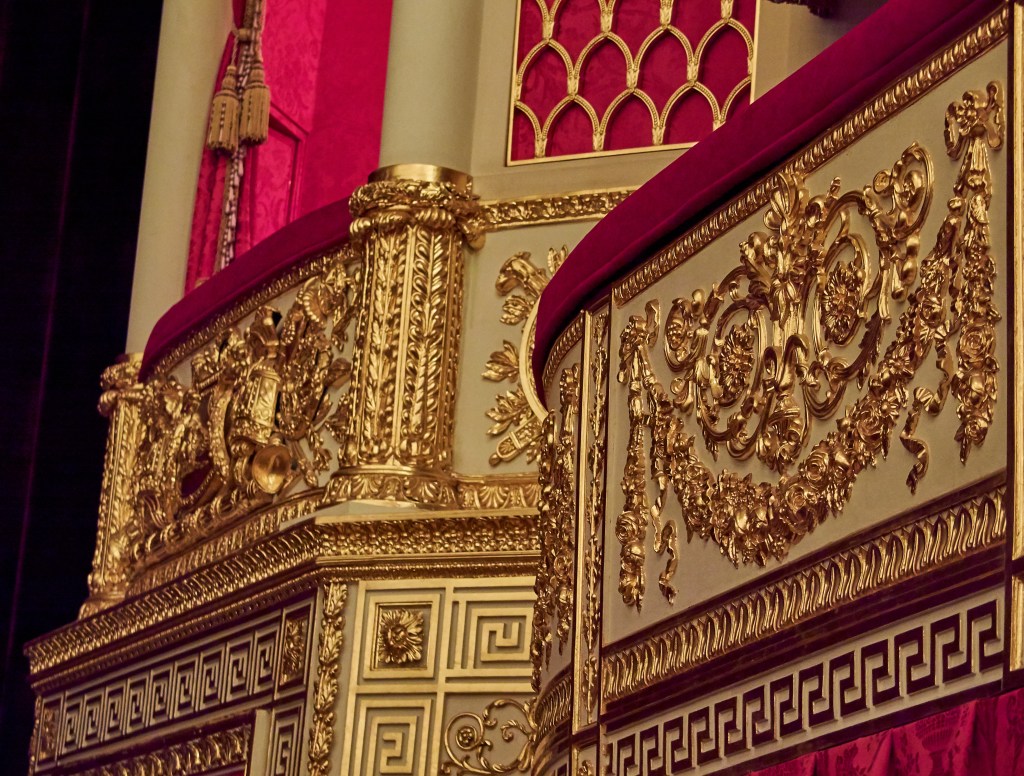
Nicolas Ier a été très impressionné par le travail de Rossi et lui a accordé sa propre loge au théâtre à perpétuité.
En 1836, le bâtiment du théâtre Alexandrinski a été officiellement donné à la compagnie de théâtre russe de Saint-Pétersbourg. Cette même année, “La première de l’inspecteur général de Gogol” a été mise en scène avec Nikolai Gogol prenant une part active à la mise en scène de la performance.
The Alexandrinsky Theater – 1832 photo by Muesse, CC BY-SA 3.0By Muesse – Own work, CC BY-SA 3.0 By Muesse – Own work, CC BY-SA 3.0Melpomene, Alexandrinsky Theater photo by Yair Haklai – Own work, CC BY-SA 4.0 By Michael Shilyaev – Own work, CC BY-SA 4.0To Catherine II, in the reign of Alexander II, 1873. Saint Petersburg By Impi, CC BY-SA 3.0 PENTAX Image CC BY-SA 2.5Terpsichore at Alexandrinsky Theater photo byYair Haklai, CC BY-SA 4.0By Muesse – Own work, CC BY-SA 3.0photo by By Muesse – Own work, CC BY-SA 3.0 photo by Muesse, CC BY-SA 3.0
Pratiquement toutes les premières de pièces de théâtre classiques russes ont eu lieu au Théâtre Alexandrinski, je n’en écrirai donc que quelques-unes. « La mort d’Ivan le Terrible » d’AK Tolstoï (1867) ; “Boris Godounov” (1870 et 1934), et “Petites Tragédies” (1962) Par Alexandre Pouchkine ; “Un mois au village” (1879) et “Un nid de gentilshommes” (1940) d’I. Tourgueniev ; “Ivanov” (1889 et 1978) et “Mouette” (1896 et 2007) d’Anton Tchekhov ; « Puissance des Ténèbres » (1895) et « Le Cadavre Vivant » (1950, 2006) de Léon Tolstoï ; « Le Joueur » (1956) et « Le Double » (2005) de Fiodor Dostoïevski ; «Âmes Mortes» (1974) et «Le Marriage» (2008) de N. Gogol; « Messieur George » (1994) et « Mascarade » (2014) de M. Lermontov ; et plein d’autres …
Il y avait aussi des pièces étrangères comme la tragédie d’Euripide “Hippolyte” en 1902, “Don Juan” de Molière en 1910 et “Hamlet” de W. Shakespeare en 2010.
Tout au long de son histoire, le théâtre a accueilli de nombreux grands metteurs en scène comme Fyodor Grigoryevich Volokov (1756-1763), Ivan Afanasievich Dmitrevsky, Yury Yuriev (1922-1928), Nikolai Vasilievich Petrov (1928-1933), Boris Mikhailovich Sushkevich (1933- 1936), Sergei Ernestovich Radlov (1936-1938), Leonid Sergeevich Vivien (1938-1966), IO Gorbatchev (1975-1991) et Valery Fokin 2003
Le théâtre a été intégré au département de gestion du théâtre d’État après février 1917 et a cessé de fonctionner à la fin d’octobre 1917, sabotant le régime bolchevique et boycottant le pouvoir.
En mars 1918, alors que s’opérait l’autonomisation des anciens théâtres impériaux, l’ancien théâtre Alexandrinski changea de nom et devint la compagnie dramatique d’État de Petrograd. Puis en 1919, le mot académique a été ajouté au statut du théâtre et le théâtre a été renommé : Théâtre dramatique académique d’État de Petrograd (ancien Alexandrinski). En 1920, après avoir rejoint l’association des théâtres académiques, le théâtre a de nouveau changé de nom, cette fois en Théâtre dramatique académique d’État (Gosdrama). En 1932, au moment du 100e anniversaire du bâtiment du théâtre Alexandrinski, qui a été largement célébré, le théâtre s’appelait le théâtre dramatique d’État de Leningrad. Le nom d’Alexandre Pouchkine a été ajouté au titre de Lenigrad Gosdrama Theatre en 1937, année du 100e anniversaire de sa mort.
De 1941 à 1944, le théâtre a été évacué à cause de la guerre et la compagnie a continué à travailler au théâtre Krasny Fakel à Novossibirsk.
En 1981, il y a eu une grande célébration du 225e anniversaire du théâtre russe-Alexandrinski-Pouchkine, et en 1991, le nom “Alexandrinski” a été restauré et le nom officiel du théâtre est devenu le Théâtre dramatique académique d’État russe AS Pouchkine (Alexandrinski).
Les murs du théâtre Alexandrinski ont vu et se rappellent de nombreuses grandes figures de l’État russe, des politiciens, des chefs militaires, des dramaturges, des romanciers, des compositeurs et des poètes tels que A. Pouchkine, M. Lermontov, N. Gogol, I. Tourgueniev, F. Dostoïevski, L. Tolstoï, A. Tchekhov, P. Chaikovsky, AM Gorchakov, S. Witte, V. Stolypine, K. Mannerheim ainsi que le couple impérial de l’Empire Russe. et un certain nombre de personnes royales d’Europe.
Au cours de la saison 2005, 2006, le théâtre Alexandrinski a subi une reconstruction en profondeur.
Le 30 août 2006, jour de la célébration du 250e anniversaire du plus ancien théâtre dramatique de Russie, a eu lieu la cérémonie d’ouverture du théâtre Alexandrinski nouvellement reconstruit. Pour la première fois, le Festival international de théâtre Alexandrinski a eu lieu et une exposition historique “Le Musée du théâtre russe” a été ouverte
Le 180e anniversaire du bâtiment du théâtre Alexandrinski a été célébré en novembre 2012.
La nouvelle scène du théâtre Alexandrinski a été inaugurée le 15 mai 2013. Le complexe de la nouvelle scène a été conçu par un architecte de Saint-Pétersbourg Yury Zemtsov et construit à l’emplacement des anciens ateliers du théâtre entre la place Ostrovsky et le quai Fontanka. Il s’agit d’un complexe à plusieurs niveaux comprenant 4 auditoriums de tailles différentes et un hall d’accueil spacieux sur 2 niveaux doté d’équipements d’éclairage, de son, de vidéo et de médias ultramodernes.
Le théâtre Alexandrinski a reçu le statut de trésor national en août 2014.
À l’été 2016, une autre installation a été ajoutée au théâtre appelé le toit, qui est un endroit parfait pour des réunions, des lectures de poésie, des concerts et des projections de films.
En avril 2016, le théâtre Alexandrinski a été inscrit sur la liste nationale du patrimoine populaire le plus précieux de la Fédération de Russie.
Le bâtiment unique, et la splendide façade qui est l’un des symboles de Saint-Pétersbourg, est inclus dans la liste des trésors architecturaux mondiaux protégés par l’UNESCO.
J’espère que cet article vous a plu
Si vous avez aimé cet article, abonnez-vous, mettez des likes, écrivez des commentaires !
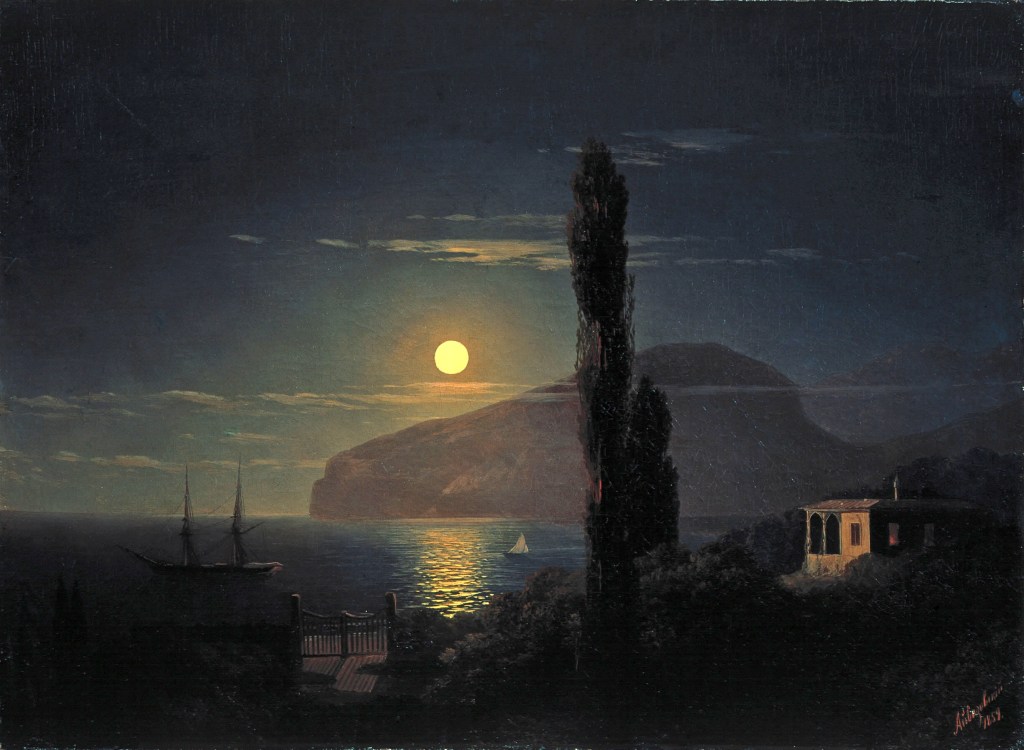
Cette semaine j’ai mis côte à côte en français et en anglais le poème « Clair de Lune » de Paul Verlaine. Et comme un article ne me semble pas complet sans image, j’ai ajouté le tableau « Nuit au clair de lune en Crimée » qui est une huile sur toile de 56,4×76 cm peinte par Ivan Aïvazovski en 1859, et se situe dans le Musée d’État Russe.
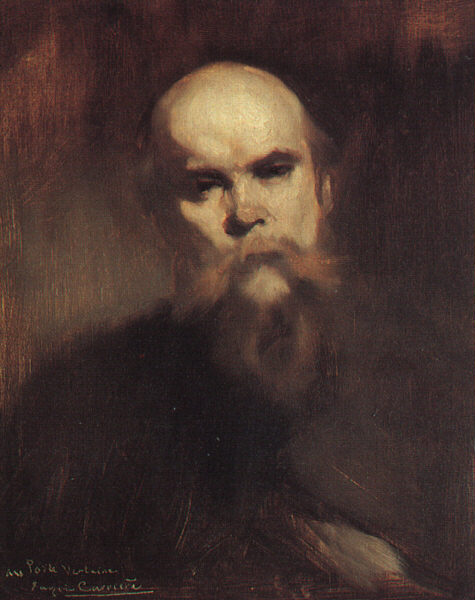
Paul Verlaine by Eugène Carrière 1890
Clair de Lune de Paul Verlaine
Clair de Lune by Paul Verlaine
Translated by Gertrude Hall
Nuit au clair de lune en Crimée 1859 d’Ivan Aïvazovski / Лунная ночь в Крыму Айвазовского
Votre âme est un paysage choisi
Your soul is as a moonlit landscape fair,
Que vont charmant masques et bergamasques
Peopled with maskers delicate and dim,
Jouant du luth et dansant et quasi
That play on lutes and dance and have an air
Tristes sous leurs déguisements fantasques.
Of being sad in their fantastic trim.
Tout en chantant sur le mode mineur
The while they celebrate in minor strain
L’amour vainqueur et la vie opportune,
Triumphant love, effective enterprise,
Ils n’ont pas l’air de croire à leur bonheur
They have an air of knowing all is vain,—
Et leur chanson se mêle au clair de lune,
And through the quiet moonlight their songs rise,
Au calme clair de lune triste et beau,
The melancholy moonlight, sweet and lone,
Qui fait rêver les oiseaux dans les arbres
That makes to dream the birds upon the tree,
Et sangloter d’extase les jets d’eau,
And in their polished basins of white stone
Les grands jets d’eau sveltes parmi les marbres.
The fountains tall to sob with ecstasy.
J’espère que vous avez apprécié ce poème et cette peinture autant que moi
Vous pouvez trouver d’autres poèmes français, américains ou russes sur leurs pages, ainsi que plus de poèmes bilingues si vous les aimez









 AKirill, Learn, apprenez, translation, traduction, livres bilingues, bilingual books