Discover the painting “Over Eternal Peace” by Isaac Levitan

Bilingual booksLire en FrançaisContact us
American LiteratureFrench LiteratureRussian Literature

Over Eternal Peace” (Над вечным покоем) is a magnificent and probably the most famous painting by renowned Russian artist Isaac Levitan, originating from the year 1894 which depicts a “giant reversal of the lake’s water space”, the endless expanses of which resemble a wide-spread river. Above the lake is “a majestic expanse of sky with swirling clouds colliding with each other”. This is no ordinary lyrical landscape, for which Levitan is renowned, but rather a grand epic, where the past converges with the future, the sky looms over the earth, and time stretches towards eternity.

This masterpiece is housed in the esteemed State Tretyakov Gallery and boasts dimensions of 150 × 206 cm. First unveiled at the 22nd exhibition of the Association of Traveling Art Exhibitions in St. Petersburg, it captured the attention of art connoisseurs and was swiftly acquired by Pavel Tretyakov even before the exhibition officially commenced. Some art experts view this painting, in conjunction with “By the Pool” and “Vladimirka” from 1892, as part of a compelling trilogy by Levitan. Critics have lauded the piece as a genuinely captivating landscape portrayal, praising it as one of the artist’s most evocative and vibrant works.
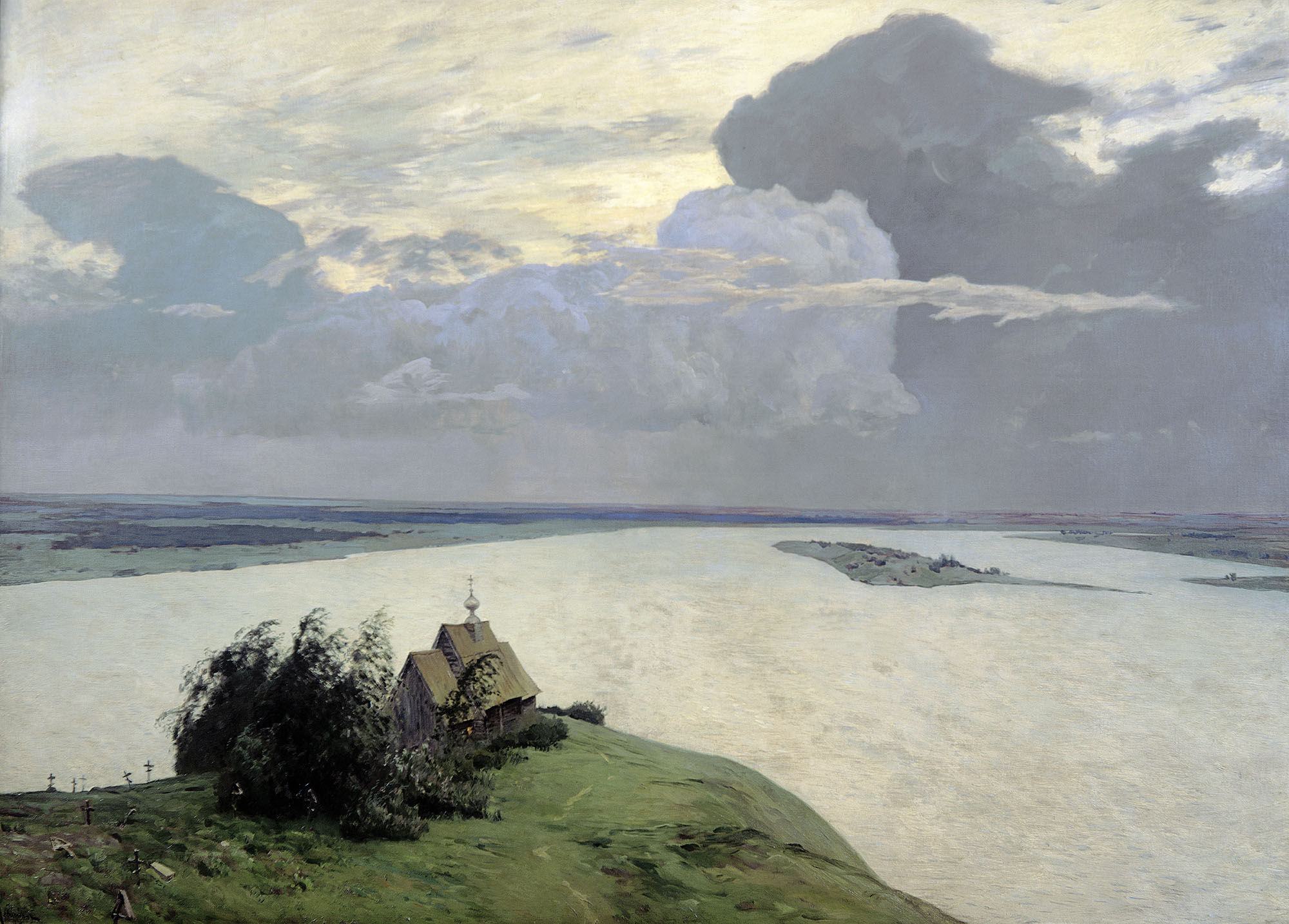
Over eternal peace . 1894

History of the painting

There are different interesting stories about the painting and the church that inspired the artist. Sofia Kuvshinnikova’s memoirs suggest that the painting “Over Eternal Peace” was based on a church near Lake Udomlya, although the actual church was different from the one depicted.

Researchers propose that the artist used a sketch of the Peter and Paul Church in Plyos as a reference. This church burned down in 1903 and was replaced by the Resurrection Church from the village of Bilyukovo.

Another version suggests that the inspiration came from an old wooden church near Lake Ostrovno, as described in the memoirs of the artist Vitold Byalynitsky-Birulya. Some sources speculate that the “oval island” depicted could be the island of Arzhanik or Dvinovo on Lake Udomlya.

The book “Artists in the Udomelsky Territory” presents yet another version, suggesting that the painting was inspired by the village of Ostrovno and the Ushakov estate.

Art critic Alexey Fedorov-Davydov describes the canvas “Over Eternal Peace” as a portrayal of a motif from one lake applied to another similar one, with Lake Udomlya serving as the foundation of the composition.

Fedorov-Davydov emphasizes the level of synthesis of the real view into a pictorial landscape image as the true measure of composition in Levitan’s paintings.

The painting “Over Eternal Peace” blossomed during the summer of 1893 when Isaac Levitan resided in the Tver province. Alongside the artist Sofia Kuvshinnikova, he found inspiration at the Ushakovs’ Ostrovno estate near Lake Ostrovno, where they received a warm welcome and ideal conditions for their creative endeavors. They also savored moments at the Garusovo estate near Lake Udomlya, which later became the subject of Levitan’s masterpiece “At the Lake.”


On the lake. Oil on canvas, 109 × 163  cm , 1893
At the lake. Oil on canvas, 109 × 163 cm , 1893

Levitan sketched and diligently worked on the canvas in Moscow, culminating in the completion of the painting in early 1894, proudly signing it in the lower left corner as “And Levitan 94.” (И Левитанъ 94)

Sketches

The State Tretyakov Gallery proudly holds two original graphic sketches for the renowned painting “Over Eternal Peace.” These captivating drawings, created in 1893 under the title “Before the Storm,” were meticulously crafted with graphite pencil on a single sheet of paper.
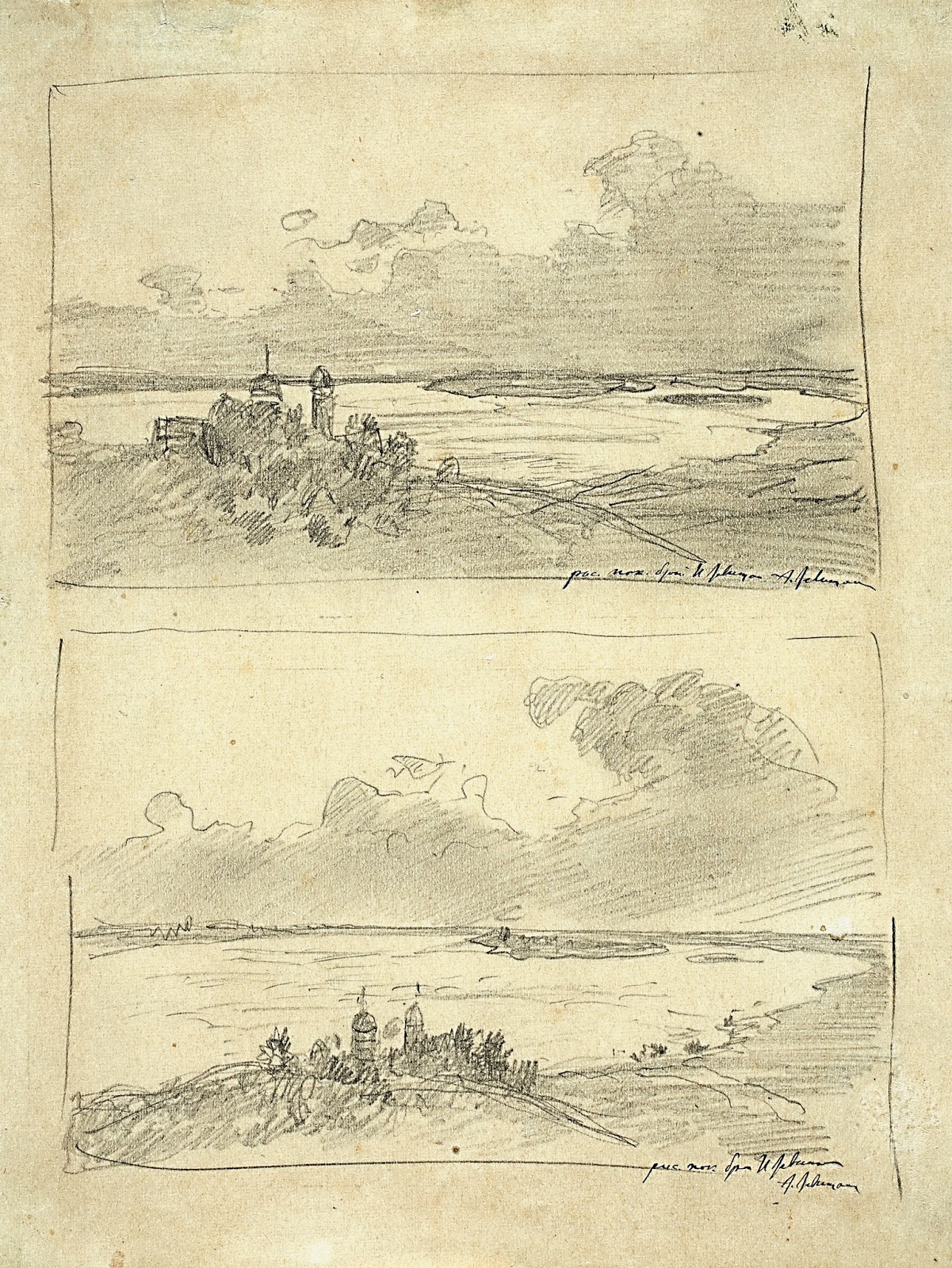
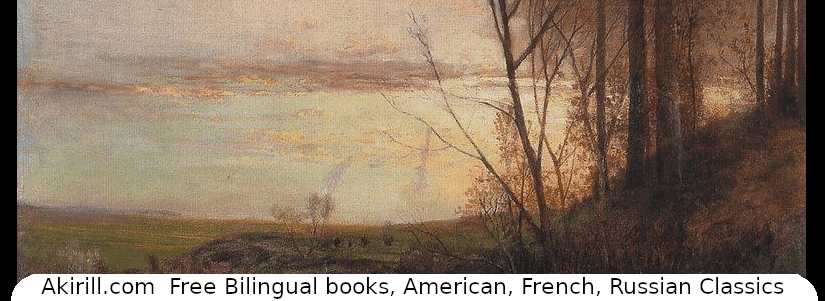
Initial sketches-variants of the painting-  Over Eternal Peace, 1893
Initial sketches-variants of the painting- Over Eternal Peace, 1893

Levitan skillfully captures the anticipation in nature as a thunderstorm approaches. According to E. A. Byalynitskaya-Birulya, these drawings portray the picturesque landscape of Lake Ostrovno with the Trinity Church nestled along the shore. While working on the painting, Levitan also produced several evocative pictorial sketches, including “Cloudy Sky,” “Sky,” and “Lake.”

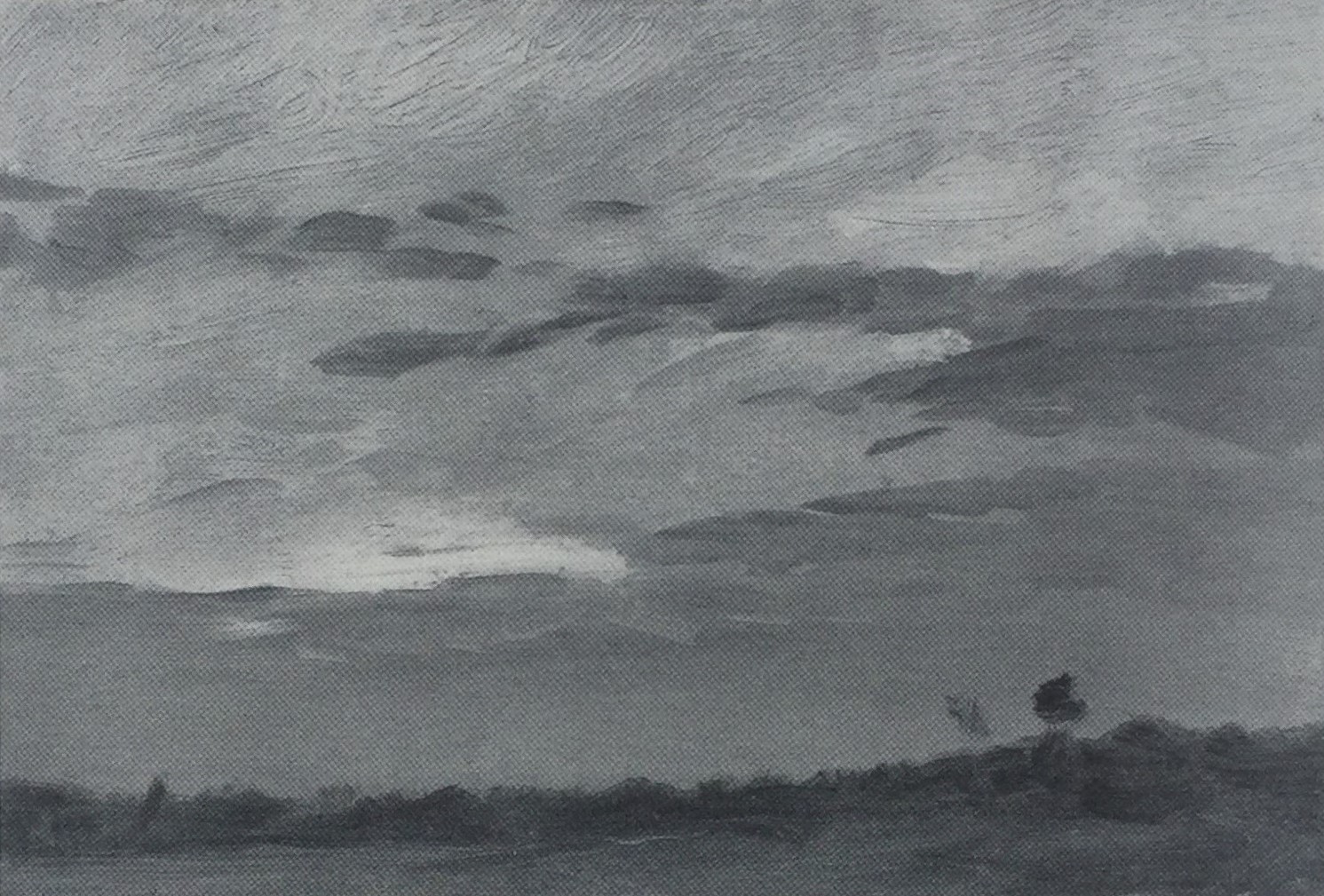
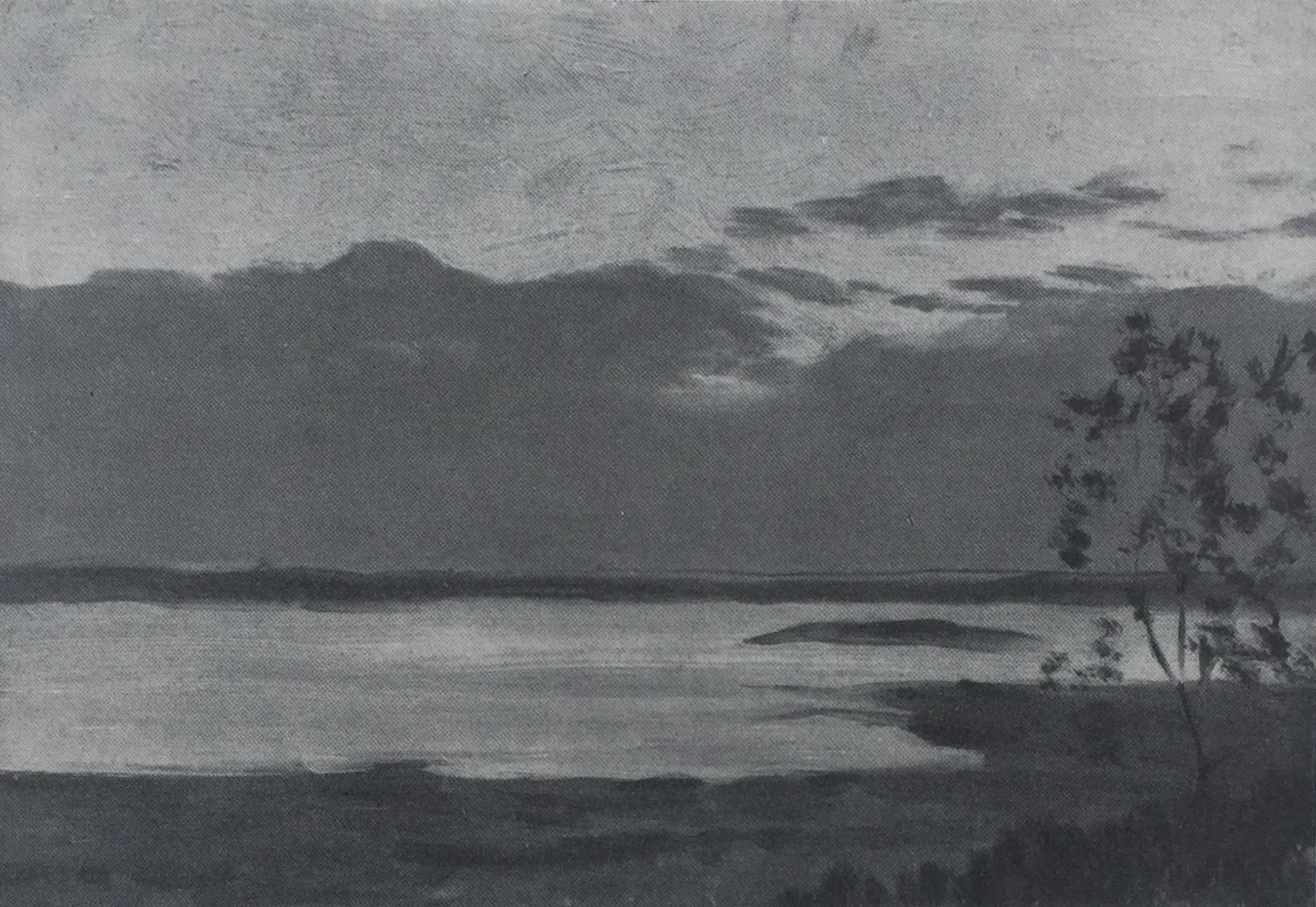
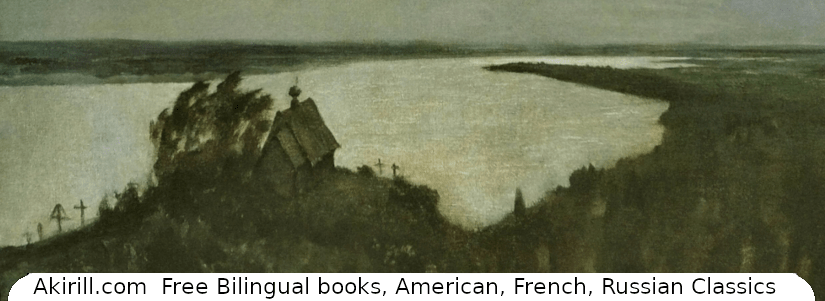
In the summer of 1893, Levitan composed the poignant pastel “Forgotten,” depicting “an abandoned cemetery located on a slope with rickety crosses,” a motif later incorporated into the painting. In 1898, this remarkable sketch was displayed in St. Petersburg and acquired by Pavel Tretyakov. Furthermore, among the preparatory materials utilized by the artist is the enchanting sketch “Wooden Church in Plyos at the last rays of the sun,” penned in 1888, which Levitan drew inspiration from to portray the church in the painting “Above Eternal Peace.”
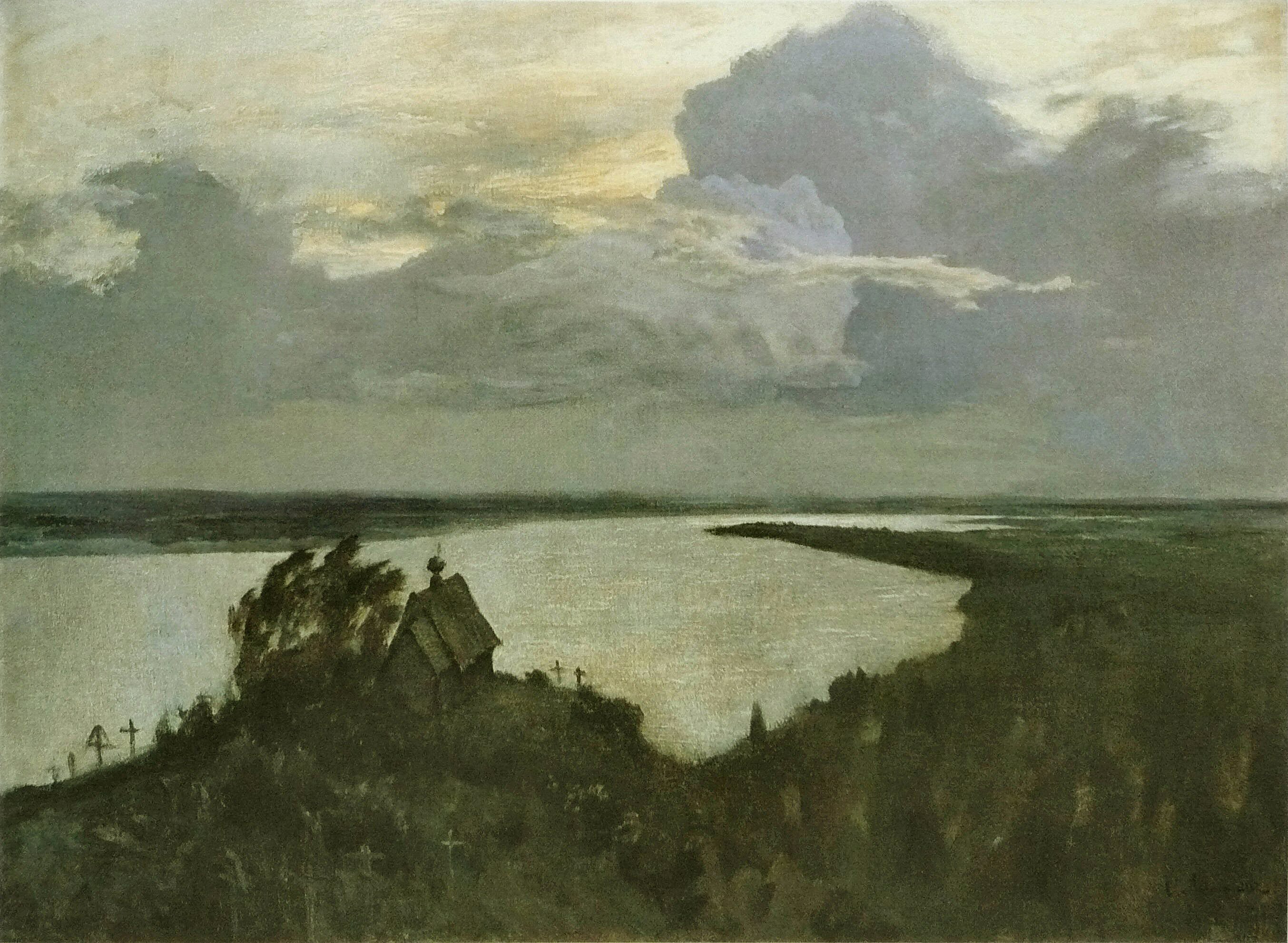
Over Eternal Peace - large sketch, 1893
Over Eternal Peace – large sketch, 1893

Description

Fedorov-Davydov noticed the clear structure and the balanced asymmetry in the picture, giving valuable insights into the artist’s choices and the overall visual harmony of the piece. The interaction of the main parts and various details, like the cape, island, water, and clouds, highlights the careful craftsmanship and compositional skill behind the artwork, making the viewer appreciate its complexity and beauty even more.

The artist used different painting techniques to create a sense of space and power in the composition. When depicting distant scenes, Levitan used extreme simplification of shapes and colors, which was new for him. The painting techniques varied throughout the artwork, emphasizing the heaviness of the stormy sky and conveying the movement of the clouds. Different techniques were also used to depict water, the distant bank, and the foreground hill. Despite the variety of techniques, the painting still effectively conveys the natural impressions it’s based on.

The painting “Over Eternal Peace” richly portrays a captivating scene that captures the imagination with its intricate details and evocative imagery. It immerses the viewer in a world that is at once tranquil and haunting, with the artist’s meticulous attention to detail bringing each element to life. The description of the lake as experiencing a “giant reversal of the water space” conjures a sense of awe, particularly as the endless expanse resembles a wide-spread river, inviting contemplation of the forces of nature at play.

The artist ponders the world from a lofty perspective, observing a grand panorama of natural elements unfolding before their gaze.
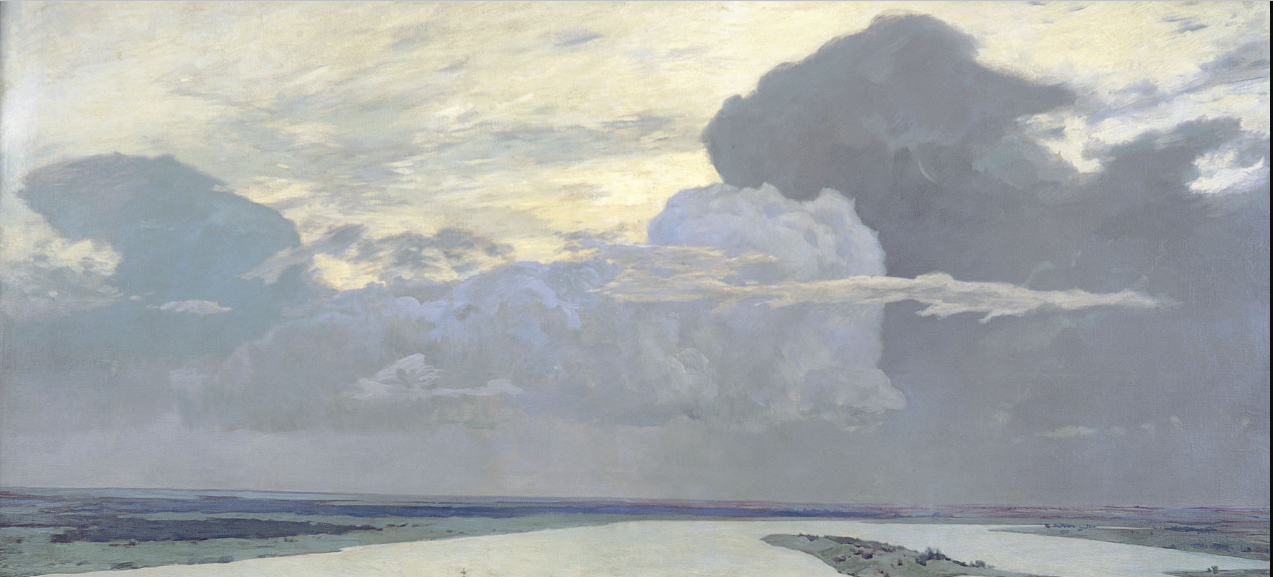
Over  Eternal Peace - extract sky
Over Eternal Peace – extract sky

Above the lake, the depiction of a vast expanse of sky with swirling, colliding clouds adds a captivating layer to the composition. The divided image of the sky, with a darker, cloudy realm at the bottom and a lighter, more ethereal expanse at the top, creates a compelling contrast, further enriching the visual narrative. The elements surrounding the cliff emanate power. It feels as though the graveyard will vanish in the next moment, the church will scatter across the world… Destruction appears imminent.

Over  Eternal Peace - Extract Island
Over Eternal Peace – Extract Island

In the distance, a deserted island comes into view, seemingly drifting away from the cliff with remarkable speed. It appears as though the island carries with it the souls of the departed, drawing in the remnants of the human spirit and the memories of those who have passed on. This sight serves as a poignant reminder of the insignificance, transience, and perceived lack of meaning in human life.

Over  Eternal Peace - extract-church and- cemetery
Over Eternal Peace – extract-church and- cemetery

As the viewer’s gaze wanders to the background, a headland is revealed, on the elevated bank of which an old church stands.

A storm looms on the horizon – evident in the ominous, leaden sky and powerful gusts of wind. Near the temple, the trees lean under the force of the hurricane wind. The fading hues of the sunset are ablaze in the sky, yet the light is veiled by dense, unusually lifelike clouds. It appears as though the hurricane will lay waste to the fragile church, topple the crosses in the cemetery, and level the graves to the earth.

In an impressive manner, the small dome of the church withstands the full force of the elements. It points directly upward, and its color, blending with the metallic tones of the sky, conveys a sense of steadfastness and resilience.

The artist, even in this piece, infused it with optimistic undertones. Only unwavering faith can help an individual find peace and confidence in their aspirations and the purpose of their life. However, this hopeful message is subtly woven into the painting. Only the most discerning viewers can perceive in this subtle detail the true essence of this iconic work of art.

Over Eternal Peace - Extract cemetery
Over Eternal Peace – Extract cemetery

The presence of a somber rural cemetery to the left of the church adds a poignant touch, with the neglected graves and dilapidated surroundings evoking a sense of melancholy and the passage of time. The careful attention to detail in rendering these elements is evident, as the artist pays special attention to the composition of the cemetery and the church on the hill, infusing them with a profound sense of significance and history.

Art critic Alexei Fedorov-Davydov’s insightful commentary further enhances the depth of the painting, as he eloquently describes the fragile cape with the church and cemetery as if it were the bow of a ship venturing into an unknown distance.

Over Eternal Peace - extract church
Over Eternal Peace – extract church

The symbolism of the light in the church window as a witness to human life, indestructibility, and quiet submission is particularly striking and adds yet another layer of meaning to the composition.
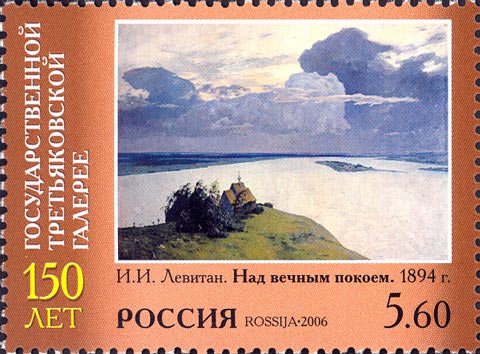

Over Above Eternal Peace on a 2006 Russian postage stamp
Over Eternal Peace on a 2006 Russian postage stamp

We put a lot of effort into the quality of the articles and translations, support us with a like and a subscription or sponsor us if you like them. We are also on Facebook and Twitter

Check out our Last Posts
Découvrez nos Derniers Posts


© 2024 Akirill.com – All Rights Reserved

Поздравляю С 8 Марта

Livres bilinguesRead in EnglishNous contacter
Littérature américaineLittérature françaiseLittérature russe


Peinture “La Tempête” par Ivan Konstantinovitch Aïvazovski

The tempest - 1851
The tempest – 1851

Traduction du poème “Un feu bleu a balayé” par Sergueï Essénine en français avec français et russe côte à côte


Заметался пожар голубой Сергея ЕсенинаUn feu bleu a balayé,
Traduit par Akirill.com
Dec 18, 2023
Как умеет любить хулиган Comme un voyou est capable d’aimer
Заметался пожар голубой,Un feu bleu a balayé,
Позабылись родимые дали.Les terres natales oubliées.
В первый раз я запел про любовь,Pour la première fois, j’ai chanté l’amour,
В первый раз отрекаюсь скандалить.Pour la première fois je renonce à me quereller.
Был я весь — как запущенный сад,J’étais entièrement comme un jardin négligé,
Был на женщин и зелие падкий.
(J’étais avide de femmes et de potions.)
J’étais avide de femmes et de liqueurs.
Разонравилось пить и плясатьJ’ai cessé d’aimer boire et danser
Читать далееContinuer la lecture

Nous mettons beaucoup d’efforts dans la qualité des articles et traductions, soutenez-nous avec un like et un abonnement ou sponsorisez-nous si vous les aimez. Nous sommes aussi sur Facebook et Twitter

Découvrez nos Derniers Posts


© 2023 Akirill.com – All Rights Reserved

Happy Women’s day with the poem “A blue fire swept away” by Sergei Yesenin in English

Bilingual booksLire en FrançaisContact us
American LiteratureFrench LiteratureRussian Literature

On this special day, we want to extend our heartfelt greetings to all the women. It is your strength, love, courage, and wisdom that makes our world a better place. Wishing you an exceptional and glorious Women’s Day, filled with joy, happiness, and lots of special surprises.

Happy Women’s Day to all of you! Thank you for being you.

In line with this spirit of celebration, I have translated a captivating poem titled “A blue fire swept away” by Sergei Yesenin from the 1920s. This poem delves into the theme of a passionate awakening, acknowledging past mistakes, and the profound commitment to dedicate oneself entirely to a beloved, never losing sight of their presence. It is a beautiful expression of love and devotion.

To complement the imagery of the blue fire sweeping away, I decided to include a painting called “The Tempest” by Ivan Aivazovsky. This stunning artwork depicts an awe-inspiring scene where the power of water takes center stage instead of fire. The tempestuous waves around a lone ship capture the essence of an untamed and powerful force of nature.

As always, you have the wonderful opportunity to explore the entire translation simply by clicking on one of the links. Remember, you can also discover all of our translations on the captivating Russian Literature page. Happy reading!


Painting “The Tempest” by Ivan Konstantinovich Aivazovsky

The tempest - 1851
The tempest – 1851

Translation of the poem “A blue fire swept away” by Sergei Yesenin in English with English and Russian side by side


Заметался пожар голубой Сергея ЕсенинаA blue fire swept away,
Translated by Akirill.com
Dec 18, 2023
Как умеет любить хулиган How a hooligan is able to love
Заметался пожар голубой,A blue fire swept away,
Позабылись родимые дали.The forgotten familiar homeland.
В первый раз я запел про любовь,For the first time I sang about love
В первый раз отрекаюсь скандалить.For the first time I renounce to cause a scene.
Был я весь — как запущенный сад,I was completely like a neglected garden
Был на женщин и зелие падкий.
I was greedy for women and potions.
I was greedy for women and liquors.
Разонравилось пить и плясатьI stopped liking drinking and dancing
Читать далееContinue to read

< < <  Pays bleu et joyeux (Ru/Fr) / Blue and cheerful country (Ru/Eng) / Голубая да веселая страна (Рус/Анг.) / (Рус/ Фра.)
> > >


We put a lot of effort into the quality of the articles and translations, support us with a like and a subscription or sponsor us if you like them. We are also on Facebook and Twitter

Check out our Last Posts


© 2023 Akirill.com – All Rights Reserved

Bonne journée de la femme avec le poème “Un feu bleu a balayé” de Sergei Yesenin en français

Livres bilinguesRead in EnglishNous contacter
Littérature américaineLittérature françaiseLittérature russe

En ce jour spécial, nous voulons adresser nos vœux les plus sincères à toutes les femmes. C’est grâce à votre force, à votre amour, à votre courage et à votre sagesse que notre monde est un meilleur endroit. Nous vous souhaitons une Journée de la Femme exceptionnelle et glorieuse, remplie de joie, de bonheur et de surprises spéciales.

Bonne Journée de la Femme à toutes ! Merci d’être vous.

Dans cet esprit de célébration, j’ai traduit un poème fascinant intitulé “Un feu bleu a balayé” de Sergei Yesenin des années 1920. Ce poème explore le thème d’un éveil passionné, reconnaissant les erreurs passées, et l’engagement profond à se consacrer entièrement à une bien-aimée, sans jamais perdre de vue sa présence. C’est une belle expression de l’amour et de la dévotion.

Pour compléter l’imagerie du feu bleu qui a tout balayé sur son passage, j’ai décidé d’inclure une peinture appelée “La Tempête” par Ivan Aivazovsky. Cette œuvre d’art stupéfiante représente une scène impressionnante où la puissance de l’eau est à l’honneur, au lieu du feu. Les vagues tumultueuses autour d’un navire solitaire capturent l’essence d’une force de la nature sauvage et puissante.

Comme toujours, vous avez la merveilleuse occasion d’explorer toute la traduction simplement en cliquant sur l’un des liens. N’oubliez pas, vous pouvez aussi découvrir toutes nos traductions sur la page fascinante de la Littérature Russe. Bonne lecture !


Peinture “La Tempête” par Ivan Konstantinovitch Aïvazovski

The tempest - 1851
The tempest – 1851

Traduction du poème “Un feu bleu a balayé” par Sergueï Essénine en français avec français et russe côte à côte


Заметался пожар голубой Сергея ЕсенинаUn feu bleu a balayé,
Traduit par Akirill.com
Dec 18, 2023
Как умеет любить хулиган Comme un voyou est capable d’aimer
Заметался пожар голубой,Un feu bleu a balayé,
Позабылись родимые дали.Les terres natales oubliées.
В первый раз я запел про любовь,Pour la première fois, j’ai chanté l’amour,
В первый раз отрекаюсь скандалить.Pour la première fois je renonce à me quereller.
Был я весь — как запущенный сад,J’étais entièrement comme un jardin négligé,
Был на женщин и зелие падкий.
(J’étais avide de femmes et de potions.)
J’étais avide de femmes et de liqueurs.
Разонравилось пить и плясатьJ’ai cessé d’aimer boire et danser
Читать далееContinuer la lecture

Nous mettons beaucoup d’efforts dans la qualité des articles et traductions, soutenez-nous avec un like et un abonnement ou sponsorisez-nous si vous les aimez. Nous sommes aussi sur Facebook et Twitter

Découvrez nos Derniers Posts


© 2023 Akirill.com – All Rights Reserved
Progrès du Site semaine du 13 février 2024

Livres bilinguesRead in EnglishNous contacter

Chers lecteurs et abonnés, cela a été une semaine inspirante passée à explorer la poésie américaine et à présenter des poèmes captivants de nos pages de poésie française et russe. J’ai décidé de présenter une variété d’auteurs américains talentueux, chacun offrant une sélection de leurs poèmes remarquables, et de continuer à ajouter de nouveaux poèmes aléatoires à l’une des pages chaque semaine.

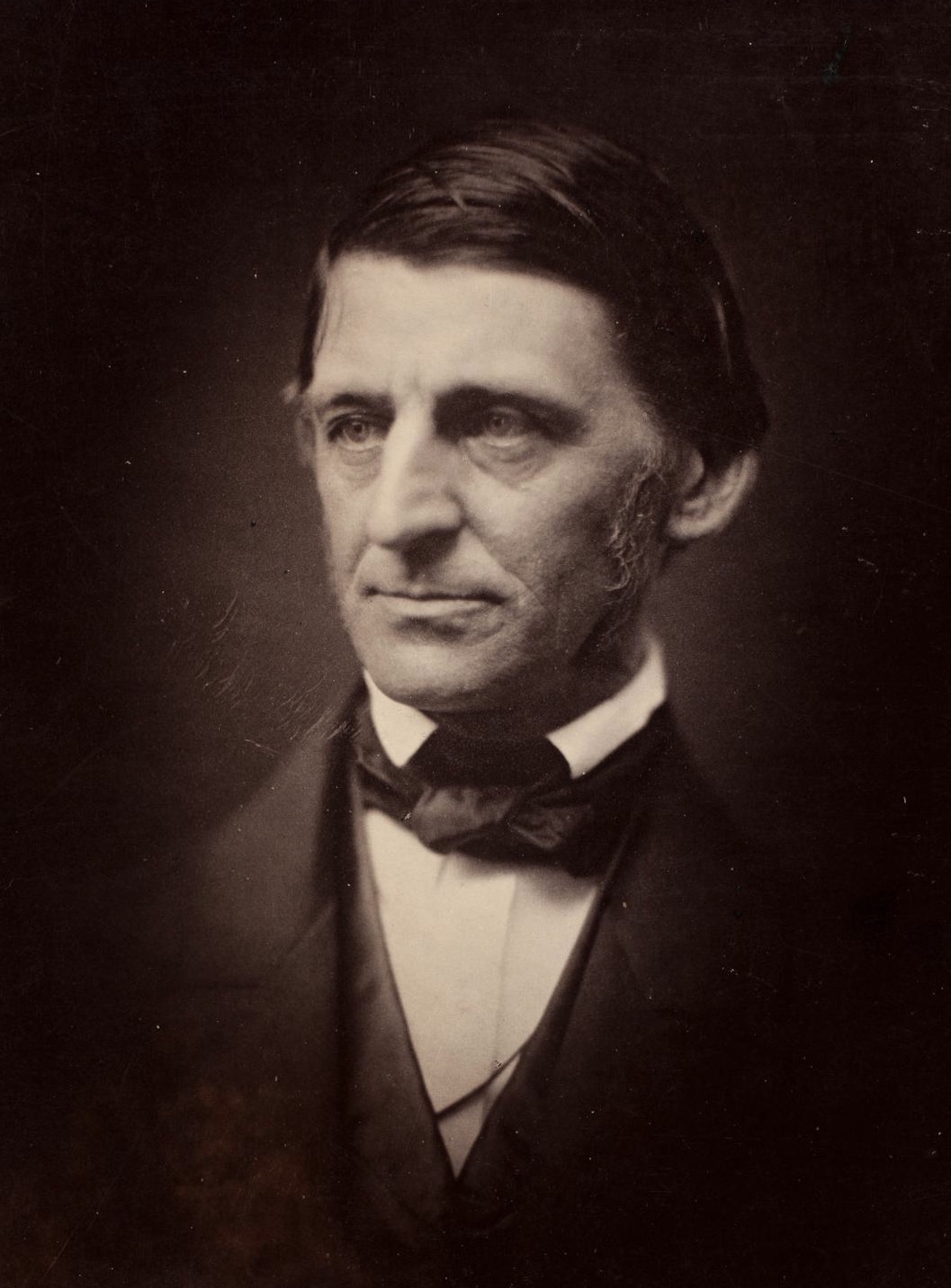
Parmi les nouvelles additions excitantes, vous trouverez les œuvres de Natalie Clifford Barney, William Cullen Bryant, Ralph Waldo Emerson. Marianne Craig Moore et Edna St. Vincent Millay. Je suis convaincu que vous découvrirez une abondance de délices à savourer au sein de cette collection riche et diverse.

Alors que nous continuons à explorer les profondeurs de la poésie issue de diverses cultures et époques, je vous invite à vous immerger dans la beauté du langage et la puissance de l’expression. Laissez ces mots magistraux vous transporter vers de nouveaux univers d’imagination et de compréhension, enrichissant votre vie de façons que vous n’auriez jamais cru possibles. Le voyage à travers le monde de la poésie est une aventure sans fin, et je suis ravie de vous avoir à nos côtés alors que nous nous embarquons dans cette merveilleuse exploration.

Comme d’habitude, commençons par nos poètes américains,

Edgar_Guest_1935
Poems by Edgar A. Guest
Bud Discusses Cleanliness
Tied Down
Our Country
Fatherhood
A Choice
What Father Knows
Back Home
The Dead Return
My Soul and I
Aunty
Natalie Clifford Barney 1898
Poems from Natalie Clifford Barney
Ah! Night
Apology
More Night!
The Love of Judas
The Weeping Venus
William Cullen Bryant
Poems from William Cullen Bryant
Inscription for the Entrance to a Wood
Song.—”Soon as the glazed and gleaming snow”
Thanatopsis
The Ages
The Yellow Violet
Ralph Waldo Emerson
Poems by Ralph Waldo Emerson
Each and All
Good-bye
The Problem
The Visit
To Rhea
Marianne Craig Moore
Poems by Marianne Craig Moore
Diligence Is To Magic As Progress Is To Flight
Feed Me, Also, River God
Pedantic Literalist
Those Various Scalpels
To A Steam Roller
Edna St. Vincent Millay
Poems by Edna St. Vincent Millay
Afternoon on a Hill
God’s World
Journey
Renascence
Sorrow

Nous continuerons avec notre poète français, Paul Verlaine, où j’ai ajouté la collection “Bonheur“. Voici quelques-uns des poèmes choisis au hasard :

Nous terminons avec notre poète russe Anna Akhmatova (Анна Ахматова)


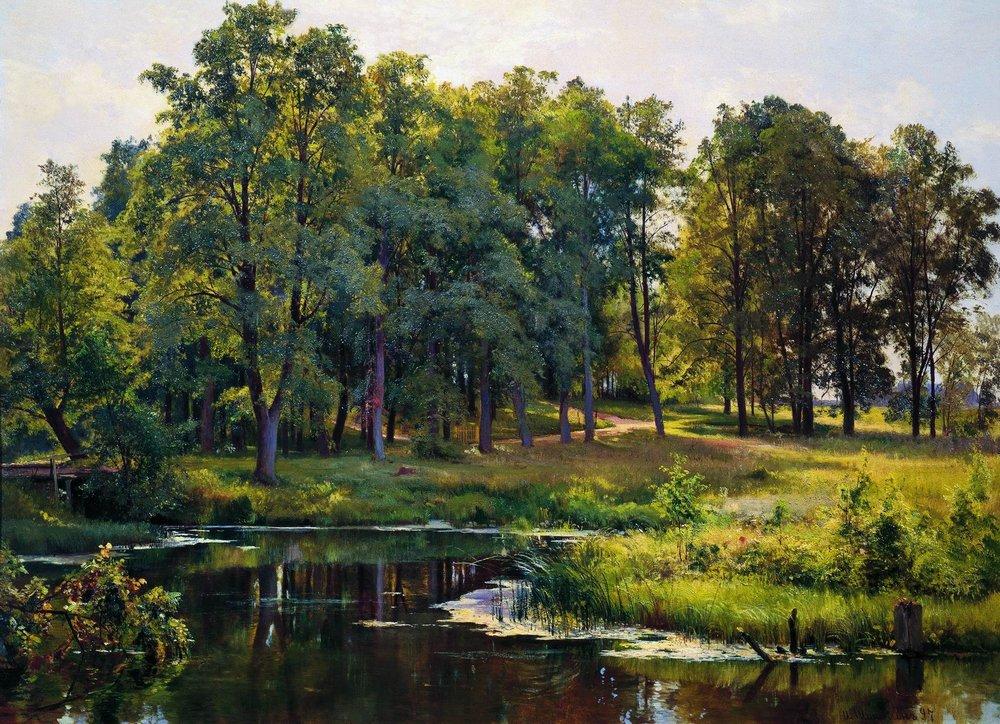
Cette semaine, notre article était une traduction du poème “Il n’y a pas de soleil, mais les étangs sont lumineux…” d’Ivan Bounine en français avec français et russe côte à côte, accompagné du tableau  Dans le parc par Ivan Ivanovitch Chichkine.

In the park by Ivan Ivanovich Shishkin - 1897
In the park by Ivan Ivanovich Shishkin – 1897

Nous mettons beaucoup d’efforts dans la qualité des articles et traductions, soutenez-nous avec un like et un abonnement ou sponsorisez-nous si vous les aimez. Nous sommes aussi sur Facebook et Twitter


© 2023 Akirill.com – All Rights Reserved

Site Progress Week of February 13, 2024

Bilingual BooksLire en FrançaisContact us

Dear readers and subscribers, it’s been an inspiring week exploring American poetry and featuring captivating poems from our French and Russian poetry pages. I decided to introduce a variety of talented American authors, each offering a selection of their remarkable poems, and to continue adding new random poems to one of the pages every week.

Among the exciting new additions, you will find the works of Natalie Clifford Barney, William Cullen Bryant, Ralph Waldo Emerson. Marianne Craig Moore and Edna St. Vincent Millay. I’m confident that you will discover an abundance of delightful pieces to savor within this rich and diverse collection.

As we continue to explore the depths of poetry from various cultures and periods, I invite you to immerse yourself in the beauty of language and the power of expression. Let these masterful words transport you to new realms of imagination and understanding, enriching your life in ways you never thought possible. The journey through the world of poetry is a never-ending adventure, and I am thrilled to have you alongside us as we embark on this wondrous exploration.

As usual let’s begin by our American poets,

Edgar_Guest_1935
Poems by Edgar A. Guest
Bud Discusses Cleanliness
Tied Down
Our Country
Fatherhood
A Choice
What Father Knows
Back Home
The Dead Return
My Soul and I
Aunty
Natalie Clifford Barney 1898
Poems from Natalie Clifford Barney
Ah! Night
Apology
More Night!
The Love of Judas
The Weeping Venus
William Cullen Bryant
Poems from William Cullen Bryant
Inscription for the Entrance to a Wood
Song.—”Soon as the glazed and gleaming snow”
Thanatopsis
The Ages
The Yellow Violet
Ralph Waldo Emerson
Poems by Ralph Waldo Emerson
Each and All
Good-bye
The Problem
The Visit
To Rhea
Marianne Craig Moore
Poems by Marianne Craig Moore
Diligence Is To Magic As Progress Is To Flight
Feed Me, Also, River God
Pedantic Literalist
Those Various Scalpels
To A Steam Roller
Edna St. Vincent Millay
Poems by Edna St. Vincent Millay
Afternoon on a Hill
God’s World
Journey
Renascence
Sorrow

We will continue with our French poet, Paul Verlaine where I added the collection “Bonheur ”. Following are a few of the poems randomly chosen:

We’ll finish with our Russian poet Anna Akhmatova (Анна Ахматова)


This week our article was a translation of the poem “There is no sun, but the ponds are bright…” by Ivan Bunin in English with English and Russian side by side with the painting “In the park” by Ivan Ivanovich Shishkin

In the park by Ivan Ivanovich Shishkin - 1897
In the park by Ivan Ivanovich Shishkin – 1897

We put a lot of effort into the quality of the articles and translations, support us with a like and a subscription or sponsor us if you like them. We are also on Facebook and Twitter


© 2023 Akirill.com – All Rights Reserved

Lire le poème “Quand des ténèbres de l’erreur…” de Nikolaï Nekrassov en français avec français et russe côte à côte

Livres bilinguesRead in EnglishNous contacter
Littérature américaineLittérature françaiseLittérature russe

Chers lecteurs et abonnés, cette semaine, j’ai traduit et fait une brève analyse du charmant poème d’amour « Quand des ténèbres de l’erreur… » écrit par l’éminent poète russe Nikolaï Nekrassov en 1846. Dans ce poème, le héros lyrique apparaît comme le sauveur de la femme déchue, la sortant des profondeurs de son désespoir. De plus, j’ai inclus le tableau « Party » (Vechernitsa) d’Ilya Efimovich Repin.

Comme d’habitude, vous pouvez accéder librement à l’intégralité de la traduction en suivant l’un des liens, ainsi que retrouver l’ensemble de nos traductions sur la page Littérature russe .

J’espère que vous apprécierez ce poème et cette peinture autant que moi.


Brève analyse du poème “Quand des ténèbres de l’erreur…” de Nikolaï Nekrassov


Dans le poème «Quand des ténèbres de l’erreur…», créé en 1846 par Nekrasov, le thème de la femme déchue est exploré. Le héros lyrique apparaît comme son sauveur, la sortant des profondeurs de son désespoir. Malgré son honnêteté sur son passé, il ne se laisse pas décourager. Il lui pardonne ses actes et va au-delà de la simple acceptation, l’invitant à être la maîtresse de sa maison. Cependant, elle est aux prises avec des doutes quant à son acceptation dans la société et quant à savoir si la foule oubliera un jour son passé. Le héros la pousse à rejeter de telles pensées, rejetant les opinions vides et trompeuses des autres.

Dans ce poème, Nikolaï Nekrassov développe davantage des personnages vibrants. La femme est repentante, déprimée et confuse, mais elle a décidé d’embrasser une nouvelle vie et de dire adieu à l’ancienne pour toujours. L’homme fait preuve d’une capacité de pardon, traitant l’ancienne prostituée avec la plus grande sensibilité et justesse dans leurs interactions. Il va sans crainte à l’encontre de l’opinion publique pour se tenir à ses côtés, sans craindre la condamnation de la foule. Il encourage les femmes à être courageuses et fortes, prêtes à lui offrir un soutien indéfectible et à être son pilier de force. Ce motif de l’amour, triomphant du jugement de la société, continue de résonner tout au long des paroles intimes de Nekrasov.

Continuer la lecture

Peinture “Fêtes” (Vechernitsa) par Ilia Iefimovitch Répine 

Party (Vechernitsa) by Ilya Yefimovich Repin
Party (Vechernitsa) by Ilya Yefimovich Repin


Traduction du poème “Quand des ténèbres de l’erreur …” de Nikolaï Nekrassov en français avec français et russe côte à côte


Когда из мрака заблужденьяQuand des ténèbres de l’erreur
Traduit par Akirill.com
Dec 2, 2023
Когда из мрака заблужденьяQuand des ténèbres de de l’erreur
Горячим словом убежденьяAvec un mot brûlant de conviction
Я душу падшую извлек,J’ai enlevé l’âme déchue,
И, вся полна глубокой муки,Et complètement remplie de profonds tourments,
Ты прокляла, ломая руки,Tu as maudit en te tordant les mains,
Тебя опутавший порок;Le vice qui t’a empêtré ;
Когда забывчивую совестьQuand une conscience oublieuse
Воспоминанием казня,était exécutée par la mémoire,
Ты мне передавала повестьTu m’as raconté l’histoire
Всего, что было до меня;de tout ce qui m’a précédé ;
Читать далееContinuer la lecture

< < < Михаил Лермонтов – Парус (Белеет парус одинокий) (Рус/Анг.) / (Рус/ Фра.) / Mikhail LermontovVoile (La voile solitaire devient blanche) (Ru/Fr) / Sail (The lonely sail turns white) (Ru/Eng)
Александр Пушкин19 октября 1827 (Рус/Анг.) / (Рус/ Фра.) / Alexander Pushkin19 octobre 1827 (Ru/Fr) / October 19, 1827 (Ru/Eng) > > >


Nous mettons beaucoup d’efforts dans la qualité des articles et traductions, soutenez-nous avec un like et un abonnement ou sponsorisez-nous si vous les aimez. Nous sommes aussi sur Facebook et Twitter

Découvrez nos Derniers Posts


© 2023 Akirill.com – All Rights Reserved
Read the poem “When from the darkness of error…” by Nikolay Nekrasov in English with English and Russian side by side

Bilingual booksLire en FrançaisContact us
American LiteratureFrench LiteratureRussian Literature

Dear readers and subscribers, this week I translated and did a short analysis of the lovely love poem “When from the darkness of error…” written by the outstanding Russian poet, Nikolay Nekrasov in 1846. In this poem, the lyrical hero emerges as the savior of fallen woman , lifting her from the depths of her despair. Furthermore, I included the painting “Party” (Vechernitsa) by Ilya Yefimovich Repin.

As usual you can freely access the whole translation by following one of the link, you can also find all of our translation on the Russian Literature page.

I hope you’ll enjoy this poem and paintings as much as I did


Short analysis of the poem “When from the darkness of error…” by Nikolay Nekrasov


In the poem “When from the darkness of error…” created in 1846 by Nekrasov, the theme of the fallen woman is explored. The lyrical hero emerges as her savior, lifting her from the depths of her despair. Despite her honesty about her past, he remains undeterred. He forgives her for her actions and goes beyond mere acceptance, inviting her to be the mistress of his home. However, she grapples with doubts about her acceptance into society and whether the crowd will ever forget her past. The hero urges her to discard such thoughts, dismissing the empty and deceitful opinions of others.

In this poem, Nikolay Nekrasov further develops vibrant characters. The woman is repentant, depressed, and confused, but she has resolved to embrace a new life and bid farewell to the old one forever. The man demonstrates a capacity for forgiveness, treating the former harlot with utmost sensitivity and correctness in their interactions. He fearlessly goes against public opinion to stand by her side, unafraid of condemnation from the crowd. He encourages women to be brave and strong, ready to offer unwavering support and be her pillar of strength. This motif of love, triumphing over society’s judgment, continues to resonate throughout Nekrasov’s intimate lyrics.

Continue reading

Painting “Party” (Vechernitsa) by Ilya Yefimovich Repin

Party (Vechernitsa) by Ilya Yefimovich Repin
Party (Vechernitsa) by Ilya Yefimovich Repin


Translation of the poem “When from the darkness of error…” by Nikolay Nekrasov in English with English and Russian side by side


Когда из мрака заблужденьяWhen from the darkness of error
Translated by Akirill.com
Dec 2, 2023
Когда из мрака заблужденьяWhen, from the darkness of error,
Горячим словом убежденьяWith a hot word of conviction
Я душу падшую извлек,I retrieved the fallen soul,
И, вся полна глубокой муки,And, all full of deep torment,
Ты прокляла, ломая руки,You cursed, wringing your hands,
Тебя опутавший порок;the vice that entangled you;
Когда забывчивую совестьWhen a forgetful conscience
Воспоминанием казня,was executed by memory,
Ты мне передавала повестьYou told me the story
Всего, что было до меня;of everything that happened before me;
Читать далееContinue reading

< < < Михаил Лермонтов – Парус (Белеет парус одинокий) (Рус/Анг.) / (Рус/ Фра.) / Mikhail LermontovVoile (La voile solitaire devient blanche) (Ru/Fr) / Sail (The lonely sail turns white) (Ru/Eng)
Александр Пушкин19 октября 1827 (Рус/Анг.) / (Рус/ Фра.) / Alexander Pushkin19 octobre 1827 (Ru/Fr) / October 19, 1827 (Ru/Eng) > > >


We put a lot of effort into the quality of the articles and translations, support us with a like and a subscription or sponsor us if you like them. We are also on Facebook and Twitter

Check out our Last Posts


© 2023 Akirill.com – All Rights Reserved
Lire le poème “Pour tout, Seigneur, je te remercie” d’Ivan Bounine en français avec français et russe côte à côte

Livres bilinguesRead in EnglishNous contacter
Littérature américaineLittérature françaiseLittérature russe

Chers lecteurs et abonnés, avec le début d’année, nous avons tous de quoi être reconnaissants, de belles vacances, de la famille, une nouvelle année prometteuse… Alors cette semaine, j’ai décidé de traduire en français et de faire une courte analyse du poème “Pour tout, Seigneur, je te remercie” du célèbre écrivain russe Ivan Bunin. De plus, j’ai inclus le tableau “Soirée” d’Alexeï Savrassov.

Comme d’habitude, vous pouvez accéder librement à l’intégralité de la traduction en suivant l’un des liens, ainsi que retrouver l’ensemble de nos traductions sur la page Littérature russe .

J’espère que vous apprécierez ce poème et cette peinture autant que moi.


Brève analyse du poème “Pour tout, Seigneur, je te remercie” d’Ivan Bounine

Le poème « Pour tout, Seigneur, je te remercie !.. » du célèbre écrivain russe Ivan Andreïevitch Bounine a été initialement publié dans le septième numéro de la revue « Le Monde de Dieu » en 1901, intitulé « Au coucher du soleil ». On pense largement que ce poème a été influencé par les paroles religieuses de Lermontov. Plus précisément, il ressemble à l’œuvre de Lermontov « Quand le champ jaunissant s’agite… » de 1837. Les parallèles thématiques et stylistiques entre ces poèmes montrent l’impact et l’inspiration que les paroles religieuses de Lermontov ont eu sur l’œuvre de Bounine.

Ivan Bounine, en tant que poète, a trouvé l’harmonie spirituelle et l’unité avec la nature plutôt qu’avec les autres. Sa carrière littéraire a été marquée par une attitude négative notable envers divers écrivains, dont Yesenin, Babel, Ehrenburg et Pilnyak. De Surcroît, il a exprimé son scepticisme à l’égard de certains phénomènes littéraires tels que les clichés et les fins lyriques des histoires.

Continuer la lecture …

Peinture “Soirée” par Alexeï Kondratievitch Savrassov

Evening by Alexei Kondratyevich Savrasov
Soirée” par Alexeï Kondratievitch Savrassov

Traduction du poème “Pour tout, Seigneur, je te remercie” d’Ivan Bounine en français avec français et russe côte à côte


Иван Бунин — За всё тебя, Господь, благодарюPour tout, Seigneur, je te remercie
Traduit par Akirill.com
Nov 30/2023
За всё тебя, Господь, благодарю!Pour tout, Seigneur, je te remercie
Ты, после дня тревоги и печали,Toi, après une journée d’anxiété et de tristesse,
Даруешь мне вечернюю зарю,Me donne l’aube du soir,
Простор полей и кротость синей дали.L’étendue des champs et la douceur du lointain bleu.
Читать далее …Continuer la lecture …

< < < Ange du Soir (Ru/Fr) / Evening Angel (Ru/Eng) / Вечерний ангел (Рус/Анг.) / (Рус/ Фра.)
Mikhail Lermontov – Prière (Dans un moment difficile de la vie) (Ru/Fr) / Prayer (In a difficult moment of life) (Ru/Eng) / Михаил Лермонтов – Молитва (В минуту жизни трудную) (Рус/Анг.) / (Рус/ Фра.) > > >


Nous mettons beaucoup d’efforts dans la qualité des articles et traductions, soutenez-nous avec un like et un abonnement ou sponsorisez-nous si vous les aimez. Nous sommes aussi sur Facebook et Twitter

Découvrez nos Derniers Posts


© 2023 Akirill.com – All Rights Reserved
Read the poem “For everything, Lord, I thank you” by Ivan Bunin in English with English and Russian side by side

Bilingual booksLire en FrançaisContact us
American LiteratureFrench LiteratureRussian Literature

Dear readers and subscribers, with the beginning of the year, we all have things to be thankful for, nice holidays, family, a new promising year… So this week I decided to translated in English and make a short analysis of the poem “For everything, Lord, I thank you” by the renowned Russian writer, Ivan Bunin. Further, I included the painting “Evening” by Alexei Kondratyevich Savrasov.

As usual you can freely access the whole translation by following one of the link, you can also find all of our translation on the Russian Literature page.

I hope you’ll enjoy this poem and paintings as much as I did


Short analysis of the poem “For everything, Lord, I thank you” by Ivan Bunin

The poem “For everything, Lord, I thank you!..” by the renowned Russian writer, Ivan Andreevich Bunin was initially published in the seventh issue of the magazine “World of God” in 1901, titled “At Sunset.” This poem is widely believed to have been influenced by the religious lyrics of Lermontov. Specifically, it bears resemblance to Lermontov’s work “When the yellowing field is agitated…” from 1837. The thematic and stylistic parallels between these poems showcase the impact and inspiration Lermontov’s religious lyrics had on Bunin’s work.

Ivan Bunin, as a poet, found spiritual harmony and unity with nature rather than with other people. His literary career was marked by a notable negative attitude towards various writers, including Yesenin, Babel, Ehrenburg, and Pilnyak. Moreover, he expressed skepticism towards certain literary phenomena such as clichés and lyrical endings to stories.

Continue reading …

Painting “Evening” by Alexei Kondratyevich Savrasov

Evening by Alexei Kondratyevich Savrasov
Evening” by Alexei Kondratyevich Savrasov

Translation of the poem “For everything, Lord, I thank you” by Ivan Bunin in English with English and Russian side by side


Иван Бунин — За всё тебя, Господь, благодарюFor everything, Lord, I thank you
Translated by Akirill.com
Nov 30/2023
За всё тебя, Господь, благодарю!For everything, Lord, I thank you
Ты, после дня тревоги и печали,You, after a day of anxiety and sadness,
Даруешь мне вечернюю зарю,Give me the evening dawn,
Простор полей и кротость синей дали.The expanse of fields and the gentleness of the blue distance.
Читать далее …Continue reading …

< < < Ange du Soir (Ru/Fr) / Evening Angel (Ru/Eng) / Вечерний ангел (Рус/Анг.) / (Рус/ Фра.)
Mikhail Lermontov – Prière (Dans un moment difficile de la vie) (Ru/Fr) / Prayer (In a difficult moment of life) (Ru/Eng) / Михаил Лермонтов – Молитва (В минуту жизни трудную) (Рус/Анг.) / (Рус/ Фра.) > > >


We put a lot of effort into the quality of the articles and translations, support us with a like and a subscription or sponsor us if you like them. We are also on Facebook and Twitter

Check out our Last Posts


© 2023 Akirill.com – All Rights Reserved