
Le poème “Ange” d’Alexandre Pouchkine

Livres bilinguesRead in EnglishNous contacter
Littérature américaineLittérature françaiseLittérature russe

< < < 27 Mai 1819 / May 27, 1819 / 27 мая 1819 (Рус/Анг.) / (Рус/ Фра.)
Automne  (Ru/Fr) / Autumn (Ru/Eng) / Осень (Рус/Анг.) / (Рус/ Фра.) > > >

Le poème “Ange” a été écrit en 1827 par Alexandre Pouchkine qui avait une forte passion pour de nombreuses femmes. Il a rencontré E.K. Vorontsova qui lui a rendu la pareille pendant son exil dans le sud. Cette punition avait été dure pour lui mais l’amour a eu un effet bénéfique sur l’exil. Pouchkine semble s’éveiller à nouveau à la vie et à l’activité. 

Ce poème a été créé après que Pouchkine ait été séparé de sa bien-aimée pendant déjà trois ans et ne peut être considéré comme le résultat d’une impulsion spirituelle soudaine. Le poète a eu le temps de réfléchir sérieusement à sa passion et à toutes ses conséquences. 

Vorontsova a aidé Pouchkine à survivre à l’amertume de la punition et à sa renaissance spirituelle. Le poète, qui idolâtrait déjà les femmes, voit en sa bien-aimée un véritable ange qui l’a sauvé de l’abîme infernal. 
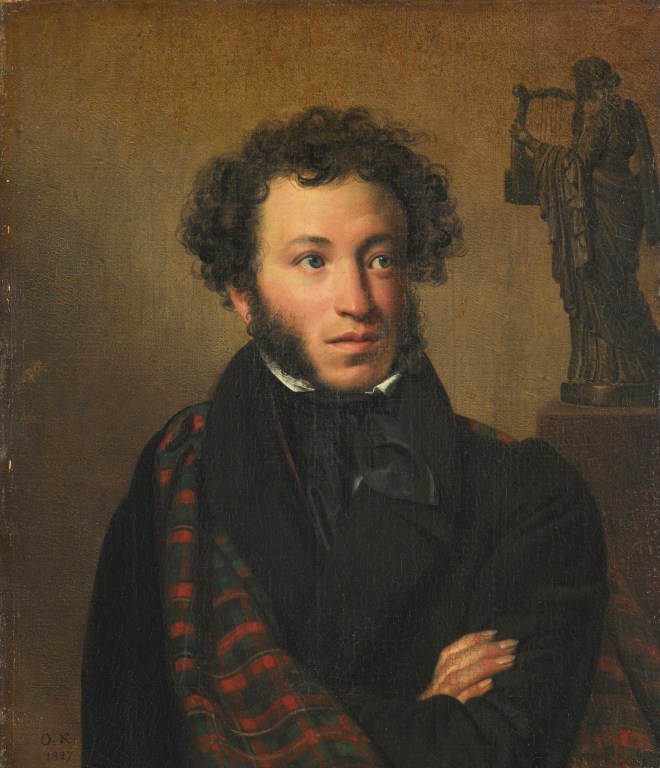
Alexander Pushkin
Alexander Pushkin
АнгелAnge
Traduit par Akirill.com
В дверях эдема ангел нежный
Главой поникшею сиял,
А демон мрачный и мятежный
Над адской бездною летал.
Aux portes de l’Eden, un ange doux,
brillait avec sa tête baissée
Et un démon sombre et rebelle
au-dessus de la crevasse infernale battait des ailes.
Дух отрицанья, дух сомненья
На духа чистого взирал
И жар невольный умиленья
Впервые смутно познавал.
L’esprit de dénégation, l’esprit de doute
en contemplait un autre – un esprit pur
et le feu de l’exaltation forcée
Pour la première fois il comprit vaguement.
“Прости,- он рек,- тебя я видел,
И ты недаром мне сиял:
Не все я в небе ненавидел,
Не все я в мире презирал”.
« Je suis désolé, je t’ai vu, énonça-t-il,
et ce n’est pas en vain que tu m’as envoyé de la lumière :
je n’ai pas tout détesté dans le ciel,
je n’ai pas méprisé tout dans le monde.
1827
А. Пушкин. Полное собрание сочинений. Москва, Библиотека “Огонек”, изд-во “Правда”, 1954.A. Pouchkine. 
Les oeuvres complètes. 
Moscou, Bibliothèque Ogonek, Maison d’édition Pravda, 1954.

J’espère que vous avez apprécié ce poème.

< < < 27 Mai 1819 / May 27, 1819 / 27 мая 1819 (Рус/Анг.) / (Рус/ Фра.)
Automne  (Ru/Fr) / Autumn (Ru/Eng) / Осень (Рус/Анг.) / (Рус/ Фра.) > > >

Si vous avez aimé cet article, abonnez-vous, mettez des likes, écrivez des commentaires !

Partager sur les réseaux sociaux

Découvrez nos derniers messages


© 2022 Akirill.com – All Rights Reserved
Poem “Angel” by Alexander Pushkin

Bilingual booksLire en FrançaisContact us
American LiteratureFrench LiteratureRussian Literature

< < < 27 Mai 1819 / May 27, 1819 / 27 мая 1819 (Рус/Анг.) / (Рус/ Фра.)
Automne  (Ru/Fr) / Autumn (Ru/Eng) / Осень (Рус/Анг.) / (Рус/ Фра.) > >

The poem “Angel” was written in 1827 by Alexander Pushkin who had a strong passion for many women. He met E. K. Vorontsova who reciprocates his courtship during his Southern exile. This punishment had been hard for him but love has a beneficial effect on the exile. Pushkin seems to be awakening again to life and activity. 

This poem was created after Pushkin had been apart from his beloved for already three years and cannot be considered the result of a sudden spiritual impulse. The poet had enough time to seriously reflect on his passion and all its consequences. 

Vorontsova helped Pushkin survive the bitterness of punishment and his spiritual rebirth. The poet, who already idolized women, sees in his beloved a real angel who saved him from the hellish abyss.  

Alexander Pushkin
Alexander Pushkin
АнгелAngel
Translated by Akirill.com
В дверях эдема ангел нежный
Главой поникшею сиял,
А демон мрачный и мятежный
Над адской бездною летал.
At the gates of Eden, a gentle angel,
shone with his softly drooped head,
and Demon, gloomy and resentful
over the hellish crevasse flapped.
Дух отрицанья, дух сомненья
На духа чистого взирал
И жар невольный умиленья
Впервые смутно познавал.
The spirit of qualm and negation
contemplated another one – of good,
and fire of the forced elation
first time he vaguely understood.
“Прости,- он рек,- тебя я видел,
И ты недаром мне сиял:
Не все я в небе ненавидел,
Не все я в мире презирал”.
“I’ve seen you,” he enunciated, –
“And not in vain you’ve sent me light:
Not all in heaven I have hated,
not all in world I have despised.”
1827
А. Пушкин. Полное собрание сочинений. Москва, Библиотека “Огонек”, изд-во “Правда”, 1954.A. Pushkin. The complete works. Moscow, Ogonek Library, Pravda Publishing House, 1954.

I hope you enjoyed this poem.

< < < 27 Mai 1819 / May 27, 1819 / 27 мая 1819 (Рус/Анг.) / (Рус/ Фра.)
Automne  (Ru/Fr) / Autumn (Ru/Eng) / Осень (Рус/Анг.) / (Рус/ Фра.) > >

If you liked this article, subscribe , put likes, write comments!
Share on social networks
Check out Our Latest Posts


© 2022 Akirill.com – All Rights Reserved

Discover the poem “Prophet” by Alexander Pushkin

Bilingual booksLire en FrançaisContact us
American LiteratureFrench LiteratureRussian Literature

To read the whole article and poem follow the links

“The Prophet” («Пророк») was written by Alexander Pushkin (Александр Пушкин) in 1826 and immediately gained wide popularity. This poem became central to Pushkin’s philosophical reflections, and a kind of program for action, a guide in life and work for many writers and followers of the great poet. The idea expressed in “The Prophet” gave a powerful impetus to many subsequent generations of poets.  … Continue reading

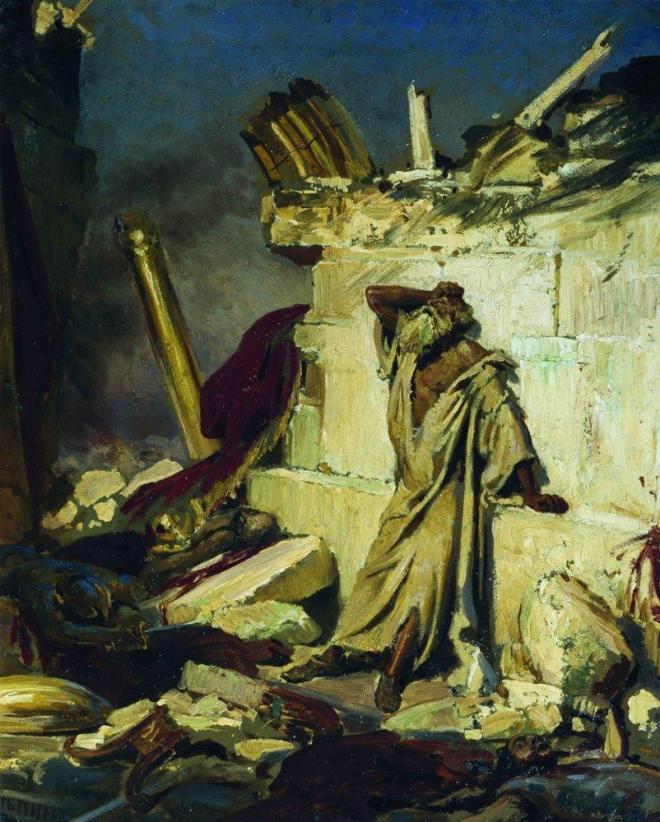
Painting “Cry of prophet Jeremiah on the Ruins of Jerusalem” (on a Bible subject) by Ilya Repin – 1870

«Пророк» Александра Пушкина“Prophet” by Alexander Pushkin
Духовной жаждою томим,
В пустыне мрачной я влачился, —
И шестикрылый серафим
На перепутье мне явился.
I dragged my flesh through desert gloom,
Tormented by the spirit’s yearning,
And saw a six-winged Seraph loom,
Upon the footpath’s barren turning.
Перстами легкими как сон
Моих зениц коснулся он.
Отверзлись вещие зеницы,
Как у испуганной орлицы.
And as a dream in slumber lies
So light this light his finger on my eyes.
My wizard eyes grew wide and wary;
An eagle’s startled from the eyrie
Читать далееContinue Reading
If you liked this article, subscribe , put likes, write comments!
Check out Our Latest Posts
Find us on Facebook or Twitter

© 2022 Akirill.com – All Rights Reserved

Facts and translation of I Remember a Wonderful Moment (Kern) by Alexander Pushkin

Lire en Français

< < < Je me souviens de la mer avant la tempête (Ru/Fr) / I remember the sea before the storm (Ru/Eng) / Я помню море пред грозою (Рус/Анг.) (Рус/ Фра.)
Ma Muse (Ru/Fr) / My Muse (Ru/Eng) / Муза (Рус/Анг.) / (Рус/ Фра.) > > >


“I remember a wonderful moment” is one of the most famous lyrical works of Alexander Pushkin who devoted many of his poems to women.

He wrote this poem in 1825, during his exile in Mikhailovsky after his second meeting with A. P. Kern. Their first meeting dated from 1819 and she had captured his imagination.

In just a few stanzas, Alexander Pushkin unfolds before our eyes a long history of his relationship with A. Kern, and his admiration of the woman.

Alexander Pushkin
Я помню чудное мгновенье (Керн) Александр Пушкин I Remember a Wonderful Moment (Kern) by Alexander Pushkin
Translated by Akirill.com
05/31/2022
К КернKern
Я помню чудное мгновенье;I remember the marvelous moment;
Передо мной явилась ты,You appeared before me,
Как мимолётное виденье,Like a fleeting vision,
Как гений чистой красотыLike a genius of pure beauty
В Томленьях грусти безнадёжной,In the languor of hopeless sadness,
В тревогах шумной суеты,In the anxieties of noisy bustle,
Звучал мне долго голос нежныйA gentle voice sounded to me for a long time
И снились милые черты.And of sweet features I dreamed.
Шли годы. Бурь порыв мятежныйYears passed. Storms rebellious, impulse
Рассеял прежние мечты,Scattered former dreams,
И я забыл твой голос нежный,And I forgot your gentle voice,
Твои небесные черты.Your heavenly features.
В глуши, во мраке заточеньяIn the wilderness, in the darkness of confinement
Тянулись тихо дни моиMy days dragged on quietly
Без божества, без вдохновенья,Without a deity, without inspiration,
Без слёз, без жизни, без любви.Without tears, without life, without love.
Душе настало пробужденье:The soul has awakened:
И вот опять явилась ты,And here again you appeared,
Как мимолётное виденье,Like a fleeting vision,
Как гений чистой красоты.Like a genius of pure beauty.
И сердце бьется в упоенье,And the heart beats in rapture,
И для него воскресли вновьAnd for him resurrected again
И божество, и вдохновенье,And the deity, and inspiration,
И жизнь, и слёзы, и любовь.And life, and tears, and love.

< < < Je me souviens de la mer avant la tempête (Ru/Fr) / I remember the sea before the storm (Ru/Eng) / Я помню море пред грозою (Рус/Анг.) (Рус/ Фра.)
Ma Muse (Ru/Fr) / My Muse (Ru/Eng) / Муза (Рус/Анг.) / (Рус/ Фра.) > > >


We put a lot of effort into the quality of the articles and translations, support us with a like and a subscription or sponsor us if you like them. We are also on Facebook and Twitter


© 2022 Akirill.com – All Rights Reserved

Winter morning by Alexander Pushkin

Lire en Français

< < < Matin d’automne / Autumn morning / Осеннее утро (Рус/Анг.) / (Рус/ Фра.)
Pourquoi suis-je fasciné par elle (Ru/Fr) / Why am I fascinated by her (Ru/Eng) / Зачем я ею очарован (Рус/Анг.) / (Рус/ Фра.) > > >


“Winter morning” by Alexander Pushkin is a poem that I really like, maybe because it’s the first one I learned in Russian

The poem “Winter Morning” by Alexander Pushkin was written in one of the most fruitful creative periods; during his exile in Mikhailovskoye


The poem “Winter Morning”, contains several important themes. The main and most obvious is the theme of love. With each verse, one feels the poet’s tenderness addressed to his beloved, his respectful attitude towards her.


Another theme is reflections on the birth of a new day that erases all previous sorrows and makes the world more beautiful and fun.


And, finally, the general idea of the whole work is the unity of man and nature in the general philosophical sense.

“Winter morning” text translated into English is under the Video

Зимнее утроWinter Morning
Мороз и солнце ; день чудесный!
Ещё ты дремлешь, друг прелестный —
Пора, красавица, проснись :
Открой сомкнуты негой взоры
Навстречу северной Авроры,
Звездою севера явись!
Frost and sun, the day is wondrous!
Still you slumber, lovely friend.
‘Tis time, O beauty, to awaken;
Open your eyes from blissful sleep,
Your gaze to meet the northern aurora.
Ah, you arise like the North Star!
Вечор, ты помнишь, вьюга злилась,
На мутном небе мгла носилась;
Луна, как бледное пятно,
Сквозь тучи мрачные ж`ёлтела,
И ты печальная сидела —
А нынче… погляди в окно:
Last night, remember, the storm scolded,
And darkness floated in the muddy sky,
The moon was like a pale spot
Through the dark clouds, gleaming yellow.
There you sat in melancholy,
But now … through the window, cast a look
Под голубыми небесами
Великолепными коврами,
Блестя на солнце, снег лежит;
Прозрачный лес один чернеет,
И ель сквозь иней зеленеет,
И речка подо льдом блестит.
Beneath the bluish heavens
Like a gorgeous carpet,
In the sun, the snow is glittering;
The forest is dusky and lonely,
And the spruce gleams green through the frost.
And under the ice, the river sparkles
Вся комната янтарным блеском
Озарена. Весёлым треском
Трещит затопленная печь.
Приятно думать у лежанки.
Но знаешь : не велеть ли в санки
Кобылку бурую запречь?
The whole room shines with amber light …
With a merry crackles,
The woods bursts and pops in the stove.
The sofa is so inviting,
But perhaps, why shouldn’t we order
A brown mare for our sleigh?
Скользя по утреннему снегу,
Друг милый, предадимся бегу
Нетерпеливого коня
И навестим поля пустые,
Леса, недавно столь густые,
И берег, милый для меня.
Gliding over the morning snow,
My friend, let’s surrender our trust
To the running, impatient steed.
We’ll visit the empty fields,
The woods, that used to be so thick,
And the shore, so dear to me,

< < < Matin d’automne / Autumn morning / Осеннее утро (Рус/Анг.) / (Рус/ Фра.)
Pourquoi suis-je fasciné par elle (Ru/Fr) / Why am I fascinated by her (Ru/Eng) / Зачем я ею очарован (Рус/Анг.) / (Рус/ Фра.) > > >

If you liked this article, don’t forget to like and share.
Subscribe to not miss anything

Our Latest Posts