Découvrez le tableau “Sirin et Alkonost – Oiseaux de Joie et de Tristesse” de Vasnetsov

Livres bilinguesRead in EnglishNous contacter
Littérature américaineLittérature françaiseLittérature russe

« Sirin et Alkonost » « Сирин и Алконост » de Viktor Mikhailovich Vasnetsov (Виктор Михайлович Васнецов) est une grande huile sur toile de 133 X 250 cm peinte en 1896. Ce n’est pas la peinture la plus populaire de l’artiste, mais sa symbolique est étonnante . “Sirin et Alkonost” est maintenant stocké dans la galerie nationale Tretiakov .

Viktor Vasnetsov a peint “Sirin et Alkonost – Oiseaux de Joie et de Tristesse”, avant les bouleversements révolutionnaires qui allaient se produire dans l’Empire russe semblant prévoir les changements qui se produiraient dans sa patrie. Sirin et Alkonost sont deux symboles inséparables, une paire d’opposés. Chagrin et joie, malheur et bonheur, noir et blanc… Dans ce tableau, Alkonost peut être vu comme symbolisant la victoire du bien sur le mal et, Sirin comme l’angoisse due aux changements.

Sirin et Alkonost sont des femmes-oiseaux mythiques similaires, comme des jumelles, mais en même temps, elles sont complètement différentes. Sirin est le messager noir de la tristesse, qui aspire à un paradis perdu, et Alkonost est le messager lumineux de la joie et du plaisir. Selon les croyances slaves, l’oiseau Sirin a volé dans le verger de pommiers, étant triste et en pleurs. Et dans l’après-midi, l’oiseau Alkonost a volé dans le même verger, se réjouissant et riant, ressentant la joie d’une récolte abondante. Alkonost a brossé la rosée vivante de ses ailes, conférant aux fruits des propriétés magiques et curatives.

Les branches avec des femmes-oiseaux assises dessus se trouvent de différents côtés du tronc d’un arbre. Sirin, qui est la personnification de l’effacement et de la tristesse, est du côté gauche, “mauvais”, selon les légendes slaves, mais c’est un côté qui est étroitement uni au cœur. Alkonost, qui incarne la béatitude, les rêves, et la joie est du bon « bon » côté.

Brève description de la peinture

Au premier plan des peintures se trouvent deux demoiselles oiseaux Sirin et Alkonost assises sur des branches qui proviennent du même arbre et au même niveau, mais sur les côtés opposés du tronc.

L’arrière-plan de l’image montre un ciel orange matinal contrastant avec les deux oiseaux-jeunes filles et l’arbre.

Sirin


Perché sur la gauche de l’arbre, le premier des oiseaux fantastiques, Sirin est représenté avec un visage, un cou et des épaules humains tandis que le reste de son corps ressemble à un oiseau. Son visage est pâle et ses yeux sont remplis de larmes. Elle a le plumage et les cheveux foncés. Ses ailes sont fermées de manière protectrice, comme si elles se cachaient de l’aube à venir. Elle est adornée d’une belle couronne d’or ornée d’animaux, de boucles d’oreilles dorées et d’un triple collier.

Alkonost

On peut voir qu’Alkonost représente la joie et le bonheur car elle a un plumage de couleur claire, seul le haut de ses ailes étant brun. En tant que «jumelle opposée», elle a un corps d’oiseau et des ailes avec un visage et une épaule humain. Son visage est heureux et on dirait qu’elle chante. Elle porte une couronne d’or, des boucles d’oreilles et deux colliers. Ses ailes sont ouvertes, mais comme sa «jumelle opposée», elle a de puissantes griffes.

Dans le tableau, Sirin, aspirant au passé, et Alkonost, ouverte à l’avenir, sont fusionnés en un tout unique et indivisible. Elles, comme des compagnons inoubliables, accompagnent les gens tout au long de leur existence, modérant les grandes joies et soulageant les chagrins lourds. Ainsi, selon le maître, une grande harmonie de vie se forme.

J’espère que vous avez apprécié cet article, vous pouvez également consulter d’autres peintures de Viktor Mikhailovich Vasnetsov.


Si vous avez aimé cet article, abonnez-vous, mettez des likes, écrivez des commentaires !

Partager sur les réseaux sociaux

Découvrez nos derniers messages

Discover the painting “Sirin and Alkonost – Birds of Sorrow and Joy” from Vasnetsov

Bilingual booksLire en FrançaisContact us
American LiteratureFrench LiteratureRussian Literature

“Sirin and Alkonost” «Сирин и Алконост» by Viktor Mikhailovich Vasnetsov (Виктор Михайлович Васнецов) is a large oil on canvas of 133 X 250 cm painted in 1896. It is not the artist’s most popular painting, but its symbolism is amazing. “Sirin and Alkonost” is now stored in the State Tretyakov Gallery.

Viktor Vasnetsov painted “Sirin and Alkonost – Birds of Sorrow and Joy”, before the revolutionary upheavals that were soon to happen in the Russian Empire and seemed to foresee the changes that would take place in his homeland. Sirin and Alkonost are two inseparable symbols, a pair of opposites. Grief and joy, misfortune and happiness, black and white… In this painting, Alkonost can be seen as symbolizing the victory of good over evil and, Sirin as the anxiety due to changes.

Sirin and Alkonost are similar mythical bird-maidens, like twins, but at the same time, they are completely different. Sirin is the dark messenger of sadness, who is longing for a lost paradise, and Alkonost is the bright messenger of joy and pleasure. According to Slavic beliefs,  the Sirin bird flies into the apple orchard, being sad and crying. And in the afternoon, the Alkonost bird flies to the same orchard,  rejoicing and laughing, feeling the joy of a bountiful harvest. Alkonost brushes the live dew from its wings endowing the fruits with magical, healing properties.

The branches with bird-maidens sitting on them are on different sides of a tree trunk. Sirin, who is the personification of fading and sadness, is on the left, “bad” side, according to Slavic legends, but it is a side that is closely united with the heart. Alkonost, who embodies bliss, dreams, joy is on the right “good” side.
Short description of the painting

In the forefront of the paintings are two bird-maidens Sirin and Alkonost seated on branches which are from the same tree and at the same level, but on opposite sides of the trunk.

The background of the painting shows a morning orange sky contrasting with the two bird-maidens and tree.

Sirin


Perched on the left of the tree, the first of the fantastic birds, Sirin is depicted with a human face, neck and shoulders while the rest of her body resembles a bird. Her face is pale and her eyes are filled with tears. She has dark plumage and hair. Her wings are closed in a protective manner, as if hiding from the coming dawn. She is adorned with a beautiful golden crown decorated with animals, golden earrings and a triple necklace.

Alkonost

We can see that Alkonost represents joy and happiness because she has a light colored plumage, with only the top of her wings being brown. As her “opposite twin” she has a bird body and wings with human face and shoulder. Her face is happy and it looks like she is singing. She is wearing a golden crown, earrings and two necklaces Her wings are opened, but like her “opposite twin” she has powerful claws.

In the painting,  Sirin, aspiring to the past, and Alkonost, open to the future, are merged into a single and indivisible whole. They, like unforgettable companions, accompany people throughout their existence, moderating great joy and alleviating heavy grief. Thus, according to the master, a great harmony of life is formed.

I hope you enjoyed this article, you can also check out other paintings by Viktor Mikhailovich Vasnetsov.

If you liked this article, subscribe , put likes, write comments!
Share on social networks
Check out Our Latest Posts

Découvrez le tableau “Chasseurs au repos” de Vasily Grigoryevich Perov

Livres bilinguesRead in EnglishNous contacter
Littérature américaineLittérature françaiseLittérature russe

“Chasseurs au repos” a été peint par l’artiste russe Vasily Grigoryevich Perov en 1871. Il s’agit d’une huile sur toile de 119 X 183 cm qui se trouve à la Galerie Tretiakov, à Moscou. Si vous faites attention à la peinture, vous remarquerez que Perov a intentionnellement dessiné des absurdités dans les objets comme les proies, l’emplacement des fusils et le cor qui a été fait pour souligner l’atmosphère de la fiction de chasse.

Cette image est liée à la période tardive du travail de Perov, et si dans la première moitié de sa période de créativité il dépeint des images tristes de la vie populaire, dans la seconde moitié de son travail, Perov accorde plus d’attention aux scènes quotidiennes de la vie de les gens ordinaires.

Il existe 3 versions de ce tableau. En 1877, l’artiste a peint une copie du tableau avec une intrigue plus schématique, plus simple, et une palette de couleurs plus simple. Ce deuxième tableau est conservé au Musée russe et la troisième version du tableau se trouve au Musée d’art. VV Vereshchagin à Nikolaev.
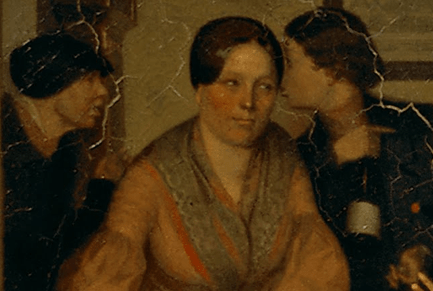
Vasily Grigorievich Perov était un chasseur passionné, c’était donc un sujet qui lui était familier. Déjà, en 1870, Perov avait peint la toile “Attrape-oiseaux”, pour laquelle il avait reçu le titre de professeur, ainsi qu’un poste d’enseignant à l’École de peinture, de sculpture et d’architecture de Moscou. 

Au cours des années 70, l’artiste a également crée plusieurs autres tableaux consacrés au « thème de la chasse » : « Pêcheur » (1871), « Botaniste » (1874), « Pigeon » (1874), « Pêche » (1878). 


“Chasseurs au repos” est basé sur certains amis de Perov Moscou. Il a dépeint DP Kuvshinnikov, un médecin bien connu à Moscou et un grand amateur de chasse au fusil pour l’image du narrateur. Le docteur VV Bessonov est devenu le prototype du chasseur sceptique et pour l’image d’un jeune chasseur, Perov a dépeint NM Nagornov, 26 ans.

Description de la peinture

“Chasseurs au repos” est une combinaison d’une peinture de genre quotidienne, d’un paysage et d’une nature morte dont les objets de chasse et de gibier.

Toute cette scène se déroule dans un paysage plutôt sombre. Le ciel est nuageux, les oiseaux migrateurs s’en vont, et l’herbe est déjà fanée, tout parle d’automne, d’endormissement, d’anticipation de l’hiver et apporte une nuance inquiétante à son contenu comique. Ce paysage sombre est utilisé pour concentrer l’attention du spectateur sur les personnages centraux de l’image.

La lumière de l’image est concentrée sur les visages et les mains des personnages. C’est une technique ancienne, de l’époque de la Renaissance, qui permet à l’artiste de révéler plus pleinement le monde intérieur de ses modèles. 

"Hunters at Rest" part hunter by Perov

Contrairement à la nature triste au centre de la composition, l’artiste a placé trois chasseurs d’origines sociales différentes et d’excellente humeur. Tous unis par la chasse, on les voit se parler. Ils sont au repos après une chasse fructueuse comme en témoigne la peinture d’une carcasse de lièvre et d’une tétras des bois. Sur un chiffon étalé, il y a une miche de pain, une fiole d’alcool fort, des tasses.

L’homme aux moustaches grises sur la gauche est un chasseur âgé et expérimenté, apparemment l’un des nobles appauvris, qui parle avec enthousiasme et passion de ses “exploits” de chasse. Il semble gesticuler et presque sauter sur place, alors qu’il raconte son histoire avec passion, essayant d’appuyer son discours avec des mimiques impressionnantes pour faire croire aux jeunes qui ont peu vu.

Le second, plus jeune que le conteur, ressemble à un paysan. Il est allongé sur l’herbe fanée face au spectateur, appuyé sur le sol d’une main, et se frottant la tempe de l’autre, lissant ses cheveux ébouriffés arrachés sous son chapeau cabossé. Il écoute avec un intérêt visible l’orateur douloureusement éloquent avec un sourire narquois, pensant, nous avons entendu parler de tels miracles, mens davantage. 

Le troisième, à droite, un jeune novice crédule bien vêtu, absorbe avidement chaque mot de son camarade expérimenté. Il se figea, emporté par la fable passionnante et croyant innocemment son camarade plus âgé, oubliant même d’allumer la cigarette qu’il tient dans sa main droite.

Les chasseurs notent des absurdités dans certains objets qui auraient été dessinés intentionnellement pour souligner l’atmosphère de la fiction de chasse. Par exemple, le cor est utilisé lorsque les chiens conduisent le gibier, et est inutile pour la chasse à la carabine et avec un seul chien. Les fusils reposent négligemment sur le sol et les proies ne peut pas être au même endroit car le lièvre vit dans une zone dégagée comme dans les champs ou la steppe et les  tétras des bois sont des habitants des forêts. 

La simplicité de la toile cache le contenu philosophique profond. Les héros d’âges différents symbolisent les cycles de la vie, lorsque la jeunesse naïve apprend le monde avec impatience, puis vient la maturité et l’expérience qui a beaucoup vu et est sceptique quant à la vie. En dernier, la maturité est remplacée par la vieillesse qui sait trouver du positif partout et se complaît souvent dans des souvenirs tombant sans cesse dans l’idéalisation du passé.

Le grand public est tombé sous le charme de la toile mais les critiques étaient mitigées. Donc, si Stasov a beaucoup apprécié l’image et l’a comparée aux histoires de chasse de Tourgueniev, alors Saltykov-Shchedrin l’a critiquée. Pour lui les visages des personnages semblaient trop simulés, cependant une telle technique permet de décrire plus clairement le caractère et le monde intérieur des personnages, et de révéler la composante symbolique de l’image.

Fiodor Mikhaïlovitch Dostoïevski a également mentionné le tableau dans son journal:

L’image est connue de tous depuis longtemps: «Chasseurs au repos»; l’un ment ardemment et délibérément, l’autre écoute et croit de toutes ses forces, et le troisième ne croit rien, se couche là et rit… Quel charme ! <…> On entend presque et on sait de quoi il parle, on connaît toute la tournure de ses mensonges, son style, ses sentiments.- FM Dostoïevski. Journal de l’écrivain

Un grand nombre de reproductions et de copies de la peinture ont été publiées à l’époque soviétique. Il y avait des légendes sur trois tableaux peints par Perov, mais le troisième tableau n’a été retrouvé qu’en 1984. 

J’espère que vous avez apprécié ce tableau autant que moi

Si vous avez aimé cet article, abonnez-vous, mettez des likes, écrivez des commentaires !
Partager sur les réseaux sociaux
Découvrez nos derniers messages

Discover the painting “Hunters at Rest” by Vasily Grigoryevich Perov

Bilingual booksLire en FrançaisContact us
American LiteratureFrench LiteratureRussian Literature

“Hunters at Rest” was painted by the Russian artist Vasily Grigoryevich Perov in 1871. It is a 119 X 183 cm oil on canvas which is at the Tretyakov Gallery, in Moscow. If you pay attention to the painting you will notice that Perov intentionally drew some absurdities in the objects like the preys, the place of the riffles, and the horn which was done to emphasize the atmosphere of hunting fiction.

This picture is related to the late period of Perov’s work, and if in the first half of his period of creativity he depicted sad pictures of folk life, during the second half of his work, Perov paid more attention to everyday scenes from the life of ordinary people.

There are 3 versions of this painting. In 1877, the artist painted a copy of the painting with a plot more schematic, simpler, and a simpler color scheme. This second painting is kept in the Russian Museum, and the third version of the picture is in the Art Museum. V. V. Vereshchagin in Nikolaev.

Vasily Grigorievich Perov was a passionate hunter, so this was a topic familiar to him. Already, in 1870 Perov painted the canvas “Bird-catcher”, for which he received the title of professor, as well as a teacher’s position at the Moscow School of Painting, Sculpture and Architecture. 

During the 70s, the artist also creates several more paintings dedicated to the “hunting theme”: “Fisherman” ( 1871 ), “Botanist” ( 1874 ), “Pigeon” ( 1874 ), “Fishing” ( 1878 ). 


“Hunters at Rest” is based some of Perov Moscow friends. He portrayed D. P. Kuvshinnikov, a well-known doctor in Moscow and a great lover of rifle hunting for the image of the narrator. The doctor V. V. Bessonov became the prototype of the skeptic hunter and for the image of a young hunter, Perov portrayed the 26-year-old N. M. Nagornov.

Description of the painting

“Hunters at Rest” is a combination of a genre everyday painting, a landscape , and a still life of hunting items and game.

This whole scene takes place against a rather gloomy landscape. The sky is cloudy, migratory birds are flying away, and the grass already faded, everything speaks of autumn, falling asleep, anticipation of winter and brings a disturbing undertone to its comic content. This gloomy landscape is used to concentrate the viewer’s attention on the central figures of the picture.

The light in the picture is concentrated on the faces and hands of the characters. It is an old technique, from the time of the Renaissance, which allows the artist to more fully reveal the inner world of his models. 

"Hunters at Rest" part hunter by Perov

In contrast to the sad nature in the center of the composition, the artist placed three hunters of different social origins and in excellent mood. All of them united by hunting, are seen talking to each other. They are at rest after a successful hunt as evidenced by the painting of a carcass of a hare and a black grouse. On a spread rag there is a loaf of bread, a flask of strong spirits, cups.

The gray-whiskered man on the left is an elderly, experienced hunter, apparently one of the impoverished nobles, who talks with enthusiasm and passion about his hunting “exploits”. He seems to be gesticulating and almost jumping on the spot, as he passionately tells his story, trying to support his speech with impressive facial expressions to make young people who have seen little believe him.

The second, younger than the storyteller, looks like a peasant. He lies on the faded grass facing the viewer, leaning on the ground with one hand, and rubbing his temple with the other, smoothing his disheveled hair knocked out from under his battered hat. He listens with visible interest to the painfully eloquent speaker with a sly smirk, thinking, we heard about such miracles, lie more. 

The third, on the right, a gullible young novice neatly dressed, greedily absorbs every word of his experienced comrade. He froze, carried away by the exciting fable and innocently believing his older comrade, even forgetting to light the cigarette that he is holding in his right hand.

Hunters note absurdities in some objects which are believed to have been drawn intentionally to emphasize the atmosphere of hunting fiction. As exemple, the horn is used when dogs drive the game, and is useless for rifle hunting and with only one dog.  The riffles are carelessly laying on the ground, and the prey cannot be in the same place since the hare lives in an open area like in fields, or steppe, and hazel grouses are forest dwellers. 

The simplicity of the canvas hides the deep philosophical content . The heroes of different ages symbolize life cycles, when naive youth eagerly learns the world, then comes maturity and experience which has seen a lot and is skeptical about life. Last maturity is replaced by old age which knows how to find positive everywhere and often indulges in memories constantly falling into the idealization of the past.


The general public fell in love with the canvas but the critics were mixed. So, if Stasov highly appreciated the picture and compared it with Turgenev ‘s hunting stories , then Saltykov-Shchedrin criticized it. For him the faces of the characters seemed to be overly simulated, however such a technique allows to more clearly describe the character and inner world of the characters, and to reveal the symbolic component of the picture.

Fyodor Mikhailovich Dostoevsky also mentioned the painting in his diaries:

The picture has long been known to everyone: “Hunters at rest”; one lies ardently and deliberately, the other listens and believes with all his might, and the third does not believe anything, lay down right there and laughs … What a charm! <…> We almost hear and know what he is talking about, we know the whole turn of his lies, his style, his feelings.- F. M. Dostoevsky. Writer’s diary

A huge number of reproductions and copies of the painting were released in Soviet times. There were legends about three paintings painted by Perov, but the third painting was found only in 1984. 

I hope you enjoyed this painting as much as I did

If you liked this article, subscribe , put likes, write comments!
Share on social networks
Check out Our Latest Posts

Découvrez le tableau « Cloches du soir » d’Isaac Levitan

Livres bilinguesRead in EnglishNous contacter
Littérature américaineLittérature françaiseLittérature russe

« Cloches du soir » (Вечерний звон) est un tableau du peintre russe Isaac Levitan (Исаак Ильич Левитан), qui est un maître reconnu du paysage lyrique. Il s’agit d’une belle huile sur toile de 87 X 107,6 cm qui a été peinte en 1892 et qui se trouve à la Galerie nationale Tretiakov depuis 1918. Ce tableau est aussi appelé « Monastère pour les fêtes » (Монастырь под праздник). “Cloches du soir” est considéré par certains chercheurs comme une variante du tableau antérieur représentant un monastère similaire et appelé “Couvent tranquil” “Тихая обитель” (1890).

Le critique d’art Vladimir Petrov a déclaré que malgré le motif similaire au “Couvent tranquil”, le tableau “Cloches du soir” “est néanmoins dépourvu de secondarité et a son propre charme unique, son propre” accord “”

Selon Sofya Prorokova, Levitan chantait souvent la chanson “Cloches du soir” du compositeur Alexander Alyabyev et cela pourrait être la raison du titre du tableau. Une autre version donnée, est que Levitan aurait pu choisir ce nom sous l’influence du recueil de poèmes de Yakov Polonsky “Cloches du soir”, publié en 1890.

« Cloches du soir » d’Isaac Levitan

Devant le spectateur se trouve une large rivière qui semble couper l’image en diagonale. L’eau est calme. Des nuages ​​roses du soir, peints dans des teintes d’or rose par le soleil couchant, flottent solennellement dans le ciel et se reflètent dans l’eau.

« Cloches du soir » d’Isaac Levitan partie monastère

Sur la rive opposée, envahie par la forêt, il y a un monastère avec un haut clocher qui s’élève au-dessus de la forêt. Il désigne la verticale métaphysique de la vie écrite par l’artiste : de la terre au ciel, du péché à la sainteté.

Les derniers rayons de soleil illuminent les murs blancs comme neige de son temple et de son clocher, les faisant paraître dorés. Grâce à leur reflet sur la surface de la rivière, l’accent mis sur les bâtiments du temple est rendu encore plus lumineux. 

« Cloches du soir » d’Isaac Levitan partie reflection

Habituellement, les gens sont rares dans les peintures de Levitan, mais dans ce travail, afin d’améliorer ses caractéristiques réalistes, l’artiste a représenté un homme au croisement sur la rive proche dans un bateau, des gens sur un ferry au centre de la rivière, se dépêchant au service du soir, et deux moines les rencontrant.


« Cloches du soir » d’Isaac Levitan partie personnes

Description du tableau sur le site de la galerie Tretiakov :

« Les plans spatiaux du tableau sont présentés comme trois mondes différents. Le plus proche est un haut talus couvert d’ombre, d’où l’artiste regarde autour de lui. De l’autre côté du fleuve, naissant d’un jeu de mirages de reflets, dans les rayons du soleil couchant, une vision merveilleuse apparaît – un monastère. Enfin, le regard s’élève vers le ciel en suivant les nuages ​​qui se fondent dans une douce lueur dorée. L’artiste transmet le désir de l’âme à ce monde enchanté de lumières et de sons qui disparaissent dans le lointain. Interrompant le mouvement vers le ciel avec des rythmes transversaux – la ligne du rivage, des ponts, un bateau, il crée le sentiment d’une image insaisissable. Dans cette distance séduisante, on ne peut que s’efforcer sans fin et langoureusement dans les rêves.

J’espère que vous avez apprécié ce tableau autant que moi.

Si vous avez aimé cet article, abonnez-vous, mettez des likes, écrivez des commentaires !
Partager sur les réseaux sociaux
Découvrez nos derniers messages

Discover the painting “Evening Bells” by Isaac Levitan

Bilingual booksLire en FrançaisContact us
American LiteratureFrench LiteratureRussian Literature

“Evening Bells” (Вечерний звон) is a painting by the Russian painter Isaac Levitan (Исаак Ильич Левитан), who is a recognized master of the lyrical landscape. It is a beautiful oil on canvas of 87 X 107.6 cm which was painted in 1892 and has been in the State Tretyakov Gallery since 1918. This painting is also called “Monastery for the holidays” (Монастырь под праздник). “Evening Bells” is considered by some researchers as a variant of the earlier painting depicting a similar monastery and called ” Quiet Abode ” «Тихая обитель»  (1890).

Art critic Vladimir Petrov said that despite the motif similar to the “Quiet Convent”, the painting “Evening Bells” “nevertheless is devoid of secondariness, and has its own, unique charm, its own” chord “”

According to Sofya Prorokova, Levitan often sand the song “Evening Bells” by composer Alexander Alyabyev and it might be the reason of the title of the painting. Another version given, is that Levitan could have chosen this name under the influence of Yakov Polonsky ‘s collection of poems “Evening Bells”, published in 1890.

“Evening Bells” by Isaac Levitan

In front of the viewer is a wide river which seems to cut the picture diagonally. The water is calm. Pink evening clouds painted in rose-gold hues by the setting sun, float solemnly in the sky and are reflected in the water.

“Evening Bells” by Isaac Levitan part monastery

On the opposite bank which is overgrown with forest, there is a monastery with a high bell tower soaring above the forest. It denotes the metaphysical vertical of life written by the artist: from earth to heaven, from sinfulness to holiness.

The last rays of sun brightly light the snow-white walls of his temple and bell tower, making them seem golden. Thanks to their reflection in the surface of the river, the emphasis on temple buildings is made even brighter. 

“Evening Bells” by Isaac Levitan part reflection

Usually people are a rarity in Levitan’s paintings, but in this work, in order to enhance its realistic features, the artist depicted a man at the crossing on the near bank in a boat, people on a ferry in the center of the river, hurrying to the evening service, and two monks meeting them.


“Evening Bells” by Isaac Levitan part people

Description of the painting on the website of the Tretyakov Gallery:

“The spatial plans of the painting are presented as three different worlds. The near one is a high bank covered with shadow, from which the artist looks around. Across the river, growing out of a mirage game of reflections, in the rays of the setting sun, a wonderful vision appears – a monastery. Finally, the gaze rises into the sky following the clouds melting in a soft golden glow. The artist conveys the desire of the soul to this enchanted world of light and sounds disappearing into the distance. Interrupting the movement towards the sky with transverse rhythms – the line of the shore, bridges, a boat, he creates a feeling of an elusive image. In this alluring distance, one can only endlessly , languidly strive in dreams .

I hope you enjoyed this painting as much as I did.

If you liked this article, subscribe , put likes, write comments!
Share on social networks
Check out Our Latest Posts

Découvrez le tableau “Troïka” de Vasily Perov

Livres bilinguesRead in EnglishNous contacter
Littérature américaineLittérature françaiseLittérature russe

“Troïka”, qui est la plus grande peinture de genre de Perov et probablement l’une des plus émouvantes est devenue l’une des peintures les plus célèbres et les plus dramatiques de l’artiste. Il s’agit d’une huile sur toile de 123,5 × 167,5 cm qui a été peinte en 1866. Cette œuvre exceptionnelle se trouve actuellement à Moscou à la Galerie nationale Tretiakov.

La « Troïka (Тройка) » aussi appelée (« Apprentis porteurs d’eau ») touche à une question sociale importante qui est le problème du travail des enfants pendant une période difficile pour la Russie. Après l’abolition du servage, la situation ne s’est pas immédiatement améliorée et les gens ont vécu dans la pauvreté. L’inégalité était également importante. Vasily Perov (Василий Перов) a reçu le titre d’académicien de la peinture pour ce travail. 

"Troika" by Vasily Perov

“Troïka” de Vasily Perov 1866

Dans les premières esquisses de ce tableau, telles que conçues par l’auteur, les visages des enfants étaient censés être non pas enfantins mais émaciés et extrêmement douloureux à regarder. Plus tard, l’artiste a abandonné son idée originale et leurs visages sont devenus jolis et spiritualisés, mais avec des traces de désespoir total.

"Troika" sketch 1865 by Vasily Perov

Esquisse « Troïka » 1865 par Vasily Perov

Perov a longtemps cherché un héros convenable, la plupart de l’œuvre était déjà peinte mais il n’a pas pu trouver la figure centrale de l’œuvre. Heureusement, il a rencontré une paysanne avec son fils dans la rue et a réussi à persuader la femme de lui permettre de peindre un portrait de son fils. Le garçon appelé Vasya était le dernier espoir et la joie de la veuve qui avait enterré ses autres enfants. Trois ans plus tard, la pauvre femme est venue chez l’artiste, et il a eu de la peine à reconnaitre la mère de Vasya. 

Elle a dit que son fils était tombé malade et était mort de la variole et a demandé à acheter le tableau représentant son fils de Perov. 

L’artiste a expliqué que le tableau était vendu depuis longtemps mais il a emmené la pauvre femme à la galerie, où elle est tombée à genoux devant le tableau et a commencé à prier. En voyant cette scène, Perov a été tellement touché qu’il a décidé de peindre un portrait de son fils pour la femme.

Un an plus tard, la femme a reçu un portrait de son fils dans un cadre doré, et quelques mois plus tard, Perov a reçu une lettre de réponse avec des mots de sincère gratitude.

Help the site stay free, buy us a cup of coffeeAidez-nous à maintenir le site gratuit en nous offrant une tasse de café

Description de la peinture

Vasily Perov a utilisé des tons gris-brun sombres. Le seul point lumineux de la photo est la jupe bleu-violet de la fille. Les tons traduisent la tragédie de la scène, tandis que l’atmosphère est aggravée par la rue sombre et déserte de la ville.

"Troika" part birds by Vasily Perov

“Troïka” partie oiseaux par Vasily Perov

L’image représente un petit matin qui peut être vu avec le vol d’oiseaux se précipitant de la ville vers les champs. Il fait encore sombre, il commence à peine à faire jour et il y a un blizzard très froid.

"Troika" part barrel by Vasily Perov

“Troika” part barrel by Vasily Perov

On peut voir la pente du boulevard Rozhdestvensky et les murs du couvent de la Mère de Dieu-Rozhdestvensky qui sont devenus l’arrière-plan de l’image. 

Au centre se trouvent trois trois enfants épuisés qui, comme en équipe, tirent un traîneau chargé d’un énorme et lourd tonneau en bois. Il est rempli d’eau jusqu’en haut et recouvert d’une sorte de toile de jute. L’eau qui coule gèle avec des glaçons à la surface du baril, ce qui montre une fois de plus à quel point il doit faire froid. 

À côté du traîneau se trouve un seau en bois qui semble très lourd, et avec lequel les enfants ont probablement puisé de l’eau dans un trou de glace. Tout montre que le tonneau est très lourd, chaque pas est fait avec beaucoup de difficulté.

"Troika" part children by Vasily Perov

“Troïka” partie enfants de Vasily Perov

 Un vent glacial souffle sur le visage des trois enfants vêtus de vêtements très modestes, voire pauvres. Ils portent de vieux manteaux et des bottes. Ils ont des casquettes sur la tête qui sont très probablement destinées à l’automne et non à l’hiver. Ils sont très petits, le plus âgé d’entre eux n’a probablement que 12, 13 ans. Il est le chef du groupe, il est clair qu’il assume la charge principale de la fille qui a environ 10 ans et tire de toutes ses forces. Le garçon de gauche est le plus jeune, pas plus de 8 ou 9 ans, mais il tire la sangle aussi fort qu’il le peut. Un tel travail n’est pas du tout pour de si jeunes enfants et leurs visages sont pleins de souffrance et de désespoir.

"Troika" part man by Vasily Perov

“Troïka” partie homme par Vasily Perov

Derrière le baril, nous voyons un adulte maigre qui les aide à porter le fardeau. Il est aussi habillé modestement. On voit que son quotidien n’en est pas moins difficile.

"Troika" part dog by Vasily Perov

«Troïka» en partie chien par Vasily Perov

Le chariot est accompagné d’un chien courant à droite devant les enfants. 

J’espère que vous avez apprécié ce tableau autant que moi.

Si cet article vous a plu, abonnez-vous, mettez des likes, écrivez des commentaires !
Partager sur les réseaux sociaux
Découvrez nos derniers messages

Discover the painting “Troika” by Vasily Perov

Bilingual booksLire en FrançaisContact us
American LiteratureFrench LiteratureRussian Literature

“Troika”, which is Perov ‘s largest genre painting and probably one of the most emotional became one of the artist’s most famous and dramatic paintings. It is an oil on canvas of 123,5 × 167,5 cm which was painted in 1866. This outstanding work is presently in Moscow at the State Tretyakov Gallery.

“Troika (Тройка)” also called (“Apprentices Carrying Water”) touches on an important social issue which is the problem of child labor during a difficult period for Russia. After the abolition of serfdom the situation did not immediately improve, and people lived in poverty. Inequality was also important. Vasily Perov (Василий Перов) was awarded the title of academician of painting for this work. 

"Troika" by Vasily Perov

“Troika” by Vasily Perov 1866

In the initial sketches for this painting, as conceived by the author, children’s faces were supposed to be not childishly but emaciated and extremely painful to look at. Later the artist abandoned his original idea and their faces became pretty and spiritualized, but with traces of complete hopelessness.

"Troika" sketch 1865 by Vasily Perov

“Troika” sketch 1865 by Vasily Perov

Perov looked for a suitable hero for a long time, most of the work had already been painted but he could not find the central figure of the work. Fortunately, he met a peasant woman with her son on the street and managed to persuade the woman to allow her to paint a portrait of her son, The boy called Vasya was the last hope and joy of the widow who had buried her other children. Three years later, the poor woman came to the artist, and he hardly recognized Vasya’s mother. 

She said that her son fell ill and died of smallpox, and asked to buy the painting depicting her son from Perov. 

The artist explained that the painting had long been sold but he took the poor woman to the gallery, where she fell on her knees in front of the painting and began to pray. Seeing this scene, Perov was so touched that he decided to paint a portrait of her son for the woman.

A year later, the woman received a portrait of her son in a gilded frame, and a few months later Perov received a response letter with words of sincere gratitude.

Help the site stay free, buy us a cup of coffeeAidez-nous à maintenir le site gratuit en nous offrant une tasse de café

Description of the painting

Vasily Perov used gloomy gray-brown tones. The only bright spot in the picture is the blue-violet skirt of the girl. The tones convey the tragedy of the scene, while the atmosphere is aggravated by the gloomy deserted street of the city.

"Troika" part birds by Vasily Perov

“Troika” part birds by Vasily Perov

The picture depicts an early morning which can be seen with the flock of birds rushing from the city to the fields. It’s still dark, just getting light and there is a very cold, blizzard.

"Troika" part barrel by Vasily Perov

“Troika” part barrel by Vasily Perov

We can see the slope of Rozhdestvensky Boulevard, and the walls of the Mother of God-Rozhdestvensky Convent which became the background of the picture.

In the center there is three three exhausted children, who as if in a team, are pulling a sleigh loaded with a huge, heavy, wooden barrel. It is filled to the top with water, and covered with some kind of sackcloth. The pouring water freezes with icicles on the surface of the barrel, which once again makes it clear how cold it must be. 

Next to the sleigh lies a wooden bucket looking very heavy, and with which the children probably drew water from an ice hole. Everything shows that the barrel is very heavy, each step is taken with great difficulty.

"Troika" part children by Vasily Perov

“Troika” part children by Vasily Perov

 An icy wind blows in the face of the three children who are dressed in very modest, even poor clothes. They wear old caftans and boots. They have caps on their heads which are most likely intended for autumn and not for winter. They are very small, the oldest of them is probably only 12, 13 years old. He is the leader of the group, it is clear that he takes on the main load of the girl who is about 10 and pulls with all her might. The boy on the left is the youngest, no more than 8 or 9 years old, but he pulls the strap as hard as he can. Such work is not at all for such young children and their faces are full of suffering, and hopelessness.

"Troika" part man by Vasily Perov

“Troika” part man by Vasily Perov

Behind the barrel we see a thin built adult helping them to carry the burden. He is also dressed modestly. It can be seen that his everyday life is no less difficult.

"Troika" part dog by Vasily Perov

“Troika” part dog by Vasily Perov

The wagon is accompanied by a dog running on the right in front of the children. 

I hope you enjoyed this painting as much as I did.

If you liked this article, subscribe , put likes, write comments!
Share on social networks
Check out Our Latest Posts

Découvrez « Nuit au clair de lune sur le Dniepr » d’Arkhip Kuindzhi

Livres bilinguesRead in EnglishNous contacter
Littérature américaineLittérature françaiseLittérature russe

Help the site stay free, buy us a cup of coffeeAidez-nous à maintenir le site gratuit en nous offrant une tasse de café

« Nuit au clair de lune sur le Dniepr » (Лунная ночь на Днепре) est considérée comme l’œuvre la plus célèbre d’Arkhip Kuindzhi (Архип Куинджи). C’est un paysage représentant une large rivière par une nuit d’été au clair de lune. Il s’agit d’une huile sur toile de 105X146 cm peinte en 1880 et conservée au Musée d’État Russe de Saint-Pétersbourg.

Dans « Nuit au clair de lune sur le Dniepr », l’espace de l’image “est organisé par un flux de lumière pénétrant dans les profondeurs de l’image”. ce qui était caractéristique du romantisme et pouvait être considéré comme une rupture avec les principes du classicisme et du réalisme . 

"Moonlight Night on the Dnieper" by Arkhip Kuindzhi

“Nuit au clair de lune sur le Dniepr” d’Arkhip Kuindzhi

Alors qu’il travaillait sur le tableau « Nuit au clair de lune sur le Dniepr », Kuindzhi a invité des amis et des connaissances dans son atelier afin de tester la force de l’influence de la toile sur eux.

Ivan Turgenev a été l’un des premiers à voir le nouveau tableau de Kuindzhi et, selon Yakov Polonsky, il était ravi. Le poète Yakov Polonsky lui-même a écrit: «Dans un cadre doré ou à travers une fenêtre ouverte, nous avons vu ce mois-ci, ces nuages, cette distance sombre, ces« lumières tremblantes de villages tristes »et ces jeux de lumière, ce mois de reflet argenté dans les jets du Dniepr, enveloppant le lointain, cette nuit poétique, calme, majestueuse »

En octobre-novembre 1880, pour la première fois dans l’histoire de l’art russe, un seul tableau a été présenté à l’exposition. Ce tableau était “Nuit au clair de lune sur le Dniepr” qui a été exposé dans une pièce semi-obscure, dont les fenêtres étaient drapées, dans le bâtiment de la Société pour l’encouragement des artistes à Saint-Pétersbourg. Beaucoup de gens faisaient la queue pour voir la toile souvent plus d’une fois. 

En regardant la peinture, les gens ne comprenaient pas pourquoi une telle lumière inhabituelle provenait de l’image. Il semblait impossible d’obtenir un tel effet uniquement avec de la peinture à l’huile. Certains ont même essayé de regarder derrière l’image pour voir s’il y avait une lampe. De nombreuses rumeurs circulaient et l’artiste était soupçonné d’utiliser des peintures nacrées insolites importées du Japon ou de Chine, et a même été accusé d’avoir des liens avec des esprits maléfiques. Le battage médiatique a atteint un tel degré que l’artiste a décidé de s’isoler pendant 20 ans. Le secret était simple. Kuindzhi était un expérimentateur passionné et mélangeait non seulement des peintures, mais il y ajoutait également des éléments chimiques. 

À la fin de 1880, une fois l’exposition terminée, le grand-duc Konstantin Konstantinovich, qui a acheté « Nuit au clair de lune sur le Dniepr », est parti en voyage en mer, emportant avec lui le tableau. Kuindzhi était catégoriquement contre, craignant pour la sécurité de la peinture dans des conditions de forte humidité et d’évaporation d’eau de mer. Les deux pourraient avoir un effet négatif sur la couleur des peintures. Malheureusement ses craintes se sont confirmées et la toile a été sérieusement endommagée pendant le voyage. Konstantin Konstantinovich a demandé à Kuindzhi de restaurer la toile, et l’artiste a accepté mais il n’a pas été possible de restaurer complètement l’image. Dans une large mesure, cela était dû au fait que lors de la création de la toile, des peintures contenant du bitume , qui s’assombrissaient sous l’influence de la lumière vive et de l’air marin, ont été utilisées.

"Moonlight Night on the Dnieper" (dark) by Arkhip Kuindzhi

“Nuit au clair de lune sur le Dniepr” (assombri) par Arkhip Kuindzhi

Arkhip Kuindzhi a répété et varié à plusieurs reprises la toile «Nuit au clair de lune sur le Dniepr». Une répétition à grande échelle de la peinture, appelée “Nuit sur le Dniepr”, est conservée à la galerie nationale Tretiakov et d’autres répétitions de la toile sont conservées au musée d’art de Simferopol, à la galerie d’art d’Astrakhan, au musée national d’art de Biélorussie, et la galerie d’art de Kiev.

La Galerie nationale Tretyakov possède également une version réduite non datée du tableau “Nuit sur le Dniepr”, et au Musée d’Etat russe il existe une autre version sous le même nom qui est un papier sur toile, huile, 40 × 54 cm reçu en 1930 de la Société nommée d’après AI Kuindzhi.

Description de la peinture

"Moonlight Night on the Dnieper" (part - moon) by Arkhip Kuindzhi

“Nuit au clair de lune sur le Dniepr” (partie – lune) par Arkhip Kuindzhi

Le tableau représente une nuit d’été dans laquelle l’artiste a choisi une perspective de loin et d’en haut, laissant la majeure partie de la toile pour un ciel nuageux. L’obscurité du ciel se répand sur la surface de la terre, créant une impression d’infini. Dans l’interstice formé entre les nuages ​​brille la pleine lune dont la lumière fluctue sur les eaux sombres du Dniepr. La rivière coule calmement entre les berges et se confond avec le ciel sombre.  

Grâce au clair de lune, des cabanes basses aux fenêtres scintillantes, des sentiers menant à la rivière, ainsi que la silhouette d’un moulin à vent sont visibles sur la rive proche de la rivière. 

"Moonlight Night on the Dnieper" (part - river) by Arkhip Kuindzhi

“Nuit au clair de lune sur le Dniepr” (partie – rivière) par Arkhip Kuindzhi

Il est presque impossible de trouver les mêmes nuances dans la couleur noire qui a été utilisée pour écrire le ciel et la plaine. Lorsque vous décrivez une plaine qui s’étend sur la rive opposée, à mesure que vous vous éloignez de la rivière, la couleur noire devient de plus en plus profonde, se confondant presque à l’horizon avec le ton du ciel nocturne. 

J’espère que vous avez apprécié ce tableau autant que moi

Si cet article vous a plu, abonnez-vous, mettez des likes, écrivez des commentaires !
Partager sur les réseaux sociaux
Découvrez nos derniers messages

Discover “Moonlight Night on the Dnieper” by Arkhip Kuindzhi

Bilingual booksLire en FrançaisContact us
American LiteratureFrench LiteratureRussian Literature

Help the site stay free, buy us a cup of coffeeAidez-nous à maintenir le site gratuit en nous offrant une tasse de café

“Moonlight Night on the Dnieper” (Лунная ночь на Днепре) is considered Arkhip Kuindzhi’s (Архип Куинджи) most famous work. It is a landscape depicting a wide river on a summer moonlight night. It is an oil on canvas of 105X146 cm painted in 1880 and stored in the State Russian Museum in St. Petersburg.

In “Moonlight Night on the Dnieper” the space of the picture “is organized by a stream of light streaming into the depths of the picture.” which was characteristic of romanticism , and it could be seen as a departure from the principles of classicism and realism . 

"Moonlight Night on the Dnieper" by Arkhip Kuindzhi

“Moonlight Night on the Dnieper” by Arkhip Kuindzhi

While working on the painting “Moonlight Night on the Dnieper”, Kuindzhi invited friends and acquaintances to his workshop in order to test the strength of the canvas’s influence on them.

Ivan Turgenev was one of the first to see Kuindzhi’s new painting, and, according to Yakov Polonsky, he was delighted. The poet Yakov Polonsky himself wrote: “In a golden frame or through an open window we saw this month, these clouds, this dark distance, these“ trembling lights of sad villages ”and these play of light, this silvery reflection month in the jets of the Dnieper, enveloping the distance, this poetic, quiet, majestic night”

In October-November 1880 for the first time in the history of Russian art a single painting was shown at the exhibition. This painting was “Moonlight Night on the Dnieper” which was was exhibited in a semi-dark room, the windows of which were draped, in the building of the Society for the Encouragement of Artists in St. Petersburg. Many people lined up to see the canvas often more than once. 

When watching the painting people did not understand why such an unusual light came from the picture. It seemed impossible to achieve such an effect just with oil paint. Some even tried to look behind the picture to see if there was a lamp. There were many rumors and the artist was suspected of using some unusual mother-of-pearl paints brought from Japan or China, and even accused of having links with evil spirits. The hype rose to such an extend that the artist decided to go into seclusion for 20 years. The secret was simple. Kuindzhi was a passionate experimenter, and mixed not only paints, but he also added chemical elements to them. 

At the end of 1880, after the exhibition was completed, Grand Duke Konstantin Konstantinovich who bought “Moonlit Night on the Dnieper” went on a sea voyage, taking with him the painting. Kuindzhi was categorically against it, fearing for its safety in conditions of high humidity and sea water evaporation. Both could have a negative effect on the color of the paints. Sadly his fears were confirmed and the canvas was seriously damaged during the journey.  Konstantin Konstantinovich asked Kuindzhi to restore the canvas, and the artist agreed but it was not possible to completely restore the picture. To a large extent, this was due to the fact that when creating the canvas, paints were used that contained bitumen , which darkened under the influence of bright light and sea air

"Moonlight Night on the Dnieper" (dark) by Arkhip Kuindzhi

“Moonlight Night on the Dnieper” (dark) by Arkhip Kuindzhi

Arkhip Kuindzhi repeatedly repeated and varied the canvas “Moonlight Night on the Dnieper”. A full-scale repetition of the painting, called “Night on the Dnieper”, is stored in the State Tretyakov Gallery and other repetitions of the canvas are kept in the Simferopol Art Museum, the Astrakhan Art Gallery,  the National Art Museum of Belarus, and the Kiev Art Gallery.

The State Tretyakov Gallery also has an undated reduced version of the painting “Night on the Dnieper”, and in the State Russian Museum there is another version under the same name which is a paper on canvas, oil, 40 × 54 cm received in 1930 from the Society named after A. I. Kuindzhi.

Description of the painting

"Moonlight Night on the Dnieper" (part - moon) by Arkhip Kuindzhi

“Moonlight Night on the Dnieper” (part – moon) by Arkhip Kuindzhi

The painting depicts a summer night in which the artist chose a perspective from a distance and from above, leaving most of the canvas for a cloudy sky. The darkness of the sky, spreads over the earth’s surface, creating the impression of infinity. In the gap formed between the clouds, the full moon shines , the light of which fluctuates on the dark waters of the Dnieper. The river  flows calmly among the banks and merges with the dark sky.  

Thanks to the moonlight, low huts with twinkling windows, paths leading to the river, as well as the silhouette of a windmill are visible on the near bank of the river. 

"Moonlight Night on the Dnieper" (part - river) by Arkhip Kuindzhi

“Moonlight Night on the Dnieper” (part – river) by Arkhip Kuindzhi

It is almost impossible to find the same shades in the black color that was used when writing the sky and the plain. When depicting a plain that stretches on the far bank, as you move away from the river, the black color becomes deeper and deeper, almost merging at the very horizon with the tone of the night sky. 

I hope you enjoyed this painting as much as I did

If you liked this article, subscribe , put likes, write comments!
Share on social networks
Check out Our Latest Posts