On this site we hope to help you learn, and to remove the difficulties caused by the difference of culture and language. Sur ce site nous espérons vous aider à apprendre, et à enlever la barrière causée par les différents languages et cultures.
Et toujours dans la section enfants mais bilingue français/russe cette fois le conte du Petit Chaperon Rouge également avec des images.
J’ai également ajouté un livre d’Alexandre Dumas « Casse-Noisette » dans notre page Littérature française. Ça va très bien avec Noël. Je n’ai pas pu le trouver en anglais (Oui, il existe mais toujours sous copyright) donc je le traduirais peut-être moi-même quand j’aurai un peu de temps
Some people say, that Christmas isn’t complete without watching “The Nutcracker” which has become the most popular ballet of our times. It is a symbol of New Year’s magic, a festive ballet of the great Russian composer P.I. Tchaikovsky.
“The Nutcracker” which stands apart from the tradition of the ballet genre is an innovative two-act ballet by P. I. Tchaikovsky to a libretto by Marius Petipa. It is based on the Christmas fairy tale ” The Nutcracker and the Mouse King ” written by E. T. A. Hoffmann as well as and its adaptation made by Dumas, and was choreographed by Lev Ivanov .
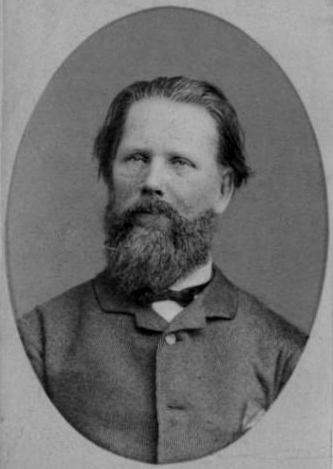
Pyotr Ilyich Tchaikovsky 1888.
Pyotr Tchaikovsky was asked to compose an opera consisting of one act and a ballet in 1890. He began working on the ballet with Marius Petipa, constantly consulting with him even about music. The job went fast but, in the spring of 1891, Tchaikovsky was forced to pause as he had to go to the United States for the opening of the famous Carnegie Hall. Trying to meet the deadline for the ballet, Tchaikovsky managed to compose even on the road on a streamer but he was unsuccessful and was forced to ask Vsevolozhsky to reschedule the premiere, sending him a letter from Paris.
Marius_Ivanovich_Petipa_1898
As soon as Tchaikovsky returned the work continued and was completely finished by February 1892. A very successful suite from the music from the ballet orchestrated by Tchaikovsky himself was played in march 1992 in one of the symphony concerts of the Russian Musical Society. At the request of the public five out of the six numbers were repeated.
Konstantin Ivanov’s original sketch for the set of The Nutcracker (1892).
By that time Petipa was seriously ill but he left detailed instruction for the production of “The Nutcracker” to Lev Ivanov who was the second choreographer of the Marinsky Theater.
The ballet rehearsals began at the end of September 1892, then on december 6 (18) the premiere was performed at the Marinsky Theater where the ballet played for more than 30 years.
In 1923, the performance was restored by the choreographer F. Lopukhov. Then, in 1929, he created a new choreographic version of the play, and when World War II began the heroine of the ballet whom had been called Clara was called Masha, but her brother Fritz who is a negative character kept his name.
Overview of the plot of “The Nutcracker”
Title page of the edition of The Nutcracker’s Story (1845)
The guests gather in the Zilbergauz house as Christmas Eve has arrived. Children admire the magnificent Christmas tree, but wait impatiently for long-awaited gifts.
Finally the clock struck midnight and a mysterious guest, Drosselmeyer, appeared, bringing incredible gifts which consist of mechanical dolls that he made them himself. His ability to bring toys to life not only amuses children, but also scares them. Then, Drosselmeyer takes off his mask, and the children recognize their favorite godfather.
The father being afraid that the children will break the dolls, orders them to be locked in a closet in his office which upset Clara. To calm the girl, her godfather gives her the Nutcracker.
nutcracker
But her brother, Fritz accidentally breaks the doll, and Clara pitying the Nutcracker, laid him on the bed of her favorite doll.
Fritz and his friends put on mouse masks and start teasing Clara. Then, it is time for the children to go to bed, and everyone goes home after the dance of the traditional Grossvater by the guests.
The room in which the tree is located is filled with moonlight as night falls.
Before going to bed, Clara returns and hugs the Nutcracker. And then Drosselmeyer appears, but now he is no longer a godfather. Instead he is a kind wizard who waves his hand making everything in the room beginning to change: the walls move apart, the tree begins to grow, and the Christmas decorations come to life and become soldiers.
Suddenly mice appear under the leadership of the Mouse King and the brave Nutcracker leads the soldiers into battle. The Nutcracker and the Mouse King meet in a fight to the death.
Clara sees that the army of mice outnumbers the army of soldiers, and in desperation, she takes off her shoe and throws it with all her might at the Mouse King. He is wounded and runs away with his army.
The army of soldiers won, and triumphantly carry Clara on their shoulders to the Nutcracker.
Suddenly, the latter’s face begins to change. He ceases to be the Nutcracker and turns into a handsome Prince. He asks Clara to follow him and the couple disappears into the lush needles of the Christmas tree and find themselves in a fairytale winter forest. Snowflakes dance, after their dance everything subsides, and the snow glistens in the fabulous light of the moon.
Clara and the Prince admire the beauty of the starry sky, and remember how they were attacked by mice, and how the Prince defeated them. Everyone is dancing, having fun and celebrating the victory over the mouse army. Spanish, Arabic, Chinese and Russian dolls thank Clara for saving their lives.
In a magical city, a happy couple is waiting. The Fairy Dragee herself is ready to accept them. The couple sails in a boat made of gilded shells. Fairy-tale characters dance for a happy couple.
Drosselmeyer appears and again changes everything around. Everyone is preparing for the wedding of Clara and the Prince.
Then, Clara wakes up with the Nutcracker still in her hands. She is in a familiar room. Alas, it was just a dream…
Read “The Nutcracker” in French or watch “The Nutcracker” Ballet
I hope you enjoyed this article
If you liked this article, subscribe , put likes, write comments!
And again in the children section but bilingual French/Russian this time the tale of the Little Red Riding Hood also with pictures.
I also added a book from Alexandre Dumas “The nutcracker” in our French Literature page (in French). It goes very well with Christmas. I couldn’t find it in English (Yes it exist but still copyrighted) so I might just translate it myself when I get a bit of time
Aujourd’hui, nous parlons du verset intitulé “La Russie ne peut pas être comprise avec l’esprit”. Il a été écrit en 1866, par un diplomate expérimenté, F.I .Tyutchev qui a passé une partie importante de sa vie à l’étranger et connaissait très bien les pays européens.
Ce verset est souvent cité, en particulier de nos jours, et sa première ligne est devenue un slogan pour désigner une voie de développement russe particulière. On reproche aux russes de ne pas pouvoir formuler leur idée nationale mais ce verset y répond. L’idée nationale russe vit dans l’âme de tous les Russes et ne peut être exprimée par des mots ou par une sorte de système logique.
« La Russie ne peut pas être comprise avec l’esprit » a été écrit cinq ans après le décret sur l’abolition du servage lorsque les technologies et les idées les plus avancées coexistaient avec des siècles d’impraticabilité, de pauvreté et d’analphabétisme. Et c’est ce contraste qui a donné à Tyutchev raison d’affirmer que le développement de la Russie procède toujours selon ses propres lois spéciales, qui sont inaccessibles à l’analyse logique d’un Européen. Même les Russes eux-mêmes ne comprennent pas ces lois, donnant tout à la volonté de Dieu, et au fil des siècles, un caractère national unique s’est développé en Russie. La caractéristique principale d’une personne russe est d’agir non pas conformément aux exigences de l’esprit, mais de suivre son cœur.
Федор Тютчев — Умом Россию не понять: Стих
Fedor Tyutchev – La Russie ne peut pas être comprise avec l’esprit: Verset
Умом Россию не понять,
La Russie ne peut pas être comprise avec l’esprit,
Аршином общим не измерить:
Ou mesurée avec un mètre standard :
У ней особенная стать —
Elle a une destinée unique –
В Россию можно только верить.
En la Russie, on ne peut que croire.
J’espère que vous avez apprécié ce verset autant que moi et qu’il vous apporte une certaine compréhension de ce qui se passe maintenant.
Today is a verse called “Russia cannot be understood with the mind”. It was written in 1866, by an experienced diplomat, F. I. Tyutchev who spent a significant part of his life abroad and knew European countries very well.
This verse is often quoted, particularly nowadays, and its first line has become a catch phrase to denote a special Russian path of development. The Russians are reproached for not being able to formulate their national idea but this verse gives an answer to this. The national Russian idea lives in the souls of all Russians and cannot be expressed in words, or in some kind of logical systems.
“One can only believe in Russia” was written five years after the decree on the abolition of serfdom when the most advanced technologies and ideas coexisted with centuries of impassability, poverty and illiteracy. And that is this contrast that gave Tyutchev reason to assert that the development of Russia always proceeds according to its own special laws, which are inaccessible to the logical analysis of a European. Even the Russians themselves do not understand these laws, giving everything to the will of God, and over the centuries, a unique national character has developed in Russia. The main feature of a Russian person is to act not in accordance with the requirements of the mind, but to follow their hearts.
Федор Тютчев — Умом Россию не понять: Стих
Fedor Tyutchev – Russia cannot be understood with the mind: Verse
Умом Россию не понять,
Russia cannot be understood with the mind,
Аршином общим не измерить:
Or measured with a standard yardstick:
У ней особенная стать —
She has a unique destiny –
В Россию можно только верить.
In Russia, one can only believe.
I hope you enjoyed this verse as much as I did and that it brings you some understanding of what is happening now.
« Sirin et Alkonost » « Сирин и Алконост » de Viktor Mikhailovich Vasnetsov (Виктор Михайлович Васнецов) est une grande huile sur toile de 133 X 250 cm peinte en 1896. Ce n’est pas la peinture la plus populaire de l’artiste, mais sa symbolique est étonnante . “Sirin et Alkonost” est maintenant stocké dans la galerie nationale Tretiakov .
Viktor Vasnetsov a peint “Sirin et Alkonost – Oiseaux de Joie et de Tristesse”, avant les bouleversements révolutionnaires qui allaient se produire dans l’Empire russe semblant prévoir les changements qui se produiraient dans sa patrie. Sirin et Alkonost sont deux symboles inséparables, une paire d’opposés. Chagrin et joie, malheur et bonheur, noir et blanc… Dans ce tableau, Alkonost peut être vu comme symbolisant la victoire du bien sur le mal et, Sirin comme l’angoisse due aux changements.
Sirin et Alkonost sont des femmes-oiseaux mythiques similaires, comme des jumelles, mais en même temps, elles sont complètement différentes. Sirin est le messager noir de la tristesse, qui aspire à un paradis perdu, et Alkonost est le messager lumineux de la joie et du plaisir. Selon les croyances slaves, l’oiseau Sirin a volé dans le verger de pommiers, étant triste et en pleurs. Et dans l’après-midi, l’oiseau Alkonost a volé dans le même verger, se réjouissant et riant, ressentant la joie d’une récolte abondante. Alkonost a brossé la rosée vivante de ses ailes, conférant aux fruits des propriétés magiques et curatives.
Les branches avec des femmes-oiseaux assises dessus se trouvent de différents côtés du tronc d’un arbre. Sirin, qui est la personnification de l’effacement et de la tristesse, est du côté gauche, “mauvais”, selon les légendes slaves, mais c’est un côté qui est étroitement uni au cœur. Alkonost, qui incarne la béatitude, les rêves, et la joie est du bon « bon » côté.
Brève description de la peinture
Au premier plan des peintures se trouvent deux demoiselles oiseaux Sirin et Alkonost assises sur des branches qui proviennent du même arbre et au même niveau, mais sur les côtés opposés du tronc.
L’arrière-plan de l’image montre un ciel orange matinal contrastant avec les deux oiseaux-jeunes filles et l’arbre.
Sirin
Sirin and Alkonost by Vasnetsov part Sirin’s faceSirin and Alkonost by Vasnetsov part SirinSirin and Alkonost by Vasnetsov part Sirin’s claws
Perché sur la gauche de l’arbre, le premier des oiseaux fantastiques, Sirin est représenté avec un visage, un cou et des épaules humains tandis que le reste de son corps ressemble à un oiseau. Son visage est pâle et ses yeux sont remplis de larmes. Elle a le plumage et les cheveux foncés. Ses ailes sont fermées de manière protectrice, comme si elles se cachaient de l’aube à venir. Elle est adornée d’une belle couronne d’or ornée d’animaux, de boucles d’oreilles dorées et d’un triple collier.
Alkonost
Sirin and Alkonost by Vasnetsov part Alkonost
On peut voir qu’Alkonost représente la joie et le bonheur car elle a un plumage de couleur claire, seul le haut de ses ailes étant brun. En tant que «jumelle opposée», elle a un corps d’oiseau et des ailes avec un visage et une épaule humain. Son visage est heureux et on dirait qu’elle chante. Elle porte une couronne d’or, des boucles d’oreilles et deux colliers. Ses ailes sont ouvertes, mais comme sa «jumelle opposée», elle a de puissantes griffes.
Dans le tableau, Sirin, aspirant au passé, et Alkonost, ouverte à l’avenir, sont fusionnés en un tout unique et indivisible. Elles, comme des compagnons inoubliables, accompagnent les gens tout au long de leur existence, modérant les grandes joies et soulageant les chagrins lourds. Ainsi, selon le maître, une grande harmonie de vie se forme.
J’espère que vous avez apprécié cet article, vous pouvez également consulter d’autres peintures de Viktor Mikhailovich Vasnetsov.
“The three Bogatyrs” by Viktor Vasnetsov’sThe Knight at the Crossroad by Viktor Mikhailovich Vasnetsov“The Flying Carpet” by Vasnetsov“The Flying Carpet” by Vasnetsov
Si vous avez aimé cet article, abonnez-vous, mettez des likes, écrivez des commentaires !
“Sirin and Alkonost” «Сирин и Алконост» by Viktor Mikhailovich Vasnetsov (Виктор Михайлович Васнецов) is a large oil on canvas of 133 X 250 cm painted in 1896. It is not the artist’s most popular painting, but its symbolism is amazing. “Sirin and Alkonost” is now stored in the State Tretyakov Gallery.
Viktor Vasnetsov painted “Sirin and Alkonost – Birds of Sorrow and Joy”, before the revolutionary upheavals that were soon to happen in the Russian Empire and seemed to foresee the changes that would take place in his homeland. Sirin and Alkonost are two inseparable symbols, a pair of opposites. Grief and joy, misfortune and happiness, black and white… In this painting, Alkonost can be seen as symbolizing the victory of good over evil and, Sirin as the anxiety due to changes.
Sirin and Alkonost are similar mythical bird-maidens, like twins, but at the same time, they are completely different. Sirin is the dark messenger of sadness, who is longing for a lost paradise, and Alkonost is the bright messenger of joy and pleasure. According to Slavic beliefs, the Sirin bird flies into the apple orchard, being sad and crying. And in the afternoon, the Alkonost bird flies to the same orchard, rejoicing and laughing, feeling the joy of a bountiful harvest. Alkonost brushes the live dew from its wings endowing the fruits with magical, healing properties.
The branches with bird-maidens sitting on them are on different sides of a tree trunk. Sirin, who is the personification of fading and sadness, is on the left, “bad” side, according to Slavic legends, but it is a side that is closely united with the heart. Alkonost, who embodies bliss, dreams, joy is on the right “good” side.
Short description of the painting
In the forefront of the paintings are two bird-maidens Sirin and Alkonost seated on branches which are from the same tree and at the same level, but on opposite sides of the trunk.
The background of the painting shows a morning orange sky contrasting with the two bird-maidens and tree.
Sirin
Sirin and Alkonost by Vasnetsov part Sirin’s faceSirin and Alkonost by Vasnetsov part SirinSirin and Alkonost by Vasnetsov part Sirin’s claws
Perched on the left of the tree, the first of the fantastic birds, Sirin is depicted with a human face, neck and shoulders while the rest of her body resembles a bird. Her face is pale and her eyes are filled with tears. She has dark plumage and hair. Her wings are closed in a protective manner, as if hiding from the coming dawn. She is adorned with a beautiful golden crown decorated with animals, golden earrings and a triple necklace.
Alkonost
Sirin and Alkonost by Vasnetsov part Alkonost
We can see that Alkonost represents joy and happiness because she has a light colored plumage, with only the top of her wings being brown. As her “opposite twin” she has a bird body and wings with human face and shoulder. Her face is happy and it looks like she is singing. She is wearing a golden crown, earrings and two necklaces Her wings are opened, but like her “opposite twin” she has powerful claws.
In the painting, Sirin, aspiring to the past, and Alkonost, open to the future, are merged into a single and indivisible whole. They, like unforgettable companions, accompany people throughout their existence, moderating great joy and alleviating heavy grief. Thus, according to the master, a great harmony of life is formed.
I hope you enjoyed this article, you can also check out other paintings by Viktor Mikhailovich Vasnetsov.
“The three Bogatyrs” by Viktor Vasnetsov’sThe Knight at the Crossroad by Viktor Mikhailovich Vasnetsov“The Flying Carpet” by Vasnetsov“The Flying Carpet” by Vasnetsov
If you liked this article, subscribe , put likes, write comments!
Cette semaine, j’ai continué à travailler en arrière-plan pour faciliter la navigation sur le site. J’ai également posté quelques contes de fées de Boris Shergin en russe. Je n’en nommerai que quelques-uns : Варвара Ивановна , Волшебное кольцо . Ворон …
This week I continued to work in the background to make the site easier to navigate. I also posted a few fairy tales from Boris Shergin in Russian. I’ll just name a few: Варвара Ивановна , Волшебное кольцо . Ворон …
Lermontov a écrit le poème “Sail” en 1832 alors qu’il commençait tout juste sa carrière. Ce thème est directement lié à un événement réel de sa vie et le poème « Voile» reflétait pleinement ses pensées et ses espoirs. Le poète compare la mer calme à son ancienne vie sereine. L’image centrale du poème est une voile solitaire dans la mer sans limites, qui est comparée à l’état du héros lyrique. La nature inquiète du poète est comme une voile « rebelle » qui « demande des tempêtes ». Une déclaration très importante est qu’« il ne cherche pas le bonheur », mais qu’il est prêt à affronter les difficultés et la souffrance de la vie pour accomplir une grande action.
C’est un poème très profond dans lequel le jeune Lermontov a su montrer la présence d’un grand talent aux multiples facettes. Sa combinaison magistrale de pur lyrisme avec un thème philosophique est d’une qualité poétique rare.
lermontov_by_fobudkin_1834
Парус (Белеет парус одинокий): Стих
Voile (La voile solitaire devient blanche): Versetsail turns white): Verse
Михаил Лермонтов
Mikhaïl Lermontov
Белеет парус одинокой
В тумане моря голубом!..
Что ищет он в стране далекой?
Что кинул он в краю родном?..
La voile solitaire devient blanche
Dans le brouillard bleu de la mer ! ..
Que cherche-t-il dans un pays lointain ?
Qu’a-t-il jeté dans son pays natal ? ..
Играют волны — ветер свищет,
И мачта гнется и скрыпит…
Увы! он счастия не ищет
И не от счастия бежит!
Les vagues jouent – le vent siffle,
Et le mât se plie et grince…
Hélas ! il ne cherche pas le bonheur
Et ne fuit pas le bonheur !
Под ним струя светлей лазури,
Над ним луч солнца золотой…
А он, мятежный, просит бури,
Как будто в бурях есть покой!
Au-dessous de lui est un ruisseau plus brillant que l’azur,
Au-dessus de lui est un rayon de soleil d’or…
Et lui, rebelle, demande des tempêtes,
Comme s’il y avait la paix dans les tempêtes !
J’espère que vous avez apprécié ce poème autant que moi