On this site we hope to help you learn, and to remove the difficulties caused by the difference of culture and language. Sur ce site nous espérons vous aider à apprendre, et à enlever la barrière causée par les différents languages et cultures.
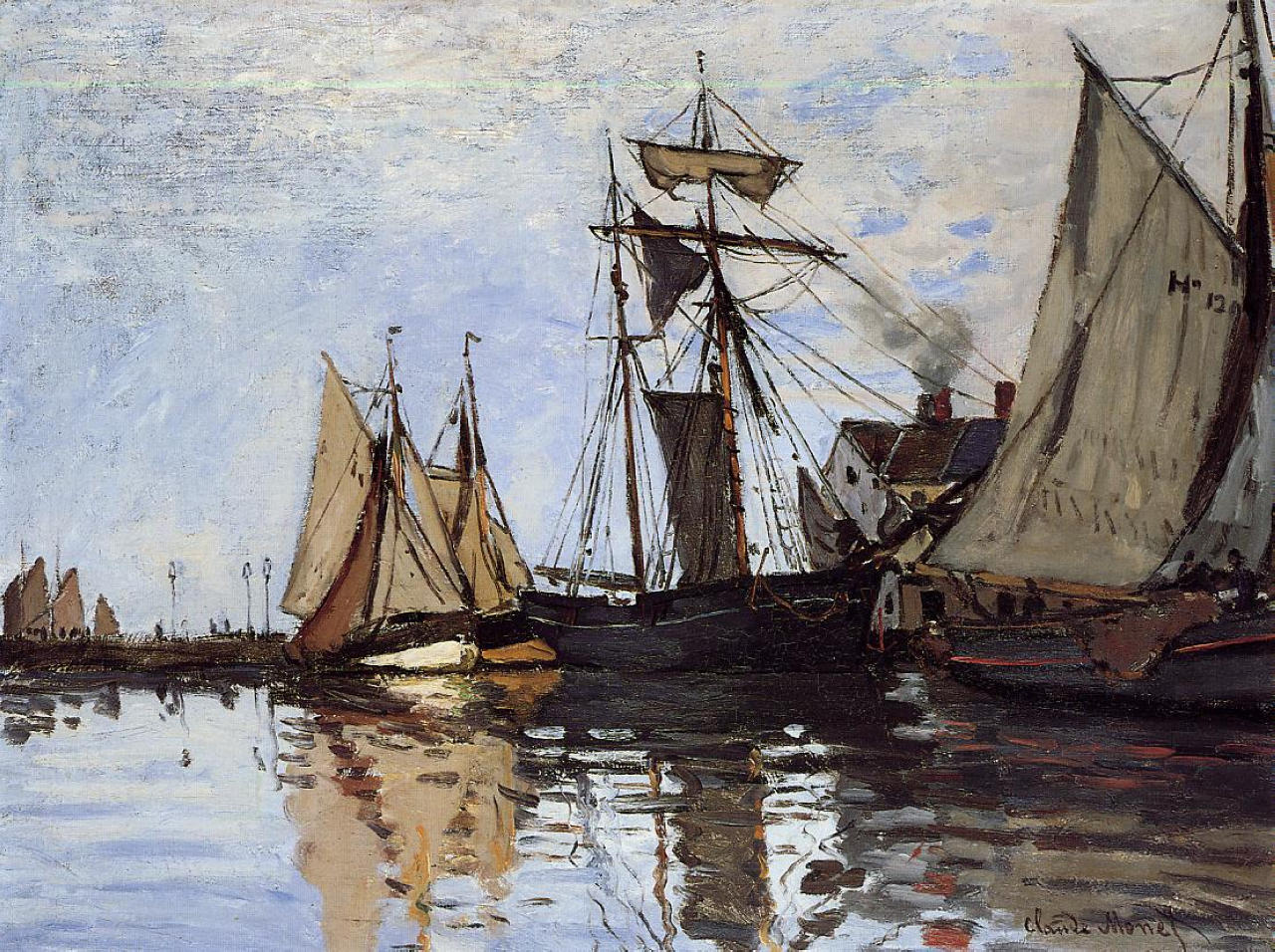
Chers lecteurs et abonnés, j’ai passé une merveilleuse semaine à explorer le magnifique monde de la poésie américaine, française et russe. Il a été vraiment inspirant d’explorer les nuances diverses et les expressions poétiques de chaque langue. J’ai soigneusement sélectionné une série de poèmes poignants et stimulants dans ces trois langues, dans le but de vous offrir un voyage littéraire captivant. De plus, en plus de l’expérience enrichissante de la poésie, j’ai également orné notre collection avec la peinture envoûtante “Bateaux dans le port de Honfleur” du célèbre artiste Claude Monet. Je suis convaincue que cette fusion d’art visuel et littéraire vous offrira une riche palette de satisfaction culturelle et artistique, et j’espère sincèrement que vous découvrirez quelque chose de vraiment délicieux pour vous plonger dedans.
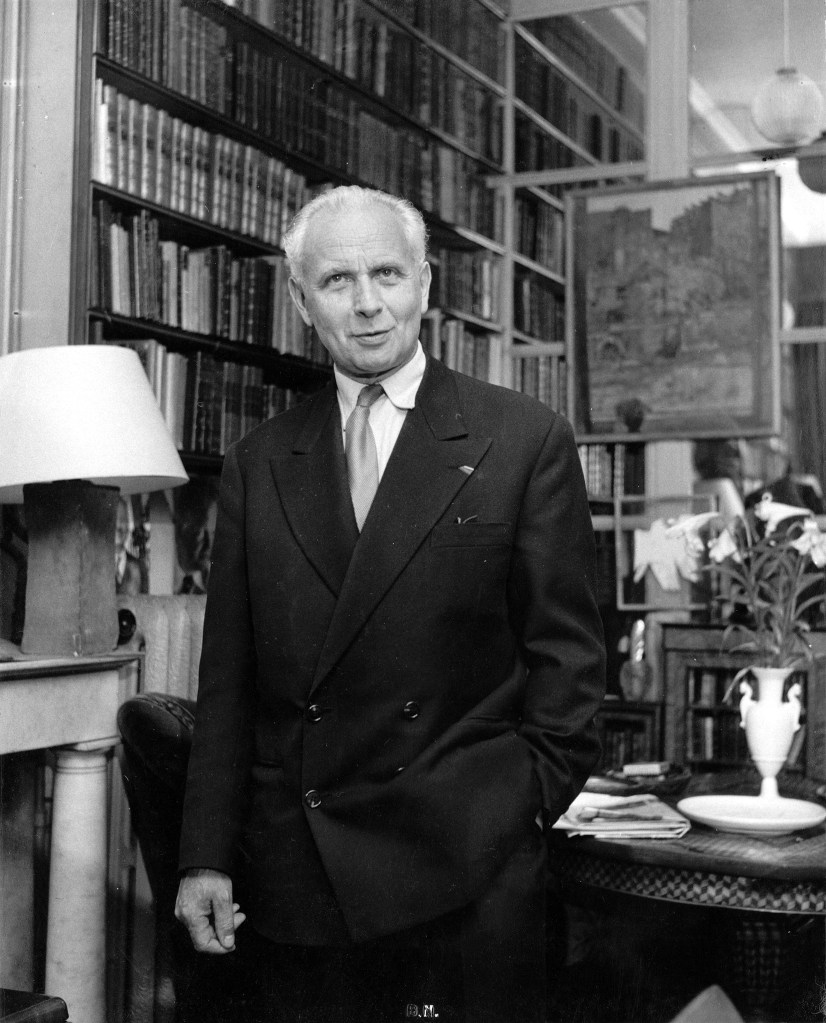
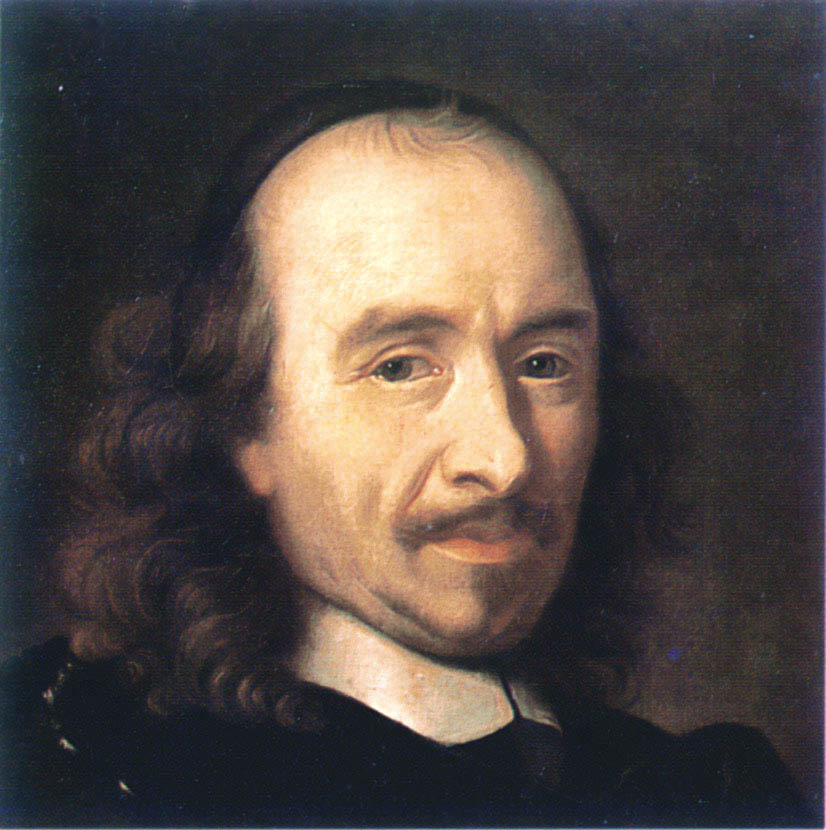
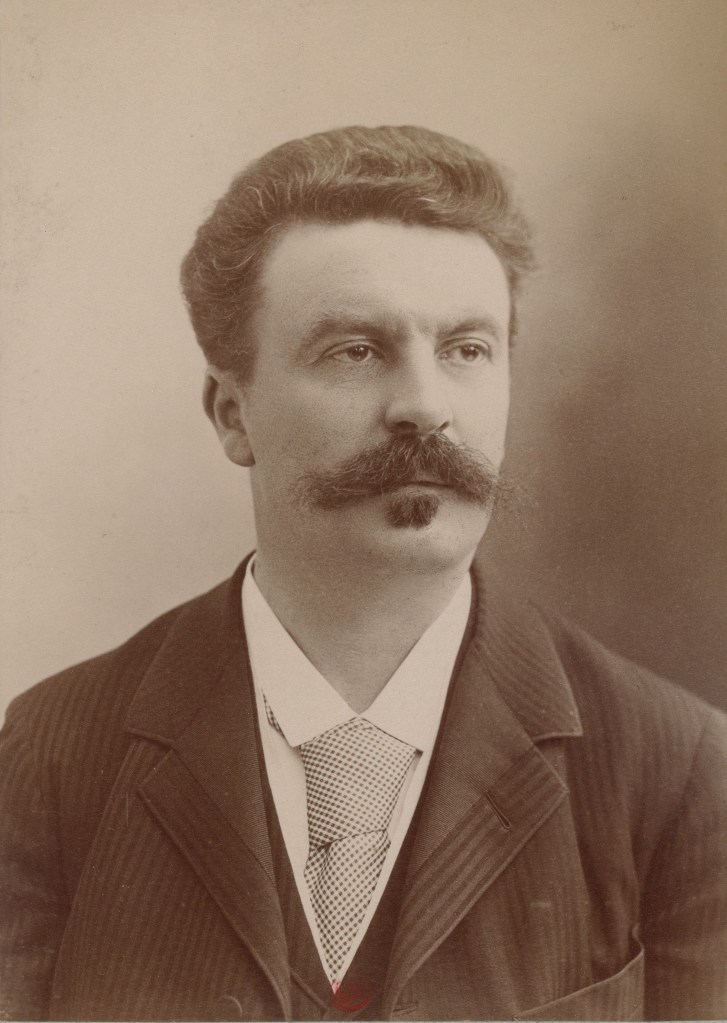
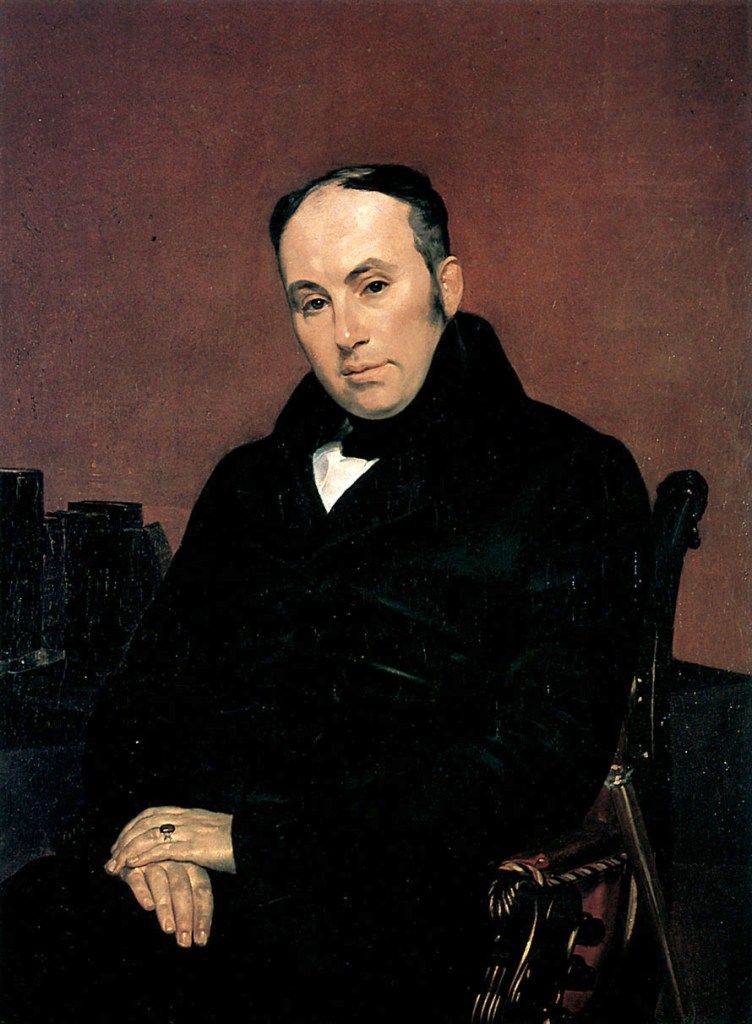
Henry Van DykeEdgar_Guest_1935Edna St. Vincent MillayLouis AragonPierre CorneilleGuy De MaupassantVasily ZhukovskyFyodor Sologub 1895Konstantin Batyushkov1Claude Monet – Boats in the port of Honfleur – 1866
Claude Monet – Boats in the port of Honfleur – 1866
Nous mettons beaucoup d’efforts dans la qualité des articles et traductions, soutenez-nous avec un like et un abonnement ou sponsorisez-nous si vous les aimez.Nous sommes aussi surFacebook et Twitter
Dear readers and subscribers, I had a wonderful time this week, delving into the beautiful world of American, French, and Russian poetry. It was truly inspiring to explore the diverse nuances and poetic expressions of each language. I carefully curated a selection of poignant and thought-provoking poems in all three languages, aiming to offer you a captivating literary journey. Furthermore, in addition to the enriching experience of poetry, I also adorned our collection with the mesmerizing painting “Boats in the port of Honfleur” by the renowned artist Claude Monet. I trust that this amalgamation of visual and literary artistry will provide you with a rich tapestry of cultural and artistic fulfillment, and I sincerely hope that you will discover something truly delightful to immerse yourself in.
Henry Van DykeEdgar_Guest_1935Edna St. Vincent MillayLouis AragonPierre CorneilleGuy De MaupassantVasily ZhukovskyFyodor Sologub 1895Konstantin Batyushkov1Claude Monet – Boats in the port of Honfleur – 1866
Claude Monet – Boats in the port of Honfleur – 1866
We put a lot of effort into the quality of the articles and translations, support us with a like and a subscription or sponsor us if you like them. We are also on Facebook and Twitter
Chers lecteurs et abonnés bien-aimés, Notre bébé corbeau se porte à merveille et devient plus grand et fort de jour en jour. Il déploie ses ailes et prend son envol avec de plus en plus d’assurance à chaque jour qui passe. De manière intéressante, il a développé une charmante habitude de se percher sur mon épaule et refuse catégoriquement de toucher le sol ou de marcher sur toute surface autre que ses perchoirs. Nous aurons un article avec une vidéo sur notre bébé qui grandit et commence à jouer mercredi.
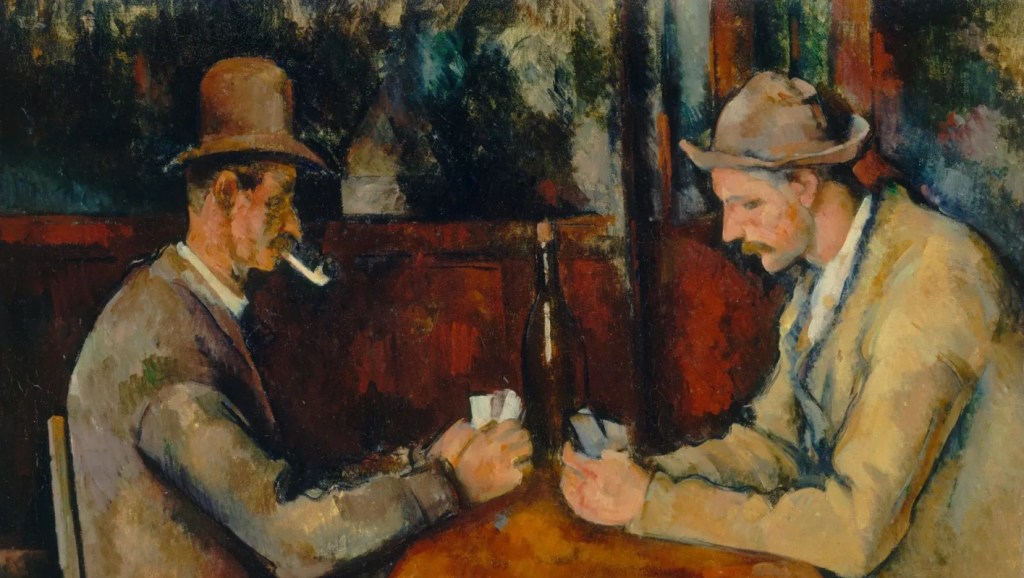
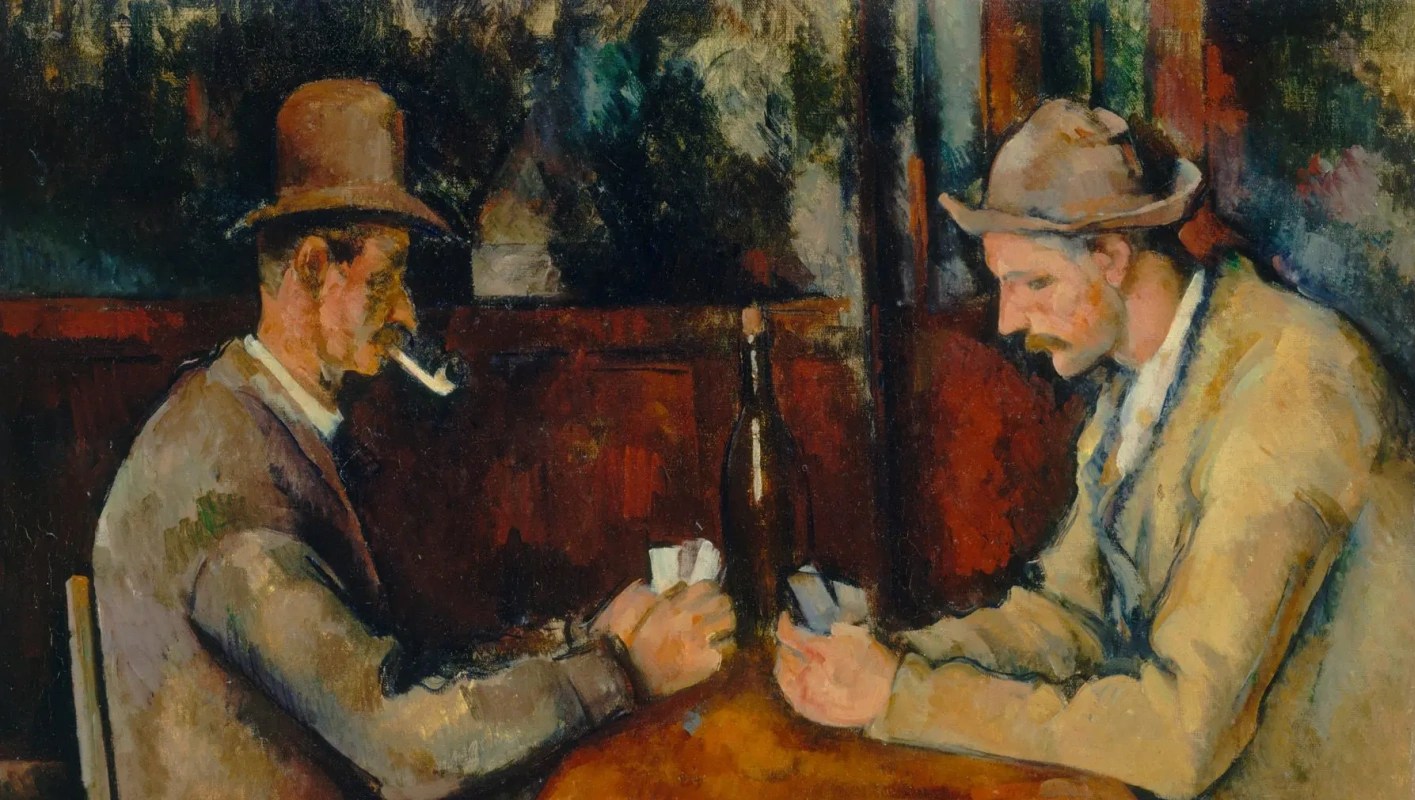
Nous sommes également ravis de partager que cette semaine a apporté une abondance de nouveaux poèmes à nos pages de poésie américaine, française et russe. De plus, nous sommes ravis de vous présenter le dernier ajout à notre collection de peintres français, Paul Cézanne, mettant en vedette sa remarquable peinture “Joueurs de cartes“.
Paul Cézanne (1839 – 1906) est célébré comme un visionnaire peintre post-impressionniste français dont le travail novateur a transformé le monde de l’art et a laissé une empreinte durable sur les mouvements artistiques avant-gardistes du début du XXe siècle. Cézanne est largement acclamé pour combler le fossé entre l’impressionnisme de la fin du XIXe siècle et l’émergence du cubisme au début du XXe siècle.
J’espère que vous découvrirez quelque chose de vraiment délicieux à apprécier.
Clark Ashton SmithPhillis WheatleyClaude McKayPaul ÉluardGuy De MaupassantPaul_Verlaine by Frédéric BazilleNikolai GumilevValéri BrioussovAfanasy FetPaul Cézanne – Card Players – 1894
Nous mettons beaucoup d’efforts dans la qualité des articles et traductions, soutenez-nous avec un like et un abonnement ou sponsorisez-nous si vous les aimez.Nous sommes aussi surFacebook et Twitter
Dear beloved readers and subscribers, Our baby crow is doing wonderfully and growing stronger by the day. She has been spreading his wings and taking flight more confidently with each passing day. Interestingly, she has developed a charming habit of perching on my shoulder and adamantly refuses to touch the ground or walk on any surface besides her perches. We’ll have a post with video about out growing baby who begins to play on Tuesday.
We are also elated to share that this week has brought an abundance of new poetry to our American, French, and Russian poetry pages. Furthermore, we are thrilled to introduce the newest addition to our collection of French painters, Paul Cézanne, featuring his remarkable painting “Card Players.”
Paul Cézanne (1839 – 1906) is celebrated as a visionary French Post-Impressionist painter whose groundbreaking work transformed the art world and left an enduring impact on avant-garde artistic movements in the early 20th century. Cézanne is widely acclaimed for bridging the gap between late 19th-century Impressionism and the emergence of Cubism in the early 20th century.
I hope you will discover something truly delightful to enjoy.
Clark Ashton SmithPhillis WheatleyClaude McKayPaul ÉluardGuy De MaupassantPaul_Verlaine by Frédéric BazilleNikolai GumilevValéri BrioussovAfanasy FetPaul Cézanne – Card Players – 1894
We put a lot of effort into the quality of the articles and translations, support us with a like and a subscription or sponsor us if you like them. We are also on Facebook and Twitter
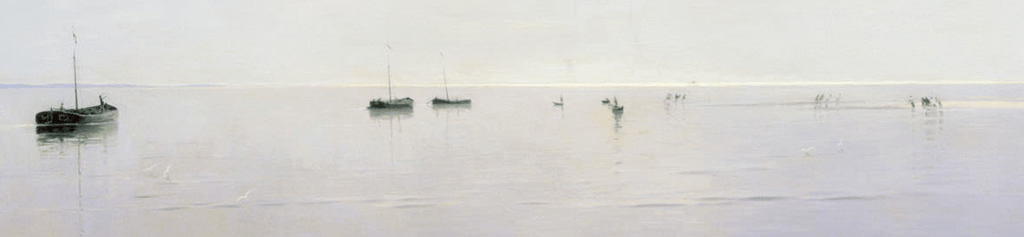
“Sur la Volga” (На Волге) est une huile sur toile de 141,5 X 190,5 cm peinte par Nikolai Dubovskoy (Николай Дубовской) en 1892. Elle est actuellement située dans la Galerie Tretiakov.
Cette belle peinture de genre de paysage et de marine représentant le large fleuve la Volga à plein débit est l’une des œuvres majeures de Dubovskoy.
Sur la Volga par Nikolai Dubovskoy 1892
Depuis 1884, les peintures de Dubovskoy ont été présentées exclusivement lors d’expositions itinérantes. Il a été admis à l’Association des expositions d’art itinérantes en 1886 et est devienu l’un de ses membres les plus actifs.
À partir de la peinture “Calme” en 1890, l’une des tendances importantes des paysages de Dubovskoy était le thème des vastes étendues d’eau.
«Sur la Volga» présentée à la 20e exposition de l’Association des expositions d’art itinérantes en février 1892 à Saint-Pétersbourg a été largement apprécié par les spectateurs et les critiques et a été acheté par Tretiakov la même année.
Une esquisse de l’étude de “Sur la Volga” se trouve également à la galerie Tretiakov. C’est une huile sur toile de 24 X 32 cm.
Sur la Volga – étude 1892 par Dubovskoy
Description de la peinture
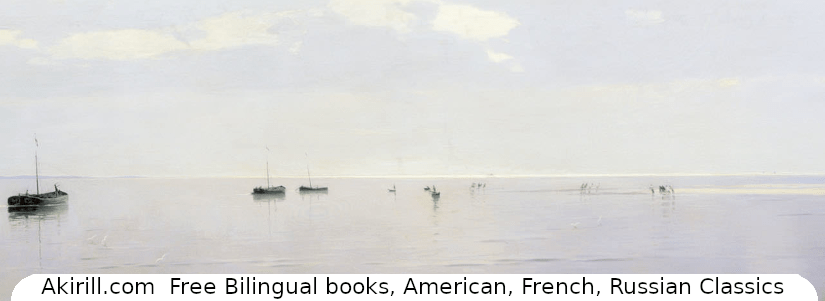
La majeure partie de la toile est occupée par le ciel et l’eau. La Volga qui s’étend jusqu’à l’horizon est perçue comme une mer sans fin. La rivière est calme, il n’y a pas de vagues.
Sur la Volga par Nikolai Dubovskoy 1892
La ligne d’horizon très basse et à peine perceptible dans laquelle l’eau se confond avec le ciel crée une impression d’immensité.
Dans le tableau «Sur la Volga», l’artiste utilise «une gamme finement nuancée de tons lilas», et la palette de couleurs du paysage est basée sur des transitions douces. Des tons bleu-brun sont utilisés au premier plan de la partie ombragée de l’eau, et des nuances lilas-opale sont utilisées plus près de l’horizon, tandis que des tons argentés-bleuâtres sont utilisés pour représenter le ciel.
Sur la Volga (ciel en partie) par Nikolai Dubovskoy 1892
En regardant le ciel, nous pouvons voir des nuages flotter dans le ciel, sur lesquels de doux reflets du soleil sont visibles.
Sur la Volga (réflexion partielle sur l’eau) par Nikolai Dubovskoy 1892
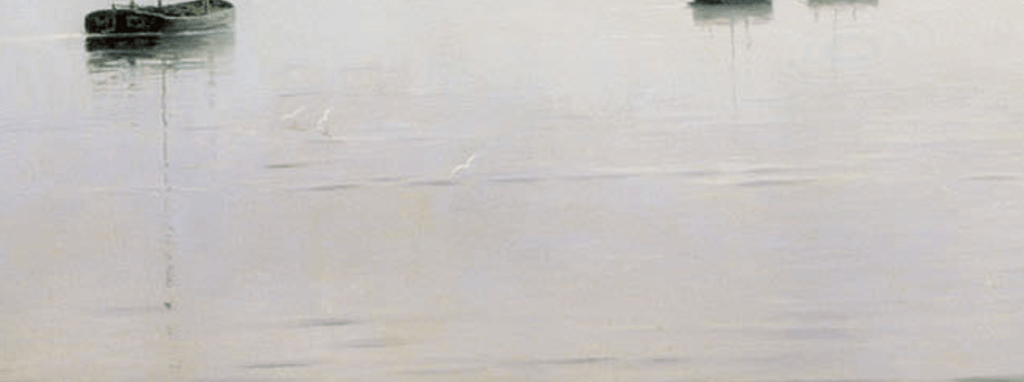
L’eau comme un miroir reflète tout ce qui l’entoure, comme le ciel et les bateaux.
Sur la Volga (partie bateaux) par Nikolai Dubovskoy 1892
Pour montrer la taille de la rivière, des bateaux de pêche se tiennent sur l’eau calme et semblent très petits. On peut également apercevoir des figures de pêcheurs sur une étroite bande de hauts-fonds sur le côté droit de la toile, ainsi que des goélands.
La taille relativement petite des bateaux et des pêcheurs souligne non seulement l’immensité de l’espace qui les entoure, mais montre également le lien du fleuve avec la vie des personnes vivant et travaillant sur ses rives .
“On the Volga” (На Волге) is an oil on canvas of 141.5 X 190,5 cm painted by Nikolai Dubovskoy (Николай Дубовской) in 1892 now situated in the Tretyakov Gallery.
This beautiful landscape and marine painting depicting the wide full-flowing river Volga is one of Dubovskoy’s major works.
On the Volga by Nikolai Dubovskoy 1892
Since 1884, Dubovskoy’s painting have been presented exclusively at traveling exhibitions. He was admitted to the Association of Traveling Art Exhibitions in 1886, and became one of his most active member.
Starting with the painting “Quiet” in 1890, one of the important trends in Dubovskoy’s landscape was the theme of wide expanses of water.
“On the Volga” presented at the 20th exhibition of the Association of Traveling Art Exhibitions on February 1892 in Saint Petersburg was widely appreciated by viewers and critics and was bought by Tretyakov that same year.
A sketch of the study of “On the Volga” is also at the Tretyakov Gallery. It is an oil on canvas of 24 X 32 cm.
On the Volga – study 1892 by Dubovskoy
Description of the painting
Most of the canvas is occupied by the sky and water. The Volga which extends to the very horizon is perceived as an endless sea. The river is calm, there are no waves.
On the Volga by Nikolai Dubovskoy 1892
The very low and barely noticeable horizon line in which the water merges with the sky creates an impression of vastness.
In the painting “On the Volga” the artist uses “a finely nuanced range of lilac tones”, and the color scheme of the landscape is based on smooth transitions. Bluish-brown tones are used in the foreground of the shaded part of the water, and lilac-opal shades are used closer to the horizon, while silvery-bluish tones are used when depicting the sky.
On the Volga (part sky) by Nikolai Dubovskoy 1892
Looking at the sky, we can see clouds floating across the sky, on which soft reflections of the sun are visible.
On the Volga (part reflection on water) by Nikolai Dubovskoy 1892
The water like a mirror reflects everything around it, like the sky, and boats.
On the Volga (part boats) by Nikolai Dubovskoy 1892
To impress the size of the river fishing boats stand on the calm water seeming very small. We can also glimpse the figures of fishermen on a narrow strip of shallows on the right side of the canvas, as well as gulls.
The relatively small size of boats and fishermen not only emphasizes the vastness of the space surrounding them, but also shows the connection of the river with the life of people living and working on its banks .
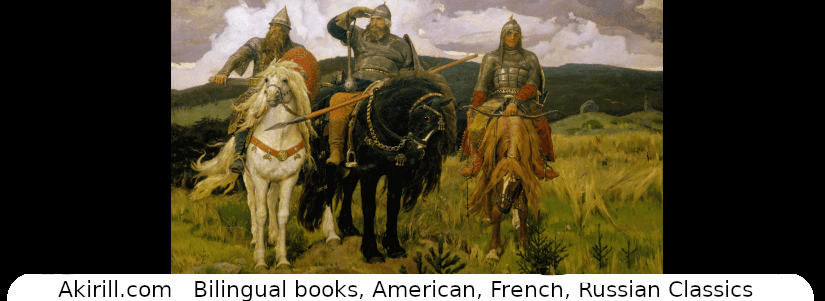
No, I’m not talking about Leonardo da Vinci’s Mona Lisa, but Viktor Vasnetsov’s Three Heroes, also called Three Bogatyrs and Три Богатыря in Russian.
It took Viktor Vasnetsov 30 years to paint this masterpiece which was completed in 1898. This painting measures 295.3 X 446 centimeters or almost 3 meters by 4 and a half meters.
This painting is a folkloric masterpiece representing three epic heroes of Russia: They are very well known to all Russians.
Dobrynya Nikititch, Ilya Myromets and Alyosha Popovich stand from left to right.
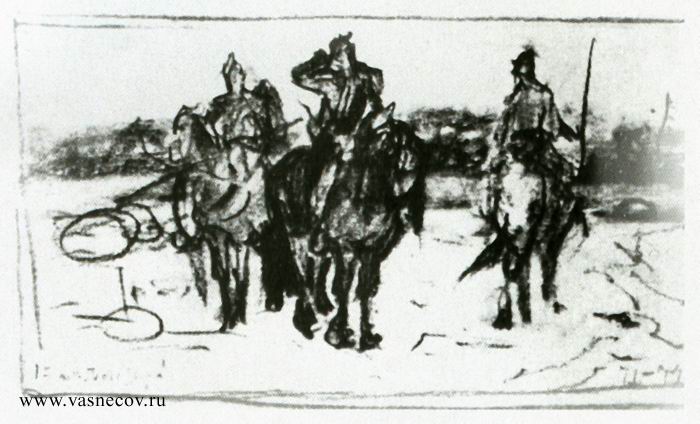
VM Vasnetsov The first sketch of the painting “Bogatyrs”, 1871-1874.
The first sketch of this oil painting has two dates: “75” and “1989 March 10”. They are explained by the fact that this sketch was made in Paris, in Polenov’s studio, shortly after Viktor Vasnetsov’s arrival in Paris. Viktor wanted to give him this sketch but Polenov refused to take it before Vasnetsov painted a big painting.
One of the prototypes of Ilya Muromets was the peasant from the province of Vladimir; Ivan Petrov, whom he drew in 1883. But there will also be the blacksmith from Abramtsevo, and a truck driver he met in Moscow.
Researchers of Vasnetsov’s work list numerous oil sketches created by the artist while working on the Three Bogatyrs
Bogatyrs 1876
The first made in 1876 is called Bogatyrs and was made in the house-museum of VD Polenov.
The next is the painting called Abramtsevo made in 1879
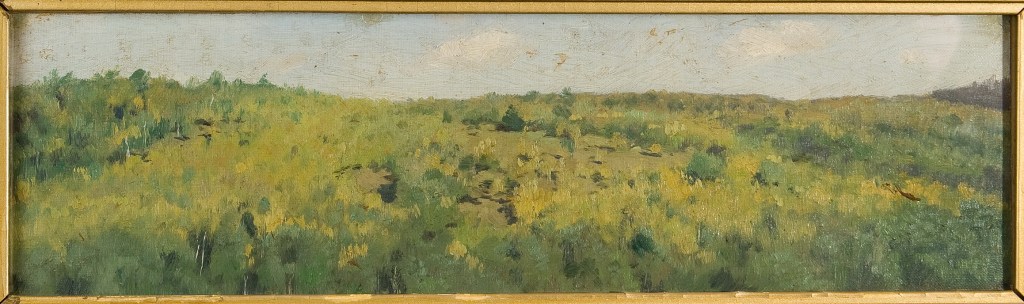
Then the one called “Small forests. Akhtyrka” painted in 1880.
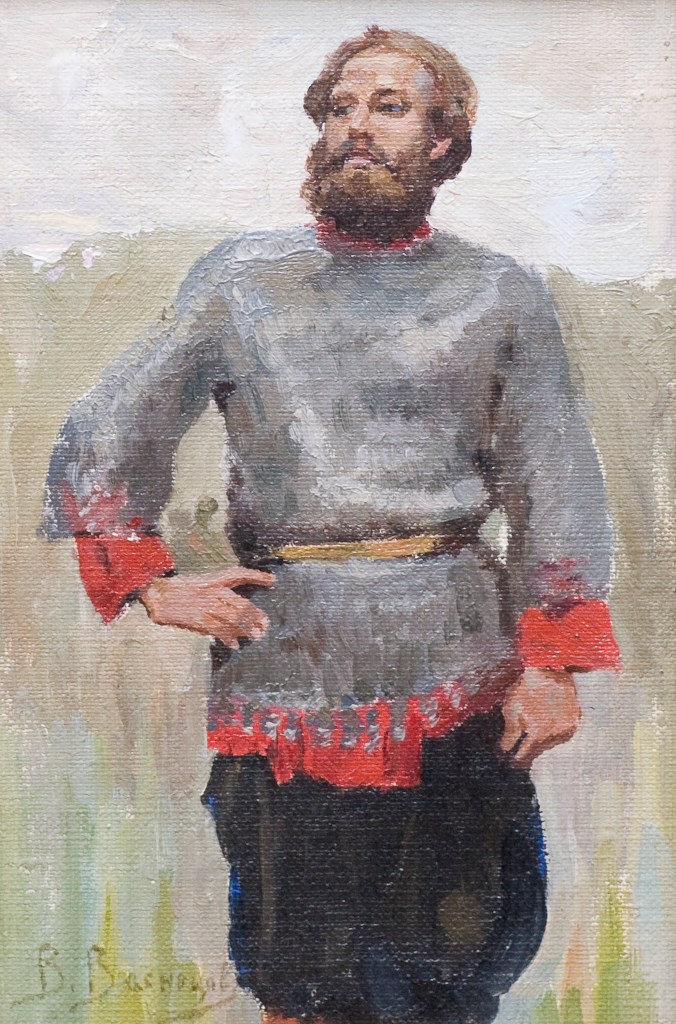
Then come: “Sitter in chain mail” 1880, “horses” 1881, “Landscape of Akhtyrka” 1882, “Landscape of a wooded mound” 1881, “Peasant from the province of Vladimir Ivan Petrov” 1883.
Subsequently “Tête de paysan” 1898, “Cotte de mail” 1898, “Black horse” and “Bay horse” will complete this list.
Description of the painting
Peasant from the province of Vladimir 1883
In the middle, Ilya Muromets gazes into the distance, shading his eyes with his hand. He is the most famous and oldest hero. He is physically more powerful than his companions. He has simple mittens, and old boots which indicate that he does not earn much money. Ilya Muromets is well armed, he has a powerful spear, a shield, a heavy club, and a large quiver with arrows. It shows us its strength because it would be impossible to wear it all effortlessly otherwise.
His black horse is a magnificent animal that has a metal harness, showing us its power.
Ilya is comfortable and relaxed on horseback, he does not use his stirrups, but it is known that in case of danger he will not hesitate to rush into a fight to the death
To Ilya’s right is a hero who may be a bit younger. His name is Dobrynya Nikitich and he displays an air of wealth. He has an expensive outfit, a caftan embroidered with gold, beautiful new boots. His helmet is expensive and fitted with a protective net, his chain, his Orthodox cross and the scabbard with the hilt of the sword are decorated with gold. His magnificent red shield is adorned with sparkling rivets. He keeps his sword half drawn, he won’t waste a second if he needs to defend his homeland
His white horse seems ready to fly into battle at the slightest sign of danger.
Alyosha Popovich who is the adopted son of an ordinary Rostov priest stands to the left of Ilya. He is the youngest and most romantic of the three heroic Russian warriors. He doesn’t have that physical power yet, but you can see he’s brave, cunning, and resourceful. He keeps his bow ready for battle. He owns expensive clothes and a harp with which he can play in their rare moments of rest. Despite his youth, Alyosha is known to have an unyielding will and devotion to his native land.
The nature surrounding them is light in color. Young spruce shoots can be seen representing continuity. Old forests leave and grow back. Generations change but the idea of strength and unity of the Russian spirit remains unchanged.
The dark tones of the sky represent the constant threat to Russia
What does this painting represent?
Chainmail Sitter
The heroes are depicted using brown and gray colors which emphasize their courage and confidence in victory.
Ilya Muromets and his horse constitute a kind of monument, symbolizing the unity of the people who cannot be broken by difficulties and who are ready to fight for Russia. But it also symbolizes solidity, prudence, and slowness. He is the bearer of popular wisdom, experience and traditions.
Nikititch appears as a courageous defender of the fatherland. He is full of energy and ready for battle.
Alyosha embodies a brave fighter and a poet sensitive to any manifestation of beauty
Vasnetsov Viktor Mikhailovich Landscape. Small forests. Period of creation: Early 1880s
Russian nature is depicted in green tones, with yellow and brown shades. The sky is covered with clouds indicating imminent danger
The heroes are perceived as a mythical personification of the creative forces of the Russian land
Abramtsevo 1879
Light and bright shades stand out against a dark background, which emphasizes the victory of Russian heroes over the enemies they expect
Did you like the article ? Like and share it on social media, let your friends know about what’s happenings as well.