On this site we hope to help you learn, and to remove the difficulties caused by the difference of culture and language. Sur ce site nous espérons vous aider à apprendre, et à enlever la barrière causée par les différents languages et cultures.
Ivan Aïvazovski (Иван Айвазовский) est le plus célèbre peintre de marine russe, un véritable poète de la mer dont les œuvres sont largement connues dans le monde entier.
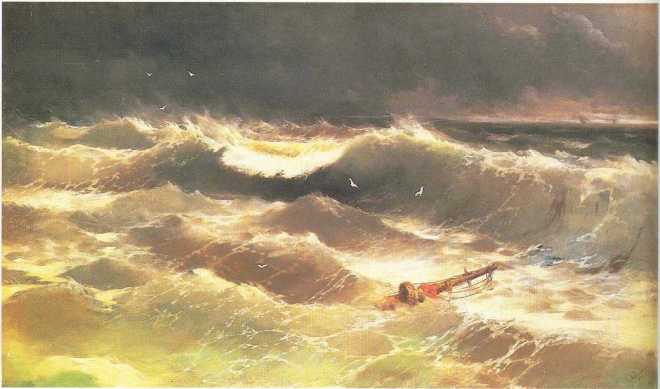
Le tableau “La mer Noire” (Черное море) qu’il a peint en 1881 est l’une de ses peintures les plus significatives, et est même considérée par beaucoup comme l’apogée de son travail. Il s’agit d’une large huile sur toile de 149 X 208 cm représentant la Mer Noire au moment du début d’une tempête. Peint dans le style du romantisme, ce tableau de marine se trouve aujourd’hui à la galerie nationale Tretiakov, à Moscou
Le tableau « La Mer Noire » est saisissant par son ampleur et sa profondeur. La mer semble si sauvage et indomptable, le bateau si petit.
Le premier nom du tableau était “Une tempête commence à éclater sur la mer Noire” et même s’il s’agit d’une toile large, ce n’est pas la plus grande des œuvres d’Aïvazovski. Il a peint une suite du tableau « La Mer Noire » dans une œuvre distincte intitulée “Parmi les vagues”. Celle ci peut être considérée comme une immense toile.
Dans le tableau, « La Mer Noire », la palette très habilement choisie par Ivan Aïvazovski, décrit la véritable essence de l’élément marin et l’origine du nom de la Mer Noire devient immédiatement claire.
Au premier plan, il y a la soi-disant «vague d’Aïvazovski». Il s’agit d’une vague avec des boucles de mousse, une vague translucide obtenue par la technique du glacis. L’eau a déjà pris une teinte plombée profonde, et les crêtes des vagues annoncent le début d’une tempête.
Dans presque toutes les peintures marines, les personnages ne sont qu’un moyen de souligner la puissance des éléments, et au centre de la toile, on peut voir un bateau solitaire s’élever fièrement au-dessus de la surface de la mer, mais si loin et semblant si petit, tellement sans défense. Être par un tel temps en pleine mer est mortel. Connaissant la nature rude et imprévisible de la mer Noire, on ne peut que sympathiser avec les marins qui y sont entrés dans une tempête.
Ce voilier peut être vu comme un symbole de l’insignifiance de l’homme face à l’univers et en même temps le signe d’une envie de voyager romantique.
Mais grâce à la ligne blanche frappante de l’horizon qui divise le tableau en deux, nous nous demandons maintenant si le temps va changer et offrir au voilier l’occasion de rejoindre ses côtes natales en toute sécurité.
En arrière-plan un ciel gris sombre couvert de nuages menace une averse prolongée et un orage dangereux.
En regardant la photo, on a l’impression d’être soi-même sur la mer Noire au moment de la tempête et on sent les éléments approcher.
J’espère que vous apprécierez ce tableau autant que moi
Vous pouvez également lire notre article précédent sur La 9ème Vague par Ivan Aivazovsky
Ivan Aivazovsky (Иван Айвазовский) is the most famous Russian marine painter, a true poet of the sea whose works are widely known all over the world.
The canvas “The Black Sea” (Черное море) which he painted in 1881 is one of his most significant paintings, and is even is considered by many to be the pinnacle of his work. It is a wide oil on canvas of 149 X 208 cm depicting the Black Sea at the moment of the beginning of a storm. Painted in the romanticism style, this marina painting is now at the State Tretyakov gallery, in Moscow
The painting “The Black Sea” is striking in its scale and depth. The sea seems so wild and indomitable, the boat so tiny.
The first name of the painting was “A storm begins to break out on the Black Sea” and even though it is a wide canvas it is not the largest of Aivazovsky’s works. He painted a continuation of the picture “The Black Sea” in a separate work called “Among the Waves”, and which can be considered a huge canvas.
In the painting, “The Black Sea”, the palette which is very skillfully chosen by Ivan Aivazovsky, describes the real essence of the sea element and the origin of the name of the Black Sea immediately becomes clear.
In the foreground there is the so-called “Aivazovsky’s wave”. This is a wave with foam curls, a translucent wave obtained by the glazing technique. The water has already taken on a deep leaden hue, and the crests of the waves show the beginning of a storm.
In almost all marine paintings, people are just a way to emphasize the power of the elements, and in the center of the canvas we can see a lonely boat proudly rising above the sea surface, but so far and seeming so tiny, so defenseless. To be in such weather in the middle of the open sea is deadly. Knowing the harsh and unpredictable nature of the Black Sea, one can only sympathize with the sailors who got into a storm on it.
This sailboat can be seen as a symbol of the insignificance of man in front of the universe and at the same time a sign of a romantic wanderlust.
But thanks to the striking white line of the horizon which divides the painting in half we now wonder if the weather will change and provide an opportunity for the sailboat to get to its native shores safely.
In the background a gloomy gray sky covered with clouds threatens a prolonged downpour and a dangerous thunderstorm.
Looking at the picture, it feels like you yourself are on the Black Sea at the time of the storm and you feel the approaching elements.
I hope you enjoy this painting as much as I did
You can also read our earlier article about The 9th Wave by Ivan Aivazovsky
En 1850, deux ans après la peinture de la première version du tableau “Fiançailles d’un Major”, Pavel Fedotov a commencé à travailler sur sa deuxième version alternativement intitulée “Demoiselles d’honneur dans une maison de marchand”.
Cette répétition est une huile sur toile de 56 X 76 cm, achevée en 1852, et est aujourd’hui conservée au Musée d’État russe de Saint-Pétersbourg. L’intrigue et la composition ont été préservées mais Fedotov y a apporté des changements si importants qu’il y a lieu d’y voir le début d’une nouvelle étape dans le développement de la méthode créative de l’artiste.
Si dans la première version du tableau, le major et la mariée évoquaient une attitude ironique, le major ressemble désormais davantage à un personnage négatif ce qui suscite de la sympathie pour la fille du marchand et de l’inquiétude pour son sort.
Répétition de la demande en mariage du major – 1852 par Pavel Fedotov
Comparaison de “Fiançailles d’un Major” de Pavel Fedotov et de sa répétition.
The major’s marriage proposal – 1851 by Pavel Fedotov –
Dans la deuxième version, Fedotov est plus strict dans la sélection des détails, en ayant supprimé de nombreux afin de concentrer l’attention du public sur l’essentiel et de donner une plus grande netteté à la situation présentée dans l’image.
Il n’y a pas de lustre, car il pensait que celui-ci détournait l’attention, et interférait avec l’intégrité de la perception de toute la scène. Pour lui, son positionnement qui était exactement au milieu de la toile cassait l’image en deux.
On remarque que les accolades ont été supprimées à la jonction du mur de la pièce avec le plafond, ainsi que les peintures complexes du plafond qui représentaient des fleurs. Les peintures accrochées au mur ont été peintes avec moins de détails et même le motif complexe de la nappe est remplacé par une simple nappe kaki. De plus l’icône est remplacée par une assiette de fruits.
L’apparence du major a beaucoup changé. Dans la première version, il avait l’air relativement en forme, courageux et non sans attrait. Dans la deuxième version, sa posture devient prétentieuse et la silhouette devient ridicule. Ses cheveux se sont assombris, son front est devenu plus étroit, et des poches sont apparues sous les yeux. Il a aussi acquit un gros ventre mais a gardé des jambes fines.
Majors matchmaking repetition extract groom by FedotovMajors matchmaking repetition extract groom by Fedotov
L’image de la fille du marchand a également subi des changements importants. Dans la première peinture, elle était caricaturée et semblait stupide, capricieuse et maladroite, provoquant le ridicule. Mais dans la deuxième version, une douce féminité apparaît en elle, et même une certaine grâce. Au lieu d’une personnification quelque peu caricaturale, une personne vivante apparaît, provoquant chez le spectateur non pas du mépris, mais de la sympathie.
The Majors Matchmaking extract brideThe Majors Matchmaking repetition extract bride
La robe de la mère est devenue plus colorée, et elle semble aussi avoir perdu du poids mais au lieu de patience et d’attention, on voit de la colère sur son visage.
The major Matchmaking extract motherThe major Matchmaking extract repetition mother
Le marchand, qui était placé sur le fond d’un poêle rond, dans le premier tableau est maintenant placé sur le fond plus clair d’un poêle rectangulaire et semble un peu plus proche du premier plan.
The major Matchmaking extract fatherThe major Matchmaking extract repetition father
Le visage du gardien, partiellement caché par la tête du cuisinier dans le premier tableau, est complètement découvert dans le second.
The Majors Matchmaking extract servantsThe Majors Matchmaking repetition extract servants
Grâce aux accents modifiés dans les images du major et de la mariée, la perception de la situation représentée par l’artiste change également.
Dans la première version de l’image, le major et la mariée évoquaient une attitude ironique du spectateur mais plus maintenant.
Dans la deuxième version, le major ressemble à un personnage plus négatif qui suscite de la sympathie pour la fille du marchand et de l’inquiétude pour son sort.
In 1850, two years after the painting of the first version of the painting “Major’s Matchmaking”, Pavel Fedotov began work on its second version alternatively titled “Bridesmaids in a Merchant’s House” .
This repetition is an oil on canvas of 56 X 76 cm, completed in 1852, and is now kept in the State Russian Museum in St. Petersburg. The plot and composition were preserved, but Fedotov makes such serious changes that there is reason to see here the beginning of a new stage in the development of the artist’s creative method.
The major’s marriage proposal repetition – 1852 by Pavel Fedotov
Comparison of Pavel Fedotov’s “Major’s Matchmaking” and its repetition.
The major’s marriage proposal – 1851 by Pavel Fedotov –
In the second version, Fedotov is stricter in the selection of details, having removed many in order to focus the audience’s attention on the main thing and give greater sharpness to the situation presented in the picture.
There is no chandelier, which he thought distracted attention, and interfered with the integrity of the perception of the whole scene by their positioning, which was exactly in the middle of the canvas and broke the picture in half,
We notice that the curly brackets were removed at the junction of the wall of the room with the ceiling, as well as intricate paintings on the ceiling depicting flowers. The paintings hanging on the wall were painted in less detail and even the intricate pattern on the tablecloth is changed to a simple, plain kaki tablecloth. In addition, the icon is replaced by a fruit plate .
The appearance of the major has changed a lot. In the first version he looked relatively fit, brave and not without some attractiveness. In the second version his posture turns into a pretentious one, and the figure becomes ridiculous. His hair darkened, his forehead became narrower, and bags appeared under the eyes . He also acquired a big belly but kept his thin legs.
Majors matchmaking repetition extract groom by FedotovMajors matchmaking repetition extract groom by Fedotov
The image of the merchant’s daughter has also undergone significant changes. In the first she was depicted in a caricature and seemed stupid, capricious and clumsy, causing ridicule. But in the second version, a soft femininity appears in her, and even some grace. Instead of a somewhat caricature personification a living person appears, causing the viewer not contempt, but sympathy .
The Majors Matchmaking extract brideThe Majors Matchmaking repetition extract bride
The dress of the mother became more colorful, and she also seem to have lost a bit of weight but instead of patience and caring, we see anger on her face.
The major Matchmaking extract motherThe major Matchmaking extract repetition mother
The merchant, who was placed against the background of a round stove, in the first painting is now placed against the lighter background of a rectangular stove and seems a little closer to the foreground.
The major Matchmaking extract fatherThe major Matchmaking extract repetition father
The sitter’s face, partially hidden by the cook’s head in the first painting, is completely uncovered in the second.
The Majors Matchmaking extract servantsThe Majors Matchmaking repetition extract servants
Thanks to the changed accents in the images of the major and the bride, the perception of the situation depicted by the artist also changes.
In the first version of the picture, the major and the bride evoked an ironic attitude from the viewer but not anymore.
In the second version, the major looks like a more negative character which causes sympathy for the merchant’s daughter and concern for her fate.
L’artiste russe Pavel Andreevich Fedotov a reçu le titre honorifique d’académicien pour son tableau «L’arrivée du marié (Fiançailles d’un major)», également connu sous le nom de «La Demande en mariage du major endetté». Cette toile est l’une des œuvres remarquables de la peinture russe de la première moitié du XIXe siècle et l’une des plus grandes réalisations de Fedotov. Créée en 1848 dans un style de « réalisme comique », il s’agit d’une huile sur toile de 58,3 × 75,4 cm décrivant les derniers instants de la préparation avant les fiançailles pour un marriage arrangé, et se trouve désormais à la Galerie nationale Tretiakov.
Lorsque le public a vu la peinture pour la première fois, le succès a été fulgurant. Tout Saint-Pétersbourg était mort de rire, les gens sont venus plus d’une fois à l’exposition pour voir à nouveau le «Wooing» du major. Qu’est-ce qui a provoqué une réaction aussi violente et fait autant rire le public ?
L’intrigue est basée sur un mariage de convenance ordinaire entre la fille d’un riche marchand et un major noble ruiné. À cette époque, de telles transactions étaient courantes : certains cherchaient à obtenir de l’argent, tandis que d’autres cherchaient à obtenir des titres dans la société.
The major’s marriage proposal – 1851 by Pavel Fedotov –
Pavel Fedotov (Павел Федотов) a commencé à travailler sur “Fiançailles d’un major” (Сватовство майора) en 1848. À la demande de Karl Bryullov, il a reçu 700 roubles de l’Académie impériale des arts à utiliser sur des modèles, des costumes et d’autres matériaux.
Lors de la création du tableau “Fiançailles d’un major”, Fedotov a effectué de nombreux travaux préparatoires et de nombreux croquis qu’il a utilisés pour rechercher la composition de la scène, les images des personnages, ainsi que leurs poses et positions relatives dans le plan de La toile.
Voici quelques croquis pour ce tableau :
sketch of bride’s head, the head of an old woman, and the catFedotov’s sketch of a clerk with a bottleFedotov’s sketch of a cook with a dishFedotov’s sketch of an old dependent womenFedotov’s sketch of a merchantFedotov’s sketch of a mother and daughter
Presque immédiatement avant la sortie du tableau, Fedotov a écrit sa “Рацея” qui est une explication du tableau en vers, grâce à laquelle on peut comprendre plus en détail ce rôle simulé de chacun des héros de la toile. Pavel a lu sa “Рацея” à l’exposition de sa peinture, en 1849, où elle a eu un grand succès, le rendant très heureux. Sa satire était même comparée à celle de Gogol et d’Ostrov.
Répétition de la peinture
En 1852, Pavel Fedotov a terminé une répétition de la peinture “Fiançailles d’un major”, alternativement intitulée “Demoiselles d’honneur dans une maison de marchand” dans laquelle l’intrigue et la composition ont été conservées. Cette huile sur toile de 56 X 76 cm se trouve actuellement au Musée d’Etat Russe. Les deux peintures ont des différences significatives et nous les comparerons dans un autre article.
Description de la peinture
Comme si nous regardions par la fenêtre, nous voyons une famille de marchands souhaitant marier leur fille avec un noble, mais cela est fait très maladroitement.
Malgré le fait que l’arrivée de l’invité était attendue, il y a une agitation dans la pièce. La scène ressemble à une production théâtrale avec une action en constante évolution de la figure du major à la fille et la mère qui sont les personnages principaux de l’œuvre. Avec ce schéma de composition, l’auteur a souligné le manque de sincérité et le faux brillant de ce qui se passe. La relation des personnages se retrouve dans leurs gestes et leurs postures. En conséquence, une certaine dynamique se crée dans le sens de gauche à droite.
La scène se joue dans l’antichambre, ce qui n’est pas conforme à l’étiquette. Cela aurait dû être fait dans le salon ou la salle à manger.
La table n’est pas recouverte d’une nappe blanche, mais rose, avec une couture sur les bords qui serait plus appropriée dans un bureau ou un boudoir. On peut voir que l’action a probablement eu lieu le mercredi ou le vendredi, qui sont des jours de jeûne, car il n’y a que des collations maigres (hareng, saumon, caviar peu salé) sur la table qui est trop petite pour autant de collation.
Une grande attention est portée aux détails, et montre de nombreux traits caractéristiques de la vie marchande. On voit que la pièce est remplie de choses démontrant la volonté des propriétaires de vivre « dans la capitale ». Mais si vous regardez bien, c’est une « mauvaise » combinaison d’objets divers qui trahit les habitudes patriarcales, et crée un effet comique.
Dans le coin gauche, il y a une table avec un psautier ainsi que des icônes avec des lampes sur une étagère, obligatoires dans toutes les maisons, mais impossibles dans cette pièce. Les aristocrates allaient prier dans la chapelle de la maison ou allaient à l’église et pouvaient avoir une icône dans la chambre, mais pas dans l’antichambre.
Le plafond, d’où pend un immense lustre, est peint de guirlandes de fleurs, de nymphes et d’amours.
Des peintures sont accrochées aux murs, mais leurs intrigues laissent entendre que le propriétaire ne connaît pas les arts.
Elles comprennent une lithographie avec une vue sur le monastère Nikolo-Ugresh, des portraits du métropolite, les généraux Kutuzov et Kulnev, ainsi que celui du propriétaire de la maison avec un livre à la main, pour souligner son alphabétisation.
Le champagne dans cette maison, évidemment, est bu rarement et donc ils ne savent pas comment le servir avec grâce. Ils ont simplement posé le plateau avec la bouteille de champagne et les verres sur une chaise.
La mariée
Plus légère que celle de sa mère, la robe de la mariée contribue à la distinguer du groupe central en tant que personnage le plus important.
Même si la mariée porte une belle robe faite de mousseline et une quantité incommensurable de bijoux en or (bagues, colliers, boucles d’oreilles, bracelets), au dernier moment elle essaie de s’enfuir dans une autre pièce, se sentant nue dans cette nouvelle robe à la mode, qui est fabriqué selon la mode européenne et ne couvre pas ses épaules.
L’absurdité de la situation est accentuée par le fait que la tenue de la fille du marchand est destinée à un bal ou à un autre événement de soirée, et non pas à la rencontre du marié en journée, mais l’action, à en juger par les lampes éteintes, se déroule pendant la journée.
La mère
La mère de la mariée est vêtue à la nouvelle mode française et en même temps à l’ancienne mode russe. Elle porte une robe européenne à la mode en tissu irisé de type «chanzhan» et ne porte pas de corset dessous. Au lieu du bonnet, elle a un foulard de style philistin noué sur la tête accompagné d’un châle porté sur sa robe.
Alors que sa fille essaie de sortir en courant de la pièce, elle l’attrape par l’ourlet de sa robe pour l’arrêter. Sa posture et l’expression de son visage trahissent un caractère impérieux et volontaire et on peut en déduire que c’est probablement elle qui dirige tout dans la maison.
Le père
Son père, un paysan débonnaire à la barbe touffue, est à l’ombre dans un coin de la pièce. Il essaie de boutonner sa redingote “dernier cri” avec laquelle il n’est pas très familier.
L’entremetteuse
A gauche du major se trouve une simple entremetteuse vêtue d’un joli brocard rouge et d’une jupe sombre. Une écharpe sombre avec une petite fleur est nouée autour de sa tête. Ses vêtements sont une autre indication que le major n’est pas un noble héréditaire, sinon il aurait eu recours aux services d’une entremetteuse noble.
Venue avec le major, elle est déjà entrée dans la salle, et fait le lien entre le major, vers qui se dirige le mouvement de sa main, et le marchand, vers qui son regard est tourné.
Majors matchmaking extract groom by Fedotov
Le major
Il est probable que le marié soit devenu noble récemment, après avoir reçu le grade de major. Il n’a manifestement pas de manières raffinées, et on remarque qu’il a oublié d’apporter des fleurs à la mariée et à la future belle-mère.
Pour attirer notre attention, le major, vêtu d’un uniforme à épaulettes et armé d’un sabre, se tient dans l’embrasure de la porte en contre-jour. En même temps son visage est illuminé car il tourne la tête vers la gauche. Ses jambes sont placées de la même manière que la chaise, légèrement courbées, sa silhouette est tendue, ses yeux sont légèrement plissés et un sourire victorieux se cache dans sa moustache.
Il redresse sa moustache et toute son apparence montre une attitude professionnelle face à un « accord ».
Il est probable que des négociations avec les parents de la mariée aient été menées par l’entremetteuse à l’avance, et connaissant déjà la réponse, il pense maintenant à tous les avantages de son futur mariage.
Il ne voit pas encore ce qui se passe dans la pièce où se déroule l’action principale, et attend une invitation à entrer.
Soit dit en passant, pour créer la figure du major, Fedotov a peint son propre visage en se regardant dans un miroir, se donnant une mine de complaisance et corrigeant certains de ses traits.
Les serviteurs
Les personnages secondaires permettent de recréer l’atmosphère d’une maison de marchand.
A gauche du tableau, une vieille femme regardant avec curiosité depuis la pièce voisine, parle avec un gardien tenant une bouteille de vin. Il vient apparemment de l’apporter d’un magasin de vin et les deux serviteurs semblent papoter au sujet du marié.
Devant eux, la cuisinière pose un plat fraîchement cuit sur la table en regardant ce qui se passe dans la pièce.
Le chat
Dans le coin inférieur droit du tableau, Pavel Fedotov représente un chat qui se nettoie : « Le chat lave les invités ».
Il y a un dicton associé à un chat qui se nettoie. Si l’animal se lave soigneusement, c’est pour les invités, et cela signifie que les invités viendront bientôt (les invités viendront au mariage).
Après avoir regardé ce tableau, nous nous demandons quel est le sort futur de la fille du marchand et du major : sont-ils heureux ? Comment la marchande se place-t-elle désormais dans la société, compte tenu de sa nouvelle relation avec un noble ? Il y a beaucoup de telles questions.
Dans les prochains articles, nous lirons et traduirons la Racea de Pavel Fedotov à propos de ses tableaux « Le matchmaking du major », puis nous comparerons le tableau original avec sa répétition.
J’espère que vous avez apprécié ce tableau autant que moi.
The Russian artist Pavel Andreevich Fedotov was awarded the honorary title of academician for his painting “The arrival of the groom (Major’s matchmaking)”, also known as “The Major’s Marriage proposal”.
This canvas is one of the remarkable works of Russian painting of the first half of the 19th century, and one of Fedotov’s greatest achievements.
Created in 1848 in a style of “comic realism”, it is a 58.3 × 75.4 cm oil on canvas describing the last moments of the preparation before the matchmaking, and is now situated in the State Tretyakov Gallery.
When the public first saw the picture, the success was overwhelming. The whole of St. Petersburg rolled with laughter, people came to the exhibition more than once to see the Major’s “Wooing” once again. What caused such a violent reaction and made the audience laugh so much?
The plot is based on an ordinary marriage of convenience between the daughter of a wealthy merchant and a ruined nobleman major. At that time, such transactions were commonplace: some sought to get money, while others sought to get titles in society.
The major’s marriage proposal – 1851 by Pavel Fedotov –
Pavel Fedotov (Павел Федотов) began work on the “Major’s Matchmaking” (Сватовство майора) in 1848. At the request of Karl Bryullov, he received 700 rubles from the Imperial Academy of Arts to be used on sitters , costumes and other materials.
While creating the painting “Major’s Matchmaking” Fedotov carried out a lot of preparatory work, and many sketches which he used to search for the composition of the scene, the images of the characters, as well as their poses and relative positions in the plane of the canvas.
Here are a few sketches for this painting:
sketch of bride’s head, the head of an old woman, and the catFedotov’s sketch of a clerk with a bottleFedotov’s sketch of a cook with a dishFedotov’s sketch of an old dependent womenFedotov’s sketch of a merchantFedotov’s sketch of a mother and daughter
Almost immediately before the release of the painting, Fedotov wrote his “Рацея” which is an explanation of the painting in verse, thanks to which one can understand in more detail this simulated role of each of the heroes of the canvas. Pavel read his “Рацея” at the exhibition of his painting, in 1849, where it had great success, making him very happy. His satire was even compared to Gogol’s and Ostrov’s.
Repetition of the painting
In 1852 Pavel Fedotov completed a repetition of the painting “Major’s Matchmaking”, alternatively titled “Bridesmaids in a Merchant’s House” in which the plot and composition have been preserved. This 56 X 76 cm oil on canvas is now in the State Russian Museum. The two paintings have significant differences and we’ll compare them in another article.
Description of the painting
As if watching through the window, we see a merchant family wishing to intermarry with a nobleman, but it turns out awkwardly.
Despite the fact that the arrival of the guest was expected, there is a commotion in the room. The scene resembles a theatrical production with a consistently developing action from the figure of the major to the daughter and mother who are the main characters of the work. With this compositional scheme, the author emphasized the insincerity and false brilliance of what is happening. The relationship of the characters can be traced in their gestures and postures. As a result, a certain dynamics is created in the direction from left to right.
The scene is being played in the antechamber, which is not in keeping with etiquette. It should have been done in the living room or dinning room instead.
The dining table is not covered with a white tablecloth, but pink, with sewing around the edges which would look more appropriate in an office or boudoir. We can see that the action probably took place on Wednesday or Friday, which are fast days, because there are only lean snack (herring, salmon, slightly salted caviar) on the table which is too small for so many snack.
A great attention is paid to details, and shows many of the characteristic features of merchant life. We can see that the room is filled with things demonstrating the desire of the owners to live “in the capital”. But if you look closely, it is a “wrong” combination of various objects that betrays patriarchal habits, and creates a comic effect.
In the left corner there is a table with a Psalter as well as icons with lamps on a shelf, obligatory in any house, but impossible in a nobleman’s antechamber. Aristocrats went to pray in the home chapel, or went to church and could have an icon in the bedroom, but wouldn’t in the antechamber.
The ceiling, from which a huge chandelier hangs , is painted with flower garlands, nymphs and cupids.
Paintings hang on the walls, but their plots hint that the owner does not know arts.
They include a lithograph with a view of the Nikolo-Ugresh monastery, portraits of the metropolitan, generals Kutuzov and Kulnev, as well as the owner of the house himself with a book in his hand, to emphasize his literacy .
Champagne in this house, obviously, is drunk infrequently and therefore they do not know how to serve it gracefully. They simply put a tray with a bottle of champagne and glasses on a chair.
The bride
Lighter than her mother’s, the bride’s dress helps to set her apart from the central group as the most important character.
Even though the bride wear a beautiful dress made of muslin and an immeasurable amount of gold jewelry (rings, necklaces, earrings, bracelets), at the last moment she tries to run away to another room, feeling naked in this new fashionable dress, which is made according to European fashion showing her shoulders.
The absurdity of the situation is emphasized by the fact that the outfit of the merchant’s daughter is intended for a ball or other evening event, and not for meeting the groom during the day, but the action, judging by the extinguished lamps, takes place during the day.
The mother
The bride’s mother is dressed in a mixed new French and Old Russian fashion. She has a fashionable European dress made of iridescent fabric of the ” chanzhan ” type but instead of the cap, she has a philistine-style scarf tied on her head, and there is no corset under the silk dress. A shawl is thrown over this dress.
As her daughter tries to run out of the room, she grabbes her by the hem of her dress to stop her. Her posture and facial expression betray an imperious and strong willed character and we can deduct that she is probably the one running everything in the house.
The father
Her father, a good-natured peasant with a bushy beard is in the shade in the corner of the room. He is trying to button up his newfangled frock coat with which he is not very familiar.
The matchmaker
To the left of the major is a simple matchmaker dressed in an nice red brocade and a dark skirt. A dark scarf with a small flower is tied around her head. Her clothing is another indication that the major is not a hereditary nobleman, otherwise he would have resorted to the services of a noblewoman matchmaker.
Having come with the major, she already entered the room, and is the link between the major, towards whom the movement of her hand is directed, and the merchant, to whom her gaze is turned.
Majors matchmaking extract groom by Fedotov
The major
It is probable that the groom became a nobleman recently, having received the rank of a major. He clearly does not have refined manners, and we notice that he forgot to bring flowers to the bride and future mother-in-law.
To attracts our attention, the major, who is wearing an uniform with epaulettes , and carrying a saber, is standing in the doorway in backlight. At the same time his face is illuminated because he turns his head to the left. His legs are placed in the same way as the chair, slightly curved, his figure is taut, his eyes are slightly screwed up, and a victorious smile is hidden in his mustache.
He is straightening his mustache, and all his appearance is showing a businesslike attitude to a “deal”. It is probable that negotiations with the bride’s parents were held by the matchmaker in advance, and already knowing the answer, he is now thinking of all the benefits of his future marriage.
He does not yet see what is happening in the room where the main action takes place, and is waiting for an invitation to enter .
By the way, to create the figure of a major, Fedotov painted his own face, by looking in a mirror, giving himself a mine of some complacency and correcting his features in some ways.
The servants
Secondary characters help recreate the atmosphere of a merchant’s house.
On the left of the painting, an old woman who looked out with curiosity from the next room, speaks with a sitter holding a wine bottle. He apparently just brought it from a wine shop and the two servants seem to be gossiping about the groom.
In front of them, the cook puts a freshly baked on the table watching what is happening in the room.
The cat
On the lower right corner of the painting Pavel Fedotov depicted a cat cleaning itself: “The cat washes guests”.
There is a saying associated with a cat cleaning itself. If the animal washes thoroughly and tidies up: it’s for the guests, and it means that guests will come soon (guests will come to the wedding).
After looking at this painting we are left wondering the further fate of the daughter of the merchant and the major: are they happy? How does the merchant now place herself in society, given her new relationship with a nobleman? There are many such questions.
In the next articles, we’ll read and translate the Racea of Pavel Fedotov about his paintings “The major’s matchmaking”, then we’ll compare the original painting with its repetition.
I hope you enjoyed this painting as much as I did.
Aujourd’hui nous allons découvrir deux beaux tableaux d’Alexey Ivanovich Korzukhin (Алексей Иванович Корзухин) intitulés “Paysannes dans la forêt” peint en 1877 et une seconde fois en 1878.
On a cru très longtemps que le fond du tableau avait été réalisé par Chichkine mais après une longue étude minutieuse de la toile, il a été prouvé que ce dernier n’avait rien à voir avec l’œuvre de Korzukhin.
“Filles paysannes dans la forêt” 1877“Filles paysannes dans la forêt” 1878
Alexey Ivanovich Korzukhin est un peintre russe du 19ème siècle, originaire de la province de Perm qui a peint des toiles sur la vie paysanne difficile, et la cathédrale du Christ Sauveur.
Alexey Ivanovich Korzukhin
“Paysannes dans la forêt” (Крестьянские девочки в лесу), une peinture de genre russe, est une huile sur toile de 94 X 68,6 cm, peinte en 1877 par Alexey Ivanovich Korzukhin et a été vendue aux enchères pour 266,5 milliers de dollars en avril 2011.
La deuxième peinture de “Paysannes dans la forêt”, également une peinture de genre russe, est une huile sur toile de 43 X 36 cm, peinte en 1878 par Alexey Ivanovich Korzukhin et maintenant dans le State Art Gallery de Perm.
“Filles paysannes dans la forêt” 1877
Sur ce tableau, vous pouvez voir, trois petites filles pieds nus qui sont allées dans la forêt pour ramasser des champignons et des baies. Elles ont été tellement emportées par cette occupation qu’elles n’ont pas remarqué comment elles ont erré dans un coin de forêt dense et maintenant elles sont appuyées contre un arbre, pressées les unes contre les autres et scrutant attentivement la forêt sombre. Elles ont probablement entendu une sorte de bruit qui les a beaucoup effrayées, peut-être une bête sauvage, ou peut-être un chasseur qui se promène près d’elles.
La posture des filles ainsi que leurs expressions faciales trahissent leurs peurs, leur tension et leur confusion qui est accentuée par les effets de lumière et d’ombre qui mettent en valeur les visages des enfants . Mais derrière la frayeur, se lit aussi la curiosité inhérente aux enfants. Les filles regardent dans le sombre fourré de la forêt, essayant de voir et de comprendre qui ou quoi pourrait s’y cacher et si cela vaut la peine d’en avoir peur.
L’anxiété et l’excitation se dégagent de l’image et même le tronc d’arbre qui penche intensifie l’expression de l’état anxieux et instable de ces petites filles.
“Filles paysannes dans la forêt” 1878
Dans ce deuxième tableau de “Filles paysannes dans la forêt”, comme dans le premier, trois petites filles sont allées dans la forêt pour des baies. Elles sont habillées plus simplement et vous pouvez voir que soit des framboises, soit des fraises ont été ramassées, car l’un des paniers est déjà presque plein.
Comme dans le premier tableaux les petites filles sont effrayées par un bruit, se cramponnent les unes aux autres et s’adossent à un vieil arbre puissant. Mais ce tableau est plus sombre, plus dramatique. Les petites filles semblent avoir plus peur cherchant protection dans l’arbre penché.
Dans ce tableau, Korzukhin renforce le drame de l’événement en cours en utilisant des effets de lumière et d’ombre, et le fourré de la forêt effraie par son obscurité.
La première toile est plus dynamique, plus lumineuse et pittoresque tandis que la seconde est plus sombre et plus dramatique.
J’espère que vous avez apprécié ces peintures autant que moi, écrivez laquelle était votre préférée dans les commentaires.
Si vous avez aimé cet article, abonnez-vous, mettez des likes, écrivez des commentaires !
Today we will discover two beautiful paintings of Alexey Ivanovich Korzukhin (Алексей Иванович Корзухин) called “Peasant Girls in the Forest” painted in 1877 and a second time in 1878.
It was believed for a very long time that the background of the picture was made by Shishkin but after a long painstaking study of the canvas, it was proved that the latter had nothing to do with Korzukhin’s work.
“Peasant Girls in the Forest” 1877“Peasant Girls in the Forest” 1878
Alexey Ivanovich Korzukhin is a Russian painter of the 19th century, originally from the Perm province who painted canvases about the difficult peasant life, and the Cathedral of Christ the Savior.
Alexey Ivanovich Korzukhin
“Peasant Girls in the Forest” (Крестьянские девочки в лесу) , a Russian genre painting, is an oil on canvas of 94 X 68.6 cm , painted in 1877 by Alexey Ivanovich Korzukhin and was sold at an auction for $266.5 thousands in April 2011.
The second “Peasant Girls in the Forest”, also a Russian genre painting, is an oil on canvas of 43 X 36 cm, painted in 1878 by Alexey Ivanovich Korzukhin and now in the State Art Gallery of Perm.
“Peasant Girls in the Forest” 1877
On this painting, you can see, three barefoot little girls who went to the forest to collect mushrooms and berries. They were so carried away by this occupation that they did not notice how they wandered into a dense forest thicket and now they are leaning against a tree, pressed against each other and carefully peering into dark forest. They probably heard some kind of noise that scared them a lot, maybe a wild beast, or maybe a hunter who is wandering close to them.
The posture of the girls as well as their facial expressions betrays their fears, tension and confusion which is emphasized by the light and shade effects that highlight the faces of the children. But behind the fright, the curiosity inherent in children is also read. The girls peer into the dark forest thicket, trying to see and understand who or what might be hiding there and whether it is worth being afraid of it.
Anxiety and excitement emanates from the picture and even the falling tree trunk intensifies the anxious and unstable state of these little girl.
“Peasant Girls in the Forest” 1878
In this second painting of “Peasant girls in the Forest” as in the first three girls went to the forest for berries. They are dressed more simply and you can see that either raspberries or strawberries were collected, as one of the basket is already almost full.
As in the first paintings the little girls are frightened by a noise and clung to each other leaning their backs against an old powerful tree. But this painting is darker, more dramatic. The little girls seem to be more frightened, and seeking protection in the leaning tree.
In this painting, Korzukhin enhances the drama of the ongoing event by using light and shadow effects, and the forest thicket frightens with its darkness.
The first canvas is more dynamic, brighter and picturesque while the second is darker and more dramatic.
I hope you enjoyed these paintings as much as I did, write which one was your favorite in the comments.
If you liked this article, subscribe , put likes, write comments!
Vasily Perov était un grand artiste russe du XIXe siècle, dont les œuvres ont ouvert de nouveaux horizons à l’art russe. Ses peintures sont profondes et complexes, et démontrent toute la vérité sur la dure vie du peuple. Vasily était aussi un grand professeur qui a élevé plus d’une douzaine de très grands peintres. Regardez toutes ses peintures dans un diaporama et appréciez sa biographie.
paintings of Vasily Grigorevich Perov
Self-portrait. 1851
Portrait of N. G. Kridener, the artist’s brother. 1856
The arrival of the police officer for the investigation. 1857
Wanderer. 1859
Scene at the grave. 1859
First rank. 1860
Portrait of an unknown. 1860s
Portrait of E. E. Perova. OK. 1860
Village procession at Easter – 1861
Burglary on Easter night. 1861
Sermon in the village -1861
Village procession at Easter. 1862
Amateur – 1862
Portrait of I. M. Pryanishnikov. Around 1862
Courtship of an official to the daughter of a tailor – 1862
Tea drinking in Mytishchi, near Moscow – 1862
Organ grinder – 1863
Funeral in a poor quarter of Paris. 1863
Street musicians in Paris. 1863
Parisian festivities. 1863
A holiday in the vicinity of Paris. Sketch. 1864
Holiday in the vicinity of Paris (On Montmartre). (Unfinished) 1863-64
Seller of songbooks. (Unfinished) 1863-64
Parisian festivities. The interior of the booth during the presentation 1863-1864
Parisian organ grinder. 1864
Blind musician. 1864
A boy with raised hands, addressing the public – 1864
Orphans in the cemetery. 1864
Parisian rag-pickers. 1864
Savoyard. 1864
Songbook seller. 1864
Holiday near Paris. 1864.
last-journey-1865
Guitarist-bobyl. 1865
Boy – artisan. 1865
Next at the pool. 1865
Janitor giving an apartment to a mistress – 1865
Meal. 1865
Meal 1865 -1976
troika-apprentice-workmen-carrying-water-1866
A boy preparing for a fight – 1866
Clean Monday. 1866
The arrival of a governess in a merchant’s house. 1866
Arrival of a governess to a merchant’s house
Conversation at the round table. 1866
On a pilgrimage. 1867
In the loan office. 1867
Christ and the Mother of God at the sea of life. 1867
Drawing teacher – 1867
Drowned Woman – 1867
On the railroad. 1868
Fomushka-owl. 1868
Janitor – self-taught. 1868
Market in Moscow. 1868
Portrait of N. F. Rezanov. 1868
Portrait of F. I. Rezanova. 1868
Portrait of F. F. Rezanov. 1868
The division of the inheritance in the monastery (Death of a monk). Pencil drawing. 1868
The last tavern at the outpost. 1868
Old Man – 1868
Portrait of the writer A. F. Pisemsky. 1869
Portrait of V.V. Bezsonova (1826-1887) – 1869
Portrait of N. P. Lanin. 1869
Wanderer. 1869
Portrait of A. A. Borisovsky. 1869
Girl with a jug. 1869
bird-catcher by Perov – 1870
Sleeping children. 1870
Portrait of Nikolai Grigorievich Rubinstein. 1870
To the Trinity-Sergius – 1870
Portrait of Anton Grigorievich Rubinstein. 1870
On the eve of the bachelorette party. Seeing the bride from the bath – 1870
Portrait of Avdotya Kuznetsova. 1870
Wanderer – 1870
Self-portrait. 1870
Arrival of a college girl to a blind father 1870
Portrait of an unknown. 1870
Grandfather and granddaughters. 1871
fisherman-1871
hunters-at-rest-1871
Portrait of A.N. Ostrovsky (1823-1886) -1871
Conversation of students with a monk. 1871
Portrait Dostoevsky 1872
Portrait of A.N. Maikov (1821-1897) – 1872
Portrait of V.I. Dahl (1801-1872) – 1872
Portrait of I.S. Kamynin (1808-1874) – 1872
Portrait of the writer Sergei Timofeevich Aksakov. 1872
Portrait of the historian Mikhail Petrovich Pogodin (1800-1875) – 1872
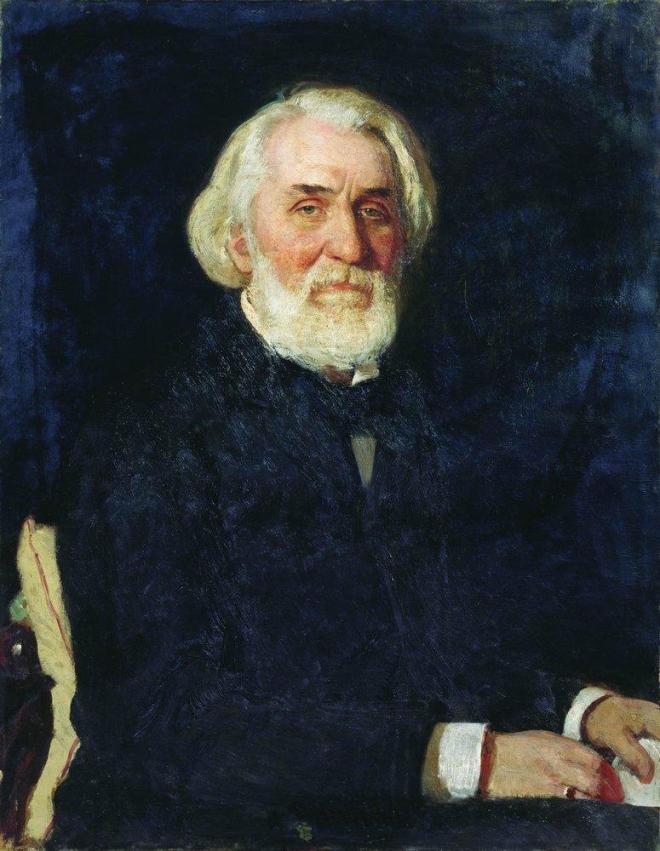
Portrait of the writer Ivan Sergeevich Turgenev. 1872
Portrait of the composer P. S. Campioni. 1872
Cossack. 1873
Traveler. 1873
Holy fool, surrounded by wanderers. 1872
Head of a Kirghiz – a convict. 1873
Fedot and Arina. 1873
Evening on Great Saturday. 1873
Portrait of the merchant S. T. Kuznetsov. 1873
Gogol wird von den Gestalten seiner Werke zu Grabe getragen. 1873
Inveterate. 1873
Sad father. 1873-74
Scouts near Sevastopol. 1874
pigeon-fancier-1874
Reception of a wanderer. 1874
The return of the reapers from the field in the Ryazan province. 1874
Joyful father. 1874
The old man. Fragm. variant k. Old people – parents at the grave of their son. 1874
Old parents at the grave of their son – 1874
Botanist. 1874
Gossip Girl. 1875
Pugachev’s Court. 1875
Portrait of Anna Ivanovna Sergeeva, nee. Sheina. 1875
Peasant in the field. 1876
Portrait of Pyotr Ivanovich Nikolaev, Chairman of the Vladimir Zemstvo Council. 1876
Portrait of N. A. Kasatkin. 1876
Portrait of A. I. Kridener, born. Ivanova, the artist’s mother. 1876
fishing 1878
Blind. 1878
A janitor who gives an apartment to a mistress. 1878
Mother with a sick child. 1878
Portrait of A.K. Savrasov (1830-1897) – 1878
Christ in the Garden of Gethsemane. 1878
Executed Pugachevites. Rice. pencil and pen. 1878
Pugachev’s Court – 1879
Fishermen. (Priest, deacon and seminarian). 1879
Wanderer in the field. 1879
From the station. 1879
Blessed. 1879
On the traction. Pencil drawing. 1879
The return of the peasants from the funeral in winter. Beginning 1880s
Vasily Grigoryevich Perov est né entre le 21 et le 23 décembre 1833 (2 ou 4 janvier 1834) et est le fils illégitime du baron Georgy (Grigory) Karlovich Kridener et d’AI Ivanova.
Même si ses parents se sont mariés peu de temps après sa naissance, Vasily n’avait pas droit au nom et au titre de son père. Et son surnom “Perov”, qui est son nom de famille, lui a été donné par son professeur de literacy pour sa diligence et son écriture habile.
Dans son enfance, Vasily était malade de la variole, ce qui lui a causé une mauvaise vue pour le reste de sa vie.
Il s’est intéressé à la peinture après avoir observé le travail d’un artiste et est allé étudier à l’école d’art Arzamas d’AV Stupin. Mais parce qu’il était si bon qu’il a été autorisé à peindre avec des peintures à l’huile avant les autres élèves, puis malheureusement à cause d’une dispute avec un autre élève, il n’a pas terminé l’école.
Il est rentré chez lui et a commencé à créer la composition « Crucifixion » écrite tout au long du Carême et achevée la Semaine Sainte puis placée dans une église située près du village de Nikolskoye.
Il a également peint un certain nombre de portraits et de tableaux de genre : « Un mendiant qui mendie », « Troïka du village », « Festival folklorique dans la Semik ».
En 1853, Vasily Perov est entré à l’école de peinture, de sculpture et d’architecture de Moscou et a obtenu son diplôme universitaire sous la direction de SK Zaryanko.
Perov a présenté le “Portrait de Nikolai Grigoryevich Kridener, le frère de l’artiste” à l’Académie impériale des arts et a reçu une petite médaille d’argent en 1856.
Portrait of Nikolai Grigorievich Rubinstein. 1870
Ce travail était encore étroitement lié aux traditions de l’art du début du XIXe siècle, mais déjà dans les travaux suivant, Perov agissait comme un innovateur.
En 1857, le tableau “Arrivée d’un policier pour enquête” rapporte à l’artiste une grande médaille d’argent et attire l’attention du public et des critiques.
The arrival of the police officer for the investigation. 1857
En 1860, Perov reçut à nouveau une petite médaille d’or pour le tableau «Premier rang. fils de sacristain, promu greffier collégial », qui érigea l’artiste en héritier du genre satirique des années 1840.
Maintenant, il pouvait participer au concours pour une grande médaille d’or, et peint “Sermon dans le village” et “Procession religieuse rurale à Pâques”. Il reçu une grande médaille d’or en 1867 et le droit de voyager à l’étranger comme pensionnaire pour le premier tableau.
Sermon in the village -1861
En 1862, Perov épousa Elena Edmondovna Sheins et ils partirent à l’étranger alors qu’il était lui-même pensionnaire à l’Académie des Arts.
En 1863-1864, Perov a vécu et travaillé à Paris, mais il voulait rentrer chez lui et après avoir reçu l’autorisation de l’Académie pour un retour anticipé qui comprenait la poursuite de l’internat en Russie, il est retourné à Moscou.
Vasily Perov s’est installé dans la maison de l’oncle de sa femme, F.F. Rezanov à Moscou et n’a jamais quitté la ville.
Alors qu’il était encore à l’étranger, Perov a conçu un grand tableau avec une intrigue de la vie monastique, avec ces peintures, une nouvelle étape dans le travail de l’artiste a commencé: d’une direction satirique, il est passé à des histoires plus dramatiques – sur «l’humiliation et l’offense.
En 1869, Vasily Perov et Myasoedov créent l’Association des expositions d’art itinérantes (TPKhV). Vasily, qui a été membre du conseil d’administration pendant 7 ans, a organisé un groupe de Wanderers à Moscou.
En 1870, il a obtenu le titre de professeur de l’Académie des Arts grâce aux tableaux “Vagabond” et “Attrape-Oiseaux”, et reçoit le premier prix de l’OPH pour le tableau “L’Homme-Oiseau”.
bird-catcher by Perov – 1870
Dans les années 1970, les histoires de la vie quotidienne occupent une place particulière dans l’œuvre de Perov. Puis en 1871, Vasily est nommé professeur à l’École de peinture et d’art de Moscou.
En 1871-1872, Perov, commandé par le Premier ministre Tretiakov, a exécuté un certain nombre de portraits d’écrivains et de scientifiques russes. Perov a atteint une telle «vérité» dans certains portraits, ce qui dans l’art russe n’a été atteint que par IE Repin et VA Serov .
Perov a épousé Elizaveta Egorovna Druganova en 1872.
En 1873, ses tableaux “Pêcheur” et “Chasseurs au repos” sont présentés à l’Exposition universelle de Vienne.
fisherman-1871
En 1877, Perov a quitté les membres du TPHV et a participé à l’exposition de l’Exposition universelle de Paris un an plus tard.
Au cours des dernières années de sa vie, VG Perov a collaboré avec la revue ” Priroda i Okhota ” de LP Sabaneev et un certain nombre de ses histoires ont été publiées dans le Art Journal qui a été publié en 1881-1887.
Sa santé se détériora à cause du typhus et d’une pneumonie en 1881 et Vasily Perov mourut de consomption, à l’âge de 49 ans, dans un petit hôpital de Golitsyn près de Moscou.
Perov a été enterré au cimetière du monastère, du monastère de Danilov où une pierre tombale lugubre en forme de croix sur le Golgotha a été érigée sur sa tombe.
Plus tard, ses cendres ont été réenterrées au cimetière du monastère du monastère de Donskoy, et sur la nouvelle tombe de l’artiste, un monument a été érigé par le sculpteur Alexei Evgenievich Yeletsky.
Vasily Perov was a great Russian artist of the 19th century, whose work opened up new horizons for Russian art . His paintings are deep and complex, and demonstrate the whole truth of the hard life of the people. Vasily was also a great teacher who brought up more than a dozen really great painters. Watch all his paintings in a slide show and enjoy his biography.
paintings of Vasily Grigorevich Perov
Self-portrait. 1851
Portrait of N. G. Kridener, the artist’s brother. 1856
The arrival of the police officer for the investigation. 1857
Wanderer. 1859
Scene at the grave. 1859
First rank. 1860
Portrait of an unknown. 1860s
Portrait of E. E. Perova. OK. 1860
Village procession at Easter – 1861
Burglary on Easter night. 1861
Sermon in the village -1861
Village procession at Easter. 1862
Amateur – 1862
Portrait of I. M. Pryanishnikov. Around 1862
Courtship of an official to the daughter of a tailor – 1862
Tea drinking in Mytishchi, near Moscow – 1862
Organ grinder – 1863
Funeral in a poor quarter of Paris. 1863
Street musicians in Paris. 1863
Parisian festivities. 1863
A holiday in the vicinity of Paris. Sketch. 1864
Holiday in the vicinity of Paris (On Montmartre). (Unfinished) 1863-64
Seller of songbooks. (Unfinished) 1863-64
Parisian festivities. The interior of the booth during the presentation 1863-1864
Parisian organ grinder. 1864
Blind musician. 1864
A boy with raised hands, addressing the public – 1864
Orphans in the cemetery. 1864
Parisian rag-pickers. 1864
Savoyard. 1864
Songbook seller. 1864
Holiday near Paris. 1864.
last-journey-1865
Guitarist-bobyl. 1865
Boy – artisan. 1865
Next at the pool. 1865
Janitor giving an apartment to a mistress – 1865
Meal. 1865
Meal 1865 -1976
troika-apprentice-workmen-carrying-water-1866
A boy preparing for a fight – 1866
Clean Monday. 1866
The arrival of a governess in a merchant’s house. 1866
Arrival of a governess to a merchant’s house
Conversation at the round table. 1866
On a pilgrimage. 1867
In the loan office. 1867
Christ and the Mother of God at the sea of life. 1867
Drawing teacher – 1867
Drowned Woman – 1867
On the railroad. 1868
Fomushka-owl. 1868
Janitor – self-taught. 1868
Market in Moscow. 1868
Portrait of N. F. Rezanov. 1868
Portrait of F. I. Rezanova. 1868
Portrait of F. F. Rezanov. 1868
The division of the inheritance in the monastery (Death of a monk). Pencil drawing. 1868
The last tavern at the outpost. 1868
Old Man – 1868
Portrait of the writer A. F. Pisemsky. 1869
Portrait of V.V. Bezsonova (1826-1887) – 1869
Portrait of N. P. Lanin. 1869
Wanderer. 1869
Portrait of A. A. Borisovsky. 1869
Girl with a jug. 1869
bird-catcher by Perov – 1870
Sleeping children. 1870
Portrait of Nikolai Grigorievich Rubinstein. 1870
To the Trinity-Sergius – 1870
Portrait of Anton Grigorievich Rubinstein. 1870
On the eve of the bachelorette party. Seeing the bride from the bath – 1870
Portrait of Avdotya Kuznetsova. 1870
Wanderer – 1870
Self-portrait. 1870
Arrival of a college girl to a blind father 1870
Portrait of an unknown. 1870
Grandfather and granddaughters. 1871
fisherman-1871
hunters-at-rest-1871
Portrait of A.N. Ostrovsky (1823-1886) -1871
Conversation of students with a monk. 1871
Portrait Dostoevsky 1872
Portrait of A.N. Maikov (1821-1897) – 1872
Portrait of V.I. Dahl (1801-1872) – 1872
Portrait of I.S. Kamynin (1808-1874) – 1872
Portrait of the writer Sergei Timofeevich Aksakov. 1872
Portrait of the historian Mikhail Petrovich Pogodin (1800-1875) – 1872
Portrait of the writer Ivan Sergeevich Turgenev. 1872
Portrait of the composer P. S. Campioni. 1872
Cossack. 1873
Traveler. 1873
Holy fool, surrounded by wanderers. 1872
Head of a Kirghiz – a convict. 1873
Fedot and Arina. 1873
Evening on Great Saturday. 1873
Portrait of the merchant S. T. Kuznetsov. 1873
Gogol wird von den Gestalten seiner Werke zu Grabe getragen. 1873
Inveterate. 1873
Sad father. 1873-74
Scouts near Sevastopol. 1874
pigeon-fancier-1874
Reception of a wanderer. 1874
The return of the reapers from the field in the Ryazan province. 1874
Joyful father. 1874
The old man. Fragm. variant k. Old people – parents at the grave of their son. 1874
Old parents at the grave of their son – 1874
Botanist. 1874
Gossip Girl. 1875
Pugachev’s Court. 1875
Portrait of Anna Ivanovna Sergeeva, nee. Sheina. 1875
Peasant in the field. 1876
Portrait of Pyotr Ivanovich Nikolaev, Chairman of the Vladimir Zemstvo Council. 1876
Portrait of N. A. Kasatkin. 1876
Portrait of A. I. Kridener, born. Ivanova, the artist’s mother. 1876
fishing 1878
Blind. 1878
A janitor who gives an apartment to a mistress. 1878
Mother with a sick child. 1878
Portrait of A.K. Savrasov (1830-1897) – 1878
Christ in the Garden of Gethsemane. 1878
Executed Pugachevites. Rice. pencil and pen. 1878
Pugachev’s Court – 1879
Fishermen. (Priest, deacon and seminarian). 1879
Wanderer in the field. 1879
From the station. 1879
Blessed. 1879
On the traction. Pencil drawing. 1879
The return of the peasants from the funeral in winter. Beginning 1880s
Vasily Grigoryevich Perov was born between December 21 and 23, 1833 (January 2 or 4, 1834) and is the illegitimate son of Baron Georgy (Grigory) Karlovich Kridener , and A. I. Ivanova.
Even though his parents got married shortly after his birth, Vasily did not have the right to his father’s surname and title. And his nickname “Perov” which is his surname, was given to him by his literacy teacher for diligence and skillful writing.
In his childhood Vasily was ill with smallpox, which caused him to have poor eyesight for the rest of his life.
He became interested in painting after watching the work of an artist and went to study at the Arzamas art school of A. V. Stupin. But because he was so good he was allow to paint with oil paints before the other students, then sadly because of a dispute with another student, he didn’t finish school.
He went back home and began creating the composition ” Crucifixion ” written throughout Lent and completed on Holy Week then placed in a church located near the village of Nikolskoye.
He also painted a number of portraits and genre paintings: “A Beggar Begging”, ” Village Troika “, “Folk Festival in the Semik”.
In 1853, Vasily Perov entered the Moscow School of Painting, Sculpture and Architecture and graduated from college under the guidance of S.K. Zaryanko .
Perov presented the “Portrait of Nikolai Grigoryevich Kridener, the artist’s brother” to the Imperial Academy of Arts, and was awarded a small silver medal in 1856.
Portrait of Nikolai Grigorievich Rubinstein. 1870
This work was still closely connected with the traditions of art of the early 19th century, but already in subsequent works Perov acted as an innovator.
In 1857, the painting “Arrival of a police officer for investigation” brought the artist a large silver medal, and attracted the attention of the public and critics.
The arrival of the police officer for the investigation. 1857
In 1860, Perov was again awarded a small gold medal for the painting “First rank. The son of a sexton, promoted to collegiate registrars”, which established the artist as the heir to the satirical genre of the 1840s.
Now he could participate in the competition for a large gold medal, and painted “Sermon in the village” and “Rural religious procession at Easter”. He received a large gold medal in 1867 and the right to travel abroad as a boarder for the first painting.
Sermon in the village -1861
In 1862, Perov married Elena Edmondovna Sheins and they went abroad while he was himself a boarder at the Academy of Arts.
In 1863-1864 Perov lived and worked in Paris, but he wanted to go back home and having received permission from the Academy for an early return which included the continuation of boarding in Russia, he returned to Moscow.
Vasily Perov settled in the house of his wife’s uncle, F.F. Rezanov in Moscow and never left the city.
While still abroad, Perov conceived a large painting with a plot from monastic life, with these paintings, a new stage in the artist’s work began: from a satirical direction, he moved on to more dramatic stories – about “humiliated and offended.
In 1869, Vasily Perov and Myasoedov created the Association of Traveling Art Exhibitions (TPKhV). Vasily who was a board member for 7 years organized a Moscow group of Wanderers.
In 1870 he was awarded the title of professor by the Academy of Arts thanks to the paintings “Wanderer” and “Birdcatcher”, and received the first prize of the OPH for the painting “The Birdman”.
bird-catcher by Perov – 1870
In the 1970s, everyday life stories occupied a special place in Perov’s work. Then in 1871, Vasily was appointed teacher of the Moscow School of Painting and Art.
In 1871-1872 Perov, commissioned by P. M. Tretyakov, executed a number of portraits of Russian writers and scientists. Perov achieved such “truthfulness” in some portraits, which in Russian art was noted only by I. E. Repin and V. A. Serov .
Perov married Elizaveta Egorovna Druganova in 1872.
In 1873, his paintings “Fisherman” and “Hunters at rest” were presented at the World Exhibition in Vienna.
fisherman-1871
In 1877, Perov left the members of the TPHV and participated in the exposition of the World Exhibition in Paris a year later.
In the last years of his life, V. G. Perov collaborated with the journal ” Priroda i Okhota ” by L. P. Sabaneev and a number of his stories were published in the Art Journal which was published in 1881-1887.
His health was undermined by typhus and pneumonia in 1881 and Vasily Perov died of consumption , at the age of 49, in a small Golitsyn hospital near Moscow.
Perov was buried at the monastery cemetery in the Danilov Monastery where a mournful tombstone in the form of a cross on Golgotha was erected on his grave.
Later his ashes were reburied at the monastery cemetery in the Donskoy Monastery, and on the new grave of the artist, a monument was erected by the sculptor Alexei Evgenievich Yeletsky.