
Lisez le poème “La Crête Volatile des Nuages s’éclaircit” d’Alexandre Pouchkine en français avec français et russe côte à côte avec une brève analyse du poème

Livres bilinguesRead in EnglishNous contacter
Littérature américaineLittérature françaiseLittérature russe

< < < Je me Souviens d’un Moment Merveilleux (Kern) (Ru/Fr) / I Remember a Wonderful Moment (Kern) (Ru/Eng) /Я помню чудное мгновенье (Керн) (Рус/Анг.) / (Рус/ Фра.)
Ma Muse (Ru/Fr) / My Muse (Ru/Eng) /Муза (Рус/Анг.) / (Рус/ Фра.) > > >


Chers lecteurs et abonnés, cette semaine, j’ai traduit et fait une brève analyse du merveilleux poème d’amour “La Crête Volatile des Nuages s’éclaircit” qui a été écrit en 1820 par Alexandre Pouchkine visitant Gurzuf, où il vivait avec la famille Raevsky alors qu’il était en exil dans la péninsule de Crimée. J’ai ajouté le tableau “Pouchkine en Crimée près des falaises de Gurzuf” d’Ivan Aïvazovski qui semblait parfait pour ce poème.

J’espère que vous les apprécierez autant que moi

Brève analyse du poème “La Crête Volatile des Nuages s’éclaircit” d’Alexandre Pouchkine

Alexandre Pouchkine a écrit le merveilleux poème d’amour “La crête Volatile des Nuages s’éclaircit” en 1820 alors qu’il était en exil caucasien dans la péninsule de Crimée, mais on sait que le nom original du poème était “Таврическая звезда” (Étoile Tauride).

Quand il a été publié, Pouchkine a demandé de supprimer les trois dernières lignes, mais cela n’a pas été fait et le poète a été horrifié que son amour secret soit révélé non seulement au grand public mais aussi à cette même jeune fille. Il n’avait pas à s’inquiéter car même de nos jours, il existe encore plusieurs hypothèses sur les personnes auxquelles il faisait référence. Il aurait pu s’agir d’Ekaterina Raevskaya, de Maria Golitsyna ou d’Ekaterina Karamzina.

Continuer la lecture …

Peinture “Pouchkine en Crimée près des falaises de Gurzuf” par Ivan Aïvazovski

Pushkin in the Crimea at the Gurzuf rocks - Ivan Aivazovsky
Pushkin in the Crimea at the Gurzuf rocks – Ivan Aivazovsky

Signification du mot

осеребрить: donner une teinte argentée, illuminer avec de la lumière argentée

Traduction du poème “La Crête Volatile des Nuages s’éclaircit” d’Alexandre Pouchkine en français avec français et russe côte à côte

Редеет облаков летучая гряда – Александр ПушкинLa Crête Volatile des Nuages s’éclaircit par Alexandre Pouchkine
Traduit par Akirill.com
10/07/2023
Редеет облаков летучая гряда;La crête volatile des nuages s’éclaircit;
Звезда печальная, вечерняя звезда,Étoile triste, étoile du soir,
Твой луч осеребрил увядшие равнины,Ton rayon a couvert de lumière argentée les plaines fanées,
И дремлющий залив, и черных скал вершины;Et la baie dormante, et les sommets des falaises noires;
Люблю твой слабый свет в небесной вышине:J’aime ta faible lumière dans les hauteurs célestes:
Он думы разбудил, уснувшие во мне.Elle a réveillé les pensées qui dormaient en moi.
Читать далее …Continuer la lecture …

Nous mettons beaucoup d’efforts dans la qualité des articles et traductions, soutenez-nous avec un like et un abonnement ou sponsorisez-nous si vous les aimez. Nous sommes aussi sur Facebook et Twitter

Découvrez nos Derniers Posts


© 2023 Akirill.com – All Rights Reserved

Read the poem “The Flying Ridge of Clouds is Thinning” by Alexander Pushkin in English with English and Russian side by side with analysis

Bilingual booksLire en FrançaisContact us
American LiteratureFrench LiteratureRussian Literature

< < < Je me Souviens d’un Moment Merveilleux (Kern) (Ru/Fr) / I Remember a Wonderful Moment (Kern) (Ru/Eng) /Я помню чудное мгновенье (Керн) (Рус/Анг.) / (Рус/ Фра.)
Ma Muse (Ru/Fr) / My Muse (Ru/Eng) /Муза (Рус/Анг.) / (Рус/ Фра.) > > >


Dear Readers and subscribers, this week, I translated and did a short analysis of the wonderful love poem “The Flying ridge of Clouds is thinning” which was written in 1820 by Alexander Pushkin visiting Gurzuf, where he lived with the Raevsky family while he was in exile in the Crimean Peninsula. I added the painting “Pushkin in the Crimea at the Gurzuf rocks” by Ivan Aivazovsky which seemed perfect for this poem.

I hope you’ll enjoy them as much as I did

Short analysis of the poem “The Flying Ridge of Clouds is Thinning” by Alexander Pushkin

Alexander Pushkin wrote the wonderful love poem “The Flying ridge of Clouds is thinning” in 1820 while in Caucasian exile on the Crimean Peninsula, but it is known that the original name of the poem was “Таврическая звезда” (Tauride Star).

When it was published Pushkin asked to remove the last three lines, but it was not done and the poet was horrified that his secret love would be reveled not only to the general public but also by that very maiden. He didn’t need to worry since even nowadays there are still several hypotheses about who he was referring to. It could have been Ekaterina Raevskaya, Maria Golitsyna, or Ekaterina Karamzina.

Continue reading …

Painting “Pushkin in the Crimea at the Gurzuf rocks” by Ivan Aivazovsky

Pushkin in the Crimea at the Gurzuf rocks - Ivan Aivazovsky
Pushkin in the Crimea at the Gurzuf rocks – Ivan Aivazovsky

Meaning of the word

осеребрить: paint silver, illuminate with silver light 

Translation of the poem “The Flying Ridge of Clouds is Thinning” by Alexander Pushkin in English with English and Russian side by side

Редеет облаков летучая гряда – Александр ПушкинThe Flying Ridge of Clouds is Thinning by Alexander Pushkin
Translated by Akirill.com
10/07/2023
Редеет облаков летучая гряда;The flying ridge of clouds is thinning;
Звезда печальная, вечерняя звезда,Sad star, evening star,
Твой луч осеребрил увядшие равнины,Your ray illuminated with silver light the withered plains,
И дремлющий залив, и черных скал вершины;And the slumbering bay, and the black rocky peaks;
Люблю твой слабый свет в небесной вышине:I love your faint light in the heavenly heights:
Он думы разбудил, уснувшие во мне.It awakened the thoughts that had fallen asleep in me.
Читать далее …Continue reading …

We put a lot of effort into the quality of the articles and translations, support us with a like and a subscription or sponsor us if you like them. We are also on Facebook and Twitter

Check out our Last Posts


© 2023 Akirill.com – All Rights Reserved

Lisez le poème “Confession” d’Alexandre Pouchkine Anglais et russe côte à côte

Livres bilinguesRead in EnglishNous contacter
Littérature américaineLittérature françaiseLittérature russe

< < < Cerisier (Ru/Fr) / Cherry Tree (Ru/Eng) / Вишня (Рус/Анг.) / (Рус/ Фра.)
Heureux celui qui est choisi volontairement (Ru/Fr) / Happy is the one, who is chosen willfully (Ru/Eng) / Счастлив, кто избран своенравно (Рус/Анг.) / (Рус/ Фра.) > > >


Chers lecteurs et abonnés, cette semaine, j’ai traduit et fait une brève analyse du merveilleux poème d’amour “Confession” d’Alexandre Pouchkine. Comme d’habitude j’ai ajouté un beau tableau “Automne” d’Alexei Kondratyevich Savrasov. J’espère que vous les apprécierez autant que moi.

Brève analyse du poème “Confession” d’Alexandre Pouchkine

Alexandre Pouchkine a écrit le poème “Confession” en 1826 pour Alexandra, la fille adoptive de P. Osipova, mais il ne lui a jamais donné le poème et il n’a pas été publié de son vivant.

Pouchkine tombait souvent amoureux et parfois, il devait souffrir d’un amour non partagé, ce qu’il décrit dans ce poème. Dans “Confession” , le poète comprend le désespoir de son amour, décrivant ses sentiments comme une “stupidité malheureuse”

Continuez la lecture …

Peinture “Automne” par Alexeï Kondratievitch Savrassov


Traduction du poème “Confession” d’Alexandre Pouchkine en français avec français et russe côte à côte


Александр Пушкин — ПризнаниеConfession par Alexandre Pouchkine
Traduit par Akirill. com
Я вас люблю, — хоть я бешусь,Je vous aime, même si je suis en colère,
Хоть это труд и стыд напрасный,Bien que ce soit du travail et de la honte en vain,
И в этой глупости несчастнойEt cette malheureuse bêtise
У ваших ног я признаюсь!A vos pieds je l’avoue !
Мне не к лицу и не по летам…Cela ne me convient pas et cela ne convient pas à mon âge…
Пора, пора мне быть умней!Alors, il est temps pour moi d’être plus intelligent !
Но узнаю по всем приметамMais je reconnais par tous les signes
Болезнь любви в душе моей:La maladie de l’amour dans mon âme :
Читать далее …Continuez la lecture …


Nous mettons beaucoup d’efforts dans la qualité des articles et traductions, soutenez-nous avec un like et un abonnement ou sponsorisez-nous si vous les aimez. Nous sommes aussi sur Facebook et Twitter

Découvrez nos Derniers Posts


© 2023 Akirill.com – All Rights Reserved

Read the Poem “Confession” by Alexander Pushkin English and Russian side by side

Bilingual booksLire en FrançaisContact us
American LiteratureFrench LiteratureRussian Literature

< < < Cerisier (Ru/Fr) / Cherry Tree (Ru/Eng) / Вишня (Рус/Анг.) / (Рус/ Фра.)
Heureux celui qui est choisi volontairement (Ru/Fr) / Happy is the one, who is chosen willfully (Ru/Eng) / Счастлив, кто избран своенравно (Рус/Анг.) / (Рус/ Фра.) > > >


Dear readers and subscribers, this week I translated and did a short analysis of the wonderful love poem “Confession” by Alexander Pushkin. As usual I added a beautiful painting “Autumn” by Alexei Kondratyevich Savrasov. I hope you’ll enjoy them as much as I did.

Short analysis of the poem “Confession” by Alexander Pushkin

Alexander Pushkin wrote the poem “Confession” in 1826 for Alexandra, the adopted daughter of P. Osipova but he never gave her the poem and it was not published during his lifetime.

Pushkin often fell in love and sometimes, he had to suffer from unrequited love which is what he describes in this poem. In “Confession”, the poet undestands the hopelessness of his love, describing his feelings as “unhappy stupidity”

Continue reading …

Painting “Autumn” by Alexei Kondratyevich Savrasov


Translation of the poem “Confession” by Alexander Pushkin in English with English and Russian side by side


Александр Пушкин — ПризнаниеConfession by Alexander Pushkin
Translated by Akirill.com
Я вас люблю, — хоть я бешусь,I love you, even though I am mad,
Хоть это труд и стыд напрасный,Even though this is labor and shame in vain,
И в этой глупости несчастнойAnd this unfortunate stupidity
У ваших ног я признаюсь!at your feet I confess!
Мне не к лицу и не по летам…It doesn’t suit me and it doesn’t suit my years…
Пора, пора мне быть умней!Still, it’s time for me to be smarter!
Но узнаю по всем приметамBut I recognize by all the signs
Болезнь любви в душе моей:The disease of love in my soul: :
Читать далее ..
Continue reading ..


We put a lot of effort into the quality of the articles and translations, support us with a like and a subscription or sponsor us if you like them. We are also on Facebook and Twitter

Check out our Last Posts


© 2023 Akirill.com – All Rights Reserved
Poème «Matin d’automne» d’Alexandre Pouchkine traduit en français avec français et russe côte à côte.

Livres bilinguesRead in EnglishNous contacter
Littérature américaineLittérature françaiseLittérature russe

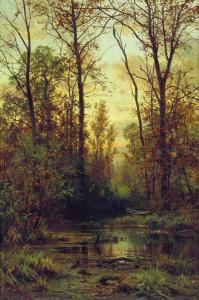
Chers lecteurs et abonnés, cette semaine j’ai traduit et écrit une courte analyse du célèbre et très joli poème d’amour « Matin d’automne » écrit par Alexandre Pouchkine quand il avait 17 ans incluant l’explication des mots obsolètes ainsi que deux beaux tableaux de I. I. Chichkine qui sont “Ruisseau forestier. Automne” et “Paysage d’automne. Parc à Pavlovsk” . J’espère que vous apprécierez le poème et les peintures autant que moi.

< < < Automne  (Ru/Fr) / Autumn (Ru/Eng) / Осень (Рус/Анг.) / (Рус/ Фра.)

“Cerisier” (Ru/Fr) / “Cherry Tree” (Ru/Eng) / Вишня (Рус/Анг.) / (Рус/ Фра.) > > >


Brève analyse du poème « Matin d’automne » d’Alexandre Pouchkine

Le poème « Matin d’automne », écrit par Alexandre Pouchkine à l’âge de dix-sept ans et décrivant son premier amour sérieux, n’a été publié qu’après sa mort. Dans ce poème, Pouchkine relie tout ce qui lui est cher (champs, collines, forêt de chênes) à sa bien-aimée, se rappelant à quel point il était heureux là-bas. Et « свирель » représente à la fois la poésie et l’idylle. La nature se refroidit et meurt mais son amour reste vivant et il croit qu’il reverra la jeune fille au nouveau printemps.

Peintures “Ruisseau forestier. Automne” and “Paysage d’automne. Parc à Pavlovsk” by I. I. Chichkine

Explication des mots russes obsolètes

драго́й dans ce cas est un mot obsolète qui signifie chère (celle qui est précieuse, bien-aimée, proche du cœur). Un autre sens que l’on retrouve dans la poésie ancienne est : cher (synonyme : coûteux, précieux, précieux)

Свирель est un ancien mot russe *svirati   qui signifie jouer de la flûte – En slave de l’Église : svirati   signifie sifflet – sifflement

Poème « Matin d’automne » d’Alexandre Pouchkine en français et russe côte à côte.

Осеннее утро –
Александр Пушкин
Matin d’automne
d’Alexandre Pouchkine
traduit par Akirill.com
Поднялся шум; свирелью полевойUn bruit s’éleva; avec le sifflement musical des champs 
Оглашено моё уединенье,Ma solitude a été annoncée,
И с образом любовницы драгойEt avec l’image de ma chère  bien-aimée
Последнее слетело сновиденье.Le dernier rêve s’est envolé,
С небес уже скатилась ночи тень.L’ombre de la nuit est déjà descendue du ciel.
Взошла заря, блистает бледный день —L’aube s’est levée, le jour pâle brille –
А вкруг меня глухое запустенье…Et tout autour de moi est une désolation sourde…
Читать далее …Continuer la lecture …

Pushkin Alexander by Sokolov

< < < Automne  (Ru/Fr) / Autumn (Ru/Eng) / Осень (Рус/Анг.) / (Рус/ Фра.)

“Cerisier” (Ru/Fr) / “Cherry Tree” (Ru/Eng) / Вишня (Рус/Анг.) / (Рус/ Фра.) > > >

Nous mettons beaucoup d’efforts dans la qualité des articles, soutenez-nous avec un like et un abonnement si vous les aimez.

Partager sur les réseaux sociaux

Découvrez nos derniers posts

Visitez nous sur Facebook ou Twitter


© 2023 Akirill.com – All Rights Reserved

Poem “Autumn morning” by Alexander Pushkin in English with English and Russian side by side

Bilingual booksLire en FrançaisContact us
American LiteratureFrench LiteratureRussian Literature

Dear readers and subscribers, this week I translated and wrote a short analysis of the famous and beautiful love poem “Autumn morning” written by Alexander Pushkin when he was 17 years old including the explanation of the obsolete words as well as two beautiful paintings by I. I. Shishkin which are “Forest Creek. Autumn” and “Autumn landscape.Park in Pavlovsk. I hope you will enjoy the poem and paintings as much as I did.

< < < Automne  (Ru/Fr) / Autumn (Ru/Eng) / Осень (Рус/Анг.) / (Рус/ Фра.)

“Cerisier” (Ru/Fr) / “Cherry Tree” (Ru/Eng) / Вишня (Рус/Анг.) / (Рус/ Фра.) > > >


Short analysis of the poem “Autumn morning” by Alexander Pushkin

The poem “Autumn morning” which was written by Alexander Pushkin when he was seventeen years old and describes his first serious love, was first published only after his death. In this poem, Pushkin connects everything dear to him (fields, hills, oak forest) with his sweetheart, remembering how happy he was there. And “свирель” represents both poetry and idyll. The nature gets cold and dies but his love stay alive and he believes that he will see the girl in the new spring.

Paintings “Forest Creek. Autumn” and “Autumn landscape.Park in Pavlovsk by I. I. Shishkin

Explanation of outdated Russian words

драго́й in that case is an outdated word which means dear (one that is treasured, beloved, close to the heart). Another meaning which can be found in old poetry is: expensive (synonyme: costly, valuable, precious)

Свирель is an ancient Russian word *svirati  which means play the flute  – In Church Slavonic: svirati  mean sifflet – whistle

Poem “Autumn morning” by Alexander Pushkin English and Russian side by side

Осеннее утро –
Александр Пушкин
Autumn morning by Alexander Pushkin
translated by Akirill.com
Поднялся шум; свирелью полевойA noise arose; with a field musical whistling
Оглашено моё уединенье,My solitude has been announced,
И с образом любовницы драгойAnd with the image of my dear lover
Последнее слетело сновиденье.The last dream flew off.
С небес уже скатилась ночи тень.The shadow of night has already rolled down from the sky.
Взошла заря, блистает бледный день —The dawn has risen, the pale day is shining –
А вкруг меня глухое запустенье…And all around me is a deaf desolation …
Читать далее …Continue reading …

Pushkin Alexander by Sokolov

< < < Automne  (Ru/Fr) / Autumn (Ru/Eng) / Осень (Рус/Анг.) / (Рус/ Фра.)

“Cerisier” (Ru/Fr) / “Cherry Tree” (Ru/Eng) / Вишня (Рус/Анг.) / (Рус/ Фра.) > > >

We put a lot of effort into the quality of articles, support us with a like and a subscription if you like it.
Share on social networks
Check out Our Latest Posts

Visit us on Facebook or Twitter


© 2023 Akirill.com – All Rights Reserved

Progrès du Site semaine du 23 aout, 2023

Livres bilinguesRead in English Nous contacter

Chers lecteurs et abonnés, cette semaine j’ai continué à ajouter des poèmes à nos poètes français, Américains et russes. Tous nos poèmes ainsi que les poèmes traduits sont disponibles pour que tout le monde puisse les lire sans abonnement payant.

American Poetry – Poésie Américaine – Американская поэзияPoésie Française – French Poetry – Французская поэзияРусская поэзия – Russian Poetry – Poésie Russe

J’ai d’abord ajouté des poèmes à Anna Akhmatova (Анна Ахматова) et terminé les poèmes de Konstantin Simonov (Константин Симонов) dans notre section russe. Tous les poèmes sont en russe.

Pour notre page de poésie américaine, j’ai ajouté d’autres poèmes d’Henry Wadsworth Longfello (Генри Уодсворт Лонгфелло).

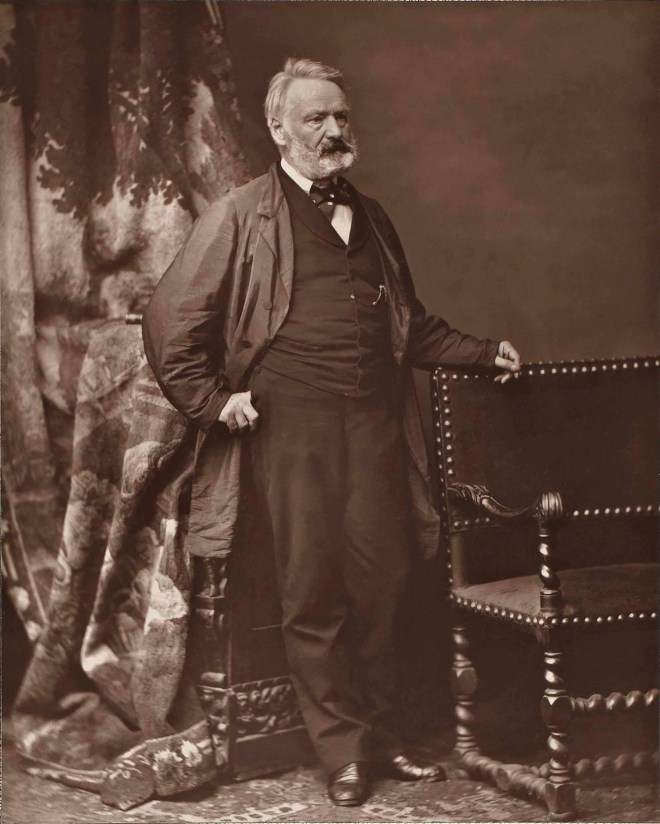
Sur notre page de poésie française contrairement aux poèmes américains et russes, j’ai ajouté des poèmes dans les 3 languages (Français, Anglais et Russe) aux pages de Paul Verlaine (Поль Верлен), et en français et Anglais à la page de Victor Hugo (Виктор Гюго).

J’ai aussi ajouté 3 poèmes d’Alexandre Pouchkine en français: L’antchar , L’or Et Le Fer, La Petite Fleur

Voici quelques poèmes choisis au hasard par Victor Hugo (Виктор Гюго)

Et quelques poèmes choisis au hasard par Henry Wadsworth Longfello (Генри Уодсворт Лонгфелло)

Puis quelques poèmes choisis au hasard par Anna Akhmatova (Анна Ахматова)

J’ai aussi ajouté des poèmes à notre deuxième poète français: Paul Verlaine (Поль Верлен)

Et quelques poèmes de notre dernier poète Konstantin Simonov (Константин Симонов)

Cette semaine, notre article était une traduction côte à côte du poème “J’ai appris a vivre simplement, sagement” d’Anna Akhmatova avec le tableau “Étang à Vela”  de Vasily Dmitrievich Polenov

Pond in Vela by Vasily Polenov
Étang à Vela”  de Vasily Dmitrievich Polenov

J’espère que vous trouverez quelque chose à apprécier

Si vous avez aimé cet article, n’oubliez pas de liker et de partager.
Abonnez-vous pour ne rien rater
Visitez nos derniers articles

Retrouvez-nous sur  Facebook  ou  Twitter


© 2023 Akirill.com – All Rights Reserved

Site Progress Week of August 23, 2023

Bilingual BooksLire en Français Contact us

Dear readers and subscribers, this week I continued adding poems to our French, Americain and Russia poets. All of our poems as well as translated poems are available for everyone to read without any paying subscription.

American Poetry – Poésie Américaine – Американская поэзияPoésie Française – French Poetry – Французская поэзияРусская поэзия – Russian Poetry – Poésie Russe

First I added poems to Anna Akhmatova (Анна Ахматова) and finished the poems by Konstantin Simonov (Константин Симонов) in our Russian section. All of the poems are in Russian.

For our American Poetry page, I added more poems of Henry Wadsworth Longfello (Генри Уодсворт Лонгфелло).

On our French Poetry page contrary to the Americain and Russian poems, I added poems in the 3 languages (French, English and Russian) to the pages of Paul Verlaine (Поль Верлен), and in French and English to the page of Victor Hugo (Виктор Гюго).

I also added 3 poems d’Alexander Pushkin in French: L’antchar , L’or Et Le Fer, La Petite Fleur

Here are a few randomly selected poems by Victor Hugo (Виктор Гюго)

And a few randomly selected poems by Henry Wadsworth Longfello (Генри Уодсворт Лонгфелло)

Then a few randomly selected poems by Anna Akhmatova (Анна Ахматова)

I also added poems to our second french poet: Paul Verlaine (Поль Верлен)

And a few poems from our last poet Konstantin Simonov (Константин Симонов)

This week our article was a translation put side by side of the poem “I have learned to live simply, wisely” by Anna Akhmatova  with the painting  “Pond in Vela” by Vasily Dmitrievich Polenov

Pond in Vela by Vasily Polenov
Pond in Vela” by Vasily Dmitrievich Polenov

I hope you’ll find something to enjoy

If you liked this article, don’t forget to like and share.
Subscribe to not miss anything
Visit our latest posts

Find us on Facebook or Twitter


© 2023 Akirill.com – All Rights Reserved
Site Progress Week of July 19, 2023

Bilingual BooksLire en Français Contact us

This week I decided to change a bit and instead of finishing Mikhail Lermontov and beginning new French and Americans poets I added many books and short stories to Nicholai Gogol and Anton Chekhov.

Next week and possibly the one after there should be no post as I decided to take some well deserved vacation.

As usual I added books and stories in the 3 different languages, here are a few that are in our 3 langages:

except for Nevsky prospekt in English. I am quite sure that there are more on the page of Nikolai Gogol

I also added to Nikolai Gogol, (the list is in English, Russian, and French)

Nikolai Gogol

And here a list of books added to Anton Chekhov

Anton Chekhov

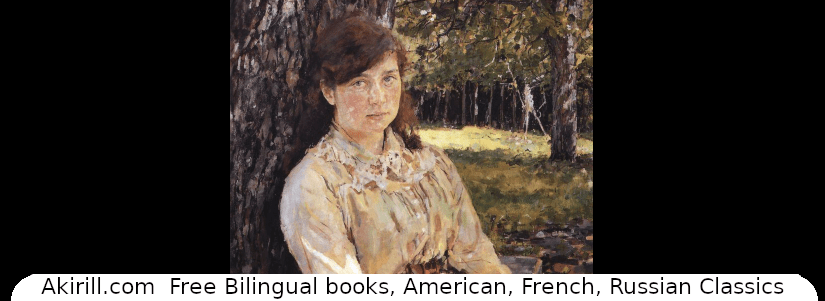
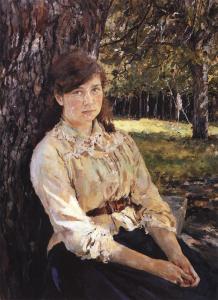
This week our article was a translation and English and Russian side by side of the Poem “Wish for fame” by Alexander Pushkin with the painting “Girl in the Sunlight” by Valentin Serov

I hope you’ll find something to enjoy

If you liked this article, don’t forget to like and share.
Subscribe to not miss anything
Visit our latest posts

Find us on Facebook or Twitter


© 2023 Akirill.com – All Rights Reserved
Poème  “Souhait de Gloire” d’Alexandre Pouchkine Français and Russe côte à côte

Livres bilinguesRead in EnglishNous contacter
Littérature américaineLittérature françaiseLittérature russe

Peinture “Fille au soleil” (Portrait of M. Simonovich) by Valentin Serov

“Fille au soleilt” (Portrait de M. Simonovich) by Valentin Serov – 1888 – Style: Impressionisme – Genre: Portrait / Девушка, освещенная солнцем (Портрет М.Я.Симонович)

Poème  “Souhait de Gloire” d’Alexandre Pouchkine Français and Russe côte à côte

Желание славыSouhait de Gloire
Traduit par Akirill.com
Когда, любовию и негой упоенный,Quand, ivre d’amour et de bonheur,
Безмолвно пред тобой коленопреклоненный,Silencieusement agenouillé devant toi,
Я на тебя глядел и думал: ты моя, —Je t’ai regardée et j’ai pensé: tu es à moi, –
Ты знаешь, милая, желал ли славы я;Sais-tu, ma chérie, si je voulais la gloire ;
Ты знаешь: удален от ветреного света,Tu sais: retiré de la lumière venteuse,
Скучая суетным прозванием поэта,Manquant le vain surnom du poète,
Устав от долгих бурь, я вовсе не внималFatigué des longs orages, je n’ai pas du tout fait attention
Жужжанью дальному упреков и похвал.Aux bourdonnement de reproches et d’éloges lointains.
Читать далееContinuer la lecture

J’espère que vous avez apprécié ce poème et cette peinture autant que moi


Si vous avez aimé cet article, abonnez-vous, mettez des likes, écrivez des commentaires !

Partager sur les réseaux sociaux

Découvrez nos derniers posts

Visitez nous sur Facebook ou Twitter


© 2023 Akirill.com – All Rights Reserved