On this site we hope to help you learn, and to remove the difficulties caused by the difference of culture and language. Sur ce site nous espérons vous aider à apprendre, et à enlever la barrière causée par les différents languages et cultures.
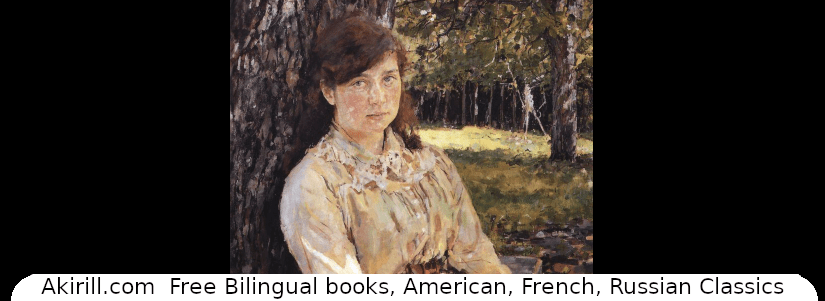
Painting “Girl in the Sunlight” (Portrait of M. Simonovich) by Valentin Serov
“Girl in the Sunlight” (Portrait of M. Simonovich) by Valentin Serov – 1888 – Style: Impressionism – Genre: Portrait / Девушка, освещенная солнцем (Портрет М.Я.Симонович)
Poem “Wish for fame” by Alexander Pushkin English and Russian side by side
Желание славы
Wish for fame
Translated by Akirill.com
Когда, любовию и негой упоенный,
When, intoxicated with love and bliss,
Безмолвно пред тобой коленопреклоненный,
Silently kneeling in front of you,
Я на тебя глядел и думал: ты моя, —
I looked at you and thought: you are mine, –
Ты знаешь, милая, желал ли славы я;
Do you know, dear, if I wanted fame;
Ты знаешь: удален от ветреного света,
You know: removed from the windy light,
Скучая суетным прозванием поэта,
Missing the vain nickname of the poet,
Устав от долгих бурь, я вовсе не внимал
Tired of long storms, I did not pay attention at all
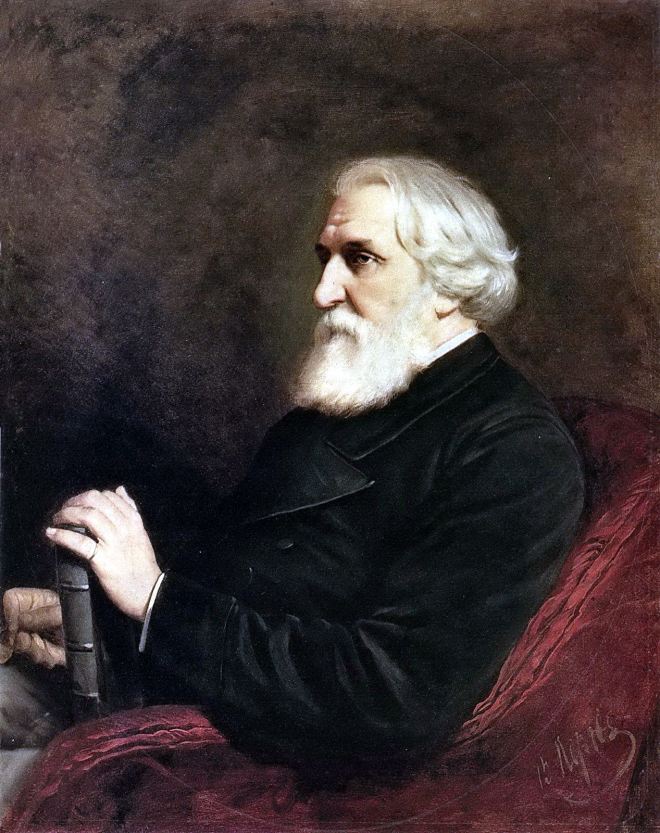
This week I continued to add books from Ivan Turgenev in French, English and Russian as well as his short stories in Russian and most of them in English.
Brève analyse du poème “Tempête” d’Alexandre Pouchkine
Le poème “Tempête” a été créé à Mikhailovskoye, mais sur la base du style romantique de l’œuvre, il est possible que l’auteur en ait fait l’esquisse pendant son exil dans le sud. … Continuer la lecture
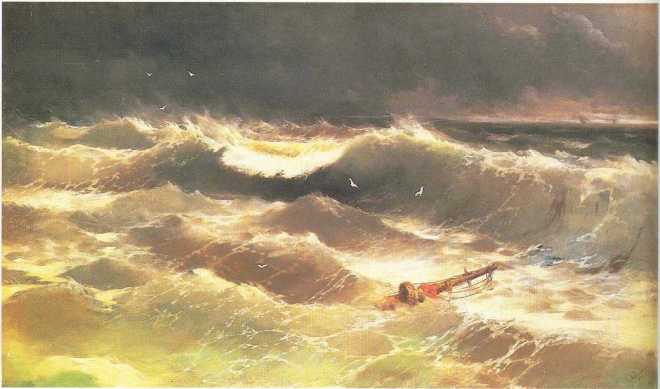
Peinture “Tempête” d’Ivan Aïvazovski
Tempête d’Ivan Aïvazovski – 1886 – Style : Romantisme, Genre : Marina, Média : Huile sur toile. Dimensions : 84 X 142 cm / Буря Ивана Айвазовского – 1886
Ivan Aivazovsky (Иван Айвазовский), l’auteur de plus de 6000 toiles, est un peintre de marine et de bataille russe de renommée mondiale ainsi qu’un collectionneur et … Continuer la lecture
Poème “Tempête” d’Alexandre Pouchkine français et russe côte à côte
Short analysis of the poem “Tempest” by Alexander Pushkin
The poem “Tempest” was created in Mikhailovskoye, but based on the romantic style of the work, it is possible that the author made the sketches for it during his southern exile. … Continue reading
“Cerisier” d’Alexandre Pouchkine est une histoire sentimentale sur deux amants écrite quand Pouchkine avait environ 16 ans vers 1815.
Le poème “Cerisier” commence par une charmante description du paysage. Son intrigue est très simple : « Les jeunes bergères se précipitent vers les bergers. Apparaît alors le personnage principal, une séduisante bergère à la tenue cachant tous ses charmes. Mais l’héroïne, tentée par des cerises mûres, grimpe à un arbre. La branche se casse et elle tombe avec une poignée de cerises. Dans sa chute, sa robe s’est relevée. Un jeune berger est venu l’aider mais a « pressé sa poitrine passionnée » et il semble qu’ils aient perdu la tête « Tout le sang a bouilli Dans deux cœurs de feu L’amour s’est envolé » mais Pouchkine a ajouté que la couronne matrimoniale attendait les amants.
Вишня — Александр Пушкин
Cerisier – Alexandre Pouchkine
Traduit par Akirill.com
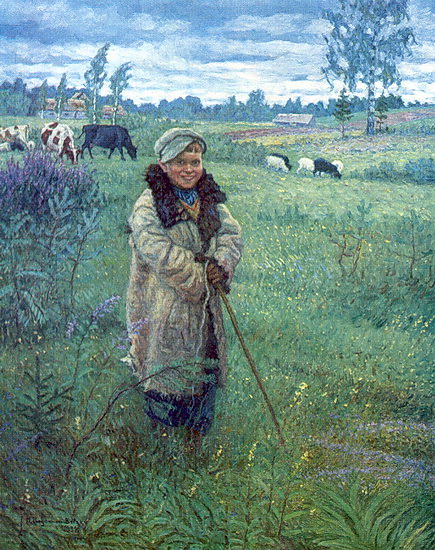
Berger Proschka de Nikolai Bogdanov Belsky
Berger Proschka de Nikolai Bogdanov Belsky / Пастушок Прошка – Николай Богданов Бельский
Nicholai Petrovitch Bogdanov-Belksky qui a soulevé des sujets sociaux aigus dans ses travaux, était un artiste itinérant russe né dans l’Empire russe le 8 (20) décembre 1868. Nicholai a peint principalement des peintures de genre, en particulier le thème paysan, des portraits et des études impressionnistes de paysage. Il tomba gravement malade en 1944 et mourut le 19 février 1945 à Berlin, en Allemagne.
Румяной зарею
Aube vermeille
Покрылся восток,
Recouvre l’est
В селе за рекою
Dans un village de l’autre côté de la rivière
Потух огонек.
Les lumières se sont éteintes.
Росой окропились
Saupoudré de rosée
Цветы на полях,
Les fleurs dans les champs
Стада пробудились
Les troupeaux se sont réveillés
На мягких лугах.
Dans les douces prairies.
Туманы седые
Les brumes grises
Плывут к облакам,
Flottent vers les nuages
Пастушки младые
Les jeunes bergères
Спешат к пастухам.
Se précipitent vers les bergers.
С журчаньем стремится Источник меж гор,
La source coule avec un murmure Entre les montagnes
Вдали золотится
Doré au loin
Во тьме синий бор.
Dans la forêt bleue foncée.
Пастушка младая
La jeune bergère
На рынок спешит
Se précipite au marché
И вдаль, припевая,
Et au loin, en chantant,
Прилежно глядит.
Regarde avec diligence.
Румянец играет
La rougeur joue
На полных щеках,
Sur ses joues potelées
Невинность блистает
L’innocence brille
На робких глазах.
Dans ses yeux timides.
Искусной рукою
Une main habile
Коса убрана,
A fait sa tresse
И ножка собою
Et la jambe elle-même
Прельщать создана.
Créée la séduction .
Корсетом прикрыта
Le Corset couvre
Вся прелесть грудей,
Toute la beauté des seins
Под фартуком скрыта
Caché sous un tablier
Приманка людей.
Appâtant les gens.
Пастушка приходит
La bergère vient
В вишенник густой
Dans un jardin rempli de cerisiers
И много находит
Elle trouve beaucoup
Плодов пред собой.
De fruits devant elle.
Хоть вид их прекрасен
Même s’ils ont fière allure
Красотку манит,
La beauté invite,
Но путь к ним опасен —
Mais le chemin vers eux est dangereux –
Бедняжку страшит.
La pauvre petite a peur.
Подумав, решилась
Après avoir réfléchi, elle a décidé
Сих вишен поесть,
De manger ces cerises
За ветвь ухватилась
Elle a attrapé une branche
На дерево взлезть.
Est montée dans l’arbre.
Уже достигает
atteignant déjà
Награды своей
Ses récompenses
И робко ступает
Et fait des pas timides
Ногой меж ветвей.
Entre les branches.
Бери плод рукою —
Prends le fruit avec ta main –
И вишня твоя,
Et la cerise sera à toi
Но, ах! что с тобою,
Mais, ah ! Qu’est-ce qui ne va pas
Пастушка моя?
Ma bergère ?
Вдали усмотрела, —
Elle a vu au loin –
Спешит пастушок;
Le berger qui se hâte ;
Нога ослабела,
Sa jambe s’est affaiblie,
Скользит башмачок.
Sa chaussure a glissé.
И ветвь затрещала —
Et la branche a craqué –
Беда, смерть грозит!
Danger, mort la menace !
Пастушка упала,
La bergère est tombée
Но, ах, какой вид!
Mais, oh, quelle vue !
Сучок преломленный
La branche réfractée
За платье задел;
a touché la robe ;
Пастух удивленный
Le berger surpris
Всю прелесть узрел.
A vu toute la beauté.
Среди двух прелестных
Entre deux adorables
Белей снегу ног,
Pieds plus blancs que la neige,
На сгибах чудесных
Sur les plis du merveilleux
Пастух то зреть мог,
Le berger pouvait voir
Что скрыто до время
Ce qui est caché jusqu’au moment
У всех милых дам,
Qu’ont toutes les belles dames
За что из эдема
Pour quoi hors d’Eden
Был выгнан Адам.
Adam a été expulsé.
Пастушку несчастну
La malheureuse bergère
С сучка тихо снял
Il l’a tranquillement retiré de la branche
И грудь свою страстну
Et sa poitrine est passionnément
К красотке прижал.
Pressée à la beauté.
Вся кровь закипела
Tout le sang a bouilli
В двух пылких сердцах,
Dans deux cœurs de feu
Любовь прилетела
L’amour s’est envolé
На быстрых крылах.
Sur des ailes rapides.
Утеха страданий
La joie de souffrir
Двух юных сердец,
De deux jeunes cœurs
В любви ожиданий
Dans l’attente de l’amour
Супругам венец.
Couronne les époux.
Прельщенный красою,
Séduit par la beauté
Младой пастушок
Un jeune berger
Горячей рукою
D’une main chaude
Коснулся до ног.
Touché jusqu’aux pieds.
И вмиг зарезвился
Et instantanément gela
Амур в их ногах;
Cupidon à leurs pieds ;
Пастух очутился
Le berger s’est retrouvé
На полных грудях.
Sur son ample poitrine.
И вишню румяну
Et la cerise vermeille
В соку раздавил,
Broyée en jus
И соком багряным
Et jus pourpre
Траву окропил.
A saupoudré l’herbe.
J’espère que vous avez apprécié ce poème et cette peinture autant que moi.
“Cherry Tree” by Alexander Pushkin is a sentimental story about two lovers written when Pushkin was about 16 years old around 1815.
The poem “Cherry Tree” begins with a charming description of the landscape. Its plot is very simple: “Young shepherdesses rush to the shepherds.” Then the main character appears, a seductive shepherdess with an outfit hiding all her charms. But the heroin, tempted by ripe cherries, climbs a tree. The branch breaks and she fall with a handful of cherries. In her fall her dress pulled up. A young shepherd came to help her but also “pressed her passionate breast” and it seems that they lost their heads “All the blood boiled In two fiery hearts Love has flown” but Pushkin added that the matrimonial crown awaited the lovers.
Вишня — Александр Пушкин
Cherry tree – Alexander Pushkin
Translated by Akirill.com
Shepherd Proschka by Nikolai Bogdanov Belsky
Shepherd Proschka by Nikolai Bogdanov Belsky / Пастушок Прошка – Николай Богданов Бельский
Nicholai Petrovitch Bogdanov-Belksky who raised acute social topics in his woks, was a Russian itinerant artist born in The Russian Empire on december 8 (20) 1868. Nicholai painted mostly genre painting, especially the peasant theme, portraits and impressionist studies of landscape. He became seriously ill in 1944 and died on February 19, 1945 in Berlin, Germany.
Румяной зарею
Ruddy dawn
Покрылся восток,
Covered the east
В селе за рекою
In a village across the river
Потух огонек.
The light went out.
Росой окропились
Sprinkled with dew
Цветы на полях,
Flowers in the fields
Стада пробудились
The herds have awakened
На мягких лугах.
In soft meadows.
Туманы седые
The gray mists
Плывут к облакам,
Float towards the clouds
Пастушки младые
Young shepherdesses
Спешат к пастухам.
Rush to the shepherds.
С журчаньем стремится Источник меж гор,
The Source runs with a murmur between the mountains
Вдали золотится
Golden in the distance
Во тьме синий бор.
In the dark blue forest.
Пастушка младая
The young shepherdess
На рынок спешит
Rushes to the market
И вдаль, припевая,
And far away, singing,
Прилежно глядит.
Looks diligently.
Румянец играет
Blush plays
На полных щеках,
On her plump cheeks
Невинность блистает
Innocence shines
На робких глазах.
In her timid eyes.
Искусной рукою
A skillful hand
Коса убрана,
has made the braid
И ножка собою
And the leg itself
Прельщать создана.
created seduction .
Корсетом прикрыта
Corset covered
Вся прелесть грудей,
All the beauty of breasts
Под фартуком скрыта
Hidden under an apron
Приманка людей.
Baiting people.
Пастушка приходит
The shepherdess comes
В вишенник густой
In a thick cherry garden
И много находит
She finds a lot
Плодов пред собой.
of fruits in front of her.
Хоть вид их прекрасен
Even though they look great
Красотку манит,
Beauty beckons,
Но путь к ним опасен —
But the path to them is dangerous –
Бедняжку страшит.
The poor thing is scared.
Подумав, решилась
After thinking, she decided
Сих вишен поесть,
To eat these cherries
За ветвь ухватилась
She grabbed a branch
На дерево взлезть.
Climbed up the tree.
Уже достигает
Already reaching
Награды своей
Her awards
И робко ступает
And timidly steps
Ногой меж ветвей.
Between branches.
Бери плод рукою —
Take the fruit with your hand –
И вишня твоя,
And the cherry will be yours
Но, ах! что с тобою,
But, ah! what’s wrong with you
Пастушка моя?
My shepherdess?
Вдали усмотрела, —
She saw in the distance –
Спешит пастушок;
The shepherd who hurries;
Нога ослабела,
Her leg weakened,
Скользит башмачок.
Her shoe slipped.
И ветвь затрещала —
And the branch cracked –
Беда, смерть грозит!
Trouble, death threatens!
Пастушка упала,
The shepherdess fell
Но, ах, какой вид!
But, oh my, what a view!
Сучок преломленный
The branch refracted
За платье задел;
touched the dress;
Пастух удивленный
The surprised Shepherd
Всю прелесть узрел.
Saw all the beauty.
Среди двух прелестных
Among two lovely
Белей снегу ног,
Feet whiter than snow,
На сгибах чудесных
On the folds of wonderful
Пастух то зреть мог,
The shepherd could see
Что скрыто до время
What is hidden until the time
У всех милых дам,
All the lovely ladies have
За что из эдема
For which, out of eden
Был выгнан Адам.
Adam was expelled.
Пастушку несчастну
Unfortunate shepherdess
С сучка тихо снял
He quietly removed her from the branch
И грудь свою страстну
And his chest is passionately
К красотке прижал.
Pressed to the beauty.
Вся кровь закипела
All the blood boiled
В двух пылких сердцах,
In two fiery hearts
Любовь прилетела
Love has flown
На быстрых крылах.
On fast wings.
Утеха страданий
The joy of suffering
Двух юных сердец,
Of two young hearts
В любви ожиданий
Waiting for love
Супругам венец.
Spouses crown.
Прельщенный красою,
Seduced by beauty
Младой пастушок
A young shepherd
Горячей рукою
With a hot hand
Коснулся до ног.
Touched up to the feet.
И вмиг зарезвился
And instantly froze
Амур в их ногах;
Cupid at their feet;
Пастух очутился
The shepherd found himself
На полных грудях.
On her full breasts.
И вишню румяну
And cherry blush
В соку раздавил,
Crushed into juice
И соком багряным
And crimson juice
Траву окропил.
Sprinkled the grass.
I hope you enjoyed this poem and painting as much as I did.
Alexandre Sergueïevitch Pouchkine (Пушкин. Александр Сергеевич) né le 6 juin (26 mai) 1799 à Moscou a publié son premier poème à l’âge de 15 ans et est considéré par beaucoup comme le plus grand poète russe et le fondateur de la langue littéraire russe moderne.
Александр Пушкин — Я помню море пред грозою: Стих
Alexandre Pouchkine – Je me souviens de la mer avant la tempête : Verset
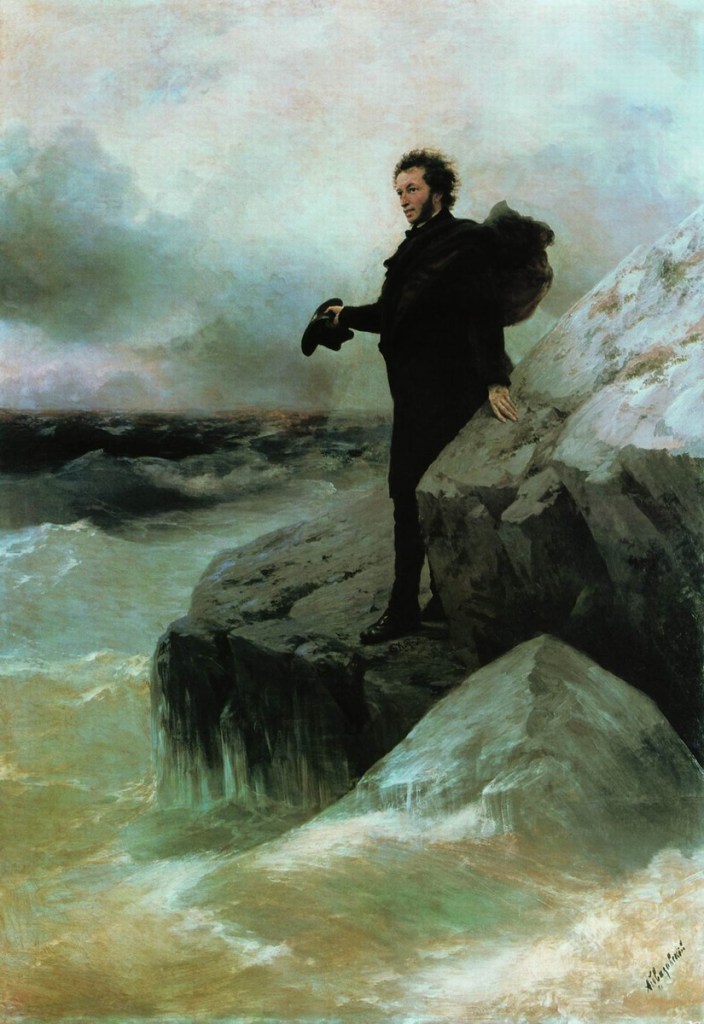
L’adieu de Pouchkine à la mer. 1877 peint par Ilia Iefimovitch Répine
L’adieu de Pouchkine à la mer. 1877 peint par Ilia Iefimovitch Répine
Перси -устаревшее слово, сейчас не используется и означает грудь, передняя часть тела, от шеи до живота.
Percy est un mot obsolète, maintenant non utilisé et signifie la poitrine, la partie antérieure du corps, du cou à l’abdomen.
Visitez cette page et trouvez la signification de tous les mots russes obsolètes traduit en français : Obsolete Russian Words and their meaning , d’autres seront ajoutés au fur et à mesure que nous continuerons à traduire des poèmes.
Pushkin Alexander by Sokolov
J’espère que vous avez apprécié ce poème autant que moi
Alexander Sergeyevich Pushkin (Пушкин. Александр Сергеевич) born on June 6 (may 26) 1799 in Moscow published his first poem at the age of 15 and is considered by many to be the greatest Russian poet and the founder of the modern Russian literary language.
Александр Пушкин — Я помню море пред грозою: Стих
Alexander Pushkin – I remember the sea before the storm: Verse
Pushkin’s farewell to the sea. 1877 painted by Repin
Pushkin’s farewell to the sea. 1877 painted by Repin
перси: -устаревшее слово, сейчас не используется и означает грудь, передняя часть тела, от шеи до живота.
перси is an outdated word that is not used now and means chest, front of the body, from neck to abdomen.
Visit this page and find the meaning of all obsolete Russian Words: Obsolete Russian Words and their meaning , more will be added as we continue to translate poems.









 AKirill, Learn, apprenez, translation, traduction, livres bilingues, bilingual books