Poème «Matin d’automne» d’Alexandre Pouchkine traduit en français avec français et russe côte à côte.

Livres bilinguesRead in EnglishNous contacter
Littérature américaineLittérature françaiseLittérature russe

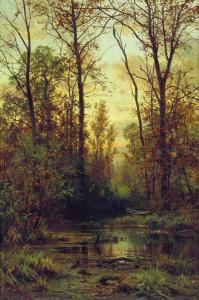
Chers lecteurs et abonnés, cette semaine j’ai traduit et écrit une courte analyse du célèbre et très joli poème d’amour « Matin d’automne » écrit par Alexandre Pouchkine quand il avait 17 ans incluant l’explication des mots obsolètes ainsi que deux beaux tableaux de I. I. Chichkine qui sont “Ruisseau forestier. Automne” et “Paysage d’automne. Parc à Pavlovsk” . J’espère que vous apprécierez le poème et les peintures autant que moi.

< < < Automne  (Ru/Fr) / Autumn (Ru/Eng) / Осень (Рус/Анг.) / (Рус/ Фра.)

“Cerisier” (Ru/Fr) / “Cherry Tree” (Ru/Eng) / Вишня (Рус/Анг.) / (Рус/ Фра.) > > >


Brève analyse du poème « Matin d’automne » d’Alexandre Pouchkine

Le poème « Matin d’automne », écrit par Alexandre Pouchkine à l’âge de dix-sept ans et décrivant son premier amour sérieux, n’a été publié qu’après sa mort. Dans ce poème, Pouchkine relie tout ce qui lui est cher (champs, collines, forêt de chênes) à sa bien-aimée, se rappelant à quel point il était heureux là-bas. Et « свирель » représente à la fois la poésie et l’idylle. La nature se refroidit et meurt mais son amour reste vivant et il croit qu’il reverra la jeune fille au nouveau printemps.

Peintures “Ruisseau forestier. Automne” and “Paysage d’automne. Parc à Pavlovsk” by I. I. Chichkine
Explication des mots russes obsolètes

драго́й dans ce cas est un mot obsolète qui signifie chère (celle qui est précieuse, bien-aimée, proche du cœur). Un autre sens que l’on retrouve dans la poésie ancienne est : cher (synonyme : coûteux, précieux, précieux)

Свирель est un ancien mot russe *svirati   qui signifie jouer de la flûte – En slave de l’Église : svirati   signifie sifflet – sifflement

Poème « Matin d’automne » d’Alexandre Pouchkine en français et russe côte à côte.

Осеннее утро –
Александр Пушкин
Matin d’automne
d’Alexandre Pouchkine
traduit par Akirill.com
Поднялся шум; свирелью полевойUn bruit s’éleva; avec le sifflement musical des champs 
Оглашено моё уединенье,Ma solitude a été annoncée,
И с образом любовницы драгойEt avec l’image de ma chère  bien-aimée
Последнее слетело сновиденье.Le dernier rêve s’est envolé,
С небес уже скатилась ночи тень.L’ombre de la nuit est déjà descendue du ciel.
Взошла заря, блистает бледный день —L’aube s’est levée, le jour pâle brille –
А вкруг меня глухое запустенье…Et tout autour de moi est une désolation sourde…
Читать далее …Continuer la lecture …

Pushkin Alexander by Sokolov

< < < Automne  (Ru/Fr) / Autumn (Ru/Eng) / Осень (Рус/Анг.) / (Рус/ Фра.)

“Cerisier” (Ru/Fr) / “Cherry Tree” (Ru/Eng) / Вишня (Рус/Анг.) / (Рус/ Фра.) > > >

Nous mettons beaucoup d’efforts dans la qualité des articles, soutenez-nous avec un like et un abonnement si vous les aimez.

Partager sur les réseaux sociaux

Découvrez nos derniers posts

Visitez nous sur Facebook ou Twitter


© 2023 Akirill.com – All Rights Reserved

Poem “Autumn morning” by Alexander Pushkin in English with English and Russian side by side

Bilingual booksLire en FrançaisContact us
American LiteratureFrench LiteratureRussian Literature

Dear readers and subscribers, this week I translated and wrote a short analysis of the famous and beautiful love poem “Autumn morning” written by Alexander Pushkin when he was 17 years old including the explanation of the obsolete words as well as two beautiful paintings by I. I. Shishkin which are “Forest Creek. Autumn” and “Autumn landscape.Park in Pavlovsk. I hope you will enjoy the poem and paintings as much as I did.

< < < Automne  (Ru/Fr) / Autumn (Ru/Eng) / Осень (Рус/Анг.) / (Рус/ Фра.)

“Cerisier” (Ru/Fr) / “Cherry Tree” (Ru/Eng) / Вишня (Рус/Анг.) / (Рус/ Фра.) > > >


Short analysis of the poem “Autumn morning” by Alexander Pushkin

The poem “Autumn morning” which was written by Alexander Pushkin when he was seventeen years old and describes his first serious love, was first published only after his death. In this poem, Pushkin connects everything dear to him (fields, hills, oak forest) with his sweetheart, remembering how happy he was there. And “свирель” represents both poetry and idyll. The nature gets cold and dies but his love stay alive and he believes that he will see the girl in the new spring.

Paintings “Forest Creek. Autumn” and “Autumn landscape.Park in Pavlovsk by I. I. Shishkin

Explanation of outdated Russian words

драго́й in that case is an outdated word which means dear (one that is treasured, beloved, close to the heart). Another meaning which can be found in old poetry is: expensive (synonyme: costly, valuable, precious)

Свирель is an ancient Russian word *svirati  which means play the flute  – In Church Slavonic: svirati  mean sifflet – whistle

Poem “Autumn morning” by Alexander Pushkin English and Russian side by side

Осеннее утро –
Александр Пушкин
Autumn morning by Alexander Pushkin
translated by Akirill.com
Поднялся шум; свирелью полевойA noise arose; with a field musical whistling
Оглашено моё уединенье,My solitude has been announced,
И с образом любовницы драгойAnd with the image of my dear lover
Последнее слетело сновиденье.The last dream flew off.
С небес уже скатилась ночи тень.The shadow of night has already rolled down from the sky.
Взошла заря, блистает бледный день —The dawn has risen, the pale day is shining –
А вкруг меня глухое запустенье…And all around me is a deaf desolation …
Читать далее …Continue reading …

Pushkin Alexander by Sokolov

< < < Automne  (Ru/Fr) / Autumn (Ru/Eng) / Осень (Рус/Анг.) / (Рус/ Фра.)

“Cerisier” (Ru/Fr) / “Cherry Tree” (Ru/Eng) / Вишня (Рус/Анг.) / (Рус/ Фра.) > > >

We put a lot of effort into the quality of articles, support us with a like and a subscription if you like it.
Share on social networks
Check out Our Latest Posts

Visit us on Facebook or Twitter


© 2023 Akirill.com – All Rights Reserved
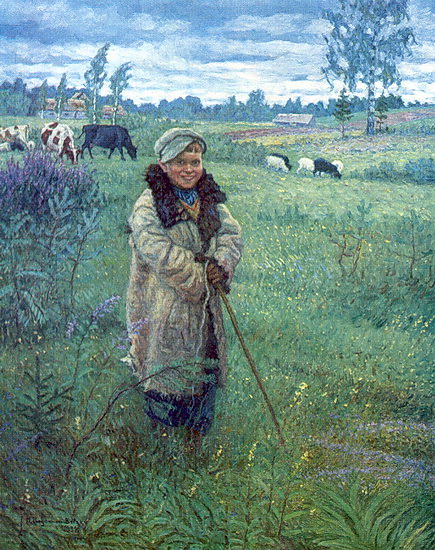
“Cerisier” d’Alexandre Pouchkine en russe et en français avec le tableau “Berger Proschka” de Nikolai Bogdanov-Belsky

Livres bilinguesRead in EnglishNous contacter
Littérature américaineLittérature françaiseLittérature russe

< < <  Automne  (Ru/Fr) / Autumn (Ru/Eng) / Осень (Рус/Анг.) / (Рус/ Фра.)

Heureux celui qui est choisi volontairement (Ru/Fr) / Happy is the one, who is chosen willfully (Ru/Eng) / Счастлив, кто избран своенравно (Рус/Анг.) / (Рус/ Фра.) > > >


“Cerisier” d’Alexandre Pouchkine est une histoire sentimentale sur deux amants écrite quand Pouchkine avait environ 16 ans vers 1815.

Le poème “Cerisier” commence par une charmante description du paysage. Son intrigue est très simple : « Les jeunes bergères se précipitent vers les bergers. Apparaît alors le personnage principal, une séduisante bergère à la tenue cachant tous ses charmes. Mais l’héroïne, tentée par des cerises mûres, grimpe à un arbre. La branche se casse et elle tombe avec une poignée de cerises. Dans sa chute, sa robe s’est relevée. Un jeune berger est venu l’aider mais a « pressé sa poitrine passionnée » et il semble qu’ils aient perdu la tête « Tout le sang a bouilli Dans deux cœurs de feu L’amour s’est envolé » mais Pouchkine a ajouté que la couronne matrimoniale attendait les amants.

Вишня — Александр ПушкинCerisier – Alexandre Pouchkine
Traduit par Akirill.com

Berger Proschka de Nikolai Bogdanov Belsky

Shepherd Proschka-Nikolai Bogdanov Belsky / Пастушок Прошка - Николай Богданов Бельский
Berger Proschka de Nikolai Bogdanov Belsky / Пастушок Прошка – Николай Богданов Бельский

Nicholai Petrovitch Bogdanov-Belksky qui a soulevé des sujets sociaux aigus dans ses travaux, était un artiste itinérant russe né dans l’Empire russe le 8 (20) décembre 1868. Nicholai a peint principalement des peintures de genre, en particulier le thème paysan, des portraits et des études impressionnistes de paysage. Il tomba gravement malade en 1944 et mourut le 19 février 1945 à Berlin, en Allemagne.

Румяной зареюAube vermeille
Покрылся восток,Recouvre l’est
В селе за рекоюDans un village de l’autre côté de la rivière
Потух огонек.Les lumières se sont éteintes.
Росой окропилисьSaupoudré de rosée
Цветы на полях,Les fleurs dans les champs
Стада пробудилисьLes troupeaux se sont réveillés
На мягких лугах.Dans les douces prairies.
Туманы седыеLes brumes grises
Плывут к облакам,Flottent vers les nuages
Пастушки младыеLes jeunes bergères
Спешат к пастухам.Se précipitent vers les bergers.
С журчаньем стремится
Источник меж гор,
La source coule avec un murmure
Entre les montagnes
Вдали золотитсяDoré au loin
Во тьме синий бор.Dans la forêt bleue foncée.
Пастушка младаяLa jeune bergère
На рынок спешитSe précipite au marché
И вдаль, припевая,Et au loin, en chantant,
Прилежно глядит.Regarde avec diligence.
Румянец играетLa rougeur joue
На полных щеках,Sur ses joues potelées
Невинность блистаетL’innocence brille
На робких глазах.Dans ses yeux timides.
Искусной рукоюUne main habile
Коса убрана,A fait sa tresse
И ножка собоюEt la jambe elle-même
Прельщать создана.Créée la séduction .
Корсетом прикрытаLe Corset couvre
Вся прелесть грудей,Toute la beauté des seins
Под фартуком скрытаCaché sous un tablier
Приманка людей.Appâtant les gens.
Пастушка приходитLa bergère vient
В вишенник густойDans un jardin rempli de cerisiers
И много находитElle trouve beaucoup
Плодов пред собой.De fruits devant elle.
Хоть вид их прекрасенMême s’ils ont fière allure
Красотку манит,La beauté invite,
Но путь к ним опасен —Mais le chemin vers eux est dangereux –
Бедняжку страшит.La pauvre petite a peur.
Подумав, решиласьAprès avoir réfléchi, elle a décidé
Сих вишен поесть,De manger ces cerises
За ветвь ухватиласьElle a attrapé une branche
На дерево взлезть.Est montée dans l’arbre.
Уже достигаетatteignant déjà
Награды своейSes récompenses
И робко ступаетEt fait des pas timides
Ногой меж ветвей.Entre les branches.
Бери плод рукою —Prends le fruit avec ta main –
И вишня твоя,Et la cerise sera à toi
Но, ах! что с тобою,Mais, ah ! Qu’est-ce qui ne va pas
Пастушка моя?Ma bergère ?
Вдали усмотрела, —Elle a vu au loin –
Спешит пастушок;Le berger qui se hâte ;
Нога ослабела,Sa jambe s’est affaiblie,
Скользит башмачок.Sa chaussure a glissé.
И ветвь затрещала —Et la branche a craqué –
Беда, смерть грозит!Danger, mort la menace !
Пастушка упала,La bergère est tombée
Но, ах, какой вид!Mais, oh, quelle vue !
Сучок преломленныйLa branche réfractée
За платье задел;a touché la robe ;
Пастух удивленныйLe berger surpris
Всю прелесть узрел.A vu toute la beauté.
Среди двух прелестныхEntre deux adorables
Белей снегу ног,Pieds plus blancs que la neige,
На сгибах чудесныхSur les plis du merveilleux
Пастух то зреть мог,Le berger pouvait voir
Что скрыто до времяCe qui est caché jusqu’au moment
У всех милых дам,Qu’ont toutes les belles dames
За что из эдемаPour quoi hors d’Eden
Был выгнан Адам.Adam a été expulsé.
Пастушку несчастнуLa malheureuse bergère
С сучка тихо снялIl l’a tranquillement retiré de la branche
И грудь свою страстнуEt sa poitrine est passionnément
К красотке прижал.Pressée à la beauté.
Вся кровь закипелаTout le sang a bouilli
В двух пылких сердцах,Dans deux cœurs de feu
Любовь прилетелаL’amour s’est envolé
На быстрых крылах.Sur des ailes rapides.
Утеха страданийLa joie de souffrir
Двух юных сердец,De deux jeunes cœurs
В любви ожиданийDans l’attente de l’amour
Супругам венец.Couronne les époux.
Прельщенный красою,Séduit par la beauté
Младой пастушокUn jeune berger
Горячей рукоюD’une main chaude
Коснулся до ног.Touché jusqu’aux pieds.
И вмиг зарезвилсяEt instantanément gela
Амур в их ногах;Cupidon à leurs pieds ;
Пастух очутилсяLe berger s’est retrouvé
На полных грудях.Sur son ample poitrine.
И вишню румянуEt la cerise vermeille
В соку раздавил,Broyée en jus
И соком багрянымEt jus pourpre
Траву окропил.A saupoudré l’herbe.

J’espère que vous avez apprécié ce poème et cette peinture autant que moi.


< < <  Automne  (Ru/Fr) / Autumn (Ru/Eng) / Осень (Рус/Анг.) / (Рус/ Фра.)

Heureux celui qui est choisi volontairement (Ru/Fr) / Happy is the one, who is chosen willfully (Ru/Eng) / Счастлив, кто избран своенравно (Рус/Анг.) / (Рус/ Фра.) > > >

Si vous avez aimé cet article, abonnez-vous, mettez des likes, écrivez des commentaires !

Partager sur les réseaux sociaux

Découvrez nos derniers posts


© 2023 Akirill.com – All Rights Reserved
“Cherry Tree” by Alexander Pushkin in Russian and English with the painting “Shepherd Proschka” by Nikolai Bogdanov-Belsky

Bilingual booksLire en FrançaisContact us
American LiteratureFrench LiteratureRussian Literature

< < <  Automne  (Ru/Fr) / Autumn (Ru/Eng) / Осень (Рус/Анг.) / (Рус/ Фра.)

Heureux celui qui est choisi volontairement (Ru/Fr) / Happy is the one, who is chosen willfully (Ru/Eng) / Счастлив, кто избран своенравно (Рус/Анг.) / (Рус/ Фра.) > > >


“Cherry Tree” by Alexander Pushkin is a sentimental story about two lovers written when Pushkin was about 16 years old around 1815.

The poem “Cherry Tree” begins with a charming description of the landscape. Its plot is very simple: “Young shepherdesses rush to the shepherds.” Then the main character appears, a seductive shepherdess with an outfit hiding all her charms. But the heroin, tempted by ripe cherries, climbs a tree. The branch breaks and she fall with a handful of cherries. In her fall her dress pulled up. A young shepherd came to help her but also “pressed her passionate breast” and it seems that they lost their heads “All the blood boiled In two fiery hearts Love has flown” but Pushkin added that the matrimonial crown awaited the lovers.

Вишня — Александр ПушкинCherry tree – Alexander Pushkin
Translated by Akirill.com

Shepherd Proschka by Nikolai Bogdanov Belsky

Shepherd Proschka-Nikolai Bogdanov Belsky / Пастушок Прошка - Николай Богданов Бельский
Shepherd Proschka by Nikolai Bogdanov Belsky / Пастушок Прошка – Николай Богданов Бельский

Nicholai Petrovitch Bogdanov-Belksky who raised acute social topics in his woks, was a Russian itinerant artist born in The Russian Empire on december 8 (20) 1868. Nicholai painted mostly genre painting, especially the peasant theme, portraits and impressionist studies of landscape. He became seriously ill in 1944 and died on February 19, 1945 in Berlin, Germany.

Румяной зареюRuddy dawn
Покрылся восток,Covered the east
В селе за рекоюIn a village across the river
Потух огонек.The light went out.
Росой окропилисьSprinkled with dew
Цветы на полях,Flowers in the fields
Стада пробудилисьThe herds have awakened
На мягких лугах.In soft meadows.
Туманы седыеThe gray mists
Плывут к облакам,Float towards the clouds
Пастушки младыеYoung shepherdesses
Спешат к пастухам.Rush to the shepherds.
С журчаньем стремится
Источник меж гор,
The Source runs with a murmur between the mountains
Вдали золотитсяGolden in the distance
Во тьме синий бор.In the dark blue forest.
Пастушка младаяThe young shepherdess
На рынок спешитRushes to the market
И вдаль, припевая,And far away, singing,
Прилежно глядит.Looks diligently.
Румянец играетBlush plays
На полных щеках,On her plump cheeks
Невинность блистаетInnocence shines
На робких глазах.In her timid eyes.
Искусной рукоюA skillful hand
Коса убрана, has made the braid
И ножка собоюAnd the leg itself
Прельщать создана.created seduction .
Корсетом прикрытаCorset covered
Вся прелесть грудей,All the beauty of breasts
Под фартуком скрытаHidden under an apron
Приманка людей.Baiting people.
Пастушка приходитThe shepherdess comes
В вишенник густойIn a thick cherry garden
И много находитShe finds a lot
Плодов пред собой.of fruits in front of her.
Хоть вид их прекрасенEven though they look great
Красотку манит,Beauty beckons,
Но путь к ним опасен —But the path to them is dangerous –
Бедняжку страшит.The poor thing is scared.
Подумав, решиласьAfter thinking, she decided
Сих вишен поесть,To eat these cherries
За ветвь ухватиласьShe grabbed a branch
На дерево взлезть.Climbed up the tree.
Уже достигаетAlready reaching
Награды своейHer awards
И робко ступаетAnd timidly steps
Ногой меж ветвей.Between branches.
Бери плод рукою —Take the fruit with your hand –
И вишня твоя,And the cherry will be yours
Но, ах! что с тобою,But, ah! what’s wrong with you
Пастушка моя?My shepherdess?
Вдали усмотрела, —She saw in the distance –
Спешит пастушок;The shepherd who hurries;
Нога ослабела,Her leg weakened,
Скользит башмачок.Her shoe slipped.
И ветвь затрещала —And the branch cracked –
Беда, смерть грозит!Trouble, death threatens!
Пастушка упала,The shepherdess fell
Но, ах, какой вид!But, oh my, what a view!
Сучок преломленныйThe branch refracted
За платье задел;touched the dress;
Пастух удивленныйThe surprised Shepherd
Всю прелесть узрел.Saw all the beauty.
Среди двух прелестныхAmong two lovely
Белей снегу ног,Feet whiter than snow,
На сгибах чудесныхOn the folds of wonderful
Пастух то зреть мог,The shepherd could see
Что скрыто до времяWhat is hidden until the time
У всех милых дам,All the lovely ladies have
За что из эдемаFor which, out of eden
Был выгнан Адам.Adam was expelled.
Пастушку несчастнуUnfortunate shepherdess
С сучка тихо снялHe quietly removed her from the branch
И грудь свою страстнуAnd his chest is passionately
К красотке прижал.Pressed to the beauty.
Вся кровь закипелаAll the blood boiled
В двух пылких сердцах,In two fiery hearts
Любовь прилетелаLove has flown
На быстрых крылах.On fast wings.
Утеха страданийThe joy of suffering
Двух юных сердец,Of two young hearts
В любви ожиданийWaiting for love
Супругам венец.Spouses crown.
Прельщенный красою,Seduced by beauty
Младой пастушокA young shepherd
Горячей рукоюWith a hot hand
Коснулся до ног.Touched up to the feet.
И вмиг зарезвилсяAnd instantly froze
Амур в их ногах;Cupid at their feet;
Пастух очутилсяThe shepherd found himself
На полных грудях.On her full breasts.
И вишню румянуAnd cherry blush
В соку раздавил,Crushed into juice
И соком багрянымAnd crimson juice
Траву окропил.Sprinkled the grass.

I hope you enjoyed this poem and painting as much as I did.


< < <  Automne  (Ru/Fr) / Autumn (Ru/Eng) / Осень (Рус/Анг.) / (Рус/ Фра.)

Heureux celui qui est choisi volontairement (Ru/Fr) / Happy is the one, who is chosen willfully (Ru/Eng) / Счастлив, кто избран своенравно (Рус/Анг.) / (Рус/ Фра.) > > >

If you liked this article, subscribe , put likes, write comments!
Share on social networks
Check out Our Latest Posts


© 2023 Akirill.com – All Rights Reserved

Poème au sujet du tableau “Fiançailles d’un Major” de Fedotov en russe/français

Livres bilinguesRead in EnglishNous contacter
Littérature américaineLittérature françaiseLittérature russe

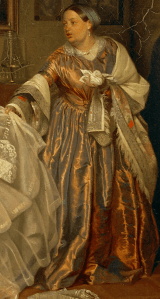
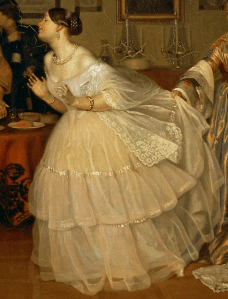
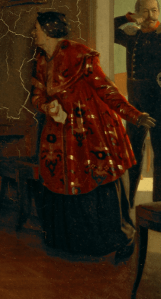
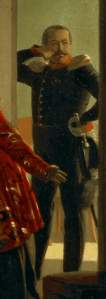
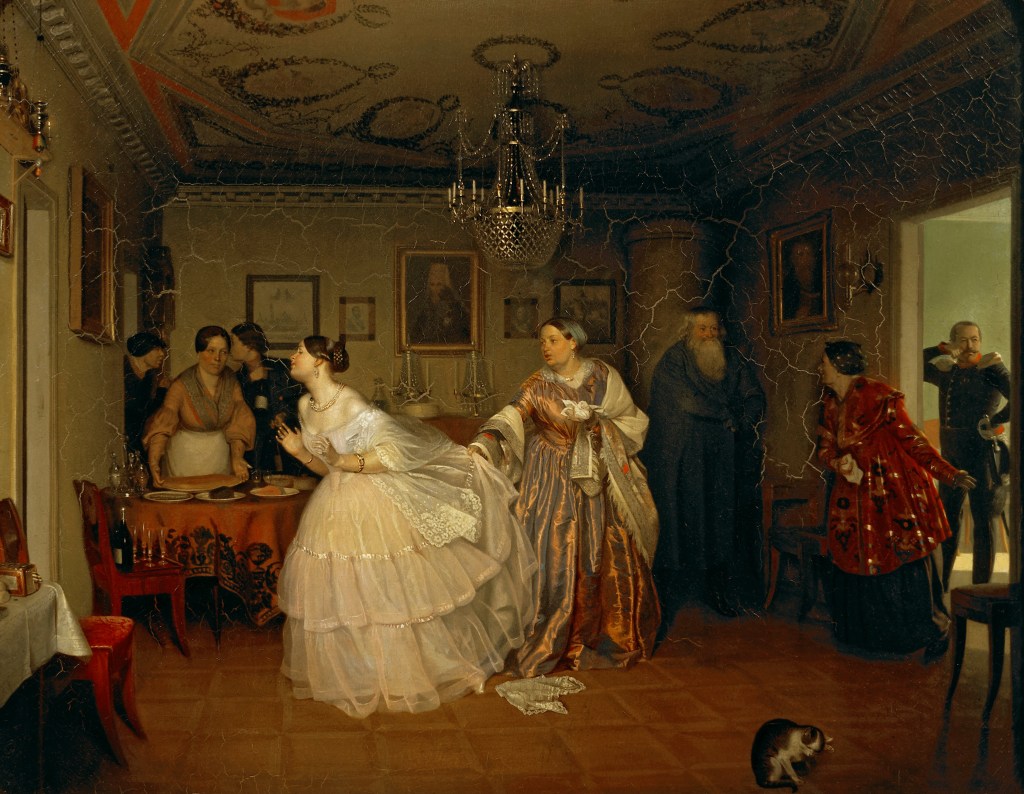
Avant l’exposition, Fedotov a composé une description poétique pour sa peinture de “Fiançailles d’un Major”, la soi-disant ” Рацея “, qu’il a lui-même lue aux visiteurs de l’exposition de 1849. Son poème ludique eut un grand succès et sa satire fut comparée à celles de Gogol et d’Ostrov. Vous pouvez maintenant le lire en français comme je l’ai traduit, et j’ai ajouté quelques annotations pour votre compréhension.

The major's marriage proposal - 1851 by Pavel Fedotov -
The major’s marriage proposal – 1851 by Pavel Fedotov –
Рацея
(Объяснение картины «Сватовство майора»)
Poème
(Explication du tableau “Courtship of the Major”)
Честные господа,Honnêtes messieurs,
Пожалуйте сюда!Venez ici s’il-vous-plaît!
Милости просим,Bienvenu,
Денег не спросим:Nous ne demanderons pas d’argent.
Даром смотри,Jetez un oeil gratuitement
Начинается,Commence,
ПочинаетсяCommence, (dialecte ukrainien)
О том, как люди на свете живут,A propos de la façon dont les gens dans le monde vivent,
Как иные на чужой счет жуют.Comment les autres mâchent aux dépens de quelqu’un d’autre.
Сами работать ленятся,Ils sont trop paresseux pour travailler eux-mêmes,
Так на богатых женятся.alors ils épousent les riches.
Вот извольте-ко посмотреть:Tenez, regardez
Вот купецкий дом, —Voici la maison du marchand –
Всего вдоволь в нем,Juste assez dedans
Только толку нет ни в чем:Cela n’a aucun sens :
Одно пахнет деревней,On sent le village
А другое харчевней.Et une autre taverne.
Тут зато один толк,Ici, cependant, un sens
Что всё взято не в долг,Que tout n’est pas emprunté,
Как у вас иногда,Comme vous faite parfois
Честные господа!Honnêtes messieurs,
А вот извольте посмотреть:Mais s’il vous plaît, regardez
Вот сам хозяин-купец,Voici le propriétaire-marchand lui-même,
Денег полон ларец;Le cercueil est plein d’argent;
Есть что пить и что есть…Il y a de quoi boire et quoi manger…
Уж чего ж бы еще? Да взманила, вишь, честьEt quoi d’autre? 
Mais son honneur fait signe, tu vois
«Не хочу, вишь, зятька с бородою! « Je ne veux pas, tu vois, un gendre avec une barbe !
И своя борода — Et ma propre barbe
Мне лихая беда. Pour moi, un fringant problème.
На улице всякий толкает,Dans la rue tout le monde pousse
А чуть-чуть под хмельком, Et quand un peu ivre,
Да пойди-ка пешком вечерком,Essaye de marcher le soir,
Глядь! — очутишься в будке,De façon inattendue! 
– tu te retrouveras dans une cabine (au commissariat),
Прометешь потом улицу сутки.Ensuite, tu balayeras la rue pendant la journée (sanction policière pour une infraction mineure à l’ordre)..
А в густых-то будь зять —Et si le gendre était cool (occupait une position élevée dans la société) –
Не посмеют нас взять…Ils n’oseront pas nous prendre (nous arrêter)…
Мне, по крайности, дай хоть майора,Au moins, donnez-moi au moins un gendre avec le grade de major,
Без того никому не отдам свою дочь!..»Sans cela, je ne donnerai ma fille à personne ! 
.. “
А жених — тут как тут, и по чину — точь-в-точь.Et le marié est juste là, et en rang – exactement le même.
Major’d matchmaker extract champagne
А вот извольте посмотреть,Mais s’il vous plaît, regardez
Как жениха ждут, Comment le marié est attendu
Кулебяку несут Kulebyaka (nourriture à base de viande) qu’ils portent
И заморские вина первейших сортовEt des vins d’outre-mer des premiers cépages
К столу подают.Servi sur table.
А вот и самое панское,Et voici le plus élitiste,
Сиречь шампанское,C’est-à-dire du champagne
На подносе на стуле стоит.Il est sur un plateau sur une chaise.
А вот извольте посмотреть,Mais s’il vous plaît, regardez
Как в параде весь дом:Comme toute la maison est dans un défilé:
Всё с иголочки в нем;Tout y est flambant neuf;
Только хозяйка купцаSeule la maîtresse (épouse) du marchand
Не нашла, знать, по головке чепца.N’a pas trouvé, apparemment, un bonnet pour la tête.
По-старинному — в сизом платочке.La manière démodée – dans une écharpe grise.
Остальной же нарядLe reste de la tenue
У француженки взятa été prise à la française
Лишь вечор для самой и для дочки.Juste pour une soirée pour elle et pour sa fille.
Дочка в жизнь в первый раз,Fille dans la vie pour la première fois,
Как боярышня у нас,Comme une aubépine avec nous,
Ни простуды не боясь,N’ayant pas peur d’un rhume,
Ни мужчин не страшась,Pas peur des hommes,
Плечи выставила напоказ. —Elle a exposé ses épaules.
Шейка чиста,– Son cou est immaculé,
Да без креста.Mais sans croix.
Вот извольте посмотреть,Ici, s’il vous plaît, regardez
Как в левом углу старуха, Là, une vieille femme dans le coin gauche,
Тугая на ухо,Malentendante,
Хозяйкина сватья, беззубый рот,L’entremetteuse de l’hôtesse, bouche édentée,
К сидельцу пристает:A la responsable des produits, elle pose la question :
Для чего, дескать, столько бутылок несет,Pourquoi, disent-ils, porte tant de bouteilles,
В доме ей до всего!Elle s’occupe de tout dans la maison !
Ей скажи: отчего,Dis-lui pourquoi
Для чего, кто идет, —Pour quoi, qui va –
Любопытный народ!Les curieux !
А вот извольте посмотреть,Mais s’il vous plaît, regardez
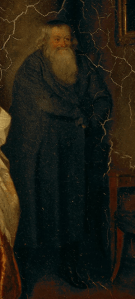
Как, справа, отставная деревенская пряха, Là, à droite, un ancien fileur du village,
Панкратьевна-сваха, Entremetteur de Pankratievna,
Бессовестная привираха,triche éhontée,
В парчовом шугае, толстая складом,Dans une robe d’été de brocart, un corps épais,
Пришла с докладом:Est venue avec un rapport
Жених, мол, изволил пожаловать.Le marié, dit-on, a daigné venir.
И вот извольте посмотреть,Et s’il vous plaît, regardez
Как хозяин-купец,En tant que commerçant propriétaire
Невестин отец,père de la mariée,
Не сладит с сюртуком,Ne fait pas face à un manteau,
Он знаком больше с армяком;Il est plus familier avec l’arménien ;
Как он бьется, пыхтит,Comment il bat, souffle,
Застегнуться спешит:Dépêche-toi de le boutonner:
Нараспашку принять — неучтиво.Accepter ouvertement est impoli.
А извольте посмотреть,Et si vous s’il vous plaît regardez
Как наша невеста Comme la mariée dont nous parlons
Не найдет сдуру места:Bêtement, elle ne trouve pas de place :
«Мужчина чужой!« L’homme est un étranger !
Ой, срам-то какой!Oh quelle honte!
Никогда с ними я не бывала, je n’ai jamais été avec eux
Коль и придут, бывало, —S’ils venaient (étrangers), parfois c’était, –
Мать тотчас на ушко:Mère immédiatement dans l’oreille:
„Тебе, девушке, здесь не пристало!““Toi, ma fille, tu n’as pas ta place ici !”
Век в светличке своей я высокойJe de nombreuse fois dans ma chambre haute
Прожила, проспала одинокой;Vécue, dormie seule;
Кружева лишь плела к полотенцам,Je n’ai tissé que de la dentelle pour les serviettes,
И все в доме меня чтут младенцем!Et tout le monde dans la maison m’honore comme un bébé !
Гость замолвит, чай, речь…L’invité dira, peut-être, un discours…
Ай, ай, ай! — стыд какой!..Ah ah ah ! 
– Quelle honte!…
А тут нечем скрыть плеч:Et elle n’a rien pour se couvrir les épaules :
Шарф сквозистый такой —Une telle écharpe transparente –
Всё насквозь, на виду!..Tout transparent et tout est visible!…
Нет, в светлицу уйду!» Non, je vais dans ma chambre !
И вот извольте посмотреть,Et s’il vous plaît, regardez
Как наша пташка сбирается улететь;Comment notre oiseau va s’envoler; 
(la mariée essaie de s’échapper)
А умная матьMais une mère intelligente
За платье ее хвать!attrape sa robe !
Majors matchmaking extract groom by Fedotov
И вот извольте посмотреть,Et s’il vous plaît, regardez
Как в другой горницеComme dans une autre pièce
Грозит ястреб горлице, —Le faucon menace la colombe, –
Как майор толстый, бравый,Comme un major, gros, brave,
Карман дырявый, Avec une poche qui fuit (pauvre),
Крутит свой ус:Tord sa moustache :
«Я, дескать, до денежек доберусь!»“Moi, disent-ils, j’arriverai à l’argent!”
Теперь извольте посмотреть:Voyons maintenant :
Разные висят по стенам картины.Divers tableaux sont accrochés aux murs.
Начинаем с середины:On part du milieu :
На средине виситSuspendu au milieu
Высокопреосвященный митрополит;Son Eminence Metropolitan;
Хозяин христианскую в нем добродетель чтит.Le propriétaire honore la vertu chrétienne en lui.
Налево — Угрешская обительÀ gauche – Monastère Ugreshsky
И во облацех над нею — святитель… Et dans quelque chose d’incompréhensible au-dessus, il y a un saint… (Vêtu de vêtements incompréhensibles (étranges). Personne ne comprend le style et la mode de ces vêtements.)
Православные, извольте перекреститься,Orthodoxe, faites le signe de croix,
А немцы,Et les Allemands
Иноземцы,étrangers,
На нашу святыню не глумиться;Ne vous moquez pas de notre sanctuaire ;
Не то — русский народSinon – le peuple russe
Силой рот вам зажмет.Avec force va fermer votre bouche.
И вот извольте посмотреть:Et s’il vous plaît, regardez
По сторонам митрополита — двоеAux côtés du métropolitain – deux
Наши знаменитые герои:Nos héros célèbres :
Один — батюшка Кутузов,L’un est le père Kutuzov,
Что первый открыл пятки у французов, Il fut le premier à forcer l’armée française à fuir
А Европа сначалаL’Europe d’avant
Их не замечала.N’avait rien vu de tel.
ДругойUn autre
Герой —Héros –
Кульнев, которому в славу и честьKulnev, à qui dans la gloire et l’honneur
Даже у немцев крест железный есть.Même les Allemands ont une croix de fer (le roi de Prusse a ordonné la création d’un insigne de récompense spécial (2 septembre 1813). Croix de Fer, une récompense qui a ensuite reçu le nom officieux de «Kulm Cross»).
И вот извольте посмотреть:Et s’il vous plaît, regardez
Там же, на правой стороне, —Là, sur le côté droit,
Елавайский на коне, Ilovaisky sur un cheval,
Казацкий хлопчикC’est un cosaque
Французов топчет.Il piétine les Français.
А на правой стене хозяйский портретEt sur le mur de droite se trouve le portrait du maître (un portrait du propriétaire de cette maison)
В золоченую раму вдет; Intégré dans un cadre plaqué or ;
Хоть не его рожа,Bien que ce ne soit pas son visage,
Да книжка похожа:Oui, le livre est similaire.
Значит — грамотный!Cela signifie intelligent! 
(c’est ironique)
И вот извольте посмотреть:Et s’il vous plaît, regardez
Внизу картины,Ci-dessous l’image
Около середины,A peu près au milieu
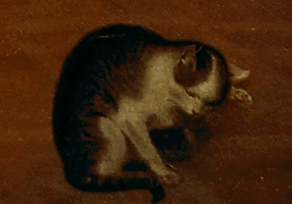
Сидит сибирская кошка.Assis est un chat sibérien.
У нее бы не худо немножкоCe serait bien si un peu
Деревенским барышням поучитьсяApprendre d’un chat aux dames du village (Ce serait bien si les filles du village apprenaient à se laver d’un chat.)
Почаще мыться:Lavez plus souvent :
Кошка рыльце умывает,Le chat lave son museau
Гостя в дом зазывает.Appelle les invités dans la maison.
Major’d matchmaker extract Icons
А что, господа, чай устали глаза?
Et quoi, messieurs, vos yeux sont probablement fatigués ?
А вот, налево, — святые образа…Et voici, à gauche, les saintes images…
Извольте перекреститьсяVeuillez faire le signe de la croix
Да по домам расходиться.Oui, rentrez chez vous.
<1849>Traduction et annotations par Barbara Bayard

Vous pouvez aussi lire notre dernier article : « Découvrez le tableau “Fiançailles d’un Major” de Pavel Andreevich Fedotov » ou la nouvelle La Perspective Nevski de Nikolai Gogol en français , ou français/anglais où le même sujet est abordé.

J’espère que vous avez apprécié ce poème drôle et descriptif autant que moi.

Si vous avez aimé cet article, abonnez-vous, mettez des likes, écrivez des commentaires !

Partager sur les réseaux sociaux

Découvrez nos derniers posts


© 2023 Akirill.com – All Rights Reserved
Poem about the painting “The Major’s Matchmaking” by Fedotov in Russian/English

Bilingual booksLire en FrançaisContact us
American LiteratureFrench LiteratureRussian Literature

Before the exhibition, Fedotov composed a poetic description for his painting of “The Major’s Matchmaking“, the so-called “Рацея”, which he himself read to the visitors of the 1849 exhibition. His playful poem had great success and his satire was compared to Gogol’s and Ostrov’s. You can now read it in English as I translated, and added some annotations for your understanding.

The major's marriage proposal - 1851 by Pavel Fedotov -
The major’s marriage proposal – 1851 by Pavel Fedotov –
Рацея
(Объяснение картины «Сватовство майора»)
Verses
(Explanation of the painting “Courtship of the Major”)
Честные господа,honest gentlemen,
Пожалуйте сюда!Please come here!
Милости просим,Welcome,
Денег не спросим:We won’t ask for money.
Даром смотри,Take a look for free
Начинается,Begins,
ПочинаетсяBegins (Ukrainian dialect)
О том, как люди на свете живут,About how people in the world live,
Как иные на чужой счет жуют.How others chew at someone else’s expense.
Сами работать ленятся,They are too lazy to work themselves,
Так на богатых женятся.so they marry the rich.
Вот извольте-ко посмотреть:Here, take a look
Вот купецкий дом, —Here is the merchant’s house –
Всего вдоволь в нем,Just enough in it
Только толку нет ни в чем:It just doesn’t make any sense:
Одно пахнет деревней,One smells like a village
А другое харчевней.And another tavern.
Тут зато один толк,Here, however, one sense
Что всё взято не в долг,That everything is not borrowed,
Как у вас иногда,How you sometimes do
Честные господа!Honest gentlemen!
А вот извольте посмотреть:But if you please, watch
Вот сам хозяин-купец,Here is the owner-merchant himself,
Денег полон ларец;The casket is full of money;
Есть что пить и что есть…There is food to eat, drinks to drink
Уж чего ж бы еще? Да взманила, вишь, честьAnd what else? But his honor beckons, you see
«Не хочу, вишь, зятька с бородою! “I don’t want, you see, a son-in-law with a beard!
И своя борода — And my own beard
Мне лихая беда. For me, a dashing trouble.
На улице всякий толкает,On the street everyone pushes
А чуть-чуть под хмельком, And when a little drunk,
Да пойди-ка пешком вечерком,Try walking in the evening,
Глядь! — очутишься в будке,Unexpectedly! – you will find yourself in a booth (in the police station),
Прометешь потом улицу сутки.Then you will sweep the street during the day (police punishment for a minor violation of order)..
А в густых-то будь зять —And if the son-in-law was cool (had a high position in society) –
Не посмеют нас взять…They won’t dare to take us (arrest us)…
Мне, по крайности, дай хоть майора,At least, give me at least a groom with the rank of major,
Без того никому не отдам свою дочь!..»Without that, I will not give my daughter to anyone! .. “
А жених — тут как тут, и по чину — точь-в-точь.And the groom is right there, and in rank – exactly the same.
Major’d matchmaker extract champagne
А вот извольте посмотреть,But if you please, watch
Как жениха ждут, How the groom is expected
Кулебяку несут Kulebyaka (meat food) they carry
И заморские вина первейших сортовAnd overseas wines of the first varieties
К столу подают.Served on the table.
А вот и самое панское,And here is the most elite,
Сиречь шампанское,That is to say, champagne
На подносе на стуле стоит.It is on a tray on a chair.
А вот извольте посмотреть,But if you please, watch
Как в параде весь дом:How the whole house is in a parade:
Всё с иголочки в нем;Everything is brand new in it;
Только хозяйка купцаOnly the merchant’s mistress (wife)
Не нашла, знать, по головке чепца.Did not find, apparently, a cap for the head.
По-старинному — в сизом платочке.The old-fashioned way – in a gray scarf.
Остальной же нарядThe rest of the outfit
У француженки взятwas taken from the Frenchwoman
Лишь вечор для самой и для дочки.Just for one evening for herself and for her daughter.
Дочка в жизнь в первый раз,Daughter in life for the first time,
Как боярышня у нас,Like a hawthorn with us,
Ни простуды не боясь,Not afraid of a cold,
Ни мужчин не страшась,Not afraid of men,
Плечи выставила напоказ. —She put her shoulders on display. 
Шейка чиста,– The neck is clean,
Да без креста.But, without a cross.
Вот извольте посмотреть,Here, you please, watch
Как в левом углу старуха, There, an old woman in the left corner,
Тугая на ухо,Hard of hearing,
Хозяйкина сватья, беззубый рот,The hostess’s matchmaker, toothless mouth,
К сидельцу пристает:To the person responsible for the products, she asks the question:
Для чего, дескать, столько бутылок несет,Why, they say, carries so many bottles,
В доме ей до всего!She cares about everything in the house!
Ей скажи: отчего,Tell her why
Для чего, кто идет, —For what, who goes –
Любопытный народ!Curious people!
А вот извольте посмотреть,But if you please, watch
Как, справа, отставная деревенская пряха, There, on the right, a retired village spinner,
Панкратьевна-сваха, Pankratievna-matchmaker,
Бессовестная привираха,shameless cheat,
В парчовом шугае, толстая складом,In a brocade sundress , a thick body,
Пришла с докладом:Came with a report
Жених, мол, изволил пожаловать.The groom, they say, deigned to come.
И вот извольте посмотреть,And if you please, watch
Как хозяин-купец,As a merchant owner
Невестин отец,bride’s father,
Не сладит с сюртуком,Does not cope with a coat,
Он знаком больше с армяком;He is more familiar with the Armenian;
Как он бьется, пыхтит,How he beats, puffs,
Застегнуться спешит:Hurry to fasten:
Нараспашку принять — неучтиво.To accept openly is impolite.
А извольте посмотреть,And if you please look
Как наша невеста Like the bride we’re talking about
Не найдет сдуру места:Foolishly, she can’t find a place:
«Мужчина чужой!“The man is a stranger!
Ой, срам-то какой!Oh, what a shame!
Никогда с ними я не бывала, I have never been with them
Коль и придут, бывало, —If they came (strangers), sometimes it was,-
Мать тотчас на ушко:Mother immediately in the ear:
„Тебе, девушке, здесь не пристало!““You, girl, do not belong here!”
Век в светличке своей я высокойI a lot of time in my high room
Прожила, проспала одинокой;Lived, slept alone;
Кружева лишь плела к полотенцам,I only wove lace for towels,
И все в доме меня чтут младенцем!And everyone in the house honors me as a baby!
Гость замолвит, чай, речь…The guest will say, maybe, a speech…
Ай, ай, ай! — стыд какой!..Ah ah ah!  – what a shame!
А тут нечем скрыть плеч:And she has nothing to cover her shoulders with:
Шарф сквозистый такой —Such a transparent scarf –
Всё насквозь, на виду!..Everything through and everything is visible!…
Нет, в светлицу уйду!» No. I’m going to my room!
И вот извольте посмотреть,And if you please, watch
Как наша пташка сбирается улететь;How our bird is going to fly away; (the bride is trying to escape)
А умная матьBut a smart mother
За платье ее хвать!Grabbed her dress!
Majors matchmaking extract groom by Fedotov
И вот извольте посмотреть,And if you please, watch
Как в другой горницеAs in another room
Грозит ястреб горлице, —The hawk threatens the dove, –
Как майор толстый, бравый,Like a major, fat, brave,
Карман дырявый, With a leaky pocket (poor),
Крутит свой ус:Twists his mustache:
«Я, дескать, до денежек доберусь!»“I, they say, will get to the money!”
Теперь извольте посмотреть:Now let’s see:
Разные висят по стенам картины.Various paintings hang on the walls.
Начинаем с середины:We start from the middle:
На средине виситHanging in the middle
Высокопреосвященный митрополит;His Eminence Metropolitan;
Хозяин христианскую в нем добродетель чтит.The owner honors the Christian virtue in him.
Налево — Угрешская обительTo the left – Ugreshsky monastery
И во облацех над нею — святитель… And in something incomprehensible above it is a saint… (Dressed in incomprehensible (strange) clothes. No one understands the style and fashion of these clothes.)
Православные, извольте перекреститься,Orthodox, please cross yourself,
А немцы,And the Germans
Иноземцы,foreigners,
На нашу святыню не глумиться;Do not mock at our shrine;
Не то — русский народOtherwise – the Russian people
Силой рот вам зажмет.With force will clamp your mouth.
И вот извольте посмотреть:And if you please, watch
По сторонам митрополита — двоеOn the sides of the metropolitan – two
Наши знаменитые герои:Our Famous Heroes:
Один — батюшка Кутузов,One is Father Kutuzov,
Что первый открыл пятки у французов, He was the first to force the French army to flee
А Европа сначалаEurope before
Их не замечала.Haven’t seen anything like it.
ДругойAnother
Герой —Hero –
Кульнев, которому в славу и честьKulnev, to whom in glory and honor
Даже у немцев крест железный есть.Even the Germans have an iron cross (the Prussian king ordered the establishment of a special award badge (September 2, 1813). Iron Cross, an award that later received the unofficial name “Kulm Cross”).
И вот извольте посмотреть:And if you please, watch
Там же, на правой стороне, —There, on the right side,
Елавайский на коне, Ilovaisky on horse,
Казацкий хлопчикHe’s a Cossack guy
Французов топчет.He’s trampling on the French.
А на правой стене хозяйский портретAnd on the right wall is the master’s portrait (a portrait of the owner of this house)
В золоченую раму вдет; Built-in in gold-plated frame;
Хоть не его рожа,Though not his face,
Да книжка похожа:Yes, the book is similar.
Значит — грамотный!That means smart! (this is ironic)
И вот извольте посмотреть:And if you please, watch
Внизу картины,Below the picture
Около середины,About in the middle
Сидит сибирская кошка.Sitting is a Siberian cat.
У нее бы не худо немножкоIt would be nice if a little
Деревенским барышням поучитьсяTo learn from a cat to the village ladies (It would be nice if the girls from the village learned to wash from a cat.)
Почаще мыться:Wash more often:
Кошка рыльце умывает,The cat washes its snout
Гостя в дом зазывает.Calls guests into the house.
Major’d matchmaker extract Icons
А что, господа, чай устали глаза?
And what, gentlemen, are your eyes probably tired?
А вот, налево, — святые образа…And here, to the left, are the holy images …
Извольте перекреститьсяPlease cross yourself
Да по домам расходиться.Yes, go home.
<1849>Translation and annotations by Barbara Bayard

You can also read our last article: “Discover the “Major’s matchmaking” by Pavel Andreevich Fedotov” or the short story Nevsky Prospekt by Nikolai Gogol in French, or French/english where the same subject is addressed.

I hope you enjoyed this funny and descriptive poem as much as I did.

If you liked this article, subscribe , put likes, write comments!
Share on social networks
Check out Our Latest Posts


© 2023 Akirill.com – All Rights Reserved

« Mending Wall » de Robert Frost, anglais et français côte à côte avec analyse.

Livres bilinguesRead in EnglishNous contacter
Littérature américaineLittérature françaiseLittérature russe

Robert Frost a écrit l’un de ses poèmes les plus populaires : “Mending Wall” en 1914. J’ai décidé de le traduire et, comme toujours, de mettre les deux poèmes côte à côte.

Une brève analyse

“Mending Wall” est un poème sur deux voisins qui se réunissent pour réparer le mur entre leurs propriétés.

On voit que l’orateur du poème n’est pas très sérieux à ce sujet. Il plaisante et n’est pas convaincu de la nécessité d’avoir un mur séparant leurs propriétés.

Lorsqu’il interroge son voisin sur la nécessité d’une clôture, celui-ci répond toujours un vieux dicton que son père lui a enseignée : les bonnes clôtures font les bons voisins.

Une interprétation simple de ce dicton serait que des frontières claires entre nous et les autres conduisent à des relations saines entre les gens.

Le poème «Mending Wall» met en contraste les deux approches différentes de la vie et des relations humaines. En même temps, il est rempli du regret de ce qui aurait pu être s’il n’y avait pas eu de mur entre lui et son voisin.

rock wall
rock wall
Mending Wall
By Robert Frost
Réparation du mur
de Robert Frost
Something there is that doesn’t love a wall,Il y a quelque chose ici qui n’aime pas un mur,
That sends the frozen-ground-swell under it,Cela envoie la houle gelée en dessous,
And spills the upper boulders in the sun;Et renverse les rochers supérieurs au soleil;
And makes gaps even two can pass abreast.Et fait des trous ou même à deux, ils peuvent passer de front.
The work of hunters is another thing:Le travail des chasseurs est une autre chose :
I have come after them and made repairJe suis venu après eux et j’ai réparé
Where they have left not one stone on a stone,Où ils n’ont pas laissé une pierre sur une autre,
But they would have the rabbit out of hiding,Mais ils auraient fait sortir le lapin de sa cachette,
To please the yelping dogs. The gaps I mean,Pour plaire aux chiens qui jappent. 
Les trous je veux dire,
No one has seen them made or heard them made,Personne ne les a vus ou entendu faire,
But at spring mending-time we find them there.Mais au moment du raccommodage de printemps, nous les y retrouvons.
I let my neighbor know beyond the hill;J’ai prévenu mon voisin au-delà de la colline;
And on a day we meet to walk the lineEt un jour nous nous rencontrons pour marcher le long de la ligne
And set the wall between us once again.Et remettre le mur entre nous une fois de plus.
We keep the wall between us as we go.Nous gardons le mur entre nous au fur et à mesure.
To each the boulders that have fallen to each.À chacun des rochers qui sont tombés pour chacun.
And some are loaves and some so nearly ballsEt certains sont des pains et d’autres presque des balles
We have to use a spell to make them balance:Nous devons utiliser un sort pour les équilibrer :
‘Stay where you are until our backs are turned!’‘Restez où vous êtes jusqu’à ce que nous ayons le dos tourné !’
We wear our fingers rough with handling them.Nous rendons nos doigts rugueux en les manipulant.
Oh, just another kind of out-door game,Oh, juste un autre genre de jeu en plein air,
One on a side. It comes to little more:Un sur un côté. Il bouge un peu plus :
There where it is we do not need the wall:Là où il est nous n’avons pas besoin du mur :
He is all pine and I am apple orchard.Il est tout pin et je suis verger de pommiers.
My apple trees will never get acrossMes pommiers ne passent jamais de l’autre côté
And eat the cones under his pines, I tell him.Et mangent les cônes sous ses pins, lui dis-je.
He only says, ‘Good fences make good neighbors.’Il dit seulement : « Les bonnes clôtures font les bons voisins.
Spring is the mischief in me, and I wonderLe printemps est l’espièglerie en moi, et je me demande
If I could put a notion in his head:Si je pourrais mettre une idée dans sa tête :
‘Why do they make good neighbors? Isn’t it« Pourquoi  font-elles de bons voisins ? 
Where there are cows? But here there are no cows.Où y a-t-il des vaches ? Mais ici, il n’y a pas de vaches.
Before I built a wall I’d ask to knowAvant de construire un mur, je demanderais à savoir
What I was walling in or walling out,Ce que je murais dedans ou en dehors,
And to whom I was like to give offense.Et à qui j’allais donné offense.
Something there is that doesn’t love a wall,Il y a quelque chose ici qui n’aime pas un mur,
That wants it down.’ I could say ‘Elves’ to him,Qui le veut démoli. Je pourrais lui dire ‘Elfes’,
But it’s not elves exactly, and I’d ratherMais ce ne sont pas exactement des elfes, et je préfère
He said it for himself. I see him thereIl l’a dit pour lui-même. je le vois là
Bringing a stone grasped firmly by the topApporter une pierre fermement saisie par le haut
In each hand, like an old-stone savage armed.Dans chaque main, comme un sauvage armé de vieille pierre.
He moves in darkness as it seems to me,Il se déplace dans les ténèbres comme il me semble,
Not of woods only and the shade of trees.Pas de bois uniquement et l’ombre des arbres.
He will not go behind his father’s saying,Il n’ira pas derrière les paroles de son père,
And he likes having thought of it so wellEt il aime y avoir si bien pensé
He says again, ‘Good fences make good neighbors.’Il répète encore: « Les bonnes clôtures font les bons voisins.

J’espère que vous avez apprécié ce poème autant que moi.

Si vous avez aimé cet article, abonnez-vous, mettez des likes, écrivez des commentaires !

Partager sur les réseaux sociaux

Découvrez nos derniers posts


© 2023 Akirill.com – All Rights Reserved
“Mending Wall” by Robert Frost, English and French side by side with analysis.

Bilingual booksLire en FrançaisContact us
American LiteratureFrench LiteratureRussian Literature

Robert Frost wrote one of his most popular poem: “Mending Wall” in 1914. I decided to translate it and as always put both poems side by side.

A Short Analysis

“Mending Wall” is a poem about two neighbors coming together to fix the wall between their properties.

We can see that the poem’s speaker is not very serious about it. He jokes about it and is not convinced of the need of having a wall separating their properties.

When he asks his neighbor about the need of a fence, this one always answers an old piece of wisdom that his father taught him: Good fences make good neighbors.

A simple interpretation of this piece of wisdom would be that clear boundaries between ourselves and others leads to healthy relationships beween people.

The poem “Mending Wall” contraste the two different approaches to life and human relationship. At the same time it is filled with the regret of what might have been if there was no wall between him and his neighbor.

rock wall
rock wall
Mending Wall
By Robert Frost
Réparation du mur
de Robert Frost
Something there is that doesn’t love a wall,Il y a quelque chose ici qui n’aime pas un mur,
That sends the frozen-ground-swell under it,Cela envoie la houle gelée en dessous,
And spills the upper boulders in the sun;Et renverse les rochers supérieurs au soleil;
And makes gaps even two can pass abreast.Et fait des trous ou même à deux, ils peuvent passer de front.
The work of hunters is another thing:Le travail des chasseurs est une autre chose :
I have come after them and made repairJe suis venu après eux et j’ai réparé
Where they have left not one stone on a stone,Où ils n’ont pas laissé une pierre sur une autre,
But they would have the rabbit out of hiding,Mais ils auraient fait sortir le lapin de sa cachette,
To please the yelping dogs. The gaps I mean,Pour plaire aux chiens qui jappent. 
Les trous je veux dire,
No one has seen them made or heard them made,Personne ne les a vus ou entendu faire,
But at spring mending-time we find them there.Mais au moment du raccommodage de printemps, nous les y retrouvons.
I let my neighbor know beyond the hill;J’ai prévenu mon voisin au-delà de la colline;
And on a day we meet to walk the lineEt un jour nous nous rencontrons pour marcher le long de la ligne
And set the wall between us once again.Et remettre le mur entre nous une fois de plus.
We keep the wall between us as we go.Nous gardons le mur entre nous au fur et à mesure.
To each the boulders that have fallen to each.À chacun des rochers qui sont tombés pour chacun.
And some are loaves and some so nearly ballsEt certains sont des pains et d’autres presque des balles
We have to use a spell to make them balance:Nous devons utiliser un sort pour les équilibrer :
‘Stay where you are until our backs are turned!’‘Restez où vous êtes jusqu’à ce que nous ayons le dos tourné !’
We wear our fingers rough with handling them.Nous rendons nos doigts rugueux en les manipulant.
Oh, just another kind of out-door game,Oh, juste un autre genre de jeu en plein air,
One on a side. It comes to little more:Un sur un côté. Il bouge un peu plus :
There where it is we do not need the wall:Là où il est nous n’avons pas besoin du mur :
He is all pine and I am apple orchard.Il est tout pin et je suis verger de pommiers.
My apple trees will never get acrossMes pommiers ne passent jamais de l’autre côté
And eat the cones under his pines, I tell him.Et mangent les cônes sous ses pins, lui dis-je.
He only says, ‘Good fences make good neighbors.’Il dit seulement : « Les bonnes clôtures font les bons voisins.
Spring is the mischief in me, and I wonderLe printemps est l’espièglerie en moi, et je me demande
If I could put a notion in his head:Si je pourrais mettre une idée dans sa tête :
‘Why do they make good neighbors? Isn’t it« Pourquoi  font-elles de bons voisins ? 
Where there are cows? But here there are no cows.Où y a-t-il des vaches ? Mais ici, il n’y a pas de vaches.
Before I built a wall I’d ask to knowAvant de construire un mur, je demanderais à savoir
What I was walling in or walling out,Ce que je murais dedans ou en dehors,
And to whom I was like to give offense.Et à qui j’allais donné offense.
Something there is that doesn’t love a wall,Il y a quelque chose ici qui n’aime pas un mur,
That wants it down.’ I could say ‘Elves’ to him,Qui le veut démoli. Je pourrais lui dire ‘Elfes’,
But it’s not elves exactly, and I’d ratherMais ce ne sont pas exactement des elfes, et je préfère
He said it for himself. I see him thereIl l’a dit pour lui-même. je le vois là
Bringing a stone grasped firmly by the topApporter une pierre fermement saisie par le haut
In each hand, like an old-stone savage armed.Dans chaque main, comme un sauvage armé de vieille pierre.
He moves in darkness as it seems to me,Il se déplace dans les ténèbres comme il me semble,
Not of woods only and the shade of trees.Pas de bois uniquement et l’ombre des arbres.
He will not go behind his father’s saying,Il n’ira pas derrière les paroles de son père,
And he likes having thought of it so wellEt il aime y avoir si bien pensé
He says again, ‘Good fences make good neighbors.’Il répète encore: « Les bonnes clôtures font les bons voisins.

I hope you enjoyed this poem as much as I did.

If you liked this article, subscribe , put likes, write comments!
Share on social networks
Check out Our Latest Posts


© 2023 Akirill.com – All Rights Reserved