Discover the “Major’s matchmaking” by Pavel Andreevich Fedotov

Bilingual booksLire en FrançaisContact us
American LiteratureFrench LiteratureRussian Literature

The Russian artist Pavel Andreevich Fedotov was awarded the honorary title of academician for his painting “The arrival of the groom (Major’s matchmaking)”, also known as “The Major’s Marriage proposal”.

This canvas is one of the remarkable works of Russian painting of the first half of the 19th century, and one of Fedotov’s greatest achievements.

Created in 1848 in a style of “comic realism”, it is a 58.3 × 75.4 cm oil on canvas describing the last moments of the preparation before the matchmaking, and is now situated in the State Tretyakov Gallery. 

When the public first saw the picture, the success was overwhelming. The whole of St. Petersburg rolled with laughter, people came to the exhibition more than once to see the Major’s “Wooing” once again. What caused such a violent reaction and made the audience laugh so much?

The plot is based on an ordinary marriage of convenience between the daughter of a wealthy merchant and a ruined nobleman major. At that time, such transactions were commonplace: some sought to get money, while others sought to get titles in society.
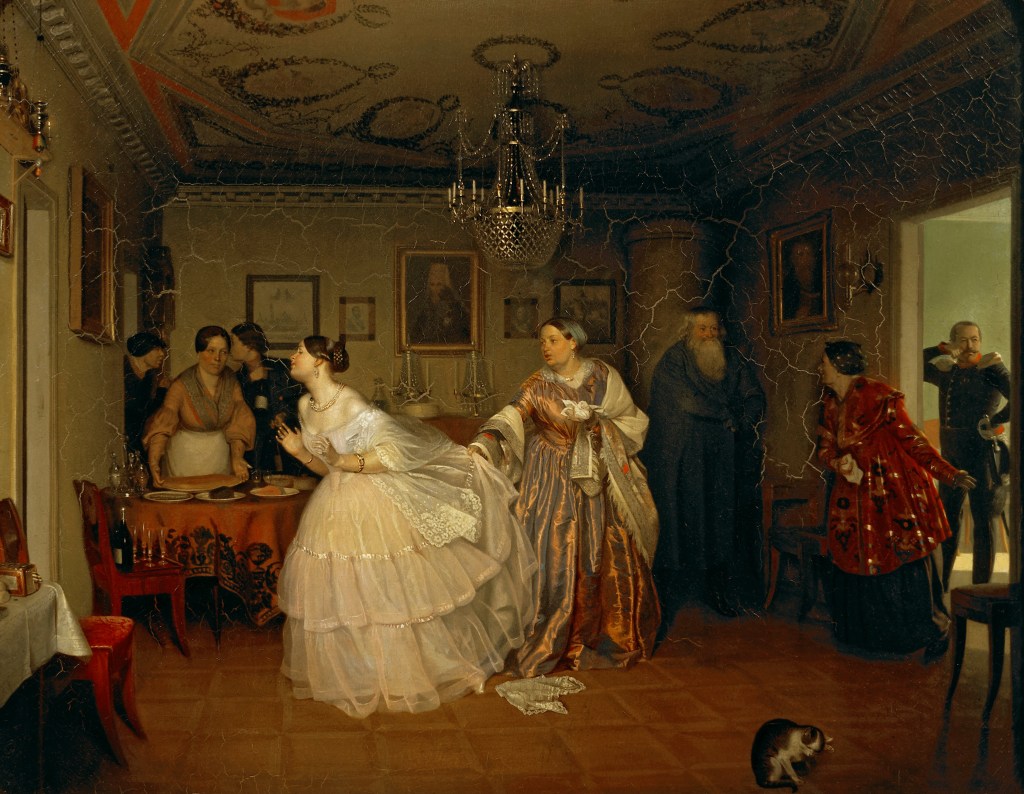
The major's marriage proposal - 1851 by Pavel Fedotov -
The major’s marriage proposal – 1851 by Pavel Fedotov –

History of the creation of the painting
Repetition of the painting
Painting Description

History of the creation of the painting

Pavel Fedotov (Павел Федотов) began work on the “Major’s Matchmaking” (Сватовство майора) in 1848. At the request of Karl Bryullov, he received 700 rubles from the Imperial Academy of Arts to be used on sitters , costumes and other materials.

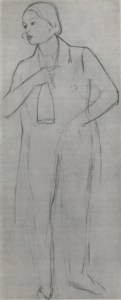
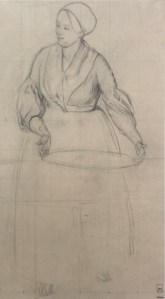
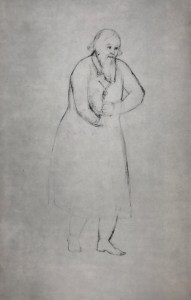
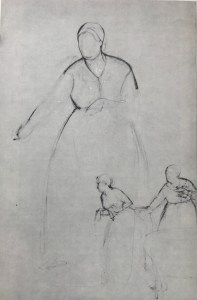
While creating the painting “Major’s Matchmaking” Fedotov carried out a lot of preparatory work, and many sketches which he used to search for the composition of the scene, the images of the characters, as well as their poses and relative positions in the plane of the canvas.

Here are a few sketches for this painting:

Almost immediately before the release of the painting, Fedotov wrote his “Рацея” which is an explanation of the painting in verse, thanks to which one can understand in more detail this simulated role of each of the heroes of the canvas. Pavel read his “Рацея” at the exhibition of his painting, in 1849, where it had great success, making him very happy. His satire was even compared to Gogol’s and Ostrov’s.

Repetition of the painting

In 1852 Pavel Fedotov completed a repetition of the painting “Major’s Matchmaking”, alternatively titled “Bridesmaids in a Merchant’s House” in which the plot and composition have been preserved. This 56 X 76 cm oil on canvas is now in the State Russian Museum. The two paintings have significant differences and we’ll compare them in another article.

Description of the painting

As if watching through the window, we see a merchant family wishing to intermarry with a nobleman, but it turns out awkwardly.

Despite the fact that the arrival of the guest was expected, there is a commotion in the room. The scene resembles a theatrical production with a consistently developing action from the figure of the major to the daughter and mother who are the main characters of the work. With this compositional scheme, the author emphasized the insincerity and false brilliance of what is happening. The relationship of the characters can be traced in their gestures and postures. As a result, a certain dynamics is created in the direction from left to right.

The scene is being played in the antechamber, which is not in keeping with etiquette. It should have been done in the living room or dinning room instead.

 The dining table is not covered with a white tablecloth, but pink, with sewing around the edges which would look more appropriate in an office or boudoir. We can see that the action probably took place on Wednesday or Friday, which are fast days, because there are only lean snack (herring, salmon, slightly salted caviar) on the table which is too small for so many snack.
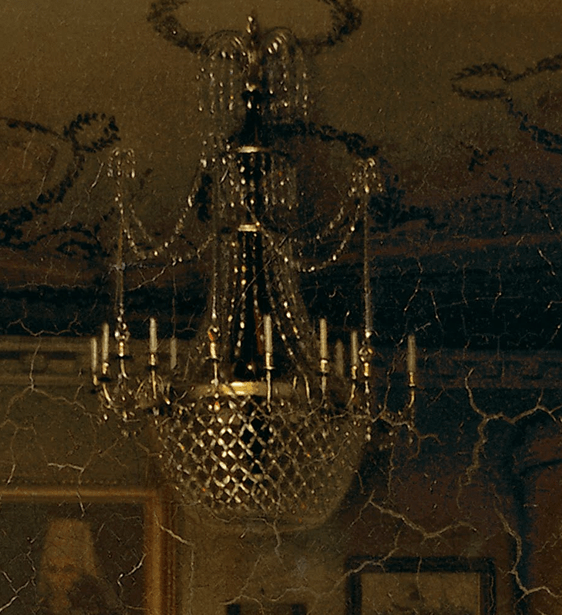
 A great attention is paid to details, and shows many of the characteristic features of merchant life. We can see that the room is filled with things demonstrating the desire of the owners to live “in the capital”. But if you look closely, it is a “wrong” combination of various objects that betrays patriarchal habits, and creates a comic effect.

In the left corner there is a table with a Psalter as well as icons with lamps on a shelf, obligatory in any house, but impossible in a nobleman’s antechamber. Aristocrats went to pray in the home chapel, or went to church and could have an icon in the bedroom, but wouldn’t in the antechamber.
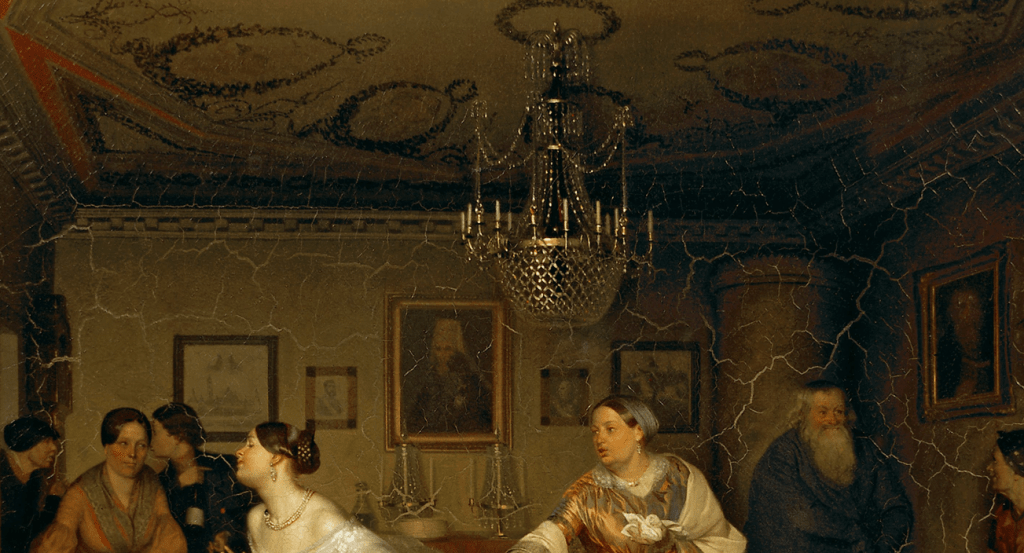
The ceiling, from which a huge chandelier hangs , is painted with flower garlands, nymphs and cupids.

Paintings hang on the walls, but their plots hint that the owner does not know arts.

They include a lithograph with a view of the Nikolo-Ugresh monastery, portraits of the metropolitan, generals Kutuzov and Kulnev, as well as the owner of the house himself with a book in his hand, to emphasize his literacy .
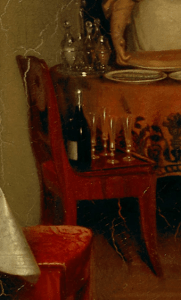
Champagne in this house, obviously, is drunk infrequently and therefore they do not know how to serve it gracefully. They simply put a tray with a bottle of champagne and glasses on a chair.

The bride

Lighter than her mother’s, the bride’s dress helps to set her apart from the central group as the most important character.

Even though the bride wear a beautiful dress made of muslin and an immeasurable amount of gold jewelry (rings, necklaces, earrings, bracelets), at the last moment she tries to run away to another room, feeling naked in this new fashionable dress, which is made according to European fashion showing her shoulders.

The absurdity of the situation is emphasized by the fact that the outfit of the merchant’s daughter is intended for a ball or other evening event, and not for meeting the groom during the day, but the action, judging by the extinguished lamps, takes place during the day.
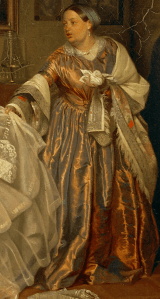
The mother

The bride’s mother is dressed in a mixed new French and Old Russian fashion. She has a fashionable European dress made of iridescent fabric of the ” chanzhan ” type but instead of the cap, she has a philistine-style scarf tied on her head, and there is no corset under the silk dress. A shawl is thrown over this dress.

As her daughter tries to run out of the room, she grabbes her by the hem of her dress to stop her. Her posture and facial expression betray an imperious and strong willed character and we can deduct that she is probably the one running everything in the house.
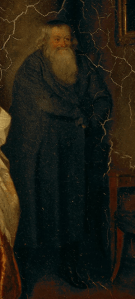
The father

Her father, a good-natured peasant with a bushy beard is in the shade in the corner of the room. He is trying to button up his newfangled frock coat with which he is not very familiar.

The matchmaker

To the left of the major is a simple matchmaker dressed in an nice red brocade and a dark skirt. A dark scarf with a small flower is tied around her head. Her clothing is another indication that the major is not a hereditary nobleman, otherwise he would have resorted to the services of a noblewoman matchmaker.

Having come with the major, she already entered the room, and is the link between the major, towards whom the movement of her hand is directed, and the merchant, to whom her gaze is turned.
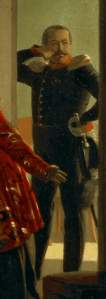
Majors matchmaking  extract groom by Fedotov
Majors matchmaking extract groom by Fedotov

The major

It is probable that the groom became a nobleman recently, having received the rank of a major. He clearly does not have refined manners, and we notice that he forgot to bring flowers to the bride and future mother-in-law.

To attracts our attention, the major, who is wearing an uniform with epaulettes , and carrying a saber, is standing in the doorway in backlight. At the same time his face is illuminated because he turns his head to the left. His legs are placed in the same way as the chair, slightly curved, his figure is taut, his eyes are slightly screwed up, and a victorious smile is hidden in his mustache.

He is straightening his mustache, and all his appearance is showing a businesslike attitude to a “deal”. It is probable that negotiations with the bride’s parents were held by the matchmaker in advance, and already knowing the answer, he is now thinking of all the benefits of his future marriage.

He does not yet see what is happening in the room where the main action takes place, and is waiting for an invitation to enter .

By the way, to create the figure of a major, Fedotov painted his own face, by looking in a mirror, giving himself a mine of some complacency and correcting his features in some ways.

The servants

Secondary characters help recreate the atmosphere of a merchant’s house.

On the left of the painting, an old woman who looked out with curiosity from the next room, speaks with a sitter holding a wine bottle. He apparently just brought it from a wine shop and the two servants seem to be gossiping about the groom.

In front of them, the cook puts a freshly baked on the table watching what is happening in the room.
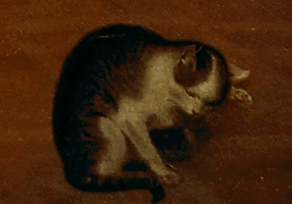
The cat

On the lower right corner of the painting Pavel Fedotov depicted a cat cleaning itself: “The cat washes guests”.

There is a saying associated with a cat cleaning itself. If the animal washes thoroughly and tidies up: it’s for the guests, and it means that guests will come soon (guests will come to the wedding).

After looking at this painting we are left wondering the further fate of the daughter of the merchant and the major: are they happy? How does the merchant now place herself in society, given her new relationship with a nobleman? There are many such questions.

In the next articles, we’ll read and translate the Racea of Pavel Fedotov about his paintings “The major’s matchmaking”, then we’ll compare the original painting with its repetition.

I hope you enjoyed this painting as much as I did.

Poem about the painting “The Major’s Matchmaking” by Fedotov Russian/English

If you liked this article, subscribe , put likes, write comments!
Share on social networks
Check out Our Latest Posts


© 2023 Akirill.com – All Rights Reserved

Découvrez le poème “Heureux celui qui est choisi volontairement” d’Alexandre Pouchkine russe/français côte à côte

Livres bilinguesRead in EnglishNous contacter
Littérature américaineLittérature françaiseLittérature russe

< < < Cerisier (Ru/Fr) / Cherry Tree (Ru/Eng) / Вишня (Рус/Анг.) / (Рус/ Фра.)

Je me souviens de la mer avant la tempête (Ru/Fr) / I remember the sea before the storm (Ru/Eng) / Я помню море пред грозою (Рус/Анг.) (Рус/ Фра.) > > >


Aujourd’hui, j’ai traduit et fait une courte analyse du court poème “Heureux celui qui est choisi volontairement” d’Alexandre Pouchkine. 

Счастлив, кто избран своенравно
Александра Пушкина
Pouchkine AS – Heureux celui qui est choisi volontairement…
Счастлив, кто избран своенравноHeureux celui qui est choisi volontairement
Твоей тоскливою мечтой,Dans ton triste rêve,
При ком любовью млеешь явно,Avec qui tu es clairement amoureux,
Чьи взоры властвуют тобой;Dont le regard te gouverne ;
Но жалок тот, кто молчаливо,Mais pitoyable est celui qui silencieusement,
Сгорая пламенем любви,Brûlant de la flamme de l’amour,
Потупя голову, ревнивоBaissant jalousement la tête,
Признанья слушает твои.Écoute tes aveux.
1828 гtranslated by Bayard Barbara

Brève analyse

Au début du poème, Pouchkine nous dit que la personne que vous aimez et que vous avez choisie pour vous-même parce que vous aspiriez à l’amour est une personne heureuse.

Lorsque cette personne dont vous êtes manifestement amoureux(se) vous regarde, vous devenez gêné(e) et ne pouvez pas parler normalement. Vous commencez à trébucher dans la conversation, à dire des bêtises parce que vous aimez beaucoup cette personne. En même temps, son regard vous donne également de nombreuses raisons de penser et de réfléchir, stimulant vos rêves à son sujet.

Mais cette personne qui aime en silence, pour que personne ne s’en aperçoive car elle a peur d’avoir l’air stupide; Cette personne silencieuse a l’air pathétique et brûle simplement inaperçue des autres dans la flamme de son amour.

Cette personne qui écoute vos aveux ne comprend pas tout ce que vous lui dites, mais est secrètement jalouse de votre amour pour une (un) autre et en vous écoutant vos confessions cette personne comprends que vous ne l’aimez pas

J’espère que vous avez apprécié ce poème autant que moi


< < <  Cerisier (Ru/Fr) / Cherry Tree (Ru/Eng) / Вишня (Рус/Анг.) / (Рус/ Фра.)

Je me souviens de la mer avant la tempête (Ru/Fr) / I remember the sea before the storm (Ru/Eng) / Я помню море пред грозою (Рус/Анг.) (Рус/ Фра.) > > >

Si vous avez aimé cet article, abonnez-vous, mettez des likes, écrivez des commentaires !

Partager sur les réseaux sociaux

Découvrez nos derniers posts


© 2023 Akirill.com – All Rights Reserved

Discover the poem “Happy is the one, who is chosen willfully” by Alexander Pushkin Russian/English side by side

Bilingual booksLire en FrançaisContact us
American LiteratureFrench LiteratureRussian Literature

< < <  Cerisier (Ru/Fr) / Cherry Tree (Ru/Eng) / Вишня (Рус/Анг.) / (Рус/ Фра.)

Je me souviens de la mer avant la tempête (Ru/Fr) / I remember the sea before the storm (Ru/Eng) / Я помню море пред грозою (Рус/Анг.) (Рус/ Фра.) > > >


Today, I translated and made a short analysis of the short poem “Happy is the one, who is chosen willfully” from Alexander Pushkin.

Счастлив, кто избран своенравно
Александра Пушкина
Pushkin A. S. – Happy is the one, who is chosen willfully…
Счастлив, кто избран своенравноHappy is the one, who is chosen willfully
Твоей тоскливою мечтой,In your dreary dream,
При ком любовью млеешь явно,With whom you are clearly in love,
Чьи взоры властвуют тобой;Whose gaze rules you;
Но жалок тот, кто молчаливо,But pitiful is the one who silently,
Сгорая пламенем любви,Burning with the flame of love,
Потупя голову, ревнивоLowering his head jealously,
Признанья слушает твои.Listens to your confessions.
1828 гtranslated by Bayard Barbara

Short analysis

In the beginning of the poem Pushkin tell us that the person you love and chose for yourself because you yearned love is an happy one.

When this person with whom you are clearly in love looks at you, you become embarrassed and cannot talk normally. You start stumbling in conversation, saying nonsense because you like this person very much. At the same time, his/her regard also gives you a lot of reasons to think and reflect, stimulating your dreams about him/her.

But this person who loves silently, so that no one would notice because he/she is scared of looking stupid; This silent person looks pathetic and simply burns out unnoticed by others in the flame of his/her love.

This person who listens to your confessions does not understand everything about what you are telling him/her, but is secretly jealous of your love for another and listening to you this person admits that you do not love him/her

I hope you enjoyed this poem as much as I did


< < <  Cerisier (Ru/Fr) / Cherry Tree (Ru/Eng) / Вишня (Рус/Анг.) / (Рус/ Фра.)

Je me souviens de la mer avant la tempête (Ru/Fr) / I remember the sea before the storm (Ru/Eng) / Я помню море пред грозою (Рус/Анг.) (Рус/ Фра.) > > >

If you liked this article, subscribe , put likes, write comments!
Share on social networks
Check out Our Latest Posts


© 2023 Akirill.com – All Rights Reserved

Happy Valentine’s Day with the poem “Why am I fascinated by her” by Alexander Pushkin Russian/English side by side

Bilingual booksLire en FrançaisContact us
American LiteratureFrench LiteratureRussian Literature

< < < Matin D’Hiver (Ru/Fr) / Winter morning (Ru/Eng) / Зимнее утро (Рус/Анг.) (Рус/ Фра.)
Prophète  (Ru/Fr) / Prophet (Ru/Eng) / «Пророк» (Рус/Анг.) / (Рус/ Фра.) > > >


For Valentine’s day, I translated the short poem “Why am I fascinated by her” from Alexander Pushkin. I wish you all a day full of Love

Александр Пушкин — Зачем я ею очарован: СтихPushkin A. S. – Why am I fascinated by her…
Translated by Akirill.com
02/14/2023
Зачем я ею очарован?Why am I fascinated by her?
Зачем расстаться должен с ней?Why should I part with her?
Когда б я не был избалованIf I hadn’t been spoiled
Цыганской жизнию моейBy my gypsy life
Она глядит на вас так нежно,She looks at you so tenderly,
Она лепечет так небрежно,She babbles so casually,
Она так тонко весела,She is so subtly cheerful,
Ее глаза так полны чувством,Her eyes are so full of feeling,
Вечор она с таким искусствомIn the evening she with such art
Из-под накрытого столаFrom under the set table
Мне свою ножку подала!Gave me her leg!

I hope you enjoyed this poem as much as I did


< < < Matin D’Hiver (Ru/Fr) / Winter morning (Ru/Eng) / Зимнее утро (Рус/Анг.) (Рус/ Фра.)
Prophète  (Ru/Fr) / Prophet (Ru/Eng) / «Пророк» (Рус/Анг.) / (Рус/ Фра.) > > >

If you liked this article, subscribe , put likes, write comments!
Share on social networks
Check out Our Latest Posts


© 2023 Akirill.com – All Rights Reserved

Joyeuse Saint-Valentin avec le poème “Pourquoi suis-je fasciné par elle” d’Alexandre Pouchkine côte à côte russe/français

Livres bilinguesRead in EnglishNous contacter
Littérature américaineLittérature françaiseLittérature russe

< < < Matin D’Hiver (Ru/Fr) / Winter morning (Ru/Eng) / Зимнее утро (Рус/Анг.) (Рус/ Фра.)
Prophète  (Ru/Fr) / Prophet (Ru/Eng) / «Пророк» (Рус/Анг.) / (Рус/ Фра.) > > >


Pour la Saint-Valentin, j’ai traduit le court poème “Pourquoi suis-je fasciné par elle” d’Alexandre Pouchkine. Je vous souhaite à tous une journée pleine d’amour

Александр Пушкин — Зачем я ею очарован: СтихPushkin AS – Pourquoi suis-je fasciné par elle…
Traduit par Akirill.com
02/14/2023
Зачем я ею очарован?Pourquoi suis-je fasciné par elle ?
Зачем расстаться должен с ней?Pourquoi devrais-je me séparer d’elle ?
Когда б я не был избалованSi je n’avais pas été gâté
Цыганской жизнию моейPar ma vie gitane
Она глядит на вас так нежно,Elle te regarde si tendrement,
Она лепечет так небрежно,Elle babille avec tant de désinvolture,
Она так тонко весела,Elle est si subtilement gaie,
Ее глаза так полны чувством,Ses yeux sont si pleins de sentiments,
Вечор она с таким искусствомLe soir, elle avec un tel art
Из-под накрытого столаSous la table dressée
Мне свою ножку подала!M’a donné sa jambe!

J’espère que vous avez apprécié ce poème autant que moi


< < < Matin D’Hiver (Ru/Fr) / Winter morning (Ru/Eng) / Зимнее утро (Рус/Анг.) (Рус/ Фра.)
Prophète  (Ru/Fr) / Prophet (Ru/Eng) / «Пророк» (Рус/Анг.) / (Рус/ Фра.) > > >

Si vous avez aimé cet article, abonnez-vous, mettez des likes, écrivez des commentaires !

Partager sur les réseaux sociaux

Découvrez nos derniers posts


© 2023 Akirill.com – All Rights Reserved
« Mending Wall » de Robert Frost, anglais et français côte à côte avec analyse.

Livres bilinguesRead in EnglishNous contacter
Littérature américaineLittérature françaiseLittérature russe

Robert Frost a écrit l’un de ses poèmes les plus populaires : “Mending Wall” en 1914. J’ai décidé de le traduire et, comme toujours, de mettre les deux poèmes côte à côte.

Une brève analyse

“Mending Wall” est un poème sur deux voisins qui se réunissent pour réparer le mur entre leurs propriétés.

On voit que l’orateur du poème n’est pas très sérieux à ce sujet. Il plaisante et n’est pas convaincu de la nécessité d’avoir un mur séparant leurs propriétés.

Lorsqu’il interroge son voisin sur la nécessité d’une clôture, celui-ci répond toujours un vieux dicton que son père lui a enseignée : les bonnes clôtures font les bons voisins.

Une interprétation simple de ce dicton serait que des frontières claires entre nous et les autres conduisent à des relations saines entre les gens.

Le poème «Mending Wall» met en contraste les deux approches différentes de la vie et des relations humaines. En même temps, il est rempli du regret de ce qui aurait pu être s’il n’y avait pas eu de mur entre lui et son voisin.

rock wall
rock wall
Mending Wall
By Robert Frost
Réparation du mur
de Robert Frost
Something there is that doesn’t love a wall,Il y a quelque chose ici qui n’aime pas un mur,
That sends the frozen-ground-swell under it,Cela envoie la houle gelée en dessous,
And spills the upper boulders in the sun;Et renverse les rochers supérieurs au soleil;
And makes gaps even two can pass abreast.Et fait des trous ou même à deux, ils peuvent passer de front.
The work of hunters is another thing:Le travail des chasseurs est une autre chose :
I have come after them and made repairJe suis venu après eux et j’ai réparé
Where they have left not one stone on a stone,Où ils n’ont pas laissé une pierre sur une autre,
But they would have the rabbit out of hiding,Mais ils auraient fait sortir le lapin de sa cachette,
To please the yelping dogs. The gaps I mean,Pour plaire aux chiens qui jappent. 
Les trous je veux dire,
No one has seen them made or heard them made,Personne ne les a vus ou entendu faire,
But at spring mending-time we find them there.Mais au moment du raccommodage de printemps, nous les y retrouvons.
I let my neighbor know beyond the hill;J’ai prévenu mon voisin au-delà de la colline;
And on a day we meet to walk the lineEt un jour nous nous rencontrons pour marcher le long de la ligne
And set the wall between us once again.Et remettre le mur entre nous une fois de plus.
We keep the wall between us as we go.Nous gardons le mur entre nous au fur et à mesure.
To each the boulders that have fallen to each.À chacun des rochers qui sont tombés pour chacun.
And some are loaves and some so nearly ballsEt certains sont des pains et d’autres presque des balles
We have to use a spell to make them balance:Nous devons utiliser un sort pour les équilibrer :
‘Stay where you are until our backs are turned!’‘Restez où vous êtes jusqu’à ce que nous ayons le dos tourné !’
We wear our fingers rough with handling them.Nous rendons nos doigts rugueux en les manipulant.
Oh, just another kind of out-door game,Oh, juste un autre genre de jeu en plein air,
One on a side. It comes to little more:Un sur un côté. Il bouge un peu plus :
There where it is we do not need the wall:Là où il est nous n’avons pas besoin du mur :
He is all pine and I am apple orchard.Il est tout pin et je suis verger de pommiers.
My apple trees will never get acrossMes pommiers ne passent jamais de l’autre côté
And eat the cones under his pines, I tell him.Et mangent les cônes sous ses pins, lui dis-je.
He only says, ‘Good fences make good neighbors.’Il dit seulement : « Les bonnes clôtures font les bons voisins.
Spring is the mischief in me, and I wonderLe printemps est l’espièglerie en moi, et je me demande
If I could put a notion in his head:Si je pourrais mettre une idée dans sa tête :
‘Why do they make good neighbors? Isn’t it« Pourquoi  font-elles de bons voisins ? 
Where there are cows? But here there are no cows.Où y a-t-il des vaches ? Mais ici, il n’y a pas de vaches.
Before I built a wall I’d ask to knowAvant de construire un mur, je demanderais à savoir
What I was walling in or walling out,Ce que je murais dedans ou en dehors,
And to whom I was like to give offense.Et à qui j’allais donné offense.
Something there is that doesn’t love a wall,Il y a quelque chose ici qui n’aime pas un mur,
That wants it down.’ I could say ‘Elves’ to him,Qui le veut démoli. Je pourrais lui dire ‘Elfes’,
But it’s not elves exactly, and I’d ratherMais ce ne sont pas exactement des elfes, et je préfère
He said it for himself. I see him thereIl l’a dit pour lui-même. je le vois là
Bringing a stone grasped firmly by the topApporter une pierre fermement saisie par le haut
In each hand, like an old-stone savage armed.Dans chaque main, comme un sauvage armé de vieille pierre.
He moves in darkness as it seems to me,Il se déplace dans les ténèbres comme il me semble,
Not of woods only and the shade of trees.Pas de bois uniquement et l’ombre des arbres.
He will not go behind his father’s saying,Il n’ira pas derrière les paroles de son père,
And he likes having thought of it so wellEt il aime y avoir si bien pensé
He says again, ‘Good fences make good neighbors.’Il répète encore: « Les bonnes clôtures font les bons voisins.

J’espère que vous avez apprécié ce poème autant que moi.

Si vous avez aimé cet article, abonnez-vous, mettez des likes, écrivez des commentaires !

Partager sur les réseaux sociaux

Découvrez nos derniers posts


© 2023 Akirill.com – All Rights Reserved

Manifestation in Strasbourg

Bilingual booksContact us
American LiteratureFrench LiteratureRussian Literature

Today our trams drivers were in strike, and those who weren’t, were stopped by the manifestation against Macron in Strasbourg….

Aujourd’hui nos conducteurs de Tram étaient en grève; et ceux qui ne l’etaient pas ont été arrêté par les manifestations de ceux qui ne sont pas d’accord avec Macron…

If you liked this article, subscribe , put likes, write comments!
Share on social networks
Check out Our Latest Posts

“Mending Wall” by Robert Frost, English and French side by side with analysis.

Bilingual booksLire en FrançaisContact us
American LiteratureFrench LiteratureRussian Literature

Robert Frost wrote one of his most popular poem: “Mending Wall” in 1914. I decided to translate it and as always put both poems side by side.

A Short Analysis

“Mending Wall” is a poem about two neighbors coming together to fix the wall between their properties.

We can see that the poem’s speaker is not very serious about it. He jokes about it and is not convinced of the need of having a wall separating their properties.

When he asks his neighbor about the need of a fence, this one always answers an old piece of wisdom that his father taught him: Good fences make good neighbors.

A simple interpretation of this piece of wisdom would be that clear boundaries between ourselves and others leads to healthy relationships beween people.

The poem “Mending Wall” contraste the two different approaches to life and human relationship. At the same time it is filled with the regret of what might have been if there was no wall between him and his neighbor.

rock wall
rock wall
Mending Wall
By Robert Frost
Réparation du mur
de Robert Frost
Something there is that doesn’t love a wall,Il y a quelque chose ici qui n’aime pas un mur,
That sends the frozen-ground-swell under it,Cela envoie la houle gelée en dessous,
And spills the upper boulders in the sun;Et renverse les rochers supérieurs au soleil;
And makes gaps even two can pass abreast.Et fait des trous ou même à deux, ils peuvent passer de front.
The work of hunters is another thing:Le travail des chasseurs est une autre chose :
I have come after them and made repairJe suis venu après eux et j’ai réparé
Where they have left not one stone on a stone,Où ils n’ont pas laissé une pierre sur une autre,
But they would have the rabbit out of hiding,Mais ils auraient fait sortir le lapin de sa cachette,
To please the yelping dogs. The gaps I mean,Pour plaire aux chiens qui jappent. 
Les trous je veux dire,
No one has seen them made or heard them made,Personne ne les a vus ou entendu faire,
But at spring mending-time we find them there.Mais au moment du raccommodage de printemps, nous les y retrouvons.
I let my neighbor know beyond the hill;J’ai prévenu mon voisin au-delà de la colline;
And on a day we meet to walk the lineEt un jour nous nous rencontrons pour marcher le long de la ligne
And set the wall between us once again.Et remettre le mur entre nous une fois de plus.
We keep the wall between us as we go.Nous gardons le mur entre nous au fur et à mesure.
To each the boulders that have fallen to each.À chacun des rochers qui sont tombés pour chacun.
And some are loaves and some so nearly ballsEt certains sont des pains et d’autres presque des balles
We have to use a spell to make them balance:Nous devons utiliser un sort pour les équilibrer :
‘Stay where you are until our backs are turned!’‘Restez où vous êtes jusqu’à ce que nous ayons le dos tourné !’
We wear our fingers rough with handling them.Nous rendons nos doigts rugueux en les manipulant.
Oh, just another kind of out-door game,Oh, juste un autre genre de jeu en plein air,
One on a side. It comes to little more:Un sur un côté. Il bouge un peu plus :
There where it is we do not need the wall:Là où il est nous n’avons pas besoin du mur :
He is all pine and I am apple orchard.Il est tout pin et je suis verger de pommiers.
My apple trees will never get acrossMes pommiers ne passent jamais de l’autre côté
And eat the cones under his pines, I tell him.Et mangent les cônes sous ses pins, lui dis-je.
He only says, ‘Good fences make good neighbors.’Il dit seulement : « Les bonnes clôtures font les bons voisins.
Spring is the mischief in me, and I wonderLe printemps est l’espièglerie en moi, et je me demande
If I could put a notion in his head:Si je pourrais mettre une idée dans sa tête :
‘Why do they make good neighbors? Isn’t it« Pourquoi  font-elles de bons voisins ? 
Where there are cows? But here there are no cows.Où y a-t-il des vaches ? Mais ici, il n’y a pas de vaches.
Before I built a wall I’d ask to knowAvant de construire un mur, je demanderais à savoir
What I was walling in or walling out,Ce que je murais dedans ou en dehors,
And to whom I was like to give offense.Et à qui j’allais donné offense.
Something there is that doesn’t love a wall,Il y a quelque chose ici qui n’aime pas un mur,
That wants it down.’ I could say ‘Elves’ to him,Qui le veut démoli. Je pourrais lui dire ‘Elfes’,
But it’s not elves exactly, and I’d ratherMais ce ne sont pas exactement des elfes, et je préfère
He said it for himself. I see him thereIl l’a dit pour lui-même. je le vois là
Bringing a stone grasped firmly by the topApporter une pierre fermement saisie par le haut
In each hand, like an old-stone savage armed.Dans chaque main, comme un sauvage armé de vieille pierre.
He moves in darkness as it seems to me,Il se déplace dans les ténèbres comme il me semble,
Not of woods only and the shade of trees.Pas de bois uniquement et l’ombre des arbres.
He will not go behind his father’s saying,Il n’ira pas derrière les paroles de son père,
And he likes having thought of it so wellEt il aime y avoir si bien pensé
He says again, ‘Good fences make good neighbors.’Il répète encore: « Les bonnes clôtures font les bons voisins.

I hope you enjoyed this poem as much as I did.

If you liked this article, subscribe , put likes, write comments!
Share on social networks
Check out Our Latest Posts


© 2023 Akirill.com – All Rights Reserved
Découvrez les 2 belles peintures “Paysannes dans la forêt” d’Alexey Ivanovich Korzukhin

Livres bilinguesRead in EnglishNous contacter
Littérature américaineLittérature françaiseLittérature russe

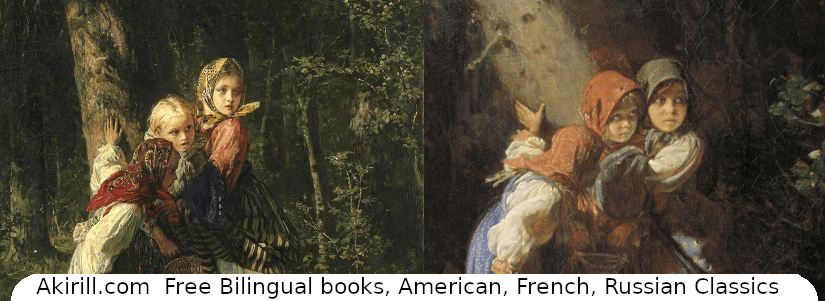
Aujourd’hui nous allons découvrir deux beaux tableaux d’Alexey Ivanovich Korzukhin (Алексей Иванович Корзухин) intitulés “Paysannes dans la forêt” peint en 1877 et une seconde fois en 1878.

On a cru très longtemps que le fond du tableau avait été réalisé par Chichkine mais après une longue étude minutieuse de la toile, il a été prouvé que ce dernier n’avait rien à voir avec l’œuvre de Korzukhin. 

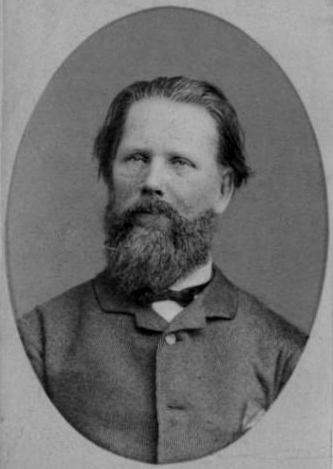
Alexey Ivanovich Korzukhin est un peintre russe du 19ème siècle, originaire de la province de Perm qui a peint des toiles sur la vie paysanne difficile, et la cathédrale du Christ Sauveur.

Alexey Ivanovich Korzukhin (Алексей Иванович Корзухин)
Alexey Ivanovich Korzukhin

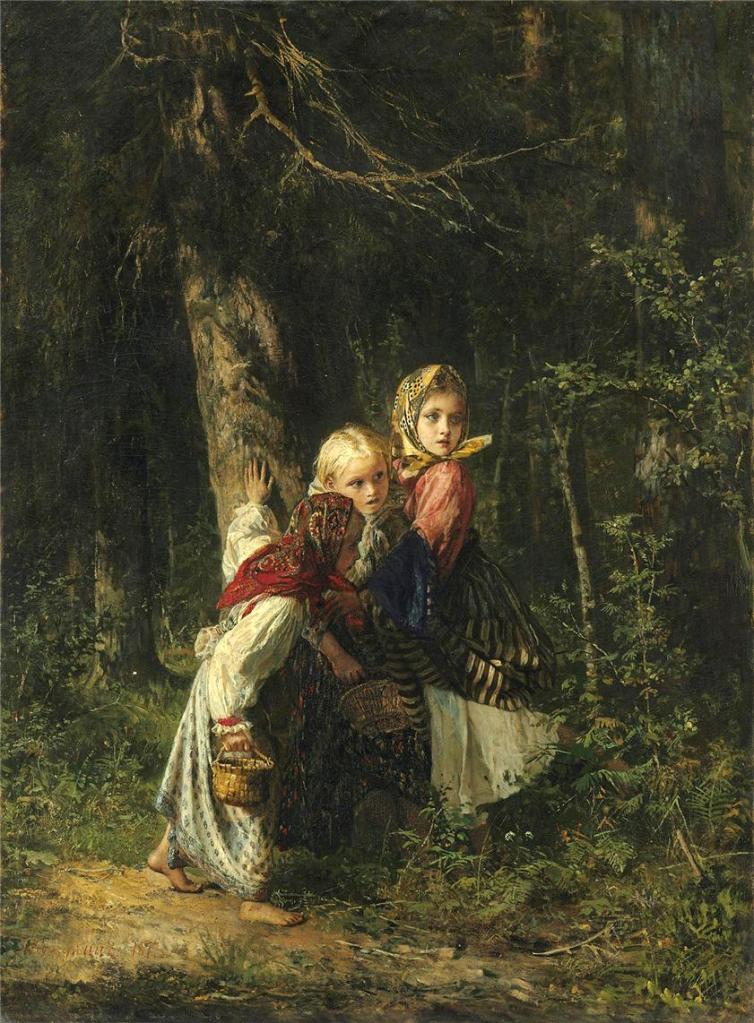
“Paysannes dans la forêt” (Крестьянские девочки в лесу), une peinture de genre russe, est une huile sur toile de 94 X 68,6 cm, peinte en 1877 par Alexey Ivanovich Korzukhin et a été vendue aux enchères pour 266,5 milliers de dollars en avril 2011.

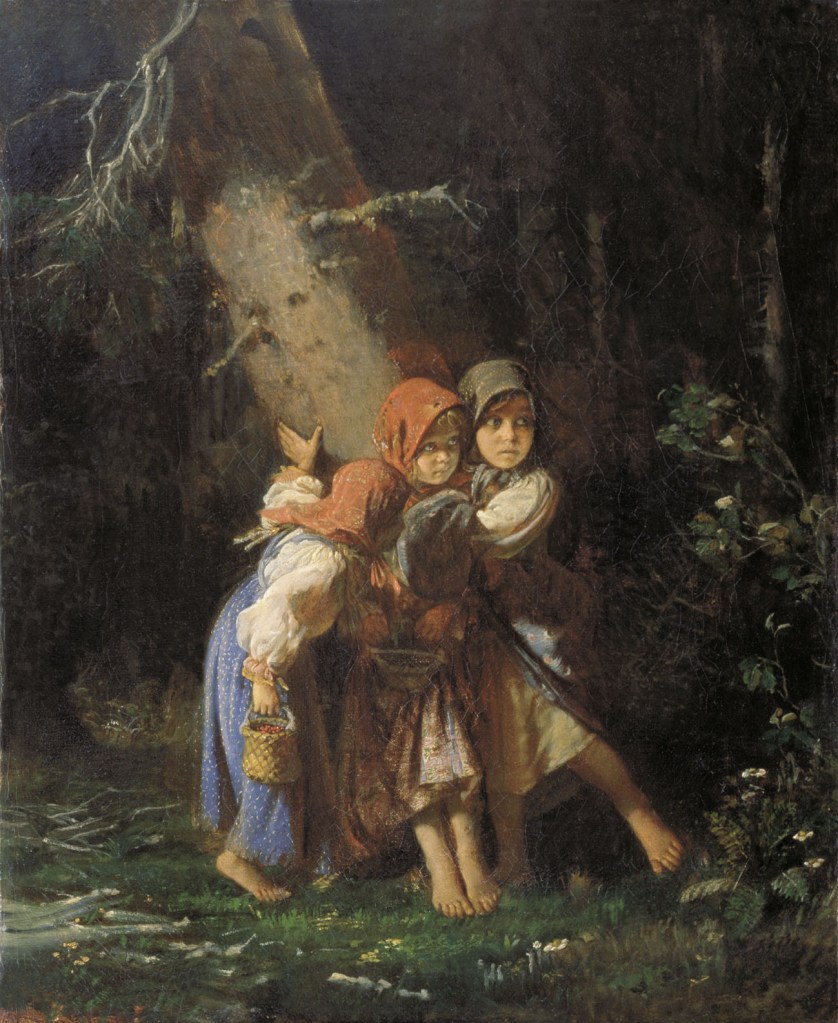
La deuxième peinture de “Paysannes dans la forêt”, également une peinture de genre russe, est une huile sur toile de 43 X 36 cm, peinte en 1878 par Alexey Ivanovich Korzukhin et maintenant dans le State Art Gallery de Perm.

“Filles paysannes dans la forêt” 1877

“Filles paysannes dans la forêt” 1877

Sur ce tableau, vous pouvez voir, trois petites filles pieds nus qui sont allées dans la forêt pour ramasser des champignons et des baies. Elles ont été tellement emportées par cette occupation qu’elles n’ont pas remarqué comment elles ont erré dans un coin de forêt dense et maintenant elles sont appuyées contre un arbre, pressées les unes contre les autres et scrutant attentivement la forêt sombre. Elles ont probablement entendu une sorte de bruit qui les a beaucoup effrayées, peut-être une bête sauvage, ou peut-être un chasseur qui se promène près d’elles.

La posture des filles ainsi que leurs expressions faciales trahissent leurs peurs, leur tension et leur confusion qui est accentuée par les effets de lumière et d’ombre qui mettent en valeur les visages des enfants . Mais derrière la frayeur, se lit aussi la curiosité inhérente aux enfants. Les filles regardent dans le sombre fourré de la forêt, essayant de voir et de comprendre qui ou quoi pourrait s’y cacher et si cela vaut la peine d’en avoir peur.

L’anxiété et l’excitation se dégagent de l’image et même le tronc d’arbre qui penche intensifie l’expression de l’état anxieux et instable de ces petites filles.

“Filles paysannes dans la forêt” 1878

"Filles paysannes dans la forêt" 1878
“Filles paysannes dans la forêt” 1878

Dans ce deuxième tableau de “Filles paysannes dans la forêt”, comme dans le premier, trois petites filles sont allées dans la forêt pour des baies. Elles sont habillées plus simplement et vous pouvez voir que soit des framboises, soit des fraises ont été ramassées, car l’un des paniers est déjà presque plein.

Comme dans le premier tableaux les petites filles sont effrayées par un bruit, se cramponnent les unes aux autres et s’adossent à un vieil arbre puissant. Mais ce tableau est plus sombre, plus dramatique. Les petites filles semblent avoir plus peur cherchant protection dans l’arbre penché.

Dans ce tableau, Korzukhin renforce le drame de l’événement en cours en utilisant des effets de lumière et d’ombre, et le fourré de la forêt effraie par son obscurité. 

La première toile est plus dynamique, plus lumineuse et pittoresque tandis que la seconde est plus sombre et plus dramatique.

J’espère que vous avez apprécié ces peintures autant que moi, écrivez laquelle était votre préférée dans les commentaires.

Si vous avez aimé cet article, abonnez-vous, mettez des likes, écrivez des commentaires !

Partager sur les réseaux sociaux

Découvrez nos derniers posts

Discover the 2 beautiful paintings of “Peasant Girls in the Forest” by Alexey Ivanovich Korzukhin

Bilingual booksLire en FrançaisContact us
American LiteratureFrench LiteratureRussian Literature

Today we will discover two beautiful paintings of Alexey Ivanovich Korzukhin (Алексей Иванович Корзухин) called “Peasant Girls in the Forest” painted in 1877 and a second time in 1878.

It was believed for a very long time that the background of the picture was made by Shishkin but after a long painstaking study of the canvas, it was proved that the latter had nothing to do with Korzukhin’s work. 

Alexey Ivanovich Korzukhin is a Russian painter of the 19th century, originally from the Perm province who  painted canvases about the difficult peasant life, and the Cathedral of Christ the Savior.

Alexey Ivanovich Korzukhin (Алексей Иванович Корзухин)
Alexey Ivanovich Korzukhin

“Peasant Girls in the Forest” (Крестьянские девочки в лесу) , a Russian genre painting, is an oil on canvas of 94 X 68.6 cm , painted in 1877 by Alexey Ivanovich Korzukhin and was sold at an auction for $266.5 thousands in April 2011.

The second “Peasant Girls in the Forest”, also a Russian genre painting, is an oil on canvas of 43 X 36 cm, painted in 1878 by Alexey Ivanovich Korzukhin and now in the State Art Gallery of Perm.

“Peasant Girls in the Forest” 1877

"Peasant Girls in the Forest" 1877
“Peasant Girls in the Forest” 1877

On this painting, you can see, three barefoot little girls who went to the forest to collect mushrooms and berries. They were so carried away by this occupation that they did not notice how they wandered into a dense forest thicket and now they are leaning against a tree, pressed against each other and carefully peering into dark forest. They probably heard some kind of noise that scared them a lot, maybe a wild beast, or maybe a hunter who is wandering close to them.

The posture of the girls as well as their facial expressions betrays their fears, tension and confusion which is emphasized by the light and shade effects that highlight the faces of the children. But behind the fright, the curiosity inherent in children is also read. The girls peer into the dark forest thicket, trying to see and understand who or what might be hiding there and whether it is worth being afraid of it.

Anxiety and excitement emanates from the picture and even the falling tree trunk intensifies the anxious and unstable state of these little girl.

“Peasant Girls in the Forest” 1878

"Peasant Girls in the Forest" 1878
“Peasant Girls in the Forest” 1878

In this second painting of “Peasant girls in the Forest” as in the first three girls went to the forest for berries. They are dressed more simply and you can see that either raspberries or strawberries were collected, as one of the basket is already almost full.

As in the first paintings the little girls are frightened by a noise and clung to each other leaning their backs against an old powerful tree. But this painting is darker, more dramatic. The little girls seem to be more frightened, and seeking protection in the leaning tree.

In this painting, Korzukhin enhances the drama of the ongoing event by using light and shadow effects, and the forest thicket frightens with its darkness. 

The first canvas is more dynamic, brighter and picturesque while the second is darker and more dramatic.

I hope you enjoyed these paintings as much as I did, write which one was your favorite in the comments.

If you liked this article, subscribe , put likes, write comments!
Share on social networks
Check out Our Latest Posts