“Cerisier” d’Alexandre Pouchkine en russe et en français avec le tableau “Berger Proschka” de Nikolai Bogdanov-Belsky

Livres bilinguesRead in EnglishNous contacter
Littérature américaineLittérature françaiseLittérature russe

< < <  Automne  (Ru/Fr) / Autumn (Ru/Eng) / Осень (Рус/Анг.) / (Рус/ Фра.)

Heureux celui qui est choisi volontairement (Ru/Fr) / Happy is the one, who is chosen willfully (Ru/Eng) / Счастлив, кто избран своенравно (Рус/Анг.) / (Рус/ Фра.) > > >


“Cerisier” d’Alexandre Pouchkine est une histoire sentimentale sur deux amants écrite quand Pouchkine avait environ 16 ans vers 1815.

Le poème “Cerisier” commence par une charmante description du paysage. Son intrigue est très simple : « Les jeunes bergères se précipitent vers les bergers. Apparaît alors le personnage principal, une séduisante bergère à la tenue cachant tous ses charmes. Mais l’héroïne, tentée par des cerises mûres, grimpe à un arbre. La branche se casse et elle tombe avec une poignée de cerises. Dans sa chute, sa robe s’est relevée. Un jeune berger est venu l’aider mais a « pressé sa poitrine passionnée » et il semble qu’ils aient perdu la tête « Tout le sang a bouilli Dans deux cœurs de feu L’amour s’est envolé » mais Pouchkine a ajouté que la couronne matrimoniale attendait les amants.

Вишня — Александр ПушкинCerisier – Alexandre Pouchkine
Traduit par Akirill.com

Berger Proschka de Nikolai Bogdanov Belsky
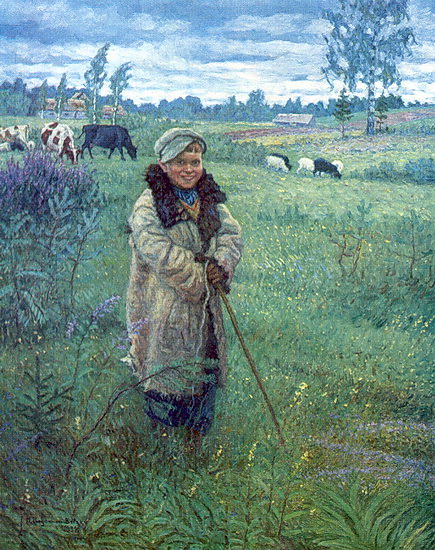
Shepherd Proschka-Nikolai Bogdanov Belsky / Пастушок Прошка - Николай Богданов Бельский
Berger Proschka de Nikolai Bogdanov Belsky / Пастушок Прошка – Николай Богданов Бельский

Nicholai Petrovitch Bogdanov-Belksky qui a soulevé des sujets sociaux aigus dans ses travaux, était un artiste itinérant russe né dans l’Empire russe le 8 (20) décembre 1868. Nicholai a peint principalement des peintures de genre, en particulier le thème paysan, des portraits et des études impressionnistes de paysage. Il tomba gravement malade en 1944 et mourut le 19 février 1945 à Berlin, en Allemagne.

Румяной зареюAube vermeille
Покрылся восток,Recouvre l’est
В селе за рекоюDans un village de l’autre côté de la rivière
Потух огонек.Les lumières se sont éteintes.
Росой окропилисьSaupoudré de rosée
Цветы на полях,Les fleurs dans les champs
Стада пробудилисьLes troupeaux se sont réveillés
На мягких лугах.Dans les douces prairies.
Туманы седыеLes brumes grises
Плывут к облакам,Flottent vers les nuages
Пастушки младыеLes jeunes bergères
Спешат к пастухам.Se précipitent vers les bergers.
С журчаньем стремится
Источник меж гор,
La source coule avec un murmure
Entre les montagnes
Вдали золотитсяDoré au loin
Во тьме синий бор.Dans la forêt bleue foncée.
Пастушка младаяLa jeune bergère
На рынок спешитSe précipite au marché
И вдаль, припевая,Et au loin, en chantant,
Прилежно глядит.Regarde avec diligence.
Румянец играетLa rougeur joue
На полных щеках,Sur ses joues potelées
Невинность блистаетL’innocence brille
На робких глазах.Dans ses yeux timides.
Искусной рукоюUne main habile
Коса убрана,A fait sa tresse
И ножка собоюEt la jambe elle-même
Прельщать создана.Créée la séduction .
Корсетом прикрытаLe Corset couvre
Вся прелесть грудей,Toute la beauté des seins
Под фартуком скрытаCaché sous un tablier
Приманка людей.Appâtant les gens.
Пастушка приходитLa bergère vient
В вишенник густойDans un jardin rempli de cerisiers
И много находитElle trouve beaucoup
Плодов пред собой.De fruits devant elle.
Хоть вид их прекрасенMême s’ils ont fière allure
Красотку манит,La beauté invite,
Но путь к ним опасен —Mais le chemin vers eux est dangereux –
Бедняжку страшит.La pauvre petite a peur.
Подумав, решиласьAprès avoir réfléchi, elle a décidé
Сих вишен поесть,De manger ces cerises
За ветвь ухватиласьElle a attrapé une branche
На дерево взлезть.Est montée dans l’arbre.
Уже достигаетatteignant déjà
Награды своейSes récompenses
И робко ступаетEt fait des pas timides
Ногой меж ветвей.Entre les branches.
Бери плод рукою —Prends le fruit avec ta main –
И вишня твоя,Et la cerise sera à toi
Но, ах! что с тобою,Mais, ah ! Qu’est-ce qui ne va pas
Пастушка моя?Ma bergère ?
Вдали усмотрела, —Elle a vu au loin –
Спешит пастушок;Le berger qui se hâte ;
Нога ослабела,Sa jambe s’est affaiblie,
Скользит башмачок.Sa chaussure a glissé.
И ветвь затрещала —Et la branche a craqué –
Беда, смерть грозит!Danger, mort la menace !
Пастушка упала,La bergère est tombée
Но, ах, какой вид!Mais, oh, quelle vue !
Сучок преломленныйLa branche réfractée
За платье задел;a touché la robe ;
Пастух удивленныйLe berger surpris
Всю прелесть узрел.A vu toute la beauté.
Среди двух прелестныхEntre deux adorables
Белей снегу ног,Pieds plus blancs que la neige,
На сгибах чудесныхSur les plis du merveilleux
Пастух то зреть мог,Le berger pouvait voir
Что скрыто до времяCe qui est caché jusqu’au moment
У всех милых дам,Qu’ont toutes les belles dames
За что из эдемаPour quoi hors d’Eden
Был выгнан Адам.Adam a été expulsé.
Пастушку несчастнуLa malheureuse bergère
С сучка тихо снялIl l’a tranquillement retiré de la branche
И грудь свою страстнуEt sa poitrine est passionnément
К красотке прижал.Pressée à la beauté.
Вся кровь закипелаTout le sang a bouilli
В двух пылких сердцах,Dans deux cœurs de feu
Любовь прилетелаL’amour s’est envolé
На быстрых крылах.Sur des ailes rapides.
Утеха страданийLa joie de souffrir
Двух юных сердец,De deux jeunes cœurs
В любви ожиданийDans l’attente de l’amour
Супругам венец.Couronne les époux.
Прельщенный красою,Séduit par la beauté
Младой пастушокUn jeune berger
Горячей рукоюD’une main chaude
Коснулся до ног.Touché jusqu’aux pieds.
И вмиг зарезвилсяEt instantanément gela
Амур в их ногах;Cupidon à leurs pieds ;
Пастух очутилсяLe berger s’est retrouvé
На полных грудях.Sur son ample poitrine.
И вишню румянуEt la cerise vermeille
В соку раздавил,Broyée en jus
И соком багрянымEt jus pourpre
Траву окропил.A saupoudré l’herbe.

J’espère que vous avez apprécié ce poème et cette peinture autant que moi.

< < <  Automne  (Ru/Fr) / Autumn (Ru/Eng) / Осень (Рус/Анг.) / (Рус/ Фра.)

Heureux celui qui est choisi volontairement (Ru/Fr) / Happy is the one, who is chosen willfully (Ru/Eng) / Счастлив, кто избран своенравно (Рус/Анг.) / (Рус/ Фра.) > > >

Si vous avez aimé cet article, abonnez-vous, mettez des likes, écrivez des commentaires !

Partager sur les réseaux sociaux

Découvrez nos derniers posts


© 2023 Akirill.com – All Rights Reserved
“Cherry Tree” by Alexander Pushkin in Russian and English with the painting “Shepherd Proschka” by Nikolai Bogdanov-Belsky

Bilingual booksLire en FrançaisContact us
American LiteratureFrench LiteratureRussian Literature

< < <  Automne  (Ru/Fr) / Autumn (Ru/Eng) / Осень (Рус/Анг.) / (Рус/ Фра.)

Heureux celui qui est choisi volontairement (Ru/Fr) / Happy is the one, who is chosen willfully (Ru/Eng) / Счастлив, кто избран своенравно (Рус/Анг.) / (Рус/ Фра.) > > >


“Cherry Tree” by Alexander Pushkin is a sentimental story about two lovers written when Pushkin was about 16 years old around 1815.

The poem “Cherry Tree” begins with a charming description of the landscape. Its plot is very simple: “Young shepherdesses rush to the shepherds.” Then the main character appears, a seductive shepherdess with an outfit hiding all her charms. But the heroin, tempted by ripe cherries, climbs a tree. The branch breaks and she fall with a handful of cherries. In her fall her dress pulled up. A young shepherd came to help her but also “pressed her passionate breast” and it seems that they lost their heads “All the blood boiled In two fiery hearts Love has flown” but Pushkin added that the matrimonial crown awaited the lovers.

Вишня — Александр ПушкинCherry tree – Alexander Pushkin
Translated by Akirill.com

Shepherd Proschka by Nikolai Bogdanov Belsky

Shepherd Proschka-Nikolai Bogdanov Belsky / Пастушок Прошка - Николай Богданов Бельский
Shepherd Proschka by Nikolai Bogdanov Belsky / Пастушок Прошка – Николай Богданов Бельский

Nicholai Petrovitch Bogdanov-Belksky who raised acute social topics in his woks, was a Russian itinerant artist born in The Russian Empire on december 8 (20) 1868. Nicholai painted mostly genre painting, especially the peasant theme, portraits and impressionist studies of landscape. He became seriously ill in 1944 and died on February 19, 1945 in Berlin, Germany.

Румяной зареюRuddy dawn
Покрылся восток,Covered the east
В селе за рекоюIn a village across the river
Потух огонек.The light went out.
Росой окропилисьSprinkled with dew
Цветы на полях,Flowers in the fields
Стада пробудилисьThe herds have awakened
На мягких лугах.In soft meadows.
Туманы седыеThe gray mists
Плывут к облакам,Float towards the clouds
Пастушки младыеYoung shepherdesses
Спешат к пастухам.Rush to the shepherds.
С журчаньем стремится
Источник меж гор,
The Source runs with a murmur between the mountains
Вдали золотитсяGolden in the distance
Во тьме синий бор.In the dark blue forest.
Пастушка младаяThe young shepherdess
На рынок спешитRushes to the market
И вдаль, припевая,And far away, singing,
Прилежно глядит.Looks diligently.
Румянец играетBlush plays
На полных щеках,On her plump cheeks
Невинность блистаетInnocence shines
На робких глазах.In her timid eyes.
Искусной рукоюA skillful hand
Коса убрана, has made the braid
И ножка собоюAnd the leg itself
Прельщать создана.created seduction .
Корсетом прикрытаCorset covered
Вся прелесть грудей,All the beauty of breasts
Под фартуком скрытаHidden under an apron
Приманка людей.Baiting people.
Пастушка приходитThe shepherdess comes
В вишенник густойIn a thick cherry garden
И много находитShe finds a lot
Плодов пред собой.of fruits in front of her.
Хоть вид их прекрасенEven though they look great
Красотку манит,Beauty beckons,
Но путь к ним опасен —But the path to them is dangerous –
Бедняжку страшит.The poor thing is scared.
Подумав, решиласьAfter thinking, she decided
Сих вишен поесть,To eat these cherries
За ветвь ухватиласьShe grabbed a branch
На дерево взлезть.Climbed up the tree.
Уже достигаетAlready reaching
Награды своейHer awards
И робко ступаетAnd timidly steps
Ногой меж ветвей.Between branches.
Бери плод рукою —Take the fruit with your hand –
И вишня твоя,And the cherry will be yours
Но, ах! что с тобою,But, ah! what’s wrong with you
Пастушка моя?My shepherdess?
Вдали усмотрела, —She saw in the distance –
Спешит пастушок;The shepherd who hurries;
Нога ослабела,Her leg weakened,
Скользит башмачок.Her shoe slipped.
И ветвь затрещала —And the branch cracked –
Беда, смерть грозит!Trouble, death threatens!
Пастушка упала,The shepherdess fell
Но, ах, какой вид!But, oh my, what a view!
Сучок преломленныйThe branch refracted
За платье задел;touched the dress;
Пастух удивленныйThe surprised Shepherd
Всю прелесть узрел.Saw all the beauty.
Среди двух прелестныхAmong two lovely
Белей снегу ног,Feet whiter than snow,
На сгибах чудесныхOn the folds of wonderful
Пастух то зреть мог,The shepherd could see
Что скрыто до времяWhat is hidden until the time
У всех милых дам,All the lovely ladies have
За что из эдемаFor which, out of eden
Был выгнан Адам.Adam was expelled.
Пастушку несчастнуUnfortunate shepherdess
С сучка тихо снялHe quietly removed her from the branch
И грудь свою страстнуAnd his chest is passionately
К красотке прижал.Pressed to the beauty.
Вся кровь закипелаAll the blood boiled
В двух пылких сердцах,In two fiery hearts
Любовь прилетелаLove has flown
На быстрых крылах.On fast wings.
Утеха страданийThe joy of suffering
Двух юных сердец,Of two young hearts
В любви ожиданийWaiting for love
Супругам венец.Spouses crown.
Прельщенный красою,Seduced by beauty
Младой пастушокA young shepherd
Горячей рукоюWith a hot hand
Коснулся до ног.Touched up to the feet.
И вмиг зарезвилсяAnd instantly froze
Амур в их ногах;Cupid at their feet;
Пастух очутилсяThe shepherd found himself
На полных грудях.On her full breasts.
И вишню румянуAnd cherry blush
В соку раздавил,Crushed into juice
И соком багрянымAnd crimson juice
Траву окропил.Sprinkled the grass.

I hope you enjoyed this poem and painting as much as I did.


< < <  Automne  (Ru/Fr) / Autumn (Ru/Eng) / Осень (Рус/Анг.) / (Рус/ Фра.)

Heureux celui qui est choisi volontairement (Ru/Fr) / Happy is the one, who is chosen willfully (Ru/Eng) / Счастлив, кто избран своенравно (Рус/Анг.) / (Рус/ Фра.) > > >

If you liked this article, subscribe , put likes, write comments!
Share on social networks
Check out Our Latest Posts


© 2023 Akirill.com – All Rights Reserved

Poème « Clair de Lune » de Paul Verlaine en anglais et français avec le tableau «Nuit au clair de lune en Crimée»

Livres bilinguesRead in EnglishNous contacter
Littérature américaineLittérature françaiseLittérature russe

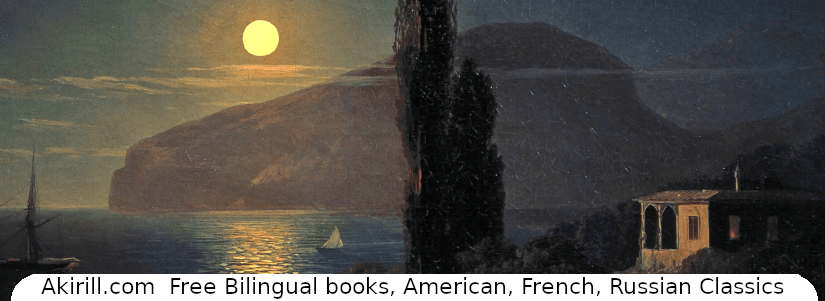
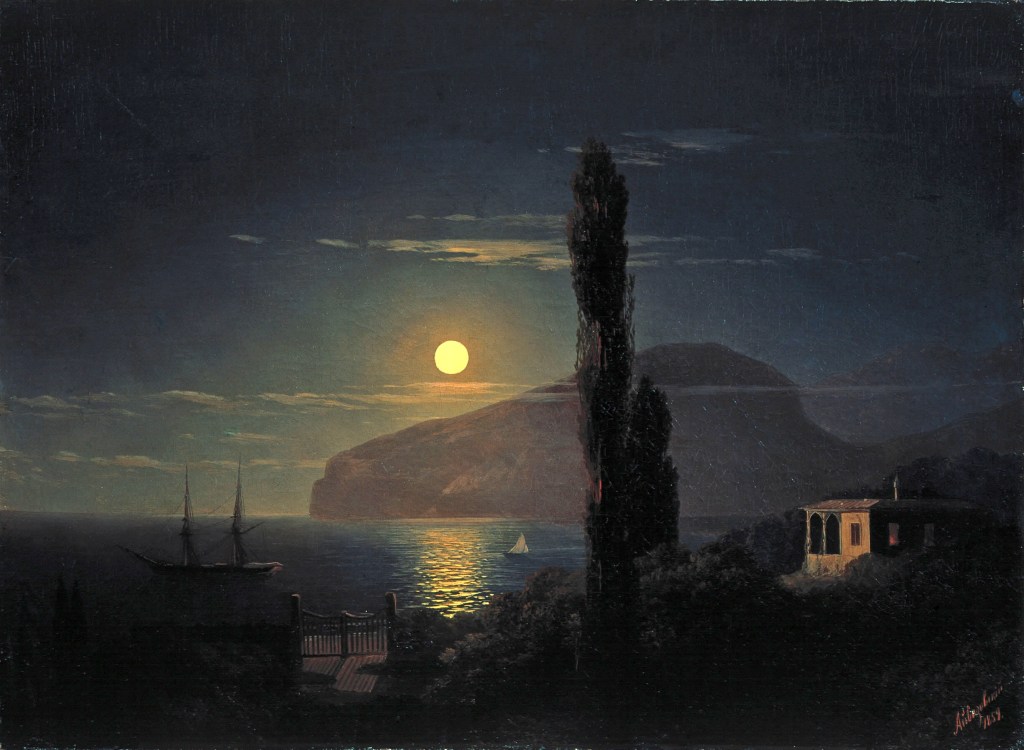
Cette semaine j’ai mis côte à côte en français et en anglais le poème « Clair de Lune » de Paul Verlaine. Et comme un article ne me semble pas complet sans image, j’ai ajouté le tableau « Nuit au clair de lune en Crimée » qui est une huile sur toile de 56,4×76 cm peinte par Ivan Aïvazovski en 1859, et se situe dans le Musée d’État Russe.

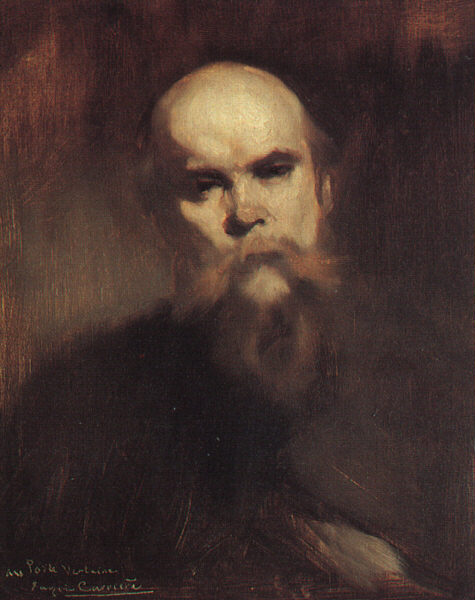
Paul Verlaine by Eugène Carrière 1890
Clair de Lune de Paul VerlaineClair de Lune by Paul Verlaine
Translated by Gertrude Hall
Moonlit night in Crimea 1859 by Ivan Aivazovsky
Лунная ночь в Крыму Айвазовского
Nuit au clair de lune en Crimée 1859 d’Ivan Aïvazovski / Лунная ночь в Крыму Айвазовского

Votre âme est un paysage choisiYour soul is as a moonlit landscape fair,
Que vont charmant masques et bergamasquesPeopled with maskers delicate and dim,
Jouant du luth et dansant et quasiThat play on lutes and dance and have an air
Tristes sous leurs déguisements fantasques.Of being sad in their fantastic trim.
Tout en chantant sur le mode mineurThe while they celebrate in minor strain
L’amour vainqueur et la vie opportune,Triumphant love, effective enterprise,
Ils n’ont pas l’air de croire à leur bonheurThey have an air of knowing all is vain,—
Et leur chanson se mêle au clair de lune,And through the quiet moonlight their songs rise,
Au calme clair de lune triste et beau,The melancholy moonlight, sweet and lone,
Qui fait rêver les oiseaux dans les arbresThat makes to dream the birds upon the tree,
Et sangloter d’extase les jets d’eau,And in their polished basins of white stone
Les grands jets d’eau sveltes parmi les marbres.The fountains tall to sob with ecstasy.

J’espère que vous avez apprécié ce poème et cette peinture autant que moi

Vous pouvez trouver d’autres poèmes français, américains ou russes sur leurs pages, ainsi que plus de poèmes bilingues si vous les aimez

Si vous avez aimé cet article, abonnez-vous, mettez des likes, écrivez des commentaires !

Partager sur les réseaux sociaux

Découvrez nos derniers posts


© 2023 Akirill.com – All Rights Reserved
Poem “Clair de Lune” by Paul Verlaine in English and French with the painting “Moonlit Night in Crimea”

Bilingual books Lire en FrançaisContact us
American Literature French Literature Russian Literature

This week I put side by side in French and English the poem “Clair de Lune” by Paul Verlaine. And since an article doesn’t seem complete to me without picture, I added the painting “Moonlit night in Crimea” which is an oil on canvas of 56,4×76 cm painted by Ivan Aivazovsky in 1859, and is situated in the State Russian Museum.

Paul Verlaine by Eugène Carrière 1890
Clair de lune de Paul VerlaineClair de lune by Paul Verlaine
Translated by Gertrude Hall
Moonlit night in Crimea 1859 by Ivan Aivazovsky
Лунная ночь в Крыму Айвазовского
Moonlit night in Crimea 1859 by Ivan Aivazovsky / Лунная ночь в Крыму Айвазовского

Votre âme est un paysage choisiYour soul is as a moonlit landscape fair,
Que vont charmant masques et bergamasquesPeopled with maskers delicate and dim,
Jouant du luth et dansant et quasiThat play on lutes and dance and have an air
Tristes sous leurs déguisements fantasques.Of being sad in their fantastic trim.
Tout en chantant sur le mode mineurThe while they celebrate in minor strain
L’amour vainqueur et la vie opportune,Triumphant love, effective enterprise,
Ils n’ont pas l’air de croire à leur bonheurThey have an air of knowing all is vain,—
Et leur chanson se mêle au clair de lune,And through the quiet moonlight their songs rise,
Au calme clair de lune triste et beau,The melancholy moonlight, sweet and lone,
Qui fait rêver les oiseaux dans les arbresThat makes to dream the birds upon the tree,
Et sangloter d’extase les jets d’eau,And in their polished basins of white stone
Les grands jets d’eau sveltes parmi les marbres.The fountains tall to sob with ecstasy.

I hope you enjoyed this poem and painting as much as I did

You can find other French, American or Russian poem on their pages, as well as more bilingual poems if you like them

If you liked this article, subscribe , put likes, write comments!
Share on social networks
Check out Our Latest Posts


© 2023 Akirill.com – All Rights Reserved
Lisez le poème “Épouses” de Konstantin Simonov en russe et en français côte à côte

Livres bilinguesRead in EnglishNous contacter
Littérature américaineLittérature françaiseLittérature russe

< < < Attends moi  (Ru/Fr) / Wait for me (Ru/Eng) / Жди меня, и я вернусь (Рус/Анг.) / (Рус/ Фра.)
J’ai dû être le plus têtu de tous (Ru/Fr) / I must have been the most stubborn of all (Ru/Eng) / Я, верно, был упрямей всех (Рус/Анг.) / (Рус/ Фра.) > > >

“Жёны” Константин СимоновÉpouses de Konstantin Simonov
Traduit par Akirill.com

Последний кончился огарок,La dernière bougie terminée,
И по невидимой чертеEt le long d’une ligne invisible
Три красных точки трех цигарокTrois points rouges de trois cigarettes
Безмолвно бродят в темноте.Errent silencieusement dans l’obscurité.
О чем наш разговор солдатский?De quoi parle notre soldat ?
О том, что нынче Новый год,A propos du fait qu’aujourd’hui est le Nouvel An,
А света нет, и холод адский,Et il n’y a pas de lumière, et le froid est infernal,
И снег, как каторжный, метет.Et la neige, comme aux travaux forcés, balaie.
Один сказал: «Моя сегодняL’un d’eux a déclaré : « aujourd’hui, ma femme
Полы помоет, как при мне.Va laver le sol, comme quand j’étais à la maison.
Потом детей, чтоб быть свободней,Alors les enfants, pour la laisser être tranquille,
Уложит. Сядет в тишине.
Elle les mettra au lit. Puis, elle s’assiera dans le silence.
Ей сорок лет — мы с ней погодки.Elle a quarante ans – nous avons presque le même age.
Всплакнет ли, просто ли вздохнет,Va-t-elle pleurer, va-t-elle juste soupirer,
Но уж, наверно, рюмкой водкиMais déjà, probablement, elle mettra un verre commémoratif de vodka
Меня по-русски помянет…»Et se souviendra de moi, comme il est d’usage chez les Russes…”
Второй сказал: «Уж год с лихвоюLe second a déclaré : « Depuis plus d’un an,
С моей война нас развела.La guerre nous a sépare.
Я, с молодой простясь женою,Moi, ayant dit au revoir à ma jeune femme,
Взял клятву, чтоб верна была.Lui ai fait juré d’être fidèle.
Я клятве верю,— коль не верить,Je crois sa promesse, si je n’y croyais pas,
Как проживешь в таком аду?Comment pourrais-je vivre dans un tel enfer ?
Наверно, все глядит на двери,Probablement elle regarde la porte,
Все ждет сегодня — вдруг приду…»Elle attend aujourd’hui – soudainement j’entrerai … “
А третий лишь вздохнул устало:Et le troisième ne fit que soupirer d’un air las :
Он думал о своей — о той,Il pensait à la sienne – à celle
Что с лета прошлого молчалаQui s’était tue depuis l’été dernier
За черной фронтовой чертой…Derrière la ligne noire du front …
И двое с ним заговорили,Et deux d’entre eux lui parlèrent,
Чтоб не грустил он, про войну,Afin qu’il ne fût pas triste, au sujet de la guerre,
Куда их жены отпустили,Où leurs femmes les avaient laissées aller,
Чтобы спасти его жену.Pour protéger sa femme.

J’espère que vous avez apprécié ce poème autant que moi, si vous voulez lire plus de poèmes bilingues, vous pouvez les trouver ici :

< < < Attends moi  (Ru/Fr) / Wait for me (Ru/Eng) / Жди меня, и я вернусь (Рус/Анг.) / (Рус/ Фра.)
J’ai dû être le plus têtu de tous (Ru/Fr) / I must have been the most stubborn of all (Ru/Eng) / Я, верно, был упрямей всех (Рус/Анг.) / (Рус/ Фра.) > > >

Si vous avez aimé cet article, abonnez-vous, mettez des likes, écrivez des commentaires !

Partager sur les réseaux sociaux

Découvrez nos derniers posts


© 2023 Akirill.com – All Rights Reserved
Read the poem “Wives” by Konstantin Simonov in Russian and English side by side

Bilingual books Lire en Français Contact us
American Literature French Literature Russian Literature

< < < Attends moi  (Ru/Fr) / Wait for me (Ru/Eng) / Жди меня, и я вернусь (Рус/Анг.) / (Рус/ Фра.)
J’ai dû être le plus têtu de tous (Ru/Fr) / I must have been the most stubborn of all (Ru/Eng) / Я, верно, был упрямей всех (Рус/Анг.) / (Рус/ Фра.) > > >

“Жёны” Константин СимоновWives by Konstantin Simonov
Translated by Akirill.com

Последний кончился огарок,The last candle ended,
И по невидимой чертеAnd along an invisible line
Три красных точки трех цигарокThree red dots of three cigarettes
Безмолвно бродят в темноте.Silently roam in the darkness.
О чем наш разговор солдатский?What is our soldier talking about?
О том, что нынче Новый год,About the fact that today is the New Year,
А света нет, и холод адский,And there is no light, and the cold is hellish,
И снег, как каторжный, метет.And the snow, like at hard labor, sweeps.
Один сказал: «Моя сегодняOne said: “Today, my wife
Полы помоет, как при мне.will wash the floors, just like when I was there.
Потом детей, чтоб быть свободней,Then the children, in order for her to be freer,
Уложит. Сядет в тишине.
She will put to bed.  Then she’ll sit in the silence
Ей сорок лет — мы с ней погодки.She is forty years old – we’re almost the same age.
Всплакнет ли, просто ли вздохнет,Will she cry, will she just sigh,
Но уж, наверно, рюмкой водкиBut already, probably, she will put a memorial glass of vodka
Меня по-русски помянет…»And will remember me as is the custom among Russians…”
Второй сказал: «Уж год с лихвоюThe second said: “For more than a year,
С моей война нас развела.The war has separated us.
Я, с молодой простясь женою,I, having said goodbye to my young wife,
Взял клятву, чтоб верна была.Took her oath to be faithful.
Я клятве верю,— коль не верить,I believe her oath, if I did not believe in it,
Как проживешь в таком аду?How could I live in such a hell?
Наверно, все глядит на двери,Probably she is looking at the door,
Все ждет сегодня — вдруг приду…»She is waiting today – suddenly I will come in … “
А третий лишь вздохнул устало:And the third only sighed wearily:
Он думал о своей — о той,He was thinking about his own – the one
Что с лета прошлого молчалаwho had been silent since last summer
За черной фронтовой чертой…Behind the black front line …
И двое с ним заговорили,And two of them spoke to him,
Чтоб не грустил он, про войну,So that he would not be sad, about the war,
Куда их жены отпустили,Where their wives let them go,
Чтобы спасти его жену.To protect his wife.

I hope you enjoyed this poem as much as I did, if you want to read more bilingual poems, they can be found there:

< < < Attends moi  (Ru/Fr) / Wait for me (Ru/Eng) / Жди меня, и я вернусь (Рус/Анг.) / (Рус/ Фра.)
J’ai dû être le plus têtu de tous (Ru/Fr) / I must have been the most stubborn of all (Ru/Eng) / Я, верно, был упрямей всех (Рус/Анг.) / (Рус/ Фра.) > > >

If you liked this article, subscribe , put likes, write comments!
Share on social networks
Check out Our Latest Posts


© 2023 Akirill.com – All Rights Reserved

Lire le poème “Bohémiens en Voyage” de Charles Baudelaire en anglais et en français côte à côte

Livres bilinguesRead in EnglishNous contacter
Littérature américaineLittérature françaiseLittérature russe

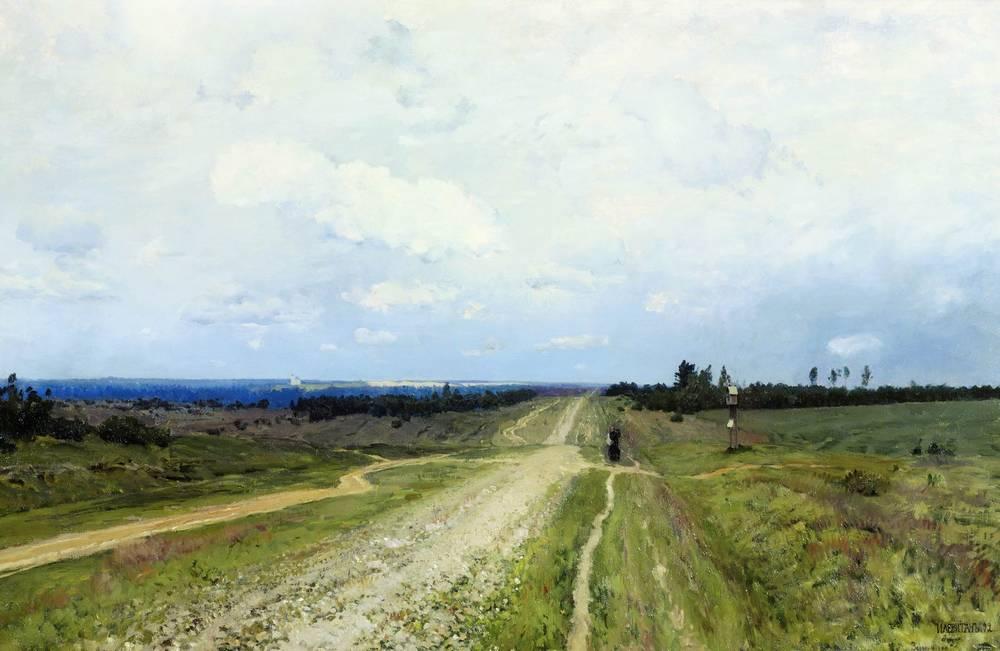
Aujourd’hui pour changer un peu, j’ai utilisé un poème français de Charles Baudelaire, et pour la peinture j’ai ajouté « La Route de Vladimir » (Vladimirka) peinte en 1892 par Isaac Levitan.

Bonne lecture

Bohémiens en VoyageGypsies Travelling
Les Fleurs du Mal
par Charles Baudelaire
(The Flowers of Evil Translated by F. P. Sturm)

Vladimirka – La route de Vladimir – 1892 – par Isaac Levitan

Vladimirka - The Vladimir's Road - 1892 - by Isaac  Levitan
Vladimirka – La route de Vladimir – 1892 – par Isaac Levitan
La tribu prophétique aux prunelles ardentesThe tribe prophetic with the eyes of fire
Hier s’est mise en route, emportant ses petits Went forth last night; their little ones at rest
Sur son dos, ou livrant à leurs fiers appétitsEach on his mother’s back, with his desire
Le trésor toujours prêt des mamelles pendantes.Set on the ready treasure of her breast.
Les hommes vont à pied sous leurs armes luisantesLaden with shining arms the men-folk tread
Le long des chariots où les leurs sont blottis,By the long wagons where their goods lie hidden;
Promenant sur le ciel des yeux appesantisThey watch the heaven with eyes grown wearied
Par le morne regret des chimères absentes.Of hopeless dreams that come to them unbidden.
Du fond de son réduit sablonneux, le grillon,The grasshopper, from out his sandy screen,
Les regardant passer, redouble sa chanson;Watching them pass redoubles his shrill song;
Cybèle, qui les aime, augmente ses verdures,Dian, who loves them, makes the grass more green,
Fait couler le rocher et fleurir le désertAnd makes the rock run water for this throng
Devant ces voyageurs, pour lesquels est ouvertOf ever-wandering ones whose calm eyes see
L’empire familier des ténèbres futures.Familiar realms of darkness yet to be.

J’espère que vous avez apprécié ce poème autant que moi.

Si vous avez aimé cet article, abonnez-vous, mettez des likes, écrivez des commentaires !

Partager sur les réseaux sociaux

Découvrez nos derniers Posts


© 2023 Akirill.com – All Rights Reserved
Read the poem “Gypsies Traveling” by Charles Baudelaire in English and French side by side

Bilingual booksLire en FrançaisContact us
American Literature French Literature Russian Literature

Today to change a bit, I used a french poem by Charles Baudelaire, and for painting I added “The Vladimir’s Road” (Vladimirka) painted in 1892 by Isaac Levitan.

Enjoy your reading

Bohémiens en VoyageGypsies Travelling
Les Fleurs du Mal
par Charles Baudelaire
(The Flowers of Evil Translated by F. P. Sturm)

Vladimirka – The Vladimir’s Road – 1892 – by Isaac Levitan

Vladimirka - The Vladimir's Road - 1892 - by Isaac  Levitan
Vladimirka – The Vladimir’s Road – 1892 – by Isaac Levitan
La tribu prophétique aux prunelles ardentesThe tribe prophetic with the eyes of fire
Hier s’est mise en route, emportant ses petits Went forth last night; their little ones at rest
Sur son dos, ou livrant à leurs fiers appétitsEach on his mother’s back, with his desire
Le trésor toujours prêt des mamelles pendantes.Set on the ready treasure of her breast.
Les hommes vont à pied sous leurs armes luisantesLaden with shining arms the men-folk tread
Le long des chariots où les leurs sont blottis,By the long wagons where their goods lie hidden;
Promenant sur le ciel des yeux appesantisThey watch the heaven with eyes grown wearied
Par le morne regret des chimères absentes.Of hopeless dreams that come to them unbidden.
Du fond de son réduit sablonneux, le grillon,The grasshopper, from out his sandy screen,
Les regardant passer, redouble sa chanson;Watching them pass redoubles his shrill song;
Cybèle, qui les aime, augmente ses verdures,Dian, who loves them, makes the grass more green,
Fait couler le rocher et fleurir le désertAnd makes the rock run water for this throng
Devant ces voyageurs, pour lesquels est ouvertOf ever-wandering ones whose calm eyes see
L’empire familier des ténèbres futures.Familiar realms of darkness yet to be.

I hope you enjoyed this poem as much as I did.

If you liked this article, subscribe , put likes, write comments!
Share on social networks
Check out Our Latest Posts


© 2023 Akirill.com – All Rights Reserved
Lisez le poème “Une tempête” d’Emily Dickinson en anglais et en français côte à côte

Livres bilinguesRead in EnglishNous contacter
Littérature américaineLittérature françaiseLittérature russe

Je ne sais pas pourquoi, mais le mot tempête me fait toujours penser à la mer, alors aujourd’hui j’ai inclus le tableau “Vent fort” peint par le peintre Russe Ivan Aivazovsky en 1856.

A tempestUne tempête
Traduit par Akirill.com

Vent fort d’Ivan Aivazovsky – 1856

Strong Wind by Ivan Aivazovsky - 1856 Vent fort d'Ivan Aivazovsky - 1856
An awful tempest mashed the air,Une terrible tempête a écrasé l’air,
The clouds were gaunt and few;Les nuages ​​étaient décharnés et peu nombreux;
A black, as of a spectre’s cloak,Un noir, comme un manteau d’un spectre,
Hid heaven and earth from view.Caché le ciel et la terre du regard.
The creatures chuckled on the roofsLes créatures riaient sur les toits
And whistled in the air,Et sifflaient dans l’air,
And shook their fists and gnashed their teeth.Et agitaient leurs poings et grinçaient des dents.
And swung their frenzied hair.Et balançaient leurs cheveux frénétiques.
The morning lit, the birds arose;Le matin s’illumina, les oiseaux se levèrent ;
The monster’s faded eyesLes yeux fanés du monstre
Turned slowly to his native coast,Tourné lentement vers sa côte natale,
And peace was Paradise!Et la paix était le Paradis !

J’espère que vous avez apprécié ce poème autant que moi.

Si vous voulez plus de poèmes de cet auteur, vous pouvez visiter sa page. Les poèmes sont en anglais.

Si vous avez aimé cet article, abonnez-vous, mettez des likes, écrivez des commentaires !

Partager sur les réseaux sociaux

Découvrez nos derniers posts


© 2023 Akirill.com – All Rights Reserved
Read the poem “A Tempest” by Emily Dickinson in English and French side by side

Bilingual booksLire en FrançaisContact us
American LiteratureFrench LiteratureRussian Literature

I do not know why, but the word tempest always make me think of the sea, so today I included the painting “Strong Wind” painted by the Russian painter Ivan Aivazovsky in 1856.

A tempestUne tempête
Traduit par Akirill.com

Strong Wind by Ivan Aivazovsky – 1856

Strong Wind by Ivan Aivazovsky - 1856
An awful tempest mashed the air,Une terrible tempête a écrasé l’air,
The clouds were gaunt and few;Les nuages ​​étaient décharnés et peu nombreux;
A black, as of a spectre’s cloak,Un noir, comme un manteau d’un spectre,
Hid heaven and earth from view.Caché le ciel et la terre du regard.
The creatures chuckled on the roofsLes créatures riaient sur les toits
And whistled in the air,Et sifflaient dans l’air,
And shook their fists and gnashed their teeth.Et agitaient leurs poings et grinçaient des dents.
And swung their frenzied hair.Et balançaient leurs cheveux frénétiques.
The morning lit, the birds arose;Le matin s’illumina, les oiseaux se levèrent ;
The monster’s faded eyesLes yeux fanés du monstre
Turned slowly to his native coast,Tourné lentement vers sa côte natale,
And peace was Paradise!Et la paix était le Paradis !

I hope you enjoyed this poem as much as I did.

If you want more poems from this author, you can visit her page.

If you liked this article, subscribe , put likes, write comments!
Share on social networks
Check out Our Latest Posts


© 2023 Akirill.com – All Rights Reserved