Lire « Automne » d’Alexandre Pouchkine bilingue russe/français avec une courte analyse

Livres bilinguesRead in EnglishNous contacter
Littérature américaineLittérature françaiseLittérature russe

< < < Ange (Ru/Fr) / Angel (Ru/Eng) / Ангел (Рус/Анг.) / (Рус/ Фра.)
Cerisier (Ru/Fr) / Cherry Tree (Ru/Eng) / Вишня (Рус/Анг.) / (Рус/ Фра.) > > >


  • Brève analyse du poème “Automne” d’Alexandre Pouchkine
  • Traduction du poème “Automne” d’Alexandre Pouchkine en français avec français et russe côte à côte

Brève analyse du poème “Automne” d’Alexandre Pouchkine

Alexandre Pouchkine, dont la saison préférée était l’automne, a écrit le poème “Automne” lors de son séjour à Boldino, en 1833. C’est l’un des plus beaux poèmes consacrés à l’automne dans toute la littérature russe et la description de l’automne dans ce poème est un modèle artistique pour toute la société poétique russe. Avec ce poème, l’artiste atteint le sommet de son talent dans l’utilisation des moyens d’expression. 

Dans le poème “Automne”, Pouchkine décrit toutes les saisons, mais lorsqu’il énumère les avantages de l’hiver, du printemps et de l’été, il se concentre sur leurs défauts. 

fall

Après avoir fait un aperçu général, Pouchkine, en revanche, procède à une description spécifique de la belle saison d’automne. 

Tout en décrivant l’état du héros lyrique, Pouchkine affirme que ce n’est qu’à l’automne que la véritable inspiration lui vient, ce qui est inhabituel puisque généralement pour les poètes, le printemps est considéré comme le temps des nouveaux espoirs et de l’éveil des forces créatrices. 

Dans la dernière ligne, l’œuvre poétique est représentée par un navire prêt à naviguer et la question rhétorique « Où pouvons-nous aller ? » ce qui signifie une totale liberté dans le travail du poète avec une infinité de thèmes et d’images…

Traduction du poème “Automne” d’Alexandre Pouchkine en français avec français et russe côte à côte

Александр Пушкин — Осень: СтихAlexandre Pouchkine – Automne : Vers
Traduit par Akirill.com
I
Октябрь уж наступил — уж роща отряхает
I
Octobre est déjà arrivé – le bosquet secoue déjà
Последние листы с нагих своих ветвей;Les dernières feuilles de leurs branches nues ;
Дохнул осенний хлад — дорога промерзает.Une bouffée de froid automnal – la route commence à geler,
Журча еще бежит за мельницу ручей,Le ruisseau murmurant coule toujours derrière le moulin,
Но пруд уже застыл; сосед мой поспешаетL’étang, cependant, est gelé; mon voisin est pressé
В отъезжие поля с охотою своей,Dans les champs de chasse,
И страждут озими от бешеной забавы,Le blé d’hiver souffrira de ce plaisir sauvage,
И будит лай собак уснувшие дубравы.Et les aboiements des chiens réveillent les forêts de chênes endormis.
II
Теперь моя пора: я не люблю весны;
II
Maintenant c’est mon heure : je n’aime pas le printemps ;
Скучна мне оттепель; вонь, грязь — весной я болен;Le dégel ennuyeux, la puanteur, la boue – le printemps me rend malade.
Кровь бродит; чувства, ум тоскою стеснены.Le sang erre; les sentiments, l’esprit sont contraint par la mélancolie.
Суровою зимой я более доволен,Avec l’hiver cruel, je suis plus satisfait,
Люблю ее снега; в присутствии луныJ’aime sa neige;  en présence de la lune
Как легкий бег саней с подругой быстр и волен,Comme une course de traîneau  rapide et sans soucis avec un ami
Когда под соболем, согрета и свежа,Quand sous la zibeline, chaude et fraîche,
Она вам руку жмет, пылая и дрожа!Elle vous serre la main, rayonnante et tremblante !
III
Как весело, обув железом острым ноги,
III
Comme c’est amusant, chaussé de pieds de fer acérés,
Скользить по зеркалу стоячих, ровных рек!Glissez sur le miroir des rivières stagnantes et lisses !
А зимних праздников блестящие тревоги?..Et les angoisses géniales des vacances d’hiver ?..
Но надо знать и честь; полгода снег да снег,Mais vous devez aussi connaître l’honneur; six mois de neige, oui neige,
Ведь это наконец и жителю берлоги,
Медведю, надоест. Нельзя же целый век
Кататься нам в санях с Армидами младыми
Après tout, enfin l’habitant de la tanière, l’
Ours, va s’ennuyer. On ne peut pas
rouler pendant des siècles,
En traîneaux avec de jeunes nymphes
Иль киснуть у печей за стеклами двойными.Ou bouder autour du poêle derrière les contre-fenêtres.
IV
Ох, лето красное! любил бы я тебя,
IV
Oh, l’été rouge ! je t’aimerais
Когда б не зной, да пыль, да комары, да мухи.S’il n’y avait pas la chaleur, la poussière, les moustiques et les mouches.
Ты, все душевные способности губя,Toi, tu ruines toutes nos capacités spirituelles,
Нас мучишь; как поля, мы страждем от засухи;Tu nous tourmentes ; et comme les champs, nous souffrons de la sécheresse ;
Лишь как бы напоить, да освежить себя —Juste comme pour boire, pour se rafraîchir — –
Иной в нас мысли нет, и жаль зимы старухи,Nous ne pensons à rien d’autre et c’est dommage pour l’hiver de la vieille femme,
И, проводив ее блинами и вином,Et, l’accompagnant avec des crêpes et du vin,
Поминки ей творим мороженым и льдом.Nous organisons une veillée pour l’honorer avec des glaces et de la glace.
V
Дни поздней осени бранят обыкновенно,
V
Les derniers jours de l’automne sont souvent maudits,
Но мне она мила, читатель дорогой,Mais elle m’est chère, cher lecteur,
Красою тихою, блистающей смиренно.Dans toute sa beauté tranquille, douce lueur.
Так нелюбимое дитя в семье роднойComme un enfant si mal aimé dans sa famille natale
К себе меня влечет. Сказать вам откровенно,Elle m’attire à elle. Pour vous dire franchement
Из годовых времен я рад лишь ей одной,Des temps annuels, je ne me réjouis que pour elle seule,
В ней много доброго; любовник не тщеславный,Elle est pleine de valeur; 
et moi, un humble amant,
Я нечто в ней нашел мечтою своенравной.J’ai trouvé quelque chose en elle un rêve capricieux.
VI
Как это объяснить? Мне нравится она,
VI
Comment l’expliquer ? 
Je l’aime bien,
Как, вероятно, вам чахоточная деваComme une jeune fille phtisique pour vous
Порою нравится. На смерть осуждена,Je l’aime parfois. Condamnée à mort,
Бедняжка клонится без ропота, без гнева.La pauvre s’incline sans grogner, sans colère.
Улыбка на устах увянувших видна;Le sourire sur ses lèvres flétries est visible;
Могильной пропасти она не слышит зева;Elle n’entend pas le bâillement de la gueule béante de la mort ;
Играет на лице еще багровый цвет.Une lueur cramoisie joue toujours sur son visage.
Она жива еще сегодня, завтра нет.Elle est toujours en vie aujourd’hui, pas demain.
VII
Унылая пора! очей очарованье!
VII
Un temps mélancolique ! 
Tellement charmant à l’oeil !
Приятна мне твоя прощальная краса —Ta beauté dans la séparation me plaît –
Люблю я пышное природы увяданье,J’aime le flétrissement somptueux de la nature,
В багрец и в золото одетые леса,Forêts vêtues de pourpre et d’or,
В их сенях ветра шум и свежее дыханье,Le vent croustillant bruissant sur leur seuil,
И мглой волнистою покрыты небеса,Et les cieux sont couverts de brume,
И редкий солнца луч, и первые морозы,Et un rare rayon de soleil, et les premières gelées,
И отдаленные седой зимы угрозы.Et les lointaines menaces hivernales grises.
VIII
И с каждой осенью я расцветаю вновь;
VIII
Et chaque automne je refleuris ;
Здоровью моему полезен русской холод;Le froid russe est bon pour ma santé ;
К привычкам бытия вновь чувствую любовь:Je tombe à nouveau amoureux de la routine de la vie :
Чредой слетает сон, чредой находит голод;Successivement le sommeil s’envole , la faim se trouve ;
Легко и радостно играет в сердце кровь,Le sang coule librement et facilement dans mon cœur,
Желания кипят — я снова счастлив, молод,Les désirs bouillonnent – je suis de nouveau heureux, jeune,
Я снова жизни полн — таков мой организмJe suis à nouveau plein de vie – tel est mon corps
(Извольте мне простить ненужный прозаизм).(Excusez-moi pour cet horrible prosaïsme)
IX
Ведут ко мне коня; в раздолии открытом,
IX
Mon cheval m’est amené ;  en plein champ,
Махая гривою, он всадника несет,Agitant sa crinière, il porte un cavalier,
И звонко под его блистающим копытомEt bruyamment sous son sabot brillant
Звенит промерзлый дол и трескается лед.La vallée gelée sonne et la glace craque.
Но гаснет краткий день, и в камельке забытомMais le jour court s’éteint et dans le poêle oublié
Огонь опять горит — то яркий свет лиет,le Feu brûle à nouveau – puis une lumière brillante se déverse,
То тлеет медленно — а я пред ним читаюPuis couve lentement – comme je l’ai lu avant,
Иль думы долгие в душе моей питаю.Ou je nourris de longues pensées dans mon âme.
X
И забываю мир — и в сладкой тишине
X
Et j’oublie le monde – et dans un doux silence
Я сладко усыплен моим воображеньем,Je suis doucement bercé par mon imagination,
И пробуждается поэзия во мне:Et la poésie s’éveille en moi :
Душа стесняется лирическим волненьем,Mon cœur est agité d’une agitation lyrique,
Трепещет и звучит, и ищет, как во сне,Il tremble et sonne, et cherche, comme dans un rêve,
Излиться наконец свободным проявленьем —Pour déverser enfin une libre manifestation –
И тут ко мне идет незримый рой гостей,Et puis un essaim invisible d’invités vient à moi,
Знакомцы давние, плоды мечты моей.De vieilles connaissances, fruits de mes rêves.
XI
И мысли в голове волнуются в отваге,
XI
Et les pensées dans ma tête sont agitées de courage,
И рифмы легкие навстречу им бегут,Et les rimes accourent avidement à leur rencontre,
И пальцы просятся к перу, перо к бумаге,Ma main réclame une plume ; 
la plume – une feuille de papier.
Минута — и стихи свободно потекут.Encore une minute – et mes vers couleront librement.
Так дремлет недвижим корабль в недвижной влаге,Ainsi sommeille un navire immobile pris dans des eaux immobiles,
Но чу! — матросы вдруг кидаются, ползутMais voilà ! – les marins se précipitent tout d’un coup, rampent
Вверх, вниз — и паруса надулись, ветра полны;De haut en bas – les voiles gonflent, remplies de vent ;
Громада двинулась и рассекает волны.La structure massive bouge, et coupe les vagues.
XII
Плывет. Куда ж нам плыть?
. . . . . . . . . . . .
. . . . . . . . . . . .
XII
Il navigue. Mais où naviguons-nous ?…
Год: 1833Année 1833

J’espère que vous apprécierez ce poème autant que moi


< < < Ange (Ru/Fr) / Angel (Ru/Eng) / Ангел (Рус/Анг.) / (Рус/ Фра.)
Cerisier (Ru/Fr) / Cherry Tree (Ru/Eng) / Вишня (Рус/Анг.) / (Рус/ Фра.) > > >

Si vous avez aimé cet article, abonnez-vous, mettez des likes, écrivez des commentaires !

Partager sur les réseaux sociaux

Découvrez nos derniers posts


© 2023 Akirill.com – All Rights Reserved

Read “Autumn” by Alexander Pushkin bilingual Russian/English with short analysis

Bilingual booksLire en FrançaisContact us
American LiteratureFrench LiteratureRussian Literature

< < < Ange (Ru/Fr) / Angel (Ru/Eng) / Ангел (Рус/Анг.) / (Рус/ Фра.)
Cerisier (Ru/Fr) / Cherry Tree (Ru/Eng) / Вишня (Рус/Анг.) / (Рус/ Фра.) > > >


Alexander Pushkin, whose favorite season was the fall, wrote the poem “Autumn” during his stay in Boldino, in 1833. This is one of the most beautiful poems dedicated to autumn in all Russian literature and the description of the autumn in this poem is an artistic model for the entire Russian poetic society. With this poem Alexander Pushkin reaches the height of his talent in the use of expressive means. 

In the poem “Autumn”, Pushkin depicts all the seasons, but as he lists the advantages of winter, spring, and summer he focuses on their shortcomings. 

fall

Having made a general overview, Pushkin, as a contrast, proceeds to a specific description of the beautiful autumn season. 

While describing the state of the lyrical hero Pushkin claims that only in the fall does true inspiration come to him, which is unusual since usually for poets, spring is considered the time of new hopes, and the awakening of creative forces. 

In the last line the poetic work is represented by a ship ready to sail and the rhetorical question “Where can we go?” which means a complete freedom in the work of the poet with an infinite number of themes and images …

Александр Пушкин — Осень: СтихAlexander Pushkin – Autumn: Verse
Translated by Akirill.com
01/17/2023
I
Октябрь уж наступил — уж роща отряхает
I
October has already arrived – the grove is already shaking off
Последние листы с нагих своих ветвей;Their final leaves from naked branches;
Дохнул осенний хлад — дорога промерзает.A breath of autumn chill – the road begins to freeze,
Журча еще бежит за мельницу ручей,The murmuring brook still flows behind the mill,
Но пруд уже застыл; сосед мой поспешаетThe pond however, is frozen; and my neighbor is in a hurry
В отъезжие поля с охотою своей,On the hunting grounds,
И страждут озими от бешеной забавы,The winter wheat will suffer from this wild pleasure,
И будит лай собак уснувшие дубравы.And baying hounds awake the slumbering groves.
II
Теперь моя пора: я не люблю весны;
II
This is my time: I am not fond of spring;
Скучна мне оттепель; вонь, грязь — весной я болен;The tiresome thaw, the stench, the mud – spring sickens me.
Кровь бродит; чувства, ум тоскою стеснены.The blood wanders; 
the feelings, the spirit are constrained by melancholy.
Суровою зимой я более доволен,With cruel winter I am more satisfied,
Люблю ее снега; в присутствии луныI love its snow; when in the moonlight
Как легкий бег саней с подругой быстр и волен,Like a sleigh ride swift and carefree with a friend.
Когда под соболем, согрета и свежа,Who, warm and rosy ‘neath a sable mantle,
Она вам руку жмет, пылая и дрожа!She shakes your hand, radiant and trembling!
III
Как весело, обув железом острым ноги,
III
What fun it is, with feet in sharp steel shod,
Скользить по зеркалу стоячих, ровных рек!To skim the mirror of the smooth and solid streams!
А зимних праздников блестящие тревоги?..And the awesome anxieties of the winter holidays? ..
Но надо знать и честь; полгода снег да снег,But you must also know honor; 
six months of snow, yes snow,
Ведь это наконец и жителю берлоги,
Медведю, надоест. Нельзя же целый век
Кататься нам в санях с Армидами младыми
For half the year will even bore a bear
Deep in his den. We cannot ride for ages,
In sleighs with youthful nymphs
Иль киснуть у печей за стеклами двойными.Or sulk around the stove behind storm windows.
IV
Ох, лето красное! любил бы я тебя,
IV
O, summer fair! I would have loved you, too,
Когда б не зной, да пыль, да комары, да мухи.Except for heat and dust and gnats and flies.
Ты, все душевные способности губя,You ruin all our spiritual abilities,
Нас мучишь; как поля, мы страждем от засухи;Torment us; and like fields, we suffer from the drought;
Лишь как бы напоить, да освежить себя —To take a drink, refresh ourselves somehow –
Иной в нас мысли нет, и жаль зимы старухи,We think of nothing else, and it’s a pity for the old woman’s winter,
И, проводив ее блинами и вином,And, accompanying her with pancakes and wine,
Поминки ей творим мороженым и льдом.We hold a vigil to honor her with ice-cream and with ice.
V
Дни поздней осени бранят обыкновенно,
V
The latter days of fall are often cursed,
Но мне она мила, читатель дорогой,But as for me, kind reader, she is precious
Красою тихою, блистающей смиренно.In all her quiet beauty, mellow glow.
Так нелюбимое дитя в семье роднойLike a child so unloved in his birth family
К себе меня влечет. Сказать вам откровенно,She draws me to her. 
To tell you honestly,
Из годовых времен я рад лишь ей одной,Of all the times of year, I cherish her alone.
В ней много доброго; любовник не тщеславный,She’s full of worth; and I, a humble lover,
Я нечто в ней нашел мечтою своенравной.Have found in her peculiar charms.
VI
Как это объяснить? Мне нравится она,
VI
How can this be explained? I favor her
Как, вероятно, вам чахоточная деваAs you might one day find yourself attracted
Порою нравится. На смерть осуждена,To a consumptive maid. Condemned to death,
Бедняжка клонится без ропота, без гнева.The poor child languishes without complaint or anger.
Улыбка на устах увянувших видна;A smile plays upon her withering lips;
Могильной пропасти она не слышит зева;She cannot sense as yet the gaping maw of death;
Играет на лице еще багровый цвет.A crimson glow still flits across her face.
Она жива еще сегодня, завтра нет.Today she lives, tomorrow she is gone.
VII
Унылая пора! очей очарованье!
VII
A melancholy time! So charming to the eye!
Приятна мне твоя прощальная краса —Your beauty in its parting pleases me –
Люблю я пышное природы увяданье,I love the lavish withering of nature,
В багрец и в золото одетые леса,The gold and scarlet raiment of the woods,
В их сенях ветра шум и свежее дыханье,The crisp wind rustling o’er their threshold,
И мглой волнистою покрыты небеса,The sky engulfed by tides of rippled gloom,
И редкий солнца луч, и первые морозы,The sun’s scarce rays, approaching frosts,
И отдаленные седой зимы угрозы.And gray-haired winter threatening from afar.
VIII
И с каждой осенью я расцветаю вновь;
VIII
When autumn comes, I bloom anew;
Здоровью моему полезен русской холод;The Russian frost does wonders for my health;
К привычкам бытия вновь чувствую любовь:Anew I fall in love with life’s routine:
Чредой слетает сон, чредой находит голод;Successively the sleep flies away, the hunger is found;
Легко и радостно играет в сердце кровь,The blood flows free and easy in my heart,
Желания кипят — я снова счастлив, молод,Abrim with passion; once again, I’m happy, young,
Я снова жизни полн — таков мой организмI’m full of life – such is my organism
(Извольте мне простить ненужный прозаизм).(Excuse me for this awful prosaism)
IX
Ведут ко мне коня; в раздолии открытом,
IX
My horse is brought to me; in open field,
Махая гривою, он всадника несет,With flying mane, he carries fast his rider,
И звонко под его блистающим копытомAnd with his shining hooves he hammers out a song
Звенит промерзлый дол и трескается лед.Upon the frozen, ringing vale, and crackling ice.
Но гаснет краткий день, и в камельке забытом
Огонь опять горит — то яркий свет лиет,
But fleeting day dies out, new fire comes alive
Inside the long-forgotten stove– it blazes bright,
То тлеет медленно — а я пред ним читаюThen slowly smoulders – as I read before it,
Иль думы долгие в душе моей питаю.Or nourish long and heartfelt thoughts.
X
И забываю мир — и в сладкой тишине
X
And I forget the world – and in silence sweet,
Я сладко усыплен моим воображеньем,I’m gently lulled by my imagination,
И пробуждается поэзия во мне:And poetry awakens deep inside:
Душа стесняется лирическим волненьем,My heart is churned with lyric agitation,
Трепещет и звучит, и ищет, как во сне,It trembles, moans, and strives, as if in dream,
Излиться наконец свободным проявленьем —To pour out in the end a free statement-
И тут ко мне идет незримый рой гостей,And here they come – a ghostly swarm of guests,
Знакомцы давние, плоды мечты моей.My long-lost friends, the fruits of all my dream.
XI
И мысли в голове волнуются в отваге,
XI
My mind is overcome by dashing thoughts,
И рифмы легкие навстречу им бегут,And rhymes come running eagerly to meet them,
И пальцы просятся к перу, перо к бумаге,My hand demands a pen; the pen – a sheet of paper.
Минута — и стихи свободно потекут.Another minute – and my verse will freely flow.
Так дремлет недвижим корабль в недвижной влаге,Thus slumbers an immobile ship caught in immobile waters,
Но чу! — матросы вдруг кидаются, ползутBut lo! – the sailors rush all of a sudden, crawl
Вверх, вниз — и паруса надулись, ветра полны;Up top, then down – sails billow, filled with wind;
Громада двинулась и рассекает волны.The massive structure moves, and cuts the waves.
XII
Плывет. Куда ж нам плыть?
. . . . . . . . . . . .
. . . . . . . . . . . .
XII
It sails. But where are we sailing?…
Год: 1833Year 1833

I hope you enjoy this poem as much as I did


< < < Ange (Ru/Fr) / Angel (Ru/Eng) / Ангел (Рус/Анг.) / (Рус/ Фра.)
Cerisier (Ru/Fr) / Cherry Tree (Ru/Eng) / Вишня (Рус/Анг.) / (Рус/ Фра.) > > >

If you liked this article, subscribe , put likes, write comments!
Share on social networks
Check out Our Latest Posts

Le poème “Ange” d’Alexandre Pouchkine

Livres bilinguesRead in EnglishNous contacter
Littérature américaineLittérature françaiseLittérature russe

< < < 27 Mai 1819 / May 27, 1819 / 27 мая 1819 (Рус/Анг.) / (Рус/ Фра.)
Automne  (Ru/Fr) / Autumn (Ru/Eng) / Осень (Рус/Анг.) / (Рус/ Фра.) > > >

Le poème “Ange” a été écrit en 1827 par Alexandre Pouchkine qui avait une forte passion pour de nombreuses femmes. Il a rencontré E.K. Vorontsova qui lui a rendu la pareille pendant son exil dans le sud. Cette punition avait été dure pour lui mais l’amour a eu un effet bénéfique sur l’exil. Pouchkine semble s’éveiller à nouveau à la vie et à l’activité. 

Ce poème a été créé après que Pouchkine ait été séparé de sa bien-aimée pendant déjà trois ans et ne peut être considéré comme le résultat d’une impulsion spirituelle soudaine. Le poète a eu le temps de réfléchir sérieusement à sa passion et à toutes ses conséquences. 

Vorontsova a aidé Pouchkine à survivre à l’amertume de la punition et à sa renaissance spirituelle. Le poète, qui idolâtrait déjà les femmes, voit en sa bien-aimée un véritable ange qui l’a sauvé de l’abîme infernal. 

Alexander Pushkin
Alexander Pushkin
АнгелAnge
Traduit par Akirill.com
В дверях эдема ангел нежный
Главой поникшею сиял,
А демон мрачный и мятежный
Над адской бездною летал.
Aux portes de l’Eden, un ange doux,
brillait avec sa tête baissée
Et un démon sombre et rebelle
au-dessus de la crevasse infernale battait des ailes.
Дух отрицанья, дух сомненья
На духа чистого взирал
И жар невольный умиленья
Впервые смутно познавал.
L’esprit de dénégation, l’esprit de doute
en contemplait un autre – un esprit pur
et le feu de l’exaltation forcée
Pour la première fois il comprit vaguement.
“Прости,- он рек,- тебя я видел,
И ты недаром мне сиял:
Не все я в небе ненавидел,
Не все я в мире презирал”.
« Je suis désolé, je t’ai vu, énonça-t-il,
et ce n’est pas en vain que tu m’as envoyé de la lumière :
je n’ai pas tout détesté dans le ciel,
je n’ai pas méprisé tout dans le monde.
1827
А. Пушкин. Полное собрание сочинений. Москва, Библиотека “Огонек”, изд-во “Правда”, 1954.A. Pouchkine. 
Les oeuvres complètes. 
Moscou, Bibliothèque Ogonek, Maison d’édition Pravda, 1954.

J’espère que vous avez apprécié ce poème.

< < < 27 Mai 1819 / May 27, 1819 / 27 мая 1819 (Рус/Анг.) / (Рус/ Фра.)
Automne  (Ru/Fr) / Autumn (Ru/Eng) / Осень (Рус/Анг.) / (Рус/ Фра.) > > >

Si vous avez aimé cet article, abonnez-vous, mettez des likes, écrivez des commentaires !

Partager sur les réseaux sociaux

Découvrez nos derniers messages


© 2022 Akirill.com – All Rights Reserved

Poem “Angel” by Alexander Pushkin

Bilingual booksLire en FrançaisContact us
American LiteratureFrench LiteratureRussian Literature

< < < 27 Mai 1819 / May 27, 1819 / 27 мая 1819 (Рус/Анг.) / (Рус/ Фра.)
Automne  (Ru/Fr) / Autumn (Ru/Eng) / Осень (Рус/Анг.) / (Рус/ Фра.) > >

The poem “Angel” was written in 1827 by Alexander Pushkin who had a strong passion for many women. He met E. K. Vorontsova who reciprocates his courtship during his Southern exile. This punishment had been hard for him but love has a beneficial effect on the exile. Pushkin seems to be awakening again to life and activity. 

This poem was created after Pushkin had been apart from his beloved for already three years and cannot be considered the result of a sudden spiritual impulse. The poet had enough time to seriously reflect on his passion and all its consequences. 

Vorontsova helped Pushkin survive the bitterness of punishment and his spiritual rebirth. The poet, who already idolized women, sees in his beloved a real angel who saved him from the hellish abyss.  

Alexander Pushkin
Alexander Pushkin
АнгелAngel
Translated by Akirill.com
В дверях эдема ангел нежный
Главой поникшею сиял,
А демон мрачный и мятежный
Над адской бездною летал.
At the gates of Eden, a gentle angel,
shone with his softly drooped head,
and Demon, gloomy and resentful
over the hellish crevasse flapped.
Дух отрицанья, дух сомненья
На духа чистого взирал
И жар невольный умиленья
Впервые смутно познавал.
The spirit of qualm and negation
contemplated another one – of good,
and fire of the forced elation
first time he vaguely understood.
“Прости,- он рек,- тебя я видел,
И ты недаром мне сиял:
Не все я в небе ненавидел,
Не все я в мире презирал”.
“I’ve seen you,” he enunciated, –
“And not in vain you’ve sent me light:
Not all in heaven I have hated,
not all in world I have despised.”
1827
А. Пушкин. Полное собрание сочинений. Москва, Библиотека “Огонек”, изд-во “Правда”, 1954.A. Pushkin. The complete works. Moscow, Ogonek Library, Pravda Publishing House, 1954.

I hope you enjoyed this poem.

< < < 27 Mai 1819 / May 27, 1819 / 27 мая 1819 (Рус/Анг.) / (Рус/ Фра.)
Automne  (Ru/Fr) / Autumn (Ru/Eng) / Осень (Рус/Анг.) / (Рус/ Фра.) > >

If you liked this article, subscribe , put likes, write comments!
Share on social networks
Check out Our Latest Posts


© 2022 Akirill.com – All Rights Reserved

Discover the poem “Prophet” by Alexander Pushkin

Bilingual booksLire en FrançaisContact us
American LiteratureFrench LiteratureRussian Literature

To read the whole article and poem follow the links

“The Prophet” («Пророк») was written by Alexander Pushkin (Александр Пушкин) in 1826 and immediately gained wide popularity. This poem became central to Pushkin’s philosophical reflections, and a kind of program for action, a guide in life and work for many writers and followers of the great poet. The idea expressed in “The Prophet” gave a powerful impetus to many subsequent generations of poets.  … Continue reading

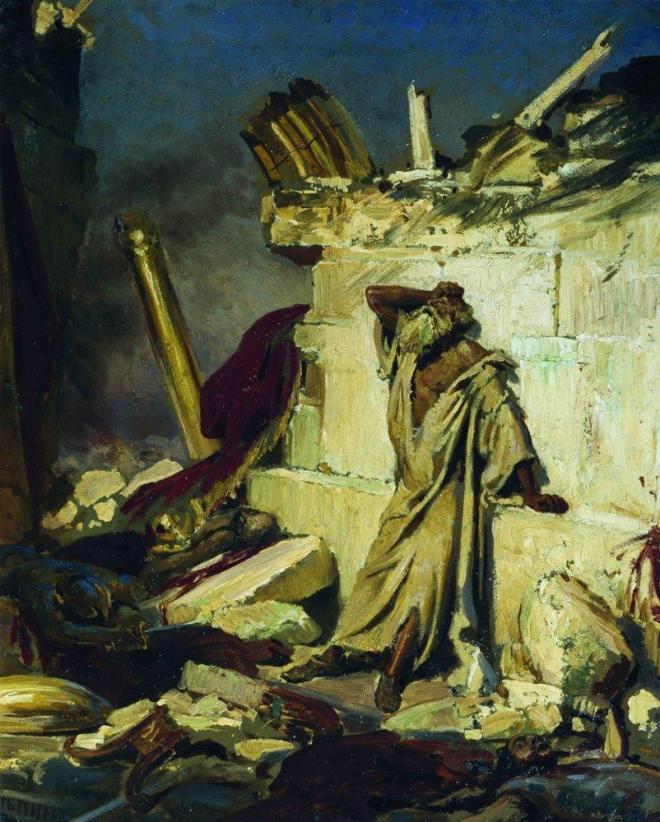
Painting “Cry of prophet Jeremiah on the Ruins of Jerusalem” (on a Bible subject) by Ilya Repin – 1870

«Пророк» Александра Пушкина“Prophet” by Alexander Pushkin
Духовной жаждою томим,
В пустыне мрачной я влачился, —
И шестикрылый серафим
На перепутье мне явился.
I dragged my flesh through desert gloom,
Tormented by the spirit’s yearning,
And saw a six-winged Seraph loom,
Upon the footpath’s barren turning.
Перстами легкими как сон
Моих зениц коснулся он.
Отверзлись вещие зеницы,
Как у испуганной орлицы.
And as a dream in slumber lies
So light this light his finger on my eyes.
My wizard eyes grew wide and wary;
An eagle’s startled from the eyrie
Читать далееContinue Reading
If you liked this article, subscribe , put likes, write comments!
Check out Our Latest Posts
Find us on Facebook or Twitter

© 2022 Akirill.com – All Rights Reserved

Facts and translation of I Remember a Wonderful Moment (Kern) by Alexander Pushkin

Lire en Français

< < < Je me souviens de la mer avant la tempête (Ru/Fr) / I remember the sea before the storm (Ru/Eng) / Я помню море пред грозою (Рус/Анг.) (Рус/ Фра.)
Ma Muse (Ru/Fr) / My Muse (Ru/Eng) / Муза (Рус/Анг.) / (Рус/ Фра.) > > >


“I remember a wonderful moment” is one of the most famous lyrical works of Alexander Pushkin who devoted many of his poems to women.

He wrote this poem in 1825, during his exile in Mikhailovsky after his second meeting with A. P. Kern. Their first meeting dated from 1819 and she had captured his imagination.

In just a few stanzas, Alexander Pushkin unfolds before our eyes a long history of his relationship with A. Kern, and his admiration of the woman.

Alexander Pushkin
Я помню чудное мгновенье (Керн) Александр Пушкин I Remember a Wonderful Moment (Kern) by Alexander Pushkin
Translated by Akirill.com
05/31/2022
К КернKern
Я помню чудное мгновенье;I remember the marvelous moment;
Передо мной явилась ты,You appeared before me,
Как мимолётное виденье,Like a fleeting vision,
Как гений чистой красотыLike a genius of pure beauty
В Томленьях грусти безнадёжной,In the languor of hopeless sadness,
В тревогах шумной суеты,In the anxieties of noisy bustle,
Звучал мне долго голос нежныйA gentle voice sounded to me for a long time
И снились милые черты.And of sweet features I dreamed.
Шли годы. Бурь порыв мятежныйYears passed. Storms rebellious, impulse
Рассеял прежние мечты,Scattered former dreams,
И я забыл твой голос нежный,And I forgot your gentle voice,
Твои небесные черты.Your heavenly features.
В глуши, во мраке заточеньяIn the wilderness, in the darkness of confinement
Тянулись тихо дни моиMy days dragged on quietly
Без божества, без вдохновенья,Without a deity, without inspiration,
Без слёз, без жизни, без любви.Without tears, without life, without love.
Душе настало пробужденье:The soul has awakened:
И вот опять явилась ты,And here again you appeared,
Как мимолётное виденье,Like a fleeting vision,
Как гений чистой красоты.Like a genius of pure beauty.
И сердце бьется в упоенье,And the heart beats in rapture,
И для него воскресли вновьAnd for him resurrected again
И божество, и вдохновенье,And the deity, and inspiration,
И жизнь, и слёзы, и любовь.And life, and tears, and love.

< < < Je me souviens de la mer avant la tempête (Ru/Fr) / I remember the sea before the storm (Ru/Eng) / Я помню море пред грозою (Рус/Анг.) (Рус/ Фра.)
Ma Muse (Ru/Fr) / My Muse (Ru/Eng) / Муза (Рус/Анг.) / (Рус/ Фра.) > > >


We put a lot of effort into the quality of the articles and translations, support us with a like and a subscription or sponsor us if you like them. We are also on Facebook and Twitter


© 2022 Akirill.com – All Rights Reserved

Winter morning by Alexander Pushkin

Lire en Français

< < < Matin d’automne / Autumn morning / Осеннее утро (Рус/Анг.) / (Рус/ Фра.)
Pourquoi suis-je fasciné par elle (Ru/Fr) / Why am I fascinated by her (Ru/Eng) / Зачем я ею очарован (Рус/Анг.) / (Рус/ Фра.) > > >


“Winter morning” by Alexander Pushkin is a poem that I really like, maybe because it’s the first one I learned in Russian

The poem “Winter Morning” by Alexander Pushkin was written in one of the most fruitful creative periods; during his exile in Mikhailovskoye


The poem “Winter Morning”, contains several important themes. The main and most obvious is the theme of love. With each verse, one feels the poet’s tenderness addressed to his beloved, his respectful attitude towards her.


Another theme is reflections on the birth of a new day that erases all previous sorrows and makes the world more beautiful and fun.


And, finally, the general idea of the whole work is the unity of man and nature in the general philosophical sense.

“Winter morning” text translated into English is under the Video

Зимнее утроWinter Morning
Мороз и солнце ; день чудесный!
Ещё ты дремлешь, друг прелестный —
Пора, красавица, проснись :
Открой сомкнуты негой взоры
Навстречу северной Авроры,
Звездою севера явись!
Frost and sun, the day is wondrous!
Still you slumber, lovely friend.
‘Tis time, O beauty, to awaken;
Open your eyes from blissful sleep,
Your gaze to meet the northern aurora.
Ah, you arise like the North Star!
Вечор, ты помнишь, вьюга злилась,
На мутном небе мгла носилась;
Луна, как бледное пятно,
Сквозь тучи мрачные ж`ёлтела,
И ты печальная сидела —
А нынче… погляди в окно:
Last night, remember, the storm scolded,
And darkness floated in the muddy sky,
The moon was like a pale spot
Through the dark clouds, gleaming yellow.
There you sat in melancholy,
But now … through the window, cast a look
Под голубыми небесами
Великолепными коврами,
Блестя на солнце, снег лежит;
Прозрачный лес один чернеет,
И ель сквозь иней зеленеет,
И речка подо льдом блестит.
Beneath the bluish heavens
Like a gorgeous carpet,
In the sun, the snow is glittering;
The forest is dusky and lonely,
And the spruce gleams green through the frost.
And under the ice, the river sparkles
Вся комната янтарным блеском
Озарена. Весёлым треском
Трещит затопленная печь.
Приятно думать у лежанки.
Но знаешь : не велеть ли в санки
Кобылку бурую запречь?
The whole room shines with amber light …
With a merry crackles,
The woods bursts and pops in the stove.
The sofa is so inviting,
But perhaps, why shouldn’t we order
A brown mare for our sleigh?
Скользя по утреннему снегу,
Друг милый, предадимся бегу
Нетерпеливого коня
И навестим поля пустые,
Леса, недавно столь густые,
И берег, милый для меня.
Gliding over the morning snow,
My friend, let’s surrender our trust
To the running, impatient steed.
We’ll visit the empty fields,
The woods, that used to be so thick,
And the shore, so dear to me,

< < < Matin d’automne / Autumn morning / Осеннее утро (Рус/Анг.) / (Рус/ Фра.)
Pourquoi suis-je fasciné par elle (Ru/Fr) / Why am I fascinated by her (Ru/Eng) / Зачем я ею очарован (Рус/Анг.) / (Рус/ Фра.) > > >

If you liked this article, don’t forget to like and share.
Subscribe to not miss anything

Our Latest Posts