Lisez le poème “Ma Muse” d’Alexandre Pouchkine en français et en russe côte à côte

Livres bilinguesRead in EnglishNous contacter
Littérature américaineLittérature françaiseLittérature russe

< < < Je me Souviens d’un Moment Merveilleux (Kern) (Ru/Fr) / I Remember a Wonderful Moment (Kern) (Ru/Eng) / Я помню чудное мгновенье (Керн) (Рус/Анг.) / (Рус/ Фра.)
Matin d’automne / Autumn morning / Осеннее утро (Рус/Анг.) / (Рус/ Фра.) > > >


Aujourd’hui, le poème “Ma Muse” côte à côte en russe et en français accompagné du tableau “Une Muse” peint en 1887 par Konstantin Korovin

МузаMa Muse
Александр ПушкинTraduit et mis côte à côte par Akirill.com
04/19/2023

Une Muse – 1887 by Konstantin Korovin

A Muse - 1887 by Konstantin Korovin
В младенчестве моем она меня любилаAu temps de ma jeunesse elle m’aimait,
И семиствольную цевницу мне вручила.Et la flûte à sept pieds qu’elle m’a tendue.
Она внимала мне с улыбкой — и слегка,Elle m’a écouté avec un sourire – et légèrement,
По звонким скважинам пустого тростника,Le long des ouvertures résonnant des bois
Уже наигрывал я слабыми перстамиJe jouais avec des doigts tendres :
И гимны важные, внушенные богами,Des hymnes importants inspirés des dieux,
И песни мирные фригийских пастухов.Et le chant paisible du berger phrygien.
С утра до вечера в немой тени дубовDu matin au soir dans l’ombre muette du chêne
Прилежно я внимал урокам девы тайной,J’ai suivi assidûment les leçons de l’étrange servante ;
И, радуя меня наградою случайной,Et, me ravissant avec une récompense aléatoire,
Откинув локоны от милого чела,Rejetant ses boucles de son front chérie,
Сама из рук моих свирель она брала.Elle-même m’a pris la flûte des mains.
Тростник был оживлен божественным дыханьемLe roseau était animé par le souffle divin
И сердце наполнял святым очарованьем.Et le cœur rempli d’un saint enchantement.
1823.

J’espère que vous avez apprécié ce poème autant que moi

Vous pouvez également lire d’autres poèmes d’Alexandre Pouchkine


< < < Je me Souviens d’un Moment Merveilleux (Kern) (Ru/Fr) / I Remember a Wonderful Moment (Kern) (Ru/Eng) / Я помню чудное мгновенье (Керн) (Рус/Анг.) / (Рус/ Фра.)
Matin d’automne / Autumn morning / Осеннее утро (Рус/Анг.) / (Рус/ Фра.) > > >

Si vous avez aimé cet article, abonnez-vous, mettez des likes, écrivez des commentaires !

Partager sur les réseaux sociaux

Découvrez nos derniers Posts


© 2023 Akirill.com – All Rights Reserved

Read the poem “My Muse” by Alexander Pushkin in English and Russian side by side

Bilingual booksLire en FrançaisContact us
American LiteratureFrench LiteratureRussian Literature

< < < Je me Souviens d’un Moment Merveilleux (Kern) (Ru/Fr) / I Remember a Wonderful Moment (Kern) (Ru/Eng) / Я помню чудное мгновенье (Керн) (Рус/Анг.) / (Рус/ Фра.)
Matin d’automne / Autumn morning / Осеннее утро (Рус/Анг.) / (Рус/ Фра.) > > >


Today the poem “My Muse” side by side in Russian and English accompanied by the painting “A Muse” painted in 1887 by Konstantin Korovin

МузаMy Muse
Александр ПушкинTranslated by Ivan Panin
Put side by side by Akirill.com
04/18/2023

A Muse – 1887 by Konstantin Korovin

A Muse - 1887 by Konstantin Korovin
В младенчестве моем она меня любилаIn the days of my youth she was fond of me,
И семиствольную цевницу мне вручила.And the seven-stemmed flute she handed me.
Она внимала мне с улыбкой — и слегка,To me with smile she listened; and already gently
По звонким скважинам пустого тростника,Along the openings echoing of the woods
Уже наигрывал я слабыми перстамиWas playing I with fingers tender:
И гимны важные, внушенные богами,Both hymns solemn, god-inspired
И песни мирные фригийских пастухов.And peaceful song of Phrygian shepherd.
С утра до вечера в немой тени дубовFrom morn till night in oak’s dumb shadow
Прилежно я внимал урокам девы тайной,To the strange maid’s teaching intent I listened;
И, радуя меня наградою случайной,And with sparing reward me gladdening
Откинув локоны от милого чела,Tossing back her curls from her forehead dear,
Сама из рук моих свирель она брала.From my hands the flute herself she took.
Тростник был оживлен божественным дыханьемNow filled the wood was with breath divine
И сердце наполнял святым очарованьем.And the heart with holy enchantment filled.
1823.

I hope you enjoyed this poem as much as I did

You can also read others poems by Alexander Pushkin


< < < Je me Souviens d’un Moment Merveilleux (Kern) (Ru/Fr) / I Remember a Wonderful Moment (Kern) (Ru/Eng) / Я помню чудное мгновенье (Керн) (Рус/Анг.) / (Рус/ Фра.)
Matin d’automne / Autumn morning / Осеннее утро (Рус/Анг.) / (Рус/ Фра.) > > >

If you liked this article, subscribe , put likes, write comments!
Share on social networks
Check out Our Latest Posts


© 2023 Akirill.com – All Rights Reserved

Lisez le poème “Le Corbeau” d’Edgar Allan Poe en anglais et en français côte à côte

Livres bilinguesRead in EnglishNous contacter
American Literature
Littérature américaine
French Literature
Littérature française
Russian Literature
Littérature russe

Edgar Allan Poe (19 janvier 1809 – 7 octobre 1849) était surtout connu pour sa poésie et ses histoires courtes. Il est considéré l’un des premiers inventeur du genre de roman policier et un contributeur du genre de science-fiction et est largement reconnu comme une figure centrale du romantisme aux États-Unis.

En 1845, le poème de Poe “The Raven” (Le Corbeau) a été publié dans le  “Evening Mirror” . Ce poème devint si populaire si rapidement qu’il a fait de Poe une célébrité presque instantanément, bien qu’il n’ait été payé que 9 $ pour sa publication.

The RavenLe Corbeau
Published, 1845.Traduit par Charles Baudelaire
Poèmes mis côte à côte par Akirill.com
Once upon a midnight dreary, while I pondered, weak and weary,Une fois, sur le minuit lugubre, pendant que je méditais, faible et fatigué,
Over many a quaint and curious volume of forgotten lore—sur maint précieux et curieux volume d’une doctrine oubliée,
While I nodded, nearly napping, suddenly there came a tapping,pendant que je donnais de la tête, presque assoupi, soudain il se fit un tapotement,
As of some one gently rapping—rapping at my chamber door.comme de quelqu’un frappant doucement, frappant à la porte de ma chambre.
“‘Tis some visitor,” I muttered, “tapping at my chamber door—« C’est quelque visiteur, – murmurai-je, – qui frappe à la porte de ma chambre ;
Only this and nothing more.”ce n’est que cela et rien de plus. »
Ah, distinctly I remember, it was in the bleak December,Ah ! distinctement je me souviens que c’était dans le glacial décembre,
And each separate dying ember wrought its ghost upon the floor.et chaque tison brodait à son tour le plancher du reflet de son agonie.
Eagerly I wished the morrow;—vainly I had sought to borrowArdemment je désirais le matin ; en vain m’étais-je efforcé de tirer
From my books surcease of sorrow—sorrow for the lost Lenore—de mes livres un sursis à ma tristesse, ma tristesse pour ma Lénore perdue,
For the rare and radiant maiden whom the angels name Lenore—pour la précieuse et rayonnante fille que les anges nomment Lénore,
Nameless here for evermore.– et qu’ici on ne nommera jamais plus.
And the silken sad uncertain rustling of each purple curtainEt le soyeux, triste et vague bruissement des rideaux pourprés
Thrilled me—filled me with fantastic terrors never felt before;me pénétrait, me remplissait de terreurs fantastiques, inconnues pour moi jusqu’à ce jour ;
So that now, to still the beating of my heart, I stood repeatingsi bien qu’enfin pour apaiser le battement de mon cœur, je me dressai, répétant :
“‘Tis some visitor entreating entrance at my chamber door—
Some late visitor entreating entrance at my chamber door;—
« C’est quelque visiteur attardé sollicitant l’entrée à la porte de ma chambre ;
This it is and nothing more.”– c’est cela même, et rien de plus. »
Presently my soul grew stronger; hesitating then no longer,Mon âme en ce moment se sentit plus forte. N’hésitant donc pas plus longtemps :
“Sir,” said I, “or Madam, truly your forgiveness I implore;« Monsieur, dis-je, ou madame, en vérité, j’implore votre pardon ;
But the fact is I was napping, and so gently you came rapping,mais le fait est que je sommeillais et vous êtes venu frapper si doucement,
And so faintly you came tapping—tapping at my chamber door,si faiblement vous êtes venu frapper à la porte de ma chambre,
That I scarce was sure I heard you”—here I opened wide the door:—qu’à peine étais-je certain de vous avoir entendu. » Et alors j’ouvris la porte toute grande ;
Darkness there and nothing more.– les ténèbres, et rien de plus.
Deep into that darkness peering, long I stood there wondering, fearing,Scrutant profondément ces ténèbres, je me tins longtemps plein d’étonnement, de crainte,
Doubting, dreaming dreams no mortal ever dared to dream before;de doute, rêvant des rêves qu’aucun mortel n’a jamais osé rêver ;
But the silence was unbroken, and the darkness gave no token,mais le silence ne fut pas troublé, et l’immobilité ne donna aucun signe,
And the only word there spoken was the whispered word, “Lenore!”et le seul mot proféré fut un nom chuchoté : « Lénore ! »
This I whispered, and an echo murmured back the word, “Lenore!”– C’était moi qui le chuchotais, et un écho à son tour murmura ce mot : « Lénore ! »
Merely this and nothing more.Purement cela, et rien de plus.
Back into the chamber turning, all my soul within me burning,Rentrant dans ma chambre, et sentant en moi toute mon âme incendiée,
Soon I heard again a tapping, somewhat louder than before.j’entendis bientôt un coup un peu plus fort que le premier.
“Surely,” said I, “surely that is something at my window lattice;« Sûrement, – dis-je, – sûrement, il y a quelque chose aux jalousies de ma fenêtre ;
Let me see, then, what thereat is, and this mystery explore—voyons donc ce que c’est, et explorons ce mystère.
Let my heart be still a moment, and this mystery explore;—Laissons mon cœur se calmer un instant, et explorons ce mystère ;
‘Tis the wind and nothing more.”– c’est le vent, et rien de plus. »
Open here I flung the shutter, when, with many a flirt and flutter,Je poussai alors le volet, et, avec un tumultueux battement d’ailes,
In there stepped a stately Raven of the saintly days of yore;entra un majestueux corbeau digne des anciens jours.
Not the least obeisance made he: not an instant stopped or stayed he;Il ne fit pas la moindre révérence, il ne s’arrêta pas, il n’hésita pas une minute ;
But, with mien of lord or lady, perched above my chamber door-mais avec la mine d’un lord ou d’une lady, il se percha au-dessus de la porte de ma chambre ;
Perched upon a bust of Pallas just above my chamber door—il se percha sur un buste de Pallas juste au-dessus de la porte de ma chambre ;
Perched, and sat, and nothing more.– il se percha, s’installa, et rien de plus.
Then this ebony bird beguiling my sad fancy into smiling,
By the grave and stern decorum of the countenance it wore,
Alors, cet oiseau d’ébène, par la gravité de son maintien et la sévérité de sa physionomie, induisant ma triste imagination à sourire :
“Though thy crest be shorn and shaven, thou,” I said, “art sure no craven,« Bien que ta tête, – lui dis-je, – soit sans huppe et sans cimier, tu n’es certes pas un poltron,
Ghastly grim and ancient Raven wandering from the Nightly shore—lugubre et ancien corbeau, voyageur parti des rivages de la nuit.
Tell me what thy lordly name is on the Night’s Plutonian shore!”Dis-moi quel est ton nom seigneurial aux rivages de la nuit plutonienne ! »
Quoth the Raven, “Nevermore.”Le corbeau dit : « Jamais plus ! »
Much I marvelled this ungainly fowl to hear discourse so plainly,Je fus émerveillé que ce disgracieux volatile entendît si facilement la parole,
Though its answer little meaning—little relevancy bore;bien que sa réponse n’eût pas une bien grand sens et ne me fût pas d’un grand secours ;
For we cannot help agreeing that no living human being
Ever yet was blessed with seeing bird above his chamber door—
car nous devons convenir que jamais il ne fut donné à un homme vivant de voir un oiseau au-dessus de la porte de sa chambre,
Bird or beast upon the sculptured bust above his chamber door,un oiseau ou une bête sur un buste sculpté au-dessus de la porte de sa chambre,
With such name as “Nevermore.”se nommant d’un nom tel que – Jamais plus !
But the Raven, sitting lonely on that placid bust, spoke onlyMais le corbeau, perché solitairement sur le buste placide, ne proféra que
That one word, as if his soul in that one word he did outpour.ce mot unique, comme si dans ce mot unique il répandait toute son âme.
Nothing further then he uttered—not a feather then he fluttered—Il ne prononça rien de plus ; il ne remua pas une plume,
Till I scarcely more than muttered, “Other friends have flown before—– jusqu’à ce que je me prisse à murmurer faiblement : « D’autres amis se sont déjà envolés loin de moi ;
On the morrow he will leave me, as my hopes have flown before.”vers le matin, lui aussi, il me quittera comme mes anciennes espérances déjà envolées. »
Then the bird said, “Nevermore.”L’oiseau dit alors : « Jamais plus ! »
Startled at the stillness broken by reply so aptly spoken,Tressaillant au bruit de cette réponse jetée avec tant d’à-propos :
“Doubtless,” said I, “what it utters is its only stock and store,Sans doute, – dis-je, – ce qu’il prononce est tout son bagage de savoir,
Caught from some unhappy master whom unmercifulqu’il a pris chez quelque maître infortuné que le Malheur impitoyable a poursuivi ardemment,
Disastersans répit,
Followed fast and followed faster till his songs one burden bore—jusqu’à ce que ses chansons n’eussent plus qu’un seul refrain,
Till the dirges of his Hope the melancholy burden borejusqu’à ce que le De profundis de son Espérance eût pris ce mélancolique refrain :
Of ‘Never—nevermore.'”« Jamais – jamais plus ! »
But the Raven still beguiling all my sad soul into smiling,Mais le corbeau induisant encore toute ma triste âme à sourire,
Straight I wheeled a cushioned seat in front of bird and bust and door;je roulai tout de suite un siège à coussins en face de l’oiseau et du buste et de la porte ;
Then, upon the velvet sinking, I betook myself to linkingalors, m’enfonçant dans le velours, je m’appliquai à enchaîner
Fancy unto fancy, thinking what this ominous bird of yore—les idées aux idées, cherchant ce que cet augural oiseau des anciens jours,
What this grim, ungainly, ghastly, gaunt, and ominous bird of yorece que ce triste, disgracieux, sinistre, maigre et augural oiseau des anciens jours
Meant in croaking “Nevermore.”voulait faire entendre en croassant son – Jamais plus !
This I sat engaged in guessing, but no syllable expressingJe me tenais ainsi, rêvant, conjecturant, mais n’adressant plus une syllabe
To the fowl whose fiery eyes now burned into my bosom’s core;à l’oiseau, dont les yeux ardents me brûlaient maintenant jusqu’au fond du cœur :
This and more I sat divining, with my head at ease recliningje cherchai à deviner cela, et plus encore, ma tête reposant à l’aise
On the cushion’s velvet lining that the lamp-light gloated o’er,sur le velours du coussin que caressait la lumière de la lampe,
But whose velvet violet lining with the lamp-light gloating o’er,ce velours violet caressé par la lumière de la lampe que sa tête,
She shall press, ah, nevermore!à Elle, ne pressera plus, – ah ! jamais plus !
Then, methought, the air grew denser, perfumed from an unseen censerAlors, il me sembla que l’air s’épaississait, parfumé par un encensoir invisible
Swung by Seraphim whose foot-falls tinkled on the tufted floor.que balançaient les séraphins dont les pas frôlaient le tapis de ma chambre.
“Wretch,” I cried, “thy God hath lent thee—by these angels he hath sent thee« Infortuné ! – m’écriai-je, – ton Dieu t’a donné par ses anges, il t’a envoyé
Respite—respite and nepenthé from thy memories of Lenore!du répit, du répit et du népenthès dans tes ressouvenirs de Lénore !
Quaff, oh quaff this kind nepenthé, and forget this lost Lenore!”Bois, oh ! bois ce bon népenthès, et oublie cette Lénore perdue ! »
Quoth the Raven, “Nevermore.”Le corbeau dit : «Jamais plus ! »
“Prophet!” said I, “thing of evil!—prophet still, if bird or devil!—« Prophète ! – dis-je, – être de malheur ! oiseau ou démon ! mais toujours prophète !
Whether Tempter sent, or whether tempest tossed thee here ashore,que tu sois un envoyé du Tentateur, ou que la tempête t’ait simplement échoué,
Desolate yet all undaunted, on this desert land enchanted—naufragé, mais encore intrépide, sur cette terre déserte, ensorcelée,
On this home by Horror haunted—tell me truly, I implore—dans ce logis par l’Horreur hanté, – dis-moi sincèrement, je t’en supplie,
Is there—is there balm in Gilead?—tell me—tell me, I implore!”existe-t-il, existe-t-il ici un baume de Judée ? Dis, dis, je t’en supplie ! »
Quoth the Raven, “Nevermore.”Le corbeau dit : « Jamais plus ! »
“Prophet!” said I, “thing of evil!—prophet still, if bird or devil!« Prophète ! – dis-je, – être de malheur ! oiseau ou démon ! toujours prophète !
By that Heaven that bends above us — by that God we both adore—par ce ciel tendu sur nos têtes, parce Dieu que tous deux nous adorons,
Tell this soul with sorrow laden if, within the distant Aidenn,dis à cette âme chargée de douleur si, dans le Paradis lointain,
It shall clasp a sainted maiden whom the angels name Lenore —elle pourra embrasser une fille sainte que les anges nomment Lénore,
Clasp a rare and radiant maiden whom the angels name Lenore.”embrasser une précieuse et rayonnante fille que les anges nomment Lénore. »
Quoth the Raven, “Nevermore.”Le corbeau dit : « Jamais plus ! »
“Be that word our sign of parting, bird or fiend!” I shrieked, upstarting—« Que cette parole soit le signal de notre séparation, oiseau ou démon ! – hurlai-je en me redressant.
“Get thee back into the tempest and the Night’s Plutonian shore!– Rentre dans la tempête, retourne au rivage de la nuit plutonienne ;
Leave no black plume as a token of that lie thy soul hath spoken!ne laisse pas ici une seule plume noire comme souvenir du mensonge que ton âme a proféré ;
Leave my loneliness unbroken!—quit the bust above my door!laisse ma solitude inviolée ; quitte ce buste au-dessus de ma porte ;
Take thy beak from out my heart, and take thy form from off my door!”arrache ton bec de mon cœur et précipite ton spectre loin de ma porte ! »
Quoth the Raven, “Nevermore.”Le corbeau dit : « Jamais plus ! »
And the Raven, never flitting, still is sitting, still is sittingEt le corbeau, immuable, est toujours installé
On the pallid bust of Pallas just above my chamber door;sur le buste pâle de Pallas, juste au-dessus de la porte de ma chambre ;
And his eyes have all the seeming of a demon’s that is dreaming,et ses yeux ont toute la semblance des yeux d’un démon qui rêve ;
And the lamp-light o’er him streaming throws his shadow on the floor;et la lumière de la lampe, en ruisselant sur lui, projette son ombre sur le plancher ;
And my soul from out that shadow that lies floating on the flooret mon âme, hors du cercle de cette ombre qui gît flottante sur le plancher,
Shall be lifted—nevermore!ne pourra plus s’élever, – jamais plus !

J’espère que vous avez apprécié ce poème autant que moi

Edgar Allan Poe

Edgar Allan Poe a maintenant sa propre page liée à ses poèmes. La plupart sont en anglais, mais je vais continuer de les rajouter en français.

Lire un poème d’Edgar Allan Poe

Si vous avez aimé cet article, abonnez-vous, mettez des likes, écrivez des commentaires !

Partager sur les réseaux sociaux

Découvrez nos derniers Posts


© 2023 Akirill.com – All Rights Reserved

Read the poem “The Raven” by Edgar Allan Poe in English and French side by side

Bilingual booksLire en FrançaisContact us
American LiteratureFrench LiteratureRussian Literature

Edgar Allan Poe (January 19, 1809 – October 7, 1849) was best known for his poetry and short stories. He was considered one of the inventor of detective fiction genre and a contributor of the science fiction genre and, is widely regarded as a central figure of Romanticism in the United States

In 1845, Poe’s poem “The Raven” was published in the Evening Mirror. It became popular so fast that it made Poe a household name almost instantly, even though he was paid only $9 for its publication. 

The RavenLE CORBEAU
Published, 1845.Traduit par Charles Baudelaire
Poems put side by side by Akirill.com
Once upon a midnight dreary, while I pondered, weak and weary,Une fois, sur le minuit lugubre, pendant que je méditais, faible et fatigué,
Over many a quaint and curious volume of forgotten lore—sur maint précieux et curieux volume d’une doctrine oubliée,
While I nodded, nearly napping, suddenly there came a tapping,pendant que je donnais de la tête, presque assoupi, soudain il se fit un tapotement,
As of some one gently rapping—rapping at my chamber door.comme de quelqu’un frappant doucement, frappant à la porte de ma chambre.
“‘Tis some visitor,” I muttered, “tapping at my chamber door—« C’est quelque visiteur, – murmurai-je, – qui frappe à la porte de ma chambre ;
Only this and nothing more.”ce n’est que cela et rien de plus. »
Ah, distinctly I remember, it was in the bleak December,Ah ! distinctement je me souviens que c’était dans le glacial décembre,
And each separate dying ember wrought its ghost upon the floor.et chaque tison brodait à son tour le plancher du reflet de son agonie.
Eagerly I wished the morrow;—vainly I had sought to borrowArdemment je désirais le matin ; en vain m’étais-je efforcé de tirer
From my books surcease of sorrow—sorrow for the lost Lenore—de mes livres un sursis à ma tristesse, ma tristesse pour ma Lénore perdue,
For the rare and radiant maiden whom the angels name Lenore—pour la précieuse et rayonnante fille que les anges nomment Lénore,
Nameless here for evermore.– et qu’ici on ne nommera jamais plus.
And the silken sad uncertain rustling of each purple curtainEt le soyeux, triste et vague bruissement des rideaux pourprés
Thrilled me—filled me with fantastic terrors never felt before;me pénétrait, me remplissait de terreurs fantastiques, inconnues pour moi jusqu’à ce jour ;
So that now, to still the beating of my heart, I stood repeatingsi bien qu’enfin pour apaiser le battement de mon cœur, je me dressai, répétant :
“‘Tis some visitor entreating entrance at my chamber door—
Some late visitor entreating entrance at my chamber door;—
« C’est quelque visiteur attardé sollicitant l’entrée à la porte de ma chambre ;
This it is and nothing more.”– c’est cela même, et rien de plus. »
Presently my soul grew stronger; hesitating then no longer,Mon âme en ce moment se sentit plus forte. N’hésitant donc pas plus longtemps :
“Sir,” said I, “or Madam, truly your forgiveness I implore;« Monsieur, dis-je, ou madame, en vérité, j’implore votre pardon ;
But the fact is I was napping, and so gently you came rapping,mais le fait est que je sommeillais et vous êtes venu frapper si doucement,
And so faintly you came tapping—tapping at my chamber door,si faiblement vous êtes venu frapper à la porte de ma chambre,
That I scarce was sure I heard you”—here I opened wide the door:—qu’à peine étais-je certain de vous avoir entendu. » Et alors j’ouvris la porte toute grande ;
Darkness there and nothing more.– les ténèbres, et rien de plus.
Deep into that darkness peering, long I stood there wondering, fearing,Scrutant profondément ces ténèbres, je me tins longtemps plein d’étonnement, de crainte,
Doubting, dreaming dreams no mortal ever dared to dream before;de doute, rêvant des rêves qu’aucun mortel n’a jamais osé rêver ;
But the silence was unbroken, and the darkness gave no token,mais le silence ne fut pas troublé, et l’immobilité ne donna aucun signe,
And the only word there spoken was the whispered word, “Lenore!”et le seul mot proféré fut un nom chuchoté : « Lénore ! »
This I whispered, and an echo murmured back the word, “Lenore!”– C’était moi qui le chuchotais, et un écho à son tour murmura ce mot : « Lénore ! »
Merely this and nothing more.Purement cela, et rien de plus.
Back into the chamber turning, all my soul within me burning,Rentrant dans ma chambre, et sentant en moi toute mon âme incendiée,
Soon I heard again a tapping, somewhat louder than before.j’entendis bientôt un coup un peu plus fort que le premier.
“Surely,” said I, “surely that is something at my window lattice;« Sûrement, – dis-je, – sûrement, il y a quelque chose aux jalousies de ma fenêtre ;
Let me see, then, what thereat is, and this mystery explore—voyons donc ce que c’est, et explorons ce mystère.
Let my heart be still a moment, and this mystery explore;—Laissons mon cœur se calmer un instant, et explorons ce mystère ;
‘Tis the wind and nothing more.”– c’est le vent, et rien de plus. »
Open here I flung the shutter, when, with many a flirt and flutter,Je poussai alors le volet, et, avec un tumultueux battement d’ailes,
In there stepped a stately Raven of the saintly days of yore;entra un majestueux corbeau digne des anciens jours.
Not the least obeisance made he: not an instant stopped or stayed he;Il ne fit pas la moindre révérence, il ne s’arrêta pas, il n’hésita pas une minute ;
But, with mien of lord or lady, perched above my chamber door-mais avec la mine d’un lord ou d’une lady, il se percha au-dessus de la porte de ma chambre ;
Perched upon a bust of Pallas just above my chamber door—il se percha sur un buste de Pallas juste au-dessus de la porte de ma chambre ;
Perched, and sat, and nothing more.– il se percha, s’installa, et rien de plus.
Then this ebony bird beguiling my sad fancy into smiling,
By the grave and stern decorum of the countenance it wore,
Alors, cet oiseau d’ébène, par la gravité de son maintien et la sévérité de sa physionomie, induisant ma triste imagination à sourire :
“Though thy crest be shorn and shaven, thou,” I said, “art sure no craven,« Bien que ta tête, – lui dis-je, – soit sans huppe et sans cimier, tu n’es certes pas un poltron,
Ghastly grim and ancient Raven wandering from the Nightly shore—lugubre et ancien corbeau, voyageur parti des rivages de la nuit.
Tell me what thy lordly name is on the Night’s Plutonian shore!”Dis-moi quel est ton nom seigneurial aux rivages de la nuit plutonienne ! »
Quoth the Raven, “Nevermore.”Le corbeau dit : « Jamais plus ! »
Much I marvelled this ungainly fowl to hear discourse so plainly,Je fus émerveillé que ce disgracieux volatile entendît si facilement la parole,
Though its answer little meaning—little relevancy bore;bien que sa réponse n’eût pas une bien grand sens et ne me fût pas d’un grand secours ;
For we cannot help agreeing that no living human being
Ever yet was blessed with seeing bird above his chamber door—
car nous devons convenir que jamais il ne fut donné à un homme vivant de voir un oiseau au-dessus de la porte de sa chambre,
Bird or beast upon the sculptured bust above his chamber door,un oiseau ou une bête sur un buste sculpté au-dessus de la porte de sa chambre,
With such name as “Nevermore.”se nommant d’un nom tel que – Jamais plus !
But the Raven, sitting lonely on that placid bust, spoke onlyMais le corbeau, perché solitairement sur le buste placide, ne proféra que
That one word, as if his soul in that one word he did outpour.ce mot unique, comme si dans ce mot unique il répandait toute son âme.
Nothing further then he uttered—not a feather then he fluttered—Il ne prononça rien de plus ; il ne remua pas une plume,
Till I scarcely more than muttered, “Other friends have flown before—– jusqu’à ce que je me prisse à murmurer faiblement : « D’autres amis se sont déjà envolés loin de moi ;
On the morrow he will leave me, as my hopes have flown before.”vers le matin, lui aussi, il me quittera comme mes anciennes espérances déjà envolées. »
Then the bird said, “Nevermore.”L’oiseau dit alors : « Jamais plus ! »
Startled at the stillness broken by reply so aptly spoken,Tressaillant au bruit de cette réponse jetée avec tant d’à-propos :
“Doubtless,” said I, “what it utters is its only stock and store,Sans doute, – dis-je, – ce qu’il prononce est tout son bagage de savoir,
Caught from some unhappy master whom unmercifulqu’il a pris chez quelque maître infortuné que le Malheur impitoyable a poursuivi ardemment,
Disastersans répit,
Followed fast and followed faster till his songs one burden bore—jusqu’à ce que ses chansons n’eussent plus qu’un seul refrain,
Till the dirges of his Hope the melancholy burden borejusqu’à ce que le De profundis de son Espérance eût pris ce mélancolique refrain :
Of ‘Never—nevermore.'”« Jamais – jamais plus ! »
But the Raven still beguiling all my sad soul into smiling,Mais le corbeau induisant encore toute ma triste âme à sourire,
Straight I wheeled a cushioned seat in front of bird and bust and door;je roulai tout de suite un siège à coussins en face de l’oiseau et du buste et de la porte ;
Then, upon the velvet sinking, I betook myself to linkingalors, m’enfonçant dans le velours, je m’appliquai à enchaîner
Fancy unto fancy, thinking what this ominous bird of yore—les idées aux idées, cherchant ce que cet augural oiseau des anciens jours,
What this grim, ungainly, ghastly, gaunt, and ominous bird of yorece que ce triste, disgracieux, sinistre, maigre et augural oiseau des anciens jours
Meant in croaking “Nevermore.”voulait faire entendre en croassant son – Jamais plus !
This I sat engaged in guessing, but no syllable expressingJe me tenais ainsi, rêvant, conjecturant, mais n’adressant plus une syllabe
To the fowl whose fiery eyes now burned into my bosom’s core;à l’oiseau, dont les yeux ardents me brûlaient maintenant jusqu’au fond du cœur :
This and more I sat divining, with my head at ease recliningje cherchai à deviner cela, et plus encore, ma tête reposant à l’aise
On the cushion’s velvet lining that the lamp-light gloated o’er,sur le velours du coussin que caressait la lumière de la lampe,
But whose velvet violet lining with the lamp-light gloating o’er,ce velours violet caressé par la lumière de la lampe que sa tête,
She shall press, ah, nevermore!à Elle, ne pressera plus, – ah ! jamais plus !
Then, methought, the air grew denser, perfumed from an unseen censerAlors, il me sembla que l’air s’épaississait, parfumé par un encensoir invisible
Swung by Seraphim whose foot-falls tinkled on the tufted floor.que balançaient les séraphins dont les pas frôlaient le tapis de ma chambre.
“Wretch,” I cried, “thy God hath lent thee—by these angels he hath sent thee« Infortuné ! – m’écriai-je, – ton Dieu t’a donné par ses anges, il t’a envoyé
Respite—respite and nepenthé from thy memories of Lenore!du répit, du répit et du népenthès dans tes ressouvenirs de Lénore !
Quaff, oh quaff this kind nepenthé, and forget this lost Lenore!”Bois, oh ! bois ce bon népenthès, et oublie cette Lénore perdue ! »
Quoth the Raven, “Nevermore.”Le corbeau dit : «Jamais plus ! »
“Prophet!” said I, “thing of evil!—prophet still, if bird or devil!—« Prophète ! – dis-je, – être de malheur ! oiseau ou démon ! mais toujours prophète !
Whether Tempter sent, or whether tempest tossed thee here ashore,que tu sois un envoyé du Tentateur, ou que la tempête t’ait simplement échoué,
Desolate yet all undaunted, on this desert land enchanted—naufragé, mais encore intrépide, sur cette terre déserte, ensorcelée,
On this home by Horror haunted—tell me truly, I implore—dans ce logis par l’Horreur hanté, – dis-moi sincèrement, je t’en supplie,
Is there—is there balm in Gilead?—tell me—tell me, I implore!”existe-t-il, existe-t-il ici un baume de Judée ? Dis, dis, je t’en supplie ! »
Quoth the Raven, “Nevermore.”Le corbeau dit : « Jamais plus ! »
“Prophet!” said I, “thing of evil!—prophet still, if bird or devil!« Prophète ! – dis-je, – être de malheur ! oiseau ou démon ! toujours prophète !
By that Heaven that bends above us — by that God we both adore—par ce ciel tendu sur nos têtes, parce Dieu que tous deux nous adorons,
Tell this soul with sorrow laden if, within the distant Aidenn,dis à cette âme chargée de douleur si, dans le Paradis lointain,
It shall clasp a sainted maiden whom the angels name Lenore —elle pourra embrasser une fille sainte que les anges nomment Lénore,
Clasp a rare and radiant maiden whom the angels name Lenore.”embrasser une précieuse et rayonnante fille que les anges nomment Lénore. »
Quoth the Raven, “Nevermore.”Le corbeau dit : « Jamais plus ! »
“Be that word our sign of parting, bird or fiend!” I shrieked, upstarting—« Que cette parole soit le signal de notre séparation, oiseau ou démon ! – hurlai-je en me redressant.
“Get thee back into the tempest and the Night’s Plutonian shore!– Rentre dans la tempête, retourne au rivage de la nuit plutonienne ;
Leave no black plume as a token of that lie thy soul hath spoken!ne laisse pas ici une seule plume noire comme souvenir du mensonge que ton âme a proféré ;
Leave my loneliness unbroken!—quit the bust above my door!laisse ma solitude inviolée ; quitte ce buste au-dessus de ma porte ;
Take thy beak from out my heart, and take thy form from off my door!”arrache ton bec de mon cœur et précipite ton spectre loin de ma porte ! »
Quoth the Raven, “Nevermore.”Le corbeau dit : « Jamais plus ! »
And the Raven, never flitting, still is sitting, still is sittingEt le corbeau, immuable, est toujours installé
On the pallid bust of Pallas just above my chamber door;sur le buste pâle de Pallas, juste au-dessus de la porte de ma chambre ;
And his eyes have all the seeming of a demon’s that is dreaming,et ses yeux ont toute la semblance des yeux d’un démon qui rêve ;
And the lamp-light o’er him streaming throws his shadow on the floor;et la lumière de la lampe, en ruisselant sur lui, projette son ombre sur le plancher ;
And my soul from out that shadow that lies floating on the flooret mon âme, hors du cercle de cette ombre qui gît flottante sur le plancher,
Shall be lifted—nevermore!ne pourra plus s’élever, – jamais plus !

I hope you enjoyed this poem as much as I did

Edgar Allan Poe has now his own page linked to his poems

Read a Poem by Edgar Allan Poe

If you liked this article, subscribe , put likes, write comments!
Share on social networks
Check out Our Latest Posts


© 2023 Akirill.com – All Rights Reserved

Lisez « La Route Non Empruntée » de Robert Frost, en anglais et en français côte à côte

Livres bilinguesRead in EnglishNous contacter
Littérature américaineLittérature françaiseLittérature russe

Robert Lee Frost (26 mars 1874 – 29 janvier 1963) était un poète américain connu pour ses représentations réalistes de la vie rurale qu’il utilisait pour examiner des thèmes sociaux et philosophiques complexes. Fréquemment honoré de son vivant, il est le seul poète à avoir reçu quatre prix Pulitzer de poésie.

The Road Not TakenLa Route Non Empruntée
by Robert Frostpar Robert Frost
Two roads diverged in a yellow wood,Deux routes divergeaient dans un bois jaune,
And sorry I could not travel bothEt désolé de ne pas pouvoir prendre les deux
And be one traveler, long I stoodEt de n’être qu’un voyageur, je me suis longtemps arresté
And looked down one as far as I couldEt en ai suivis une du regard aussi loin que je le pus
To where it bent in the undergrowth;Jusqu’à l’endroit où elle tournait dans les sous-bois ;
Then took the other, as just as fair,Puis je pris l’autre, tout aussi magnifique,
And having perhaps the better claim,Et ayant peut-être l’avantage,
Because it was grassy and wanted wear;D’une herbe qu’on pouvait fouler;
Though as for that the passing thereBien que pour cela les passages
Had worn them really about the same,Les avait vraiment usé de façon identique,
And both that morning equally layEt les deux ce matin-là gisaient également
In leaves no step had trodden black.Sous des feuilles, qu’aucun pas n’avait noircies.
Oh, I kept the first for another day!Oh, j’ai gardé la première pour un autre jour !
Yet knowing how way leads on to way,Pourtant, sachant comme un chemin nous mène à l’autre,
I doubted if I should ever come back.Je doutais d’y revenir un jour.
I shall be telling this with a sighJe devrais dire cela avec un soupir
Somewhere ages and ages hence:Donc quelque part depuis des siècles et des siècles:
Two roads diverged in a wood, and I—Deux routes divergeaient dans un bois, et je—
I took the one less traveled by,J’ai pris celle qui était le moins fréquentée,
And that has made all the difference.Et cela a fait toute la différence.

J’espère que vous avez apprécié ce poème autant que moi.

Vous pouvez également lire : « Mending Wall » de Robert Frost, anglais et français côte à côte avec analyse

Ou jetez un oeil à notre page de poésie américaine

Si vous avez aimé cet article, abonnez-vous, mettez des likes, écrivez des commentaires !

Partager sur les réseaux sociaux

Découvrez nos derniers Posts


© 2023 Akirill.com – All Rights Reserved

Read “The Road Not Taken” by Robert Frost , English and French side by side

Bilingual booksLire en FrançaisContact us
American LiteratureFrench LiteratureRussian Literature

Robert Lee Frost (March 26, 1874 – January 29, 1963) was an American poet known for his realistic depictions of rural life which he used to examine complex social and philosophical themes. Frequently honored during his lifetime, he is the only poet to receive four Pulitzer Prizes for Poetry.

The Road Not TakenLa Route Non Empruntée
by Robert Frostpar Robert Frost
Two roads diverged in a yellow wood,Deux routes divergeaient dans un bois jaune,
And sorry I could not travel bothEt désolé de ne pas pouvoir prendre les deux
And be one traveler, long I stoodEt de n’être qu’un voyageur, je me suis longtemps arresté
And looked down one as far as I couldEt en ai suivis une du regard aussi loin que je le pus
To where it bent in the undergrowth;Jusqu’à l’endroit où elle tournait dans les sous-bois ;
Then took the other, as just as fair,Puis je pris l’autre, tout aussi magnifique,
And having perhaps the better claim,Et ayant peut-être l’avantage,
Because it was grassy and wanted wear;D’une herbe qu’on pouvait fouler;
Though as for that the passing thereBien que pour cela les passages
Had worn them really about the same,Les avait vraiment usé de façon identique,
And both that morning equally layEt les deux ce matin-là gisaient également
In leaves no step had trodden black.Sous des feuilles, qu’aucun pas n’avait noircies.
Oh, I kept the first for another day!Oh, j’ai gardé la première pour un autre jour !
Yet knowing how way leads on to way,Pourtant, sachant comme un chemin nous mène à l’autre,
I doubted if I should ever come back.Je doutais d’y revenir un jour.
I shall be telling this with a sighJe devrais dire cela avec un soupir
Somewhere ages and ages hence:Donc quelque part depuis des siècles et des siècles:
Two roads diverged in a wood, and I—Deux routes divergeaient dans un bois, et je—
I took the one less traveled by,J’ai pris celle qui était le moins fréquentée,
And that has made all the difference.Et cela a fait toute la différence.

I hope you enjoyed this poem as much as I did.

You can also read: “Mending Wall” by Robert Frost, English and French side by side with analysis

Or have a look at our page of American Poetry

If you liked this article, subscribe , put likes, write comments!
Share on social networks
Check out Our Latest Posts


© 2023 Akirill.com – All Rights Reserved

Alexandre Pouchkine – Je me souviens de la mer avant la tempête en russe et en français

Livres bilinguesRead in EnglishNous contacter
Littérature américaineLittérature françaiseLittérature russe

< < < Heureux celui qui est choisi volontairement (Ru/Fr) / Happy is the one, who is chosen willfully (Ru/Eng) / Счастлив, кто избран своенравно (Рус/Анг.) / (Рус/ Фра.)

Je me Souviens d’un Moment Merveilleux (Kern) (Ru/Fr) / I Remember a Wonderful Moment (Kern) (Ru/Eng) / Я помню чудное мгновенье (Керн) (Рус/Анг.) / (Рус/ Фра.) > > >

Alexandre Sergueïevitch Pouchkine (Пушкин. Александр Сергеевич) né le 6 juin (26 mai) 1799 à Moscou a publié son premier poème à l’âge de 15 ans et est considéré par beaucoup comme le plus grand poète russe et le fondateur de la langue littéraire russe moderne.

Александр Пушкин — Я помню море пред грозою: СтихAlexandre Pouchkine – Je me souviens de la mer avant la tempête : Verset

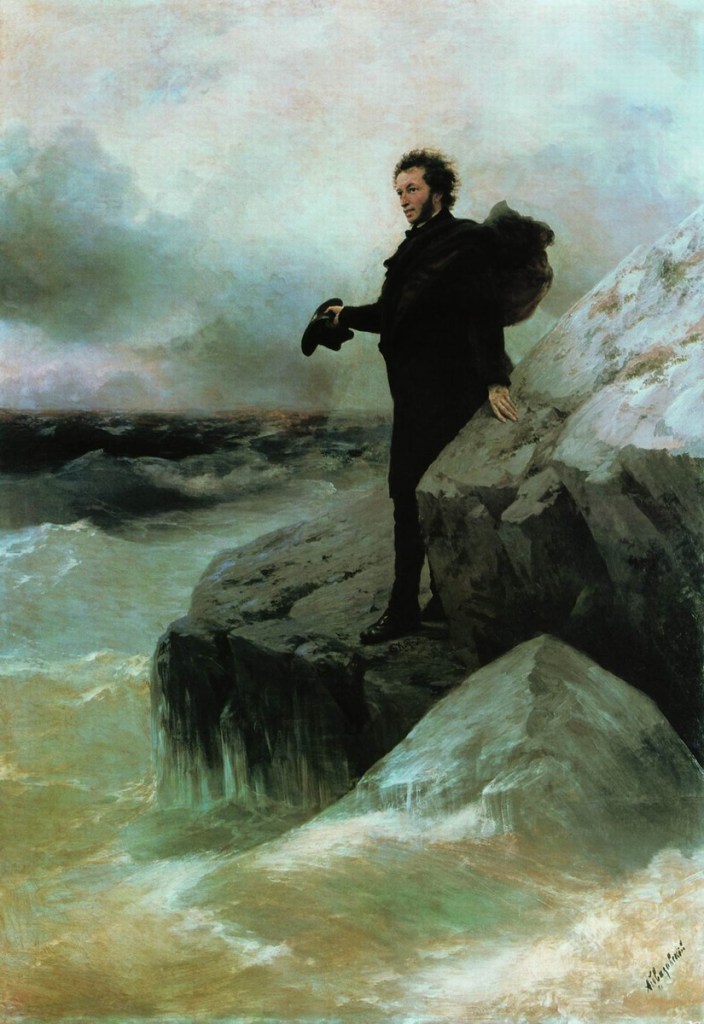
L’adieu de Pouchkine à la mer. 1877 peint par Ilia Iefimovitch Répine

Pushkin's farewell to the sea. 1877 painted by Repin
L’adieu de Pouchkine à la mer. 1877 peint par Ilia Iefimovitch Répine
Я помню море пред грозою:Je me souviens de la mer avant la tempête :
Как я завидовал волнам,Comme j’ai envié les vagues
Бегущим бурной чередою
Qui couraient dans une succession orageuse
С любовью лечь к ее ногам!Allongez-vous avec amour à ses pieds!
Как я желал тогда с волнамиComme j’ai souhaité alors avec les vagues
Коснуться милых ног устами!Toucher ses chers pieds avec mes lèvres !
Нет, никогда средь пылких днейNon, jamais au milieu des jours ardents
Кипящей младости моейde ma jeunesse bouillonnante
Я не желал с таким мученьемJe ne voulais pas avec un tel tourment
Лобзать уста младых Армид,Baiser les lèvres de la jeune Armide,
Иль розы пламенных ланит,Ou des roses aux joues de feu,
Иль перси, полные томленьем;Ou une poitrine, pleine de langueure ;
Нет, никогда порыв страстейNon, jamais un élan de passion
Так не терзал души моей!N’a tellement tourmenté mon âme!
Traduit par Akirill.com

Перси -устаревшее слово, сейчас не используется и означает грудь, передняя часть тела, от шеи до живота.

Percy est un mot obsolète, maintenant non utilisé et signifie la poitrine, la partie antérieure du corps, du cou à l’abdomen.

Visitez cette page et trouvez la signification de tous les mots russes obsolètes traduit en français : Obsolete Russian Words and their meaning , d’autres seront ajoutés au fur et à mesure que nous continuerons à traduire des poèmes.

Pushkin Alexander by Sokolov

J’espère que vous avez apprécié ce poème autant que moi

< < < Heureux celui qui est choisi volontairement (Ru/Fr) / Happy is the one, who is chosen willfully (Ru/Eng) / Счастлив, кто избран своенравно (Рус/Анг.) / (Рус/ Фра.)

Je me Souviens d’un Moment Merveilleux (Kern) (Ru/Fr) / I Remember a Wonderful Moment (Kern) (Ru/Eng) / Я помню чудное мгновенье (Керн) (Рус/Анг.) / (Рус/ Фра.) > > >

Si vous avez aimé cet article, abonnez-vous, mettez des likes, écrivez des commentaires !

Partager sur les réseaux sociaux

Découvrez nos derniers posts


© 2023 Akirill.com – All Rights Reserved

Alexander Pushkin – I remember the sea before the storm in Russian and English

Bilingual booksLire en FrançaisContact us
American LiteratureFrench LiteratureRussian Literature

< < < Heureux celui qui est choisi volontairement (Ru/Fr) / Happy is the one, who is chosen willfully (Ru/Eng) / Счастлив, кто избран своенравно (Рус/Анг.) / (Рус/ Фра.)

Je me Souviens d’un Moment Merveilleux (Kern) (Ru/Fr) / I Remember a Wonderful Moment (Kern) (Ru/Eng) / Я помню чудное мгновенье (Керн) (Рус/Анг.) / (Рус/ Фра.) > > >

Alexander Sergeyevich Pushkin (Пушкин. Александр Сергеевич) born on June 6 (may 26) 1799 in Moscow published his first poem at the age of 15 and is considered by many to be the greatest Russian poet and the founder of the modern Russian literary language.

Александр Пушкин — Я помню море пред грозою: СтихAlexander Pushkin – I remember the sea before the storm: Verse

Pushkin’s farewell to the sea. 1877 painted by Repin

Pushkin's farewell to the sea. 1877 painted by Repin
Pushkin’s farewell to the sea. 1877 painted by Repin
Я помню море пред грозою:I remember the sea before a thunderstorm:
Как я завидовал волнам,How I envied the waves
Бегущим бурной чередою

С любовью лечь к ее ногам!
Running in a stormy succession

Laying down at her feet with love!
Как я желал тогда с волнамиHow I longed then with the waves
Коснуться милых ног устами!To touch her dear feet with my lips!
Нет, никогда средь пылких днейNo, never in the midst of the ardent days
Кипящей младости моейof my Boiling youth
Я не желал с таким мученьемI did not want with such torment
Лобзать уста младых Армид,To kiss the lips of the young Armides,
Иль розы пламенных ланит,Or the roses of fiery cheeks,
Иль перси, полные томленьем;Or a breast full of languor;
Нет, никогда порыв страстейNo, never did a rush of passions
Так не терзал души моей!so tormented my soul!
translated by Bayard Barbara

перси: -устаревшее слово, сейчас не используется и означает грудь, передняя часть тела, от шеи до живота.

перси is an outdated word that is not used now and means chest, front of the body, from neck to abdomen.

Visit this page and find the meaning of all obsolete Russian Words: Obsolete Russian Words and their meaning , more will be added as we continue to translate poems.

Pushkin Alexander by Sokolov

I hope you enjoyed this poem as much as I did


< < < Heureux celui qui est choisi volontairement (Ru/Fr) / Happy is the one, who is chosen willfully (Ru/Eng) / Счастлив, кто избран своенравно (Рус/Анг.) / (Рус/ Фра.)

Je me Souviens d’un Moment Merveilleux (Kern) (Ru/Fr) / I Remember a Wonderful Moment (Kern) (Ru/Eng) / Я помню чудное мгновенье (Керн) (Рус/Анг.) / (Рус/ Фра.) > > >

If you liked this article, subscribe , put likes, write comments!
Share on social networks
Check out Our Latest Posts


© 2023 Akirill.com – All Rights Reserved

Poème au sujet du tableau “Fiançailles d’un Major” de Fedotov en russe/français

Livres bilinguesRead in EnglishNous contacter
Littérature américaineLittérature françaiseLittérature russe

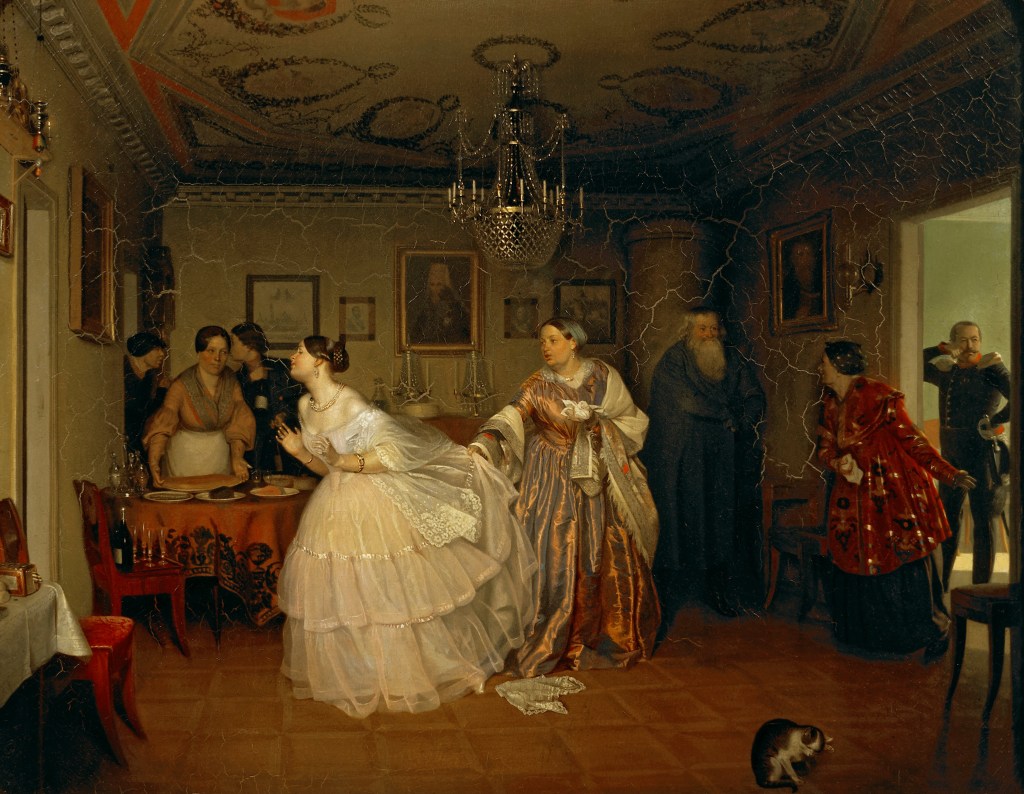
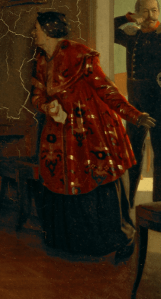
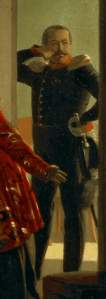
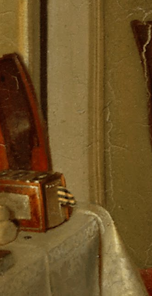
Avant l’exposition, Fedotov a composé une description poétique pour sa peinture de “Fiançailles d’un Major”, la soi-disant ” Рацея “, qu’il a lui-même lue aux visiteurs de l’exposition de 1849. Son poème ludique eut un grand succès et sa satire fut comparée à celles de Gogol et d’Ostrov. Vous pouvez maintenant le lire en français comme je l’ai traduit, et j’ai ajouté quelques annotations pour votre compréhension.

The major's marriage proposal - 1851 by Pavel Fedotov -
The major’s marriage proposal – 1851 by Pavel Fedotov –
Рацея
(Объяснение картины «Сватовство майора»)
Poème
(Explication du tableau “Courtship of the Major”)
Честные господа,Honnêtes messieurs,
Пожалуйте сюда!Venez ici s’il-vous-plaît!
Милости просим,Bienvenu,
Денег не спросим:Nous ne demanderons pas d’argent.
Даром смотри,Jetez un oeil gratuitement
Начинается,Commence,
ПочинаетсяCommence, (dialecte ukrainien)
О том, как люди на свете живут,A propos de la façon dont les gens dans le monde vivent,
Как иные на чужой счет жуют.Comment les autres mâchent aux dépens de quelqu’un d’autre.
Сами работать ленятся,Ils sont trop paresseux pour travailler eux-mêmes,
Так на богатых женятся.alors ils épousent les riches.
Вот извольте-ко посмотреть:Tenez, regardez
Вот купецкий дом, —Voici la maison du marchand –
Всего вдоволь в нем,Juste assez dedans
Только толку нет ни в чем:Cela n’a aucun sens :
Одно пахнет деревней,On sent le village
А другое харчевней.Et une autre taverne.
Тут зато один толк,Ici, cependant, un sens
Что всё взято не в долг,Que tout n’est pas emprunté,
Как у вас иногда,Comme vous faite parfois
Честные господа!Honnêtes messieurs,
А вот извольте посмотреть:Mais s’il vous plaît, regardez
Вот сам хозяин-купец,Voici le propriétaire-marchand lui-même,
Денег полон ларец;Le cercueil est plein d’argent;
Есть что пить и что есть…Il y a de quoi boire et quoi manger…
Уж чего ж бы еще? Да взманила, вишь, честьEt quoi d’autre? 
Mais son honneur fait signe, tu vois
«Не хочу, вишь, зятька с бородою! « Je ne veux pas, tu vois, un gendre avec une barbe !
И своя борода — Et ma propre barbe
Мне лихая беда. Pour moi, un fringant problème.
На улице всякий толкает,Dans la rue tout le monde pousse
А чуть-чуть под хмельком, Et quand un peu ivre,
Да пойди-ка пешком вечерком,Essaye de marcher le soir,
Глядь! — очутишься в будке,De façon inattendue! 
– tu te retrouveras dans une cabine (au commissariat),
Прометешь потом улицу сутки.Ensuite, tu balayeras la rue pendant la journée (sanction policière pour une infraction mineure à l’ordre)..
А в густых-то будь зять —Et si le gendre était cool (occupait une position élevée dans la société) –
Не посмеют нас взять…Ils n’oseront pas nous prendre (nous arrêter)…
Мне, по крайности, дай хоть майора,Au moins, donnez-moi au moins un gendre avec le grade de major,
Без того никому не отдам свою дочь!..»Sans cela, je ne donnerai ma fille à personne ! 
.. “
А жених — тут как тут, и по чину — точь-в-точь.Et le marié est juste là, et en rang – exactement le même.
Major’d matchmaker extract champagne
А вот извольте посмотреть,Mais s’il vous plaît, regardez
Как жениха ждут, Comment le marié est attendu
Кулебяку несут Kulebyaka (nourriture à base de viande) qu’ils portent
И заморские вина первейших сортовEt des vins d’outre-mer des premiers cépages
К столу подают.Servi sur table.
А вот и самое панское,Et voici le plus élitiste,
Сиречь шампанское,C’est-à-dire du champagne
На подносе на стуле стоит.Il est sur un plateau sur une chaise.
А вот извольте посмотреть,Mais s’il vous plaît, regardez
Как в параде весь дом:Comme toute la maison est dans un défilé:
Всё с иголочки в нем;Tout y est flambant neuf;
Только хозяйка купцаSeule la maîtresse (épouse) du marchand
Не нашла, знать, по головке чепца.N’a pas trouvé, apparemment, un bonnet pour la tête.
По-старинному — в сизом платочке.La manière démodée – dans une écharpe grise.
Остальной же нарядLe reste de la tenue
У француженки взятa été prise à la française
Лишь вечор для самой и для дочки.Juste pour une soirée pour elle et pour sa fille.
Дочка в жизнь в первый раз,Fille dans la vie pour la première fois,
Как боярышня у нас,Comme une aubépine avec nous,
Ни простуды не боясь,N’ayant pas peur d’un rhume,
Ни мужчин не страшась,Pas peur des hommes,
Плечи выставила напоказ. —Elle a exposé ses épaules.
Шейка чиста,– Son cou est immaculé,
Да без креста.Mais sans croix.
Вот извольте посмотреть,Ici, s’il vous plaît, regardez
Как в левом углу старуха, Là, une vieille femme dans le coin gauche,
Тугая на ухо,Malentendante,
Хозяйкина сватья, беззубый рот,L’entremetteuse de l’hôtesse, bouche édentée,
К сидельцу пристает:A la responsable des produits, elle pose la question :
Для чего, дескать, столько бутылок несет,Pourquoi, disent-ils, porte tant de bouteilles,
В доме ей до всего!Elle s’occupe de tout dans la maison !
Ей скажи: отчего,Dis-lui pourquoi
Для чего, кто идет, —Pour quoi, qui va –
Любопытный народ!Les curieux !
А вот извольте посмотреть,Mais s’il vous plaît, regardez
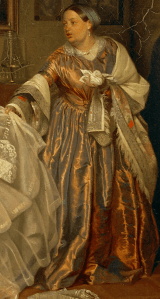
Как, справа, отставная деревенская пряха, Là, à droite, un ancien fileur du village,
Панкратьевна-сваха, Entremetteur de Pankratievna,
Бессовестная привираха,triche éhontée,
В парчовом шугае, толстая складом,Dans une robe d’été de brocart, un corps épais,
Пришла с докладом:Est venue avec un rapport
Жених, мол, изволил пожаловать.Le marié, dit-on, a daigné venir.
И вот извольте посмотреть,Et s’il vous plaît, regardez
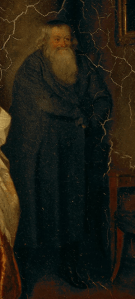
Как хозяин-купец,En tant que commerçant propriétaire
Невестин отец,père de la mariée,
Не сладит с сюртуком,Ne fait pas face à un manteau,
Он знаком больше с армяком;Il est plus familier avec l’arménien ;
Как он бьется, пыхтит,Comment il bat, souffle,
Застегнуться спешит:Dépêche-toi de le boutonner:
Нараспашку принять — неучтиво.Accepter ouvertement est impoli.
А извольте посмотреть,Et si vous s’il vous plaît regardez
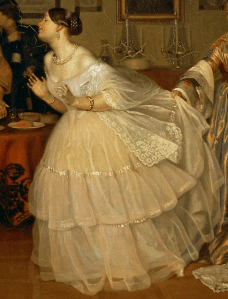
Как наша невеста Comme la mariée dont nous parlons
Не найдет сдуру места:Bêtement, elle ne trouve pas de place :
«Мужчина чужой!« L’homme est un étranger !
Ой, срам-то какой!Oh quelle honte!
Никогда с ними я не бывала, je n’ai jamais été avec eux
Коль и придут, бывало, —S’ils venaient (étrangers), parfois c’était, –
Мать тотчас на ушко:Mère immédiatement dans l’oreille:
„Тебе, девушке, здесь не пристало!““Toi, ma fille, tu n’as pas ta place ici !”
Век в светличке своей я высокойJe de nombreuse fois dans ma chambre haute
Прожила, проспала одинокой;Vécue, dormie seule;
Кружева лишь плела к полотенцам,Je n’ai tissé que de la dentelle pour les serviettes,
И все в доме меня чтут младенцем!Et tout le monde dans la maison m’honore comme un bébé !
Гость замолвит, чай, речь…L’invité dira, peut-être, un discours…
Ай, ай, ай! — стыд какой!..Ah ah ah ! 
– Quelle honte!…
А тут нечем скрыть плеч:Et elle n’a rien pour se couvrir les épaules :
Шарф сквозистый такой —Une telle écharpe transparente –
Всё насквозь, на виду!..Tout transparent et tout est visible!…
Нет, в светлицу уйду!» Non, je vais dans ma chambre !
И вот извольте посмотреть,Et s’il vous plaît, regardez
Как наша пташка сбирается улететь;Comment notre oiseau va s’envoler; 
(la mariée essaie de s’échapper)
А умная матьMais une mère intelligente
За платье ее хвать!attrape sa robe !
Majors matchmaking extract groom by Fedotov
И вот извольте посмотреть,Et s’il vous plaît, regardez
Как в другой горницеComme dans une autre pièce
Грозит ястреб горлице, —Le faucon menace la colombe, –
Как майор толстый, бравый,Comme un major, gros, brave,
Карман дырявый, Avec une poche qui fuit (pauvre),
Крутит свой ус:Tord sa moustache :
«Я, дескать, до денежек доберусь!»“Moi, disent-ils, j’arriverai à l’argent!”
Теперь извольте посмотреть:Voyons maintenant :
Разные висят по стенам картины.Divers tableaux sont accrochés aux murs.
Начинаем с середины:On part du milieu :
На средине виситSuspendu au milieu
Высокопреосвященный митрополит;Son Eminence Metropolitan;
Хозяин христианскую в нем добродетель чтит.Le propriétaire honore la vertu chrétienne en lui.
Налево — Угрешская обительÀ gauche – Monastère Ugreshsky
И во облацех над нею — святитель… Et dans quelque chose d’incompréhensible au-dessus, il y a un saint… (Vêtu de vêtements incompréhensibles (étranges). Personne ne comprend le style et la mode de ces vêtements.)
Православные, извольте перекреститься,Orthodoxe, faites le signe de croix,
А немцы,Et les Allemands
Иноземцы,étrangers,
На нашу святыню не глумиться;Ne vous moquez pas de notre sanctuaire ;
Не то — русский народSinon – le peuple russe
Силой рот вам зажмет.Avec force va fermer votre bouche.
И вот извольте посмотреть:Et s’il vous plaît, regardez
По сторонам митрополита — двоеAux côtés du métropolitain – deux
Наши знаменитые герои:Nos héros célèbres :
Один — батюшка Кутузов,L’un est le père Kutuzov,
Что первый открыл пятки у французов, Il fut le premier à forcer l’armée française à fuir
А Европа сначалаL’Europe d’avant
Их не замечала.N’avait rien vu de tel.
ДругойUn autre
Герой —Héros –
Кульнев, которому в славу и честьKulnev, à qui dans la gloire et l’honneur
Даже у немцев крест железный есть.Même les Allemands ont une croix de fer (le roi de Prusse a ordonné la création d’un insigne de récompense spécial (2 septembre 1813). Croix de Fer, une récompense qui a ensuite reçu le nom officieux de «Kulm Cross»).
И вот извольте посмотреть:Et s’il vous plaît, regardez
Там же, на правой стороне, —Là, sur le côté droit,
Елавайский на коне, Ilovaisky sur un cheval,
Казацкий хлопчикC’est un cosaque
Французов топчет.Il piétine les Français.
А на правой стене хозяйский портретEt sur le mur de droite se trouve le portrait du maître (un portrait du propriétaire de cette maison)
В золоченую раму вдет; Intégré dans un cadre plaqué or ;
Хоть не его рожа,Bien que ce ne soit pas son visage,
Да книжка похожа:Oui, le livre est similaire.
Значит — грамотный!Cela signifie intelligent! 
(c’est ironique)
И вот извольте посмотреть:Et s’il vous plaît, regardez
Внизу картины,Ci-dessous l’image
Около середины,A peu près au milieu
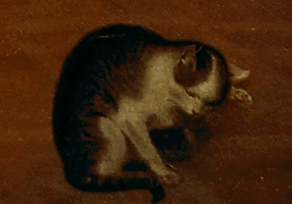
Сидит сибирская кошка.Assis est un chat sibérien.
У нее бы не худо немножкоCe serait bien si un peu
Деревенским барышням поучитьсяApprendre d’un chat aux dames du village (Ce serait bien si les filles du village apprenaient à se laver d’un chat.)
Почаще мыться:Lavez plus souvent :
Кошка рыльце умывает,Le chat lave son museau
Гостя в дом зазывает.Appelle les invités dans la maison.
Major’d matchmaker extract Icons
А что, господа, чай устали глаза?
Et quoi, messieurs, vos yeux sont probablement fatigués ?
А вот, налево, — святые образа…Et voici, à gauche, les saintes images…
Извольте перекреститьсяVeuillez faire le signe de la croix
Да по домам расходиться.Oui, rentrez chez vous.
<1849>Traduction et annotations par Barbara Bayard

Vous pouvez aussi lire notre dernier article : « Découvrez le tableau “Fiançailles d’un Major” de Pavel Andreevich Fedotov » ou la nouvelle La Perspective Nevski de Nikolai Gogol en français , ou français/anglais où le même sujet est abordé.

J’espère que vous avez apprécié ce poème drôle et descriptif autant que moi.

Si vous avez aimé cet article, abonnez-vous, mettez des likes, écrivez des commentaires !

Partager sur les réseaux sociaux

Découvrez nos derniers posts


© 2023 Akirill.com – All Rights Reserved

Poem about the painting “The Major’s Matchmaking” by Fedotov in Russian/English

Bilingual booksLire en FrançaisContact us
American LiteratureFrench LiteratureRussian Literature

Before the exhibition, Fedotov composed a poetic description for his painting of “The Major’s Matchmaking“, the so-called “Рацея”, which he himself read to the visitors of the 1849 exhibition. His playful poem had great success and his satire was compared to Gogol’s and Ostrov’s. You can now read it in English as I translated, and added some annotations for your understanding.

The major's marriage proposal - 1851 by Pavel Fedotov -
The major’s marriage proposal – 1851 by Pavel Fedotov –
Рацея
(Объяснение картины «Сватовство майора»)
Verses
(Explanation of the painting “Courtship of the Major”)
Честные господа,honest gentlemen,
Пожалуйте сюда!Please come here!
Милости просим,Welcome,
Денег не спросим:We won’t ask for money.
Даром смотри,Take a look for free
Начинается,Begins,
ПочинаетсяBegins (Ukrainian dialect)
О том, как люди на свете живут,About how people in the world live,
Как иные на чужой счет жуют.How others chew at someone else’s expense.
Сами работать ленятся,They are too lazy to work themselves,
Так на богатых женятся.so they marry the rich.
Вот извольте-ко посмотреть:Here, take a look
Вот купецкий дом, —Here is the merchant’s house –
Всего вдоволь в нем,Just enough in it
Только толку нет ни в чем:It just doesn’t make any sense:
Одно пахнет деревней,One smells like a village
А другое харчевней.And another tavern.
Тут зато один толк,Here, however, one sense
Что всё взято не в долг,That everything is not borrowed,
Как у вас иногда,How you sometimes do
Честные господа!Honest gentlemen!
А вот извольте посмотреть:But if you please, watch
Вот сам хозяин-купец,Here is the owner-merchant himself,
Денег полон ларец;The casket is full of money;
Есть что пить и что есть…There is food to eat, drinks to drink
Уж чего ж бы еще? Да взманила, вишь, честьAnd what else? But his honor beckons, you see
«Не хочу, вишь, зятька с бородою! “I don’t want, you see, a son-in-law with a beard!
И своя борода — And my own beard
Мне лихая беда. For me, a dashing trouble.
На улице всякий толкает,On the street everyone pushes
А чуть-чуть под хмельком, And when a little drunk,
Да пойди-ка пешком вечерком,Try walking in the evening,
Глядь! — очутишься в будке,Unexpectedly! – you will find yourself in a booth (in the police station),
Прометешь потом улицу сутки.Then you will sweep the street during the day (police punishment for a minor violation of order)..
А в густых-то будь зять —And if the son-in-law was cool (had a high position in society) –
Не посмеют нас взять…They won’t dare to take us (arrest us)…
Мне, по крайности, дай хоть майора,At least, give me at least a groom with the rank of major,
Без того никому не отдам свою дочь!..»Without that, I will not give my daughter to anyone! .. “
А жених — тут как тут, и по чину — точь-в-точь.And the groom is right there, and in rank – exactly the same.
Major’d matchmaker extract champagne
А вот извольте посмотреть,But if you please, watch
Как жениха ждут, How the groom is expected
Кулебяку несут Kulebyaka (meat food) they carry
И заморские вина первейших сортовAnd overseas wines of the first varieties
К столу подают.Served on the table.
А вот и самое панское,And here is the most elite,
Сиречь шампанское,That is to say, champagne
На подносе на стуле стоит.It is on a tray on a chair.
А вот извольте посмотреть,But if you please, watch
Как в параде весь дом:How the whole house is in a parade:
Всё с иголочки в нем;Everything is brand new in it;
Только хозяйка купцаOnly the merchant’s mistress (wife)
Не нашла, знать, по головке чепца.Did not find, apparently, a cap for the head.
По-старинному — в сизом платочке.The old-fashioned way – in a gray scarf.
Остальной же нарядThe rest of the outfit
У француженки взятwas taken from the Frenchwoman
Лишь вечор для самой и для дочки.Just for one evening for herself and for her daughter.
Дочка в жизнь в первый раз,Daughter in life for the first time,
Как боярышня у нас,Like a hawthorn with us,
Ни простуды не боясь,Not afraid of a cold,
Ни мужчин не страшась,Not afraid of men,
Плечи выставила напоказ. —She put her shoulders on display. 
Шейка чиста,– The neck is clean,
Да без креста.But, without a cross.
Вот извольте посмотреть,Here, you please, watch
Как в левом углу старуха, There, an old woman in the left corner,
Тугая на ухо,Hard of hearing,
Хозяйкина сватья, беззубый рот,The hostess’s matchmaker, toothless mouth,
К сидельцу пристает:To the person responsible for the products, she asks the question:
Для чего, дескать, столько бутылок несет,Why, they say, carries so many bottles,
В доме ей до всего!She cares about everything in the house!
Ей скажи: отчего,Tell her why
Для чего, кто идет, —For what, who goes –
Любопытный народ!Curious people!
А вот извольте посмотреть,But if you please, watch
Как, справа, отставная деревенская пряха, There, on the right, a retired village spinner,
Панкратьевна-сваха, Pankratievna-matchmaker,
Бессовестная привираха,shameless cheat,
В парчовом шугае, толстая складом,In a brocade sundress , a thick body,
Пришла с докладом:Came with a report
Жених, мол, изволил пожаловать.The groom, they say, deigned to come.
И вот извольте посмотреть,And if you please, watch
Как хозяин-купец,As a merchant owner
Невестин отец,bride’s father,
Не сладит с сюртуком,Does not cope with a coat,
Он знаком больше с армяком;He is more familiar with the Armenian;
Как он бьется, пыхтит,How he beats, puffs,
Застегнуться спешит:Hurry to fasten:
Нараспашку принять — неучтиво.To accept openly is impolite.
А извольте посмотреть,And if you please look
Как наша невеста Like the bride we’re talking about
Не найдет сдуру места:Foolishly, she can’t find a place:
«Мужчина чужой!“The man is a stranger!
Ой, срам-то какой!Oh, what a shame!
Никогда с ними я не бывала, I have never been with them
Коль и придут, бывало, —If they came (strangers), sometimes it was,-
Мать тотчас на ушко:Mother immediately in the ear:
„Тебе, девушке, здесь не пристало!““You, girl, do not belong here!”
Век в светличке своей я высокойI a lot of time in my high room
Прожила, проспала одинокой;Lived, slept alone;
Кружева лишь плела к полотенцам,I only wove lace for towels,
И все в доме меня чтут младенцем!And everyone in the house honors me as a baby!
Гость замолвит, чай, речь…The guest will say, maybe, a speech…
Ай, ай, ай! — стыд какой!..Ah ah ah!  – what a shame!
А тут нечем скрыть плеч:And she has nothing to cover her shoulders with:
Шарф сквозистый такой —Such a transparent scarf –
Всё насквозь, на виду!..Everything through and everything is visible!…
Нет, в светлицу уйду!» No. I’m going to my room!
И вот извольте посмотреть,And if you please, watch
Как наша пташка сбирается улететь;How our bird is going to fly away; (the bride is trying to escape)
А умная матьBut a smart mother
За платье ее хвать!Grabbed her dress!
Majors matchmaking extract groom by Fedotov
И вот извольте посмотреть,And if you please, watch
Как в другой горницеAs in another room
Грозит ястреб горлице, —The hawk threatens the dove, –
Как майор толстый, бравый,Like a major, fat, brave,
Карман дырявый, With a leaky pocket (poor),
Крутит свой ус:Twists his mustache:
«Я, дескать, до денежек доберусь!»“I, they say, will get to the money!”
Теперь извольте посмотреть:Now let’s see:
Разные висят по стенам картины.Various paintings hang on the walls.
Начинаем с середины:We start from the middle:
На средине виситHanging in the middle
Высокопреосвященный митрополит;His Eminence Metropolitan;
Хозяин христианскую в нем добродетель чтит.The owner honors the Christian virtue in him.
Налево — Угрешская обительTo the left – Ugreshsky monastery
И во облацех над нею — святитель… And in something incomprehensible above it is a saint… (Dressed in incomprehensible (strange) clothes. No one understands the style and fashion of these clothes.)
Православные, извольте перекреститься,Orthodox, please cross yourself,
А немцы,And the Germans
Иноземцы,foreigners,
На нашу святыню не глумиться;Do not mock at our shrine;
Не то — русский народOtherwise – the Russian people
Силой рот вам зажмет.With force will clamp your mouth.
И вот извольте посмотреть:And if you please, watch
По сторонам митрополита — двоеOn the sides of the metropolitan – two
Наши знаменитые герои:Our Famous Heroes:
Один — батюшка Кутузов,One is Father Kutuzov,
Что первый открыл пятки у французов, He was the first to force the French army to flee
А Европа сначалаEurope before
Их не замечала.Haven’t seen anything like it.
ДругойAnother
Герой —Hero –
Кульнев, которому в славу и честьKulnev, to whom in glory and honor
Даже у немцев крест железный есть.Even the Germans have an iron cross (the Prussian king ordered the establishment of a special award badge (September 2, 1813). Iron Cross, an award that later received the unofficial name “Kulm Cross”).
И вот извольте посмотреть:And if you please, watch
Там же, на правой стороне, —There, on the right side,
Елавайский на коне, Ilovaisky on horse,
Казацкий хлопчикHe’s a Cossack guy
Французов топчет.He’s trampling on the French.
А на правой стене хозяйский портретAnd on the right wall is the master’s portrait (a portrait of the owner of this house)
В золоченую раму вдет; Built-in in gold-plated frame;
Хоть не его рожа,Though not his face,
Да книжка похожа:Yes, the book is similar.
Значит — грамотный!That means smart! (this is ironic)
И вот извольте посмотреть:And if you please, watch
Внизу картины,Below the picture
Около середины,About in the middle
Сидит сибирская кошка.Sitting is a Siberian cat.
У нее бы не худо немножкоIt would be nice if a little
Деревенским барышням поучитьсяTo learn from a cat to the village ladies (It would be nice if the girls from the village learned to wash from a cat.)
Почаще мыться:Wash more often:
Кошка рыльце умывает,The cat washes its snout
Гостя в дом зазывает.Calls guests into the house.
Major’d matchmaker extract Icons
А что, господа, чай устали глаза?
And what, gentlemen, are your eyes probably tired?
А вот, налево, — святые образа…And here, to the left, are the holy images …
Извольте перекреститьсяPlease cross yourself
Да по домам расходиться.Yes, go home.
<1849>Translation and annotations by Barbara Bayard

You can also read our last article: “Discover the “Major’s matchmaking” by Pavel Andreevich Fedotov” or the short story Nevsky Prospekt by Nikolai Gogol in French, or French/english where the same subject is addressed.

I hope you enjoyed this funny and descriptive poem as much as I did.

If you liked this article, subscribe , put likes, write comments!
Share on social networks
Check out Our Latest Posts


© 2023 Akirill.com – All Rights Reserved